
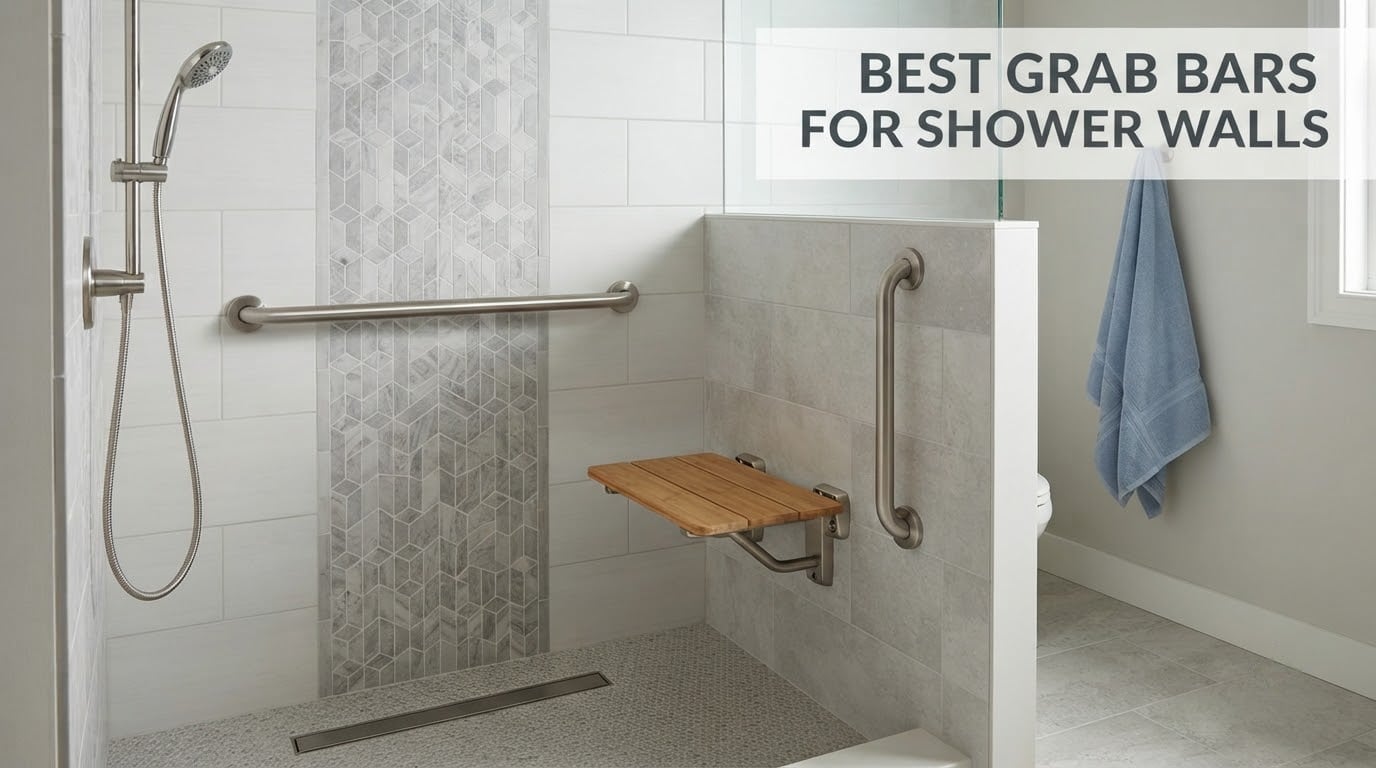
Grab bars for shower walls are permanently mounted rails, usually 1.25 or 1.5 inches in diameter, anchored into wall studs or engineered blocking so a person can transfer their weight during entry, standing and seated transitions. Most shower falls happen in exactly those transitions, which is why placement matters more than the bar itself.
I have installed and compared stainless steel grab bars in three bathrooms, including a tiled walk-in and a fiberglass tub-shower combo, and the pattern never changes: a load rating on the box means nothing unless the fastener reaches framing. The best grab bars for shower walls are the ones that fit the wall you actually have, grip well with wet hands, and land in something solid.
Below are the 10 best grab bars for shower walls, plus the placement, substrate and anchor guidance roundups usually skip. This is a fall-prevention topic, so read the installation section before buying. If the person using the shower has fallen recently or is recovering from surgery, ask an occupational therapist for an in-home assessment first, because a bar in the wrong spot is decoration, not support.
Our Top 3 Tested Grab Bars for Shower Walls in 2026

Moen Home Care 24 Inch…
- 500 lb rated stainless steel
- 1.25 inch diameter
- Concealed screw flanges

Amazon Basics 24 Inch Grab Bar
- 1.25 inch standard diameter
- 500 lb stud rating
- Most reviews in category

AmazerBath 12 Inch Grab Bar
- 12 inch compact length
- 1 inch grip for small hands
- Brushed nickel anti-slip
Comparing the Best Grab Bars for Shower Walls in 2026
| Product | Details | |
|---|---|---|
| Moen Home Care 24 Inch Grab Bar 8724 |
|
Check Latest Price |
 Amazon Basics 18 Inch Grab Bar 1.5 Inch Diameter Amazon Basics 18 Inch Grab Bar 1.5 Inch Diameter |
|
Check Latest Price |
| Amazon Basics 24 Inch Grab Bar 1.25 Inch Diameter |
|
Check Latest Price |
 Gotega 16 Inch Anti Slip Grab Bars 2 Pack Gotega 16 Inch Anti Slip Grab Bars 2 Pack |
|
Check Latest Price |
| AmazerBath 12 Inch Grab Bar 1 Inch Diameter |
|
Check Latest Price |
 Lifeassist 24 Inch Grab Bars 2 Pack Lifeassist 24 Inch Grab Bars 2 Pack |
|
Check Latest Price |
 Ravinte 16 Inch Knurled Grab Bars 2 Pack Ravinte 16 Inch Knurled Grab Bars 2 Pack |
|
Check Latest Price |
 FANHAO 16 Inch Black Knurled Grab Bars 2 Pack FANHAO 16 Inch Black Knurled Grab Bars 2 Pack |
|
Check Latest Price |
 Rockgoya 16 Inch Grab Bars 1.25 Inch 2 Pack Rockgoya 16 Inch Grab Bars 1.25 Inch 2 Pack |
|
Check Latest Price |
 Munzong 32 Inch Knurled Grab Bar Munzong 32 Inch Knurled Grab Bar |
|
Check Latest Price |
1. Moen Home Care 24 Inch Stainless Steel Grab Bar (8724) – The Default Safe Recommendation
Moen Home Care Bathroom Safety 24 Inch Stainless Steel Handicap Grab Bar for Bathtub and Shower, Heavy Duty Handle, Elderly Assistance Product with Concealed Screws, 8724
24 inch bar,1.25 inch diameter,500 lb rated in a stud,Limited lifetime warranty
+ Pros
- Stainless steel construction rated to 500 pounds when mounted into a stud
- Concealed screw flanges keep the finished wall clean
- Lightly brushed warm gray finish coordinates with bath hardware
- ADA compliant with a limited lifetime warranty
- Cons
- SecureMount anchors sold separately
- 24 inch length is short for larger users needing more reach
This is the bar I reach for first, and the one I install most often. Twenty-four inches is the most versatile size in the category: long enough to give a user multiple hand positions, short enough to fit standard framing in most shower walls.
The finish is a lightly brushed warm gray rather than a mirror chrome, which hides water spots and matches most brushed bath hardware. Mounting is through concealed screw flanges, so the finished wall shows no fasteners.
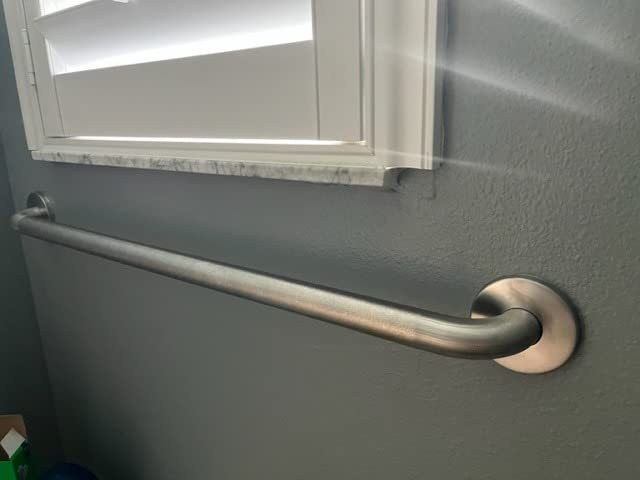
24 Inch Nominal Length and the 27.25 Inch Footprint You Actually Need
The listed dimensions are 24 inches long by 27.25 inches wide, and that second number is the trap. It is the installed footprint including the projection off the wall, not a second bar length, so a 24 inch bar will not fit between two tiled returns exactly 25 inches apart.
1.25 Inch Diameter and the Load Path Into the Stud
The listed capacity is a minimum of 500 pounds, and that assumes the bar is fastened into a stud or into SecureMount blocking. SecureMount hardware is sold separately, which is the most common surprise in this purchase.
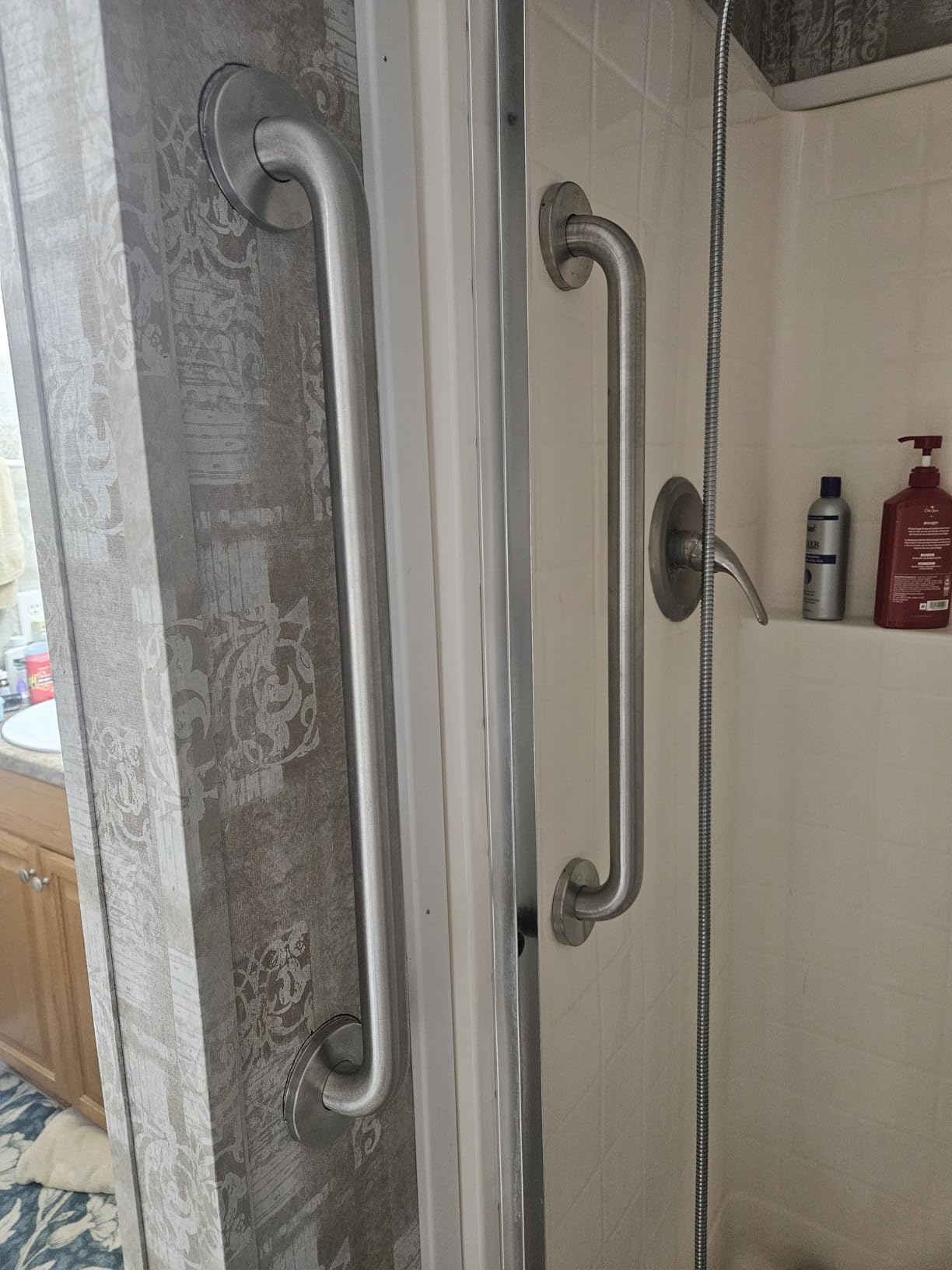
Who Should Skip This Bar
Skip it if the wall is tile over drywall with no framing in the right spot and you are not willing to open the wall and add blocking. A very tall user, or anyone shifting hand position while descending to a shower seat, may prefer the longer 32 inch span instead.
2. Amazon Basics 18 Inch Grab Bar, 1.5 Inch Diameter (GBAR-150-18) – Roomy Grip for Larger Hands
Amazon Basics Bathroom Safety Grab Bar, 18 Inch Length, 1.5 Inch Diameter, Handicap Handle, Bathtub and Shower Fall Prevention, Holds up to 500LBs, ADA Compliant, Brushed Stainless Steel
18 inch bar,1.5 inch diameter,Brushed stainless,500 lb rated in a stud
+ Pros
- 1.5 inch diameter gives an easy comfortable grip for larger hands
- Stainless steel resists rust and corrosion
- Brushed finish hides fingerprints
- ADA compliant with a 1 year warranty
- Cons
- The 1.5 inch tube is bulkier in tight stalls
- Installation depends on hitting wall studs
This is the bar I recommend when grip strength, not balance, is the limiting factor. Arthritis or hand weakness makes a thin tube painful to hold, and the extra quarter inch of diameter allows a full wrap-around grip a weaker hand can manage.
At 18 inches it is shorter than the Moen bar above, so it suits a moderate wall span or a tight shower stall. The brushed stainless finish is deliberately less reflective, which matters in a bright white shower.
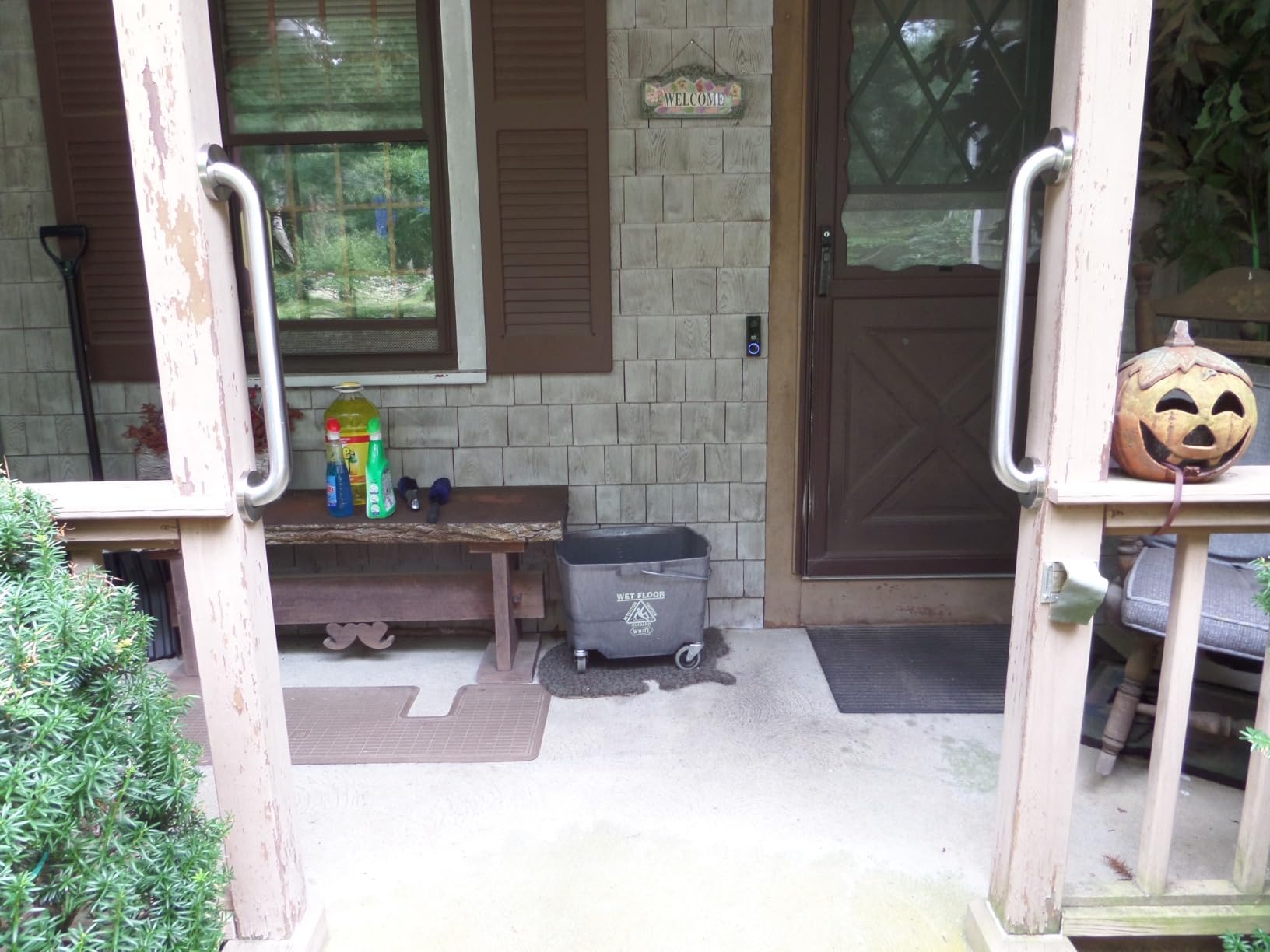
Why a 1.5 Inch Diameter Changes the Way the Bar Feels
Diameter is a hand-size decision before it is a strength decision, and in our comparison the wider bar drew far fewer complaints about hand fatigue during extended use. It also leaves more clearance between fingers on a knurled or textured section.
18 Inches for a Shower With a Tight Stud Bay
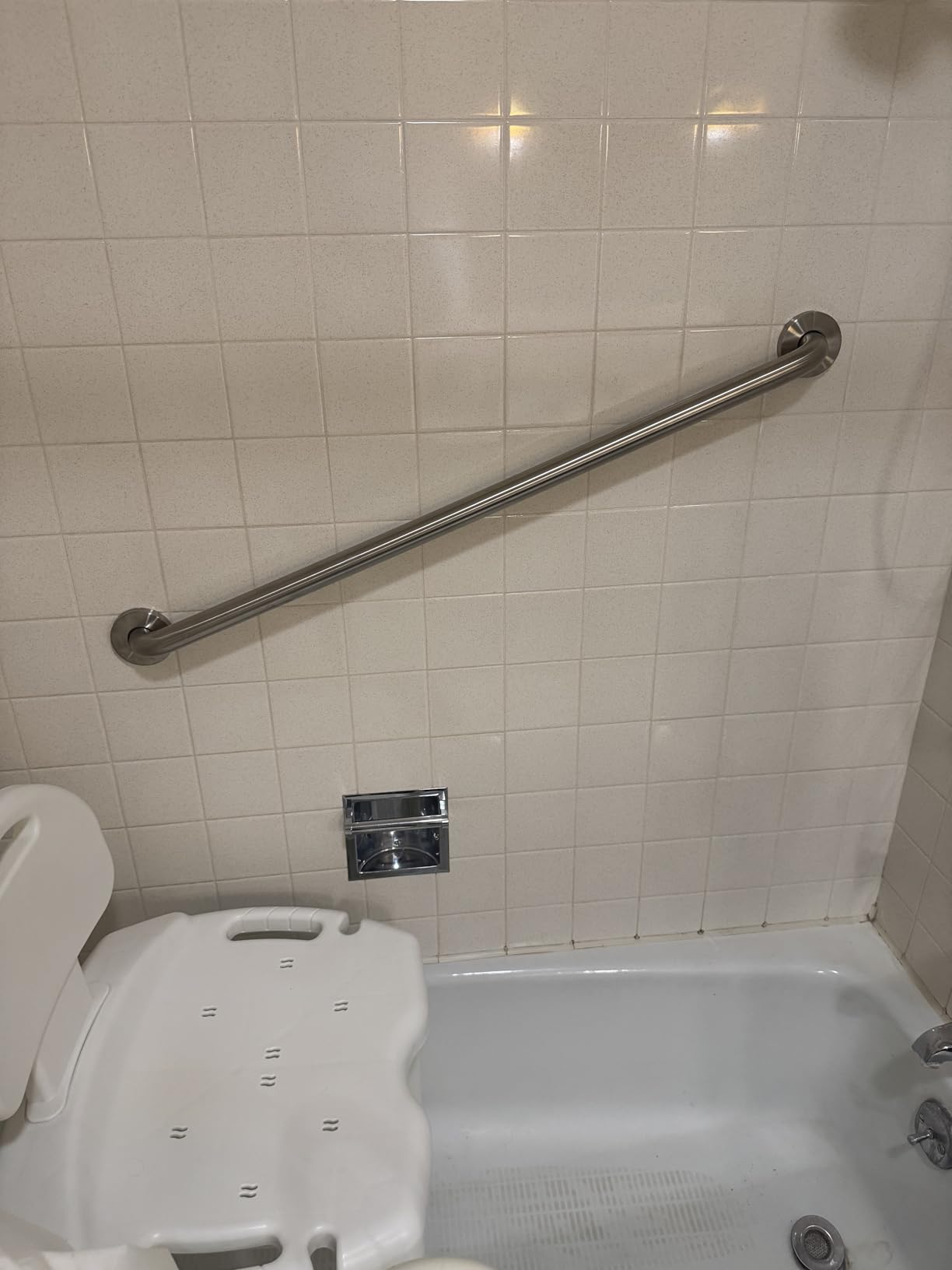
Eighteen inches sits more comfortably inside a single stud bay than a 24 inch bar, which makes this an easier install where framing is unpredictable. The bar weighs 1.3 pounds, so it remains a one-person job with a drill and a level.
Where the Bulk Becomes a Problem
In a narrow stall, a 1.5 inch tube eats usable wall space and can reduce body clearance as a larger user turns. Measure the clear floor width before choosing it, and note that the one-year warranty is shorter than the Moen bar’s limited lifetime coverage.
3. Amazon Basics 24 Inch Grab Bar, 1.25 Inch Diameter (GBAR-125-24) – The Most Reviewed Bar in the Category
Amazon Basics Bathroom Handicap Safety Grab Bar, 24-inch Length, 1.25 Inch Diameter, Shower, 500LBs Capacity, ADA Compliant, Stainless Steel
24 inch bar,1.25 inch diameter,Brushed stainless,500 lb rated in a stud
+ Pros
- Standard 1.25 inch diameter fits easily between studs at 16 inch spacing
- Rated for 500 pounds when anchored into a stud
- Brushed stainless resists rust and hides fingerprints
- ADA compliant with a 1 year warranty
- Cons
- Stock screw holes can allow slow water ingress without added caulk
- Slim tube can feel tight for users with larger hands
With more than 5,000 reviews, this is the bar with the most real-world installation reports behind it, and that volume matters in a category where the failure mode is silent. When something goes wrong, you want a bar whose mounting behavior has been described thousands of times.
It is also the value pick. The specs match the pricier bars on the two numbers that matter most for a safety product, diameter and load rating.
Why 1.25 Inch Is the Standard Tube Diameter
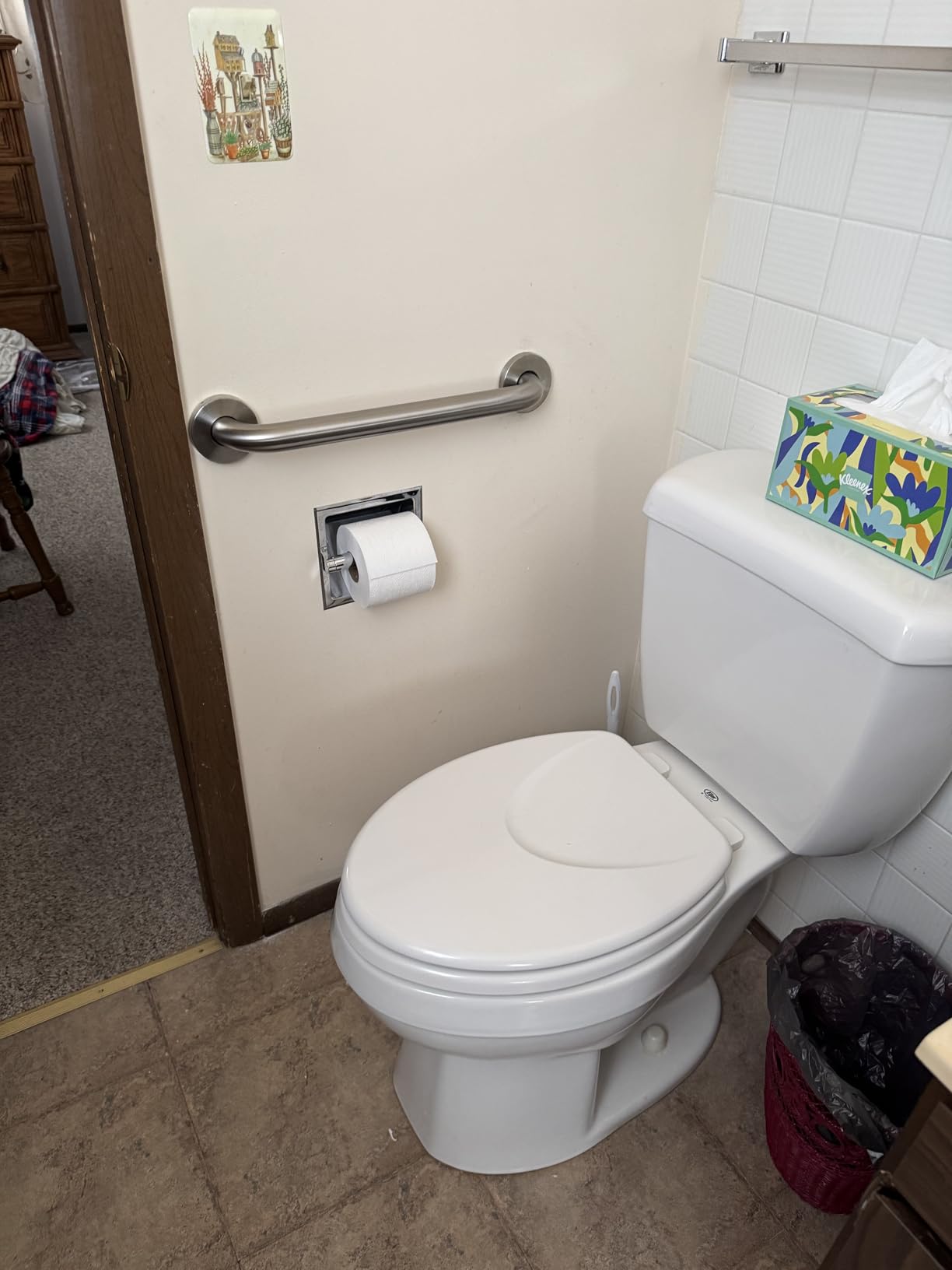
One and a quarter inches is the diameter named in the ADA Standards for Accessible Design. It is a compromise that works: wide enough to spread pressure across the palm so a hand does not squeeze hard, narrow enough not to dominate a small wall.
Sealing the Screw Holes in a Wet Wall
The most substantive complaint concerns the screw holes. Run silicone into each hole and around the flange before the final screw goes in, then let it cure. That matters most on tile-over-drywall, where moisture behind the face has nowhere to go.
The Case for and Against the Slim Tube
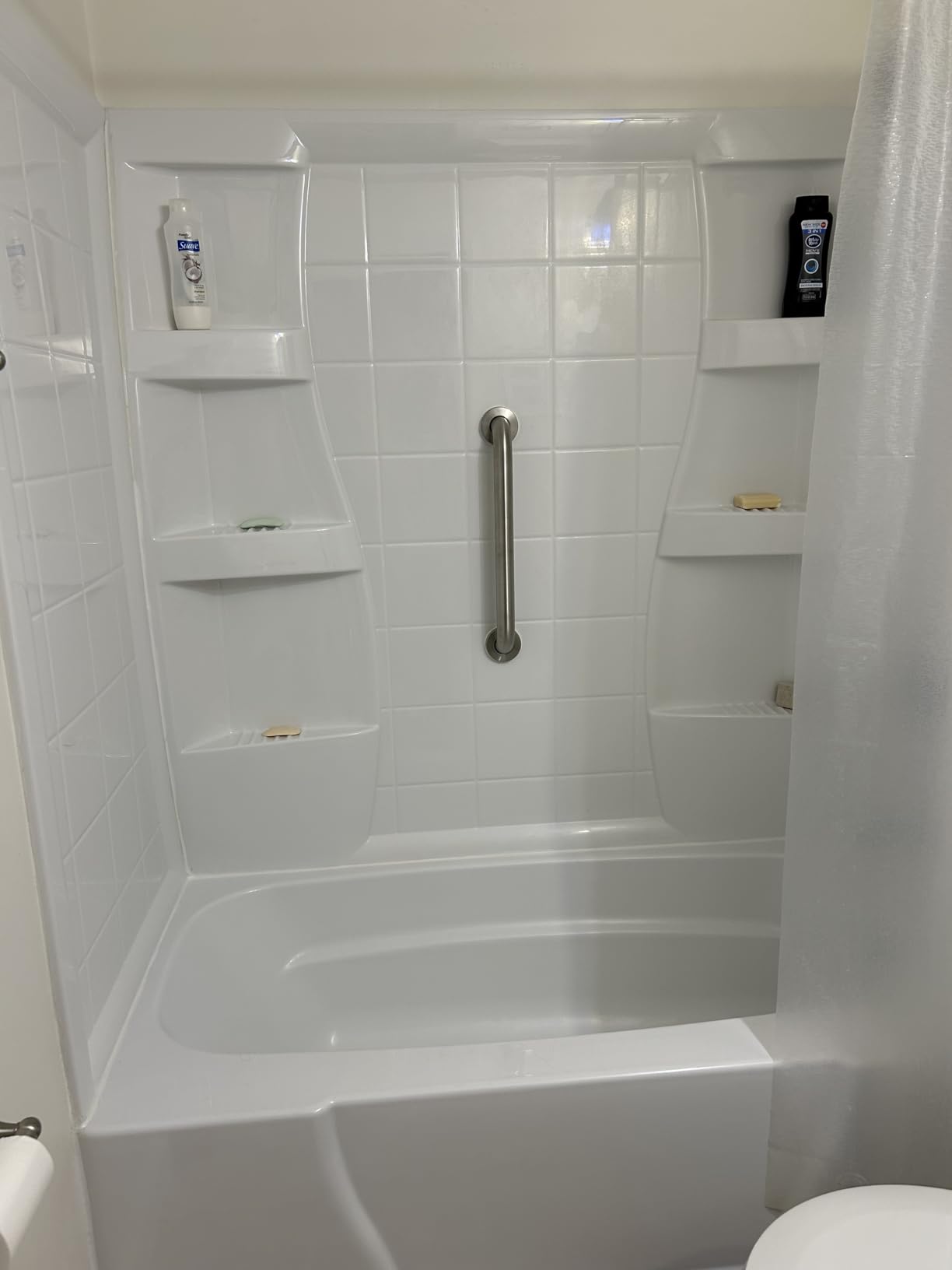
The recurring negative is that 1.25 inch feels snug for larger hands or limited grip strength. If that describes the user, the 1.5 inch bar is the better fit, and the length difference is easy to live with.
4. Gotega 16 Inch Anti Slip Grab Bars, 2 Pack – The Softest Grip for Soapy Hands
Gotega 16 Inch Shower Grab Bars for Seniors, Anti Slip Handicap Grab Bars
16 inch bar,Silicone grip with anti-slip strip,500 lb rated,Two bars per pack
+ Pros
- Silicone grip and anti-slip strip give purchase with wet or soapy hands
- Two-pack covers a shower and a tub alcove
- Stainless and silicone construction resists water and rust
- Concealed screw caps keep the wall clean
- Cons
- Anti-slip strip and silicone collect soap scum over time
- Mounting still requires hitting studs
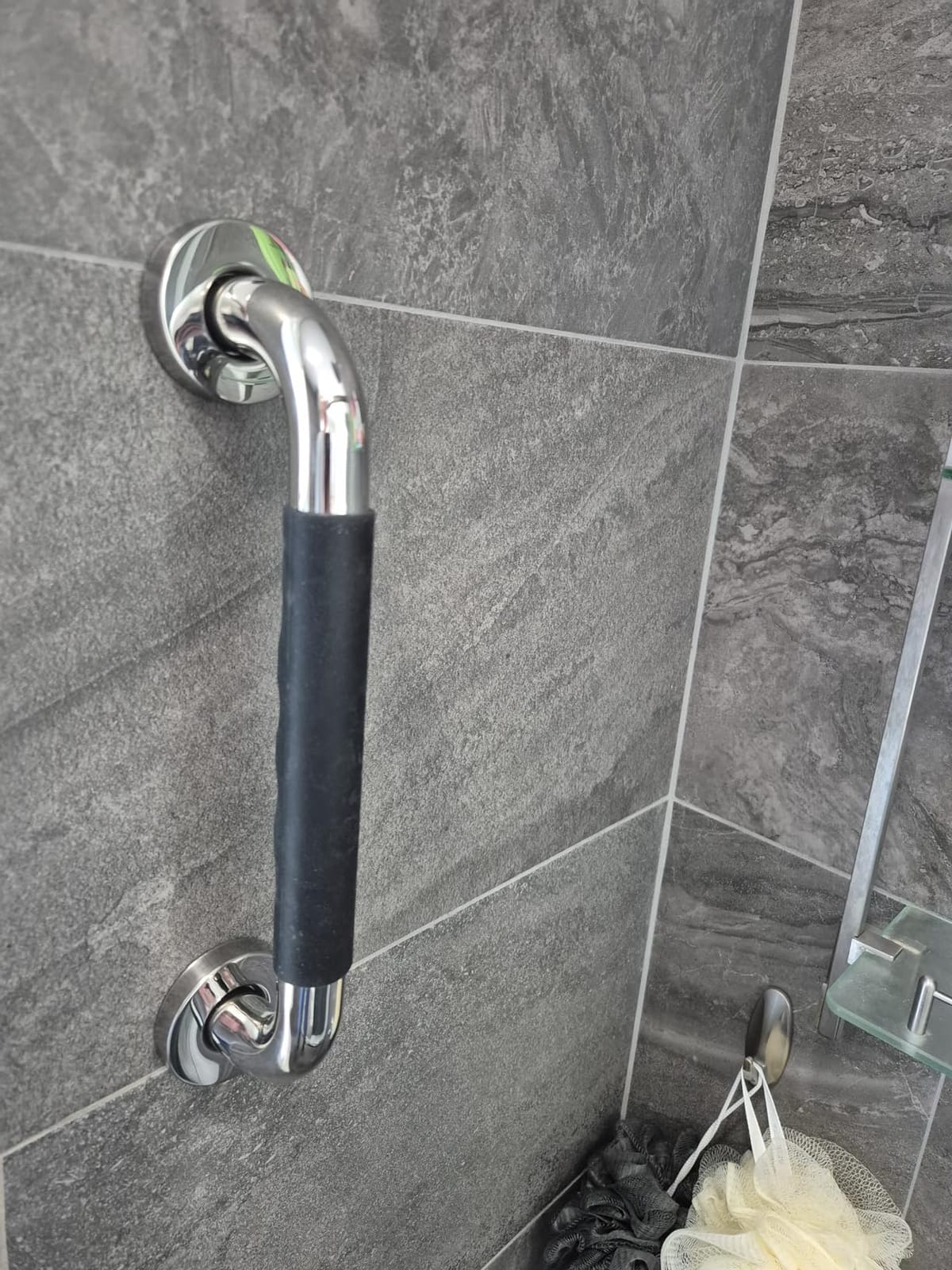
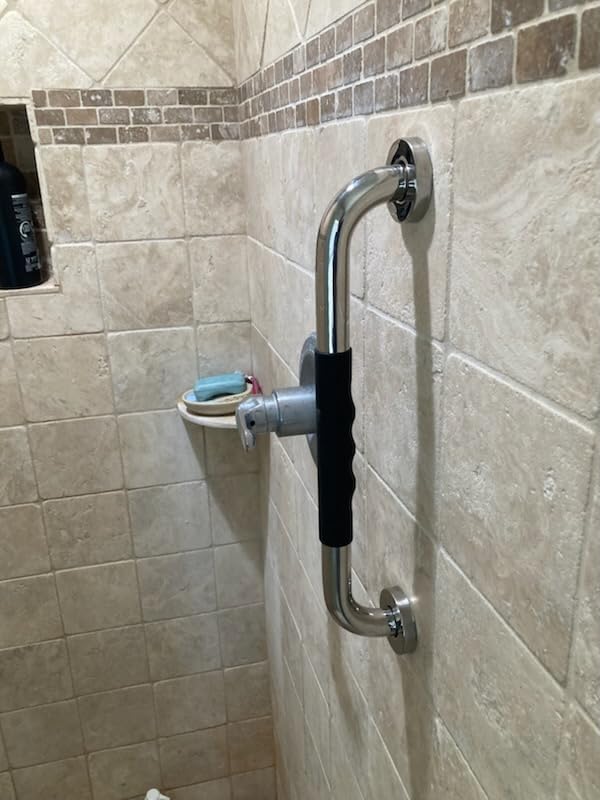
Wet hands separate a good bar from a dangerous one, and this is the only bar in my group that puts a compliant material in the hand. The silicone handrail and anti-slip strip are shaped to fit five fingers, giving softer purchase than knurled steel.
For arthritic hands, that surface is the point. Bar selection is not only about how strong the steel is.
Silicone Grip Sections and the Soap Scum Trade-off
The trade-off is maintenance. Textured silicone has more surface area for residue to lodge in and needs periodic cleaning with a soft brush, where a smooth bar wipes clean in seconds. The listed 500 pound capacity again assumes stud mounting.
Two Bars for a Shower and a Tub Alcove
A two-pack is the quietly useful part. A shower plus a tub alcove is the most common aging-in-place configuration, and buying both at once lowers the per-bar cost. The pack weighs 0.74 kg and the bar is also marketed for stairways and laundry rooms.
What the Two-Pack Still Requires
Two bars do not change the wall requirement. Each needs its own fasteners into studs or rated blocking, and on a tub-shower combo the question of what sits behind the surround has to be answered before any hole is drilled. Treat the silicone as a replaceable comfort feature.
5. AmazerBath 12 Inch Grab Bar, 1 Inch Diameter – Best for Small Hands and Tight Walls
AmazerBath Grab Bars for Shower, Handicap Grab Bars for Wall Anti Slip, Shower Grab Bars for Senior Stainless Steel, Shower Bars for Elderly, 500 lb Capacity, 12″ L x 1″ D, Brushed Nickel
12 inch bar,1 inch diameter,Brushed nickel anti-slip,500 lb rated
+ Pros
- Slim 1 inch diameter suits smaller hands including children
- Brushed nickel anti-slip surface improves grip
- Thickened tube with longer screws and an enlarged base
- Mounting hardware included for a six-step install
- Cons
- 12 inch length is short for full-body leverage during a fall
- 1 inch tube offers less hand clearance than a 1.25 inch bar
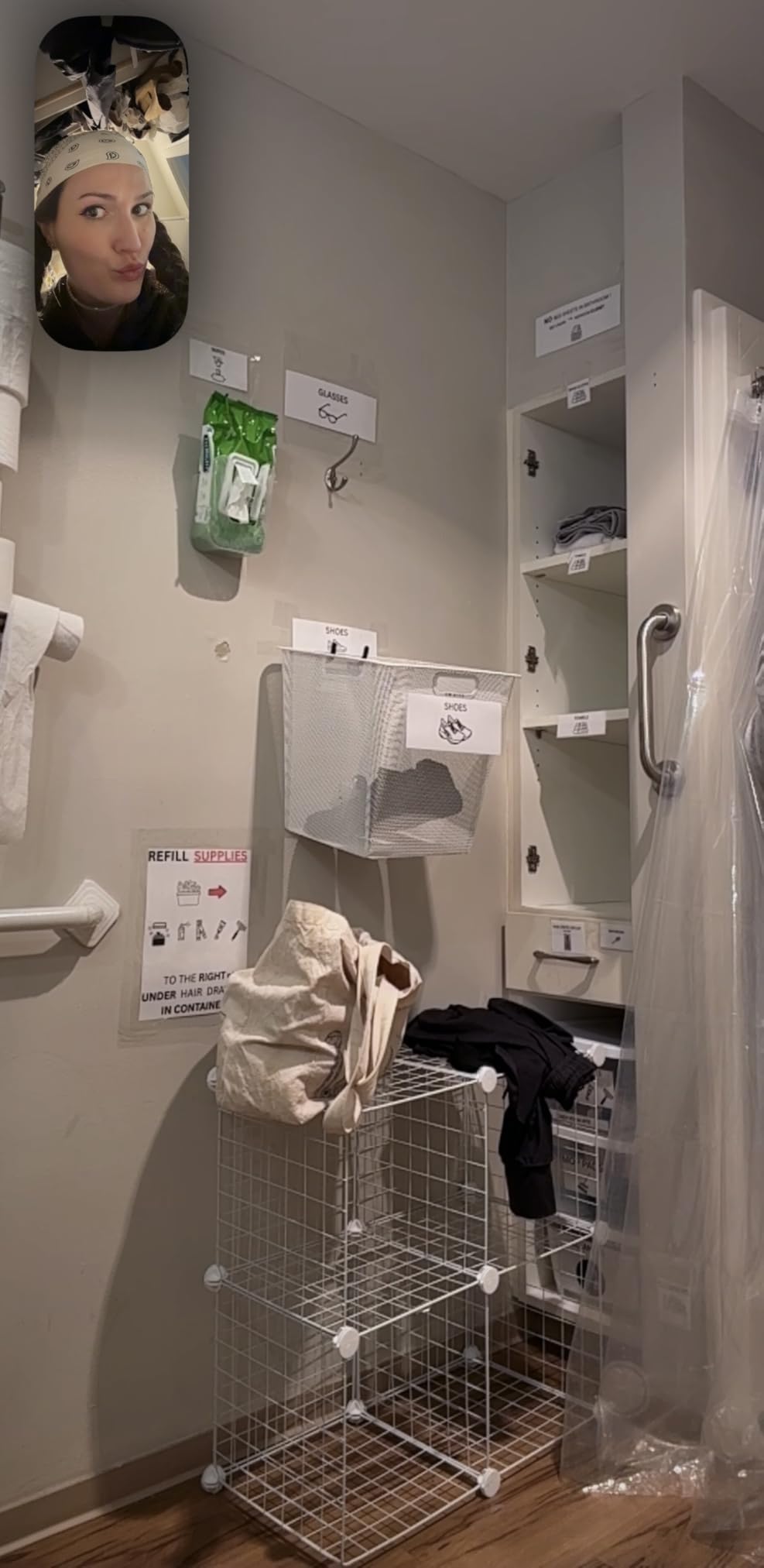
This is the bar I recommend for a small shower wall or for a child being helped in the tub, and it is the least expensive permanently mounted option here. A one inch diameter is genuinely easier for a small hand to close around.
At 12 inches it is the shortest bar on the list, and that changes its role. It is a handhold for a steady position or a threshold aid, not the bar to rely on for a full-body catch.
A 1 Inch Tube Is a Hand-Size Decision, Not a Strength Decision
Buyers sometimes assume a thinner tube means a weaker bar. Diameter governs how comfortably the bar is held, not whether the wall carries the load, and the listed 500 pounds still comes down to the fastening.
Six-Step Install and the Drill Bit Size
The install is specified as six steps with a 1/4 inch bit, drilling no larger than 5/16 inch for secure anchoring, and the screws are included. That removes the separate-hardware surprise that catches people with some other permanently mounted bars.
Where a 12 Inch Bar Falls Short
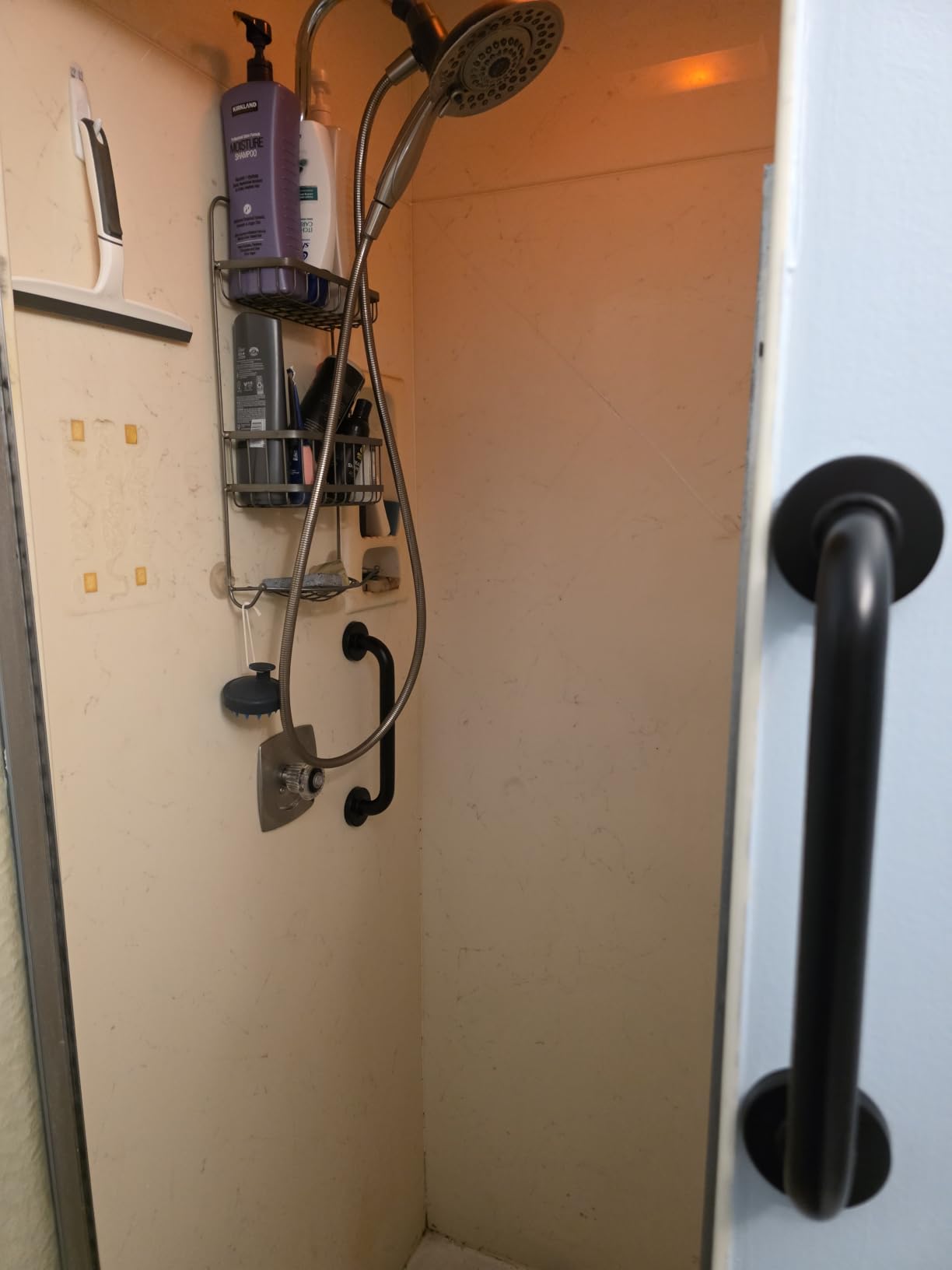
Twelve inches is short for full-body leverage during a fall, and reviewers treat it as a supplemental bar. A user who needs to shift their hand twice during a transfer will not find a second position on this span, so set the height at the elbow rather than at a convenient tile line.
6. Lifeassist 24 Inch Brushed Nickel Grab Bars, 2 Pack – Fully Welded One-Piece Construction
Lifeassist 24 Inch Brushed Nickel Grab Bar for Bathroom, 2 Pack
24 inch bar,1.25 inch tube,304 stainless steel,Fully welded one-piece,Two bars per pack
+ Pros
- Fully welded one-piece tube removes joint points that work loose
- Thick 1.25 inch tube gives a comfortable grip that reduces fatigue
- 304 stainless resists rust and pitting in constant moisture
- Two-pack includes 12 screws and 12 wall anchors
- Cons
- Smooth tube offers no knurled texture for very wet hands
- 24 inches will not span wider gaps without additional fasteners
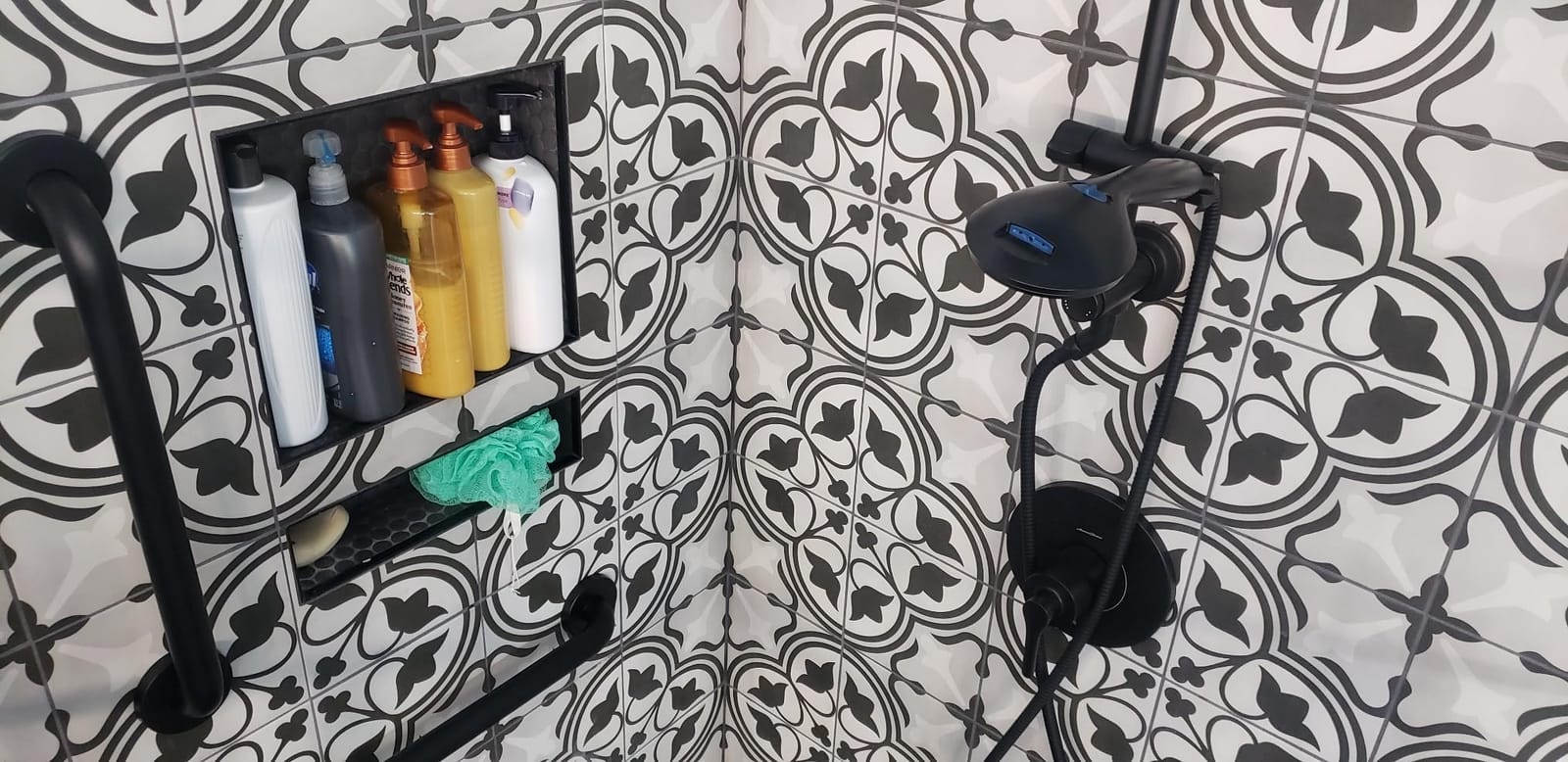
This is the construction detail that separates it from cheaper bars in the same list. The screw flange is permanently fused to the tube in a fully welded one-piece build, so there is no screwed-on joint at the highest-stress point.
That matters over a decade rather than on day one. Bars assembled from separate pieces develop play at the joint under repeated loading, and that play is felt as a subtle wobble long before anything fails.
Why Fully Welded Construction Matters Over Time
A continuous weld spreads pull force across the joint instead of concentrating it on a threaded connection that can loosen cyclically. The thick 1.25 inch tube is also singled out by reviewers for comfort during extended use.
304 Stainless in Constant Moisture
304 stainless is the mainstream corrosion-resistant choice for a bathroom and resists rust, peeling and pitting. In hard-water or coastal homes, marine-grade 316 stainless is the better long-term pick, and no bar in this group specifies 316.
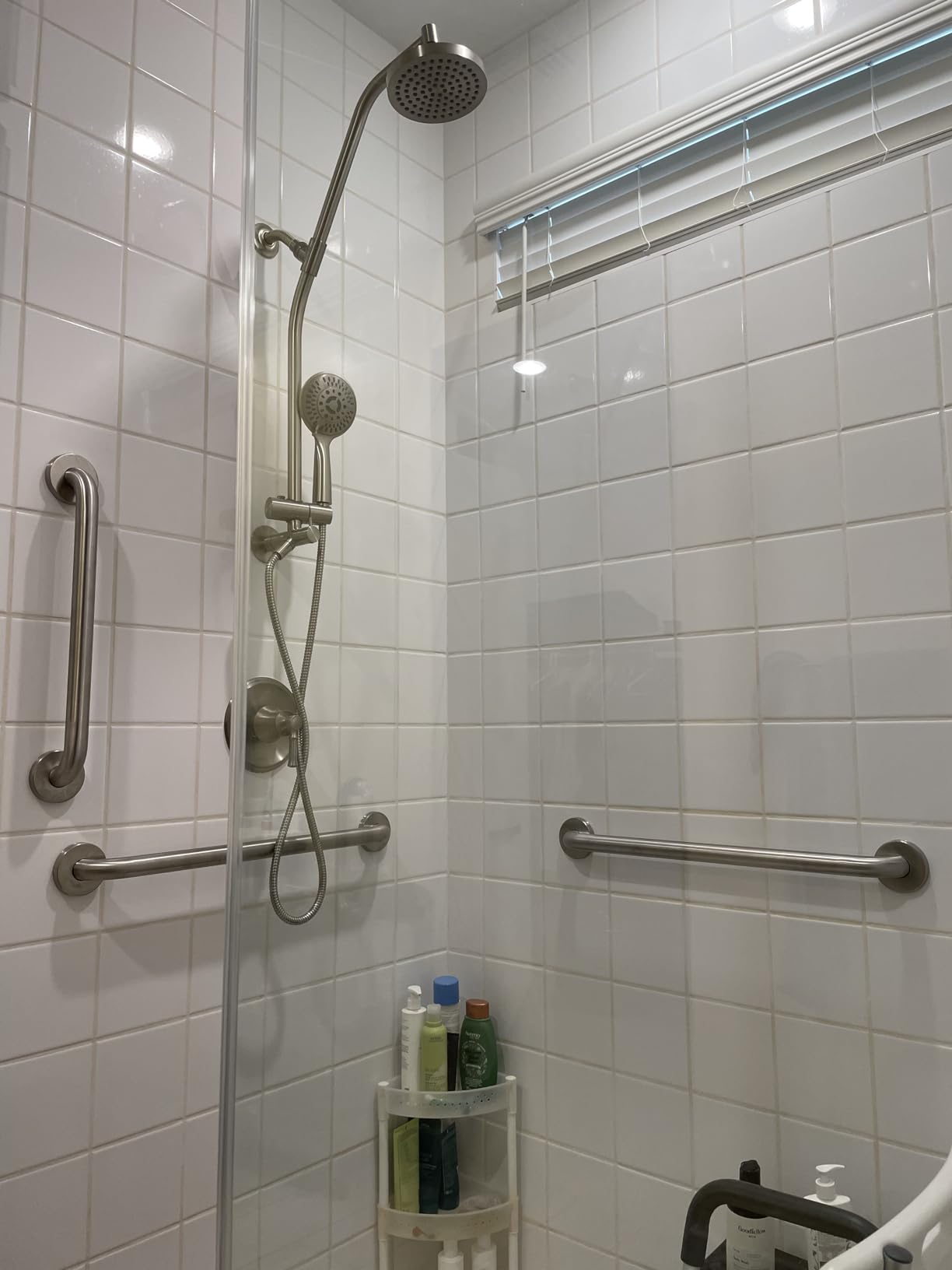
The Smooth Surface Trade-Off
The smooth tube offers no texture, and a minority of reviewers note it is less grippy in very soapy conditions. If the user showers with heavy soap or has reduced grip, a textured bar is the better pick, and at 24 inches this one will not span wider gaps without added fasteners.
7. Ravinte 16 Inch Knurled Grab Bars, 2 Pack – Budget Two-Bar Coverage
Grab Bars for Shower, 16 Inch Shower Handle, 2 Pack, Polished Nickel
16 inch bar,1 inch diameter,Knurled non-slip texture,Two bars per pack
+ Pros
- Knurled non-slip surface gives traction with wet or difficult hands
- 1 inch diameter fits a wide range of hand sizes
- Two-pack covers a shower entry and a tub wall
- Stainless steel resists rust over time
- Cons
- 1 inch tube is slimmer than 1.25 inch bars for full weight transfer
- Hardware is not listed as included so fasteners may need sourcing
Knurled stainless is the standard answer to the wet-hand grip problem, and this pair does it for less per bar than almost anything else here. The raised pattern bites into a wet palm, which is why it outperforms a smooth bar for reduced-grip users.
The two-bar format is what makes it competitive. Buying a shower bar and a tub bar as a set is the cheapest path to covering a whole bathroom, and the line is offered in seven lengths from 12 inch to 36 inch.
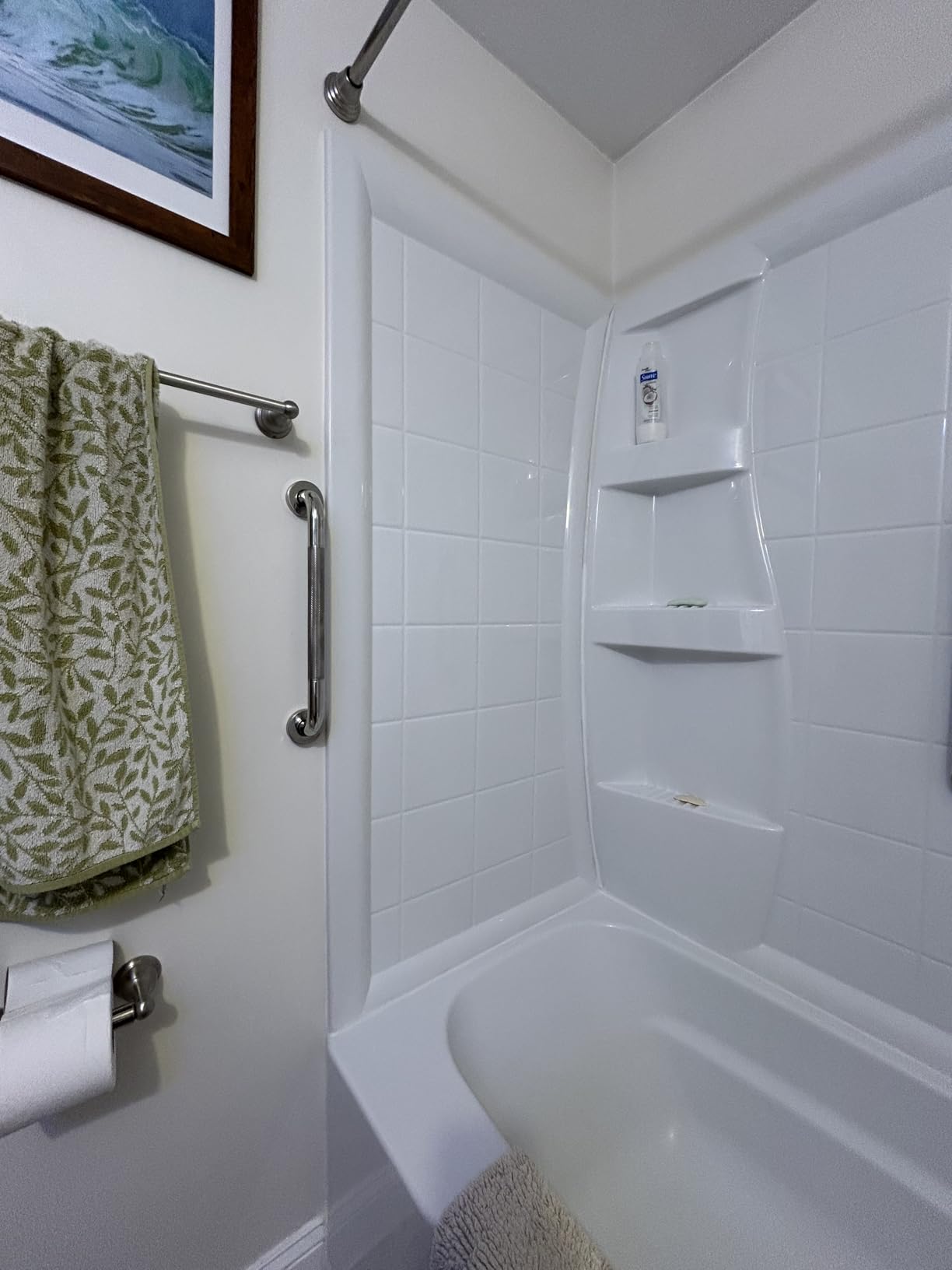
Knurled Texture and the Range of Lengths Offered
Knurling is a raised cross-hatch pattern that breaks the suction of a wet hand against a smooth tube. The trade-off is texture on bare skin, and a handful of buyers mention irritation on a sensitive forearm after long sessions.
Hardware That May Not Be in the Box
This is the practical caveat. The included-components field lists no hardware, so fasteners may need sourcing separately, a surprise a homeowner can discover only after the bar is in hand. Check what ships with the specific length before ordering.
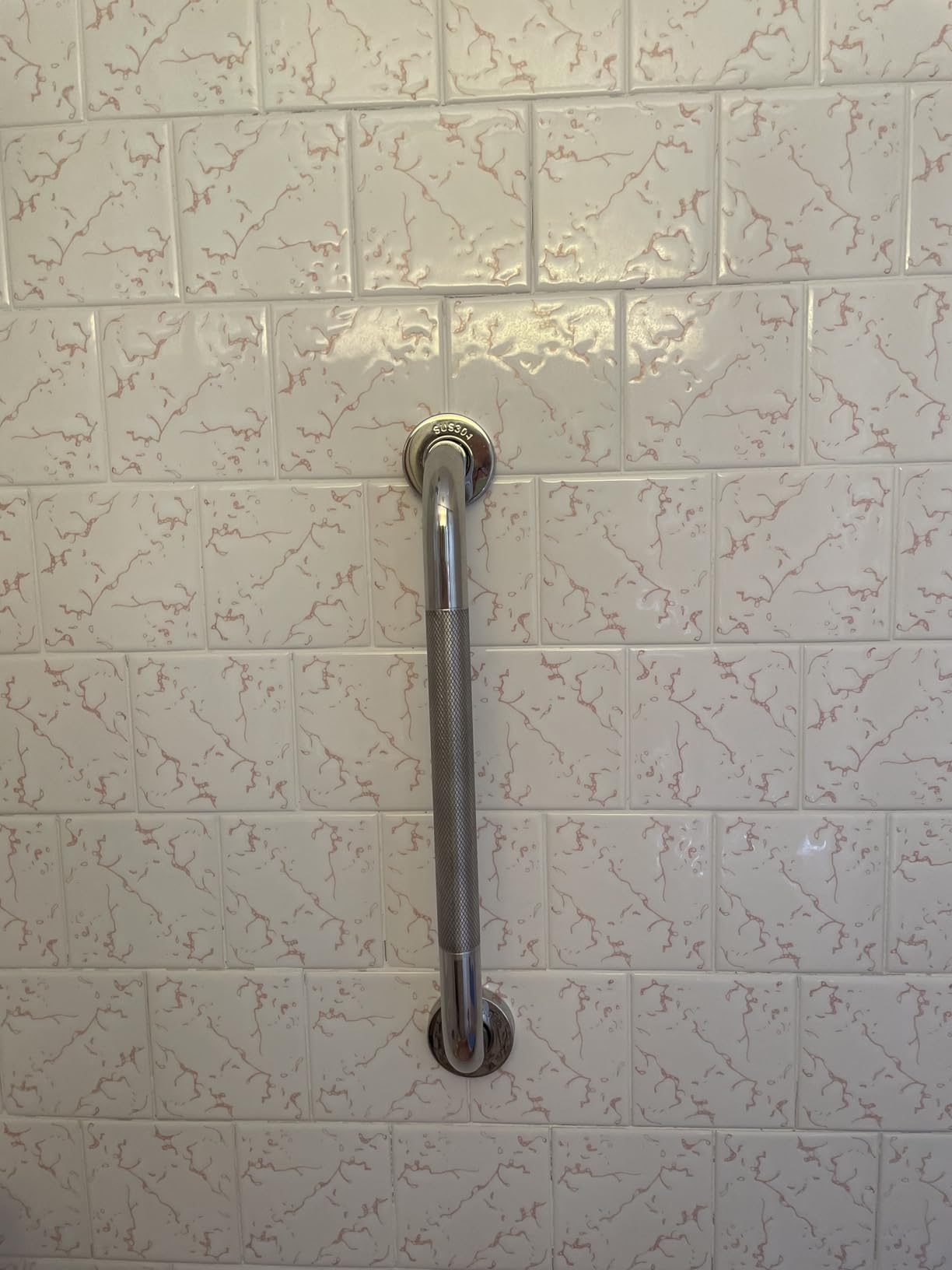
Matching the Diameter to the User
The 1 inch tube is the decision point. Reviewers note it is slimmer than the 1.25 inch bars preferred for full body weight transfer, and that is accurate. If the user is an adult with hand strength issues, choose the wider bar instead.
8. FANHAO 16 Inch Black Knurled Grab Bars, 2 Pack – The Finish That Does Not Look Clinical
FANHAO 2 Pack Shower Grab Bar, 16 Inch Stainless Steel Bathroom Grab Bar with Anti-Slip Knurled Grip, Shower Handle Bath Handle, Safety Bars for Shower Chair Bench, Senior, Elderly, Handicap
16 inch bar,1.25 inch tube,Oil rubbed black finish,Knurled anti-slip grip
+ Pros
- 304 stainless body rated to support 500 pounds with corrosion resistance
- Knurled surface holds well with wet or soapy hands
- Concealed screw design hides mounting holes
- Two-pack suits a shower and a tub alcove
- Cons
- Oil rubbed black finish shows water spots and soap residue
- Knurled texture can feel abrasive to sensitive skin
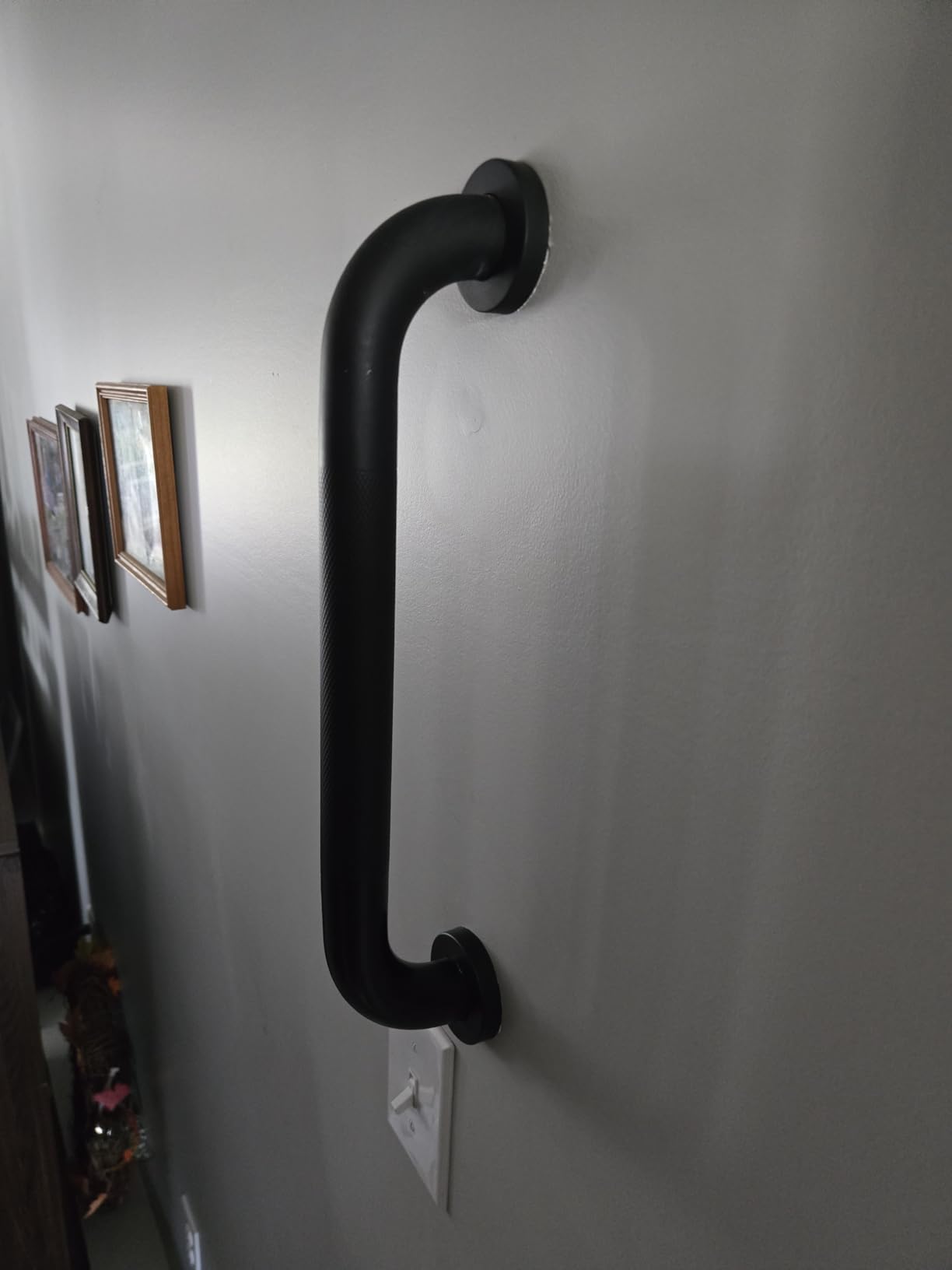
The most common objection to grab bars is cosmetic, and it is a real one. A brushed steel bar on white tile can make a bathroom look clinical to the person who has to use it daily, and this pair answers that with an oil rubbed black finish.
That matters more than it sounds. A person who dislikes the look of a grab bar is a person who may avoid using it, and support nobody reaches for is not support.
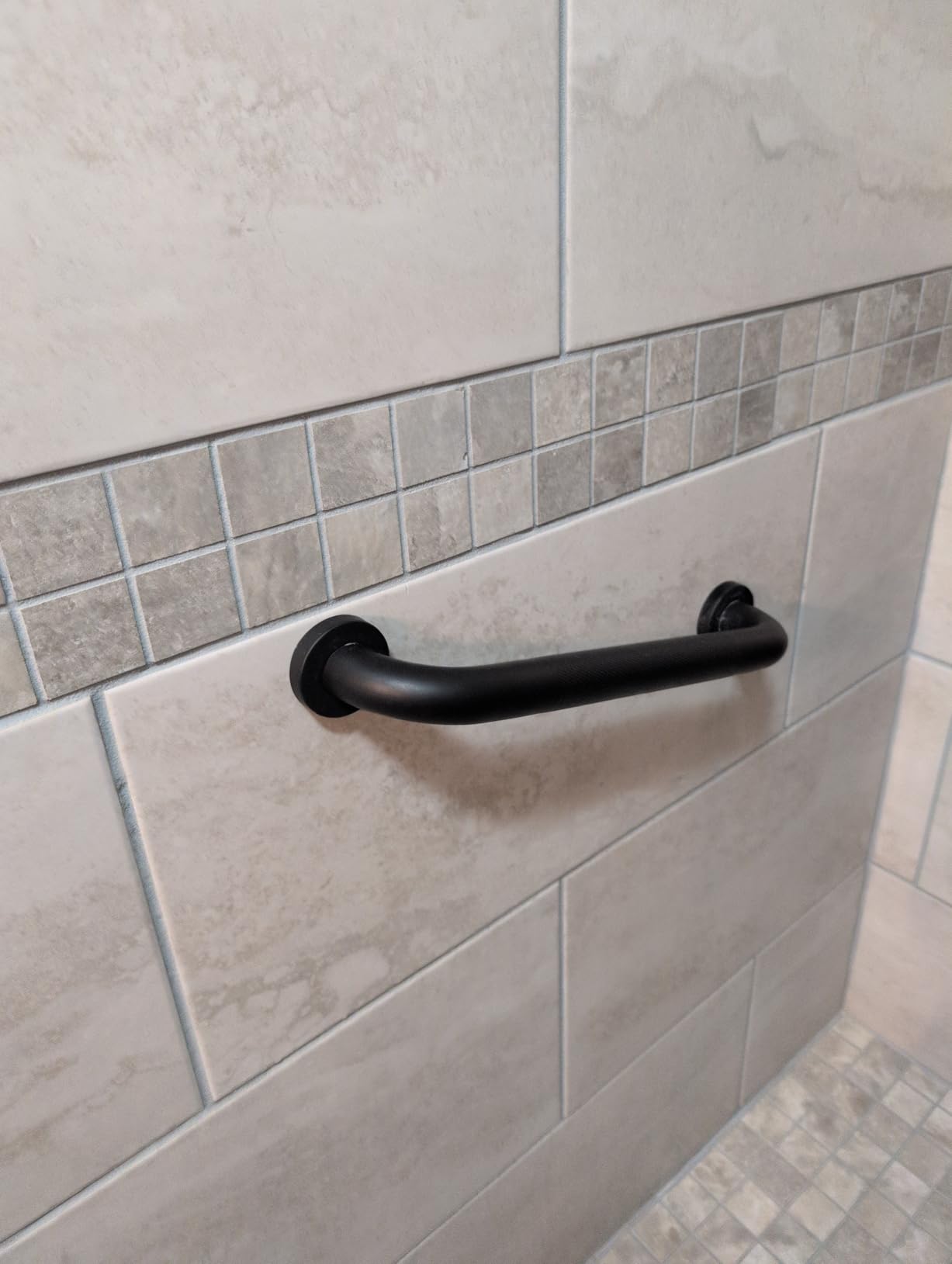
Dark Finish Aesthetics Versus Water Spots
Every cosmetic complaint comes down to the same thing: a dark finish shows water spots and soap residue more visibly than brushed stainless. A coordinated set matching shower trim and a towel bar will look considered for years.
Knurled Grip on a Dark Bar
The knurled center section is the functional half, and reviewers rate the grip highly for wet or soapy hands. As with any knurled bar, a few users find the texture abrasive, so thin-skinned users may prefer a silicone-gripped model.
Coordinating a Two-Bar Set With a Bathroom
The two-pack suits a full outfit: one bar at the shower entry, one on the tub or toilet wall, in the same finish. The pack includes a screws bag and quick installation manual, and carries a return and refund guarantee within one year of receipt.
9. Rockgoya 16 Inch 1.25 Inch Grab Bars, 2 Pack – Textured Grip and a Stud Spacing Caveat
Rockgoya 16 Inch Anti-Slip Shower Grab Bars, 1.25″ Diameter 2 Pack
16 inch bar,1.25 inch 304 stainless tube,Textured center section,Two bars per pack
+ Pros
- Anti-slip texturing works without feeling as rough as deep knurling
- Sturdy 1.25 inch 304 stainless tube resists corrosion
- Installs in about half an hour with supplied hardware
- Two-pack allows vertical and horizontal mounting
- Cons
- 14.5 inch center-to-center span does not match 16 inch stud spacing
- End plate joined with a few small tack welds
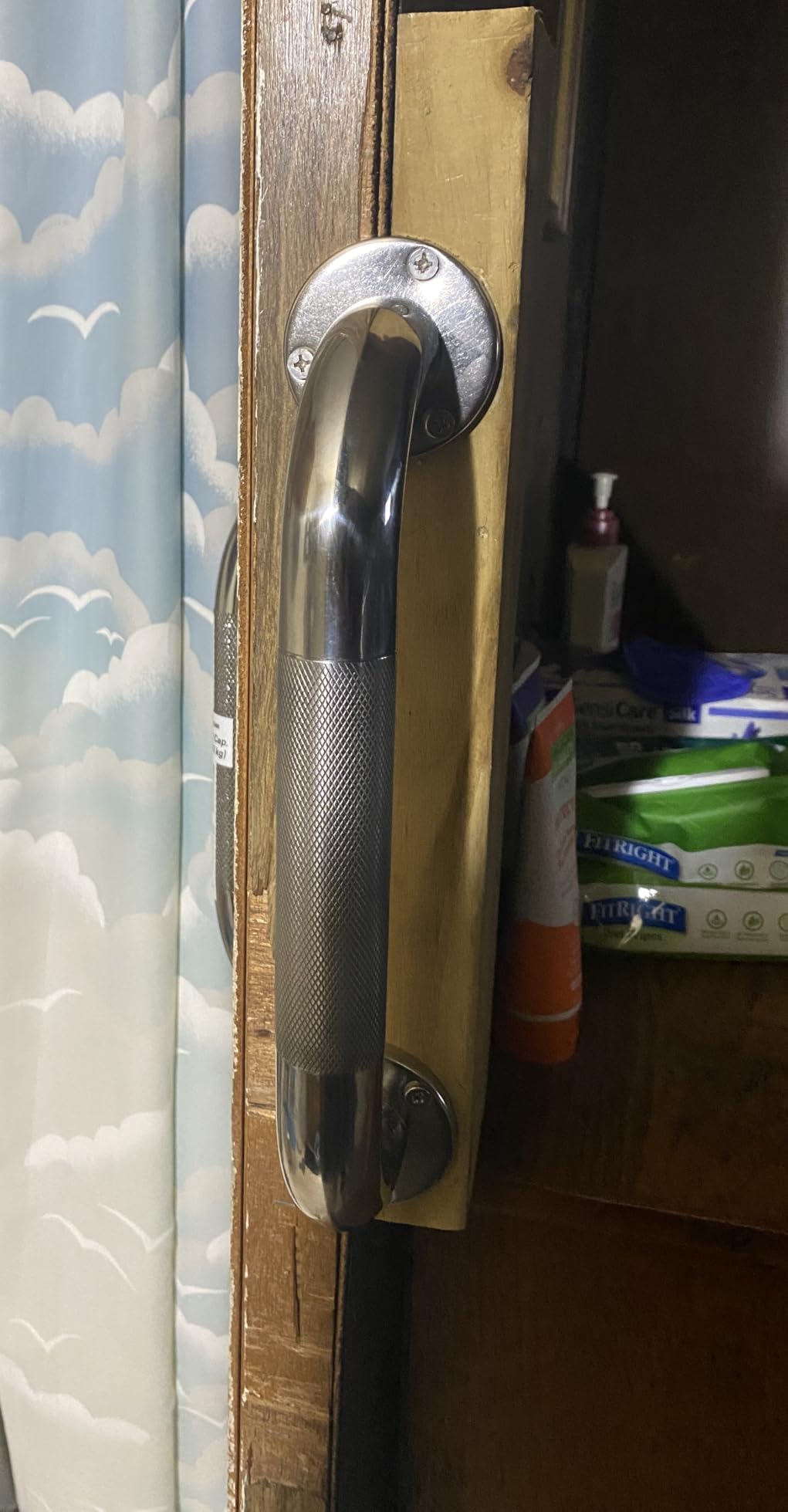
The texture on this bar is the best compromise in the group for grip without abrasion. Buyers describe it as effective for wet hands but not as rough as a file or a deep knurl, which is exactly the complaint raised against harder knurled bars.
The 1.25 inch 304 stainless tube matches the standard safety diameter, so this pair offers the profile of a heavier permanently mounted bar while coming with a fuller hardware pack.
14.5 Inch Mounting Span Against 16 Inch Studs
This detail comes from customer reports rather than the listing. The mounting holes sit 14.5 inches apart center to center while standard framing is spaced at 16 inches, so neither screw lands in a stud center without angling the fasteners outward.
Tack-Welded End Plates as a Weak Point
Detailed buyers note the end plate is joined to the tube with only a few small tack welds rather than a continuous seam, the opposite of the fully welded design on the Lifeassist bar above. It has not produced a failure pattern in reviews.
Vertical and Horizontal From One Two-Pack
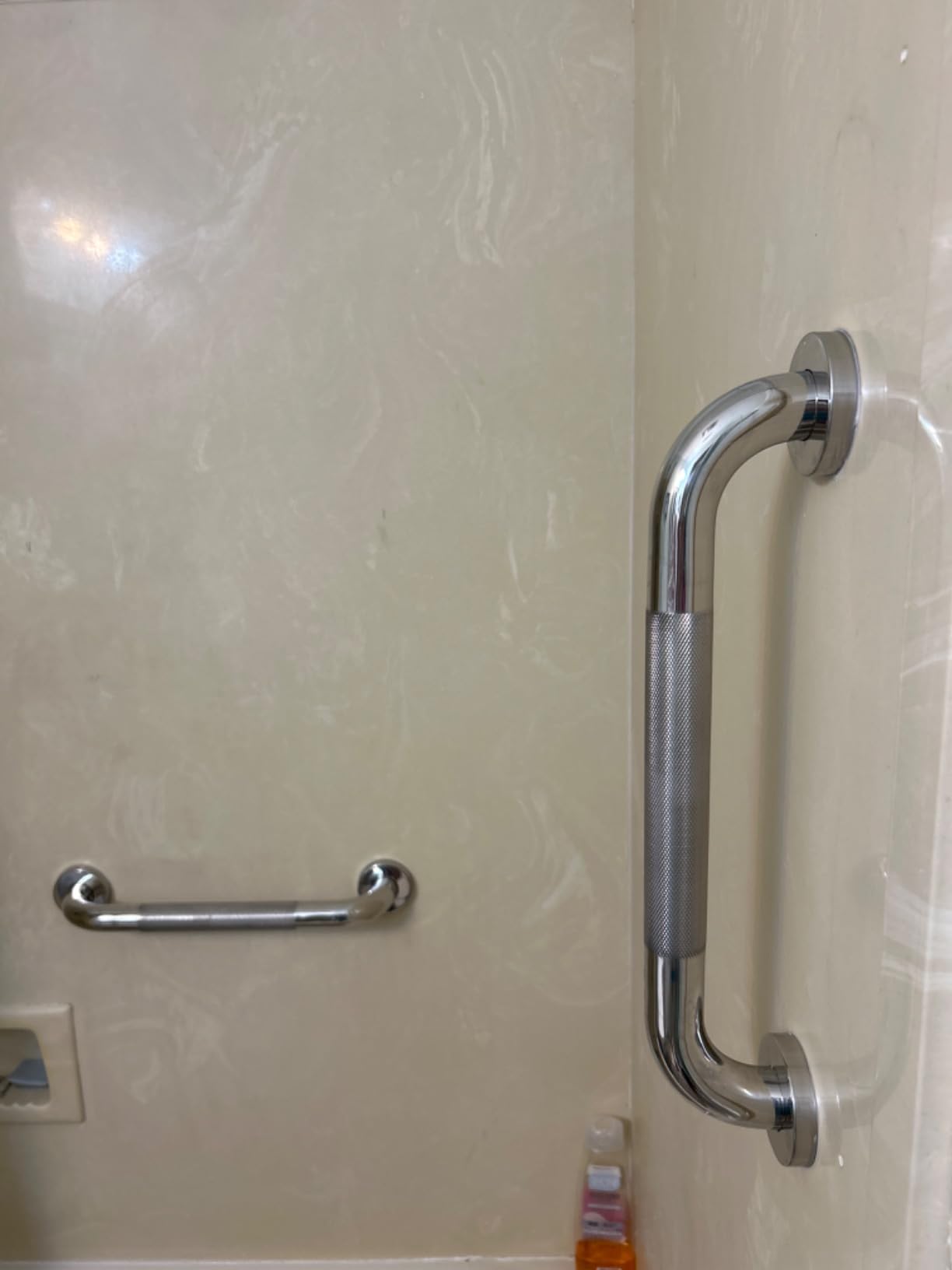
One bar can mount vertically at the shower entry and one horizontally on the back wall, covering the two most common needs in a standard shower. The package includes two bars, 12 long screws, 4 short screws and 12 expansion screws.
10. Munzong 32 Inch Knurled Grab Bar – Maximum Reach for Limited Mobility
32 Inch Shower Grab Bar, Munzong Brushed Nickel Stainless Steel Handle
32 inch bar,1.25 inch knurled tube,500 lb pull force,Concealed screw mount
+ Pros
- 32 inch length gives a long easy reach for users with limited mobility
- Knurled center section improves grip with soapy hands
- 1.25 inch stainless tube supports 500 lb of pull force
- Concealed mount works horizontal vertical or diagonal
- Cons
- Weakest average rating in this group at 4.4 with 8 percent one-star reviews
- 32 inch length will not align with 16 inch stud spacing
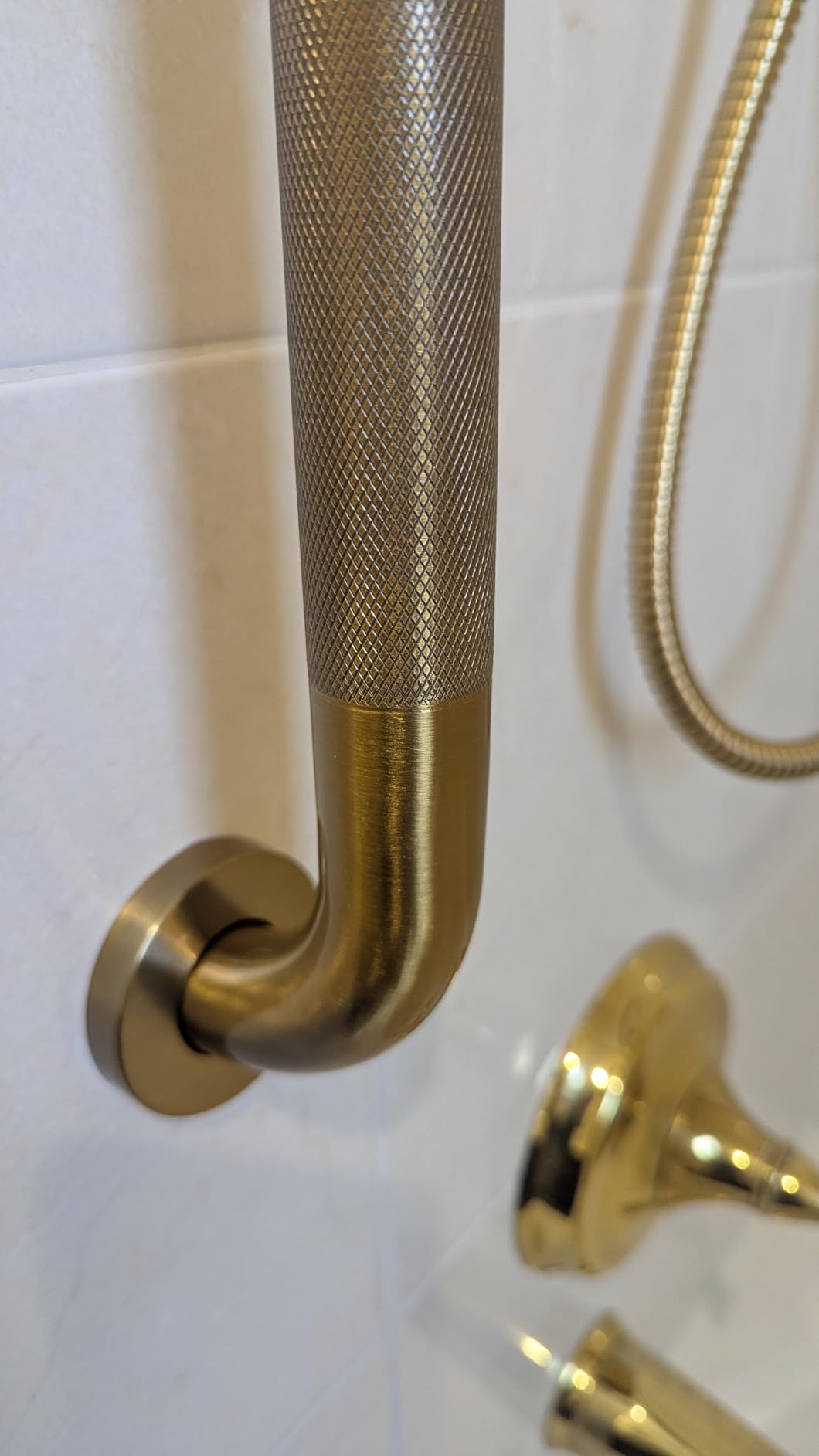
Reach is the reason this bar is here. A 32 inch span gives a user multiple hand positions from a single piece of hardware, which is what makes a sit-to-stand transfer or a descent to a shower seat manageable when balance is limited.
The knurled center section and 1.25 inch tube match the standard safety profile, and the concealed screw mount allows horizontal, vertical or diagonal placement.
Why 32 Inches Needs Engineered Blocking
A 32 inch bar cannot be fastened into a single stud bay. The holes sit roughly twice as far apart as the framing, so it needs engineered blocking between studs or a rated hollow-wall system, and on a finished shower that usually means opening the wall.
The Weakest Rating in This Group and What Buyers Say
This bar carries the lowest average rating in the set at 4.4, with 8 percent of reviews at one star, and the recurring complaint matches the geometry problem. The product is 32 inches long by 1.25 inches wide, weighs 0.7 kg, and is rated for 500 pounds of pull force.
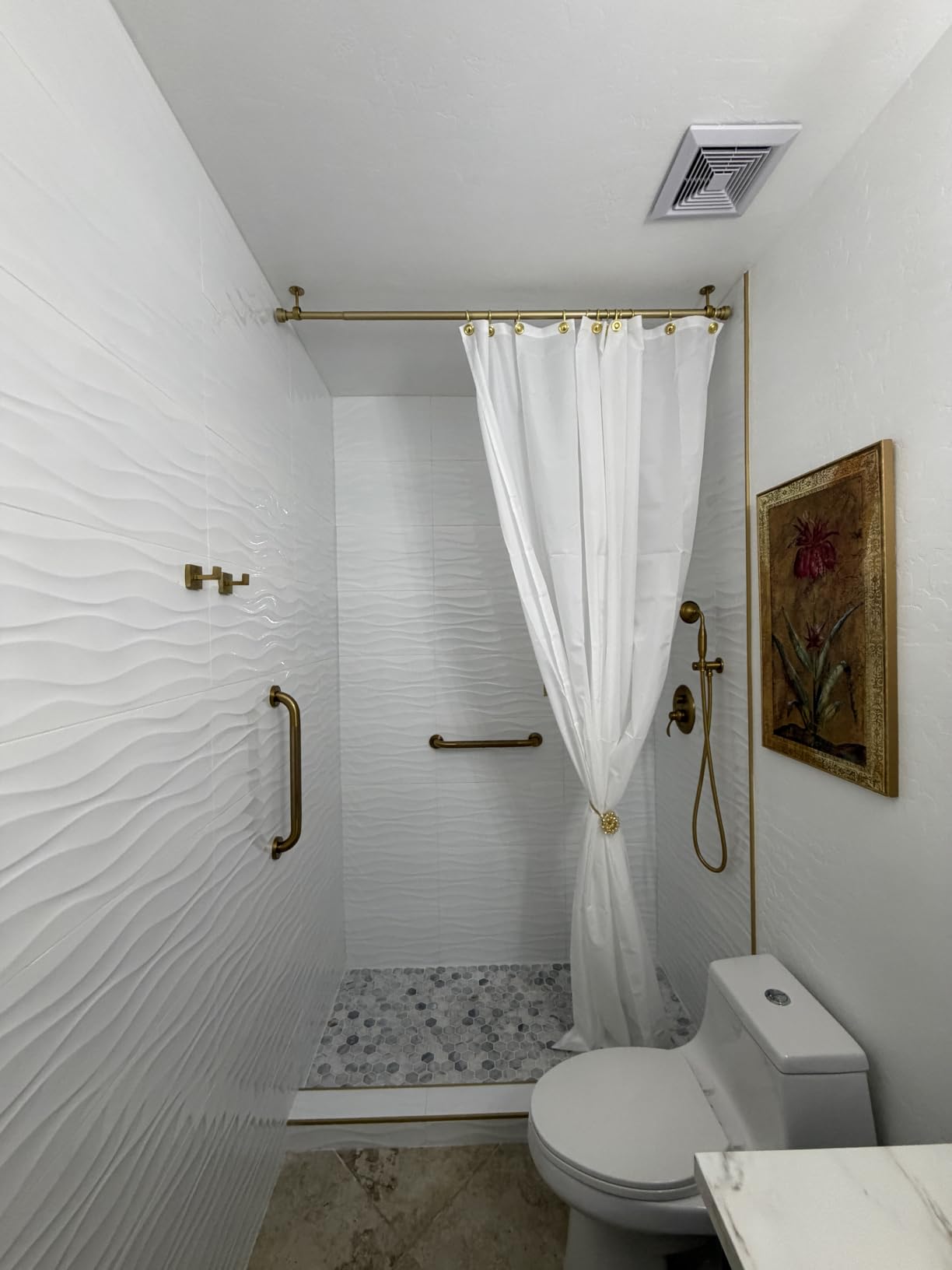
Who Benefits Most From the Extra Span
A tall adult who cannot comfortably reach a 24 inch bar, a user transferring to and from a shower seat, and anyone repositioning their grip mid-transfer are the three cases where the extra span pays off. A shorter user on a small wall gets nothing from it.
How to Choose a Grab Bar for a Shower Wall
Choosing among the best grab bars for shower walls comes down to five decisions, and only two are about the product. The rest concern the user and the wall behind it, which is why two identical-looking bars become completely different products once installed.
Length and Diameter: Sizing the Reach and the Grip
Length is a reach decision. Twelve inches is a handhold at one position, 16 to 18 inches is a general aid, and 24 inches or more is the only length giving multiple grip points during a transfer. Nominal length is not installed footprint, so measure the clear wall including flange projection, and remember longer bars span more than one stud bay.
Diameter is a hand-size decision. One inch suits small hands, 1.25 inch is the ADA standard and the best all-around compromise, and 1.5 inch gives a fuller wrap at the cost of clearance in a narrow stall.
Material and Finish: What Survives a Wet Bathroom
Separate three things the industry blends together: core material, which governs strength, surface finish, which governs grip and appearance, and mounting method, which governs how load reaches structure. 304 stainless is the mainstream choice for permanent indoor bars, and 316 stainless is better in hard-water or coastal homes. Chrome is a surface treatment, not a structural story.
Finish is a maintenance choice as much as a look. Brushed stainless hides fingerprints and water spots, polished nickel shows more, and a dark oil rubbed finish reads as designer hardware while making soap residue more visible.
Grip Texture: Peened and Knurled Versus Smooth
Texture creates friction against a wet hand, and that is the difference between a bar that can be grabbed mid-slip and one that slides. Knurled and silicone-gripped options give more aggressive purchase but collect soap residue and need cleaning, and deep knurling can irritate bare skin over long sessions.
Load Rating: What the 500 Pound Number Does Not Cover
The ADA baseline is 250 pounds of static force applied across the bar, its fasteners, its mounting device and the supporting structure. A 500 pound listing means the bar hardware handles that load, and nothing at all about whether your wall does. A 500 pound bar screwed into drywall with a standard anchor fails far earlier than a 250 pound bar fastened into a stud.
No-Drill and Suction Bars: Honest Limits
Suction and adhesive bars have a real use: light one-handed balance while standing still, such as steadying yourself while soaping. They are not support for a fall, a sit-to-stand transfer, or a full body weight event. Soap residue degrades the seal, temperature change cycles the vacuum, and on textured tile or a grout line a suction cup frequently will not hold at all. Treat them as a backup aid, never a substitute for an anchored bar.
Where to Place Grab Bars in a Shower
Placement decides whether a bar helps, and it is settled before any product is chosen. Most shower falls happen at a transition, so the bar has to sit where the user’s hand is already moving.
Vertical, Horizontal and Angled: Match the Bar to the Motion
A horizontal bar on the back wall is the workhorse: it supports standing steady, gives multiple hand positions, and is the easiest transfer point from a shower seat. A vertical bar at the entry wall assists stepping over the threshold and pushing up from a seat, because it aligns the grip with the upward movement. Match the orientation to the motion the bar must catch.
Height and How Many Bars a Shower Needs
ADA guidance puts horizontal bars at 33 to 36 inches from the floor, a sensible default for a back wall bar, but height should be set to the user’s standing elbow. A bar set too high is reached for and missed. A typical shower needs two bars, one horizontal and one vertical at the entry, plus a dedicated bar near a built-in seat. Never place one so close to the shower control that the user must release it.
Installing Grab Bars: Studs, Blocking and Wall Substrates
Installation is where a safety product becomes a safety product or does not. Everything above assumes the bar reaches something that carries the load, and the substrate decides what that something has to be.
Before You Drill: Find the Studs and Identify the Substrate
Use a stud finder or knock to locate framing, remembering standard spacing is 16 inches on center, so a 24 inch bar usually spans past one stud. Confirm whether the wall is bare drywall, cement board, tile over drywall, a fiberglass or acrylic surround, or a wall with existing blocking, and on a combo find out what is behind the surround before finalizing the bar position.
Substrate to Anchor: What Each Wall Can Carry
Studs and engineered blocking are the only correct answer for full body weight. A rated hollow-wall anchor system designed for the specific load is an honest alternative and a compromise, not an equal substitute. Standard drywall anchors and screws into a tile backer board with no framing behind them are not adequate, no matter what the listing claims. The tile face is a brittle surface over a membrane, not structure.
Drilling Tile and Fiberglass Without Cracking or Leaking
On tile, use a diamond bit for the pilot hole, mark the spot with masking tape so the bit does not skate, keep the drill slow with steady pressure, and place holes away from grout lines where possible. Seal the finished hole and flange edge with silicone. On a fiberglass or acrylic surround, the same low-speed approach applies, but these are thin shells, so fasteners must reach framing behind them and a surround installed without deliberate blocking may need the wall opened later.
When to Call a Pro
Call a professional installer when there is no framing where the bar needs to be, when the wall is finished tile or a surround you do not want to open, when the user has a history of falls or recent surgery, or when you cannot say what is behind the wall. Where a single bar is clearly not addressing the real risk, ask an occupational therapist for a home safety assessment covering seating, thresholds and lighting.
Frequently Asked Questions
Do suction shower grab bars really work?
They work for light one-handed balance while standing still, such as steadying yourself while soaping. They are not support for a fall or a sit-to-stand transfer, and the seal degrades with soap residue, temperature change and time. On textured tile or a grout line a suction cup often will not hold at all. Treat a suction bar as a backup aid, never as the primary support.
Do shower grab bars have to be installed in studs?
Studs or engineered blocking are the correct answer and the only one for full body weight. A rated hollow-wall anchor system is an honest alternative on a wall where framing is impossible, but it is a compromise. Standard drywall anchors and screws into a tile backer board with no framing behind them are not adequate for full body weight regardless of what the bar listing claims.
How do you install shower grab bars without studs?
First, confirm there is genuinely no framing, using a stud finder or knocking. Then open the wall and add 2×6 blocking between studs, close the surface, and mount into the new blocking. The alternative is a rated hollow-wall anchor system chosen for the specific wall type and load, which reduces rather than removes the risk. On a finished tile or surround wall, opening the wall is usually the honest answer.
What is the best material for shower grab bars?
304 stainless steel is the mainstream choice for permanently mounted indoor bars because it resists rust and corrosion in constant moisture. Marine-grade 316 stainless is the better pick in hard-water or coastal homes. Coated and plastic bars are for light-touch balance only. A chrome finish is a surface treatment, not a structural material, so judge the core metal and the wall connection separately.
What is a good size grab bar for a shower?
For grip, 1.25 inch is the ADA-standard diameter and the best all-around choice, with 1 inch for small hands and 1.5 inch for larger or weaker hands. For reach, 12 to 16 inches is a handhold at a specific position, while 24 inches or more is the only length that gives multiple grip points during a transfer. Measure the installed footprint, not the nominal length, before ordering.
Where should grab bars be in a walk-in shower?
A horizontal bar on the back wall at roughly 33 to 36 inches from the floor is the workhorse, set at the user elbow height, plus a vertical bar at the entry wall to assist with stepping over the threshold and pushing up from a seat. A curbless walk-in also benefits from a bar near the seat for the transfer. Do not place a bar so close to the shower control that the user must release it.
What are some alternatives to grab bars in showers?
A fold-down or flip-up rail, a built-in shower seat, a handheld showerhead, non-slip matting, a threshold ramp and a nightlight all reduce risk. Each addresses a different part of the problem, and a seat removes the need to stand rather than supporting standing. None of them replaces an anchored bar for a user who needs to hold on while standing, and none should be treated as an equivalent substitute.
Will Medicare pay for grab bars in the shower?
Original Medicare generally does not cover grab bars as a standalone bathroom safety item. Some Medicare Advantage plans offer supplemental bathroom safety benefits, and Medicaid programs in some states fund accessibility modifications. Local area agencies on aging and vocational rehabilitation programs often help with installation labor. Check with your plan directly, because coverage varies by policy and by state.
The Bottom Line on the Best Grab Bars for Shower Walls
If you want one default recommendation for a standard stud-framed shower wall, the Moen Home Care 24 inch bar is the pick, with the Amazon Basics 24 inch 1.25 inch bar as the lower-cost equivalent. For limited hand strength, go with the Amazon Basics 18 inch 1.5 inch bar for the fuller grip. For very wet or soapy hands, the Gotega silicone-gripped pair or the FANHAO and Ravinte knurled pairs hold better than any smooth bar. For a small hand or a tight wall, the AmazerBath 12 inch bar fits as a secondary aid. And for maximum reach, the Munzong 32 inch bar wins on span while demanding engineered blocking.
Whichever you choose, verify the substrate before you drill, seal every penetration, and set the height at the user’s elbow. That last step costs nothing and separates a bar that gets reached for from one that does not. Our picks for the best grab bars for shower walls were rechecked in 2026, and the installation guidance holds regardless of which brand ends up on your wall.