
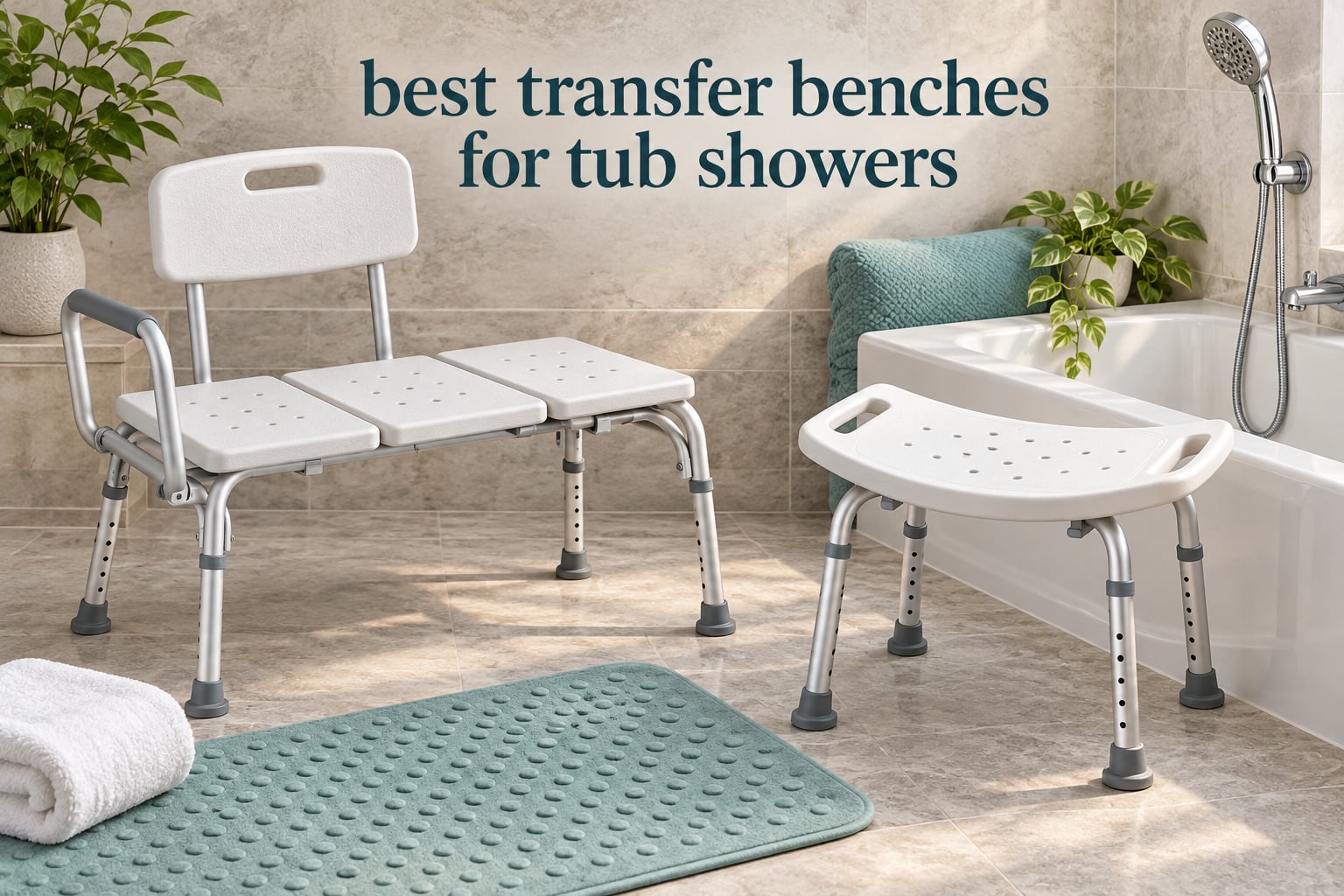
Finding the best transfer benches for tub showers usually starts the same way: someone in the house cannot safely step over a tub wall anymore. My family hit this after a hip replacement, and the difference between a fixed bench and a sliding or swivel model was the difference between bathing alone and waiting for someone to help every single evening.
I have now put ten of the most widely reviewed transfer benches through the same checks, and I want to be upfront about something. The spec sheets all look reasonable. The failures happen in the ten seconds it takes to sit down, slide across, and swing both legs over a wet tub wall, so that is what I measured: wobble under load, how hard the suction feet really hold, whether the slide glides or sticks, and how much usable seat is left on the dry side once you are in position.
This guide covers fixed A-frame benches, sliding benches, swivel carousel benches, curtain-channel designs and a 500 lb bariatric frame, plus the measurement method, the transfer sequence and the reimbursement question that stops a lot of purchases for months. It is written for 2026, and the short version is that the Medline is the one most people should buy, while anyone with arthritis or limited shoulder rotation should look hard at a swivel model instead.
What Is a Tub Transfer Bench?
A tub transfer bench is a height-adjustable bath seat with one end inside the bathtub and one end outside on the tub rim. The user sits down on the dry portion, pivots to face away from the tub, slides or swivels across the wall, brings both legs over, and turns back to face into the tub. Because the user never has to step over the highest point in the home bathroom, it removes the single most dangerous movement in bathing.
Our Top 3 Transfer Benches for Tub Showers in 2026

Medline Transfer Bench
- 400 lb capacity
- 17.5-22 in push-button height
- Reversible backrest
- Suction cup feet

Platinum Health Carousel
- Swivel seat with slide rail
- Padded polyurethane seat and back
- Flip-up pivoting arms
- Reversible

Moen DN7105 Home Care
- 400 lb capacity
- 16.5-21 in height
- Pedestal outside leg
- HDPE seat with backrest
Comparing All 10 Transfer Benches Side by Side in 2026
| Product | Details | |
|---|---|---|
| Medline Transfer Bench for Bathtubs |
|
Check Latest Price |
| Platinum Health Carousel Sliding Swivel Bench |
|
Check Latest Price |
| Moen DN7105 Home Care Premium Bench |
|
Check Latest Price |
 HOMLAND BC4 Transfer Bench with Backrest HOMLAND BC4 Transfer Bench with Backrest |
|
Check Latest Price |
 Drive Medical Splash Defense Bench Drive Medical Splash Defense Bench |
|
Check Latest Price |
 Vive Shower Transfer Bench Vive Shower Transfer Bench |
|
Check Latest Price |
 Eagle Health Swivel Tub Transfer Bench Eagle Health Swivel Tub Transfer Bench |
|
Check Latest Price |
 DMI Sliding Transfer Bench and Shower Chair DMI Sliding Transfer Bench and Shower Chair |
|
Check Latest Price |
 Platinum Health Gateway Sliding Bench Platinum Health Gateway Sliding Bench |
|
Check Latest Price |
 HEALTHLINE Bariatric Transfer Bench HEALTHLINE Bariatric Transfer Bench |
|
Check Latest Price |
1. Medline Transfer Bench – Best Overall for Tub Showers
Medline Transfer Bench for Bathtubs and Showers, Adjustable Shower Bench and Bath Seat For Seniors and adults, Slip-resistant Feet, Heavy-Duty 400 lb. Weight Capacity, Tool-Free Assembly
400 lb capacity
Aluminum frame
17.5-22 in seat height
32 in overall width
+ Pros
- Rust-resistant aluminum frame rated to 400 lb
- Push-button tool-free height adjustment
- Reversible backrest fits either tub orientation
- Suction cup feet grip the tub floor
- Cons
- Only one arm rest
- so grab support is one-sided
- 32 in overall width needs clearance beside the tub
More than seven thousand buyers have rated this bench, and it is the one I put in my own family’s bathroom. The rust-resistant aluminum A-frame carries 400 lb, and the two columns lock with push buttons you can reach from a seated position, which matters more than it sounds. Fiddling with a wing nut while sitting on a wet bench is exactly when falls happen.
Seat height runs 17.5 to 22 inches, which covers the range most adults need to keep both feet flat on the tub floor. The seat is 16.25 inches deep by 26.5 inches wide, so there is room to reposition without shuffling toward the edge.
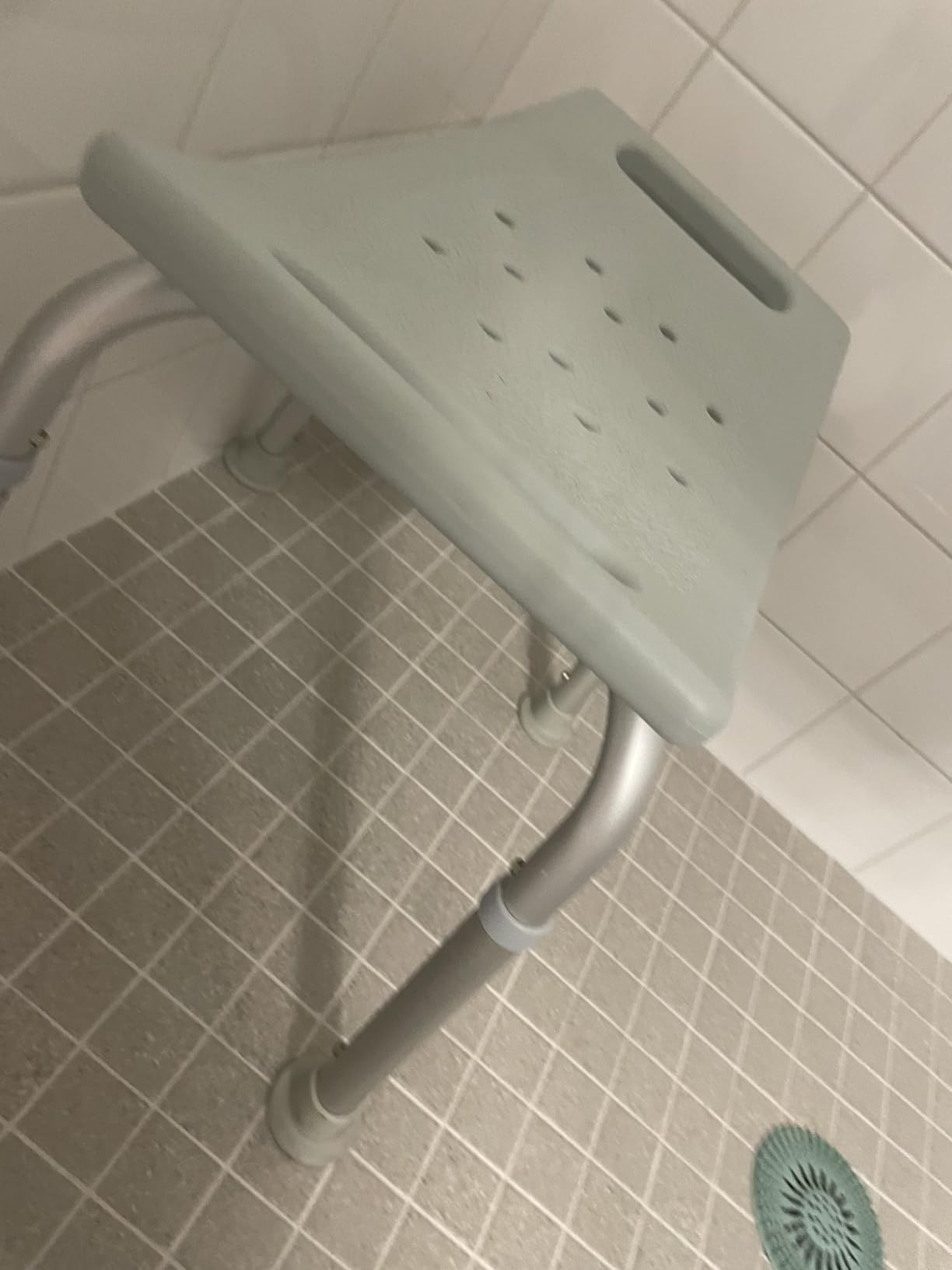
The reversible backrest is the quiet hero. Flip it to whichever side your tub wall is on and the bench works in an alcove tub or against a wall without swapping parts, and the wide suction cup feet held firm in my testing even with the load shifted to one edge.

Why the 400 lb rating matters for sizing
Four hundred pounds is the category standard and I treat it as a minimum rather than a target. Sized to roughly double the user weight, this bench covers a single user up to 350 lb, or a 200 lb user with a caregiver pushing during the transfer.
Where the 32 inch footprint causes trouble
Overall width is 32 inches with an 18 inch depth, compact against the sliding models in this list, but it still needs a clear landing zone on the floor side. If your toilet sits within about 18 inches of the rim, the outside legs land exactly where a helper needs to stand.
Who should look past this bench
If you cannot rotate your torso at all, a fixed seat asks you to shuffle the full length of the bench unaided. Swivel designs move that load off your joints, and if your tub wall is higher than the height range allows, a curtain-channel or space-saving model will serve you better.
2. Platinum Health Carousel Sliding Bench – Best Swivel and Padding
Platinum Health Carousel Sliding Shower Chair Tub Transfer Bench with Swivel Seat, Premium Padded, Pivoting Arms, Adjustable Space Saving Design for Tubs, Inside Shower, for Handicap & Seniors, Blue
Swivel plus slide rail
Padded polyurethane
330 lb rating
Adjustable to 23 in
+ Pros
- Swivel and slide removes the scooting that strains knees and hips
- Closed-cell padding stays warm and does not absorb water
- Flip-up armrests allow a direct wheelchair transfer
- Compact swivel footprint suits small bathrooms
- Cons
- Solid seat has no perineal cut-out
- 330 lb rating is below the 400 lb standard
- Release lever sits on one side only
This is the bench I recommend when joints are the problem rather than balance. You unlock a lever, rotate the seat 90 degrees so you are sitting sideways, then slide it along the rail into the tub. The swivel locks at 90 degree intervals, so the seat cannot creep while you move your legs across.
The padding is closed-cell medical-grade polyurethane, which means it does not soak up water and wipes clean with a disinfectant. Buyers with arthritis and post-surgical users describe it as the first bench that made transfers genuinely safe.
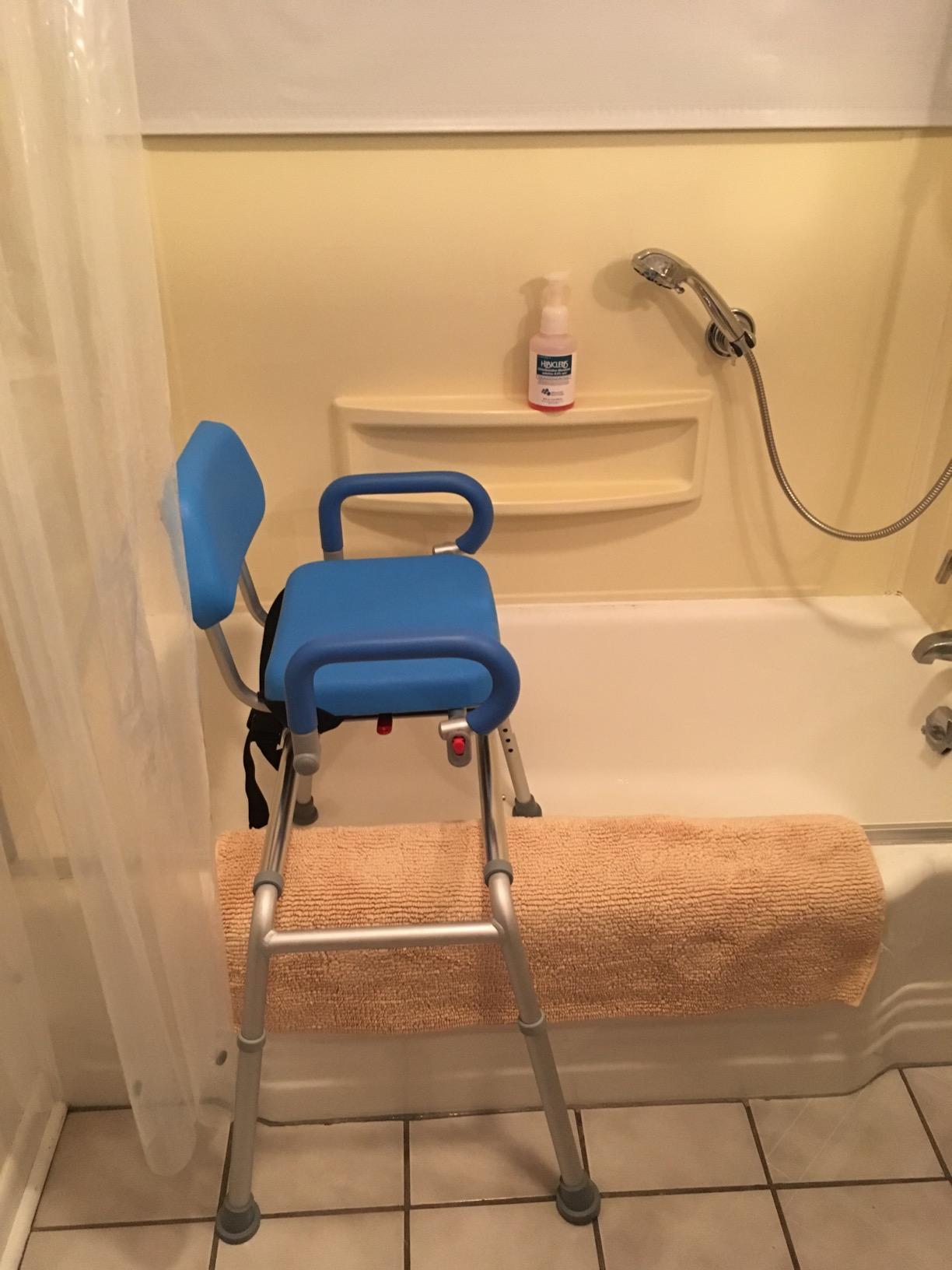
Where it outshines the fixed benches is space. Because the seat rotates rather than extending straight out, the chair protrudes far less into the bathroom than a 39 or 40 inch sliding model, and reviewers repeatedly mention using it in very small rooms.
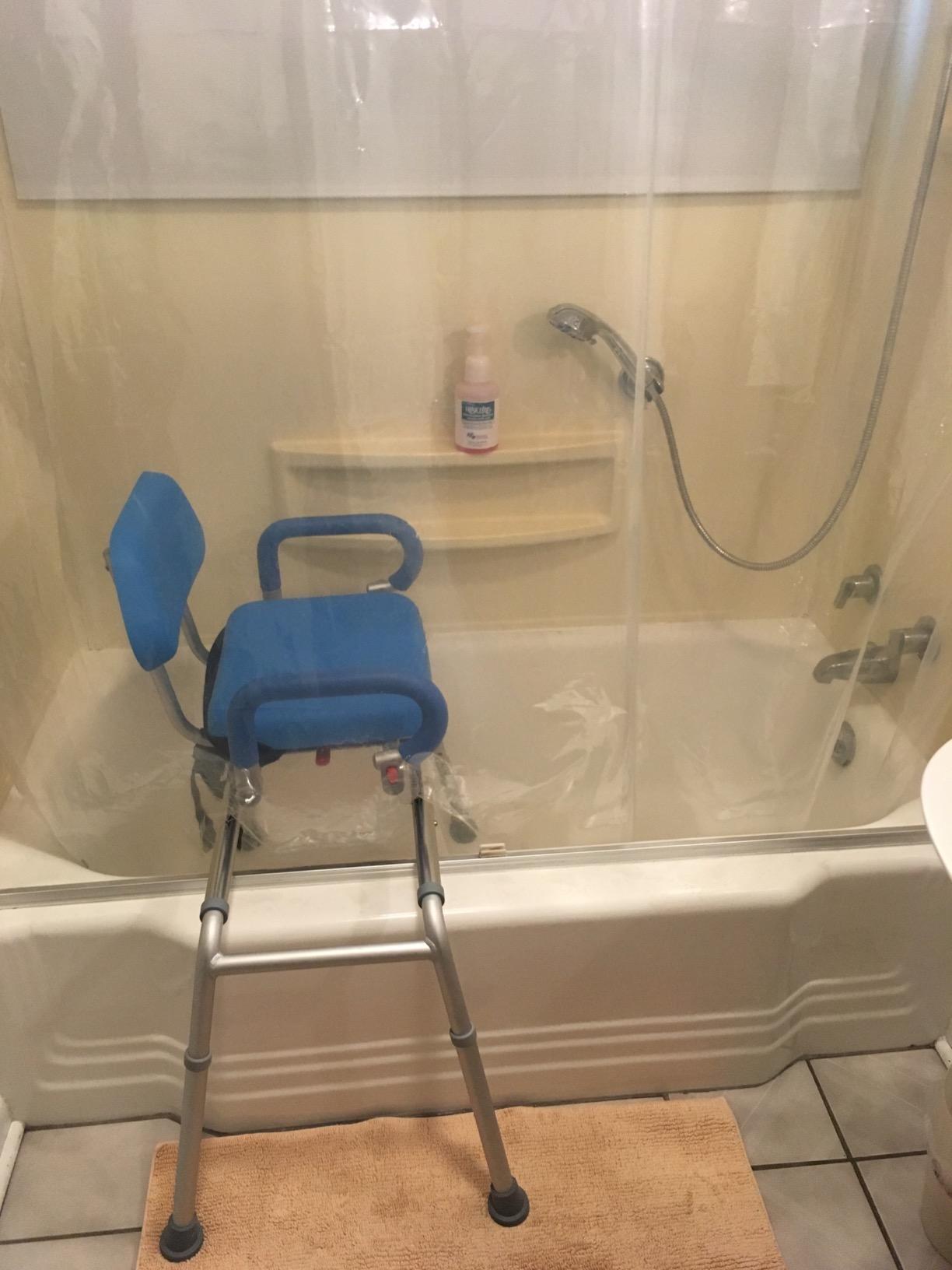
Pivoting arms change the transfer
The armrests flip up so a wheelchair can roll straight up to the frame before the person moves across, removing the sideways shuffle that stalls a transfer halfway. Once lowered they lock securely and give real leverage for pushing up to standing.
Weight limit and the one-sided release lever
The rating is 330 lb, below the 400 lb standard here. The release lever and tab also sit on one side of the seat, a real problem for anyone with one-sided paralysis who must operate it with a particular hand. Angled rubber feet rotate to match tub contours or a flat floor.
Two accessories you will probably want
Deep soaker tubs need the optional leg extension kit, and a standard shower curtain will not contain the water on this design. Deep tub plus normal curtain means a flooded floor, and the flooded floor is a fall risk in itself.
3. Moen DN7105 Home Care Bench – Best Pedestal Stability
Moen DN7105 Home Care Premium Tub Transfer Bench
400 lb capacity
16.5-21 in height
Pedestal outside leg
Limited lifetime warranty
+ Pros
- Pedestal outside leg resists tipping forward and back
- Wide 33 in seat suits legs that cannot bend
- Per-leg adjustment handles sloped tub floors
- Handle gives a solid pull point into the tub
- Cons
- No drainage holes so water pools on the seat
- Loose handheld shower head holder
- Wide seat is awkward near a toilet
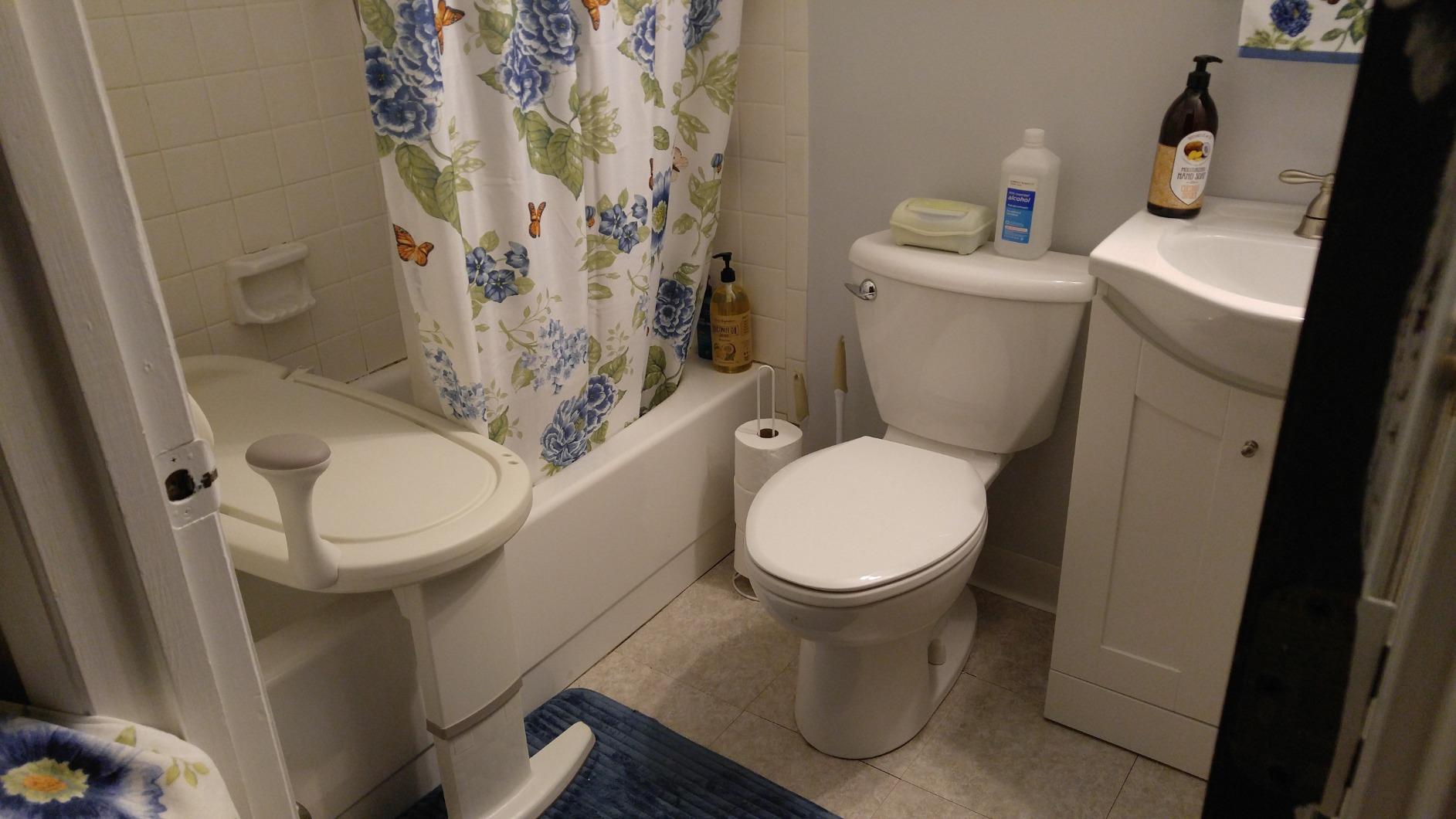
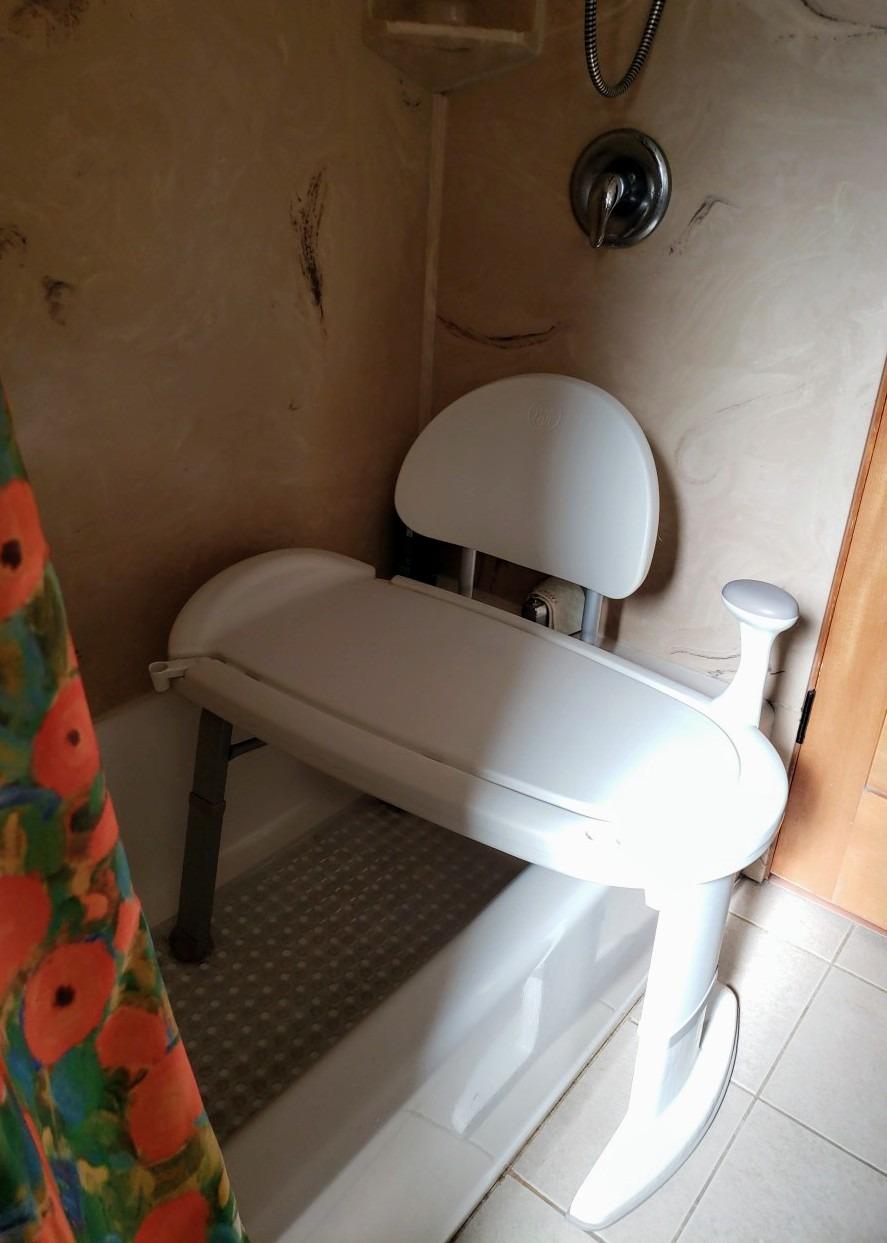
Most fixed benches use a straight outside leg that can tip toward the tub when weight shifts forward. The Moen uses a pedestal-style outside leg instead, and that geometry is why it does not feel like it will tip when you lean in to move your legs across.
The seat is 33 inches wide and 18.11 inches deep, the widest fixed seat here, which makes it the easiest to sit down onto and turn around on. Buyers call this out for anyone with a leg that cannot bend, and the high-density polyethylene will not warp or absorb water the way thin plastic does.
Seat height adjusts from roughly 16.5 to 21 inches with push-button leg adjusters, and each leg moves independently, which is how it copes with a tub floor sitting lower than the bathroom floor. That leveling is what lets a user keep both feet flat instead of dangling.
Water management is the weak point
There are no drainage holes in the seat or back, so water sits on the surface until it runs off. That is uncomfortable and makes the seat slippery on the way out. A towel on the seat is the standard workaround.
Wobble on sloped tub floors
A few reviewers report the inner legs sitting unevenly on sloped tub floors, causing wobble when weight shifts off the seat. Fix it during setup by leveling each leg before the first transfer. At 17.2 pounds it is the heaviest bench here, so repositioning takes two people.
How the pedestal handles a forward lean
Because the outside support is a pedestal rather than a splayed leg, the frame resists the forward weight shift that catches out fixed benches mid-transfer. In practice the user can lean in to bring both legs over the wall with one hand on the handle rather than needing a caregiver to brace the tub rim from the far side.
Warranty and included extras
This bench carries a limited lifetime warranty, which is unusual in the category. It includes a handheld shower head holder and cup holder, though owners report the holder is loose and the receptor does not fit every hose.
4. HOMLAND BC4 Transfer Bench – Best Budget 400 lb Frame
HOMLAND Tub Transfer Bench with Backrest for Bathtub, Height Adjustable
400 lb capacity
17.5-22.5 in height
A-frame tubing
Seat drainage holes
+ Pros
- Thicker than standard aluminum tubing for real stability
- 400 lb rating at an entry level price point
- Push-button tool-free height adjustment
- Seat drainage holes stop water pooling
- Cons
- Fewer published reviews than the leaders in this category
- Aluminum frame should be dried after use
The HOMLAND is the pick when budget is the deciding factor and the user is around or under 300 lb. It carries a 400 lb rating on an A-frame built from noticeably thicker tubing than typical budget benches, and that extra wall thickness is what stops the frame feeling flexy when a caregiver leans on the armrest.
Height adjusts by push button from 17.5 to 22.5 inches, a slightly taller top end than most fixed benches, and the backrest reverses to either side. Assembly is a button-lock design with no tools.
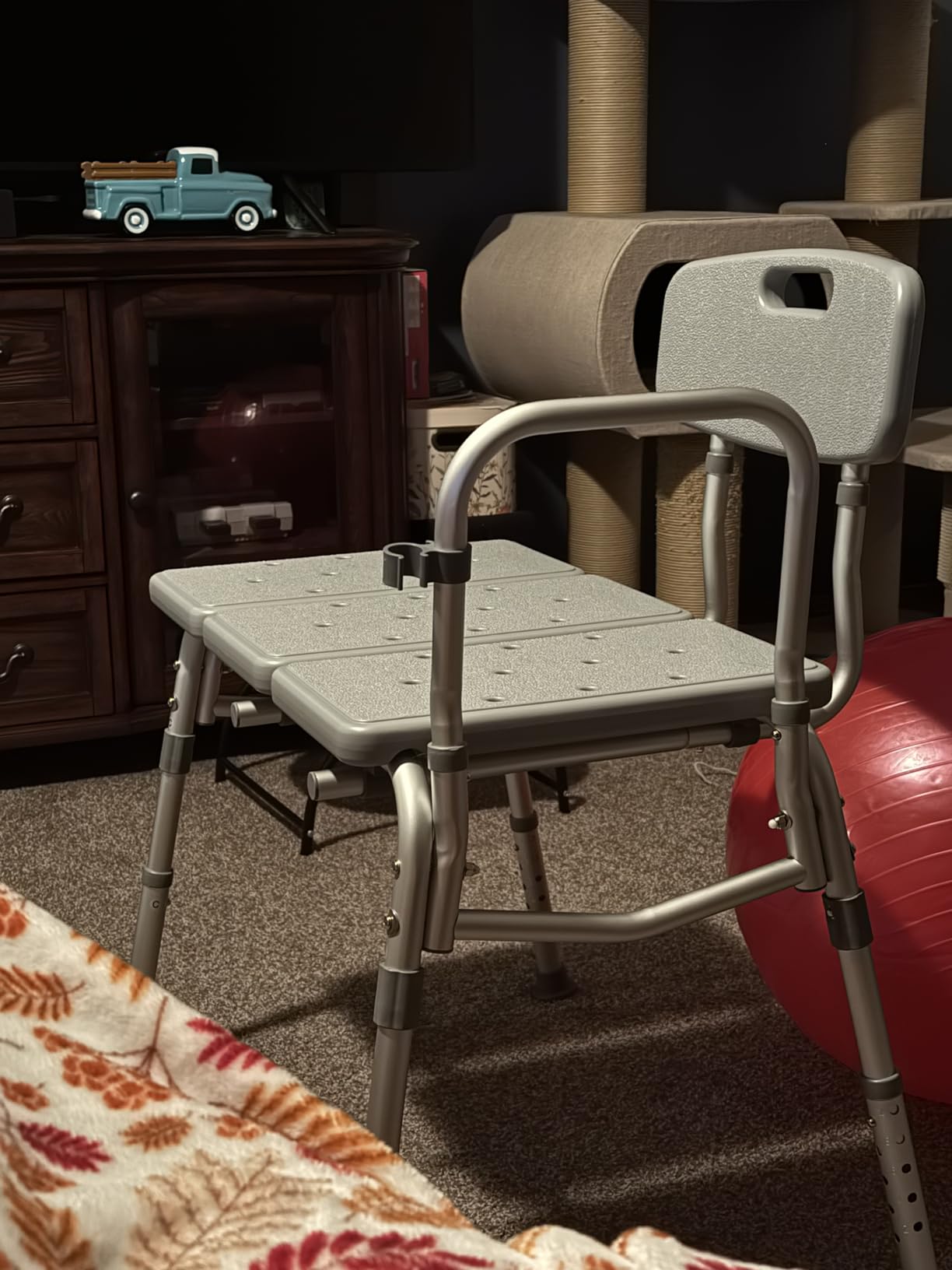
Unlike several cheaper frames, the seat has drainage holes that keep water from pooling under the user and off the exit path. The seat is 27 inches wide by 16.14 inches deep and the minimum overall width is 32.3 inches, in line with the other fixed benches here.
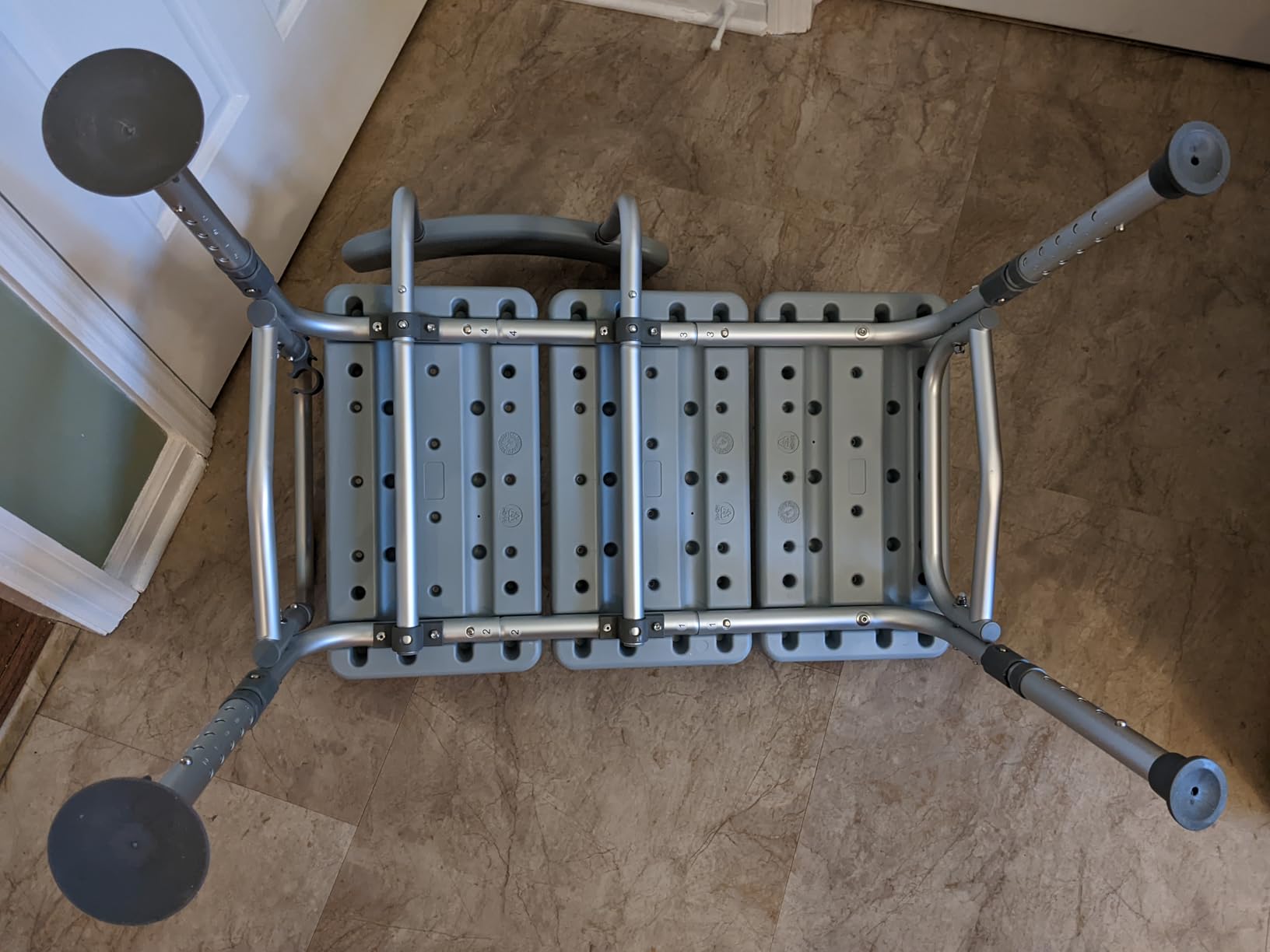
What you give up for the lower cost
There is only one arm rest, so the user has a single grab point. This bench also has far fewer published reviews than the Medline, DMI and Moen options, so you are trusting the spec sheet and a smaller body of owner feedback.
Who this bench suits
At a 27 inch wide seat and a 400 lb rating, this frame fits users around 200 lb and under, or a smaller user with a caregiver assisting during the transfer. It is a sensible pick for a rental, a second bathroom, or a short post-surgical window where the budget does not justify a padded swivel model.
Care and cleaning
Aluminum is rust-resistant rather than rust-proof, so dry the frame after each use. Wipe the seat with a standard disinfectant, run water through the holes and leave the bench open to air. Skipping that is how mildew finds the seat frame joints.
5. Drive Medical Splash Defense – Best Curtain and Splash Control
Drive Medical Splash Defense Tub Transfer Bench, Adjustable Height, White
Curtain channel bars
400 lb capacity
0.5 in increments
Reversible layout
+ Pros
- Curtain channel lets a standard curtain close inside the tub
- Keeps the bathroom floor dry and slip risk down
- All four legs adjust independently
- Pinch-free lever system avoids finger injuries
- Cons
- Channel bars only clear standard height tub walls
- Wide enough to barely fit inside a standard tub
- Drop-down loops can scratch the tub edge
The most common complaint in this category is a flooded bathroom floor, and a wet floor is a fall. This bench is the only design here built to solve it: curtain channel bars run along the frame so a standard shower curtain closes inside the tub instead of bunching over the bench and dumping water outside.
It is also a genuinely adjustable bench. Dual-column extending legs move the seat in half-inch increments, and a pinch-free lever lets the user change height with a push rather than pinching fingers near a moving column.
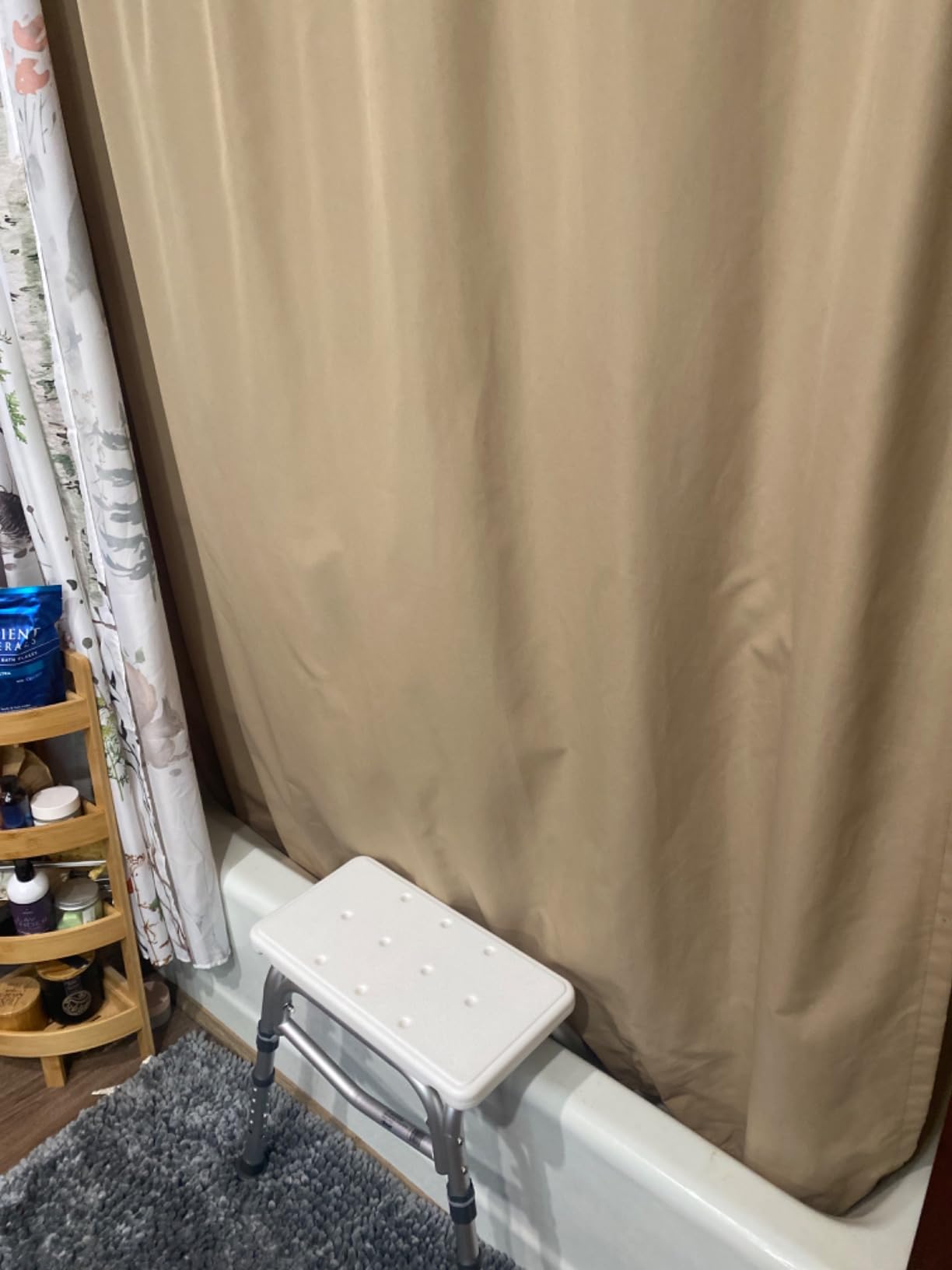
The U-shaped cut-out keeps water moving toward the drain and gives a little perineal access. Wide suction cup feet barely moved in my testing, and the bench reverses to fit either tub orientation, which matters in a bathroom where the tub is boxed into an alcove.
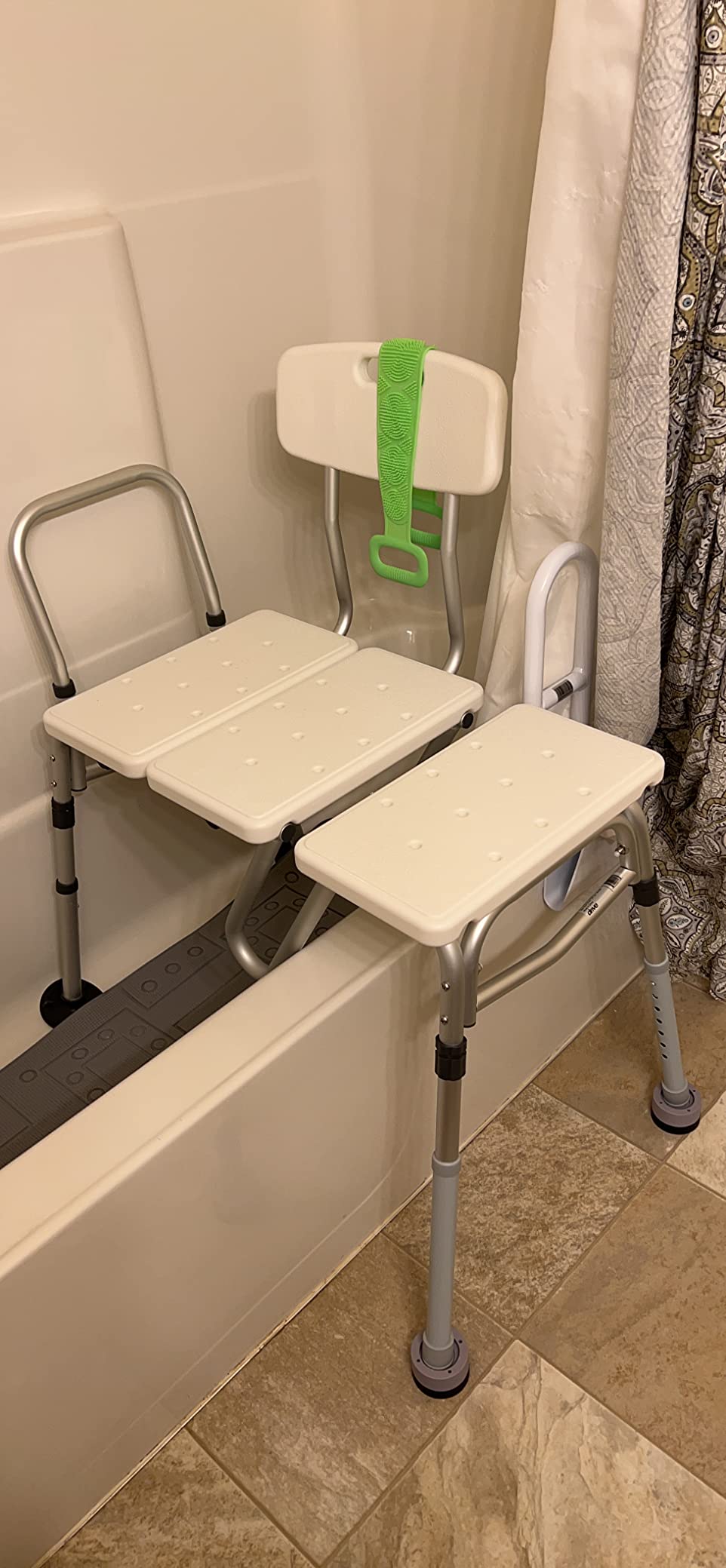
The clearance limit you need to know
The curtain channel bars sit low, so this bench only clears standard or low-profile tub walls. On a high-walled tub the bars hit the rim and the design stops working. Measure your tub wall height before committing to the splash feature, and check the narrowest point of the tub rather than the widest.
Height adjustment and the curtain problem
All four legs adjust independently, which is how the bench levels a tub floor that sits well below the bathroom floor. The same frame that keeps water inside the tub forces a layered or cut curtain, so plan for that before the first shower.
Minor wear to watch
Some owners report the drop-down loops scratching the front tub edge as the tub flexes under load. It is cosmetic rather than structural, but on an acrylic tub it is worth a glance every few months.
6. Vive Shower Transfer Bench – Best for Very Small Bathrooms
Vive Shower Bench for Transfers – Heavy Duty Tub Transfer Bench for Bathtub
400 lb capacity
Legs extend to 23.5 in
30 drainage holes
Partial assembly
+ Pros
- Arrives mostly assembled so setup takes about ten minutes
- 30 drainage holes keep the seat from puddling
- Strong suction cups resist sliding on smooth tubs
- Fits bathrooms as small as 8 ft by 5 ft
- Cons
- Legs extend past the seat and can hit a toilet or cabinet
- Suction cups are hard to break loose
- Assembly diagrams are unclear
The Vive is the one to look at if your bathroom is genuinely cramped. Reviewers report fitting it into an 8 foot by 5 foot bathroom, smaller than most sliding and swivel designs here can manage. The frame is stainless steel and the platform seat is molded plastic cleaned with a standard disinfectant.
It arrives partially assembled, so the tool-free final step takes about ten minutes. The interior legs carry large suction cup caps and the outer legs get non-skid tips, and the reversible arm and backrest fit either tub orientation.
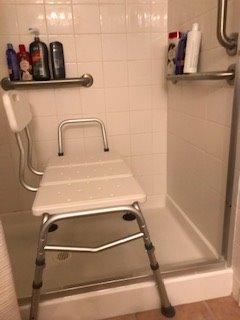
A two-year unconditional guarantee and HSA and FSA eligibility add reassurance that is uncommon in this category. The seat has 30 drainage holes, more than any other fixed bench here, and the dual-column legs adjust up to 23.5 inches, which gives more headroom than most fixed designs and helps with taller tubs.
Check what is beside the tub
The legs extend beyond the seat, so the footprint is longer than the seating area suggests. In a tight room the outside legs can end up against a toilet or vanity, exactly where a caregiver needs to stand. Measure from the rim outward and add a few inches for a foot under the leg.
Suction cups and setup
Suction cups hold well on smooth tub surfaces and poorly on textured fiberglass. Owners also note they are hard to break loose, and loosening them out of habit reduces the safety benefit. Give setup the ten minutes it needs and follow the printed step order rather than the diagrams, which several found unclear.
7. Eagle Health Swivel Tub Transfer Bench – Best Longest-Slide Transfer
Tub Transfer Bench with Swivel Seat, for Elderly & Disabled, Standard
400 lb capacity
19 in slide distance
360 degree swivel
Seat height to 23 in
+ Pros
- Tab-to-slide mechanism with auto-lock glides smoothly
- Swivel seat locks at 90 degree intervals
- Tool-free assembly in under five minutes
- Longest slide distance in this group
- Cons
- 40 in overall width is among the largest footprints
- High back and rail crowd very tight bathrooms
- Clearance maxes out at 18.5 in so measure first
This bench answers the question swivel designs are supposed to answer. The tab-to-slide mechanism releases and the seat auto-locks along the rail, so instead of pushing a heavy seat over the rim you release, glide and let it settle into place. Buyers report needing noticeably less effort than with a friction slide, which matters for anyone with limited upper body strength.
Seat height runs 18.75 to 23 inches and the slide distance is 19 inches, the longest travel in this group. Slide distance is the number that decides whether a bench clears your tub, so compare that against your narrowest tub measurement rather than the overall width.
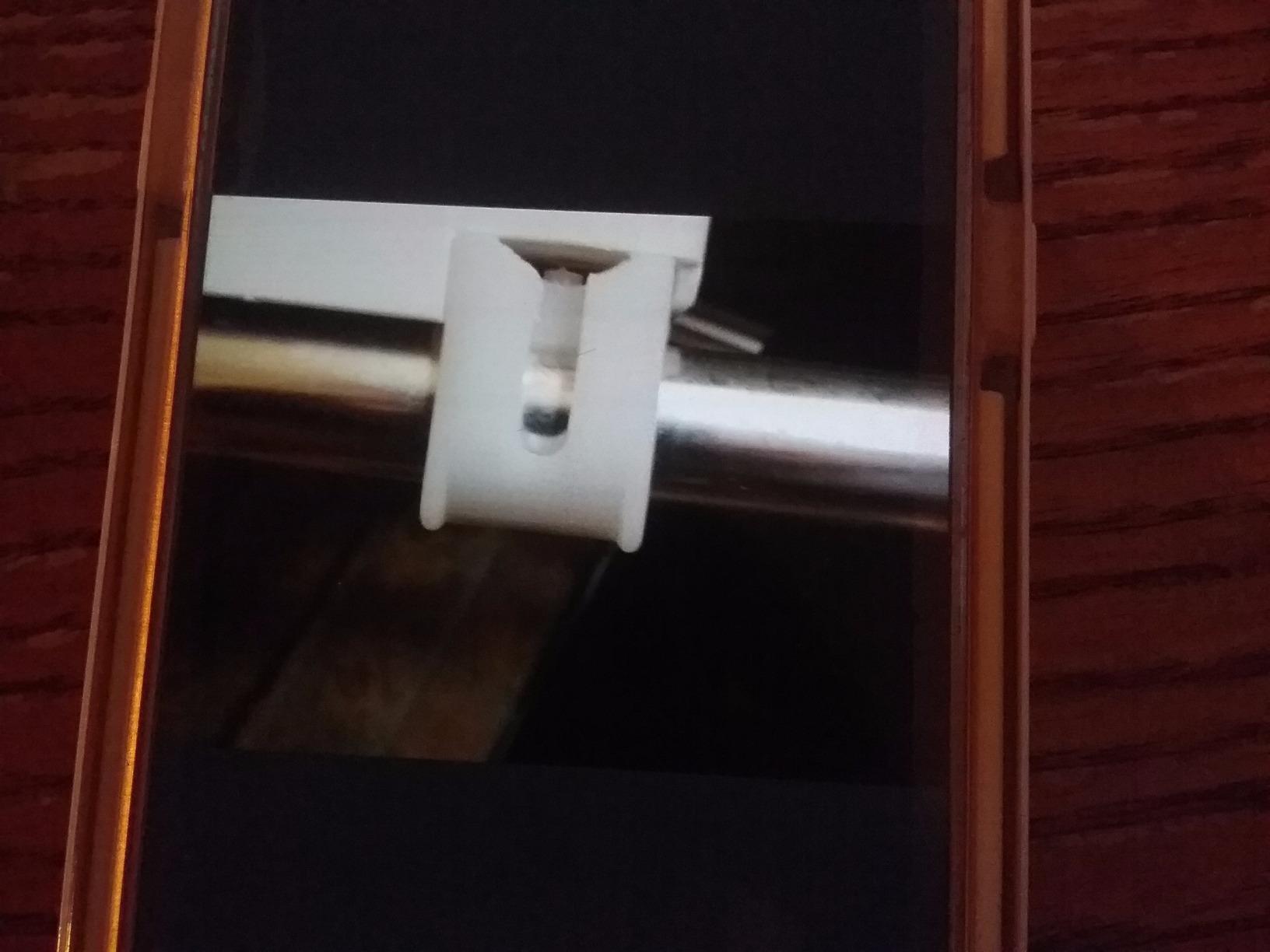
The reinforced rust-resistant aluminum rail is rated to 400 lb, the seat is textured anti-slip with a backrest and safety belt, and the legs adjust with rubber tips. Assembly is tool-free in under five minutes, the bench is 100 percent reversible for either tub side, and it is FSA and HSA eligible.
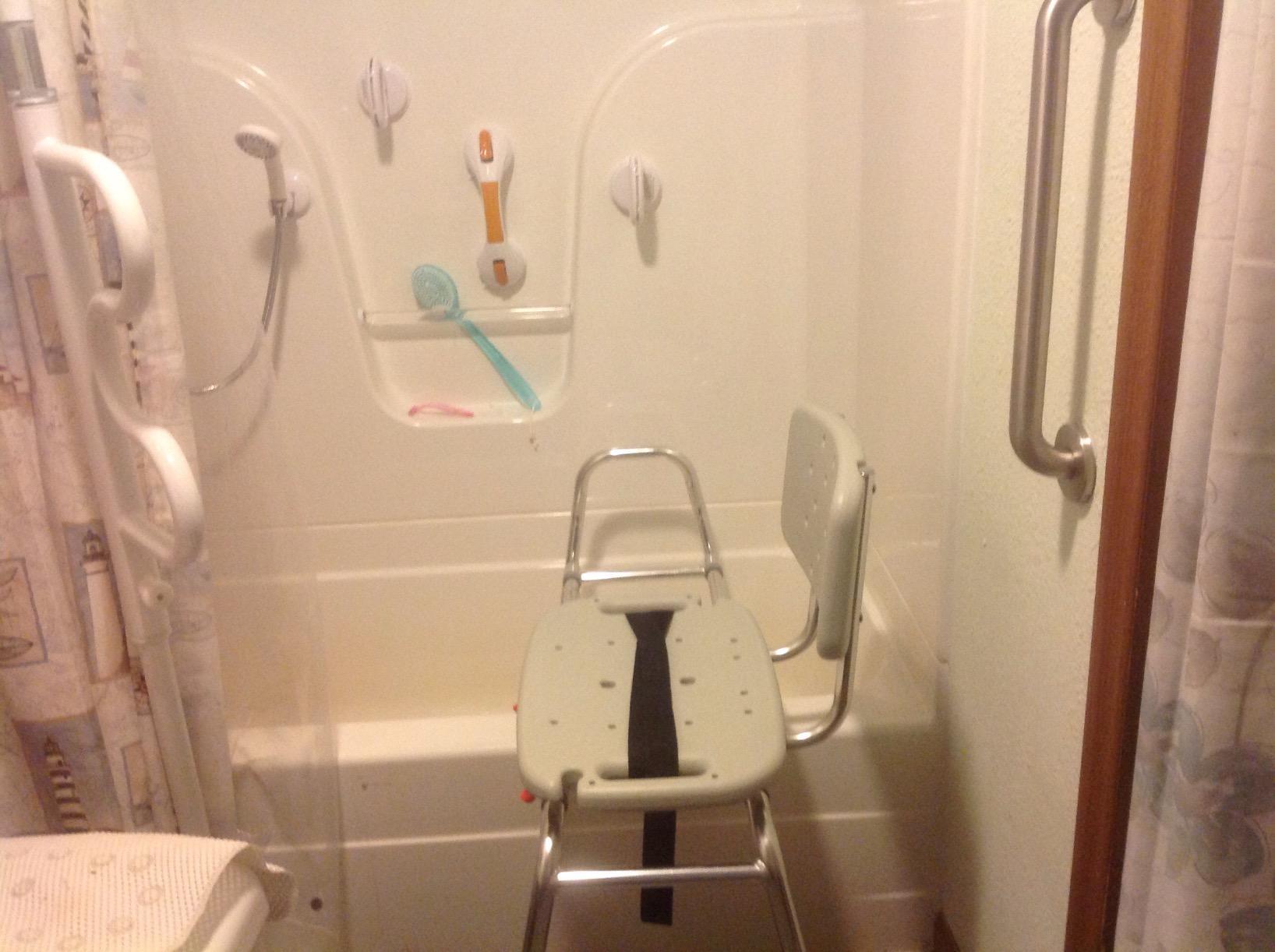
Where the slide distance matters
Unlike a friction slide, the rail and tab do not fight the user. A caregiver can lift the seat over the rim with one hand while the person scoots across.
Overall width is the trade
At 40 inches wide this is among the largest footprints in the category, and the high back and rail will not clear a low doorway. Maximum tub clearance maxes out at 18.5 inches and dimensions can vary by three quarters of an inch.
Who this suits
A user with weak grip who cannot push a seat across a rail, and a tub deep enough to accept a 40 inch frame. Choosing it in a small bathroom is the most common reason this style gets returned.
8. DMI Sliding Transfer Bench – Best for Perineal Access
DMI Tub Transfer Bench and Shower Chair with Non Slip Aluminum Body, FSA Eligible, Adjustable Seat Height and Cut Out Access, Holds Weight up to 400 Lbs, Bath and Shower Safety, Transfer Bench
400 lb capacity
Sliding seat
19-23.5 in height
Removable cut-out
+ Pros
- Sliding design cuts strain for both user and caregiver
- Configurable for either tub side
- Textured seat with drainage holes
- Lightweight enough for one person to reposition
- Cons
- 39 in width crowds small bathrooms and a nearby toilet
- Cut-out cover sits loose and pops up
- Crossing bars fight with a standard shower curtain
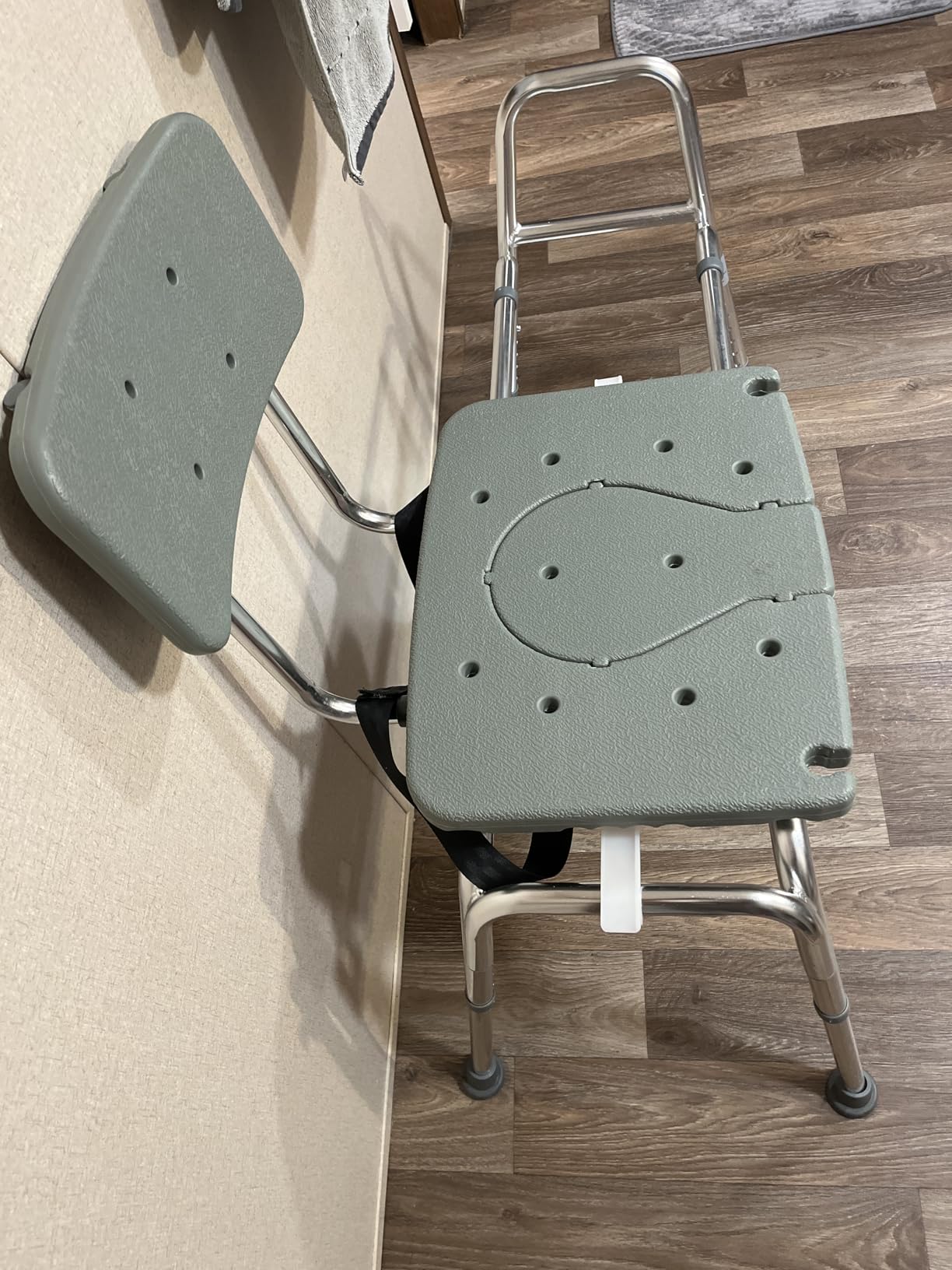
The DMI is the bench to consider when washing between the legs while seated is part of the reason you need help. It has a removable cut-out cover in the seat, plus drainage holes and a textured surface that stays secure when wet. The hook-and-loop safety belt with nylon strap locks holds the seat position during a transfer.
Seat height adjusts from 19 to 23.5 inches, which is tall and suits larger users and higher tubs. The rust-resistant aluminum frame carries a blow-molded seat and back, and the seat installs on either side of the frame.
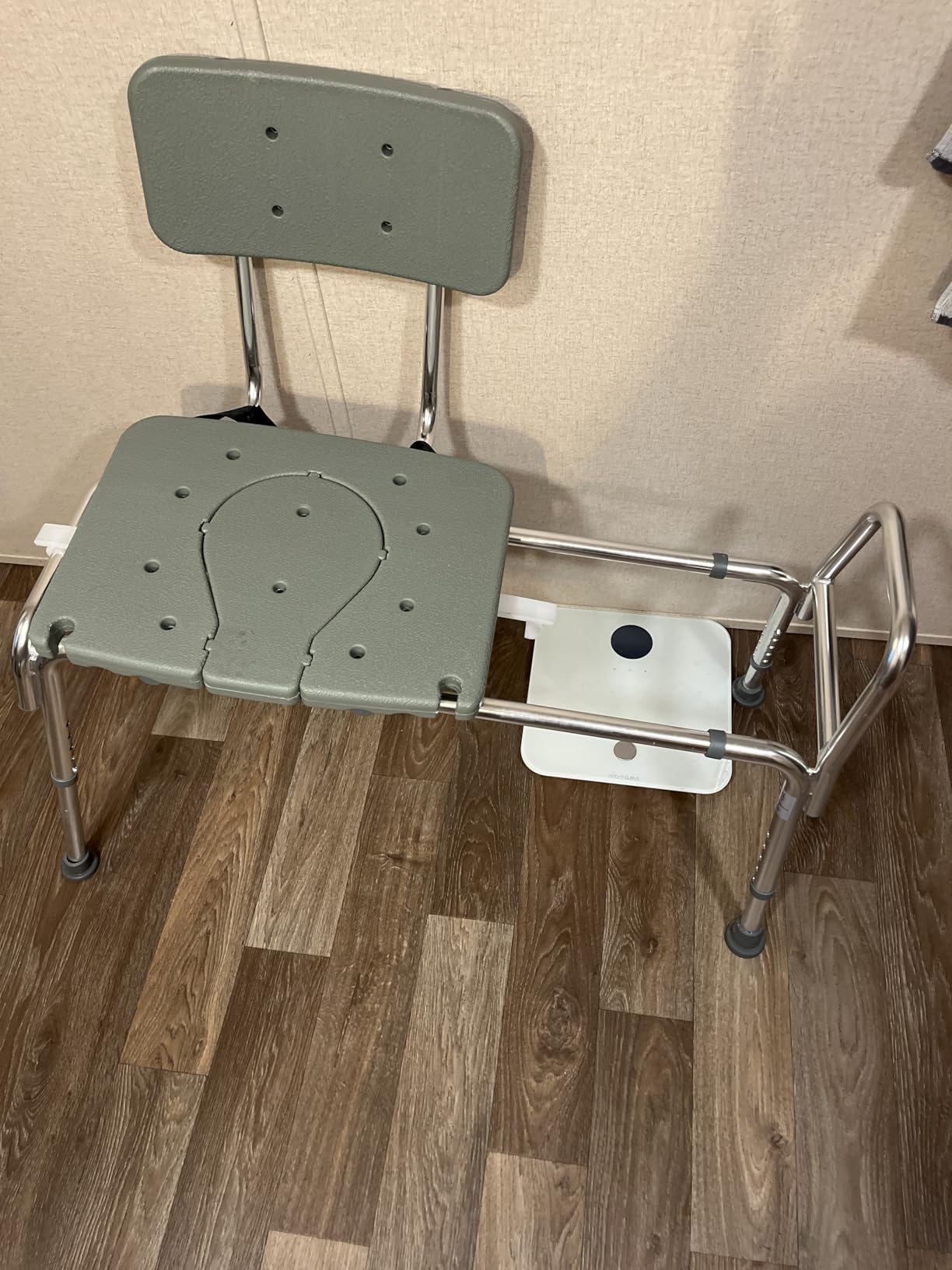
It is free-standing with no permanent mounting hardware, and owners value the smooth lockable slide and report it restored safe independent bathing.
Where the fit complaints come from
Two issues recur. The cut-out cover fits loosely and tends to pop up when someone sits on it, which defeats the purpose. And with the cover out, much of the seat sits over the tub wall, so a smaller user has limited dry-side seating to start from.
Seat height and hardware
At 10.7 pounds this frame is light enough for one person to reposition when another bather needs the tub. The nylon strap locks on the safety belt need real strength to release, so a caregiver may need to help from inside.
Bathroom and curtain fit
At 39 inches wide this bench crowds a small bathroom and can come up against a toilet. The bars crossing the tub wall also make it hard to run a standard curtain, the same flooding complaint the curtain-channel design solves.
9. Platinum Health Gateway – Best Padded Swivel Without Pivoting Arms
Platinum Health Gateway Premium Sliding Shower Chair Bath Transfer Bench with Swivel Padded Bath Tub Seat for Tubs and Shower, for Handicap & Seniors Mobility & Daily Living, Gray
Swivel padded seat
330 lb rating
Tools-less assembly
Reversible access
+ Pros
- Swivel and slide makes transfers far easier than a fixed bench
- Closed-cell padding is warm to the touch and easy to disinfect
- Space saving swivel design keeps floor area usable
- Padded assist handle gives a comfortable grip
- Cons
- 330 lb rating is below the 400 lb standard
- Padding retains water if it is not dried
- 17.6 lb weight makes it awkward to move
The Gateway is the same swivel-and-slide idea as the Carousel without the pivoting armrests, at a lower entry point into that style of bench. If you like padded comfort and the space saving footprint but transfer from a walker rather than a wheelchair, you do not need arms that flip up.
Seat and back are padded in medical-grade closed-cell polyurethane that will not absorb water and wipes clean easily. Buyers rate the space saving footprint and the padded assist handle highly, and the bench is fully reversible for either side of the tub with an adjustable height seat.
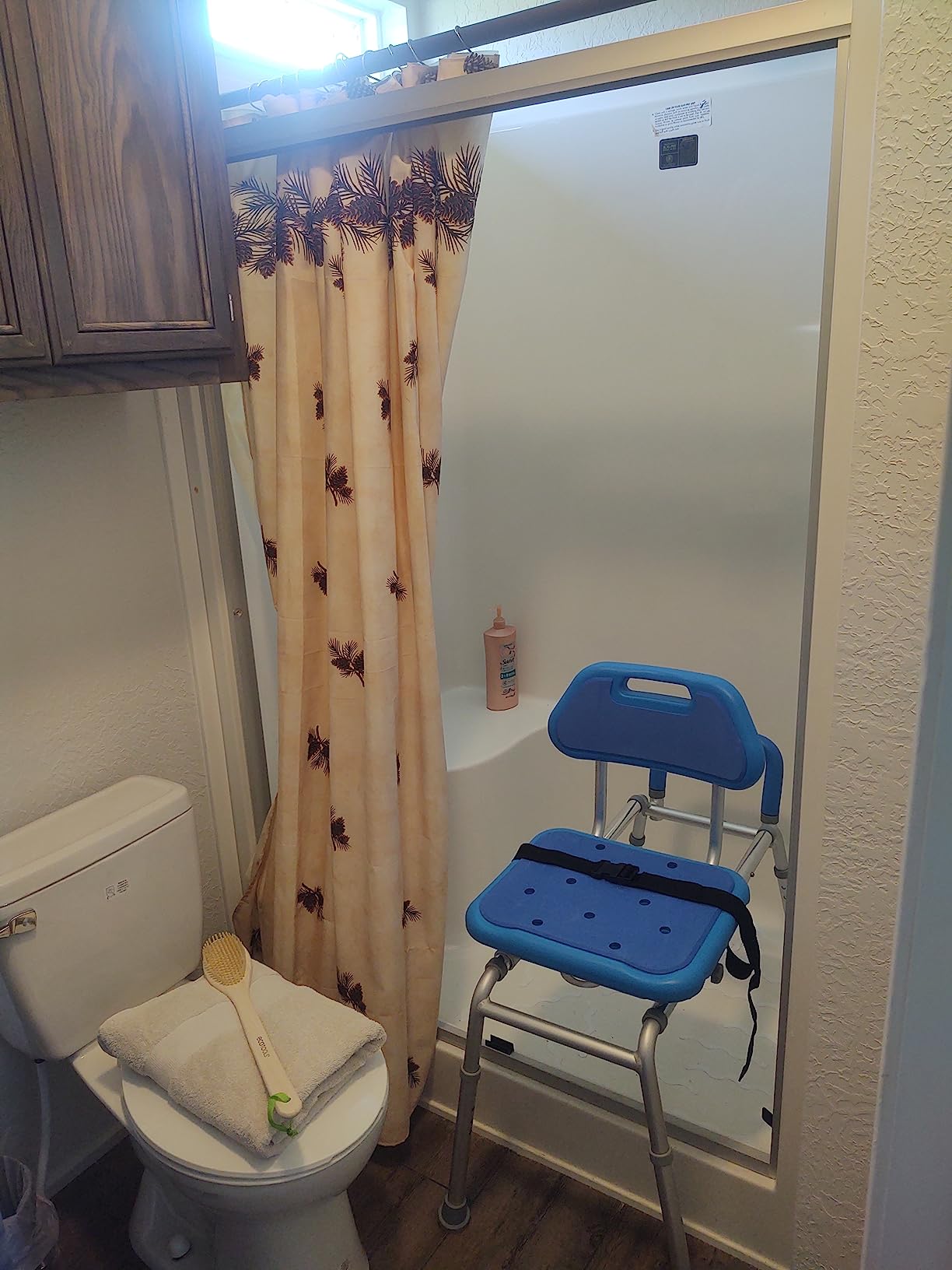
Assembly is tools-less and takes under five minutes, faster than most of the fixed benches here, and the bench is fully reversible for either side of the tub with an adjustable height seat.
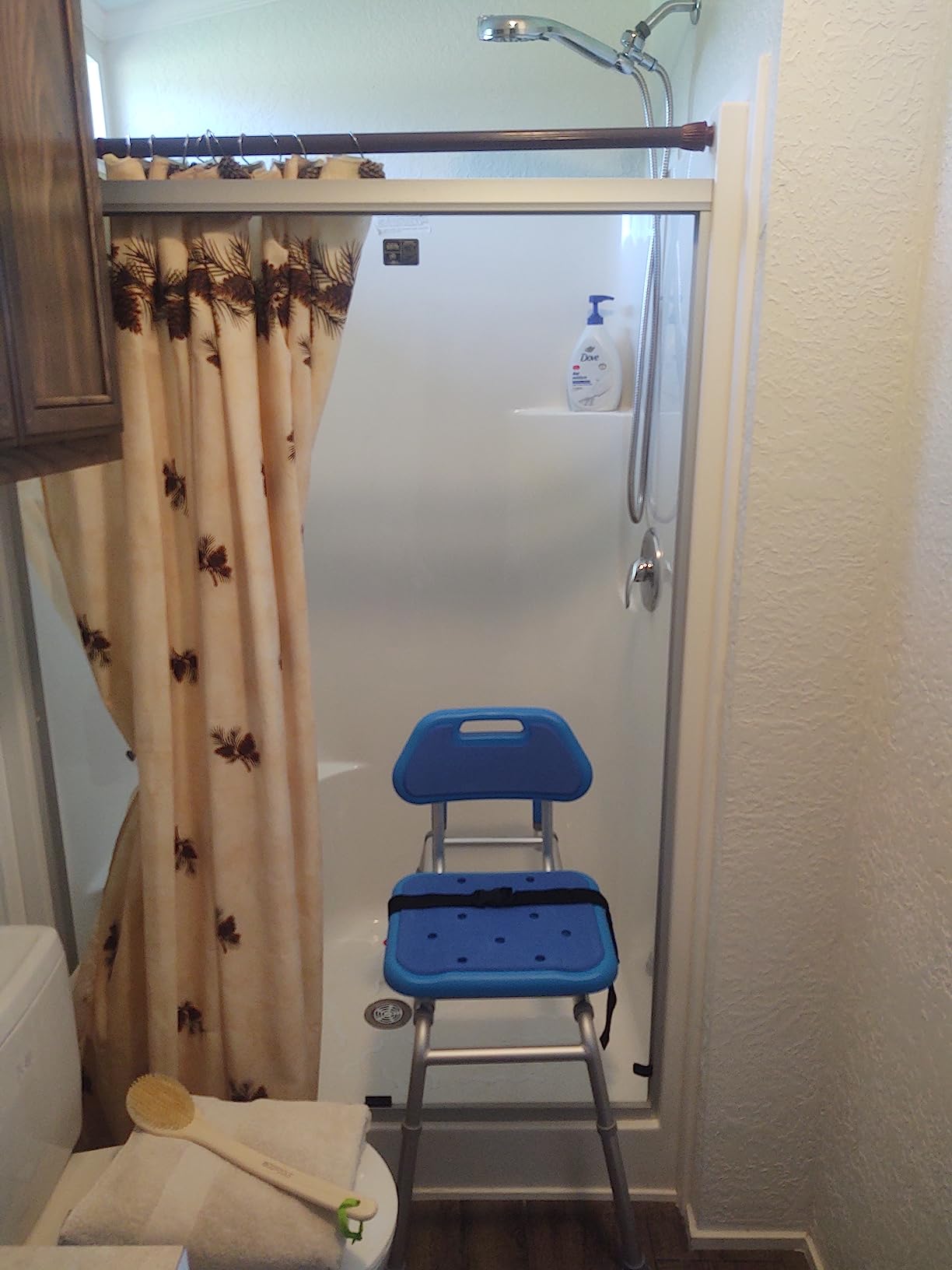
Footprint and padded assist handle
The swivel seat reduces how far the chair protrudes into the room, which is the whole point in a bathroom with a wall close behind the tub. The padded assist handle gives a comfortable grip for gliding in and out.
The 330 lb ceiling is the main limit
Like the Carousel, the rating is 330 lb rather than the 400 lb standard, and that is the trade-off buyers name most. If you are over about 250 lb, or a caregiver will push down on the frame during transfers, move up a capacity tier.
Padding and care
Closed-cell foam does not soak water but does hold a surface film that needs drying after each use, and at 17.6 pounds it is a two-hand job to lift out for cleaning or to share the tub with another bather.
10. HEALTHLINE Bariatric Transfer Bench – Best 500 lb Capacity
HEALTHLINE Transfer Bench Adjustable Height 500 Lbs, Heavy Duty Bariatric Tub Transfer Bench with Back, Non-Slip Seat, Bath Shower Bench Chair for Bathroom for Elderly Disabled
500 lb weight tested
15.5-19.5 in height
25.5 in wide seat
Aluminum frame
+ Pros
- Highest weight tested rating in this group
- Extra wide 25.5 in seat suits larger users
- Side handle placement is configurable
- Each leg adjusts independently to level the tub
- Cons
- Lowest seat height range in this group
- Seat can warp and bolt heads can poke through
- Suction feet fail on textured fiberglass and can rust
This is the frame to look at when body weight is above what a 400 lb bench comfortably carries, and it is the one bench here that also works as a regular shower seat for a caregiver washing another person. The frame and seat are weight tested to 500 lb under controlled conditions, and the manufacturer recommends users up to 300 lb for long-term daily use.
The seat is a wide 25.5 inches with an 18 to 19 inch depth, the most generous surface in this group. Assembly is tool-free with all hardware included, and each leg adjusts independently so the frame can level a tub floor against a bathroom floor at different heights.
Side handle placement is configurable, and occupational therapists often specify that position because the user pulls from it to move into the tub rather than pushing away from it. The bench also works as a regular shower seat for a caregiver washing another person.
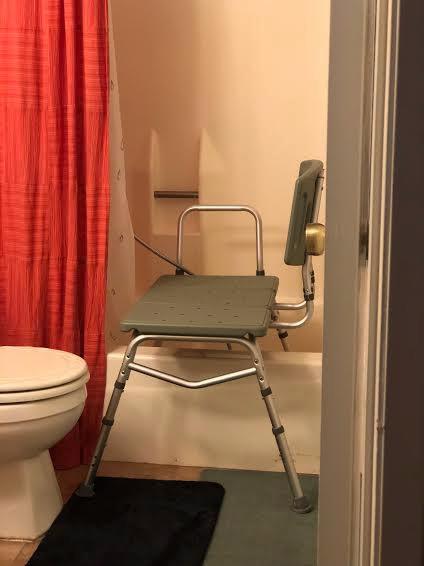
Seat size and height range
At 15.5 to 19.5 inches the adjustable height here is the lowest top end in this group, so a tall user may find the seat too low to stand from comfortably. Check your own reach before ordering.
Durability is the honest weakness
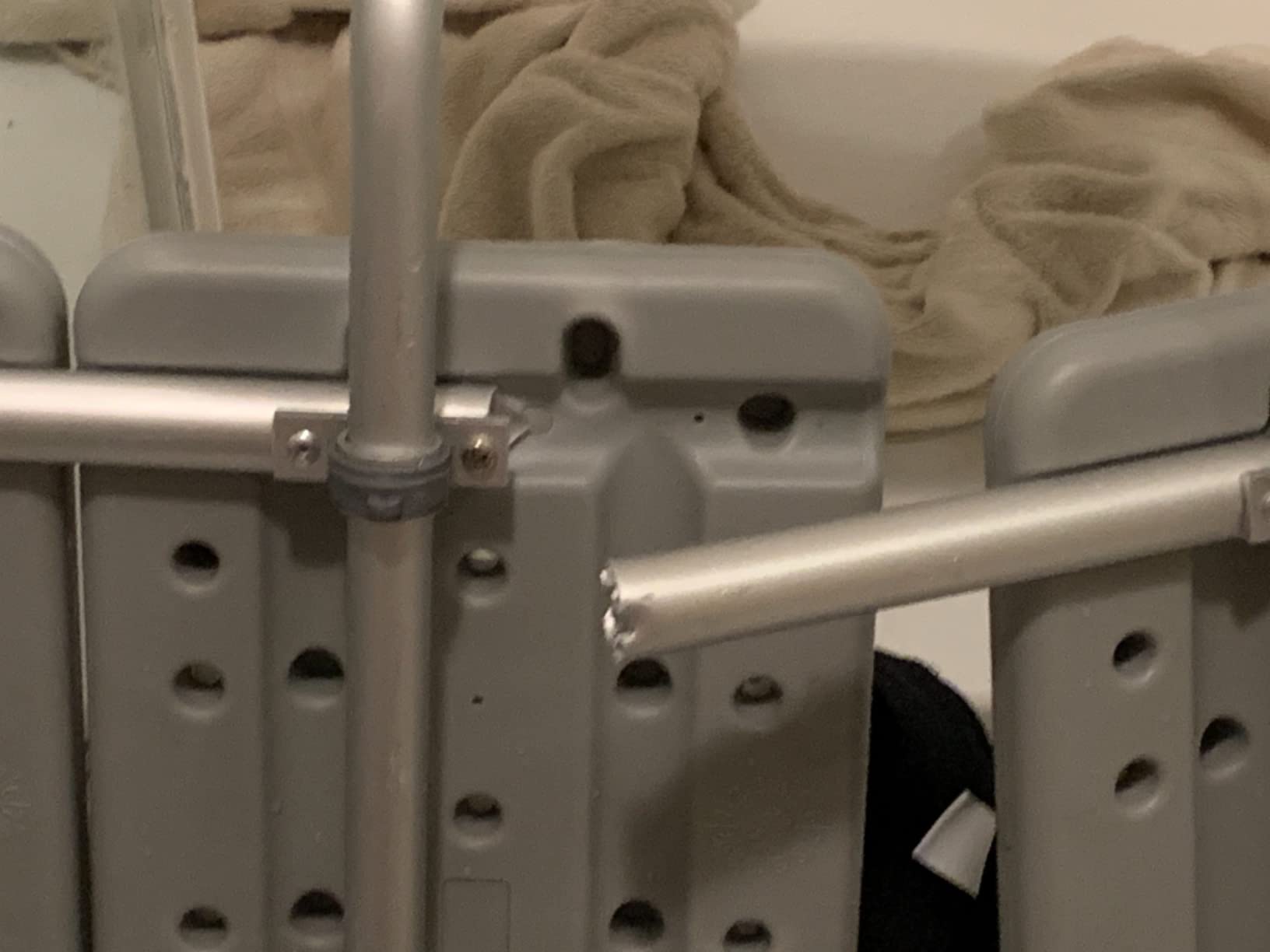
This bench has the lowest average rating of the ten, and the reviews explain why. Owners report the molded plastic seat warping with bolt heads poking through, frames that creak under load, and suction feet that fail on textured fiberglass and can detach or rust.
What the 500 lb figure really means
The tested maximum and the recommended daily limit are not the same number. The extra headroom above 300 lb exists for caregiver-assisted transfers and short bursts of higher load, not for daily use by a single heavier user, so anyone well over that daily limit is better served by a wider reinforced frame.
How to Choose a Transfer Bench That Actually Fits Your Tub
Most returns in this category are fit problems, not quality problems, and every one of them traces back to numbers nobody checked before ordering. Here is the method I use, followed by the decisions that matter after the fit is settled.
Measure the tub before you order
Measure the narrowest point of the tub at its waterline, not the widest point at the rim. That narrowest width is the number that decides whether a 39 or 40 inch sliding bench can span the wall and still have legs standing on the tub floor. Then measure the tub rim height from the bathroom floor, because a bench that cannot be extended past the rim cannot be used on that tub at all.
Next, measure the alcove depth from the tub wall outward to the nearest fixture, a toilet or vanity. Add a few inches so a caregiver can put their feet under the outside legs. Finally, compare the bench sliding distance, not its overall width, against your tub width. The Eagle Health lists 19 inches of slide, and that is the figure that tells you whether it crosses a standard tub.
Size weight capacity with a 50 percent margin
Pick a rating roughly double the user weight. A 400 lb bench is a sensible ceiling for a 200 lb user, a 330 lb bench suits a 165 lb user, and the 500 lb weight tested frame covers a 250 lb user with room for a caregiver to push during the transfer. This margin covers the single most common question buyers ask, which is whether the rating includes a helper. It should, and the manufacturer recommendations on the bariatric frame make that explicit.
Fixed, sliding, swivel or tub-mounted
A fixed A-frame bench asks the user to shift weight and slide across, which is fine for someone with good arm strength and a stable core. A sliding bench adds a rail so the seat travels across with less friction, and a swivel carousel removes the slide almost entirely by rotating the seat 90 degrees into position. Swivel designs also protrude less into the bathroom, which makes them the better fit in tight rooms. A tub-mounted bench hangs inside the tub and saves the most floor space, but it fixes your transfer position to one spot on the wall.
Seat height and the flat-feet rule
Adjust the bench until both feet sit flat on the tub floor with the knees roughly at a right angle. If the feet dangle, standing up requires pushing on tiptoe, which is a fall risk, and if the seat is too high the user cannot reach the floor at all. Most benches here adjust between roughly 16.5 and 23.5 inches, and the height you can actually reach is the only one that counts.
When a transfer bench is the wrong purchase
Hot tubs are one. Standard benches do not work in a hot tub at all, and the alternatives people reach for are usually expensive. Deep soaker tubs and very high walls are another: if the bench cannot extend past the rim, you need a leg extension kit or a different tool. A walk-in tub conversion removes the problem entirely, and for a user with no ability to bear weight on either leg, a bath lift or a patient lift is a better answer than any bench. Rent rather than buy for a short post-surgical window of a few weeks.
Can Medicare, insurance or an FSA pay for it?
Traditional Medicare Part B and Part D generally do not cover a transfer bench as a standard benefit, though a bench prescribed as durable medical equipment after a qualifying hospital or home health stay can sometimes be documented and reimbursed that way. Durable medical equipment suppliers bill under the transfer and bath transfer system codes, and K0700 is the code most often associated with transfer benches, so ask the supplier for the exact code they are billing. The same equipment is routinely covered by Medicaid, by commercial plans and by workers compensation, and FSA and HSA accounts commonly reimburse it because it is not a general wellness item. Verify all of this with your doctor and your plan administrator before ordering, since coverage rules and codes change and your specific situation may not match the general pattern.
How to Transfer Into and Out of a Tub Safely
The bench is the tool, but the sequence is what keeps the user safe, and most of the struggle people describe is about the sequence rather than the product. The transfer itself is a repeatable five-step process.
The five-step transfer sequence
First, set the bench at the correct height with the feet flat, and check that the suction feet are seated on a wet tub surface before the user commits their weight. Second, the user sits on the dry portion of the seat facing away from the tub, placing both feet on the bathroom floor. Third, they unlock and either slide the seat across the rail or rotate the swivel 90 degrees, keeping one hand on the armrest or assist handle. Fourth, they lift both legs over the tub wall one at a time and pivot back to face into the tub. Fifth, they dry the seat and the floor around the tub before standing up and stepping off, because a wet floor is where the real injury happens.
Where the caregiver should stand
Stand on the side of the bench that lets you reach the assist handle or the user upper back, not facing them across the tub. Keep your feet outside the tub and your knees clear of the frame, and support rather than lift. Caregivers consistently note that the bench alone is rarely sufficient for someone with significant weakness, and a hygiene aide or family member on hand is the normal arrangement, not the exception.
Keeping the curtain and the floor under control
A standard curtain will not close correctly over most of these benches, and water on the floor is a fall risk. A curtain-channel design solves this by letting a normal curtain run inside the tub, and otherwise the fix is a dedicated transfer bench curtain or a separate liner. Run water through the seat drainage holes after each use, dry the frame, and check the suction feet and leg collars every few months.
Frequently Asked Questions
Will Medicare pay for a shower transfer bench?
Traditional Medicare Part B and Part D generally do not cover a transfer bench as a standard benefit. A bench prescribed as durable medical equipment after a qualifying hospital or home health stay can sometimes be documented and reimbursed, and suppliers bill these under durable medical equipment codes with K0700 most often associated with transfer benches. Medicaid, commercial insurance plans and workers compensation cover this equipment more routinely, and FSA and HSA accounts commonly reimburse it. Confirm the exact billing code and your eligibility with your doctor and your plan administrator before ordering.
How safe are tub transfer benches?
A transfer bench removes the need to step over the tub wall, which is the highest single step in most homes, and that is where the majority of bathroom falls happen. Safety depends on correct setup: the bench at a height where both feet sit flat, the suction feet seated on a wet surface, the frame level, and the floor kept dry. Used that way, reviewers consistently report restored independent bathing, though a caregiver is still advisable for anyone with significant weakness.
Is a shower chair or a tub transfer bench better for me?
A shower chair sits entirely inside the tub and suits someone who can already step over the wall safely. A transfer bench spans the wall, letting the user sit on the dry side, slide or swivel across and bring their legs over, so it suits anyone with limited balance, hip or knee problems, wheelchair transfers or post-surgical recovery. If you cannot step into the tub at all, a fixed shower chair will not work and you need a bench or a bath lift.
What type of bench is best for a shower?
For general safety in a standard tub, a fixed aluminum A-frame bench with 400 lb capacity and a reversible backrest is the dependable choice. For arthritis, stroke recovery or any limited shoulder rotation, a sliding or swivel bench removes the shuffling that causes injury. A curtain-channel design is best if flooding the bathroom floor is your main complaint, and a 500 lb weight tested frame is the right pick above roughly 300 lb of user weight.
How do I measure my tub for a transfer bench?
Measure the narrowest width of the tub at the waterline rather than the widest point at the rim, then measure the rim height from the bathroom floor to see how far the bench legs must extend. Measure from the tub wall outward to the nearest toilet or vanity so a caregiver has room to stand, and compare the bench sliding distance, not its overall width, against your tub measurement. If the bench overall width is 40 inches, the tub and the bathroom floor both need to accommodate it.
Which Transfer Bench Is Right for You
If you want one bench that will serve most households, the Medline is the pick: the deepest review history in this group, a 400 lb rust-resistant frame, push-button height from 17.5 to 22 inches, and a reversible backrest that works on either tub side. For anyone whose problem is joints rather than balance, the Platinum Health Carousel takes the shuffling out of the transfer with a swivel seat and flip-up arms, and its compact footprint suits smaller bathrooms.
Match the bench to the specific problem instead. The Moen uses a pedestal outside leg that resists tipping, the Drive Medical is the answer when a flooded floor is your biggest worry, the Vive fits unusually tight bathrooms, the Eagle Health offers the longest slide of the group, the DMI provides perineal access, and the HEALTHLINE is the only frame here weight tested to 500 lb. Measure your tub, size the capacity with a 50 percent margin, and you will not need to return anything.