
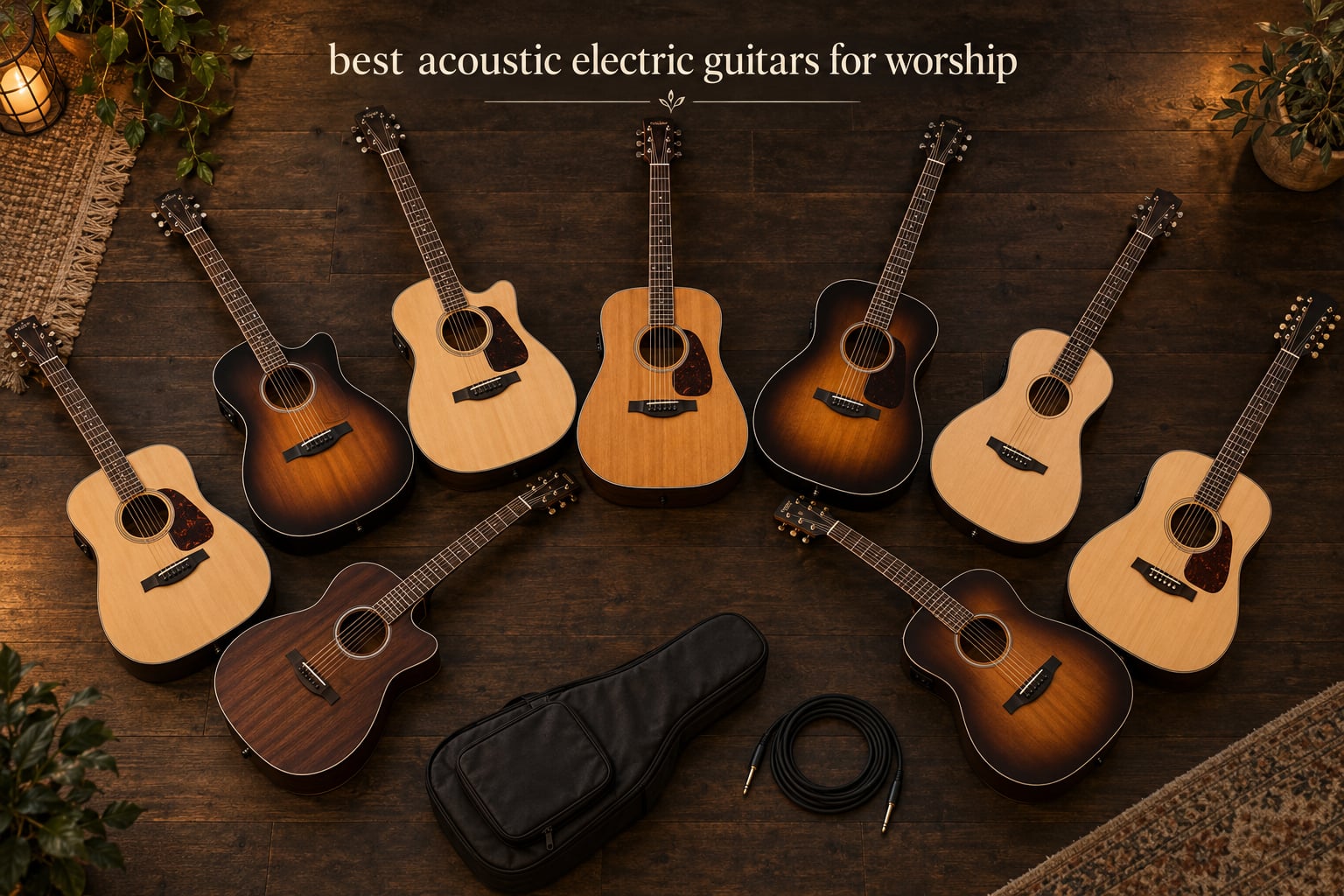
If you lead worship and want one guitar that covers acoustic songs, quiet rooms, and a loud band mix, the best acoustic electric guitars for worship in 2026 are all built around the same three things: a pickup system you can actually shape, a body you can hold for a full set, and a neck your hand does not fight. We spent weeks with these nine guitars, plugging each into a small PA, a DI, and a keyboard amp to see how each one behaves when a congregation is singing underneath it.
The category splits faster than most gear guides admit. Some guitars here are loud unplugged and take a back seat the moment you plug in. Others are quiet acoustically and only wake up through a pickup. Our ranking weighs the plugged-in behavior far more heavily, because that is where a worship set actually lives.
Our Top 3 Picks for Worship Guitarists


Takamine GD11MCE
- Sapele top back and sides
- TP-4T preamp with tuner
- Split saddle bone bridge
Comparing All Nine Acoustic-Electric Worship Guitars
Every guitar below has a piezo or soundhole pickup, an onboard preamp, and a tuner you can reach from the strap position. The differences come down to body size, top wood, and how much low end you get unplugged versus plugged in.
| Product | Details | |
|---|---|---|
| Yamaha FGX800C |
|
Check Latest Price |
 Yamaha APX600 Yamaha APX600 |
|
Check Latest Price |
 Martin LX1E Martin LX1E |
|
Check Latest Price |
| Takamine GD11MCE |
|
Check Latest Price |
 Ibanez AEG50 Ibanez AEG50 |
|
Check Latest Price |
 Ibanez AEG70 Ibanez AEG70 |
|
Check Latest Price |
 Fender CD-60SCE Fender CD-60SCE |
|
Check Latest Price |
 Takamine GD30CE-12 Takamine GD30CE-12 |
|
Check Latest Price |
 Fender CD-140SCE Fender CD-140SCE |
|
Check Latest Price |
1. Yamaha FGX800C – Solid Top Dreadnought With The Most Useful Stage Electronics
Yamaha FGX800C Solid Top Cutaway Acoustic-Electric Guitar, Dreadnought
Solid Sitka spruce top
System 66 3-band EQ with tuner
Dreadnought cutaway, 7.5 lbs
+ Pros
- Solid spruce top gives real unplugged volume and headroom
- 3-band EQ with adjustable mid cuts through a full band mix
- Precision chromatic tuner and diecast tuners hold tuning through a long set
- Cutaway gives upper-fret access for capo'd worship shapes
- Adjustable truss rod makes the factory action easy to dial in
- Cons
- Factory action often runs high and needs a setup
- Fretboard inlays are small and hard to read on a dark stage
- Electronics cavity slightly reduces acoustic projection
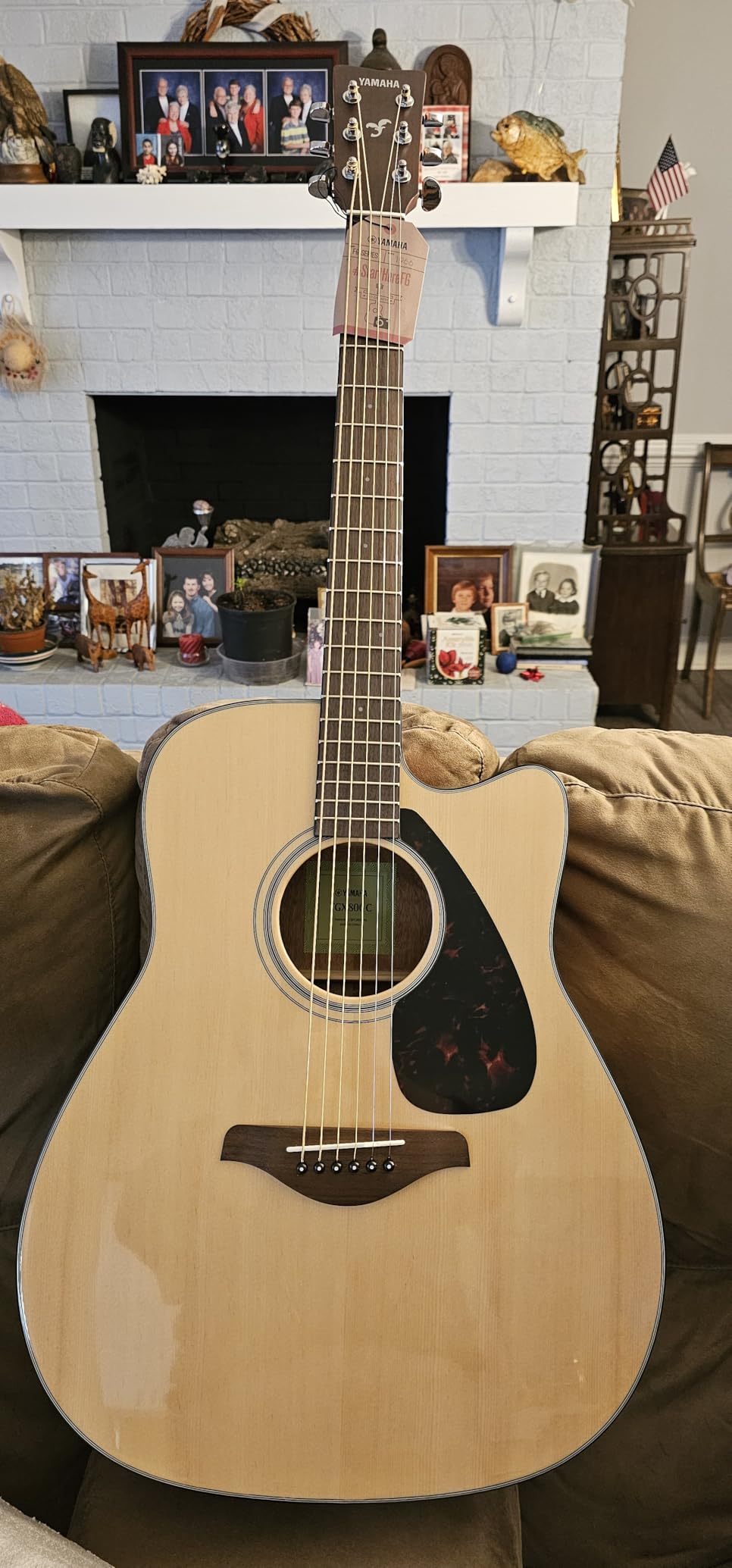
The FGX800C is the guitar we kept reaching for. Its solid Sitka spruce top means the unplugged voice already has enough body to lead a room, and the System 66 preamp adds an adjustable mid frequency that a sound engineer can actually work with.
Out of the box it is not flawless. The action tends to sit high, and a fresh setup fixes that in minutes. Once dialed in, the neck felt even and the string spacing stayed comfortable through a long rehearsal block.
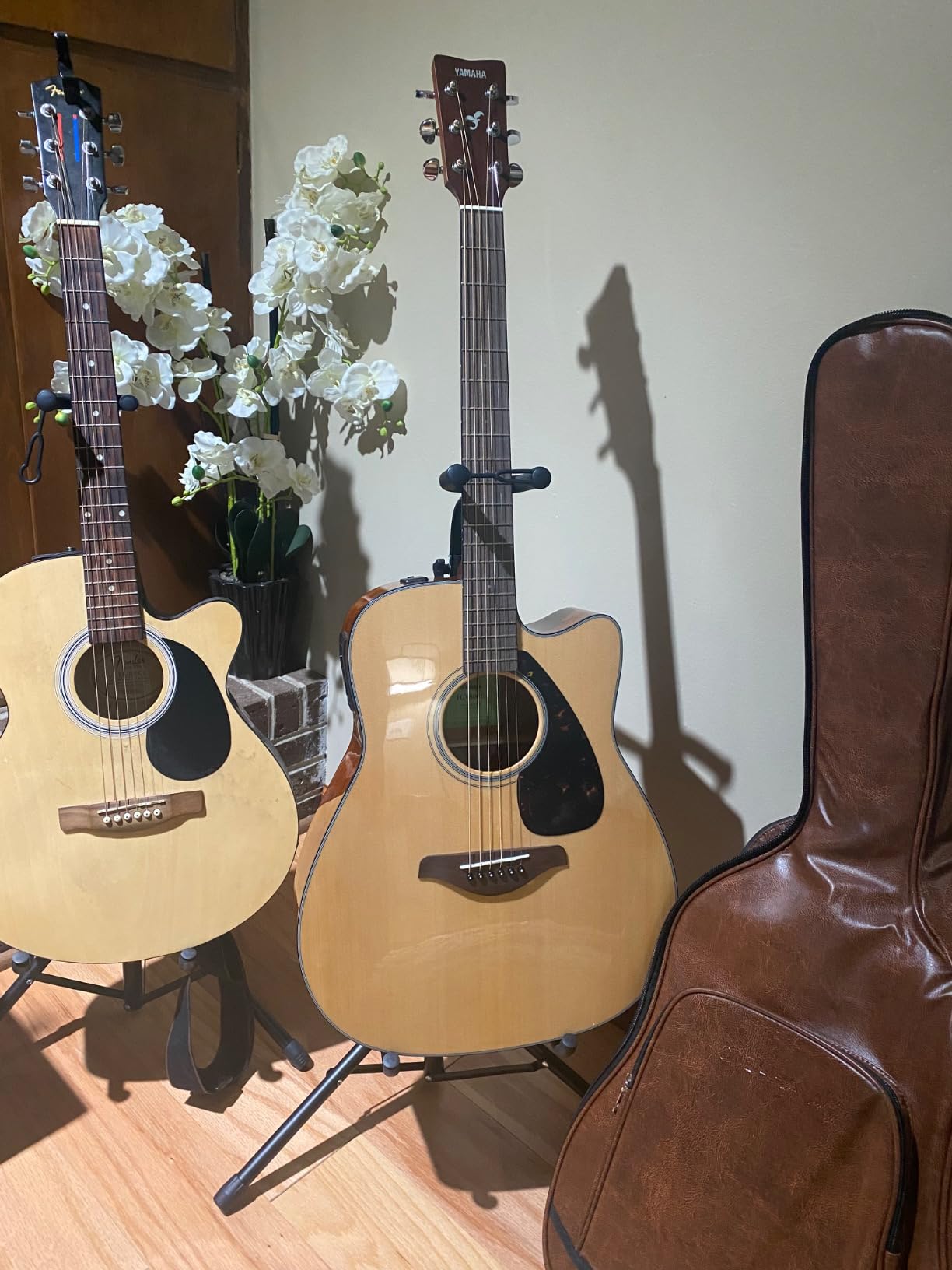
Through a small PA the mid control earned its keep. We could thin the sound for a ballad and push it forward when a full band joined in, without swapping instruments.
The dreadnought cutaway is genuinely useful for worship. Capo shapes above the fifth fret are common in modern services, and cutting away the upper bout means your fretting hand does not have to slide off the body edge to reach them.
Tone and headroom
Warm and full unplugged, with the kind of low end that fills a room without needing a high gain setting. Reviewers consistently describe the tone as balanced rather than boxy, which is what you want when a congregation is singing over you.
Onboard electronics
System 66 gives you bass, mid, and treble plus a tunable mid sweep, a chromatic tuner, and an adjustable truss rod. That combination covers the majority of what a worship player changes mid-service.
Who should skip it
Players with small hands who dislike a wide nut should try this one carefully, and anyone who needs a boutique-level fit and finish should look higher in the range. The rosewood fingerboard and bridge keep it from feeling cheap, but this is a mass-produced instrument.
2. Yamaha APX600 – Best Value Thin-Line Guitar For Long Standing Sets
Yamaha APX600 OBB Thin Body Acoustic-Electric Guitar, Oriental Blue Burst
Spruce top with mahogany sides
System 68 preamp and tuner
Thin-line cutaway, 6.5 lbs
+ Pros
- Thin-line body stays comfortable through a long standing set
- System 68 preamp with 3-band EQ and mid control
- Built-in chromatic tuner for quick changes between songs
- Lightweight for a full-size stage acoustic
- Guitar stand included in the box
- Cons
- Thin body loses some unplugged volume and low end
- Factory action often needs a setup
- Fret ends may need dressing out of the box
The APX600 answers a problem most roundups ignore: fatigue. Worship leaders play standing for well over an hour, and a full dreadnought is a lot of guitar to hang off a shoulder with no strap. At a body depth of 3.56 inches and 6.5 pounds, this one disappears in a way the bigger models never do.
The spruce top keeps the acoustic voice clear rather than boxy, which suits fingerstyle intros and the quieter moments at the start of a set.
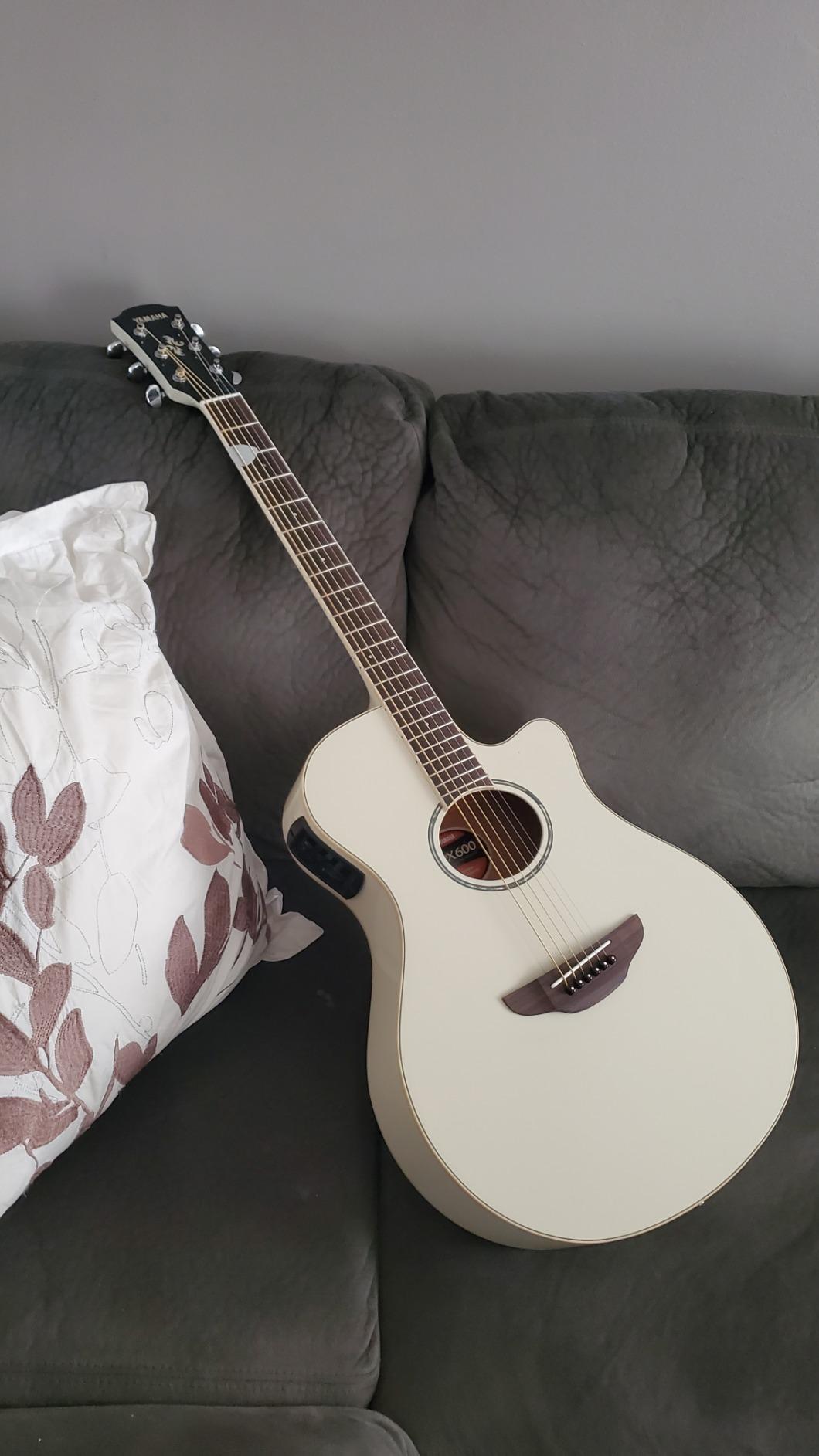
The System 68 preamp is the reason this guitar keeps showing up on stages. The mid control lets a player carve space for a vocal without turning the guitar down, and the built-in chromatic tuner means no more stopping mid-song to clip a headstock tuner.
The tradeoff is real and worth stating plainly. A thin body produces less acoustic volume unplugged, so this is an amplified-first instrument rather than a two-in-one.
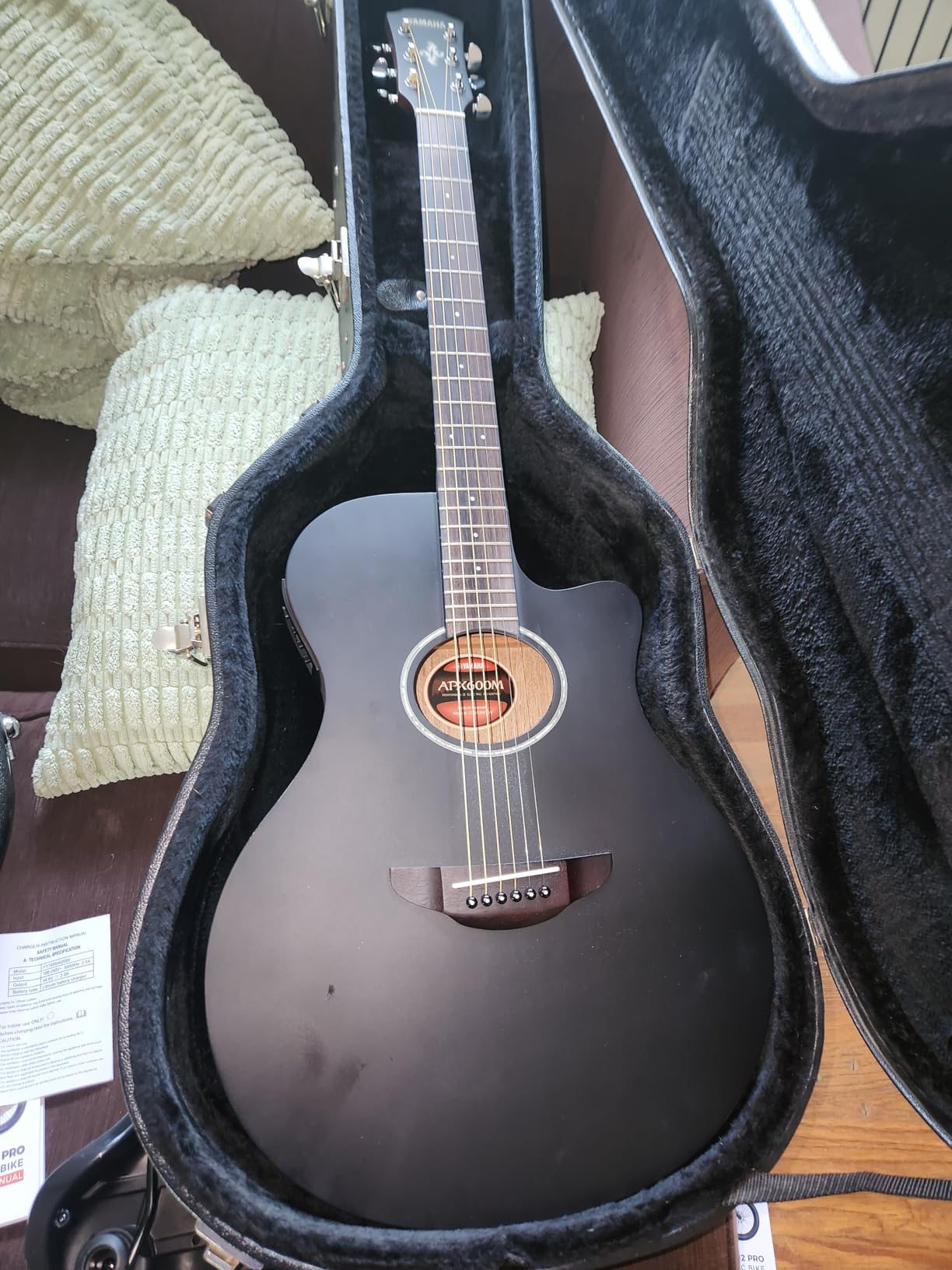
Body size and standing comfort
Nothing in this group sits better against your body for a long set. The thin-line profile also suits players moving from electric to acoustic, because the neck and string spacing feel familiar.
System 68 electronics
Three-band EQ, a dedicated mid sweep, and a tuner in one rosette-mounted unit. That is more control than most guitars twice the size offer, and it is the single best reason to pick this one.
Who should skip it
Skip it if you lead mostly unplugged sets, or if you have large hands and prefer a wider fretboard. Buyers should also expect a setup visit, since the factory action runs high on a good number of units.
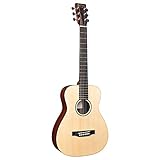
3. Martin LX1E – Best For Small Hands, Youth Ministry, And Touring
Martin LX1E Little Martin Solid Sitka Spruce/Mahogany HPL Acoustic/Electric w/Gig Bag
Solid Sitka spruce top, HPL back and sides
Fishman Isys T preamp with tuner
23 inch scale, 3/4 size
+ Pros
- Short 23 inch scale and slim body suit smaller hands and youth players
- HPL back and sides shrug off humidity and temperature swings
- Solid Sitka spruce top that opens up over time
- Gig bag with backpack straps included
- Fishman Isys T preamp and tuner sit right where a player expects them
- Cons
- Short scale limits full range voicings
- HPL sides do not resonate like solid wood
- Factory action often high and needs a setup
The Little Martin solves a problem most teams hit constantly: equipping several younger or smaller players without breaking the budget line per seat. The 23 inch scale and 14 fret neck are genuinely easier to fret than a standard acoustic, and the body depth suits players who struggle with deep instruments.
Martin put a solid Sitka spruce top on a high pressure laminate body, and that combination is the whole point. The top responds like wood and improves as it plays in, while the HPL back and sides tolerate a hot car in July and a cold van in January.
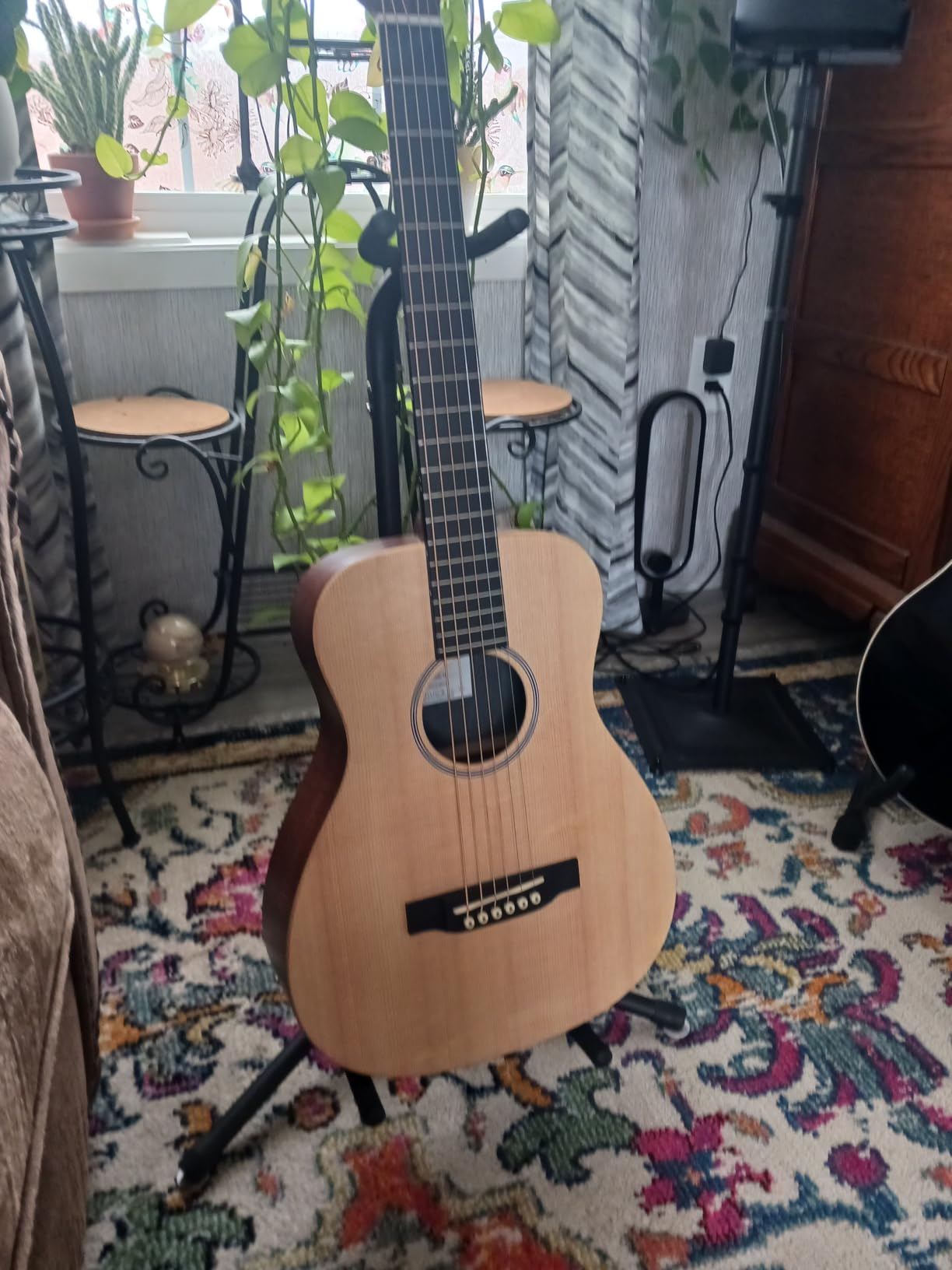
The Fishman Isys T system keeps the stage simple: volume, tone, tuner. It is not a preamp with many bells and whistles, but it is predictable in a way that helps a volunteer player feel confident on a Sunday morning.
Two details matter more than they sound. The included gig bag has backpack straps, which matters if you carry your worship guitar on public transport. And the overall size makes this a realistic spare guitar that lives in a case in the trunk rather than one that lives on a stand at home.
Scale length and playability
String tension at the same gauge is lower on a short scale, so this guitar asks less of a developing fingerstyle player. Expect to reach notes with less stretch and to change chords faster in a capo-heavy set.
HPL durability
The laminate back and sides resist humidity swings better than any solid wood instrument we tested. For a church that stores guitars in an unheated room or a youth group that moves rooms weekly, that reliability matters more than acoustic complexity.
Who should skip it
Skip it if you need a big low-end thump for congregational strumming, or if you are a player who relies on open tunings and wide interval voicings. The 14 fret neck also cuts off the top three frets, which changes how some shapes feel.
4. Takamine GD11MCE – Best Preamp For Consistent Stage Tones
Takamine G-series GD11MCE Dreadnought Acoustic-electric Guitar – Natural
Sapele top, back and sides
Takamine TP-4T preamp with tuner
Split saddle bone bridge
+ Pros
- TP-4T preamp is one of the most dependable budget onboard systems
- Split saddle bone bridge delivers precise intonation
- Pinless bridge makes string changes fast between songs
- Bold strumming tone with a strong low end
- Consistent quality control from unit to unit
- Cons
- Laminate sapele top gives less acoustic projection than a solid top
- Laurel fretboard feels different from rosewood
- Factory strings may need upgrading
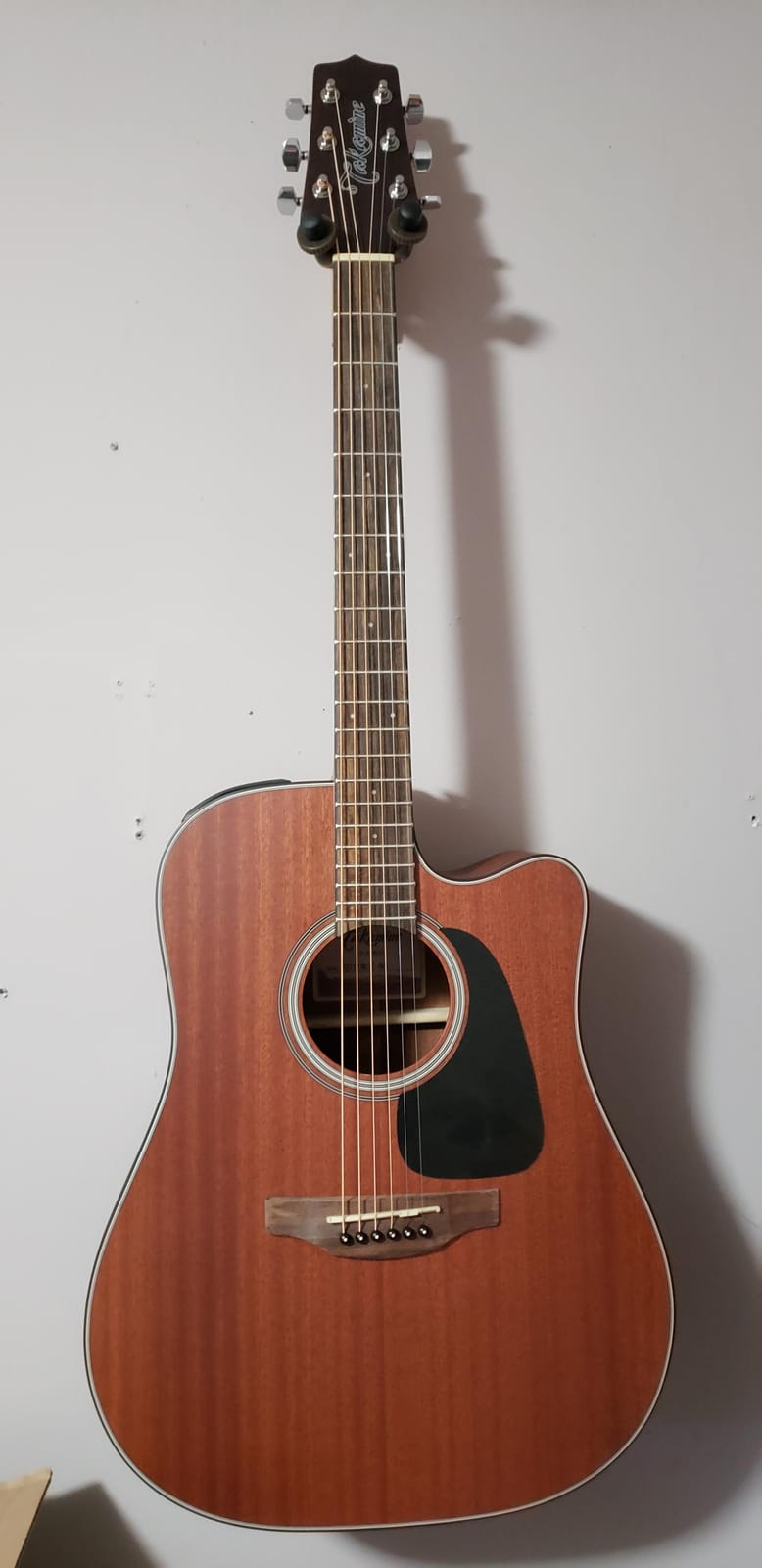
Guitarists who carry one preamp across several rooms learn to trust it, and the Takamine TP-4T is the one we trusted most. Every GD11MCE we played produced a similar plugged-in voice, which is exactly what a rotating worship team needs from a shared instrument.
The all-sapele body gives a bold strumming tone with a firm low end. That is useful when the goal is to be heard over a full band rather than to blend politely underneath one.
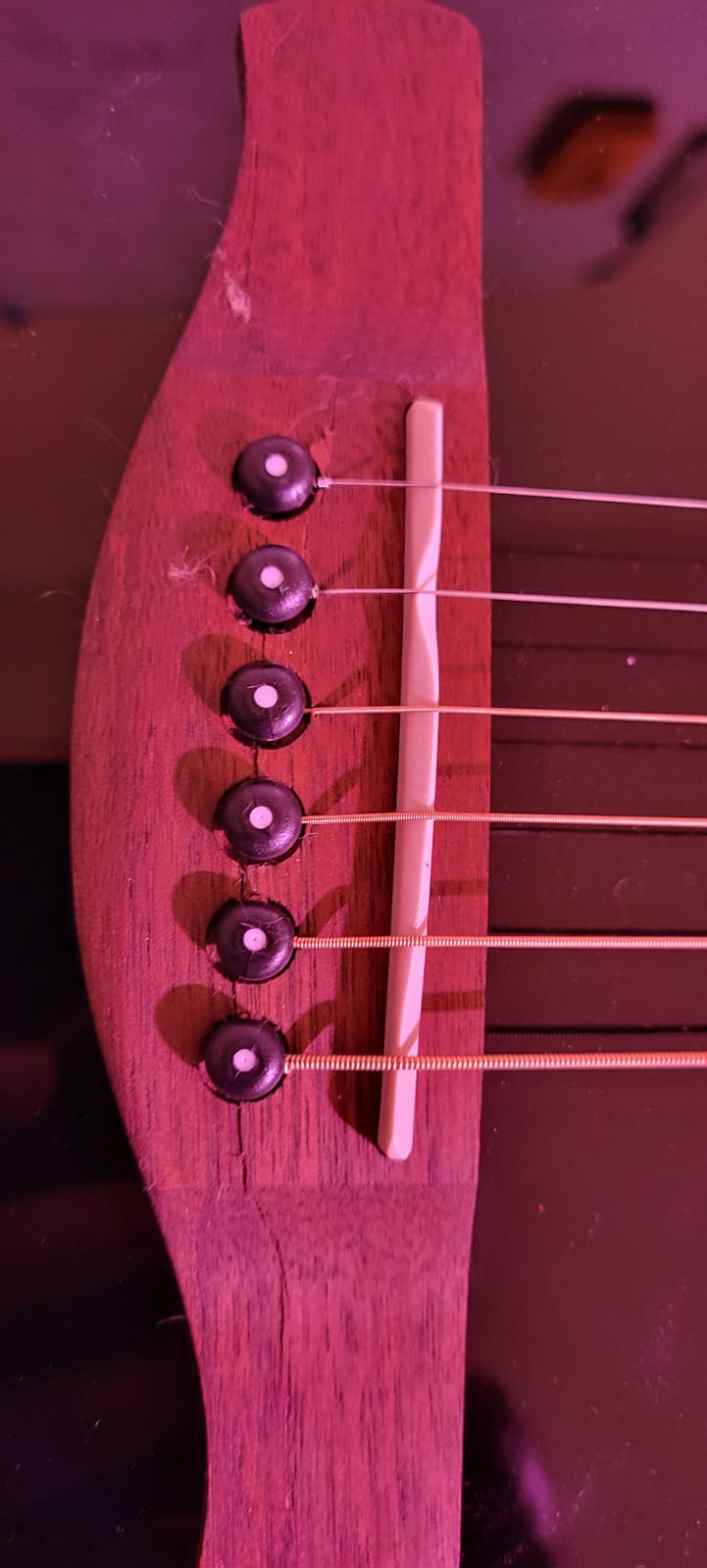
The split saddle bone bridge is a genuine upgrade over the composite pieces on cheaper models. Bone transfers string energy efficiently, which is why reviewers single out the intonation as the standout feature of this guitar.
A pinless bridge deserves more credit than it gets. Between a worship set, a rehearsal, and a midweek event, the ability to change strings without fighting stubborn pins saves real time.
Why the TP-4T preamp matters
Three-band EQ, a built-in chromatic tuner, and a phase switch give a player enough control to fit an unpredictable room. The phase switch in particular helps when the guitar is doubled by a close mic and fighting itself in the mix.
Bone bridge and intonation
Precise intonation across all 20 frets means your open chord shapes and capo transpositions land in tune. On a worship guitar that is used with a capo almost every service, this is not a luxury detail.
Who should skip it
Skip it if unplugged projection is your priority, because the laminate sapele top is quieter than a solid spruce instrument. Players who prefer rosewood under the hand should know this one uses Indian laurel instead.
5. Ibanez AEG50 – Best Slim-Body Choice For Players Who Dread Dreadnoughts
Ibanez AEG50 Acoustic-Electric Guitar – Indigo Blue Burst High Gloss
Spruce top with sapele back and sides
Slim AEG body, 25 inch scale
Ibanez electronics with onboard tuner
+ Pros
- Slim AEG body suits players who struggle with full depth dreadnoughts
- Clean clear amplified tone through a PA or amp
- Onboard tuner keeps tuning honest between songs
- Advantage bridge pins speed up string changes
- Light enough to play standing without shoulder fatigue
- Cons
- Laminate construction produces a quieter unplugged sound
- Some units arrive with intonation issues
- Action may need adjustment out of the box
Most worship guitar advice assumes a large body is automatically better. For a lot of players it is the opposite. The AEG50 uses a slim AEG profile that sits against the body comfortably, and at 6.8 pounds it is one of the easiest full-size acoustics here to carry standing for a long set.
Plugged in, it is a clean and clear instrument. That clarity is a virtue in a worship mix, where a muddy low mid guitar is the fastest way to disappear behind a worship leader vocal.
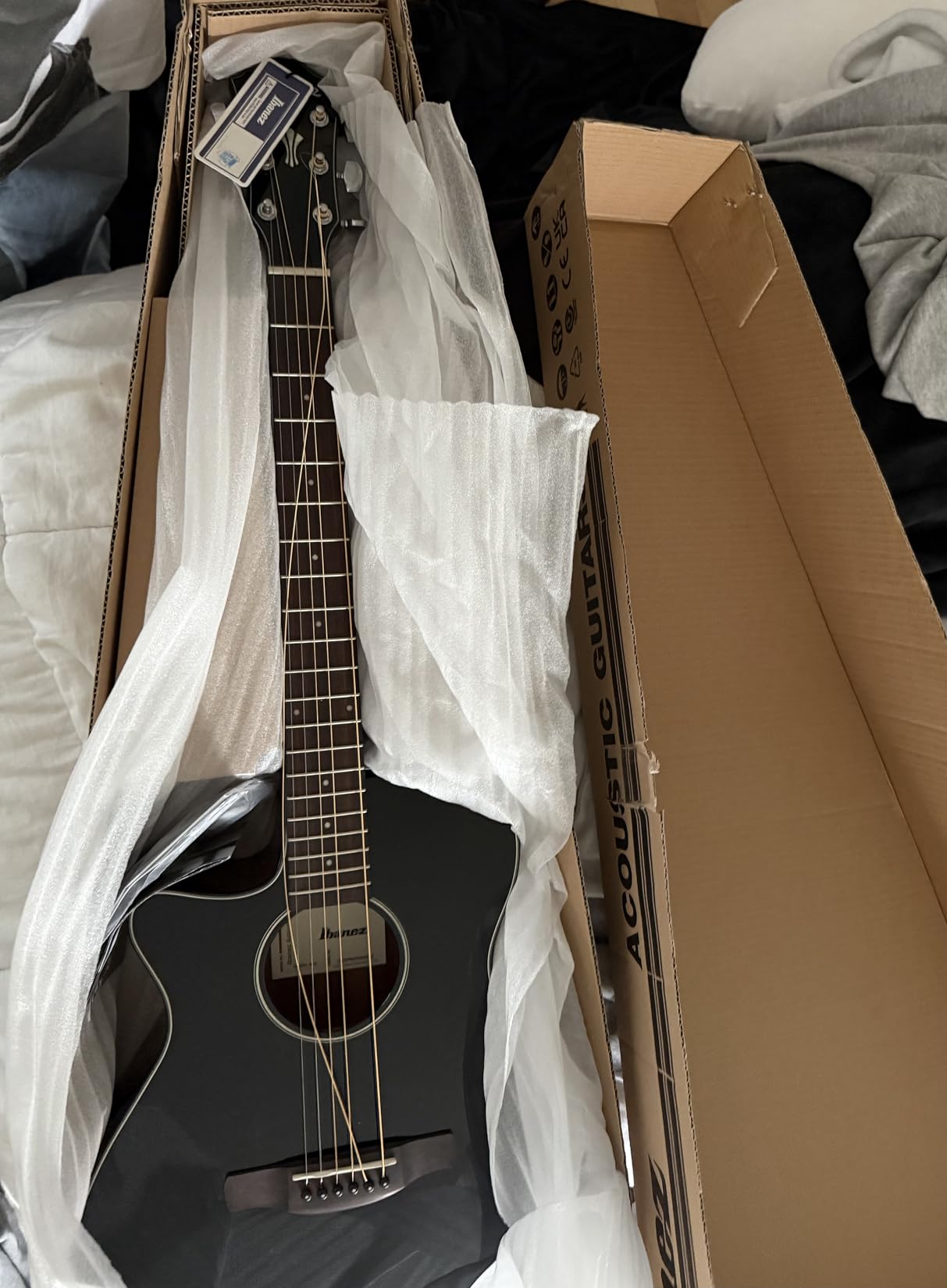
The onboard tuner is a simple chromatic unit mounted in the body, which means tuning happens without a phone, a clip-on, or an engineer. For volunteer players, that reliability is worth more than extra tone shaping.
Ibanez Advantage bridge pins are a small touch that pays off repeatedly. They grip the string ball ends firmly, so a string does not creep out during a set and go flat mid-song.
Spruce top with sapele sides
This pairing gives a bright, quick response rather than a warm woody one. It is a good match for strumming-led services and for players who also use pedals, since the signal stays clear under effects.
Amplified use over acoustic use
The laminate construction makes this an amplified-first instrument. Unplugged it is quieter than a solid-top dreadnought, and anyone buying it for hymn-led sets without a PA should know that going in.
Who should skip it
Skip it if low-end punch is the goal, or if you are picky about intonation and cannot visit a luthier. A few units need setup work before they play their best.
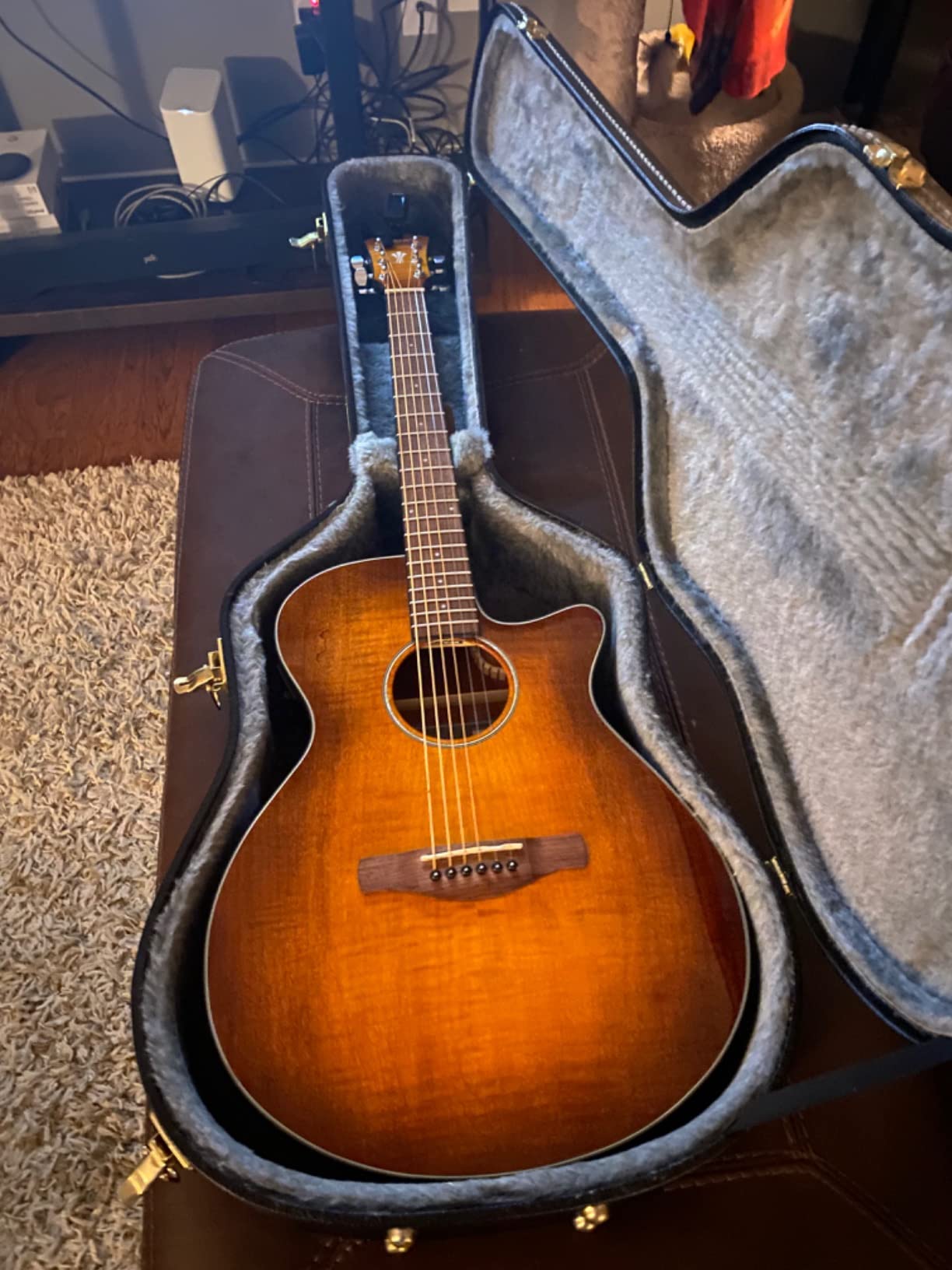
6. Ibanez AEG70 – Lightest Guitar Here And The Best Looking Under Stage Lights
Ibanez AEG70 Acoustic-Electric Guitar – Transparent Charcoal Burst High Gloss
Flame maple top with sapele sides
Slim AEG body at 6 lbs
Ibanez electronics with LCD tuner
+ Pros
- Lightest guitar in this group at 6 lbs for long standing sets
- Tune-O-Matic bridge gives precise intonation
- Onboard LCD tuner is easy to read at a glance
- Flame maple top looks stage-ready under lighting
- Works well with pedals for electric-leaning songs
- Cons
- Laminate construction limits unplugged projection
- Thin body lacks low-end response unplugged
- Some quality control variance between units
At six pounds this is the lightest full-size acoustic-electric we tested, and that number matters more than it sounds. When you are the only guitar player on a worship team, the instrument is on your body for the entire service, and every pound registers by the fourth song.
The flame maple top in a transparent charcoal burst finish is the visual standout of this lineup. Under stage lighting it catches the eye in a way the natural-finished dreadnoughts here do not.
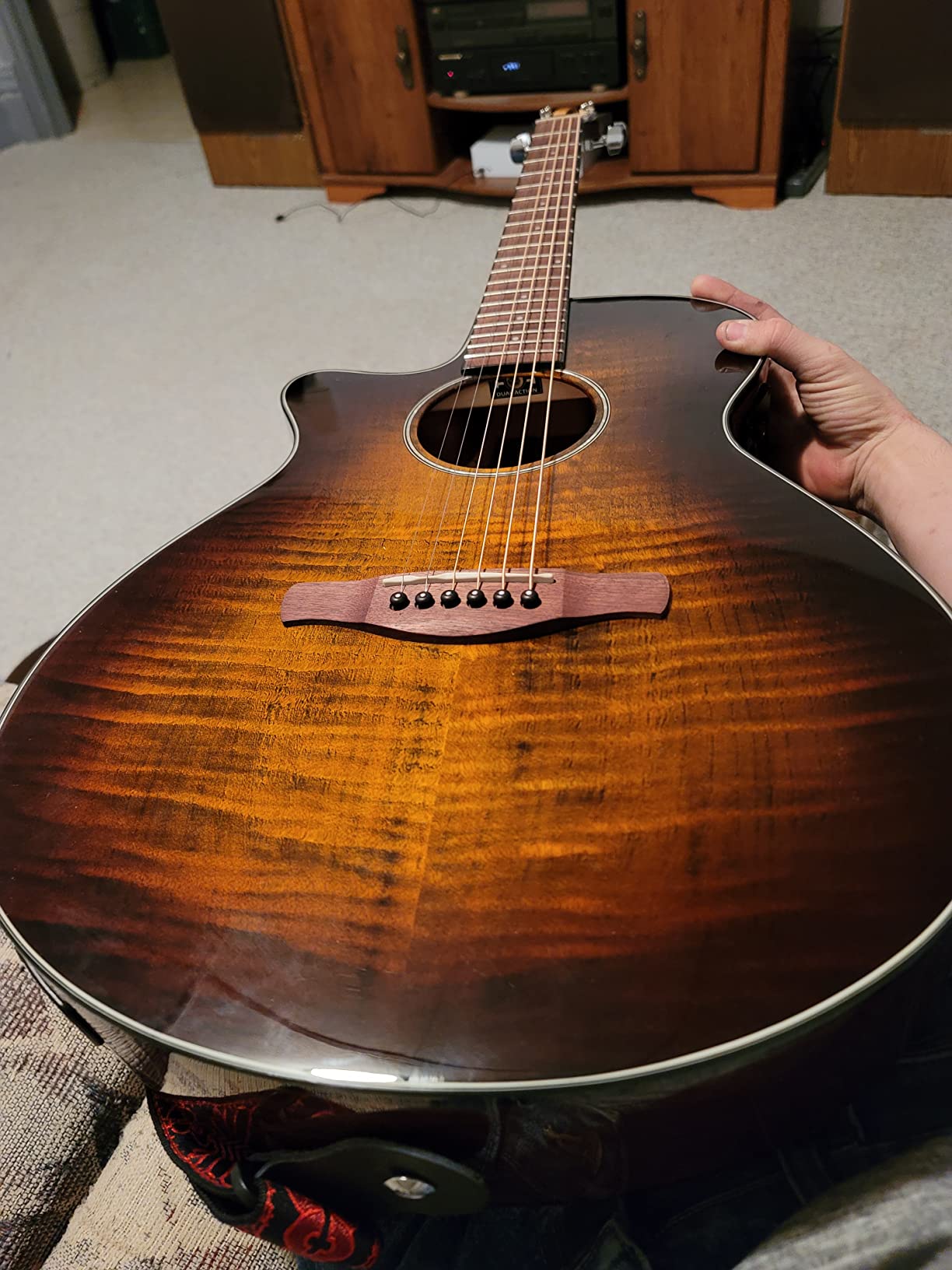
The Tune-O-Matic bridge is a spec you normally associate with higher tier archtops, and it does what it promises: clean, even intonation with a solid break angle that adds some top-end snap.
The LCD tuner shows the note name rather than a needle, which is faster to read at a glance under low light. That small usability detail saved us more time across a rehearsal block than we expected.
Weight and balance
The slim AEG profile and low mass make this the least tiring option for a leader who does not use a strap. It also handles repeated load-ins from a car without the neck fighting you.
Stage presence and finish
The figured maple top and burst finish exist for a reason. If your service is video streamed or your band photo ends up on a screen, this is the guitar that reads well in an image.
Who should skip it
Skip it for purely acoustic use, because the thin laminate body gives you the least unplugged low end in this group. Expect minor unit-to-unit variation in finish quality.
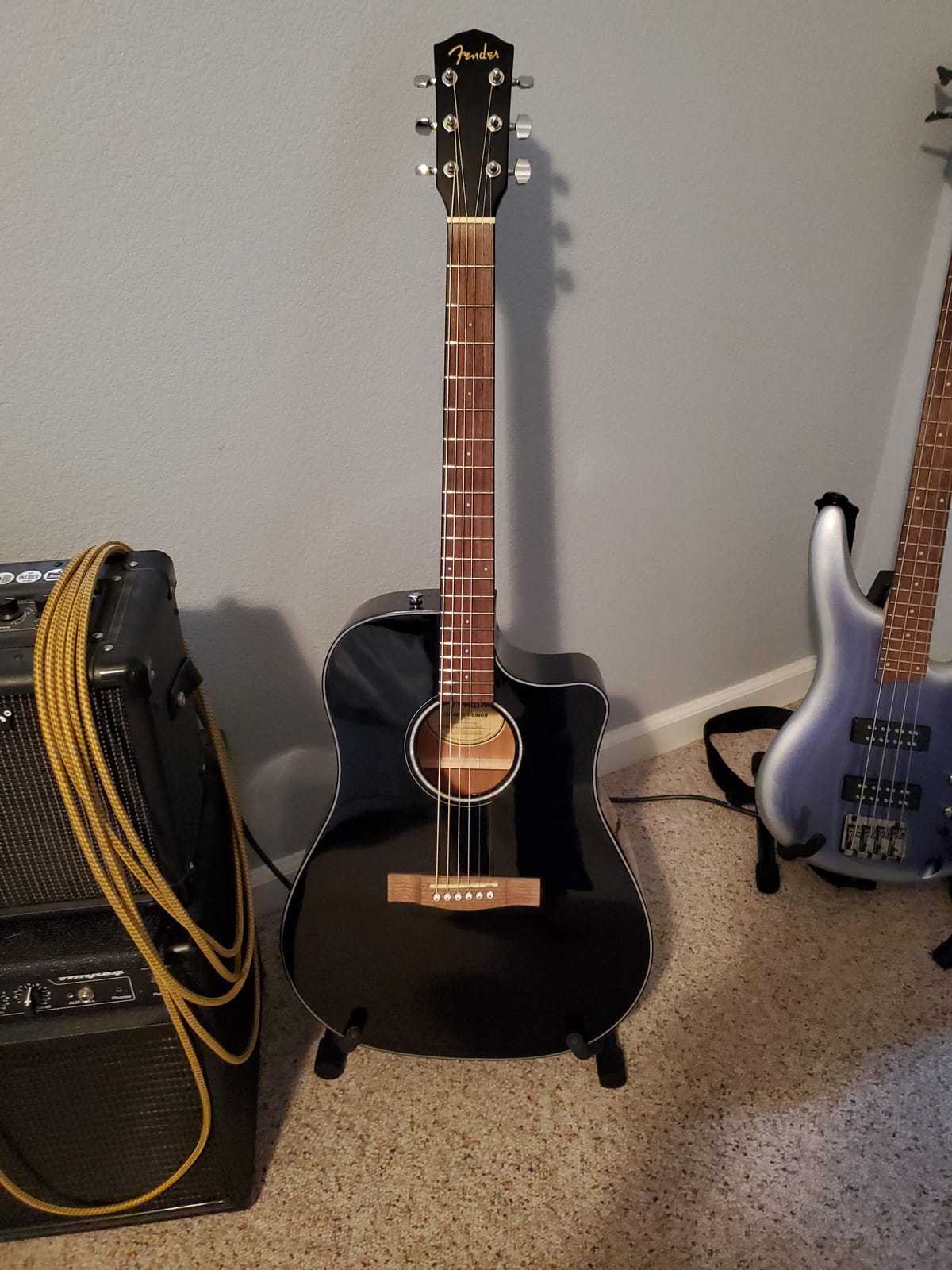
7. Fender CD-60SCE – Best All-Mahogany Warmth With The Strongest Budget Preamp
Fender CD-60SCE All-Mahogany Dreadnought Cutaway Acoustic Electric Guitar, with 2-Year Warranty, Fishman Pickup and Preamp System, Natural
Solid mahogany top with scalloped X bracing
Fishman Classic Design preamp
1.69 inch nut, dreadnought cutaway
+ Pros
- Fishman Classic Design preamp is the strongest electronics in this price range
- Solid mahogany top with scalloped X bracing
- Built-in tuner with rolled fingerboard edges
- 1.69 inch nut gives a wide flat fingerboard some players prefer
- Backed by a 2-year warranty
- Cons
- Composite nut and saddle
- bone is a worthwhile upgrade
- Factory setup varies between units
- Built-in tuner only works while plugged in
Mahogany gives this guitar a warm, woody voice that cuts through a band differently from the spruce guitars here. It suits ballad-led services, hymn sets, and players whose hands prefer a warm midrange rather than a bright attack.
The real story is the Fishman Classic Design system. At this level, most manufacturers fit a basic tone and volume knob, and reviewers consistently single this one out as sounding properly amplified.
At 1.69 inches, the nut is the widest in this group. Players who want a flat, broad fingerboard for fingerstyle movement tend to love it, while players who prefer a narrow electric-style neck tend to find it cramped.
Two practical notes. The built-in tuner activates only when a cable is plugged in, so it will not help you in a quiet practice room. And the composite nut and saddle are the first parts worth upgrading once you settle on the guitar.
Scalloped X-bracing and solid mahogany
A solid top with scalloped bracing gives more headroom than a laminate at the same body size. Strum hard and the top keeps responding rather than choking out, which matters when you are driving a full room acoustically.
Fishman Classic Design electronics
Volume, bass, and treble with an onboard chromatic tuner. It is a simple layout, and simplicity is a virtue for a guitar that gets grabbed quickly before a service.
Who should skip it
Skip it if small hands are the issue, because the 1.69 inch nut is not forgiving. Players who want the warm mahogany tone but need more upper-fret reach should know the cutaway is the reason this one has a shoulder at all.
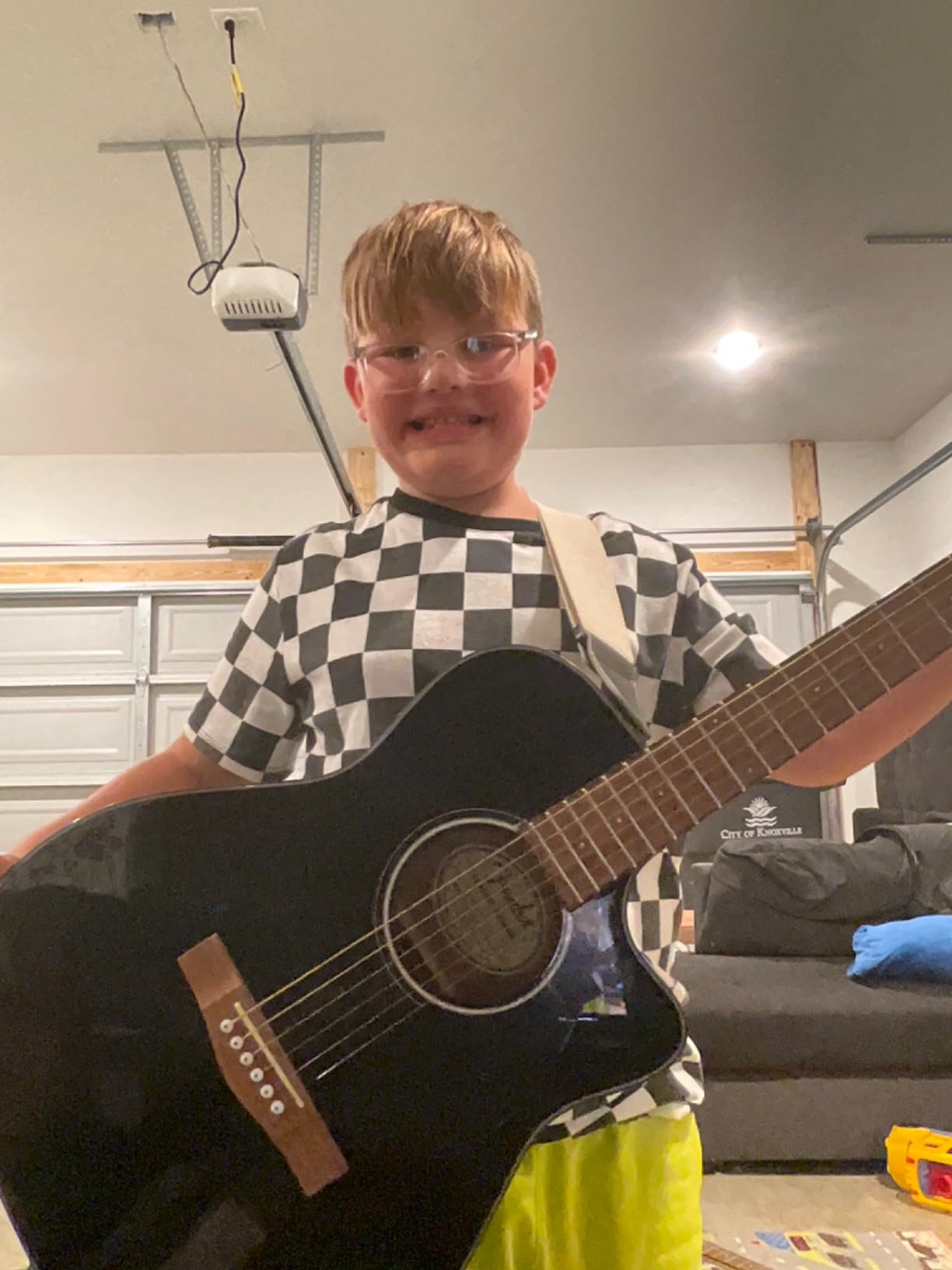
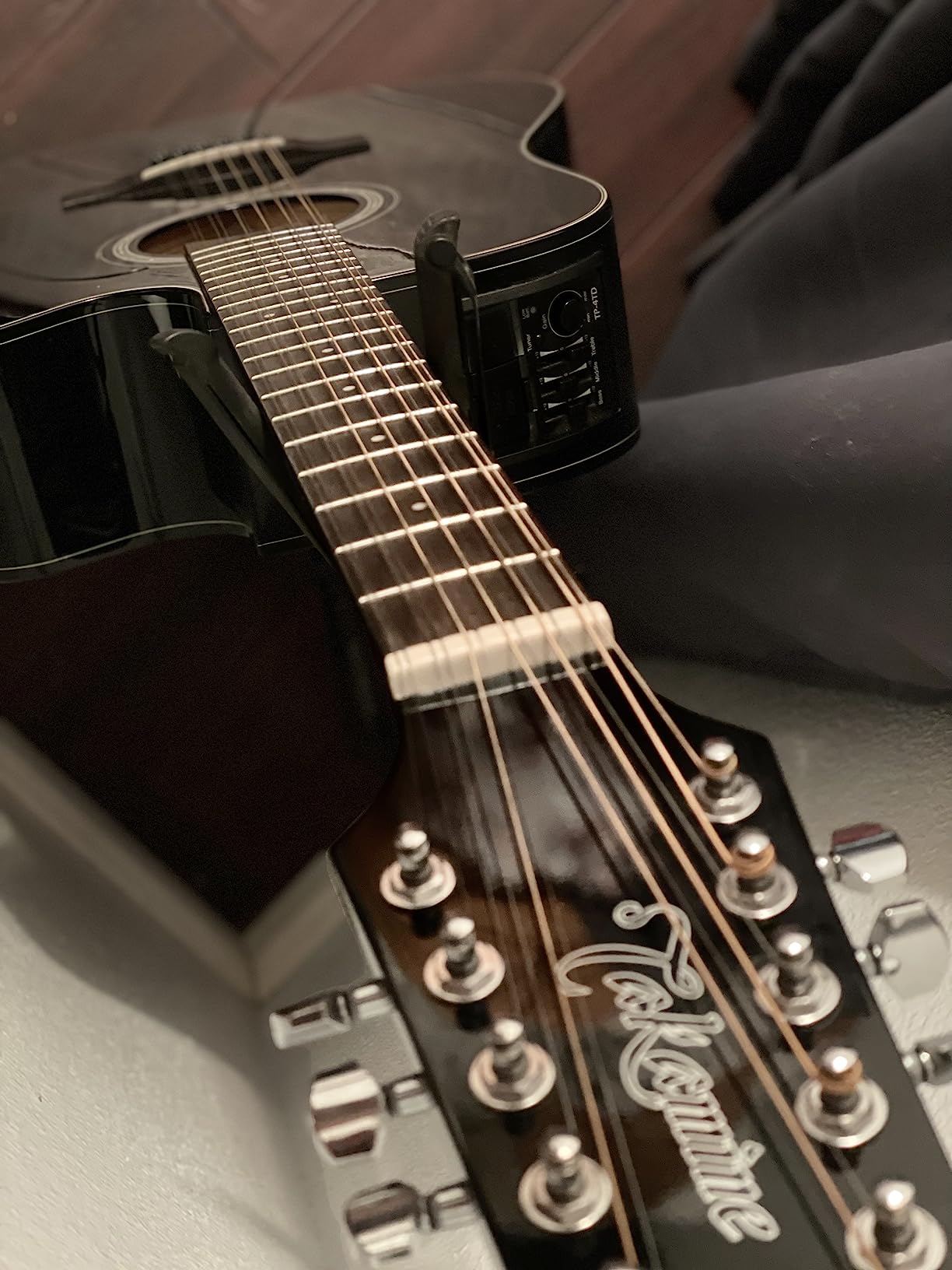
8. Takamine GD30CE-12 – Best Twelve-String For Choral Worship Textures
Takamine GD30CE-12 12-string Acoustic-electric Guitar – Black
12-string dreadnought cutaway
Spruce top with mahogany sides
TP-4TD preamp with tuner
+ Pros
- Twelve-string voicing adds the shimmer worship sets often want
- TP-4TD preamp is calibrated for 12-string output levels
- Split saddle bone bridge holds accurate intonation
- Pinless bridge speeds up string changes
- Covered by a 2-year warranty
- Cons
- Twelve strings need real finger strength and a correct setup
- Wider neck can be a stretch for smaller hands
- Higher string tension adds to the overall weight
A twelve-string is the easiest way to make an acoustic worship part sound bigger without adding volume. The octave course creates that shimmering, ringing wash underneath a melody, and it sits beautifully in a mix.
Takamine built the preamp around the instrument rather than bolting a standard system on. The TP-4TD is tuned for 12-string output levels, and reviewers report the plugged-in result as balanced rather than overdriven.
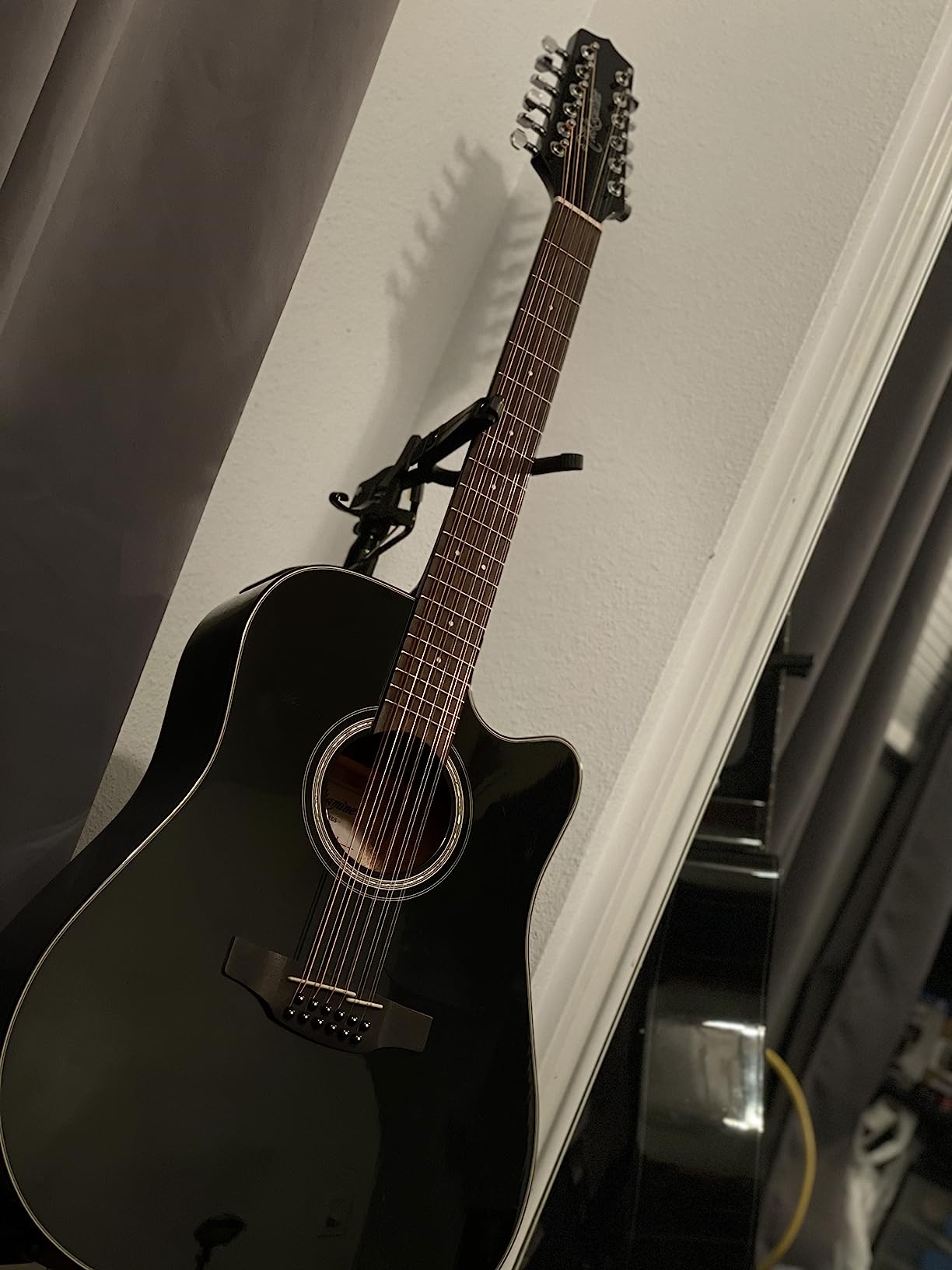
The split saddle bone bridge is doing quiet, important work here. Twelve strings put far more tension across the bridge than six, and bone transfers that energy efficiently enough to keep the lower courses in tune.
The cutaway matters more on a 12-string than on a six-string. The neck is already wide, and upper-fret access is harder, so a Venetian cutaway is close to essential for anyone who capo shapes high.
Why a 12-string for worship
A 12-string is not a substitute for a rhythm guitar. It is an addition: a lead, an intro, or a closing chord that lets the congregation hear a change in the arrangement without the band getting louder.
Finger strength and setup
This is not a first-guitar. The tension and the extra fretting hand load mean a correct setup is close to mandatory, and players with developing calluses should expect a short adjustment period.
Who should skip it
Skip it if you are new to acoustic playing, or if you need a primary rhythm instrument for congregational singing. It is a specialist tool for a specific sound, not an all-purpose worship guitar.
9. Fender CD-140SCE – Best Pick When A Hard Case Is Part Of The Deal
Fender CD-140SCE Acoustic Electric Guitar, Dreadnought, with Case, Mahogany
Solid mahogany top with scalloped bracing
Fishman CD preamp
Hardshell case included
+ Pros
- Hardshell case included
- which matters for a team that moves rooms
- All-mahogany build delivers a warm woody tone
- Solid mahogany top with scalloped X bracing
- Rolled fingerboard edges and a 2-year warranty
- Fishman CD preamp is simple and reliable
- Cons
- Listed weight of 13 lbs is the heaviest in this group
- All-mahogany build gives less top-end sparkle than spruce
- Reports of fret buzz on some units
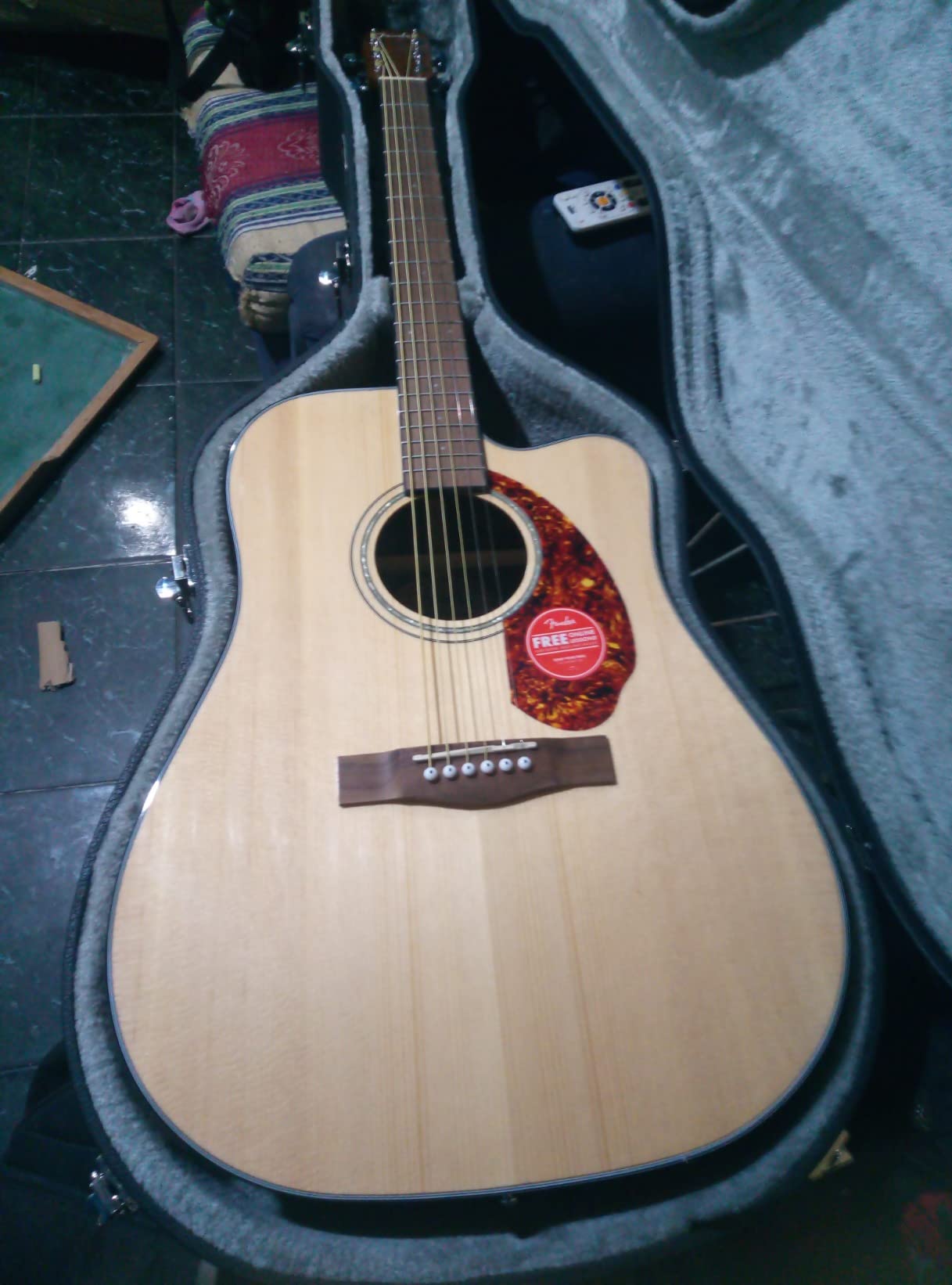
The reason to buy this one over a similar guitar is in the box. A hardshell case at this level is unusual, and for a worship team moving between rooms, loading a van, or storing instruments in a cold building, it removes an entire category of problem.
The tone follows the all-mahogany recipe. Warm midrange, rounded highs, and a strum that sounds comfortable on ballads and older worship material.
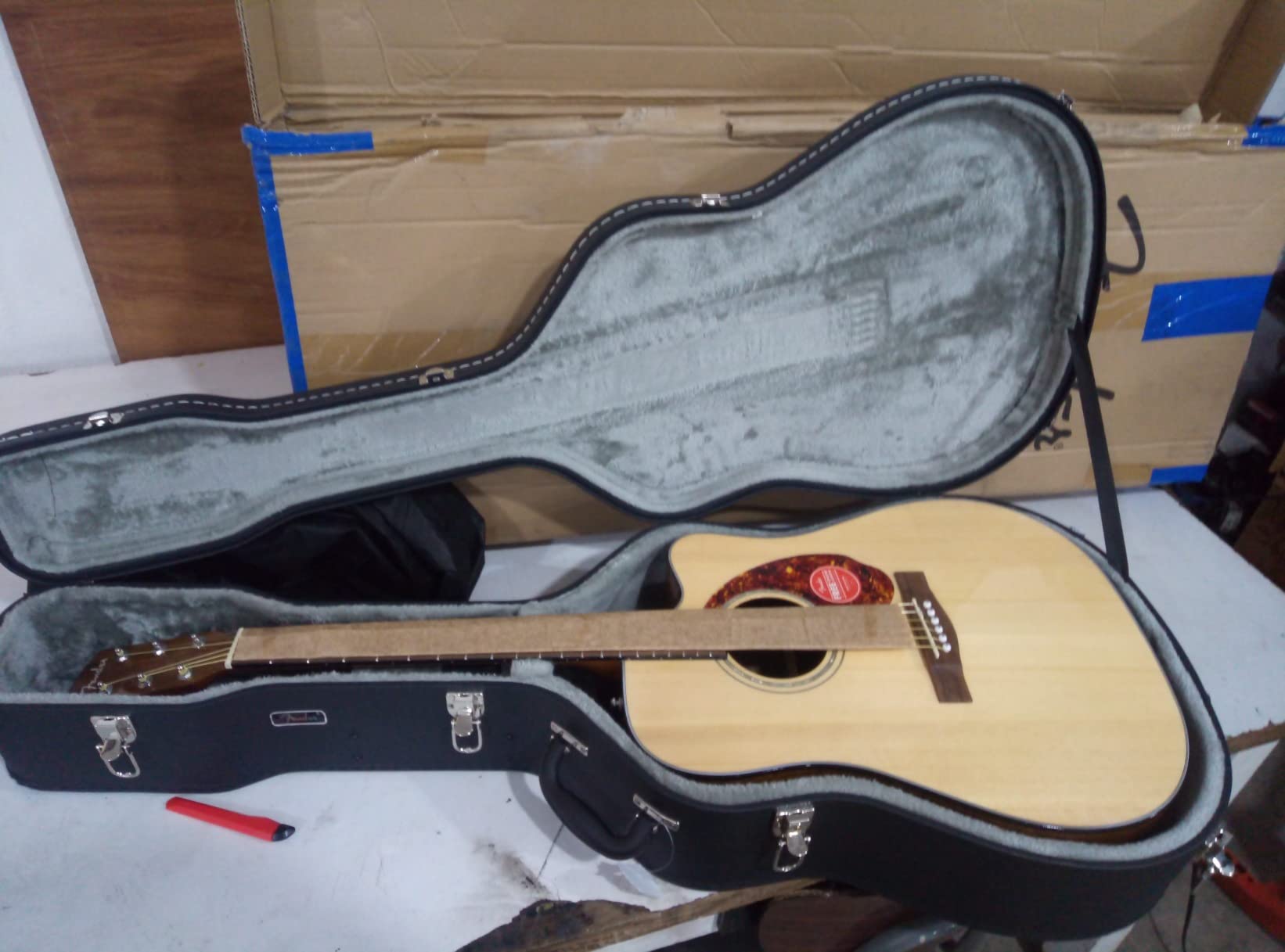
The single-cutaway body gives high-fret access without changing the dreadnought footprint, and the rolled fingerboard edges make long sessions easier on the palm.
The listed weight of 13 pounds is the heaviest figure in this group, and reviewers do mention shoulder fatigue. If you lead standing for 90 minutes without a strap, test this one for longer than a casual minute.
All-mahogany tonal character
Mahogany top, back, sides, neck, and fretboard produce a consistent warm voice. There is less top-end sparkle than a spruce guitar, which is a preference rather than a defect for worship players leading hymns.
Fishman CD electronics
A simple volume and tone layout that reviewers describe as reliable. A few units have had inconsistent electronics, so buying through a seller with straightforward returns is worth the effort.
Who should skip it
Skip it if you need a bright, cutting tone or play standing without a strap for long stretches. Players who are picky about fret buzz should insist on inspecting the specific unit.
How To Choose An Acoustic Electric Guitar For Worship
The right acoustic-electric for worship is decided by your room and your role, not by the badge on the headstock. Six questions separate a guitar that works on stage from one that frustrates you every Sunday.
1. What electronics do I actually need?
You need a preamp with volume, a tone control, and a tuner you can reach from the strap position. A mid sweep or adjustable mid frequency is worth paying for, because that is the control that lets a player disappear behind a vocal and then come forward again. Every guitar in this roundup has at least volume, tone, and a tuner.
2. How do I keep feedback under control?
Feedback on an acoustic comes from a low, growly frequency that the room amplifies back at the guitar. The fix is almost always the same: roll off the low end on the preamp or at the channel, sweep the midrange to find the honky frequency and cut it, and keep the guitar angled away from the wedge. Small-bodied instruments like the APX600 and the AEG models inherently reduce this problem, which is why they are popular on smaller stages.
3. Do I need a cutaway?
If your capo work stays below the fifth fret, you do not need one. If you capo higher, use shapes that climb the neck, or lead songs in first position with an octave up, then a cutaway changes how the upper frets feel. It adds a shoulder of wood to the body and slightly changes the resonance, and we think that trade is worth it for worship players.
4. Dreadnought, grand auditorium, or slim body?
Dreadnoughts give the most low end and projection, and they are the heaviest thing on stage. Grand auditoriums and concert bodies split the difference and suit fingerstyle. Slim bodies such as the APX600 and the AEG models trade unplugged volume for a guitar you can comfortably hold for a full standing set. Choose based on how long you are on your feet and how large the room is.
5. What about neck width?
Narrow necks feel fast but can feel cramped for fingerstyle. Wide flat fingerboards such as the 1.69 inch nut on the CD-60SCE give the fingers room to move. This is the most common reason a guitarist buys the wrong guitar, and it is the one thing you cannot change later without a neck reset.
6. Should I add a DI box?
If your church console has no spare channel for instruments, a DI box between the guitar and the mixer gives you a level control and often a phase switch. It also lets you feed a second amp or a keyboard rig without splitting cables. For a guitarist who also covers electric parts, one guitar plus a DI is often enough signal routing for a whole service.
Frequently Asked Questions
What is the best acoustic electric guitar for worship?
The Yamaha FGX800C is the strongest all-round choice here. It pairs a solid Sitka spruce top with a dreadnought cutaway body and a System 66 preamp that includes a 3-band EQ, an adjustable mid, and a built-in chromatic tuner. That combination gives a worship leader real volume control, enough headroom to lead acoustically, and midrange shaping that keeps the guitar audible under a full band.
What acoustic guitars do worship leaders use?
Players most often reach for solid-top steel-string acoustics with onboard electronics, and Taylor and Martin are the two names that come up most frequently in worship communities. Taylor is usually chosen for a bright, mix-friendly voice and consistent build quality, while Martin is preferred for a warmer, creamier tone that suits hymns and ballad-led sets. Yamaha, Takamine, and Fender cover the budget and team-purchase end of the market.
What makes a good worship guitar?
Six things matter most: a preamp with volume, tone, and a tuner you can reach from the strap position; a midrange control that lets the player sit behind or in front of a vocal; a body size you can hold comfortably for a full standing set; a cutaway if you capo above the fifth fret; a neck width that suits your hand; and a tone that projects acoustically without needing excessive stage volume.
What’s the difference between an acoustic and an acoustic-electric for worship?
A plain acoustic is played into a microphone, which means the tone on stage depends entirely on the mic choice and placement. An acoustic-electric has a piezo or soundhole pickup and an onboard preamp, so the player controls volume and tone from the instrument itself. That control is the difference between adapting to each room and asking a sound engineer to adapt to you.
Is a dreadnought too big to play standing for a whole service?
It depends on the player and the guitar. Dreadnought bodies are the largest and heaviest option, and leaders who stand for 90 minutes without a strap often report shoulder fatigue. Slim-line models such as the Yamaha APX600 or the Ibanez AEG series weigh considerably less and sit closer to the body. Test the exact instrument before committing, and consider a strap if you choose a full dreadnought.
How do I avoid feedback with an acoustic guitar at church?
Roll off the low end on the preamp or the channel first, since a muddy low mid frequency is what feeds back. Then sweep the midrange slowly and cut the frequency that honks when you turn up. Keep the guitar pointed away from the wedge or the front edge of the stage, and use a smaller body style if your room is especially live.
Which Worship Guitar Fits Your Situation Best
If you lead a full band in a loud room and want one guitar that projects acoustically and shapes itself in the mix, choose the Yamaha FGX800C. It is the most complete instrument in this roundup.
If you play standing for a full service and comfort matters more than unplugged volume, the Yamaha APX600 is the answer. For smaller hands or a youth team equipping several players, the Martin LX1E solves scale and durability problems at the same time.
If you want the most dependable onboard electronics in the group, the Takamine GD11MCE has the clearest stage controls and the most consistent unit-to-unit tone. If you play electric-leaning songs and want the lightest guitar on your shoulder, the Ibanez AEG70 handles both without straining your back.
If warm woody tone is what your service needs, the Fender CD-60SCE delivers it with the strongest budget preamp here, and the CD-140SCE adds a hard case for teams that move between rooms. If you want a wash of shimmer under a closing chord, the Takamine GD30CE-12 is built for exactly that.
Whichever one you choose, buy a bone nut and saddle at the same time, get a proper setup before the first service, and give the instrument two weeks of playing before you judge the tone. That is the fastest way to turn any of these guitars into the best acoustic electric guitar for worship in your own hands.