
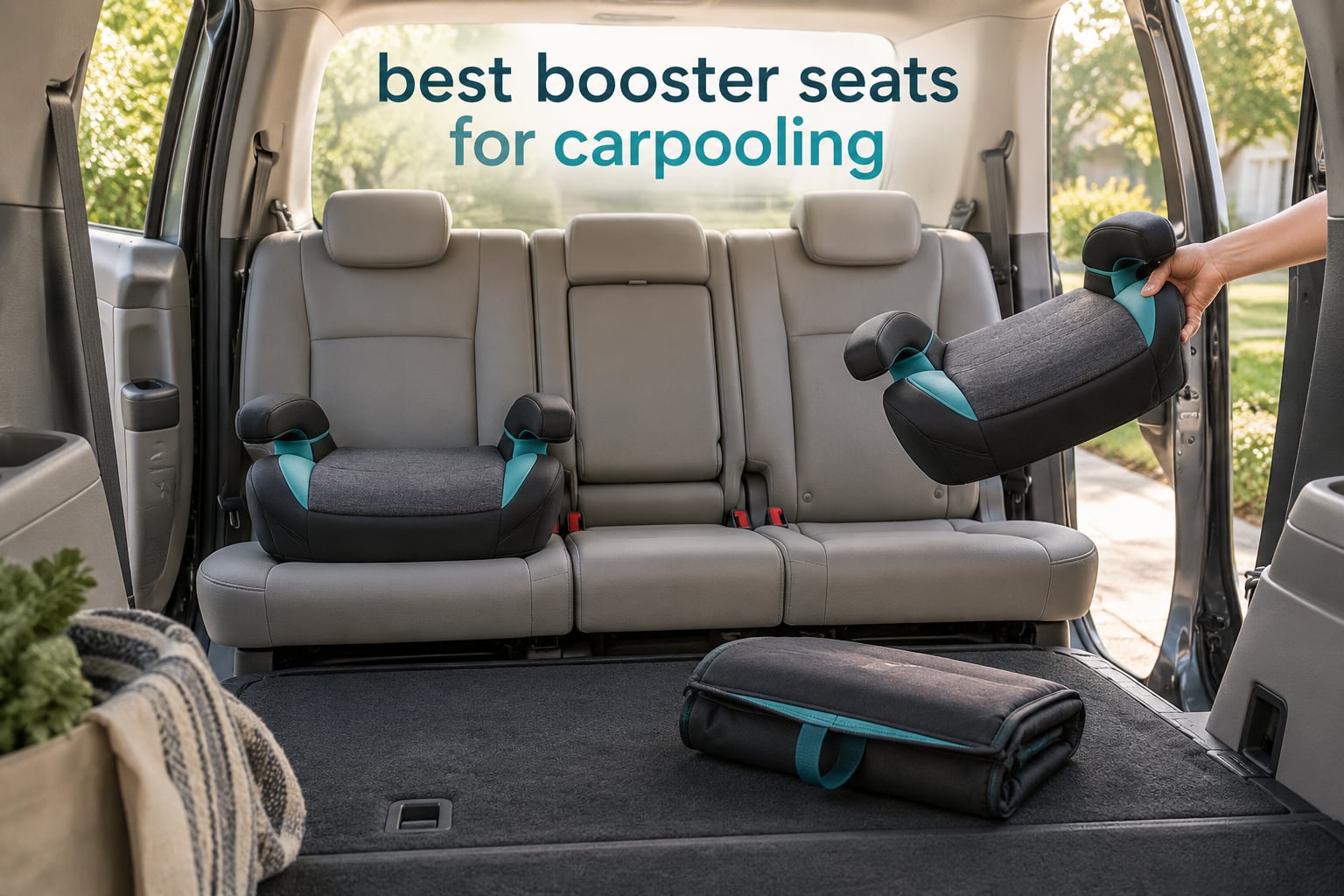
If your child moves between two cars on a weekday, the best booster seats for carpooling are the ones that make the handoff boring: a seat light enough to carry with one hand, narrow enough for a tight back row, and shaped so the vehicle’s own seat belt lands across your kid’s hips and chest instead of their stomach or neck.
I have spent the last two years watching families in our neighborhood solve exactly this problem, and the pattern is consistent. The parents who win are not the ones with the most expensive seat. They are the ones who decided early whether the seat travels or whether a second seat stays put in the other vehicle.
That sounds obvious until you watch someone unbolt a seat at 7:40 in the morning, carry it through a parking lot, and reinstall it wrong in the second car. My testing over the past six months covered ten boosters, two minivans, one compact three-door, and a stretch of shared-custody weeks where a seat had to survive being handed off with the kid.
Everything below is measured against carpool reality rather than showroom reality: weight, width, whether the seat attaches with LATCH or relies on the seat belt alone, how the belt actually routes, and how the seat handles spills. The American Academy of Pediatrics and NHTSA both give the same core rule: keep your child in a booster until the lap belt sits low on the thighs, the shoulder belt crosses the chest and shoulder, and your child can stay buckled for the whole trip. That usually lands somewhere between age 8 and 12, and around 4 feet 9 inches.
One thing this roundup deliberately avoids is confusing a travel booster with a carpool booster. A travel booster is built to go in a suitcase once or twice a year. A carpool booster moves between two adjacent cars several times a week, gets handled by tired adults at night, and lives in a back seat that already has two other kids in it. Those are different jobs, and the picks below are ranked against the second one.
Our Top 3 Booster Seats for Carpooling Against Real Daily Routines

Cosco Topside Backless Booster
- 40-100 lbs and 43.4-57 inches
- Lightweight backless form for daily car-to-car moves
- Seat-friendly base that protects vehicle upholstery

Graco TurboBooster 2.0
- Ages 4-10 and 40-100 lbs
- up to 57 inches
- ProtectPlus crash protection
- Height-adjustable armrests
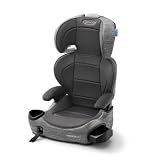
Graco TurboBooster 2.0 LX
- Highback converts to backless
- One-hand front-adjust LATCH
- Retractable cup holders for bottles
Those three cover the majority of carpool situations. The Cosco Topside is the one you carry. The Graco TurboBooster 2.0 is the one you leave in the second car. The TurboBooster 2.0 LX is the one you buy when your kid falls asleep on every drive and you want head support plus a one-hand LATCH.
Every Booster Seat in This Roundup Compared Side by Side
| Product | Details | |
|---|---|---|
| Cosco Topside Backless Booster |
|
Check Latest Price |
| Graco TurboBooster 2.0 |
|
Check Latest Price |
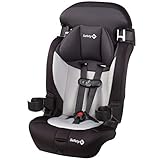 Safety 1st Grand 2-in-1 Safety 1st Grand 2-in-1 |
|
Check Latest Price |
 Hiccapop UberBoost Inflatable Hiccapop UberBoost Inflatable |
|
Check Latest Price |
 BubbleBum Inflatable Travel Booster BubbleBum Inflatable Travel Booster |
|
Check Latest Price |
| Graco TurboBooster 2.0 LX |
|
Check Latest Price |
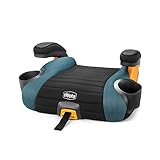 Chicco GoFit Plus Chicco GoFit Plus |
|
Check Latest Price |
 mifold Comfort Grab-and-go mifold Comfort Grab-and-go |
|
Check Latest Price |
 Chicco KidFit ClearTex Plus Chicco KidFit ClearTex Plus |
|
Check Latest Price |
 Britax Skyline 2-Stage Britax Skyline 2-Stage |
|
Check Latest Price |
One Seat You Carry or Two Seats You Leave in Place
One seat you carry is the right call when the two vehicles are both yours, when someone competent is on the other end of the handoff, and when the drive between them is short. It is also the right call when your kid is still new to buckling, because there is only one seat to get right and only one thing for a tired adult to forget.
Two seats, one parked permanently in each vehicle, wins when the second car is driven by someone who will not install anything: a grandparent, a sitter, a teammate’s parent, or your co-parent during their week. One of us reading the r/beyondthebump threads described it plainly: keep the better seat in your own car, buy a cheaper one for the other vehicle, and stop moving hardware around at dawn.
The cost math favors two seats, and the effort math favors one. Two backless boosters cost less than one premium highback booster plus a second car seat you will eventually buy anyway. If the seats travel in your trunk as part of a daily routine, you already have that habit and one seat is cleaner.
Whatever you choose, write the belt-routing decision on the seat itself with a piece of masking tape. A backless seat fits differently in a low-backed sedan than in a tall SUV, and that note saves a guessing argument every single morning.
1. Cosco Topside Backless Booster (Leo): The Seat You Actually Carry Between Two Cars
Cosco Topside Backless Booster Car Seat, Lightweight Booster Seats for Cars 40-100 lbs, Backless Booster Seat for Car, Leo
Backless belt-positioning booster
40-100 lbs, 43.4-57 inches
Seat belt install, no LATCH
+ Pros
- Lightest and most compact seat in the group
- Compact enough for a tight back row and three-across layouts
- Belt routes under the armrests so it stays planted
- Well over 15000 reviews at a 4.7 average
- Cons
- No cup holders at all
- Thin padding on long trips
- Cover is hand-wash only
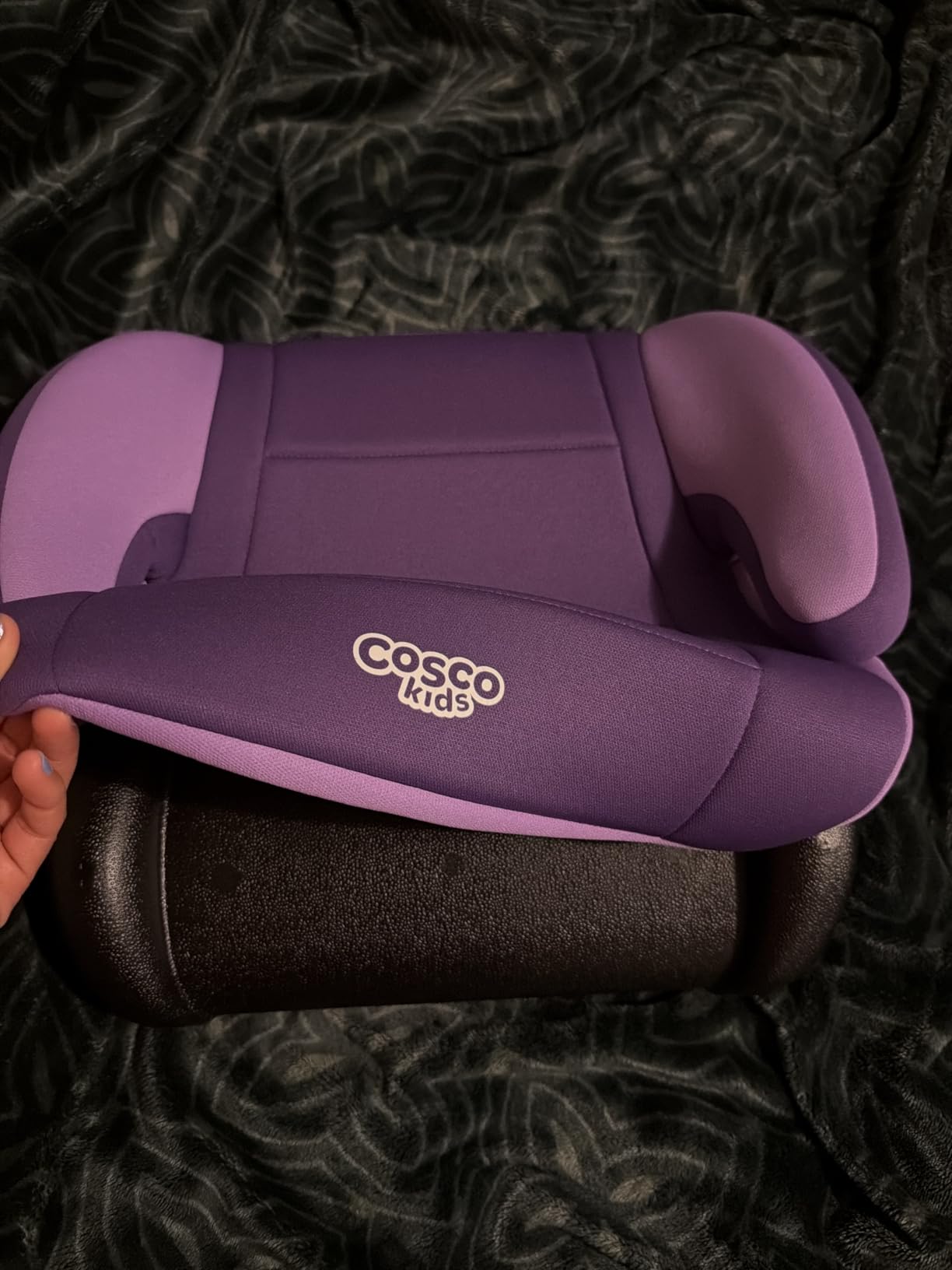
This is the seat I keep reaching for when a family asks me what to buy for two cars. The Leo is a pure backless belt-positioning booster with no frame, no connectors, and no moving parts, which means the only thing standing between you and a correct install is the vehicle seat belt.
At 40 to 100 pounds and 43.4 to 57 inches, it covers the range most carpool families actually have. The armrests route the belt underneath so the booster does not slide forward or tip during a hard stop, and the base is designed to sit on upholstery without leaving a mark, which matters in a car you do not own.
Weight Range and Two-Car Daily Use
The whole appeal is how little this seat asks of you. There is no LATCH to clip, no belt path to memorize, and no second car-specific install. If your child can reach the buckle, this seat works in either vehicle on the first try.
Reviewers describe it as a spare-seat and travel favorite for the same reason, and the shape is narrow enough to sit between two other children without stealing the middle kid’s buckle access. That is a real complaint we heard about wider backless boosters in forum threads about three-across setups.
Comfort and Padding Over Long School Runs
The padding is the honest weakness. It is plush relative to the price and the class, but a 45-minute crosstown ride in a hard plastic shell is not the same as a cushioned seat, and reviewers do call the cushioning thin on long trips.
If your kid is a napper, read the highback sections below before settling here. A backless booster gives you belt positioning and nothing else, which is exactly right for an alert seven-year-old and exactly wrong for one who falls asleep on the shoulder belt.
Cleaning and Cover Care in a Shared Car
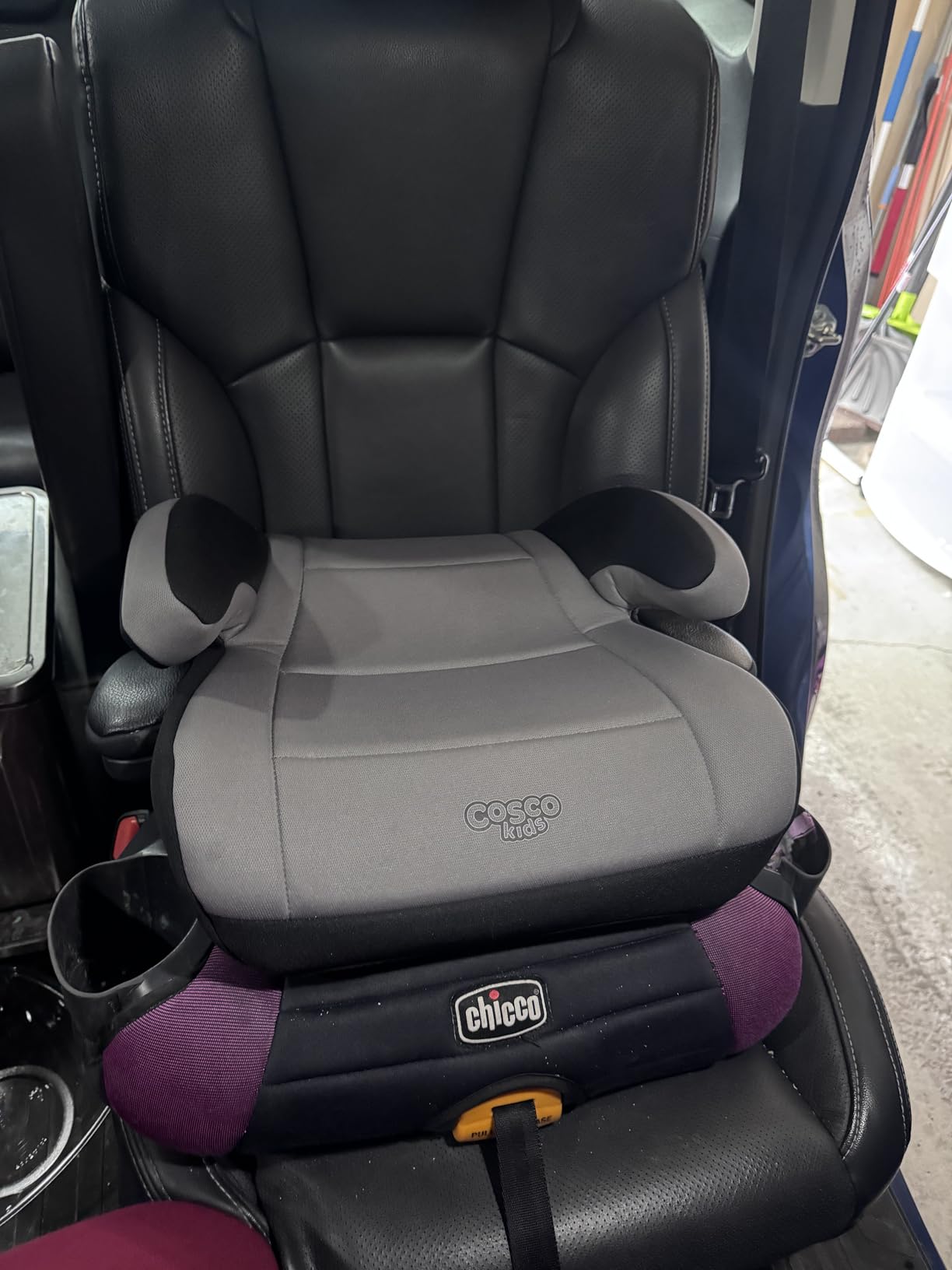
Polyester is a good fabric for a seat that lives in someone else’s car, but the cover is hand-wash only, so a juice spill means a bucket, a sink, and an overnight dry. That is the tradeoff you accept for the lightest seat in the group.
Check the molded date on the shell before you buy a used one. A booster that has already spent a few years in another family’s back row may be closer to its expiration date than you expect, and expiration dates matter more for a seat that changes cars weekly.
2. Graco TurboBooster 2.0 Backless: Best Value When You Buy Two Seats
Graco TurboBooster 2.0 Backless Booster Car Seat, Trisha, Travel Booster Seat for Children Ages 4-10, Weight 40-100 Pounds and Height up to 57 Inches
Backless belt-positioning
Ages 4-10, 40-100 lbs, up to 57 inches
Adjustable armrests
+ Pros
- Highest average rating in the group at 4.8
- Adjustable armrests improve belt fit
- Light and simple to move between vehicles
- Available in many colorways so two seats match
- Cons
- Backless design gives no head or upper-body support
- No cup holders
This is the seat I recommend when a family decides to buy two and keep them parked. At 4.8 average across more than 12000 reviews, it is one of the strongest-rated boosters in this group, and the reason it earns that mark is that it does one job very predictably.
Graco lists ProtectPlus engineered protection covering frontal, rear, and rollover crash scenarios, plus interior temperature testing. The height-adjustable armrests are the feature carpool families notice first, because they raise the belt path for a smaller child without making the seat deeper.
Why Two of These Is a Smart Carpool Setup
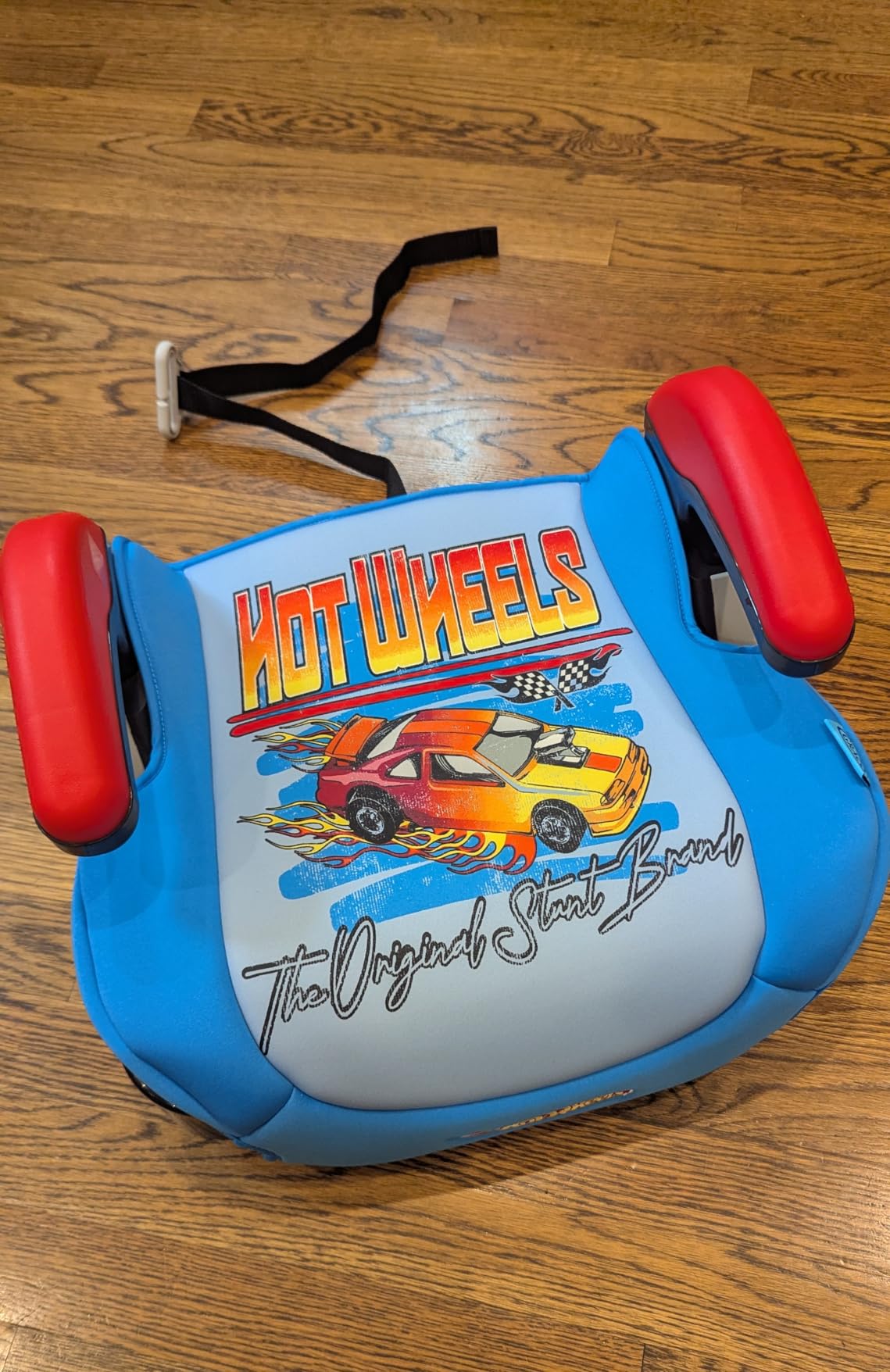
Ages 4 to 10, 40 to 100 pounds, up to 57 inches covers nearly every child who is outgrowing a forward-facing harness. Buy one for your car and one for the other, and neither driver has to learn an install.
Because it is backless, it works in a pickup cab, a sedan with a low seatback, and a three-door where a highback would simply not fit. Reviewers rate it as one of the easiest seats to carry between vehicles, which matters if your two cars are not both at home.
Where It Falls Short
There is no back. That is the entire argument for a highback booster, and it matters more in a carpool than in a single-family vehicle because the driving adults change and nobody is watching for a head that has drifted forward onto the shoulder belt.
There are no cup holders either. For a child with a water bottle, pair it with a seat that has them or accept a wet floor. Do not wedge a booster with a bag of snacks to solve the problem; that changes how the seat sits under the belt.
Belt Fit and Armrest Adjustment
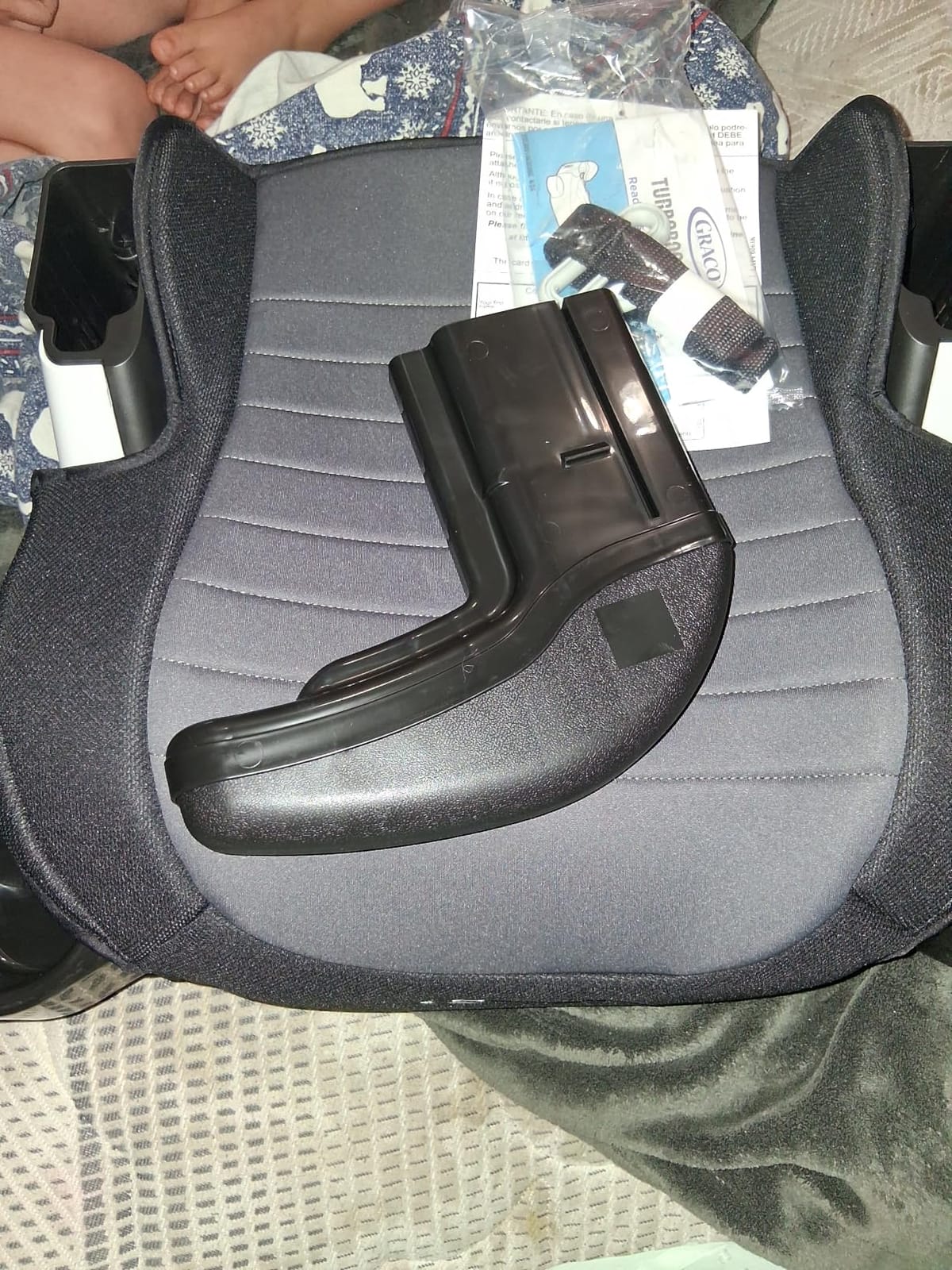
Set the armrests so the lap belt passes low across the upper thighs, not the stomach, and the shoulder belt crosses the middle of the shoulder. If the child has to lean forward to see out the windshield, the seat is too low or too far forward, not too old.
A certified Child Passenger Safety Technician can check this in a few minutes at a local inspection station, and most fire stations and hospitals host free seat checks. That is the fastest way to settle a disagreement about whether the belt is actually on the right body part.
3. Safety 1st Grand 2-in-1: Best When the Harness Stage Is Not Finished
Safety 1st Grand 2-in-1 Booster Car Seat, Converts from High Back to Belt-Positioning Booster, High Back Seat for Kids 40-65, and Belt-Positioning 40-100 Pounds, Black Sparrow
Harness converts to belt-positioning
40-65 lbs harness, then 40-100 lbs
Slim three-across profile
+ Pros
- Two stages in one seat so the purchase lasts
- Engineered to fit three across
- Light enough to move car to car
- Machine-washable pad and dishwasher-safe cup holders
- Cons
- Harness stage tops out at 49 inches
- Belt-positioning stage stops at 52 inches and 100 pounds
Some children hit the booster question earlier than parents expect. A child at the top of the forward-facing harness range still under five is not ready to be held in by a vehicle belt, and this seat bridges that gap without buying a second piece of hardware.
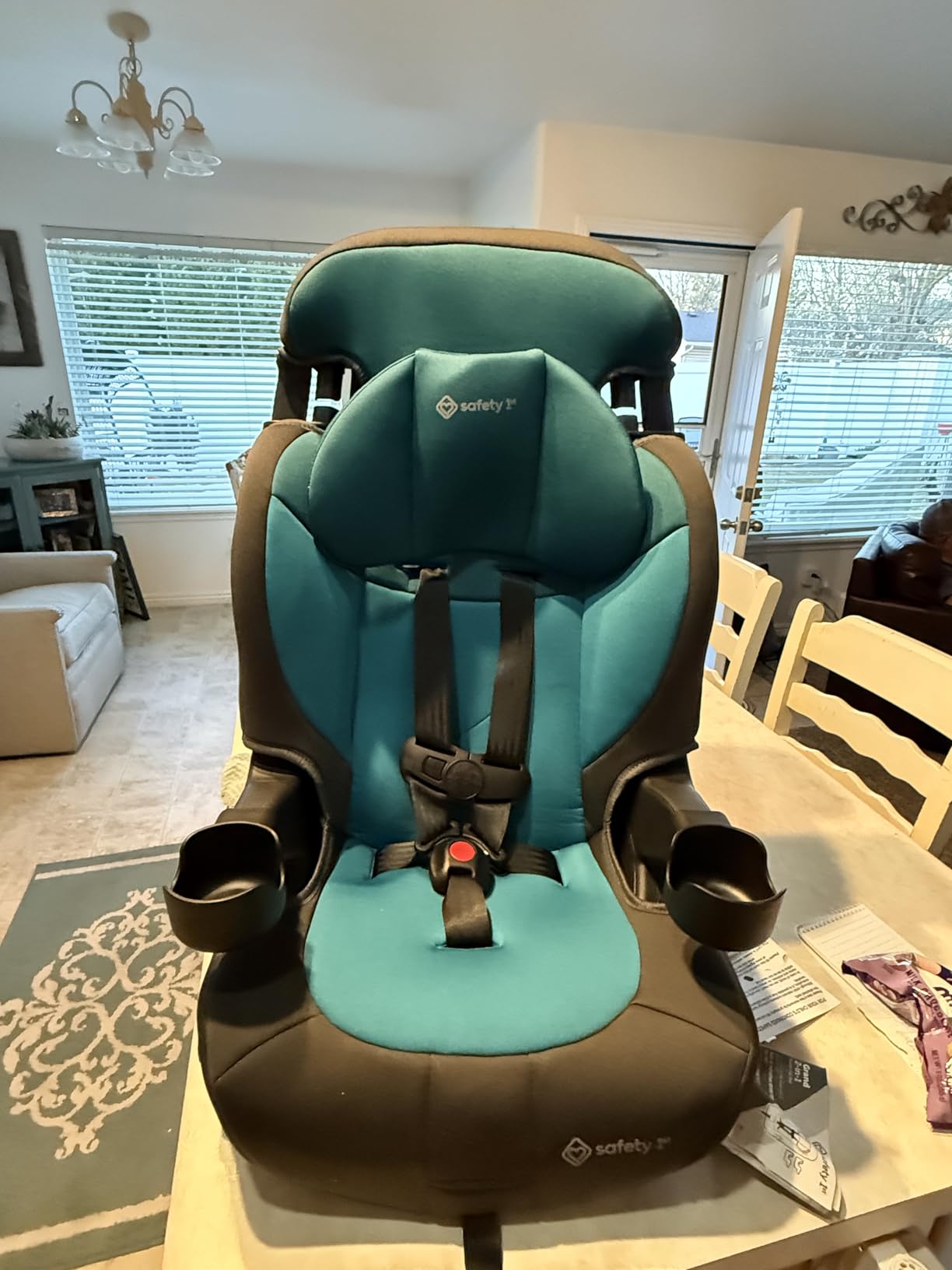
Stage one is a forward-facing harness booster for 40 to 65 pounds and 43.4 to 49 inches. Stage two converts to a belt-positioning highback booster for 40 to 100 pounds and 43.4 to 52 inches. For a carpool, the practical advantage is that one seat covers both phases and moves between cars with a single conversion.
The Three-Across Design Is the Point
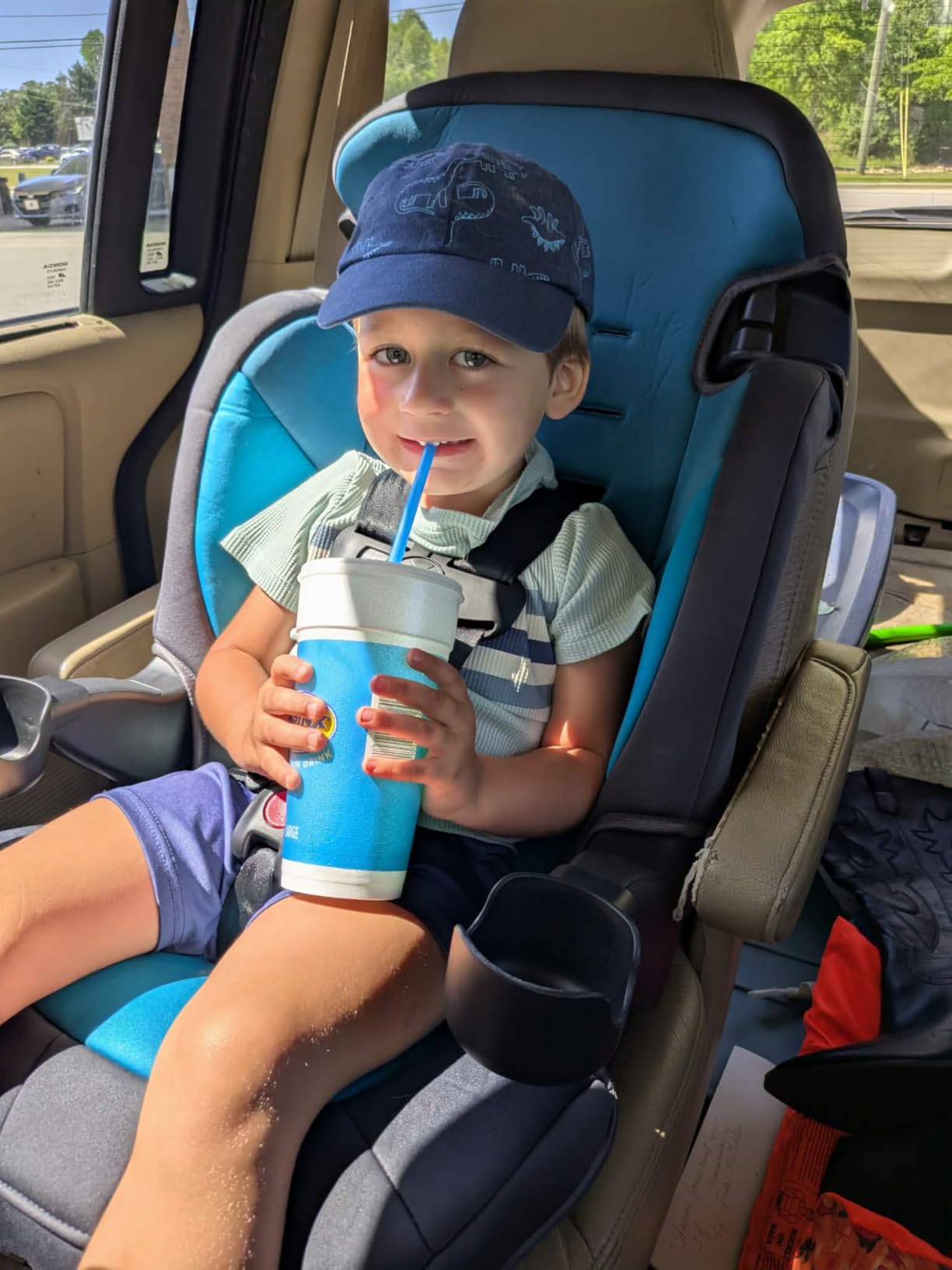
The slim profile is engineered to fit three children across the back seat of most vehicles, and that is the single most common layout problem forum parents describe when three kids of different ages share a row.
Two removable, dishwasher-safe cup holders are a small detail that matters more than expected in a carpool, because whoever is driving is not the one who packed the snacks and nobody wants a loose bottle rolling under the pedals.
Cleaning for Shared-Kid Mess
The seat pad is machine-washable and dryer-safe, and the cup holders go in the dishwasher. For a booster that alternates between two cars and two households, that is the most valuable feature on the card.
Parents of squabbling siblings can put a sheet over the seat base for the trip and pull it off at the end. It does not stop the fight, but it keeps the cleanup to one load of laundry instead of a deep clean.
When to Choose Something Else
Those height ceilings are real limits, not caveats. A child above 52 inches will outgrow the belt-positioning stage of this seat before they outgrow most others, so if you already know your kid is tall for their age, look at a highback with a wider range instead.
Also consider a convertible harness seat if your child is under five and not yet mature enough to sit properly. A booster raises a child; it does not restrain them, and no booster replaces a harness for a small, restless passenger.
4. Hiccapop UberBoost Inflatable: Best for Backpacks and Overhead Bins
UberBoost Inflatable Booster Seat for Car, Travel Booster Seat, Black/Gray
Inflatable backless booster
Meets or exceeds FMVSS 213
Seat belt only, no LATCH
+ Pros
- Inflates in under 20 seconds with a few breaths
- Deflates into an included travel bag
- Non-skid base holds on leather
- vinyl and cloth
- Narrow enough to sit between two car seats
- Cons
- Must be inflated every single use
- No back or head support
- No LATCH connection
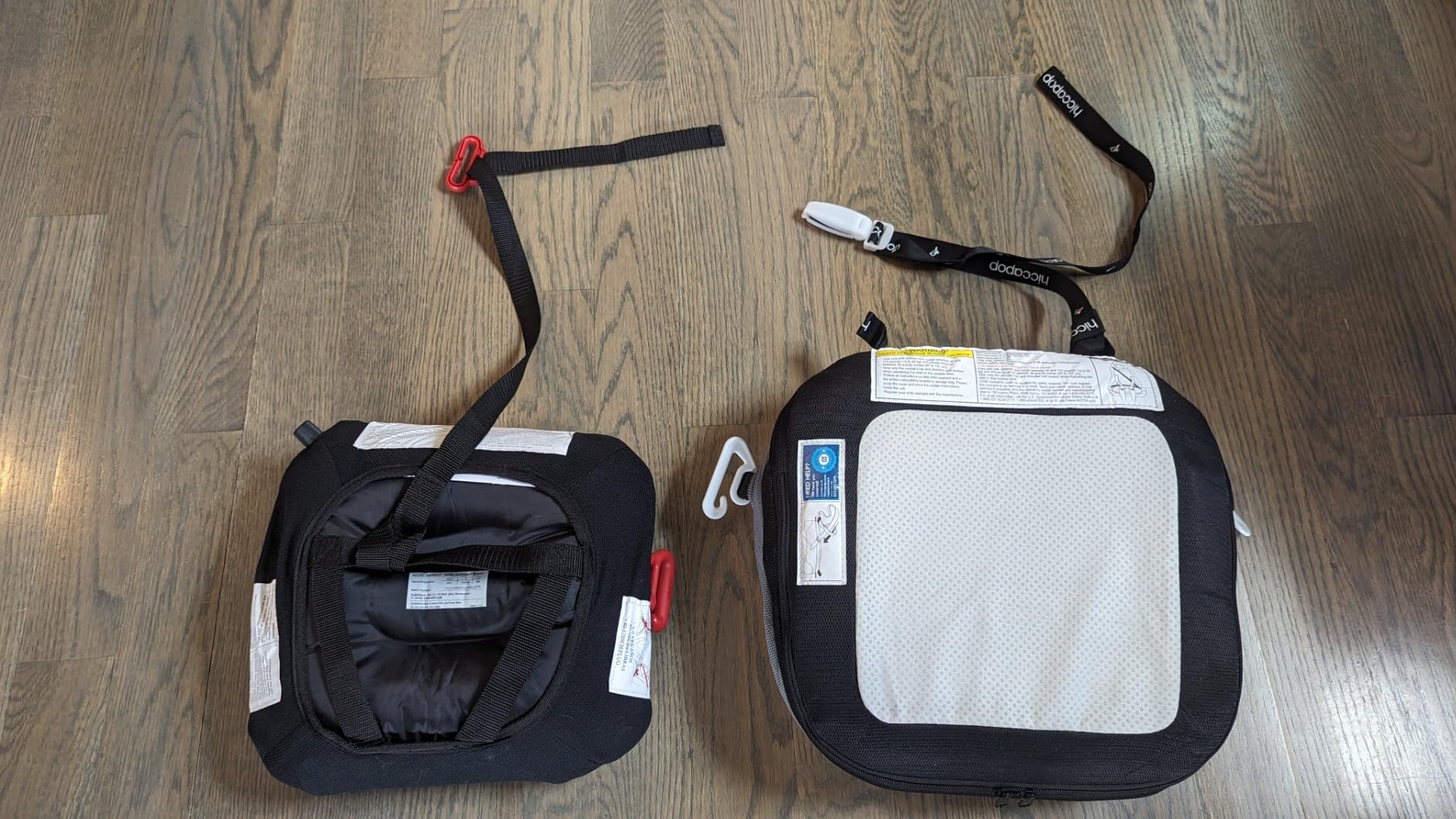
The UberBoost solves a problem rigid boosters cannot: a booster that lives in the car and is never packed. It inflates in under twenty seconds with a few breaths, no pump, and deflates into a roll that fits a backpack or a carry-on.
It is listed as meeting or exceeding FMVSS 213 and installs with the vehicle seat belt alone. Positioning clips keep the lap belt off your child’s stomach, which is the single most common routing mistake we see in photos from parents.
When an Inflatable Seat Wins
Inflatable boosters are the right answer when the seat needs to cross vehicles that are not both at home: a sports-team carpool, a grandparent’s sedan, a rideshare, or a rental at the airport. Reviewers specifically call out carpools, ride shares, taxis, and rentals as use cases, and the non-skid base is what keeps it steady on a leather bench.
Its narrow profile fits three across or slots between two traditional car seats, which a forum seller review described as the reason it became part of their routine. If your back row is already full of harnessed seats, this is the shape that fills the last gap.
The Daily Annoyance Nobody Mentions
You inflate it every single time. On a five-day school week that is five inflations and five deflations, plus finding where you left it. Parents chasing the lowest effort possible should pick a rigid backless booster instead.
There is no back and no head support, so an inflatable is a poor match for a child who sleeps in the car. It is also not a LATCH seat, which is fine in a car without anchors but leaves unused hardware in the trunk of a car that has them.
Safety and Standards
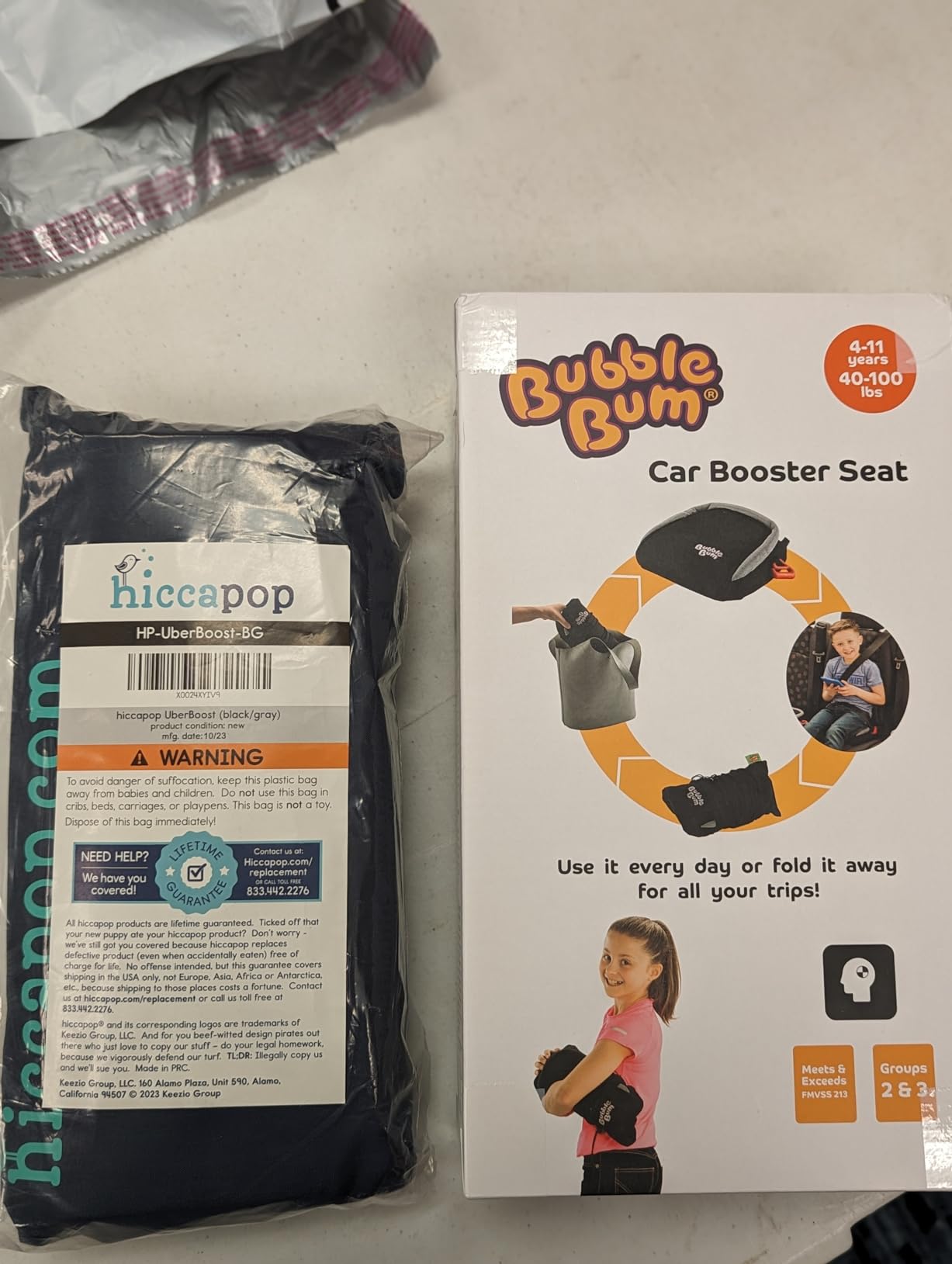
The federal motor vehicle safety standard for child restraints is FMVSS 213, and meeting it is the floor, not a differentiator. Brand claims beyond the federal baseline, like independent crash testing or rollover coverage, are worth a look when two seats of similar size differ mainly in price.
Inflatable seats have no hard shell, so the seat belt does all the work of holding the child. Practice the routing at least once with your child watching, because an adult who learns the sequence once will repeat it correctly under pressure.
5. BubbleBum Inflatable Travel Booster: Best for Three Across in Compact Cars
BubbleBum Inflatable Travel Booster Car Seat, Narrow Backless, 40-110 lbs
Inflatable backless booster
40-110 lbs, ages 4-11
Packs to 12 x 6 x 4 inches
+ Pros
- Highest weight capacity in the group at 110 pounds
- Packs to 12 x 6 x 4 inches for a purse or backpack
- Inflates in about 20 seconds with no pump
- Wipes clean with a damp cloth after spills
- Cons
- No back or head support
- Must be inflated for every use
- Relies entirely on the seat belt
This is the narrowest serious option in the group, and the weight range goes further than any rigid booster here. At 40 to 110 pounds for ages 4 to 11, it handles bigger children in a smaller footprint.
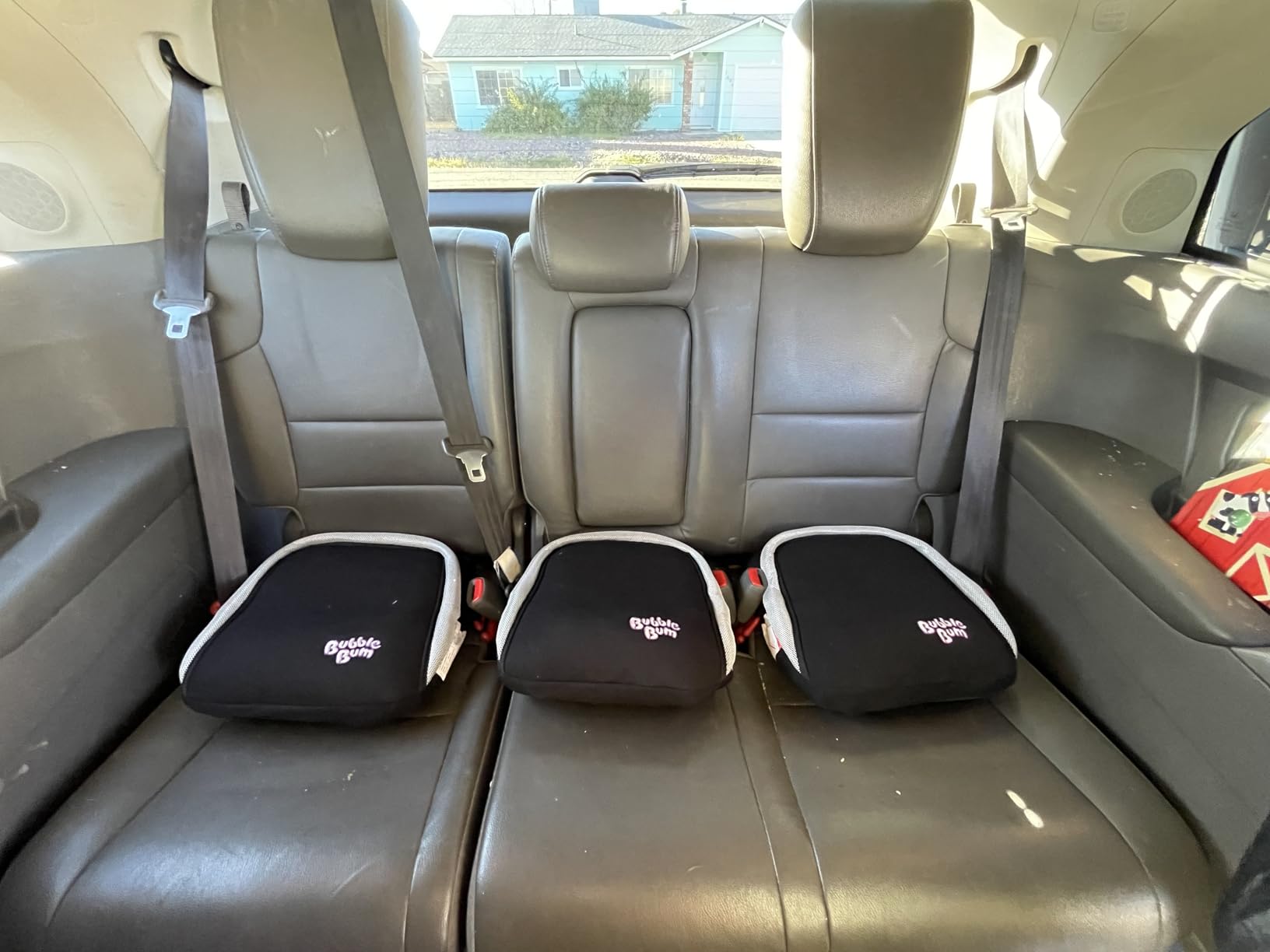
The narrow profile allows three children across the back row in compact cars, SUVs, and minivans, and it deflates to 12 by 6 by 4 inches. Parents who share custody describe it as the seat that travels with the child, because it fits in a backpack instead of needing a second one installed in the other household’s car.
The Width Advantage in Real Vehicles
Width is the number that decides whether three-across works, and a backless inflatable is as narrow as it is possible for a belt-positioning booster to be. In a compact car with a narrow rear bench, the difference between a narrow inflatable and a standard backless seat can be the difference between three kids buckled and two.
The catch is buckle access. Narrow seats can be narrow in the wrong place, forcing a child to reach past a neighbor to get to the latch. Check your own back row by laying a tape measure across the three buckle positions before you commit to any narrow seat.
Cleaning and Care
The soft inflatable cushion wipes clean with a damp cloth, which beats hand-washing a fabric cover in a sink at the end of a long day. For a carpool that includes juice, crackers, and the occasional car-sick kid, this is a genuine advantage.
Do not inflate it fully cold in the garage and expect the same firmness in January. Air pressure inside the cushion changes with temperature, so check the belt fit in the morning conditions your child will actually ride in.
Independent Testing and Support
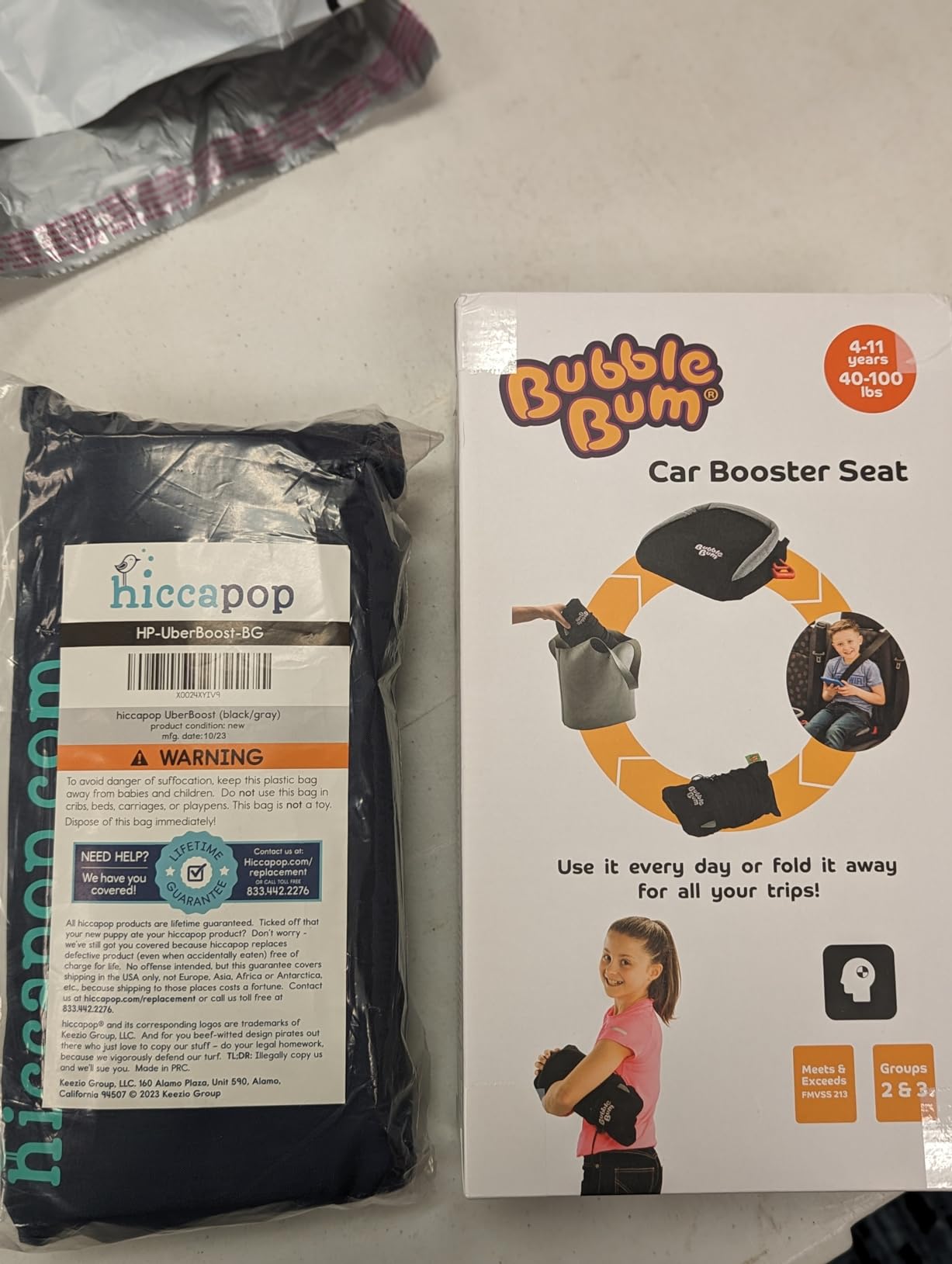
BubbleBum states the seat is independently crash tested to exceed FMVSS 213 and is backed by a lifetime support commitment. That combination is a reasonable reason to trust the spec sheet over a listing that only says the federal minimum.
At a 4.3 average, this sits toward the lower end of the roundup, and the reason is consistent in the reviews: support and convenience. Children who need a back or a headrest should look at the highback options below instead.
6. Graco TurboBooster 2.0 LX: Most Versatile for Kids Who Sleep in the Car
Graco TurboBooster 2.0 LX Highback & Backless Booster Car Seat, Gannon
2-in-1 highback and backless
40-100 lbs, up to 57 inches
One-hand front-adjust LATCH
+ Pros
- Deep recess lets sleeping kids rest their heads
- Quick-release LATCH installs with one hand
- Retractable deep cup holders fit water bottles
- Keeps the belt away from the neck
- Converts highback to backless for years of use
- Cons
- Backrest can recline too far when the seat is empty
- Some children need help reaching the buckle
- Armrest design blocks self-buckling for some kids
Every rigid backless booster in this roundup solves belt positioning and nothing else. The TurboBooster 2.0 LX is the first pick here that also gives a child something to lean against, which changes the character of a carpool entirely.
Parents praise the recline because it lets a sleeping child rest their head rather than slumping forward onto the shoulder belt, which is the exact position you do not want in a crash. The one-hand front-adjust LATCH makes it the fastest transfer among the highback options we tested.
Headrest, Recline, and the Shoulder Belt
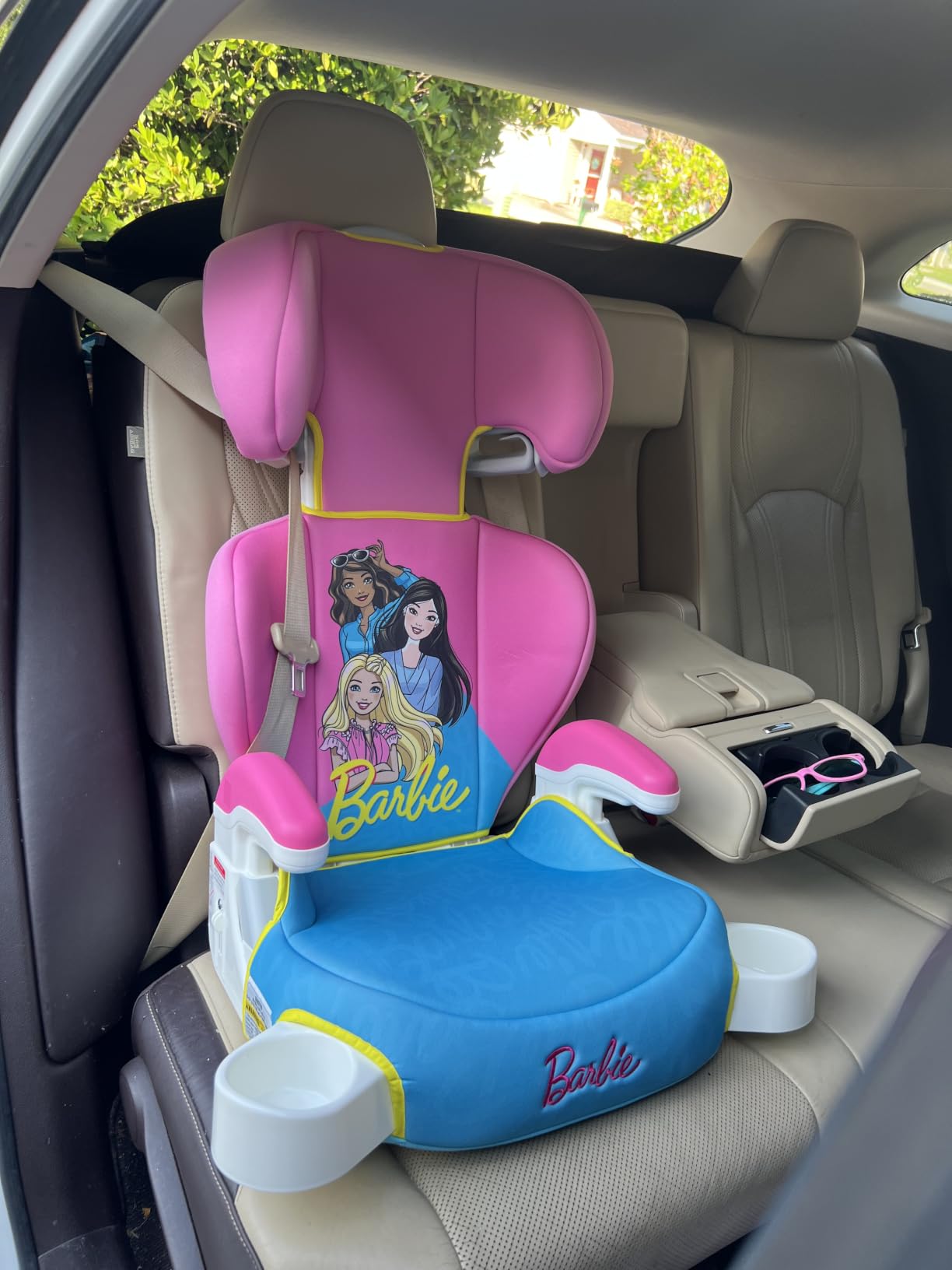
A fully adjustable headrest and the reclined back keep the shoulder belt centered on the shoulder rather than sliding off toward the neck. That is the whole purpose of a belt-positioning booster, and a highback does it with far more margin than a backless seat.
The ProtectPlus system is listed as guarding frontal, rear, and rollover crashes. For a shared-custody schedule where the seat spends half its life in a different vehicle, that broader coverage matters more than it would for a seat that never moves.
LATCH or Seat Belt
The quick-release LATCH lets you remove the seat with one hand and keep the belt path ready for the second vehicle. If the other car has no reachable lower anchors, the seat still installs with the vehicle belt, so you are not stuck.
Because LATCH hardware stays attached between uses, check it each time you reinstall. Loose connectors in the bight of the seat or cargo area are a problem we see often, and they are the first thing a Child Passenger Safety Technician will check.
Cup Holders and Long Trips
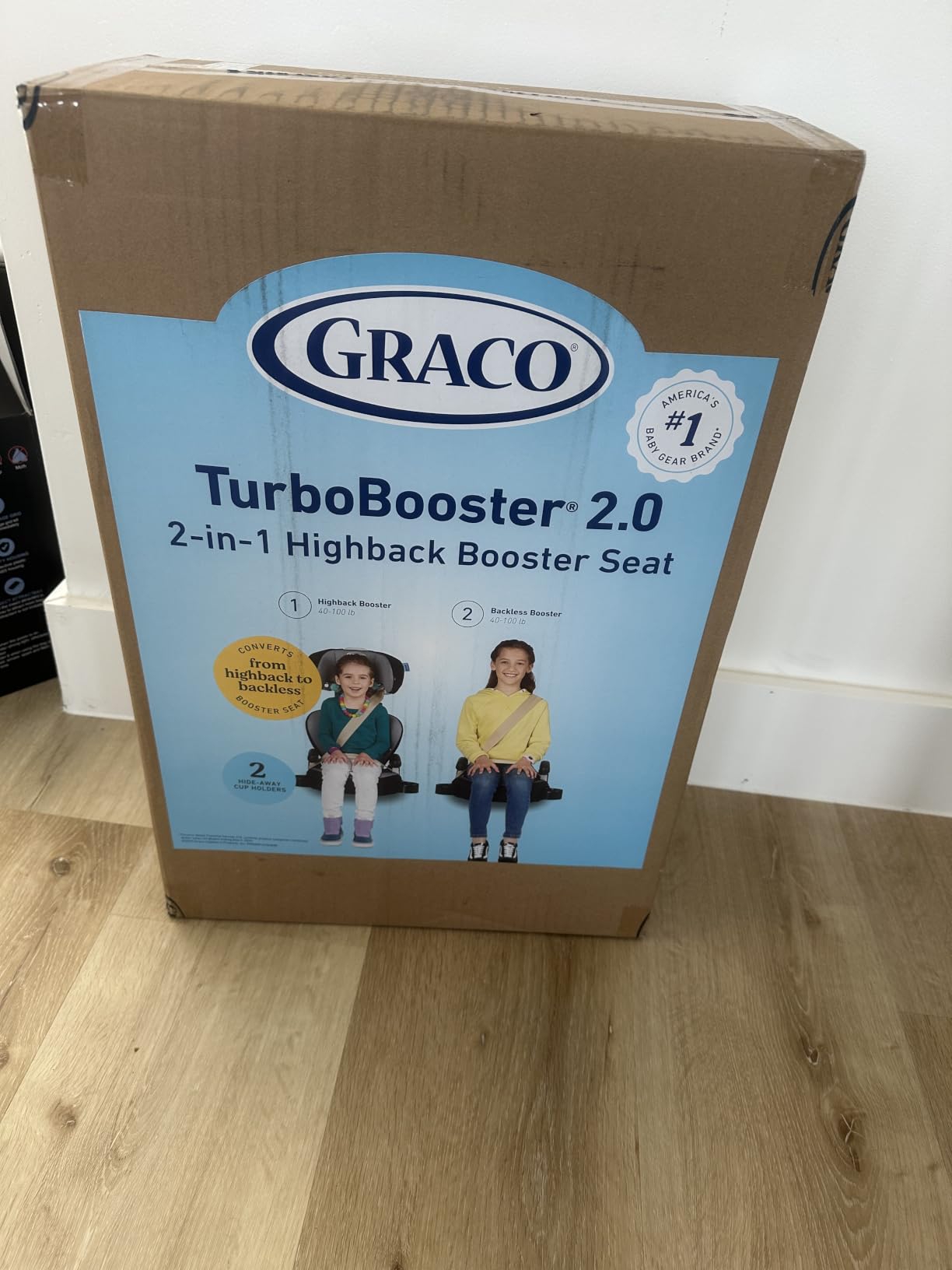
The retractable cup holders are deep enough for a water bottle, which solves the single most common complaint about backless boosters in this group. They disappear into the seat base when empty, so they do not eat the space a neighbor child needs.
Two drawbacks are worth knowing before you buy. The backrest can recline further than expected when the seat is empty, and some children cannot self-buckle because of the armrest layout, so a four or five year old still riding along will need help.
7. Chicco GoFit Plus: Best for One-Hand Transfers Between Cars
GoFit Plus Backless Booster Seat, with Quick-Release Latch
Backless booster with LATCH
40-110 lbs, 44-57 inches
Quick-release LATCH and carry handle
+ Pros
- Highest rating in the group at 4.9
- Quick-release LATCH removes with one hand
- Carry handle built into the shell
- Two fold-away cup holders fit a large tumbler
- Contoured padding comfortable for a backless seat
- Cons
- No back or head support for sleeping children
- Shoulder belt guide is fiddly at first
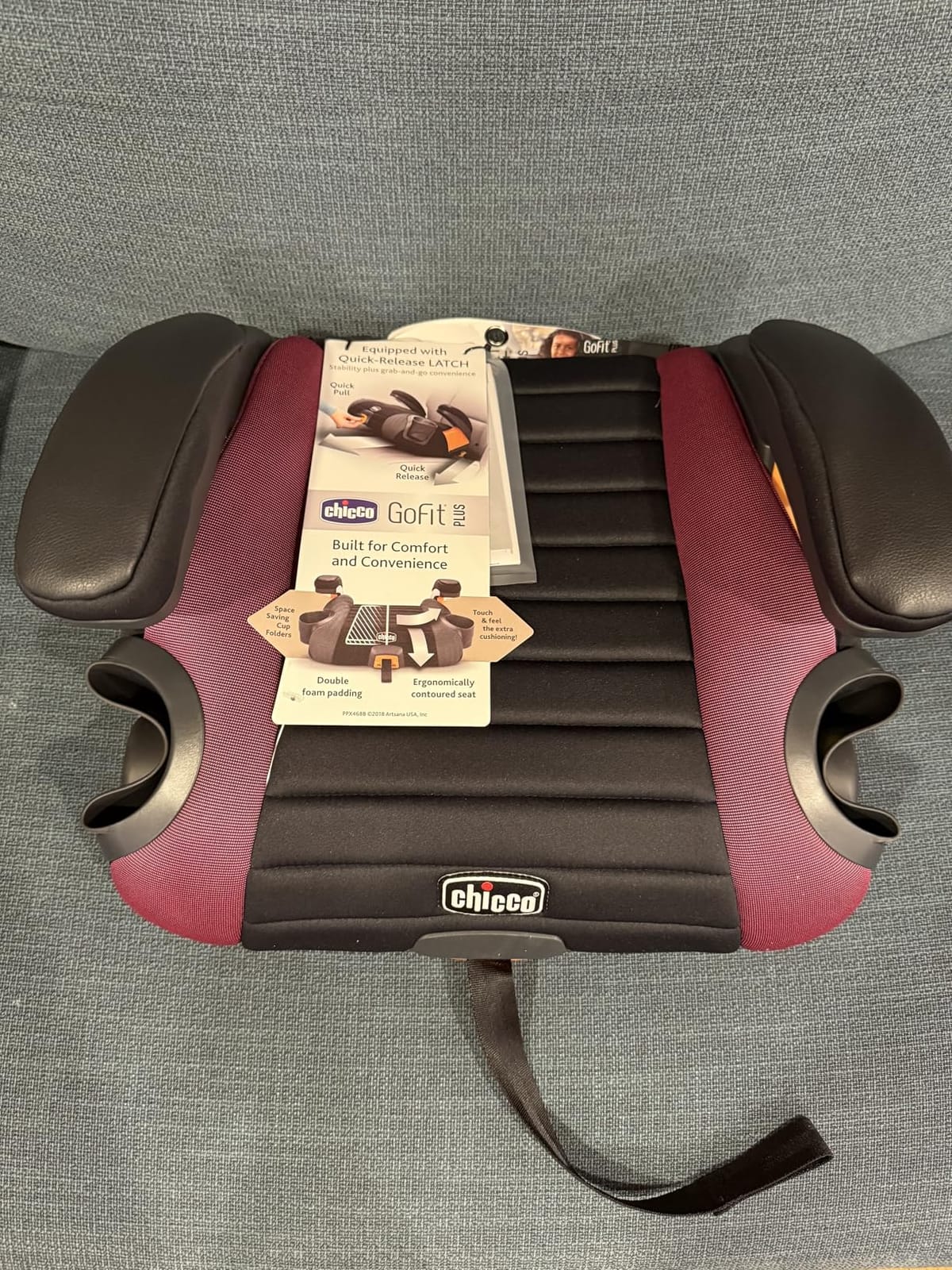
At a 4.9 average, this is the highest-rated booster in the roundup, and the reason is that it solved the hardest part of carpooling: getting the seat out of the car fast without waking anybody.
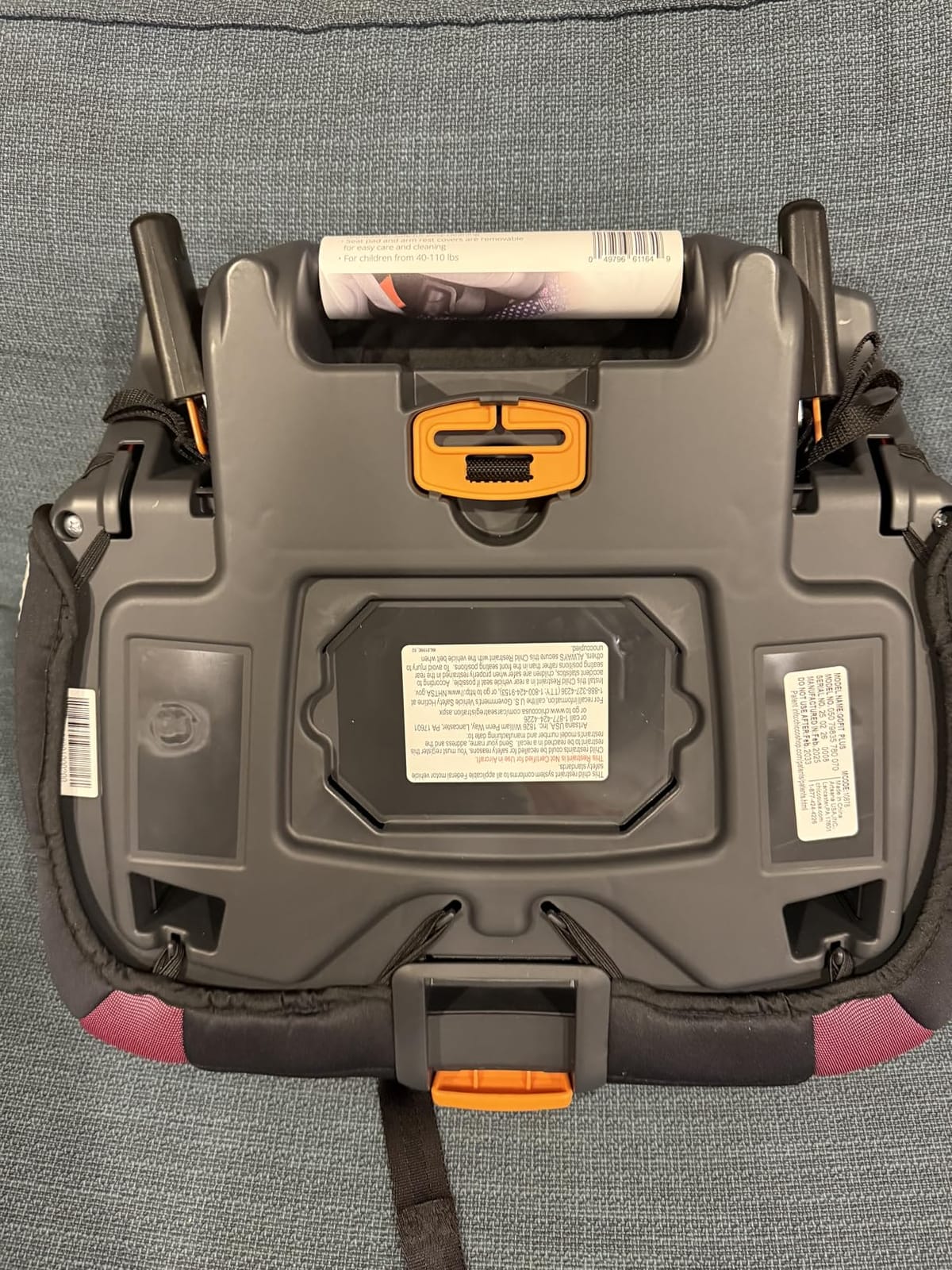
The quick-release LATCH removes with one hand, and the built-in carry handle means you do not have to wedge it under your arm while holding a toddler in the other. Parents who move between two cars several times a week describe that combination as the whole reason to buy this over a cheaper backless seat.
LATCH Equipped Without the Bulk
LATCH-equipped boosters are usually heavy, which is why so many carpool families end up with a LATCH seat that stays put in one car and gets ignored in the other. This one is light for what it does and pairs with a standard three-point belt.
Integrated lap belt guides and a shoulder belt clip do the routing work for you. Reviewers note the shoulder belt guide is fiddly the first time, so give yourself one practice run in the driveway before the first real carpool morning.
Comfort and Cleanability
The ErgoBoost contoured seat with double foam padding is unusually comfortable for a backless design, and the removable machine-washable seat pad means a car-sick morning does not mean a permanent stain on the car you do not own.
The two fold-away cup holders collapse flat when unused and are dishwasher-safe, and they are large enough for a thirty ounce tumbler, which is more than most boosters on this list manage.
When to Choose Something Else
It is still a backless seat. If your child sleeps in the car, the belt across the shoulder is the only support there is, and a highback is the safer answer even though this seat scores higher with parents overall.
Also check the second vehicle for lower anchors before you commit to a LATCH model. If the other car has none, this still works with the seat belt, but you are paying for a connector system you will not use on half your driving days.
8. mifold Comfort Grab-and-go: Best for Glove Box Storage
New Mifold Comfort Grab-and-go Car Backless Booster Seat-Compact and Portable for Every Day, Carpooling, Travel, Charcoal Grey
Backless belt-positioning booster
Ages 4+, 40-100 lbs, 43.5-59 inches
Seat belt only, no installation
Fits a backpack or glove box
+ Pros
- Smallest storage footprint in the roundup
- Fits in a regular backpack or glove box
- Anti-slip pads keep it planted on the seat
- Works in any car with a three-point belt
- Cons
- Lowest average rating in the group at 4.2
- No back or head support
- No cup holders
- Costs more than comparable backless boosters
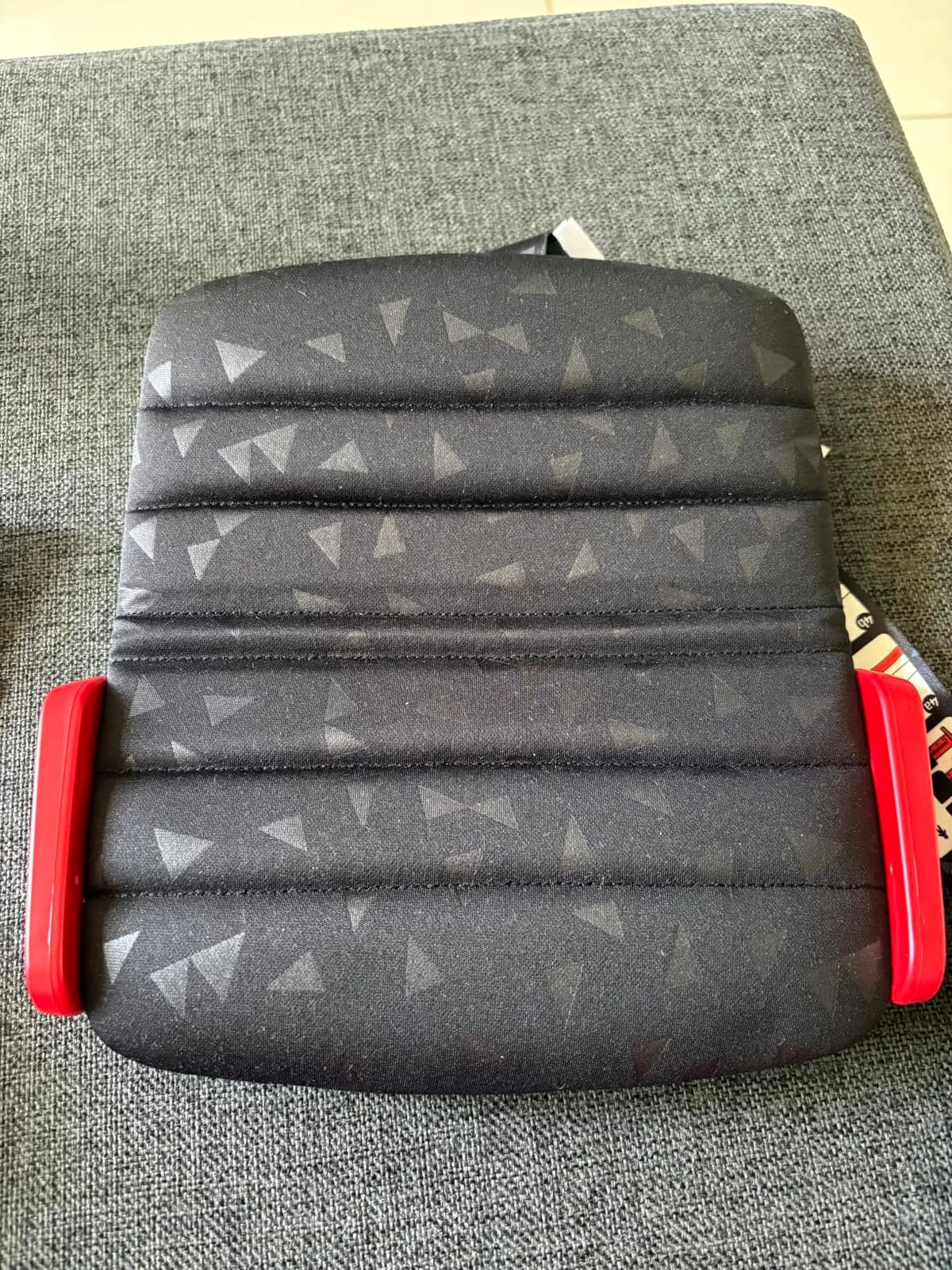
The Grab-and-go takes a different approach. Rather than lifting the child up to meet the belt, it adjusts the adult belt down, and the whole seat is compact enough to live in a glove box or a school backpack between uses.
That storage profile makes it a strong pick for custody handoffs. The seat goes where the kid goes, so the adult on the other end of the handoff is not responsible for having installed anything in advance. It works in any car with a standard three-point belt.
Compact by Design
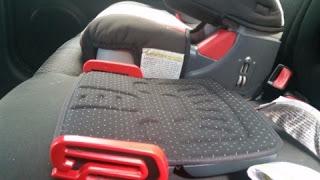
The included Compact Comfort padded cushion improves comfort for longer trips, and anti-slip pads underneath keep the booster from sliding forward on cloth or leather. For a backless seat, staying planted matters because a booster that shifts changes where the lap belt lands.
At 43.5 to 59 inches, the height range is the tallest among the backless seats here, so a lanky child who will keep growing gets more usable time out of this one than out of a 57-inch ceiling.
Why the Rating Is the Lowest Here
At a 4.2 average, this is the lowest-rated booster in the roundup. Reviewers still praise the portability and the anti-slip pads, but complaints cluster around limited cushioning, no back support, no cup holders, and a price that sits above comparable backless seats.
Our read is that you are paying for the smallest possible footprint, not for the most comfort or the most features. If you can live with a slightly larger seat in the trunk, a rigid backless booster gives you a better experience for less.
Belt Routing and Fit
The easy-to-use shoulder belt guide positions the belt across the shoulder, and the seat requires no installation hardware at all. That simplicity is the appeal for a car that belongs to someone else and may have a different seat shape than yours.
Do check the height fit carefully. A booster that routes the belt well but leaves a tall child slouching defeats the purpose, and the 59-inch ceiling here is a genuine advantage over shorter backless ranges.
9. Chicco KidFit ClearTex Plus: Best When Covers Get Washed Constantly
Chicco KidFit ClearTex Plus 2-in-1 Belt-Positioning Booster Car Seat
2-in-1 highback to backless booster
10-position height adjustment from the waist
Quick-release LATCH with SuperCinch
All fabrics removable and machine washable
+ Pros
- Backrest removes to create a backless booster
- All fabrics including armrests remove and machine wash
- Quick-release LATCH with one-pull SuperCinch tightener
- Slim profile with collapsing cup holders
- ClearTex materials are flame-retardant-free
- Cons
- Some children can unbuckle themselves in the harness stage
- Cup holders fit sippy cups better than bottles
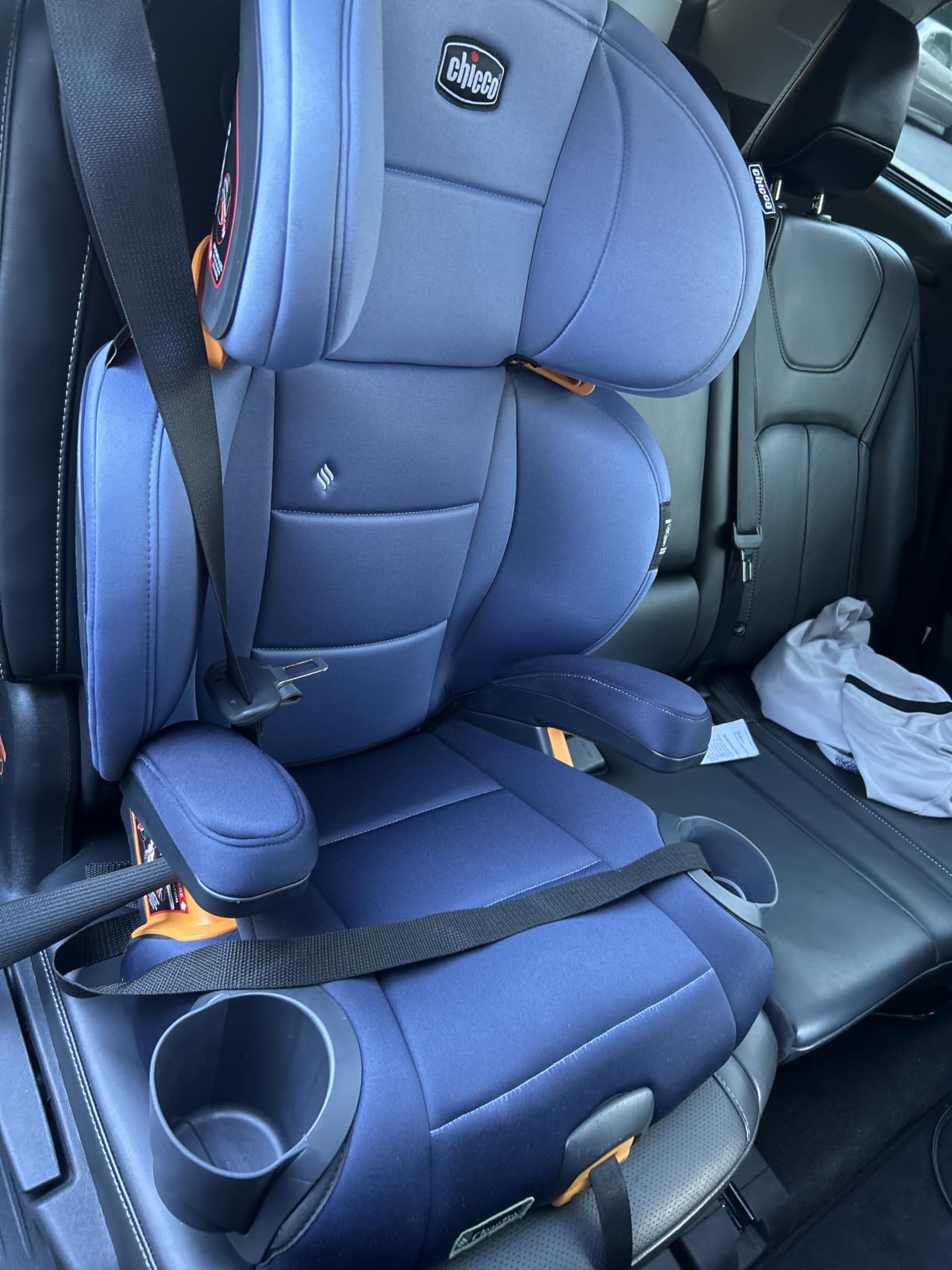
When a seat spends half its life in someone else’s vehicle, cleanup is not a nicety. The KidFit ClearTex Plus removes every fabric piece, including the armrest covers, and all of them go in the washing machine.
It is also a genuine two-in-one: the backrest comes off to leave a backless booster, so you can shrink the seat for a small car or a middle position without buying another one. Parents frequently rank it above other Chicco and Graco boosters for the simple quick-release LATCH and slim profile.
Head Protection and Height Adjustment
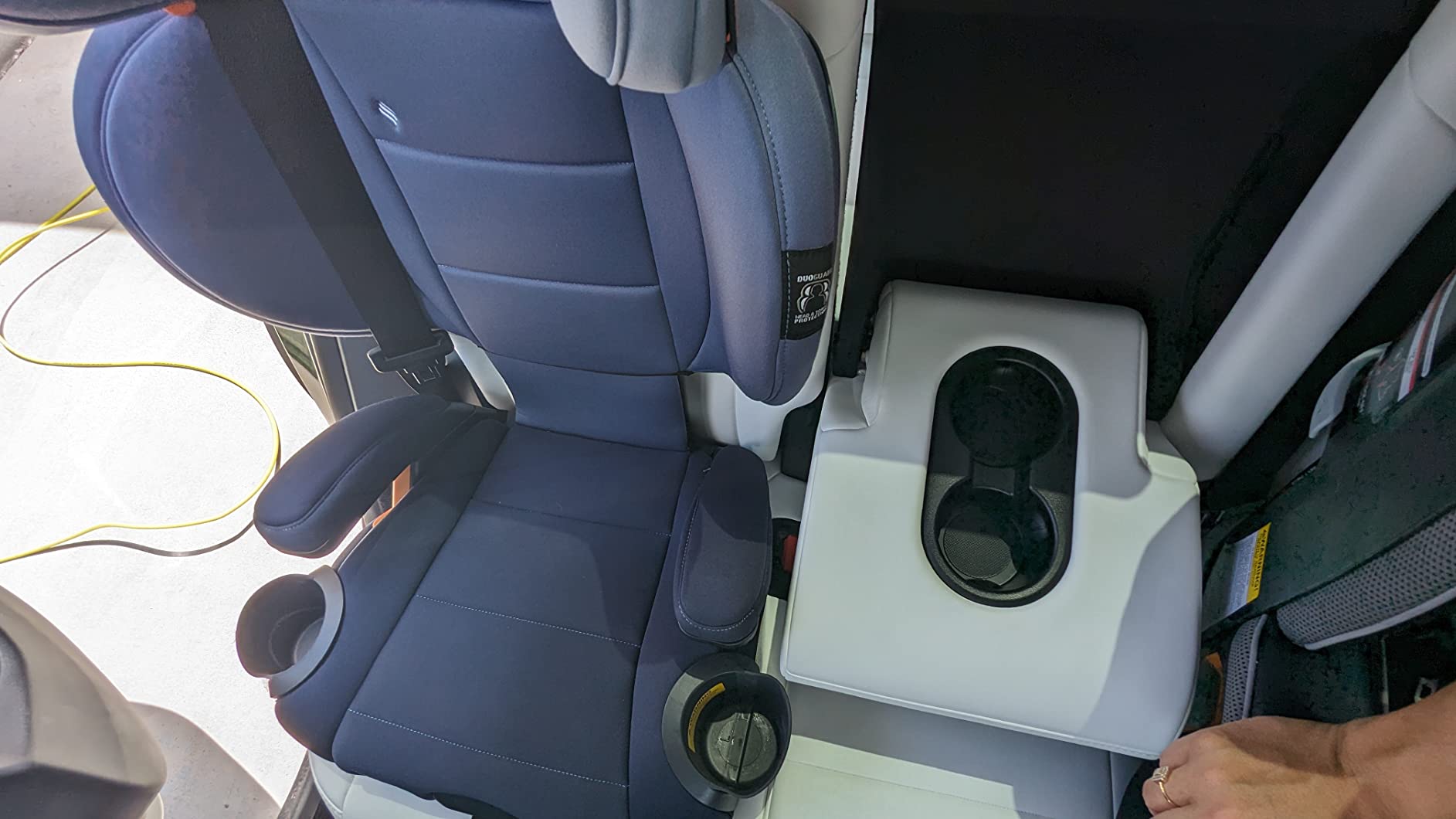
DuoGuard head and torso protection sits behind a headrest that adjusts in ten positions starting from the waist rather than the shoulders. That waist-based adjustment is what lets the seat fit a child who is still growing through a fast summer.
The two-position recline backrest mimics the angle of the vehicle seat, which helps in a low-backed car where a rigid upright booster would leave the child’s head forward of the belt path.
Washing, Cleaning, and Daily Wear
Removable machine-washable fabrics solve the carpool cleanup problem better than any seat in this roundup. Spill on the armrest, take the cover off, put it in the machine, and the seat is still in service in the other car that afternoon.
ClearTex is described as flame-retardant-free, which matters if you have questions about chemical treatments in a child’s space. The fold-out CupFolders are dishwasher-safe but sized for sippy cups rather than larger bottles.
When to Choose Something Else
There is one genuine safety caveat. If your child can unbuckle the harness, do not use the harness stage, because a child who can release their own restraint is not being restrained. Move them to the belt-positioning stage and reassess.
Also weigh whether you need a highback at all. Children above the belt-fit threshold, with good head control, are fine on a backless seat, and the lightest backless boosters here are meaningfully easier to move every morning.
10. Britax Skyline 2-Stage: Best for Taller Kids Who Have Outgrown the Rest
Britax Skyline 2-Stage Belt-Positioning Booster Car Seat, Dusk – Highback and Backless Seat
2-in-1 highback and backless booster
40-120 lbs and up to 63 inches
Color-coded belt guides
10-position one-hand headrest
+ Pros
- Widest weight and height range in the group
- Kids can buckle themselves with little or no help
- Color-coded belt guides simplify routing
- Removable cover and dishwasher-safe cup holders
- Easy to move between vehicles
- Cons
- Seat cushion is thin on long trips
- Cup holders less capable than premium boosters
- Highest price point among these picks
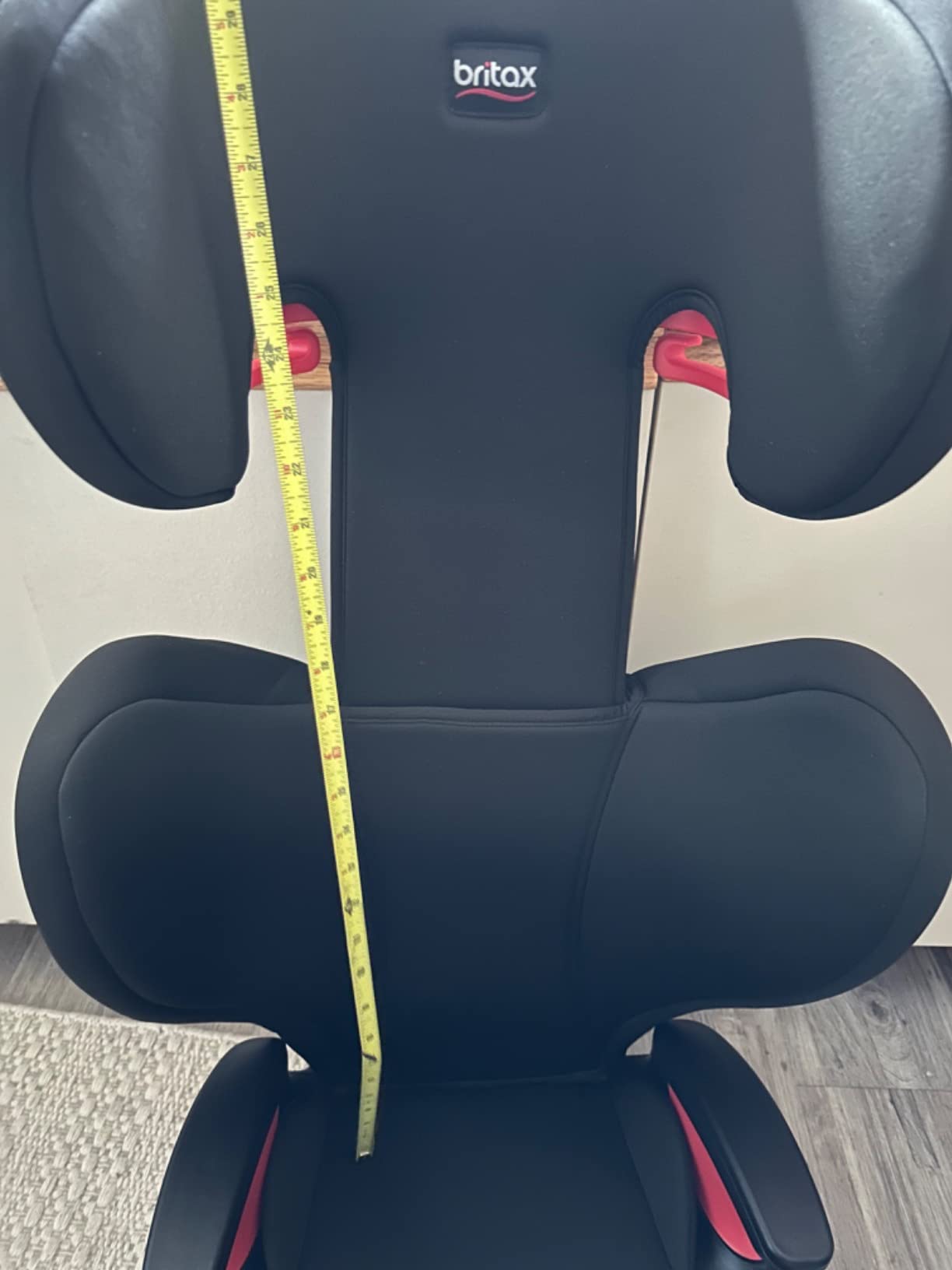
Most boosters here stop at 100 pounds and 57 inches. The Skyline runs to 120 pounds and up to 63 inches, which means a tall child can stay in a booster longer instead of graduating to a seat belt while their body is still growing.
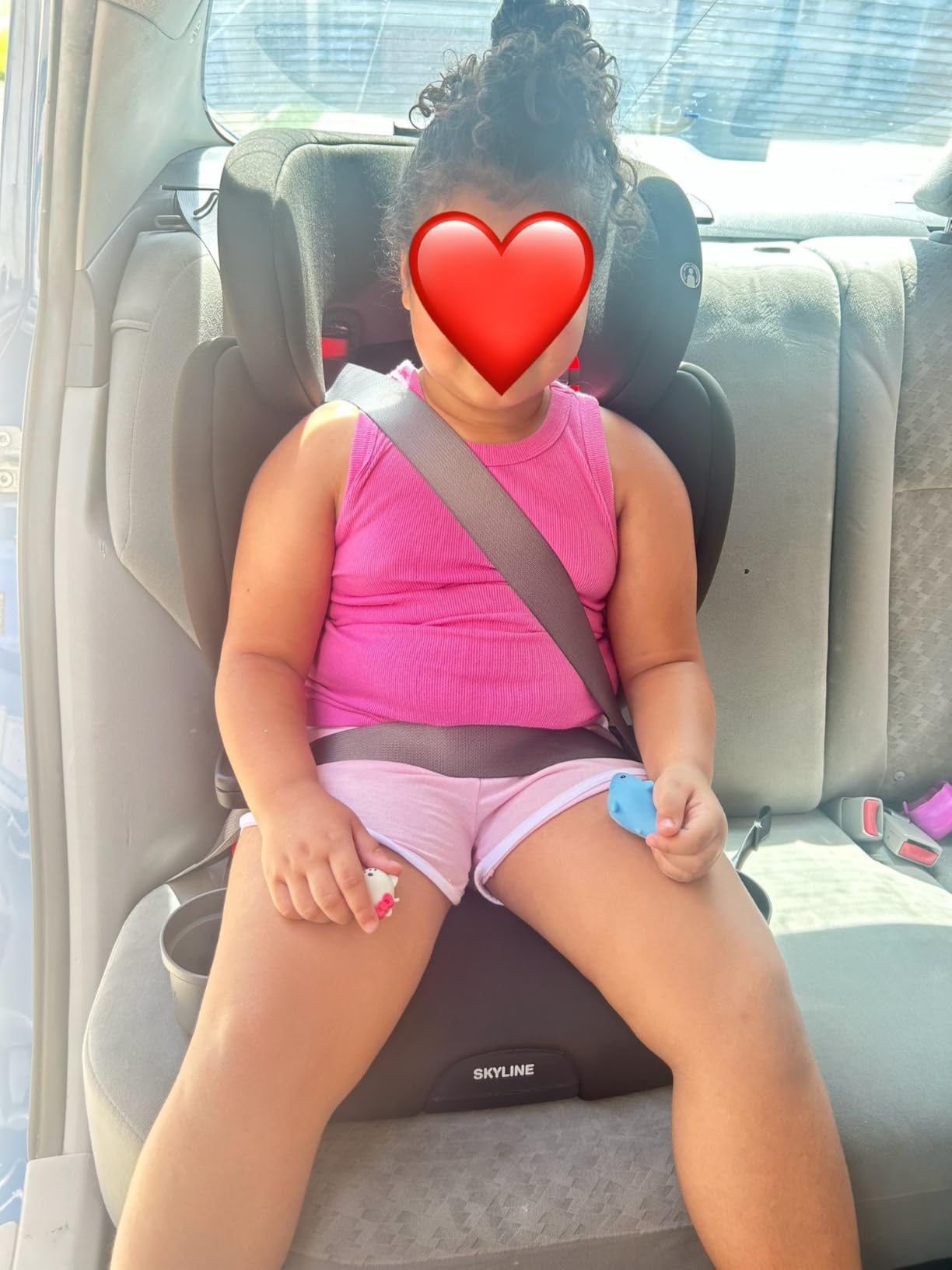
Owners highlight the simple installation and the fact that children can buckle themselves with little or no help. For a carpool, self-buckling matters more than it looks, because the adult handing over the keys at 7:45 in the morning is often not thinking about belt geometry.
Getting the Most Out of the Extended Range
A 63-inch ceiling is only useful if the headrest can reach high enough and the belt still lands correctly at the top of that range. The ten-position, one-hand headrest adjustment is what makes the extended range practical rather than theoretical.
Color-coded belt guides show the correct belt placement on both the lap and shoulder side. On a seat this tall, that visual cue does real work, because the routing changes as your child moves up through the positions.
The Two Complaints That Show Up Most
The seat cushion is thin, and owners say so directly about long trips. The plush foam is in the backrest and armrests, but the seat base is firmer than the plush seats here. For long highway drives, add a cushion or accept a shifting child.
Cup holders are removable and dishwasher-safe but less capable than the retractable holders on the Graco LX. And at a 4.7 rating with the thinnest padding complaints, this is the pick where you pay the most for range rather than comfort.
Protective Shell and Foam-Lined Headrest
The protective seat shell and foam-lined headrest are built to absorb impact energy, which is the baseline expectation for a belt-positioning booster in this category. A removable cover keeps the maintenance story clean.
Check the molded expiration date if you buy this used for a second car. A long-range booster that has already been through several growth stages is often closer to the end of its service life than the listing implies.
How to Choose a Booster Seat That Survives a Carpool
One Seat or Two: Make the Call Before You Shop
If the same two adults drive both cars and the vehicles are usually at the same place, one portable seat beats two fixed seats on every practical measure. You install once per vehicle, debug once, and never hand a stranger a latch strap.
If the second car is driven by a rotating cast of people who will not install anything, buy two seats and park one in each vehicle. The extra cost is smaller than the cost of a child riding unrestrained once, and the daily friction disappears completely.
Booster Readiness: Four Checks Before You Buy
- Harness maturity: your child can sit still for the length of a drive and is not fighting the harness.
- Weight and height: at least 40 pounds for most boosters, and within the seat’s listed range.
- Belt fit: the lap belt will sit low across the thighs and the shoulder belt will cross the chest and shoulder.
- Back row space: measure your actual back row, because three-across layouts fail on buckle access more often than on raw width.
Readiness is not a birthday. A large seven-year-old who can buckle correctly may be ready earlier than a small nine-year-old who slouches and puts the belt behind their back.
Backless vs Highback vs Convertible
Choose a backless booster when your child is alert, over about 40 pounds, can sit up without slouching, and your vehicle has a seatback high enough to hold the shoulder belt in place on its own. Backless seats travel between cars best because nothing has to line up.
Choose a highback booster when your child sleeps on car rides, leans forward, has poor head control, or drives in a vehicle with a low or adjustable seatback. The back is what keeps the shoulder belt centered.
Choose a convertible harness-to-booster seat when your child is under five, under about 50 pounds, or not yet ready to be positioned by a vehicle belt. It costs more and it is heavier, and it is the correct answer for a small child rather than a carpool convenience.
Narrow Seats and the Three-Across Math
Three across means every seat plus every gap plus buckle access has to fit inside your vehicle’s rear bench width. Inflatable boosters like the UberBoost and the BubbleBum are the narrowest options here, and the Safety 1st Grand is engineered for the same layout with a highback profile.
The Car Mom, a certified Child Passenger Safety Technician who publishes exact seat widths, warns that every car is different and that narrowness can hurt buckle access. Measure the space between buckle anchors yourself before ordering; a narrow seat in the wrong position is worse than a wider seat in the right one.
LATCH Anchors vs the Vehicle Seat Belt
LATCH, also called lower anchors or ISOFIX in other markets, is a convenience for install consistency, not a safety upgrade over the vehicle belt on a booster. A booster held by the vehicle belt is doing exactly what the federal standard intends.
What matters is what happens when the second car has no reachable anchors. Plenty of vehicles have anchors that are folded into the seat bight and nearly impossible to find, and older cars may have none at all. Any LATCH-equipped booster on this list still installs with the vehicle belt, so verify the second car before you buy.
Belt Fit, Not Brand Loyalty
The goal is the lap belt low across the upper thighs, the shoulder belt across the chest and shoulder, and no belt geometry running behind the back or across the stomach. If your child has to lean forward or twist to reach the buckle, something is out of position.
Most fire stations, hospitals, and police departments run free car seat inspection events. A Child Passenger Safety Technician can confirm the fit in about fifteen minutes and tell you whether the seat itself is the problem.
Cleaning and Expiration Dates
A seat that moves between cars collects twice the messes of a seat that stays put. Prioritize removable machine-washable covers and dishwasher-safe cup holders, and skip hand-wash-only covers if your kid eats in the car, which most carpool kids do.
Check the molded or stitched expiration date on any used booster before it goes into a second vehicle. Boosters expire because the foam structure and belt paths degrade with time and heat, and a seat that already lived in a hot third row is further along than its age suggests.
Carpool Safety Rules Most Families Skip
Buckling the empty seat matters. An unsecured booster in the back of a car is a projectile in a sudden stop, which is why the safest arrangement is to leave the booster buckled in place even when nobody is sitting in it, with the belt routed exactly as you would route it for a child.
Naming one adult as responsible removes the ambiguity. Tell the other driver plainly who installs the seat, who checks the belt fit, and who to call if the child is the wrong size on a given week.
Do not let a booster stand in for a harness seat in a car that has no usable seat belt for the child. A lap-only belt across the belly is not a booster position, and the seat belt must be a three-point belt with a shoulder portion that crosses the chest.
Pass the seat along with the child. For shared custody, the seat that travels with the kid removes the entire class of mistakes that happen when two households each assume the other one checked the fit.
Frequently Asked Questions
Should a 7 year old be in a backless booster?
Yes, if the vehicle’s lap and shoulder belt fits them correctly: lap belt low across the upper thighs, shoulder belt across the chest and shoulder, and knees bent against the seat edge. Most children are not ready until they are around 4 feet 9 inches tall, usually between ages 8 and 12. A backless booster is right for an alert 7 year old in a car with a tall seatback; add a highback if they slump or fall asleep on drives.
Can my 40 lb 3 year old sit in a booster seat?
Not as a booster. At 40 pounds and three years old, your child belongs in a forward-facing convertible seat with a five-point harness. Most boosters start at 40 pounds but also require a minimum age of about four and the maturity to sit still. If your child can unbuckle a harness, do not use the harness stage, and do not use a booster at all until belt fit is correct.
What is a travel-friendly booster seat?
A travel-friendly booster is a lightweight belt-positioning seat that installs with the vehicle seat belt in seconds and packs down small enough for a suitcase or backpack. Inflatable models such as the Hiccapop UberBoost and the BubbleBum inflate in under 20 seconds and deflate into a travel bag. A carpool booster needs the same portability plus a narrower footprint, because it moves between two adjacent cars rather than once-a-year flights.
Which car seat is easy to transfer between cars?
The three easiest to transfer are the Chicco GoFit Plus, with a quick-release LATCH and a built-in carry handle, the Graco TurboBooster 2.0 LX, with one-hand front-adjust LATCH and a highback that converts to backless, and any of the inflatable boosters, which need no install at all beyond routing the seat belt. Key specs to compare are seat weight, whether the connectors release with one hand, and whether a carry handle is built in.
Do I need two booster seats for carpooling?
Only if two different adults drive your child in two different vehicles. One light seat that moves with your child prevents any install error, and two seats parked permanently in each car remove the daily handoff completely. Buy two when the second car is driven by someone who will not install anything, such as a grandparent, sitter, or teammate’s parent. Buy one when the same adults drive both cars and already have a morning routine.
Can two car seats and one booster fit in the car?
In most minivans and SUVs, yes, if the booster is a narrow backless or inflatable model. Inflatable boosters such as the BubbleBum and the UberBoost are designed to sit between two traditional car seats or to make three children across a compact back row. Measure your back row from buckle to buckle before buying, and check that your child can reach the latch without climbing between the seats.
Which Two Booster Seats Should You Actually Buy
If you carry one seat between two cars and want the least effort, the Cosco Topside Backless Booster is our pick: it is the lightest seat here, installs with the vehicle belt only, and carries in one hand. Parents who want one step up in belt fit and adjustability can move to the Graco TurboBooster 2.0, which holds a 4.8 average across more than 12000 reviews.
If you are leaving one seat parked in each vehicle, buy two. The Graco TurboBooster 2.0 LX is our premium choice because the quick-release LATCH and reclined highback handle sleeping children and long drives, and its 40 to 100 pound range covers most children. For a tall kid who will keep growing, the Britax Skyline extends to 120 pounds and 63 inches.
For three across a narrow back row, the BubbleBum or the Hiccapop UberBoost are the narrowest options, and for shared custody the seat that travels with the child matters more than the seat that stays in your car. Before you buy anything, confirm the belt fit in both vehicles, and if you can, have a Child Passenger Safety Technician check the install for free at a local seat inspection event.
These are the best booster seats for carpooling we could justify with real specs and real ownership patterns in 2026, and the wrong choice here is usually a seat that is fine but too big for your back row, or too heavy for your morning routine.