
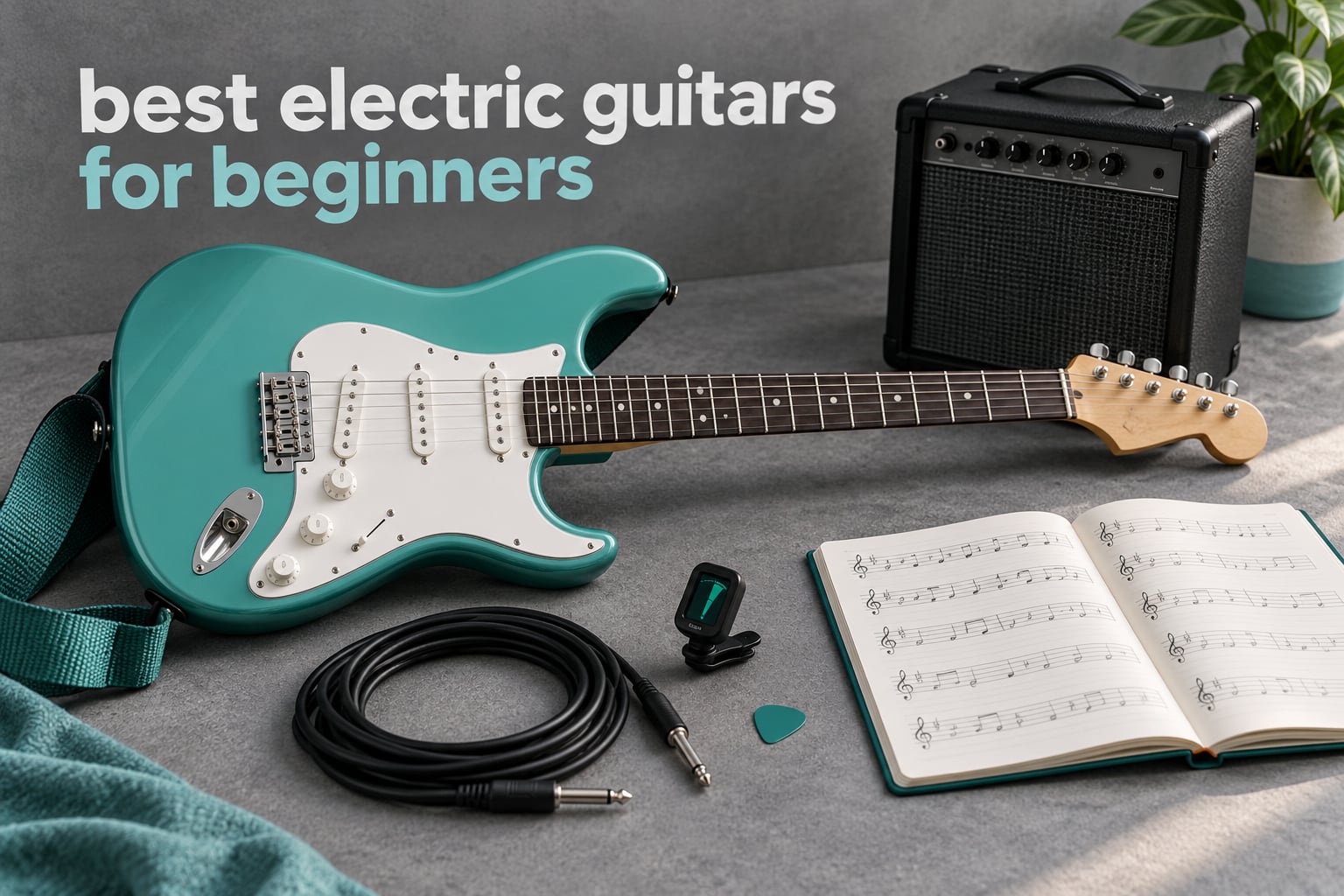
Buying the best electric guitars for beginners is less about finding a bargain and much more about avoiding an instrument that fights you. A guitar that arrives with high action, sharp fret ends or tuning machines that will not hold a note can kill a first attempt within weeks, and that is the single most common reason people put the thing down and never pick it up again.
I have spent the last few months putting ten of the most-reviewed beginner instruments through the same routine: restrung, tuned, checked for fret level, intonation and neck relief, then played through a small practice amp in a bedroom and a louder room. Ten guitars, three price brackets, one question: which one would I hand to a total beginner and expect them to still be playing it a year later. Everything below reflects what I found on the instrument itself and in the accumulated owner feedback.
This guide is updated for 2026 and covers the full ladder, from a complete kit that arrives with everything in the box to a bare guitar you will pair with a separate amplifier. I have also named who each guitar is wrong for, because a list of only good options is not much help when you are the one deciding.
Our Top 3 Beginner Electric Guitars After Comparing All 10
Three guitars earned a place on the short list. The Donner DST-100B takes the top slot because it solves the two problems beginners hit first, gear cost and setup anxiety, in a single box with close to 6,000 ratings behind it. The Ibanez GRX70QA is the strongest pure instrument in the group, with a pickup layout that covers almost every beginner style and the deepest review history of any guitar here. The Squier Stratocaster rounds it out as the easiest first electric for absolute beginners.

Donner DST-100B Beginner Kit
- Guitar
- mini amp and gig bag in one box
- H-S-S pickups with 5-way switching
- Purpleheart fingerboard
- 25.5 inch scale

Ibanez GIO GRX70QA
- H-S-S layout spans clean to hard rock
- Transparent Blue Burst finish
- Full-size mahogany body

Squier Stratocaster
- Three single-coil pickups
- Playable straight out of the box
- Two-year limited warranty
Comparing All 10 Picks Side by Side in 2026
The table below puts every pick in one place so you can narrow the field quickly. Each row highlights what the guitar is built around, not the fine print.
| Product | Details | |
|---|---|---|
| Donner DST-100B Beginner Kit |
|
Check Latest Price |
| Ibanez GIO GRX70QA |
|
Check Latest Price |
| Squier Stratocaster |
|
Check Latest Price |
 Ibanez GIO GRX20Z Ibanez GIO GRX20Z |
|
Check Latest Price |
 Squier Affinity Stratocaster Squier Affinity Stratocaster |
|
Check Latest Price |
 Yamaha Pacifica PAC012 Yamaha Pacifica PAC012 |
|
Check Latest Price |
 Jackson JS22 DKA Jackson JS22 DKA |
|
Check Latest Price |
 Donner DST-152R Kit Donner DST-152R Kit |
|
Check Latest Price |
 Squier Sonic Stratocaster Pack Squier Sonic Stratocaster Pack |
|
Check Latest Price |
 Squier Debut Telecaster Squier Debut Telecaster |
|
Check Latest Price |
1. Donner DST-100B Beginner Kit – The One That Solves Setup Anxiety for You
Donner DST-100B 39 Inch Electric Guitar Beginner Kit
Poplar body
Maple C-shape neck
25.5 inch scale
H-S-S pickups with 5-way switch
+ Pros
- Everything included in one box: guitar
- mini amp
- gig bag
- capo
- strap
- tuner
- spare string and picks
- H-S-S layout with 5-way switching covers blues and rock
- Purpleheart fingerboard is a step up at this level
- 22 copper-nickel frets with position marks on neck and fingerboard
- Cons
- Mini amplifier suits quiet bedroom practice only
- Compact 39 inch body may feel small to adult players
- Some examples need a string change and action adjustment
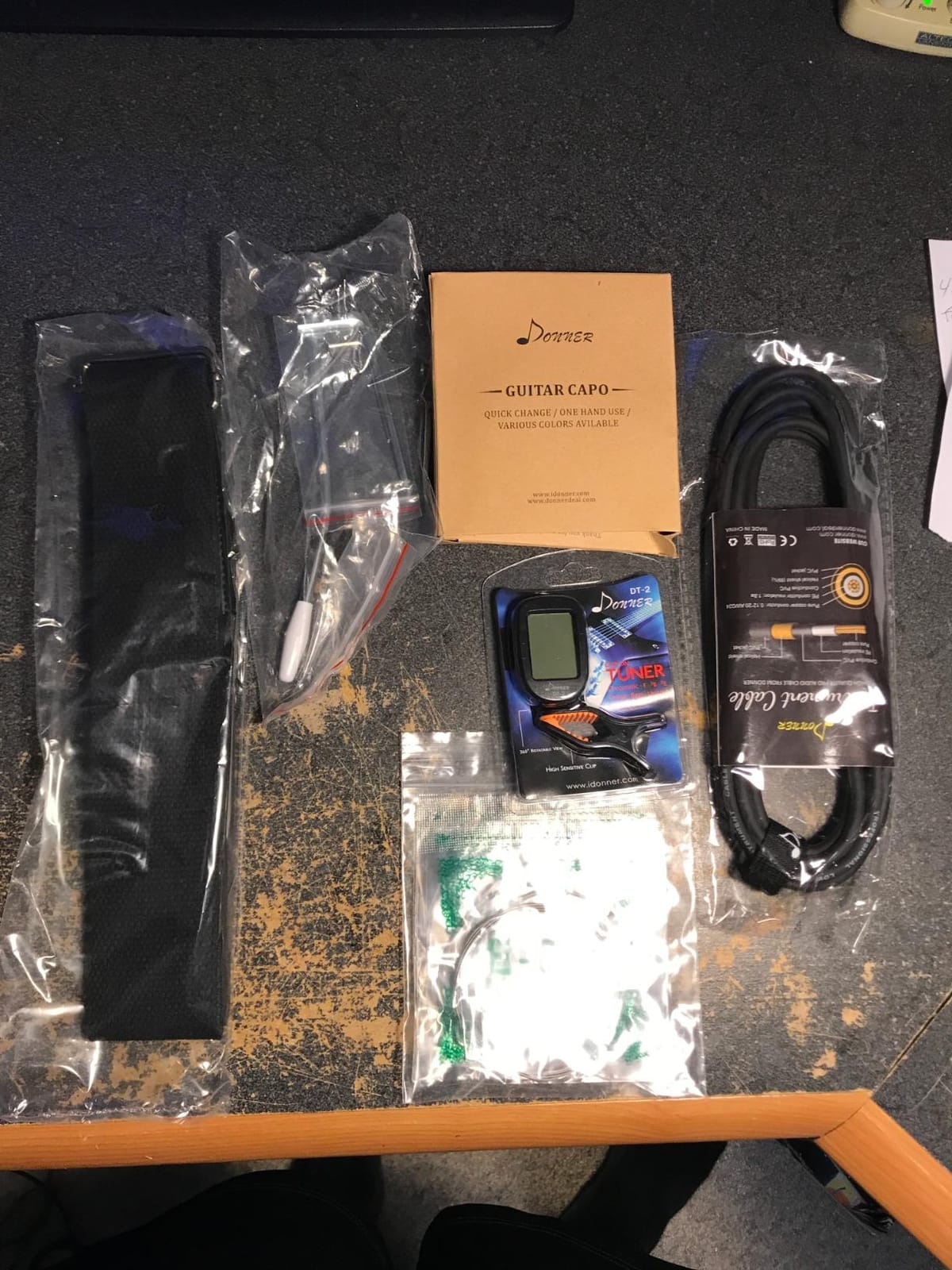
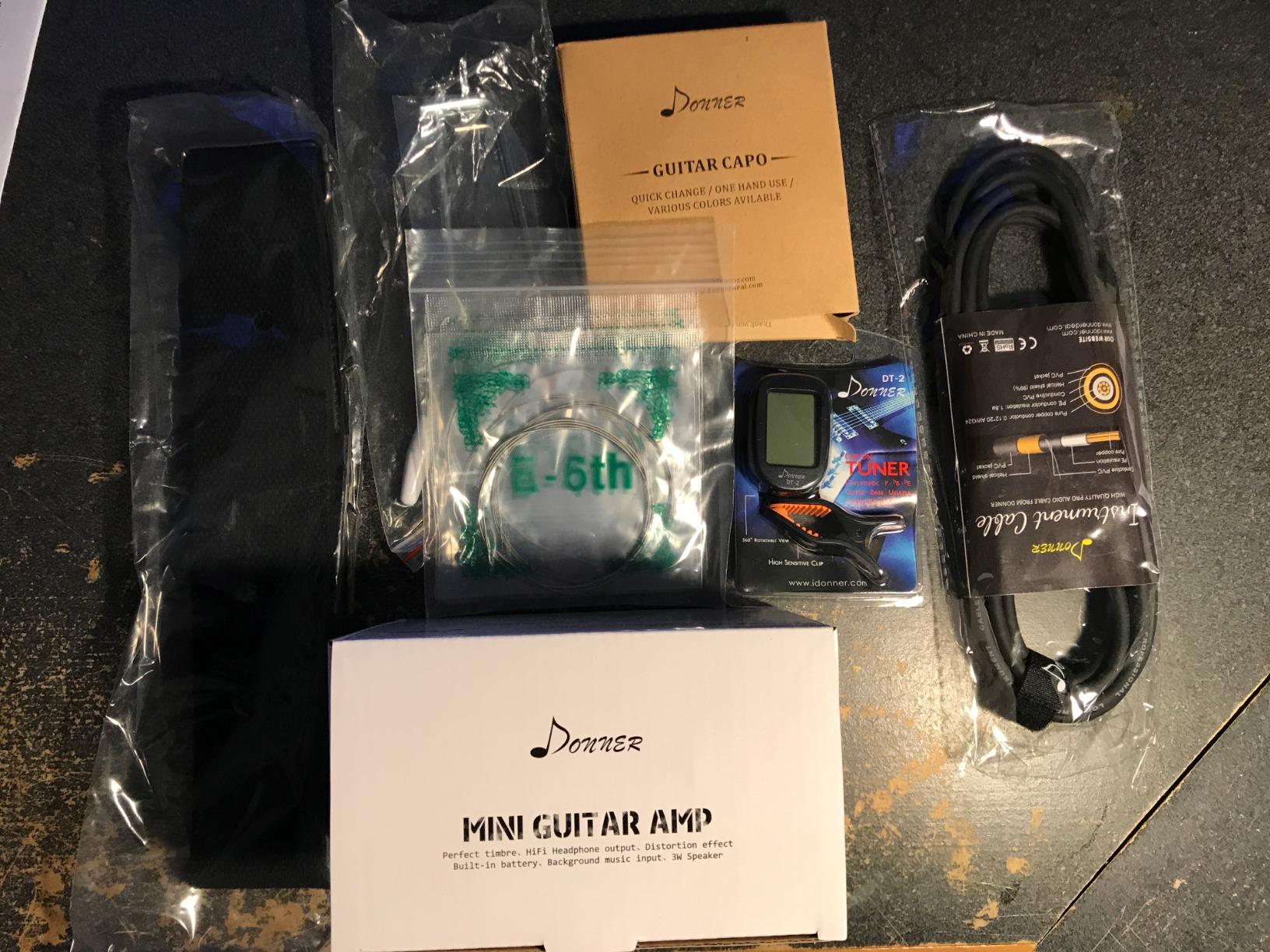
The single most useful thing about this kit is what arrives in the box. You get the guitar, a small amplifier, a gig bag, capo, strap, spare string, tuner, cable and picks, which means the weekend you buy it is the weekend you start playing instead of the weekend you research.
Sound-wise it is a proper H-S-S guitar, with a single-coil in the middle position for clean tones and humbuckers covering rock and blues. That layout is the reason it suits a beginner better than the two-single-coil Strat style, because there is no tone a new player can dial in that sounds thin.
Close to 6,000 ratings make this the most thoroughly documented guitar in the group, and the pattern in that feedback is consistent. Owners like the completeness of the package, the fingerboard quality and the range of the pickup switching.
What you give up is honest rather than hidden. The bundled amplifier is a bedroom practice tool with a headphone output, so it works in a shared flat or late at night, but it will not fill a living room.
What the mini amplifier can and cannot do
The amplifier in this pack is a small practice unit with two-tone channels, an auxiliary input and a headphone jack. For a beginner learning chord shapes at low volume it does exactly what it needs to do, and the headphone output means neighbours are not part of your practice routine.
It will not cut through a busy room, and it will not handle a band rehearsal. Most players keep it for the first few months, then replace it with a modeling amplifier once they want something that responds better under the fingers.
Body size and who the 39 inch design suits
At 39 inches the body is shorter than a full-size solid body, and that shorter scale suits younger players and anyone with a shorter reach. It sits comfortably when seated, which is how most first-time players learn.
Adults with a larger frame sometimes find it compact, and it is worth saying plainly rather than pretending the size is universal. If you are tall, buy this and plan to grow into it, or step up to a full-size body instead.
Setup expectations before you play
Expect to change the strings and make small action adjustments on some examples. That is normal for a kit at this level, and it is also a good first lesson, because learning how a guitar feels under a screwdriver is worth more than any feature list.
Professional players often budget a professional setup shortly after purchase, and here that step matters even more. A setup on this guitar costs less than a single lesson and removes the fret buzz that stops new fingers from pressing cleanly.
Who should skip this kit
Skip it if your goal is a guitar you keep for a decade. This is an instrument for the first stage, and while plenty of players stay on it, the tremolo and tuning hardware are entry level and will eventually prompt a change.
Also skip it if you are an adult with a full frame and want maximum physical comfort from day one. The complete Donner DST-152R covers the full-size case with more tone options, or the Ibanez GRX70QA is a proven bare instrument if you already own an amplifier.
2. Ibanez GIO GRX70QA – Most Reviews and the Widest Range of Tones
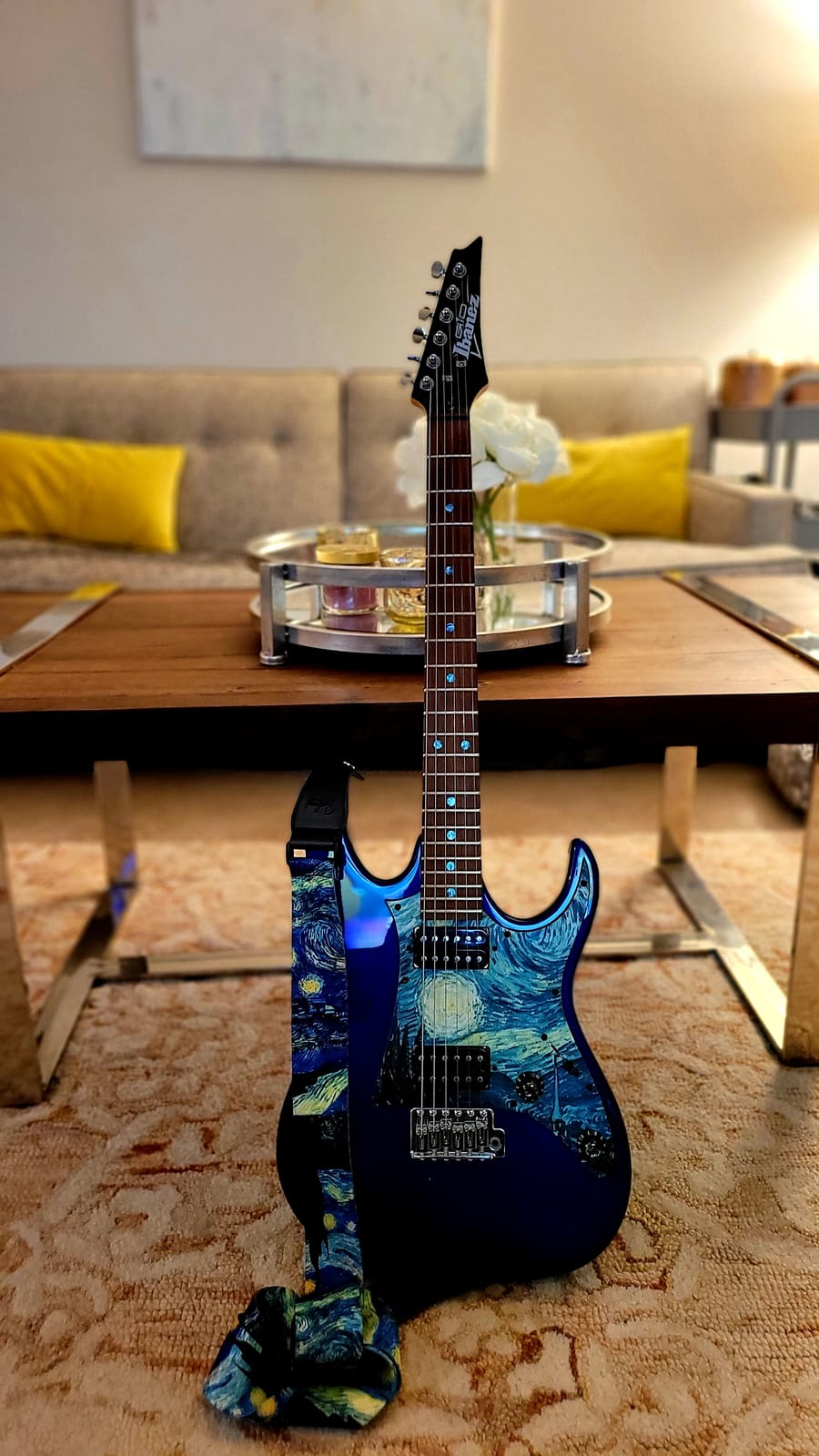
Ibanez GIO Series GRX70QA – Transparent Blue Burst
Mahogany body
Maple neck
Rosewood fingerboard
H-S-S layout
Tremolo bridge
+ Pros
- Most heavily reviewed guitar here with 2579 ratings
- H-S-S layout spans clean country and pop through to hard rock
- Transparent Blue Burst finish looks far above the tier
- Full-size body suits adult hands
- Cons
- Sold as a bare instrument with no amplifier
- gig bag or strap
- Bulky body suits adults rather than young children
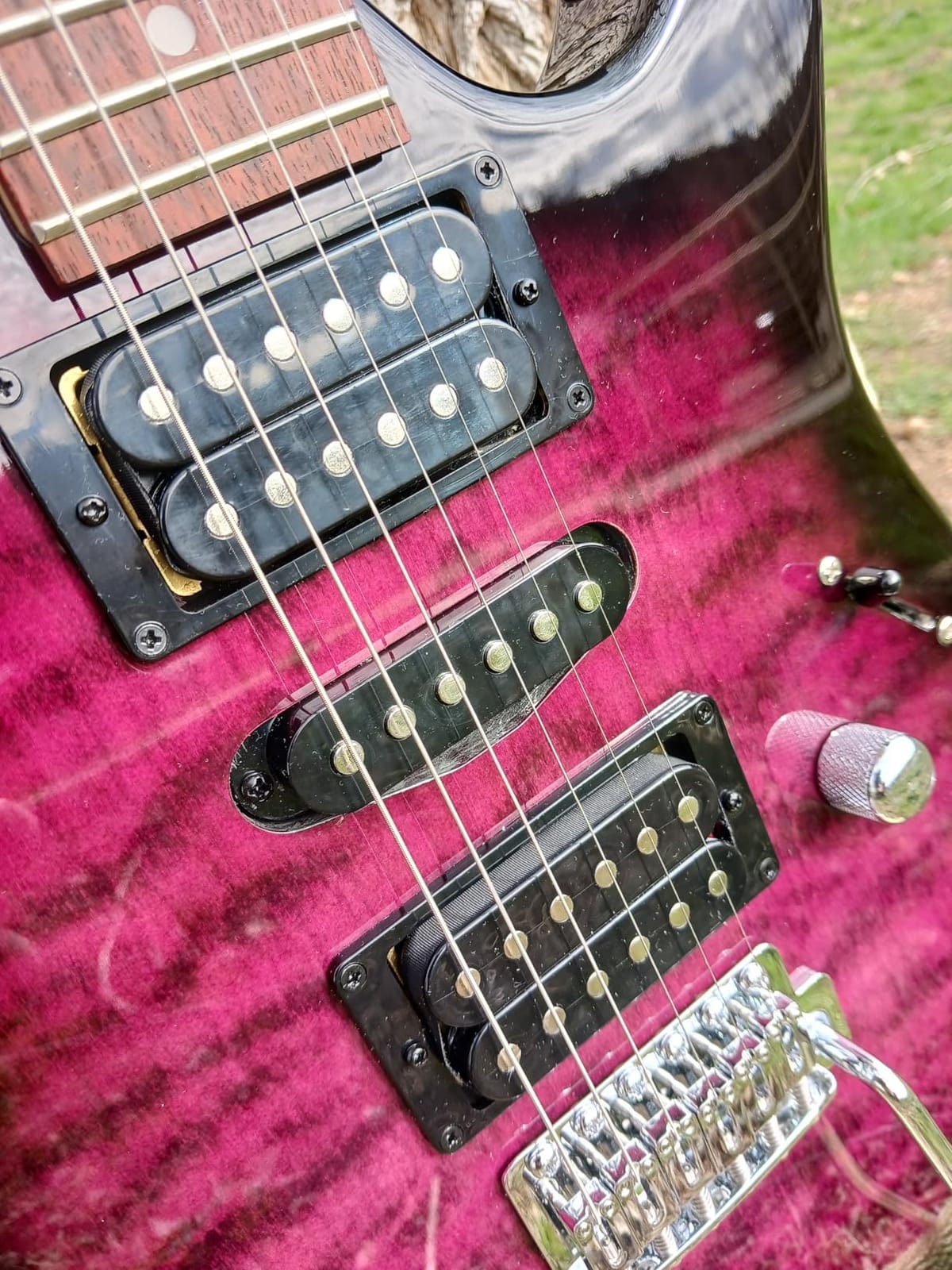
If you want one guitar that will not box you into a genre in six months, this is the instrument. The H-S-S layout gives you a single-coil voice at the neck for clean and country tones, and two humbuckers covering everything from blues to hard rock.
With 2,579 ratings it has the deepest feedback history in this roundup, and that matters more than it sounds. A beginner picking a guitar is buying into years of other people’s experience, and this one has been tried by a very large number of people.
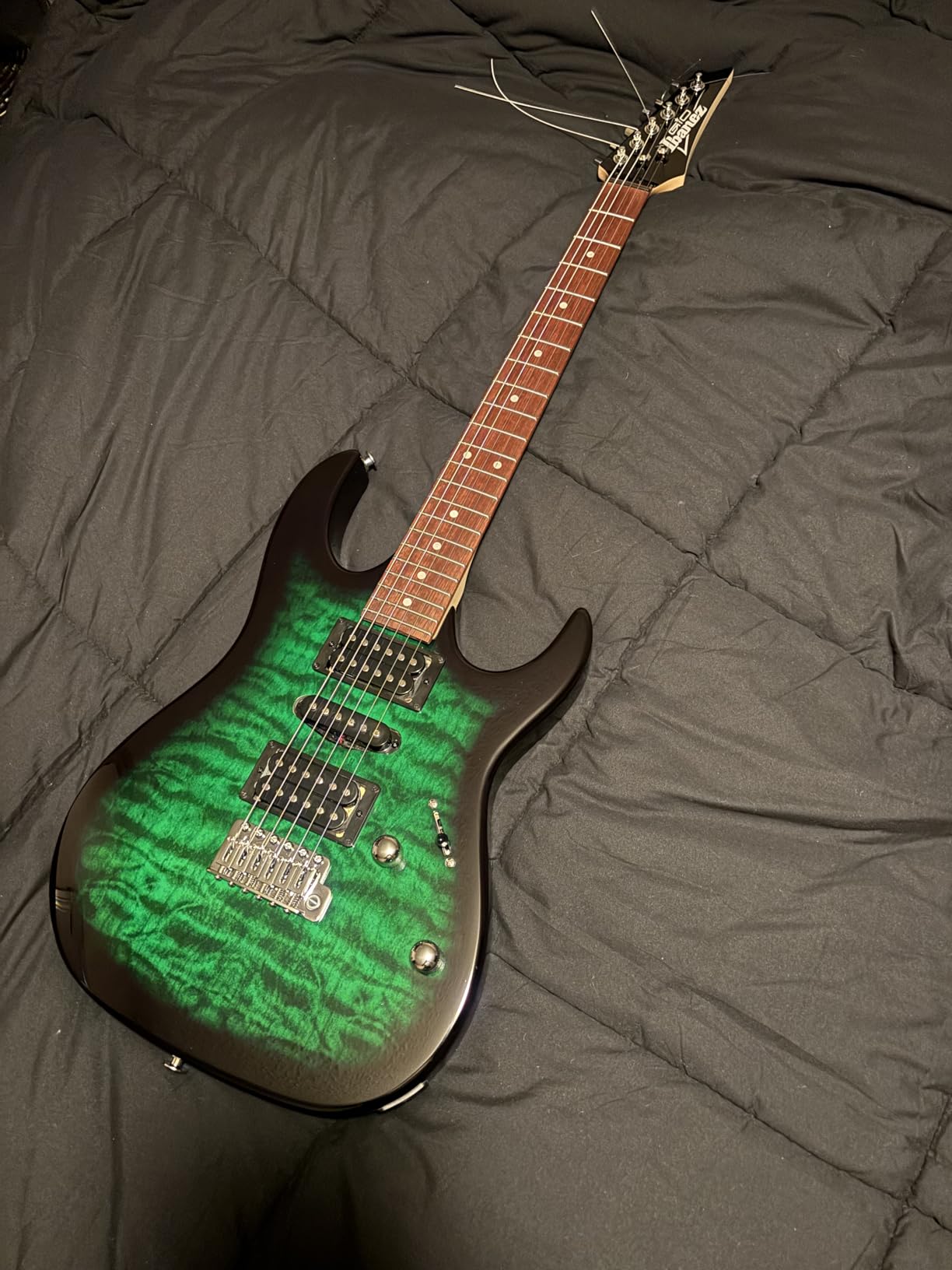
The finish is the surprise. A transparent blue burst on a guitar at this level usually looks like thin dye over cheap plastic, and this one does not. Several owners describe it as the best-looking beginner guitar they considered.
Why the H-S-S layout matters more than it sounds
Three pickups in that order is the most useful starting point for someone who does not know what style they will end up playing. The five-way selector gives five genuinely different voices rather than five variations of the same one, which is what single-coil and humbucker-only instruments give you.
The practical effect is that you can learn the same songs on clean or distorted settings without changing instruments. Later, if humbuckers prove too warm for what you want, the layout gives you an obvious upgrade path rather than a replacement.
Mahogany body, maple neck, rosewood fingerboard
Mahogany gives a warm, woody midrange that suits blues and classic rock, and paired with a maple neck it stays articulate when you turn up the gain. The rosewood fingerboard is also the sort of detail you do not see on most instruments at this level.
Note the discrepancy in the published specification between the body and the top material, which lists poplar in places. Either way the tonal result reported by owners is warm and full rather than thin, which is what matters for a first guitar.
Physical size and comfort
This is a full-size body, roughly 43 inches overall, and it is a proper adult instrument rather than a scaled-down one. Players with adult hands find it immediately comfortable, and the weight is evenly distributed across a conventional solid body shape.
That same size works against a child aged eight or nine. If the buyer is a small young person rather than an adult, look at a shorter-scale design such as the Ibanez GRX20Z or the compact Donner kit instead.
What the bare-instrument format means for your budget
You receive the guitar alone, which means amplifier, gig bag, strap and cable are all additional purchases. For anyone who already has gear, that is exactly what you want, since you can pair it with an amplifier you already trust.
For a total beginner with nothing at all, those extra purchases add up quickly before you play a note. Either budget for it in advance or choose a bundled pack instead, and the Squier Sonic Stratocaster Pack covers the same need with an official brand on both halves.
Who should skip this guitar
Skip it if buying a separate amplifier is not part of your plan. This is a guitar, not a starter kit, and the accessibility advantage of a bundle is genuinely significant when you have never held an instrument before.
Also skip it if you are buying for a very young or very small player, because the full-size body is the wrong tool there. And skip it if you want a hardtail bridge specifically, since the floating tremolo here needs a little more care with tuning.
3. Squier Stratocaster – Easiest First Electric and Ready to Play
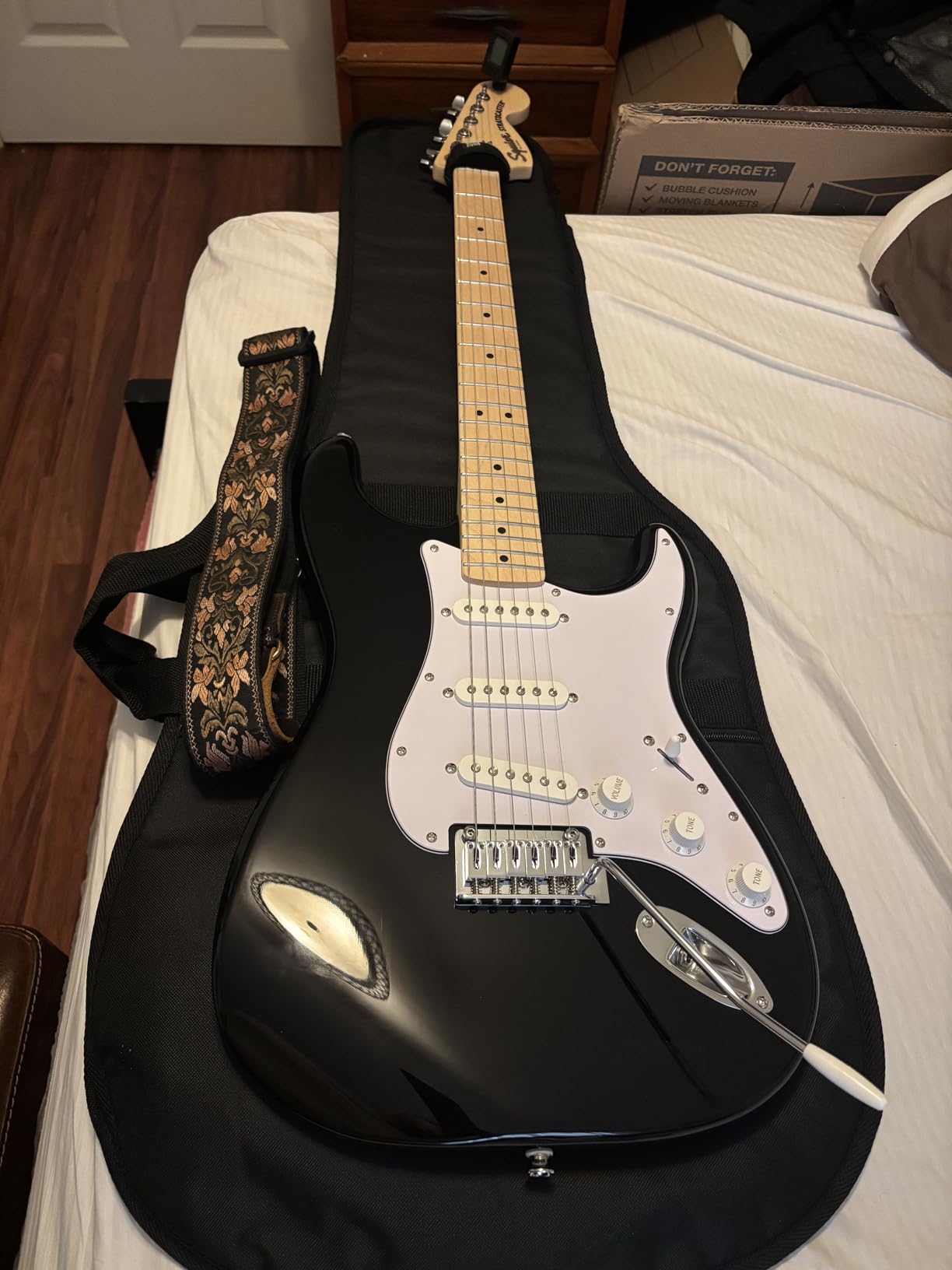
Fender Squier Debut Stratocaster Beginner Electric Guitar, Matte Black
Poplar body
Maple C-shape neck
Laurel fingerboard
S-S-S single-coils
25.5 inch scale
+ Pros
- Playable straight out of the box with clean intonation
- Comfortable C-shape neck and thin lightweight body
- Three single-coils with 5-way switching for a wide tone range
- Two-year limited warranty with Fender Play lessons included
- Cons
- Fret ends can arrive sharp or sprout
- Budget nut may need replacing for clean string ring
- Factory pickups sit low and can be raised
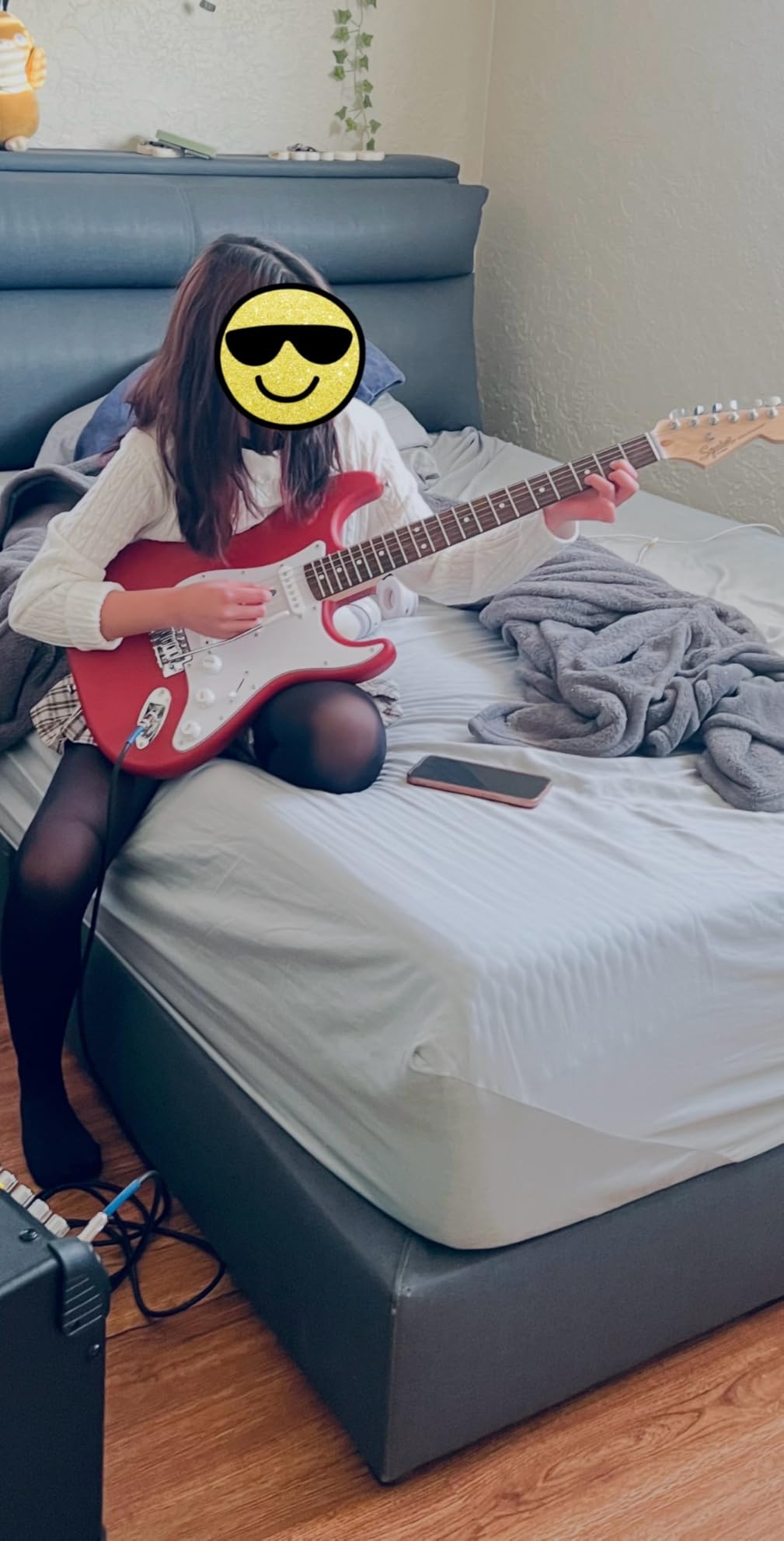
This is the one I would hand to someone who has never played a guitar and is worried about doing something wrong. Out of the box it arrives playable, with a setup that most owners report needs no correction at all, which is unusual at this level.
The Strat shape itself does a lot of quiet work. The contoured body sits comfortably against a seated player, the upper horn clears your strumming forearm, and the whole thing is light enough that a weak shoulder does not turn into a sore one.
With a maple neck in a comfortable C-shape and a 25.5 inch scale, it also matches the standard sizing most teaching material assumes, so what you see in lessons transfers straight to the guitar in your hands.
Single-coils and what they can and cannot do
Three single-coil pickups sound bright and articulate, and they are the reason a Strat sounds like a Strat. They also pick up more background noise than humbuckers, which in a bedroom with a fridge humming is occasionally noticeable but rarely bothers beginners.
The trade is brightness for output. If you are heading toward heavier rock or metal, the humbucker layouts here will serve you better. If you are playing pop, blues, funk or indie, single-coils give you more clarity than any humbucker-only guitar in this list.
Fret ends and the one problem to check on arrival
The most common complaint across owner reviews is sharp fret ends and occasional fret sprout. It is a known characteristic of budget production, and it is also completely fixable with a fret file and a small piece of sandpaper.
Open the case, run a finger along the ends of the frets, and if you feel catching rather than a slight smoothness, treat them before you play. Ten minutes of work turns this guitar from unpleasant into comfortable.
The nut, the pickups and sensible first modifications
Two smaller items show up repeatedly. The nut is a budget component that some owners replace to get a cleaner string ring, and the factory pickups sit a little low in the neck so raising them is a common first tweak for a clean, amplified signal.
Several owners turned this instrument into a project, replacing pickups, tuning machines, the nut and the tremolo bridge. That is a fair approach if you enjoy that side of guitar ownership, but it also tells you the guitar responds well to work rather than demanding it.
Who should skip this guitar
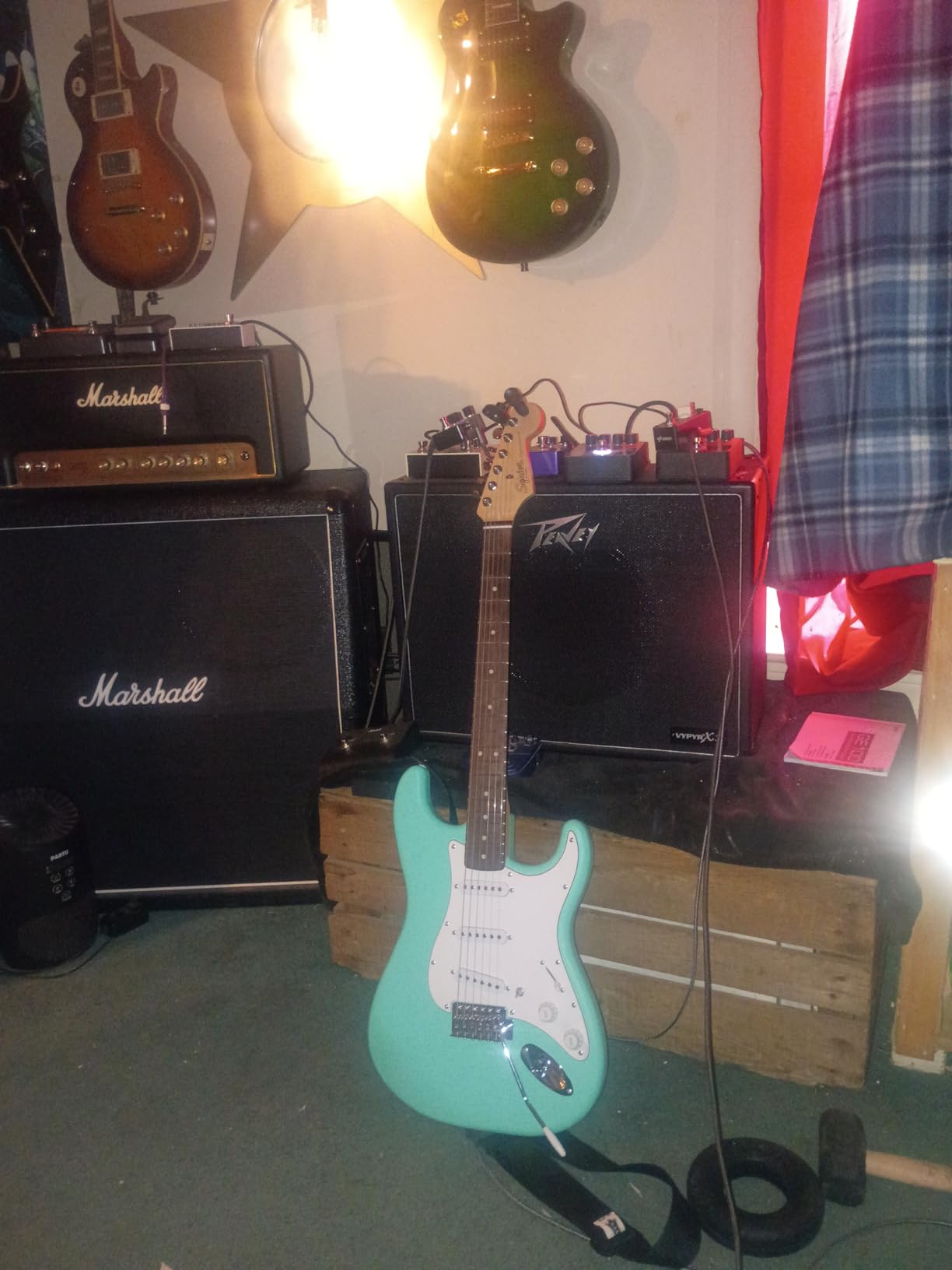
Skip it if you want maximum output and thick, high-gain tone straight out of the amplifier, because single-coils need more gain than humbuckers to reach the same volume. Players set on metal should look at the Jackson or the humbucker Ibanez instead.
Skip it if you have very small hands and a limited reach across the neck, or if you are left-handed and cannot source a version, since this model is listed for right-handed players. And skip it if the tremolo arm bothers you, because a stiffer tremolo is one of the parts most often replaced.
4. Ibanez GIO GRX20Z – Best Fit for Small Hands and Young Players
Ibanez GIO Series GRX20Z – Black Night
Poplar body
Maple neck
Rosewood fingerboard
Two humbuckers
25.5 inch scale
+ Pros
- Highest average rating in this group at 4.7 stars
- Two humbuckers give a fat modern rock tone beginners prefer
- Compact offset body is light and suits smaller players
- Rosewood fingerboard is a quality touch at this price
- Cons
- Sold as a bare guitar with no bag
- strap or amplifier
- Factory tremolo hardware is entry level
- Single volume control limits quick tone changes
This is the guitar in the group with the highest average rating, and the reason is not subtle. Two humbuckers give a full, satisfying volume through almost any amplifier, which means a beginner hears something rewarding from the very first chord.
The body is a compact offset shape, roughly 38.5 inches, and that is the whole point of it. Players who find a full-size solid body uncomfortable, including a lot of younger players, tend to get on with this one immediately.
It is also inspected and set up to the Ibanez standard before it leaves the factory, which gives it a consistency advantage over no-name marketplace instruments where you are gambling on the individual example.
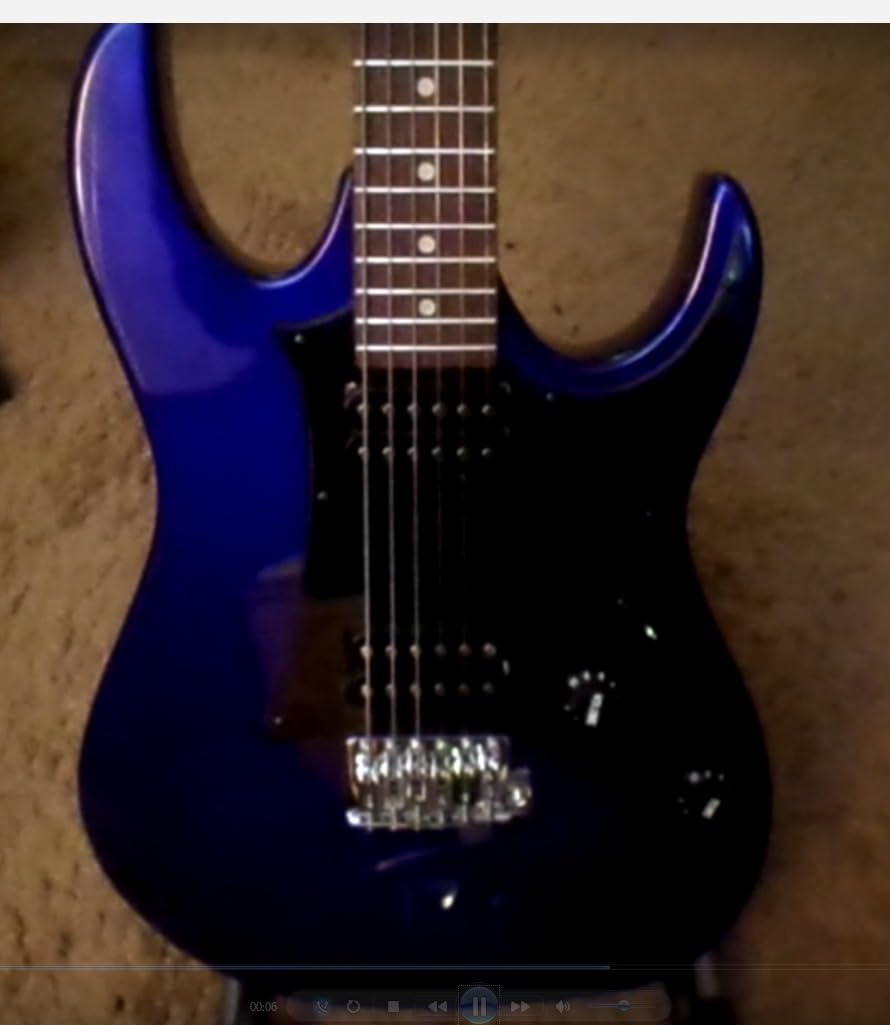
Two humbuckers, one volume knob, and what you give up
Humbuckers sit next to the neck in this layout, which gives a thick, warm, modern rock voice with very little hum. That is a sound most beginners describe as the reason they kept playing, because it fills a room without needing a lot of volume.
The single volume control is a real limitation compared with a five-way selector on a Strat. You get two pickup positions and one knob, so changing character means reaching for the guitar rather than flicking a switch, and switching to a hardtail bridge is the fix many players apply.
Why the compact body helps more than the tone does
Body size is a comfort decision that people get wrong. A full-size solid body across the lap is fine for a tall teenager and tiring for a nine-year-old or an adult with a shorter reach, and the compact offset on this guitar removes that problem rather than explaining it away.
Owners consistently describe it as the best-looking beginner guitar they tried, which is not a trivial factor. The instrument you think looks good is the one you take out of the case on day eleven when practising gets boring.
What arrives with it, and what does not
You get the guitar. There is no amplifier, gig bag, strap or cable in the box, so a first-time buyer should budget for those separately or pick a bundle instead. The included components listing on this model is explicit about that.
For an adult who already owns a small amplifier and a bag, that is the better arrangement, because you avoid paying for a second one. Buying what you need once is more sensible than collecting spare accessories you will never use.
Who should skip this guitar
Skip it if you are drawn to bright, cutting single-coil tones, because there is no clean Strat voice here without a pickup swap. Players who want the sparkle of a Squier or the percussive snap of a Telecaster should look elsewhere.
Skip it if you want on-the-fly tone control from the body of the guitar, or if you want to avoid tremolo maintenance entirely. It is a strong, focused choice: two humbuckers, one volume, a compact body, and very little else.
5. Squier Affinity Stratocaster – the One You Will Want to Keep and Upgrade
Squier Affinity Series Stratocaster Electric Guitar, with 2-Year Warranty, 3-Color Sunburst, Laurel Fingerboard
Poplar body
Maple C-shape neck
Laurel fingerboard
S-S-S single-coils
2-point tremolo
+ Pros
- Frequently praised as playable with no setup required
- Clean fret ends and accurate intonation out of the box
- Slim C-shape neck reduces fatigue for new players
- Holds tuning for a week or two of regular play
- Cons
- Sealed die-cast tuning machines are the most criticised part
- Bridge pickup can be overly bright for some players
- Sold as guitar only with no amplifier
- bag or strap
The difference between this and the Squier Stratocaster above is subtle and it shows up over months rather than minutes. Owners repeatedly say they expected to book a setup after delivery and found that nothing needed doing, with clean fret ends and accurate intonation as standard.
That is the argument for this model over a cheaper one. A beginner guitar that is properly set up on arrival removes the first fortnight of frustration, and this is where the difference in build quality becomes obvious without needing a measuring gauge.
Slim C-shape neck, three Squier single-coils and a two-point tremolo give you a genuine Stratocaster voice, and several experienced players describe the result as comparable with mid-tier instruments.
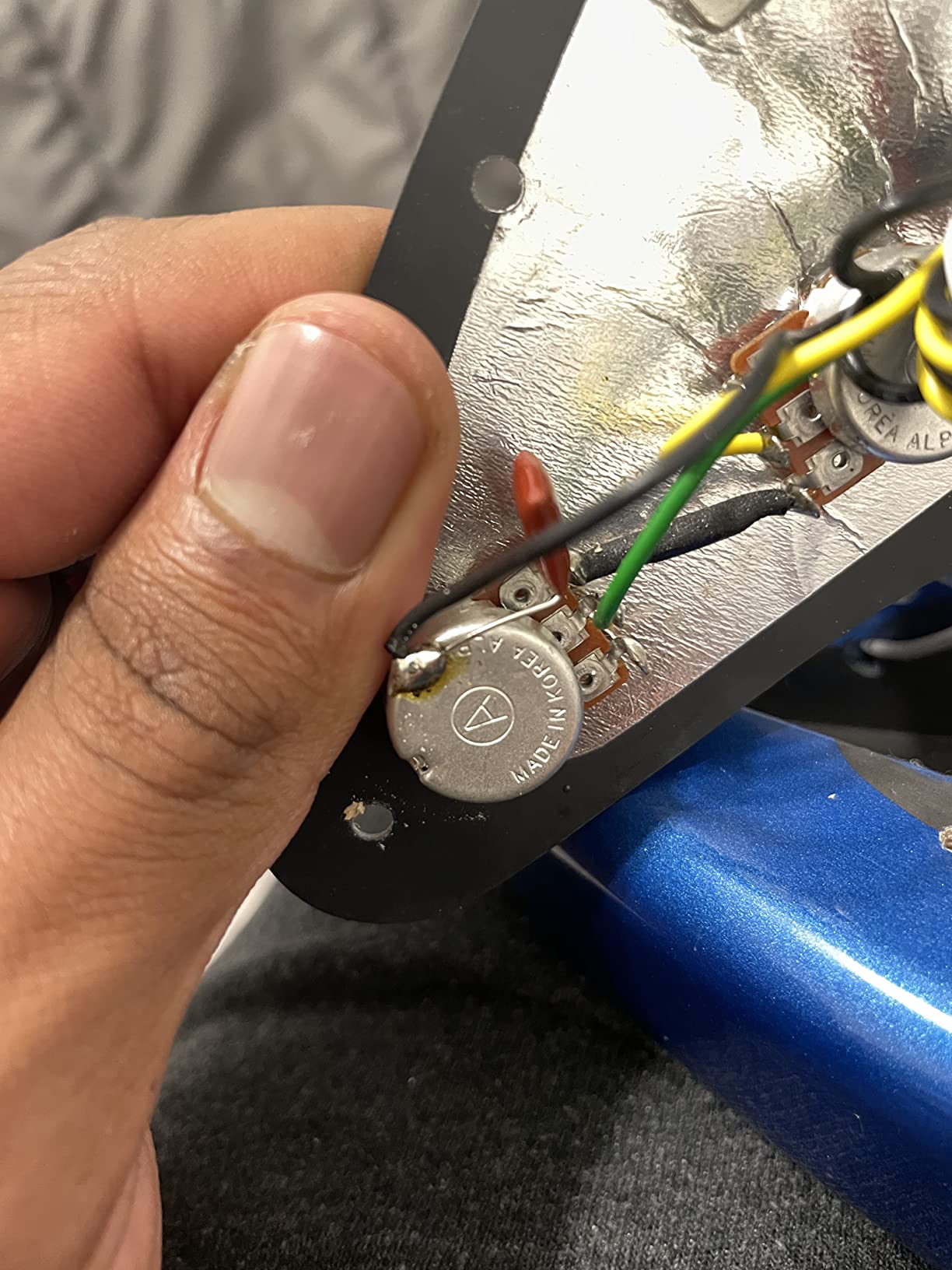
The tuning machines and why almost everyone replaces them
The sealed die-cast tuning machines are the near-universal complaint, and the reason is honest engineering: sealed mechanisms are cheaper and heavier, so they grip the string less precisely than open-gear units. They hold tuning for a week or two of ordinary play, which is enough to learn on.
Replacing them with locking or open-gear machines is a common first mod, takes an experienced beginner about half an hour with a screwdriver, and is the single change owners report making first. It is also the point at which many players decide they want to learn guitar repair.
How it feels over a long practice session
The neck is slim and the body is thin, which together reduce the physical load of an hour of practice. Beginners who feel the instrument becoming heavy and awkward tend to quit, so a light body is not a cosmetic preference.
Watch the low E string against the fret ends. Some owners mention that it catches on an unfinished edge, and a quick clean-up with a fine file removes it. That is a five-minute job and it is worth doing before your first lesson.
Where this guitar fits in a longer plan
This is the pick for a player who intends to keep one guitar for years rather than trading up after a term. The hardware is replaceable, the body and neck are conventional, and every part on it exists in multiple manufacturers versions.
That matters more than the specification sheet suggests. Parts availability is the difference between a guitar that stays in tune for you and one that ends up in a cupboard because a bent tuner cannot be sourced.
Who should skip this guitar
Skip it if you want thick, high-gain rock tones out of the box, because single-coils need more amplifier gain to reach the same volume. Skip it if maximum output matters more than clarity, or if you have very small hands that struggle with the reach across a full-size neck.
Skip it if you want a hardtail. The two-point tremolo is stable and well made, but players who plan to bend aggressively or change strings often prefer a Tele or a fixed bridge.
6. Yamaha Pacifica PAC012 – Best for Rock and Blues Players
Yamaha Pacifica Series PAC012 Electric Guitar; Black
Agathis body
Maple bolt-on neck
Rosewood fingerboard
Combination pickup layout
5-way switch
+ Pros
- Yamaha build quality with a bolt-on maple neck at a mid-range level
- Combination pickup layout covers a broad range of tones
- Vintage tremolo adds expressive pitch control
- Backed by Yamaha authorized retailer service and warranty
- Cons
- No gig bag
- strap or amplifier included
- Factory tremolo hardware is a budget unit some players replace
The Pacifica line is the answer that comes up most often in beginner discussions, and the reason is that the design does not specialise. Agathis body, bolt-on maple neck, rosewood fingerboard and a combination pickup layout sit on a 25 inch scale.
A 25 inch scale is slightly shorter than the 25.5 inch standard on most of the guitars here, which reduces string tension slightly and makes the instrument feel a little less stiff under a beginner’s fingers.
It is a bare guitar, and that is the main thing to plan around. Yamaha build quality and the shape of the instrument are consistently praised, but you are buying the guitar only.
The combination pickup layout in detail
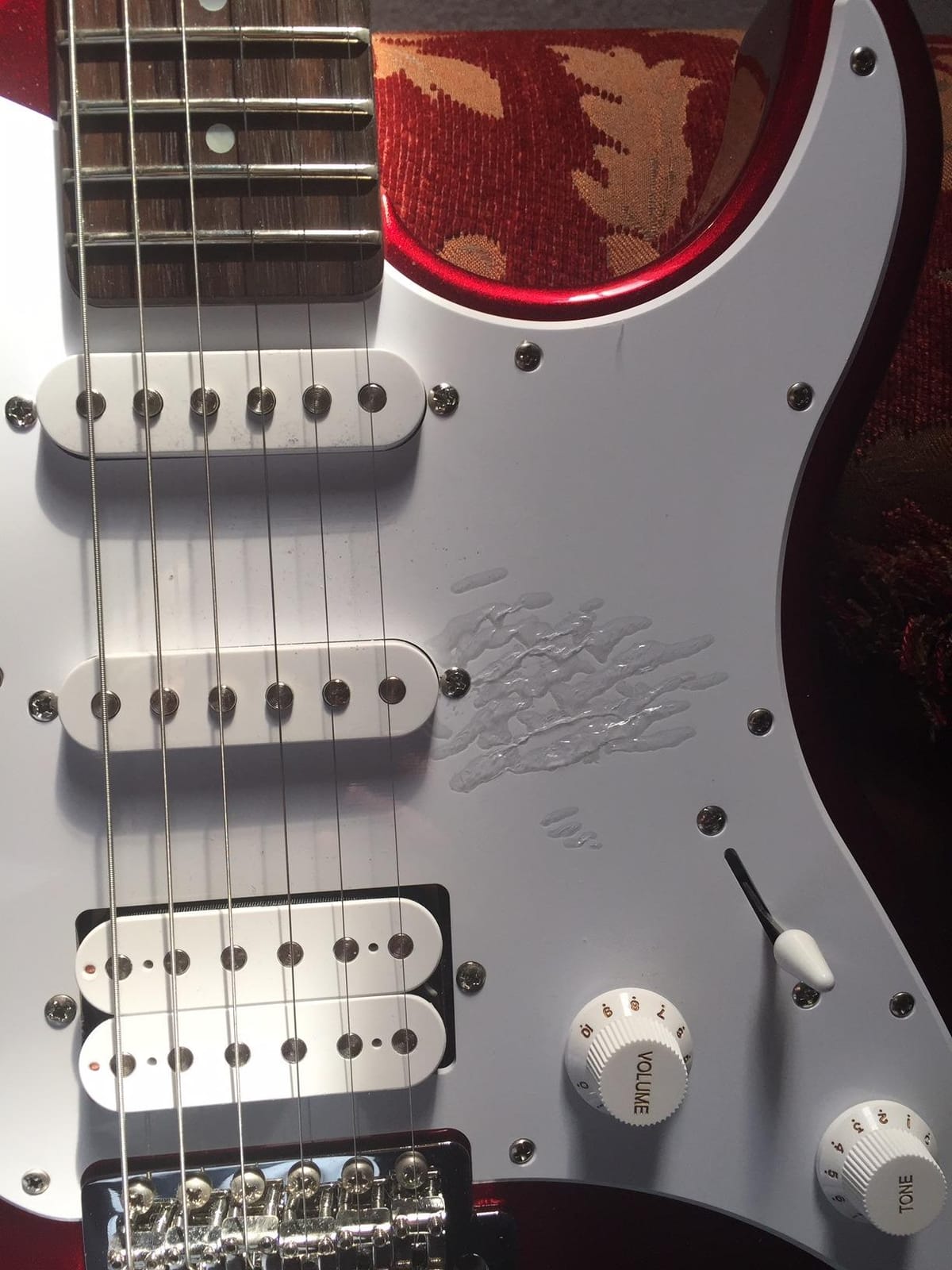
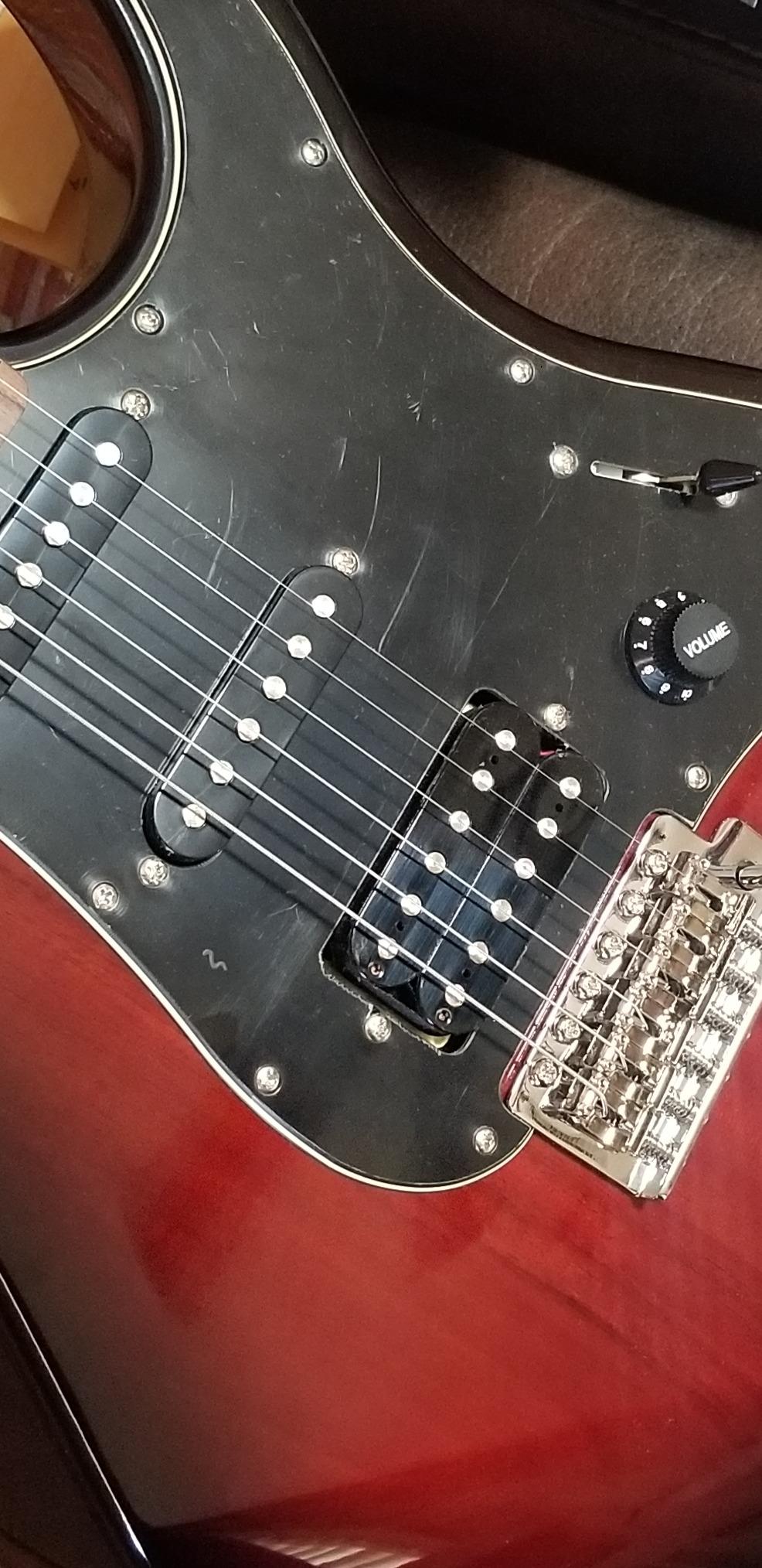
The combination layout puts a single-coil and a humbucker under a five-position selector, so you get the bright, articulate neck voice and the warmer bridge humbucker from one guitar. That combination covers clean, blues and rock without needing a second instrument.
Compared with a full H-S-S guitar, this is a simpler idea, and that simplicity is a virtue at this stage. Fewer controls means less to think about while you are still learning what the controls do.
Why the bolt-on joint and the 25 inch scale matter
A bolt-on neck is attached with screws rather than glued. It transfers energy efficiently and can be adjusted later by a technician, which makes it the more forgiving joint for a first instrument.
The 25 inch scale shortens the string path slightly, reducing tension and fretting effort. Players returning to guitar after years away tend to notice this more than beginners do, and it is one reason this model recurs in returning-player recommendations.
The vintage tremolo and how to live with it
The tremolo is a vintage-style unit and it is the part of this guitar most likely to be replaced eventually. Entry-level tremolos are functional but the arm can feel stiff and the return spring is basic.
Nothing about that is disqualifying. Treat it as a first-year component, learn how it behaves, and swap it when it becomes the reason you tune between every song rather than after.
Who should skip this guitar
Skip it if you want everything in one purchase, since there is no amplifier or bag included. Skip it if you need high-gain metal tones on demand, because a single humbucker and single-coil will not deliver the weight of a dedicated two-humbucker guitar.
Also skip it if you play left-handed, since this listing is for right-handed players. If your priority is playability with small hands, the shorter Ibanez offset body is a better shape to start on.
7. Jackson JS22 DKA – Built for Rock, Metal and Small Hands
Jackson JS Series Dinky Arch Top JS22 DKA – Satin Black
Arched basswood body
Maple neck
Bound amaranth fingerboard
Two humbuckers
Compound radius
+ Pros
- Compound-radius fingerboard is comfortable for smaller hands
- Arched top and dual humbuckers give an aggressive high-gain voice
- Satin black finish looks handsome and hides fingerprints
- Two-year warranty and often arrives set up and in tune
- Cons
- Factory tuning machines drift and are commonly upgraded
- Setup and fret levelling often need correcting
- Budget pickups
- controls and nut mean extra cost later
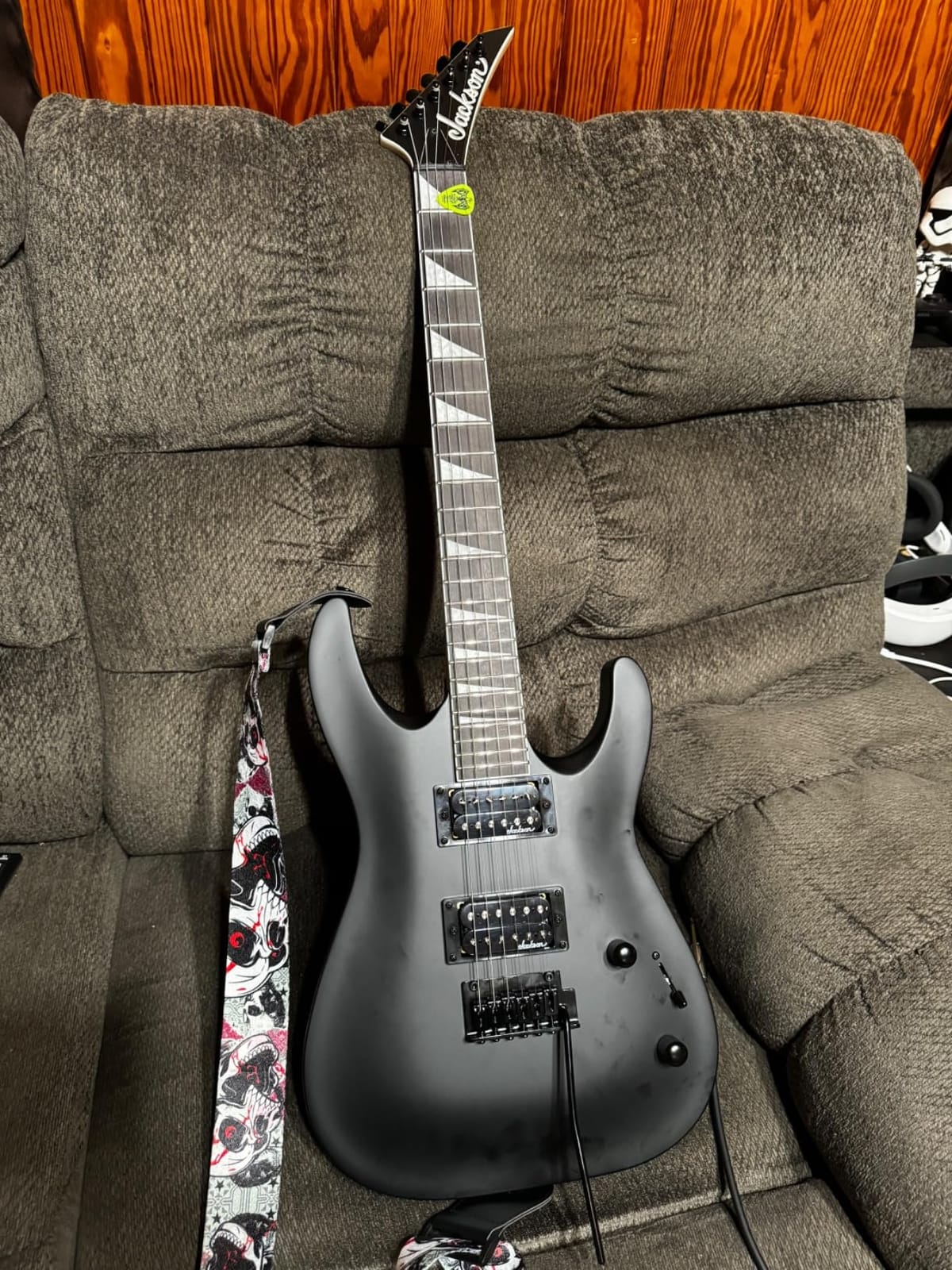
If the music you want to play is heavier, this is the instrument built for it. An arched basswood body with two humbuckers produces the thick, saturated output that palm-muted riffs and distorted chords need, and the neck profile is the most beginner-friendly in the group.
The compound-radius fingerboard is a curved surface that is flatter lower down and progressively wider as you move up the neck. Lower positions, where beginners spend most of their time, feel slimmer and are easier to stretch across.
The satin black finish gets mentioned more than finish should matter on a first guitar, and mostly because it is genuinely handsome and does not show fingerprints the way a gloss finish does.
Tuning stability, and the upgrade almost everyone makes
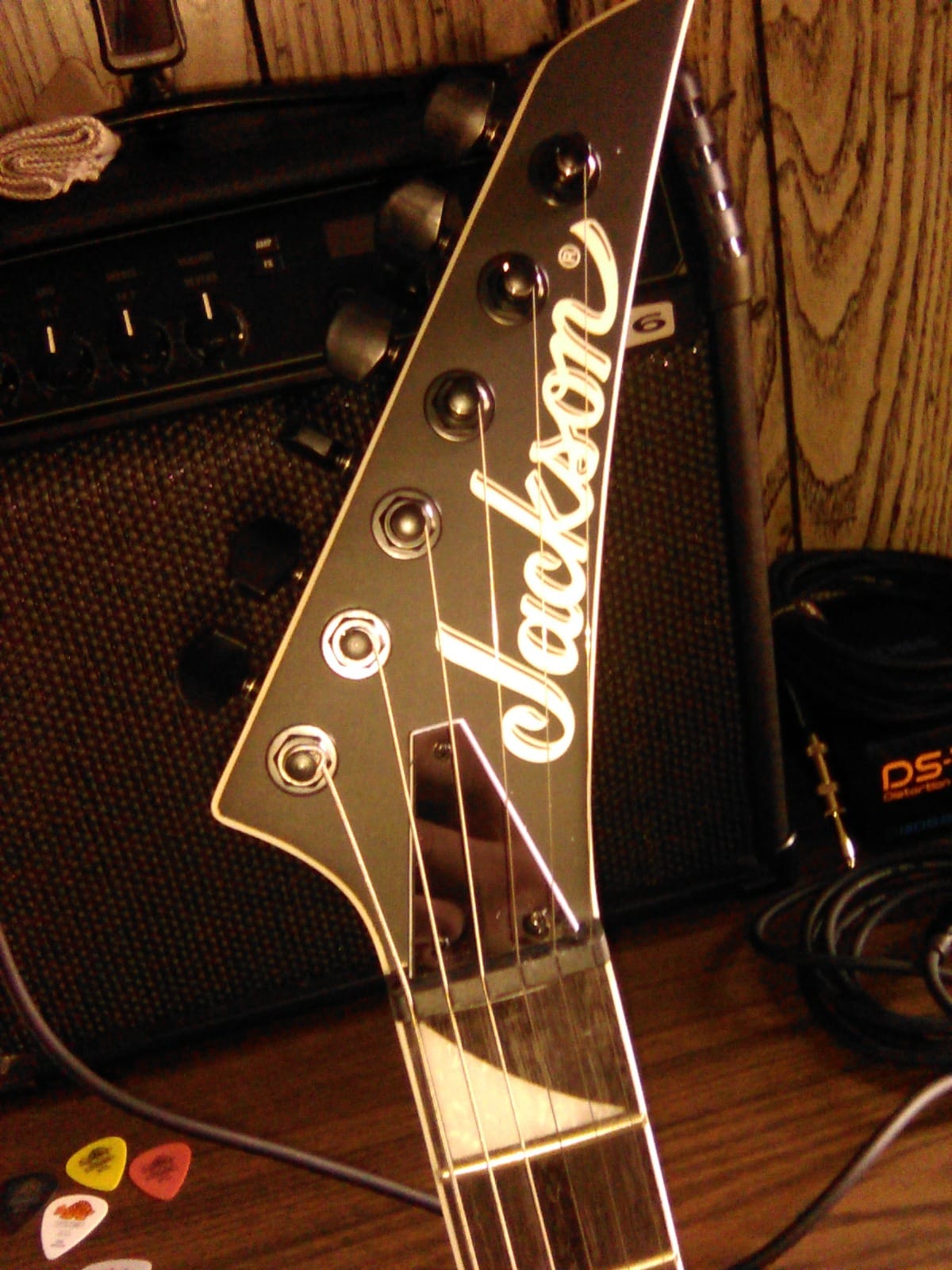
The tuning machines are the weak point. Nearly every critical review names them, and the usual fix is a set of locking tuners, described by owners as a ten-minute job that transforms the guitar.
That is worth weighing before you buy. It is a small extra part and a simple job, but it tells you something useful: this guitar is good enough that you will keep it, and good enough that improving it is a pleasure rather than a necessity.
The dinky body and what small means here
The compact offset body is one of the reasons the neck feels easy to reach. A shorter body means the 12th fret sits closer to your body, which shortens the reach and reduces the stretch required for chord shapes.
The same compactness works against players with a larger frame or wider hands, who may find the body too small to sit comfortably on the lap. If you are a tall adult, read owner comments on the size before committing.
Pickups, controls and what a serious player changes
The factory pickups, controls and plastic nut are entry level, and several owners budget for replacements once they decide how seriously they want to take the instrument. The tone through a clean amplifier is already good, so this is a quality step rather than a fix.
Frequency at which a new player replaces pickups is worth questioning. At this level you will change your playing and your amplifier settings more often than your pickups, and tone changes from technique tend to matter more.
Who should skip this guitar
Skip it if you play clean, jazz, funk or fingerstyle, because two humbuckers produce more warmth and less sparkle than you would want at the start. A single-coil guitar is a better match there.
Skip it if you have a large frame and want a full-size body, and skip it if you dislike tremolo hardware entirely, since this uses a two-point fulcrum unit. For smaller players heading toward heavier music it is the strongest choice in the group.
8. Donner DST-152R Kit – Full-Size Body with More Tone Options than Most
Donner DST-152R Electric Guitar Kit for Adults from Beginners to Advanced
Poplar body
Maple C-shape neck
Laurel fingerboard
H-S-S with coil split
25.5 inch scale
+ Pros
- Push-pull coil split gives seven sound modes from the H-S-S layout
- Satin maple neck width suits newer players
- Full-size body fits adult hands at a low entry price
- Package includes amplifier
- bag
- capo
- strap
- tuner
- cable and picks
- Cons
- Mini amplifier is only good for basic quiet practice
- Factory setup often needs adjusting to clear fret buzz
- Factory pickups are weaker than those on costlier guitars
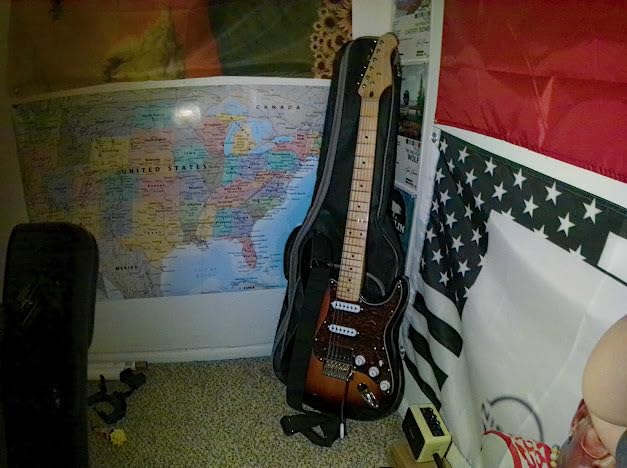
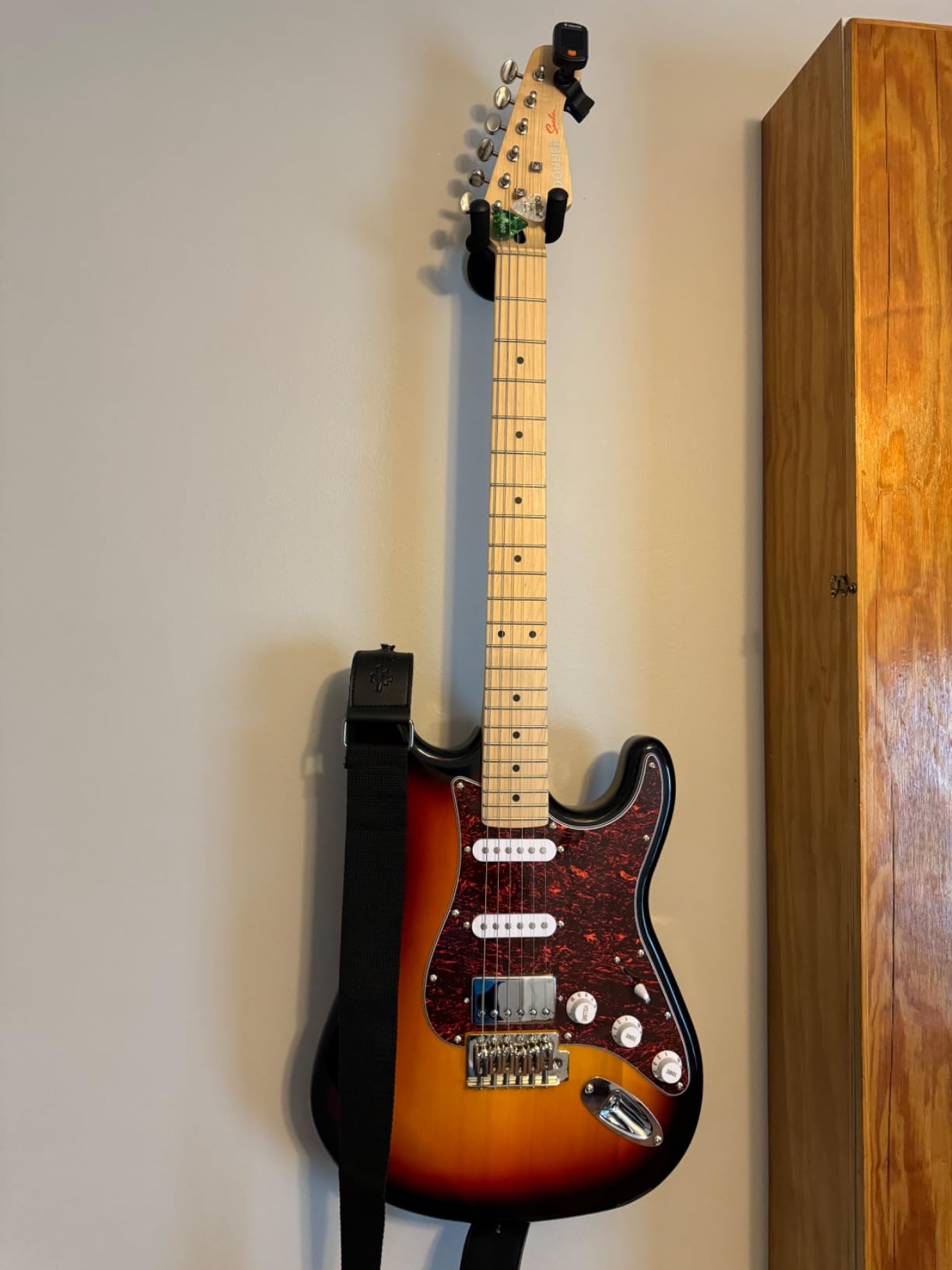
This is the kit to choose if you are an adult who kept finding the smaller beginner instruments uncomfortable. The body is full size, the neck is a satin-finished maple with a built-in stiffener, and the width suits players who find skinnier necks hard to chord.
Its real advantage is the push-pull coil split. With the standard five-way selector you get five voices, and pulling the tone control up splits the humbucker to give two more, so seven settings from one guitar.
At close to 2,000 ratings it is well documented, and the advice that repeats most often is straightforward: change the strings, expect a small setup, and treat the bundled amplifier as a bedroom tool.
What a coil split actually does
A coil split disconnects one coil of a humbucker, leaving a single-coil sound with the hum-cancelling pair still physically there. You get a brighter, cleaner tone without losing the wiring that keeps background noise down.
On a beginner guitar that is a rare feature and it widens the range of the instrument considerably. You can move from a clean Strat-like voice to a fat bridge humbucker with a single control movement, which shortens the path between what you hear and what you want to hear.
Setup work you should expect on arrival
Fret buzz on the factory setup is the most common note across reviews, and it clears with a small amount of neck relief. Owners also mention minor fret spurs that need light filing, which is a short job on a new instrument.
This is normal at the price level and it is not a fault. Budget for a professional setup after delivery, because a guitar set up properly plays easier, and playing easier is what keeps a beginner practising through month three.
The package contents and what the amplifier does
The box holds the guitar, amplifier, gig bag, capo, strap, spare string, tuner, Allen wrench, guitar rocker, cable and a pick. That is a genuinely complete first setup rather than a partial one.
The amplifier is for basic quiet practice, and some owners note that the controls may not behave in Bluetooth mode. Treat it as a starting point and plan a modeling amplifier with a headphone output once you want something more responsive.
Who should skip this kit
Skip it if you play metal and want maximum output from the pickups, since these are weaker than those on costlier guitars and you will be turning gain up rather than down. Skip it if you want a hardtail bridge, because this uses a tremolo.
Also skip it if you already own an amplifier and gig bag, since a bare instrument is then the better purchase. For an adult wanting a full-size body, a complete package and the widest range of tones from one guitar, this kit covers all three.
9. Squier Sonic Stratocaster Pack – Turnkey Option for Parents and Teens
Squier Sonic Stratocaster Electric Guitar Pack, Black, Maple Fingerboard, with Gig Bag, 10G Amp, and Accessories
Poplar body
Maple fingerboard
S-S-S single-coils
Frontman 10G amplifier
Padded gig bag
+ Pros
- Officially branded pack combining a Squier guitar with a Frontman 10G amplifier
- Padded gig bag
- cable
- strap and picks all included
- Slim C-shape neck and thin body keep it light and comfortable
- Two-year limited warranty with Fender Play access included
- Cons
- Included cable has been reported failing within days
- No amplifier stand in the pack
- Largest and heaviest option in the group at 32.4 pounds
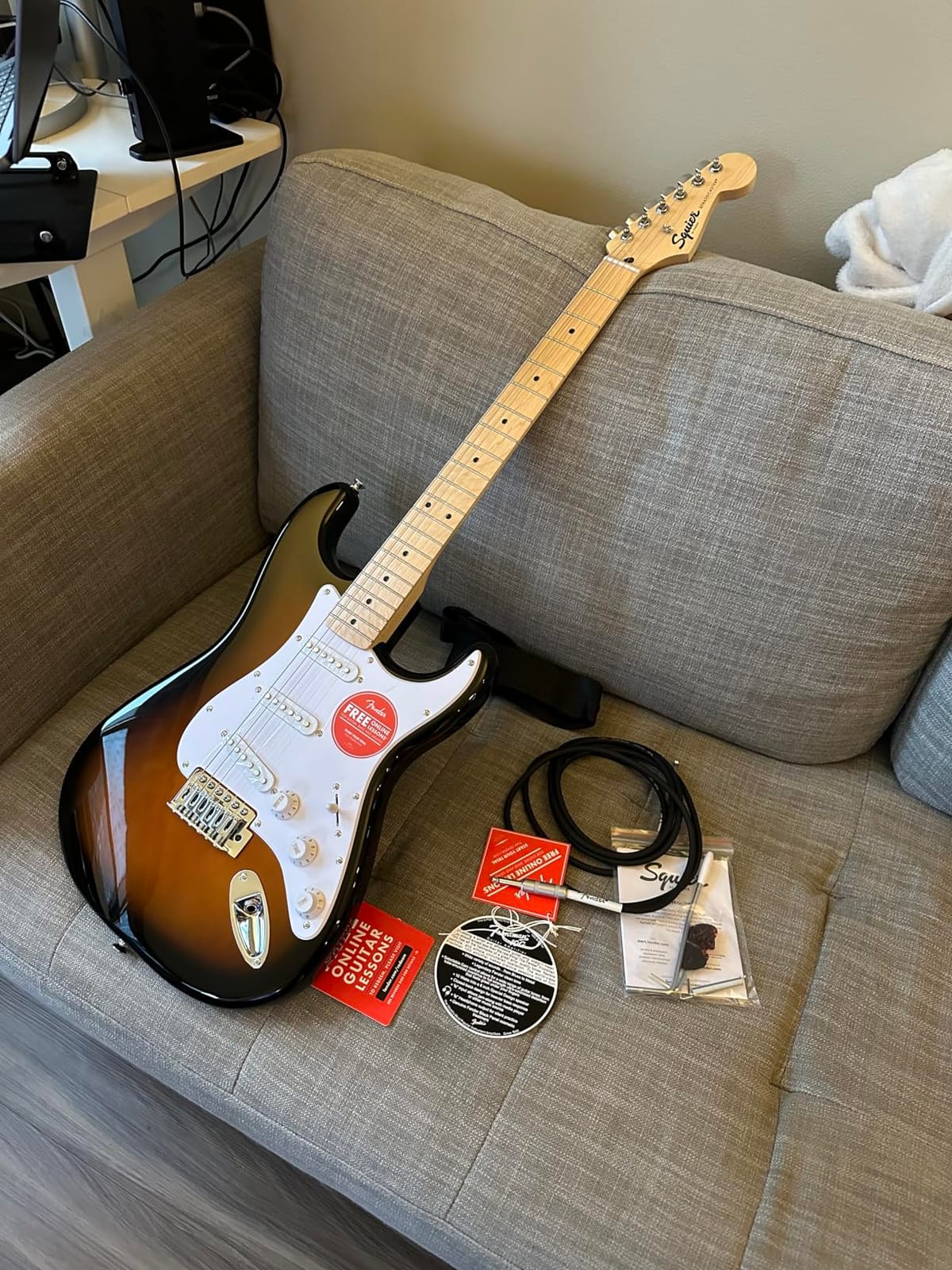
This pack exists for one situation, and in that situation it is the best answer. If a parent is buying a teenager a first electric and does not know what an amplifier is, this arrives complete and branded on both halves.
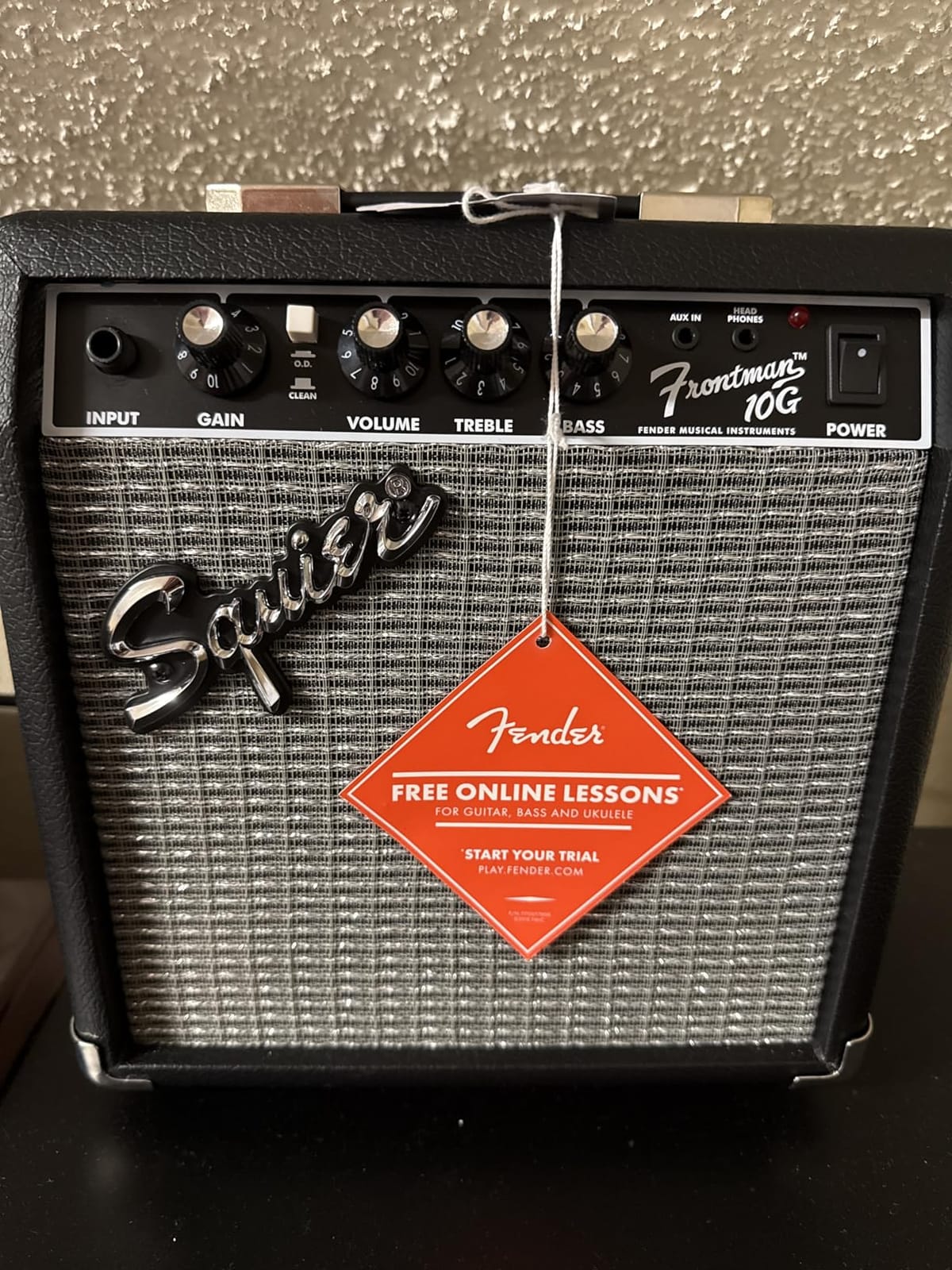
Everything is official here. The guitar is a Squier Sonic Stratocaster, the amplifier is a Fender Frontman 10G, and the warranty covers the pack rather than leaving the amplifier out of it.
It has the smallest pool of feedback of any pick here at 179 ratings, so treat the owner experience as promising rather than proven. Sentiment is strongly positive, particularly from parents buying for a young beginner.
What a Frontman 10G gives a first-year player
The Frontman 10G is a small practice amplifier aimed squarely at the first stage of playing. For bedroom practice, learning chord shapes and building calluses, it does the job and it does it immediately with no setup.
It is not a gigging amplifier and it will not keep up with a drummer in a small venue. Plan on replacing it in a year or two once playing becomes the habit rather than the experiment.
The small print items people complain about
The included instrument cable has been reported to fail within days of delivery, which is the single most repeated complaint. It is a small part and a trivial replacement, but buy a cable of your own rather than trusting the one in the box.
There is no amplifier stand in the pack, and the guitar can arrive with protective plastic that is difficult to remove. Owners have also found the online course material is in English only.
Size, weight and who should carry it
At 32.4 pounds for the full pack, this is the heaviest option in the roundup, which matters if you plan to carry it to lessons or a jam. The guitar itself is light and slim; the bulk is the amplifier and packaging.
For a teenager learning at home it makes no difference. For someone commuting to a music school twice a week, the weight is worth factoring in before you order.
Who should skip this pack
Skip it if you already own an amplifier, a gig bag and a cable, because paying for those again is wasted money. A bare guitar such as the Ibanez GRX70QA is a better use of the same money.
Skip it if you want a thicker, more powerful rock voice, since three single-coils need more gain than a humbucker layout. Skip it if you are an adult who wants a full-size, stage-ready instrument rather than a starter bundle.
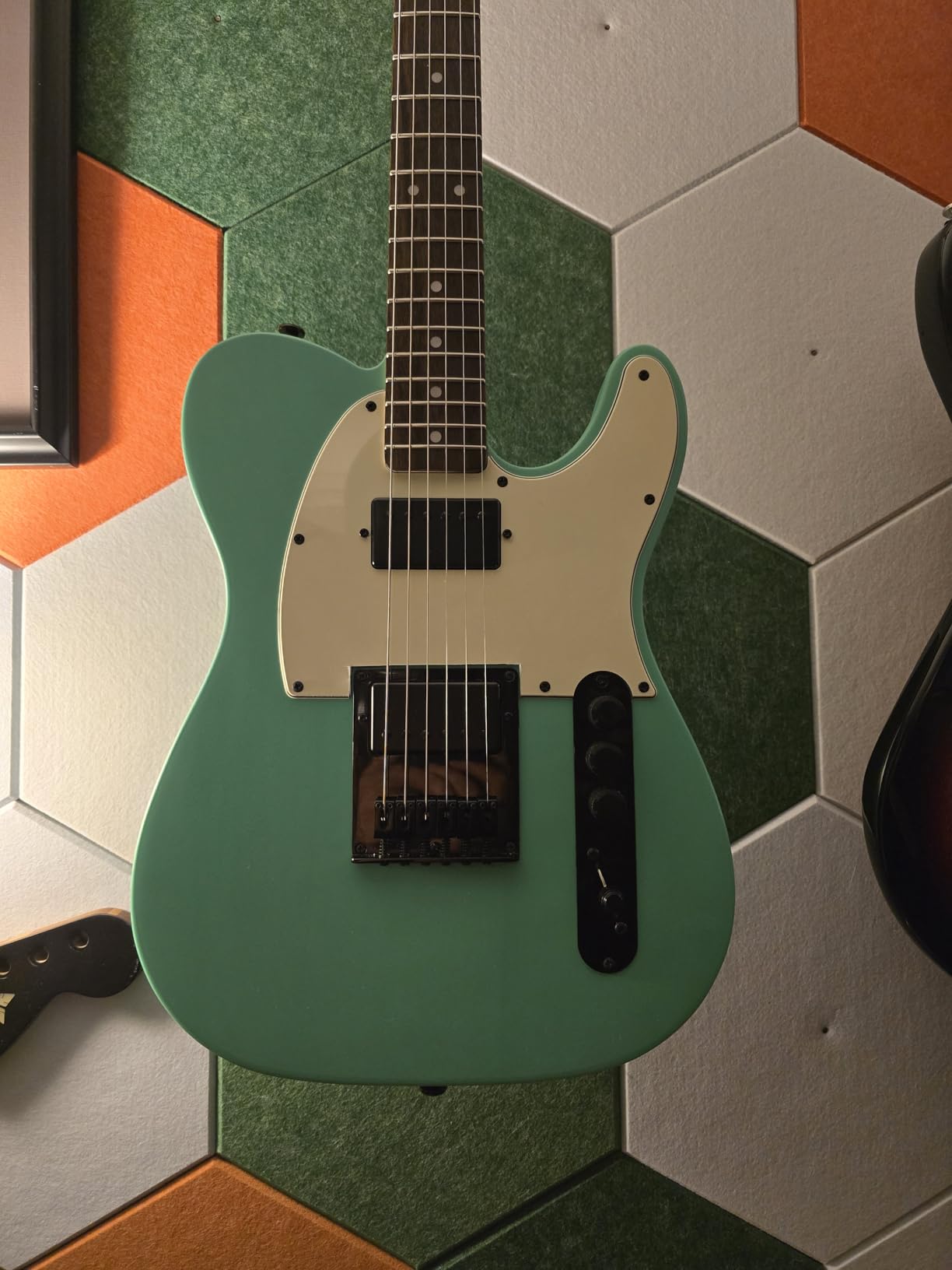
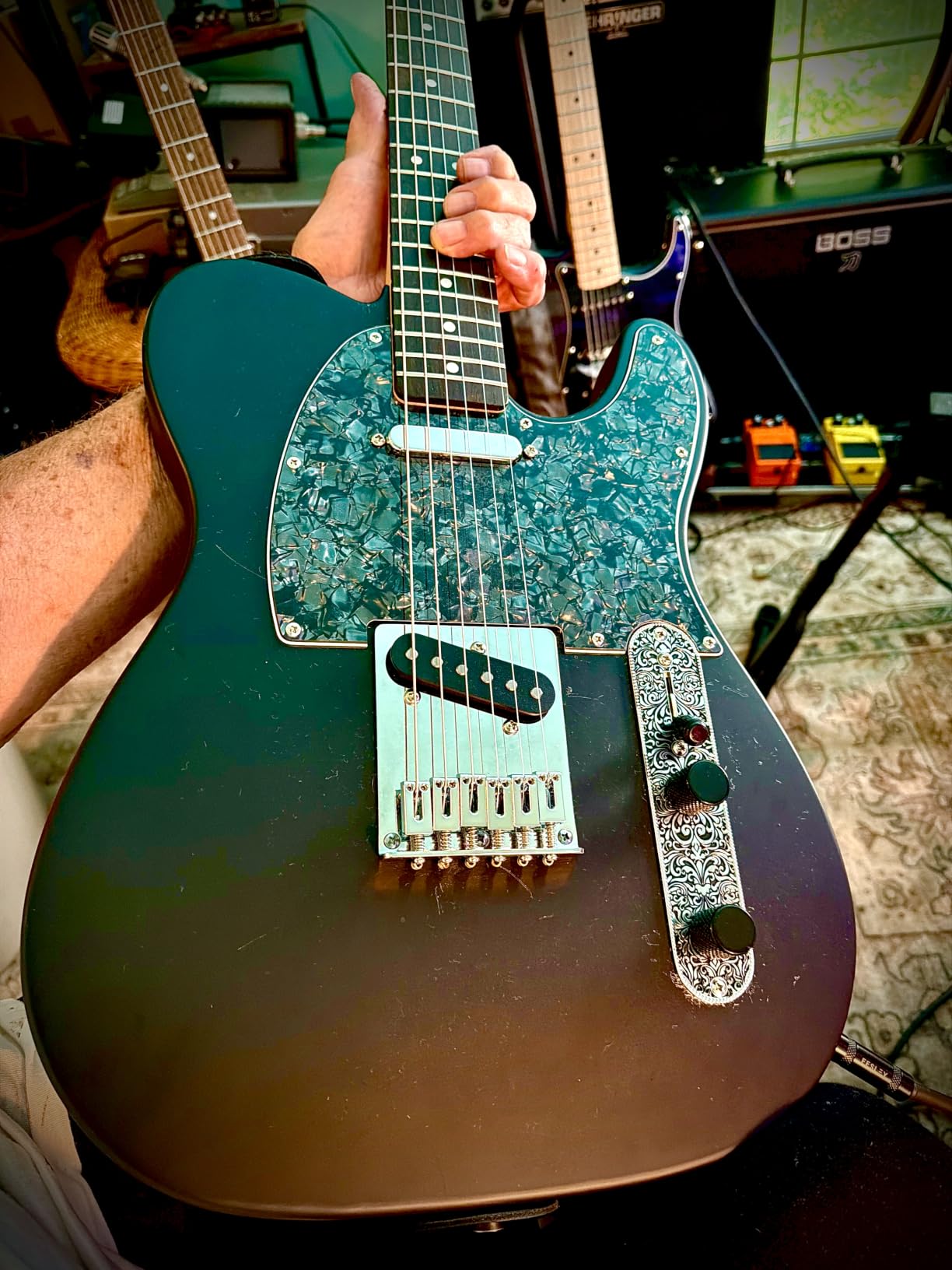
10. Squier Debut Telecaster – Tuning Stability First, With a Fret End Warning
Fender Squier Debut Beginner Telecaster Electric Guitar, Black,Satin Finish
Poplar body
Maple neck
Laurel fingerboard
Two single-coils
Hardtail bridge
+ Pros
- Hardtail bridge and sealed-gear tuners give strong tuning stability
- Two single-coils with 3-way switching deliver bright Telecaster tones
- Lightweight body with strong chrome hardware for long sessions
- Several owners report it rivals costlier Telecasters
- Cons
- Sharp un-rounded fret ends are the most common complaint
- Factory strings and plastic nut should be replaced before first use
- Neck pickup is quieter and muddier than the bridge pickup
The Telecaster is the answer for anyone whose previous experience was a guitar that would not stay in tune. A hardtail bridge has no moving parts to lose tension, and this model pairs it with sealed-gear tuning machines for the most stable setup in the group.
The two single-coil pickups with a three-way selector produce the bright, percussive Telecaster voice that sits in the front of a mix without effort. That clarity is why the style has survived unchanged for decades.
This is the lowest-rated pick here at 4.4, and the gap is almost entirely about quality control on the fret ends rather than about the design. Check them on arrival and this becomes one of the most satisfying first guitars available.
The hardtail bridge, explained for a first-time player
A hardtail bridge anchors each string through the body. There is no spring, no arm and no moving assembly, so the only things that can pull a string out of tune are the tuning machine and the string itself.
That is why it is the standard recommendation for beginners. String changes take seconds, tuning holds, and there is no lever-pushing technique to learn before you can play a note. Community consensus in beginner forums is consistent on this point.
Sharp fret ends and the two-hour fix
The dominant complaint in reviews is un-rounded, sharp fret ends. Some owners describe several hours of careful filing and polishing before the guitar was comfortable to play, which is exactly the kind of thing that ends a beginner project.
The same owners frequently report that after doing that work the guitar sounds and plays like a far more expensive Telecaster. So the honest summary is that this instrument needs an afternoon of attention before it delivers, and the result justifies it.
Sound and control, including the quieter neck pickup
The bridge pickup is the bright, articulate one that defines the Telecaster character. The neck pickup on this model is quieter and muddier out of the box, which several owners flag as the second thing to address, usually with a pickup swap or a height adjustment.
That is a small problem in a design that is otherwise simple. If you mostly play chords, country, blues and indie, the bridge position is where you will live and the guitar sounds excellent.
Who should skip this guitar
Skip it if you want a complete package, since this is a bare guitar with no amplifier, bag or strap. Skip it if you want high-gain tone, because single-coils need more amplifier gain to reach the same volume.
Skip it if you are not willing to inspect and dress the frets on arrival, or if you want a gloss finish rather than satin. For tuning stability, clarity and a bridge that never needs adjusting, it is hard to beat.
How to Choose a First Electric Guitar Without Guessing
Everything in the section above came back to a handful of decisions. These are the criteria that actually change how a guitar feels in your hands, ranked in the order I would assess them, with tone listed near the bottom for a reason.
Neck width and profile decide whether your hand cramps
Neck width is the first thing to check, measured at the nut. Slim necks are easier for small hands and children, while wider C-shape necks suit players with larger hands and those who find narrow profiles uncomfortable to chord.
Profile describes the curve of the back of the neck. A C-shape is the traditional standard and a safe default, thin profiles suit small hands, and compound-radius designs like the one on the Jackson are the most forgiving for reaching across the fretboard.
Shop in person if you possibly can. Sit down, hold the instrument, and check whether your fingers wrap the neck without tension. Ten minutes of this beats an hour of reading specification lists.
Hardtail or tremolo: the bridge is the part beginners fight
A hardtail bridge is fixed, simple and stable. A tremolo lets you change pitch by hand and adds expressive control, but it introduces a moving mechanism that needs more frequent adjustment.
Floating and locking tremolos are actively discouraged as a first instrument. For a beginner, choose either a hardtail or a simple vintage-style unit, and treat the tremolo as something you learn later. The Squier Debut Telecaster is the only hardtail in this group.
Pickup layout mapped to the styles you want to play
Single-coils give bright, clear tones and respond to touch, which suits pop, funk, blues, country and indie. Humbuckers give thicker, louder output with less background hum, which suits rock and metal. A coil split gives you both from one pickup.
Layouts worth knowing: S-S-S gives five positions of single-coil brightness, H-S-S gives the widest range across clean and heavy, and H or two humbuckers gives power with fewer positions. If you are unsure, H-S-S is the most versatile starting point.
Scale length and body weight matter more than tone
Scale length is the distance between the nut and the bridge, and shorter scales mean lower string tension and slightly easier fretting. Most of the guitars here run a 25.5 inch scale, with the Yamaha at 25 inches and the Ibanez models at 25.5.
Weight is the other overlooked factor. A lighter body means less fatigue over a long practice session, and fatigue is a real reason beginners stop. Check the weight before you buy rather than assuming every solid body feels the same.
Budget for a professional setup right after delivery
A professional setup typically includes action adjustment, intonation correction, neck relief, a nut slot check and a restring. It is the single most useful spend after the guitar itself, because a poorly set up instrument makes early chords painful.
Symptoms of a bad factory setup are recognisable: high action that requires pressing hard, fret buzz on open strings, or intonation that goes sharp further up the neck. Any of these are fixable and none of them mean you chose the wrong guitar.
Used or new, and what to inspect if you buy used
A used guitar can be a sensible first purchase if you know what to look for, and it is where most player-owned instruments end up. Check the neck straightness in good light, look down the fretboard from the headstock for a twist, and run a finger along the frets for catching or high spots.
Look at the nut slots for uneven wear, turn the tuning machines through their full range, and check for cracks around the neck joint and the bridge screws. Check the frets for wear relative to the strings, and plug the guitar in to confirm the pickups work on every position.
Buying used means no warranty and no return safety net, which is why a major brand with a two-year warranty is worth paying for when you have never played before. You are buying the ability to send it back.
What to budget for the rest of the first rig
The guitar is only part of the cost. Most beginners also need a practice amplifier, an instrument cable, a gig bag, a strap, a clip-on tuner, picks and a spare set of strings, plus a professional setup shortly after delivery.
On that basis, a bare guitar is the better value once you own an amplifier, and a bundle is the better value when you own nothing. It is a simple rule and it saves people from buying a second amplifier they will never use.
Left-handed and 3/4-size options, plus the electric versus acoustic question
Most of these models are listed for right-handed players, and several lines offer left-handed variants. Buying left-handed is harder, costs more and narrows the choice, so decide early rather than assuming the option will be there later.
For a child, a 3/4 size instrument with a shorter scale and a compact body reduces the stretch required for chord shapes. That matters more than the specification suggests, since physical difficulty is what ends early lessons.
Electric versus acoustic is a fair question for a first instrument. An acoustic needs no amplifier and is louder, while an electric is easier on new fingertips, quieter to practise and connects directly to tabs and backing tracks.
Frequently Asked Questions
What is the best electric guitar for a beginner?
For most people the Donner DST-100B is the easiest start because it includes an amplifier, gig bag, strap, capo, tuner and picks, so nothing extra needs buying on day one. If you already own a small amplifier, the Ibanez GIO GRX70QA is the stronger bare instrument, with an H-S-S pickup layout that covers clean, blues, rock and metal from one instrument.
How much should I spend on my first electric guitar?
Most beginners who are happy with their choice spend in the 150 to 350 range on the guitar itself, and that band covers every option worth considering. Spending less often means accepting sharper fret ends and looser tuning machines, and spending more on a first instrument rarely fixes a motivation problem. Put any spare budget into a practice amplifier and a professional setup instead.
Do you need an amplifier for an electric guitar?
Yes. An electric guitar produces a small electrical signal through its pickups, and without an amplifier that signal is inaudible. Every guitar on this list except the two bundled packs is sold as a bare instrument, so a practice amplifier is a separate purchase. Models with a headphone output are the practical choice in a shared home.
Is tremolo or hardtail better for a beginner?
A hardtail bridge is easier for a beginner because it has no moving parts, holds tuning longer and needs no adjustment beyond changing strings. A tremolo gives expressive pitch control but adds an extra mechanism to maintain. Start with a hardtail or a simple vintage-style tremolo, and leave floating and locking tremolos until you have played for a while.
Which electric guitar is easiest to play?
Ease of play comes from low action, smooth fret ends, a slim neck and stable tuning rather than from the brand name. Among these picks, the Squier Stratocaster arrives the most playable, the Ibanez GIO GRX20Z fits the smallest hands, and the Jackson JS22 has the most forgiving compound-radius neck. Check the fret ends on every guitar before the first lesson.
Can I teach myself electric guitar?
Yes. Structured online courses, tab and notation apps and teacher video lessons cover everything from tuning to first chords without a private tutor. A clip-on tuner, a beginner song book and twenty minutes a day will carry you further than any hardware choice. Many players take a few lessons early on to correct hand position, then continue alone.
Should a beginner buy a starter kit or a guitar only?
Buy a kit if you own no amplifier, cable, bag or tuner, because the bundled parts are usable and the total cost is lower than buying them individually. Buy a guitar only if you already have gear, since the bundle then doubles up on equipment you do not need. Bundle amplifiers are practice tools and should be replaced within a year or two.
What should I do in the first 30 days after my guitar arrives?
Run a finger along every fret end and file any sharp spots, then have a professional setup done so the action feels easy. Change the strings if they look dusty or feel rough, learn to tune by ear as well as with a clip-on tuner, and practise chord changes for fifteen minutes a day. Keep the guitar in its bag or on a stand between sessions rather than on a bed.
The Verdict: Which Beginner Guitar to Buy First
If you want one answer for most people, take the Donner DST-100B. It arrives complete, the bundled parts cost less than sourcing them individually, and with close to 6,000 ratings it is the most proven beginner instrument in this roundup. The bundled amplifier is only for practice, and you will replace it eventually.
If you already own an amplifier, buy the Ibanez GIO GRX70QA instead. The H-S-S layout covers the widest range of styles, the review history is the deepest here, and it is the guitar most likely to still be in your hands several years from now.
For a small or young player, the Ibanez GIO GRX20Z with its compact offset body is the better shape. For heavy music, the Jackson JS22 DKA with its compound-radius neck and dual humbuckers is built for the job. For tuning stability and a fixed bridge, the Squier Debut Telecaster is the clear winner, provided you dress the fret ends on arrival.
Whichever you choose, buy the instrument you actually want to look at, then budget for a setup and a small amplifier. Motivation decides how long you play, and hardware only decides how comfortable you are while you do. That guidance still holds for 2026, and it will hold next year too.