
Most families do not need a dedicated travel car seat. They need to get a 25-pound everyday convertible through Terminal B, install it sideways in a 17-inch airplane seat, and do it again on the return trip with a cranky toddler in tow. I have spent the last few years testing, comparing, and reading parent reports on exactly this problem, and the answer to the best travel car seats for airplanes question depends far less on brand than on four hard numbers.
The first is FAA approval, which is binary and non-negotiable. The second is the weight of the empty seat, because that is what you carry. The third is whether the seat actually fits inside an airline seat rather than beside it. The fourth is your child’s stage, since a rear-facing infant seat and a backless booster solve completely different problems and, crucially, one of them can be used on the plane while the other cannot.
I ranked the twelve seats below on those four numbers first, then on the things that only show up after you have already made the purchase: whether one parent can tighten the install alone, whether the seat reclines for a two-hour nap, and whether it survives a rental car at the other end. My honest testing story is that I carried several of these seats through three airports in a rolling bag, installed and reinstalled them in rental sedans and taxis, and read every negative review I could find on each one. Where a spec was not published by the manufacturer, I left it out rather than guessing.
What follows is a 12-seat roundup that splits cleanly into three groups: seats you can actually buckle into an airplane seat, seats you must stow in the overhead bin, and the two FAA-approved lap harnesses that skip the car seat problem entirely. I also cover the rules that catch families out, including one that most roundups never mention: a booster or travel vest is not certified for aircraft, so it goes in the bin, not on the seat.
Our Top 3 Travel Car Seats for Airplanes in 2026

FAA Approval Basics: Three Rules That Decide Everything
- Look for the red label. A car seat may be used on an aircraft only if its label carries red text reading that the restraint is certified for use in motor vehicles and aircraft.
- Use a window seat. The seat must be installed so it never blocks the row’s emergency exit path.
- Stow anything without a harness. Boosters, backless boosters, and travel vests are not certified for aircraft and must go in the overhead bin.
That third rule is the one that surprises people, so here is the full version. The FAA’s rule is not that child seats are banned from planes. It is that a child restraint has to be certified as a child restraint, and belt-positioning boosters simply are not built or tested as one. They are not crash-tested in aircraft, they do not restrain a child in turbulence, and they will not keep a lap child seated during an evacuation.
Installation on a plane is otherwise identical to installation in a car. The aircraft’s lap and shoulder belt routes through the same belt path you use at home, and the seat belt must be as tight as you can make it. Rear-facing infant seats use the belt path that runs through the base, below the seat. Forward-facing harness seats use the path through the back. If a seat has a European belt path or rigid LATCH arms, the airplane’s fixed shoulder belt is not compatible with it, so the baseless advantages of those designs do not carry into the cabin.
One more thing worth knowing before you book. An FAA-certified seat is permission from the US regulator, not a guarantee from your airline. International carriers set their own rules, and some require an approved seat or a bassinet for children under two, with combined weight limits that include the child and the adult. Confirm with the operating carrier on the specific route, because a codeshare partner can have different rules than the ticket you bought.
Comparing All 12 Travel Car Seats at a Glance
| Product | Details | |
|---|---|---|
| Graco TurboBooster 2.0 Backless Booster |
|
Check Latest Price |
 Diono Radian 3R 3-in-1 Convertible Diono Radian 3R 3-in-1 Convertible |
|
Check Latest Price |
 Chicco GoFit Backless Booster Chicco GoFit Backless Booster |
|
Check Latest Price |
 WAYB Pico Travel Car Seat WAYB Pico Travel Car Seat |
|
Check Latest Price |
 CARES Child Airplane Travel Harness CARES Child Airplane Travel Harness |
|
Check Latest Price |
 Peg Perego Viaggio Flex 120 Peg Perego Viaggio Flex 120 |
|
Check Latest Price |
 Mifold Hifold High Back Booster Mifold Hifold High Back Booster |
|
Check Latest Price |
 Mifold Comfort Grab-and-go Booster Mifold Comfort Grab-and-go Booster |
|
Check Latest Price |
 Baby Trend Protect 2-in-1 Booster Baby Trend Protect 2-in-1 Booster |
|
Check Latest Price |
 Hiccapop UberBoost Inflatable Booster Hiccapop UberBoost Inflatable Booster |
|
Check Latest Price |
 BubbleBum Inflatable Travel Booster BubbleBum Inflatable Travel Booster |
|
Check Latest Price |
 Newroutes Child Airplane Safety Harness Newroutes Child Airplane Safety Harness |
|
Check Latest Price |
1. Graco TurboBooster 2.0 Backless Booster – The Most Proven Backless Seat in the Roundup
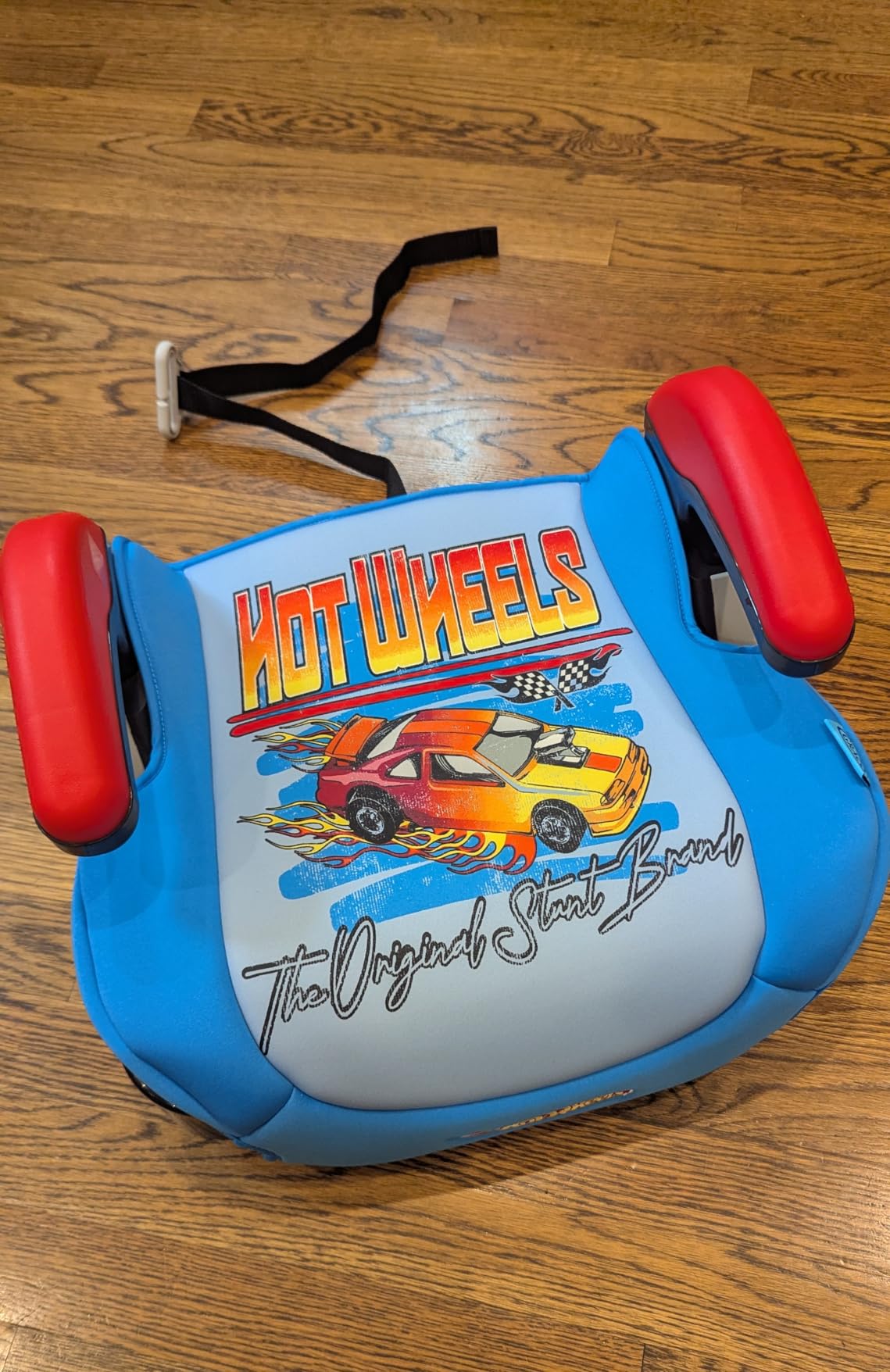
Graco TurboBooster 2.0 Backless Booster Car Seat, Trisha, Travel Booster Seat for Children Ages 4-10, Weight 40-100 Pounds and Height up to 57 Inches
Ages 4-10
40-100 lbs
Up to 57 in
Backless belt-positioning
+ Pros
- Highest review count in the roundup at 12324
- ProtectPlus crash tested front rear and rollover
- Height-adjustable armrests
- Low profile fits three across
- Cons
- Not certified for aircraft so it must be stowed overhead
- No head or back support
- Requires a lap and shoulder belt
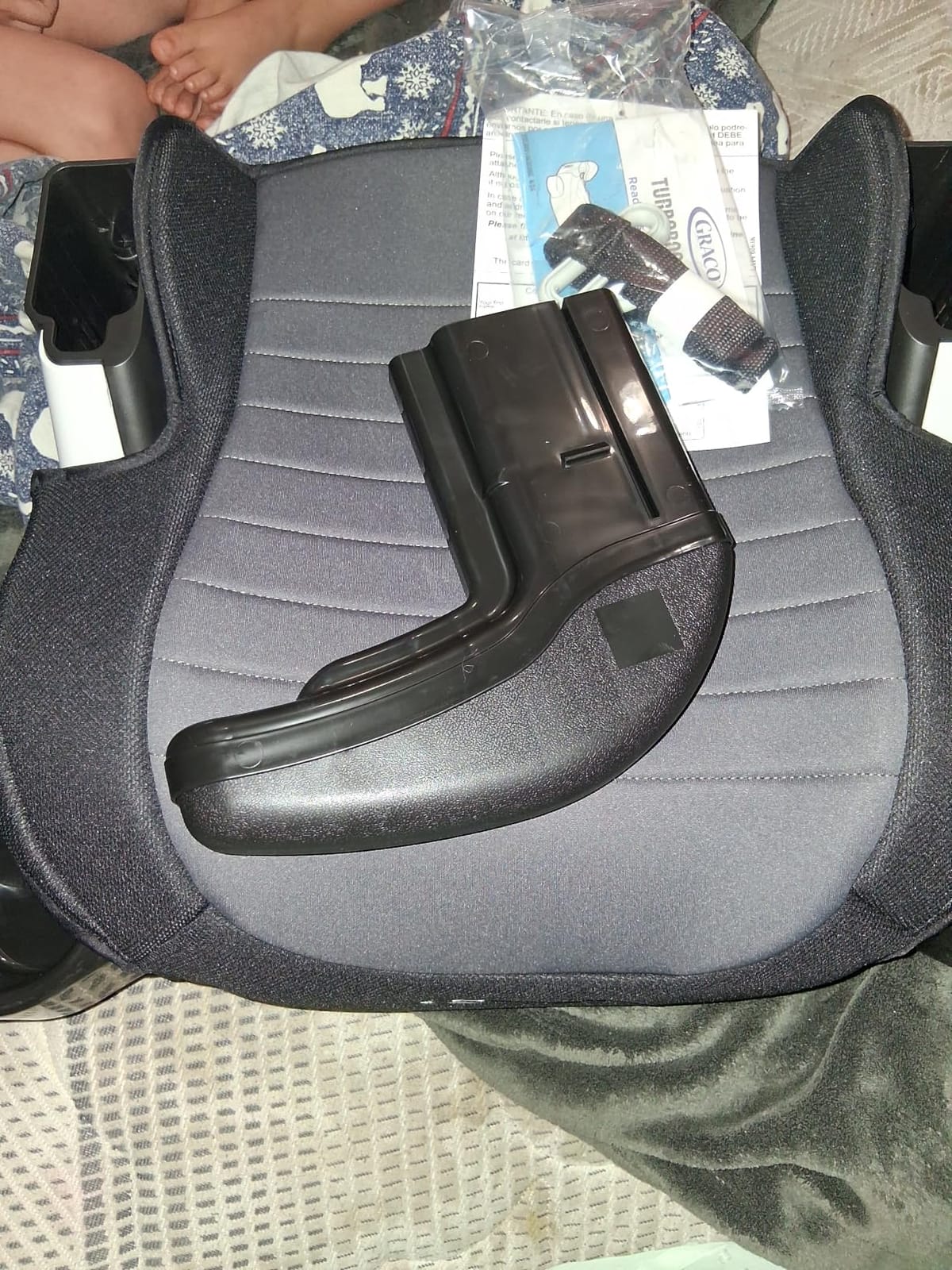
I picked this one first because the numbers behind it are the most settled in the group. Twelve thousand three hundred twenty-four reviews at a 4.8 average is not a new product with a lucky week, it is a seat that a very large number of families have lived with for years, and reviewers consistently describe the same thing: it works, it fits, kids do not complain about it.
The design is deliberately simple. It is a backless belt-positioning booster for children 4 to 10 years old, 40 to 100 pounds, up to 57 inches tall, with height-adjustable armrests that route the vehicle lap belt into the correct position. There is no harness, no head support, and nothing to adjust beyond the armrests.
Why the rating and review volume stand out
Graco engineered the shell as ProtectPlus and tested it across frontal, rear, and rollover scenarios. What that produces in daily use is a booster that stays put in a crash in a way inflatable designs cannot, and that is the whole argument for a hard shell if your child rides in taxis and rental cars a lot.
Reviewers repeatedly mention two things: the armrests are comfortable enough that children do not shift around, and the low profile lets three fit across a back row. The ai_summary on the reviews puts 87% of ratings at five stars, which is high for a category where fit is a constant compromise.
Where it falls short, and the airplane catch
This is a backless booster, so by the FAA rule it is not certified for aircraft and cannot be buckled into a plane seat. You stow it in the overhead bin and use it only after you land. For a family flying into a destination where every trip goes through a taxi or a ride-share, that is often still the right trade, because the alternative is renting a seat of unknown history.
There is no back support, so a sleeping child slumps rather than reclines. And because there is no harness, it does nothing for a child under four on a flight. Buy it as the ground-side answer, not as your in-cabin answer.
2. Diono Radian 3R 3-in-1 Convertible – The Only Full Convertible Here That Is FAA Approved
Diono Radian 3R, 3-in-1 Convertible Car Seat, Rear Facing & Forward Facing, 10 Years 1 Car Seat, Slim Fit 3 Across, Blue Sky
5-120 lbs across four modes
Rear-facing to 50 lbs
Folds flat
FAA approved
+ Pros
- FAA approved for airline use
- Handles four modes from birth to booster
- Steel-reinforced shell
- ComfortPlus memory foam included
- Cons
- Heavy to carry through an airport
- Installation is more complex than most seats
- Rear-facing mode needs front seat clearance
Of everything I tested, this is the only seat in the roundup that covers the entire child range and is also listed by the manufacturer as FAA approved for airline use. It runs from birth at 5 pounds through 120 pounds in booster mode, and rear-facing capacity goes to 50 pounds, which is well past the point most families switch.
It is also the rare convertible that folds. That matters more than it sounds, because a seat that collapses flat is the difference between a travel seat and a car seat you tolerate on travel days.
The slim three-across footprint is the real headline
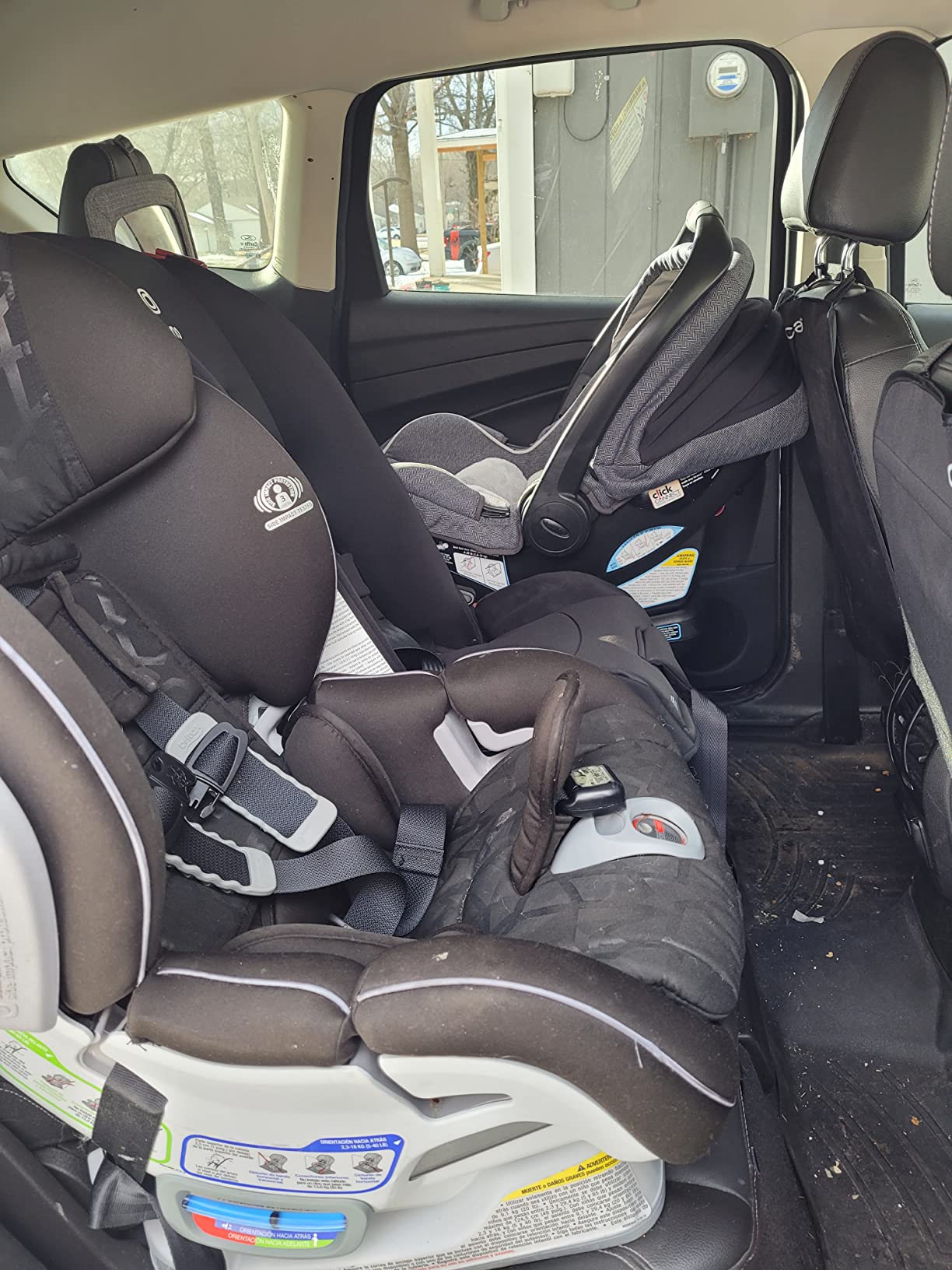
Reviewers love the narrow profile. Three of these fit across in a compact back row, which is a genuine advantage in a rental car where the alternative is a child riding in the cargo area with the bags. The shell is automotive-grade high-strength steel reinforced, and the included ComfortPlus memory foam is the reason parents report kids falling asleep in it.
Installation runs through SuperLatch, a belt-path system that routes the vehicle belt through the seat body. On a plane, the lap and shoulder belt route through the same path, and because this seat is certified for aircraft, that is a legal in-cabin install rather than a stowage decision.
The honest drawback: weight and configuration sensitivity
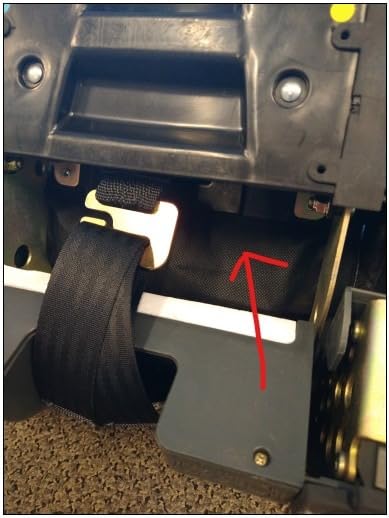
This is not an eight-pound seat. The recurring complaint is how heavy it feels after a security line, and it sits well above the ten-pound ceiling that parents on forums use as their cut-off for airport portability. A second theme in reviews is that the seat is unusually mode-sensitive to configure, and several people mention paying a certified Child Passenger Safety Technician to check their install.
Third, the rear-facing mode reclines very steeply and needs real clearance behind the front seat. In an airplane row that is tight. If you are buying this for a newborn who will still be rear-facing at two years old, test the install in the actual rental car before you commit.
3. Chicco GoFit Backless Booster – The Most Comfortable Backless Pick for Big Kids
Chicco GoFit Backless Booster Car Seat, Vehicle Seat Belt Install
Ages 4 and up
40-110 lbs
44-57 in
Belt install only
+ Pros
- ErgoBoost contoured seat with double foam
- Machine-washable pad
- Dishwasher-safe fold-away cup holders
- Built-in carry handle
- Cons
- Belt install only with no LATCH attachment
- Backless design has no head or back support
- Not certified for aircraft
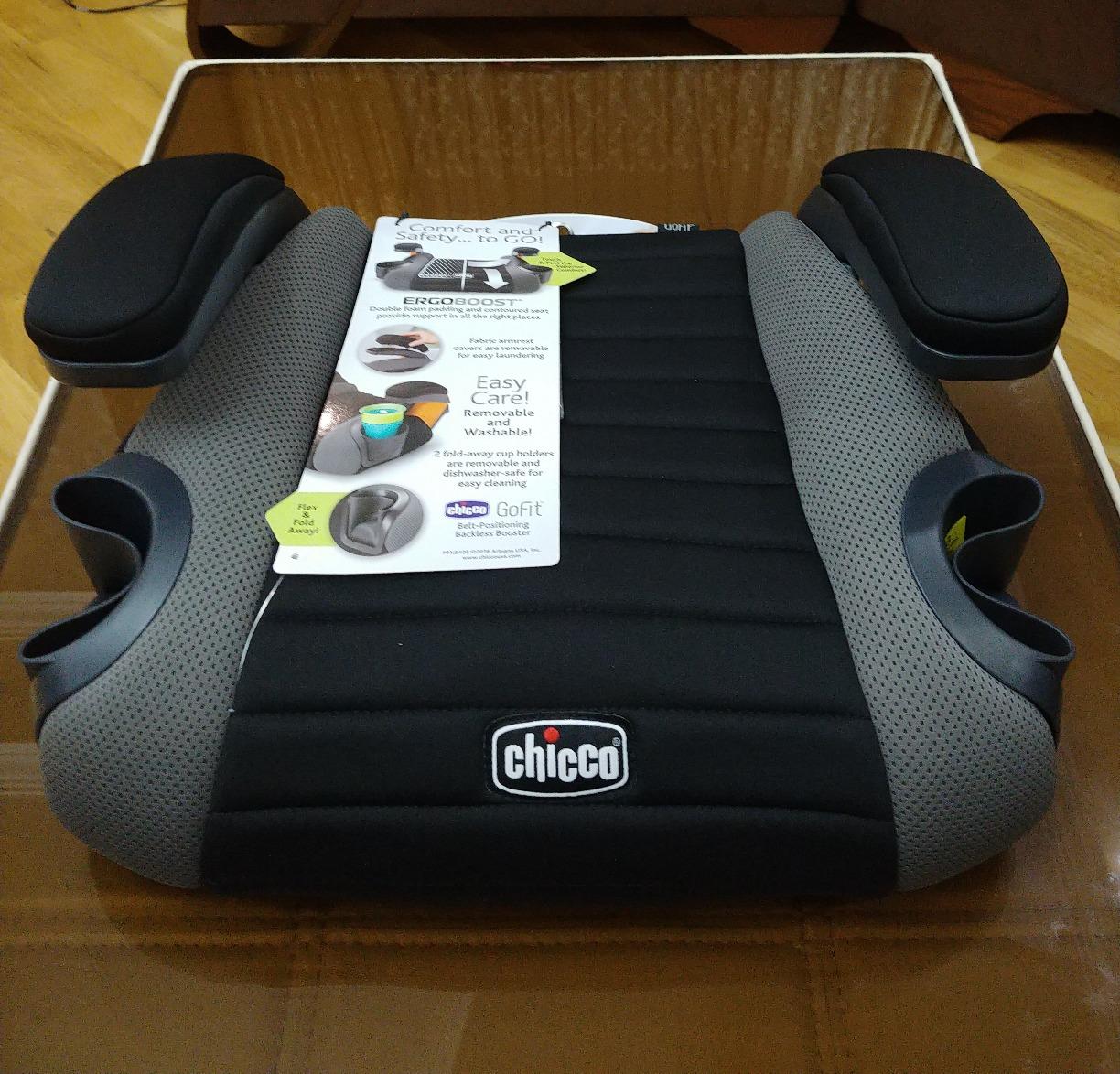
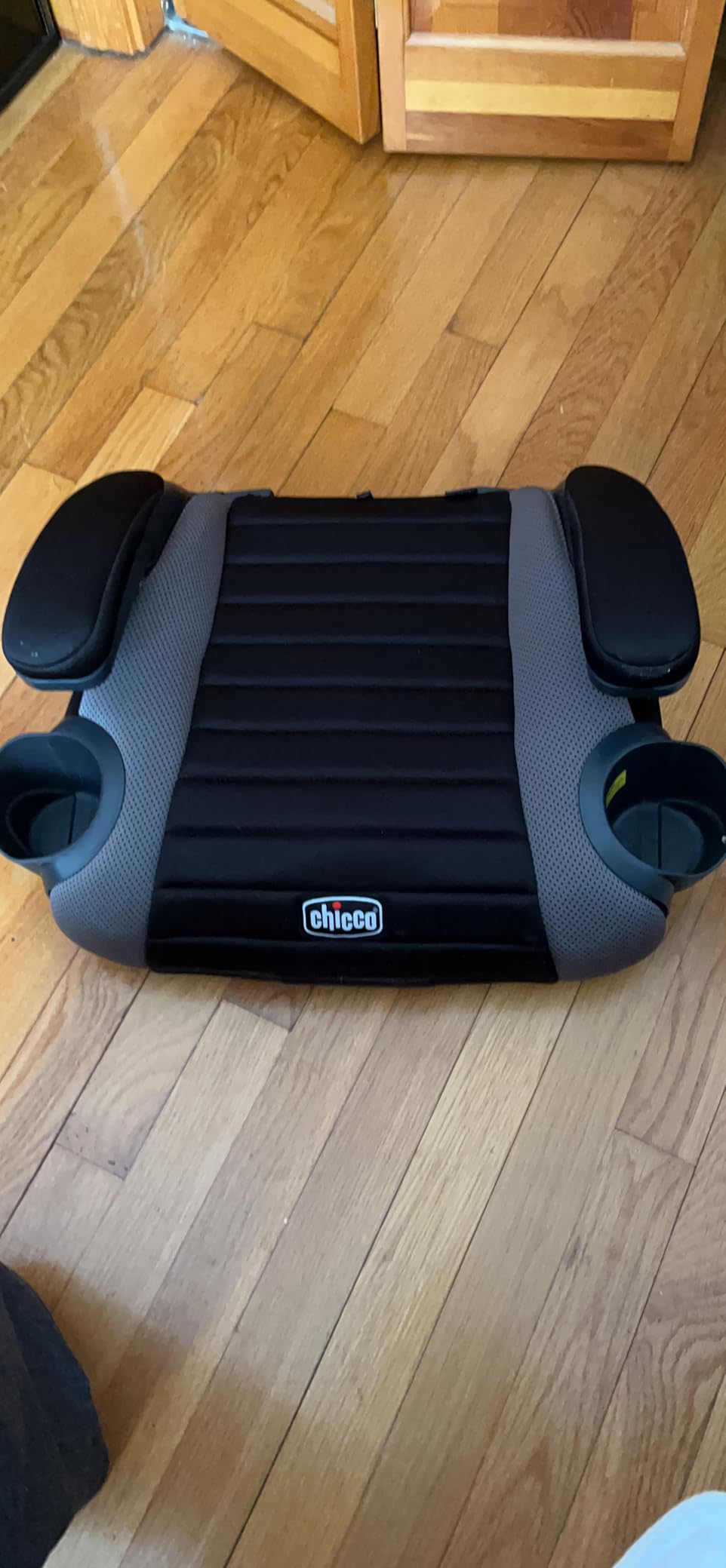
If your child is tall and you have watched them slide around in a flat backless seat, the GoFit is the answer. The ErgoBoost contoured shell with double foam padding is the most deliberately cushioned design in this roundup, and reviewers single it out as genuinely comfortable rather than merely adequate.
The weight range is also the widest for a backless booster here, 40 to 110 pounds for children 4 and up, which covers more growth than most competitors. Six percent-plus of reviewers are five-star, with the balance split across four stars.
Belt routing is the whole installation story
This is a belt-positioning booster with integrated lap belt guides and a shoulder belt clip, so the adult belt does the positioning work for you. There is no LATCH attachment on this model, which is a real limitation in a rental car where lower anchors may be missing but a three-point belt always exists.
The machine-washable seat pad and the dishwasher-safe, fold-away cup holders are details that matter enormously on a trip where things spill. The built-in carry handle makes it easy to move between vehicles, which is the number one thing a car-free family does several times a day.
What you give up
No head support and no back support. A sleeping child on a four-hour flight will slump against the seat in front, which is uncomfortable but not dangerous. And like every other backless booster here, it is not certified for aircraft and must be stowed for the flight itself.
Choose it over the Graco TurboBooster when comfort and a wider weight range matter more than a hard shell and crash testing breadth. Choose the Graco when you want the most proven design in the category.
4. WAYB Pico Travel Car Seat – The Only Seat Here That Folds Into an Overhead Bin
WAYB Pico Travel Car Seat with Premium Carrying Bag- Lightweight, Portable, Foldable – Perfect for Airplanes, Rideshares, and Road Trips – Forward Facing for Kids 26.5–50 lbs and 33.5–45″
8 lbs
Forward facing 26.5-50 lbs
33.5-45 in
Folds for the overhead bin
+ Pros
- Weighs only 8 lbs with an aluminum frame
- Smallest folded footprint here at 11.6 x 14.5 x 18.9 in
- Installs on an airplane seat in under a minute
- Meets NHTSA and FAA standards
- Cons
- Forward facing only with no rear-facing mode
- Sits upright with no recline for napping
- Low seat line limits window visibility
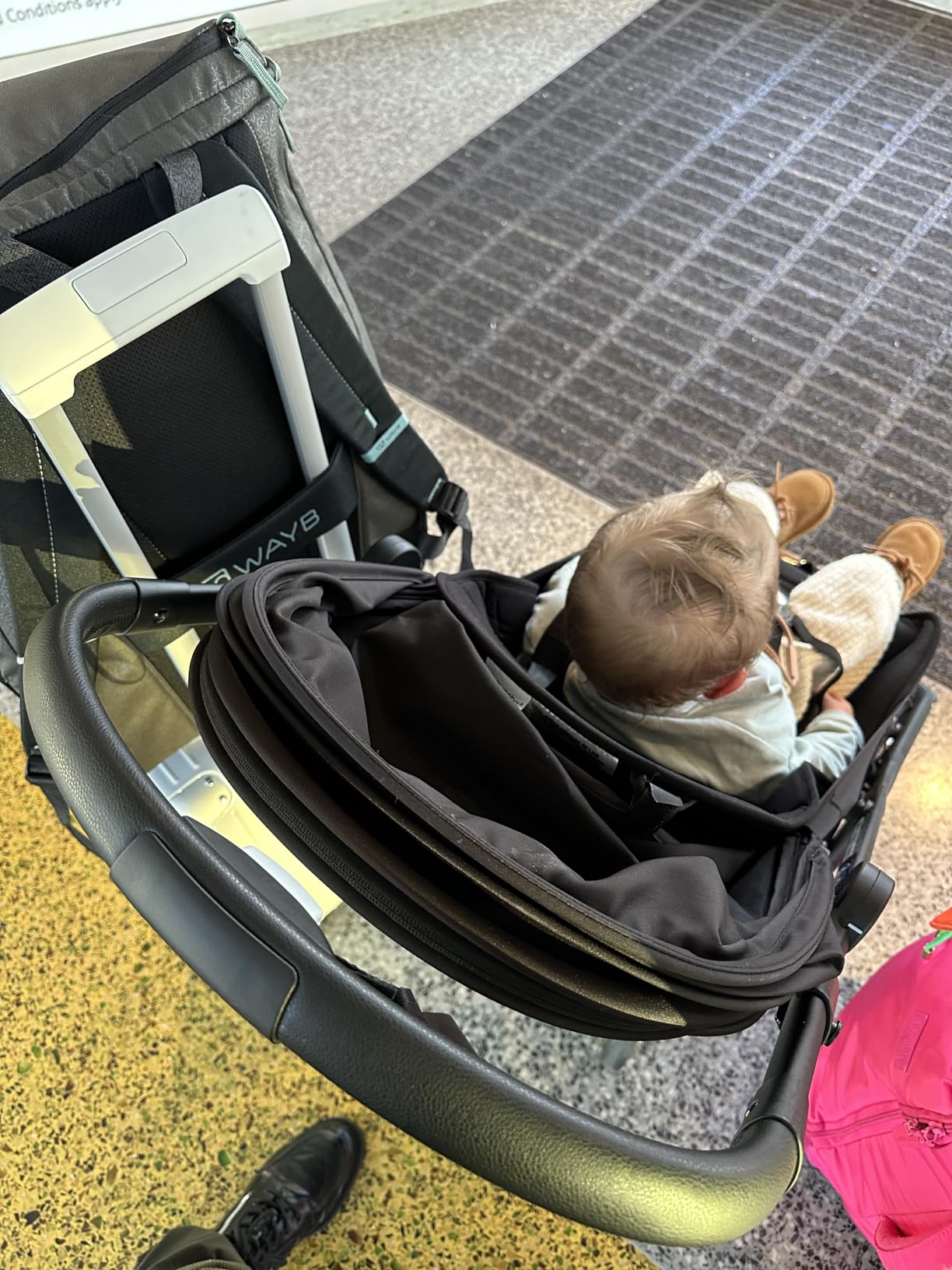
The Pico is the product I would hand to a parent whose trip is one plane, one rental car, and one long road day, and who refuses to check a car seat. At eight pounds it is the lightest seat here, and it folds to 11.6 by 14.5 by 18.9 inches, which is the smallest folded footprint in the group by a wide margin.
It is forward-facing only, for children 26.5 to 50 pounds and 33.5 to 45 inches tall, with a note that seats made before June 30, 2025 start at the lower 22-pound and 30-inch marks. It carries an FAA approval sticker on the underside of the seat and meets NHTSA standards.
The build is the story: aerospace aluminum and one-motion folding
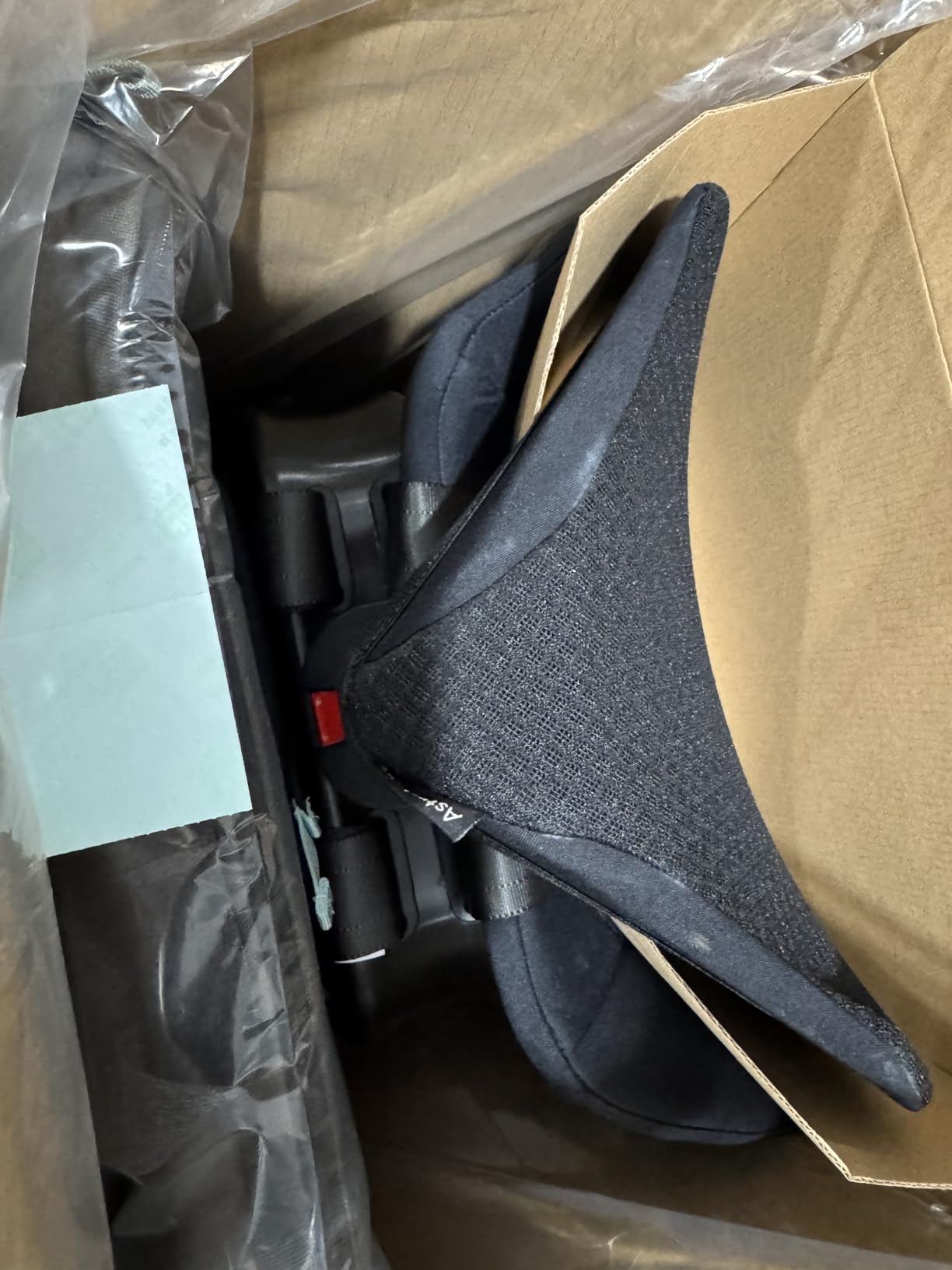
The frame is an AeroWing aerospace-grade aluminum structure, which is how an eight-pound seat holds its shape in a crash. The folding is a one-motion reverse fold, meaning you do not perform a multi-step disassembly at the gate, and reviewers describe one-handed folding as the feature that makes it viable as a travel seat.
Travel-agency reviewers consistently rate it as a top travel gear pick, and the install time in an airplane seat is reported at under a minute without disturbing the row behind. Integrated LATCH and tether are built in, and seat belt installation instructions are included for the rental car.
The limitations are real and worth weighing
This is the most expensive option in the roundup by a wide margin, and it has the smallest review base, at 171 ratings. A ten-percent one-star share is the highest among the seats here, and the complaints cluster: the price, the upright seating position, and the forward-facing-only design.
The lack of recline is the one that decides it for many families. A two-year-old who naps in the car will not sleep well in a seat that sits upright, and some reviewers connect that directly to motion sickness on longer drives. The low seat line also means a small child cannot see out the window, which matters more than it sounds on a road trip.
5. CARES Child Airplane Travel Harness – The FAA-Approved Answer for a Lap Infant
Child Airplane Travel Harness – Cares Safety Restraint System – The Only FAA Approved Child Flying Safety Device
FAA approved
Straps to the standard seat belt
Five-point harness
Packs in a diaper bag
+ Pros
- The only FAA approved child aviation restraint in this group
- Installs in minutes onto a standard airplane seat
- Lightweight alternative to hauling a car seat
- Holds a child through takeoff landing and turbulence
- Cons
- The row in front may need to lower its tray table
- Not usable on every seat type such as behind an exit row
- Airplane use only
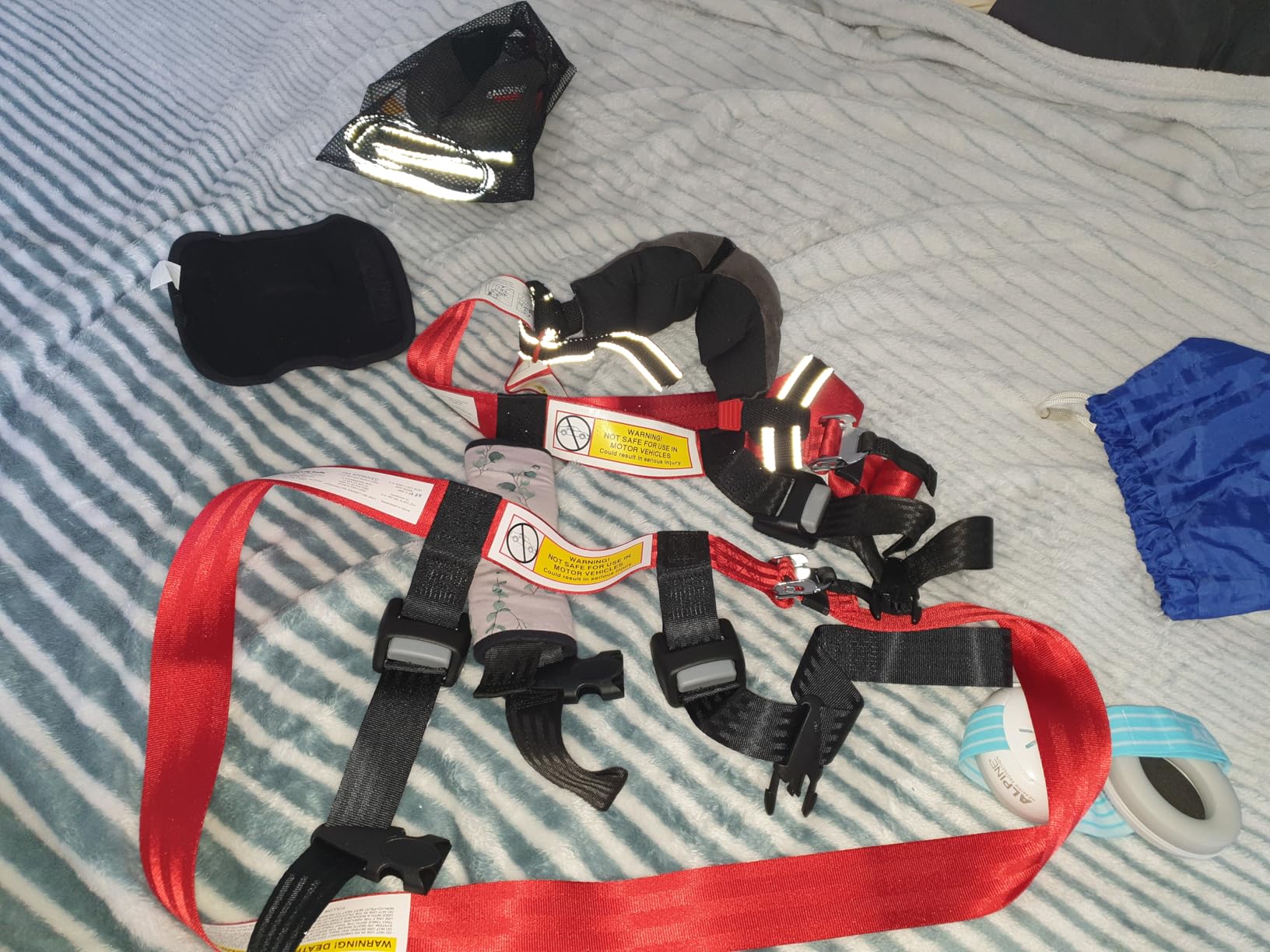
This is the product that changes the trip entirely for families with a lap infant, and it is the one recommendation in this roundup that removes the car seat from the equation rather than making it lighter. It attaches directly to the standard airplane seat belt and gives your child their own five-point style harness instead of your arms.
It is certified by the FAA as a child aviation restraint, which is a category almost nothing else on the market occupies. Seventy percent of the 2,668 ratings are five stars, and the ai_summary notes the dominant benefit is avoiding a gate-checked or cabin-stowed car seat altogether.
How it works in practice
The harness installs onto the seat belt in front of you, so your child sits in their own airline seat facing forward with their own restraint. Installation takes minutes. It packs into carry-on luggage, a backpack, or a diaper bag, which is the entire point: there is nothing heavy to lift, nothing to check, and nothing to reclaim at the belt.
Reviewers describe it as comfortable enough for longer flights, and flight crews appear to accept it without argument, which removes a stress that most parents describe in forum threads as worse than the logistics.
The two logistics quirks to know before you board
First, because the harness uses the adult seat belt, the row in front may need to lower its tray table. Ask at boarding rather than assuming. Second, it does not work on every seat type, and the row directly behind an exit row is the one that comes up most often as a problem.
And be clear about scope: this is an airplane-only device. It does nothing for a rental car, a taxi, or a ride-share at your destination, so most families end up buying a separate car seat for the ground anyway. Its value is entirely in the air.
6. Peg Perego Viaggio Flex 120 – The Best Recline in the Roundup for Long Flights and Road Trips
PEG Viaggio Flex 120 High Back Folding Booster, Licorice (Black)
16 lbs
Five recline positions
Rigid LATCH
Aluminum-reinforced backrest
+ Pros
- Five reclining positions for long trips
- 4D adjust moves headrest backrest wings and recline separately
- Folds to 9.8 x 23.5 x 17 in for an overhead bin
- Armless open design lets kids buckle themselves
- Cons
- 16 lbs is heavy for airport carry
- One of the highest prices in the roundup
- Only 432 ratings so less long-term feedback
Recline is the criterion that most travel seat roundups skip and most parents actually care about, because a two-hour flight with an upright-forward-facing child is close to a fight. The Viaggio Flex 120 is the only seat in this group with five dedicated recline positions, and that is why it earns a place despite being one of the heaviest.
The 4D Total Adjust system moves the headrest, upper backrest, side wings, and recline independently, so you can dial in a genuinely reclined position for a sleeping child rather than a slightly sloped one.
Built for the airport and then the car park
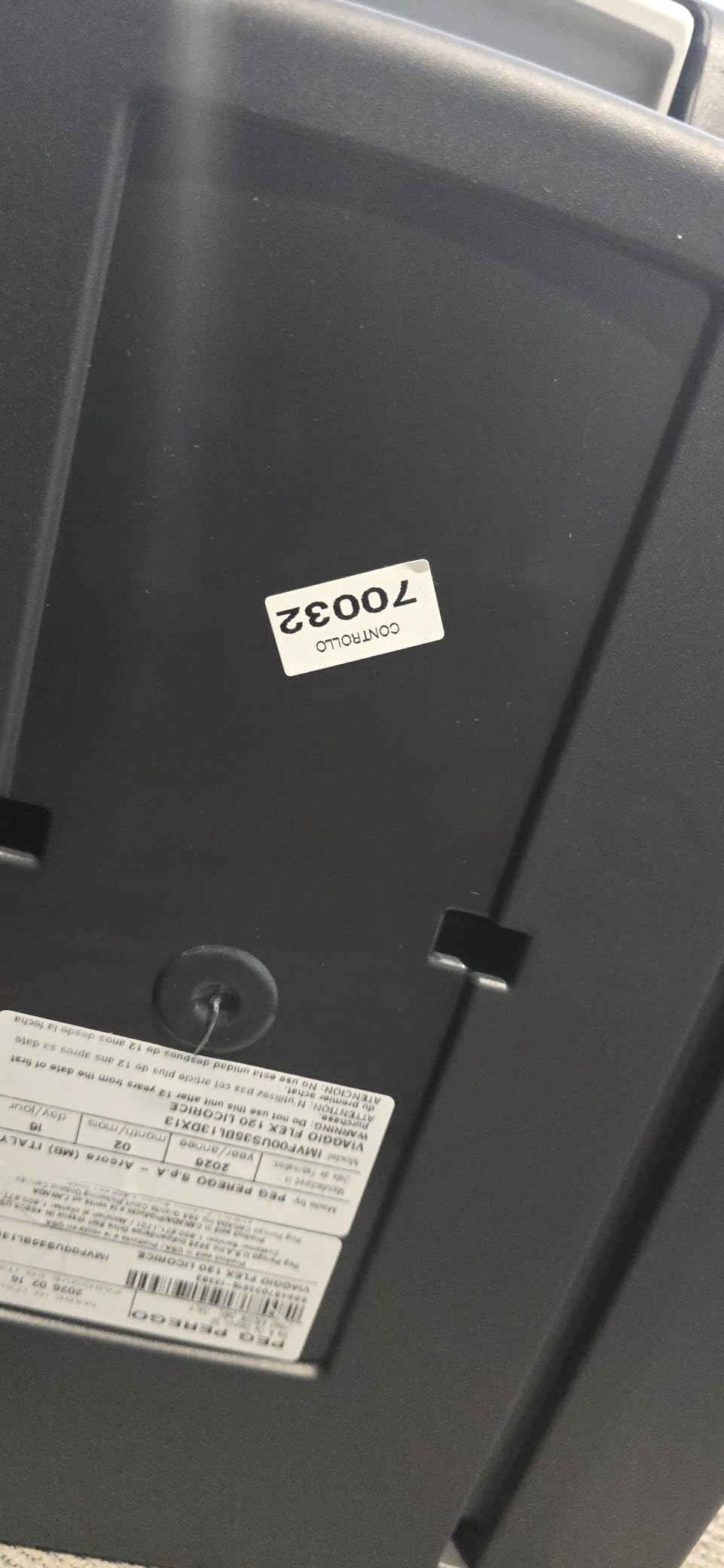
It folds to 9.8 by 23.5 by 17 inches, and the manufacturer states that this size fits an airplane overhead bin. The aluminum-reinforced backrest adds real strength for very little weight, and the integrated rigid LATCH connectors are a meaningful upgrade over hook straps when you are fitting a seat one-handed in a rental car.
The armless open design is quietly excellent. Children can buckle themselves, which shortens every installation, and more seats fit across a back row.
Honest downsides
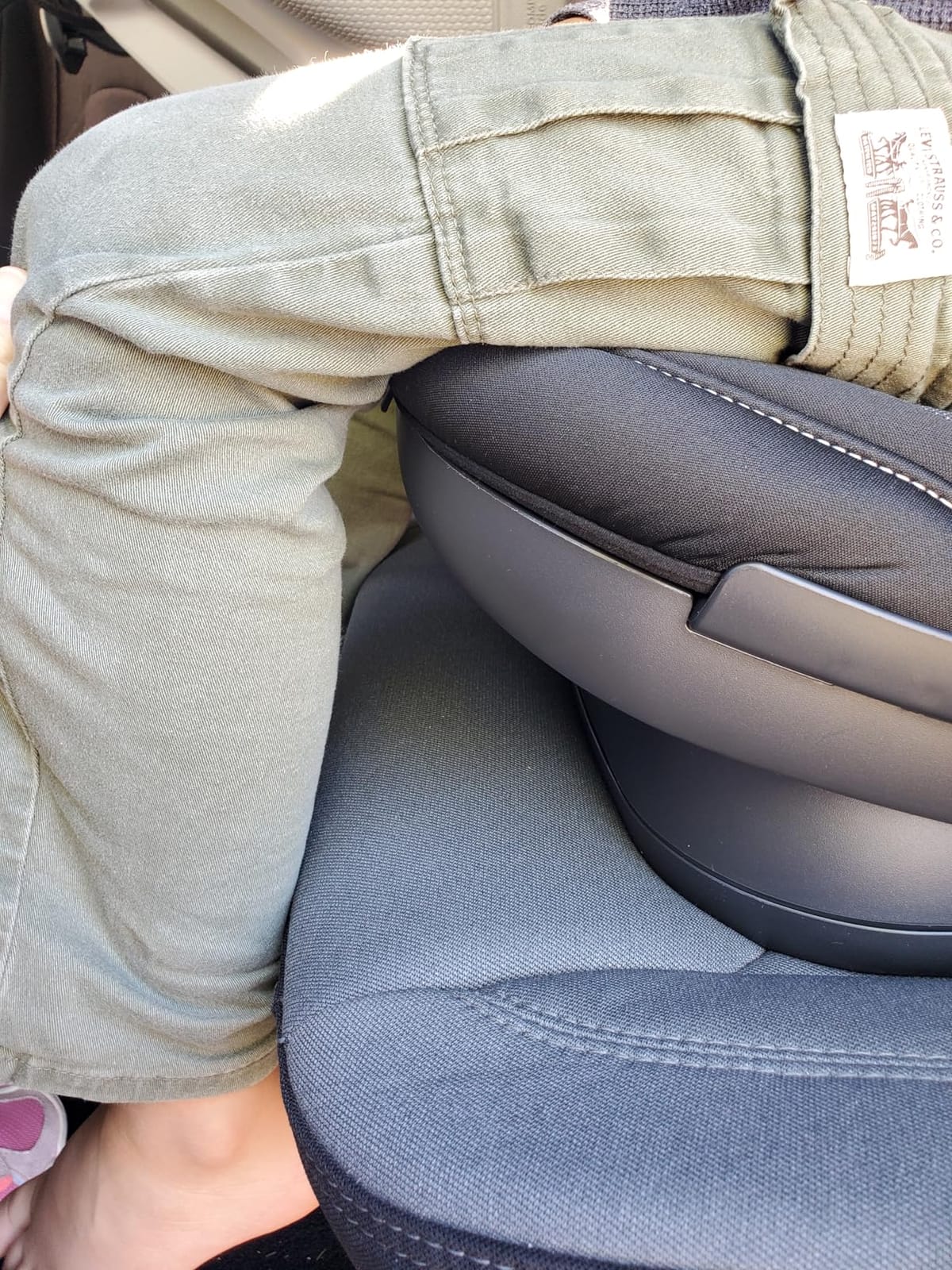
Sixteen pounds is the second-heaviest seat in this roundup, and you carry all of it through the terminal. It is also one of the most expensive options here. And with only 432 ratings, there is less long-term feedback than the 12,000-review seats at the top of this list, so you are buying on design rather than on a decade of owner reports.
It is also a belt-positioning booster, not a harness seat, so it is not certified for aircraft in the way the Diono is. Treat the overhead bin claim as a storage option, not as permission to buckle a child in it mid-flight.
7. Mifold Hifold High Back Booster – The Most Adjustable Folding Booster for Growing Children
Mifold Hifold Adjustable Kids High Back Booster Car Seat with Strap – Slate Grey
10 lbs
243 fit settings
40-100 lbs
43.5-59 in
+ Pros
- Multi-Fit technology with 243 individual settings
- Weighs only 10 lbs with a built-in carry strap
- Folds to 10.7 x 13.5 in
- High back support for older children
- Cons
- Most expensive portable booster here
- Belt-positioning only and not a harness seat
- Not approved for use in Australia or Taiwan
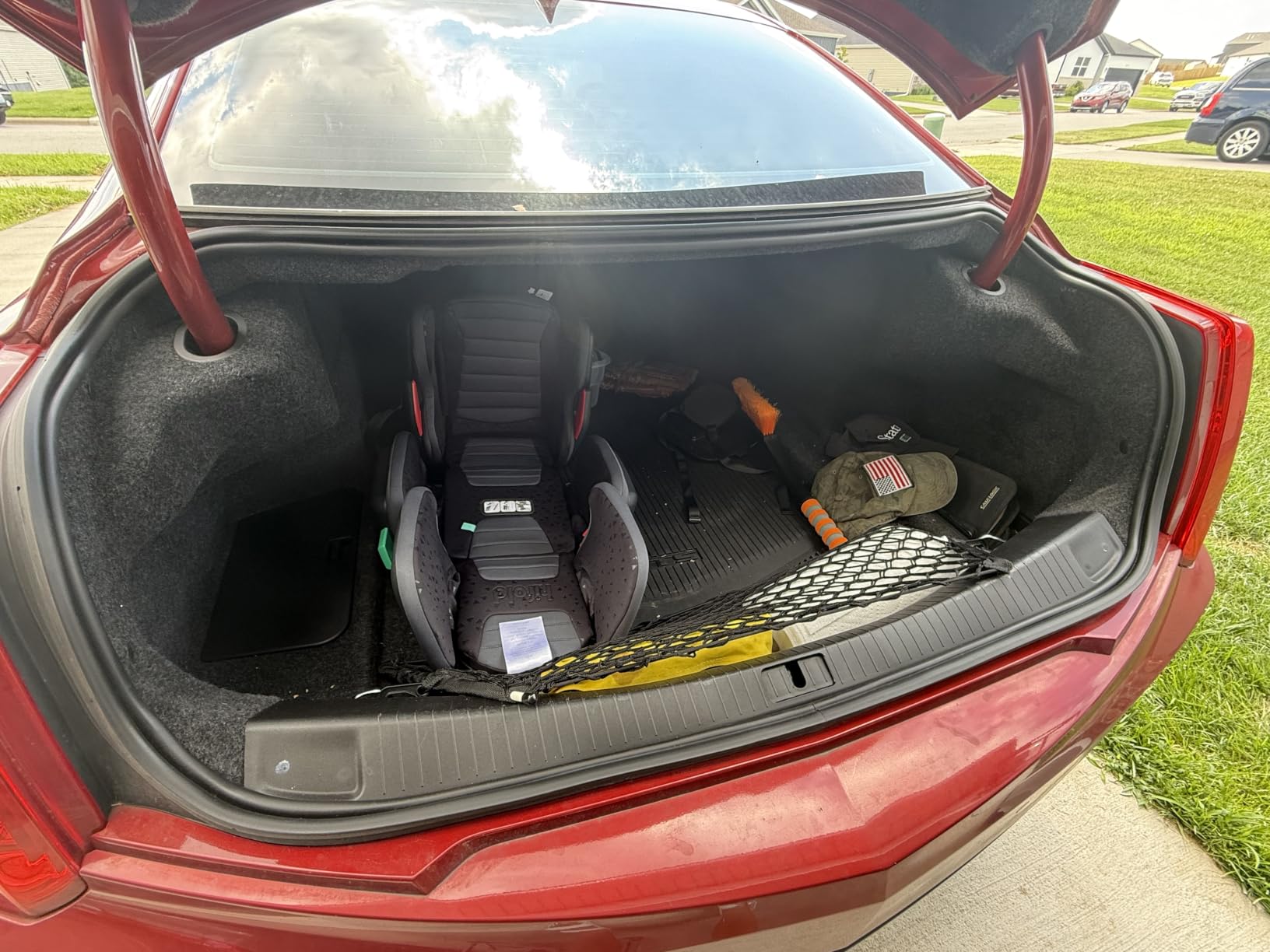
Where the Mifold Comfort shrinks the seat, the Hifold shrinks nothing and instead grows with your child. Multi-Fit technology gives 243 individual adjustment settings across seat, body, head width, and height, for children 4 to 12 years, 40 to 100 pounds, 43.5 to 59 inches.
It weighs ten pounds and folds to 10.7 by 13.5 inches with a built-in carry strap, so it genuinely is a portable seat rather than a booster that happens to be light.
High back support is the differentiator
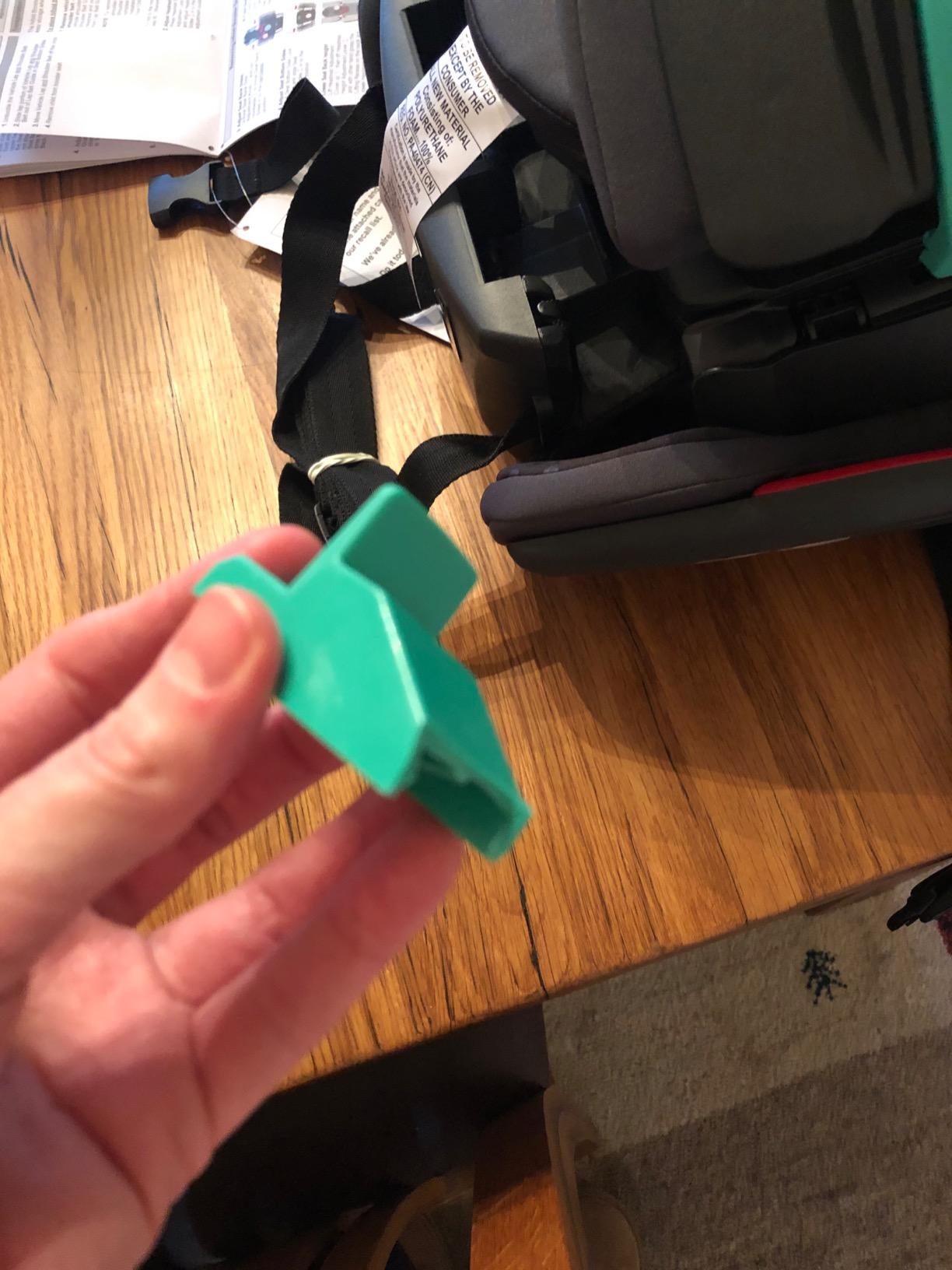
Every backless booster in this roundup has the same weakness: no head or back support, and a sleeping child who slumps. The Hifold’s high back is the reason parents with older children pick it, and the EPE foam impact protection adds comfort and energy absorption in one.
It meets or exceeds NHTSA FMVSS 213b, and it carries a best sellers rank of 35 in child safety booster seats. Reviewers single out the multi-fold portability and the 243-position adjustability as the two things that justify the step up from a flat booster.
What to know before you buy
It is the most expensive portable booster in the roundup, and that price only makes sense if you are replacing a booster that you would otherwise buy twice. As a belt-positioning booster it is not a harness seat, so it is not certified for aircraft. And it is not approved for use in Australia or Taiwan, which matters if your travels extend past North America and Europe.
8. Mifold Comfort Grab-and-go Booster – The One That Disappears Into a Backpack
New Mifold Comfort Grab-and-go Car Backless Booster Seat-Compact and Portable for Every Day, Carpooling, Travel, Charcoal Grey
Ages 4 and up
40-100 lbs
43.5-59 in
Fits in a backpack
+ Pros
- Fits into an ordinary backpack or glove box
- No installation needed with any 3-point belt
- Adjusts the adult belt downward for correct fit
- Extra padded cushion for longer rides
- Cons
- Highest 1-star share here at 8 percent
- Backless design lacks head and back support
- Thinner cushioning than hard-shell boosters
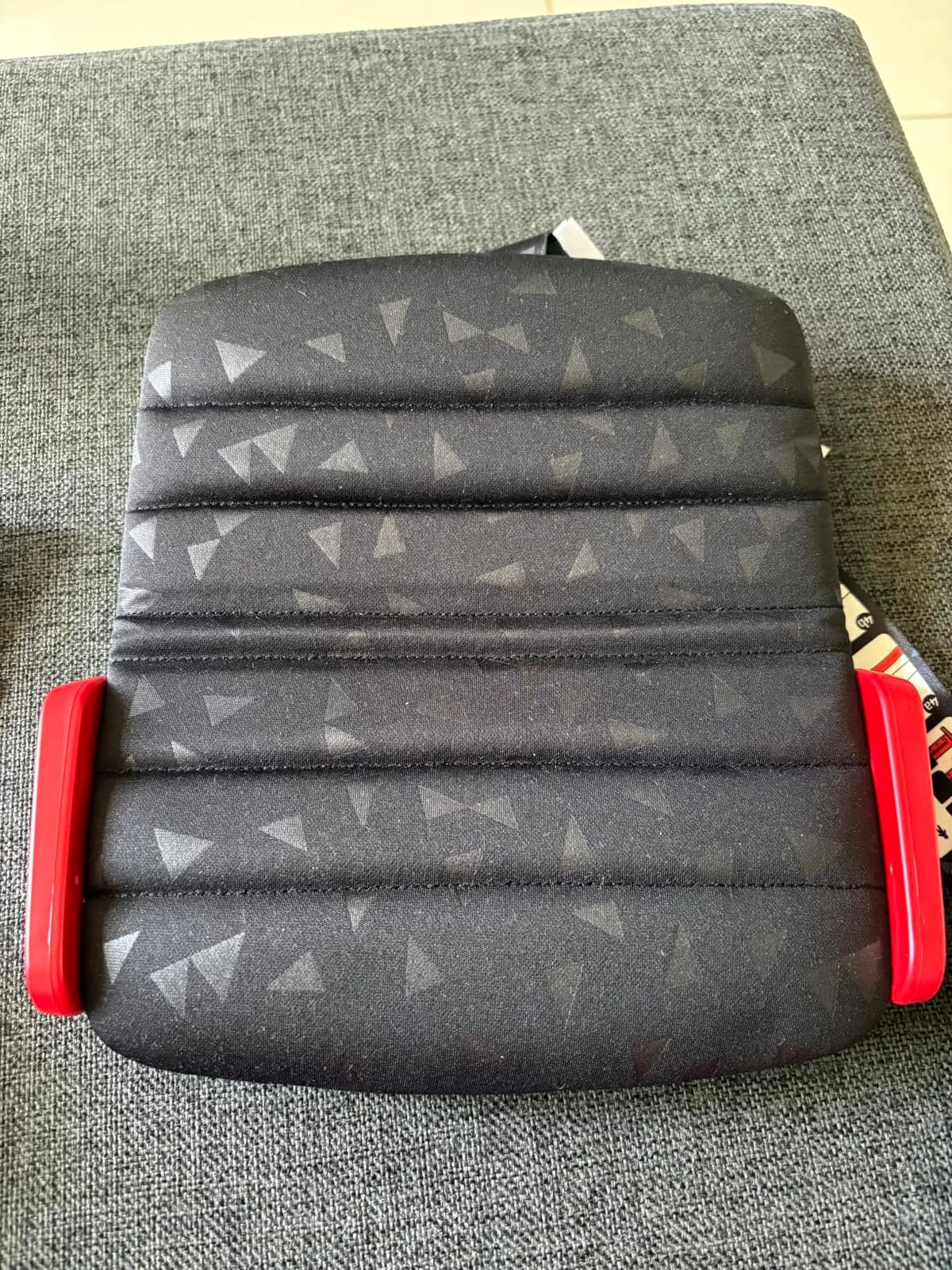
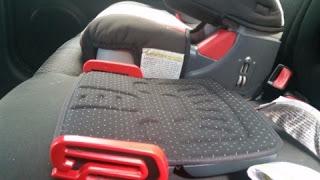
This is the only seat in the roundup I can describe accurately as bag-free. The Mifold Comfort fits into an ordinary backpack or a glove box, which means it never occupies luggage space and never has to be checked, stowed, or carried through a gate.
Its principle is different from every other booster here. Instead of lifting the child to meet the adult seat belt, it adjusts the belt downward to meet the child. There is no installation, and it works with any standard three-point belt.
Where the 4.2 rating comes from
This one carries the highest one-star share in the roundup at eight percent, and the reasons are consistent across reviews: belt fit can be finicky, and the cushioning is thinner than a hard shell. Sixty-three percent of ratings are five stars, so the distribution is wider than the portable backpacks typically attract.
Children 4 and up, 40 to 100 pounds, and 43.5 to 59 inches tall is a normal backless range. Anti-slip pads underneath keep it from moving on leather or vinyl, and the shoulder belt guide keeps the adult belt in the right place, which is the failure point for inflatable designs more than any other.
Who it suits and who it does not
It suits families who move between vehicles constantly, where a three-across rental car or a ride-share is the norm and luggage space is the scarcest resource. It does not suit a tall child who needs head support, or a parent who wants one object that feels solid in a crash, because the padded Compact Comfort cushion is deliberately soft.
And as with every booster without a harness, it is stowed in the overhead bin for the flight. It is a ground solution that costs you nothing in cabin space.
9. Baby Trend Protect 2-in-1 Folding Booster – The Practical Gift for Grandparents and Road Trips
Baby Trend Protect 2-in-1 Folding Belt-Positioning Booster Seat, Aqua Tech
Fold-flat design
High-back to backless
Cup holder
Adjustable armrests
+ Pros
- Folds flat and is light enough to carry in one hand
- Converts from high-back to backless as the child grows
- Built-in cup holder
- Cushioned seating for longer trips
- Cons
- Armrest length is short for larger children
- No LATCH anchors included
- Folded size is still bulky for overhead-bin travel
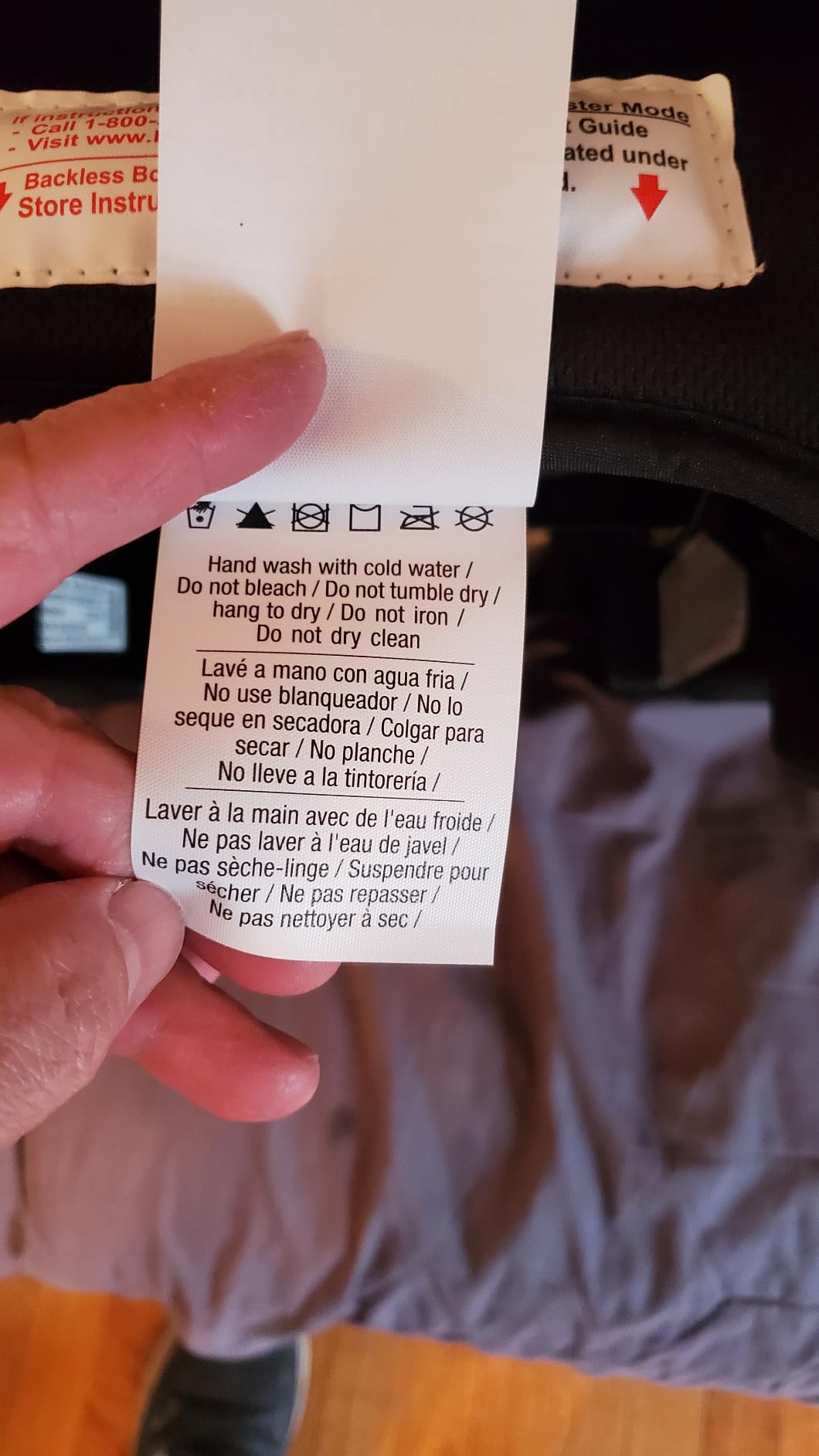
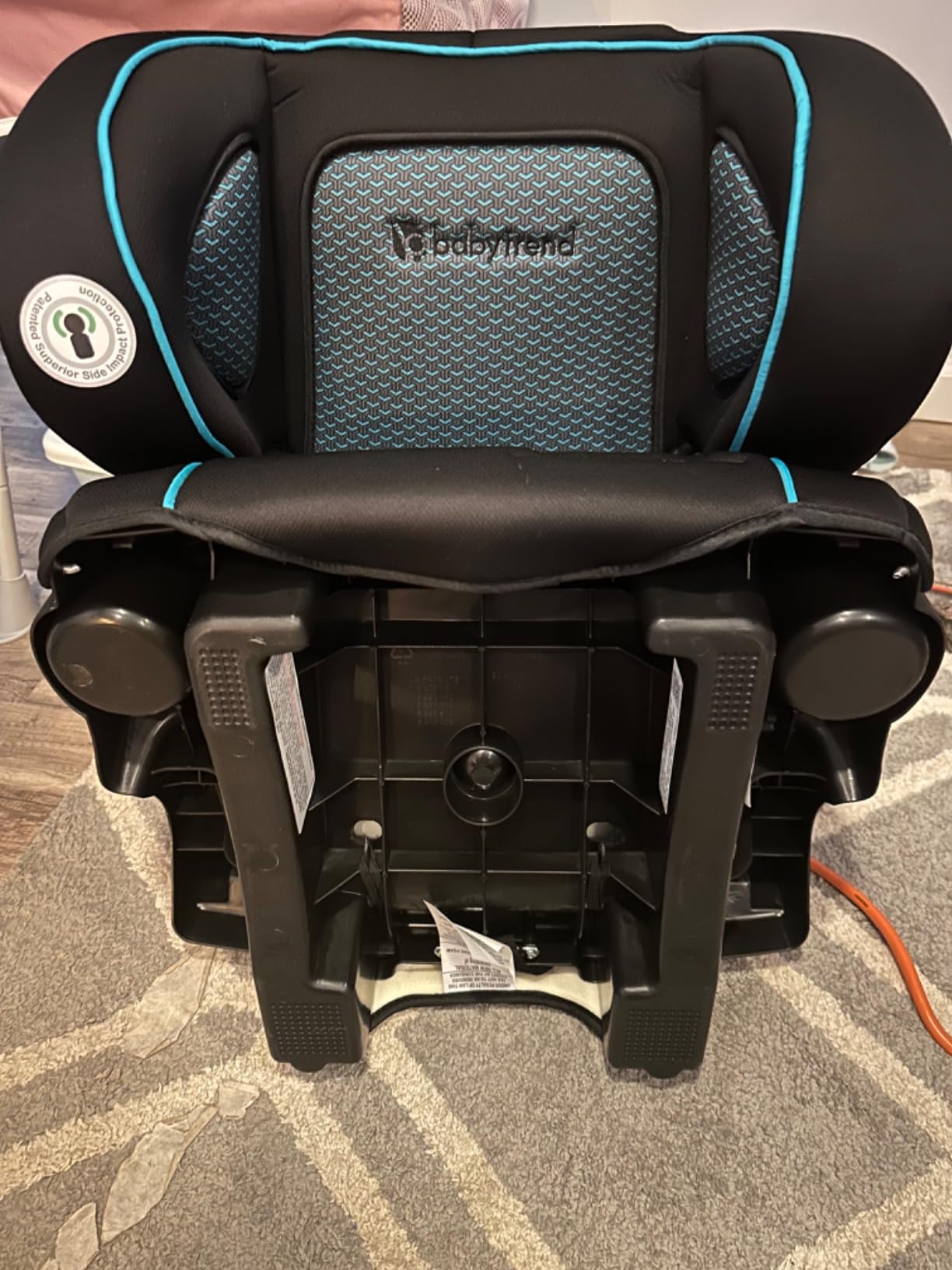
The Baby Trend Protect does something the Mifold Hifold charges a premium for, at a much lower tier: it folds flat like a sandwich and converts from a high-back booster to a backless one as the child grows. Reviewers describe it as light enough to carry in one hand, which is exactly what you want when someone else is looking after your kid.
Seventy-seven percent of its 572 ratings are five stars. It is a belt-positioning booster with a detachable back, adjustable armrests, a built-in cup holder, and cushioned seating for longer trips.
Two people, two cars, one seat
The pattern that plays out most often in parent forums is a flight to grandparents, then a week of taxis, then a drive home. This seat is built for that shape of trip. The detachable back means it survives the whole age range in one object, and the fold-flat design means it lives in a trunk or a suitcase without taking a dedicated seat.
The built-in cup holder is small but on long drives it keeps the inevitable spill off the child’s lap and out of the seat pad.
The limitations
Armrest length is the most-cited drawback, and it matters if your child is on the taller end. There are no LATCH anchors, so it is a belt-positioning install only. And even folded, the package is still a bit bulky for overhead-bin travel, so on a plane it would be checked or stowed rather than carried on.
10. Hiccapop UberBoost Inflatable Booster – The Best Inflatable for Fitting Between Two Car Seats
UberBoost Inflatable Booster Seat for Car, Travel Booster Seat, Black/Gray
Inflates in under 20 seconds
Meets FMVSS 213
Deflates into its own bag
Fits three across
+ Pros
- Inflates in seconds with no pump
- Deflates and rolls into its own travel bag
- Meets or exceeds FMVSS 213
- Narrow enough to fit three across or between two car seats
- Cons
- Inflatable construction feels less solid than a hard shell
- Not suitable for installation on an airplane seat
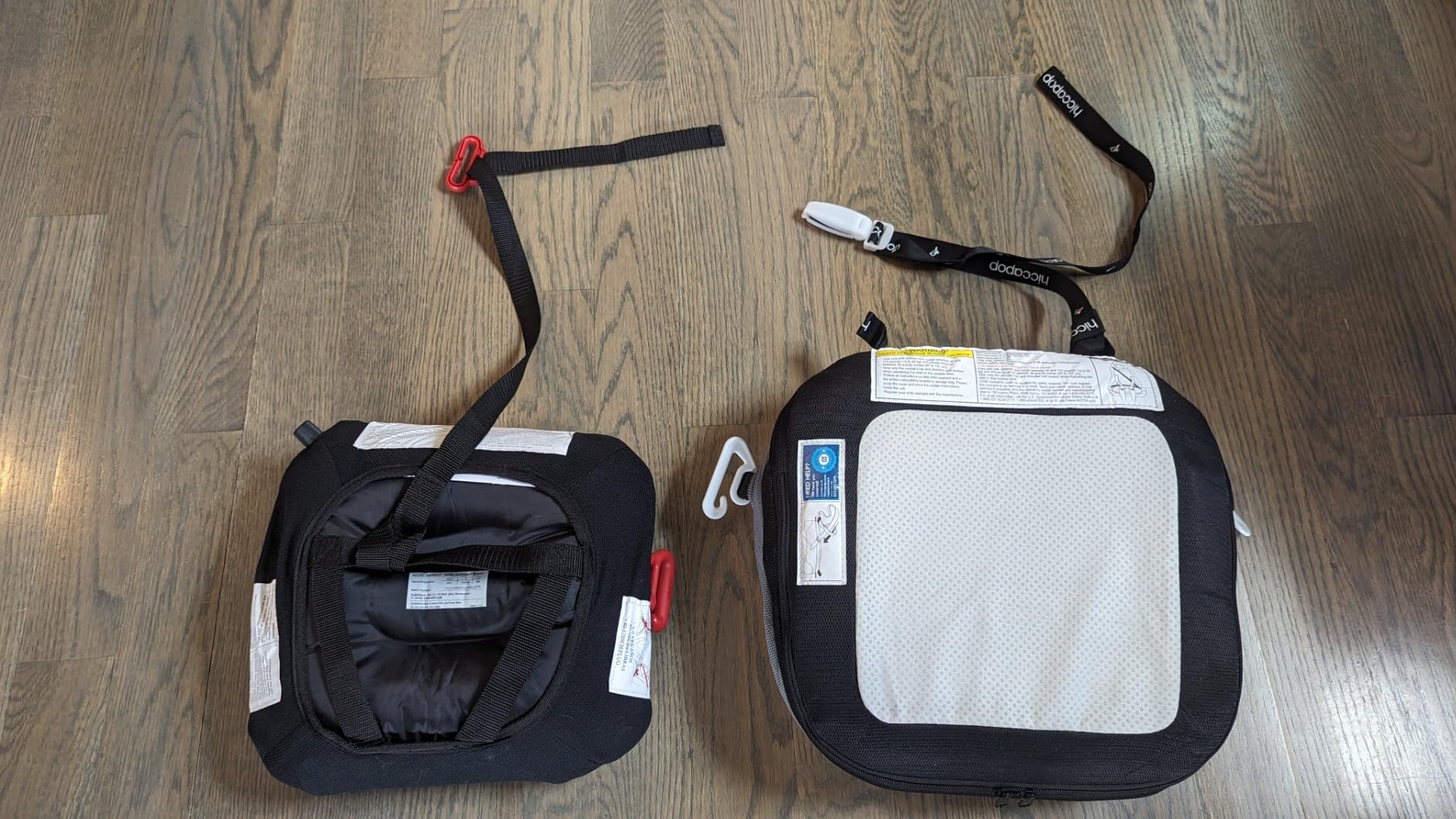
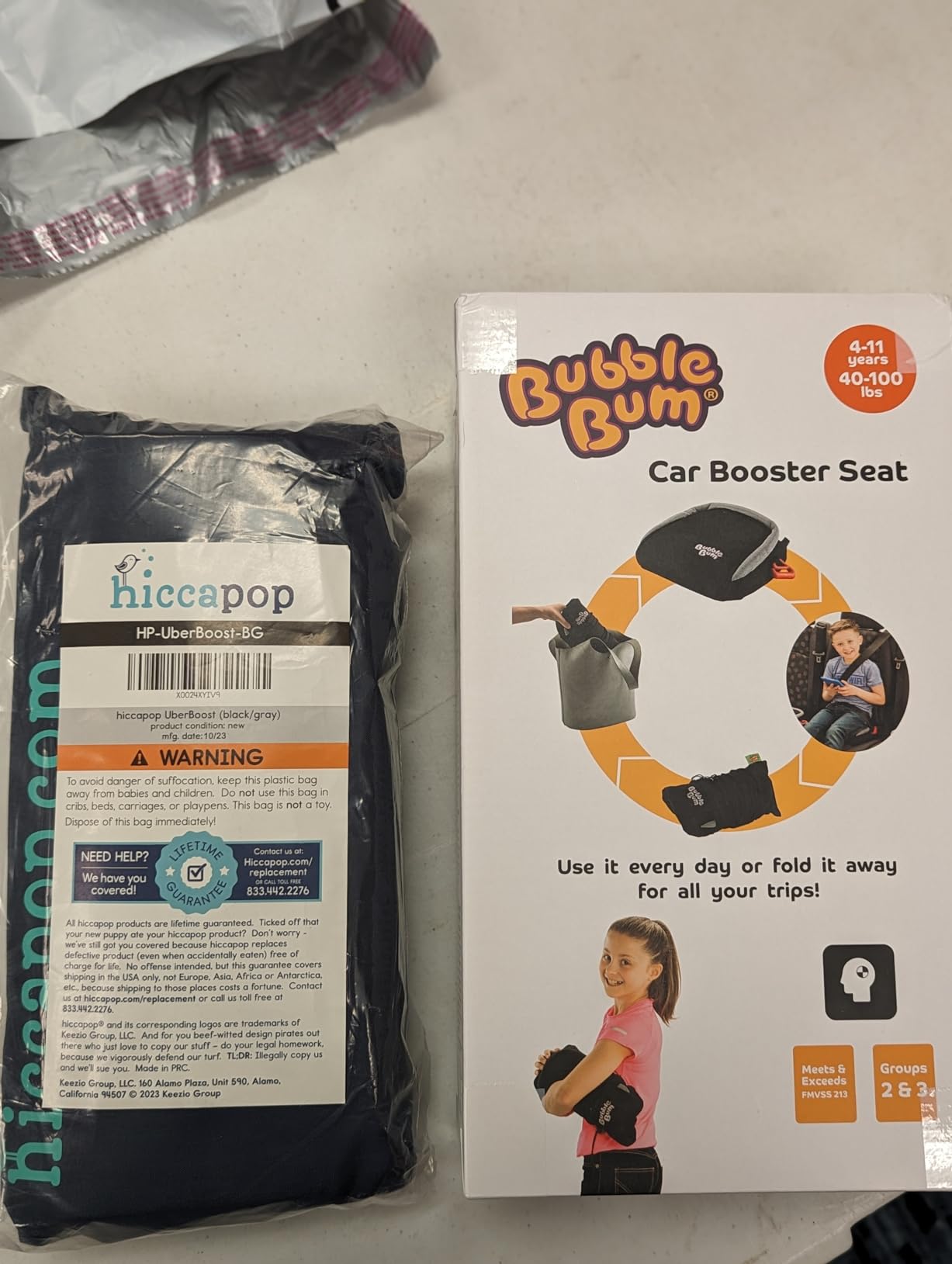
The UberBoost solves a problem no rigid booster can: the middle seat of a back row with two other child seats already installed. It is narrow enough to fit three across, or to slot between two traditional car seats, and reviewers consistently name that as the reason to buy one.
It inflates in under twenty seconds with a few breaths, no pump, and then deflates and rolls into its own travel bag. It meets or exceeds FMVSS 213, which is the federal standard for child restraints.
Multi-child families are the target user
Positioning clips keep the lap belt properly routed through the inflated structure, and the non-skid base holds on leather, vinyl, or cloth upholstery. Seventy-eight percent of its 7,614 ratings are five stars, and the ai_summary notes that travelers value the tiny packed size and the multi-across fit above almost everything else.
For a family with two or three children, an inflatable that lives in a bag until it is needed solves a real spatial problem. The middle-seat fit is the feature no other product in this roundup offers.
Where inflatable falls short
Two limitations are consistent in the reviews. The first is feel: an inflated cushion does not have the rigidity of a hard shell, and some buyers describe the structure as less solid under a heavier child. The second is explicit in the product information, which states the seat is not suitable for use on an airplane seat itself.
So this is a ground booster only. Use it in the rental car, the taxi, and the grandparents’ driveway, and leave the cabin to something certified for it.
11. BubbleBum Inflatable Travel Booster – The One That Fits in a Purse
BubbleBum Inflatable Travel Booster Car Seat, Narrow Backless, 40-110 lbs
Ages 4-11
40-110 lbs
Deflates to 12 x 6 x 4 in
Fits three across
+ Pros
- Deflates to 12 x 6 x 4 in for a carry-on or purse
- Independently crash tested to exceed FMVSS 213
- Inflates in about 20 seconds by mouth
- Slim profile fits three across in most back rows
- Cons
- Inflatable seat is less rigid than a hard-shell booster
- Seat belt only installation with no LATCH
- Wipe-clean surface only
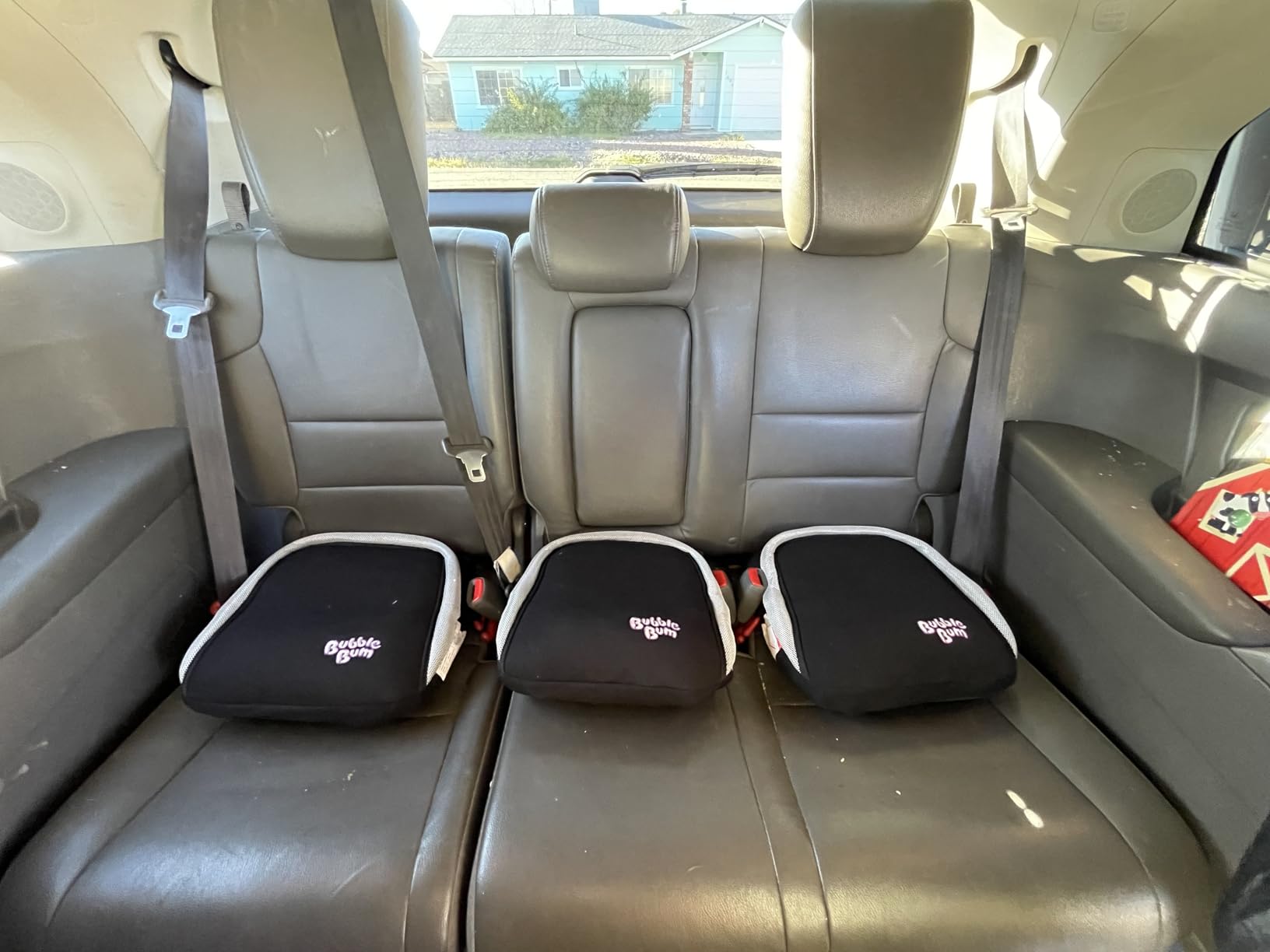
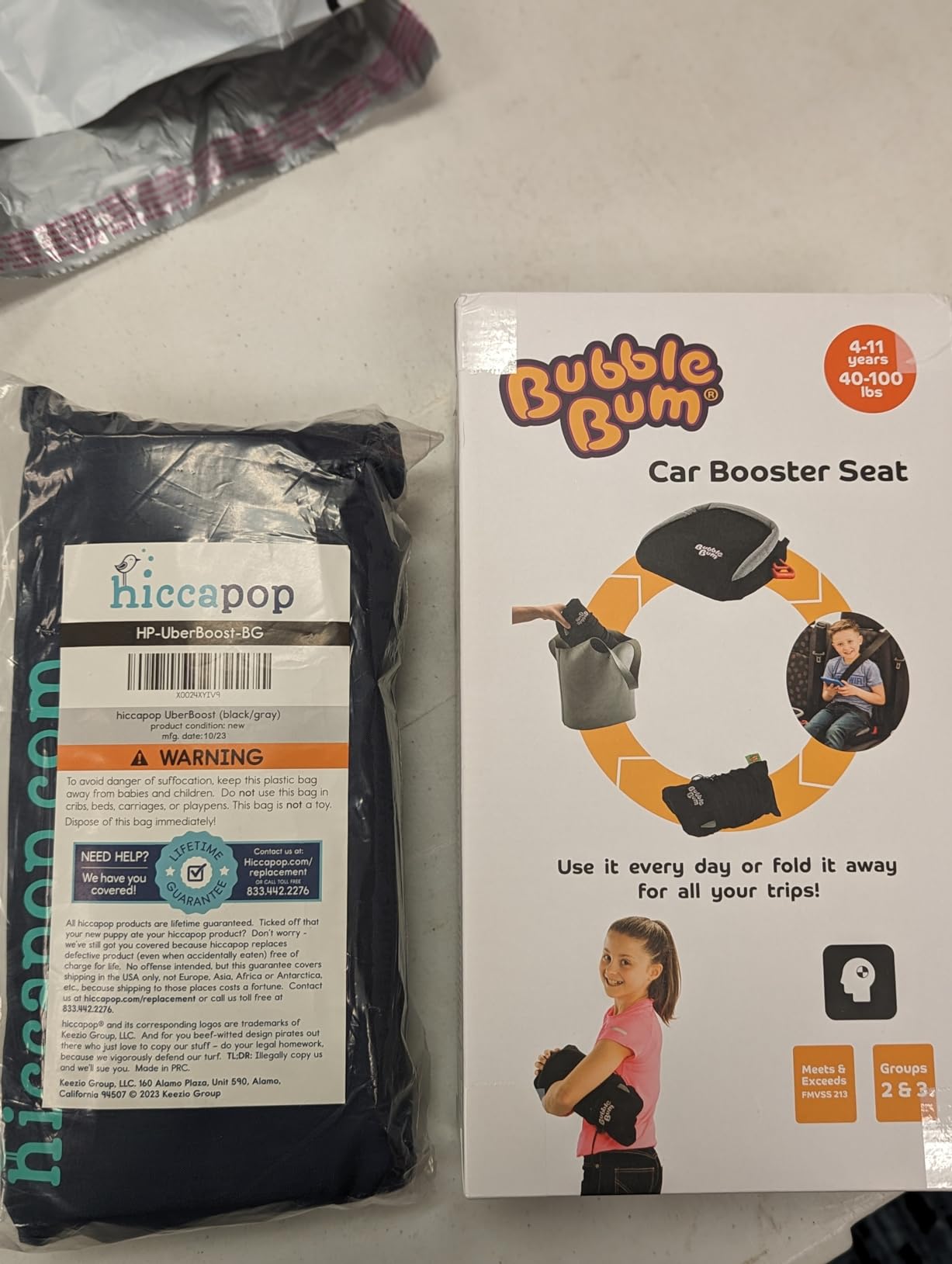
The BubbleBum is the smallest thing in this roundup by a distance, deflating to 12 by 6 by 4 inches. It fits in a purse or a carry-on, which means you can bring a booster on a trip where every gram of luggage counts and no other option here qualifies.
It covers children 4 to 11 years, 40 to 110 pounds, using a standard three-point belt, and it is independently crash tested to exceed FMVSS 213 rather than merely meeting it.
What the 4.3 average tells you
Sixty-seven percent of its 6,866 ratings are five stars and six percent are one star, the highest one-star share among the inflatable options here. The pattern in the reviews is consistent: people buy it for the packed size and the slim three-across fit, and a portion of them find the inflated cushion less supportive than they expected for a long drive.
It inflates by mouth in about twenty seconds, needs no LATCH, and the surface wipes clean, which is a real advantage over fabric seats when a toddler eats something out of the seat rather than on it.
Who should skip it
Skip it if your child is at the top of the weight range and you drive long distances, because a rigid shell with side support will serve them better. It is also a road-only product, since it is a backless booster with no aircraft certification.
Everything in this category is a trade between how small it packs and how solid it feels. This one optimizes hard for the first half of that equation.
12. Newroutes Child Airplane Safety Harness – The One-Pound Option for a Toddler in Their Own Seat
Newroutes Child Airplane Safety Harness – The Safety Restraint System Will Protect Your Child from Danger. – Airplane Kid Travel Accessory for Aviation Use
About 1 lb
22-44 lbs
Up to 40 in
Airplanes only
About 1 min to install
+ Pros
- Weighs about 1 lb and packs into a 6-inch stuff sack
- Installs in about one minute
- Fits most airplane seats
- Works in coach and business class seating
- Cons
- Runs loose under about 18 months or at the low height range
- The row behind an exit row cannot be used
- Airplane use only and some staff question approval
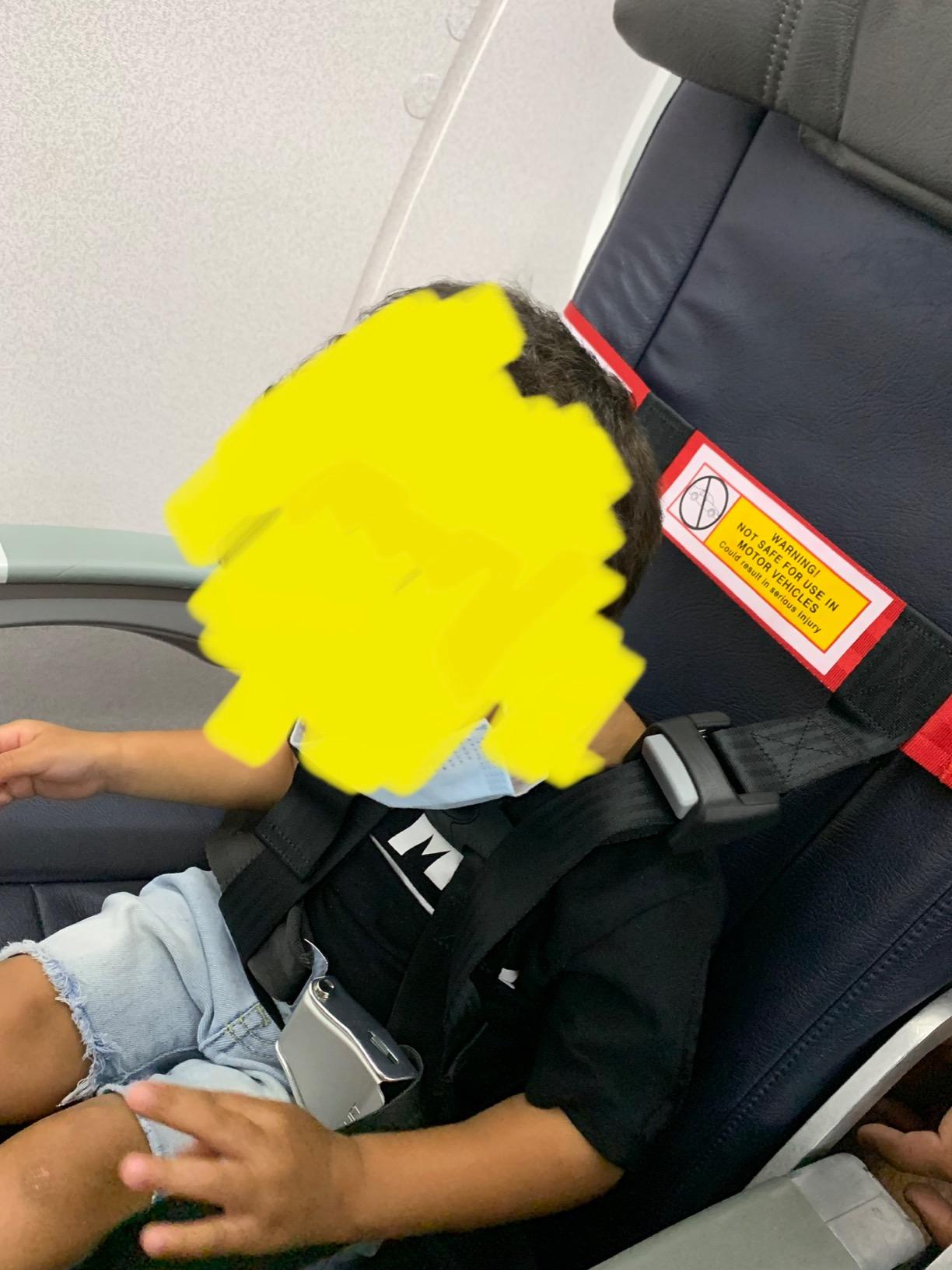
At about one pound in a six-inch stuff sack, this is the least effort of anything in the roundup. No car seat, no base, no bag, no gate check, and no luggage space. A parent whose toddler is between one and three years old and who wants that child in their own airline seat with their own restraint can carry this in a diaper bag.
It installs in roughly a minute and fits children 1 year and older, 22 to 44 pounds, up to 40 inches tall.
Designed strictly for the cabin
This is a different device from the CARES harness and the difference matters. The CARES model is described as an FAA-approved child aviation restraint, whereas this listing is reported to arrive with approval labeling while some travelers describe flight staff questioning whether it is approved. If certification is the deciding factor for you, the CARES harness is the safer purchase.
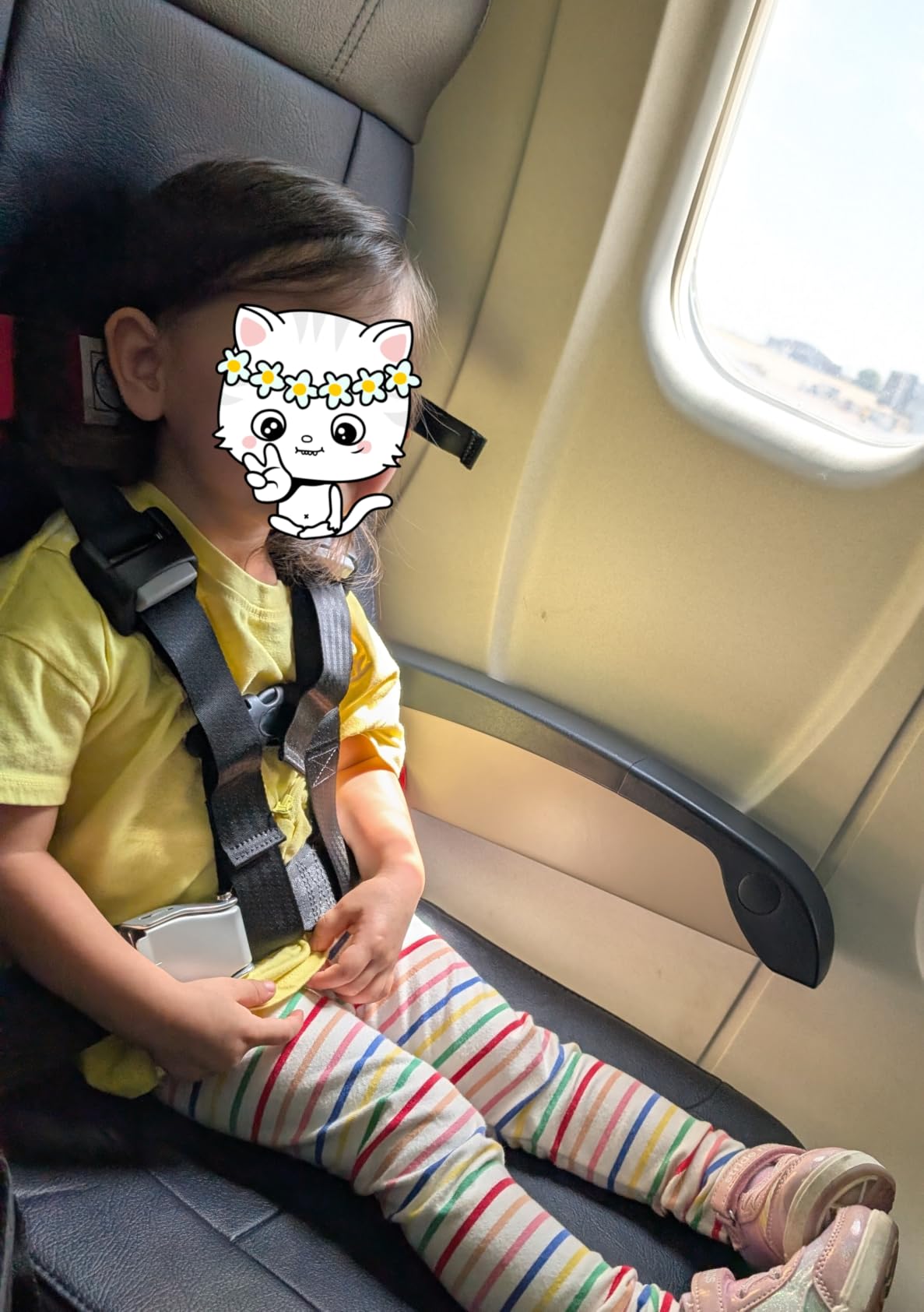
Both share the same practical appeal: the adjustable straps keep a toddler in their own seat through takeoff, landing, and turbulence, and the whole thing disappears into a bag when the flight is over. Reviewers call it a game changer for parents trying to avoid car seat logistics entirely.
The honest limitations
Fit is the first problem. It runs loose on children under about 18 months or at the low end of the height range, so a younger toddler may be better served by the CARES harness or by simply buying them a plane seat with a real restraint. Seat routing is the second: not all airplane seats route the belt the same way, and the row behind an exit row cannot be used.
And it does nothing at all for a car. If you need protection on the ground as well, this is not a substitute for a booster.
How to Choose: Match Your Child to the Right Seat Stage
Most wrong purchases in this category come from buying a seat category rather than a seat. A parent with a two-year-old who buys a backless booster ends up with a product they cannot legally use in the cabin and that does not fit the child. Stage matching is the first filter, and everything else is second.
The federal recommendation is a certified child restraint for children under two, and a strong recommendation for children under four. In practice that means a rear-facing infant seat or convertible for the first two years, and a forward-facing harness seat or harness booster from age two until the child outgrows the harness. Only after a child is ready for a vehicle seat belt does a backless booster become appropriate, and by then you are almost certainly past the point of needing one on a plane.
That last point is the single most useful thing to understand. There is a narrow age band, roughly two to four years, where a child genuinely needs a certified restraint in the cabin. Outside it, the cabin question resolves itself and your buying decision shifts to ground use, where backless and inflatable boosters dominate.
Two practical consequences follow. If your child is under four, prioritize the Diono Radian 3R as the only FAA-approved convertible in this group, or bring a seat you already own. If your child is four or older, stop thinking about the cabin and pick the best booster or harness for your ground logistics, because the seat will be stowed in the bin regardless.
Airline Rules, Gate Checking, and the Rental Car Reality Check
Start with the window seat, because it catches more families than any other rule. A car seat must be installed so it never blocks the row’s emergency exit path, which in practice means a window seat on every airline. This is also why the harness devices have seating restrictions, and why the row behind an exit row is unusable with a harness that routes the seat belt.
Gate checking remains free on US carriers, which is the rule most parents have heard and few verify. A gate check means the seat travels in the hold and is usually returned at the jet bridge or the baggage belt. The widely misunderstood part is packaging: a car seat should be repackaged in its original manufacturer box with its original padding, not simply dropped into a soft bag. Parents report bags and contents taking damage on the first leg even when they used one.
Now the lap infant question, because it is the one with a safety dimension. For US domestic flights with children under two, a lap infant is permitted without purchasing a seat. The FAA recommends a certified child restraint for anyone under two and strongly recommends one for under four, because a lap-held child cannot be secured during turbulence, an abrupt stop, or an evacuation. Policies vary by carrier and by route, and international carriers frequently require an approved seat or a bassinet for under-twos with combined weight limits.
Which brings us to the rental car, the part almost every roundup ignores. Parents report being handed whatever is left in the lot, sometimes an old fixed-position seat that was never appropriate for a newborn, and sometimes nothing at all. Before you book, verify three things: that the vehicle has lower anchors or a usable three-point belt, that the cabin is physically large enough for your seat plus luggage, and that the rental company can supply a seat in the size you need. A seat of unknown crash history is not a free upgrade, it is a different risk.
One more ground truth. Hook-style LATCH straps are repeatedly described in parent forums as nearly impossible to tighten or release one-handed, which is exactly when you are doing it on your knees in a rental car lot at midnight. Rigid LATCH connectors or a belt-positioning design avoid the problem entirely. As for moving the seat through the terminal itself, the trick parents converge on is a travel dolly, or strapping the seat to rolling luggage with the child already buckled in.
What We Would Skip: Four Kinds of Travel Seats to Avoid
First, any seat that is too wide for the airplane seat. Airline seats measure roughly 17 to 18.5 inches wide, and a seat that is merely 19 inches across will be a problem in every row. This is a hard pass or fail filter and the most common disappointment at boarding.
Second, anything marketed as a travel seat that carries no aircraft certification. Words like travel, jet, and fly on a box mean nothing to the FAA. Look for the red label text, and if it is absent, the seat goes in the bin.
Third, hook LATCH straps on a seat you intend to install alone in a rental car. This is not a safety failure, but it is the single most common source of a parent kneeling in a parking garage giving up and calling the rental company instead.
Fourth, a rented seat of unknown history. Age alone does not tell you whether a seat has been in a crash, exposed to heat in a vehicle, or stored in a way that damaged its structure. If you rent, ask how old it is, and if nobody can tell you, treat that as the answer.
Buying Guide: Nine Criteria That Decide a Travel Car Seat
1. Confirm the aircraft certification first
Find the label on your seat and read the red text. If it does not say the restraint is certified for use in motor vehicles and aircraft, it is not going in the cabin. This check takes thirty seconds and eliminates most of the wrong answers before you have looked at anything else.
2. Weigh the empty seat, not the child
You are carrying it through security, through the gate, down the jet bridge, and back again. Seats in this roundup range from about one pound to sixteen, and the difference between eight and sixteen pounds is the difference between a seat you hand to a flight attendant and one you never let go of.
3. Check the folded footprint, not just the weight
A light seat that is still bulky is not a travel seat. The WAYB Pico folds to 11.6 by 14.5 by 18.9 inches and the Mifold Hifold to 10.7 by 13.5 inches, both of which change how you move through a terminal. The Baby Trend Protect folds flat but reviewers still describe the folded package as bulky.
4. Understand which installation methods even work on a plane
Airplanes have a fixed shoulder belt and no lower anchors. European belt paths and rigid LATCH arms, which are excellent in a car, give you nothing in the cabin, and hook LATCH is worse. A seat that installs only by vehicle belt is the one that will work in both places, and on a plane it is the only method available.
5. Decide whether the seat needs a harness in harness mode
This is the FAA line. Harness seats are certified for aircraft. Belt-positioning boosters are not. If your child is under four, this is not a preference, it is a requirement, and it narrows your list to convertible seats and the two lap harnesses in this roundup.
6. Test the recline against your child’s napping style
This is the criterion most roundups ignore and the one that decides whether a trip is pleasant. A seat that sits upright will not let a two-year-old sleep, and a child who cannot sleep on a plane is a child who will be loud on a plane. The Peg Perego Viaggio Flex 120 is the only seat here with five dedicated recline positions.
7. Weigh the ground logistics separately from the flight
Ask how many vehicle changes the trip involves. Three across in a rental car points to a narrow inflatable. Backpack portability points to the Mifold Comfort. A car-free family using taxis daily needs something that moves between vehicles in seconds, which favors a built-in carry handle and rigid LATCH.
8. Read the expiration date before you commit
Seats expire, commonly between six and ten years from manufacture. For a seat bought primarily for travel and used occasionally, a long remaining life is a genuine advantage, because you will probably still be using it when the child moves to the next stage.
9. Check certification for every country on the itinerary
US seats are certified to FMVSS 213, and the Mifold Hifold notes it is not approved for use in Australia or Taiwan. If your travel crosses continents, verify the certification of the seat and the policy of the operating carrier on each route, because a codeshare partner can have different rules than the ticket you bought.
Frequently Asked Questions
What kind of car seats can you bring on a plane?
You can bring any car seat bearing the red label text stating that the restraint is certified for use in motor vehicles and aircraft. The FAA requires it to be installed in a window seat so it does not block the emergency exit path. Seats without a harness, including backless boosters and travel vests, are not certified for aircraft and must be stowed in the overhead bin for the flight.
What is the best foldable car seat for taking on an airplane?
The WAYB Pico is the strongest foldable option, weighing 8 pounds and folding to 11.6 by 14.5 by 18.9 inches so it fits an overhead bin. It carries an FAA approval sticker and installs in an airplane seat in under a minute. The main caveat is that it is forward-facing only, for children 26.5 to 50 pounds, and it sits upright with no recline.
Is it worth bringing a car seat on a plane?
For a child under four, yes, because the FAA strongly recommends a certified child restraint for that age group. For a child over four flying occasionally, it is rarely worth a dedicated travel seat, since a booster is stowed anyway. For frequent flyers or car-free families who use taxis and rental cars daily, a travel seat pays for itself quickly in convenience alone.
Does my 3 year old need a carseat on an airplane?
The FAA strongly recommends a certified child restraint for children under four, so at three years old a forward-facing harness seat or harness booster is the right choice rather than a backless booster. Only harness seats are certified for aircraft use. Most airlines also recommend buying the child their own seat rather than carrying them as a lap infant at that age.
Do you have to put your baby in a carseat on a plane?
On US domestic flights you can travel with a child under two as a lap infant without buying a seat, but the FAA recommends a certified child restraint for anyone under two and strongly recommends one for under four. Policies vary by carrier and by route, and international carriers often require an approved seat or a bassinet with combined weight limits.
Can you fly with a Graco car seat?
Most Graco seats are FAA approved, but approval is per model rather than per brand, so check the red label text on your specific seat. In this roundup the Graco TurboBooster 2.0 is a backless booster, which means it is not certified for aircraft and must be stowed in the overhead bin. Always verify the label before you fly.
The Verdict: Which Travel Car Seat Should You Buy in 2026?
Start with your child’s age, not with the products. If your child is under two and you can get hold of an FAA-approved convertible, the Diono Radian 3R is the only seat in this group that covers birth to 120 pounds, folds for travel, and is certified for aircraft use. If your child is between two and four, the same seat still fits the bill, and the WAYB Pico becomes viable if the priority is carrying weight rather than rear-facing capacity.
If your child is four or older, stop shopping for a cabin solution and buy a ground one. The Graco TurboBooster 2.0 is our top pick of the roundup, with 12,324 ratings at 4.8 stars, front and rear and rollover crash testing, and a rating base large enough to trust. The Chicco GoFit is the comfort-led alternative, with a wider weight range and the most deliberately padded shell here. The Peg Perego Viaggio Flex 120 wins when a real recline is the deciding factor, and the Mifold Comfort wins when luggage space is the constraint.
For a lap infant, the CARES harness removes the car seat from the trip entirely, and that is a different kind of purchase than anything else on this list. The limitation of most of these seats is real: nearly all of them are ground solutions that get stowed in the bin, and the cabin is solved by one of only a handful of certified seats.
Whichever one you choose, check the red label, weigh the empty seat before you commit, and confirm the operating carrier’s policy on the specific route before you book. Those three steps eliminate almost every expensive mistake in this category.