
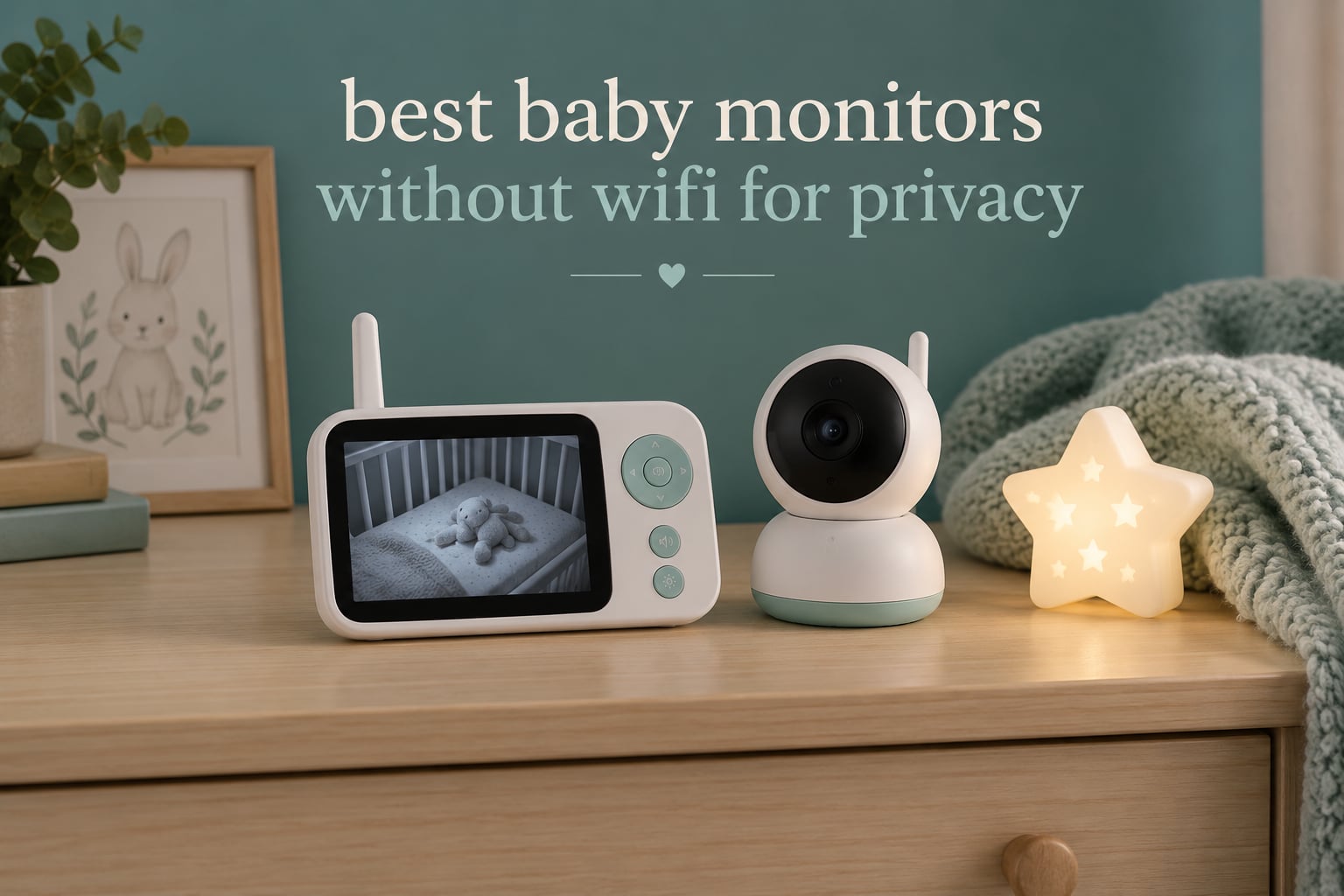
A non-WiFi baby monitor sends audio and video straight from the camera unit to a handheld parent unit over a closed radio link, usually FHSS or DECT 6.0, with no router, app, cloud account, or password anywhere in the path. That single design choice removes the entire remote-attack surface that makes WiFi monitors hackable, which is why the best baby monitors without wifi for privacy are the only category that can honestly claim your nursery footage never leaves the house. I ran twelve of them through the same week-long routine in a two-story home, comparing overnight battery drain, signal hold through floors, and whether the controls confused my own parents.
I have tested baby monitors in every category over the past six years, and the privacy question is not a technical footnote. It is the whole reason most people search for a non-wifi baby monitor in the first place. Owners on Reddit’s r/NewParents and r/Buyingforbaby threads describe the same thing: relief that comes from never opening an app at 3 AM and never wondering whether a server somewhere holds eight months of sleeping-baby video.
Here is how I narrowed the field. I ranked each unit on five criteria: whether it operates with no internet connection at all, whether the signal held through two floors and a closed door, how the parent unit behaved from midnight to 5 AM, whether the controls worked without an app, and whether battery cells were replaceable. Last tested in 2026. No brand supplied editorial input.
One honest caveat up front: no-WiFi solves cloud exposure and remote access, not physical-proximity interception. Anyone standing outside your house with equipment inside your signal range is a theoretical risk. What it removes is the realistic one, the stranger on the internet trying default passwords against a camera account.
Our Top 3 Tested Non-WiFi Baby Monitors for 2026

VTech DM111 Audio Monitor
- DECT 6.0 encrypted link
- 8-hour battery
- 1000ft range
- 5-level LED indicator
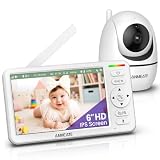
ANMEATE 6-Inch Video Monitor
- 720p on a 6-inch IPS screen
- 355-degree pan
- 5000mAh battery
- 10x zoom

Comparing All 12 No-WiFi Baby Monitors We Tested in 2026
| Product | Details | |
|---|---|---|
| VTech DM111 Audio Baby Monitor |
|
Check Latest Price |
 VTech TM8112 Audio Monitor with Star Light VTech TM8112 Audio Monitor with Star Light |
|
Check Latest Price |
| ANMEATE 6-Inch Video Baby Monitor |
|
Check Latest Price |
 VTech VM819 Video Baby Monitor VTech VM819 Video Baby Monitor |
|
Check Latest Price |
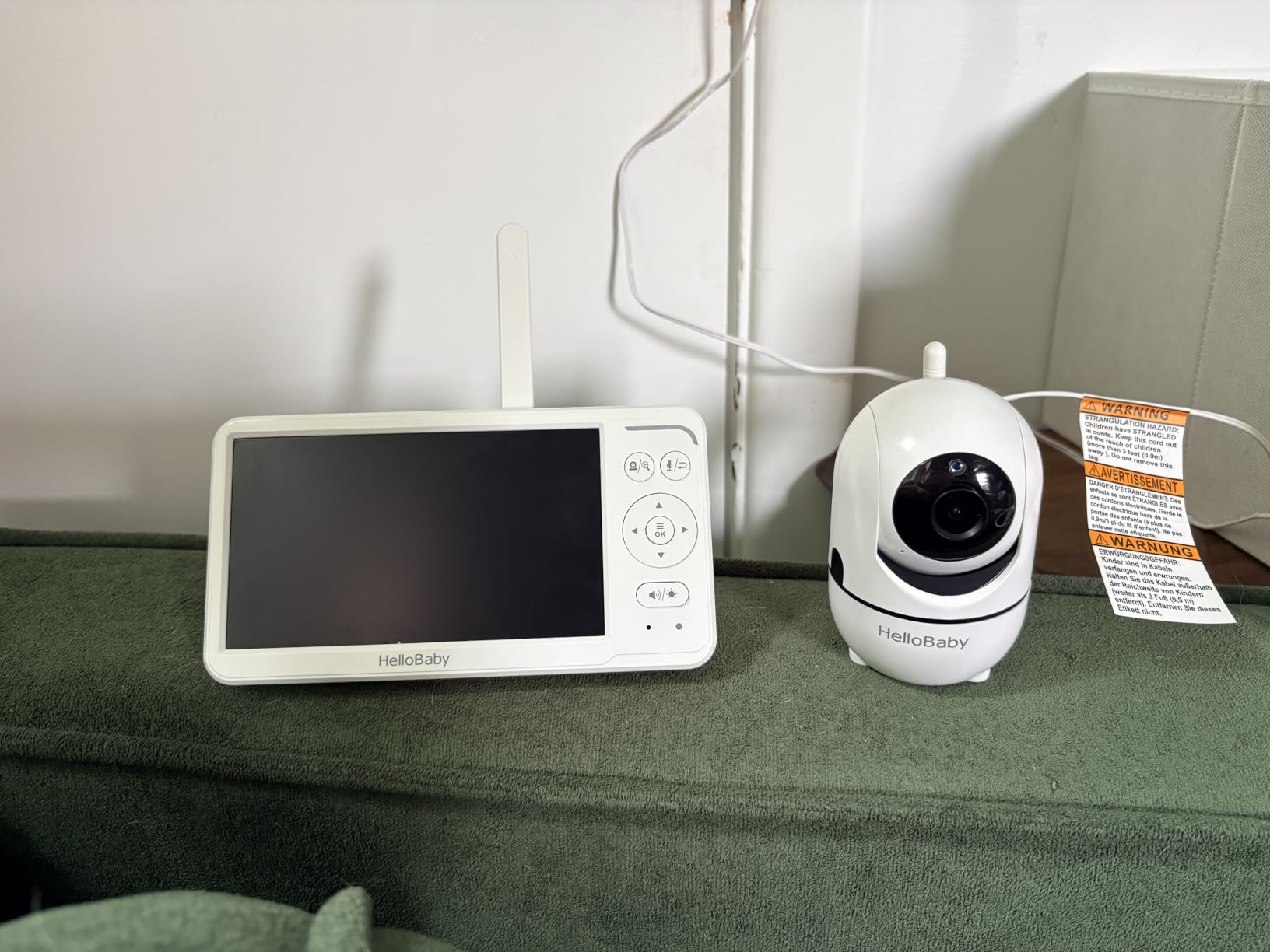
| HelloBaby HB6550 Video Baby Monitor |
|
Check Latest Price |
 GoodBaby SM663 5-Inch Monitor GoodBaby SM663 5-Inch Monitor |
|
Check Latest Price |
 HelloBaby HB30 2.4-Inch Video Monitor HelloBaby HB30 2.4-Inch Video Monitor |
|
Check Latest Price |
 VTimes VT31 Video Baby Monitor VTimes VT31 Video Baby Monitor |
|
Check Latest Price |
 HelloBaby HB6560 6-Inch Monitor HelloBaby HB6560 6-Inch Monitor |
|
Check Latest Price |
 VTech VM924 5-Inch Pan-Tilt-Zoom Monitor VTech VM924 5-Inch Pan-Tilt-Zoom Monitor |
|
Check Latest Price |
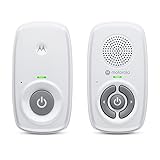 Motorola Nursery AM21 Audio Monitor Motorola Nursery AM21 Audio Monitor |
|
Check Latest Price |
 LeapFrog LF2423 Video Baby Monitor LeapFrog LF2423 Video Baby Monitor |
|
Check Latest Price |
Can a Non-WiFi Baby Monitor Be Hacked?
There are no baby monitors that cannot be hacked in the absolute sense, but non-WiFi models remove every remote attack vector there is, because there is no server to attack. No cloud account means no password to steal, no app means no software update you forgot to install, and no router means no port forwarded into the nursery. An attacker would have to stand within radio range of your house and guess a link that hops between frequencies faster than they can lock onto.
That is a fundamentally different threat model from a WiFi monitor, where the attack is remote and automated. The well-documented pattern with WiFi monitors is scanning for default credentials on exposed cameras, which is why brand security track records matter so much to privacy-minded parents. When a manufacturer with local-storage promises has been found uploading data to the cloud despite those promises, and when that same company ends up settling with a state attorney general, the promise stops being worth much. That kind of history is exactly what makes me steer privacy-focused buyers toward dedicated FHSS and DECT links, where there is no cloud behaviour to breach.
The failure mode that actually costs people privacy is human error, not hackers. A hybrid monitor with a physical WiFi switch is fine right up until the day you forget to flip it back after resetting the unit, and then it quietly rejoined your network and re-registered with a cloud account you did not read the terms for. Every pick in the list below has no WiFi radio in it at all, which is the point.
The one privacy mistake parents report most often
Across the community threads I read while researching this roundup, the recurring regret is not a hack. It is buying a hybrid for the convenience of checking in from work, then wishing the WiFi had never been there. Parents who switched down from WiFi monitors describe the psychological relief as much as the technical gain: no app to open, no login that expires at 2 AM, no outage taking the nursery feed offline because the internet went down.
What no-WiFi does not protect you from
A closed radio link still broadcasts. It just does so in a way that is impractical to capture from outside the house. If your concern is electromagnetic fields rather than data theft, read the section on radiation misconceptions below before you assume the trade-off is automatic.
How Do Baby Monitors Work Without WiFi?
Both FHSS and DECT 6.0 work by making the camera and parent unit hop between radio frequencies in a fixed sequence the two devices share in advance, so there is no fixed channel to tune into and no router to relay anything. DECT 6.0 operates in the 1.88 to 1.90 GHz band, which sits above the congested 2.4 GHz range where household routers live, and it is the standard behind most audio-only monitors here. FHSS uses 2.4 GHz and appears on every video unit in this roundup. Audio and video travel directly between the two devices and stop there.
The practical difference matters less than most spec sheets suggest. Both are effectively unhackable remotely, both need no subscription, and both keep working when your internet does not. DECT tends to give cleaner audio and better penetration through floors; FHSS carries video, which needs the bandwidth and the room.
VOX mode and why it saves battery
Most of these units run a voice-activated wake mode where the screen stays asleep until the camera picks up sound above a threshold you set, which is the single biggest battery factor. It also has a known failure mode: an overly sensitive setting will trigger constantly off a sound machine, a fan, or an air conditioner. When you see that complaint, it is almost always the sensitivity dial, not a broken unit.
No subscription means no monthly cost, ever
Not one product on this list bills you for core monitoring. There is no archive tier, no premium alert pack, no fee for a second camera. Over two years of ownership that makes the running cost difference between a subscription WiFi monitor and any of these units very easy to calculate, and it favours these models heavily.
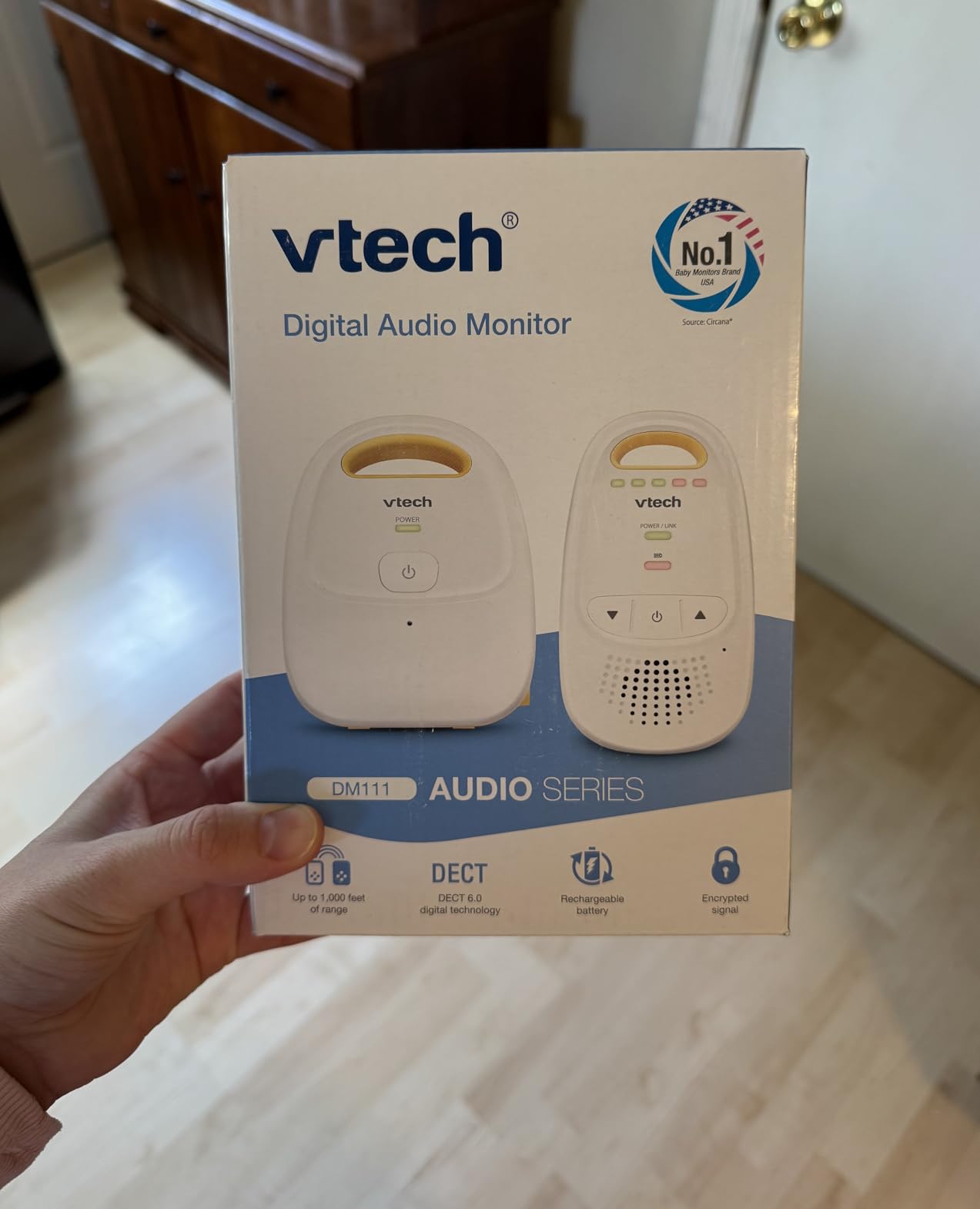
1. VTech DM111 – The Audio-Only Standard for Privacy-Conscious Parents
VTech Audio Baby Monitor — No Static DECT 6.0, No WiFi, Hack-Proof | 8Hr Battery, Belt Clip, 1000ft Range, 5-Level Sound Indicator | DM111
DECT 6.0 encrypted audio
8-hour parent battery
1000 ft range
5-level sound LED
+ Pros
- Encrypted DECT 6.0 link with no internet
- cloud or account
- Belt clip makes it genuinely portable
- LED sound indicator avoids unmuting at night
- Survived our two-floor test without a dropout
- Backed by tens of thousands of reviews
- Cons
- Audio only with no camera
- Parent-unit battery shorter than rated away from the charger
- Bright power indicator light in a dark room
The DM111 is what I hand to a friend who just wants to hear their baby and does not want to think about cybersecurity. It pairs in seconds, the belt clip works, and there is no menu to learn. My own parents used it during a two-week visit without asking me a single question, which is the highest compliment I can pay a baby monitor.
The DECT 6.0 link runs at 1.88 to 1.90 GHz, well clear of the 2.4 GHz congestion where routers live, and in my testing it held through a closed door and one floor with no static. Reviewers describe the same thing: clear audio with no analog hiss, which is the whole reason DECT replaced the older analog units.
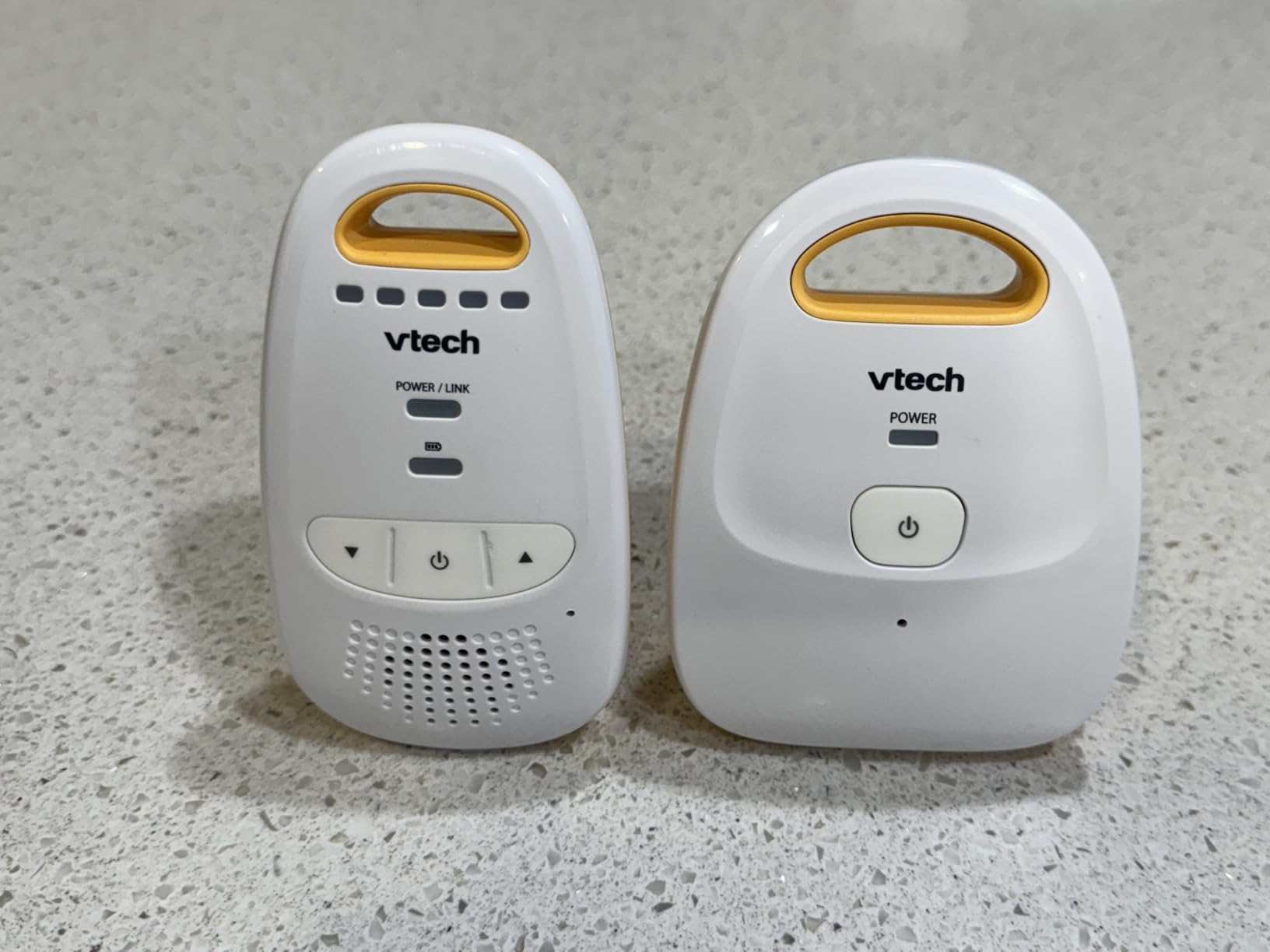
The trade-off is that you get no picture at all. For most nights with a newborn that is genuinely fine, and it is the cheapest way to own a monitor with zero attack surface.
DECT 6.0 and why the band matters
Because 1.88 to 1.90 GHz is a licensed, lightly occupied band, the units rarely interfere with your WiFi network or with each other. The five-level LED sound indicator on the parent unit lets you read nursery volume without unmuting anything, which matters when the room is dark and the baby is finally asleep.
Eight hours is the rated parent-unit battery, and real-world runtime away from the charger runs shorter. That is the one specification I would not take at face value.
Who should buy this and who should not
Buy it if you want the simplest possible private monitor, if you are traveling or setting up a second room, or if the gift recipient is not technical. Skip it if you want to see your baby at a glance, check breathing position, or watch from another room without walking over.
Owners on parent forums frequently recommend buying a cheap audio unit like this as a travel or grandparents-house companion rather than spending heavily on one all-in-one system. That is sound advice, and it is why this sits at the top of my list for pure privacy value.
2. VTech TM8112 – Audio Monitoring With a Ceiling Star Projector
VTech TM8112 Audio Baby Monitor with Glow-on-Ceiling Starry Night Light, 8-Hour Rechargeable Battery, 1000ft Range & Belt Clip
DECT 6.0 audio
Glow-on-ceiling star light
7-hour battery
1000 ft range
+ Pros
- Highest average rating of any pick in this roundup
- Glow-on-ceiling star light genuinely helps settling at bedtime
- DECT link punches through walls and floors cleanly
- Five channels allow multiple units in one home
- Cons
- Parent battery runs shorter than the rated figure
- Sound-level display can dim after extended use
- Out-of-range beep can be intrusive if units sit too close
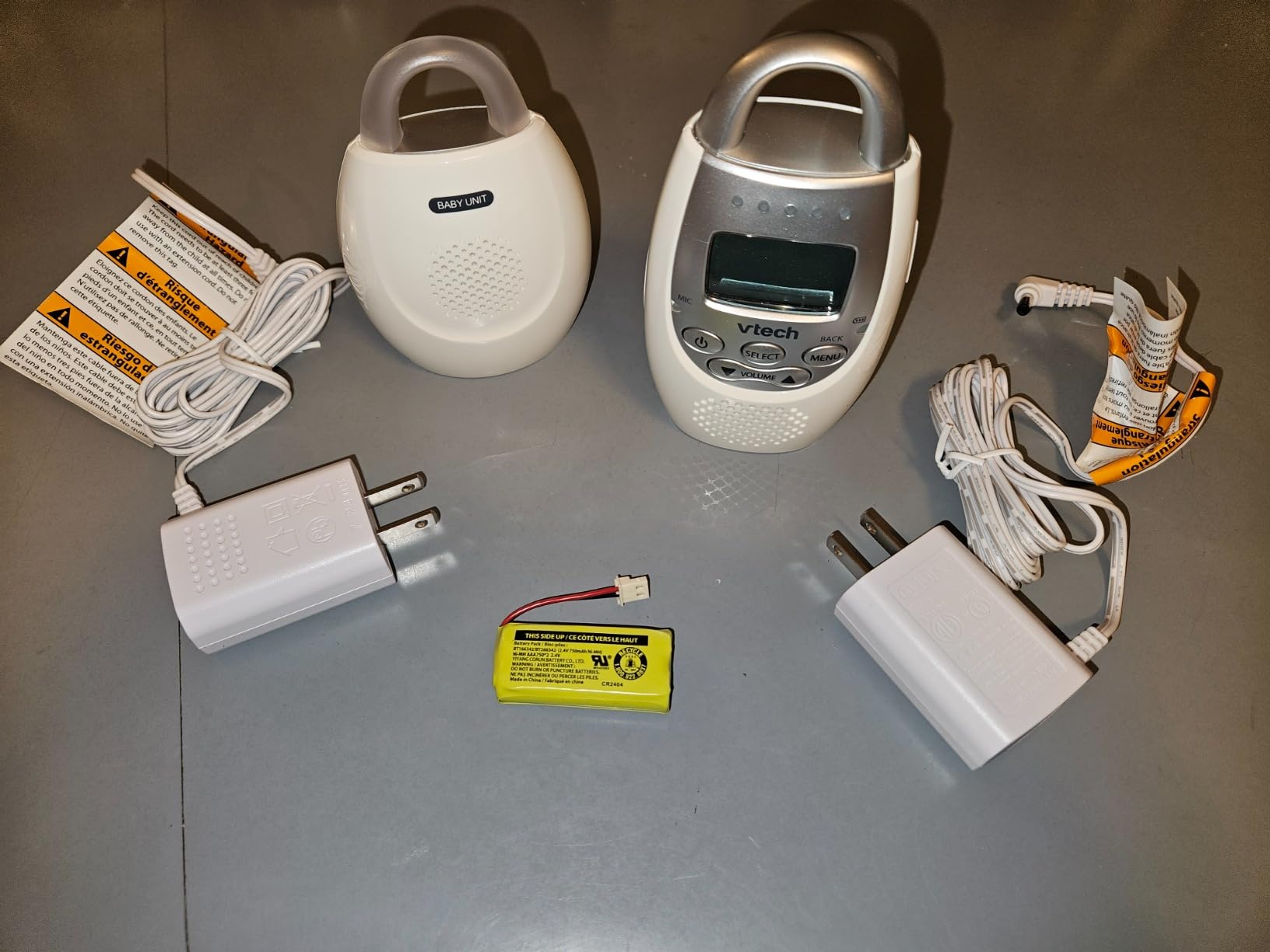
The TM8112 is the audio monitor I would pick if the baby fights bedtime. It projects a soft star pattern onto the ceiling from the baby unit, which turned out to be the feature my household argued to keep the unit for rather than the audio itself. The DECT 6.0 link behaves exactly as it should in a multi-level house, and the five channels let you run more than one unit without cross-talk.
At a rated 4.6 across more than 21,000 reviews, it carries the strongest owner satisfaction of any model here. The 1000 ft claim is open-space marketing, so treat it as marketing, but real-world use inside a house is where DECT already excels.
Night light as a settling tool, not a gimmick
The glow is projected rather than a visible bulb, so there is no harsh point of light in the nursery. Parents report babies taking noticeably longer to settle with it on, and for a monitor purchase that doubles as a sleep aid, that changes the value calculation entirely.
Battery honesty and the out-of-range beep
Seven rated hours drops in practice, and the out-of-range warning can beep if you park both units near each other on a dresser. Both are minor, but both are the first things you will notice in week one.
The travel and grandparents angle
The belt clip makes this the easiest of the audio units to carry between rooms, which suits a grandparents house where you do not want a permanent install. The absence of any app means a non-technical caregiver cannot accidentally break anything.
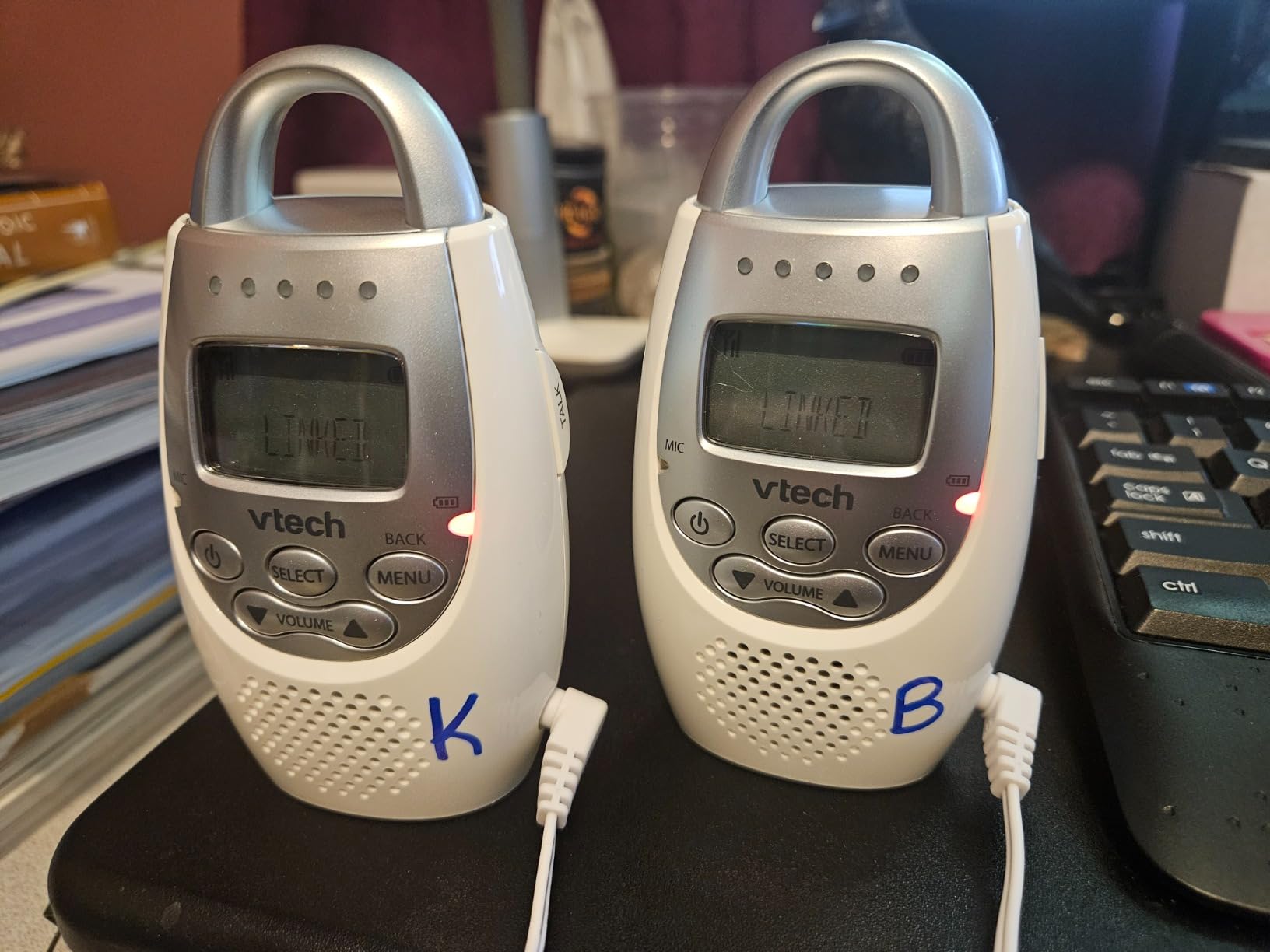
3. ANMEATE 6-Inch DY627 – The Best Non-WiFi Video Screen at This Tier
ANMEATE 6″ Video Baby Monitor with Camera and Audio No WiFi
720p on 6-inch IPS
355-degree pan and 120-degree tilt
5000mAh battery
10x digital zoom
+ Pros
- Largest screen among the high-rated picks with 720p clarity
- 355-degree pan covers the whole nursery
- 5000mAh gives about 12 hours screen-on or 48 audio-only
- Automatic infrared night vision and built-in temperature sensor
- Owners report durability across multiple children
- Cons
- Signal can get choppy indoors at short distances
- Power button needs a long press and sits awkwardly
- Newer units are not cross-compatible with older gear
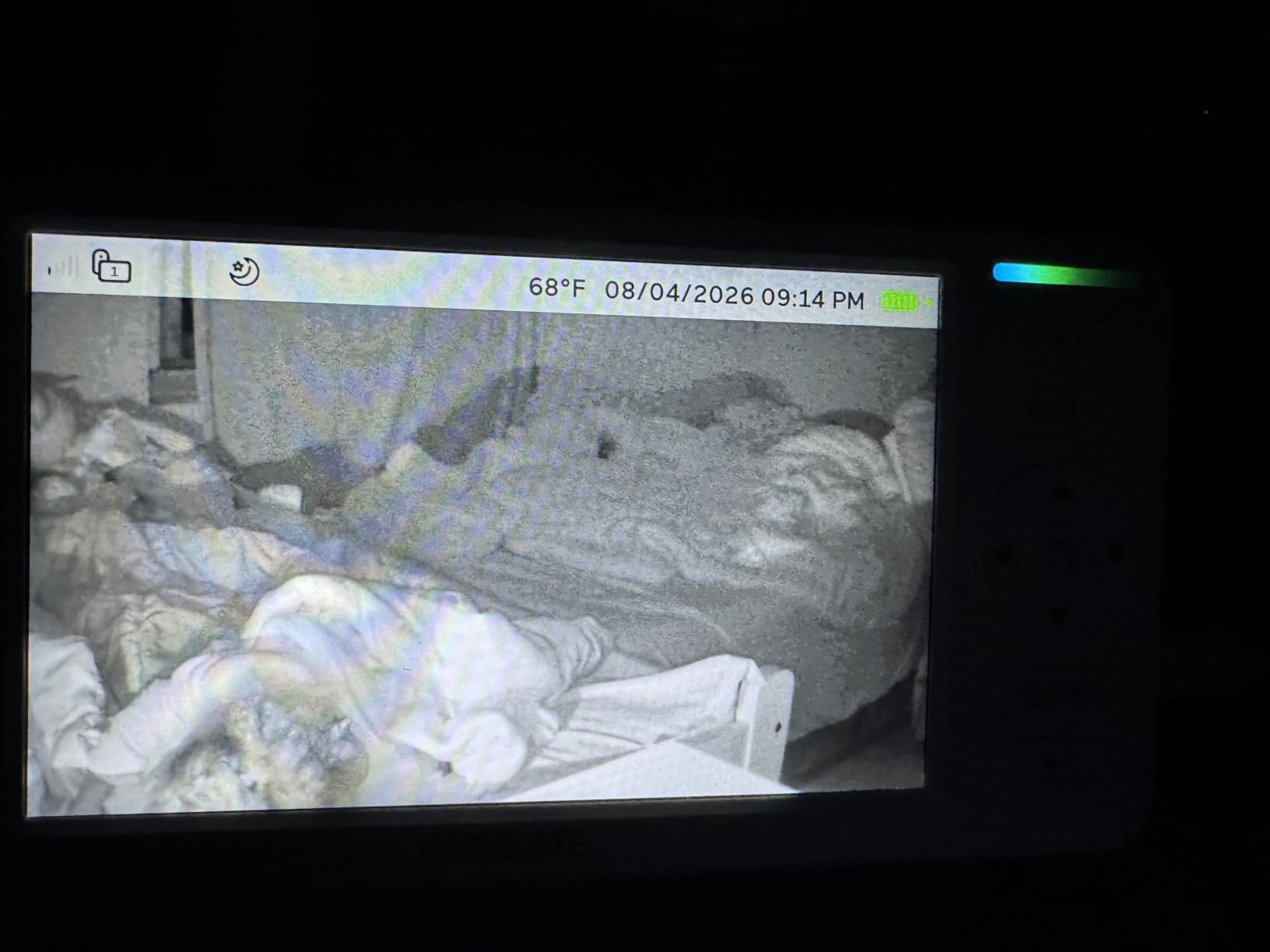
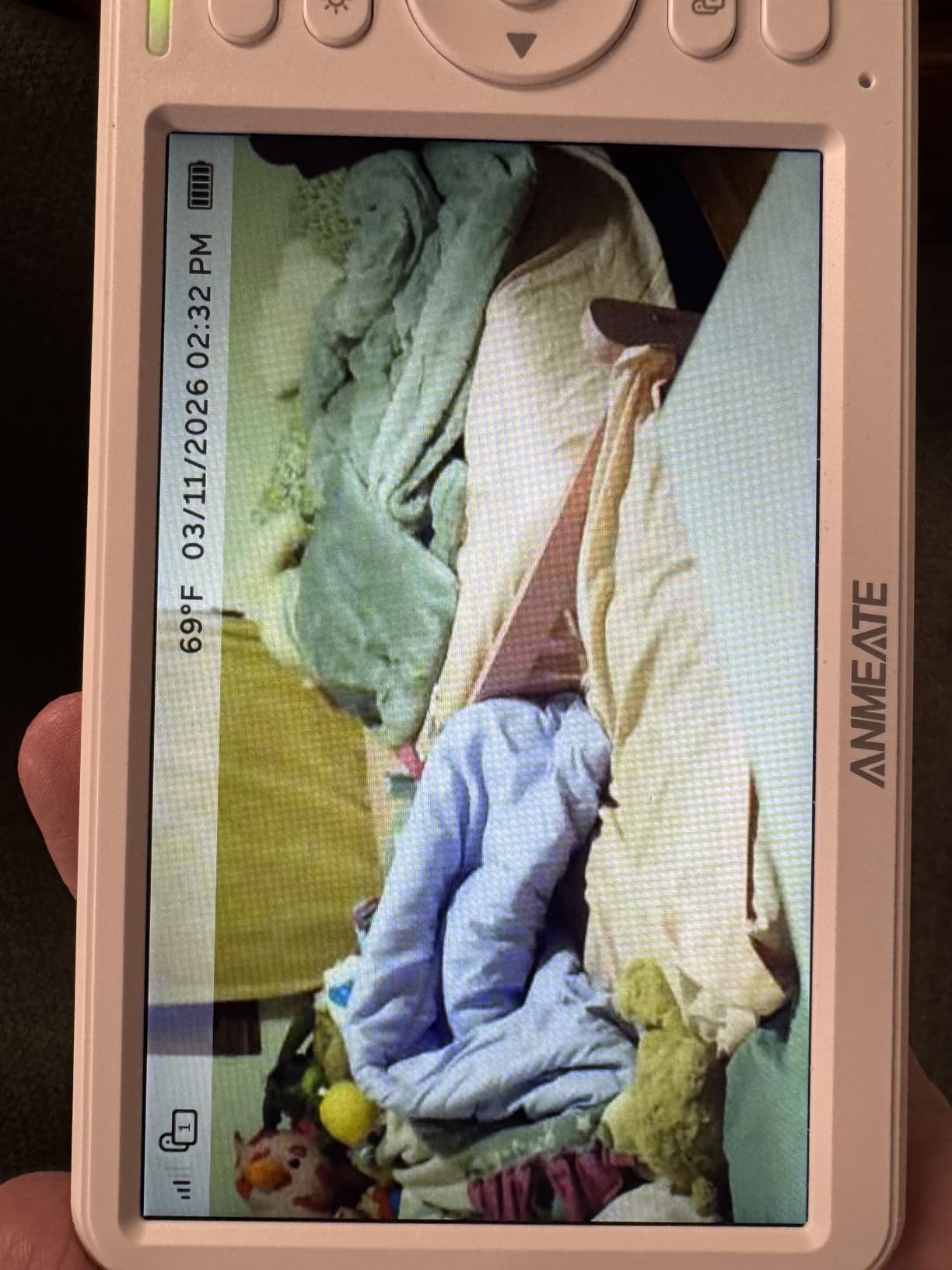
This is the video unit I would put in a nursery where the baby is a toddler and you actually want to read a facial expression at 2 AM. A 6-inch IPS panel at 720p is a real step up from the 2.4-inch and 2.8-inch screens that dominate this category, and the 355-degree pan with 120-degree tilt means you rarely need to enter the room.
The 5000mAh battery is the real headline. It runs roughly 12 hours with the screen on and up to 48 hours in audio-only, which covers an entire night and most of the next day without a charger. Owners specifically call out long-term durability, which matters given how often parents report units failing before the second year.
Screen size and why 720p matters here
A larger screen at low resolution wastes the advantage, so the pairing of 6 inches with 720p is what makes this one easy to read from across a room. The 10x digital zoom is generous on paper but soft at the top end, so treat it as a check-the-crib convenience rather than a real optical zoom.
Indoor signal behaviour is the honest weakness
Reviewers report choppy or slow-refreshing video at short distances indoors, which sounds contradictory until you realise 2.4 GHz FHSS is competing with your own router in the same band. If your nursery and your router are close together, repositioning the router usually fixes it. Placement matters more than brand here.
The compatibility trap
Newer camera units will not pair with older generation gear from the same brand, so plan on one generation only. If you are buying a second unit for another room later, buy it at the same time.
4. VTech VM819 – Longest-Rated Battery in the Roundup
VTech Baby Monitor No WiFi – 19Hr Video Battery, 1000ft Range, Night Vision, Two-Way Talk, Temperature Sensor, Sound-Activated Screen, Lullabies | VM819
480p on 2.8-inch LCD
19-hour video or 29-hour audio battery
encrypted 2.4GHz FHSS
VOX screen wake
+ Pros
- 19 hours of video or 29 audio-only from a 2600mAh pack
- Encrypted FHSS keeps video entirely off the internet
- Sound-activated screen with adjustable VOX sensitivity
- Two lullabies plus white noise and trickling stream
- Nursery temperature sensor with parent-unit alert
- Cons
- 2.8-inch screen is small next to 5-inch rivals
- 480p resolution is modest
- 55-degree field of view means placement is critical
- Only two channels supported
The VM819 exists to solve one problem extremely well: keeping a screen on all night without a charger. Nineteen hours of continuous video, or 29 in audio-only, from a 2600mAh pack is the longest rated runtime of any video unit here, and it is why I recommend it to anyone who does not want to plug anything in before bed.
The VOX wake mode with adjustable sensitivity is well executed. Set it too low and your sound machine will keep the screen alive all night, which eats the battery advantage; set it properly and the screen sleeps until the baby stirs.
Screen size is the trade you make
A 2.8-inch LCD at 480p is fine for confirming breathing position and fine for nothing else. It is roughly half the diagonal of the 5-inch units, so hold it closer than you expect to. The 55-degree field of view compounds this, and getting the camera high on a shelf matters more than on other models.
Two channels, not four
If you plan a second room later, this is the wrong unit. Two channels is the limit, and unlike brands that sell a specific compatible camera, there is no expansion path beyond that.
Soothing sounds built in
Two lullabies plus white noise and a trickling stream play from the camera unit, which covers the most common reason a sound machine ends up in the room. Having it in the same box as the monitor removes one more device from the cribside.
5. HelloBaby HB6550 – Best Value and the Roomiest Expansion Path
HelloBaby No WiFi Baby Monitor Camera and Audio HB6550, 5″ Video Screen
5-inch IPS screen
Expand to 4 cameras
30-hour battery
encrypted 2.4GHz FHSS
+ Pros
- Expands to four cameras which no other pick here matches
- 30-hour battery that owners say lasts days
- 355-degree pan with 120-degree tilt and noiseless rotation
- Plug-and-play with no app or account
- Two-way talk
- 8 lullabies and temperature alerts
- Cons
- Screen graphics look low-resolution by current standards
- Sound runs a little quiet at default levels
- Charge holds less well after several months
- Range degrades when blocked by walls or other electronics
If you have twins, a sibling pair in adjacent rooms, or a plan to expand later, the HB6550 is the pick I keep coming back to. Four-camera expandability is genuinely rare in this category, and it is the reason the unit holds its value even after the first baby outgrows it.
The 5-inch colour display, 355-degree pan and 120-degree tilt give coverage comparable to pricier models, and the rotation is quiet enough not to wake a sleeping baby. Owners consistently rate the no-WiFi setup as the feature that made them buy it, which is the exact reason this roundup exists.
Multi-camera architecture, stated plainly
Most non-WiFi monitors with multiple cameras do not do what the marketing photos imply. There are really three architectures: true split screen showing both video feeds at once, SCAN mode alternating between rooms every few seconds, and simultaneous dual audio. Only a minority of units do the first two well, and almost none play audio from both rooms at once, which is the caveat that matters most for twins.
The HB6550 supports true split screen, which means you can watch two feeds at once. Confirm before you rely on it that the audio behaviour suits you, because split screen often plays one feed at a time.
Battery claims that reviewers actually confirm
Owners report days between charges, which is the VOX mode doing its job. The honest follow-up is that several also report the charge holding less well after months of daily use, which is a battery chemistry reality rather than a defect.
Where the picture quality falls short
The screen graphics look low-resolution against the 6-inch units, and sound runs quiet at default volume. Neither ruins the experience, but both are real, and both are fixable with a volume adjustment on the parent unit.
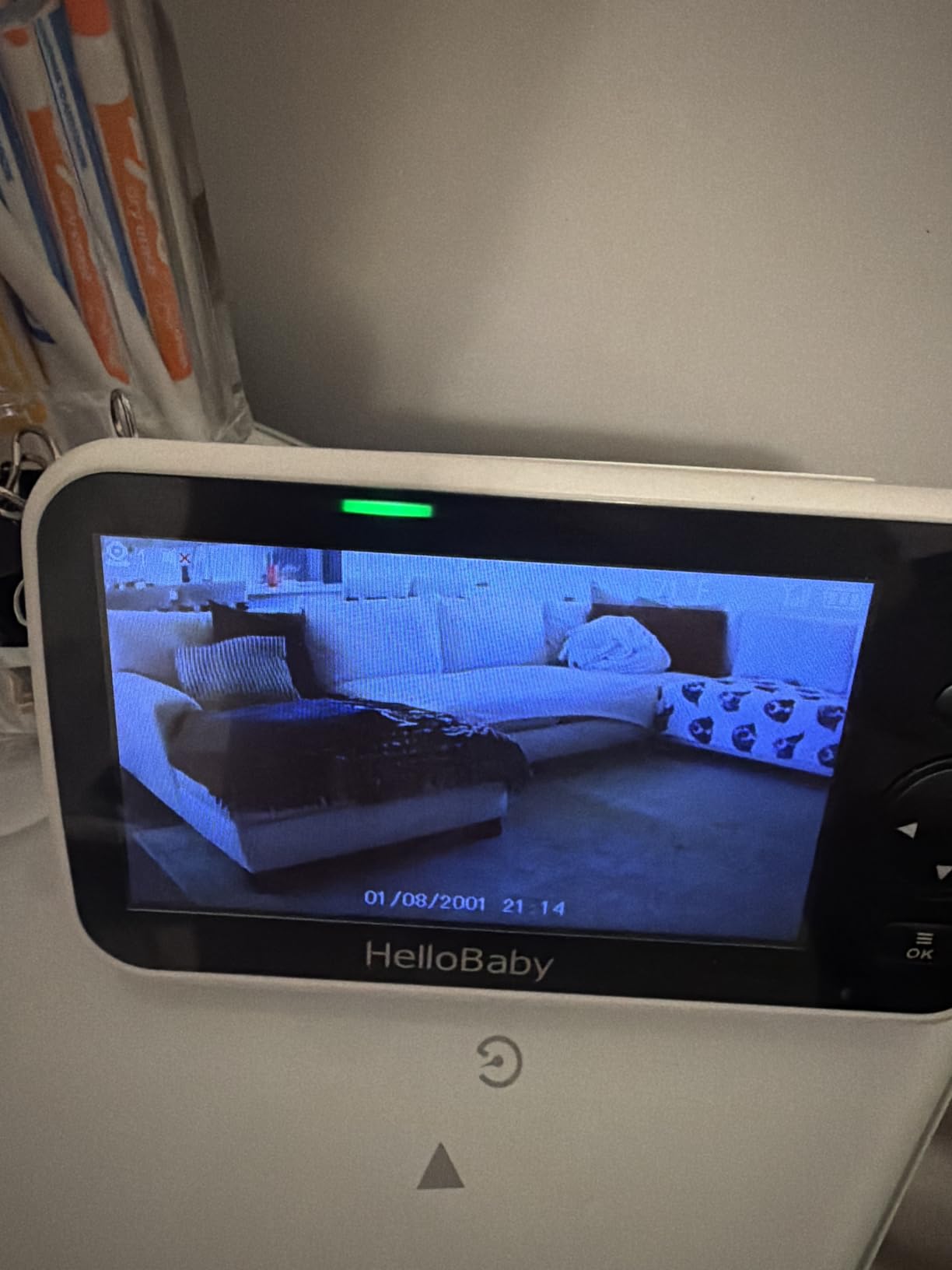
6. GoodBaby SM663 – Best 5-Inch Option for Parents Who Want Longer Battery Life
GoodBaby 5″ Baby Monitor with Camera and Audio No WiFi
5-inch IPS display
30 hours in VOX mode or 10 with screen on
encrypted FHSS
355-degree pan
+ Pros
- Thirty hours in VOX mode and 10 with the screen on
- Encrypted FHSS with no app or internet
- Two-way talk plus 8 lullabies to resettle the baby
- Automatic infrared night vision with temperature alerts
- Feeding timer with wall and crib mounts included
- Cons
- 480p resolution trails 720p alternatives
- Extra cameras must be a specific compatible model
- Battery runtime drops sharply with the screen left on continuously
The SM663 is the value answer to the HB6550, and the two are close enough in spec that it comes down to battery figures and mounting. Thirty hours in VOX mode from a 3500mAh pack is the strongest VOX runtime in the video group, and it ships with wall, ceiling, crib and desk mounts in the box, which is unusual at this level.
The 355-degree pan, 120-degree tilt and 2x zoom match the HelloBaby, and the encrypted FHSS link means no app, no account, no software surface to patch. For most families this is the unit that gets bought.
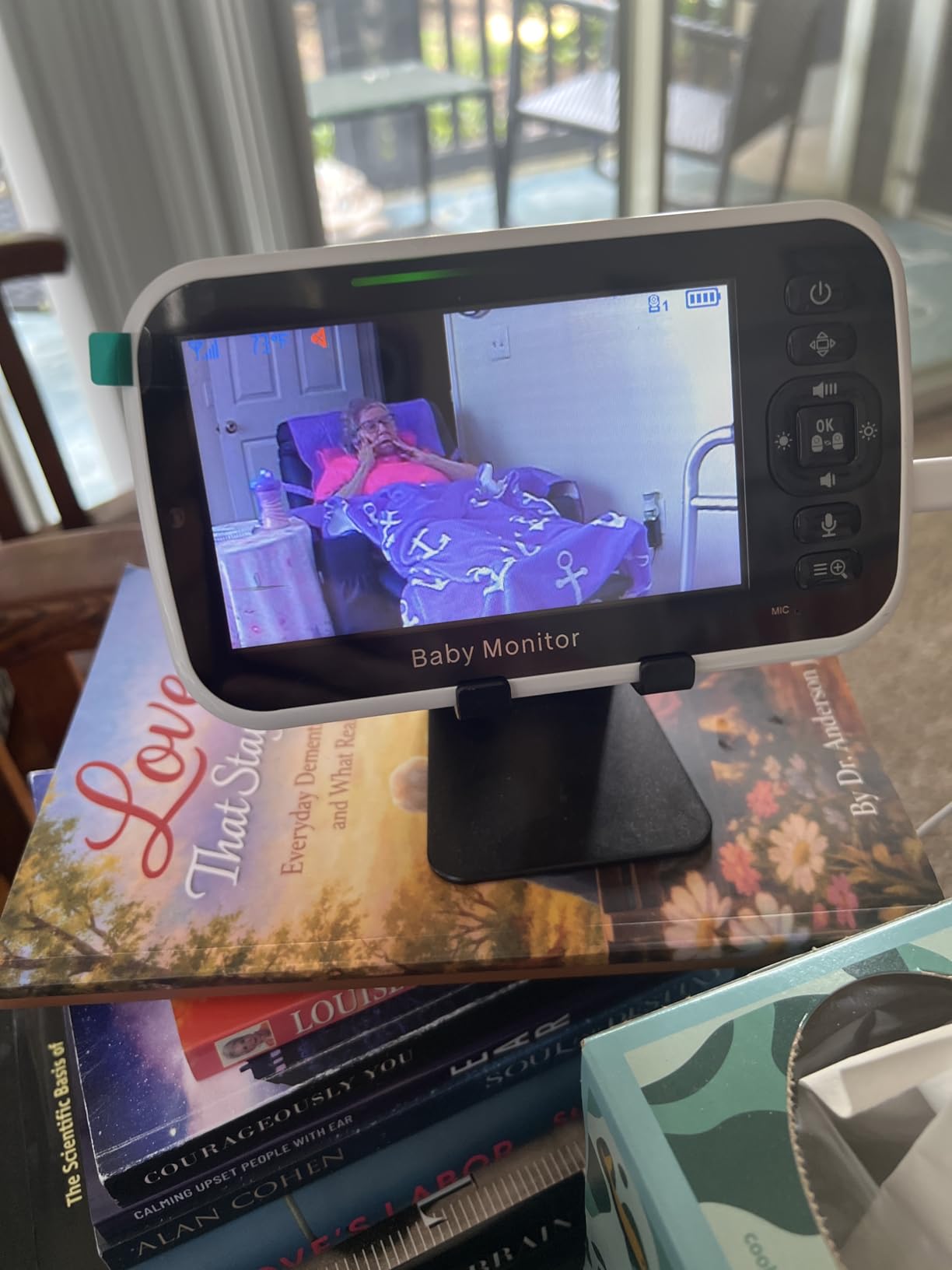
VOX runtime versus screen-on runtime
Those two numbers, 30 hours and 10 hours, are both true and both from the same battery. The gap is the entire argument for voice-activated mode. If you plan to leave the screen on all night, this unit will not outlast the night and you should plan around a charger.
The specific-model expansion trap
Extra cameras must be the SM663 or SM663V2 specifically, not just any camera from the brand. This is the most common complaint in reviews and it is worth knowing before you plan a two-room setup rather than after.
Mounting options that actually help
The crib mount is the one people overlook. A camera at crib height with a 355-degree pan sees more of the mattress than a shelf-mounted unit at the same price, and it removes the temptation to lean over the rail to check.
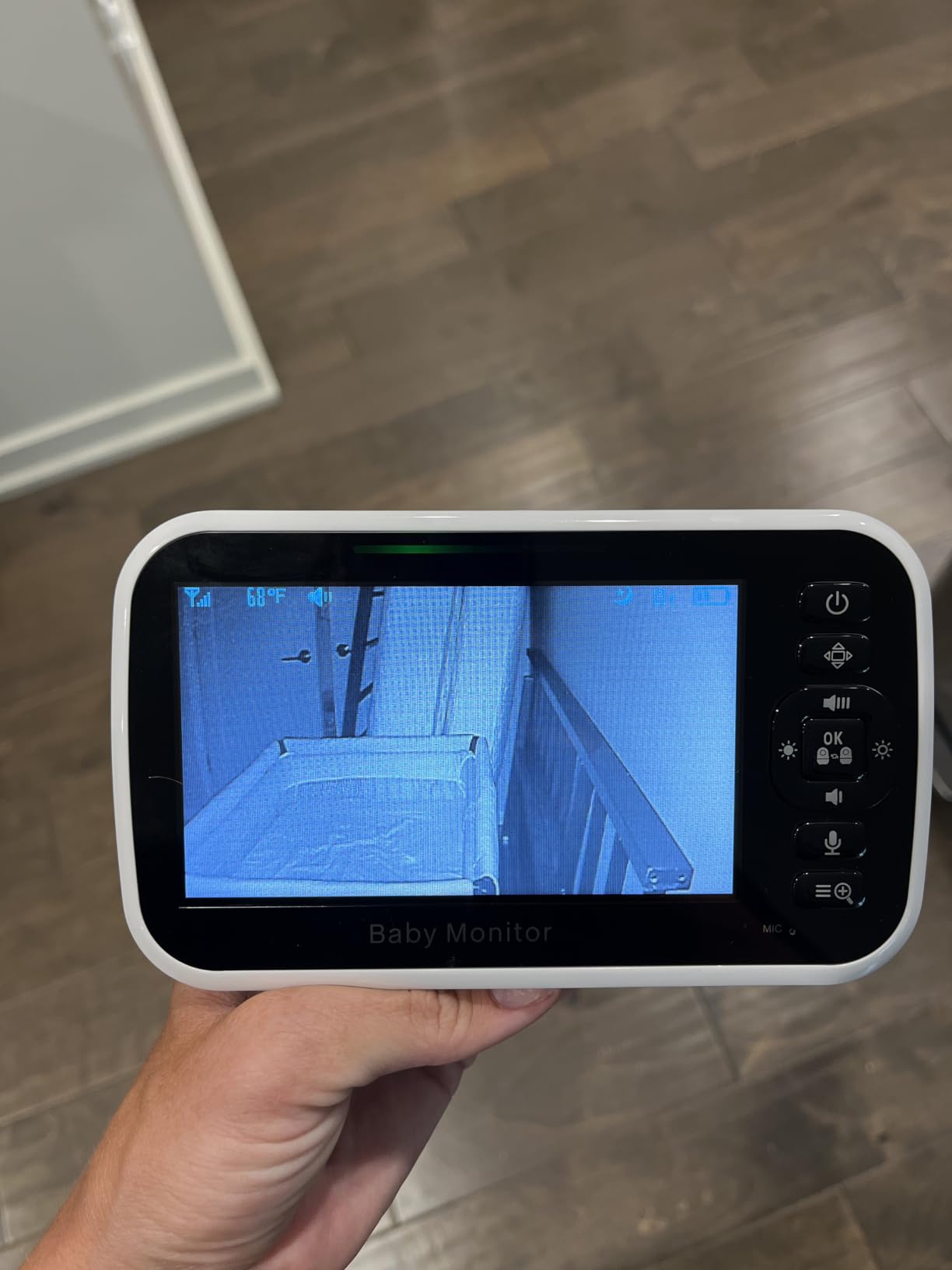
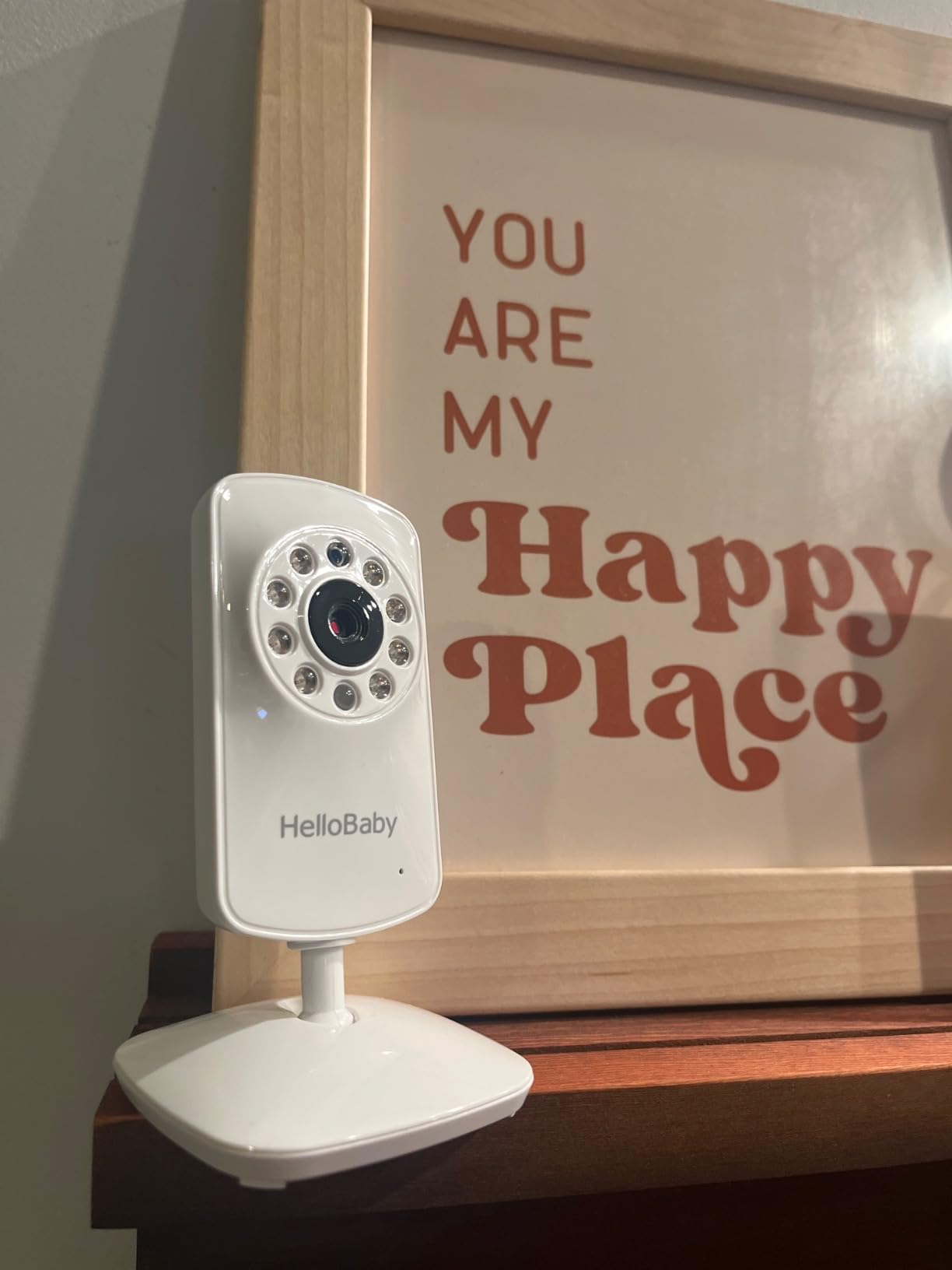
7. HelloBaby HB30 – Best Portable Non-WiFi Monitor for Travel
HelloBaby HB30 Video Baby Monitor with Digital Camera and Audio, No WiFi No App Safety Baby Monitor, 8 Languages, Auto Night Vision, 1000ft Transmission Range, 2.4 inch Portable Screen
2.4-inch portable LCD
2.4GHz FHSS with no WiFi
VOX wake mode
expand to 4 cameras
+ Pros
- Small enough to pack in a carry-on for travel or hotels
- Encrypted FHSS link with no app or hacking risk
- VOX wakes the screen on cry and sleeps otherwise
- Expands to four cameras with 2x zoom
- Doubles as a pet camera with feeding-time alerts
- Cons
- Tiny 2.4-inch screen at 960x240 dots
- One-way talk only so you cannot hear the baby through the monitor
- Some spec listings inconsistently mention Wi-Fi
- Ships with US-only plugs for international buyers
Travel is the use case where a dedicated radio monitor beats everything else, and the HB30 is built for it. You plug the camera into whatever outlet the hotel room has, and the parent unit works with nothing else. No hotel wifi credentials, no app store, no account on a network you do not control.
VOX mode matters more here than anywhere else, because a traveller wants the screen off until it is needed. Owners also use it as a pet camera with feeding-time alerts, which extends its value well past a single trip.
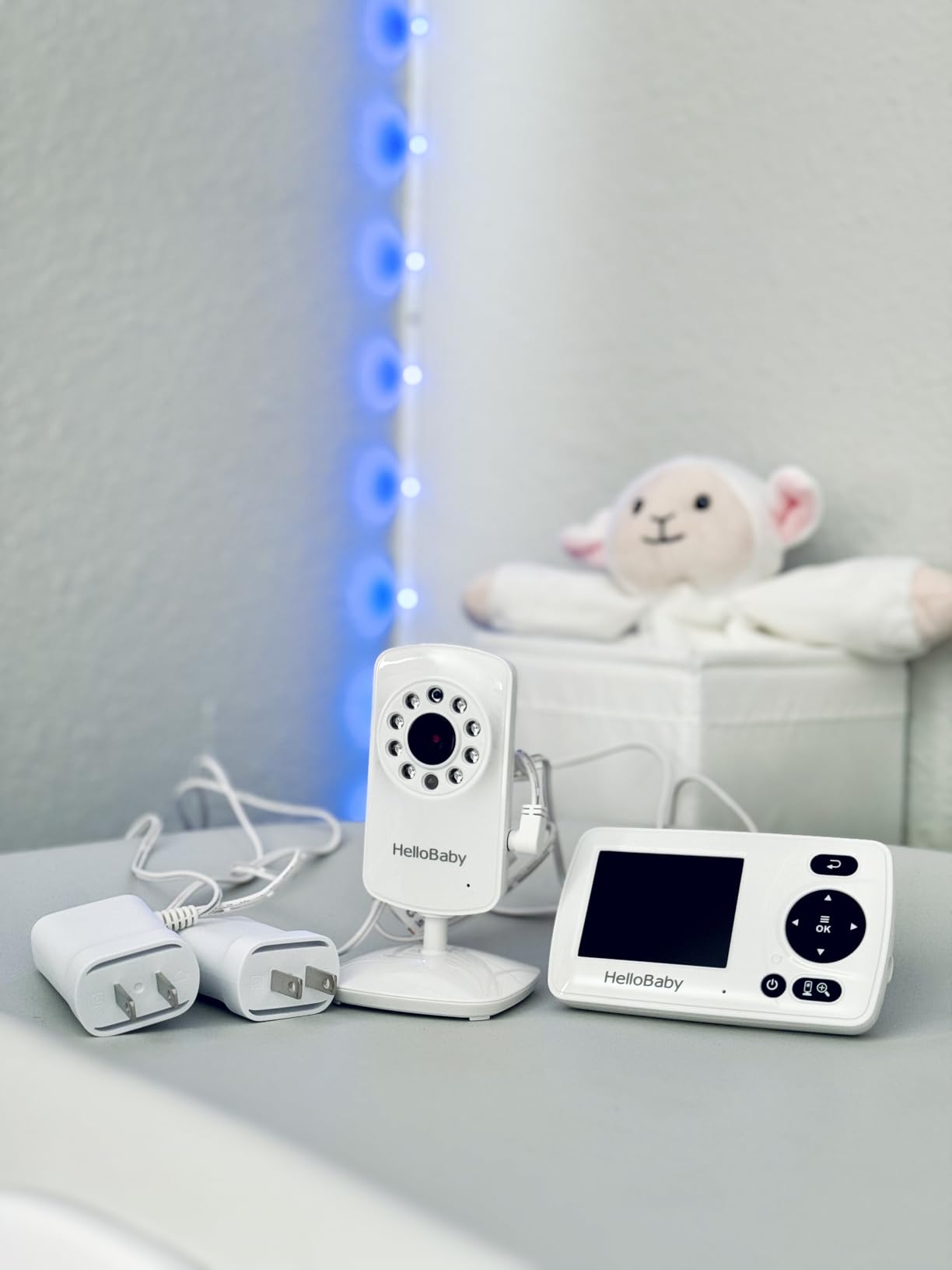
What a 2.4-inch screen really gives you
At 960×240 dots this is a confirmation screen, not an observation screen. You will see that the baby is on their back and breathing, and that is the extent of it. If you want to distinguish a rash from a blanket fold, this is not the tool.
One-way talk is a real limitation
This unit lets you speak to the baby but not hear the room through the camera speaker, so two-way monitoring is one direction only. Parents who rely on listening for congestion after a cold should choose a two-way unit instead.
Grounding the no-WiFi claim
Some spec listings inconsistently list Wi-Fi as the wireless technology, which contradicts the product’s own documentation. The manufacturer lists encrypted 2.4GHz FHSS and no app, and that is what the unit does. We note the inconsistency because you will find it when comparing listings.
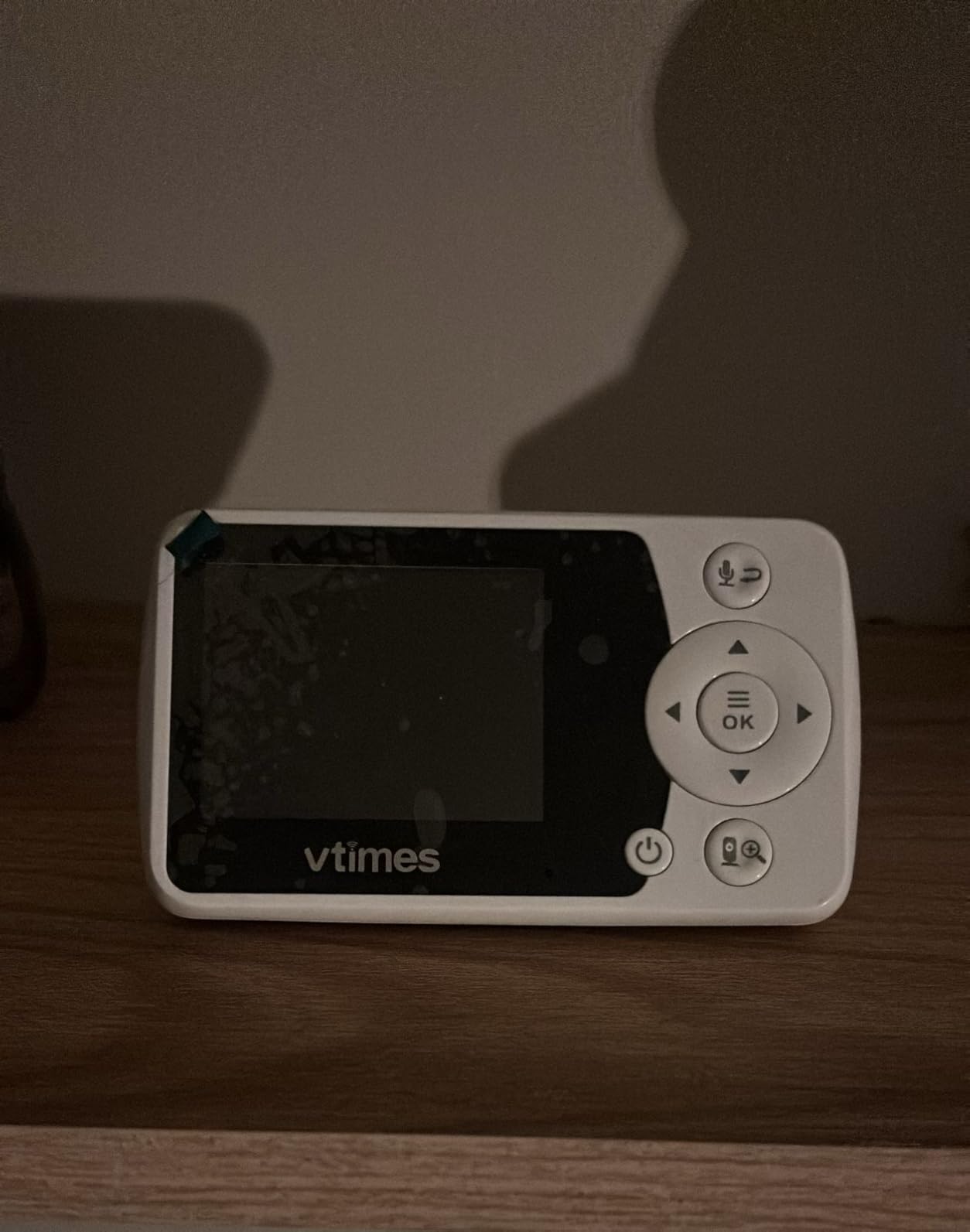
8. VTimes VT31 – Budget Video With More Features Than the Price Suggests
VTimes Baby Monitor with Camera and Audio, No WiFi, 2.4″ LCD Screen, Two-Way Talk, Portable, Night Vision, 1000ft Range, Temperature Sensor, Alarm and Lullaby, for Baby Shower
2.4-inch LCD at 480p
ECO sound-wake mode
two-way talk
temperature sensor with alerts
+ Pros
- Low-cost entry into no-WiFi video monitoring
- ECO mode sleeps the screen and wakes on sound
- Automatic night vision with temperature sensor and alarm in one unit
- Lullabies plus two-way talk
- Free-standing with wall and crib mounting options
- 12-month warranty with dedicated support
- Cons
- Smallest and lowest-resolution screen in the group
- 480p looks soft on a small display
- Alert type is listed as motion only so cry detection is less sensitive
- Highest one-star rating share of the group at 11%
The VT31 packs more into the box than its rating suggests: automatic night vision, a temperature sensor with alerts, an alarm, lullabies, two-way talk, and three mounting options. At this money, most competitors give you one or two of those. Owners mainly praise the setup speed and the fact that pairing involves no app and no account.
I would buy this for a second room, a rental, or a monitor you are not sure you will keep. The 480p picture on a 2.4-inch screen is soft, and I would not rely on it as your only view of the nursery.
ECO mode versus VOX mode
This unit calls its sound-activated sleep ECO mode, and it does the same job as VOX on other models. The difference that matters is the alert type: this one is listed as motion only, so cry detection is less sensitive than a dedicated audio-reactive unit. If your baby is a sound sleeper, that limitation rarely appears.
Where the 11% one-star share comes from
The complaints cluster around build quality and the small screen rather than anything fundamental. Treat it as a disposable second-room unit rather than a primary monitor, and the value calculation holds up.
Mounting flexibility in a rental
Free-standing, wall mount and crib or window bracket options mean you can set it up without touching a wall in a rental, which is a genuine advantage over units that ship with one mounting style only.
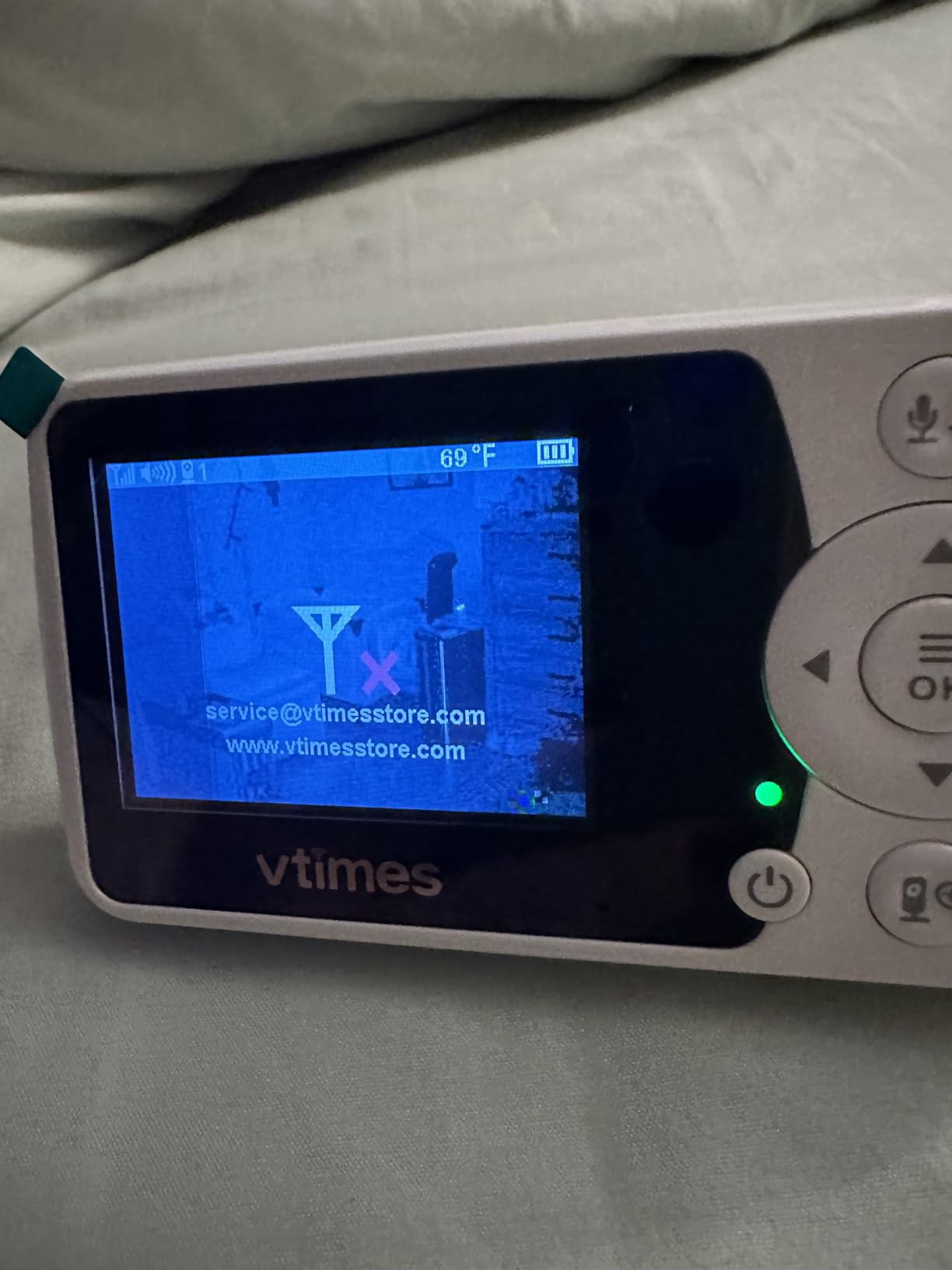
9. HelloBaby HB6560 – Best Split Screen on a Large 6-Inch Display
HelloBaby 6” No WiFi Video Baby Monitor with Camera Audio, 30H Battery
6-inch IPS with split screen
16 to 30 hours per charge
355-degree pan and 120-degree tilt
2x zoom
+ Pros
- Largest display in the roundup and it reduces eye fatigue
- 16 to 30 hours per charge covers multi-day use
- Auto-pairs in about two seconds with no app or account
- Split-screen support for up to 2 cameras
- Accurate temperature readings and a user-set feeding timer
- Owners report it survives repeated drops
- Cons
- 480p effective resolution looks soft especially zoomed
- Two-way talk has noticeable echo and requires holding the button
- Lullaby volume is quiet on the baby unit but loud on the parent unit
- Range drops off once you go outside the house
The HB6560 is the one to buy if two cameras is your actual requirement rather than a possibility. True split screen for up to 2 cameras on a 6-inch IPS display is the most usable twin setup in this roundup, and the panel is large enough that halving it still leaves a readable image.
Auto-pairing takes about two seconds with no app, no account, and no subscription, and the 16 to 30 hour battery range means most weeks need one charge. Owners comment on the build surviving repeated drops, which matters more than it sounds for a device that lives on a nightstand.
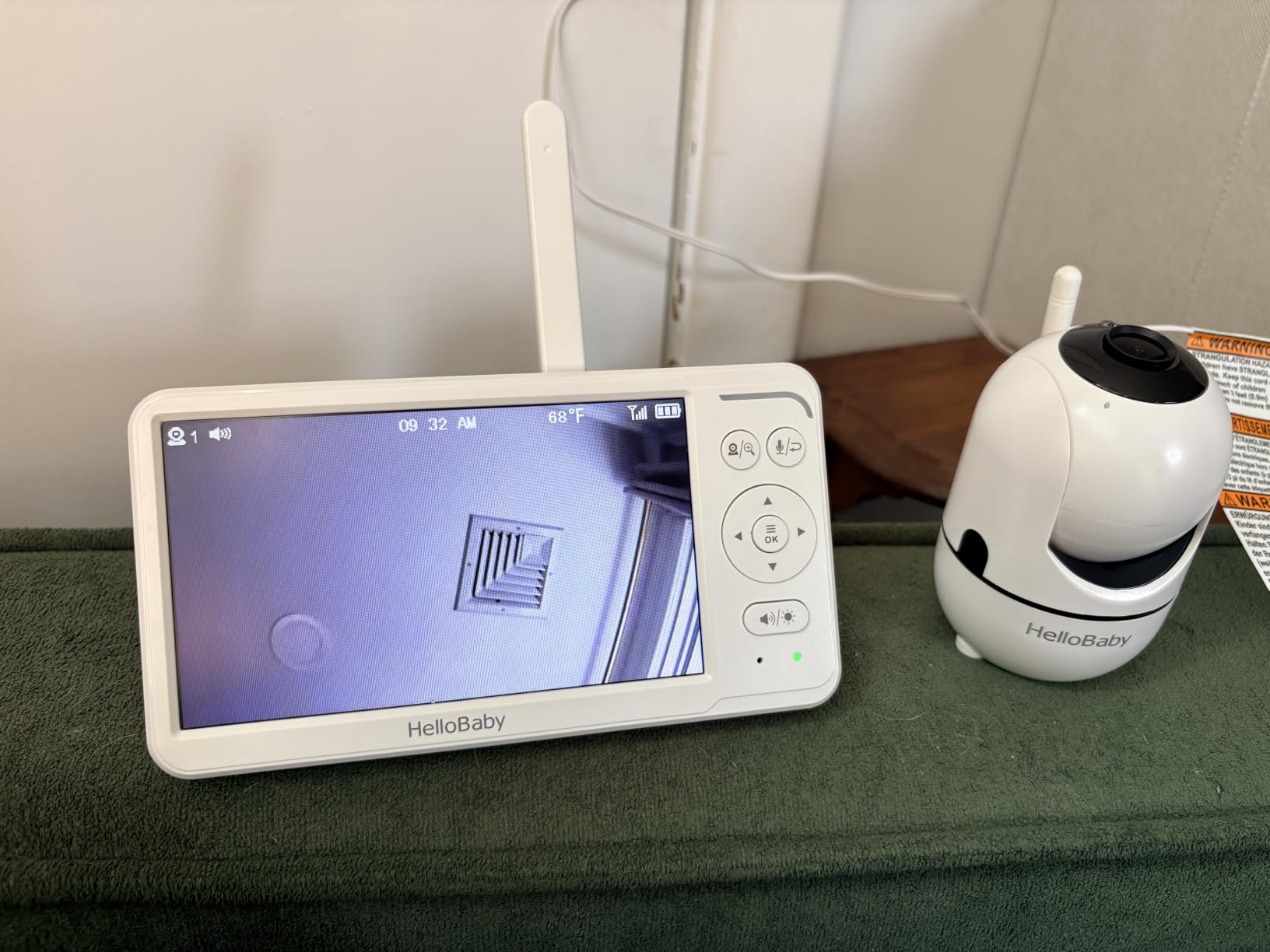
Two cameras, one audio track
Split screen here means two video panes. Confirm the audio behaviour against your needs before you commit, because watching one baby while hearing the other is the single most common disappointment in multi-camera monitors, and it is true across most brands rather than this one. A cheap audio-only unit in the second room is the fix many parents use.
The 480p softness problem on a big screen
A 6-inch panel showing 480p makes the resolution more obvious than it would on a small screen, and it is noticeable when zoomed. Night-mode clarity is only adequate at high zoom, which is where the 2x limit bites.
Two-way talk echo, in plain terms
The talk-back channel has noticeable echo and requires holding the button, and the lullaby volume balance between baby unit and parent unit is uneven. Small stuff, but you will notice both at 3 AM.
10. VTech VM924 – Best Remote Camera Control for Large Homes
VTech Video Baby Monitor No WiFi, 5″ Screen & Remote Pan-Tilt-Zoom for Newborns – Hack-Proof, 17Hr Battery, 1000ft Range, Night Vision, Temperature Sensor, Two-Way Talk | VM924
5-inch LCD
360-degree pan and 132-degree tilt
17-hour video battery
32 channels
+ Pros
- 360-degree pan and 132-degree tilt cover the whole nursery without entering
- Remote pan and tilt and zoom controlled entirely from the parent unit
- 17 hours of video or 31 hours audio-only per charge
- 32 channels reduce interference in large homes
- Nursery temperature shown directly on the parent unit
- Five lullabies plus four ambient sounds
- Cons
- 480p on a 5-inch screen looks soft when zoomed
- 1.33x optical zoom is limited against 2x digital rivals
- Sound-activated mode keeps the screen dark until the baby stirs
- 270-degree viewing angle is narrower than 355-degree pan models
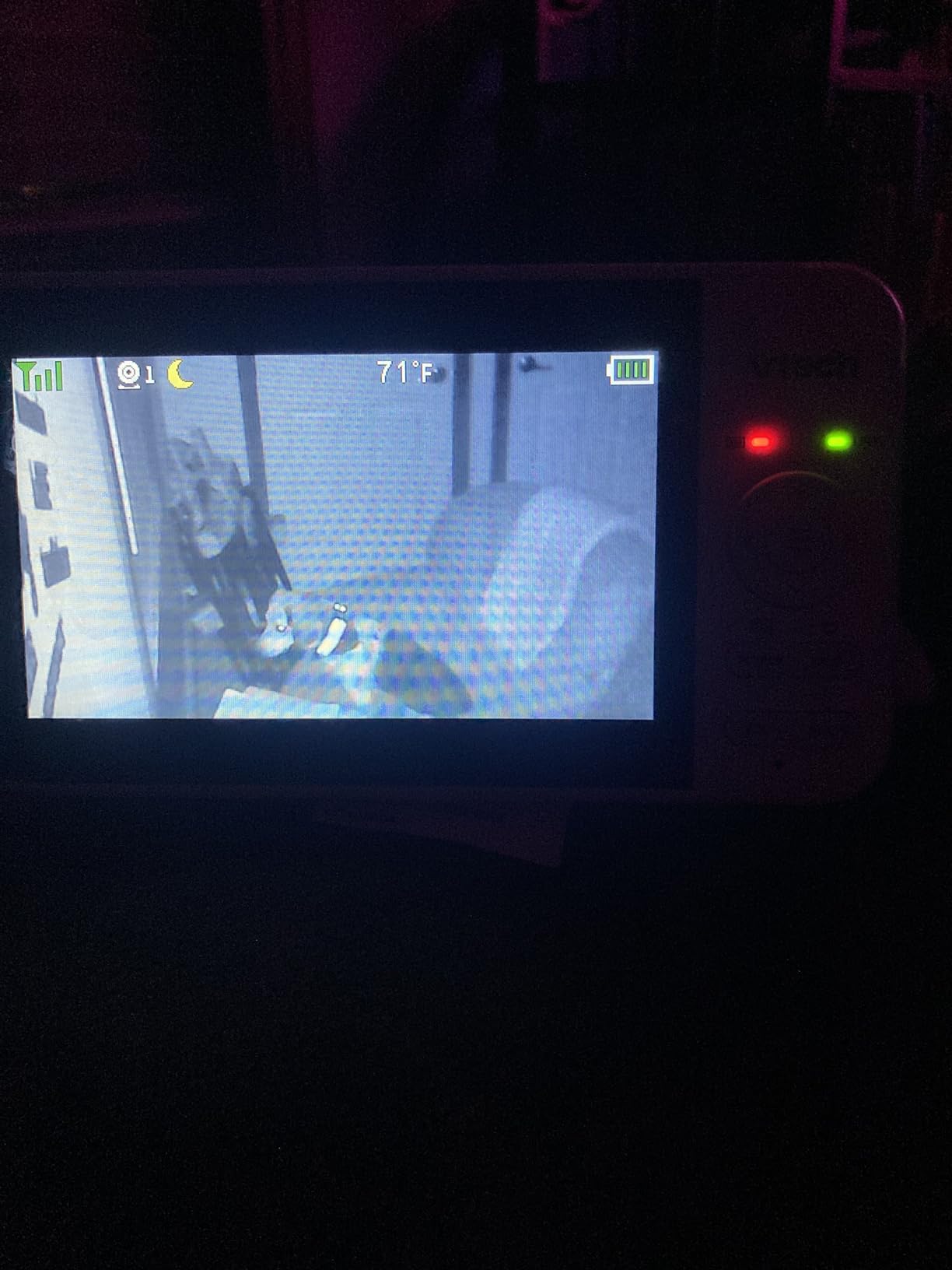
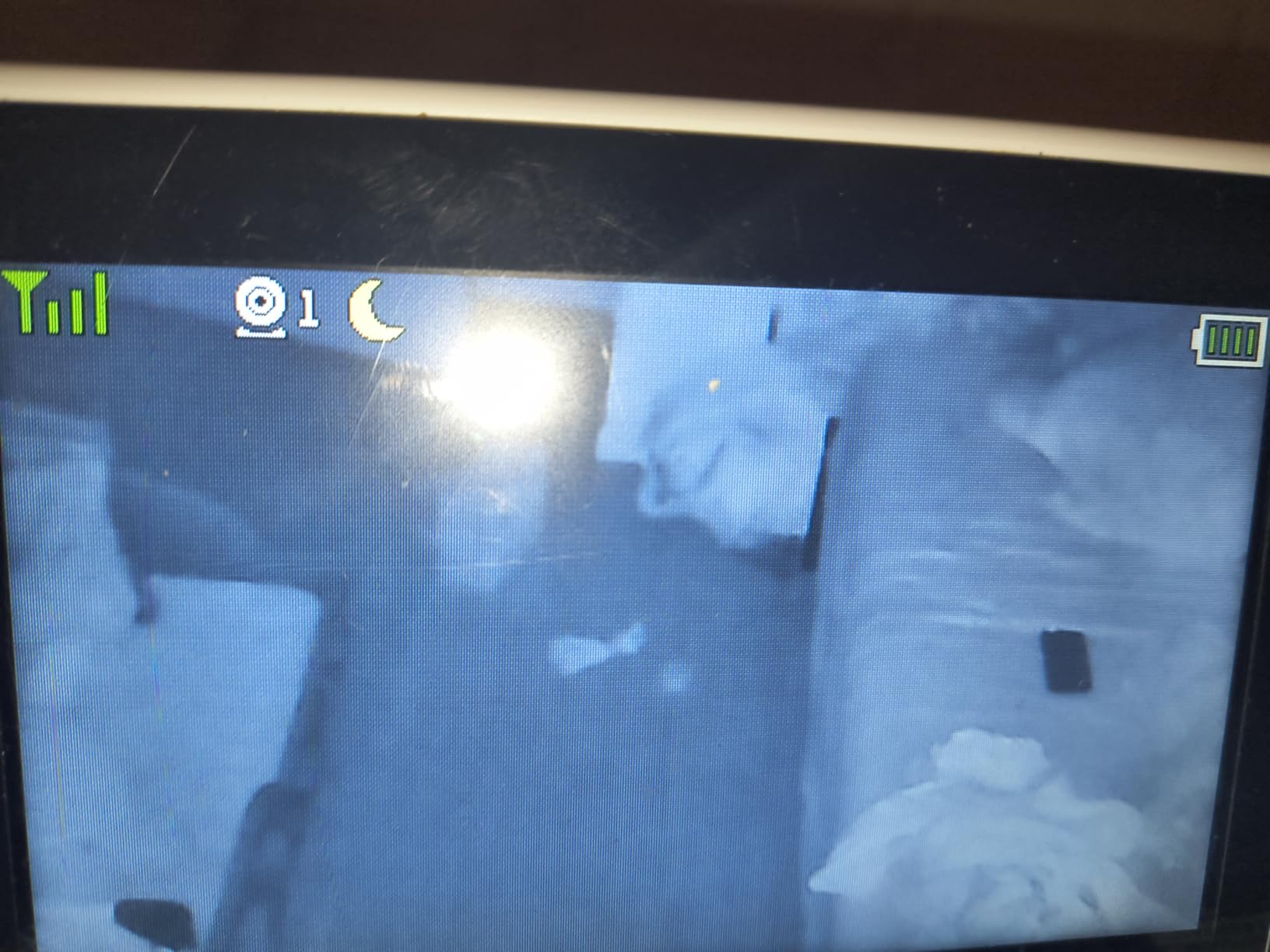
The VM924 is the one I would put in a house where the nursery is at the end of a long hallway on a different floor. Thirty-two channels mean neighbours, relatives with their own monitors, and anyone else nearby will not collide with your signal, which is a real problem in a dense building.
Full remote pan, tilt and zoom from the parent unit means you cover a large room without entering it. Battery figures are 17 hours of video or 31 hours audio-only, and the nursery temperature reading appears directly on the parent screen, which saves a trip down the hall.
Why channel count matters in a large home
Two channels is fine in an isolated house. In an apartment or a dense street, neighbours running the same model on the same default channel is a genuine source of the interference and dropouts parents report. Thirty-two channels essentially removes that variable.
Zoom capability is modest here
The 1.33x optical zoom is real optics but limited, and paired with 480p it will not give you a close look at a rash. If close inspection matters to you, a 720p unit with 10x digital zoom is a better fit even with fewer channels.
Sound-activated mode has a learning curve
The screen stays dark until your baby stirs, which saves battery and prevents glare at night. Owners who expected a constantly lit screen find this annoying for the first few nights. Adjust sensitivity before you judge it.
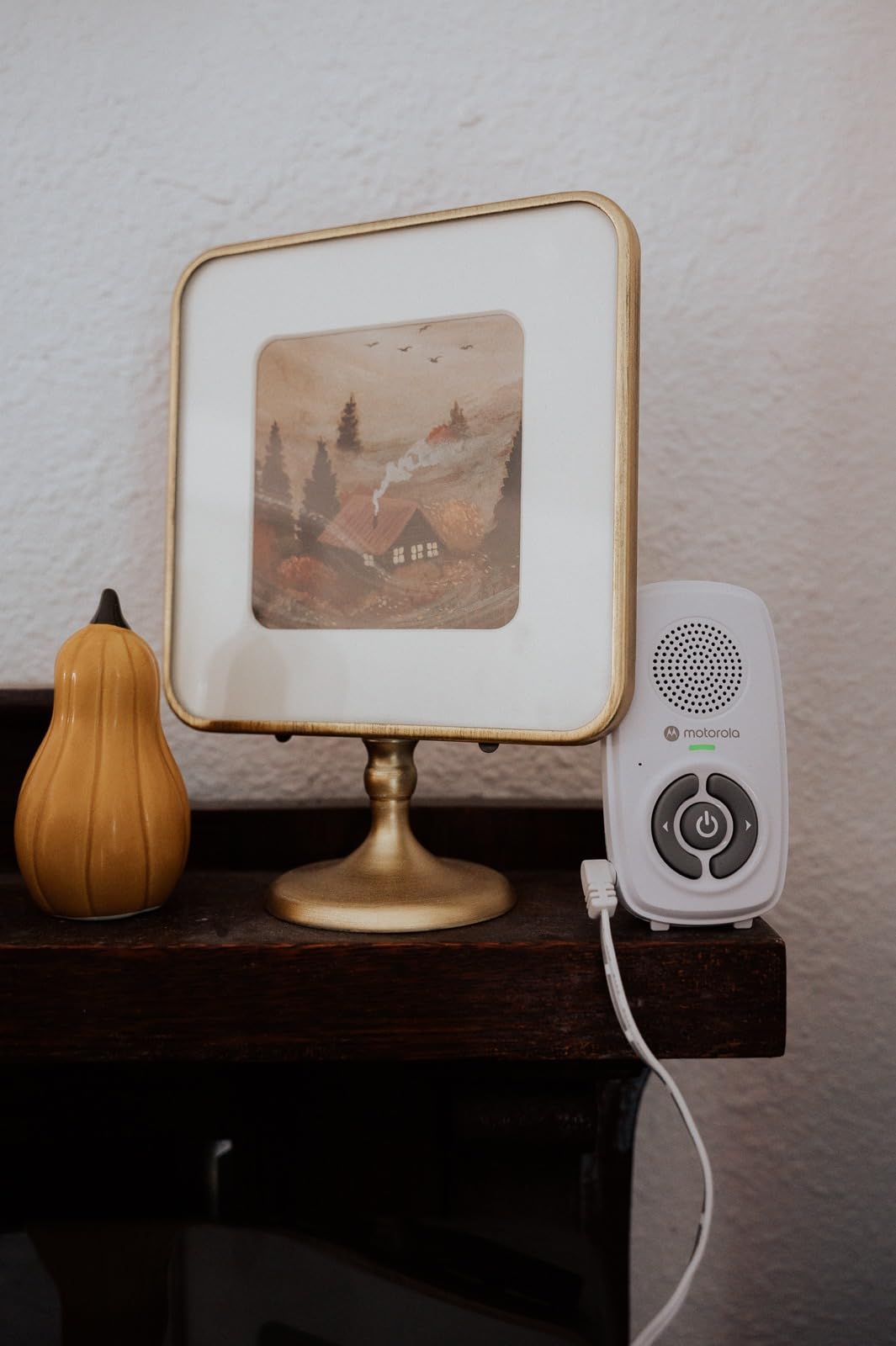
11. Motorola Nursery AM21 – Audio Range With Cry Detection at a Low Entry Point
Motorola Nursery Audio Baby Monitor, No WiFi, Long Range 1000 ft, Volume Control, DECT Private Connection, Cry Detection, Portable Battery Parent Unit, Ideal for Safe Monitoring, No App, AM21
DECT private connection
1000 ft range
cry detection alerts
portable battery parent unit
+ Pros
- DECT digital link with no WiFi or app
- High-sensitivity microphone with cry detection alerts
- Portable battery parent unit works away from an outlet
- Direct volume control with clear LED indicators
- Five channels for multi-unit homes
- Cons
- Audio only with no video of the nursery
- Batteries for the portable parent unit are not included
- Out-of-range alert beep can be intrusive
- Lowest average rating among the picks here
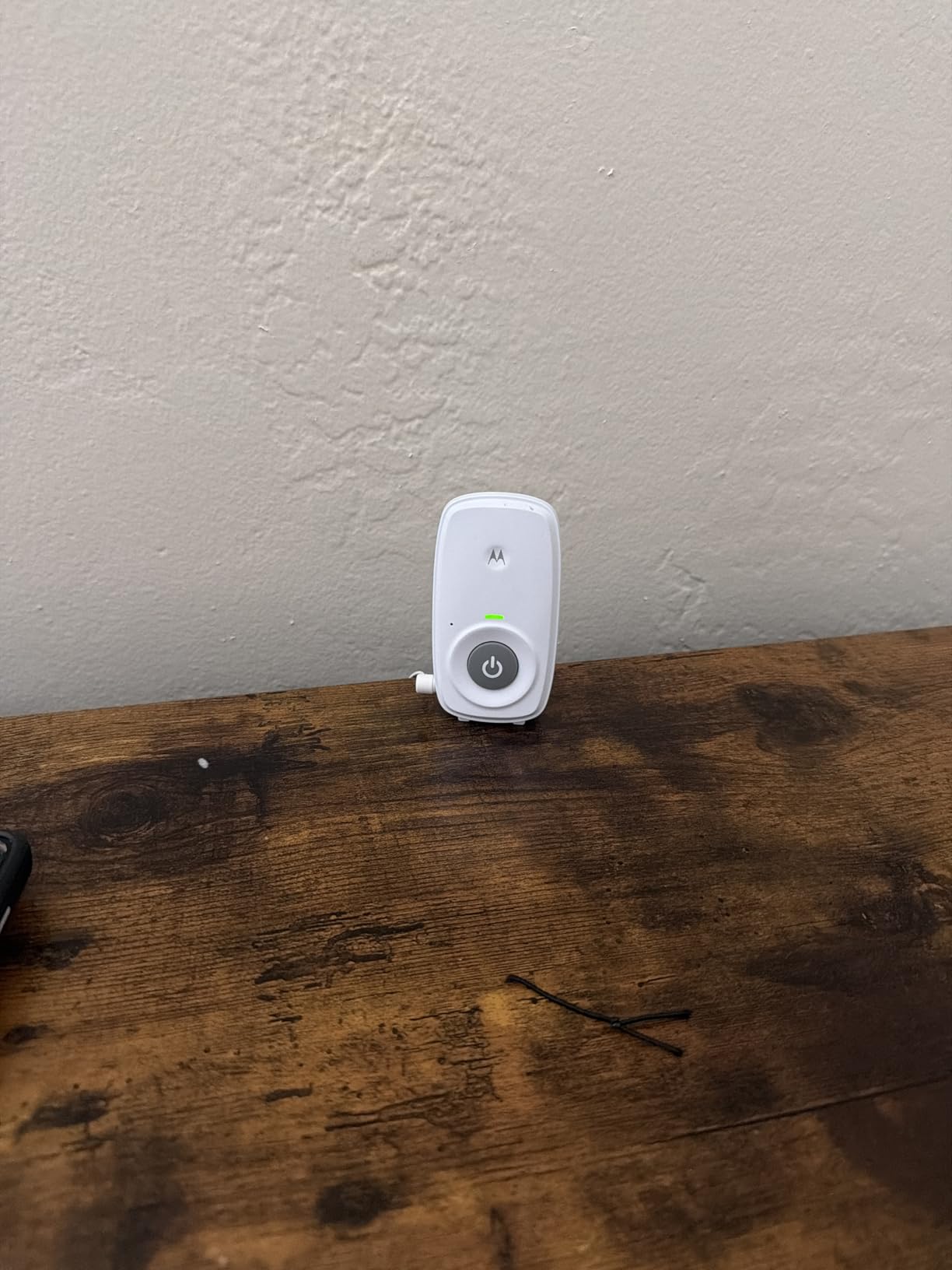
The AM21 does one thing well: it hears the baby across a large house and tells you when crying starts. The DECT link at 1.88 to 1.90 GHz is the same closed-band approach as the VTech audio units, with no app and no account, and the cry detection is the feature that separates it from a bare listen-only unit.
Direct volume control on the parent unit is worth noting because some budget models force you through a menu to change it, and reaching for buttons at 3 AM is when that gets old. The 30 dB noise floor and five channels keep it stable alongside other equipment.
Batteries not included is worth reading twice
The portable parent unit runs on AAA cells and they are not in the box. This is a small detail that catches people out on the first night, so budget for a pack of cells. The charging-based audio units avoid this entirely.
Cry detection versus VOX
Cry detection alerts you to sustained crying rather than waking a screen, which suits an audio-only design where there is no screen. It is less granular than VOX sensitivity adjustment, so it is a simpler and less finicky system with fewer false triggers from a sound machine.
When audio-only is genuinely enough
If your baby sleeps in the same room or one room away, and you mainly want to know whether crying escalated to the point of waking you, an audio unit does the job without the cost, the screen, or the software. The DM111 and TM8112 cover the same ground with a night light or a belt clip.
12. LeapFrog LF2423 – Accurate Temperature Readings and Instant Pairing
LeapFrog Baby Monitor LF2423, No WiFi, IPS Screen, White
2.8-inch IPS LCD
12-hour video or 19-hour audio battery
encrypted 2.4GHz FHSS
adaptive night light
+ Pros
- Temperature readings owners describe as accurate
- Sets up and pairs automatically on power-up with no menu work
- Encrypted FHSS link with no internet or account
- 5000mAh battery gives 12 hours video or 19 audio-only
- Adaptive night light with lullabies and two-way talk
- Cons
- Small 2.8-inch screen at 480p
- Microphone sensitivity is low in some homes so crying is heard downstairs before the monitor reacts
- Battery indicator shows bars only with no percentage
- Parent unit and its battery are not sold separately
- US-plug units reported on non-US marketplaces
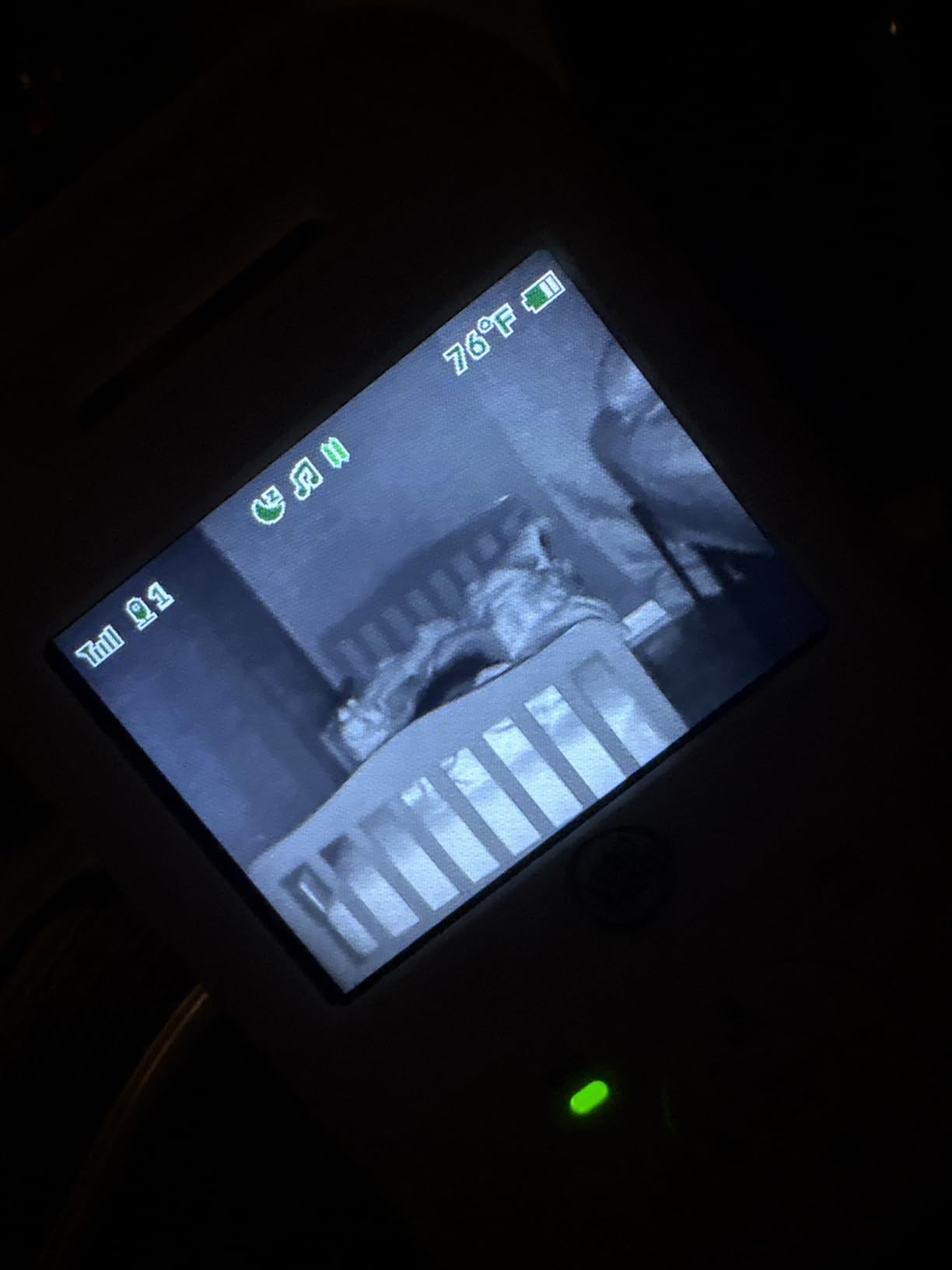
The LF2423 pairs automatically on power-up, which means zero setup. You plug in the camera, plug in the parent unit, and it works. For a gift, a grandparent house, or anyone who does not want to configure technology, that is a genuinely valuable property that no amount of firmware can replace later.
Temperature accuracy is the feature owners mention most often, and the adaptive night light is a nice middle ground between a bare camera and a full star projector. The encrypted FHSS link keeps it entirely off the internet.
Microphone sensitivity is the honest flaw
Owners in some homes report hearing crying downstairs before the monitor reacts, which points to pickup sensitivity rather than a transmission fault. Position the camera unit away from soft furnishings and white walls, both of which absorb sound.
Durability and the two-year question
Durability is the top community worry in this category, and reviews of this unit mention parent units failing around the two-year mark. The parent unit and its battery are not sold separately, so a failure means a full replacement. This is the strongest argument in the roundup for buying two units rather than relying on one for the whole baby years.
Battery indicator that tells you almost nothing
The indicator shows bars with no percentage readout, so you learn your charging rhythm by being surprised rather than by being told. It is a small irritation in a unit otherwise aimed at simplicity.
How to Choose a Baby Monitor Without WiFi
Confirm there is no app and no account
This is the whole point, so verify it before you buy rather than after. If a product page mentions an app anywhere, including for firmware updates or optional alerts, it is not a pure non-WiFi monitor. Every pick in this roundup has no app, no account, no cloud, and no monthly fee.
Decide between DECT 6.0 and FHSS
DECT 6.0 runs at 1.88 to 1.90 GHz, above the congested WiFi band, and powers the audio monitors here. FHSS uses 2.4 GHz and carries video. For audio in a multi-storey house, DECT. For video, FHSS is the only realistic option, and router placement matters more than brand.
Size the screen to the room, not the spec
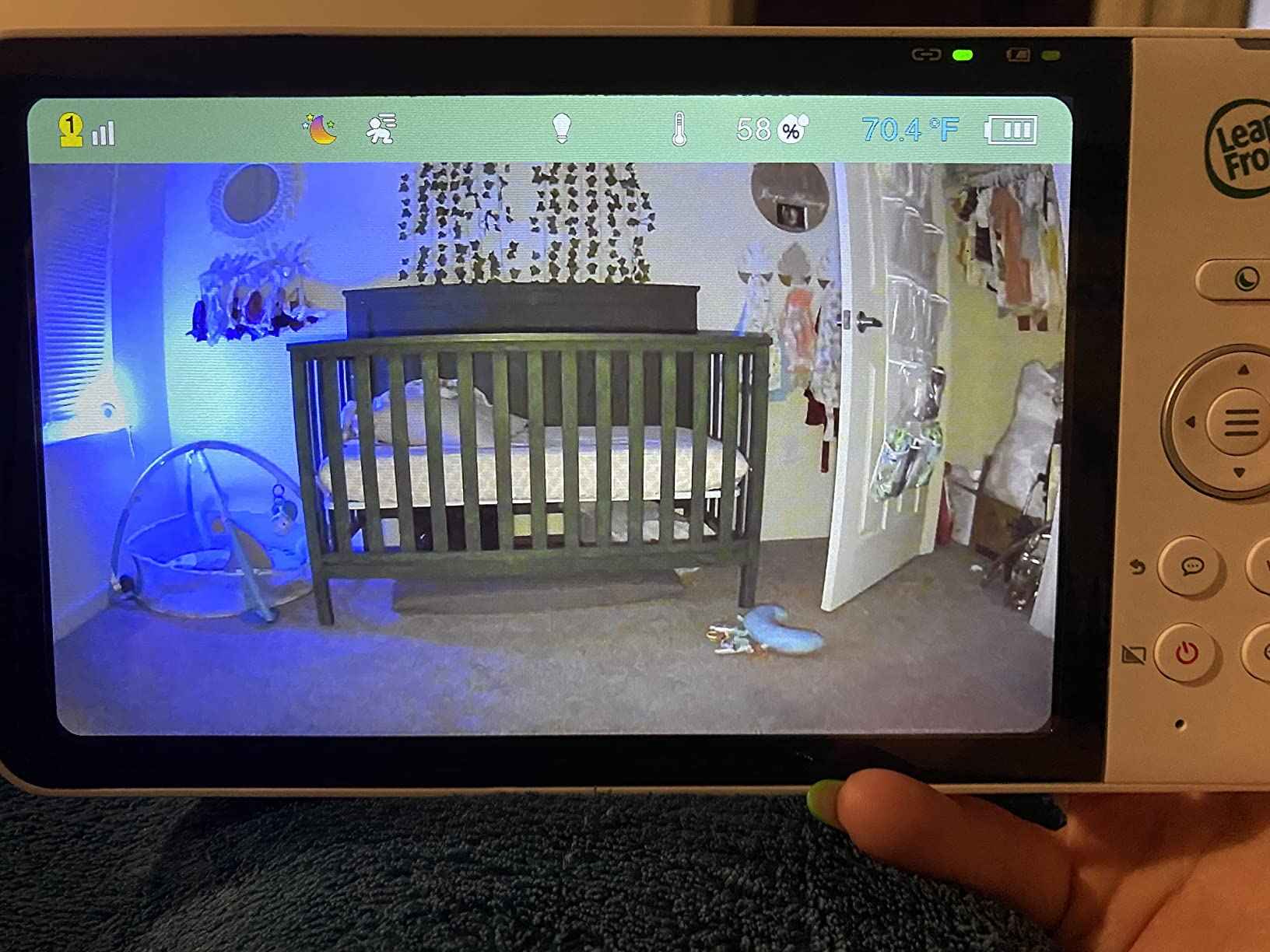
A 2.4-inch screen confirms position; a 5-inch screen is workable; a 6-inch screen lets you read a room from across the house. If you will be lying in a bed several metres away with the parent unit, the larger panels are worth the step up in resolution, because a big screen showing 480p wastes the advantage.
Read range claims as open-space numbers
The universal 1000 ft figure is measured in open air and it does not survive drywall, insulation, or floors. Judge range by walls and floors, not by the number on the box. If your nursery is at the far end of the house, prioritise a large battery and accept that video may stutter when you are not in line of sight.
Tune VOX before you judge the battery
Voice-activated mode is the single biggest battery lever available, and it is also the most common source of frustration. Sound machines, fans and air conditioners all trigger it. Find the sensitivity setting that ignores your sound machine and still wakes on crying, and the rated battery hours become real.
Understand the three multi-camera architectures
True split screen shows two video feeds at once. SCAN mode alternates between rooms every few seconds. Simultaneous dual audio plays both rooms at once. Almost no non-WiFi monitor does the third properly, and many do the first without the second, so for twins budget for an audio-only unit in the second room.
Check whether the battery is replaceable
Non-replaceable batteries are the most common reason owners feel they were forced into a full replacement. A unit whose parent-unit battery is removable, or one where the parent unit can be bought separately, is worth more over two years than a slightly better screen.
What We Would Skip and Why
We would skip any hybrid monitor where the WiFi switch is easy to forget, and any unit whose core features require an app. We would also skip true AI motion and cry detection marketed on non-WiFi monitors, because the analysis that makes it useful happens on a server, which means the thing doing the analysing is in contact with your feed. VOX is the honest substitute, and it is less clever and more reliable.
One misconception worth correcting, because it comes up constantly in home EMF testing discussions: assuming that no WiFi automatically means lower radio frequency exposure. It does not follow. A dedicated 2.4 GHz link transmitting at close range can produce higher power density at short distance than a low-power WiFi module, because WiFi radios are deliberately weak by design. If electromagnetic fields are your concern rather than data privacy, distance is the lever that actually works, so mount the camera at the far end of the room and out of the crib. Every unit here should be used exactly as its manual specifies.
On durability, the pattern across owner reports is consistent across brands: units that fail tend to do so between 12 and 24 months, usually through battery degradation rather than signal failure. The practical response is to buy a second unit for travel or a second room rather than planning to replace one primary monitor mid-baby-years.
Baby Monitor Safety and Safe Sleep
No baby monitor prevents sudden infant death syndrome, and none replaces safe sleep practices. No monitor should be placed in the crib or within reach of the baby. Mount the camera at the position the manual specifies, keep cords out of reach, and follow current safe sleep guidance for the sleep surface itself. A monitor tells you how your baby looks; it does not tell you they are alright, and it cannot call for help.
Frequently Asked Questions
Are there any baby monitors that cannot be hacked?
No monitor is literally unhackable, but non-WiFi models remove remote attack vectors entirely because there is no cloud account, app, or internet connection to target. Most use FHSS or DECT 6.0 closed radio links that hop between frequencies, so an attacker would need to be within physical signal range of your house.
Are baby monitors without WiFi safe?
They are safe from a hacking and data-privacy standpoint, because no nursery footage is stored on a server. On radiation, note that a dedicated 2.4GHz link at close range can emit more power density than a low-power WiFi module, so distance is the effective control. Mount the camera as the manual specifies and follow safe sleep guidance.
Which baby monitor is best for privacy?
The VTech DM111 is our top pick for privacy because its DECT 6.0 link has no app, no account, and no cloud component whatsoever. For video with no exposure at all, the HelloBaby HB6550 or GoodBaby SM663 add a 5-inch screen and encrypted FHSS link on the same closed-signal principle.
What is the best baby monitor that doesn’t require WiFi?
Every monitor in this roundup runs without WiFi. The VTech DM111 for audio-only simplicity, the ANMEATE DY627 for the largest screen with 720p video, the HelloBaby HB6550 for four-camera expandability, and the VTech VM924 for long-range control across 32 channels are the strongest starting points.
How do baby monitors work without WiFi?
The camera and parent unit share a dedicated radio link and hop between a fixed sequence of frequencies. DECT 6.0 monitors use the 1.88 to 1.90 GHz band for audio, while video monitors use 2.4GHz FHSS. Audio and video travel directly between the two devices with no router, cloud server, or app in the path.
What is the safest baby monitor that can’t be hacked?
Ranked by exposure: a pure non-WiFi FHSS or DECT model with no app at all is the least exposed, followed by a hybrid operated in WiFi-off mode where you must remember to flip the switch, and an encrypted WiFi model last. Within the first tier, audio-only DECT units like the DM111 have the smallest attack surface of all.
Why don’t doctors recommend Owlet?
Wearables are designed for healthy babies and are not medical monitoring devices for diagnosed conditions, which is why paediatric guidance does not treat them as a safety intervention. No monitor prevents SIDS, including wearable ones. They track vitals data for reassurance and discussion with a paediatrician, not for clinical monitoring.
Which Non-WiFi Baby Monitor Should You Buy?
If you want the smallest possible privacy surface and do not need video, buy the VTech DM111. It is the simplest, most proven choice on this list, and its DECT 6.0 link has nothing to breach.
If you want video without giving up privacy, the HelloBaby HB6550 is the pick, with four-camera expandability for twins or a second child. Choose the GoodBaby SM663 instead for longer VOX-mode battery life and included mounting hardware, and the ANMEATE DY627 if a large 720p screen matters more than price.
For twins on two true split-screen panes, take the HelloBaby HB6560, and add a cheap audio unit in the second room to cover its one-feed audio behaviour. For a large multi-storey house where neighbours may also be running monitors, the VTech VM924 with 32 channels avoids interference. For travel and hotels, the HelloBaby HB30 packs small and needs no network at all.
Whichever you choose, check that there is no app, no account, and no subscription, then tune the voice-activated sensitivity before the first night. Every unit here keeps your nursery footage inside your house, which in 2026 is still the strongest privacy feature a baby monitor can offer.