
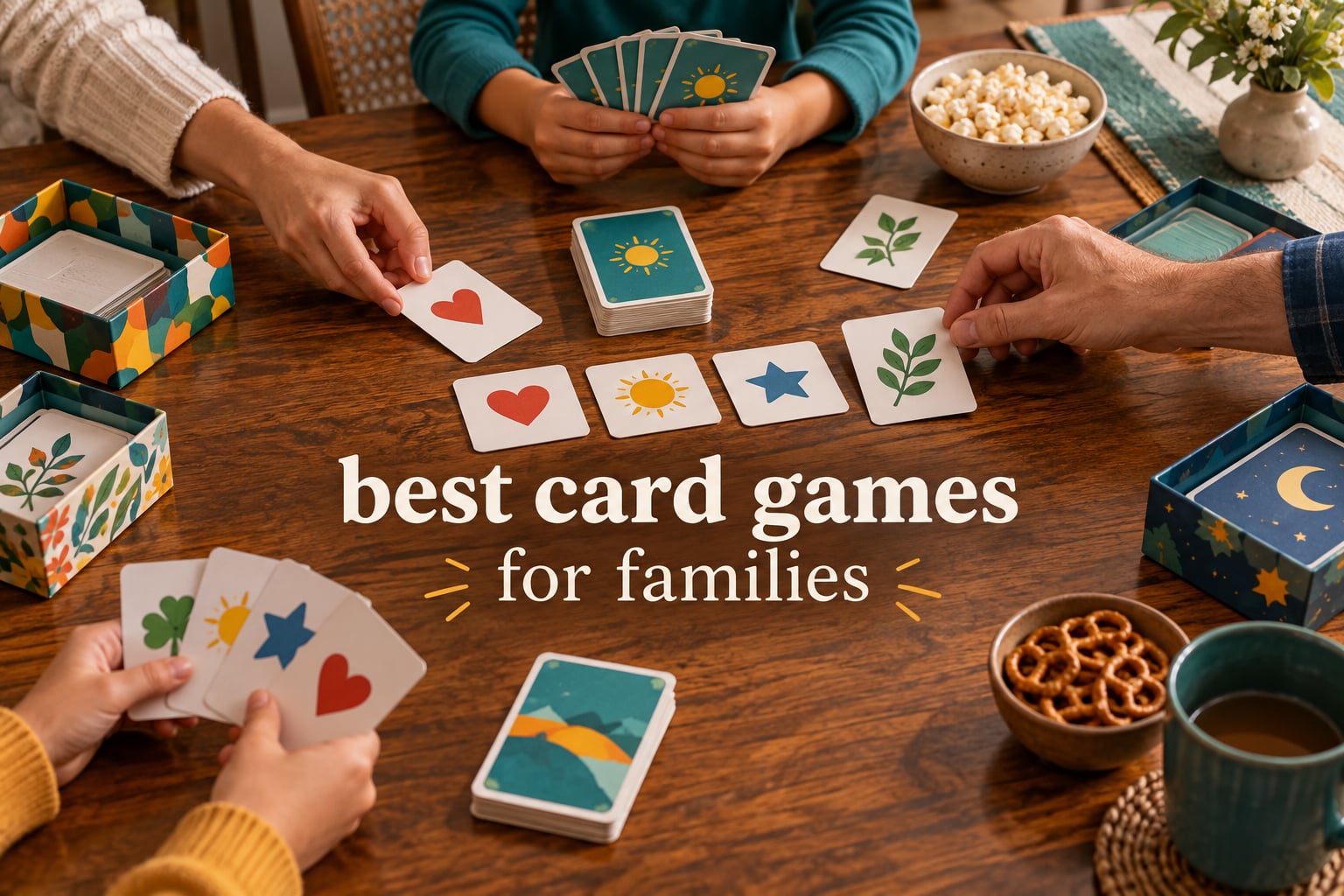
The best card games for families share three traits: a teach-in short enough to finish before anyone checks their phone, a round short enough to fit before bedtime, and a scoring system where a seven-year-old can genuinely win. Five Crowns, SKYJO and UNO are the three I hand to families first, in that order.
Our team played all twelve games in this roundup across six weeks, with three different household groups: a mixed table of a 6-year-old, two 10-year-olds and two adults; a pair of adults with no gaming background; and a five-player table that included two grandparents. We logged teach-in time, actual round length, how many times we asked for a scorepad, and how often somebody reached for a device instead of the next hand.
That last measure is the one that separated the winners. The games that made it here kept everyone looking at the table. The ones that did not make it either needed a rulebook read aloud twice or turned a single bad draw into tears.
If you have a wide age gap in the room, the honest truth is that one game will not satisfy a 5-year-old and a 15-year-old at the same time. What works is picking the game the whole table can survive, then giving the youngest player a job inside that game rather than a separate one. We explain how later in the buying guide.
Every rating and review count below is copied straight from the listing, and every player count, age range and play time is what is printed on the box. Where reviewers disagree with the box, we say so.
Our Top 3 Family Card Games for Mixed-Age Tables


Five Crowns took the top slot because it was the only game in this group that nobody had to teach twice. SKYJO and UNO follow for very different reasons: SKYJO because it is the calmest game we tested with a wide age spread, UNO because it absorbed a nine-player table without breaking a sweat.
All 12 Family Card Games Compared Side by Side in 2026
| Product | Details | |
|---|---|---|
| Five Crowns |
|
Check Latest Price |
| SKYJO |
|
Check Latest Price |
 UNO UNO |
|
Check Latest Price |
 Taco Cat Goat Cheese Pizza Taco Cat Goat Cheese Pizza |
|
Check Latest Price |
 Monopoly Deal Monopoly Deal |
|
Check Latest Price |
 What Do You Meme? Family Edition What Do You Meme? Family Edition |
|
Check Latest Price |
 Regal Games Six Classic Decks Regal Games Six Classic Decks |
|
Check Latest Price |
 Cards Against Humanity Family Edition Cards Against Humanity Family Edition |
|
Check Latest Price |
 Do You Really Know Your Family? Do You Really Know Your Family? |
|
Check Latest Price |
 Dutch Blitz Dutch Blitz |
|
Check Latest Price |
 Phase 10 Phase 10 |
|
Check Latest Price |
 Sleeping Queens Sleeping Queens |
|
Check Latest Price |
Two columns in that table deserve a note before we get into the entries. First, the player counts are the publisher’s numbers, and a few of them are generous: Dutch Blitz lists 2 to 4, and five players need the expansion deck. Second, almost every game on this list is rated 7 or 8 and up, so if you have a child under six you are in a different category entirely. The Regal Games six-deck set at number 7 is the only one here built for small hands.
1. Five Crowns – The Rummy Twist That Survives Every Generation
Five Crowns Rummy Style Card Game for Kids and Adults, Family Game Night
2 to 7 players
Ages 8 and up
Paper cards and rulebook
Two decks with a fifth suit
+ Pros
- Learnable by young children
- Non-eliminating and calm
- Scales from 2 to 7 players
- Good card material
- Compact for trips
- Cons
- Two decks need a card shuffler
- Scorebook sold separately
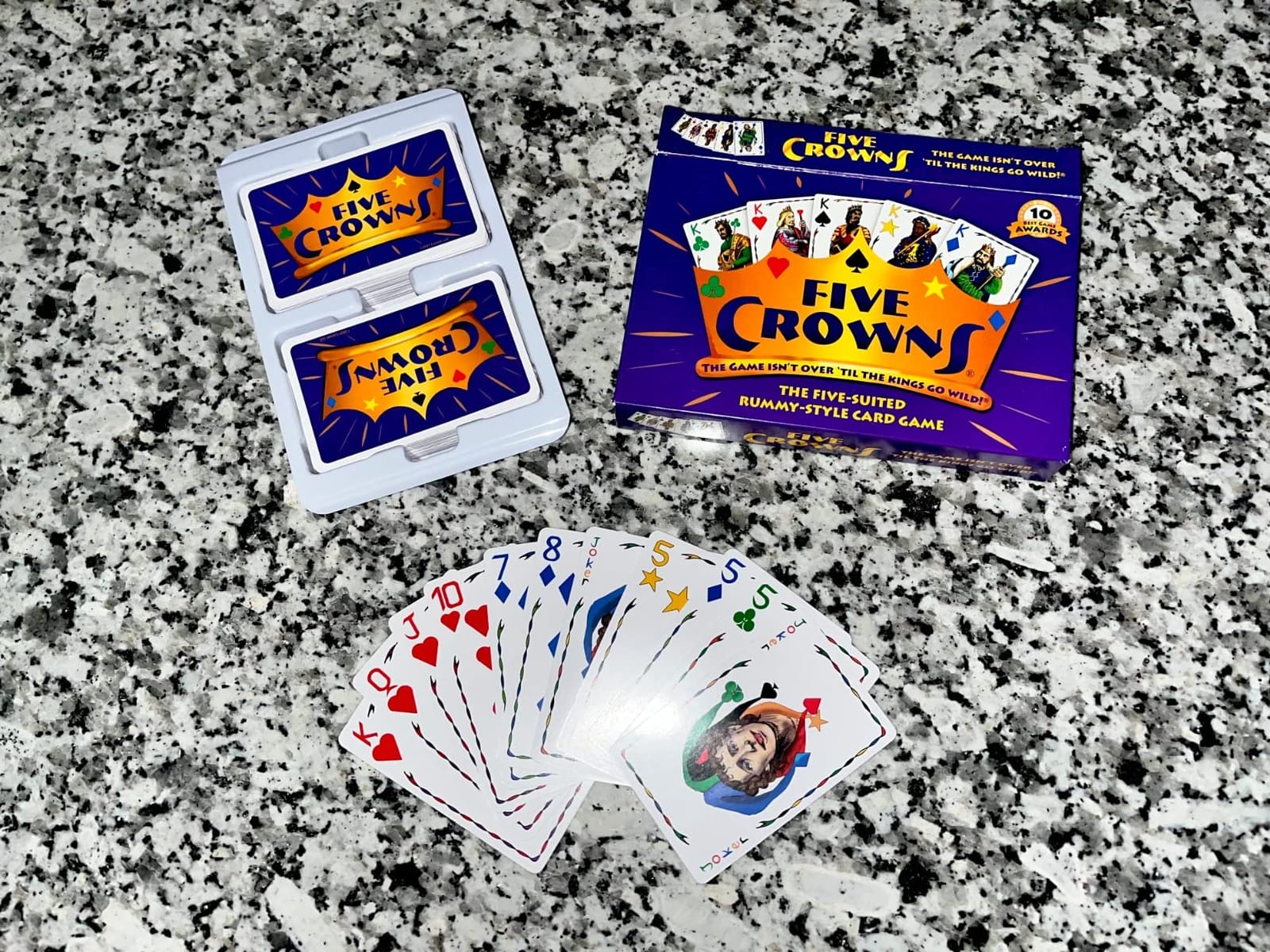
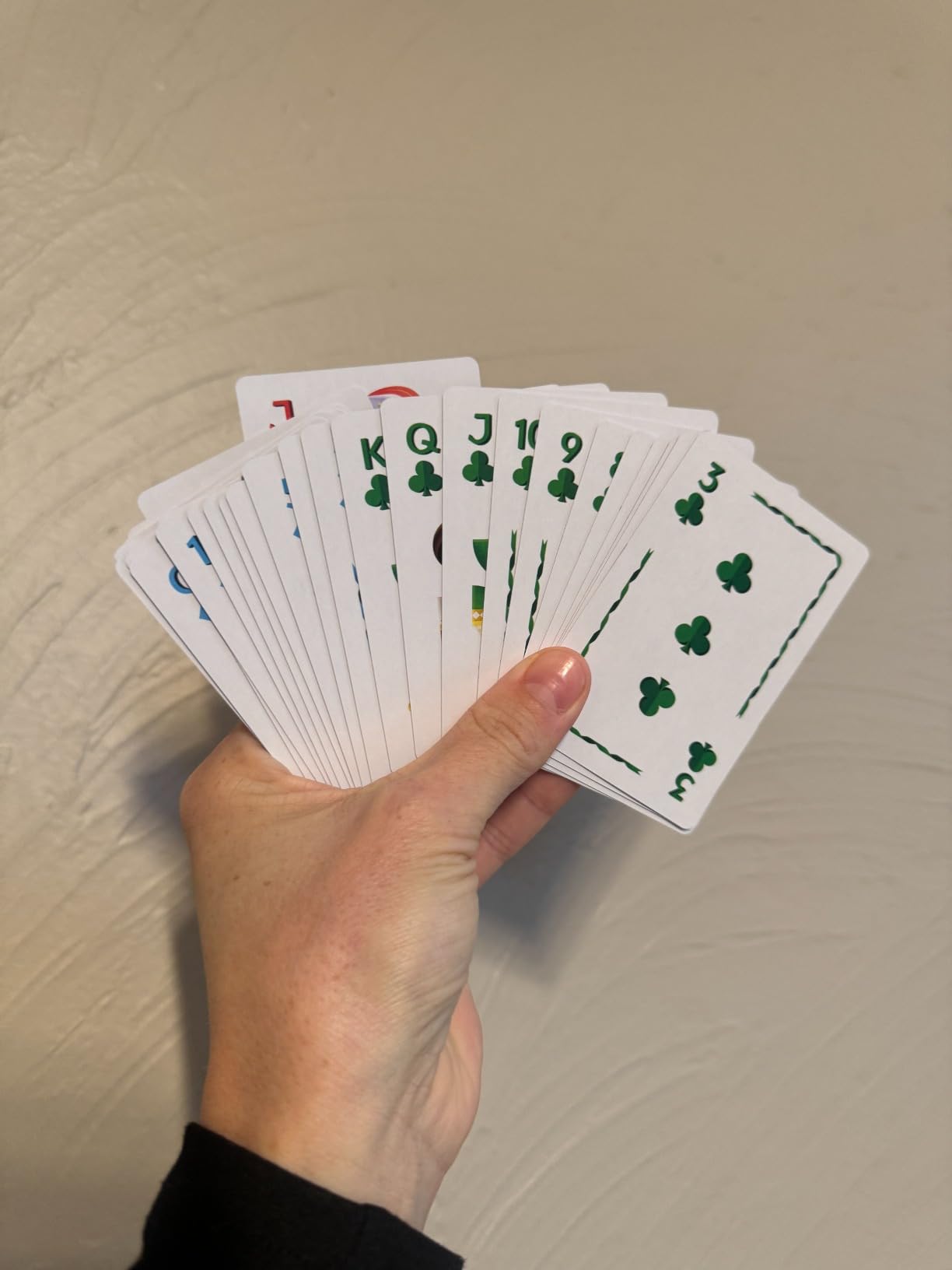
Five Crowns is rummy with one idea bolted on, and that one idea is why it works at our table. You build books and runs, but every hand includes a rotating wild card, and half the deck is a fifth suit of stars that exists nowhere else. Because the wild card moves, nobody can memorize the deck, and because the fifth suit breaks normal patterns, a 9-year-old and a 60-year-old are in exactly the same guessing position.
We taught it to two children who had never played a rummy variant in under two minutes. The whole rule set fits on a single card, and the trick is that almost nobody loses anything early. You are collecting and discarding, not being knocked out. That is a big deal when you have a table that includes someone who has never lost gracefully at anything.
The publisher lists 2 to 7 players, which makes it the widest range among the slower strategy-style games in this roundup. Our seven-player test needed two tables of cards, but it worked, and nobody dropped out. In a household where a big gathering means eight or more people, that range is a strong reason to buy this one first.
The Fifth Suit and the Rotating Wild Card
Rummy normally rewards players who can plan a discard order two hands ahead. The stars break that math. Because a run of stars is a run, a set of stars is a set, and the wild card can be any card you claim it is, the usual patterns stop working and every hand needs a fresh read.
That is genuinely good design for a family table. Adults do not get bored reaching for the same discard every time, and children get to be right about something on their own terms. Across our sessions the wild card was the single most talked-about element, and it is the element that keeps repeat games from feeling identical.
Player Range and Table Real Estate
Two decks are in play, which is the practical trade-off here. With more than four players the table gets busy, and hand size grows, so a round stretches past the 30 minute mark we had budgeted. If your group is five or larger, plan for a second hand rather than expecting one clean session.
The box is 6.5 by 5.5 by 1 inches, which fits in a carry bag without any fuss. It is a travel-ready game in the practical sense, though it is not a pocket game, and the plastic-wrapped cards inside need unpacking before the first shuffle.
Who It Is For
It is the pick for a family that has a wide age spread but no desire for a loud table. Parents with a 6-year-old and a 13-year-old in the same room can run one game instead of two, which removes the split-the-group argument that ends many game nights.
It is also the best choice for anyone who wants a game that teaches pattern recognition and hand management without feeling like homework. Nobody sits through a lecture about probability to play it.
Who Should Skip It
If your family wants a game with no luck component at all, this is not it. Hand composition drives a real share of the outcome, and players who dislike drawing will feel that. Serious strategy players often find the hand size at five or more players too slow to stay interesting.
Buy a card shuffler alongside it. Reviewers raise this constantly with two-deck games, and hand-shuffling two decks is genuinely tedious after the third round. The scorepad is a separate purchase, so budget a few minutes of pencil work or bring your own notebook.
2. SKYJO – The Calmest Game We Tested With a Wide Age Spread
magilano SKYJO, Fun Card Game for Young and Least Young, Fun Game Parties in The Circle of Friends and Family.
2 to 8 players
Ages 8 and up
150 cards plus pad
About 30 minutes
+ Pros
- Taught in minutes to any age
- Mixed-age groups work well
- Short rounds
- Compact travel box
- Adds and subtracts two-digit numbers
- Cons
- Cards start stiff and need breaking in
- Scorekeeping needs pencil and paper
- Final hand feels anticlimactic to some
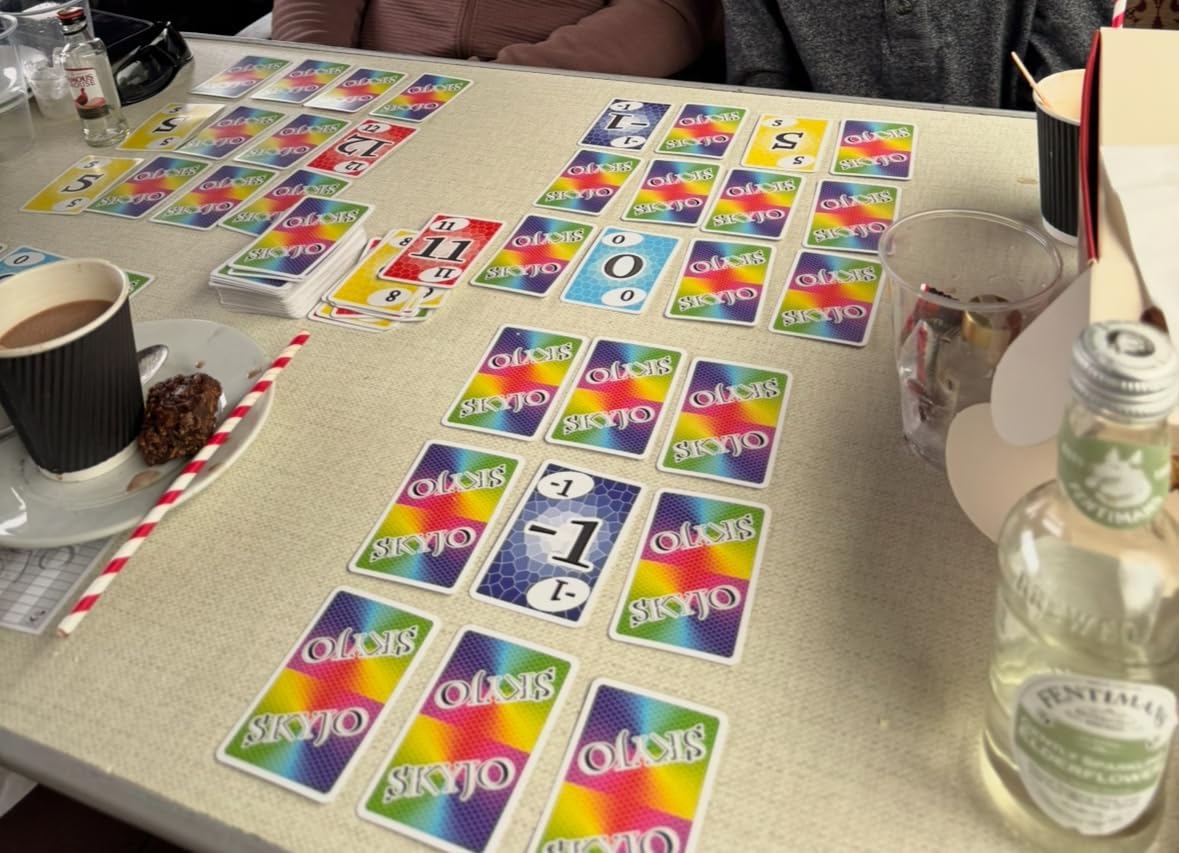
SKYJO runs on an inverted goal, and that inversion is the whole design. Everyone wants the lowest total at the end, so you start by taking twelve cards, flipping two, and then discarding down to the best hand you can build. Because the target is a low number rather than a high number, the person at the table having the worst luck is the person most motivated to keep playing.
That is why it is our multi-generational pick. In our test with a 6-year-old, two 10-year-olds and two grandparents, nobody sulked. The kids liked collecting cards, the adults liked the running arithmetic, and the round structure meant no one was ever sitting out waiting for a turn that never came.
The math underneath is real. Deciding whether to swap a 96 for a 43 is two-digit subtraction, and doing it under time pressure with four other people watching is a far better practice session than a worksheet. The listing names calculation, estimation and concentration as the educational goals, and that is not marketing fluff.
Collecting the Fewest Points and Why It Works
Most family card games reward holding more. SKYJO rewards holding less, and that single inversion removes almost all of the arguing that follows a bad deal. A child who draws four high cards is not out of the game, they are just behind, and the next exchange can move them a long way.
The 150-card deck and 8-player ceiling mean the game scales better than most of the quieter options here. Our eight-player table was crowded, but every player had a real hand and a real decision on every exchange, which is what keeps late players engaged.
Scoring, the Notepad, and Honest Pencil Work
Points are added and subtracted at the end of each round, and the game pad included in the box is where you do it. Reviewers flag this as the main friction point, and they are right: adding two-digit numbers for seven players while everyone talks over you is a small clerical task that slows the rhythm.
We started keeping a running total in a notebook instead, which removed most of the pause. The cards also arrive stiff and need a few rounds of handling before they flex, so do not judge the feel on night one.
Box Size and Travel Fit
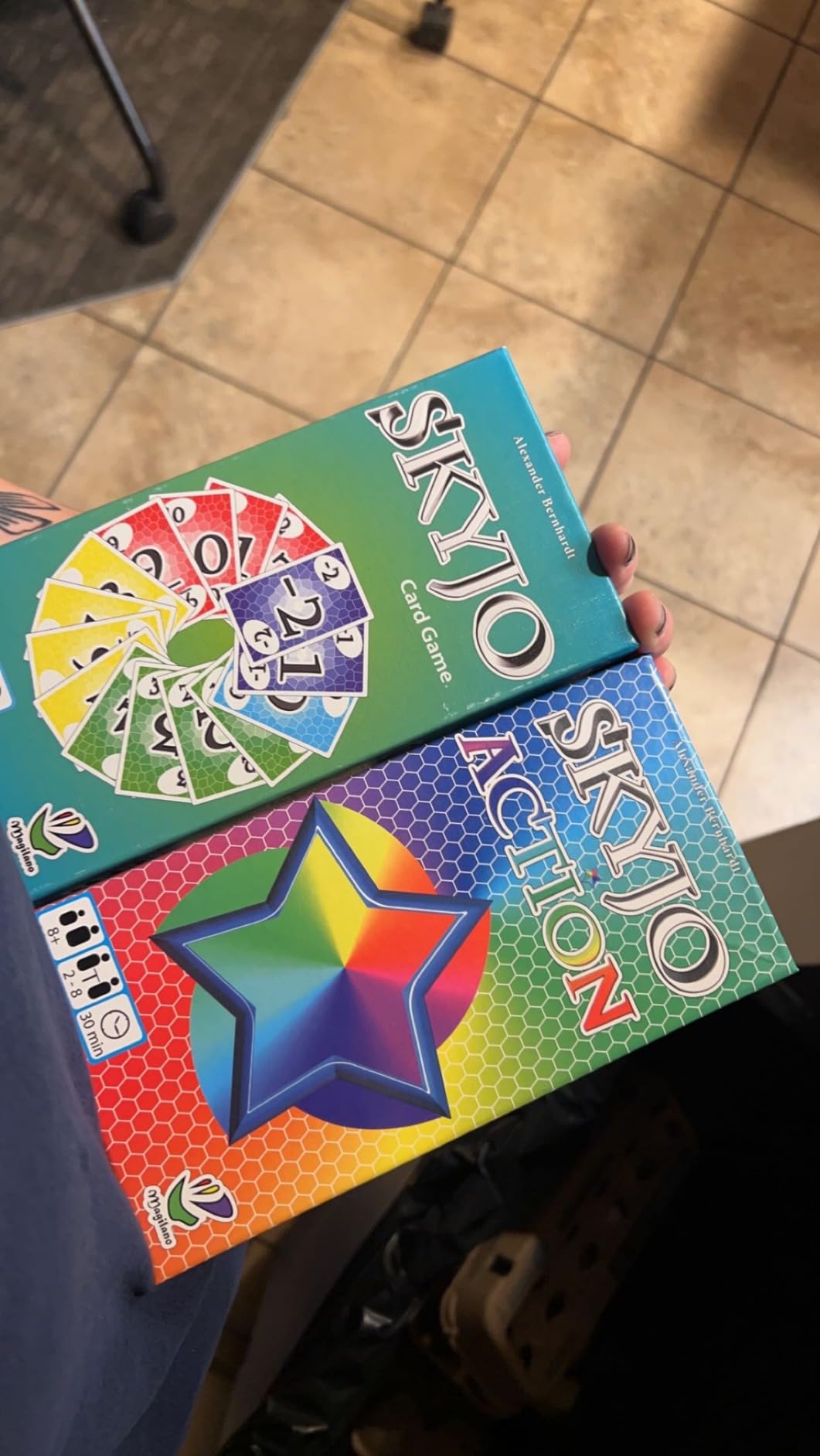
At 7.64 by 3.98 by 1.38 inches this is one of the more travel-friendly games in the roundup, and the manufacturer lists it as portable. The box also includes instructions in German, English, French, Spanish and Italian, which is unusually broad for a family card game and worth noting if you play with multilingual relatives.
Who It Is For
Choose SKYJO when the age gap is the problem. It is the game we would hand to a household with a first-grader and a teenager, because the teenager is not bored and the first-grader is not destroyed. It is equally good for a table that includes a grandparent who has never played a modern card game.
It is also a strong fit for families who want a quiet 30-minute activity rather than a noisy one. Nobody shouts, nobody slaps a table, and the round has a natural ending point.
Who Should Skip It
Players who want visible competition rather than an accumulating score tend to drift. The game is about avoiding points, so a child who just wants to win big may find it low on drama. Reviewers also note the final hand can feel like an anticlimax after a strong middle round.
If your group is three players and you like a full evening, this may outlast your attention span. The 30 minute estimate is honest, and it is closer to 40 with a lot of scorekeeping talk.
3. UNO – The Only Game Here That Absorbs a Nine-Player Table
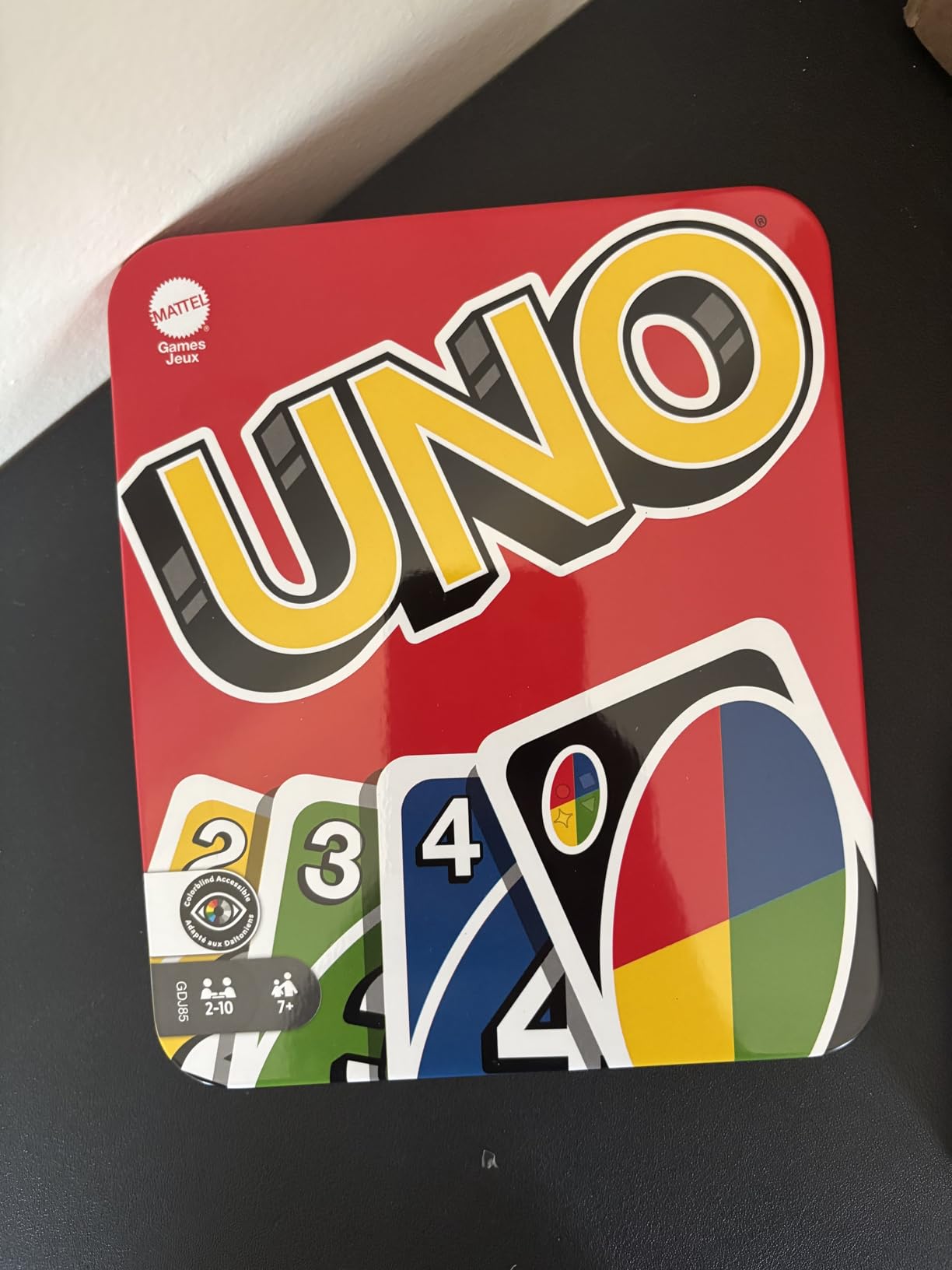
Mattel Games UNO Card Game, Ages 7+, 2-10 Players
2 to 10 players
Ages 7 and up
112 cards
Color blind accessible deck
+ Pros
- Instantly familiar to children
- Scales from 2 to 10 players
- Symbol-marked cards for color blindness
- Three blank wild cards for house rules
- Clear finish line at 500 points
- Cons
- Draggy late game with many players
- No scorepad included
UNO survives because most people in the room already know how it works. We spent less time teaching it than any other entry in this roundup, roughly forty seconds, and that near-zero friction matters enormously when a guest is playing for the first time.
The listed range is 2 to 10 players, which makes it the widest single-game range on this list. We ran a nine-player table, and it held together. Everyone was dealt, everyone had a job every turn, and the action cards kept the pace moving without anyone needing a strategy in reserve.
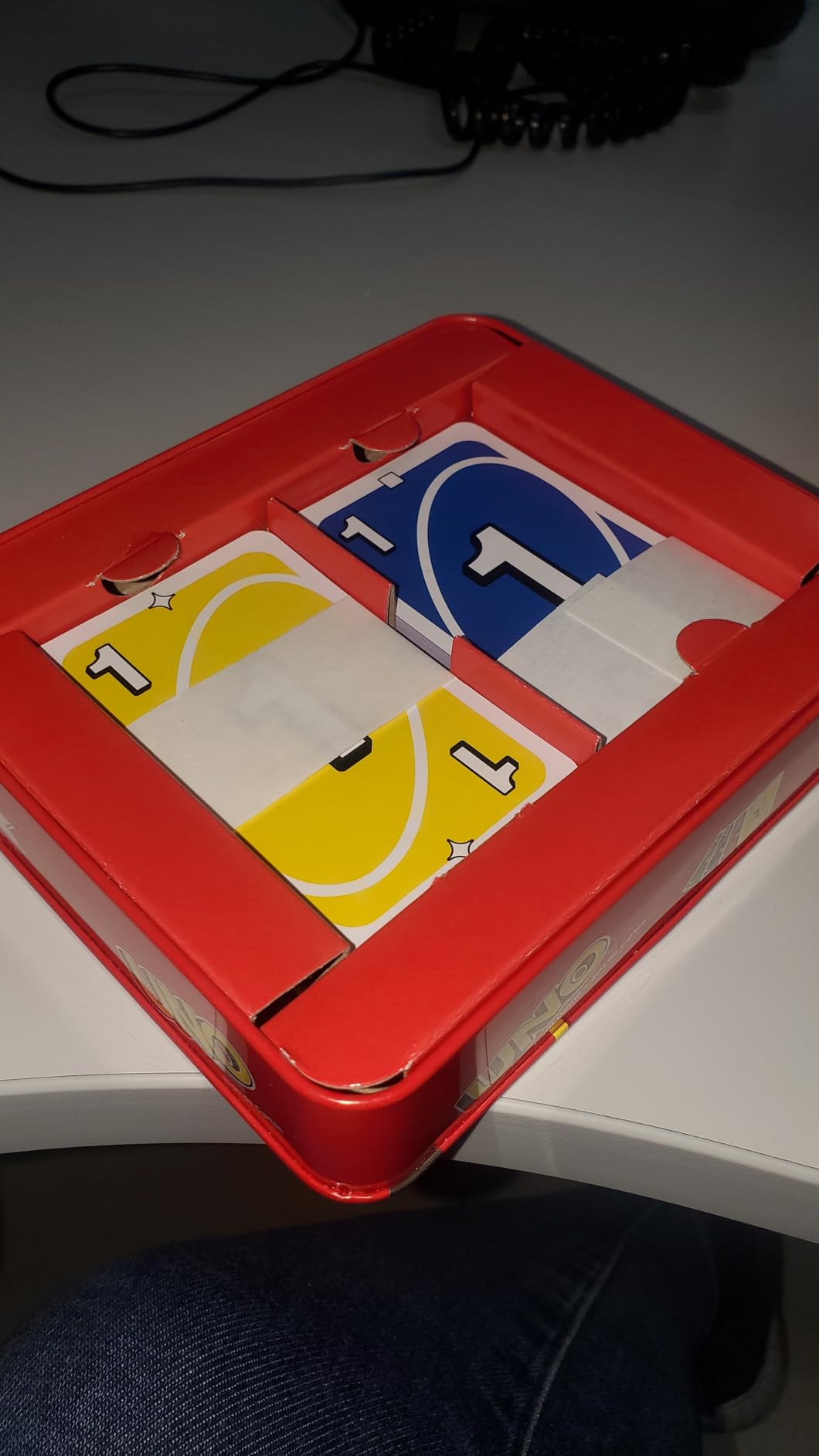
Two design choices separate this from a generic matching game. Every card carries a graphic symbol as well as a color, so a player who cannot distinguish red from green can still play. And the first player or team to 500 points ends the game, which gives a large group a finish line instead of an endless tail of cards.
Accessibility Details That Actually Matter at the Table
The symbol system is not a marketing line item, it is a real accommodation. It means a family with a color-blind player, or a child still learning color names, can join a mixed group without anyone flagging their cards as wrong. The listing describes the deck as color blind accessible for exactly that reason.
There are also three blank wild cards, which is the closest thing to a built-in house rule system. Write your own rule on them and the game changes shape. Ours was a skip-everything card, and it turned a familiar game into something the teenagers treated as new.
Where It Slows Down and How to Avoid It
The most common complaint in the reviews is length. With 2 to 4 players UNO is a clean ten-minute game. With 8 or 9, hands get fat, turns stretch, and the last twenty points can drag. If you are playing a big table, call the game at 400 instead of 500 and nobody will argue about it.
There is no scorepad in the box, so bring paper. Tin packaging at 1.96 by 5.9 by 6.69 inches is small and durable, and the 112 cards fit without crowding a large table.
Who It Is For
UNO is the safe pick for the widest set of situations in this roundup. Big gatherings, mixed ages, a guest who has never held a card in their life, a family that just wants something easy after dinner. It is also the most likely game in your house to get played without being suggested.
For families with a child learning colors and numbers, the educational framing on the listing points at attention, memory and strategic thinking, and that is fair for the age range it targets.
Who Should Skip It
Skip it if your family has outgrown matching games. A 15-year-old who plays strategy titles will find UNO shallow, and the luck of the draw decides more than skill does. It is also a poor fit for quiet, focused evenings, since the reverse card and wild cards produce a certain amount of table noise.
If your group is larger than ten, look at Cards Against Humanity Family Edition instead, which is built for crowds well past this ceiling.
4. Taco Cat Goat Cheese Pizza – The Fastest Rounds in the Roundup
Taco Cat Goat Cheese Pizza Card Game by Taco Cat Games, Age 7+, 2-8 Players
2 to 8 players
Ages 7 and up
10 to 15 minute rounds
Compact box
+ Pros
- Rules fit on one card
- Laughter within the first minute
- Durable bright cards
- Travel friendly
- Practises reflexes and pattern matching
- Cons
- Very loud and chaotic
- Table gets slapped
- Not a quiet evening game
- Some decks run smaller than the listing suggests
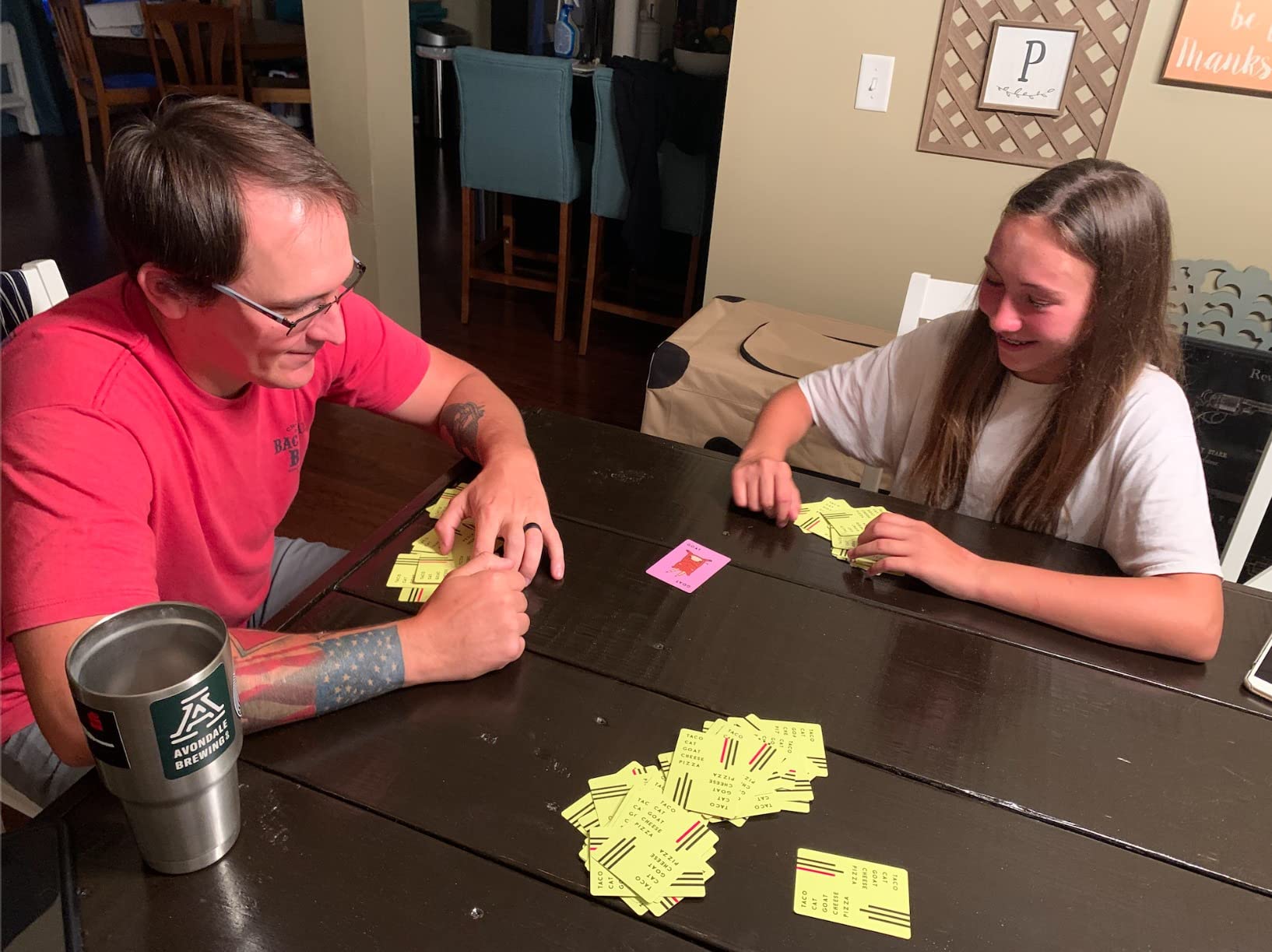
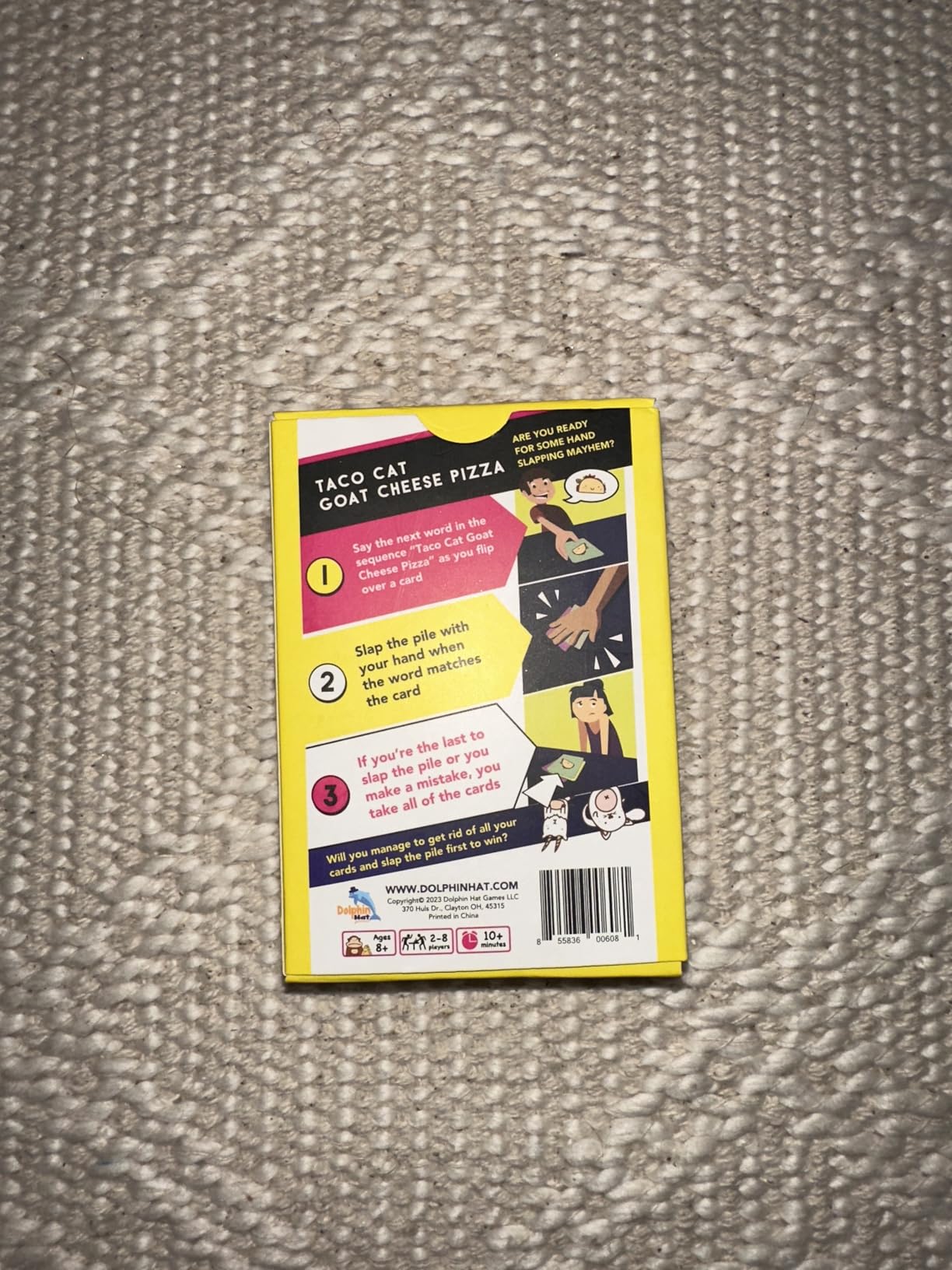
This is the shortest game in the roundup by a wide margin, and that is exactly why it keeps appearing on family game nights. You flip cards, you say a word, and if a card in the pile matches what you said, you slap it before anyone else does. Setup takes about thirty seconds and a round runs 10 to 15 minutes according to the publisher.
The word chain is the trick. Each new word has to start with the last letter of the previous one, so a slow player is not eliminated, they just hand the next letter to somebody faster. Nobody has to be clever. You only have to be listening, and that is a low enough bar that a 7-year-old and a 70-year-old are genuinely equal.
Across our sessions this was the game that got the loudest reactions and the fastest volunteers. The table gets noisy, cards go flying, and it is very hard to be bored in the middle of one.
Why the Slap Mechanic Creates Constant Motion
There is no turn order. The pile sits in the center, the hand sits in front of you, and the game is one continuous sequence of calls and reactions. In a family where one child is much older and would rather not be stuck waiting, this is the design that removes the bottleneck entirely.
Three surprise action cards, the Gorilla, the Groundhog and the Narwhal, are folded into the deck to break up the pattern. They add a bit of reset chaos to a round, and they are the part children remember rather than the part they talk their parents into keeping.
Volume, Elbows and What Age Really Plays
The listing suggests play for ages 7 and up, with the technical details noting the manufacturer recommends 8 and up. In practice our 6-year-old handled the word chain fine and lost the slaps constantly, which is a normal way to lose and did not cause a single problem.
The noise is the real trade-off. Families describe fast rounds as table slapping, elbows flying, and general chaos, and most treat that as the charm rather than a flaw. If your evening is meant to be calm, this is the wrong box.
Portability and Card Sizing
At 2.5 by 0.9 by 3.6 inches the box is tiny, and the manufacturer lists it as compact and lightweight for travel. It is the easiest game here to pack for a road trip. A few buyers have noted receiving a smaller deck than the listing photos suggest, so check the card count against the box on arrival.
Who It Is For
This is the game for a short window. If you have 20 minutes between dinner and bedtime, this is the one that fits and still feels like an event. It is also our pick for a first card game purchase for a child around 7, because the failure state is losing a slap, not losing a game.
Travel, sleepovers and party bags all suit it, and the 2 to 8 player range covers most family sizes.
Who Should Skip It
Skip it for a quiet household, for a table that includes a child sensitive to loud noise, and for anyone hoping to practice strategy. There is no deeper decision in this game than which word to shout, and a serious player will be finished with it after two rounds.
It also requires a certain amount of physical space for hands. Small tables produce more accidental slaps on cards than intended ones.
5. Monopoly Deal – Property Trading in a 15-Minute Card Game
Monopoly Deal Card Game | Quick-Playing Card Game | Fun Games for Families and Kids | Ages 8 and Up | 2 to 5 Players | 15 Mins. | Travel Games
2 to 5 players
Ages 8 and up
110 cards
About 15 minutes
+ Pros
- Real Monopoly trading in a short round
- Very fast to teach and set up
- Travel-ready size
- Builds strategic thinking and basic math
- Clear win condition
- Cons
- Rounds can end abruptly
- Thin plastic cards feel cheap
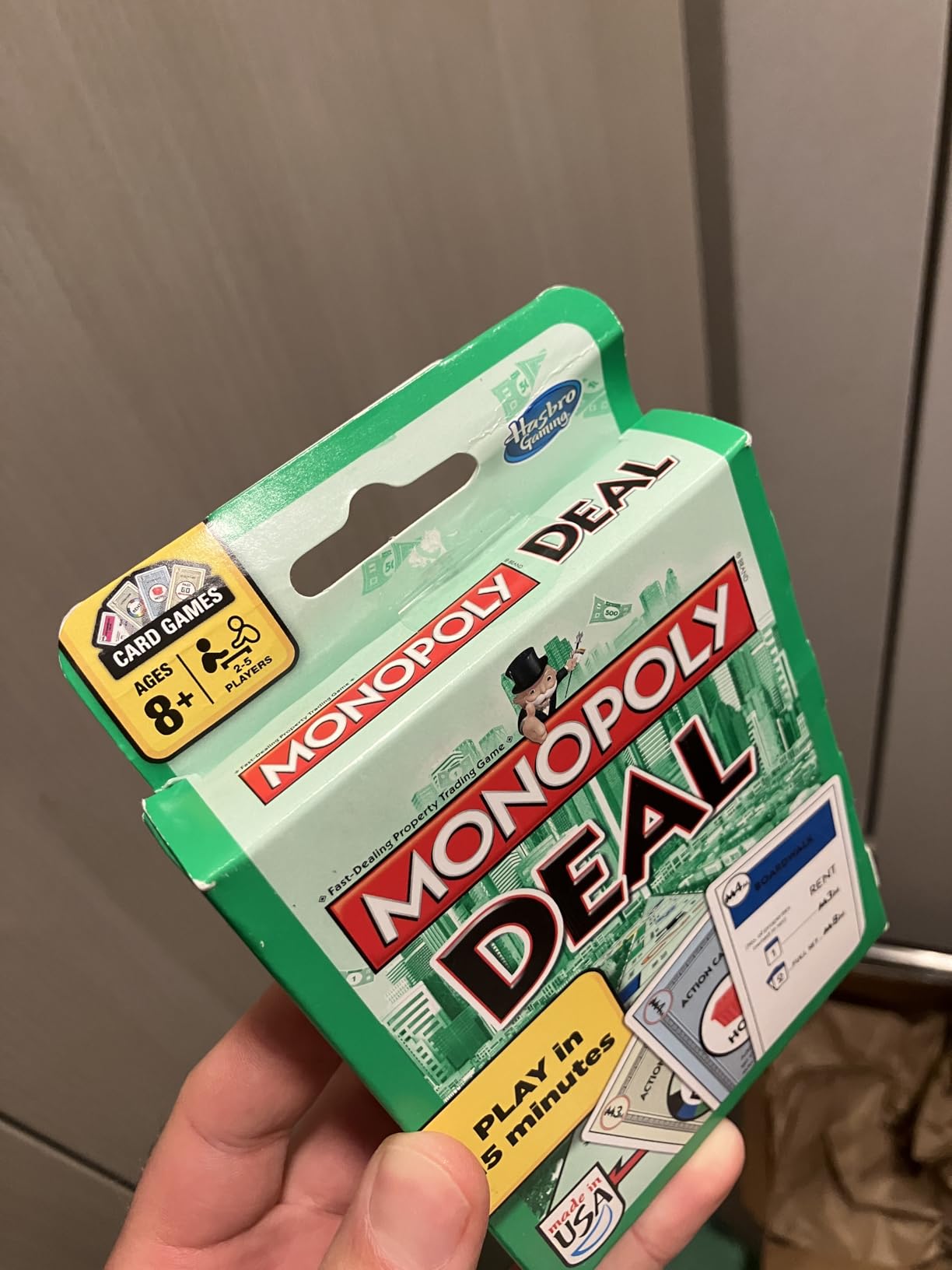
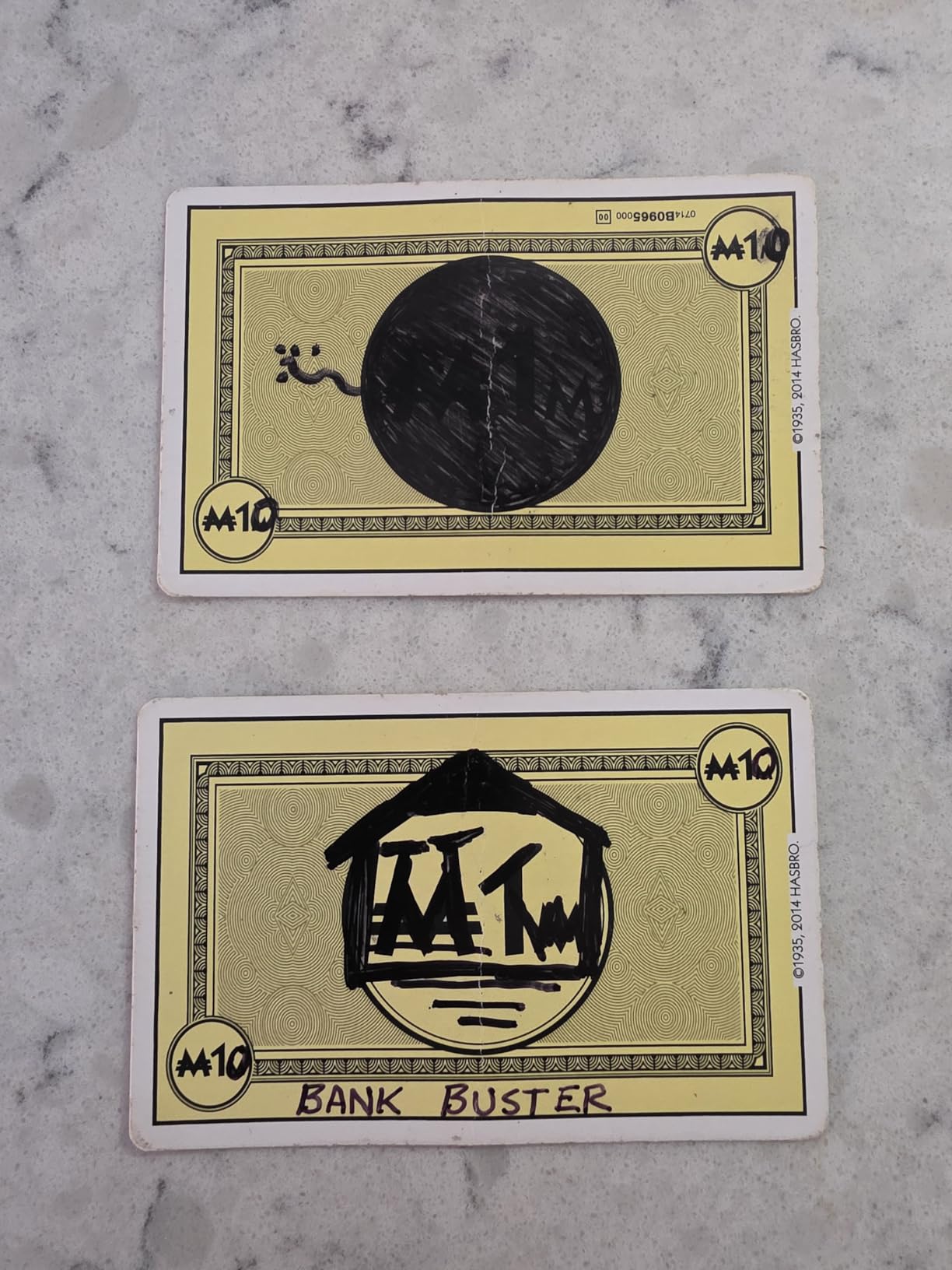
Monopoly Deal takes a board game that regularly runs three hours and compresses it into a deck. You still deal properties, collect rent, and try to assemble three complete sets of the same color, but the whole thing resolves in about 15 minutes according to the listing. Our 15 minute estimate held on four of five sessions and ran closer to 20 with a slow group.
The reason it works for families is that it removes the part of Monopoly that nobody enjoys. There is no endless walking, no trading negotiations that stall, and no tokens to lose track of. What is left is the one decision that actually mattered, which is whether to hold cash or push for a set.
Action cards are the tension: you can collect rent, steal, swap properties, or take money outright. That gives a child a way to disrupt a plan without cheating, which matters more in a family game than it sounds.
Three Property Sets and a Real Finish Line
Collecting three complete property sets is a specific, visible goal, and that specificity is what makes the game teachable to a child. A 9-year-old can look at the board of properties and understand immediately what they are trying to assemble. There is no hidden scoring that only an adult can see.
Because the win condition is a set rather than a money total, the game also resists the runaway leader problem that wrecks competitive games with young players. A parent can be behind on cash and still be one property away from winning right up to the last hand.
Reference Cards and the Teaching Load
Reference cards are included alongside the rules, and they are the feature we would point a first-time player at. They restate the turn actions without a paragraph of text, which means you can teach this game in a couple of minutes even with a mixed table.
The 110-card count keeps a five-player game from running out of options, and the recommended age is 8. Our 7-year-old managed the mechanics with help on the first round and was fully independent by the third.
Portability and the Plastic Card Question
At 0.75 by 3.62 by 5.63 inches the box is genuinely portable and the listing describes a travel format. It is one of the few games here that fits into a hand luggage pocket alongside a phone.
The main complaint from buyers is the plastic card material, which feels lighter and flimsier than a paper deck. After a few games of rough handling, corners bend. It does not affect play, but it is the first thing people notice when they open the box.
Who It Is For
Monopoly Deal is the pick for a household that already likes the idea of Monopoly but not the length. It is also an excellent car game, since the round is short and the box is flat. Ages 8 and up with a 2 to 5 player ceiling covers the most common family game night table.
For parents who want a game that quietly practices addition, subtraction and property comparison without announcing that it is educational, this one does it well.
Who Should Skip It
Five players is the practical maximum and even then rounds sometimes end abruptly, leaving a child who built a plan feeling short-changed. If your group needs more than five, move up to Five Crowns or UNO.
It is also a poor fit for a family of Monopoly veterans who want the negotiation part. All that haggling and wheeling has been stripped out by design.
6. What Do You Meme? Family Edition – Late-Night Humor for Older Kids
WHAT DO YOU MEME? Family Edition by Relatable
3 or more players
Ages 8 and up
300 caption cards and 108 photo cards
Includes an easel
+ Pros
- Humor that works across generations
- Fast to learn with no help
- Large card count
- Most captions collected wins
- Comes with an easel
- Cons
- Some captions land flat
- Meme references unknown to younger kids
- Bulkier box
- No fixed end point
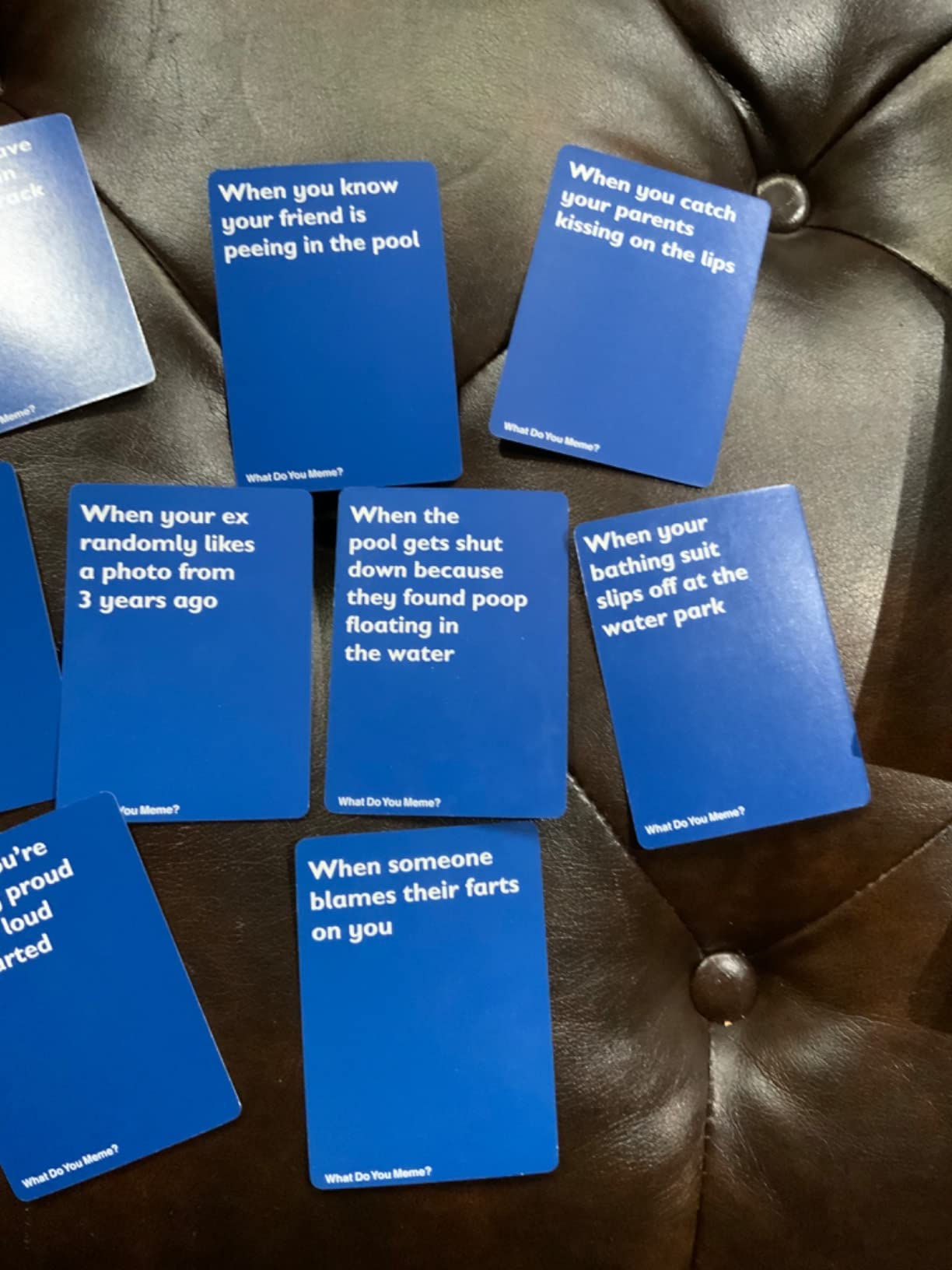
This is the pick for a household where the youngest player is old enough to get the jokes. A photo card goes on the easel, everyone picks a caption card, and a rotating judge picks the funniest combination. The player holding the most photo cards at the end wins, which is a scoring system simple enough to explain in one sentence.
We tested it with a 12-year-old and two adults and it produced more actual laughter in twenty minutes than anything else in this roundup. The 300 caption cards and 108 photo cards are a lot of material, and that volume is what keeps a group playing rather than restarting.
It is the lowest rated product here at 4.6, and the reason is specific rather than fatal: the humor is internet humor, and not all of it lands. Several buyers describe individual cards as weak or unfunny, and younger children often do not recognize the references the cards assume.

Why the Family Edition Is Not the Original
This distinction matters more than the box art suggests. The Family Edition was written and edited to be played around children, which means the jokes are built on family situations rather than the darker material in the standard deck. If you have bought the original and are wondering why it did not work at the dinner table, that is why.
It is listed for 3 or more players and ages 8 and up. The lower player floor is unusual for this genre and it does mean two people cannot really play it, so it is not an option for parent-and-child bedtime sessions.
Scoring, Judge Rotation and the Missing End Point
Scoring by most photo cards collected is clean and fast. The judge rotates each hand, so no single player gets to be the permanent taste-maker, and that rotation removes the family friction where one child decides everyone else’s jokes are bad.
There is no fixed end condition, so a group that is enjoying itself can play for a very long time. That is a feature for a holiday gathering and a problem on a school night. Decide a photo card target before you start.
Bulk and Travel Reality
At 10.71 by 7.87 by 2.17 inches with a weight listed at 1 kg, this is the bulkiest box in the roundup. The easel is the reason, and it is also the part that makes the game work in a group rather than a pair. For travel, expect a bag rather than a pocket.
Who It Is For
Choose it when your family has at least one child around 10 or older, and you want a game that produces noise and stories rather than strategy. It is also good for a family group that includes a grandparent who likes to laugh but does not want to think.
Holiday gatherings and sleepovers are its natural settings. Three or more players and a large box make it a poor fit for a quiet night with two people.
Who Should Skip It
Skip it for a table with children under about 8. Meme-based humor is reference-dependent, and a child who does not know the reference simply picks a random caption and looks confused.
It is also the wrong pick for a household that wants to practice anything, or for a night when someone is sensitive to crude humor. The Family Edition is family-safe, not squeaky clean.
7. Regal Games Six Classic Decks – The Buy for Families With Little Hands
Regal Games Card Games for Kids – Go Fish, Crazy 8’s, Old Maid, Slap Jack, Garbage Monster, War – Simple & Fun Classic Family Table Games – Games May Vary (6 Set)
2 to 6 players
Ages 4 to 12
Six decks in one tin
Extra-large cards
+ Pros
- Six games in one tin
- Rules picked up in about five minutes
- Big cards for small hands
- Distinct artwork per deck
- Individual decks travel well
- Cons
- Thin card material bends
- Some find them small to shuffle
- Decks wear after years
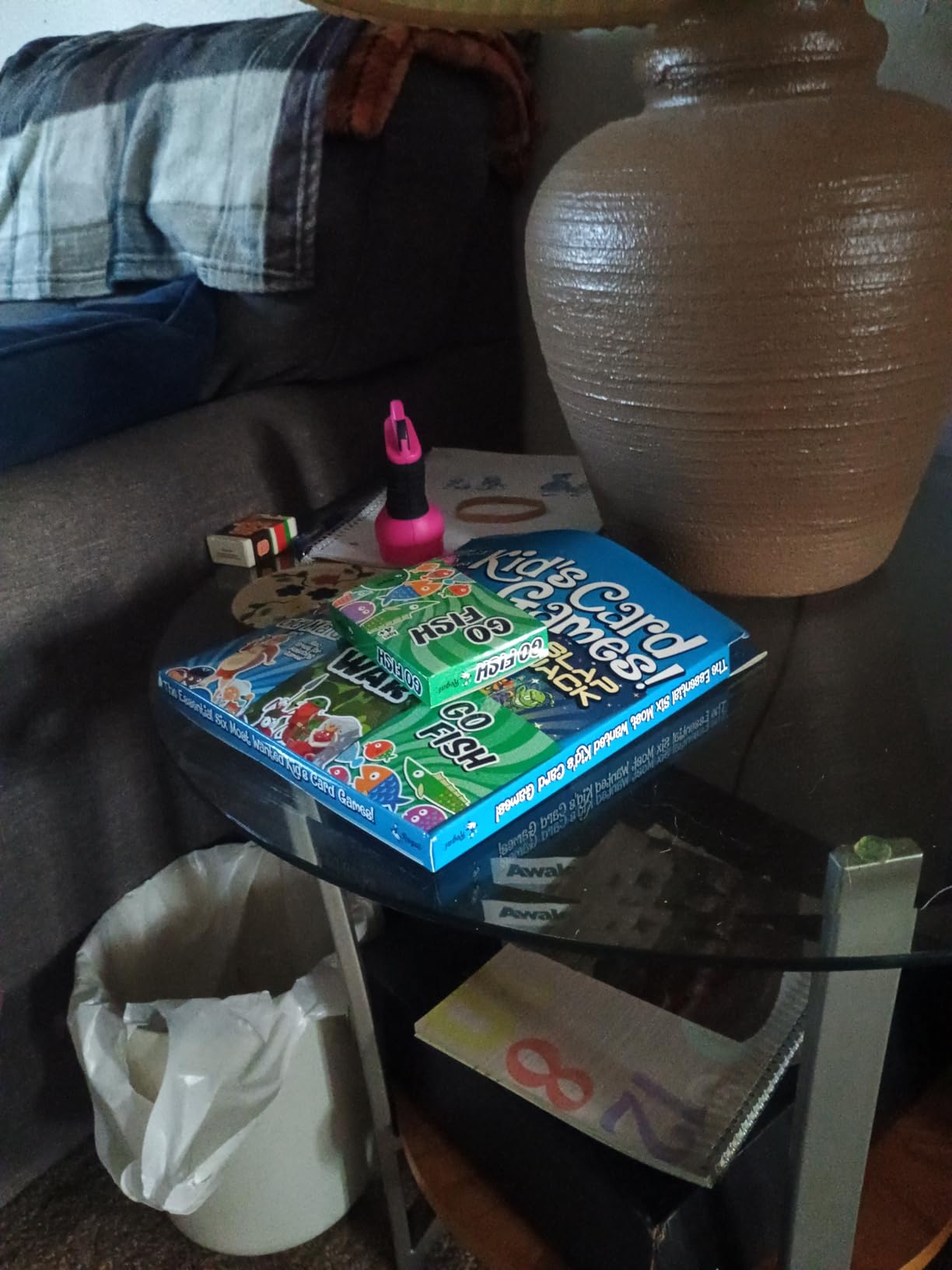
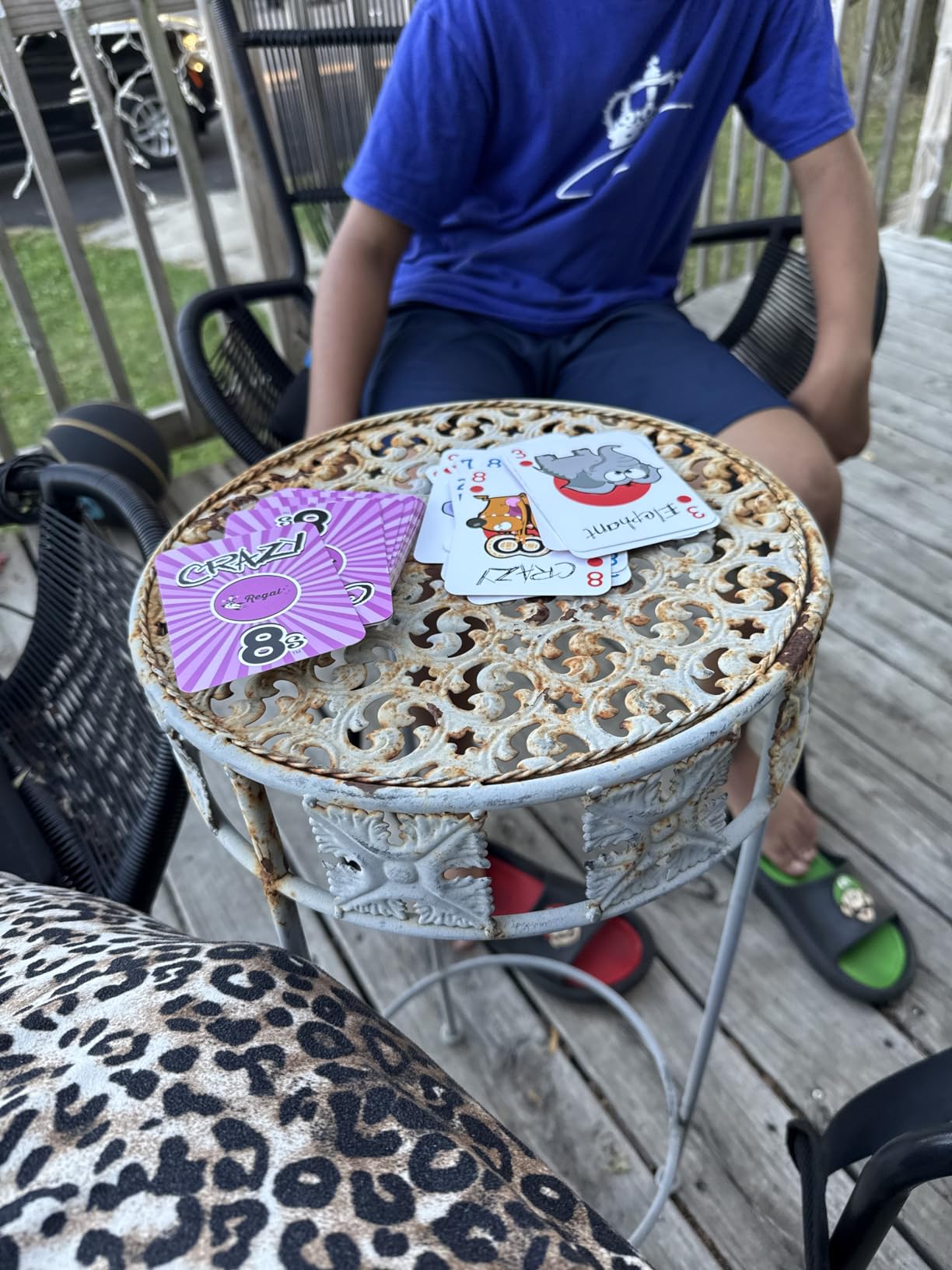
This is the only product in the roundup rated for ages 4 and up, and that makes it a different category rather than a different pick. Six classic games arrive in one tin: Go Fish, Crazy 8s, Old Maid, Slap Jack, War, and a Silly Monster memory match. The educational goal listed is colors, numbers, reading, memory and matching, which is an honest description of what these six do.
The card size is the feature that matters most. Extra-large cards are easy for small hands to hold, sort and flip, and that single design choice removes the most common frustration with teaching a young child a card game, which is that they cannot physically manipulate the deck.
We ran this with a 5-year-old and a 7-year-old plus two adults, and the five-minute teach-in was accurate for every game in the tin. The set also solves the boredom problem differently from a single good game: when one gets old, there are five others sitting in the box.
Six Games Instead of One Good One
Each deck has distinct artwork, which matters more than it sounds. A child who cannot yet read the card faces still knows which tin to ask for, and the six games cover genuinely different skill areas: Go Fish is asking and remembering, Old Maid is strategy-lite and card tracking, War is pure luck and good for teaching turn taking, and the memory match builds recall.
Because each deck is a small standalone pack, you can hand one child just the Crazy 8s deck to take on a trip, or put a single deck in a party bag. That flexibility is what the six-in-one format is really for.
Durability Is the Weak Point
The consistent complaint across reviews is the paper quality. Thin cards bend and crease during rough games, particularly Slap Jack and War where cards get slapped down hard. Buyers also note that some find the cards smaller than earlier versions of this product, so expectations set by older photos can mislead.
Two to six players is the supported range and the recommended age is 4 to 12. If you have a teenager in the group, keep this set for the little ones and put something else on the table for them.
Storage and the Clutter Question
The tin measures 0.6 by 9.25 by 8.12 inches and holds all six decks, which means the whole set occupies one shelf footprint instead of six. Parents who complain about a closet full of tiny boxes with missing components will find this tidier, and the tin keeps each deck together when you put it away.
Who It Is For
Pick this set when you have a preschooler or a first-grader in the house, or when you are buying a starter gift for a new family. It is a good value against a single premium game and covers years of early play, which makes it the strongest entry here for a young household.
It is also a good fit for multi-generational play with a wide age gap, because the youngest player is genuinely capable rather than being handed a token role.
Who Should Skip It
Skip it if your family consists of adults and teens only. War and Old Maid will bore anyone over about 12 within two rounds. It is also the wrong buy if you want a game with any depth, since none of the six involves a meaningful decision.
Card bending is a real issue in homes where games get handled roughly, so if durability is your priority, a single premium game with heavier cards is a better target.
8. Cards Against Humanity Family Edition – Built for Crowds
Cards Against Humanity Family Edition • Card Game for Your Horrible Family
4 or more players
Ages 8 and up
600 cards
Blank-the-card play
+ Pros
- 600 cards written for family play
- Kid-friendly and still funny for adults
- Scales from 4 to 20 plus players
- Good game night or holiday gift
- Card material survives repeat play
- Cons
- Needs at least four players
- Tone leans toward silliness
- Bulkier than a standard deck
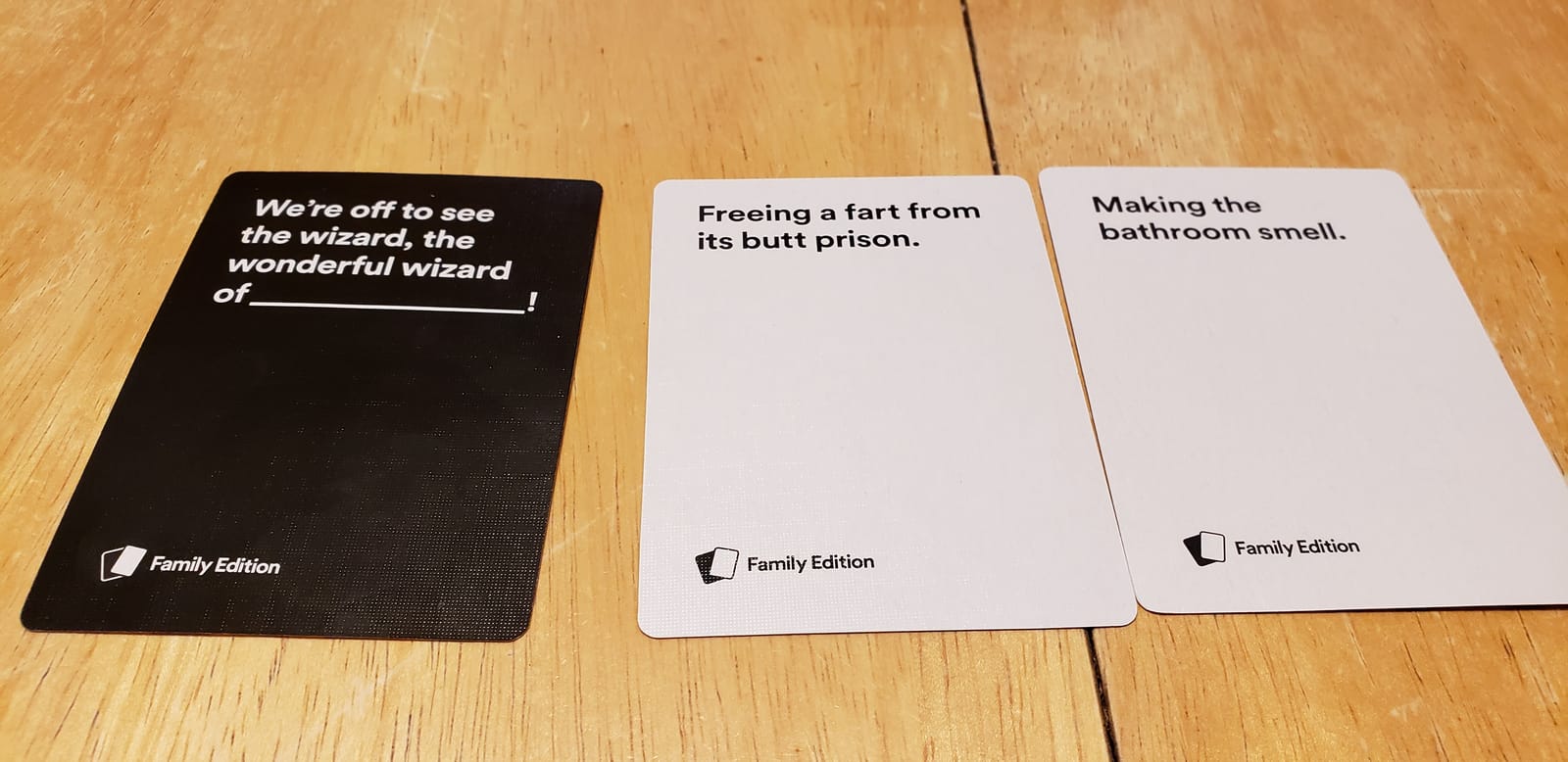
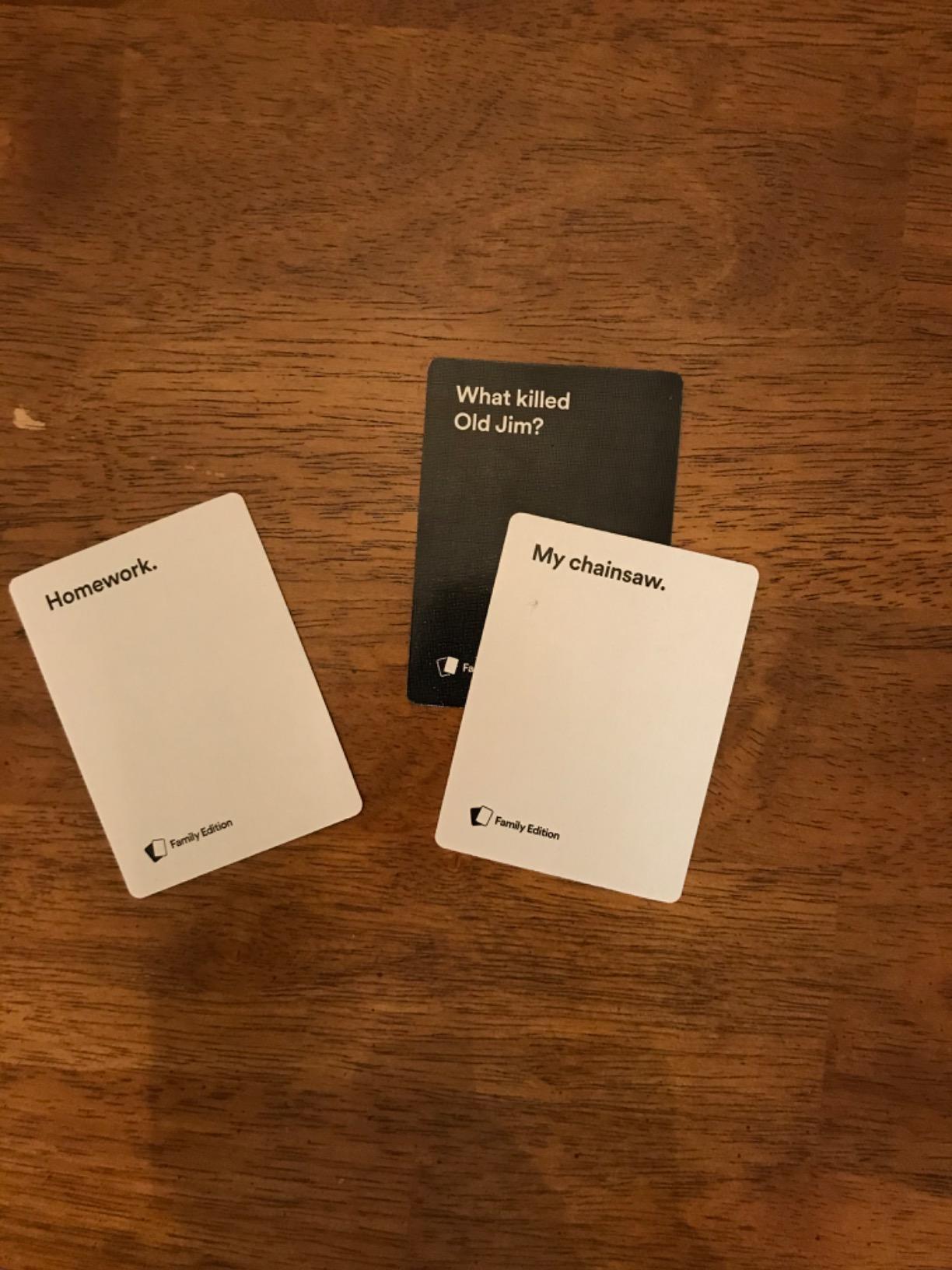
One player draws a prompt card, every other player picks a card to complete it, and the group picks the funniest. That is the entire game, and the reason it scales from four players to twenty-plus is that the interaction, not the rules, carries the evening. Nobody is eliminated, nobody waits through a long turn doing nothing, and the game scales up in card count rather than in complexity.
The Family Edition contains 600 cards written specifically for mixed-age play, which is the detail most families miss. The original deck is written for adults and is not appropriate to put in front of a child, and confusing the two is the most common family purchase mistake in this genre.
We played it with a group of six spanning a 9-year-old to a 60-year-old, and the silliness worked. Reviewers are split on whether that silliness is a feature, so read the room before committing an evening to it.
Why Four Players Is a Real Floor
With fewer than four, the joke quality collapses. Two players means one person is picking a filler card, and three means the judge has almost nothing to compare. The box is explicit about a four-player minimum and our experience matches it.
That rules it out for parent-and-child bedtime play entirely. If you are looking for a two-player game after the kids are down, this is the wrong entry in the roundup, and Five Crowns or UNO are the ones to look at instead.
Card Volume and Replay Value
Six hundred cards is a large amount of material, and it is the reason the manufacturer describes it as tested with thousands of families over many years. A smaller deck runs dry in a large group within a couple of hands, and then the evening stalls.
The listed age is 8 and up. In practice the cards are written to be readable and safe for younger children, but the manufacturer recommendation is the number to plan around.
Box Size and Group Logistics
At 8 by 4.1 by 2.7 inches and 2.7 pounds, this is a substantial box to carry, and it is the second bulkiest item in this roundup. For a gathering in a large room with a table, that is irrelevant. For a trip, it is a real cost in luggage terms.
Who It Is For
This is the crowd pick. A family reunion, a holiday gathering, a sleepover with eight teenagers, or any room where the guest list is unpredictable. The 4 to 20 plus range means you do not have to know exactly how many people will show up.
It also works well as a gift, which is the most common way families encounter it. It is listed as kid-friendly and parent-approved, and parents who have played the original will recognize the format immediately.
Who Should Skip It
Skip it if you have fewer than four people, if your family prefers games with any strategic content, or if the group does not enjoy low-effort humor. Buyers note the tone leans deliberately silly, and that split is real rather than a matter of taste in one or two outliers.
It is also not a game for a mixed group that includes a child who reads the room as social pressure. There is no opting out gracefully, which is a limitation the cooperative picks avoid entirely.
9. Do You Really Know Your Family? – Conversation Starter With a Scoring Layer
Do You Really Know Your Family? Fun Family Game for Kids, Teens and Adults
3 to 8 players
Ages 8 and up
Tin storage
Trivia and challenge cards
+ Pros
- Starts real family conversations
- Easy to learn
- Fast rounds
- Works across three generations
- Portable tin
- No batteries needed
- Cons
- Challenge cards hard for younger players
- Limited replay once cards are known
- Some questions too simple for teens and adults
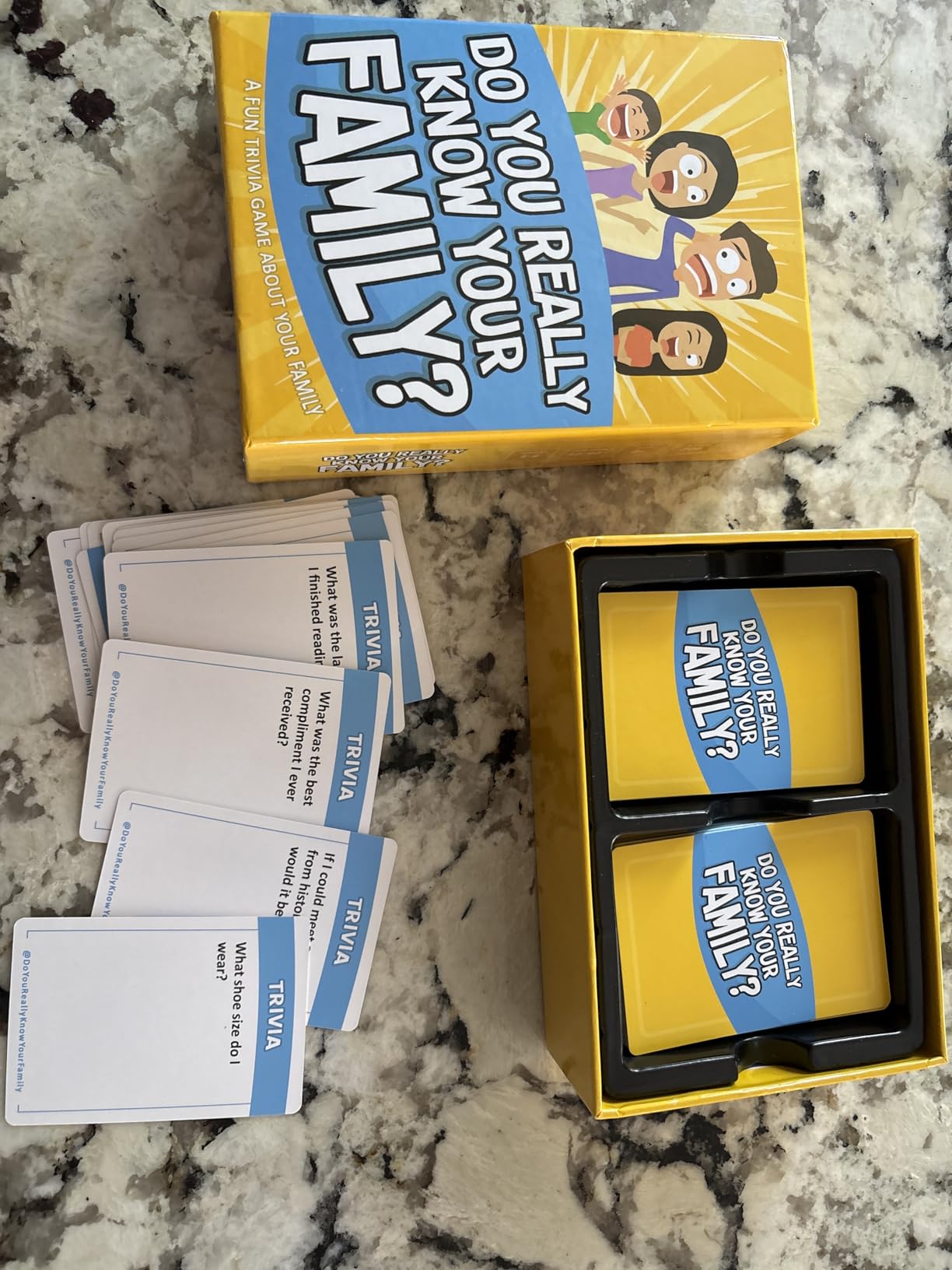
Every player holds cards describing family members, and the table races to guess who matches. It is trivia, but the trivia is about your own family, which turns a competitive game into a conversation starter. The genre is listed as trivia and the recommended age is 8 to 10, with a 3 to 8 player range.
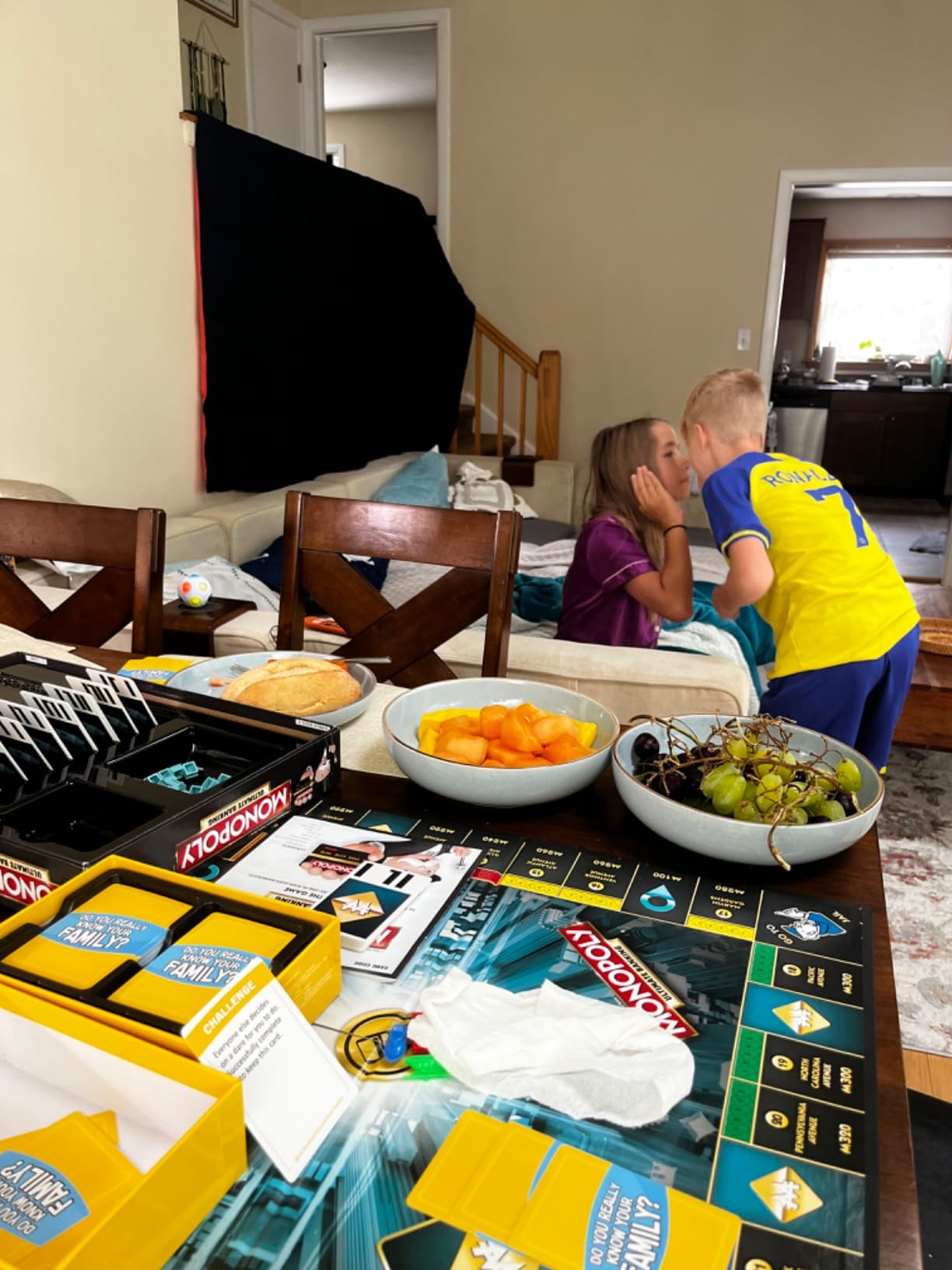
What surprised us was how quickly the tone shifted. Within a couple of hands the questions turned into stories, and a sibling started explaining a detail nobody else knew. That is not something the box promises, and it is the reason this one earns a place in a roundup otherwise full of slaps and property sets.
It is the joint lowest rated product here at 4.6. The complaints are about depth rather than quality: challenge cards can be difficult for younger players, some questions feel too simple for a teen or an adult, and replay value drops once the family has seen the deck.
Trivia, Challenges, and the Two Card Types
Two kinds of cards create the pacing. One type is a question about a family member, which is pure recall and fast. The other is a challenge, which is physical or performative and takes much longer. Reviewers note the challenge cards are often too hard for younger players, and that skipping one is the accepted fix rather than a problem to solve.
Rounds are short, which is a genuine advantage on a weeknight. Our sessions ran through the deck quickly enough that nobody felt stuck, and the fast pace means a large group can be included without a long orientation.
Replay Value and Why It Drops Fast
Once your family has played the deck, the answers stop surprising. The limited replayability complaint shows up consistently in reviews, and it is a design consequence rather than a manufacturing problem. A deck of family-specific questions is a small pool by definition.
That makes this a good occasional game and a poor nightly one. If it is the only card game in the house, expect interest to fade within a few sessions. Paired with something like UNO or Five Crowns, it works well as a change of pace.
Tin Format and Age Range
The tin measures 2 by 4.7 by 6.7 inches and the product is listed as portable with no batteries required, so it is genuinely easy to move between rooms or pack. The tin also makes it a simple gift.
Note the three-player minimum. Two parents alone cannot play this, which again leaves a gap that Five Crowns and UNO fill.
Who It Is For
Choose it for a family that does not spend enough time talking, or for a gathering where relatives rarely meet and conversation is the goal rather than a side effect. It works well around a holiday table and it engages a 3 to 8 player group, including grandparents who do not usually choose games.
It is also a good choice for a family night built around conversation rather than competition, since the scoring matters less than the talking.
Who Should Skip It
Skip it if your family is private. The game asks direct questions about people, and a household that is not comfortable being quizzed will find it intrusive rather than warm. Several reviewers describe it as the game that reveals things, which is the appeal and the risk at the same time.
It is also the wrong pick for a competitive family, for a group with a child under 8, and for a household that wants a game they will still be excited about in six months.
10. Dutch Blitz – Constant Motion With No Turn Taking
Dutch Blitz Card Game – Original Fast Paced Family Game with 160 Cards
2 to 4 players
Ages 8 and up
160 cards
Four decks included
+ Pros
- No turn taking so everyone moves constantly
- Easy to learn
- Multi-generational appeal
- Compact and portable
- Sharpens reflexes and focus
- Cons
- Newer cards are slicker than older versions
- Very loud in play
- Base game caps at four players
- Cards wear with heavy use
Dutch Blitz has no turns. Every player simultaneously tries to play a card in sequence, and the first person to empty their blitz pile wins that exchange. The result is a game where nobody sits and waits, which is the exact opposite of the slow turn-based card game that drives a restless child out of the room.
It ships with 160 cards across four decks, and the manufacturer describes four colorful decks with simple rules. The strategic layer is real, and reviewers consistently describe it as easy to learn and hard to master, which is a better place to be than the reverse.
The 15 minute playing time is accurate. Our sessions were the shortest full games in the roundup, and the box at 6.2 by 3.5 by 1.2 inches is genuinely portable.
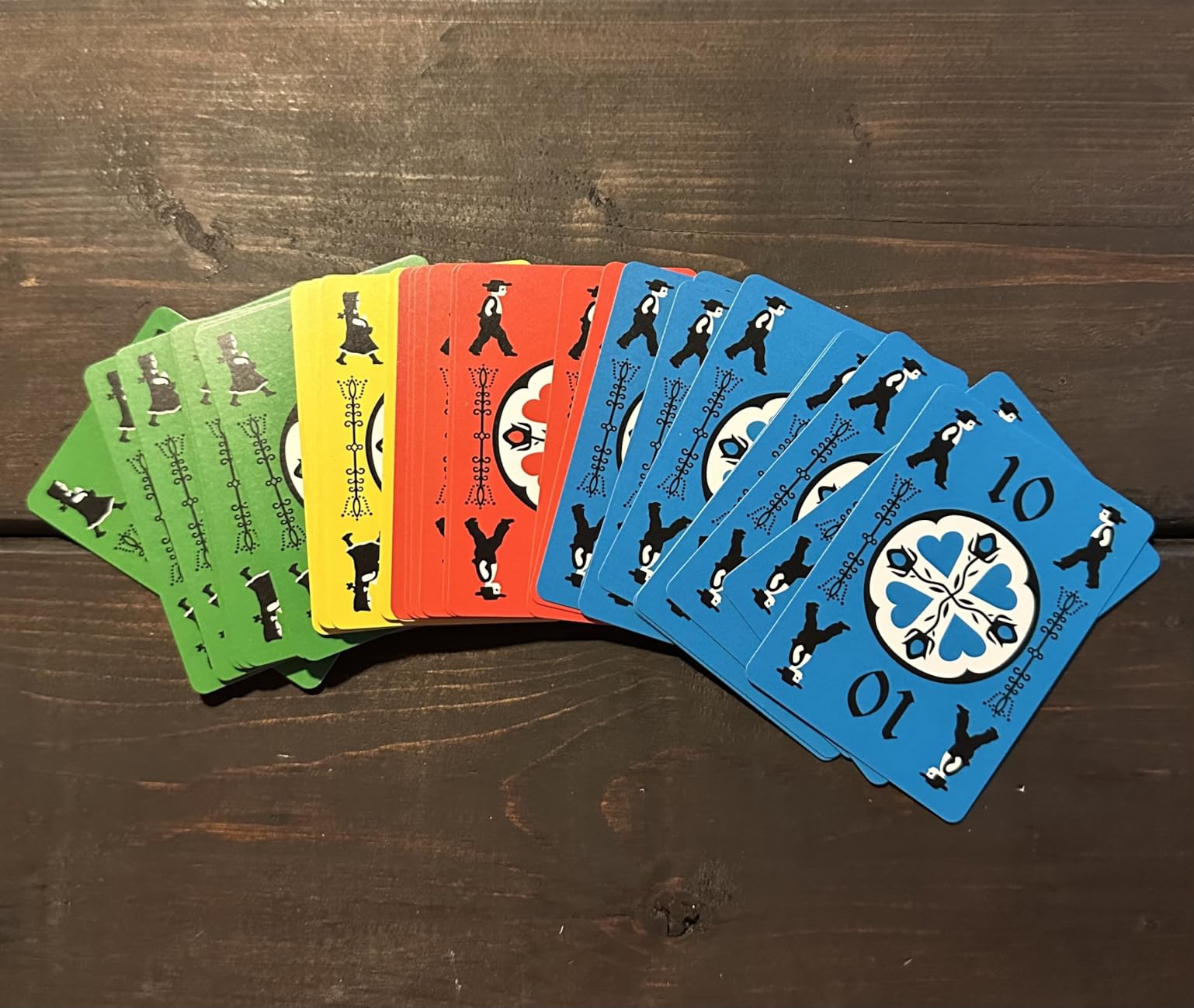
Simultaneous Play and Why It Changes the Table
Turn-based games have a hidden problem: the least engaged player spends most of the evening watching. Dutch Blitz removes that. Because everyone acts at once, a bored teenager and a hyperactive 8-year-old are playing the same game at the same intensity, and neither is counting other people’s turns.
That makes it a strong option for a table with an energy mismatch rather than an age mismatch. Reviewers specifically praise its ability to engage multiple generations at once, with children as young as 7 or 8 playing alongside adults.
Sequences, Blitz Piles, and the Skill Ceiling
You can play a higher card of the same color, any card of the same number, or a wild card, and every time you do, you can take a card from another player. The decision of when to hold back a card rather than dump it is where the actual strategy lives, and it is a decision adults find satisfying long after children have moved on.
The catch is the player ceiling. The base game is listed for 2 to 4 players, and more requires an expansion deck. That is the single biggest limitation in a roundup full of games that handle six or eight people.
Card Finish and Noise
Buyers note that newer production cards are slicker than the older papery versions, which affects shuffling more than play. Cards also show wear with heavy use, and at 4.8 ounces the whole box is light enough to forget in a bag.
The volume is the other consideration. This is not a quiet game, and neither is it as physical as the slapping game at number 4, but the noise is constant rather than explosive. Reviewers describe it as very competitive and loud, so treat it as a high-energy evening rather than a calm one.
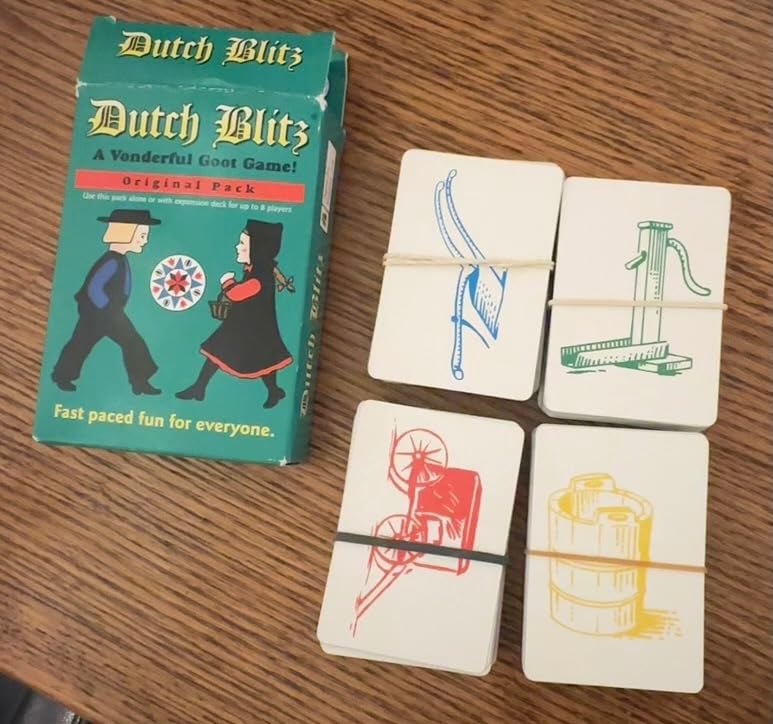
Who It Is For
Dutch Blitz fits families who want a game that ends before anyone gets bored. It works for two players, which almost nothing else in this roundup manages, and that makes it one of the few options here for a parent playing with one child.
It is also the pick for mixed energy rather than mixed age, and for travelers who want a game that fits in a small bag.
Who Should Skip It
Skip it if you regularly host more than four players without adding an expansion, and skip it if a quiet evening is the goal. It also does not scale up: a six-player group needs a different box entirely.
For a game with genuine strategic depth, this is more reflex and card counting than planning, and serious strategy players tend to exhaust it faster than they expect.
11. Phase 10 – Ten Phases That Change Every Hand
Mattel Games Phase 10 Card Game in Storage Tin for Ages 7+
2 to 6 players
Ages 7 and up
108 cards and a tin
Color blind accessible deck
+ Pros
- Ten phases keep the game changing
- Symbol-marked cards for color blindness
- Storage tin protects the cards
- 2 to 6 players
- Wild and Skip cards add tension
- Cons
- Tin is larger than expected
- Longer with five or six players
- Phases feel repetitive over time
- Cards bend with heavy use
Phase 10 is a rummy-type game where each hand has a different goal. Complete seven cards of one color, then a run, then a set, and the requirement changes as the phases advance. That structure is why the same deck does not get boring quickly, and it is the closest thing in this roundup to a long-form campaign you can finish in a single sitting.
The color blind accessible deck is the standout feature. Every card carries a graphic symbol as well as its color, and the listing calls it out explicitly. In a family with a color-blind player, or a child who is still learning color names, that turns a game that would otherwise be frustrating into one that is simply fair.
It is listed for 2 to 6 players and ages 7 and up, which makes it the most broadly age-friendly of the competitive games here. The storage tin is a practical bonus for a household that cares about keeping a game together on a shelf.
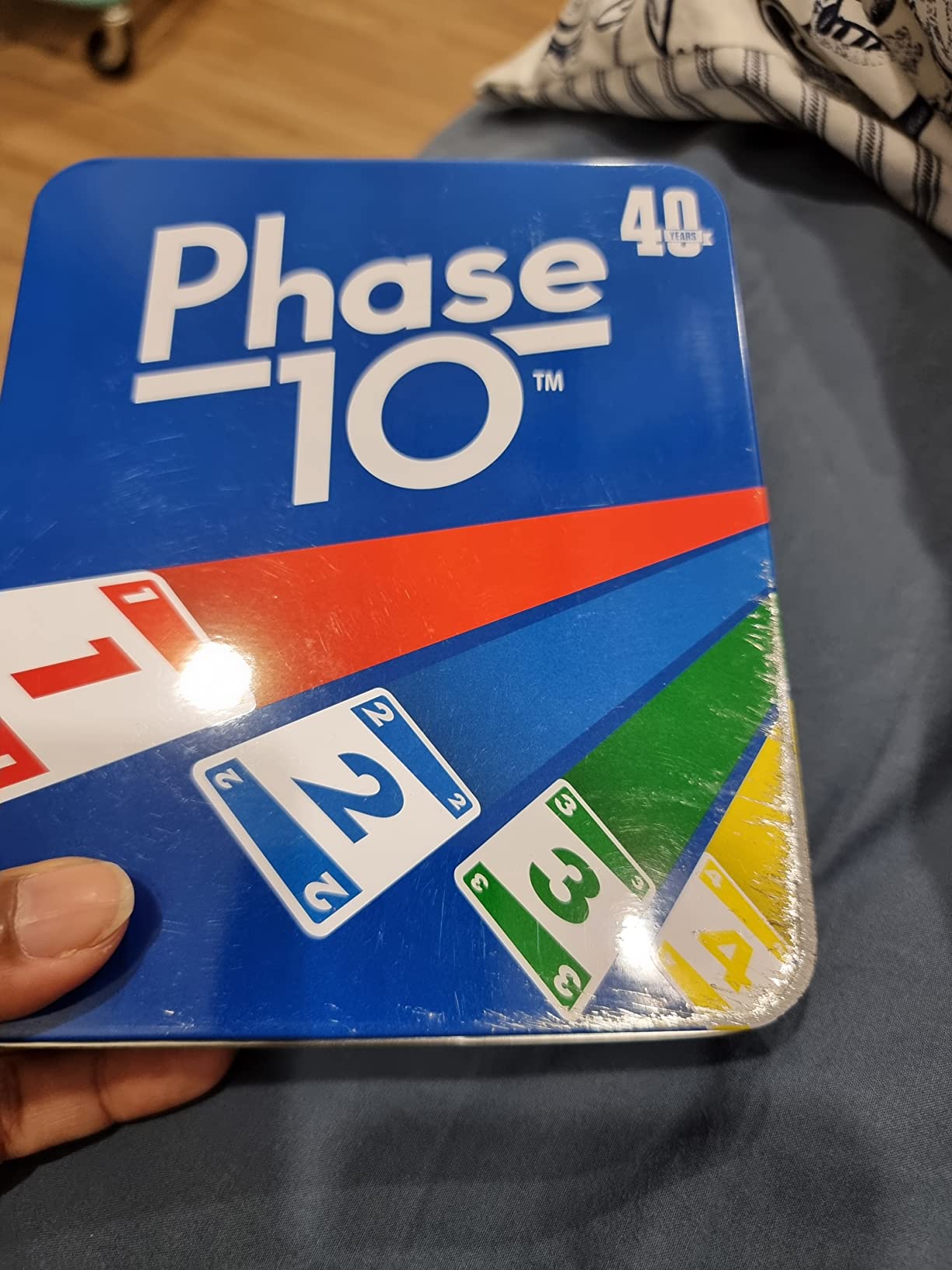
Ten Phases as the Anti-Boredom Mechanic
Set and run play is a bit thin for ten consecutive hands, and Phase 10 solves that by changing the target. Phases require same-color groupings, runs, sets, and combinations, and the pressure rises as you climb toward phase ten. It is a quiet sense of progression that keeps a group engaged without needing a campaign box or a scoreboard.
Wild and Skip cards add the volatility. A Skip can remove a turn from someone, which is harmless at phase two and genuinely tense near the end. It is competitive without being eliminative, and no one is ever formally out.
Symbol Cards and What They Change at the Table
Color blind accessibility is a design choice that also happens to help everyone else. A 6-year-old who cannot yet trust their color recognition can still see the symbols, and an adult who is color blind is not a permanent disadvantage at the table, which is exactly what a family game should be.
Five Crowns and Dutch Blitz do not use symbol cards, so if accessibility is the deciding factor in your household, Phase 10 is the pick with the widest age range and the most forgiving design.
The Tin, the Size, and the Long Table
The tin measures 11.81 by 11.81 by 1.97 inches, which is larger than most buyers expect and worth checking against your shelf before buying. Its benefit is real: it keeps 108 cards together and survives being knocked off a shelf.
Game length grows with player count, and families report five or six players taking noticeably longer. With 2 to 4 the pacing is comfortable; with 6 it becomes an event rather than a quick round.
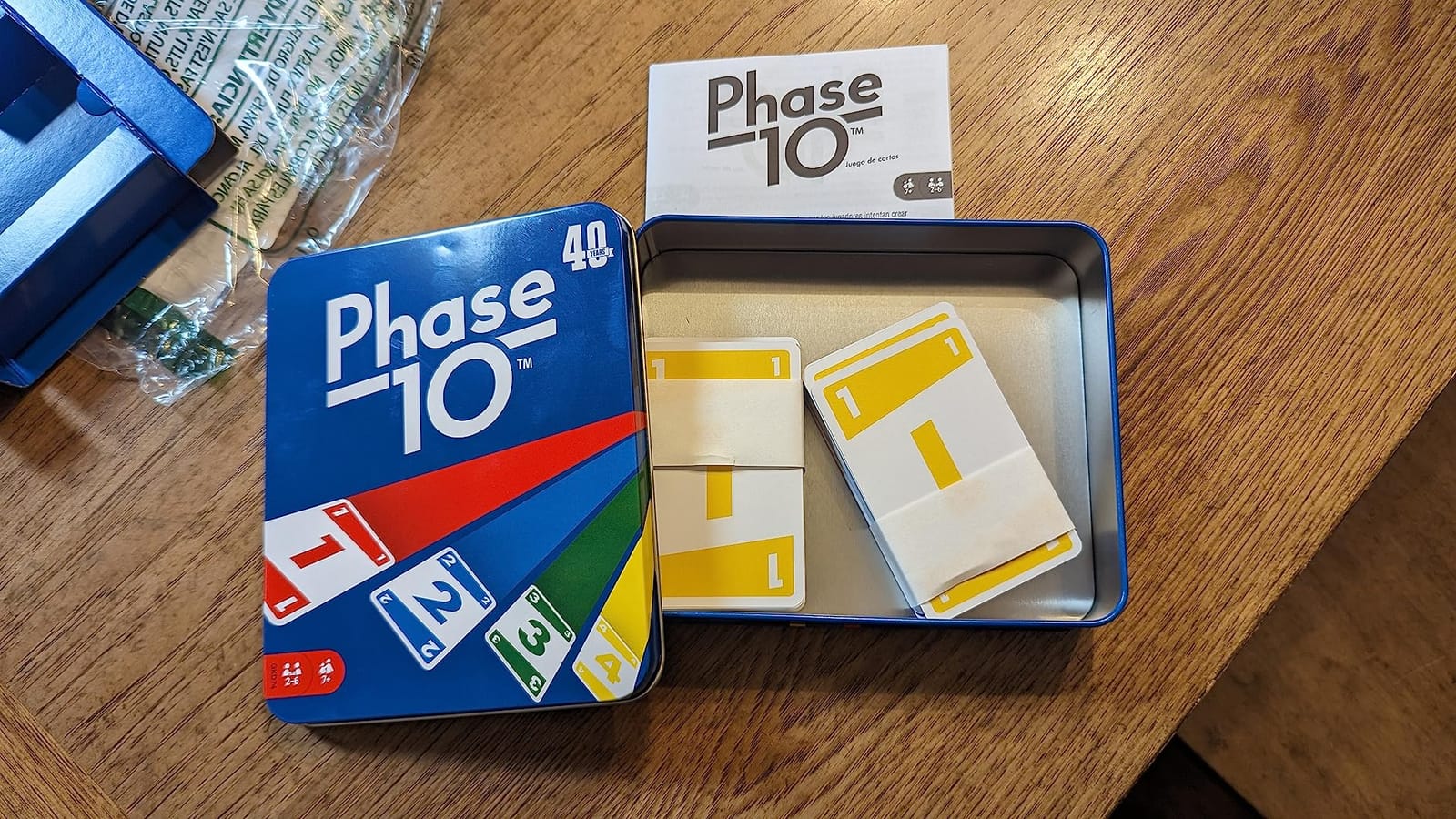
Who It Is For
Phase 10 is a strong pick for a family with a color-blind player, for a 2 to 6 player table that changes size week to week, and for anyone who wants a game that lasts a full evening without needing a separate campaign. Ages 7 and up makes it one of the easier entry points for a primary-age child.
It is also a good travel option for the reasons you would expect, since a tin with a lid and no loose components is a better suitcase citizen than a flat paper box.
Who Should Skip It
Skip it if the evening window is short, because the phases are designed to make the game go on. Some reviewers also find the phases repetitive once your group has played many hands, which matters more for a group that plays the same games weekly.
It is a poor fit for a group that wants constant noise and movement, and for players who find a rotating target harder to track than a single goal.
12. Sleeping Queens – Arithmetic Disguised as a Fairy Tale
Sleeping Queens Card Game by Gamewright | Kids and Family Card Games for Ages 8 and up | Fast Playing Strategy & Math Board Game | 2–5 Players
2 to 5 players
Ages 8 and up
79 cards
15 to 20 minutes
+ Pros
- Ratings of 4.9 stars
- Illustrated cards kids enjoy
- Builds math memory and quick thinking
- Fast 15 to 20 minute rounds
- Simple rules with real depth
- Cons
- Too simple for older teens
- Heavy luck component
- Small box and cards
- Theme not for everyone
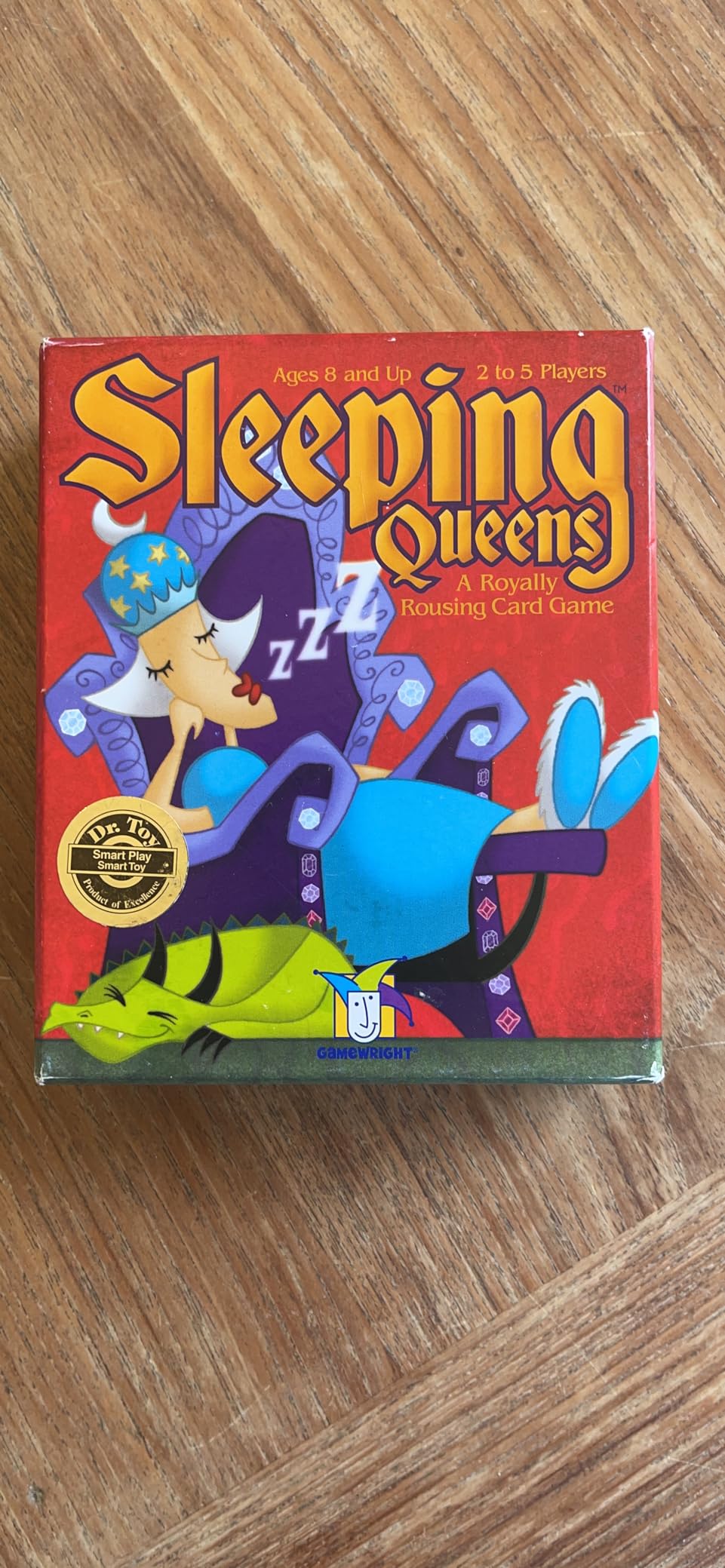
Sleeping Queens is a rummy-style game where you collect queens, and the only way to wake one is to play a card whose number is one higher than a queen on the table. It is addition under pressure, framed as a fairy tale about queens, knights, jesters, dragons and potions. Our 8-year-old played it correctly within one round, and the reason is that the arithmetic is the rule, not an extra step.
It carries a 4.9 rating from 9459 reviews, which is the joint highest star score in this roundup. The recurring description from parents is that it is the game that finally works for both their kids and their own attention span, and that is a claim our own sessions supported.
The listed play time is 20 minutes and the technical details put it at 15 to 20, which was accurate in every session. That makes it one of the few games here that genuinely fits a bedtime window without cutting the game short.
Adding One Number at a Time, Under Pressure
The core decision is arithmetic. To wake a queen showing 7, you need an 8, which often means a swap, and that swap might cost you a card you wanted. For a child in the third grade this is genuine practice, and for a teenager it becomes a fast calculation under time pressure.
Memory matters just as much, because you are tracking which queens are down, what you have already played, and what your neighbor played last. The listing names strategy, memory, quick thinking and basic math as the educational goals, and our notes line up with all four.
Luck and the Limits of Skill
The honest drawback is that drawing is a large part of the outcome. Strategic players notice this and some find it frustrating, which is the most common substantive complaint in the reviews. A 15-year-old who plays heavy strategy titles may find the game too simple, and the theme may not land for every personality.
For a family that wants a cooperative or semi-deterministic game instead, this is the wrong direction entirely. There is no team structure here, only a low-stakes race.
Components, Illustration and Small-Box Practicality
The box includes 79 illustrated cards with coated or plastic-wrapped finish, and the artwork is the thing children notice first. It is listed at 3.46 by 1.41 by 5.03 inches, so it stores and travels easily, though the small cards are easy to misplace if a game is interrupted mid-hand.
With 2 to 5 players, it fits a small family well and leaves larger tables short. For a six-player group, UNO or Five Crowns is the better buy.
Who It Is For
Sleeping Queens is our recommendation for a family that wants one quiet, short, skill-building game that both children and adults genuinely finish. It is especially good for an 8-year-old who is ready for real math practice without a worksheet.
It is also one of the better choices in this roundup for a parent playing with a single child, since two is the lower bound and the game still holds up.
Who Should Skip It
Skip it for older teens and adults who want depth, and for anyone who dislikes a luck-heavy design. The card size is also a practical issue in homes where games get interrupted regularly, since small cards scatter.
With a 2 to 5 player ceiling, it is not the game to buy if your family regularly hosts six or more players for a single table.
How to Choose a Family Card Game That Actually Gets Played
Most bad purchases in this category are not bad games. They are good games bought for the wrong table, at the wrong time of day, for the wrong player count. The five criteria below are the ones we actually used while ranking, and each one solves a problem we saw repeatedly across six weeks of play.
Match the Youngest Player’s Reading Level, Not Their Birth Year
Age ratings on card games are optimistic. The real constraint is whether a child can read the cards, follow written text on a prompt, and hold the rules in their head while five other people are talking. A game rated 8 and up is usually playable by a strong 6-year-old and a struggling 10-year-old at the same time.
The practical test: can the youngest player complete a turn without asking for help? In SKYJO that is a two-digit comparison. In Sleeping Queens it is adding one. In Cards Against Humanity it is reading a prompt card, which is why that game sits at a 4-player, 8-plus floor and does not work for a 5-year-old at all.
Look for symbol-based cards if color recognition is a concern. Phase 10 and UNO both use graphic symbols alongside color, and that single feature does more for a mixed table than any other design choice in this roundup.
Pick a Play Time That Fits the Window You Really Have
Parents rarely have two free hours on a weeknight. They have twenty-five minutes between dinner and bedtime, and that is the number that should drive the purchase. Under 20 minutes: Taco Cat Goat Cheese Pizza at 10 to 15, Monopoly Deal and Dutch Blitz at about 15, Sleeping Queens at 15 to 20. Thirty minutes: SKYJO. Longer: Phase 10 and Five Crowns at larger player counts.
A game that gets cut off mid-round teaches your family that card games get interrupted, and interrupted games do not get repeated. Pick the game that ends before attention does.
Choose Simultaneous Play When Age Gaps Are Wide
This is the single most useful piece of advice we can give a family with a 6-year-old and a 15-year-old in the room. Turn-based games make the youngest player wait, and waiting is how the age gap turns into two separate evenings instead of one table.
Simultaneous designs, where everyone acts at once, are the fix. Dutch Blitz is built entirely around it, Taco Cat Goat Cheese Pizza uses a slap pile rather than turns, and What Do You Meme has everyone choosing at the same time. UNO is turn-based but fast enough that the wait is never longer than a few seconds.
If your table has a wide age gap and you cannot change the game, change the youngest player’s role. Deal for them, let them make a call between two legal moves, or give them the job of checking whether a move is legal. Engagement comes from having a job, not from having a simplified rule set.
Check Whether Losing a Round Is Fun or Fatal
Elimination mechanics are the most common cause of family game night ending early. Any game that sends a young player out of the game, or that ends their participation while others continue, will eventually produce tears and accusations of cheating. We deprioritized that structure for that reason.
None of our twelve picks eliminates players as a core mechanic. SKYJO makes losing points the goal rather than a punishment, Five Crowns has no knockout state, and UNO keeps everyone in until someone hits 500 points. That is deliberate, and it is the difference between a game that gets played again and one that gets put back in the box.
Cooperative games avoid the problem entirely because nobody loses, but none of the games here are fully cooperative. What they share is the absence of a fatal state, which is the practical middle ground for a family table.
Weigh the Rulebook by How Quickly the Game Teaches Itself
Rulebook friction is the quiet killer of family card games. A rulebook that needs reading aloud twice ends the momentum before play starts, especially with a guest who has never played. Test the teach-in honestly by starting with the rulebook closed.
Five Crowns fits its rules on a single card and taught our table fastest. UNO needed about forty seconds because most people already knew it. Monopoly Deal includes reference cards that restate turn actions in shorthand, which is a smart solution. What Do You Meme and Dutch Blitz both teach in a couple of minutes through demonstration rather than reading.
Ask one question before buying: can a guest learn this in under two minutes, without me explaining it? If the answer is no, the game will be fine for your family and unusable when relatives visit.
Free Family Card Games to Start With Tonight
Before you buy anything, take out a standard 52-card deck. Six games that families have played for generations need nothing else, and they are free. The forums we researched for this roundup return to these constantly, and the parents recommending them are the ones with the widest age gaps.
Go Fish works with a full deck split into half and asks players to collect sets of four by rank. Every player can succeed, nobody is eliminated, and it teaches number matching and remembering what other people hold. It suits a 5-year-old through an adult, which makes it the best free starting point for a wide age spread.
Old Maid needs no matching skill at all. You discard pairs by rank, the leftover odd card moves around, and the player holding it at the end loses. It is simple, slightly tense, and the loss is mild enough that young children rarely take it personally.
Crazy Eights is a shedding game: get rid of your cards, match suit or rank, and the 8 is a wild card. It needs a full deck and a little patience, and it is a good first competitive game for a child ready to handle losing a whole round.
War is pure luck and needs no strategy whatsoever, which makes it the correct game for teaching turn taking to a child too young for anything else. Split the deck and flip simultaneously. It also makes an excellent first game for a large table because everyone plays at the same pace.
Snap is the fastest of the six and needs no deck management. A player who spots two matching adjacent cards calls snap and whoever is faster takes the pile. It is the closest free equivalent to the slapping game at number 4.
Gin Rummy is the one free option with genuine strategic depth, and it is the game most grandparents already know. It also happens to be the direct ancestor of Five Crowns, so anyone who learns it here has a head start on our top pick.
That list is not a consolation prize. Several families in our research play nothing else for years, and the appeal is that these games have no box, no lost components, and nothing to store.
Card Games That Scale to 8 Players or More
Large gatherings break most family card games, because a game rated for 4 players does not gracefully become a game for 9. Four of the twelve here genuinely handle a big table: UNO at up to 10, Taco Cat Goat Cheese Pizza at up to 8, SKYJO at up to 8, and Cards Against Humanity Family Edition from 4 to more than 20.
For eight or more, the choice depends on energy. UNO is the safe pick because the 2 to 10 range is the widest here and the teach-in is close to zero for adults. Cards Against Humanity Family Edition is the pick when the group is loud and does not want to concentrate, and its card count scales with the group rather than the rules.
Taco Cat Goat Cheese Pizza handles 8 comfortably but only if your table can take the physical chaos. SKYJO handles 8 without noise, though a round with eight players runs closer to 40 minutes than 30.
Two games here do not belong in that list. Dutch Blitz caps at 4 in the base box, and Phase 10 gets slow past 5. If your gathering is regularly larger than six at one table, buy the expansion-capable games or plan two tables.
Card Games for Grandparents, Aunts, Uncles and Non-Gamers
Multi-generational play is the most requested scenario in our research and the least covered by competing roundups. The recurring complaint is specific: inviting someone who does not do games and needing something teachable in under two minutes, with no elimination, no reading, and no way to feel exposed.
On that basis, Three of our picks clear the bar without caveats. UNO needs about forty seconds of teaching, uses symbols rather than relying on color, and has no knockout state. SKYJO is a quiet 30-minute game where the youngest and oldest players are in the same guessing position. Sleeping Queens is 15 to 20 minutes, illustrated, and needs only addition to play.
Five Crowns works well too, with one caveat: two decks need shuffling, which can be tiring for some older hands. If that is a concern, the Dutch Blitz box is small and light, though its four-player ceiling limits a large family table.
The classic trick-taking games that grandparents already know, including Rummy, Cribbage, Hearts and Euchre, remain excellent at a mixed table when everyone is comfortable. Our one caution is that a game some adults take seriously can turn a friendly evening competitive very quickly, so set expectations before the first deal.
What to avoid with a non-gamer is any game with a thick rulebook or a heavy luck component that produces dramatic losses. A non-gamer who gets eliminated in the first five minutes will usually decide the evening is not for them, and the second invitation becomes harder.
Frequently Asked Questions
What are the top 10 card games for families?
Our top ten, in order, are Five Crowns, SKYJO, UNO, Taco Cat Goat Cheese Pizza, Monopoly Deal, What Do You Meme? Family Edition, the Regal Games six classic decks, Cards Against Humanity Family Edition, Do You Really Know Your Family?, and Dutch Blitz. Five Crowns leads because it teaches in under two minutes, runs without eliminating anyone, and scales from 2 to 7 players.
What are some good card games for both children and adults?
Five Crowns, SKYJO and Sleeping Queens are the strongest choices for mixed ages. All three are teachable in under two minutes, have no elimination, and give a young player a genuine chance to win rather than a token role. For a wider age spread, add UNO, which handles up to 10 players and uses symbols rather than color alone.
What card games do grandparents play?
The classics grandparents actually know, such as Rummy, Cribbage, Hearts, Euchre and Pinochle, all work at a mixed table when everyone is comfortable with trick-taking. If someone does not play cards regularly, UNO, SKYJO and Sleeping Queens are gentler choices: each is teachable in under two minutes, needs no reading, and never sends a player out of the game.
What are some new card games suitable for large groups?
For groups of eight or more, Cards Against Humanity Family Edition scales from 4 to more than 20 players, and UNO is rated for up to 10. Taco Cat Goat Cheese Pizza and SKYJO both support 8 players. Dutch Blitz caps at 4 in the base box and Phase 10 gets slow past 5, so neither works for a single large table without adjustments.
Do we need to buy a special deck to play family card games?
Not to start. Go Fish, Old Maid, Crazy Eights, War, Snap and Gin Rummy all work with a standard 52-card deck and cost nothing. The boxed games in this roundup each use their own custom deck, usually with symbol cards, a rotating wild card, or a non-standard suit, which is what makes them easier for children to read and for mixed ages to share.
The Bottom Line: Which Family Card Games to Buy First
If you buy one box from this roundup, make it Five Crowns. It is the only game we tested that worked for a 6-year-old, two 10-year-olds, two adults and two grandparents at the same table without a single argument about the rules, and its 2 to 7 player range covers most households.
If your youngest child is under seven, start with the Regal Games six-deck set instead. It is the only entry rated for ages 4 and up, the cards are genuinely sized for small hands, and six games in one tin will outlast a single premium purchase and keep the whole set in a single container.
If your real problem is a wide age gap, buy SKYJO. If your real problem is a big table, buy UNO. If your real problem is a 20-minute window before bedtime, buy Taco Cat Goat Cheese Pizza or Sleeping Queens. If your real problem is a guest who does not play cards, buy UNO and keep Five Crowns for yourself.
Start tonight with a standard deck and Go Fish. Whatever you buy after that will land better, because everyone will already know what winning feels like.
Tell us the ages at your table, how much time you have, and whether you travel much, and we will narrow this list down to a single box for you.