
Most board game recommendations tell you a box is rated 4.8 stars by a thousand people. That number tells you almost nothing about whether the game will survive contact with your actual group, and it says nothing at all about the one number that decides whether a legacy game is worth owning: how many evenings the campaign will take from you.
A legacy board game permanently changes between sessions. Stickers go on the board, cards get written on and torn, new rules are unlocked, sealed envelopes open, and the next session starts from a game that no longer resembles the one you bought. That single rule creates the biggest trap in the hobby, because a legacy campaign only works if the same people keep meeting for months.
That is why the best legacy board games for groups are not decided by rating alone. Our team spent weeks playing through these ten titles with groups of two, four, five and eight-plus, tracking campaign length, teaching time, and what happens to the box when the story ends. The results below sort the field by group size and total commitment, so you can match a game to the group you actually have rather than the group you wish you had.
One caveat before we start, because it is the thing most roundups bury: a legacy game is a consumable purchase. Your campaign belongs to your group and cannot be handed to another table, and the components are altered permanently as you play. Every pick below is judged on how well it survives that reality.
Our Top 3 Legacy Board Games for Groups in 2026

Pandemic Legacy Season 1
- 2-4 players
- 60 min sessions
- permanent stickers and torn cards
- cooperative
Comparing the Best Legacy Board Games for Groups in 2026
| Product | Details | |
|---|---|---|
| Pandemic Legacy Season 1 |
|
Check Latest Price |
 Betrayal Legacy Betrayal Legacy |
|
Check Latest Price |
 Clank! Legacy: Acquisitions Incorporated Clank! Legacy: Acquisitions Incorporated |
|
Check Latest Price |
 Risk Legacy Risk Legacy |
|
Check Latest Price |
 My City My City |
|
Check Latest Price |
 Charterstone Charterstone |
|
Check Latest Price |
 SeaFall SeaFall |
|
Check Latest Price |
 Ticket to Ride Legacy Ticket to Ride Legacy |
|
Check Latest Price |
 Aeons End: Legacy Aeons End: Legacy |
|
Check Latest Price |
 We Didn’t Playtest This: Legacies We Didn’t Playtest This: Legacies |
|
Check Latest Price |
1. Pandemic Legacy Season 1 – The Co-op Campaign That Rewrites Itself
Pandemic Legacy Season 1 Board Game (Blue) – Epic Year-Long Battle Against Deadly Diseases! Cooperative Strategy Game for Family Game Night, Ages 13+, 2-4 Players, 1 Hr Playtime, Made by Z-Man Games
2-4 players
60 min sessions
Ages 13+
4.6 pounds
Cooperative legacy
+ Pros
- Unique evolving narrative each playthrough
- Strong co-op teamwork with per-character ability unlocks
- Permanent stickers
- writing and torn cards make progress tangible
- Sealed hidden components add real discovery
- Replays well with the same 2-4 person group
- Cons
- Long campaign needs a committed consistent group
- Destructive components make the campaign one-time per copy
- Rules and abilities accumulate so early sessions carry a learning cost
Pandemic Legacy Season 1 is the game we hand a group that has never played a legacy game and will actually finish it. Four players, one hour a month, and a world that visibly decays around you as the months pass.
The core campaign runs a full year of in-game months against four diseases, and every session adds something permanent. The box ships at 4.6 pounds and measures just over 10 by 14 inches, which tells you the components are paper-thin and abundant: cards to write on, a board to sticker, hidden sealed boxes that open at specific triggers.
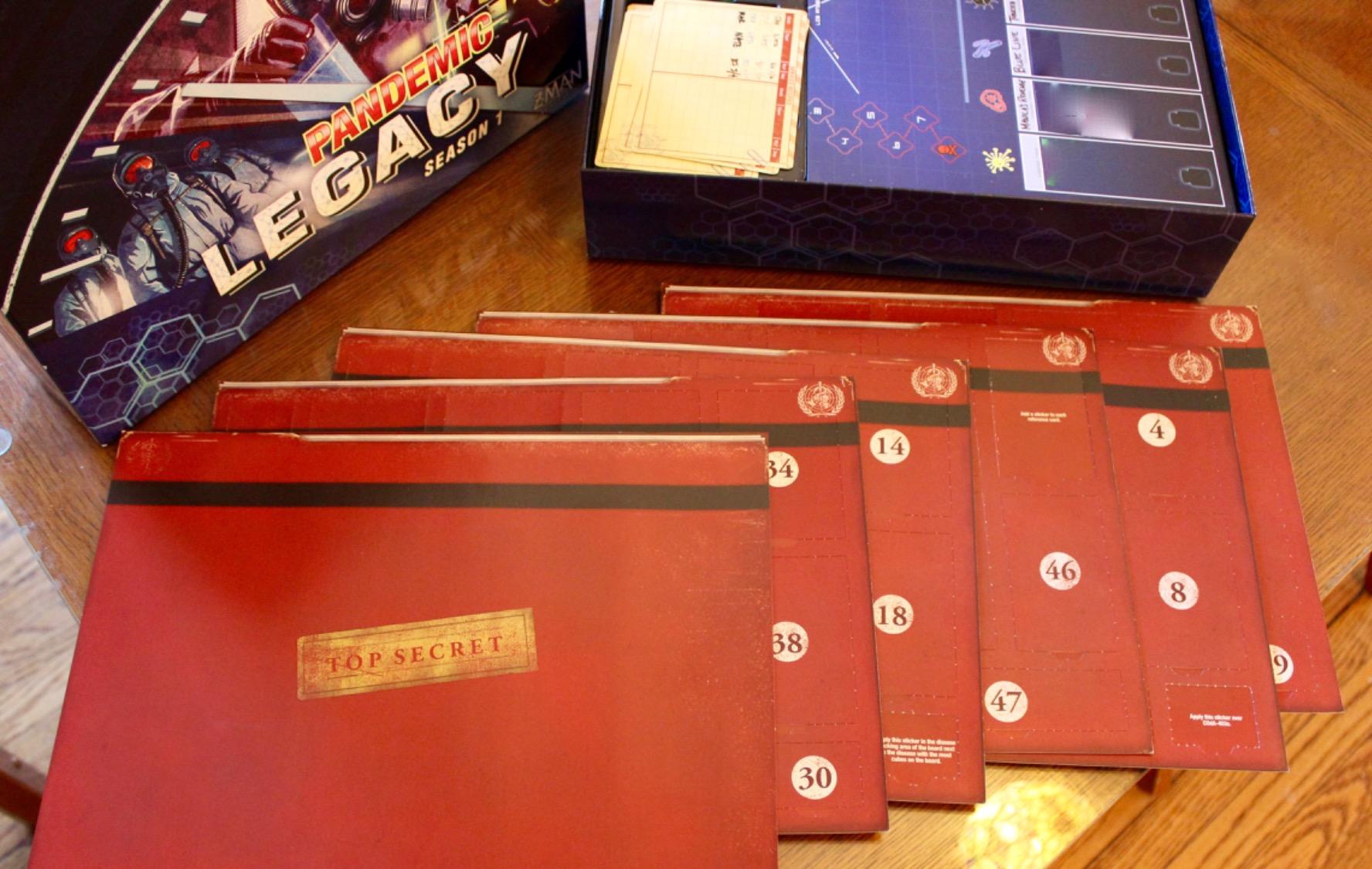
What separates it from every other co-op game is the accumulation of character abilities. Your medic, your medic-general, your character unlocking new powers or losing old ones, is a progression arc that no other game in this roundup tracks in quite the same way.
Why the 60-Minute Session Length Is the Whole Point
One hour is short enough to finish after work on a weeknight and long enough that you are not cheating the moment. The product data lists 60 minutes as the estimated playing time, and in practice that estimate holds better than almost any other game here.
Compare that to a heavy 4X legacy, where groups routinely report six-hour marathons. Pandemic is the pick when your group has jobs, commutes and a realistic ceiling on how long a Tuesday can go.
Permanent Component Changes Are the Point, Not a Flaw
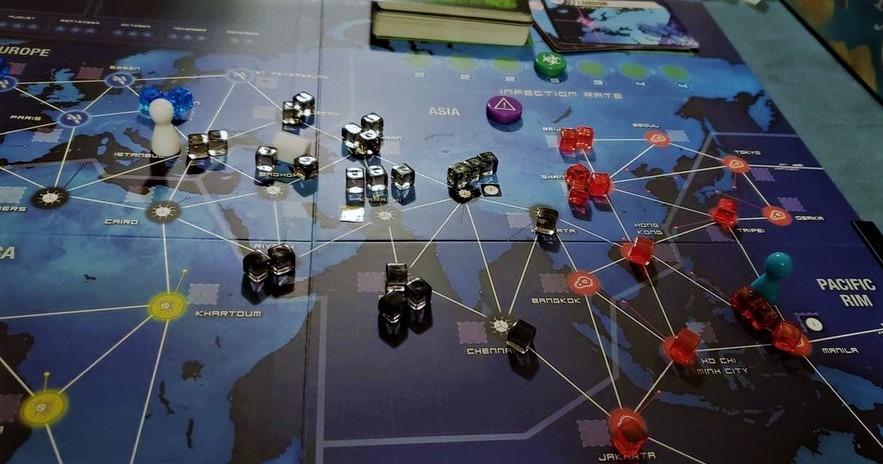
Reviewers consistently single out the physical record of play: stickers pressed onto the board, writing on character cards, cards torn in half. It turns a year of decisions into a single object you can hold.
This is also why the game is one-time per copy. The destructive design is the feature, and the sealed boxes that reveal hidden components are what keep the fifth session as surprising as the first.
Group Commitment: The Number That Decides Everything
Forum threads make this point repeatedly across Reddit and BoardGameGeek: the groups who report the best experiences are the ones with a fixed roster. A group that commits to a year-long arc gets a story that no other table will ever see.
Two to four players is the supported band, which makes this our pick for couples plus one, or a household plus a friend. The one risk is pace: the campaign is long, and a group that meets irregularly will stretch it out. Set a date when you start, and hold it.
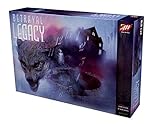
2. Betrayal Legacy – Horror Scenarios With a Memory
Betrayal Legacy (Board Game, Betrayal at House on The Hill)
Persistent campaign
Branching scenarios
2.2 pounds
Studio release 2018
+ Pros
- Combines classic horror tension with persistent progression
- A strong entry point for groups new to the legacy format
- Replay value grows as the story and unlocked content accumulate
- Cons
- Destructive campaign means restarting effectively requires another copy
- Scenarios and mechanics shift noticeably between sessions
Betrayal Legacy takes the scenario book that made Betrayal at House on the Hill a household name and makes the story permanent. Your group explores the same haunted house across many sessions, and the house remembers what you did.
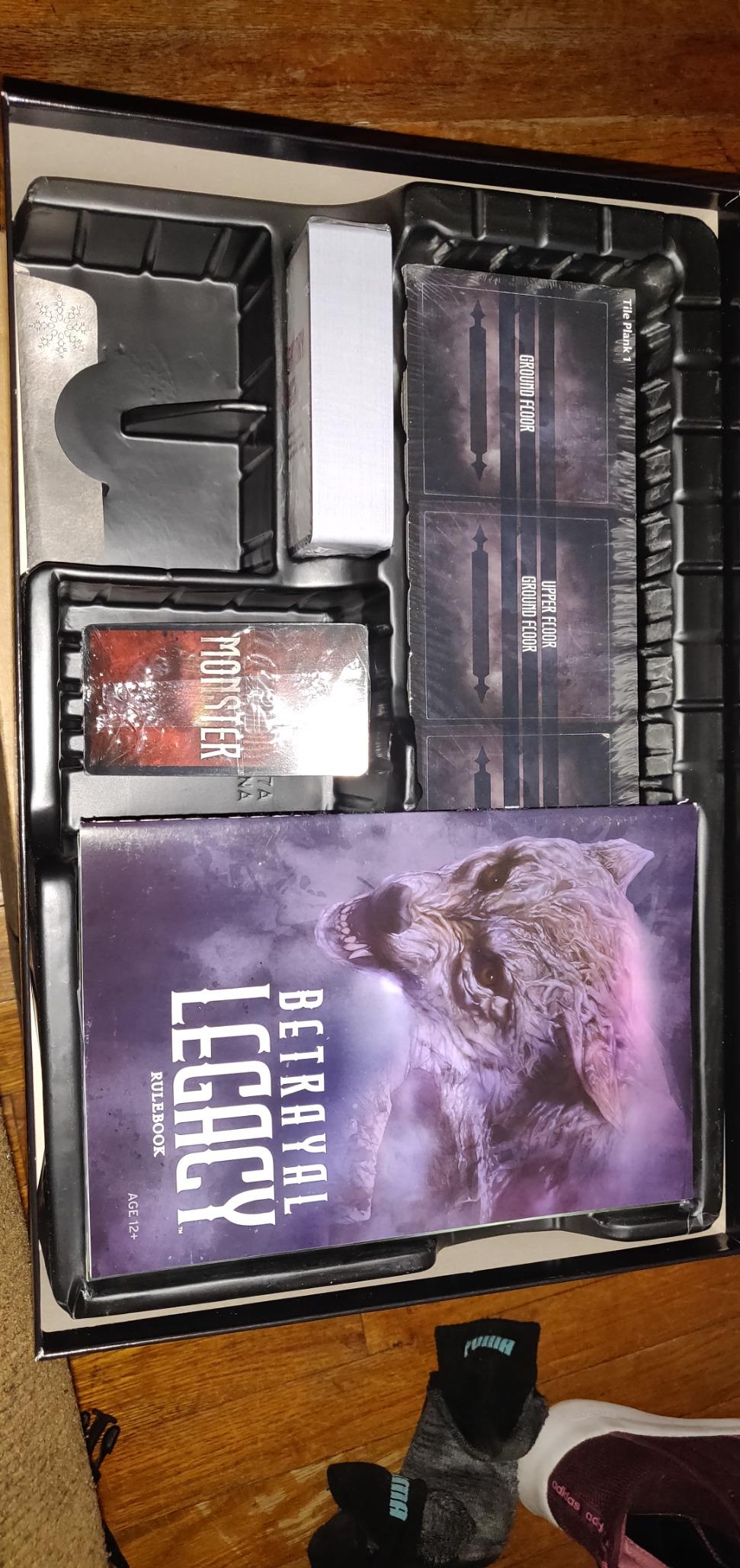
The box is compact at 16 by 10.6 by 4 inches and weighs just 2.2 pounds, which makes it one of the easiest legacy games to store, transport and hand to a new group. Studio release date was November 2018.
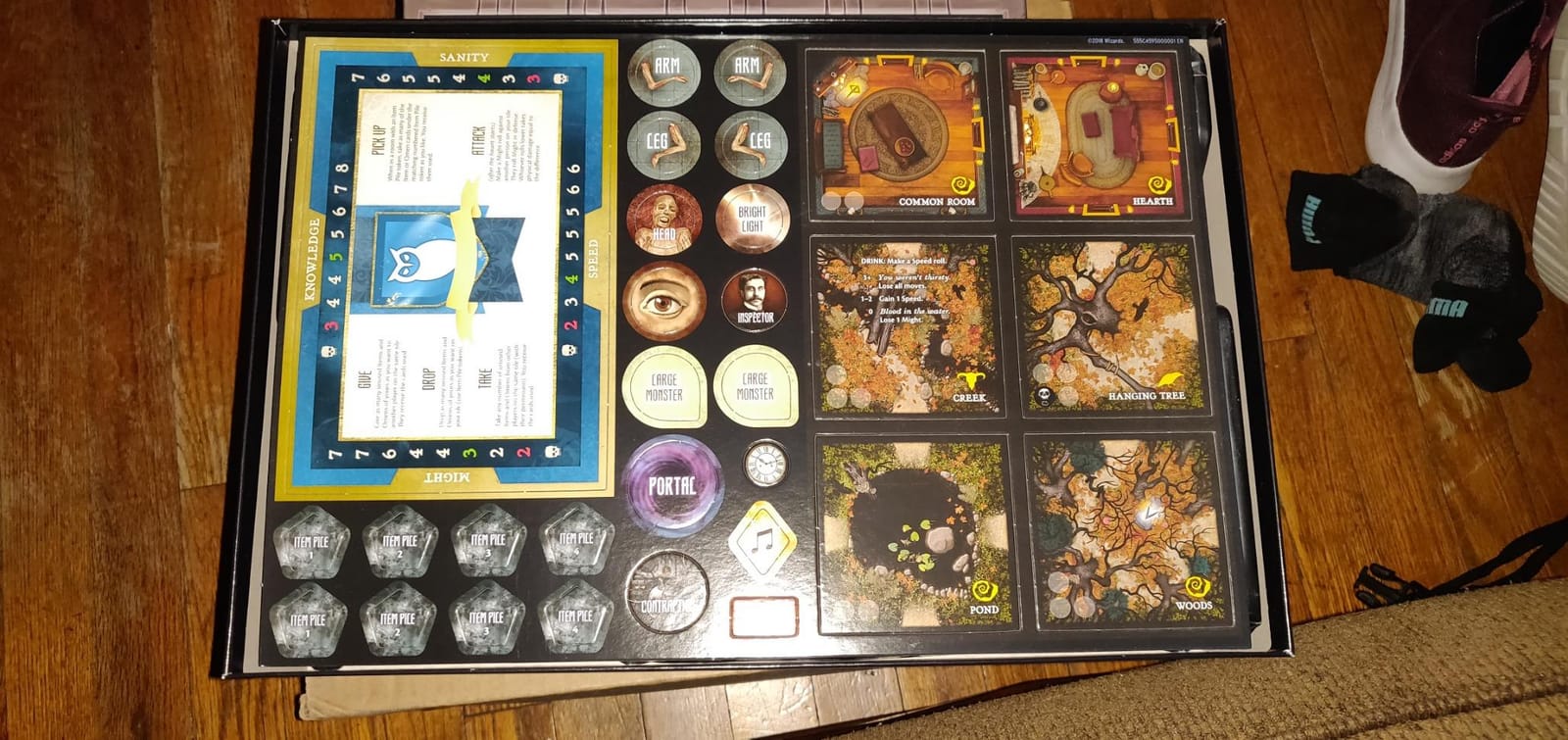
Reviewers describe it as an accessible gateway into the format, and we agree. The first session needs almost no explanation, and the tension comes from the fiction rather than from a rules mountain.
What Actually Carries Over Between Sessions
Decisions permanently alter the game, and the scenario structure means each session can pull the campaign in a new direction. That is the hook: replay value grows as the story and unlocked content accumulate rather than resetting.
The trade-off is volatility. Reviewers flag that scenarios and mechanics shift significantly from session to session, so a group that loved the opening night may hit a scenario that does not land. Hold that expectation early.
Best as a Gateway, Not a Marathon
This is the legacy game we recommend to a mixed-skill group that wants a story without heavy bookkeeping. It asks for commitment, but the commitment is emotional rather than mechanical.
It is also the one to buy if you are unsure a legacy campaign will suit your group at all. The cost of finding out is lower, and the narrative hook is immediate.
Who It Fits and Who It Does Not
It suits a steady small group that likes being scared together and does not want to study a rulebook. It does not suit a group chasing optimisation or a very large table that needs broad player-count flexibility.
Reviewers report 87% five-star and 9% four-star ratings across 1,347 reviews, which puts it among the most consistently praised titles in this roundup.
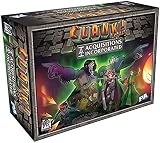
3. Clank! Legacy: Acquisitions Incorporated – The Campaign That Builds a Replayable Board
Clank! Legacy: Acquisitions Incorporated
2-4 players
30-120 min
Ages 13+
2.2 pounds
Deck-building
+ Pros
- Accessible legacy design that keeps the fast card-driven feel
- Choices visibly reshape the board cards and story
- Post-campaign replayability through the unique built board
- Works for 2-4 players across flexible session lengths
- Cons
- Campaign components are altered permanently during play
- Legacy layers add bookkeeping some lighter Clank fans find unnecessary
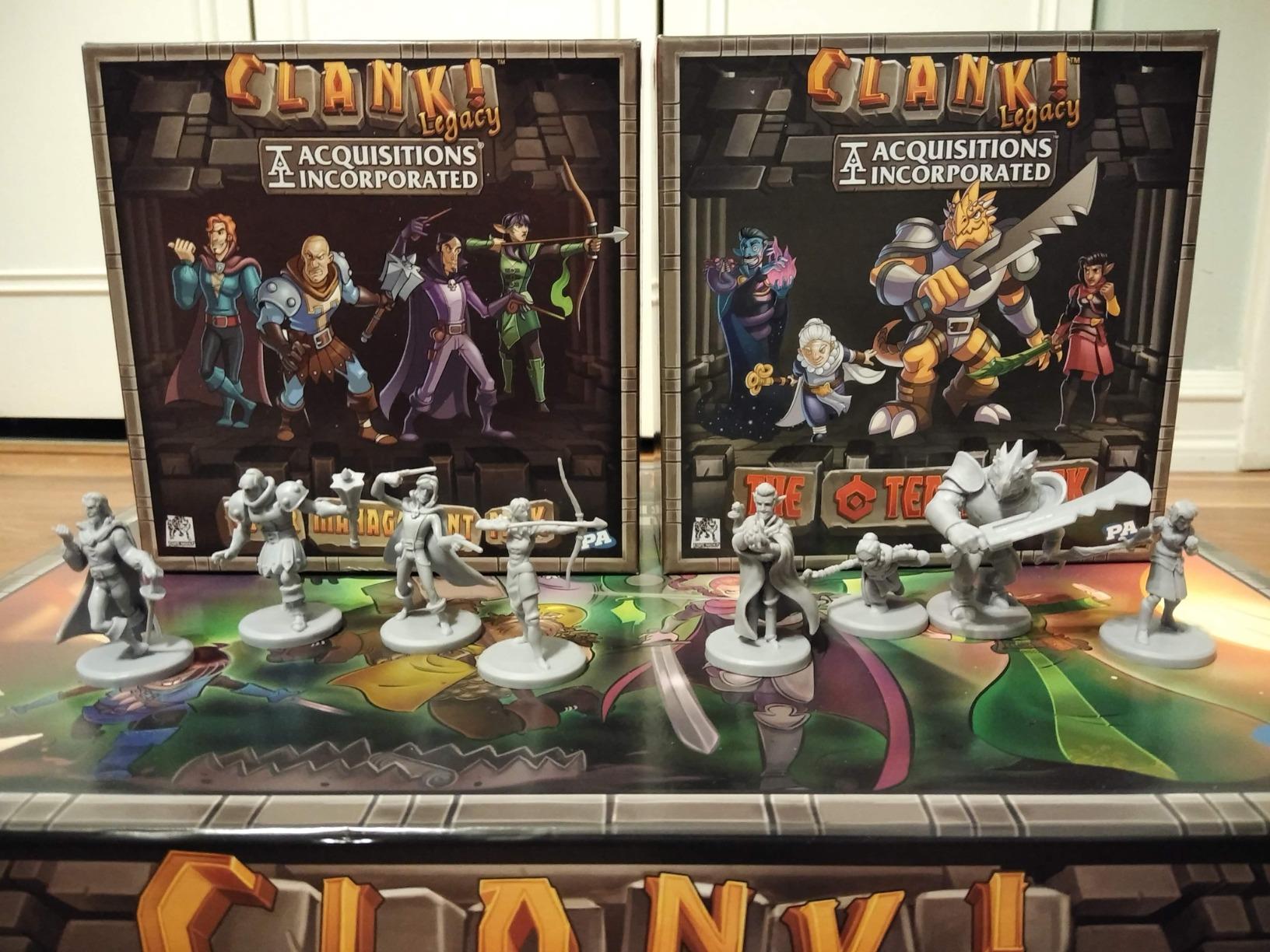
Clank! Legacy: Acquisitions Incorporated is the rare legacy game that answers the question every buyer eventually asks: what is left when the story ends? A fully replayable post-campaign game built from the board your group created.
The campaign climbs a corporate ladder across more than ten games, and at 2-4 players with sessions that flex between 30 and 120 minutes, it adapts to whatever the evening looks like. The box weighs 2.2 pounds and measures roughly 13 by 18 inches.
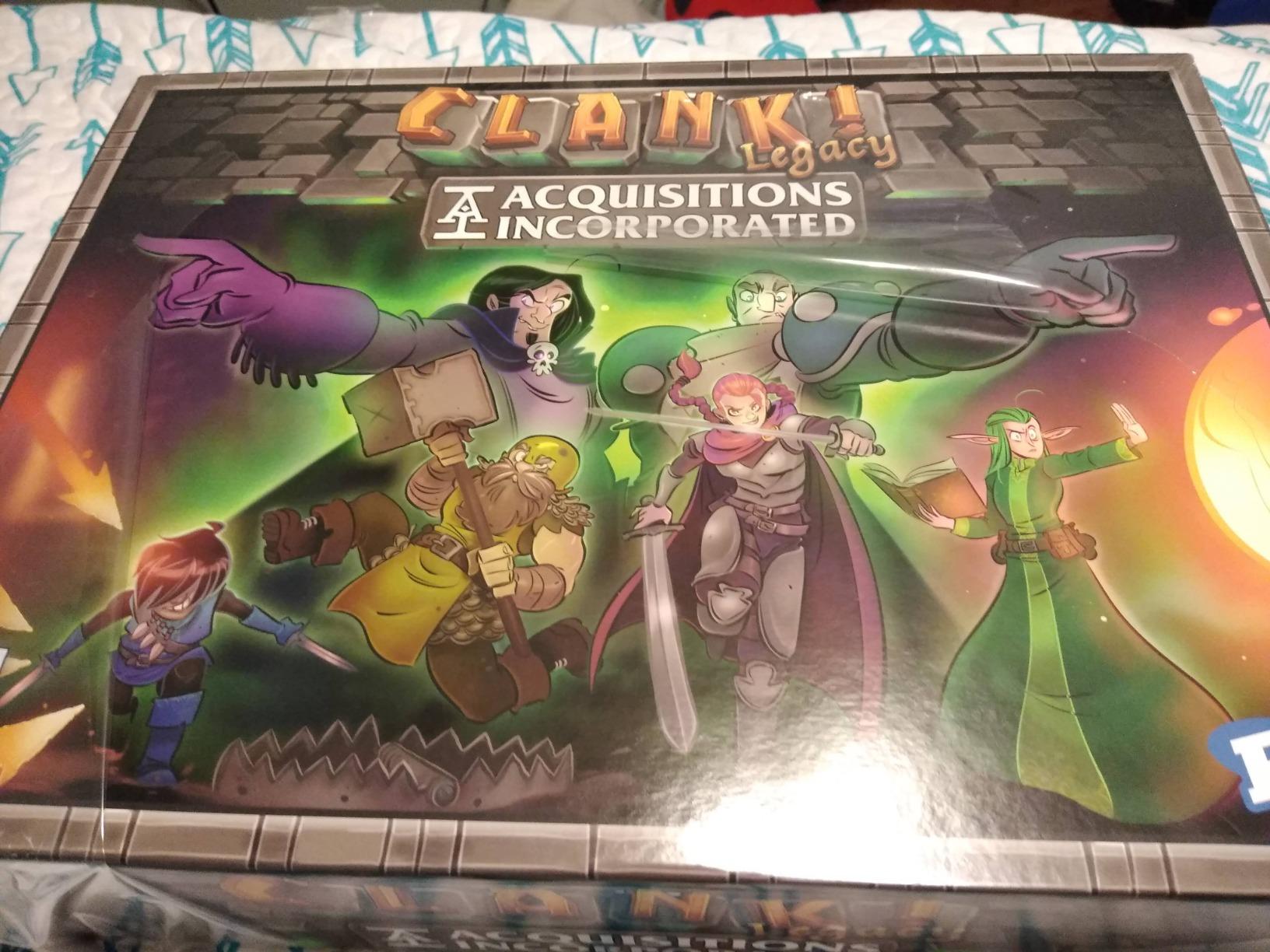
Players repeatedly describe this as the best legacy experience they have played, and the reason is design: it keeps the fast, card-driven Clank! rhythm while adding a layer of consequences underneath.
Session Length That Flexes, Not a Fixed 60 Minutes
The listed playing time is 30-120 minutes, a range rather than a target. Short sessions end early and pick up where they stopped, which matters enormously for a group that sometimes has only half an hour and sometimes has a whole evening free.
That flexibility is a real advantage over games with a rigid hour-plus session. A group can run a campaign through a series of short game nights or marathon it across a few long weekends.
The Post-Campaign Game Is the Selling Point
Most legacy games leave you with a scarred, depleted box. This one builds a unique board from your choices and then gives you a fully replayable game using it, which is why reviewers single it out on post-campaign value.
Even after the arc finishes, the 92% five-star share of 681 reviews keeps growing because the second game is genuinely good on its own terms.
Group Fit and the Bookkeeping Question
Two to four players is a tighter band than most, and the game suits a group that plays regularly. The one recurring criticism is that the legacy layers add bookkeeping that lighter Clank! fans consider unnecessary.
If someone in your group resists anything heavier than the base card game, set expectations before the first session. Otherwise this is the most forgiving legacy game on this list to start from.
4. Risk Legacy – Five Players and One-Hour Sessions
Hasbro Gaming Avalon Hill Risk Legacy Strategy Tabletop Game, Immersive Narrative Game, Miniature Board Game for Ages 13 and Up, for 3-5 Players
3-5 players
60 min
Ages 13+
275+ miniatures
1.8 pounds
+ Pros
- Cuts classic Risk down to about an hour per session
- Victory-point scoring makes alliances far easier to form
- Over 275 military miniatures give real tabletop presence
- Legacy unlocks add factions and cards that permanently go out of play
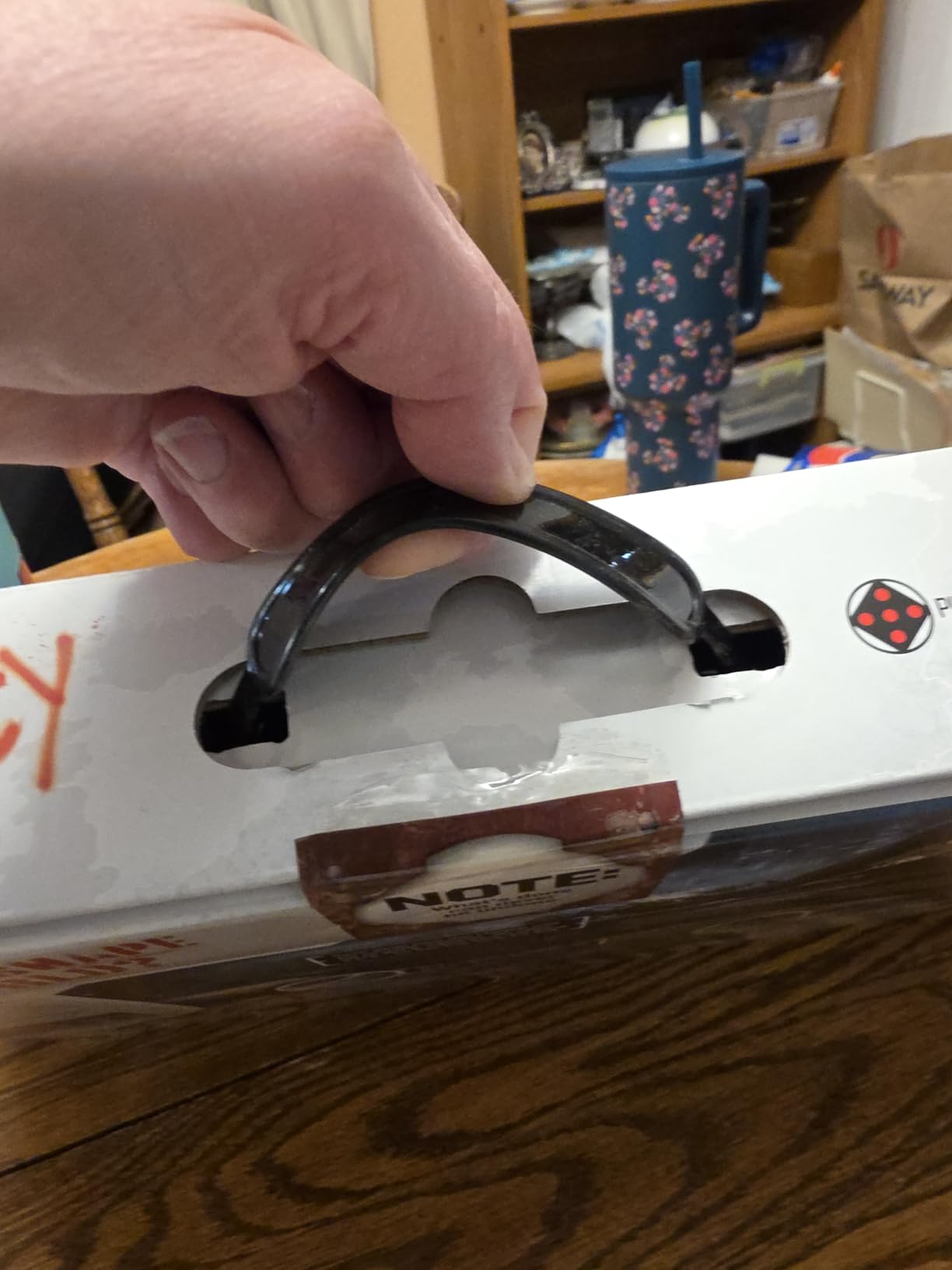
- Briefcase-sized box with a built-in handle
- Cons
- Progress slows noticeably below four players
- A rotating cast of players weakens the legacy continuity
- Best suited to players with some strategy experience
Risk Legacy is the answer to the most common complaint about classic Risk, which is that a session takes too long. This version delivers about an hour while keeping the area-control war feel intact.
It is also the only genuine five-player legacy on this list, which makes it the default answer when a group asks for legacy games for 5 players. The listed player count is 3-5 and the session target is 60 minutes.
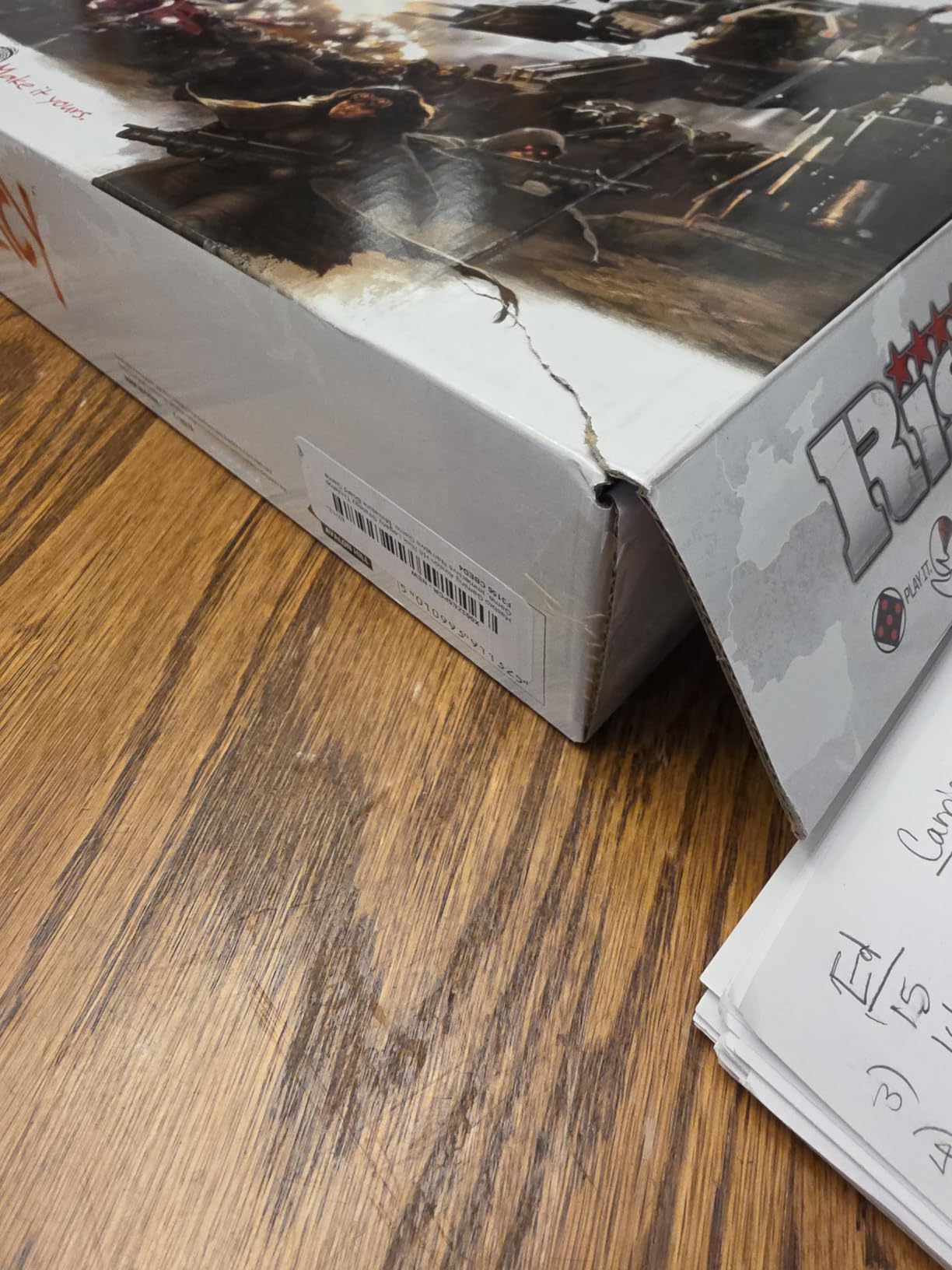
The component count is the surprise: more than 275 military miniatures across faction cards, a sideboard, five dice, missiles, a sticker sheet and sealed components, packed into a 2.76 by 15.75 by 10.51 inch briefcase with a handle.
Victory Points Changed the Social Contract
Modern warfare theme, legacy gameplay, and a scoring system built around victory points rather than total conquest. That scoring change is what makes alliances possible, and alliances are what make a five-player game finish in an hour instead of dragging on.
It is a deceptively large design shift. Owners routinely call this the definitive evolution of Risk, and reviewers credit the shorter sessions and ally-friendly scoring together as one change rather than two.
Why Five Players Is the Sweet Spot Here
Reviewers note that progress slows noticeably with fewer than four players, because some factions need a full group to function. A five-player table gets the intended experience, and a three-player table gets a slower one.
If your group sits at three, treat that as a warning, not a dealbreaker. If your group sits at five, this is the strongest fit in the entire roundup.
The Rotating Group Problem, Solved or Not
BoardGameGeek threads on Risk Legacy with a rotating cast of players are where the sharpest criticism lives: a changing roster weakens the legacy continuity, because the story belongs to the table that created it.
Resolve it before you buy. If the same five people show up every month, this is excellent. If your group is fluid, the continuity loss is real and no amount of good components fixes it.
5. My City – The Family Legacy With a Five-Minute Teach
Thames & Kosmos My City | Family – Friendly | Legacy Board Game | Kosmos Games | 2 to 4 Players | Ages 10 and Up | Award Winning Designer Reiner Knizia , Blue
2-4 players
30 min
Ages 10+
96 tiles
24 episodes
+ Pros
- Only about five minutes to learn and 20-30 minutes per episode
- Non-destructive design with no component destruction
- Double-sided board gives 24 episodes plus a replayable Eternal mode
- Catch-up and per-episode handicaps keep scoring close
- Accommodates mixed skill levels and ages from roughly eight upward
- Cons
- Not deep enough for heavier strategy players
- Very little direct player-to-player interaction
- Knowing the campaign contents limits true replayability
My City is the legacy game we recommend whenever a family is in the room. Reviewers describe it as Tetris as a board game, and that framing is accurate: tile laying, clean decisions, almost no reading.
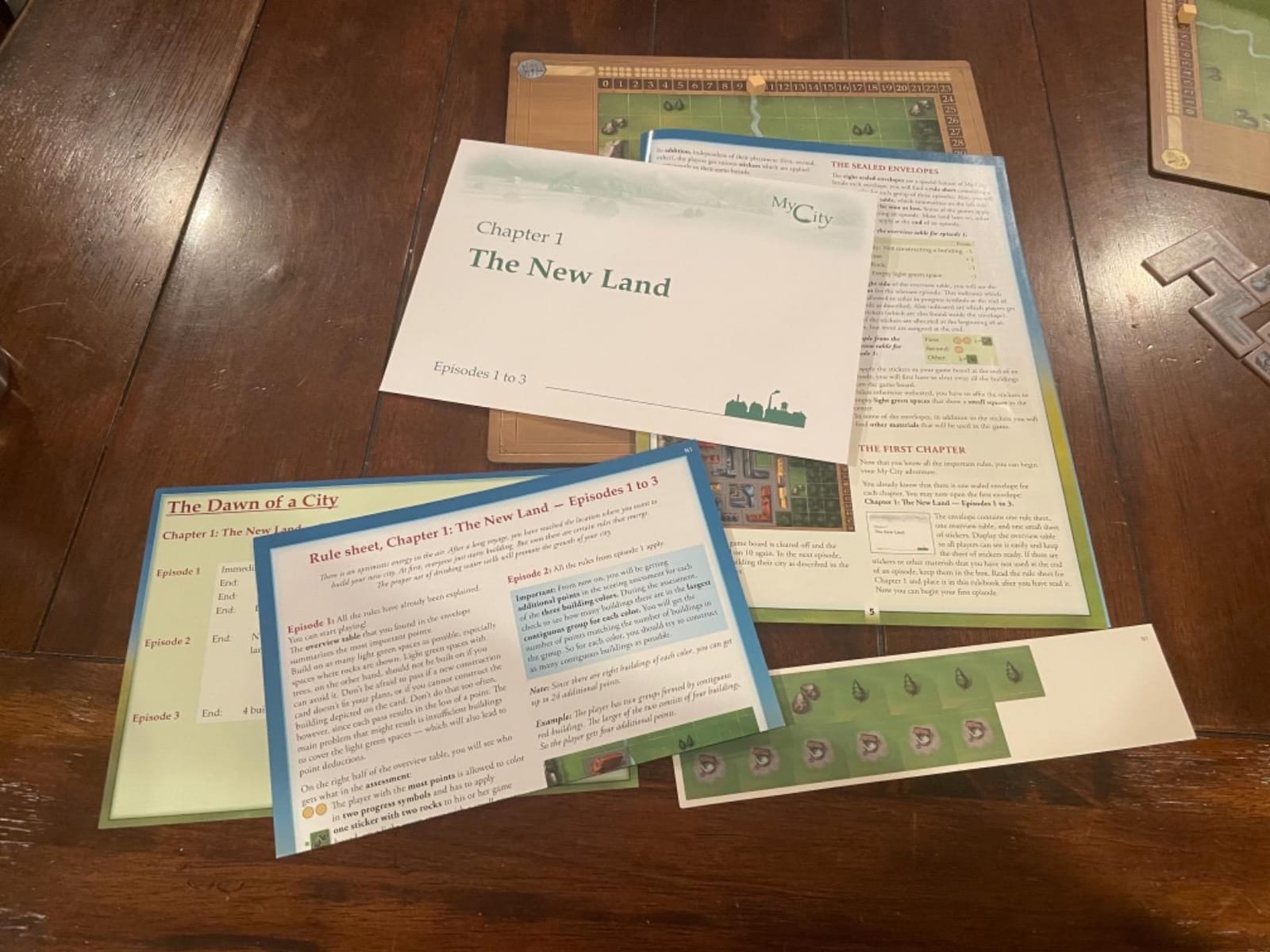
Designed by Reiner Knizia, it runs 2-4 players at about 30 minutes a session for ages ten and up, and the box contains four player boards, 96 tiles, four scoring markers, 24 cards and eight envelopes of pieces to unlock.
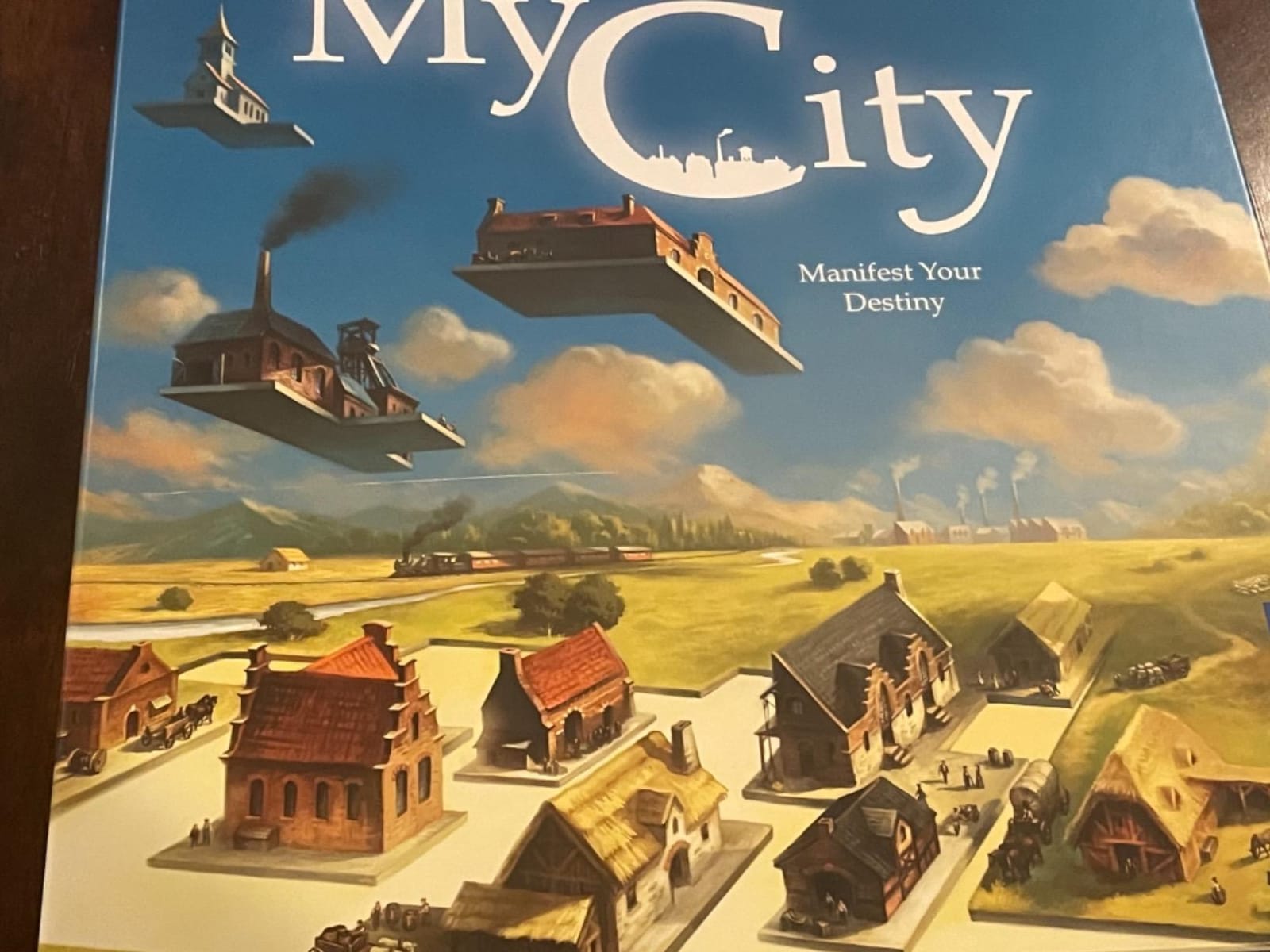
The 24-episode campaign runs on one side of the board, and when it ends you flip the board over for a replayable Eternal mode. For a family, that two-in-one structure removes the one-and-done problem entirely.
The Non-Destructive Design Is a Family Essential
Nothing gets torn or written on. Your child cannot ruin a campaign box by scribbling, and a five-year-old who joins session three is not handling irreplaceable campaign components.
That single decision is what separates this from every other legacy game here. Reviewers single out the non-destructive design as the reason it works with mixed-ability groups, and the 1-year manufacturer warranty against defects reflects how much the physical product matters to owners.
Catch-Up Systems That Stop One Player Running Away
With 96 tiles and per-episode handicaps, scoring stays close across sessions, so a strong player cannot bank an unassailable lead in episode four and coast.
For a group with a wide skill range, this matters more than raw depth. A game where one player wins by session six has a broken campaign, and this one is built to avoid that.
Where It Falls Short for Adults
Reviewers are direct: it is not deep enough for hardcore strategy players, and there is essentially no take-that element, so player interaction is thin. Several describe it as a puzzle and optimisation game rather than a social one.
Also worth knowing before you commit: once your group has seen what is in the 24 episodes, the surprise is gone. The Eternal mode is what carries the replay value, not the campaign itself.
6. Charterstone – Six Players and a Board You Keep
Stonemaier Games: Charterstone, Competitive Legacy Game by Jamey Stegmaier
1-6 players
75 min
230+ wooden tokens
350+ cards
2.8 kg
+ Pros
- High production quality with wooden tokens and real metal coins
- Campaign builds a one-of-a-kind board you keep and play afterward
- Simple base mechanics with substantial strategic depth
- Gradual rule introduction makes it a good genre gateway
- Automa solo system simulates an opponent
- Cons
- Not beginner-friendly
- new players miss rules
- Many elements to track each session
- Campaign scoring can be opaque
- Plays thin with two players
- Later sessions run longer than 75 minutes
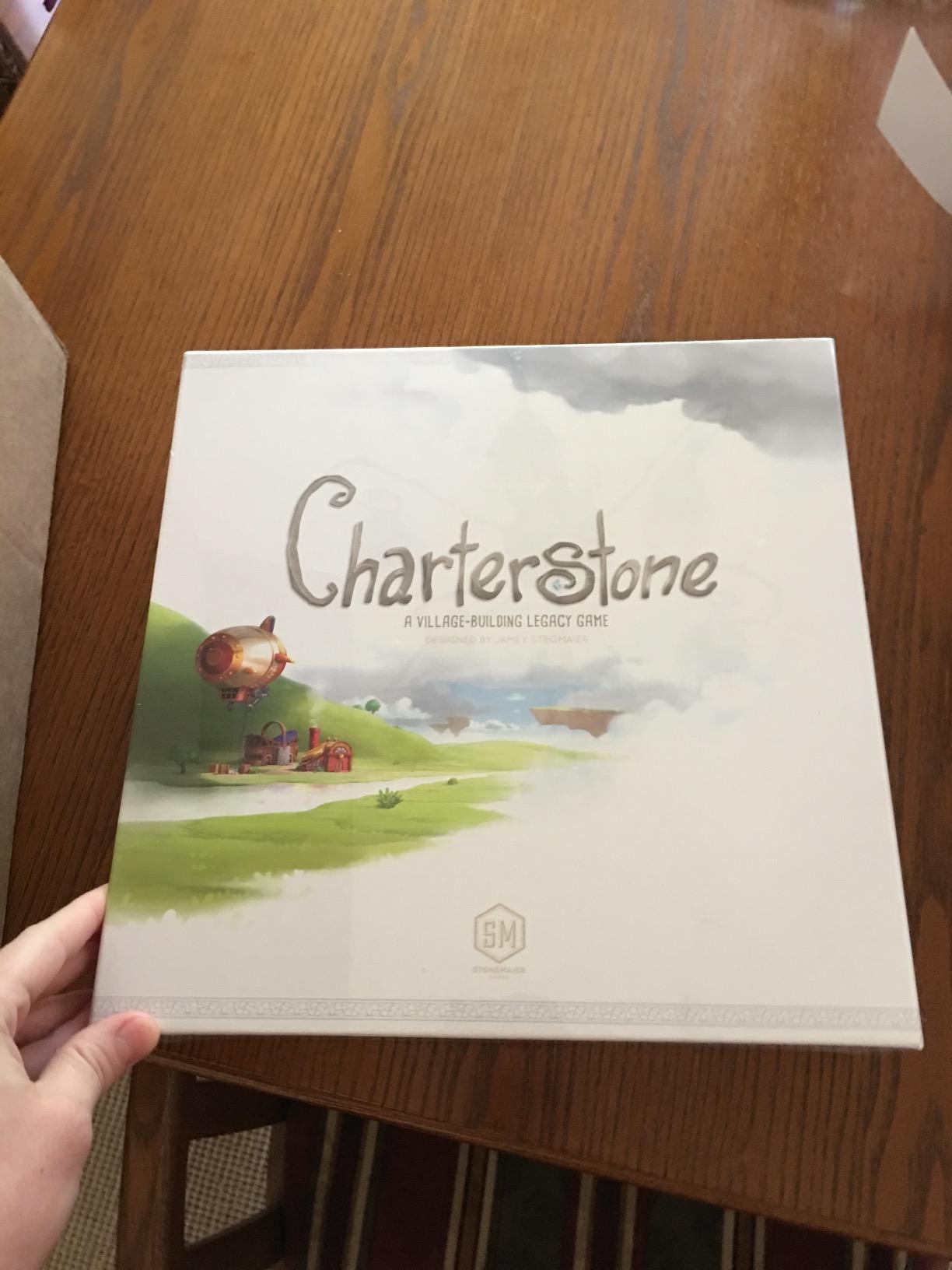
Charterstone is the widest true legacy game in this roundup at 1-6 players, and it is the title to look at when a group of five or six wants a real campaign rather than a party trick.
The component list explains the weight: 2.8 kilograms, 230-plus wooden tokens in six resources, 36 metal coins, more than 350 unique cards and 75 crates to unlock, all in an 11.7 by 3.7 by 11.7 inch box.
It is a competitive worker-placement campaign across 12 games, and the design goal is simple: build your own board and then play it as a one-of-a-kind variable game afterward.
The Custom Board Is the Permanent Legacy
Every building you construct changes the board your group keeps. When the campaign ends, that board is the artifact, and it plays as a fresh variable-setup worker-placement game on its own.
That is a different post-campaign proposition from Clank!, and for a group of five or six who will keep meeting, it is arguably the better one because the board reflects decisions your whole group made rather than four individuals.
Gradual Rules, Heavy Bookkeeping
Each game adds new rules and goals, and the rulebook is streamlined to get you moving fast. But reviewers flag a real learning curve, including new players missing rules and some groups researching rules online mid-campaign.
The flip side is the tracking load: new bonuses and objectives appearing every session, plus campaign scoring that can be opaque, where winning individual games does not necessarily win the campaign. Six players makes that conversation easier because everyone is watching the board.
Player Count Changes Everything Here
Reviewers recommend closer to six, and the box supports 1-6 with an Automa that simulates an opponent in solo play. At two players the game plays noticeably thin.
Later sessions also run longer than the nominal 75 minutes as content accumulates, so budget extra time toward the back half of a 12-game campaign.
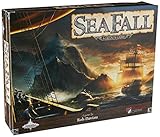
7. SeaFall – 4X Exploration Without Player Elimination
SeaFall Board Game – Legacy Game of Exploration and Adventure! Strategy Game for Kids & Adults, Ages 14+, 3-5 Players, 90-120 Min Playtime, Made by Plaid Hat Games
3-5 players
90-120 min
Ages 14+
4 pounds
4X exploration
+ Pros
- The only true 4X-style legacy with no player elimination
- Choose-your-own-adventure passages create memorable stories
- Three distinct paths to glory let groups pick a style
- Built-in catch-up system keeps the campaign competitive
- Extensive content and sealed boxes across 15-20 games
- Cons
- Highest complexity on this list with a dense rulebook
- Long sessions with significant downtime
- Consumable components mean a fresh run needs another copy
- Early scarcity can leave players unable to accomplish much
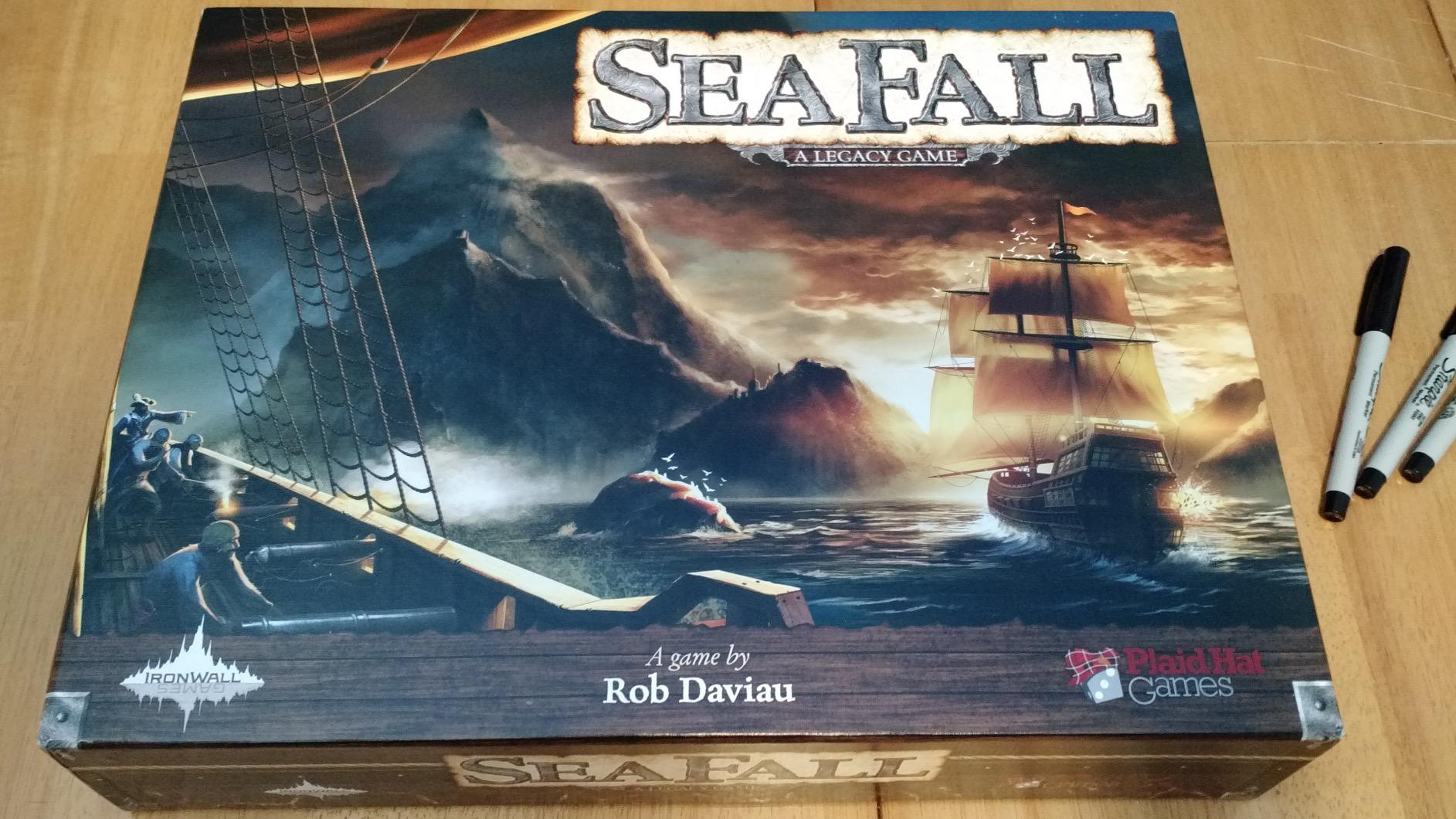
SeaFall is the outlier in this list and the most polarised. Reviewers describe it as a flawed work of genius and a landmark legacy design, and the 4.3 average from 555 reviews reflects that split more than any other pick here.
It is a 4X game without player elimination, which means your whole group stays in for the entire campaign. The box lists 3-5 players, ages fourteen and up, and sessions of 90-120 minutes across a 15-20 game campaign.
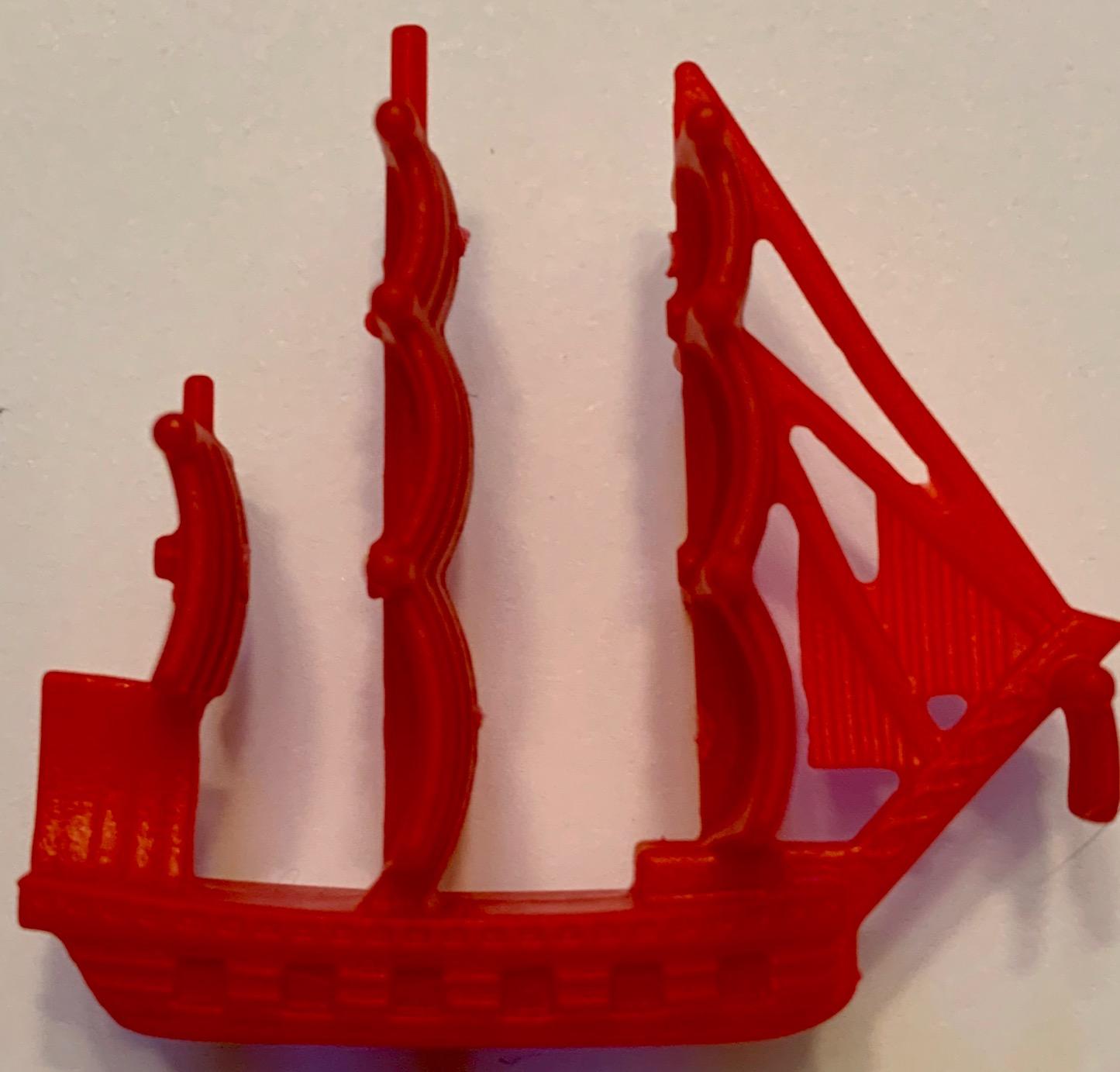
The setting is an age-of-sail exploration world where you run a mainland empire, consult advisors to uncover uncharted islands, and read a Captain’s Log of choose-your-own-adventure passages. Those passages are the part groups remember years later.
Why No Elimination Changes the Group Dynamic
Almost every 4X game knocks players out early. Here, nobody leaves, so a five-player table stays five players from session one through the finish line, with a built-in catch-up system handing trailing players boons.
Groups can pick one of three paths to glory, merchants, exploration or raiding, which lets a table commit to the style of campaign it actually wants. The storyline evolves between games the way the best legacy games do.
Complexity and Downtime Are the Real Costs
Reviewers are blunt about the rulebook: dense, sometimes ambiguously written, and often requiring the digital PDF plus the community Captain’s Log FAQ. Budget real teaching time before session one.
Sessions run long, especially at five players, and some groups report six-hour games. Early resource scarcity can also leave players feeling unable to accomplish much, which needs managing socially rather than mechanically.
Who Should Commit to This One
Pick it if your group finishes strategy games, enjoys narrative reading, and will dedicate a full afternoon. Decline it if your game nights are 90 minutes of hard stop.
Later stages add enmity penalties that discourage raiding, and winning players receive permanent province upgrades while losers get only small bonuses, which some groups find unfair. Know that going in.
8. Ticket to Ride Legacy: Legends of the West – The Easiest Legacy Onboarding
Asmodee Ticket to Ride Legacy: Legends of the West Board Game – The Ultimate Train Adventure! Strategy Game, Family Game for Kids & Adults, Ages 10+, 2-5 Players, 20-90 Min Playtime
2-5 players
20-90 min
Ages 10+
13 boards
280 train cars
+ Pros
- Quick learning curve for families and newer board gamers
- Thirteen different frontier boards keep maps feeling fresh
- Rich component set with train cars
- company boxes and event cards
- Twelve-game campaign with a permanent vault and unlockable boxes
- Cons
- Legacy structure means one playthrough per copy for most groups
- Later sessions run much longer than the 20-minute estimate
Ticket to Ride Legacy: Legends of the West is the lowest-friction way into the genre, and the first legacy game we hand to a group containing a teenager or a non-gamer.
You manage a North American railway company across 12 games, filling a permanent vault with earnings to unlock frontier boxes that reveal new rules and content. The listed player band is 2-5 and the age rating starts at ten.
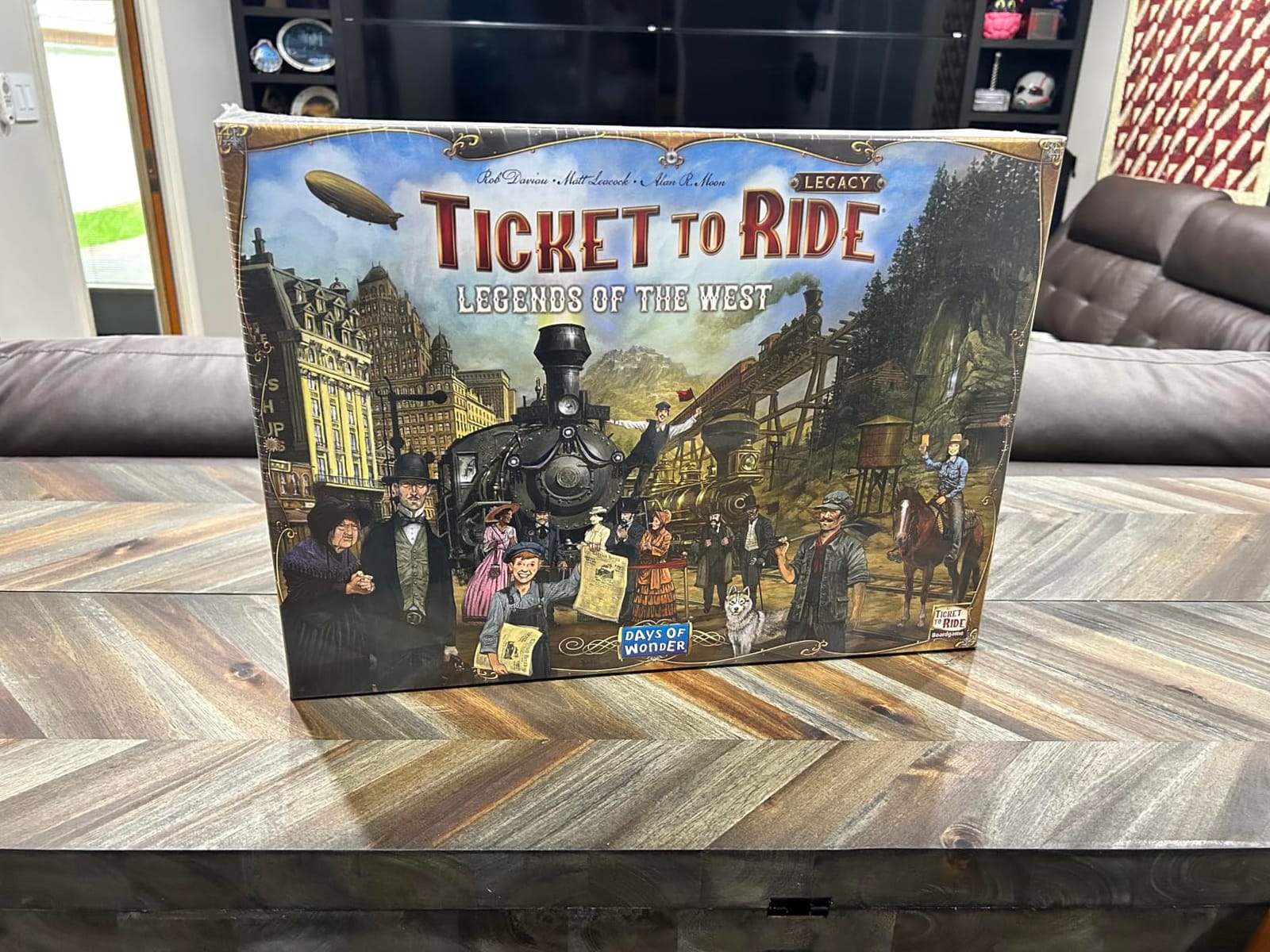
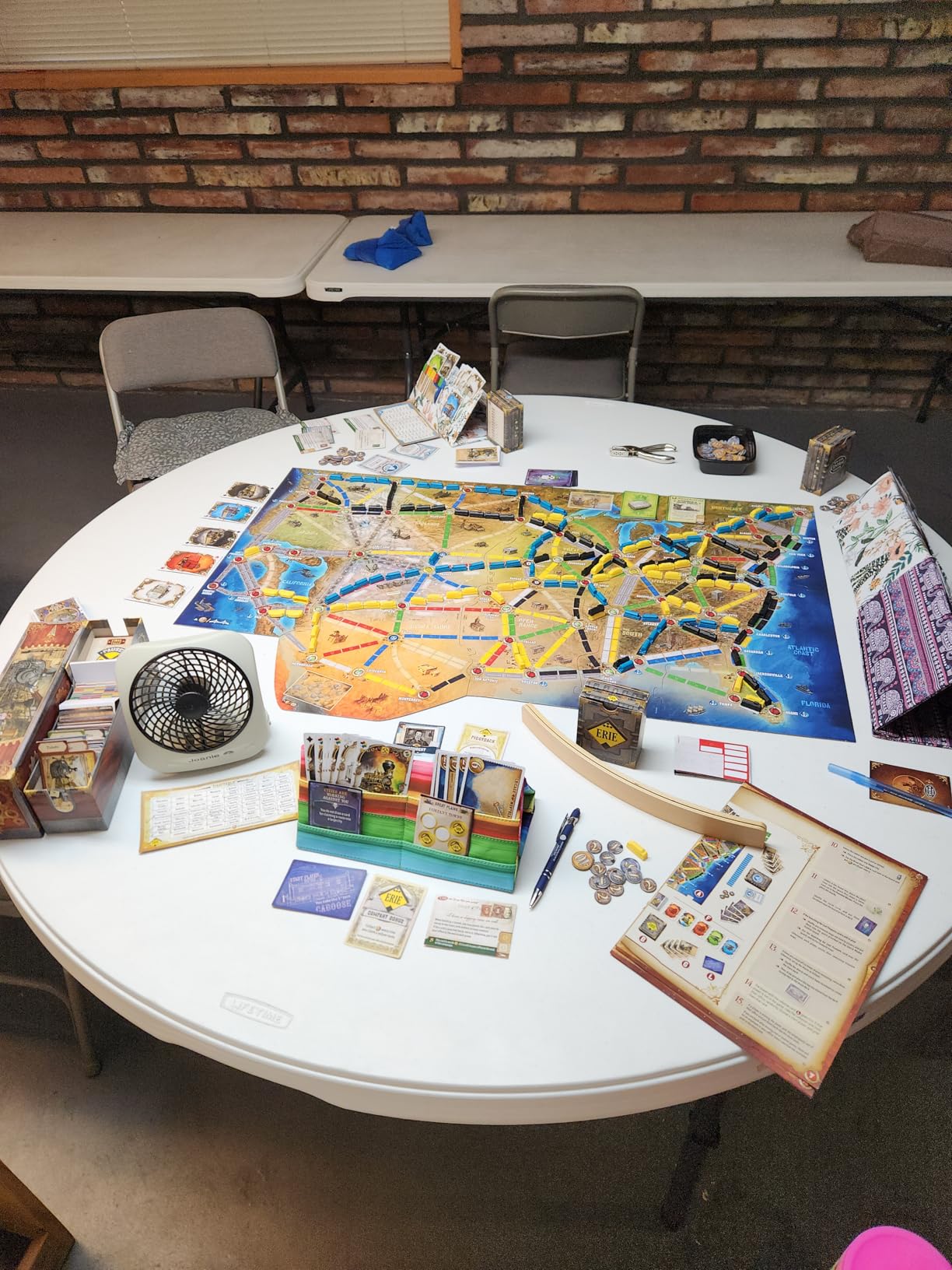
The component count is genuinely enormous: 13 frontier boards, 280 plastic train cars, 84 train cards, 33 tickets, 7 event cards, 6 newspaper cards, 77 postcards, a story deck, 5 company boxes and 8 frontier boxes, in a box measuring about 17 by 12.5 by 4 inches.
The Campaign Ends With a Board Set, Not an Empty Shelf
After the 12-game campaign you keep a one-of-a-kind Ticket to Ride experience built from new board maps, which is why this is a better entry point than games that simply end.
The quick learning curve is the other half of the pitch. Scenario-driven design by Rob Daviau, Matt Leacock and Alan R. Moon means a table can be playing competently within one session.
Session Time Is a Range, Not a Promise
The listed play time of 20 minutes is the shortest estimate in this roundup, and it is accurate only for the opening games. Reviewers note that later sessions run much longer as the campaign develops.
Plan for the middle stretch to land near an hour. What matters is that the start is fast, which is exactly when new players decide whether they want to keep going.
Group Fit and the One-Time Caveat
Two to five players with a quick teach makes this the most flexible newcomer title here, and 89% of 341 reviews are five-star.
As with every true legacy game, the campaign is one playthrough per copy for most groups. Decide before you open the box whether twelve sessions is a commitment your table will actually honour.
9. Aeon’s End: Legacy – Cooperative Deck-Building With a Campaign Spine
Aeon’s End: Legacy, The First Legacy Deck-Building Game
1-4 players
45-90 min sessions
Teen and adult
Cardboard
3.28 kg
+ Pros
- Pioneering legacy deck-builder with permanent card and scenario changes
- Cooperative
- so the group shares wins rather than competing
- Rich narrative evolving with every playthrough
- Roughly 80% of content integrates with the base game and expansions
- Compact card format suits regular game nights
- Cons
- Legacy card alteration makes the campaign single-use per copy
- Deck-building complexity higher than typical family legacy entries
- Needs a small committed group of one to four
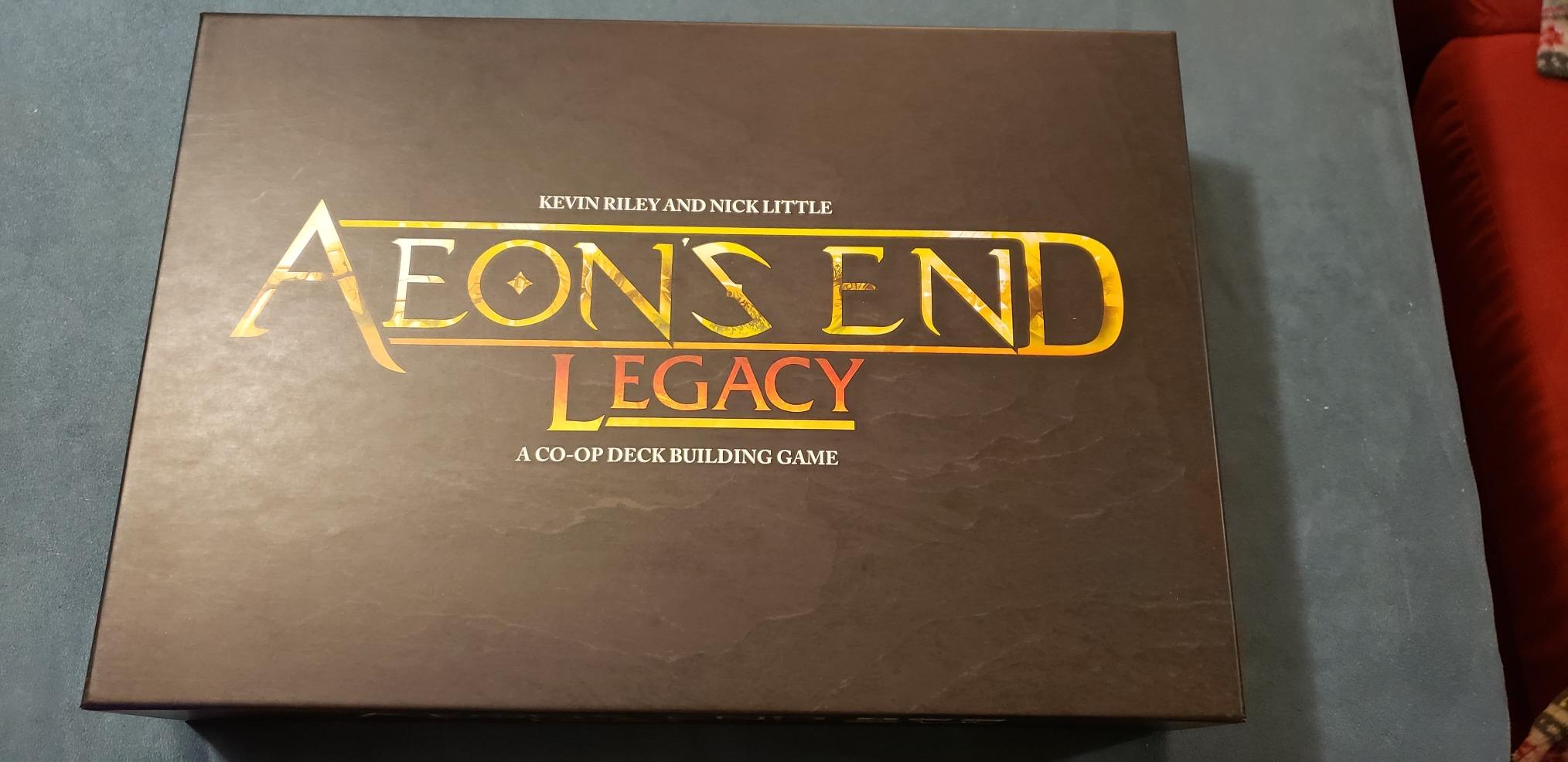
Aeon’s End: Legacy was the first legacy deck-builder, and it remains the pick for a cooperative group that wants a campaign without anyone being knocked out by a bad hand.
You defend Gravehold together across multiple sessions, and your deck is the thing that changes. Cards get added, altered and retired permanently as the narrative responds to your decisions.
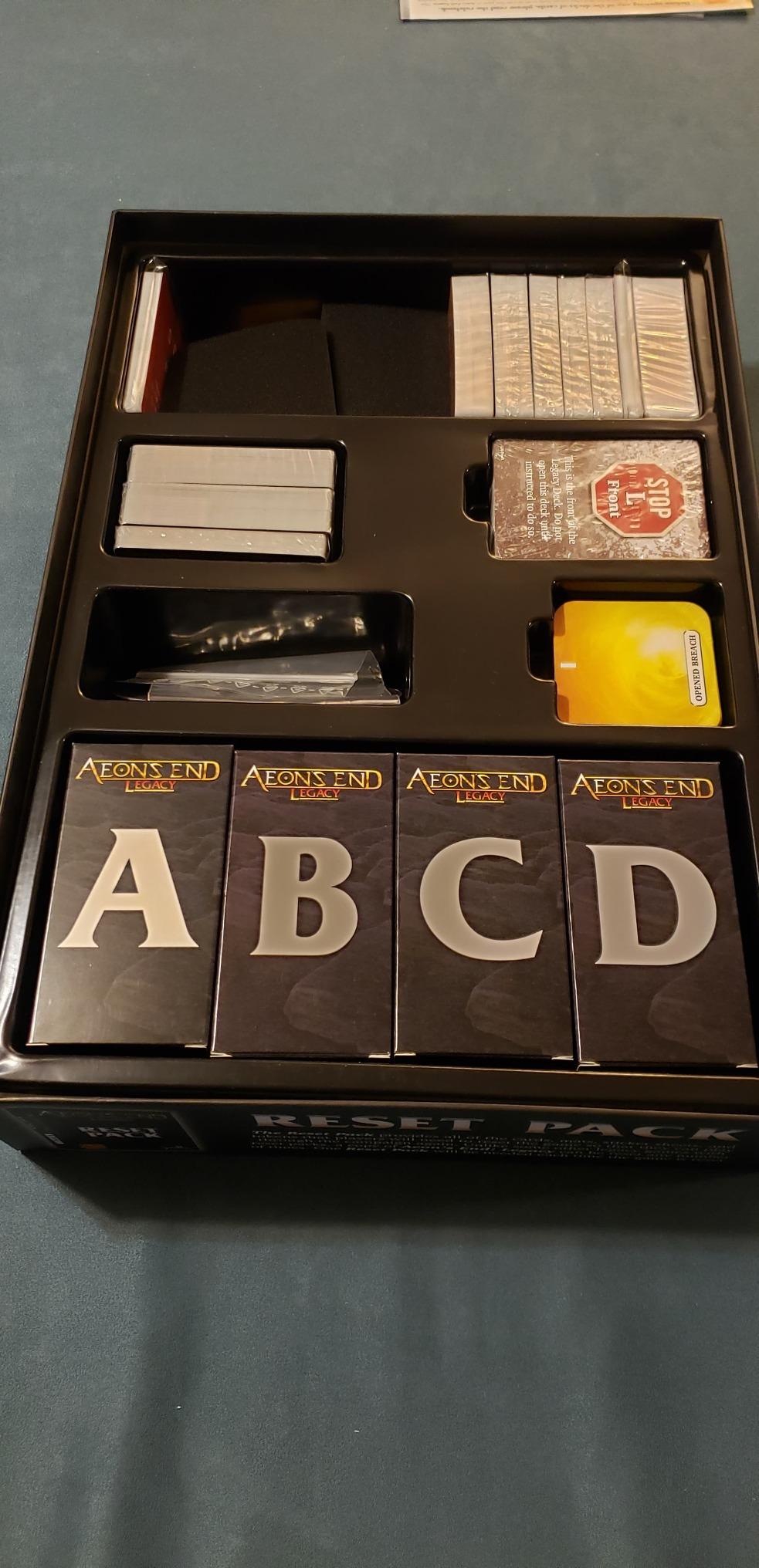
The practical advantage for a group is compatibility. Roughly 80% of the content works with the base Aeon’s End and its expansions, so the campaign sits inside a wider system rather than beside it.
Why Co-op Changes Group Dynamics
Reviewers credit the cooperative framework for making it work for groups that prefer shared wins over cutthroat competition. There is no single player to blame when the campaign turns, which matters for groups that include competitive personalities and quieter ones in the same room.
The narrative evolves with every playthrough as choices shape future sessions, so the story still has consequence even without player-versus-player conflict.
Deck-Building Is the Learning Curve
Session length runs 45-90 minutes in a compact card format, which fits a regular game night. The difficulty is not duration but complexity, since deck-building sits well above the typical family legacy entry.
Reviewers are clear: this needs a small committed group of one to four players. It also carries the standard single-use caveat, because altered cards cannot be unaltered.
Who It Serves Best
It suits a group that already enjoys cooperative card games and wants progression inside them. At 3.28 kilograms and 16.54 by 11.3 inches, it is a substantial box that stores flat and stays playable solo.
Skip it if your group wants a game where the main pleasure is watching another player take an engine. Nothing about this one is about that.
10. We Didn’t Playtest This: Legacies – Fifteen Players, Ten-Minute Rounds
Asmadi Games We Didn’t Playtest This: Legacies – Stand-Alone Legacy Card Game, 2-15 Players, 10 Min Play, 50 New Cards, Ages 12 and up
2-15 players
10 min rounds
Ages 12+
50 cards
4x5 inches
+ Pros
- Lowest entry cost in the roundup with a genuine legacy mechanic
- Ten-minute rounds suit parties and casual hangouts
- Write-on cards let the story accumulate physically
- Fully stand-alone with 50 cards and no base game needed
- Scales to more players than any other title here
- Cons
- Shallow systems and light decision depth
- Player interaction is largely incidental rather than strategic
- Write-on cards wear and become hard to read over time
We Didn’t Playtest This: Legacies is the party game of the legacy genre, and the only title here that scales to fifteen players. Everyone writes on the cards, the cards change permanently, and the round is over in ten minutes.
It is fully stand-alone with 50 cards in the box, no base game required, and the box is 4 by 5 by 0.8 inches weighing 6.4 ounces. It travels in a coat pocket.
With a two to fifteen player design and a ten-minute session, this is the only genuine legacy option for a group that assembles irregularly, because no single person carries a character between sessions.
When a Rotating Group Is the Only Group You Have
Every other pick in this roundup punishes a changing roster. This one barely notices, because the continuity lives in the deck of written cards rather than in individual player characters.
That makes it the practical answer to the most common forum complaint about legacy games, the one about committing to a fixed roster you do not have. Complete in-game quests to open four sealed bonus packs for the reward.
What You Give Up for That Flexibility
Reviewers characterise it as a novelty rather than a deep legacy experience, and the reasons are consistent: shallow systems, light decision depth, and player interaction that is incidental rather than strategically confrontational.
Write-on cards also wear and become hard to read after repeated sessions, so a long campaign eventually needs a commitment to legibility. Ages twelve and up is the stated floor.
How We Use It in Practice
Treat it as a palate cleanser between heavier campaigns, or as the game that gets a big table talking in ten minutes while a four-hour game loads. At 4.5 stars from 197 reviews, it is the least decorated pick here, and the one most likely to surprise a group of twelve.
Legacy Games for 2, 4, 5 and 8+ Player Groups
Player count is the first filter, and most of the confusion around this genre comes from picking by theme before checking the box. Here is how these ten sort out by table size.
Two Players: Clank! Legacy and Aeon’s End: Legacy
Both run cleanly at two, and both benefit from a small table because the decision space stays readable. Clank! Legacy keeps sessions flexible at 30-120 minutes, and Aeon’s End: Legacy at 45-90 minutes gives a cooperative campaign for a couple.
Avoid Charterstone at this size. Reviewers explicitly recommend closer to six, and the game plays thin with two.
Four Players: The Deepest Selection of Any Size
Four is where this roundup is strongest. Pandemic Legacy Season 1, Clank! Legacy, My City and Aeon’s End: Legacy all list four-player support, and Risk Legacy plays well at four even though it is built toward five.
If your group is a consistent four, the decision comes down to whether you want cooperative tension, card-driven climbing, family-friendly tile laying or cooperative deck-building.
Five Players: Risk Legacy, Then Charterstone
Risk Legacy is built for three to five and is the truest five-player war game on this list. Charterstone supports one to six and is stronger still at six.
Both punish a smaller table, and both reward a fixed roster, which is why a BoardGameGeek thread dedicated to five-player legacy games keeps converging on area control as the right shape.
Eight Players and Up: Only One Real Option
Among these ten, the only title that handles a very large table is We Didn’t Playtest This: Legacies, designed for two to fifteen players at ten minutes a round. It is light, but it is the honest answer.
For larger groups, a true legacy game is genuinely rare, and the compromise most groups make is a single-session social deduction or push-your-luck title instead of a campaign. We would rather tell you that plainly than pad the list with games that break at six players.
What Happens After the Campaign Ends?
Forum threads treat post-campaign playability as a decisive buying factor, and it is a fair question. Some of these games hand you a second game, and some hand you a scarred box.
Games That Leave You Something to Play
Clank! Legacy finishes with a unique, fully replayable post-campaign game built from the board your group assembled. Charterstone leaves a one-of-a-kind variable worker-placement board you keep forever. My City flips its double-sided board over for a replayable Eternal mode. Ticket to Ride Legacy delivers a one-of-a-kind experience with new board maps.
That is four out of ten, and it is not a coincidence: these are the designs that planned the ending from the start.
Games That Are Genuinely Done
Pandemic Legacy Season 1, Betrayal Legacy, Risk Legacy and Aeon’s End: Legacy complete their arcs and stop. The campaign cannot be repeated with that copy, and a fresh run means another box.
None of that is a defect, but it is a budgeting decision. Buy these knowing the campaign is the product, not a gateway to more play.
How to Store a Paused Campaign
If your group has to put a campaign down for months, bag the altered components by type in separate labelled bags rather than returning them to the box in mixed piles. Photograph the board and any hand-written cards, because ink fades and cardboard warps.
Write the current month, session number and campaign score on the outside of the box in marker. Six months later, that single line is the difference between resuming and restarting.
How to Pick a Legacy Game for Your Group
Work through these five questions in order, and the right title usually becomes obvious before you look at a single review.
1. Who Is Actually in Your Group?
Count the people who will show up to at least 80% of sessions, not the people who could theoretically attend. That number, not your social circle size, is your player count. A legacy game bought for eight and played by three is an expensive bookmark.
2. How Many Evenings Can You Actually Commit?
This is the number competitors rarely publish, and it is the one that matters. Multiply your realistic sessions by the honest session length, and compare that to how long a campaign lasts: 12 games for Charterstone, 12 for Ticket to Ride Legacy, 10-plus for Clank!, 15-20 for SeaFall.
Users care about total time far more than per-session estimates. A group that meets monthly and wants a two-year story should not start with a 20-game epic in year one.
3. How Much Teaching Can Your Table Absorb?
Ticket to Ride Legacy and My City teach in minutes. Charterstone and SeaFall require real study, and SeaFall reviewers regularly mention reaching for the community FAQ mid-campaign. In a mixed-experience group, the heavy titles get a worse reception than the game deserves.
4. Does Your Roster Rotate?
If people drop out mid-campaign, tell them before you start. Most legacy designs here assume a stable cast, and forum reports of rotating groups losing their shared story are consistent across titles. We Didn’t Playtest This: Legacies is the only pick designed around a changing cast.
5. What Happens on the Last Session?
Decide this before buying, not after. Four of these ten leave a playable game behind. If post-campaign value matters to your group, filter for those four and accept the shorter campaigns.
Legacy vs Campaign Games: What the Terms Actually Mean
The distinction confuses more first-time buyers than any other part of this hobby, and getting it wrong leads to buying the wrong box for your table.
A legacy game permanently and irreversibly changes its components between sessions: stickers applied, cards written on or torn, new rules unlocked, sealed envelopes opened. Once you start, that copy belongs to that group. The campaign cannot be reset or shared.
A campaign game keeps persistent progress such as character advancement, unlocked scenarios or a continuing story, but the components come back to their starting state. You can replay the box with a different group. Gloomhaven, Frosthaven and Sleeping Gods sit in this category: long, story-driven, and not legacy games at all.
A scenario box is a collection of standalone challenges played in any order, which is lighter still. Popular search results frequently mix all three together, so check the publisher’s own description for permanent component changes before you assume a title is a true legacy game.
Frequently Asked Questions
What are good board games for large groups?
For groups of five or six, Charterstone and Risk Legacy are the strongest true legacy options, with 1-6 and 3-5 player support respectively. For seven or more players, We Didn’t Playtest This: Legacies is the only title here designed for two to fifteen players, with ten-minute rounds. Below four players, Pandemic Legacy Season 1 and Clank! Legacy are the most flexible.
What are some good legacy board games for two people?
Clank! Legacy: Acquisitions Incorporated and Aeon’s End: Legacy both play well with two. Clank! gives you a 30 to 120 minute session range and a replayable post-campaign game, while Aeon’s End: Legacy provides a cooperative deck-building campaign in 45 to 90 minute sessions. Avoid Charterstone at two players, since reviewers report it plays thin at that size.
What are some good 5-player legacy board games?
Risk Legacy is built for three to five players at about an hour per session, with more than 275 military miniatures and area control that rewards alliances. Charterstone is the other option, supporting one to six players with worker placement across 12 games. Both are strongest with a fixed roster, and both run slower with fewer than four players.
Do legacy games have to be played by the same people?
In practice, yes. Legacy games track persistent character progress and a shared story, so a group that rotates players loses continuity. Forum reports on Risk Legacy with a rotating cast of players describe exactly this problem. If your roster is fluid, We Didn’t Playtest This: Legacies is designed for two to fifteen players and handles changing groups better than any other title here.
What is the difference between legacy and campaign board games?
A legacy game permanently and irreversibly changes its components between sessions with stickers, written-on or torn cards, and newly unlocked rules, so one copy supports one campaign. A campaign game keeps persistent progress such as character advancement but resets its components, allowing replay with a new group. Gloomhaven and Frosthaven are campaign games, not legacy games.
How long does a legacy board game take to finish?
Count sessions rather than hours. Clank! Legacy runs 10 or more games, Charterstone and Ticket to Ride Legacy each run 12, and SeaFall runs 15 to 20. At the listed session lengths of 30 to 120 minutes depending on the title, a typical campaign runs somewhere between twelve and twenty evenings, spread over several months.
Which Legacy Board Game Should Your Group Start With?
If you have a stable group of two to four that meets monthly, start with Pandemic Legacy Season 1. It has the highest rating and the largest review base in this roundup, the session time fits a weeknight, and the cooperative structure means nobody gets knocked out of the story.
If your group is five players and you want war, Risk Legacy. If you are five or six and you want a longer competitive arc with a keepsake board, Charterstone. If a family is involved, My City, because it destroys nothing and teaches in five minutes.
If your roster changes, We Didn’t Playtest This: Legacies is the only honest option here for more than six players. If you want a campaign that ends with a game you can still play, Clank! Legacy, Charterstone, My City and Ticket to Ride Legacy all deliver that.
Whatever you choose, agree on the start date, the likely end date and who keeps the box before session one. The best legacy board games for groups are the ones your group actually finishes, and that outcome is decided in the first conversation, not at the end of the twelfth game.