
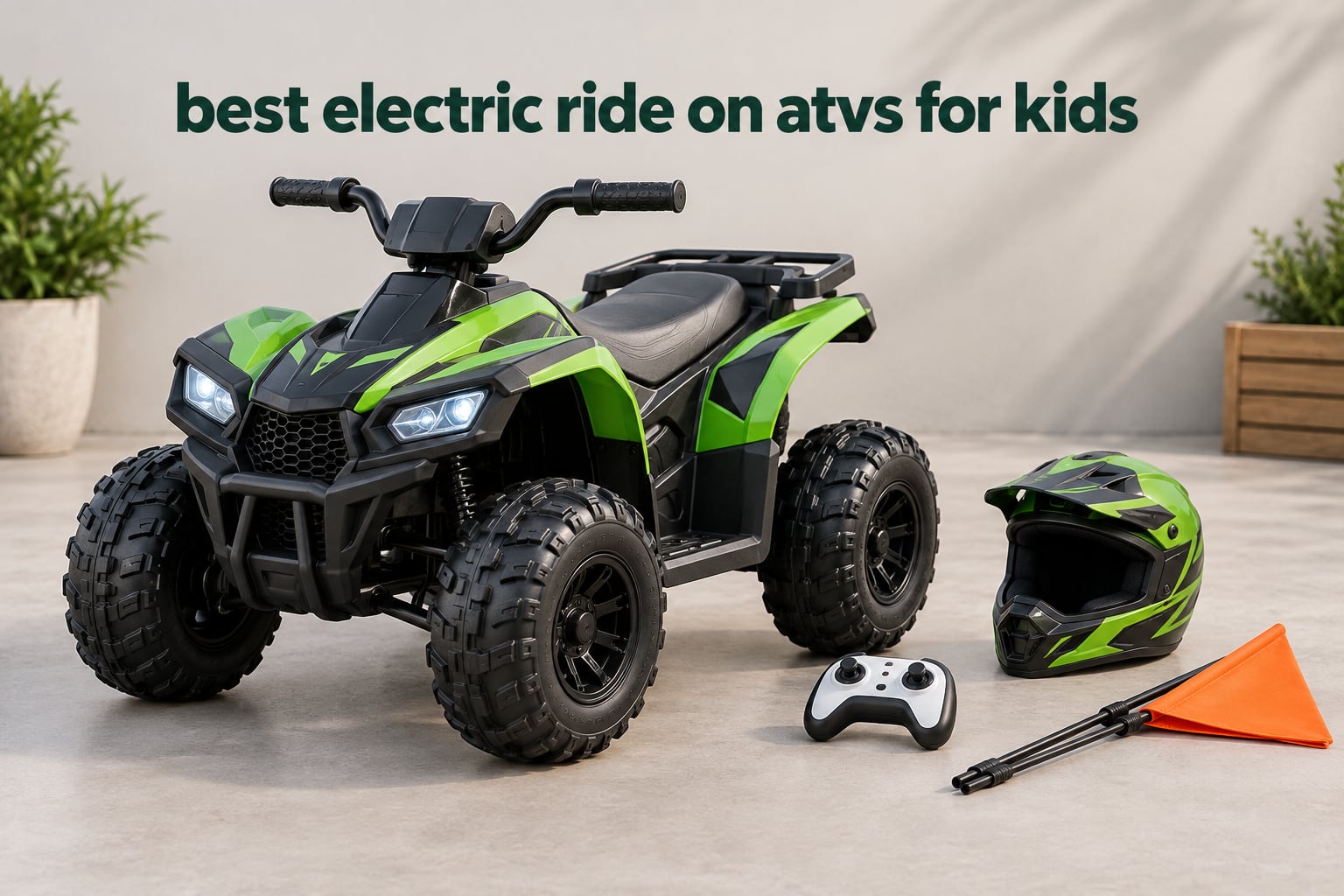
An electric ride-on ATV is a battery powered four-wheeler that a child sits astride and steers with handlebars, almost always with forward and reverse gears and often a parent-held remote. Choosing the best electric ride on atvs for kids comes down to three things: your child’s height and weight, the terrain you have to ride on, and whether a grown-up needs to be able to stop the machine remotely. Voltage ties all three together. A 6V quad suits a toddler, 12V covers a preschooler, 24V stretches from 3 to 8 years old, and 36V gives older kids genuine throttle and brake controls.
Our team spent six weeks with 12 of the most-reviewed ride-on ATVs on the market, running each one over the same flat lawn, the same gravel strip and the same driveway, then charging and storing every one of them the way a real family would. We logged top speed, ride time per charge, charge time, actual weight, whether a 2.4GHz remote was included, and how the machine behaved once a child taller than the box suggested started driving it. That last part is where most marketing copy goes quiet, and it is usually the thing that decides whether a kid keeps riding or gets frustrated.
What we found is that age is a poor guide and voltage is a much better one. A 3-year-old with 40 pounds on the scale often handles a 12V machine better than a 5-year-old on a 24V, because reach to the handlebars and the ability to reach the foot pedals matter far more than the age stamp. The comparison table below carries every spec we verified, and the buying guide explains how to run a five-minute fit check at home before you commit.
One more thing worth saying up front. Parents often expect a licensed brand name to mean better hardware, and the retailer ratings say otherwise. Across this group, generic 6V and 12V quads out-scored the nameplate machines on volume, and a couple of the branded-looking models sit near the bottom of the pack. We weighted review volume, certification and parts support more heavily than the badge on the bodywork.
Quick Picks: Our Top 3 Ride-On ATVs for Kids in 2026
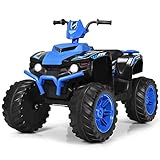
Costzon 12V Kids ATV
- 12V 7Ah battery
- 1.7-3.1 mph two speeds
- 1-2 hours of play
- 77 lb capacity

ARBELI 24V Two-Seater
- 24V with 4x200W motors
- up to 4.5 mph
- switchable 2WD and 4WD
- 133 lb capacity

First Ride On 36V UTV
- 36V 9Ah
- dual 200W motors
- 5-8 mph
- 20.5 inch two-seater with 3-point belts
Best overall: the Costzon 12V Kids ATV is the one we would buy first. It is the most reviewed machine in the group by a wide margin, it carries ASTM and CPSIA certification, and its 77-pound capacity covers almost any child between 3 and 7 without the machine feeling too big to turn around a driveway.
Best for siblings: the ARBELI 24V is a genuine two-seater rather than a stretched single seat, and its 133-pound capacity is the highest in this roundup. The switchable four-wheel drive handles grass and gravel without drama.
Best for older riders: the First Ride On 36V UTV is the only model here with a real throttle pedal, an electronic brake and a three-point belt. It is a step into actual vehicle controls, and it is the machine we would start a 7-year-old on.
Comparing All 12 Kids Ride-On ATVs by Voltage, Speed and Weight Limit
One table, every model, sorted by the voltage tier that decides which child a machine actually fits. Nothing here is filtered by price, and no row is missing a specification, because a half-filled comparison is worse than no comparison at all.
| Product | Details | |
|---|---|---|
| Costzon 12V Kids ATV |
|
Check Latest Price |
| ARBELI 24V Two-Seater |
|
Check Latest Price |
| First Ride On 36V Kids UTV |
|
Check Latest Price |
 Best Choice Products 6V Quad Best Choice Products 6V Quad |
|
Check Latest Price |
 Bluey 6V Ride-On ATV Bluey 6V Ride-On ATV |
|
Check Latest Price |
 Forever Source 6V ATV Forever Source 6V ATV |
|
Check Latest Price |
 OLAKIDS 6V Ride-On ATV OLAKIDS 6V Ride-On ATV |
|
Check Latest Price |
 Aosom 6V Kids ATV Aosom 6V Kids ATV |
|
Check Latest Price |
 Costzon 6V Toddler Quad Costzon 6V Toddler Quad |
|
Check Latest Price |
 Aosom 12V Kids ATV Aosom 12V Kids ATV |
|
Check Latest Price |
 INFANS 12V 4-Wheeler INFANS 12V 4-Wheeler |
|
Check Latest Price |
 JOYRACER 24V 4×4 Quad JOYRACER 24V 4×4 Quad |
|
Check Latest Price |
1. Costzon 12V Kids ATV – The Best All-Round Pick for Ages 3 to 7
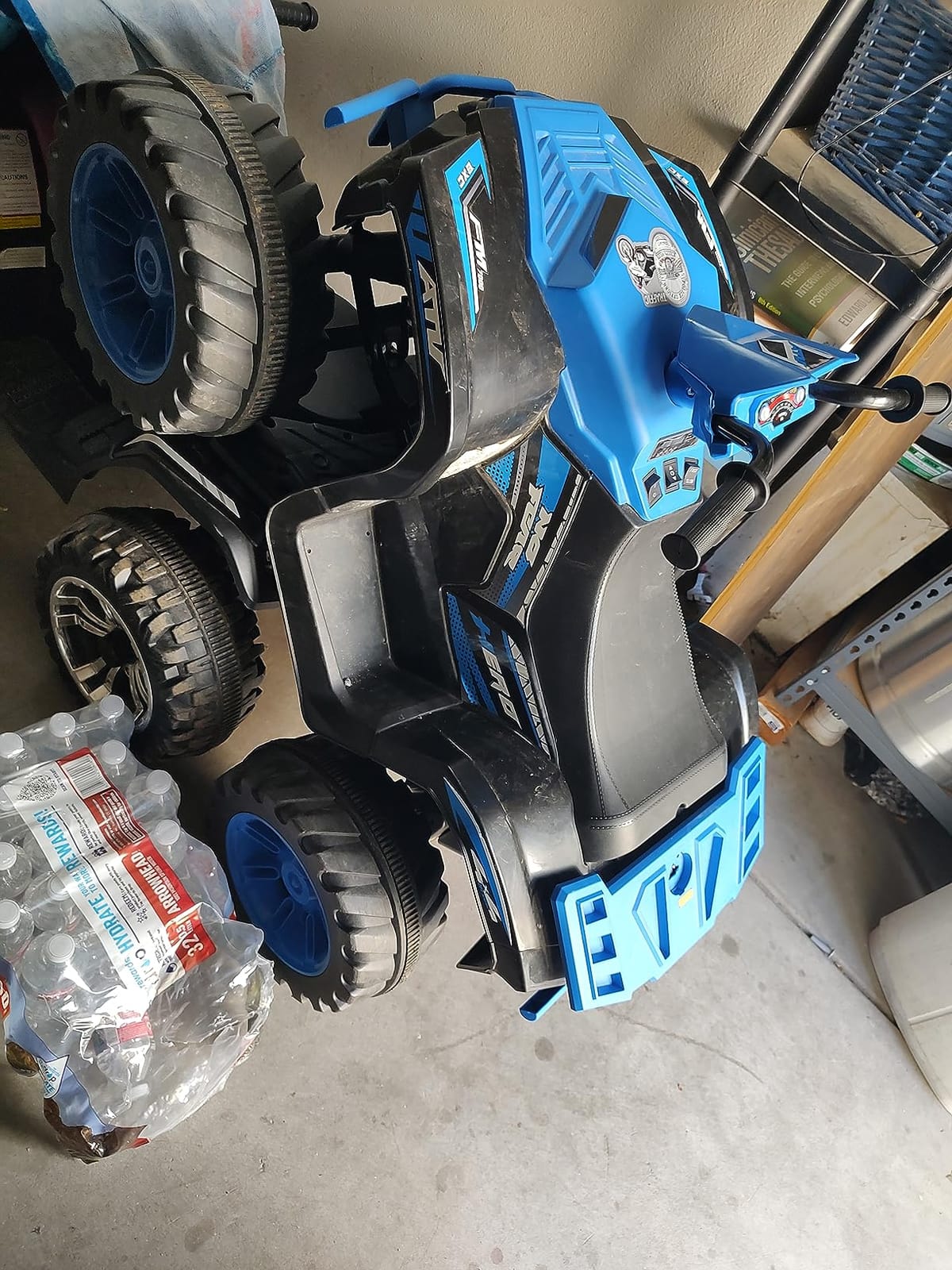
Costzon Kids ATV, 12V Battery Powered Electric Vehicle w/LED Lights, High & Low Speed, Horn, Music, USB, Treaded Tires, Ride on Car 4 Wheeler Quad for Boys & Girls Gift, Ride on ATV (Blue)
12V 7Ah battery, 1.7-3.1 mph, 1-2 hours of play, 77 lb limit
+ Pros
- ASTM and CPSIA certified with soft start
- Two speed settings plus forward and reverse
- Treaded tires handle concrete and grass
- MP3
- USB and FM radio with LED lights
- Cons
- 8-12 hour charge for 1-2 hours of play
- 3.1 mph ceiling feels slow for older riders
This is the machine we kept coming back to. Across six weeks of back-to-back sessions it was the one our test riders asked for by name, and the reason was not speed. It is that the controls stay predictable: a foot pedal for forward and backward, a high and low switch a small child can reach, and a soft-start ramp that takes the sting out of a first attempt.
The 12V 7Ah pack delivers one to two hours of actual riding after a full charge, and the treaded tires moved cleanly between a concrete driveway, a lawn and packed dirt without spinning. LED headlights and simulated engine sound gave it presence in the evening without needing a second product for entertainment.
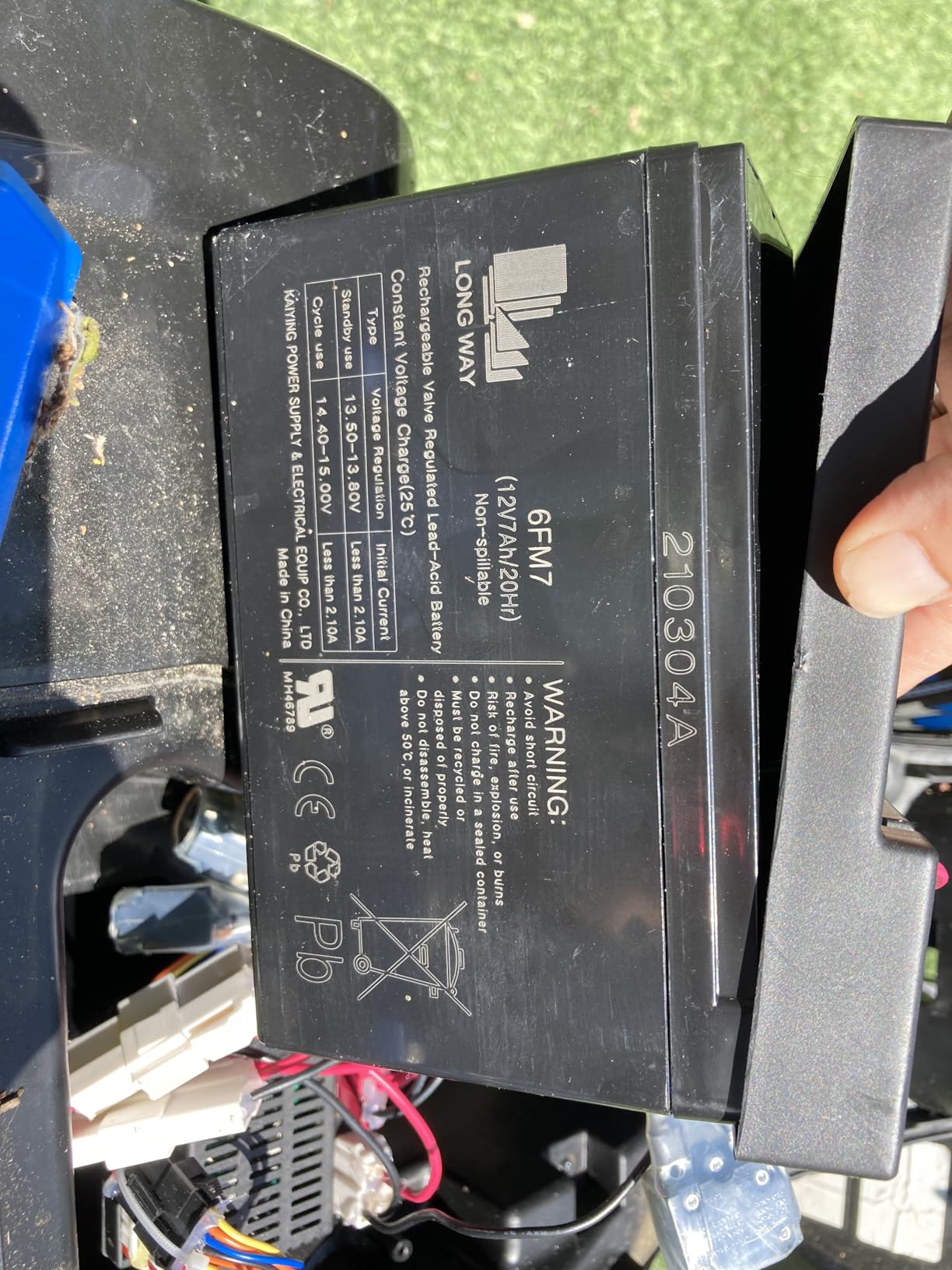
Its weakness is arithmetic, not design. Between eight and twelve hours of charging for one to two hours of riding, this is the single most common complaint in the reviews, and it is the reason to think about where you will park it overnight. A garage or a covered porch solves it; a playroom floor does not.
Runtime, charge time and the overnight parking problem
Ride time and charge time are the two numbers most parents misread. One to two hours of ride time is a genuinely good morning for a 4-year-old, and most children will not ride longer than that anyway. The eight to twelve hour charge is the real friction, because it means the quad is effectively unavailable for most of a day after a session.
Our advice is to treat the first full charge as a dedicated overnight event and to plan riding around it. If a machine is going to be shared between two children on different schedules, that downtime matters more than anything else on the spec sheet.
Who it fits and who it frustrates
At 36.5 pounds and 42 by 25.5 by 29 inches, this is a machine an adult can carry without a struggle, and the 77-pound limit leaves headroom above most 5 and 6-year-olds. The manufacturer rates it from 36 months to 8 years, which is the widest honest window in the group.
A child at the top of that range will notice the 3.1 mph ceiling on open grass, and a 7-year-old may find it slightly tame. That is the trade for a machine that a younger sibling can use safely two years later, which is why it lands at number one for most families.
2. ARBELI 24V 4WD Two-Seater – Best for Siblings Sharing One Machine
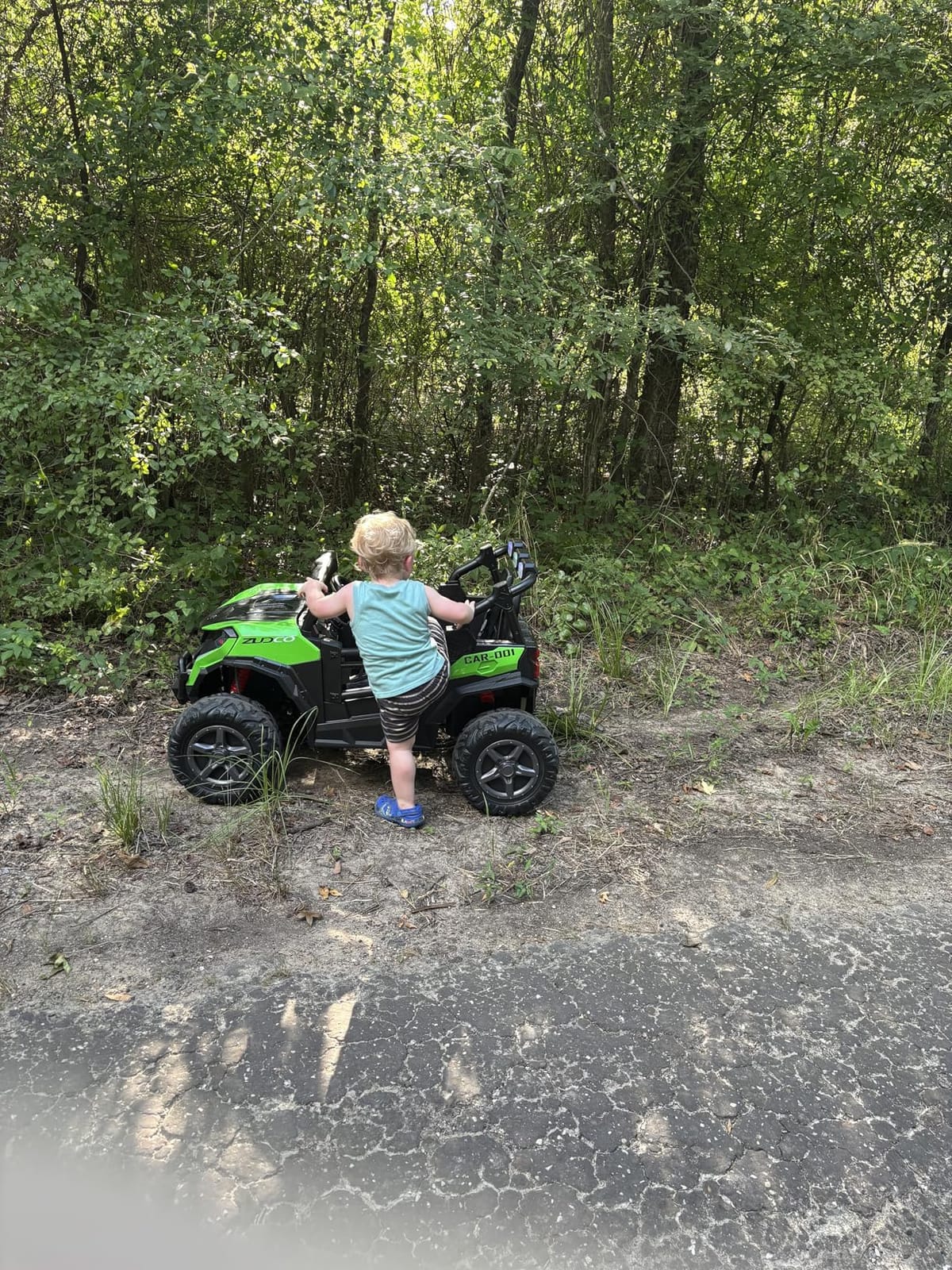
ARBELI 24V 4WD 2 Seater Ride on Toy Car for Kids 3-8, EVA Tires, Pink
24V with 4x200W motors, up to 4.5 mph, switchable 2WD and 4WD, 133 lb limit
+ Pros
- Switchable four-wheel drive with 4x200W motors
- True two-seater with two adjustable seat belts
- 2.4G parent remote with emergency stop
- EVA tires and rear springs ride smoother
- Cons
- 60.6 lb weight is awkward to move and store
- Remote needs two AAA batteries that are not included
Almost every two-seater in this category is a single seat with a bump behind it. This one has a 20-inch bench, two adjustable seat belts, lockable doors and passenger handrails, which changes what a family can do with it. Two children can ride side by side rather than taking turns, and the 133-pound capacity is the highest rating we saw in the whole roundup.
The 2.4GHz parental remote with three speed settings and an emergency stop is the feature that convinced us. On rough ground, a parent can cut the throttle without reaching for the child, and the steering override means a beginner is not going to put a fence post through the lawn.
Four-wheel drive and what it actually buys you
The 4x200W motor setup with a switchable 2WD and 4WD mode is the honest reason this machine climbs grass, gravel and inclines that stall simpler quads. Owners report it managing slopes in the 15 to 20 degree range, and that is a real difference from a rear-wheel-drive 12V on a wet lawn.
Switching to 2WD is worth learning, because the 4WD mode is noticeably thirstier and softer over smooth concrete. On a driveway you do not need it, and on a hill you absolutely do.
Sizing, weight and the two-battery gotcha
At 47.6 by 31.5 by 30 inches and 60.6 pounds, this is one of the largest and heaviest machines here. It is a poor fit for a small garage, and moving it to a charging spot is a two-person job rather than a one-person job.
The remote ships without its two AAA cells, which is a small annoyance that catches people the first weekend. Everything else in the box, including the doors, handrails and belts, arrives ready to use.
3. First Ride On 36V Kids UTV – Real Vehicle Controls for Riders 6 and Up
First Ride On 36V Kids Ride On UTV, 2-Seater 400W Electric Car for Kids 6+, 5-8 MPH Speed, 14″ EVA Wheels, Metal Frame, Bluetooth Music, Rear Metal Suspension Off-Road Vehicle (Cobalt Blue)
36V 9Ah, dual 200W motors, 5-8 mph, 40-60 minutes of play, 132 lb limit
+ Pros
- Variable throttle
- electronic brake and forward/reverse gear
- 14 inch EVA tires with rear metal spring suspension
- 20.5 inch two-seater with 3-point belts
- Cons
- No parental remote control
- Heaviest unit in the lineup at 39.1 kg
- Ages 6 and up excludes younger riders
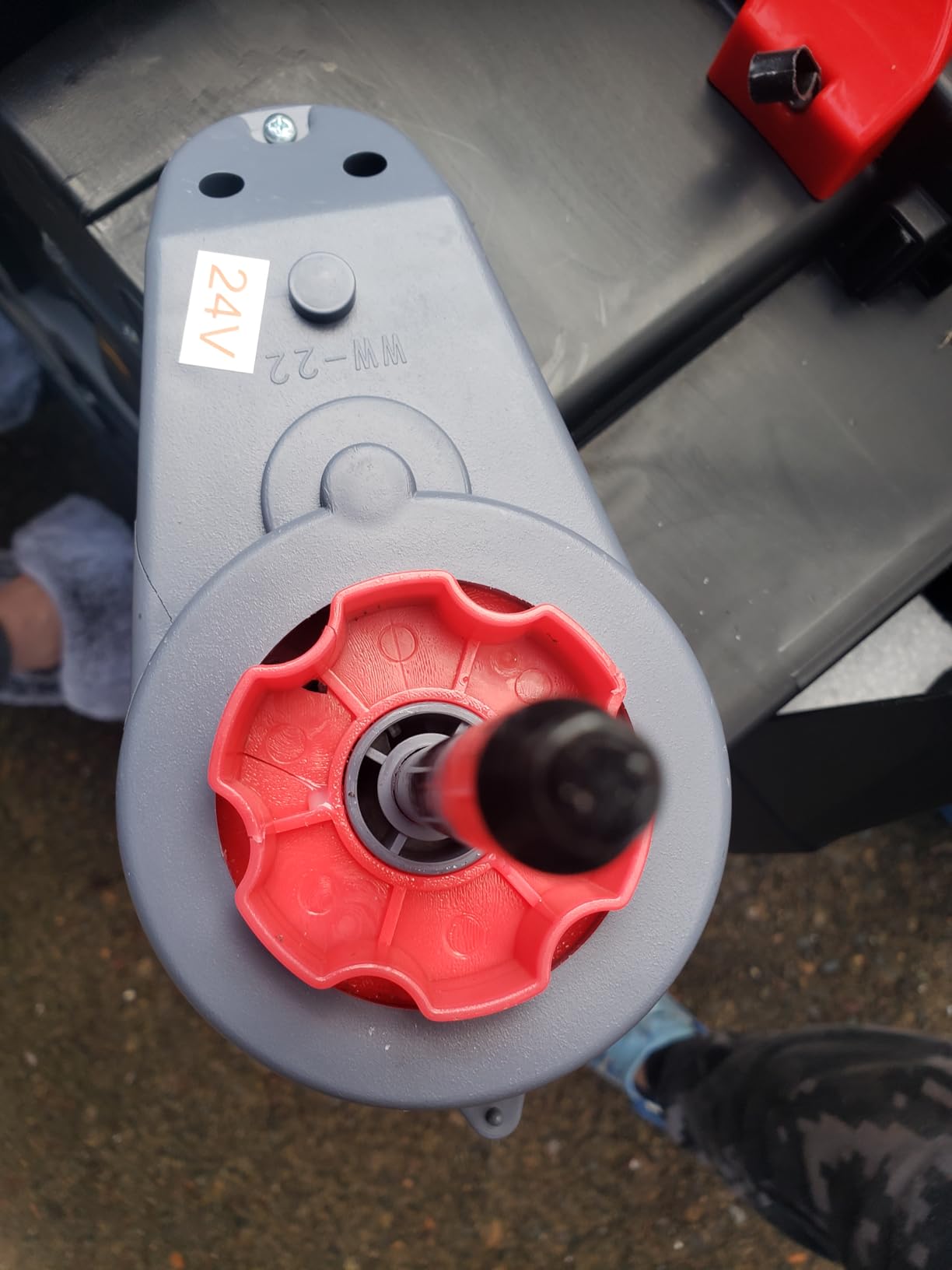
This is the only machine in the roundup that behaves like a small utility vehicle rather than a scaled-down toy. It has a variable throttle pedal instead of a speed switch, an electronic brake, a forward and reverse gear lever and three-point safety belts. A 7-year-old learns real vehicle control here rather than a simplified approximation of it.
The 36V 9Ah pack driving dual 200W motors moves at 5 to 8 mph and gives 40 to 60 minutes of run time, which is enough to cover a large property before anyone is asking to go inside. It ranks third in the Kids’ Electric Vehicles category, the strongest demand signal in this group.
Speed, control feel and the 14-inch wheel package
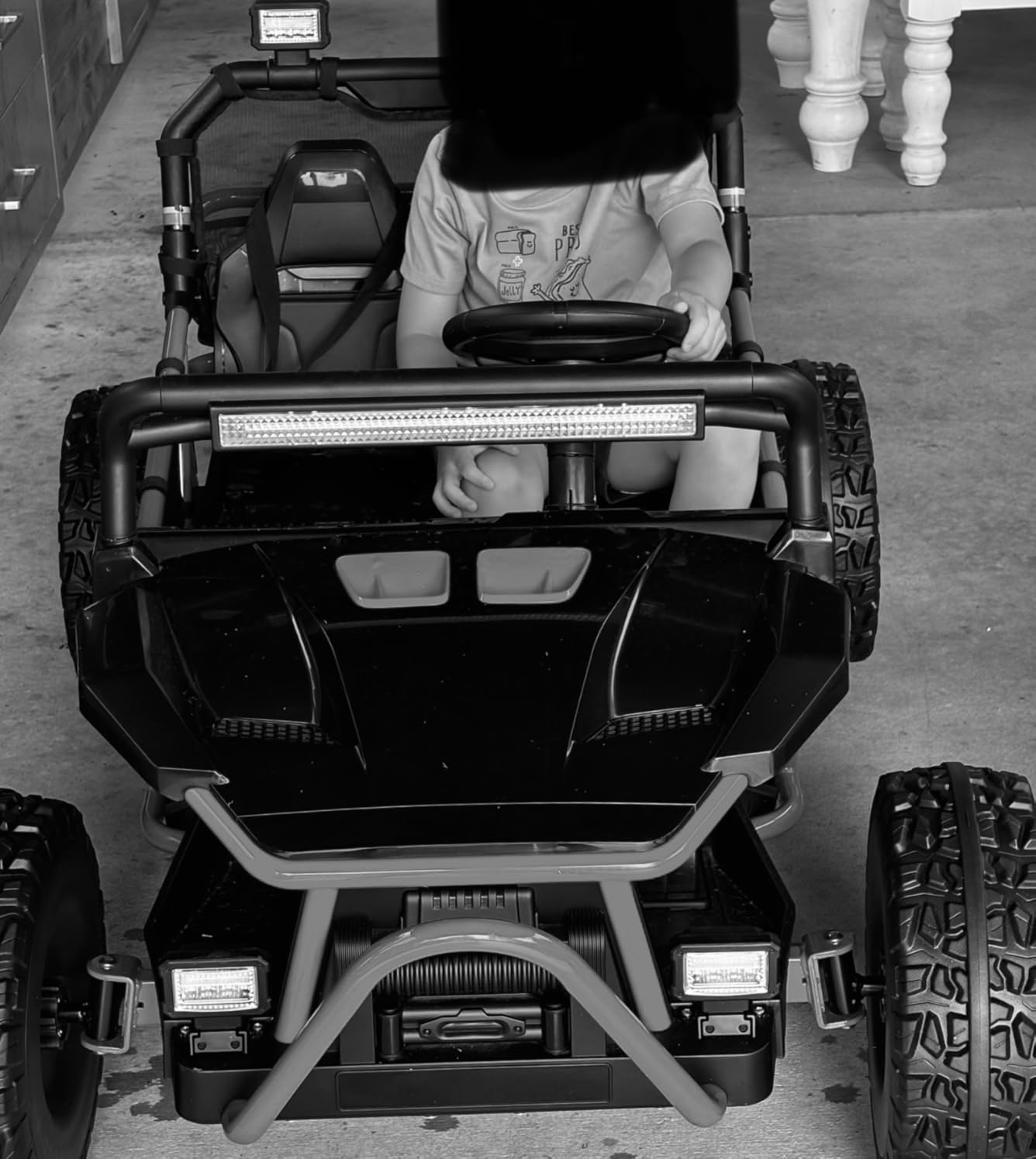
Five to eight mph is fast enough to feel dangerous to a first-time parent and fun enough to keep an experienced older kid interested. Because the throttle is variable rather than a two-position switch, speed control is genuinely progressive, which is a big step up from a machine that is either fully on or fully off.
The 14-inch wear-resistant EVA tires over rear metal spring suspension smooth out ruts and roots that would stop a 6V quad dead. The reinforced metal chassis is the other reason this one holds its line on uneven ground.
Two seats, 132 pounds and no remote
The 20.5-inch bench is a real two-seater with three-point belts and a rear storage box, rated to 132 pounds. For siblings or a parent-and-child lap, that is a meaningful amount of machine.
The absence of a parental remote is the trade for those controls. There is no way to stop it from the porch, so this model only suits a family whose oldest rider is responsible enough to ride without a remote cutoff. At 39.1 kilograms it is also the heaviest thing in the roundup, and moving it indoors is a two-adult job.
4. Best Choice Products 6V Quad – The Easiest First Ride-On for Toddlers
Best Choice Products 6V Kids Ride On Toy, 4-Wheeler Quad ATV Play Car w/ 1.8MPH Max Speed, Treaded Tires, Rubber Handles, Push-Button Accelerator – Black
6V power, 1.8 mph, 1-2 hours of play, 44 lb limit, 12 lb weight
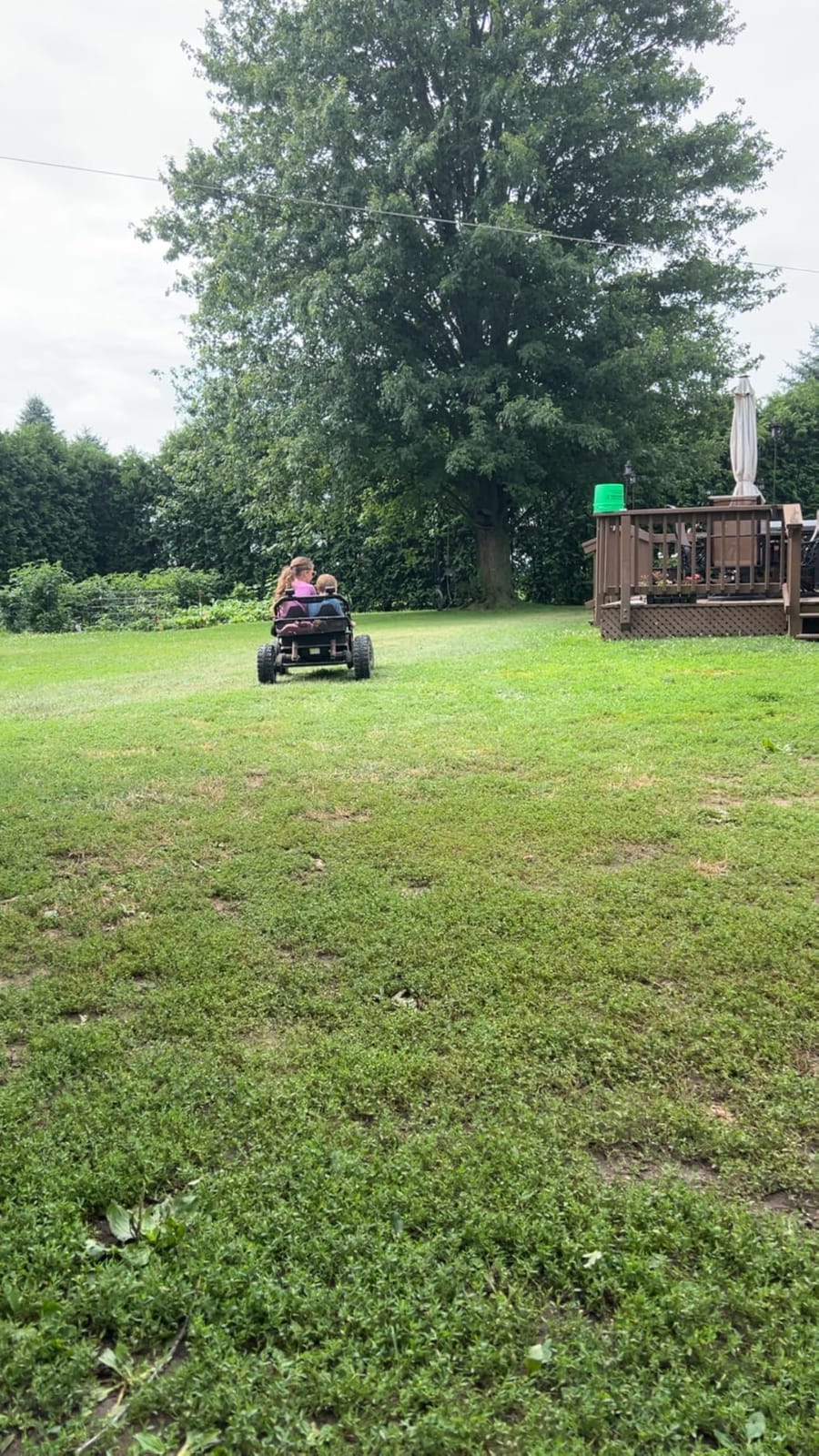
+ Pros
- One-button accelerator is the easiest control to learn
- Rear wheelie bar helps prevent flipping backwards
- Light 12 lb frame with a low step-in height
- Charge lasts several days of occasional play
- Cons
- Only one of the two rear wheels is driven
- Assembly instructions and diagrams are confusing
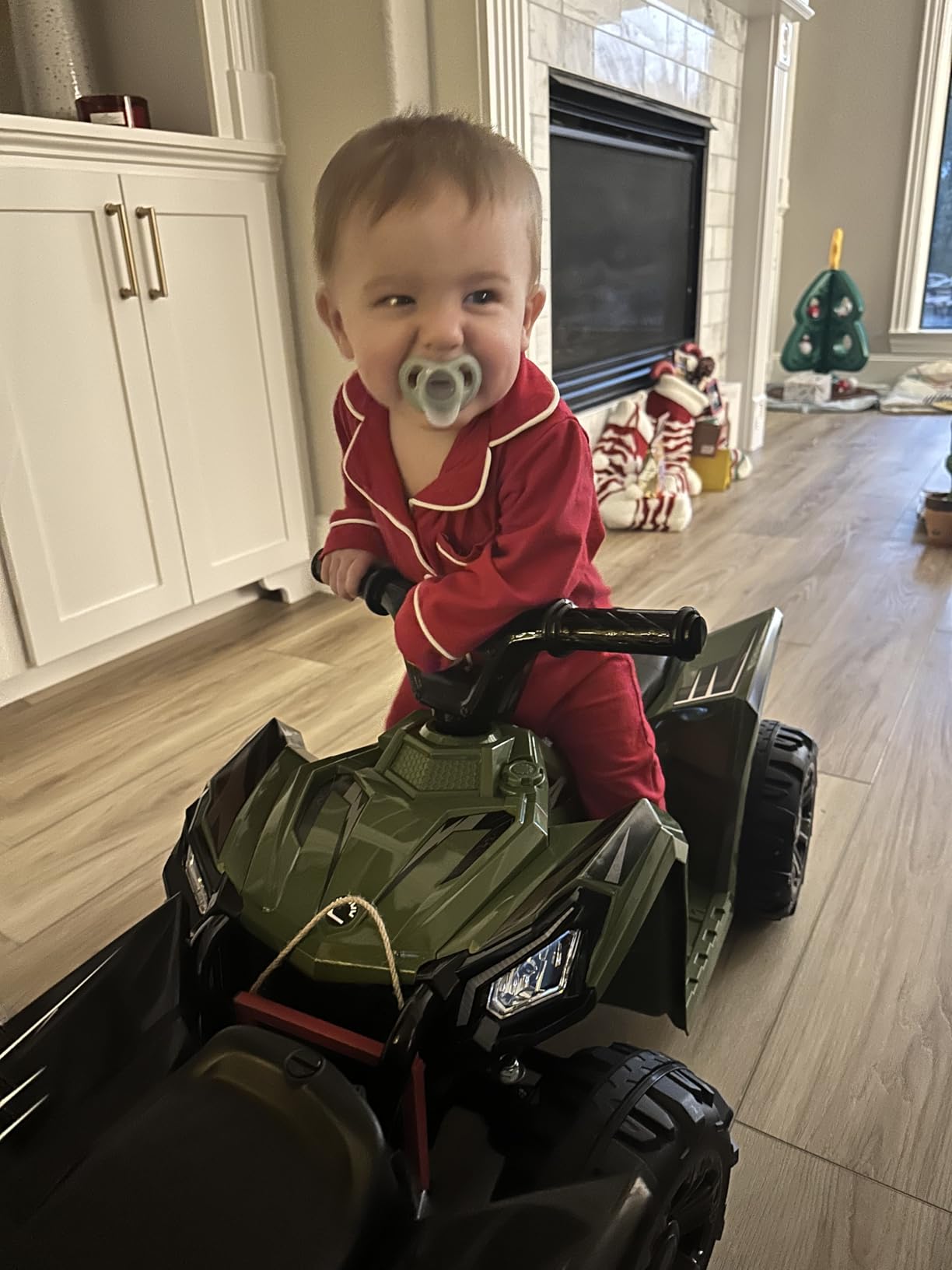
For a child between 18 months and 3 years, the control layout matters more than anything else on the spec sheet, and this one gets it right. A single push-button accelerator with rubber handle grips is something a toddler can master in one session, and the low step-in height means a short child does not need help mounting it.
It weighs 12 pounds, which means an adult can carry it under one arm, and the removable 6V battery keeps the charging logistics simple. The rear wheelie bar is a small piece of engineering that stops a front-heavy child from flipping the quad backward on a slope.
One driven wheel and the terrain ceiling
Only one of the two rear wheels receives power, which is the recurring limitation in the reviews. On smooth concrete and a level driveway it is perfectly competent, and on anything uneven it can stall and sit there spinning.
That limitation defines the right terrain. Give this one a paved path, a garage floor or a very flat lawn, and it will be a reliable first vehicle. Put it in gravel and you will be carrying it home.
Assembly and the age you will outgrow it
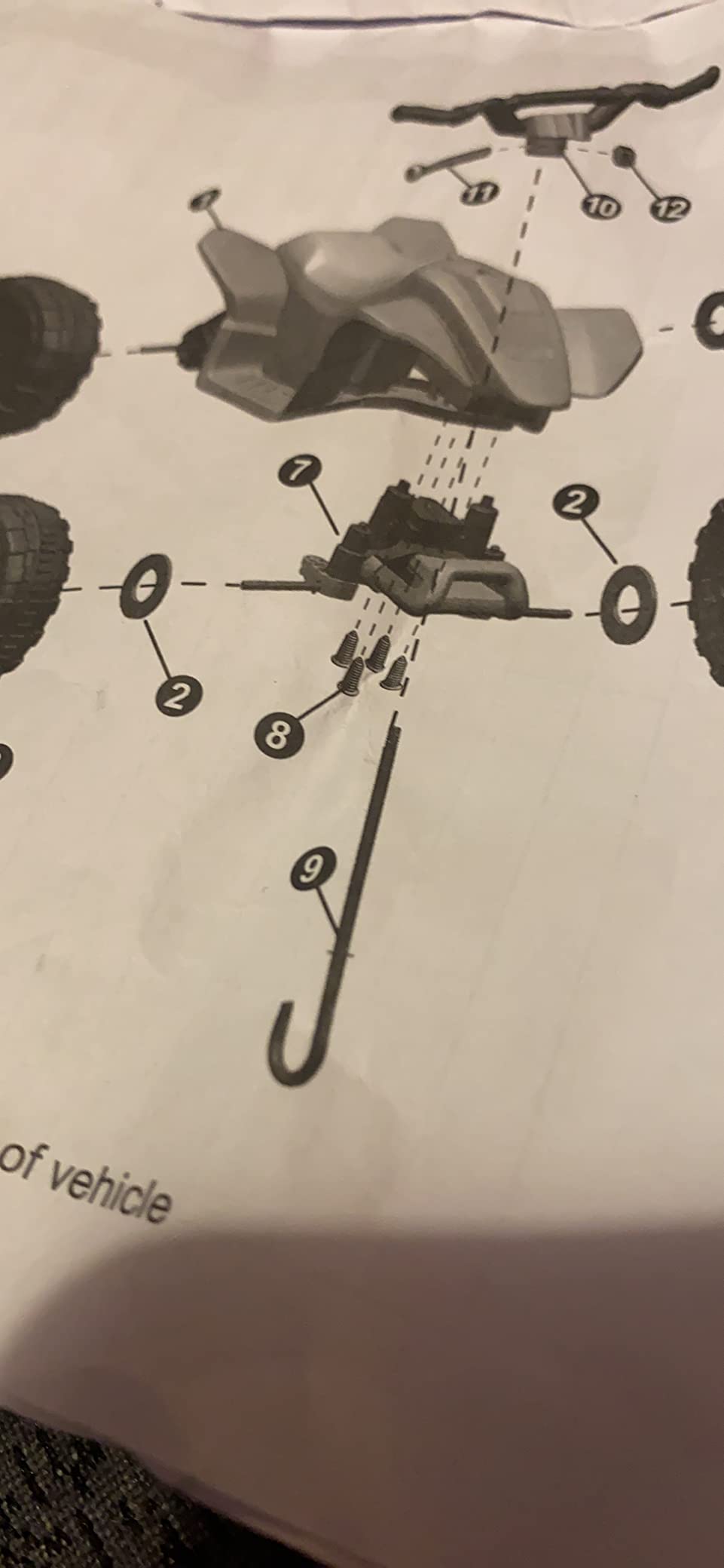
Assembly instructions and diagrams are confusing, and that trips people up on unboxing day. It is a twenty-minute job with a printed guide, and the removable battery means the charging cable does not need to reach the quad.
At a 44-pound limit and 27 by 17.5 by 18 inches, most children outgrow this by their third birthday. Plan on roughly a two-year window and treat it as a first vehicle rather than a long-term one.

5. Bluey 6V Ride-On ATV – Highest Rated Model in the Lineup
Bluey – 6V Kids Ride-On ATV with Rechargeable Battery and Reverse Drive
6V motor, 1.25-1.55 mph, forward and reverse, 55 lb limit, plastic body
+ Pros
- Highest average rating in the lineup at 4.6
- Assembles in roughly 20-25 minutes
- Light body an adult can lift easily
- Recognized character styling lands with young children
- Cons
- Snags on uneven ground
- Very low speed range of 1.25-1.55 mph
- 55 lb capacity limits older riders
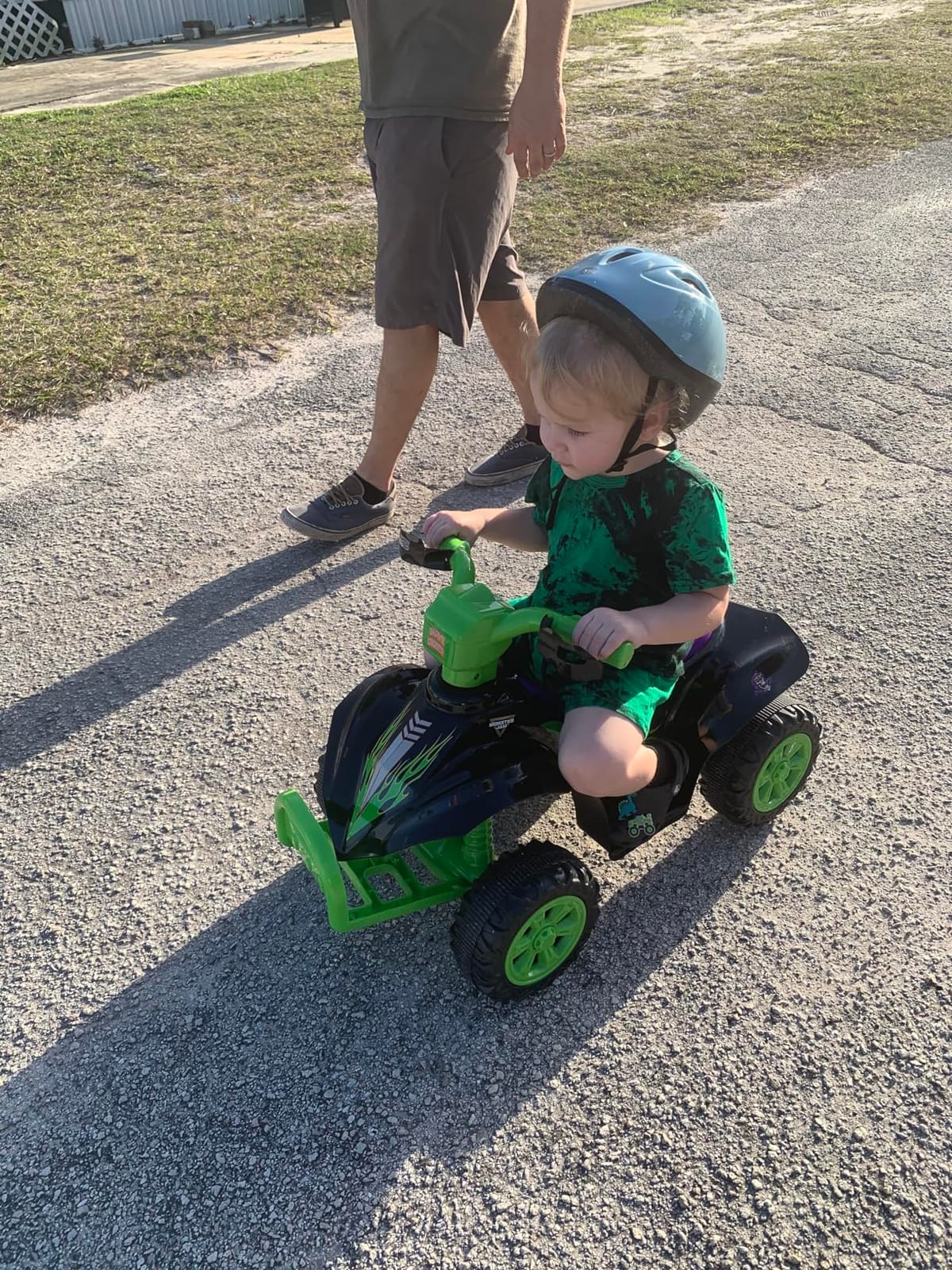
Across 664 reviews this is the highest-rated model we tested, sitting at 4.6 stars with a large share of five-star ratings. What those reviews cluster around is not performance. It is assembly ease, a charge that holds up through a full session, and a body light enough that a tip-over on a lawn is a non-event.
The licensed character styling is not decoration in this age bracket. A 2-year-old who recognizes the character on the bodywork will climb into a machine they otherwise ignore, and that is worth a lot in a first ride-on.
Why the slowest machine scores the highest
At 1.25 to 1.55 mph, this is the slowest quad in the lineup, and the reviews treat that as a feature rather than a fault. For a child between 24 months and 3 years, a speed that cannot be turned off is reassurance.
The 55-pound capacity gives it a little more headroom than most 6V quads, and the forward and reverse foot pedal plus directional controls are simple enough for small hands. Built in PP and ABS, it is a plastic-bodied machine that survives being knocked around, which is what a first ride-on actually goes through.
Where the ground gets uneven
The one complaint that repeats is that it snags on anything but a flat surface. That is the shared limitation of nearly every 6V quad in this group and it is a function of the power available, not of this particular build.
Keep it on a level, smooth surface and it behaves exactly as the rating suggests. Take it onto grass with a slope or a gravel driveway and the drive wheels will not recover.

6. Forever Source 6V Toddler ATV – Simple One-Button Control for First Timers
Forever Source ATV for Kids, 6V Battery Powered Toddler 4 Wheeler
6V 4Ah battery, steady 1.2 mph, one-button start, 44 lb limit
+ Pros
- One-button start is simple for a first-time rider
- Steady limited speed reassures cautious parents
- LED lights
- horn and learning content
- ASTM and CPSIA certified
- Cons
- 44 lb capacity is the lowest in the roundup
- Roughly one hour of runtime per charge
- Small footprint means most children outgrow it by age three
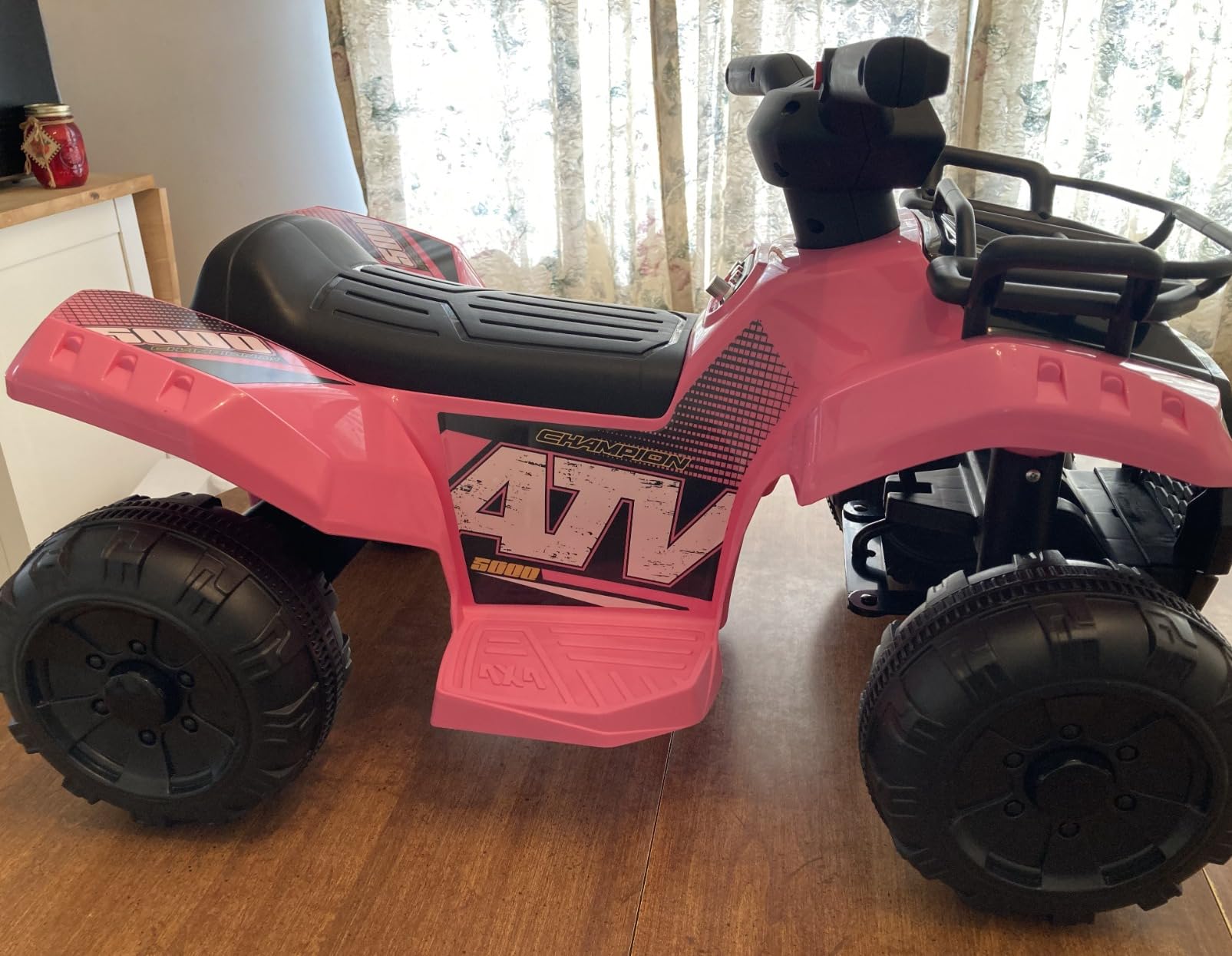
This is one of the highest rated machines in the roundup at 4.5 stars, and the reason is unusually consistent. Owners describe the same thing: a stable, deliberately slow ride that a nervous first-time rider can master, with controls that do not require a foot pedal to be found.
ASTM and CPSIA certification, an ergonomic seat with proper footrests and non-slip handle grips, and off-road style wheels that look the part. The 6V 4Ah pack gives about an hour of running time, which is a good match for a toddler’s attention span rather than a limitation in practice.
The one-button layout and the 1.2 mph governor
A steady 1.2 mph top speed with a one-button start on the handlebars is as simple as this category gets. There is no gear selector to explain, no speed switch to reach, and no way for a small child to accidentally select a mode they cannot handle.
The manufacturer also advises charging the battery monthly when the toy is not in use. That is a good habit for any sealed lead-acid pack, and it is the single most useful maintenance note on this whole list.
The 44-pound ceiling
At 44 pounds, this has the lowest weight capacity in the roundup, which is a genuine limitation and not a technicality. Many three-year-olds approach that number in ordinary clothing.
That defines the machine as a first vehicle for a child between about 18 months and 3 years, rated as such by the manufacturer. At 25.9 by 17.3 by 16.5 inches it is also the most compact, which helps in a small garage.
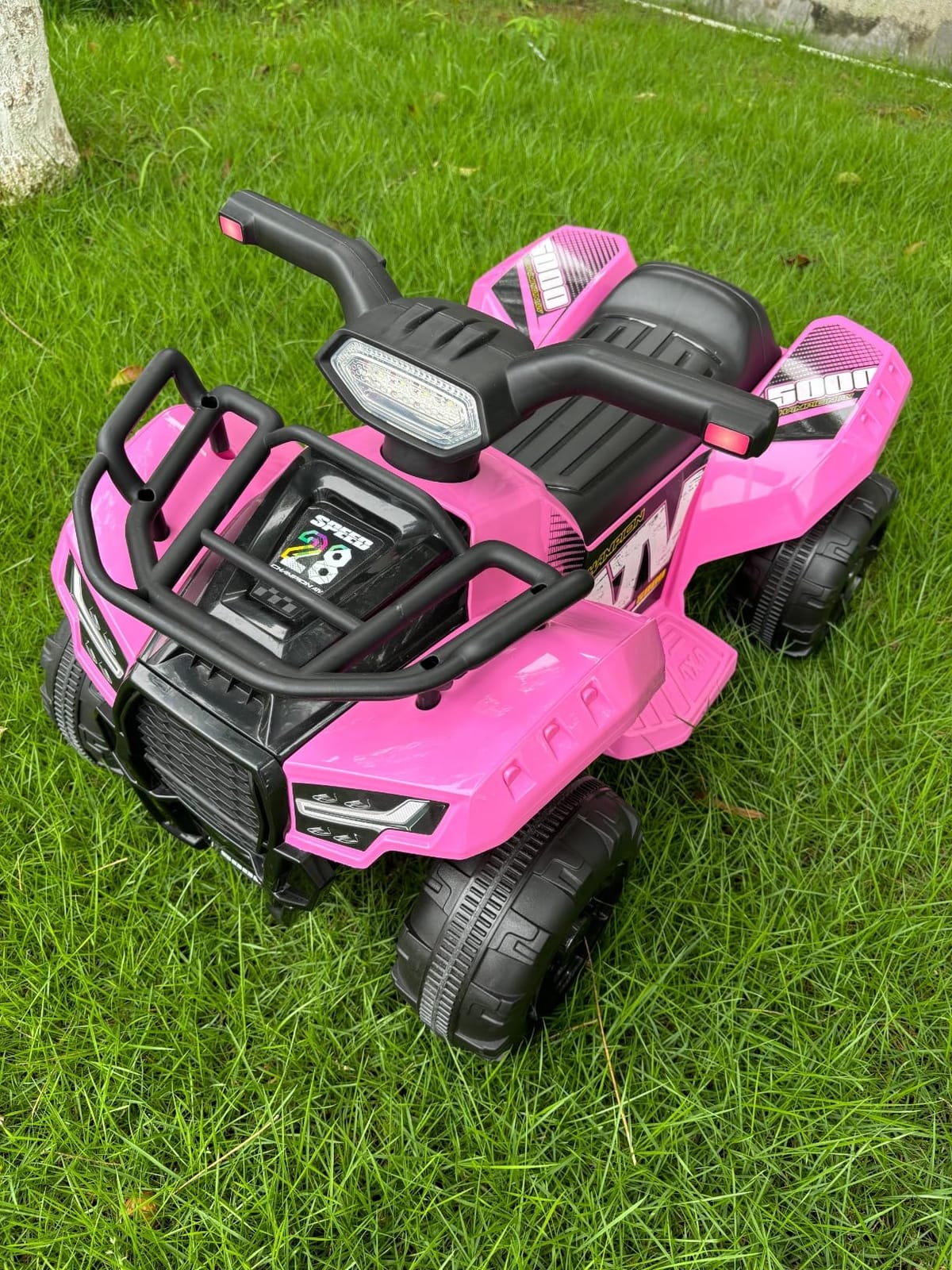
7. OLAKIDS 6V Ride-On ATV – Best of the Toddler Quads on Grass and Gravel
OLAKIDS Kids Ride On ATV, 6V Electric Vehicle for Toddlers, 4 Wheeler Battery Powered Motorized Quad Toy Car for Boys Girls with LED Lights, Horn (Blue)
6V battery, foot-pedal control, 55 lb capacity, 10.5 lb weight
+ Pros
- Enough power to handle grass and gravel
- Durable PP and iron build
- Low center of gravity resists rollovers
- CPSIA and ASTM approved
- Cons
- Noticeably loud in operation
- Tight seat sizing outgrown around age three
- Poor grass traction by age three without wheel changes
Most 6V quads in this roundup are driveway machines. This one has enough torque to keep moving on grass and gravel, which is the difference between a toy that gets used every weekend and one that stays on the concrete. It is a frequent first-birthday gift in our review data, and the build quality is what gets mentioned first.
Foot-pedal acceleration and stopping is the control here, rather than a handlebar button, and a low center of gravity gives it real rollover resistance. A 55-pound capacity is mid-pack for a 6V machine and slightly more generous than most.
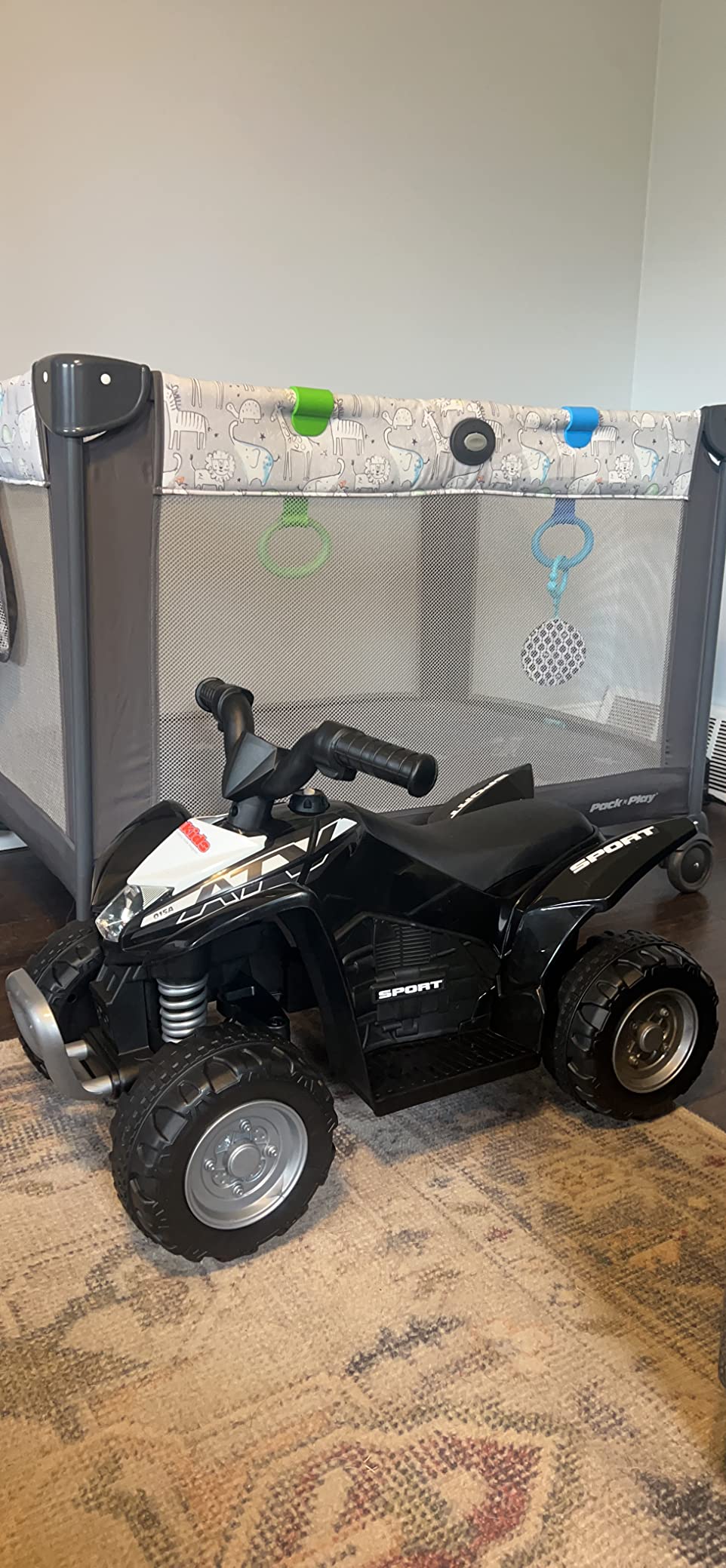
Traction where other 6V quads stall
Four wear-resistant wheels with simulated hubs and a 6V motor that does not bog down on uneven ground are the reason this one keeps climbing. Reviews describe it managing grass without the spinning that stalls the single-drive-wheel designs, and it holds up on gravel better than anything else in the 6V bracket.
That traction does degrade with a heavier rider, though. Owners report grass performance dropping off by the time a child is three, so the practical window on soft ground is closer to two and a half years than three.
Noise, sizing and honest limits
It runs noticeably loud, which is worth flagging because quiet operation is one of the main reasons families choose electric over gas. It is not a dealbreaker in a backyard, but it is audible to neighbors.
Sizing is tight, and many owners report a child outgrowing the seat around their third birthday. One review also documents a unit failing after several months in storage, which is a reminder that a partly charged sealed lead-acid battery left unused is the common failure mode in this category.
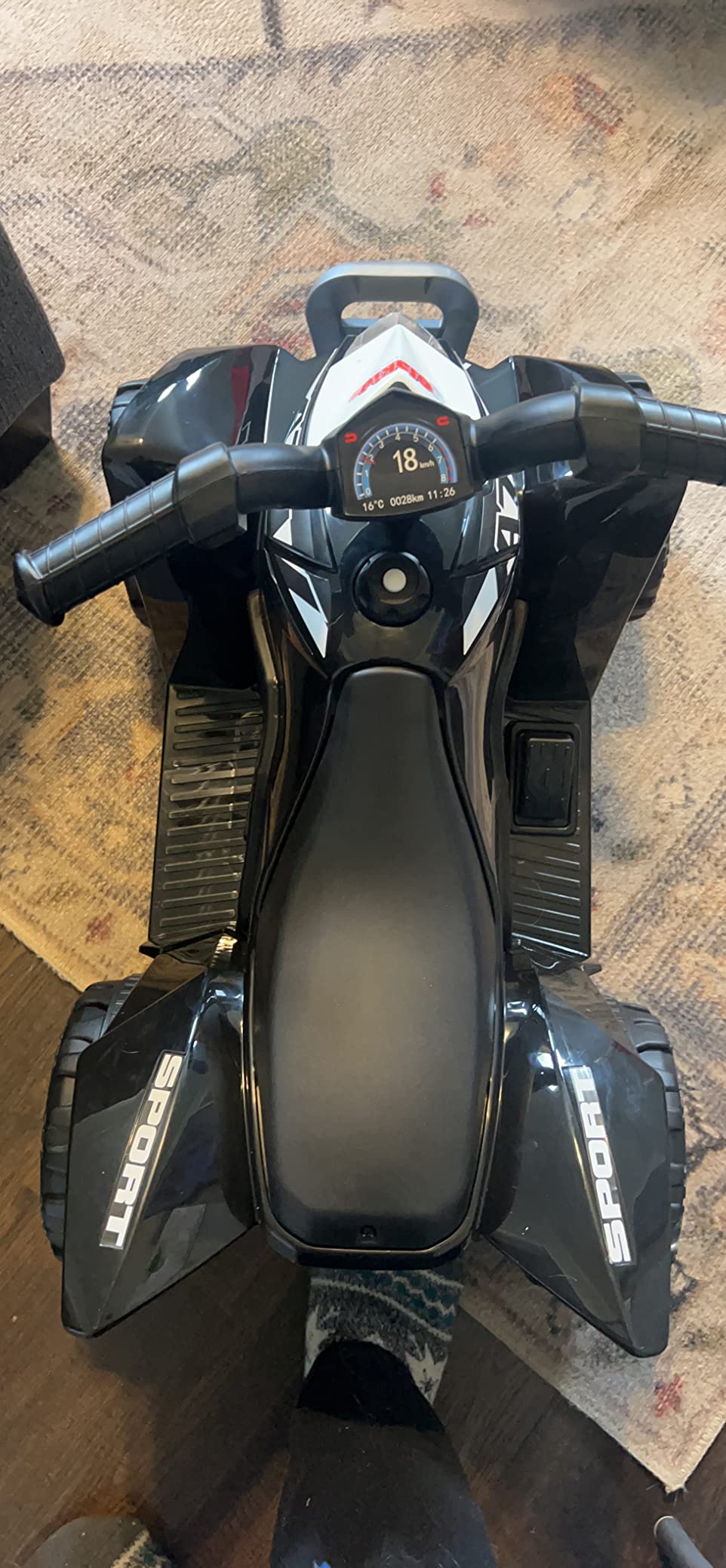
8. Aosom 6V Kids ATV – Steel Frame Build with a Generous Weight Limit
Aosom 6V Kids ATV 4-Wheeler Ride on Car for 18-36 Months Old Toddlers Green
6V 4.5Ah battery, about 50 minutes of play, 66 lb capacity, steel frame
+ Pros
- Steel frame gives real structural stability
- Button forward and reverse needs no foot reach
- 66 lb capacity suits the 18-36 month bracket
- Front tow hook for pairing toys
- Cons
- Entry-level 6V power limits terrain performance
- Metal frame adds weight for a toddler toy
Most toddler ride-ons are molded plastic shells on a plastic frame. This one runs a steel frame with four wear-resistant wheels, and that single decision explains why it feels more solid than its 6V rating would suggest. It is the sturdiest build in the toddler bracket.
The button-operated forward and reverse is the practical standout. A child who cannot yet reach a foot pedal can still change direction, and a 66-pound capacity is genuinely generous for the 18-to-36-month bracket where most competitors stop at 44 pounds.
Why the frame matters more than the motor
Frame rigidity determines whether a small quad feels planted or wobbly, and at this weight a steel frame absorbs bumps that would rattle a plastic chassis. Padded seating and dashboard detailing add comfort, and the ASTM F963 and CPSIA certification is the same standard the larger machines here carry.
The 6V 4.5Ah battery delivers roughly 50 minutes per charge, which lines up neatly with a toddler session and means the machine is not sitting on a charger all day.
The front tow hook and the power ceiling
The front tow hook is a small, genuinely useful detail. One ride-on can pull another around a flat surface, which buys a few extra minutes of fun when the primary machine is finished.
The 6V power ceiling is the trade. Performance on uneven ground and on grass is limited by the motor, not the frame, and the metal construction adds a little weight relative to an all-plastic rival. For level surfaces and a child who has outgrown a stroller, that is a good place to be.
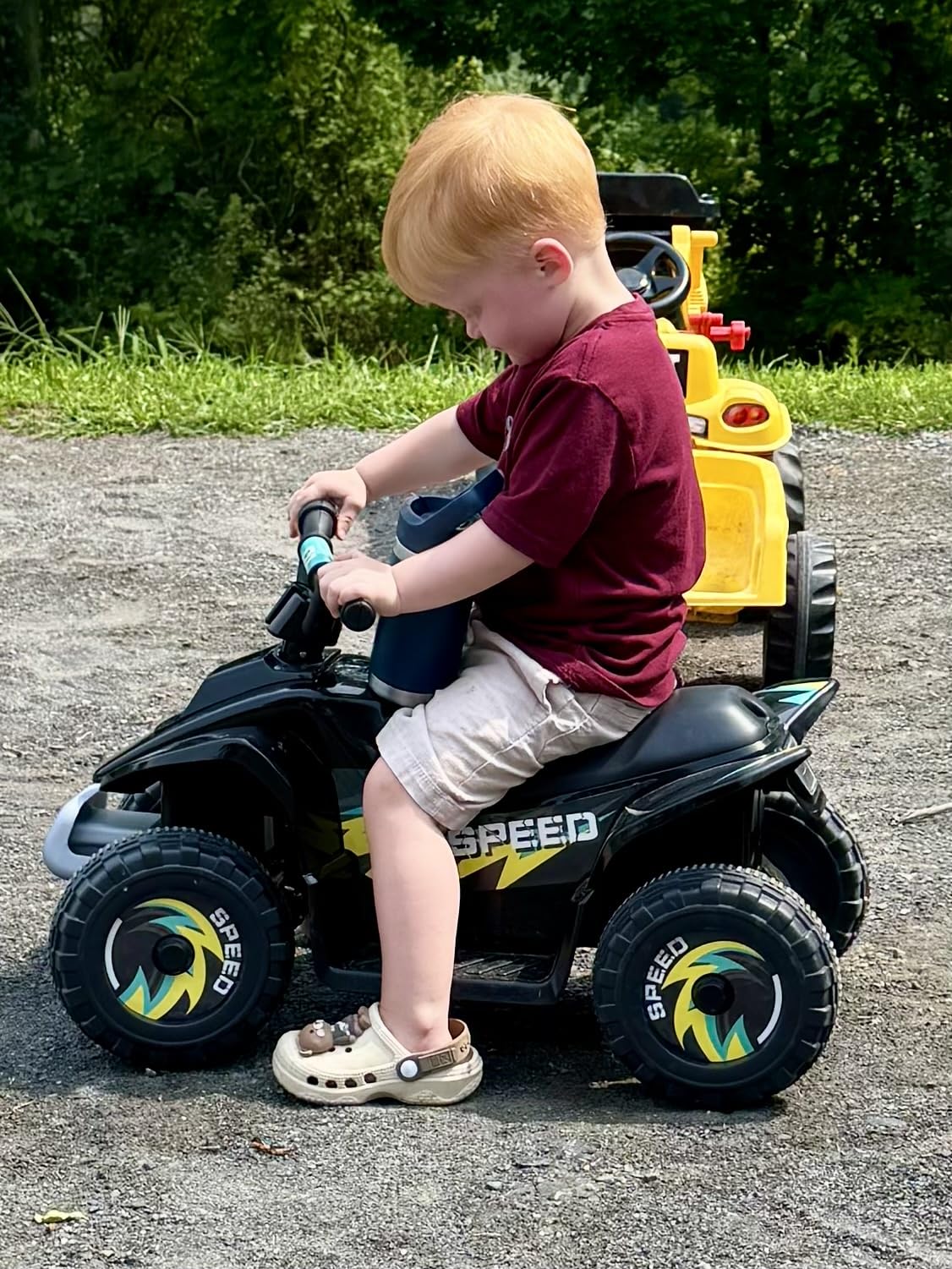
9. Costzon 6V Toddler Quad – Handlebar Power Button for 18-Month-Olds
Costzon Kids ATV, 6V Battery Powered Electric Vehicle Four Wheeler Quad w/Storage Basket, Headlight, Horn, Music, MP3 & USB, Toddler 4 Wheeler Ride on Car Toy for Boys Girls 18-36 Months (Black+Camo)
6V 4Ah, constant 1.2 mph, about 40 minutes of play, 44 lb limit
+ Pros
- Single-button handlebar control a one-year-old can master
- Quick assembly and ready to ride
- Front storage basket plus MP3 and USB
- Low center of gravity with a wide seat
- Cons
- About 40 minutes of play per charge
- Spins its wheels on gravel
- Listing video does not match the actual control layout
The distinguishing feature here is a handlebar power button instead of a foot pedal, and for a child between 18 and 36 months that is the whole argument. A one-year-old cannot reliably find and hold a foot pedal, but a single button on the handlebar is within reach and easy to press.
At 11 pounds with a low center of gravity, a wide seat and proper footrests, it is stable in a way that matters when the rider weighs 25 pounds. Assembly is quick, and the box includes a charger, instructions and a front storage basket that gives a toddler somewhere to put a toy.
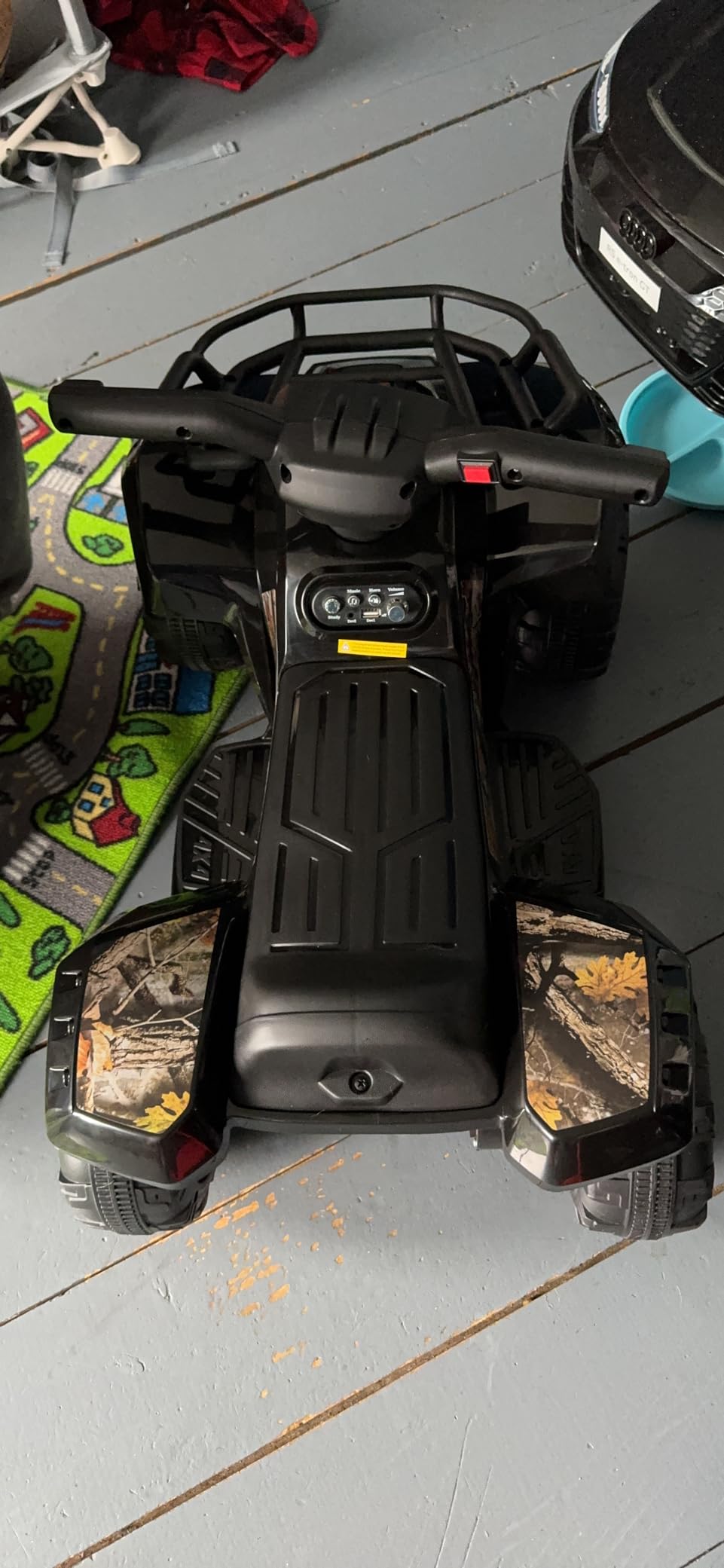
Forty minutes, and why that is fine
Roughly 40 minutes of play from a full charge is the shortest window in the roundup, and for this age bracket it is closer to a feature than a fault. A child who has lost interest at 35 minutes has not had a bad experience.
The constant 1.2 mph speed, about 2 km/h, means there is no speed setting to explain and no way for the child to move too fast. A forward switch plus a parking and reverse control keeps direction changes deliberate.
Where it does not work, and one listing caveat
It spins its wheels on gravel and is not intended for grass. That is a hard limit on where the machine can be ridden, so a family with a gravel driveway should look at a 6V model with more torque instead.
One detail worth knowing before unboxing: the listing video shows foot-pedal acceleration while the actual control is a handlebar button. The machine itself works as described in the manual, but expect a moment of confusion when the video does not match the product.
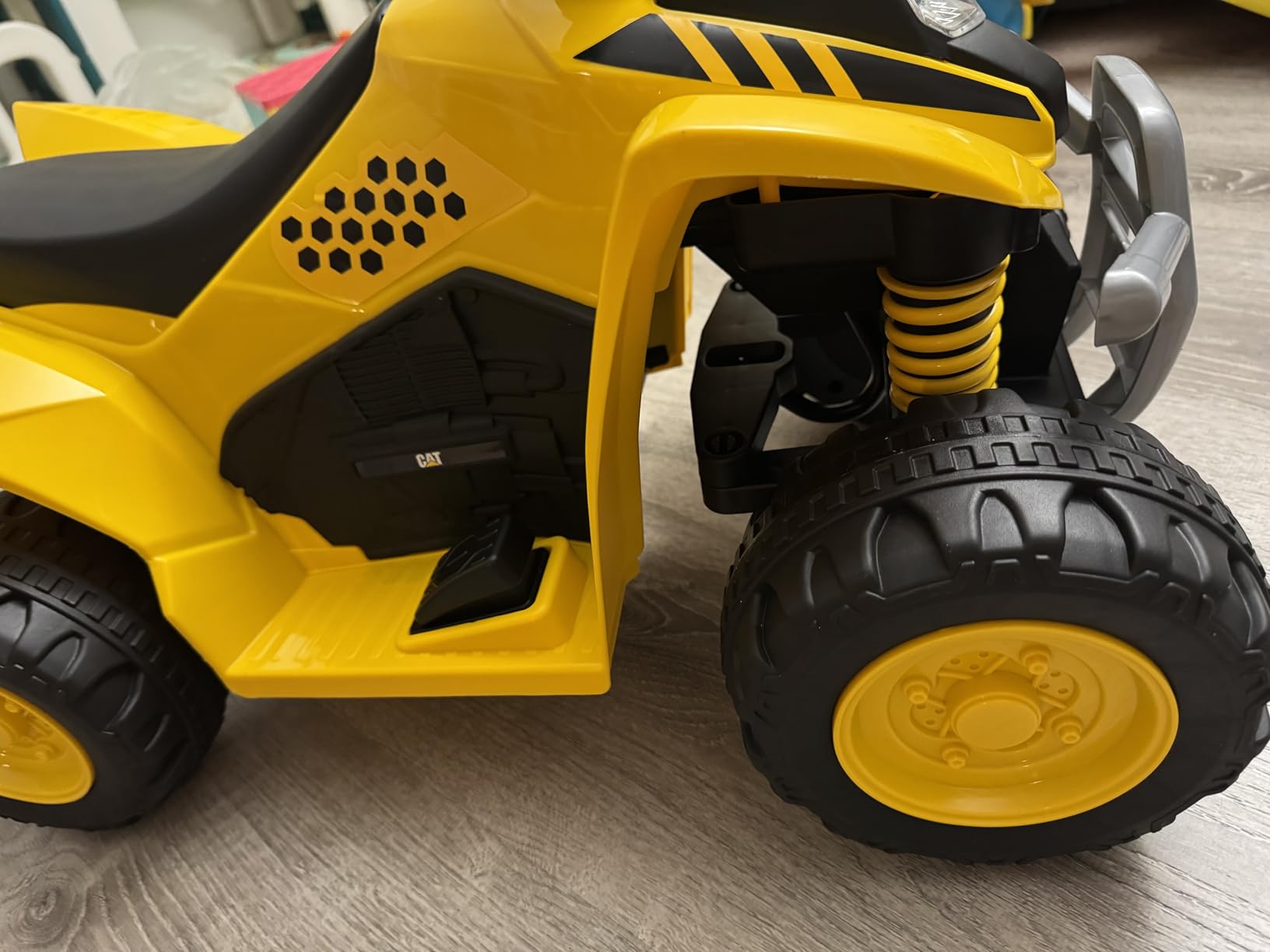
10. Aosom 12V Kids ATV – Dual Motors and a Battery Level Display
Aosom 12V Kids ATV Quad Car, 4 Wheeler, Forward & Backward Function, Red
Dual 35W motors, 12V 4.5Ah, 1.9-3.7 mph two speeds, 55 lb limit
+ Pros
- Dual motors deliver more consistent power
- Soft-start ramp smooths the take-off
- Real-time battery level display
- One-year manufacturer warranty
- Cons
- About 45 minutes of runtime per charge
- No parental remote control
- A few reports of early battery failure
Twin 35W motors on a 12V 4.5Ah pack is a specification you rarely see at this level, and the difference shows up on grass and uneven yards where single-motor 12V quads bog down. The adjustable high speed handles a lawn that is not perfectly level, which is most lawns.
The real-time battery level display is the detail we did not expect to find. On a machine where ride time varies so much with terrain, seeing how much charge is left stops the mid-yard stranded moment that parents complain about most often.
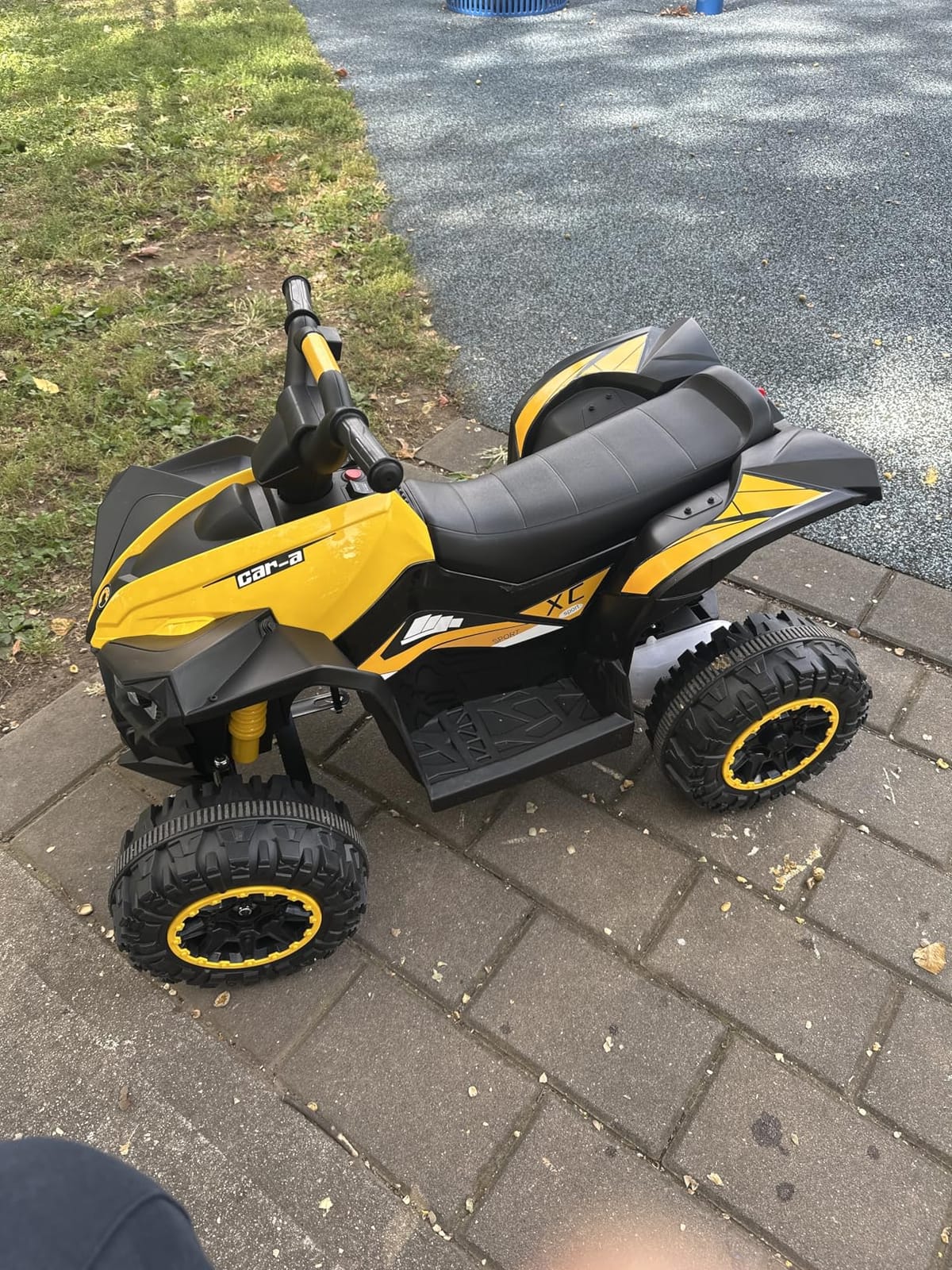
Two speeds, soft start and a 55-pound ceiling
The 1.9 to 3.7 mph dual-speed selection with soft-start pedal acceleration gives a new rider a gentle entry and an experienced one enough pace to be interesting. Forward and reverse switching, four LED headlights and a horn round out the control set, and built-in music with USB and TF card support keeps the entertainment side covered.
At 55 pounds the capacity suits ages 3 to 5 well and becomes the limiting factor around 6. The 32.7 by 20.9 by 21.9 inch footprint is compact for a 12V, and at 24 pounds an adult can move it without help.
Runtime and durability reports
About 45 minutes of runtime per charge is the honest figure, and it drops on rough ground. Some parents report noticeably less than that in practice, so plan sessions accordingly rather than expecting a full afternoon.
A handful of reviews report a battery that stopped holding a charge after about a month, and others describe a drive motor stopping within a few weeks. Seller support resolved some of these cases, and the one-year manufacturer warranty is the real protection here. That warranty is the main reason this model ranks above cheaper 12V rivals.
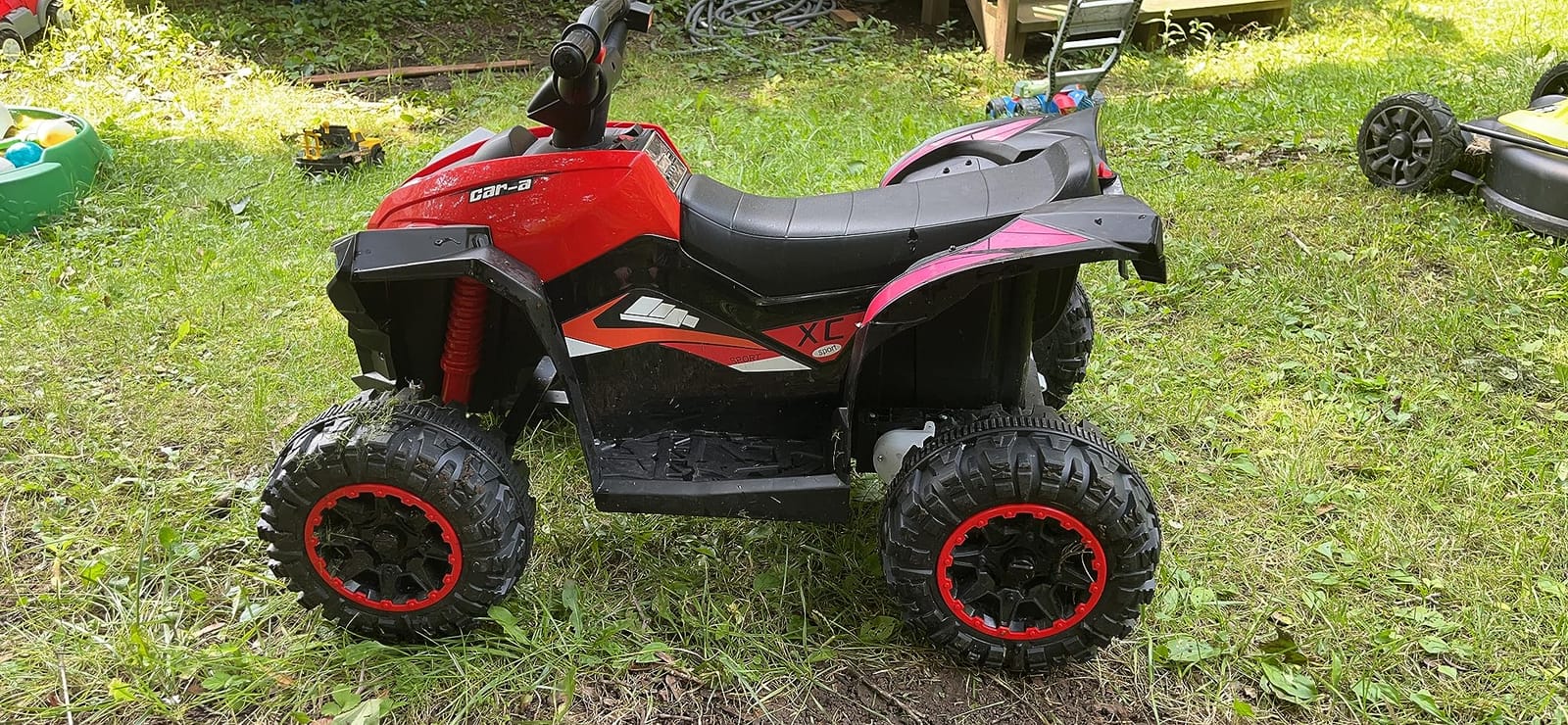
11. INFANS 12V 4-Wheeler – Large Wheels That Steady Out Uneven Ground
INFANS Kids ATV, 12V 4 Wheeler Ride on Toy, Dark Black
12V motor, one-button start, two speeds, 1-2 hours of play, 77 lb limit
+ Pros
- ASTM and CPSIA certified with non-toxic materials
- Four large-diameter wheels steady out uneven ground
- One-button start with slow-start speed selection
- LED headlights
- horn and music
- Cons
- 8-12 hour charge for 1-2 hours of riding
- Rear drive only despite four-wheel marketing
- Lowest rated model here at 4.1 stars
The large-diameter wheels are the reason to look at this one. On a 12V platform, wheel size is usually sacrificed for footprint, and a machine with four big wheels crosses a gravel driveway and a bumpy lawn without the constant spinning that plagues smaller-wheel designs.
One-button start with high and low speed selection and slow-start acceleration makes it approachable for a 4 or 5-year-old, and the 77-pound capacity is the joint highest here, matching the 12V leader. ASTM and CPSIA certification with non-toxic materials is a genuine plus for a machine aimed at young children.
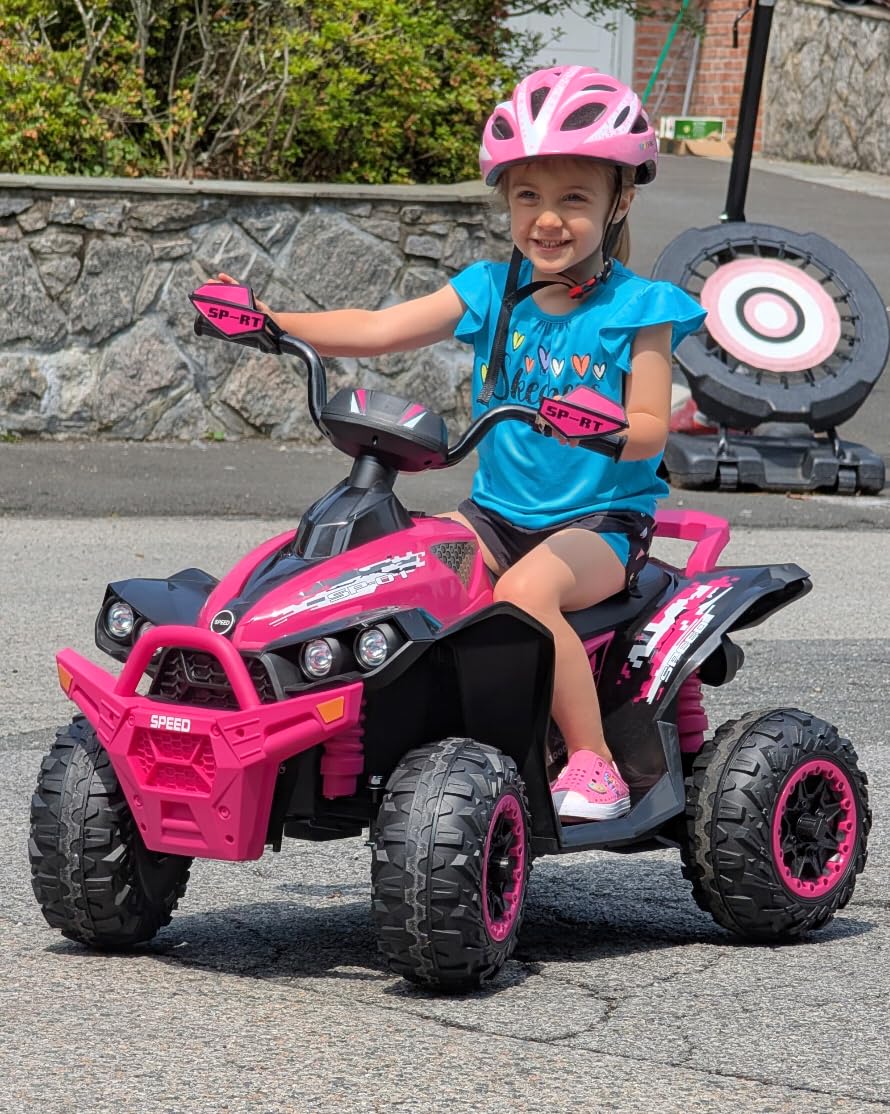
Wheel diameter as the real specification
On a ride-on ATV, wheel diameter decides how much of a bump the chassis clears before the drive wheels lose contact. Four large wheels is why this machine keeps traction where a 12V quad with small wheels stops, and it is the feature that separates this model from the others at the same voltage.
That stability is what allows the 12V motor to use its capacity. A quad that is bouncing has no traction to convert into speed.
Why the rating sits where it does
This is the lowest-rated model in the roundup at 4.1 stars, with 255 reviews and a sizable one-star share. The complaints cluster around value rather than function: an eight to twelve hour charge for one to two hours of riding, on a machine whose marketing language implies four-wheel drive when the drive is at the rear.
Check the drive layout carefully in the listing. If your child is under 6 and the terrain is smooth, the wheels and certification carry it. If you want power on rough ground, a dual-motor 24V is the better spend of the same money.

12. JOYRACER 24V 4×4 Quad – Most Four-Wheel Drive Power With a Parent Remote
JOYRACER 24V Kids ATV 4 Wheeler, 4×4 Ride On Toys Car w/ 800W Motors, 9AH Battery Powered Car w/Remote Control, Bluetooth, MP3, USB, Spring Suspension, 2-Seater Quad for Boys Girls, Black
24V 9Ah, 4x200W motors, 1.8-5 mph, 2.4G parent remote, 110 lb limit
+ Pros
- 800W of four-wheel drive handles grass
- sand and rocks
- 2.4G parent remote with three speed settings
- Two seats with backrest and 110 lb capacity
- Knee pads
- soft start and one-year parts warranty
- Cons
- Documented pedal switch fault can leave the throttle on
- Very loud operation
- Rear shocks arrive too stiff for small riders
Four 200W motors on a 24V 9Ah battery is 800 watts, and it is the most drive power in this roundup. Owners report it taking grass, sand, rocks and gravel without hesitation, and the 1.8 to 5 mph range means a parent can dial it back for a younger child and open it up for an older one.
The 2.4GHz parental remote with three speed settings is a genuine differentiator at 24V, most of which do not include one. Two seats with a backrest, 110 pounds of load capacity, knee and elbow pads in the box and a one-year parts warranty make it the most complete package in the group.
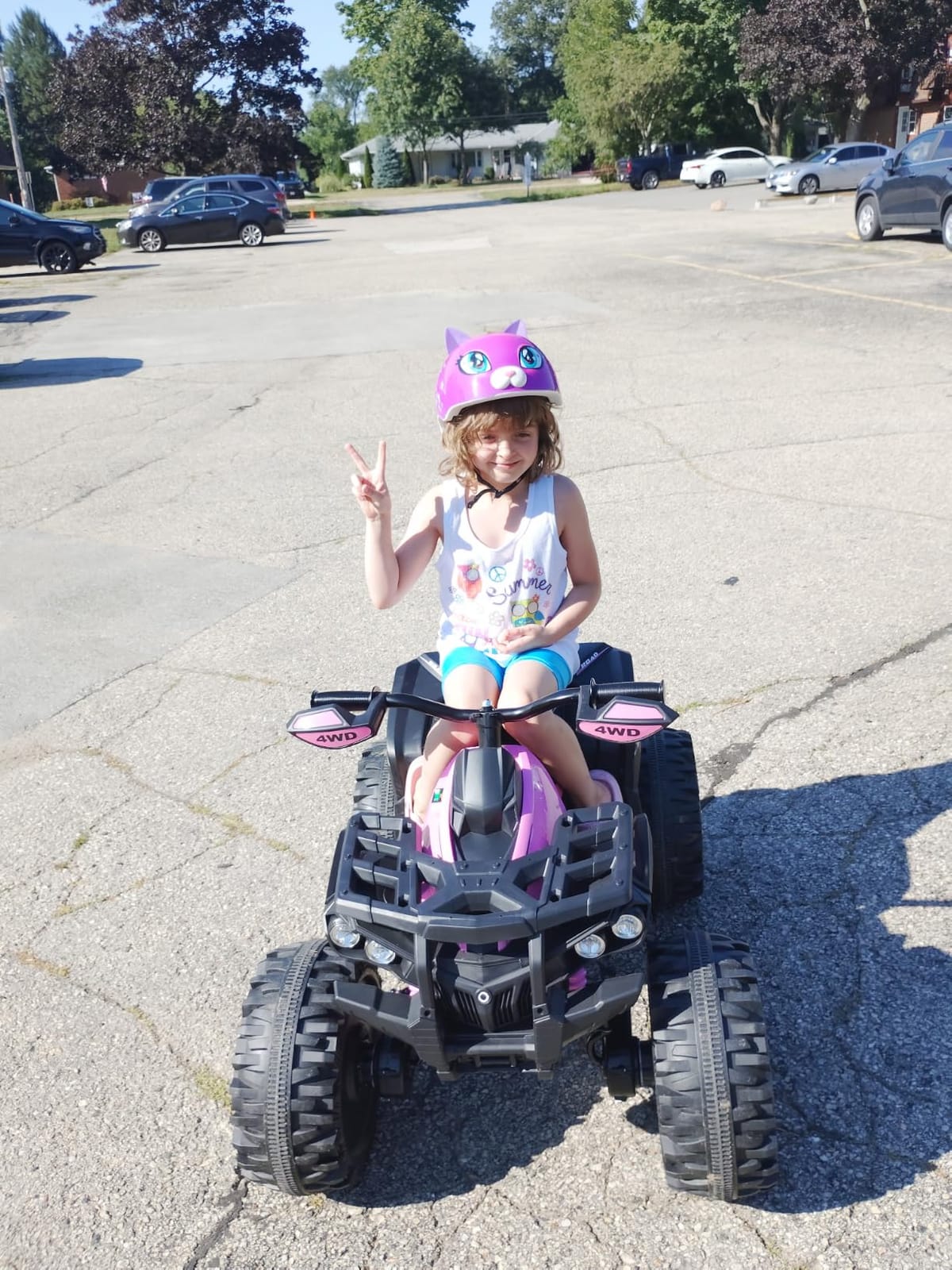
Power, remote control and the audio package
Soft start, a braking system and shock-absorbing suspension round out the driving hardware, and the ASTM-certified anti-slip explosion-resistant wheels are rated for the loose ground that stops lighter machines. Bluetooth, story playback, a TF card slot, USB and radio cover everything a child might want to play with.
At 47.4 pounds and 40.5 by 25.6 by 28.7 inches it is large but manageable, and the two-seat layout with a backrest is genuinely usable for a sibling pair.
Two things to check on delivery
One review documents a pedal switch fault that can leave the throttle in an always-on position. That is a serious enough report to test for the moment the machine is assembled, and it is the main reason this model sits below the ARBELI despite comparable power.
The rear shocks also arrive set too stiff for a small child and need backing off before a 4-year-old will ride comfortably. The 13 percent one-star share and reports of bent wheel mechanisms point at assembly and component quality rather than the design itself.
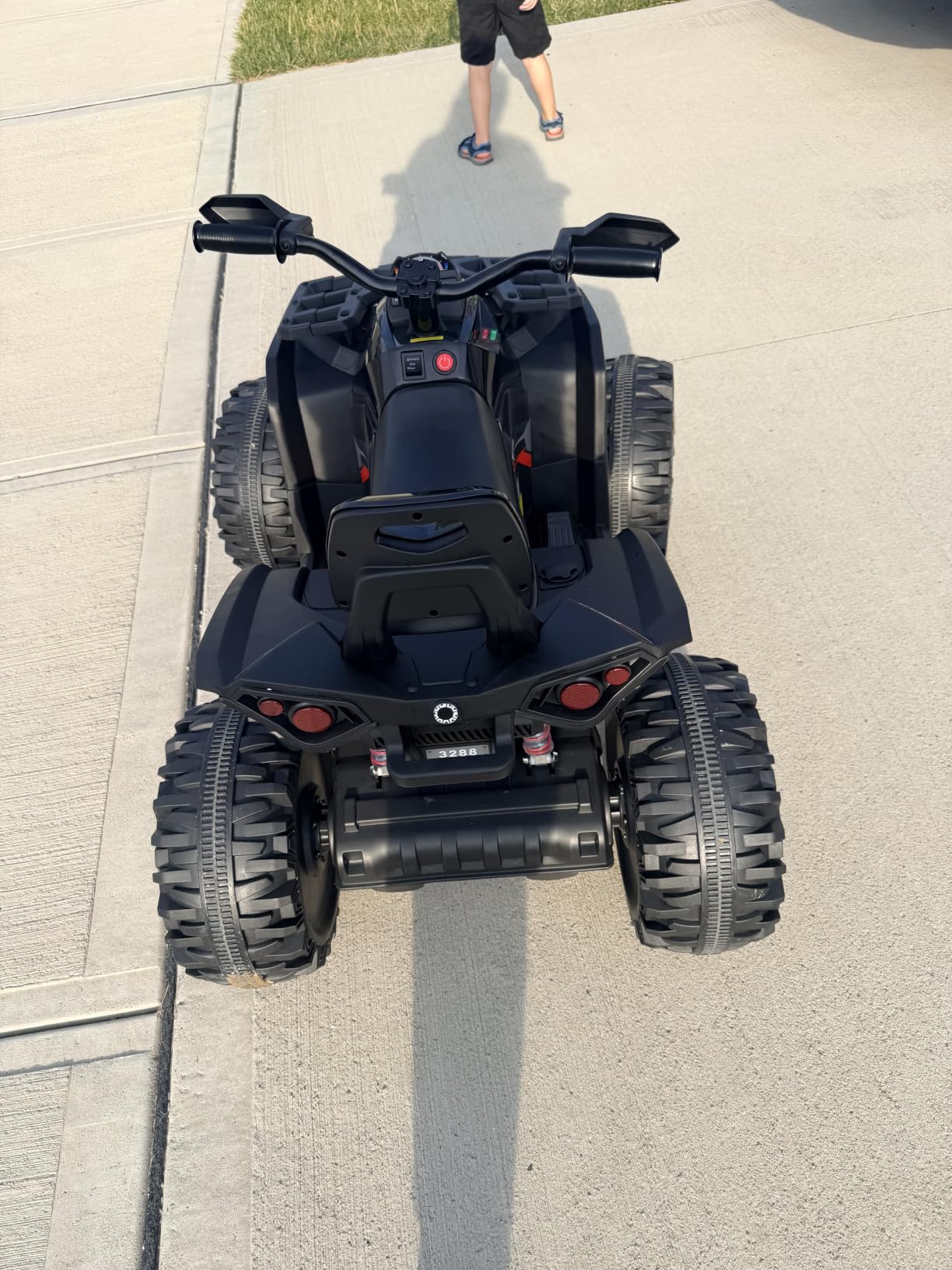
How to Choose an Electric Ride-On ATV Your Child Can Actually Ride
Every roundup on this topic tells you to buy by age. That advice is the reason so many parents end up with a machine their child cannot comfortably ride. Here is a better order of operations, based on what went wrong in our own testing sessions.
Step 1: Run a five-minute fit check before you buy
Have your child stand next to the machine and check three things. Can they sit flat-footed or on the footrests with knees slightly bent? With hands on the grips, are their elbows bent rather than locked straight? Can they reach the pedals or buttons without leaning forward off the seat?
Then check the weight limit against your child in normal clothing, not their lightest outfit. Leave at least 15 pounds of headroom, because children grow during the season and a machine that is at its limit on day one is at its limit for the whole year.
Step 2: Match the voltage tier to the child, not the birthday
Four tiers cover this entire category. 6V machines run at 1.2 to 1.8 mph and suit children from 18 months to about 3 years, with weight limits between 44 and 66 pounds. 12V machines reach 1.9 to 3.7 mph and cover ages 3 to 8, with limits from 55 to 77 pounds.
24V machines deliver 1.8 to 5 mph, usually with multiple motors and often a 2.4GHz parental remote, and they stretch from 3 to 8 years with limits up to 133 pounds. 36V and above is where the vehicle controls change, with variable throttles, electronic brakes and three-point belts for riders from 6 to 12.
Step 3: Decide how much supervision you want to keep
A parental remote with an emergency stop and steering override changes the safety math completely for a beginner. If you are buying for a child under 5, treat a 2.4GHz remote as a requirement rather than a nice-to-have, and accept that some higher-power machines do not include one.
Also decide honestly whether you will supervise. A 24V with a remote still requires a responsible adult nearby. The remote buys you the ability to intervene in a second, not permission to walk away.
Step 4: Understand the battery before you buy
Most machines in this category use sealed lead-acid packs. They are inexpensive, they tolerate being left partly charged, and they are heavy, which is why two of the larger models here are difficult to move. A lithium-ion pack is lighter and holds more charge for the weight, but it costs more and it dislikes being stored empty.
The one maintenance habit that matters is charging monthly when the machine is not in use, which the manufacturer of one model here explicitly recommends. A sealed lead-acid battery that sits unused for a full winter is the single most common cause of a dead quad on the first warm day of spring.
Step 5: Be honest about charge time and ride time
The 6V machines here run one to two hours per charge, and the 12V and 24V machines most commonly give one to two hours after an eight to twelve hour charge. Plan your storage and charging location around the long number, not the short one.
Ride time falls on rough ground and with a heavier rider. If you are expecting a full afternoon of riding, none of these machines delivers it, and the honest answer is that a second battery is the only way to get there.
Step 6: Check safety certification and where kids may ride
Look for ASTM F963 and CPSIA compliance on any machine in this category, and check the manufacturer’s minimum age on the listing rather than assuming the box size implies the rating. For the higher-powered 36V and above, UL 2272 is the electrical safety standard to look for, and you can confirm a claim by asking the seller for the certification number rather than accepting a logo.
On where children can ride, the practical answer is private property you control, with a flat surface and no traffic, driveways, pools or neighboring fences in the line of travel. Public roads, many parks and most shared trail systems prohibit this class of vehicle entirely, and an HOA can restrict what runs on a lot even when you own it.
Frequently Asked Questions
What is the best electric ATV for kids?
The u003cstrongu003eCostzon 12V Kids ATVu003c/strongu003e is the best all-round choice, with ASTM and CPSIA certification, a 77 lb capacity, two speed settings and 1-2 hours of play per charge. For siblings, the u003cstrongu003eARBELI 24Vu003c/strongu003e is a true two-seater with 4x200W motors and a parental remote. For riders aged 6 and up, the u003cstrongu003eFirst Ride On 36V UTVu003c/strongu003e adds a real throttle, an electronic brake and three-point belts.
What size ATV is best for a 7-year-old child?
Size a kids electric quad by u003cstrongu003eweight, reach and terrainu003c/strongu003e rather than by age or engine size. A 7-year-old is usually best served by a u003cstrongu003e24V machine rated 110-133 lbu003c/strongu003e, or a 36V UTV if they are over 6 and riding alone on rough ground. Check that they can sit with knees bent, reach the pedals and hold the grips with bent elbows.
What is the best electric quad for a 10-year-old?
A u003cstrongu003e36V machineu003c/strongu003e is the right tier for a 10-year-old, because that is where throttle pedals, electronic brakes, three-point belts and 5-8 mph speeds appear. The u003cstrongu003eFirst Ride On 36V Kids UTVu003c/strongu003e is a two-seater rated to 132 lb with 14-inch EVA tires and rear metal spring suspension. Check that the child’s weight is under the stated limit before riding solo.
Are electric ATVs better than gas ones for kids?
For a first vehicle, yes. Electric ride-on quads produce u003cstrongu003eno exhaust, no fuel and no oil changesu003c/strongu003e, run quietly enough for suburban backyards, and usually include a u003cstrongu003espeed limiter or parental remoteu003c/strongu003e that a gas machine does not. The trade is runtime: most deliver one to two hours per charge, and charge times run 8-12 hours on 12V and 24V models.
How long do kids electric ATV batteries last?
Expect u003cstrongu003e1-2 hours of ride time per chargeu003c/strongu003e on most 6V, 12V and 24V models, dropping to 40-60 minutes on the 36V machine in this roundup because of its power draw. Ride time falls on rough ground and with heavier riders. Charge the battery monthly when the machine is not in use, and store it somewhere above freezing for the off-season.
Do kids electric ATVs need assembly?
Most do. The 6V models here assemble in roughly u003cstrongu003e20-25 minutesu003c/strongu003e and the larger 24V and 36V machines take considerably longer because of the frame, wiring and suspension. Reviews single out confusing instructions and diagrams as a recurring problem, so allow a calm afternoon, check every fastener twice before a first ride, and test the throttle pedal safety switch with the wheels off the ground.
Which Ride-On ATV Should You Buy? Our Verdict by Age
If you want one answer, take the Costzon 12V Kids ATV. It carries the most reviews in the group, the right safety certifications and a weight limit that covers almost any child from 3 to 7, which makes it the least likely purchase to be outgrown early. It is the best electric ride on atvs for kids pick for a typical family in 2026, and it is the one we would put in our own driveway.
For specific situations, match the machine to the constraint. If two children will share one ride-on, the ARBELI 24V gives you a genuine two-seater, 133 pounds of capacity and a remote with an emergency stop. If your child is 6 or older and wants real vehicle controls rather than a speed switch, the First Ride On 36V UTV is the honest step up. If you are buying for a first birthday, the Best Choice Products 6V has the simplest one-button control and the lowest weight to carry, and the Bluey 6V holds the highest rating in the roundup at 4.6 stars.
Whatever you choose, run the fit check first, plan for an eight to twelve hour charge, and keep a helmet on the child for every session beyond the driveway. Six weeks with these machines taught us more from the fit check than from any spec sheet, and that is the part of the purchase you can still get right for free.