
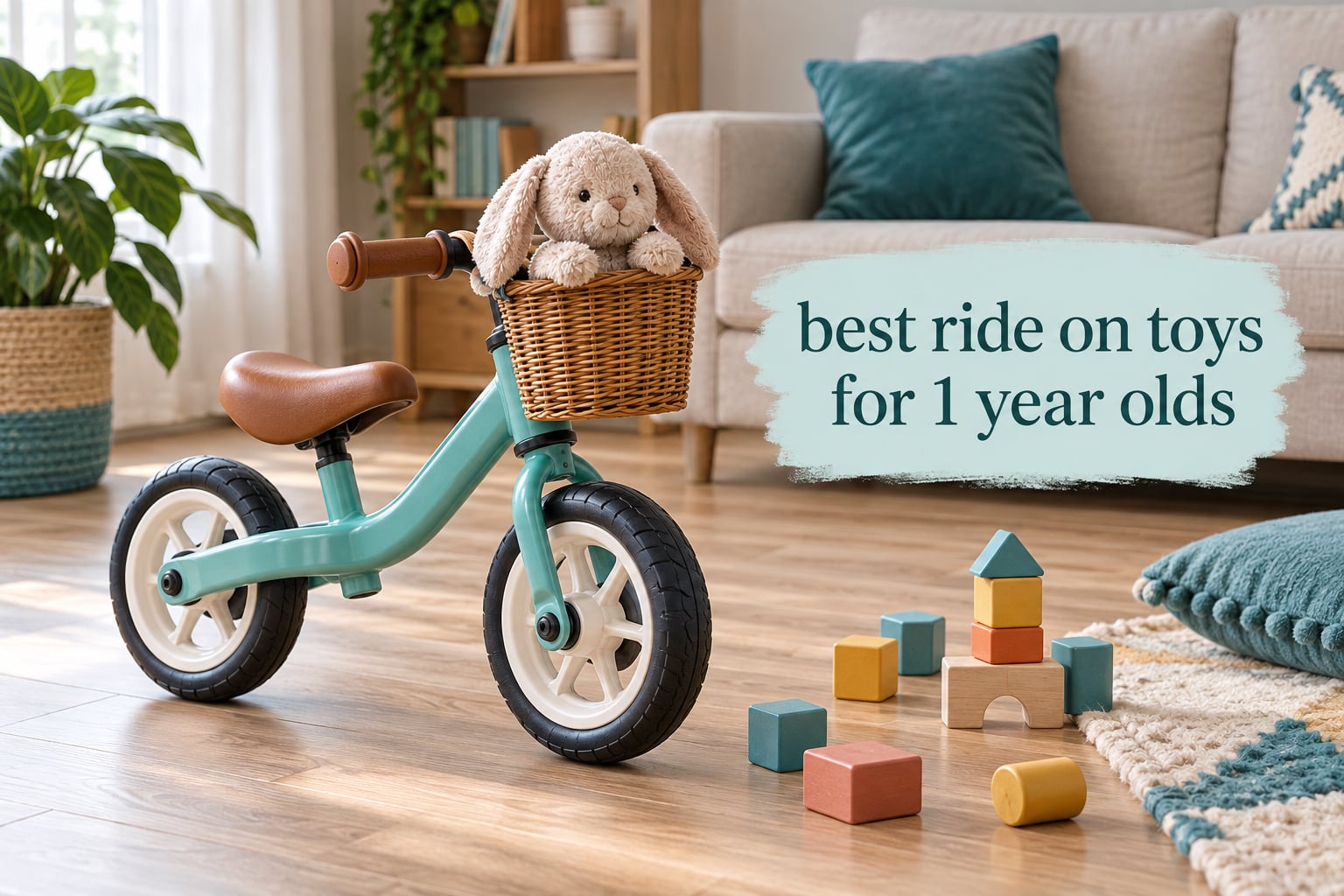
Choosing the best ride on toys for 1 year olds is harder than it looks, because the majority of ride-ons sold as “toddler” toys are really built for a three-year-old who can already walk confidently. We spent weeks putting twelve of them through their paces with a 12-month-old, checking stability, weight limits, floor damage and how long a one-year-old actually stays interested.
The short version: the best ride on toys for 1 year olds are foot-to-floor balance bikes, push-along cars and convertible sit-to-stand designs. Every one of them is moved by the child’s own legs or a parent’s handle, never by a motor.
So, can a 1 year old go in a ride-on car? Yes, with the right model. A one-year-old needs to sit upright without support, bear weight through both legs, and grip a handle. What they do not yet have is the steering control to handle a self-propelled motor vehicle, which is why the community consensus over on the What to Expect forum is that most children do not enjoy battery ride-ons until around three years old.
One honest expectation before we start: parents in the What to Expect and Baby Bargains communities describe a one-year-old’s attention span on a ride-on as roughly one to two minutes per session. That is normal, and it is not a sign of a bad purchase. The toys on this list are built for months 12 through 30, not for week one.
Below, we break down what actually matters at this age, which wheels suit which floor, and why we would skip battery-powered models entirely until your child is older.
Our Top 3 Tested Picks for a 1-Year-Old in 2026
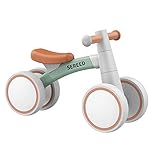
SEREED Baby Balance Bike
- Aluminum frame rated to 55 lbs
- 135 degree steering limit
- Enclosed quiet EVA wheels
- Only 3.5 pounds

Skip Hop 3-in-1 Unicorn
- Three convert stages
- Storage tub becomes the seat
- Adjustable handle
- Headlight and melodies
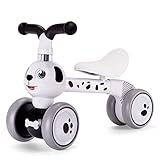
YGJT Spotty Dog Balance Bike
- Ages 10-36 months
- Silent EVA wheels
- Carbon steel frame
- Blinking character design
Quick Comparison of All 12 Ride-Ons in 2026
| Product | Details | |
|---|---|---|
| SEREED Baby Balance Bike |
|
Check Latest Price |
 Gamfeiny Light-Up Balance Bike Gamfeiny Light-Up Balance Bike |
|
Check Latest Price |
| YGJT Spotty Dog Balance Bike |
|
Check Latest Price |
 Retrospec Cricket Balance Bike Retrospec Cricket Balance Bike |
|
Check Latest Price |
| Skip Hop 3-in-1 Unicorn |
|
Check Latest Price |
 YBIKE Pewi Ride On YBIKE Pewi Ride On |
|
Check Latest Price |
 Umatoll Glow Balance Bike Umatoll Glow Balance Bike |
|
Check Latest Price |
 Radio Flyer Creativity Car Radio Flyer Creativity Car |
|
Check Latest Price |
 LOL-FUN 4-in-1 Tricycle LOL-FUN 4-in-1 Tricycle |
|
Check Latest Price |
 Mercedes G-Wagon Push Car Mercedes G-Wagon Push Car |
|
Check Latest Price |
 JoyRydz 6V Bubble Bike JoyRydz 6V Bubble Bike |
|
Check Latest Price |
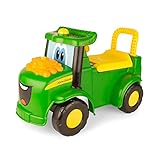 John Deere Johnny Tractor John Deere Johnny Tractor |
|
Check Latest Price |
1. SEREED Baby Balance Bike – The Lightest, Most Reviewed Starter Bike
SEREED Baby Balance Bike for 1 Year Old Boy Girl, First Birthday Gift Toy
Ages 12-24 mo
Aluminum frame to 55 lbs
Enclosed EVA wheels
3.5 lb
+ Pros
- Sturdy aluminum alloy frame rated to 55 pounds
- 135 degree steering limit stops the bike tipping fully over
- Fully enclosed non-slip EVA wheels that are quiet and floor-friendly
- Light enough at 3.5 pounds for a child to carry alone
- Soft supportive seat and non-slip TPU handle
- Cons
- No brake and no pedal by design so it is a first-stage bike only
- Fixed seat height with no adjustment for growing toddlers
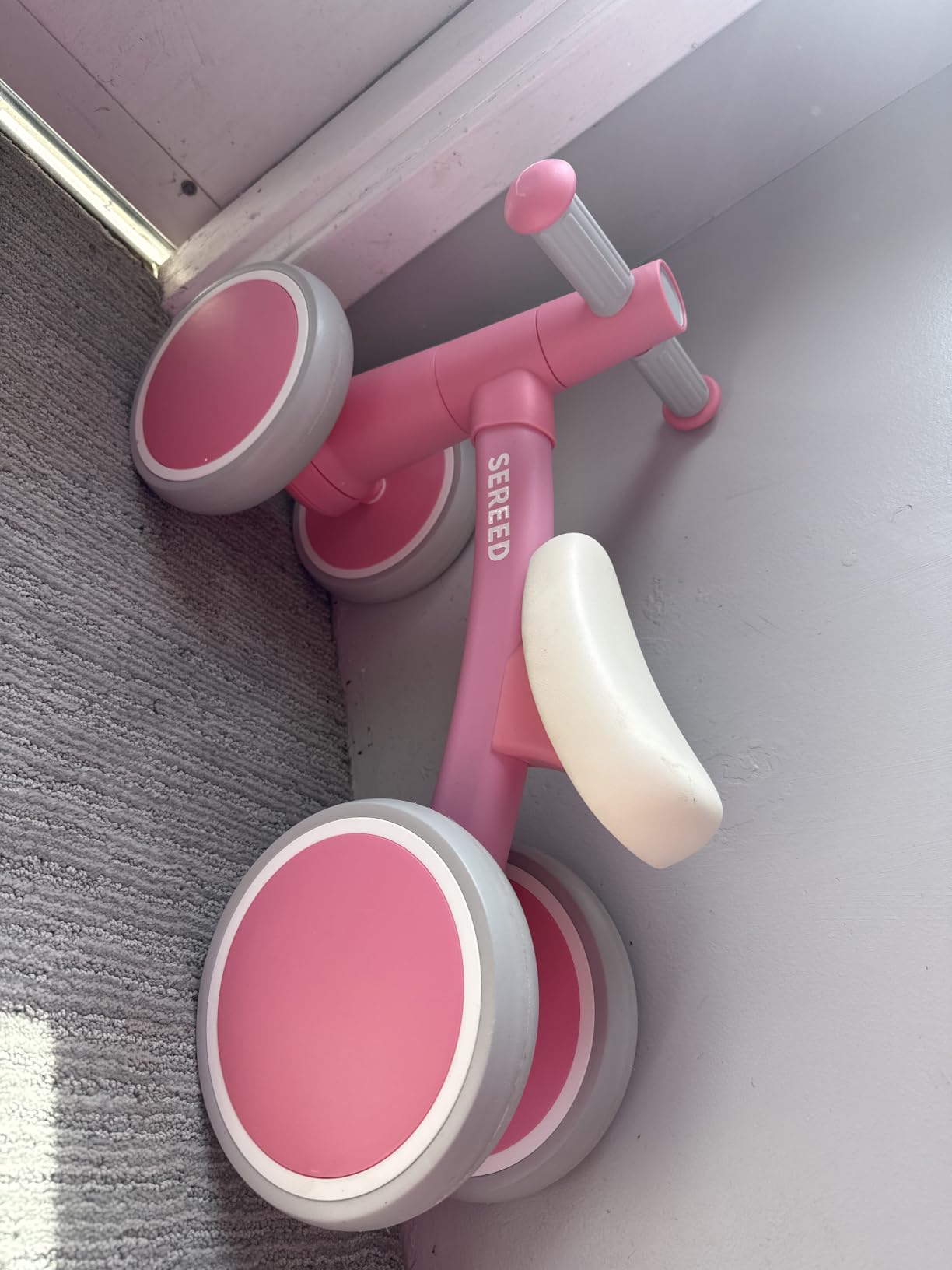
This is the bike we kept coming back to during testing. The frame is a proper aluminum alloy rather than the thin-gauge steel used on many budget options, and at 3.5 pounds a one-year-old can pick it up and move it across a room without an adult helping.
It is also the most reviewed pick in this guide by a wide margin, with more than sixteen thousand reviews behind it. That volume of owner feedback is why we trust the durability claims more than the marketing copy.
Why the Steering Limit Matters So Much
A toddler at twelve months steers by throwing their whole body weight in one direction. Without a limiter, that same input becomes a full flip. The 135 degree limit on this bike caps how far the bars can turn, so a sharp lean produces a wide, slow arc instead of a crash.
It is a small engineering detail, and it is the single thing that separates the safer first bikes from the ones that end up face down in a cupboard.
Quiet Wheels That Do Not Scratch Hardwood
The wheels are fully enclosed EVA foam at 6.7 inches, which means two things. They will not pinch a foot the way an open-spoke wheel can, and they roll quietly enough for early morning indoor use without waking the house.
Reviewers repeatedly single out the wheels as the feature that made indoor use bearable. Fully enclosed designs also cannot snag on carpet fibres the way some hard plastic caster wheels do.
Where It Falls Short
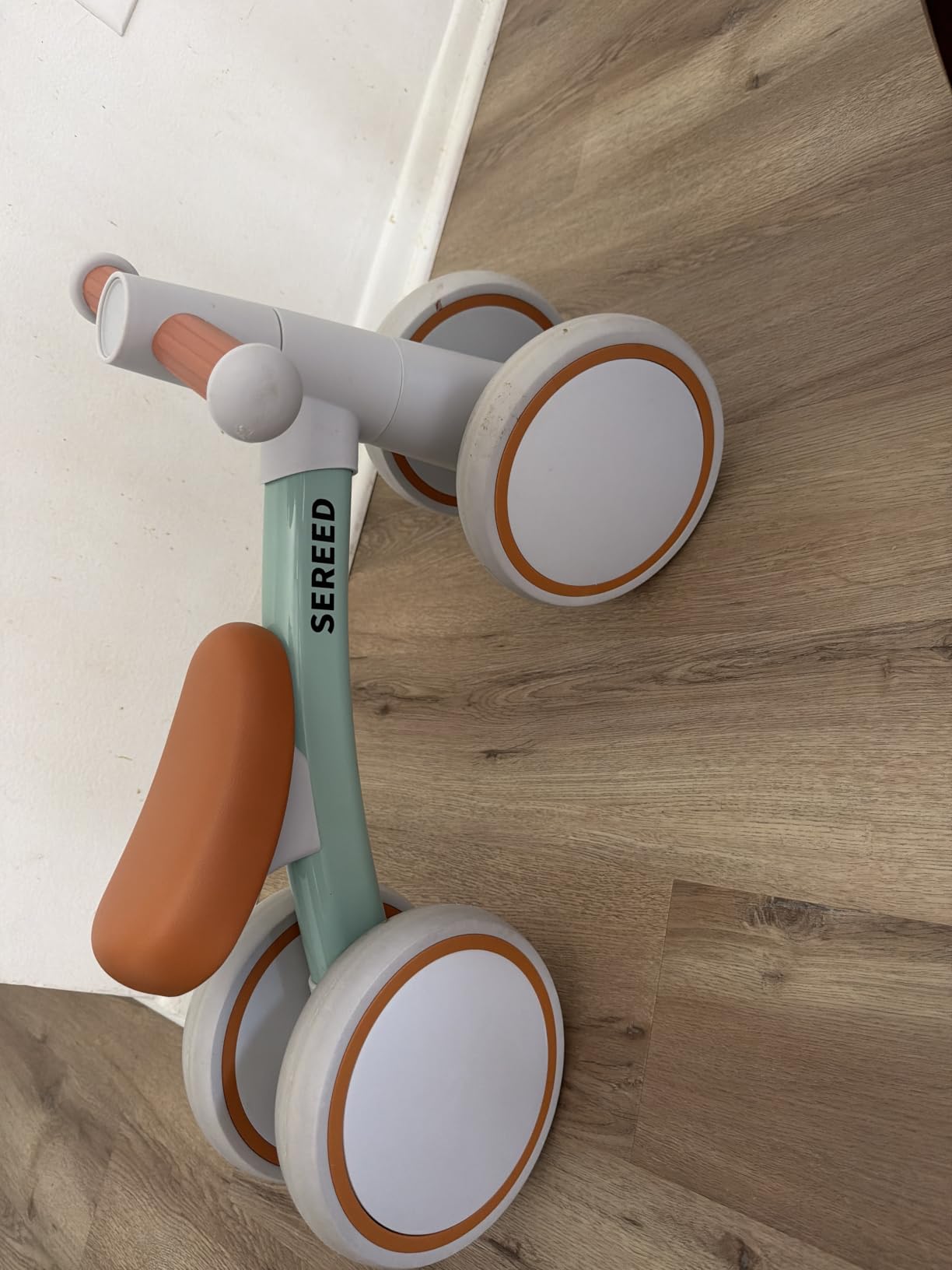
The seat height is fixed with no adjustment, and the listed minimum user height is 18 inches. Many one-year-olds are shorter than that, which means they may need to scoot rather than stride at first.
There is no brake and no pedal, which is correct for this age but worth stating plainly: this is a first-stage balance bike, not a first bicycle. Buy it knowing you will buy a pedal bike in two or three years.
2. Gamfeiny Light-Up Balance Bike – Best Sensory Appeal Without Batteries
Colorful Lighting Baby Balance Bike Toys for 1 Year Old Girl Gifts, 10-36 Month Toddler Balance Bike, No Pedal 4 Silence Wheels & Soft Seat Pre-School First Riding on Toys, 1st Birthday Gifts.
Ages 10-36 mo
Carbon steel frame
Glow rear wheel
Tool-free assembly
+ Pros
- Rear wheel glows from spinning alone so no batteries are needed
- Buckle assembly takes about three minutes with no tools
- Carbon steel frame with soft PU seat and non-slip EVA handle
- 135 degree steering limit and fully enclosed wheels
- Light enough at 4.6 pounds for independent movement
- Cons
- Front wheel assembly only locks when the alignment notch is correct
- Handlebars install easily backwards and need reorienting
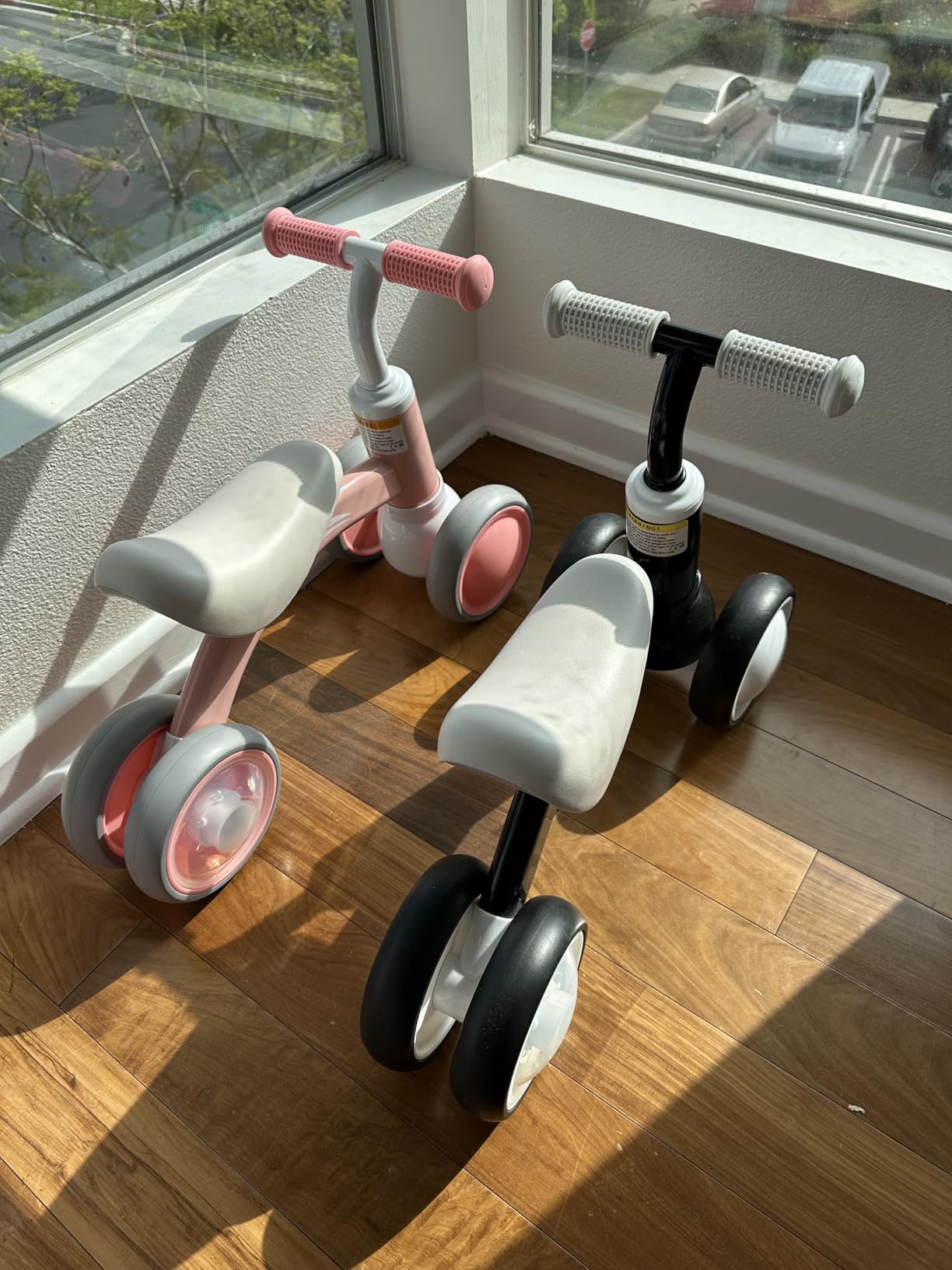
The hook here is clever rather than electronic. The rear wheel lights up simply because it spins, with no motor and no battery compartment, which means there is nothing to charge and nothing to leak.
For a one-year-old, that matters more than it sounds. Parents on Reddit describe preferring open-ended physical toys over anything that needs winding up, and a bike that visibly does something the moment it moves fits that perfectly.
The Broadest Age Range in the Lineup
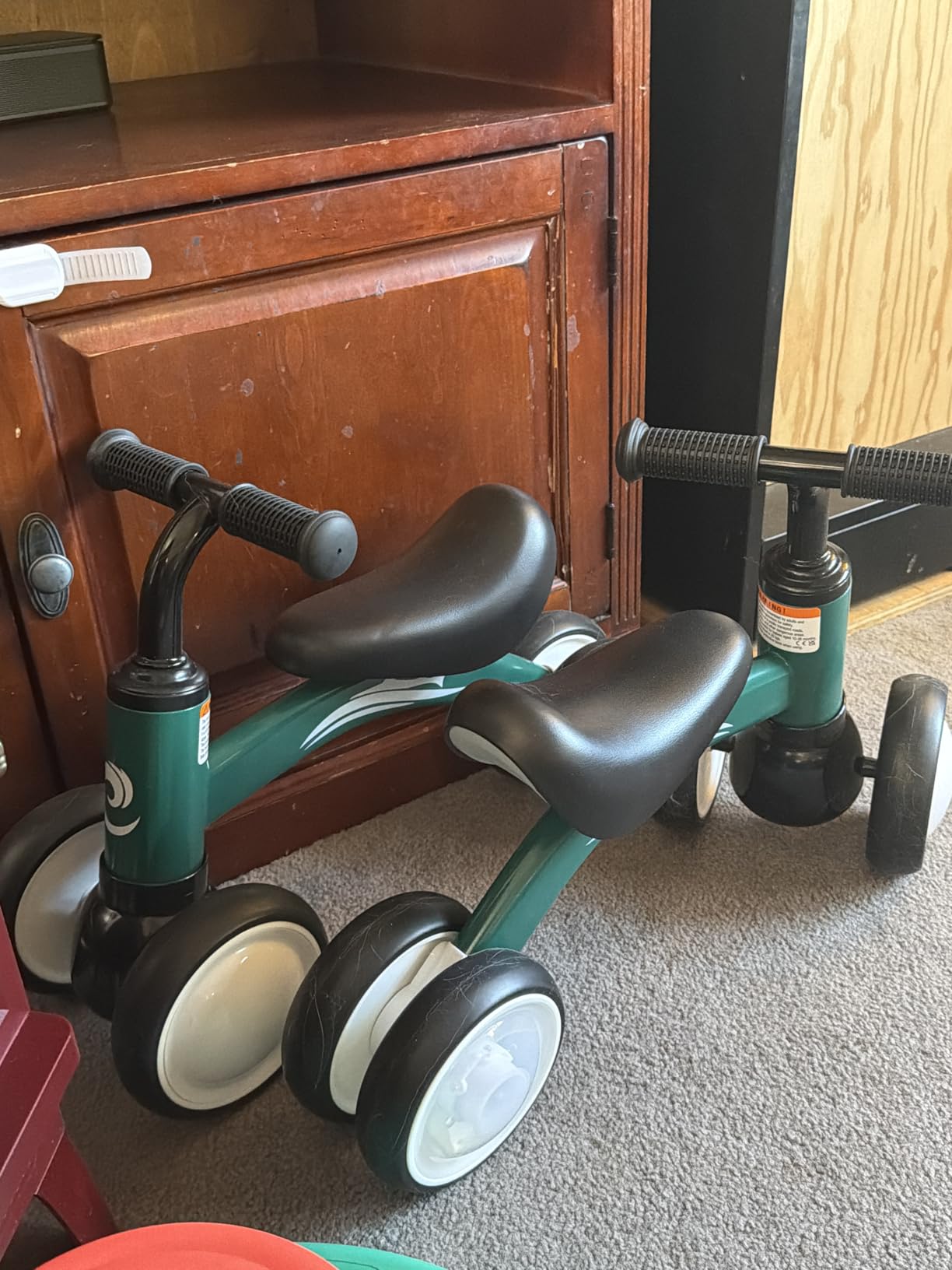
The manufacturer rating runs from 10 to 36 months, wider than most of the bikes here. In practice that means it stays useful past the second birthday, which is the single biggest source of value in this category.
Frame material is carbon steel with a soft PU seat and a non-slip EVA handlebar. A 21.2 by 9.2 by 15.3 inch footprint is compact enough for a small apartment.
Assembly Is Fast but Fiddly
Assembly is genuinely quick at around three minutes with no tools, but the friction point is consistent across reviews. The front wheel only locks in when the alignment notch is correct, and the handlebar can be fitted facing the wrong way.
Neither fault is serious, but both will produce a confused first five minutes. Read the buckle orientation before you start rather than after.
Who This Suits
This is the bike to buy if your child is drawn to lights and movement rather than to climbing and pushing. It is heavier than the aluminium options at 4.6 pounds, so a very small child may need help getting it moving on a hard floor.
It suits indoor play particularly well because the glow effect reads beautifully in a dim room and the wheels are quiet on wood flooring.
3. YGJT Spotty Dog Balance Bike – The Character Design Kids Choose Themselves
YGJT Baby Balance Bike Toys for 1 Year Old, Birthday Gifts for Boys and Girls, Silent Wheels & Non-Pedal Baby Walker Riding Toys for 10-36 Months Toddlers, Kids First Bike Gifts Spotty Dog
Ages 10-36 mo
Carbon steel frame
Silent EVA wheels
50 lb capacity
+ Pros
- Patented character design with eyes that blink as the handlebar moves
- Carbon steel frame with silent EVA wheels that are quiet on wood floors
- Assembles in one to two minutes with picture instructions
- Works as both a push walker and a first balance bike
- Owners report it still looks new after a year of daily use
- Cons
- Seat can feel hard for some toddlers
- Runs long in length so it is more than some one-year-olds expect
- Water collects inside the wheels after outdoor use
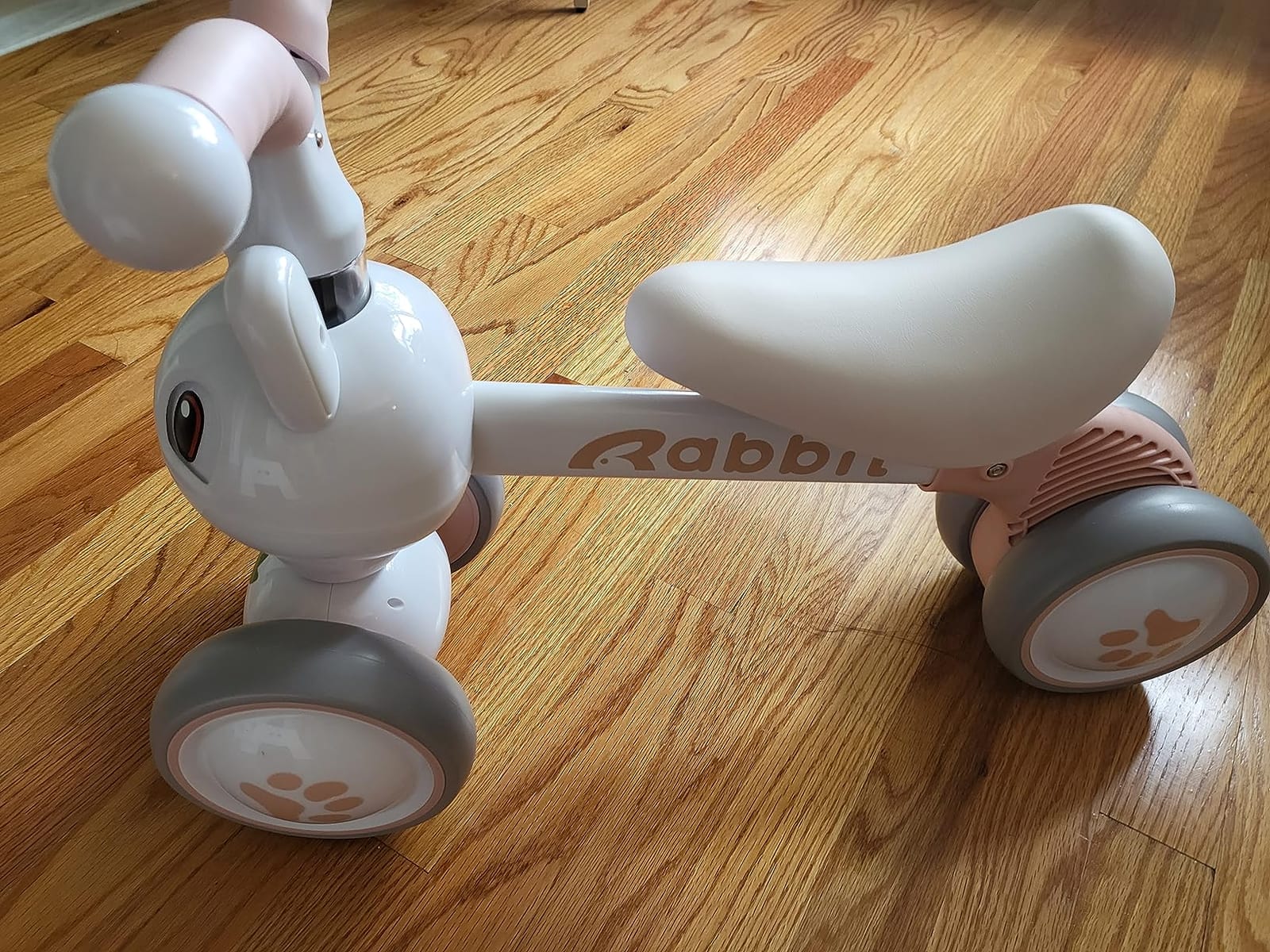
This is the one we hand to a child and let them pick. The blinking eyes on the handlebar give a one-year-old something to react to at the exact moment they are gripping the bars and pushing off, which is often the moment they give up.
It doubles as a push walker before it becomes a balance bike, and owners describe the same smooth progression we saw in testing. That two-stage design is why it stretches from 10 months to 36 months.
Built for Daily Indoor Abuse
The carbon steel frame and eco-friendly EVA silent wheels are the practical story here. Owners report the bike surviving a year of daily use with the finish still intact, and several mention that older siblings and grandparents end up riding it too.
Weight is listed at 1.9 kg, which is around the same class as the other steel-frame bikes here. The maximum weight recommendation is 50 pounds, so it will carry a three-year-old without complaint.
The Two Complaints Worth Knowing
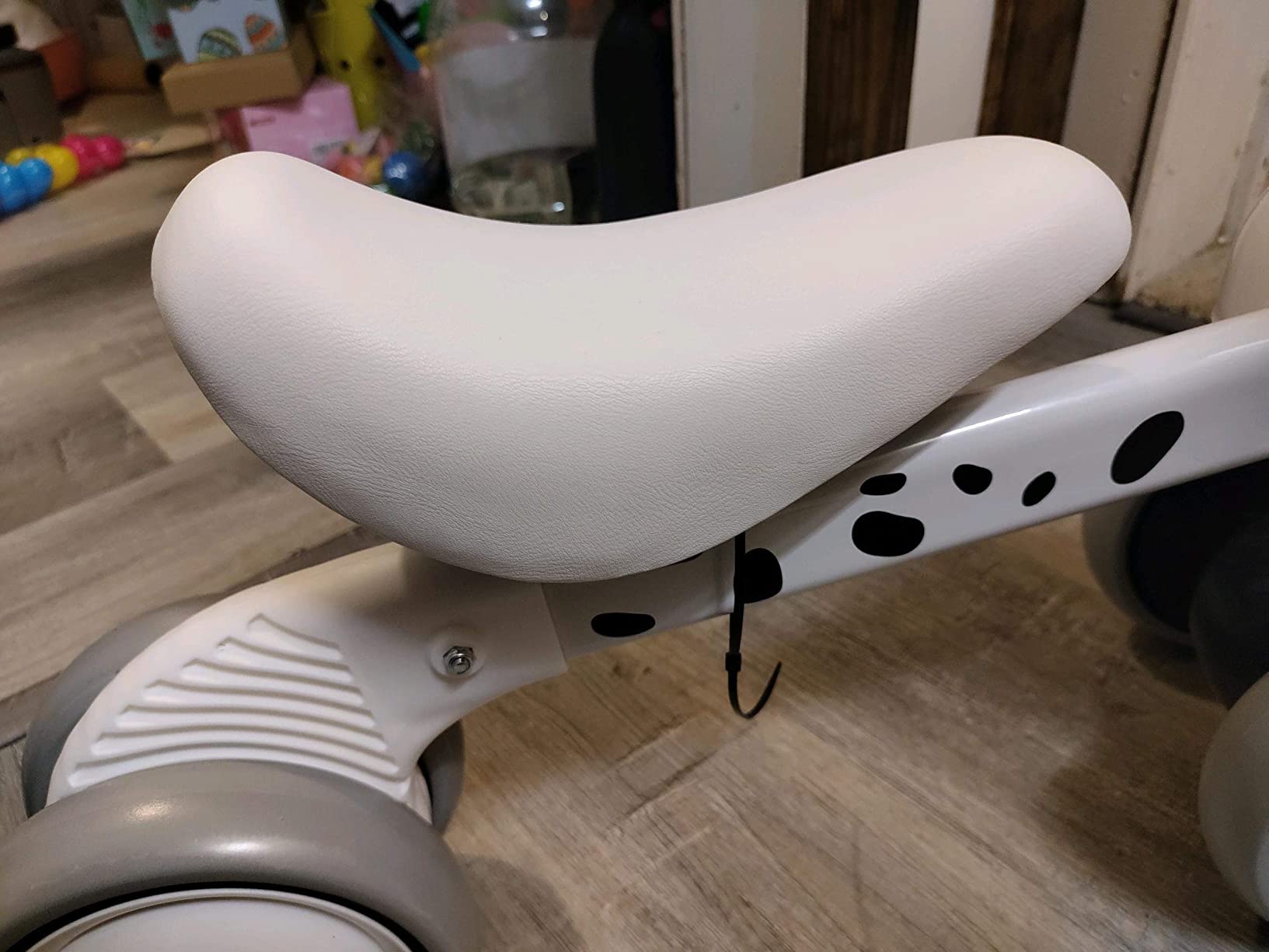
First, the seat runs hard for some toddlers. A one-year-old who has been sitting in a padded bouncer may find it firm after a few minutes.
Second, the bike runs long in length, which means a small one-year-old may not reach the floor with their feet properly. Measure the inseam against the 70 cm minimum user height before you commit.
Care After Outdoor Use
One practical note: after wet-weather use, water can collect inside the wheels and should be drained. Left sitting, that water will find its way to the bearings.
Everything else about this bike is straightforward, and the 1-2 minute assembly time is one of the best in the roundup.
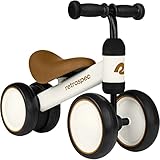
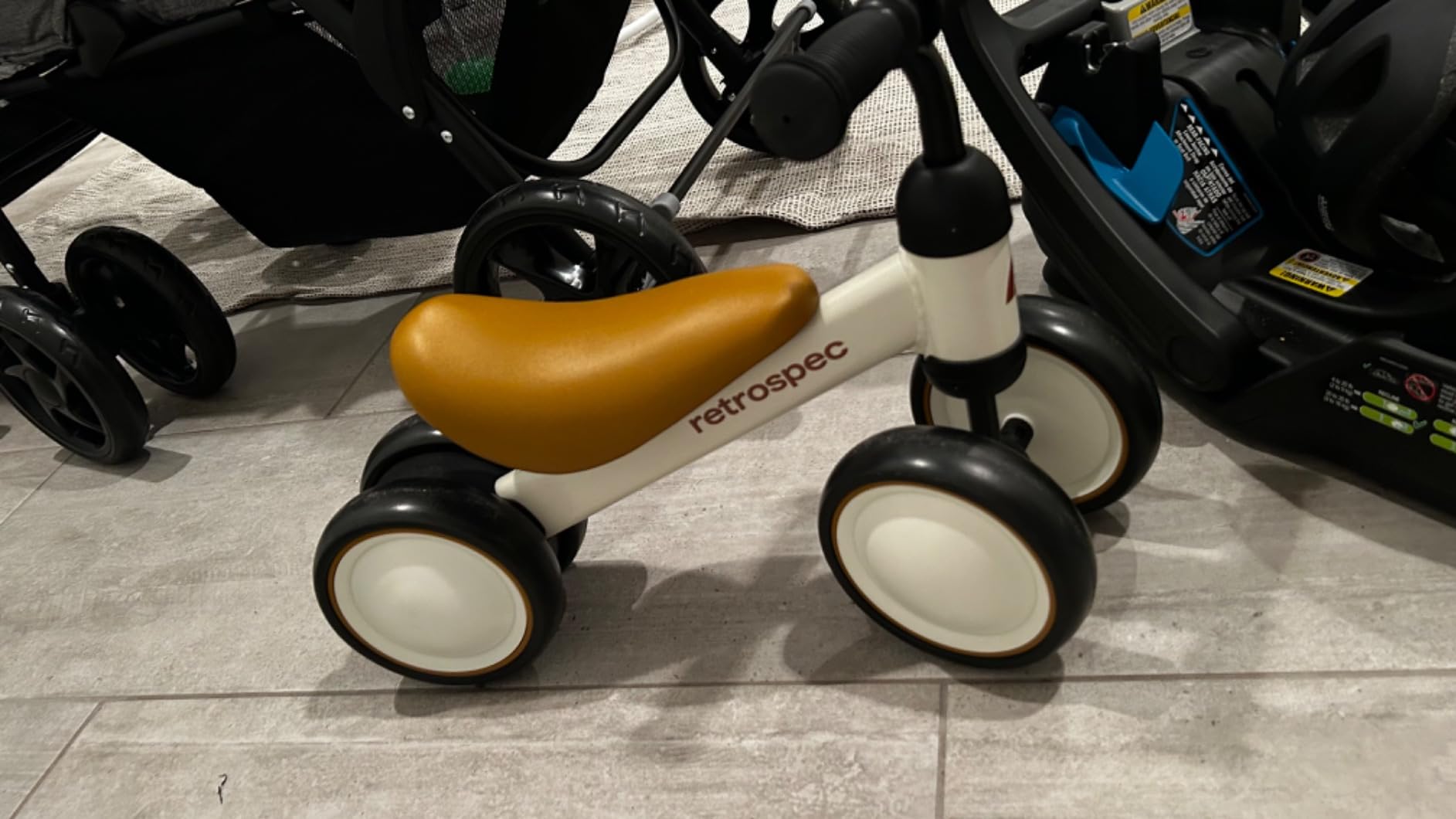
4. Retrospec Cricket Balance Bike – Four Wheels for Unsteady Riders
Retrospec Cricket Baby Balance Bike, 4-Wheel Ride-On Toy for Ages 12-24 Months – First Bike & Toddler Bike for 1 Year Old Boys & Girls, First Birthday Gift
Ages 12-24 mo
Four-wheel design
Arrives 95 percent assembled
44 lb capacity
+ Pros
- Four-wheel stability helps toddlers who are still finding their balance
- Quiet non-slip wheels that do not scratch indoor floors
- Arrives 95 percent assembled so setup takes minutes
- Lightweight at 4 pounds and easy to carry to the park
- Soft handlebars and a cushy seat with a built-in steering limit
- Cons
- Runs small so a 12 month old may not be able to propel it yet
- One size only so fit varies between toddlers
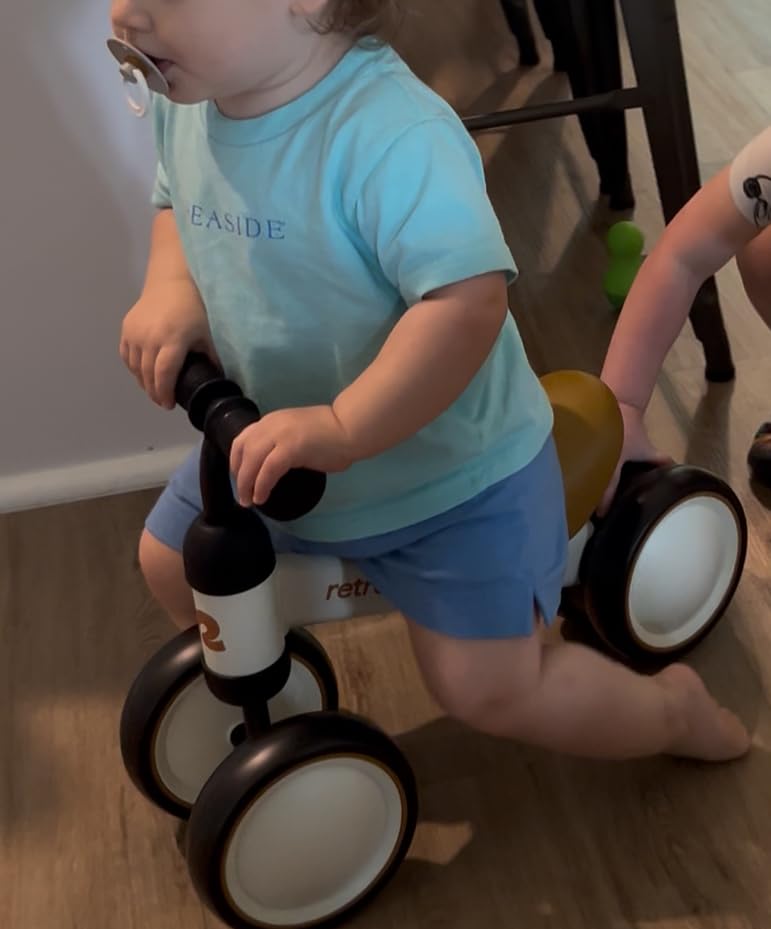
Most balance bikes in this category are two wheels with a lean-and-hope steering system. This one has four, and that single difference makes it the most forgiving option for a child who is not yet confident on two.
For a one-year-old who is still scooting rather than striding, four wheels means less crying on the first attempt. It is the design we would start with for a child who has never been on a balance bike before.
Fit Is the Whole Story Here
Owners rate the build quality highly, but the consistent caveat is sizing. The guidance is a 9 to 13 inch inseam, and several parents of younger toddlers found the bike shorter and smaller than expected, meaning some children can sit on it before they can actually ride it.
Measure the inseam before ordering. That single check resolves most of the disappointment in the reviews.
Ready to Play Almost Immediately
The bike arrives about 95 percent assembled, which means the practical gap between delivery and first ride is very short. For a first-birthday gift that lands on the wrapping paper while the child is still eating cake, it is the most convenient option here.
At 4 pounds, a parent can carry it to a park or a grandparent’s house in one hand, which makes it a genuinely portable toy rather than a living room fixture.
Who It Is Not For
It is not the right pick for a child who already walks confidently and wants a real balance bike experience. The four-wheel base is forgiving but it also makes the bike feel less dynamic once the child improves.
Weight capacity tops out at 44 pounds, so it stops being useful around three years old, earlier than most of the metal-frame bikes in this roundup.
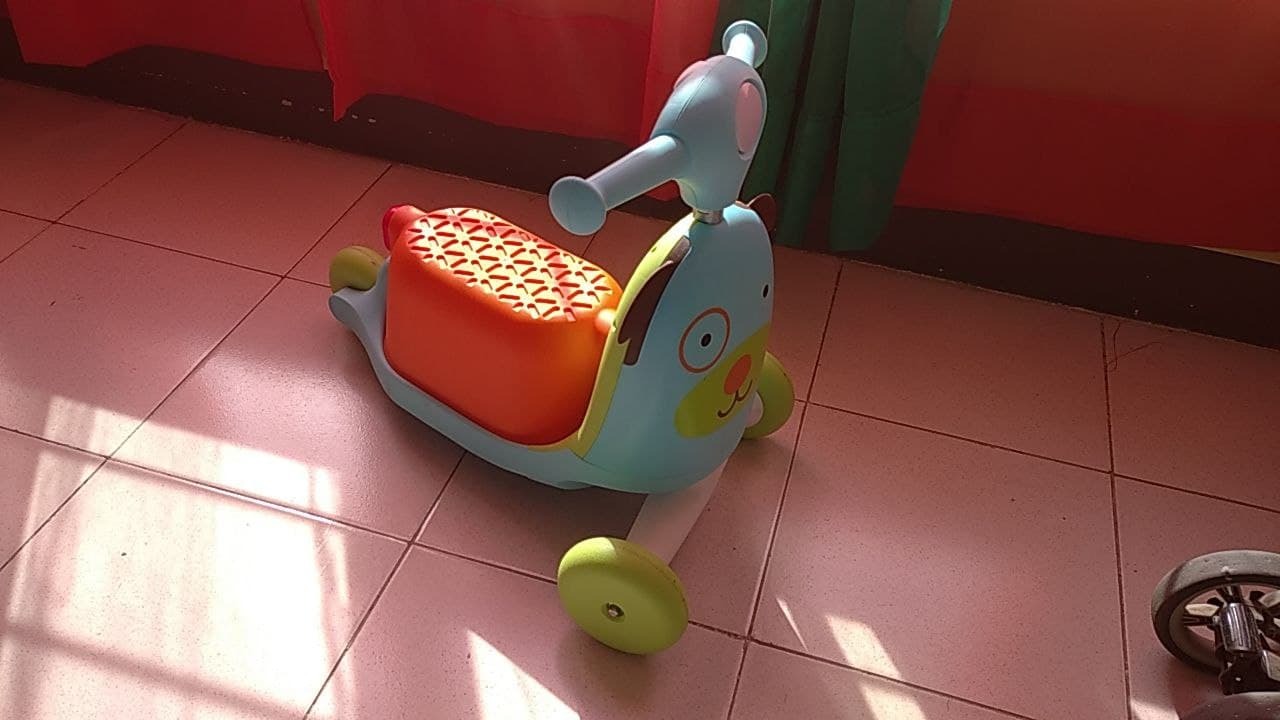
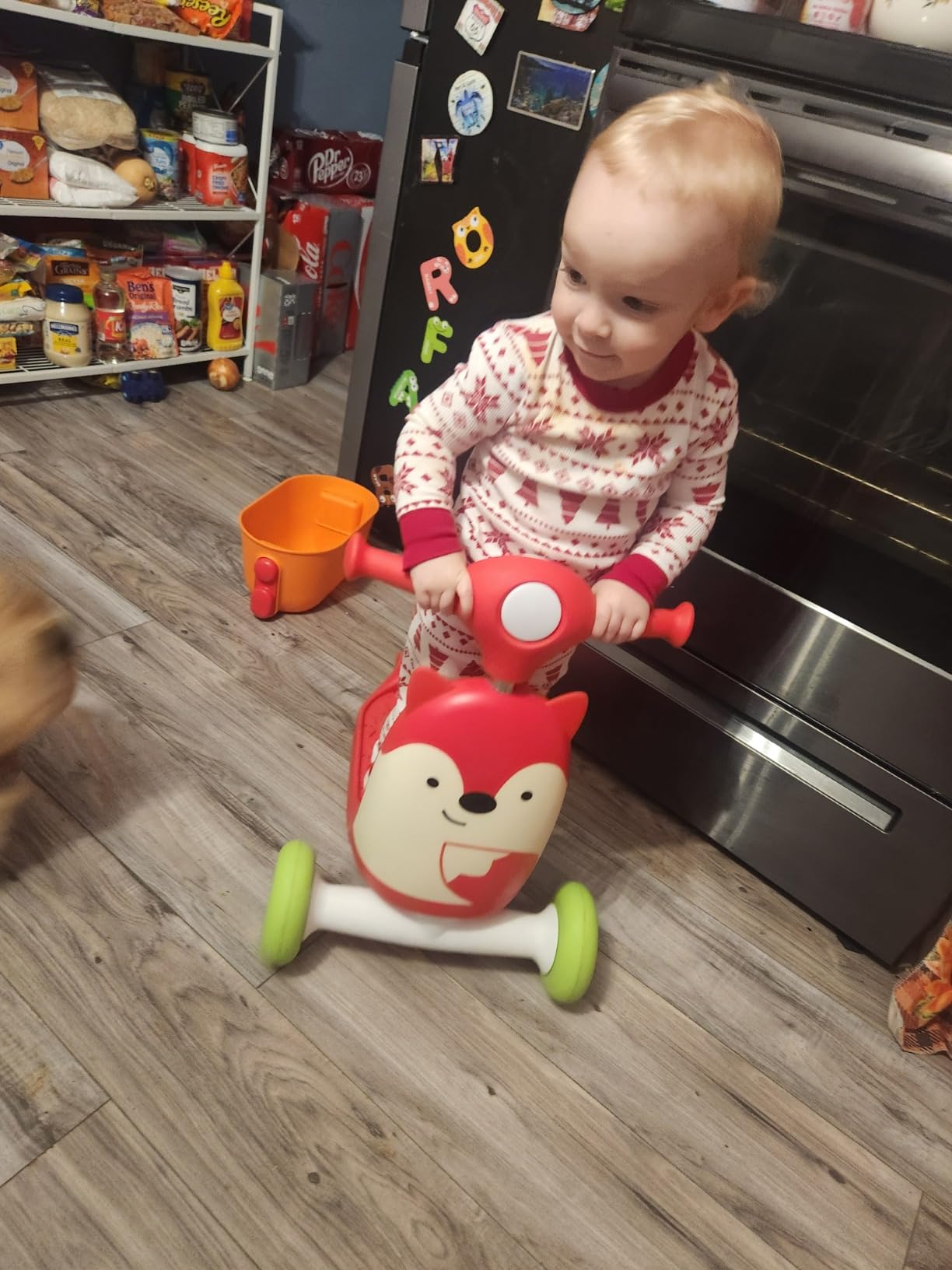
5. Skip Hop 3-in-1 Unicorn – Three Stages in One Toy
Skip Hop Kids 3-in-1 Baby Activity Push Walker & Ride On Scooter Toy, Unicorn
Ages 12 mo to 5 yr
Three stages
50 lb capacity
Adjustable handle
+ Pros
- Grows through three stages from walker to ride-on to scooter
- Three wheels are easier for a toddler to steer than a four-wheel walker
- Storage tub doubles as a wagon and then converts into the seat
- Adjustable handle grows with the child
- Front button triggers a headlight melodies and a beep
- Cons
- Runs fast across hard floors so a new walker needs an adult holding the handle
- Handlebar assembly is fiddly for people who are not handy
- Push handle is difficult to swivel which limits steering in walker mode
This is our pick for parents who are tired of buying the same class of toy three times. It is a walker, then a ride-on, then a scooter, and the conversion between stages takes seconds with no tools.
Parents report it genuinely helped a pre-walking toddler start walking within about three weeks. Even if that is partly coincidence, the stage-one wagon mode gives a child something to push before they can balance at all.
How the Three Stages Work
Stage one is a push walker with a storage tub for toys. Stage two flips that tub into a seat, turning the whole thing into a ride-on. Stage three removes the seat and pulls up the adjustable handle for scooter mode, complete with a headlight, melodies and a beep sound.
That convertibility is the entire value proposition. The manufacturer rating runs from 12 months to five years with a 50 pound capacity, which is a wider window than anything else on this list.
Mind the Speed in Walker Mode
The most repeated caution across reviews is speed. On smooth hard floors the walker mode glides quickly, and several parents ended up weighting the toy down with dumbbells or simply holding the handle for a younger baby.
The push handle is also hard to swivel, which limits steering while the child is walking beside it. Both are trade-offs for a three-wheel design that steers far more easily than a four-wheel walker would.
Practical Notes
It needs three AAA batteries, which are not included, for the light and sound features in stage three. Everything mechanical works without them.
Size is 22.75 by 13.5 by 20.5 inches, and at 2.43 kg it is one of the heavier picks here. It needs a real footprint, so it is less suited to a small flat than the compact balance bikes.
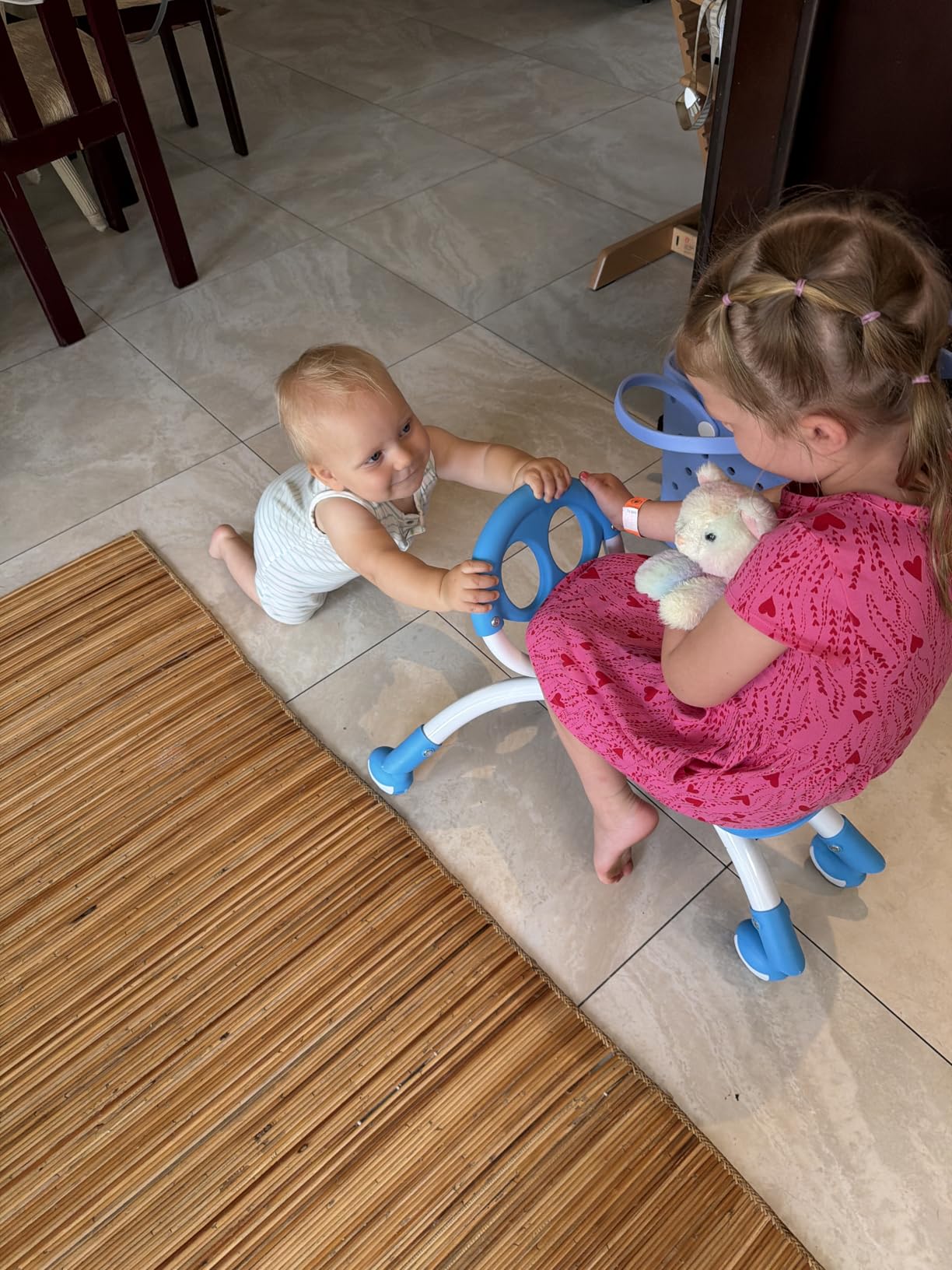
6. YBIKE Pewi Ride On – Works as a Walker Before It Is a Ride-On
YBIKE Pewi Walking Ride On Toy – from Baby Walker to Toddler Ride On for Ages 9 Months to 3 Years Old, YPIW3, Blue
Ages 9 mo to 3 yr
360 degree caster wheels
Alloy steel frame
44 lb capacity
+ Pros
- Award-winning design that works as a push walker first then a ride-on
- Multi-directional 360 degree caster wheels glide quietly and never mark floors
- Lightweight alloy frame that is easy to steer in any direction
- Arrives in a small box so it is easy to wrap as a gift
- Sturdy enough that older siblings and adults can sit on it
- Cons
- Seat height can be too tall for a 9 to 12 month old to get feet flat
- On slick surfaces it moves quickly and can topple an unsteady toddler
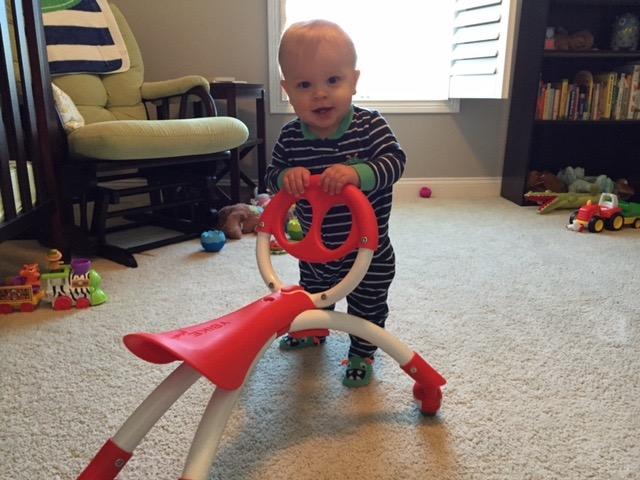
Unique in this list because the child walks beside the toy rather than sitting inside it. That design gives a one-year-old better spatial awareness and body awareness than a conventional walker, where the child is enclosed and cannot see their own feet moving.
As coordination develops, the same toy becomes a foot-to-floor ride-on. It is one of the few designs in this category that works for a child who is not yet ready to sit independently at all.
Caster Wheels and Floor Safety
The non-marking multi-directional caster wheels move in 360 degrees, which is what makes the walker stage possible at all. A child can pull it sideways, turn it around and push it back without lifting it.
They are also quiet and will not scratch hardwood, which addresses the floor damage complaint that comes up repeatedly with hard plastic wheels in parent forums.
Check the Seat Height First
This is the single most important check for a one-year-old. The manufacturer rating starts at 9 months, but parents of 9 to 11 month olds report the seat sits too high to get feet flat on the floor.
Maximum weight is 44 pounds and dimensions are 21.5 by 17.5 by 17.5 inches, so it stays compact. It also has no warranty, which is worth knowing at this price point.
The Speed Caveat
On slick surfaces the Pewi moves faster than a still-unsteady toddler can control, and it can topple forward. That is a real risk, and it is why we would supervise rather than leave a brand new walker unattended on a polished floor.
Owners report buying it repeatedly for different grandchildren, which tells you something about how it ages.
7. Umatoll Glow Balance Bike – Lightest Frame for the Smallest Riders
Umatoll Baby Balance Bike Toy for 1 Year Old Boy Girl, First Birthday Gift
Ages 12-24 mo
Aluminum frame at 3.3 lb
Three-position seat
Glow rear wheel
+ Pros
- Very light aluminum frame at 1.5 kg so a baby can stride and ride it easily
- Three-position adjustable seat extends the usable range to 24 months
- Battery-free glow rear wheel needs no batteries
- 135 degree steering limiter and fully enclosed wheels
- Removable basket for small toys and tool-free assembly
- Cons
- The adjustable seat must be pushed until it clicks to count as locked
- No brake and no pedal so it is strictly a first-stage bike
Weight is the whole argument for this one. At 1.5 kg it is among the lightest frames in the roundup, and owners consistently point out that a bike a child can actually lift is a bike a child will use without help.
That matters at twelve months. A frame that is too heavy simply gets pushed aside, and then it becomes one more thing in the corner.
The Adjustable Seat Is the Feature to Notice
Three seat positions with an audible click lock is unusual at this stage and genuinely extends the usable window. A fixed-height seat is the most common reason parents buy twice.
The one gotcha: after adjusting, push the seat until it clicks. Several owners report not realising it was not fully seated, and a half-locked seat on a light bike feels worse than a fixed one that is properly tight.
Glow Wheels and a Small Basket
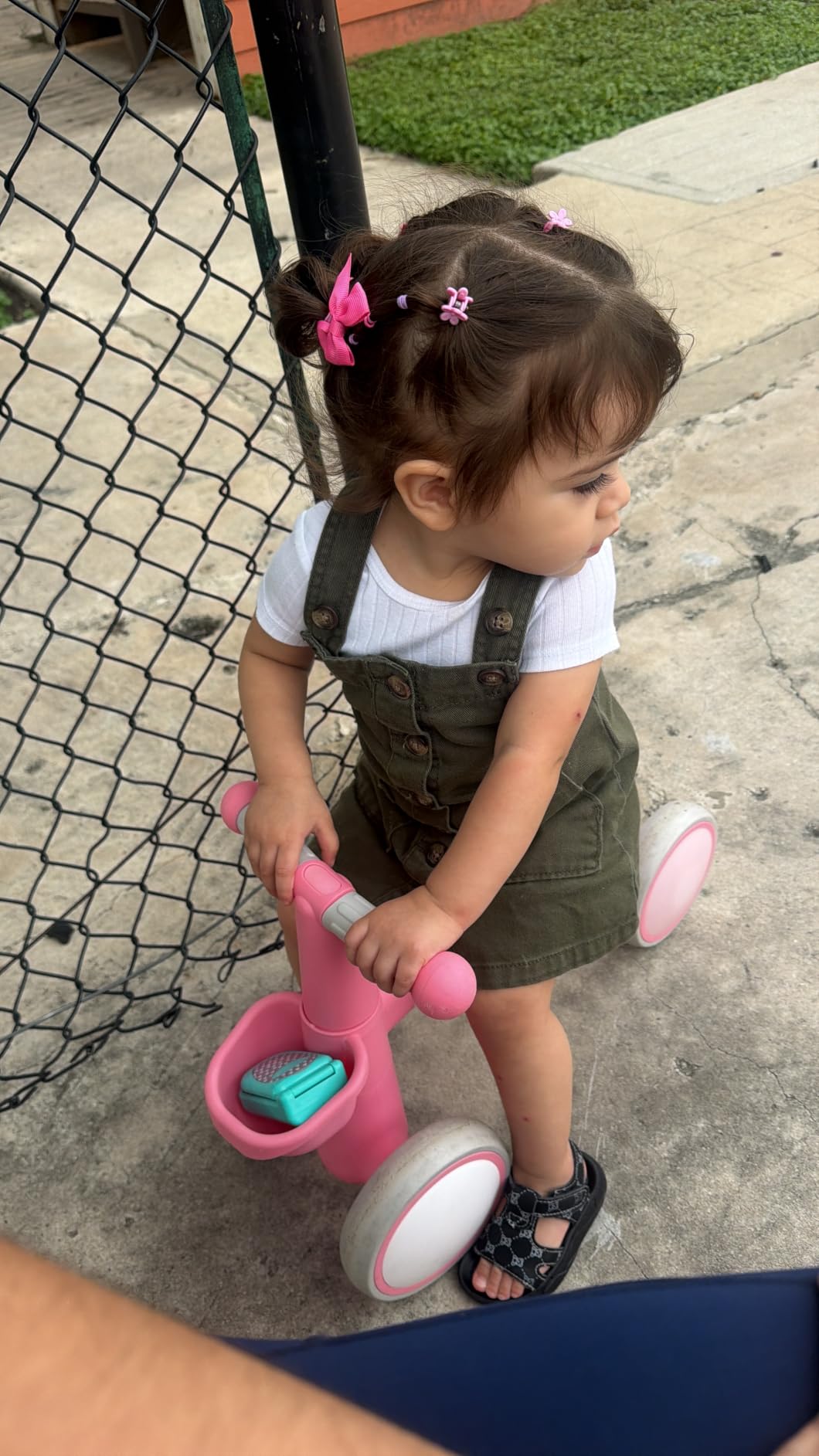
The rear wheel glows from spinning alone, so there is no battery to run flat. The removable basket holds a few small toys, which is a good way to encourage a child to release the handlebars mid-ride.
Dimensions are 21.5 by 10 by 14 inches, which is a narrow footprint that works in a hallway or a small flat.

Where It Falls Short
There is no brake and no pedal. That is correct design for a one-year-old, but it does mean this is a first-stage bike and you will be shopping again in a couple of years.
Warranty coverage is listed as none, so inspect the welds and the seat lock on arrival.
8. Radio Flyer Creativity Car – 17 Activities for Short Attention Spans
Radio Flyer Creativity Car, Toddler Ride On Toys, for Toddlers 1-3
Ages 12 mo to 3 yr
17 sensory activities
Anti-tip base
42 lb capacity
+ Pros
- 17 interactive sensory activities for walker and ride-on modes
- Anti-tip base and wide stance make getting on and off easy
- Seat flips open to reveal under-seat storage
- Arrives mostly assembled so setup is quick
- Sturdy plastic build that survives twins using it
- Cons
- Front wheels do not swivel with the steering wheel so corners need a shuffle
- This is a push walker and sit-and-scoot toy rather than a balance bike
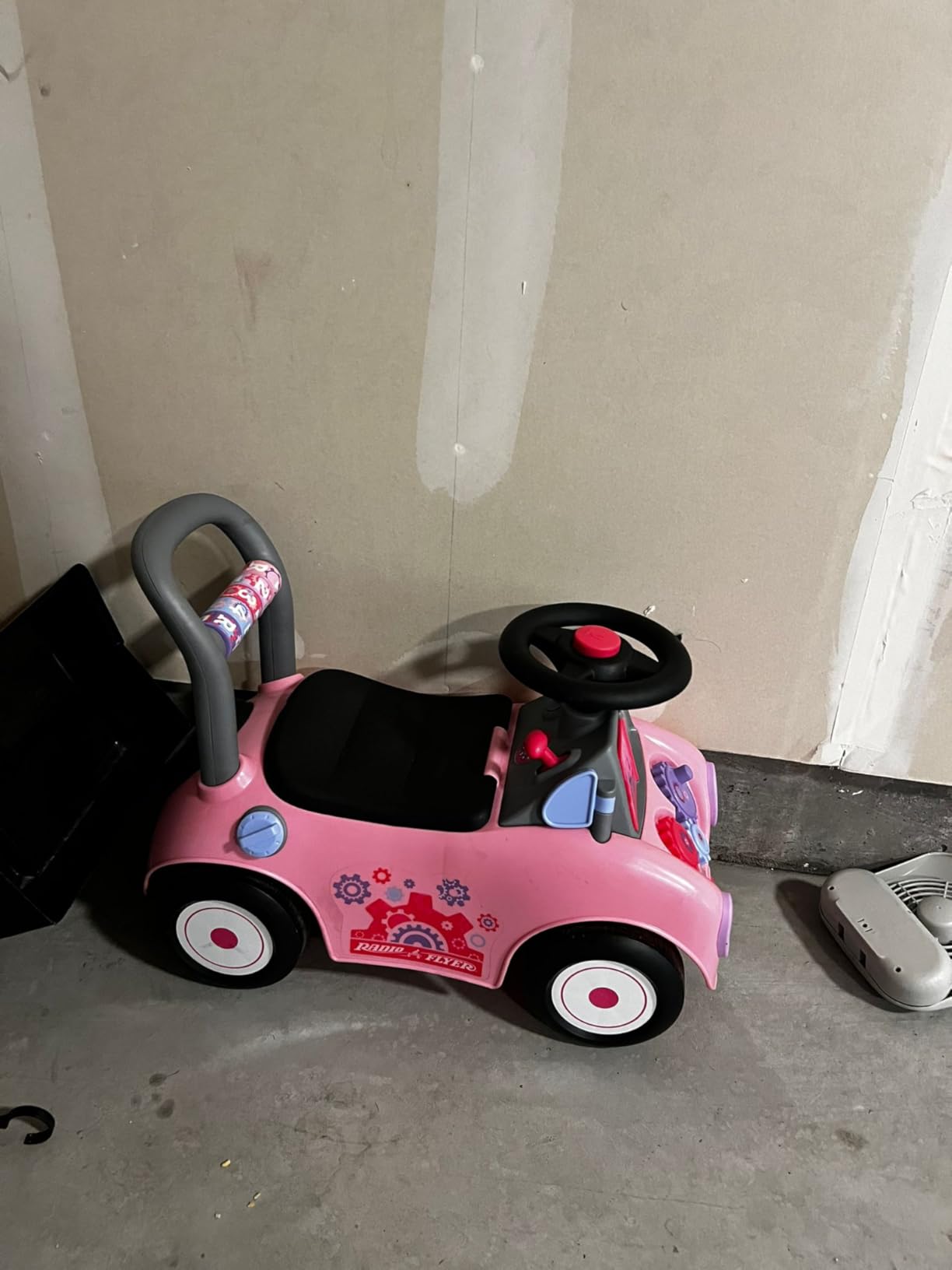
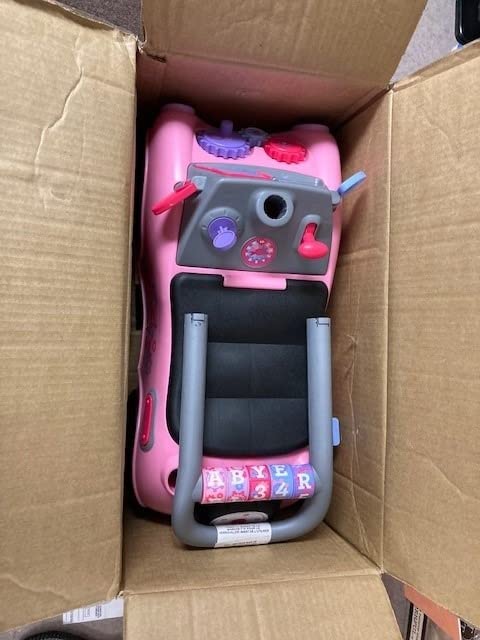
This is the sensory-feature option, and it addresses the single biggest complaint in parent forums about ride-ons: they get played with once and abandoned. Interlocking gears, sliding beads, a clicking spare tire, folding mirrors, a horn and an interactive dashboard give a one-year-old something to do with their hands while the toy sits still.
It is also three modes in one: push walker, sit-and-scoot ride-on, and sensory play. That range matters more at this age than raw riding performance.
Anti-Tip Design for First Attempts
The anti-tip feature and stable base exist specifically to support beginner walkers getting on and off. For a child who is still cautious about climbing onto a seat, that low centre of gravity is more valuable than wheel quality.
Several owners report the toy guiding their child toward first steps, which is a reasonable outcome for a push design at this age.
Know What It Is Not
This is not a balance bike. The front wheels are fixed and do not turn with the steering wheel, so corners require sliding or shuffling the car sideways rather than steering it.
That is a fair trade for the activity panel if your goal is engagement, and a poor one if your goal is developing balance for a later pedal bike.
Storage and Build
The seat flips open to reveal under-seat storage, which matters more than it sounds because it is the difference between a toy that lives in the hallway and one that disappears into a cupboard.
Weight capacity is 42 pounds with a recommended age of 12 months to 3 years, and it comes with a one year warranty against manufacturer defects. Dimensions are 21.5 by 10.5 by 16.3 inches at 4.9 pounds.
9. LOL-FUN 4-in-1 Tricycle – The One That Lasts to Age Four
Toddler Balance Bike for 1 2 Year Old, 4 in 1 Tricycle for Toddlers 1-3
Ages 10 mo to 4 yr
Four riding modes
Removable pedals
66 lb capacity
+ Pros
- Four modes in one toy covering push bike balance bike pedal tricycle and two-wheeler
- Removable pedals let a one-year-old ride before their legs are long enough to pedal
- Tool-free press-button assembly a child could realistically do
- Carbon steel body rated to 66 pounds and used by two to four year olds
- Parents commonly buy a second one for other grandchildren
- Cons
- Heavier at 6.6 pounds than most first balance bikes
- The listing states 10 months and up but seat sizing suits two-year-olds better
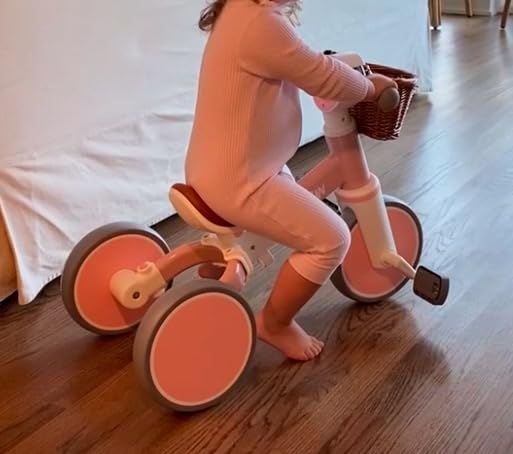
This is the answer to the complaint that outgrowing a ride-on within three months is the most common regret in this category. Removable pedals mean a one-year-old uses it as a balance bike, and the same toy becomes a pedal tricycle and then a two-wheeler later.
Owners with children around 19 months remove the pedals and add them back once the legs catch up, and a number report the same bike still being ridden at four.
Four Modes Explained
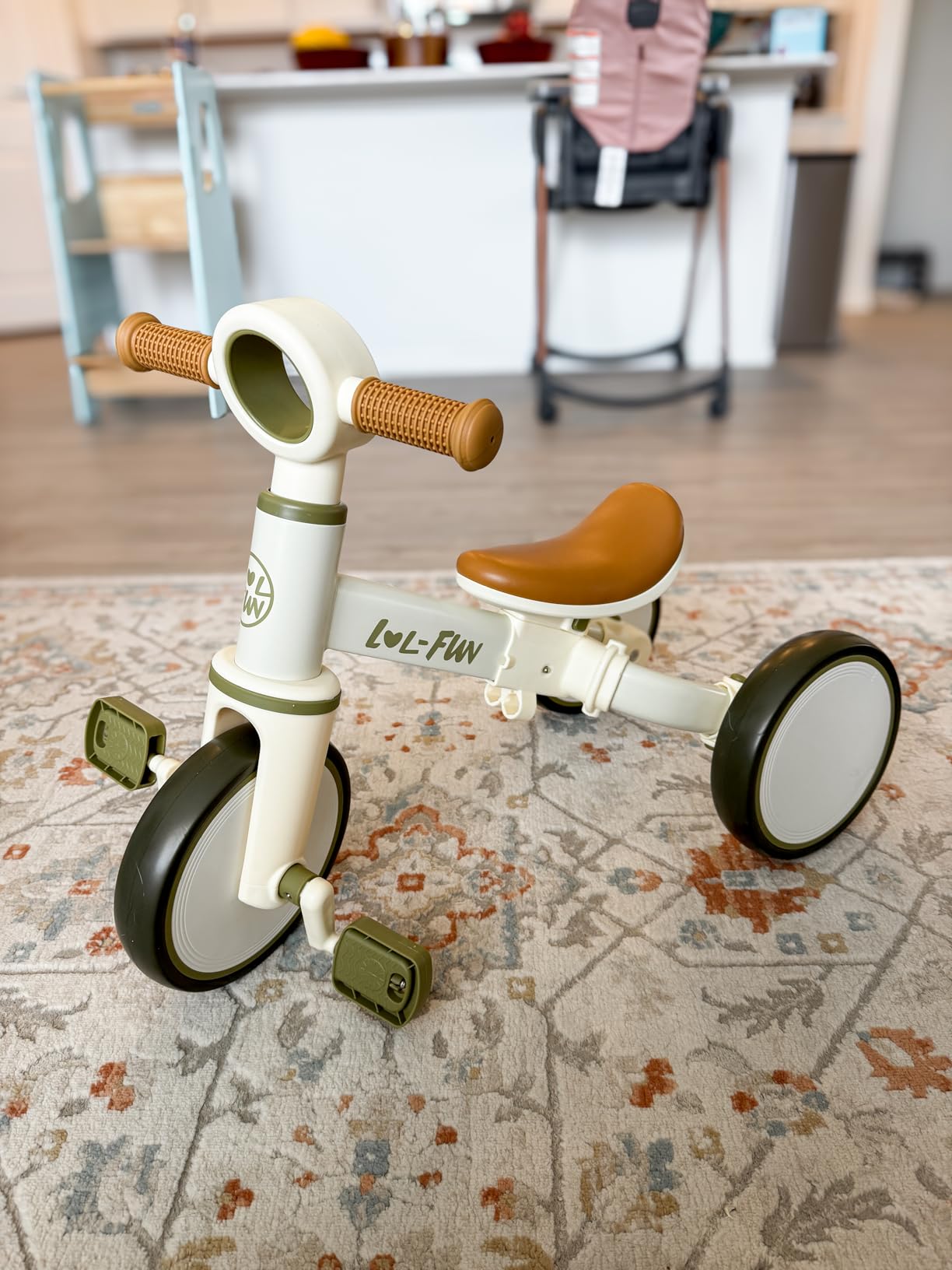
The four configurations are a push bike, a balance bike, a tricycle with pedals, and a two-wheel balance bike. Switching between them involves pressing buttons on the rear wheels rather than tools, and assembly is around one minute with no small parts.
The sawtooth thickening shock-absorbing handle and carbon steel body are built for outdoor use, and the upgraded extra big wheels roll over garden surfaces without bogging down.
Size Up Before You Order
Here is the honest caveat. The listing states 10 months and up, but some parents report the seat sizing suits a two-year-old better than a one-year-old. Measure the inseam against the recommendation before buying.
At 6.6 pounds it is heavy for a one-year-old to lift alone, and 27.6 by 13 by 19.7 inches is a large footprint. It is a garden toy, not a flat-friendly toy.
Long-Term Value
The 66 pound maximum load is the highest in this roundup, and with a listed range of 10 months to 4 years it has the longest usable window of anything we tested.
If you can accept the size and the weight, buying one of these instead of two smaller toys is the better long-term decision.
10. Mercedes G-Wagon Push Car – Stroller, Ride-On and Walker in One
Best Ride On Cars Kids Outdoor Stroller Mercedes G-Wagon for Toddlers 1 to 3 Years Old with Music, Horn Sounds, and Handle, White
Ages 18 mo to 7 yr
Three in one modes
Guard rails
Under-seat storage
+ Pros
- Three in one design working as a stroller a ride-on car and a push walker
- Removable safety guard rails and a backrest which are unusual in this category
- Under-seat storage fits a spare diaper wipes and a water bottle
- Steering wheel plays music and horn sounds
- Footrest lets a parent push a child who is not yet steering
- Cons
- No built-in seatbelt so younger riders need a separate harness
- Push handle feels flimsy and can flex under hard steering
- Instructions are difficult to follow
- At 11.4 pounds it is heavy for a one-handed carry
This is the only genuinely parent-pushed option here, and that changes the age profile. The manufacturer rating starts at 18 months, so it sits at the younger edge of the list rather than the start of it.
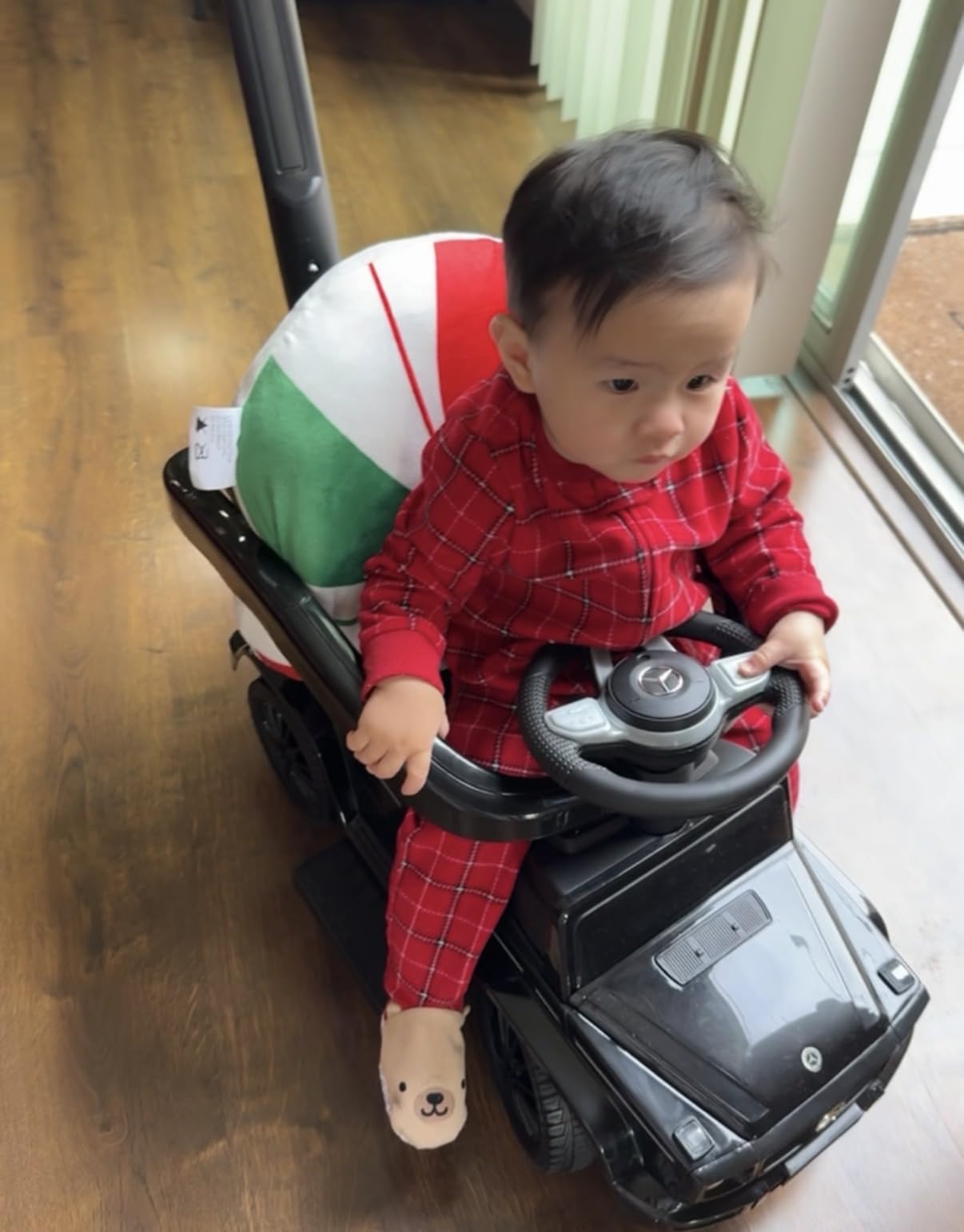
The trade is worth understanding before you buy. You get realistic vehicle styling, guard rails, a backrest and a footrest, and in exchange you accept a heavy toy with no seatbelt.
When a Parent Push Handle Actually Helps
A footrest lets a parent push a child who is not yet steering, and the stroller mode works well on pavements. Many owners use it as a pseudo-stroller for short distances, which is a use the product data does not claim but owners clearly value.
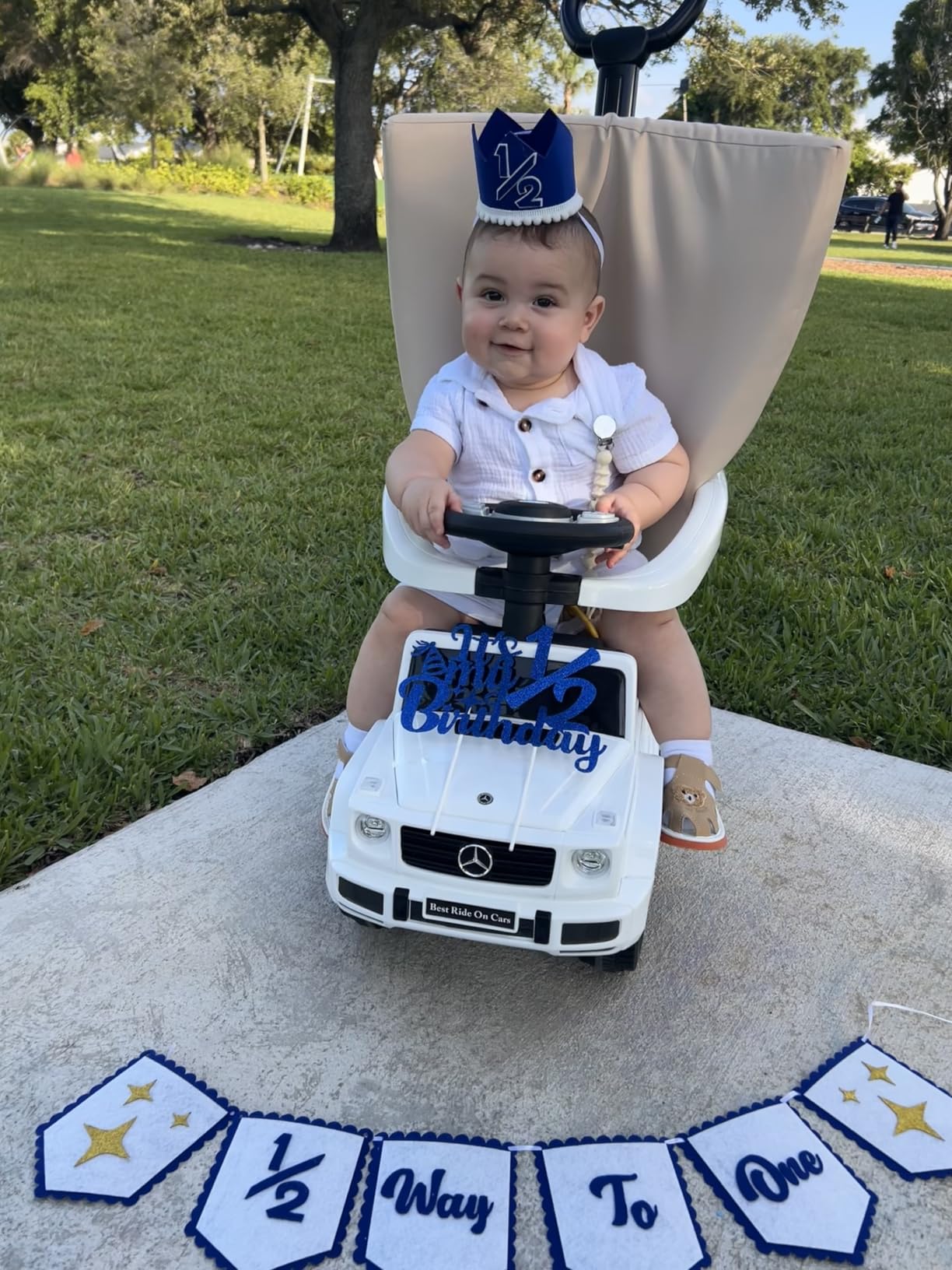
Guard rails and a stable backrest are the two features that separate it from cheaper push cars, and both are genuinely useful for a child who cannot yet control direction.
Weight and Handle Feel
At 11.4 pounds this is the heaviest item we tested, and parents mention the push handle flexing or detaching when steered hard or abruptly. That is the most repeated mechanical complaint in the reviews.
There is no built-in seatbelt either, and some parents buy a separate harness for younger riders. Instructions also get called confusing by a minority of buyers.
Storage and Everyday Use
The hidden under-seat storage is one of the more useful examples in this roundup, and it is large enough for a spare diaper and wipes, which makes outings much easier to manage.
The steering wheel plays music and horn sounds, and the tufted faux-leather seat is comfortable enough for longer journeys. Just expect it to be a two-hand carry.
11. JoyRydz 6V Bubble Bike – Electric Mode With a Parent Remote
JoyRydz 6V Electric Baby Balance Bike with Bubble Machine,4 in 1 Toddler Balance Bike w/Remote Control for 1 Year Old Boys Girls Kids Bubble Bike Ride on Toys w/Powered Motor,Music,LED Lights (Cyan)
Ages 12 mo to 3 yr
6V motor with parent remote
Bubble machine and music
Four EVA tires
+ Pros
- Two riding modes so the child can scoot themselves or use the 6V motor
- Parent remote control lets an adult steer the direction of travel
- Bubble machine LED lights music and whistle add high entertainment value
- Low floor-to-seat height suits the smallest toddlers
- Four quiet EVA tires that are gentle on indoor wooden floors
- Cons
- Lowest average rating in this roundup with 7 percent one-star reviews
- Heaviest balance bike here at 9 pounds so it is harder to carry
- Requires a 6V battery setup and more parts than a plain balance bike
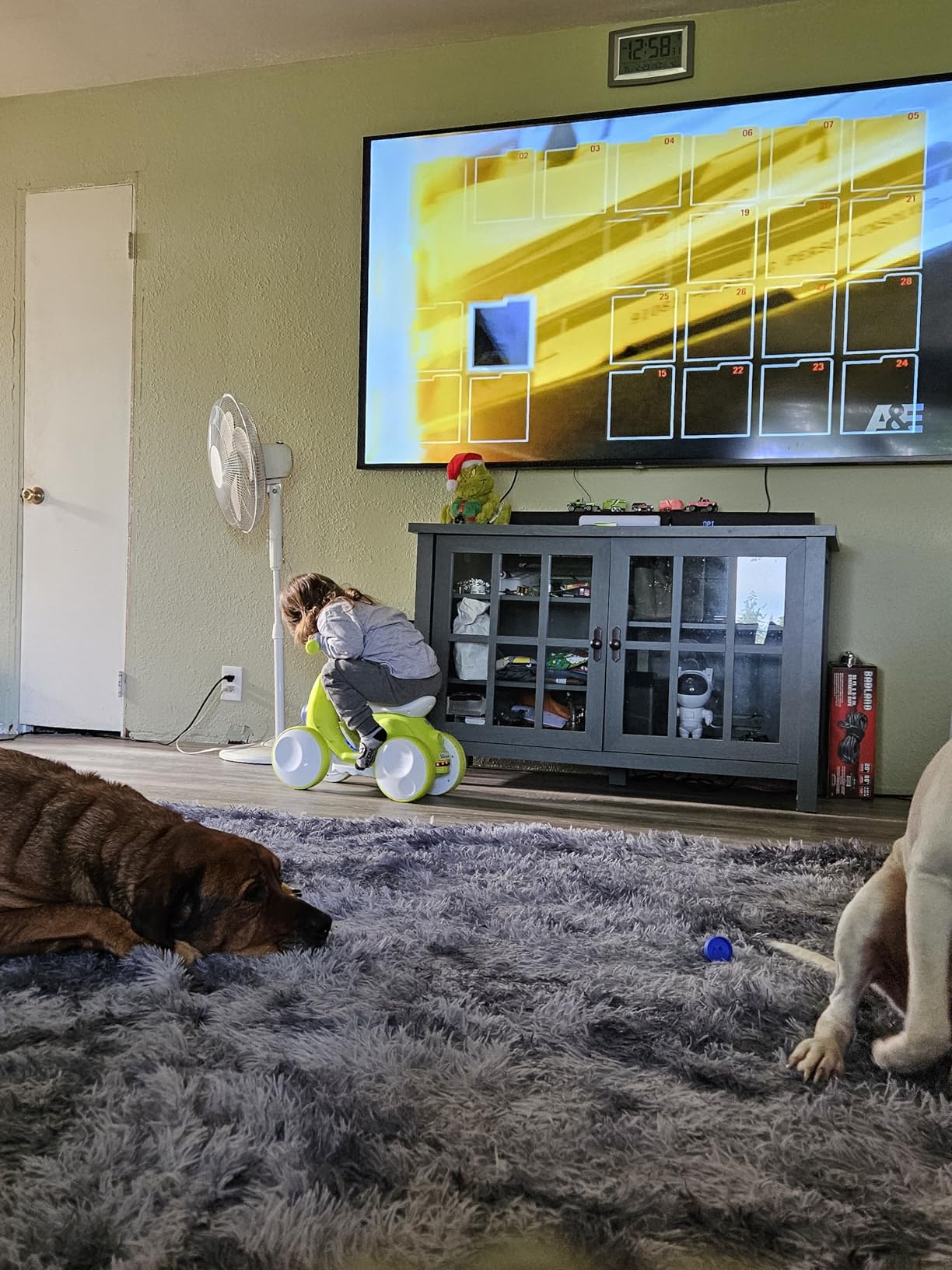
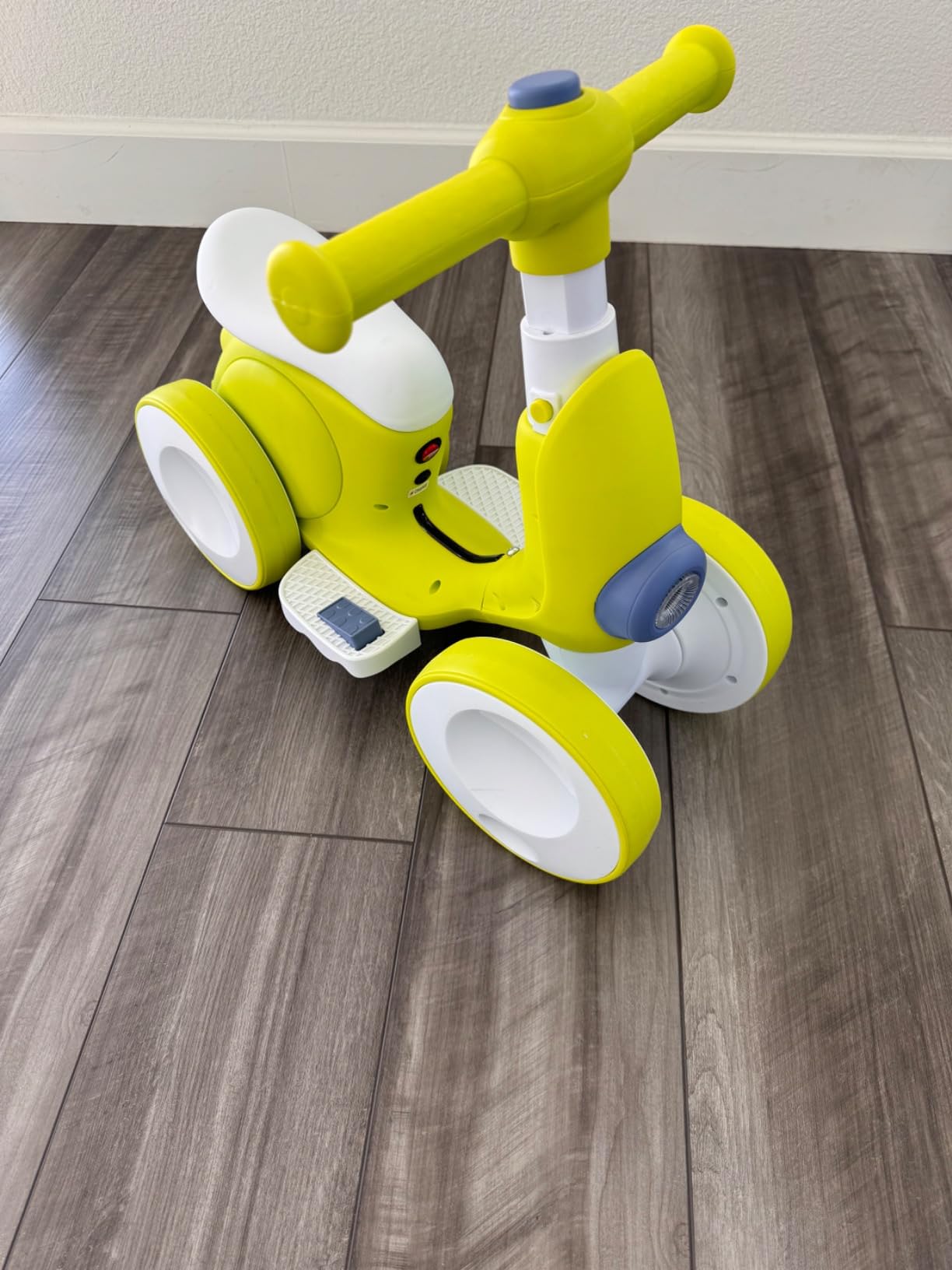
We are including this one with a clear caveat, because the community consensus is that children at this age generally do not enjoy self-propelled ride-ons. What makes this different is the parent remote, which turns the motor into a parent-controlled ride rather than something the child cannot handle.
Two modes are offered: plain non-electric propulsion, which is just a normal balance bike, and electric mode with the bubble machine, lights, music and whistle.
How the Remote Changes the Equation
Because an adult steers the direction of travel, the electric mode does not demand the planning skills a one-year-old simply does not have. The low floor-to-seat height is designed for the smallest riders and helps with leg strength and balance.
Four wide EVA tires are described as quiet and gentle on wooden floors, which is a sensible choice for indoor use in a flat.
Why the Rating Is Lower
This has the smallest review base and the lowest average rating in the group, with around 7 percent one-star reviews. That gap reflects more complaints and returns relative to the plain balance bikes, not a fundamentally broken product.
It is also the heaviest balance bike here at 9 pounds, and it needs a 6V battery setup plus more parts than anything else on this list. Enthusiasts like the features. Expect more returns.
Who Should Buy It
Buy it if your child is drawn to lights, music and bubbles and you want to be steering. Skip it if you want a toy that develops independent balance, because the easiest thing to do here is to leave it in electric mode indefinitely.
It does arrive as a modular structure with an installation manual and no extra tools needed.
12. John Deere Johnny Tractor – Take-Apart Engine and Authentic Farm Sounds
John Deere Ride On Johnny Tractor Take Apart Engine Ages 12M+
Ages 12 mo plus
Take-apart engine
Lights horn and key sounds
44 lb capacity
+ Pros
- Take-apart engine and working screwdriver add real interactive value
- Ignition blinkers horn and key produce authentic farm sounds and lights
- Seat flips open to store the screwdriver or a favourite toy
- Arrives fully assembled so it is ready to play on arrival
- Stable enough that an 18 month old can ride it on paving and woodland paths
- Cons
- Sound volume cannot be adjusted and is fairly quiet
- Body showed scratching fairly early though wear then stabilised
- Batteries are needed for the sounds and lights
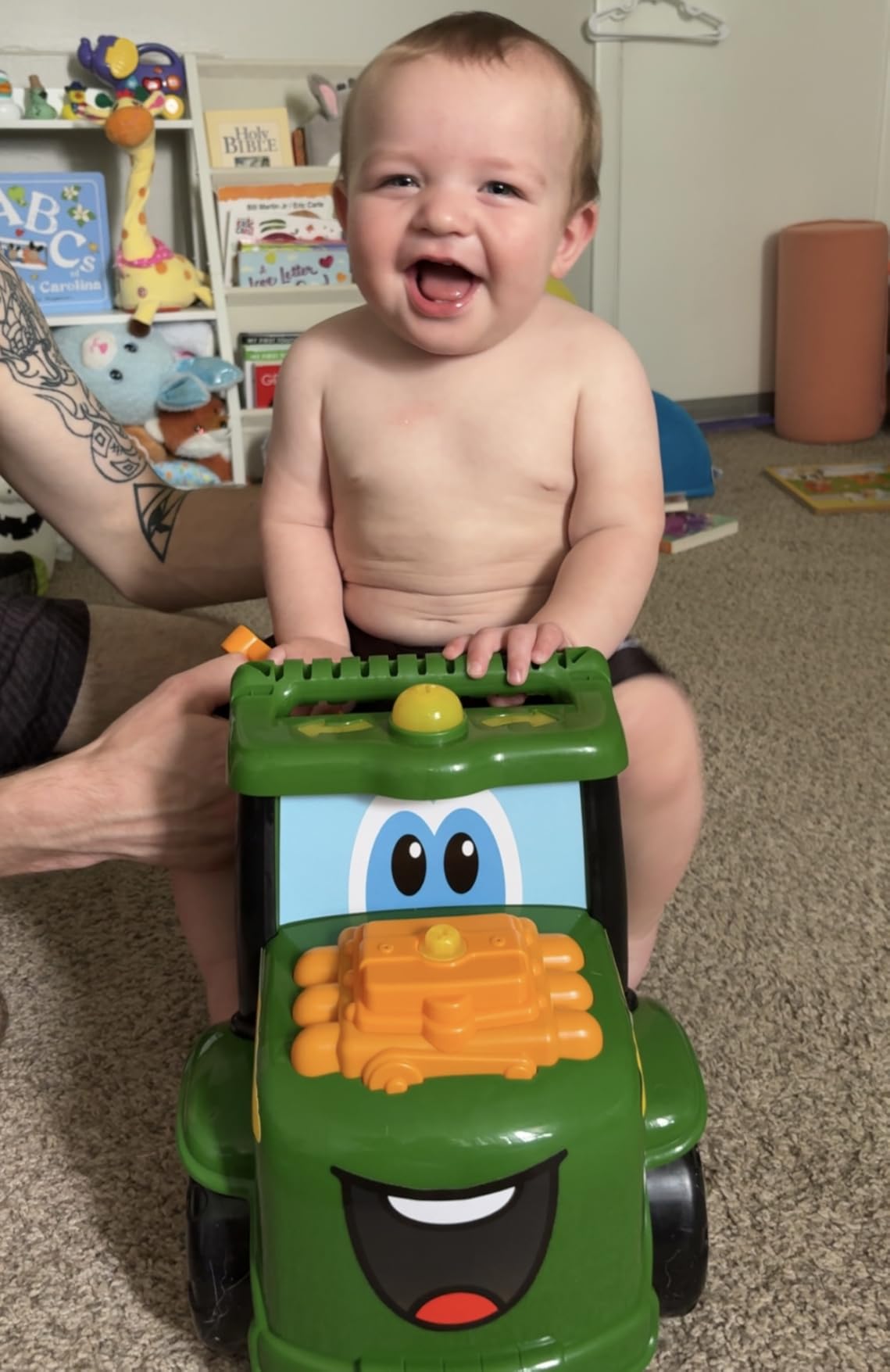
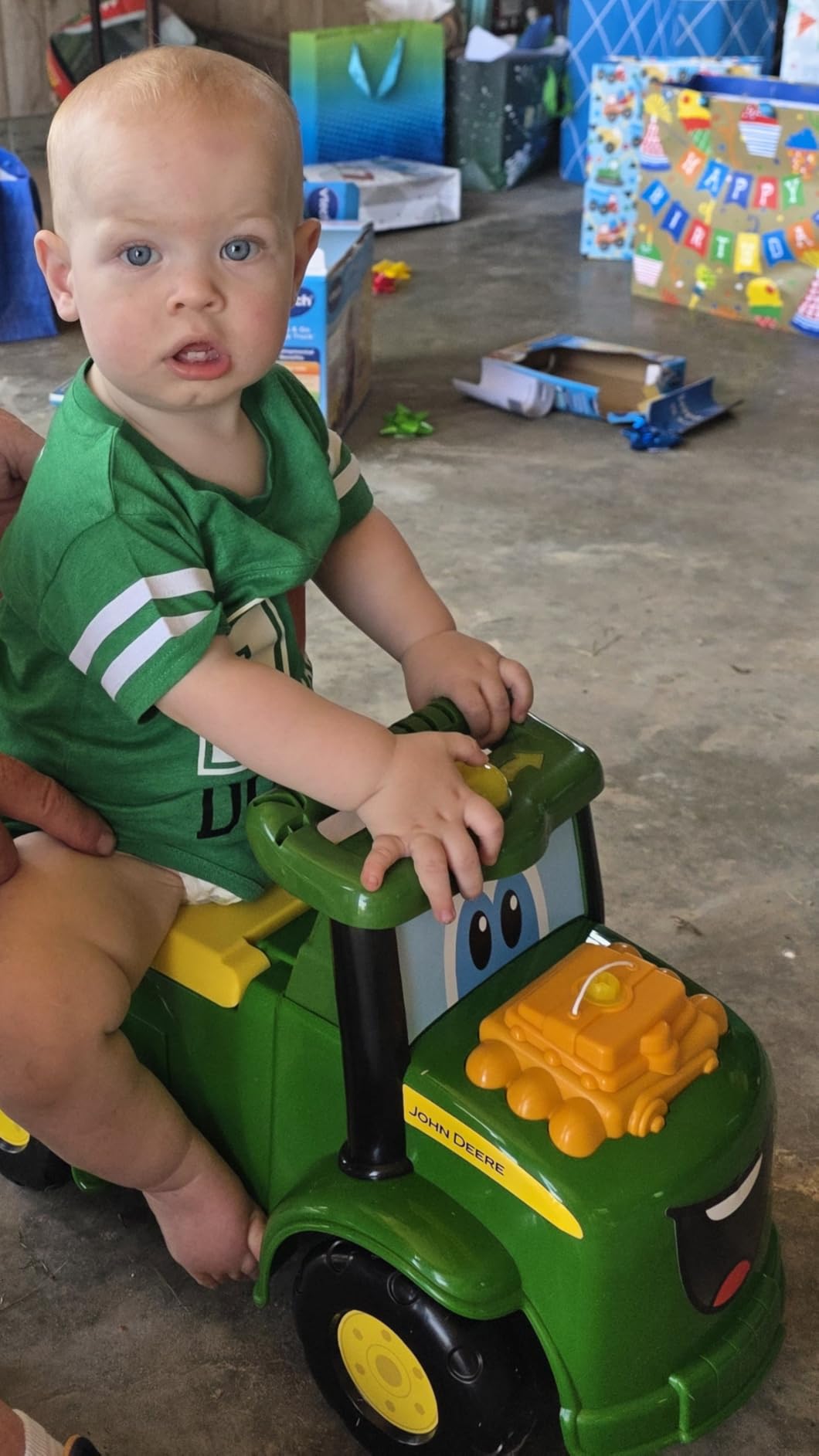
The take-apart engine is what separates this from a plain push car. A child who is not yet walking confidently can sit on it or stand beside it and use the included screwdriver to take the engine apart and put it back together, which is real play rather than sitting still.
Owners describe it as the right size for a first birthday and note that adults have ridden it, which tells you how sturdy the shell is.
Interactive Features That Work at This Age
Blinkers activate lights, the horn and the key turn play farm tunes and sounds, and the GPS dial turns for clicking sounds when worked with the screwdriver. Every one of those is a finger and hand action a one-year-old can manage.
The seat flips open to stow the screwdriver or a favourite toy. That is a small feature that matters in a household with a one-year-old, because loose toys underfoot are a trip hazard.
Ready Out of the Box
It arrives fully assembled, so there is nothing to build on the morning of the birthday. Dimensions are 20.5 by 10 by 12.5 inches at 4.5 pounds, with a 44 pound capacity and a 12 month to 3 year recommended range.
Owners report it being ridden on paving, tarmac and woodland paths by an 18-month-old, so it handles outdoor surfaces without issue.
Minor Drawbacks
Sound volume is not adjustable and is fairly quiet, so it will not bother anyone in a neighbouring flat. Some owners reported surface scratching fairly early, though wear stabilised after the first few weeks.
It needs three AAA batteries for the lights and sounds, so the interactive features will go quiet when they run out.
Is Your 1-Year-Old Actually Ready for a Ride-On?
Four signs tell you a ride-on is worth buying right now. Your child can sit upright without using their hands for support. They bear weight through both legs when standing and can push off the floor. They can grip a handlebar and hold on while moving. And they can scoot along the floor on their own, even if walking is still wobbly.
If your child ticks three of those four, any of the balance bikes or push cars on this list will work. If they tick one or two, start with a walker-style design such as the YBIKE Pewi or the Skip Hop in stage one, where the toy supports them rather than the other way round.
The honest part is the attention span. Parents in the What to Expect community describe a one-year-old lasting one or two minutes before losing interest, and explicitly say that is normal rather than a bad purchase. Many also report the same child loving the same toy by age three. You are future-proofing, not buying instant thrills.
There is one category to skip entirely. Parents on the What to Expect forum describe children crying at the sight of a remote-control or self-powered ride-on, and the consensus is that most do not enjoy battery ride-ons until around three years old. Our only exception in this list uses a parent remote, and even there we would start in non-electric mode.
What to Look for Before You Buy a Ride-On for One
Four Wheels or Two
Two wheels with a lean-and-steer system feel more like a real balance bike and are better for a confident toddler. Four wheels, as on the Retrospec Cricket, are more forgiving for a first attempt and reduce the risk of a face-plant on the first day.
Watch for a steering limit in either case. A 135 degree limiter is common on good first bikes and stops a sharp lean from becoming a full tip-over.
Wheel Type Matches Your Floor
Enclosed EVA foam wheels like the ones on the SEREED and YGJT are quiet, scratch nothing and cannot pinch a foot. Hard plastic caster wheels, as on the YBIKE Pewi, steer beautifully in 360 degrees but are louder and can mark some finishes.
On carpet, wide balloon-style foam wheels are the only practical option, because a small hard wheel simply sinks in. On hardwood and tile, foam is the quiet and floor-safe answer.
Power Source: Skip the Motor
Anything at this age should be foot-powered or parent-pushed. That means no charging, no battery compartment to fail and no moving parts a small hand can reach.
The one exception worth considering is a motor controlled by a parent remote, and even then use the non-electric mode until your child is older.
Growth Room and Real Footprint
An adjustable seat is the single best predictor of whether you will buy twice. Three-position or handle adjustment is worth paying for; a fixed seat height is the most common reason parents end up shopping again within a year.
Then measure your space. Balance bikes need a corridor; the LOL-FUN tricycle at 27.6 inches long and the Skip Hop at 22.75 inches are garden toys, while the Umatoll and Retrospec are narrow enough for a flat.
Weight Limit and Packaging Labels
Check the packaging rather than the marketing copy, because this is the biggest source of returns. The Mercedes G-Wagon is listed at 18 months to 7 years, and the LOL-FUN is listed at 10 months and up despite seating better for two-year-olds.
Look for ASTM F963 and CPSIA compliance markings on the box. A weight limit well above what your child will ever reach, such as 50 to 66 pounds on the metal-frame options, means the toy will survive a second child.
Ride-On Toy Safety for 12-Month-Olds
Supervision is not optional at this age, and the most common accident we see in forums is a scooter-style walker gliding across a smooth floor into a cabinet. Weight the toy down or hold the handle until a child can control it.
Skip battery-powered ride-ons until about three years old. There is no benefit at twelve months and a meaningful risk of a child being startled by something moving that they cannot stop.
Check floors before every session. Loose toys, cables and rug edges are the real hazards, not the ride-on itself. Keep hard surfaces clear and never use one on a balcony or near steps.
Confirm the seat lock has clicked into place on any adjustable-seat model, and treat an unadjustable high seat as a reason to wait a few weeks. A child who cannot get their feet flat will topple.
Frequently Asked Questions
What is the best ride-on toy for a 1-year-old?
The best ride-on toy for a 1-year-old is a foot-to-floor balance bike or a push-along car that sits low, has enclosed wheels and a steering limit, and can be moved by the child’s own legs. Our top pick is the SEREED Baby Balance Bike, an aluminium frame rated to 55 pounds with enclosed EVA wheels and a 135 degree steering limiter.
Can a 1 year old go in a ride-on car?
Yes, if the car is a push-along or foot-to-floor design. A one-year-old needs to sit upright without support, bear weight through both legs and grip a handle. Avoid self-powered or remote-controlled ride-ons at this age, since most children do not enjoy them until about three years old.
Are ride-on toys good for toddlers?
Yes. Ride-on toys build gross motor skills by making a toddler steer, balance and push in a controlled direction, which supports postural control, bilateral coordination and hand-eye coordination. Those are the same foundations needed for walking and for a balance bike later on. Look for enclosed wheels, a steering limit and a low seat.
What are the best toys for a 1-year-old to travel with?
The most travel-friendly ride-ons are lightweight and compact. A foldable or carryable balance bike in the 3 to 4 pound range fits in a car boot or a pushchair basket, and battery-free features such as glow wheels need no charging. Avoid anything with a motor for long journeys, since charging and battery failure become a problem away from home.
How do I choose a ride-on toy for my 1 year old?
Start with developmental readiness rather than the age printed on the box. Your child should sit upright unaided, bear weight through both legs, grip a handle and be able to scoot. Then match the toy to your floor surface, choose enclosed quiet wheels for a hard floor, and prioritise an adjustable seat so the toy lasts past the second birthday.
Which Ride-On Toy Should You Buy in 2026?
If your child is ready to scoot independently, the SEREED Baby Balance Bike is the one we would buy. The aluminium frame survives hand-me-downs, the enclosed wheels are quiet and floor-safe, and it is light enough for a one-year-old to move without help.
If you want one toy to cover the next three years, the Skip Hop 3-in-1 Unicorn converts from walker to ride-on to scooter in seconds, with an adjustable handle and a 50 pound capacity. If your child is not yet walking steadily, start with the YBIKE Pewi, where the child walks beside the toy rather than sitting in it.
For sensory-led play, the Radio Flyer Creativity Car keeps a short attention span busy with 17 activities. For maximum longevity, the LOL-FUN 4-in-1 goes from a balance bike to a pedal tricycle, and for parent-pushed travel the Mercedes G-Wagon works, provided your child is past 18 months.
Whatever you choose, the best ride on toys for 1 year olds are the ones your child can reach the floor from. Check that first, buy second, and expect the real fun to start somewhere around month 24.