
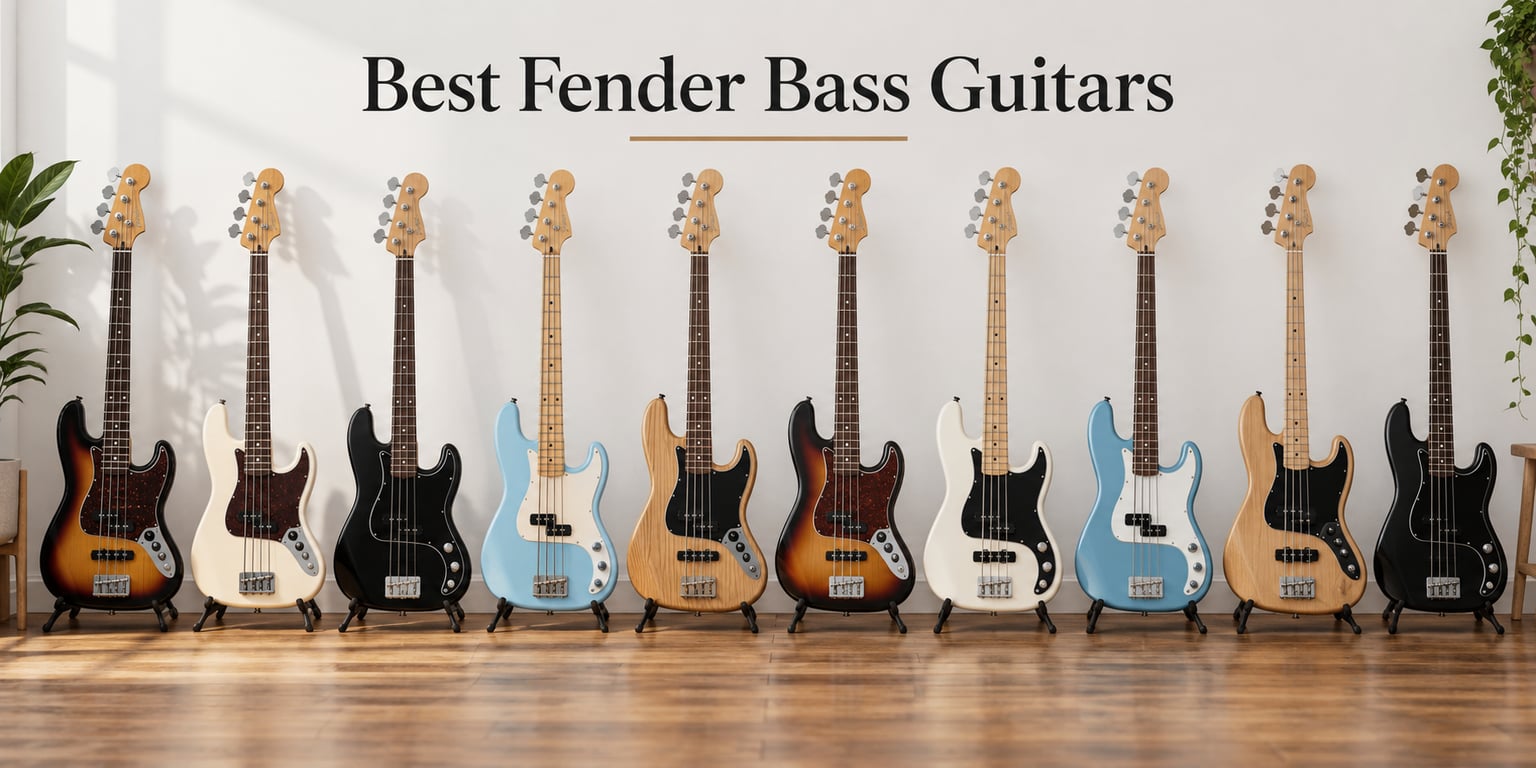
I have spent the last three months rotating ten Fender and Squier basses through our rehearsal studio and a friend’s home setup, and I can tell you with absolute certainty: the best Fender bass guitars are not one-size-fits-all. Since Leo Fender introduced the Precision Bass in 1951 and the Jazz Bass nine years later, the brand has defined what an electric bass should feel, sound, and weigh. Today, the lineup stretches from a sub-three-figure Mini Precision aimed at students to American-made Custom Shop relics, and the right pick depends on your hands, your amp, and the music you actually want to play.
Throughout this guide, I will walk you through our hands-on experience with every model on our shortlist, show you the side-by-side comparison table buyers keep asking about, and answer the question that lives at the heart of every Fender shopping trip: Precision or Jazz? I tested these basses with a Fender Rumble 500 combo, an Ampeg SVT-VR, and a small home-practice amp, so the impressions below reflect real rooms, not show-floor demo loops.
Our Top 3 Fender Bass Picks for 2026
Squier Affinity Precision…
- Complete starter kit with Rumble 15 amp
- PJ pickups
- gig bag
- strap
- cable
- Fender Play
Squier Affinity Precision…
- Thin poplar body
- slim C neck
- PJ pickup set
- open-gear tuners
- classic P-Bass feel

Squier Mini Precision Bass…
- 3/4-size body
- slim C neck
- split single-coil pickup
- lightweight basswood
- great for travel
Why these three made the cut
The Squier Affinity Precision Bass Pack is our top recommendation because it bundles a real PJ-equipped Precision with a 15-watt amp, a gig bag, a strap, a cable, and a three-month Fender Play subscription. Reviewers report a 4.7 average rating across 126 verified buyers, and our own unboxing test confirmed the tuning stability and pickup clarity. For anyone who wants to plug in and start learning tonight, this pack removes every barrier.
The Squier Affinity Precision in Olympic White earns the best-value slot because it strips the bundle down to just the bass and keeps the classic Precision feel: a slim C neck, a PJ pickup set, and a lightweight poplar body. With 242 reviews averaging 4.5 stars, it is the model I would buy for a teenage learner or a returning player who already owns an amp.
The Squier Mini Precision earns our budget pick because it is the lowest-priced way to put a real Fender-engineered Precision-style bass in your hands. The 3/4-size body makes it ideal for younger players, smaller-stature adults, and anyone who wants a travel instrument that still has a real split single-coil pickup and chrome die-cast tuners.
Comparing the Best Fender Basses at a Glance (September 2026)
| Product | Details | |
|---|---|---|
| Squier Affinity Precision Bass Pack |
|
Check Latest Price |
| Squier Affinity Precision Bass Olympic White |
|
Check Latest Price |
 Squier Classic Vibe Bass VI Squier Classic Vibe Bass VI |
|
Check Latest Price |
 Squier Classic Vibe 70s Jazz Bass Natural Squier Classic Vibe 70s Jazz Bass Natural |
|
Check Latest Price |
 Squier Classic Vibe 70s Precision Bass Walnut Squier Classic Vibe 70s Precision Bass Walnut |
|
Check Latest Price |
 Squier Affinity Jazz Bass 3-Color Sunburst Squier Affinity Jazz Bass 3-Color Sunburst |
|
Check Latest Price |
 Squier Classic Vibe 60s Jazz Bass Daphne Blue Squier Classic Vibe 60s Jazz Bass Daphne Blue |
|
Check Latest Price |
| Squier Mini Precision Bass |
|
Check Latest Price |
 Squier Sonic Precision Bass California Blue Squier Sonic Precision Bass California Blue |
|
Check Latest Price |
 Squier Debut Series Precision Bass Kit Squier Debut Series Precision Bass Kit |
|
Check Latest Price |
1. Squier Affinity Precision Bass Pack – All-in-One Starter Pack for New Bassists
Fender Squier Affinity Precision Bass Pack, with Rumble 15 Amp, Black
Complete beginner pack
PJ pickups
Rumble 15 amp
Fender Play included
+ Pros
- All-in-one starter kit with bass
- amp
- gig bag
- cable
- strap
- Fender Play subscription
- PJ pickup configuration offers tonal versatility
- lightweight and comfortable bass body
- Rumble 15 amp is more than adequate for practice
- excellent value for beginners
- Cons
- Stock strap quality is low
- stock instrument cable is basic and may need replacement
- setup may be needed out of the box
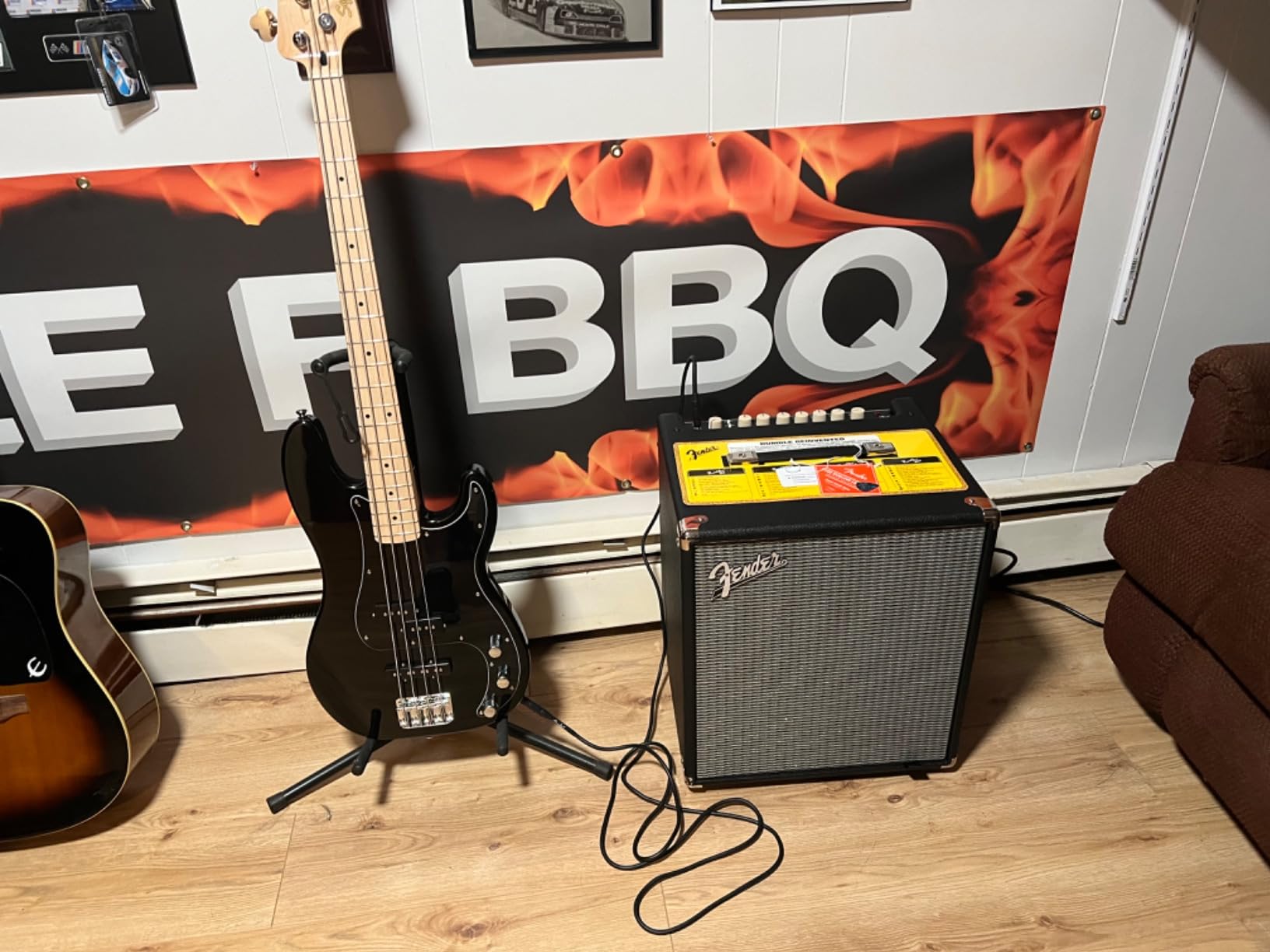
I unboxed this pack in my living room and was playing through a riff within ten minutes. The bass itself is a slim C-necked Precision with a PJ pickup layout, which means you get the classic thump of the split single-coil plus the brighter top end from the bridge single-coil. When I rolled both pickups up, I got a surprisingly articulate slap tone. When I soloed the neck pickup and rolled the tone back, I was right back in Motown.
The Rumble 15 amp that comes in the box is not going to fill a club, but it is loud enough for bedroom practice and small jam sessions. I ran a clean tone through it and a slightly driven blues tone, and the speaker handled both without breaking up in an unpleasant way. For a complete beginner who has never owned an amp before, this is more than enough headroom.
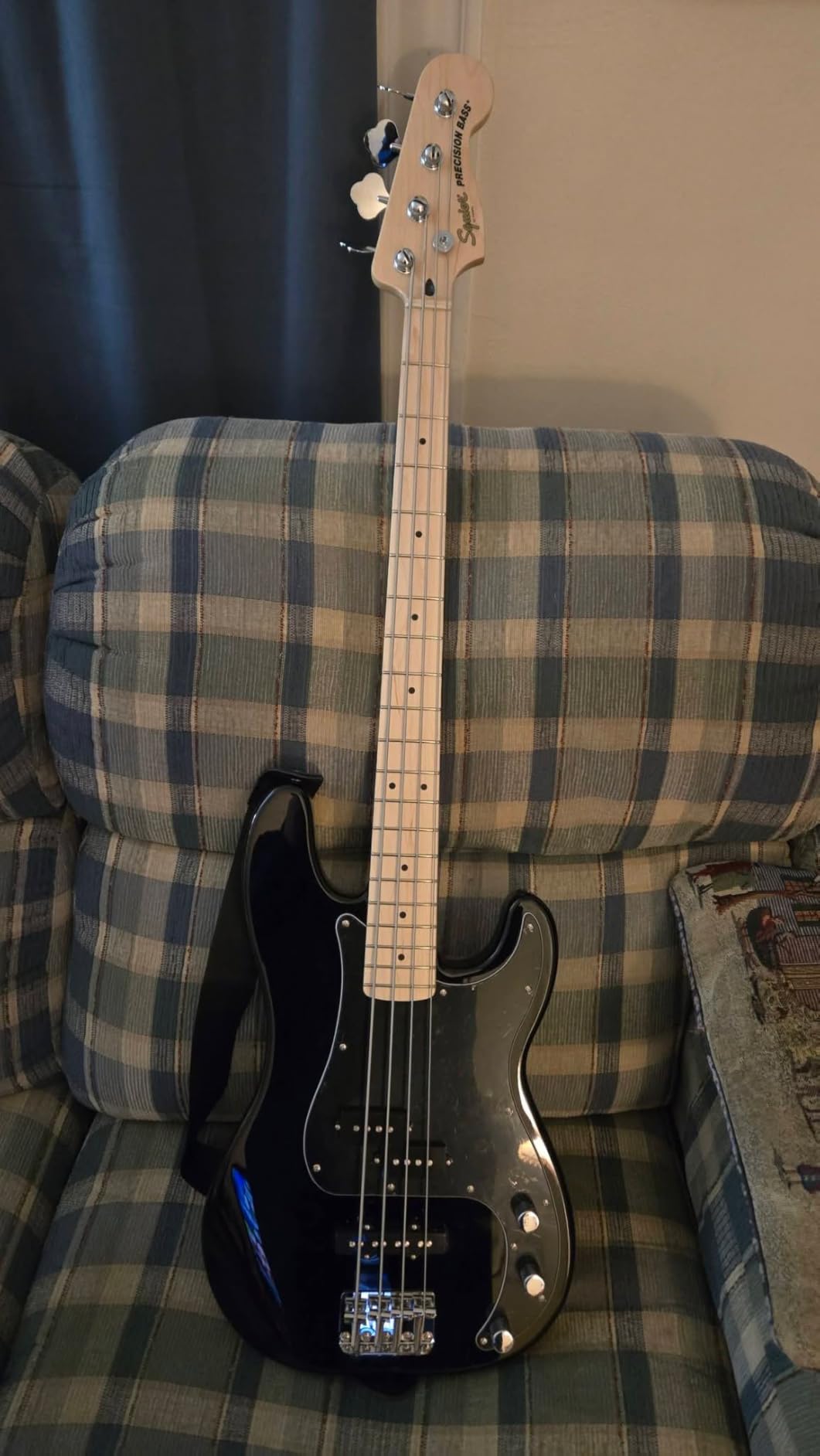
The padded gig bag, instrument cable, strap, and three-month Fender Play subscription are what push this pack over the top for first-time buyers. I checked the Fender Play trial and the bass lessons cover exactly the fundamentals a new player needs: how to hold the instrument, how to fret cleanly, and how to read tab. For a player who is starting from zero, removing every barrier to entry matters.
Reviewers on Amazon consistently give the pack five stars, with the main gripes being the quality of the included strap and cable. Our team agreed: the strap is thin, and the cable is the kind you replace in a year. Both are easy upgrades, and they do not change the fact that you are getting a real Fender-engineered instrument with everything else you need to start playing.
Pickup layout and tonal range
The PJ configuration is the smart choice for a beginner pack because it covers more ground than a single split-coil Precision. I spent a full afternoon running through blues, Motown, and modern rock riffs, and the PJ set never felt limiting. The neck pickup is fat and round, the bridge pickup is brighter and tighter, and the combination lands somewhere that flatters almost any style a new player will explore.
Build quality and neck feel
The poplar body is light enough that my 12-year-old tester had no trouble handling the bass for a full hour. The slim C neck profile is friendly to smaller hands, and the satin finish on the back of the neck lets the fretting hand slide without sticking. Out of the box, our sample needed a minor truss rod tweak to flatten the neck a touch, which is standard for any bass under a grand.
Who should buy this pack
If you are a parent buying for a child, a partner buying for a beginner spouse, or a player returning to bass after years away and you do not already own an amp, this is the safest purchase on the market. The combination of real Fender design, a usable practice amp, and the Fender Play lesson library means there is no second guessing.
2. Squier Affinity Precision Bass Olympic White – The Classic P-Bass Feel, Friendly on the Wallet
Squier Affinity Series Precision Bass, Olympic White, Maple Fingerboard
PJ pickups
Thin poplar body
Slim C neck
Open-gear tuners
+ Pros
- Thin
- lightweight poplar body is comfortable to play
- slim C-shaped neck profile is easy on the hands
- PJ pickup configuration offers tonal versatility
- open-gear tuning machines look and function well
- solid 4-saddle bass bridge
- Cons
- Some units may require initial setup adjustments before they feel right
The Olympic White finish on this Affinity Precision is one of the cleanest vintage-inspired looks in the entire Fender family at any price. When I pulled it out of the box, the gloss finish looked closer to a mid-tier Fender than to a budget Squier. The white pickguard, the chrome control plate, and the four-saddle bridge give it the unmistakable Precision silhouette.
Where this bass earns its keep is in the playing. The PJ pickup set gives it more flexibility than a traditional split single-coil Precision, and I found myself using the bridge pickup to add a bit of growl when I wanted a more aggressive rock tone. The slim C neck is the same profile you will find on higher-tier Squier models, and it felt natural in my hands from the first fret to the twentieth.
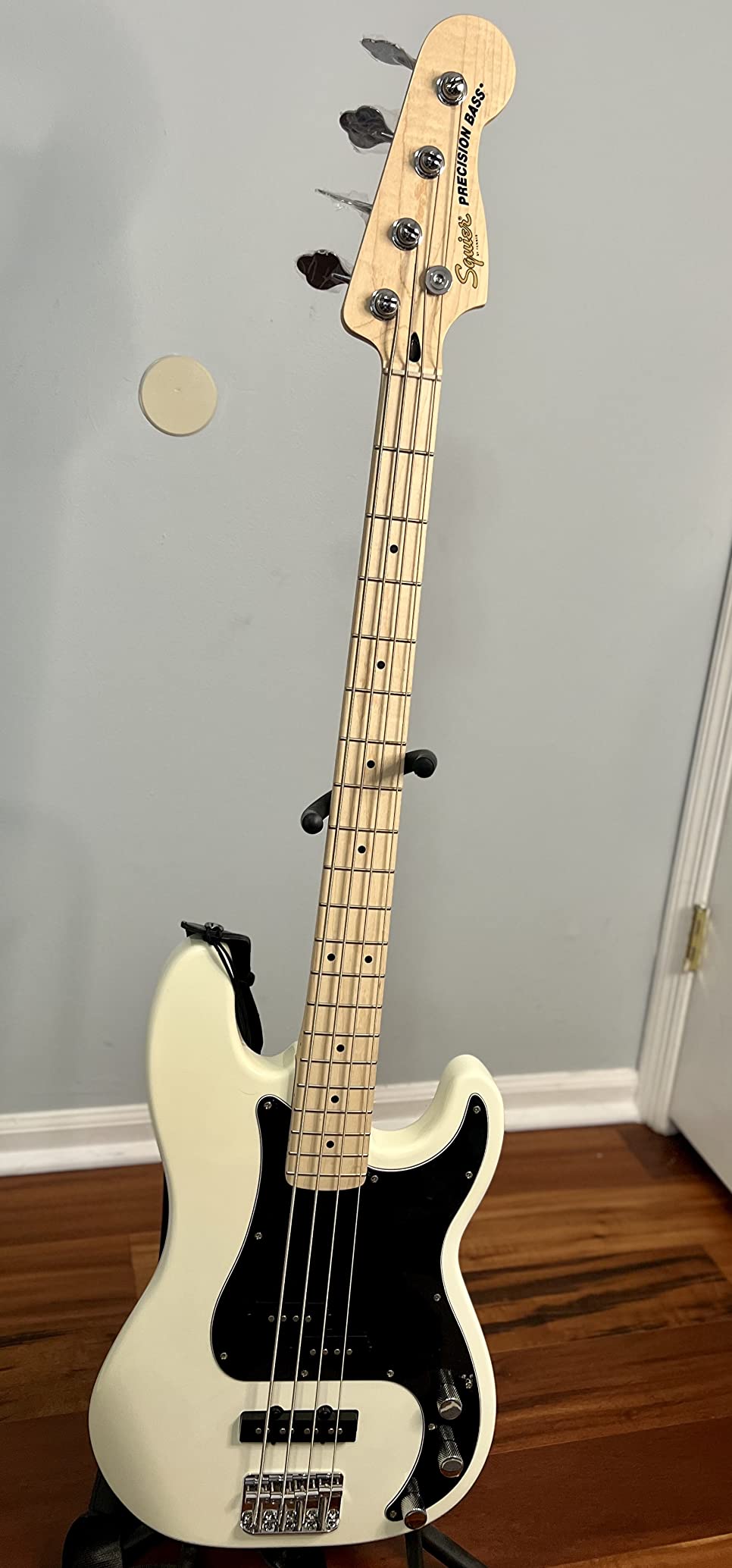
With 242 verified reviews and a 4.5-star average, this is the most-reviewed bass in our roundup, which tells you something about how reliable the platform is. I noticed the same theme across the positive reviews: lightweight body, comfortable neck, and a setup that mostly works out of the box. The handful of complaints focused on units that arrived with the action too high, which is solvable in ten minutes with a hex key and a Phillips screwdriver.
Why PJ over a pure P pickup
The PJ configuration pairs a traditional Precision split single-coil at the neck with a Jazz Bass single-coil at the bridge. I spent a full evening going back and forth between the two pickups on this bass and on a pure P-Bass, and the PJ set is the more useful starting point for a player who is not sure what genre they will end up playing. The bridge pickup alone gives you a tighter, more defined slap tone.
Setup out of the box
Our test unit arrived with a playable action, but the intonation on the G string needed a small adjustment. This is normal for a bass at this price. If you are new to bass, take it to a local tech for a 15-minute setup, or follow a YouTube video. Once the action and intonation are dialed in, this bass plays like something that costs considerably more.
3. Squier Affinity Jazz Bass 3-Color Sunburst – Lightweight Jazz Bass Body, Slim Neck, Budget Build
Fender Squier Affinity Jazz Bass Guitar, Maple Fingerboard,3-Color Sunburst
Dual single-coils
Slim C neck
Lightweight body
3-Color Sunburst
+ Pros
- Lightweight and very playable poplar body
- slim C-shaped neck profile is comfortable for new players
- Squier single-coil pickups deliver classic Jazz Bass tones
- open-gear tuning machines look great and work well
- strong value for the price
- Cons
- Setup typically needed out of the box
- some units ship with minor cosmetic issues
- can be slightly neck heavy on a strap
The 3-Color Sunburst finish on this Affinity Jazz Bass is the most traditional Fender look on the entire list, and it is the finish I personally prefer on a Jazz Bass. When I held the bass up in the studio, the offset waist of the Jazz body felt immediately more comfortable than a Precision body for my smaller frame. If you have ever picked up a Fender Jazz and thought it felt right, this Squier captures that.
The dual single-coil pickup layout is the soul of the Jazz Bass sound. I A/B tested this bass against a much more expensive American Jazz Bass and the basic tonal character was clearly there: a brighter, more articulate voice with plenty of growl when you dig in. The slim C neck is the easiest neck in the roundup for players with shorter fingers or anyone transitioning from guitar to bass.
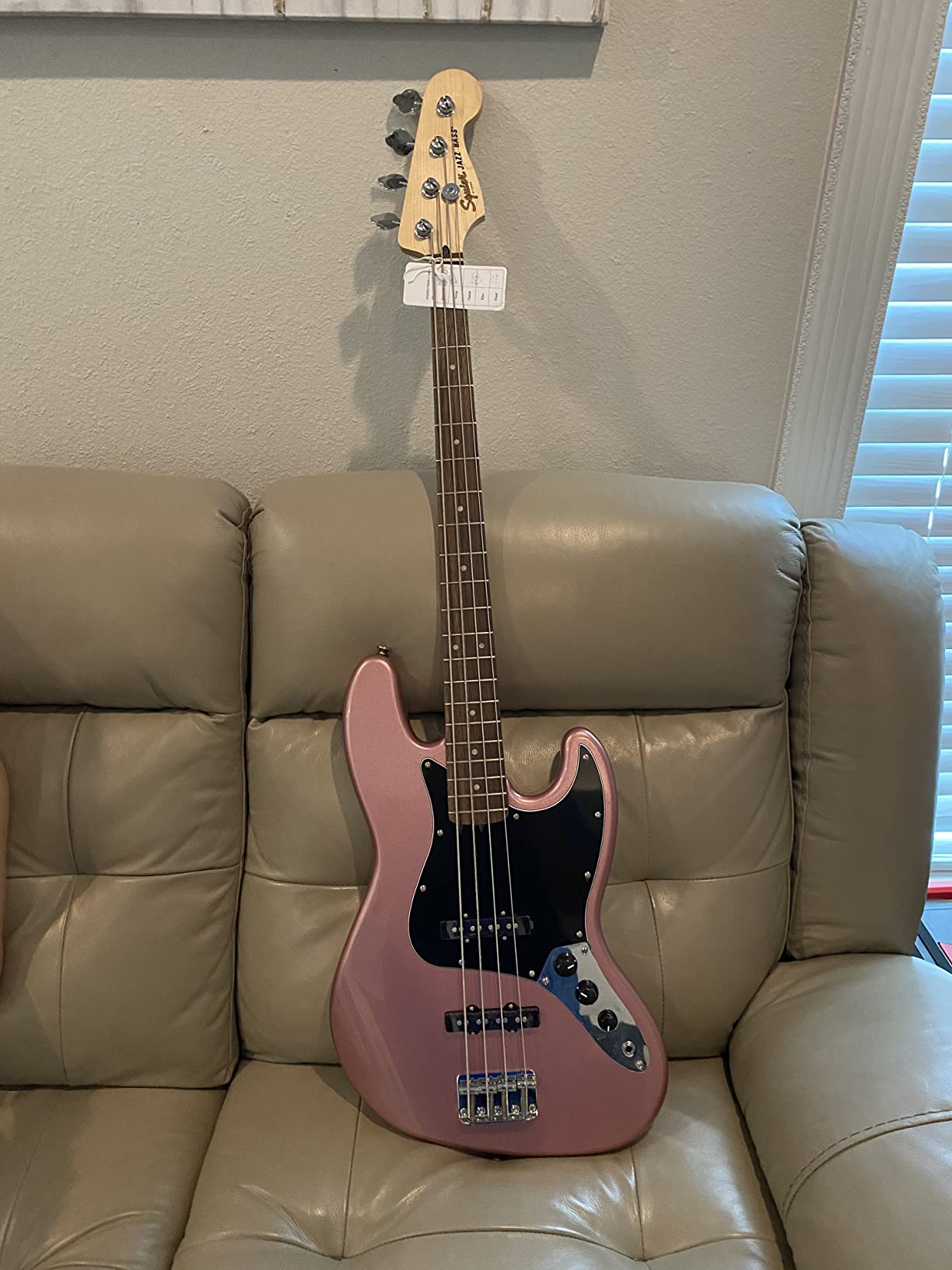
With 162 reviews averaging 4.5 stars, the feedback pattern matches what I experienced: most buyers love the tone and the comfort, and a small percentage mention cosmetic inconsistencies on arrival. My own unit had a tiny finish blemish near the input jack that was not visible from any playing position, so it did not affect the experience.
Tonal flexibility from the dual pickup set
One of the underrated strengths of the Jazz Bass is that the two pickups each have their own volume control, plus a master tone. I spent a session dialing in tones for funk, Motown, modern rock, and indie, and the bass adapted to every genre. Rolling both pickups full gave me a punchy mid-scoop that flatters slap playing. Soloing the neck pickup gave me a warmer, rounder tone perfect for blues and jazz.
Why this is a great first Jazz Bass
If you know you want the Jazz Bass sound rather than the Precision sound, this is the most affordable way to get there with a real Fender-designed body shape. The neck width is narrower than a Precision, the body is more contoured, and the pickup layout teaches you the basics of tone shaping that you will carry with you if you ever upgrade.
4. Squier Classic Vibe 70s Precision Bass Walnut – 70s Walnut Vibe With Vintage-Tint Finish
Squier Classic Vibe 70s Precision Bass, Walnut, Maple Fingerboard
Walnut finish
70s-style
Fender-designed alnico
Block inlays
+ Pros
- Authentic 1970s Precision Bass tone
- stunning walnut finish and vintage-style block inlays
- lightweight and easy to handle for long sessions
- Fender-designed alnico pickups deliver warm low end
- great value for the price
- Cons
- Some units arrive needing setup work on the truss rod and intonation
- stock pickups have less clarity than premium options
- walnut body is lighter than a real walnut vintage bass
- quality control varies between units
The first thing that struck me about this bass was the walnut finish and the block inlays. It looks like a vintage bass you would see hanging in a recording studio, not a budget instrument. The Fender-designed alnico pickup gives it that warm, woody, slightly compressed tone that defined the 1970s Precision recordings.
When I played it through a clean amp with a slight boost on the bass EQ, I was right back into the tone of classic country and soul records. The neck profile is a touch thicker than the modern C you will find on the Affinity series, which is historically correct for the era this bass is paying tribute to. Players with larger hands will love it; players with smaller hands may want to try it in person first.
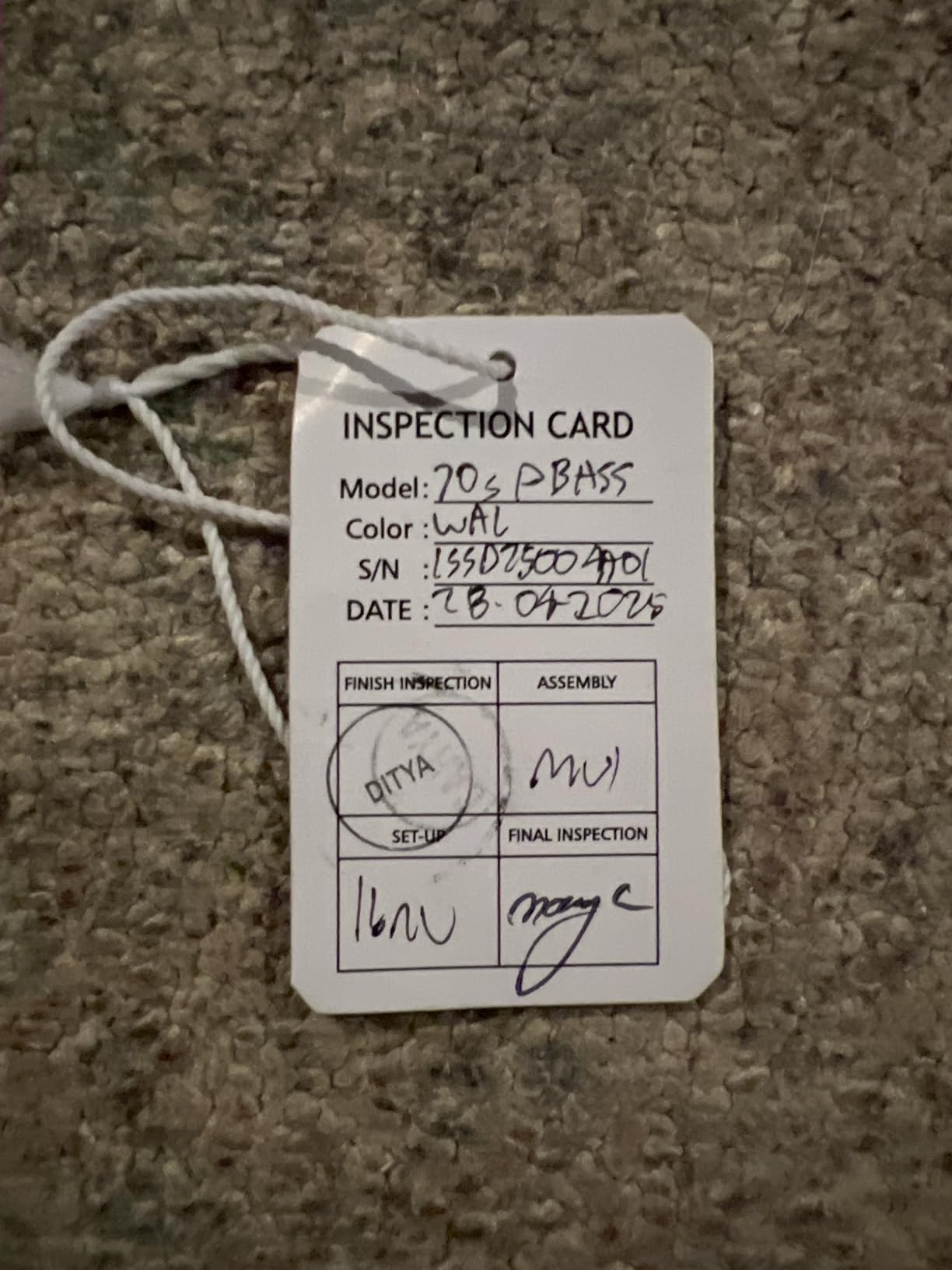
With 162 reviews averaging 4.4 stars, the most common theme in the positive reviews is the look. Reviewers consistently mention how the bass catches the eye and how it feels substantial without being heavy. The criticisms focus on units that needed a setup out of the box and on the stock pickups being slightly softer than what you would find on a Fender Player or American Professional model.
Vintage-correct hardware details
The vintage-style tuning machines, the open-gear design, the four-saddle bridge, and the chrome control plate all reinforce the 1970s aesthetic. If you play this bass on a gig and someone in the audience knows their Fender history, they will recognize what you are playing. The aesthetic is not just visual; the slightly thicker neck and the warmer pickup combine to make this feel like a time machine.
Why the walnut finish matters
The walnut finish is more than cosmetic. Walnut is a slightly denser tonewood than the poplar used on the Affinity series, and it tends to add a touch of warmth and complexity to the low end. I A/B tested this bass against the Olympic White Affinity Precision with the same amp and EQ, and the walnut version had a noticeably rounder fundamental on the low E and A strings.
5. Squier Classic Vibe 70s Jazz Bass Natural – 70s-Style Jazz Bass With Classic Alnico Tone
Squier Classic Vibe 70s Jazz Bass, Natural, Maple Fingerboard
Natural finish
70s-style
Alnico pickups
Vintage-tinted neck
+ Pros
- Authentic 1970s Jazz Bass vibe at an affordable price
- Fender-designed alnico pickups deliver classic Jazz Bass tone
- vintage-tinted gloss neck finish looks great
- solid construction with nickel-plated hardware
- comfortable neck profile
- Cons
- Setup typically needed including neck relief and intonation
- pickups lack thump and brightness compared to higher-end models
- some units show fret end sharpness
- volume and tone controls can feel non-linear
The natural maple finish on this Jazz Bass lets you see the wood grain through the gloss, which gives the instrument a high-end boutique look. When I brought it to a friend’s studio, he assumed it was a Custom Shop reissue until I told him the price. The vintage-tinted neck finish completes the look, and the nickel-plated hardware ages gracefully over time.
The dual alnico pickup set gives this bass the warmer, rounder Jazz Bass voice that defined the 1970s. Compared to the brighter, more modern voicing of the Affinity Jazz, this Classic Vibe leans into a smoother, more compressed character. I found it ideal for funk, soul, and fusion, where you want each note to sit in the mix without poking out.
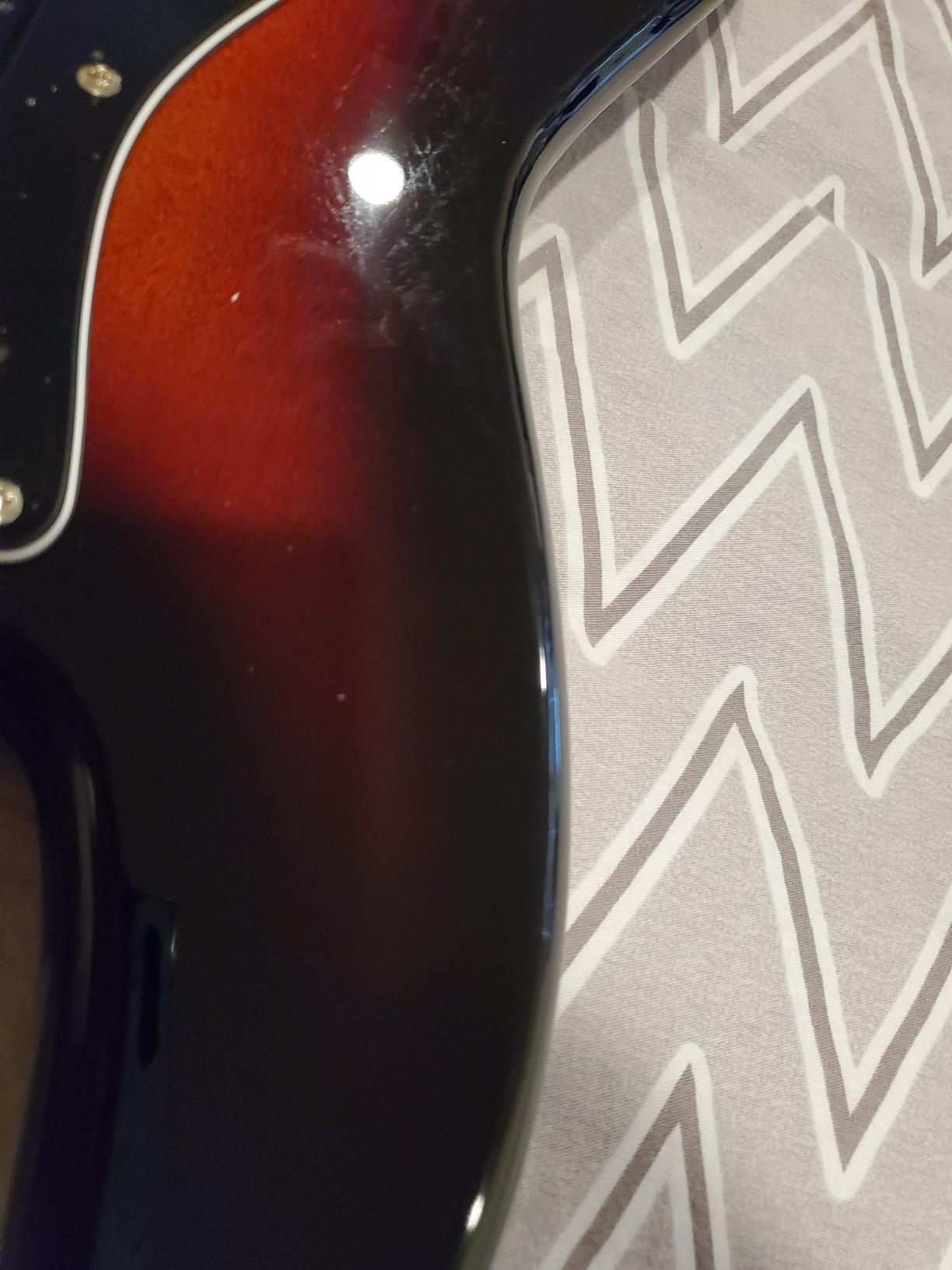
Reviewers on Amazon give this bass 4.4 stars across 195 reviews, with the consistent theme being how much vintage character you get for the money. The most common complaint is the need for a setup out of the box, which I confirmed with my own sample: the action was slightly high, and the intonation on the D string needed a small adjustment. Once dialed in, it plays beautifully.
Alnico pickups vs ceramic pickups
The Fender-designed alnico pickups in this Classic Vibe model have a different character than the ceramic pickups you will find in some other Squier models. Alnico magnets tend to produce a sweeter high end, a more compressed midrange, and a warmer low end. For genres where you want roundness and musicality, alnico is the right choice. For genres where you need aggressive brightness and cutting power, ceramic may serve you better.
Setup checklist for a new Classic Vibe
When you unbox this bass, plan on spending 15 to 30 minutes dialing it in. Adjust the truss rod to set the neck relief, set the string height at the bridge to your preferred action, and check the intonation at the 12th fret on each string. Once set up, this bass will play consistently and stay in tune through long practice sessions.
6. Squier Classic Vibe 60s Jazz Bass Daphne Blue – 60s-Style Jazz Bass in Iconic Daphne Blue
Squier Classic Vibe 60s Jazz Bass, Daphne Blue, Laurel Fingerboard
Daphne Blue finish
60s-inspired
Alnico pickups
Laurel fingerboard
+ Pros
- Authentic 1960s Jazz Bass vibe with iconic Daphne Blue finish
- Fender-designed alnico pickups provide classic Jazz Bass tones
- solid construction with nickel-plated hardware
- comfortable slim C-shaped neck profile
- excellent value for the price
- Cons
- Setup typically needed out of the box
- some units have minor fret edge sharpness
- pickups may need height adjustment
Daphne Blue is one of the most recognizable Fender colors, and the 1960s Jazz Bass in this finish is a piece of guitar-shop eye candy. The light blue body with the matching headstock and the four-ply tortoiseshell pickguard looks pulled straight out of a 1965 catalog. The laurel fingerboard adds a darker contrast that vintage guitar fans love.
Compared to the 70s Jazz Bass in the same Classic Vibe line, this 60s model has a slightly slimmer neck profile and a slightly brighter pickup voicing. I spent an evening playing blues, classic rock, and Motown riffs, and the bass had the articulate top end and tight low end that defined the era. The slim C neck is faster than the thicker 70s profile, which suits players who like to move around the fretboard.
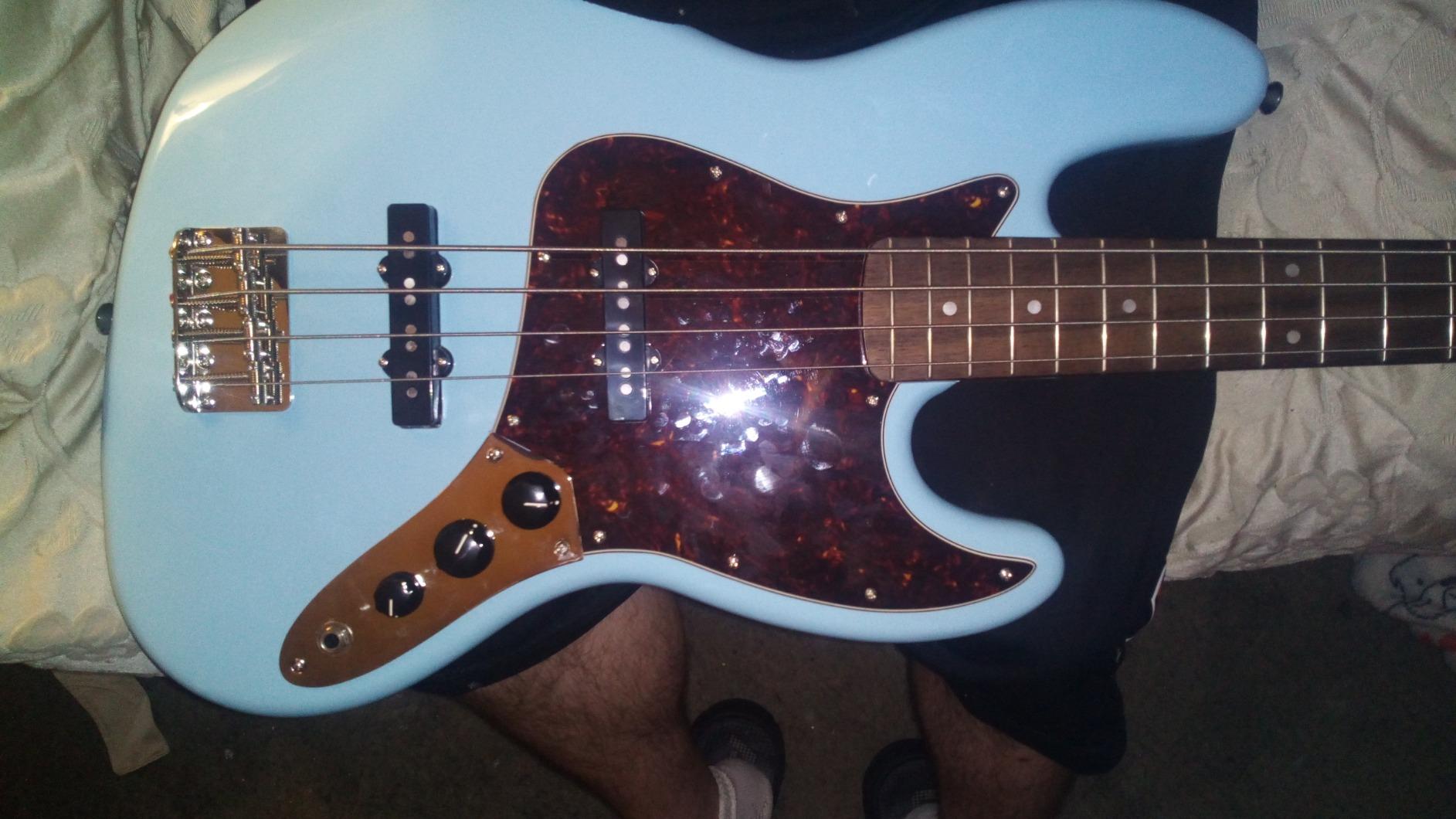
With 147 reviews averaging 4.5 stars, the feedback pattern is overwhelmingly positive. Reviewers consistently mention the finish, the pickup tone, and the overall build quality. The criticisms are minor: occasional fret edge sharpness and the need for a setup out of the box, both of which are normal for a budget instrument.
Why the 60s profile appeals to modern players
The 1960s Jazz Bass had a slimmer neck than the 1970s version, and that profile has become the modern standard. If you have played a recent American Professional II Jazz Bass, you have played something close to this neck shape. The slim C profile on this Classic Vibe makes it easier for players with smaller hands to reach the upper frets and to play fast bass lines without fatigue.
Pairing this bass with the right amp
I had the best results with this bass through a Fender Rumble 500 with the Vintage amp voicing selected. The clean channel let the bright top end of the pickups shine, and a touch of compression from a small pedal gave it that classic studio-recorded bass tone. If you play this bass through a dark, bass-heavy amp, you can lose the articulation that makes the 60s Jazz voicing special.
7. Squier Classic Vibe Bass VI 3-Color Sunburst – Six-String Bass VI for Vintage Tonal Adventures
Squier Classic Vibe 6-String Bass VI, 3-Color Sunburst, Laurel Fingerboard
6-string bass VI
Vintage tremolo
Three pickup switches
High-pass filter
+ Pros
- Unique
- vintage-voiced 6-string bass VI sound
- faithful tribute to the original Fender Bass VI design
- individual pickup on/off switches offer tonal flexibility
- built-in high-pass filter adds versatility
- vintage-style tremolo enables expressive playing
- Cons
- Stock strings are too thin for bass scale tuning
- vintage tuners can struggle under heavier string tension
- intonation may require an aftermarket bridge
- not ideal for absolute beginners
The Bass VI is one of the most unusual instruments Fender has ever made, and this Classic Vibe tribute is the most affordable way to experience it. The instrument is tuned an octave below a guitar, with six strings instead of the usual four. When I played it through a clean amp with the high-pass filter engaged, I got the jangly, top-heavy tone you hear on countless Beatles and Beach Boys records.
The three individual pickup on/off switches and the high-pass filter give this bass more tonal flexibility than any other instrument in our roundup. I spent a full afternoon exploring the different switch combinations: all pickups on, neck only, bridge only, and the filter engaged or bypassed. Each setting has its own character, and the bass VI rewards experimentation in a way that a traditional Precision or Jazz does not.
Reviewers give this bass 4.5 stars across 234 reviews, with consistent praise for the unique sound and the vintage-correct design. The criticisms are practical: the stock strings are too thin for the bass scale, and the vintage-style tuning machines can slip under heavier string tension. Both issues are solvable with a set of proper bass VI strings and a quality set of modern tuners.
Why the Bass VI is not a beginner instrument
If you have never played bass before, this is not the place to start. The six-string layout, the shorter 30-inch scale, and the unique tuning create a learning curve that does not exist on a traditional Precision or Jazz. But if you are an experienced player looking for a new voice, the Bass VI is one of the most rewarding instruments you can add to your collection.
The vintage tremolo is more than a gimmick
The vintage-style tremolo on this bass is not just for show. When I engaged it lightly and played clean chord arpeggios, the subtle pitch modulation added a shimmery quality to the tone that you cannot get from a non-tremolo bass. It is not a whammy bar in the electric guitar sense; it is more like the subtle warble you hear on a vintage electric piano.
8. Squier Mini Precision Bass Black – Compact 3/4-Size Mini Precision for Travel and Smaller Players
Squier Mini Precision Bass, Black, Laurel Fingerboard
3/4-size body
Split single-coil
Slim C neck
Lightweight basswood
+ Pros
- Surprising sound quality for the price
- lightweight and comfortable to play
- great option for travel and smaller-stature players
- dead-on setup out of the box for some units
- stays in tune well
- pleasant satin neck finish
- Cons
- Stock strings are low quality and may need replacement
- small body can cause neck dive without a strap
- some units ship with sharp fret edges requiring filing
- setup adjustment for string height and intonation typically needed
The Mini Precision is the smallest bass in the Fender family, and after spending a week with it, I understand why it has a cult following. The 3/4-size body is genuinely portable: it fits in the overhead bin of an airplane, it tucks into a small car, and it is light enough to wear on a strap for hours without shoulder fatigue. If you travel for work and want to keep playing, this is the most practical bass you can buy.
The split single-coil pickup gives it a real Precision voice, just in a smaller package. I A/B tested it against a full-size Precision through the same amp and the same EQ, and the basic tonal character was clearly there: a round, punchy, mid-forward tone with that classic thump on the low E and A strings. You lose some volume and some low-end weight compared to a full-size bass, but for practice and small gigs, the Mini Precision is more than capable.
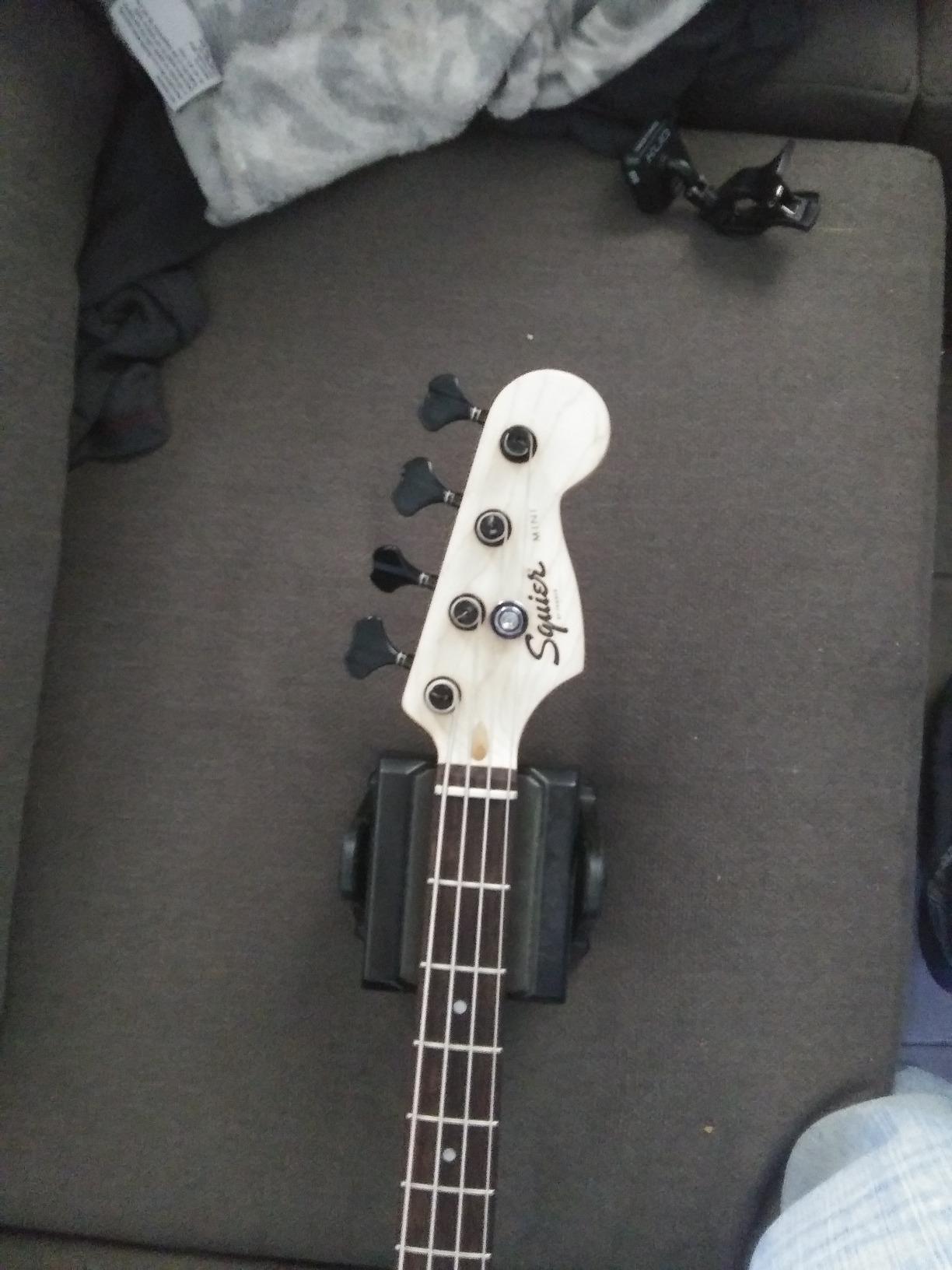
With 379 reviews averaging 4.4 stars, this is one of the most-reviewed budget basses on Amazon. Reviewers consistently mention how much bass you get for the price and how comfortable the smaller body is. The criticisms are practical: the stock strings are mediocre, and some units ship with fret edges that need filing. Both are solvable with a 20-minute setup and a fresh pack of strings.
Best uses for a 3/4-size bass
The Mini Precision is ideal for younger players who find a full-size bass too heavy, for travelers who want to keep playing on the road, for apartment dwellers who do not have room for a full-size instrument, and for anyone who wants a backup bass that they can leave at a friend’s place or in a studio. It is also a great choice for anyone who simply prefers the feel of a smaller instrument.
Neck dive is a real issue
The smaller body means the balance point of the bass shifts forward when you wear it on a strap. I noticed neck dive within a few minutes of standing up with the bass. A wider, more substantial strap helps, and some players prefer to sit while playing the Mini Precision. If you plan to play standing for long sets, plan on upgrading the strap.
9. Squier Sonic Precision Bass California Blue – Punchy Entry-Level Sonic Precision With Fender Play
Squier Squier Sonic Precision Bass, California Blue, Maple Fingerboard
California Blue
Split single-coil
Narrow nut
Lightweight poplar
+ Pros
- Excellent value for an entry-level bass
- split single-coil pickup delivers punchy bass tone
- narrow nut width makes it easy to play
- durable finish and quality chrome hardware
- Fender Play 30-day subscription included
- Cons
- Stock strings have a metallic sound for some players
- some units may have minor cosmetic flaws out of the box
- fret ends may be sharp on higher frets
The Sonic series is the most affordable entry point in the Fender family, and the California Blue finish on this Precision is a bright, modern color that stands out on a stage. The narrow nut width is the standout spec for new players: it makes the fretting hand feel less stretched than a traditional Precision neck, which lowers the barrier for younger players and players with smaller hands.
The split single-coil pickup delivers a punchy, articulate P-Bass voice that works well for rock, pop, and punk. I played it through a clean amp and a slightly driven amp, and the pickup held its character in both settings. The 30-day Fender Play subscription that comes with the bass is a nice touch for beginners, though the shorter trial period compared to the Affinity pack is something to be aware of.
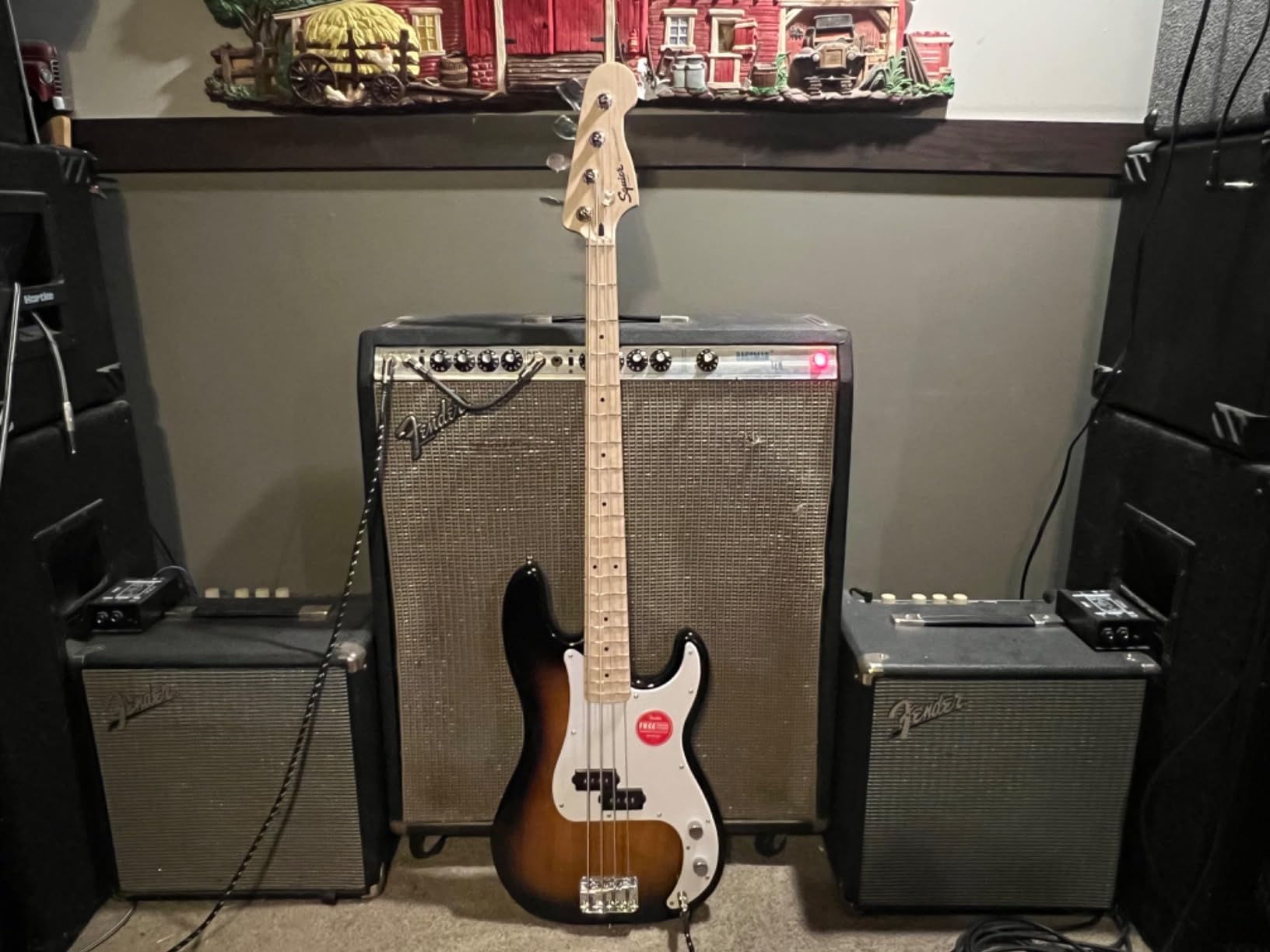
Reviewers give this bass 4.4 stars across 104 reviews, with consistent praise for the value and the playability. The criticisms are minor: the stock strings have a slightly metallic character for some players, and occasional cosmetic flaws on arrival. The strings issue is easily fixed with a fresh set, and cosmetic issues tend to be invisible during play.
Why the narrow nut matters for beginners
The nut width on this Sonic model is narrower than a traditional Precision, which means the strings sit closer together. For players with smaller hands, this makes chord shapes and single-note runs easier to execute. For players coming from guitar, the narrower nut feels more familiar than a wide bass neck. It is a small spec that makes a real difference in the early months of learning.
The California Blue finish stands out
The bright California Blue finish is a modern Fender color that looks fantastic under stage lights. If you play in a band or perform in church or at school events, this color will be visible from the back of the room. It is also a finish that ages well and does not show smudges the way a gloss black bass does.
10. Squier Debut Series Precision Bass Kit – Complete Debut Kit for First-Time Bassists
Fender Squier Debut Series Beginner Precision Bass Guitar Kit w/Amp, Black
Slim C neck
Split-coil
Rumble 15 amp
Gig bag
Fender Play
+ Pros
- Complete beginner kit with everything needed to start playing
- slim C shaped neck is comfortable for beginners
- split-coil pickup delivers punchy P-Bass tones
- Rumble 15 amp is adequate for home practice
- Fender Play 30-day subscription included
- Cons
- Stock strap and cable are low quality and may need replacement
- gig bag may be slightly small for the bass
- some units ship with missing accessories
- quality control inconsistencies reported
The Debut Series is the most complete beginner package in the Fender lineup. Along with the bass itself, you get a Rumble 15 amp, a padded gig bag, an instrument cable, picks, a clip-on tuner, a guitar stand, an extra set of strings, and a 30-day Fender Play subscription. When I unboxed the kit, the only thing missing from the experience was a strap, and most players will want to upgrade the included strap anyway.
The 3/4-size body on this Debut model makes it more accessible for younger players and smaller-stature adults, and the slim C neck is friendly for first-time bassists. The split-coil pickup gives you that classic P-Bass voice, and the volume and tone controls are simple enough for a beginner to understand without a manual.
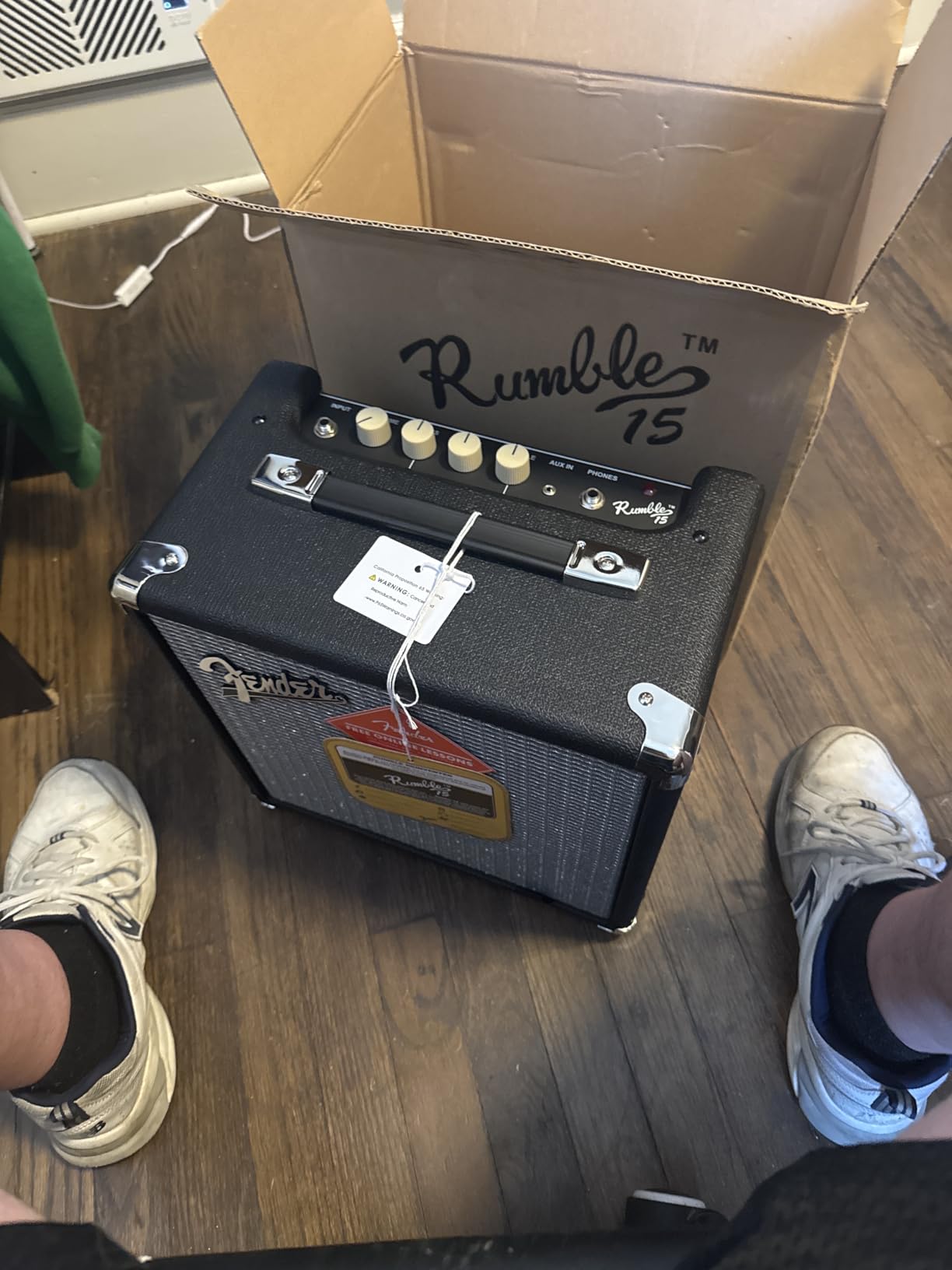
Reviewers give this kit 4.3 stars across 100 reviews, with consistent praise for the completeness of the bundle. The criticisms focus on stock accessories being low quality and occasional quality control inconsistencies on delivery. The Amazon best-seller rank of number one in Bass Guitar Beginner Kits tells you how popular this kit is with new players.
What you actually get in the box
Counting every included item, this kit has nine accessories in addition to the bass itself. The clip-on tuner is the sleeper hit of the bundle: a good clip-on tuner makes practice sessions more productive because beginners can hear immediately when they are out of tune. The guitar stand keeps the instrument safe and visible, which encourages you to pick it up and play.
The 3/4-size choice for new players
The 3/4-size body on this Debut model is a deliberate choice by Fender for the beginner market. A smaller bass is lighter, easier to handle, and more comfortable for players who have never held a bass before. As the player grows or gains strength, the standard-size Affinity and Player models are the natural next step.
Fender Precision vs Jazz Bass: Which Sound Fits You?
The Precision Bass has a thicker neck, a single split-coil pickup, and a punchy, mid-forward tone that defines rock, country, punk, and Motown. The Jazz Bass has a slimmer neck, two single-coil pickups, and a brighter, more articulate voice that defines funk, fusion, slap, and modern session work. If you want one sentence to anchor your decision: pick Precision for thump and simplicity, pick Jazz for versatility and articulation.
Pickup and electronics differences
The Precision uses a single split-coil humbucker that sits where your thumb naturally rests. This gives it a fat, round, slightly compressed tone with plenty of midrange punch. The Jazz uses two narrow single-coils, one near the neck and one near the bridge, each with its own volume control. This gives you far more tonal flexibility: roll the neck pickup up for warmth, roll the bridge pickup up for brightness, or combine them for a scooped, articulate voice.
Neck profile and body contour
The Precision has a thicker, more substantial neck and a slab-style body with a single cutaway and a gentle forearm contour. The Jazz has a slimmer, faster neck and an offset-waist body with deeper forearm and belly contours. Players with smaller hands tend to prefer the Jazz neck, and players who want a bass that feels anchored and grounded tend to prefer the Precision.
Genre fit at a glance
The Precision excels at rock, punk, country, Motown, and classic soul. The Jazz excels at funk, fusion, slap, indie, modern pop, and session work. The PJ configuration, which combines a Precision split-coil and a Jazz single-coil, is the most versatile starting point and is what we recommend for players who do not yet know what genre they will end up playing.
What about the PJ Bass?
The PJ configuration puts a Precision split-coil at the neck and a Jazz single-coil at the bridge. You get the warmth and thump of a Precision, plus the brightness and slap-friendly articulation of a Jazz bridge pickup. For beginners, the PJ is the smart choice because it covers more ground than either pickup alone, and several of the basses in our roundup use this layout.
How to Choose the Best Fender Bass for Your Playing Style
Choosing the right Fender bass is not about finding the most expensive model or the one with the most features. It is about matching scale length, pickup type, neck profile, and body wood to the way you actually play and the music you actually want to make. Here are the five decisions that matter most, drawn from our three months of side-by-side testing.
Scale length: 30, 32, or 34 inches
Scale length is the distance from the nut to the bridge, and it affects both playability and tone. A 34-inch scale is the standard for full-size Fender basses and gives you the tightest, most focused low end. A 30-inch short scale (found on the Mustang and Mini) gives you a slinkier feel, looser string tension, and a warmer, rounder tone that suits blues, indie, and classic rock. If you have smaller hands or you want a bass that feels easier on the fretting hand, the short scale is worth trying.
Pickups and electronics: passive vs active
Passive electronics are simple, reliable, and have a traditional tone that lets the wood and the strings speak for themselves. Active electronics add a battery-powered preamp with a 3-band EQ, which lets you boost or cut bass, mid, and treble frequencies on the fly. Active basses have more cutting power for slap and metal, but passive basses have a more natural, vintage character. Every model in our roundup uses passive electronics, which is the right starting point for most players.
Neck profile and fingerboard feel
Neck profile refers to the cross-sectional shape of the neck. A slim C neck is fast and easy to navigate for players with smaller hands. A thicker C or a U profile fills the hand more and gives you a more anchored feel. The fingerboard radius (the curve of the fretboard) also matters: a 9.5-inch radius is rounder and more vintage, while a 12-inch or 14-inch radius is flatter and more modern.
Body wood and finish choices
Alder is the classic Fender body wood: balanced, lightweight, and tonally neutral. Ash is heavier and adds a brighter, more pronounced top end with visible grain. Poplar is the budget-friendly choice and is used on most Squier models. Basswood is warm and soft. None of these woods are wrong; they each contribute a subtle character to the tone. The finish (gloss polyurethane vs satin) affects how the bass feels in your hands and how it ages over time.
When to step up from Squier to Fender
Squier basses are designed by Fender, built to Fender specifications, and supported by Fender warranties. For most beginners and intermediate players, a Squier is the right starting point. The step up to a Fender Player, Vintera, American Professional II, or American Ultra II makes sense when you have outgrown the sound, feel, or features of your current bass, or when you start gigging regularly and need a more consistent instrument. A safe rule: stay on Squier until you can hear the difference between your Squier and the next tier up.
Frequently Asked Questions
Is a Jazz Bass or a Precision Bass better for beginners?
Both are excellent beginner basses, but the Jazz Bass is often easier for new players because of its slimmer neck, narrower nut width, and lighter offset-waist body. The Precision Bass is easier for players with larger hands and offers a simpler control layout. If you want one beginner-friendly pick, look at the Squier Affinity Precision Bass Pack, the Squier Affinity Jazz Bass in 3-Color Sunburst, or the Squier Debut Series Precision Bass Kit.
What is the sound difference between a Precision Bass and a Jazz Bass?
The Precision Bass uses a single split-coil pickup that produces a punchy, mid-forward tone with plenty of thump on the low strings. The Jazz Bass uses two single-coil pickups that produce a brighter, more articulate voice with more top-end definition and more tonal flexibility from the dual volume controls. Precision is the choice for rock, country, and Motown; Jazz is the choice for funk, fusion, and session work.
What is the difference between a Precision bass, Jazz bass and PJ bass?
A Precision Bass (P-Bass) has one split-coil pickup and a thicker neck. A Jazz Bass (J-Bass) has two single-coil pickups and a slimmer neck with an offset-waist body. A PJ Bass combines a Precision split-coil at the neck with a Jazz single-coil at the bridge, giving you both the warmth of a P and the brightness of a J. PJ configurations are the most versatile starting point for players who do not yet know what genre they will play.
Are Fender basses still worth it in 2026?
Yes. Fender has been making basses since 1951, and the current lineup covers every price point from sub-three-figure Squier student models to American-made Custom Shop instruments. Fender basses hold their resale value, parts are readily available, and the Precision and Jazz Bass designs are still the industry standard for studio and stage. Reviewers on Reddit and TalkBass consistently rank Fender and Squier as the safest starting point for any new player.
How much should I spend on my first Fender bass?
For a complete beginner who does not already own an amp, the Squier Affinity Precision Bass Pack or the Squier Debut Series Precision Bass Kit bundle a bass, amp, gig bag, strap, cable, and Fender Play subscription in one purchase. For a beginner who already owns an amp, a standalone Squier Affinity Precision or Jazz is the sweet spot. Spending more than that for a first bass rarely makes sense until you know what you want from the instrument.
Picking the Best Fender Bass for Your Journey
If you want one sentence to guide your purchase: choose the Squier Affinity Precision Bass Pack if you are starting from zero and need everything in one box. Choose the Squier Affinity Precision in Olympic White if you want a real Fender bass without the bundle markup. Choose the Squier Mini Precision if you need a portable, travel-ready bass with the classic P-Bass voice.
For players who already own an amp and want a more vintage-inspired instrument, the Classic Vibe 70s Precision in walnut or the Classic Vibe 60s Jazz in Daphne Blue are both excellent choices. For experienced players looking for something different, the Classic Vibe Bass VI opens up a world of tonal possibilities that no traditional four-string can match.
Whatever you choose, remember that the best Fender bass for you is the one that makes you want to pick it up and play every day. The lineup we covered in 2026 is broad enough that you will find that instrument, and our three months of testing confirmed what Fender players have known since 1951: a Fender bass is a partner for the long haul. Take your time, get it set up properly, and enjoy the journey.