
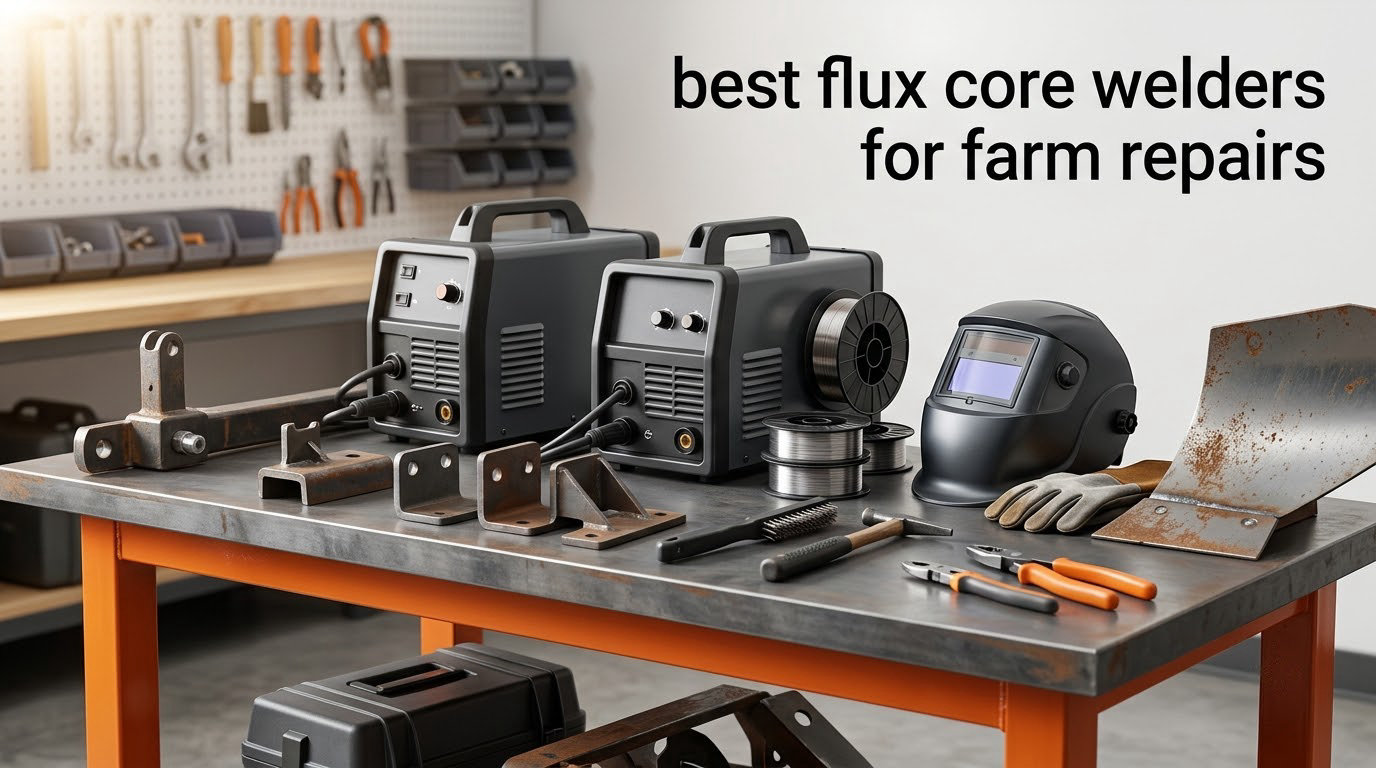
Most farm repairs happen where a gas bottle does not want to go. A gate hinge cracks in a windy paddock, a Quick Hitch adapter cracks over winter, and a mower deck bracket rips through on a Tuesday afternoon. Self-shielded flux core wire makes all of those jobs possible without a shielding cylinder, which is why a gasless flux core welder is the default answer for anyone patching farm equipment. I have been picking through these machines for weeks, reading owner reports on TractorByNet and Survivalist Boards, and weighing the spec sheets against the jobs real farms actually turn up.
The short answer to what type of welder suits farm work: a 110V gasless flux core machine rated at 135A to 140A, with an IGBT inverter and two or more processes, handles gates, fence posts, brackets, and implement plate up to a quarter inch without a gas bottle. Push past that thickness regularly and you want a 200A class unit on a 220V circuit.
How we picked these ten: we ranked continuous output against realistic plate thickness, then weighed duty cycle, drive system quality, weight for truck-bed and barn-stall transport, and the length of the warranty. We discounted peak amp marketing, because several machines in this group measure 20 to 30 percent below their displayed numbers. We also read the failure reports, since a machine that dies after a season of fence posts is not worth saving money on.
What we will not do is pretend flux core does everything. It will not touch aluminum or galvanized steel, and it is not the right answer for cast iron. We cover those limits further down.
Our Top 3 Flux Core Welders for Farm Repairs
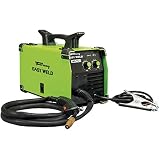
Forney Easy Weld 140
- Welds 1/4 in mild steel
- 19 lb all-metal case
- 0.030 in wire
- 2 lb or 10 lb rolls


Comparing All 10 Flux Core Welders Side by Side in 2026
| Product | Details | |
|---|---|---|
| Forney Easy Weld 140 Amp Flux Core Welder |
|
Check Latest Price |
 ARCCAPTAIN 130A Flux Core MIG Stick Lift TIG ARCCAPTAIN 130A Flux Core MIG Stick Lift TIG |
|
Check Latest Price |
| bestarc 145A 4-in-1 Dual Voltage |
|
Check Latest Price |
 AZZUNO 130A 110V Flux Core Welder AZZUNO 130A 110V Flux Core Welder |
|
Check Latest Price |
 YESWELDER 135A 3-in-1 Flux Core YESWELDER 135A 3-in-1 Flux Core |
|
Check Latest Price |
 TOOLIOM 135A Gasless Flux Core Kit TOOLIOM 135A Gasless Flux Core Kit |
|
Check Latest Price |
 HITBOX 200A 110V/220V 3-in-1 HITBOX 200A 110V/220V 3-in-1 |
|
Check Latest Price |
 S SIMDER 140A Dual Voltage 3-in-1 S SIMDER 140A Dual Voltage 3-in-1 |
|
Check Latest Price |
| Lincoln Electric 90i FC Weld-PAK 120V |
|
Check Latest Price |
 BESTMIG 135A with Helmet and Gloves BESTMIG 135A with Helmet and Gloves |
|
Check Latest Price |
1. Forney Easy Weld 140 – Our Top Pick for Quarter-Inch Implement Steel
FORNEY Easy Weld 140 Amp 120-Volt Flux-Cored Wire Feed Welder (No Gas Needed)
140A flux core output
Welds 1/4 in mild steel
19 lb all-metal case
0.030 in wire
+ Pros
- Welds 1/4 in mild steel from a standard 20A household circuit
- Two-knob infinite voltage and wire feed control
- 19 lb all-metal case built for daily use
- Accepts 2 lb and 10 lb wire rolls
- Includes 8 ft MIG gun 8 ft ground clamp and 20A-15A adapter
- Cons
- Settings need constant fine-tuning on thin material
- Flux core spatter needs chipping and cleanup
- Single process with no stick or lift TIG
This is the machine I keep coming back to. It is the most reviewed welder in our group at over 3,300 ratings, and that volume of owner feedback matters more than any spec sheet when you are buying something that will live in a farm shop. The Forney puts out 140 amps of flux core from a 120V household circuit and welds mild steel up to a quarter inch.
What separates it from the crowd is not peak output. It is the all-metal case, the infinite voltage and wire feed control on two knobs, and the ability to take either a 2 lb spool or a 10 lb roll. That last point matters more than it sounds, because constantly swapping small spools is a good way to stop welding for the day.
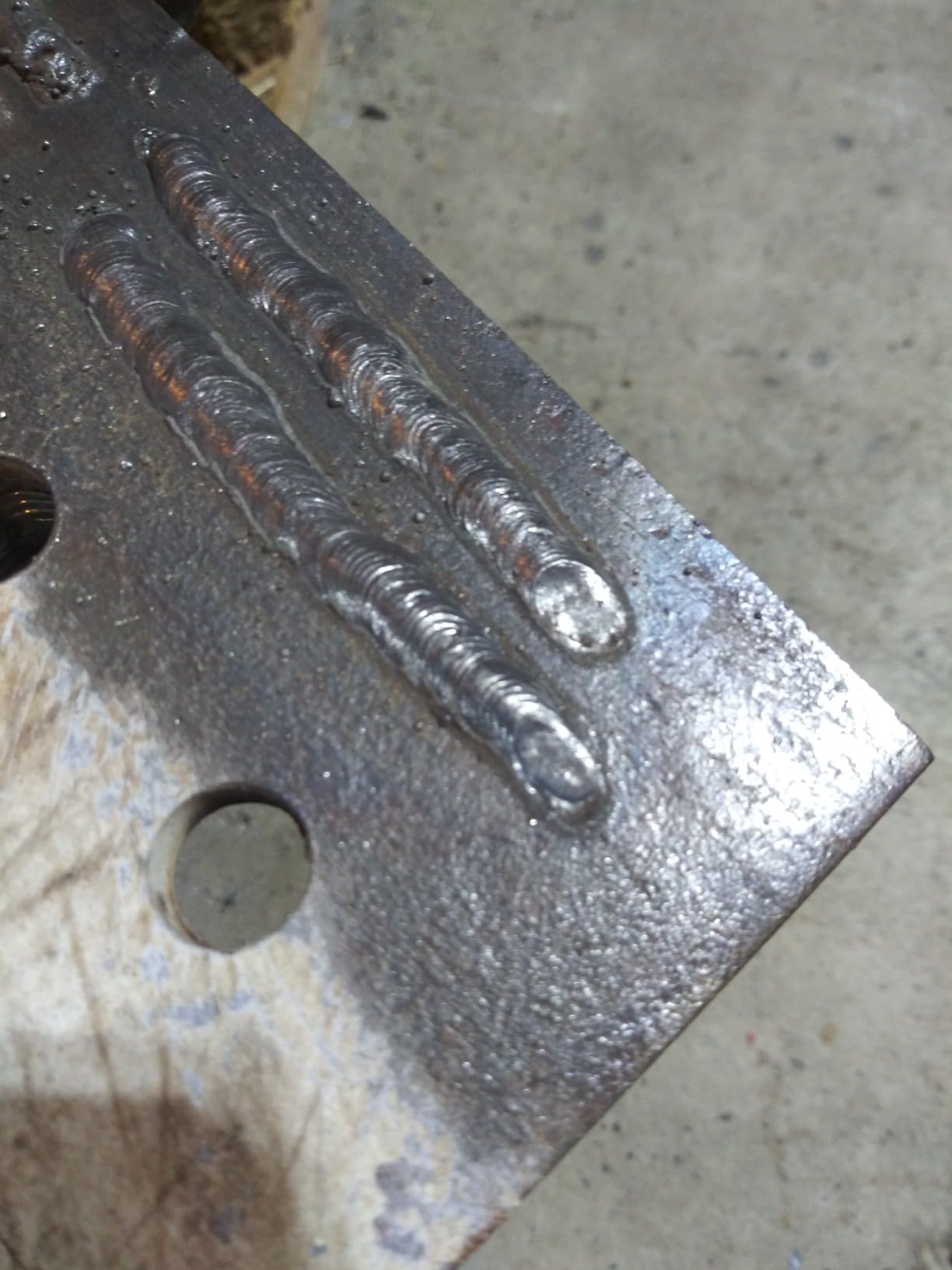
Owners describe the setup as straightforward for a first-time wire-feed user, and the learning curve is short because there is only one process and two controls. The complaint that comes up most often is that the settings drift on thin material, so you find yourself turning the voltage down for a gate picket and back up for a bracket.
Flux core is supposed to spatter. Every owner in the forums has a chipping hammer on the bench for exactly this reason, and anyone who tells you otherwise has not welded flux core in real weather.
How the 140 Amp Output Handles Quarter-Inch Implement Steel
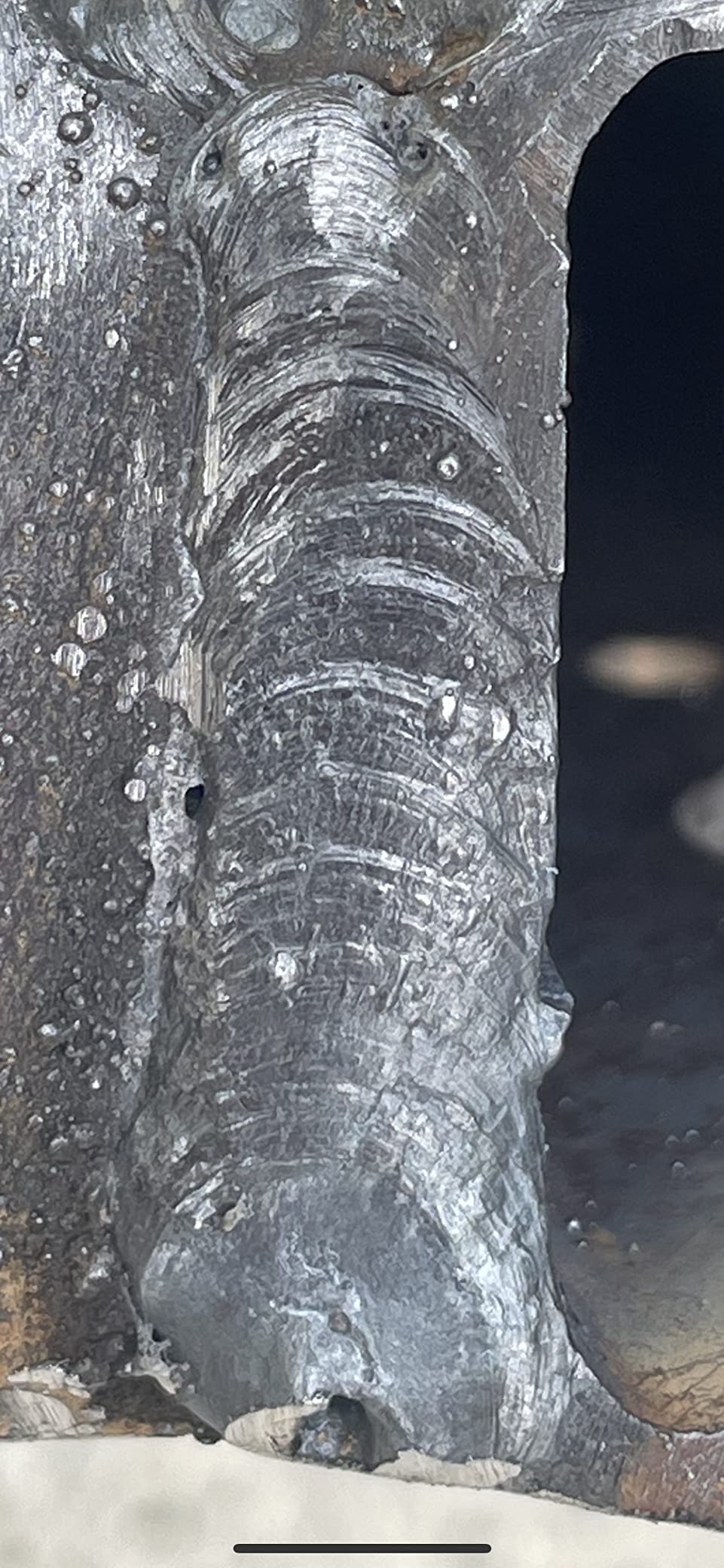
Rated output of 140 amps is the practical ceiling for wire feed on a 20A household circuit, and the manufacturer states it welds up to a quarter inch of mild steel. In practice that means a single-pass fillet on a Quick Hitch tab or a bucket adapter is comfortable, while a quarter-inch plate butt joint wants two passes and a bead prep you can hear through the whole barn.
If your work is mostly 3/16 inch and under, this machine has headroom to spare. If you regularly pull 3/8 inch plate for a dump trailer floor, look at the 200A class unit further down the list.
Two Knobs, No Display: The Case for Simplicity
There is no LED readout on this unit, and that is a feature more often than not. Two infinite-control knobs for wire speed and voltage mean there is nothing to mis-set, nothing to fault, and no firmware to update when a part ages out.
Newer inverters add a display because they can also do gas MIG, Lift TIG, and synergic modes that need matching. On a single-process machine like this one, the display would mostly tell you what you already set.
What It Is Bad At
This is a flux core machine and nothing else. There is no stick mode for a fence post driven into frozen ground, and no Lift TIG for a stainless repair or a patch on a mower deck where heat control matters. If you weld stainless even occasionally, the 4-in-1 units further down handle more of your jobs with one box.
It also weighs 19 pounds with an all-metal case, so it is sturdy rather than ultralight. That is a good trade for a machine that lives in a dusty unheated shop, and a worse one if you are moving it in and out of a truck bed every day.
2. ARCCAPTAIN 130A – Easiest Machine to Learn On for a First-Time Owner
ARCCAPTAIN 130A Flux Core Welder MIG Welder 110V Gasless MIG Stick Lift TIG
130A gasless flux core
Lift TIG and stick
Synergic auto setting
11.79 lb
+ Pros
- Synergic control matches current to wire feed speed for you
- Three processes in one compact 11.79 lb body
- Complete kit with wire tips clamp electrode holder and hammer
- Marketed for farm and road equipment repair
- Two-year manufacturer warranty
- Cons
- Lift TIG needs a separately purchased torch
- Included wire spool is only 2 lb
- Some early production needed service after light use
If you or a hired hand have never run a wire-feed machine, the synergic control is the feature that decides this one. You set a wire feed speed and the machine matches the voltage, which removes the single most common reason beginners produce ugly, spitting beads and give up.
It ranks near the top of its category with a 4.6 average across more than 1,800 ratings, and the accessory list is genuinely complete. Torch, ground clamp, electrode holder, contact tips, brush, chipping hammer, and a starter spool of flux wire are all in the box.
Why Synergic Control Matters More Than Amps
With a manual machine, every change of wire diameter or material thickness forces a matching voltage change. Owners of manual units describe constant fine-tuning as their top frustration. Synergic control stores the pairing so the operator only touches one knob.
That said, synergic is not magic. It covers carbon steel well with the included wire, which is the vast majority of farm repair work. It is a convenience, not a substitute for understanding what happens when you change thickness.
Three Processes, Two of Them Incomplete
Stick mode is here and works for fence posts, gate frames, and anything where you want to push a bead through dirty or rusted steel. Lift TIG is listed but requires buying a torch separately, which is the most common complaint in the reviews.
There is no shielding gas path for MIG, so stainless and aluminum are off the table. This is a gasless flux core machine with two extra processes attached.
Portability and the Truck Bed Test
At 11.79 pounds with a handle or shoulder strap, this is one of the easier machines to move from the shop to a fence line. That is exactly the use case it is built for, and the manufacturer markets it directly at farm and road equipment repair.
Two years of manufacturer warranty is longer than several machines in this group, which matters when the unit lives outdoors in a pickup between projects.
3. bestarc 145A 4-in-1 – The Best Choice for a Dual-Voltage Farm Shop
Bestarc 145A MIG Welder, Flux Core/Gas MIG Stick Lift TIG Welding, 110/220V
145A 4-in-1 machine
110/220V auto-detect
Welds .030 to .040 in
13.7 lb with strap
+ Pros
- Dual voltage auto-detect works in a shop garage or on a generator
- Synergic match with -3V to +3V fine trim
- Reviewers report better beads than pricier 125A machines
- Ships with flux wire solid wire and a 220V-to-110V adapter
- 13.7 lb body with shoulder strap
- Cons
- Torch lead was short on earlier production
- Earlier drive rolls flattened flux wire until revised
- Spool holder spring tension is not adjustable
- Stick output appears capped around 130 amps
This is the only machine here that detects 110V or 220V on its own and shows the selection on the front panel. If your farm shop has a 220V welder circuit and you also want the machine to run off a generator at a distant job site, that single feature removes the adapter juggling.
It also runs solid wire with shielding gas, which makes it the most versatile box on this list. Flux core for field work, gas MIG for a stainless trough or an aluminum part, Lift TIG for thin material, and stick for a post in frozen ground.
Gas MIG Capability: The Feature That Earns Its Keep
Most farms occasionally need stainless or aluminum, and neither works with self-shielded flux core wire. With solid wire and a gas hookup, this unit takes on a tray repair, a stainless feeder panel, or an aluminum bracket without buying a second machine.
The catch is the gas itself. Forum owners describe multi-hour round trips and bridge tolls just to exchange a bottle, which is exactly why flux core remains the daily driver and gas MIG is the occasional tool. Buying a machine that can do both means you only chase cylinders when the job truly requires it.
Voltage Trim and the Drive Roll Fix
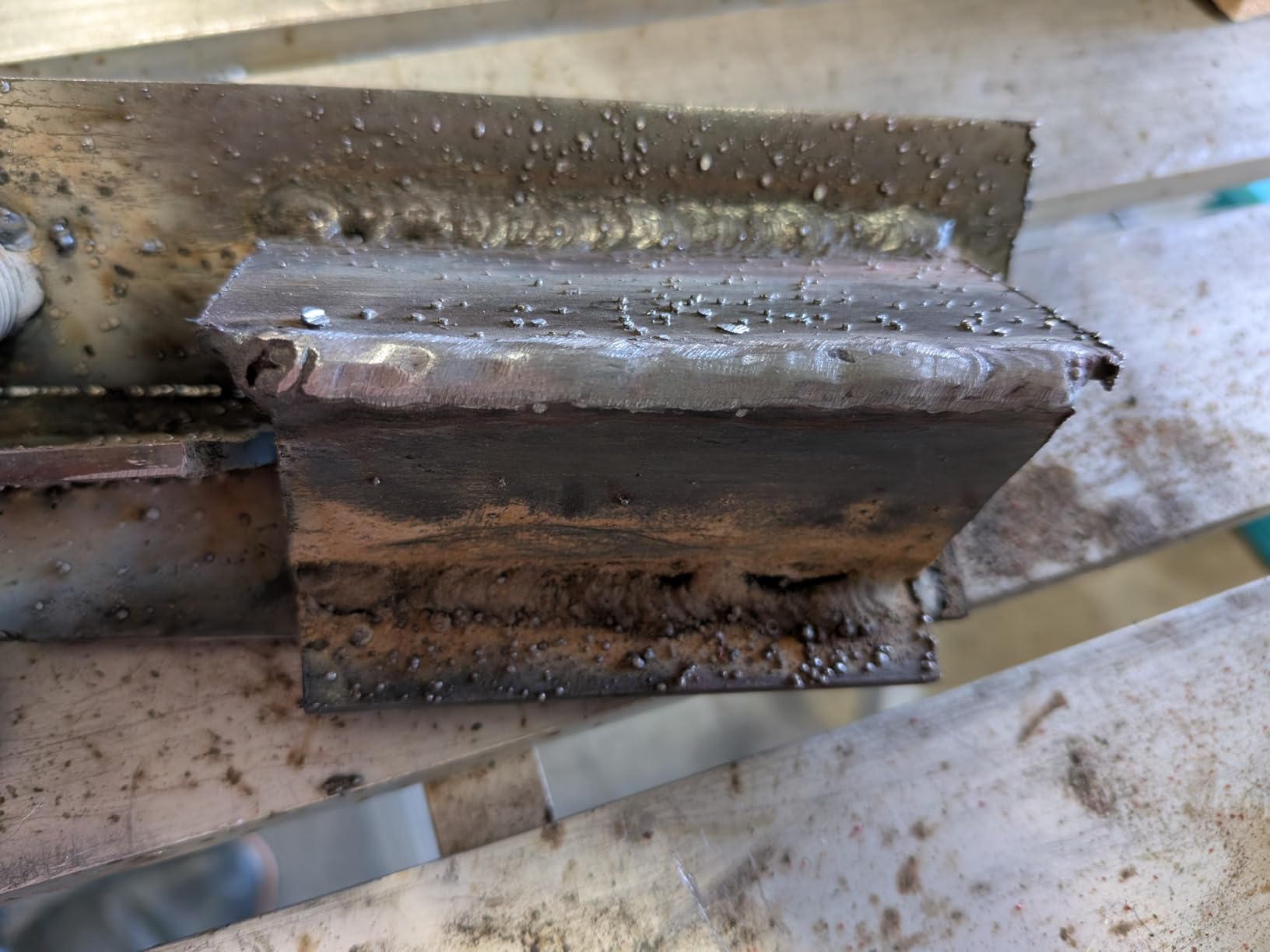
The synergic control offers a minus 3V to plus 3V trim, which is the difference between a bead that looks like a weld and a bead that looks like a weld. Experienced users in the reviews specifically say the output beats pricier 125A machines.
One honest note: earlier production ran v-groove drive rolls only, which flattened flux core wire and made feeding inconsistent. A long-running documented review on this model shows the manufacturer adding knurled rolls and lengthening the torch lead. Verify your drive rolls are knurled if you are buying an older unit.
Where It Falls Short
Stick output is capped around 130 amps according to detailed owner reports, so do not buy this expecting transformer-class penetration. The spool holder spring tension is fixed and can be too tight for a small spool, and the manual does not explain the push-in rotary knob used for manual wire feed.
It is the most complex unit in the group, and complexity costs attention. If you only ever weld rusted mild steel, you are paying for capability you may never touch.
4. AZZUNO 130A – The Lowest-Cost Way to Put a Welder in the Barn
AZZUNO MIG Welder,Flux Core Welder Machine 110V 130Amp, Gasless MIG Welding Machine IGBT Inverter Welder Portable Wire Feed Welder (110V)
130A IGBT inverter
Welds to 3.0 mm plate
8.6 lb portable
Includes full accessory kit
+ Pros
- Complete accessory kit at the lowest cost in this roundup
- Synergic auto setting with separate voltage and wire speed knobs
- 8.6 lb body carries easily to a field job
- Handles 2.2 lb wire rolls
- One-year manufacturer warranty
- Cons
- Thickness limited to roughly 3.0 mm mild steel
- Thin construction and entry-level consumables
- Only a one-year warranty
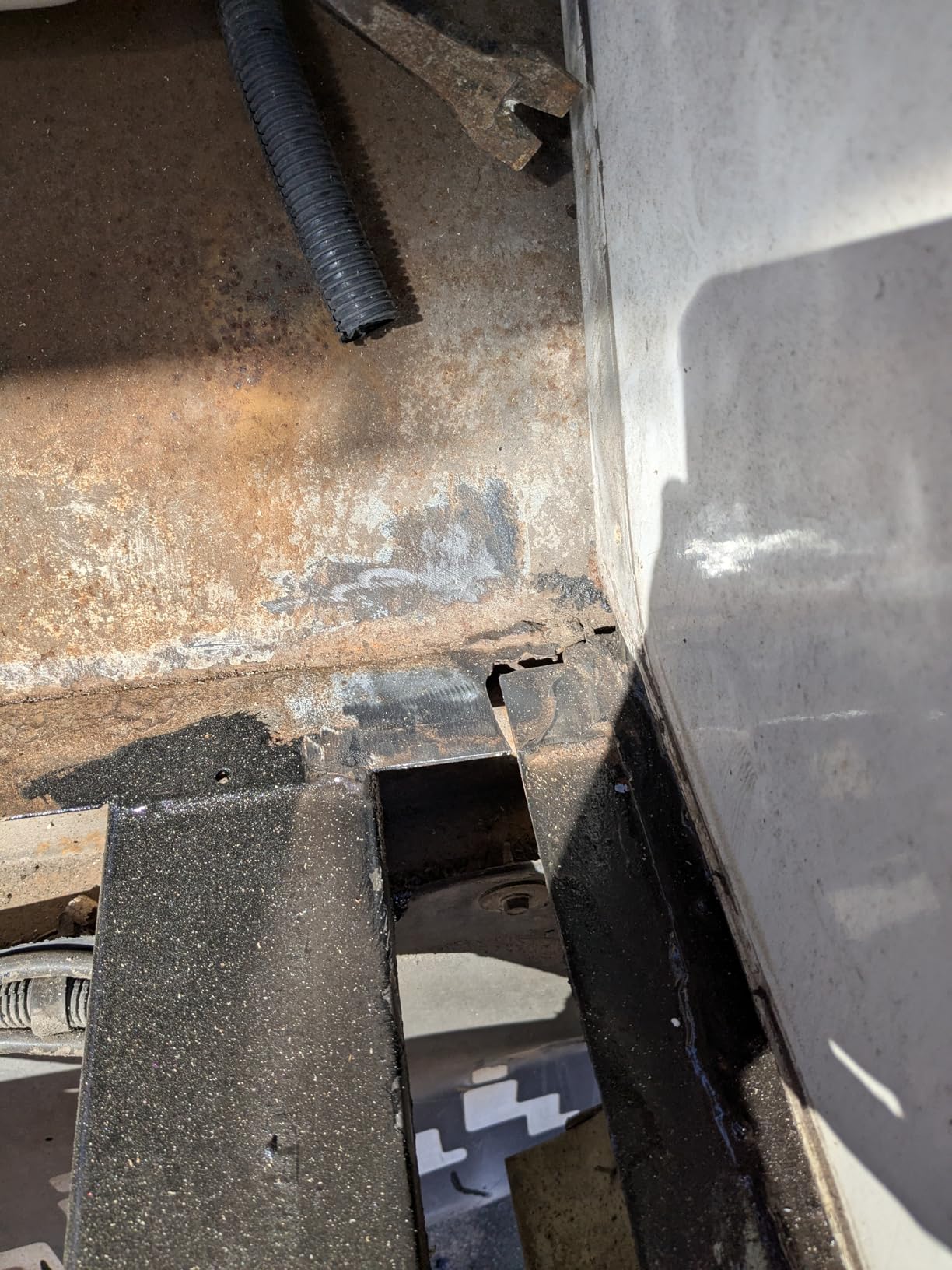
This is the machine for the repair that will not wait. A cracked cattle feeder bracket, a broken gate latch, a mower deck corner, jobs where the material is thin gauge or scrap steel and the goal is to make it hold, not to look pretty.
It rates a 4.5 across 890 ratings, and the accessory kit is the surprise. Torch, ground clamp, brush, chipping hammer, a pound of .030 in flux core wire, and two contact tips are all included.
Understand the 3.0 mm Limit Before You Buy
The stated capability is mild steel up to 3.0 mm, which is a little over 1/8 inch. That is honest for the class, and it is the reason this unit is not a farm-wide solution. Quarter-inch plate and anything heavier is outside what you should ask of it.
For a first weld shop, or a second machine that lives in a truck bed for roadside work, that limit is acceptable. For a full-time fix-it program, it is not.
Synergics on a Small Machine
Surprisingly, the auto-set works here too, with a separate voltage knob and wire speed adjustment on the control panel. On thin material you still want to trim voltage down by hand, since the automatic pair is tuned for a nominal setting.
The 8.6-pound listed weight is the smallest body here, which matters if your welding happens in a barn stall with no bench nearby.
Build Quality Reality
Owners treat this as a hobby and small-project machine. The iron construction and consumables are entry-level, and a single year of warranty is the shortest in the group. Expect to replace contact tips and nozzles rather than pass them along.
Matched against a heavier machine, it will not last a decade of daily fence work. Matched against a rental bill or a two-hour drive to a shop, it is hard to argue with.
5. YESWELDER 135A – Best Seller for Thin Gauge and Auto Body Panels
YESWELDER 135A MIG Welder, 110V Flux Core Gasless MIG/Lift TIG/Stick 3-in-1
135A DC output on 110V
Welds to 3/32 in mild steel
Synergic with 3V trim
11.4 lb
+ Pros
- Best selling welder in its category with nearly 3000 ratings
- Synergic auto setting plus 3V trim reduces burn-through
- Quiet inverter with an 11.4 lb carry weight
- Includes both .030 and .035 in E71T-GS flux wire
- Users report it never trips a 20A breaker
- Cons
- DC only with no aluminum capability
- Amperage display reads high in stick mode
- Lift TIG torch not included
- Cheap spool holder and consumables
With 2,985 ratings this is the most-reviewed machine here after the Forney, and that much owner history makes it the safest pick for someone who wants a proven unit rather than a gamble. It is also the best seller in MIG Welding Equipment, which tells you the same thing.
Where it shines is thin material. The rated 135A DC output on 110V welds mild steel to 3/32 inch, and the synergic control with plus or minus 3V micro-adjustment is exactly what stops a patch job from burning a hole in a tractor fender or a body panel.
Thin Gauge Control and the Auto Panel Use Case
Verified owner reports include garden tractor pulley bushings, exhaust work, and tow bar hitches. The synergic trim is the differentiator on a panel, because the window between too cold and burning through is narrow on 20 gauge steel.
Owners also report it has never tripped a 20A breaker on 110V, which is a practical guarantee that matters in a house with a shared circuit and a compressor in the barn.
What the Display Does and Does Not Tell You
The oversized LED readout shows live current, which is useful for learning and for confirming a setting across different joints. In stick mode owners report the amperage display reads roughly 10 to 15 amps high, so do not calibrate against it.
One control limitation trips people up: in flux core mode the voltage is tied to wire feed speed and cannot be set independently. Manual wire feed for a burn-in or a tacking pass is not available from the panel.
Where the Budget Shows
The spool holder, wire tensioner, stinger, electrode holder, and ground clamp are entry-level parts, and they are the first things to fail. There is no aluminum capability because the output is DC only for wire feed. The Lift TIG torch is not included.
A small number of owners report arriving with defects such as a missing power switch or a failed internal board. At this review volume, those are isolated rather than systemic, but inspect the machine on arrival.
6. TOOLIOM 135A – A Complete Starter Kit With Gloves Included
TOOLIOM 135A 110V Gasless Flux Core MIG Welder Kit with Wire and Gloves
135A DC inverter
Welds to 1/6 in mild steel
Hot Start and Arc Force
11.24 lb with handle
+ Pros
- DC inverter output gives less spatter than transformer machines
- Owners report welding 1/4 in steel without blowing a household circuit
- Kit includes welding gloves and wire
- Synergic setup shortens the learning curve
- Compact body with a carry handle
- Cons
- TIG torch not included despite Lift TIG support
- Torch trigger has no lock so wire feeds while carrying it
- Ground clamp and cables are short and cheap
- Internal board mounted on three corners can break in transit
Users with real shop experience point out the honest reason to like this one: DC inverter output throws noticeably less spatter than the old transformer high-frequency machines most farms still own. Less spatter means less chipping, less cleanup, and a bead you can grind less.
It runs 135 amps and penetrates mild steel up to 1/6 inch with .030 and .035 in wire. Owners also report welding quarter-inch steel without tripping a household circuit, though I would treat that as the upper edge rather than a daily rating.
Wire Feed Speed Range and What It Means at the Torch
The stated feed range is 120 to 420 in per minute for .030 in wire and 120 to 308 in per minute for .035 in. That spread is wide enough to cover everything from a thin body panel fillet to a structural bracket fillet without changing machines.
Hot Start and Arc Force are included, which means the arc strikes without a scratch-start strike and resists sticking when you push into a cold joint with rust and paint still on it.
The Detail That Will Annoy You Most
The torch trigger has no lock, so the wire feeds while you carry the gun. On a farm that means walking to the truck with the spool turning. Owners work around it, and it is the single most-cited irritation in the reviews.
Cables and the ground clamp are short and cheap, and the internal circuit board is mounted on only three corners, which reviewers flag as a transit risk. Some units have failed after a single use with unhelpful support, and the 69 percent five-star share is the lowest here.
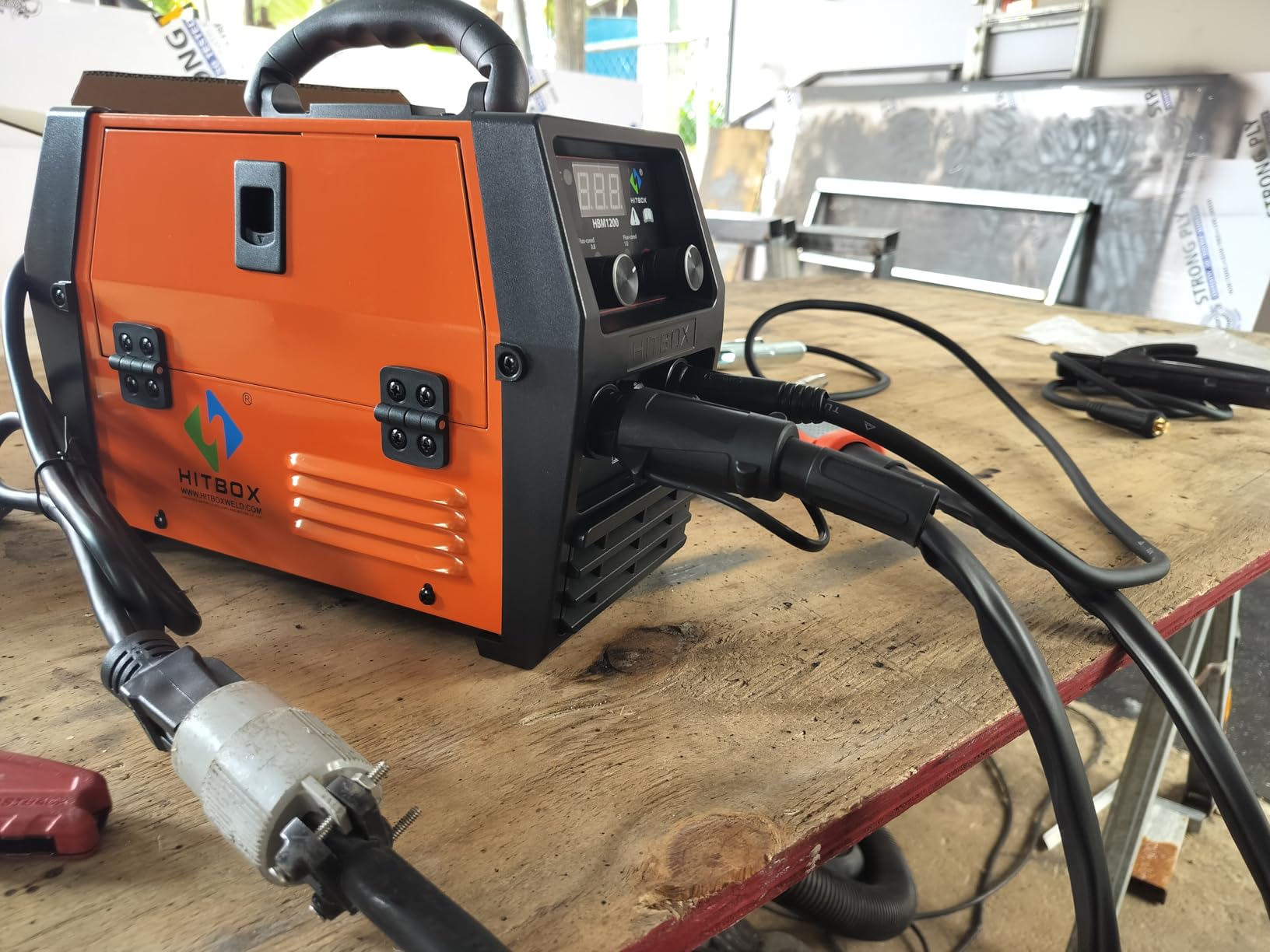
7. HITBOX 200A – The Most Output You Can Carry in One Hand
HITBOX 200A MIG Welder, 110V/220V Flux Core MIG/Lift TIG/Stick 3-in-1
200A IGBT inverter
110V and 220V input
Welds to 4.0 mm plate
8.6 lb with handle
+ Pros
- 200A rating gives the most headroom in the budget group
- Dual voltage uses a shop circuit when one is available
- 8.6 lb body is highly portable
- Verified work includes mower deck brackets and tube projects
- Cons
- Measured output runs 20 to 30 percent below the display
- Ground clamp warped with repeated use
- Stick mode limited to smaller rods without hot start
- Accepts only 2 lb wire spools
The number on this box is 200 amps, and that is the whole pitch. Flux core MIG is clearly the strong suit here, with owners reporting a consistent arc and smooth wire feed, and the verified repair list includes lawnmower deck brackets and tube work.
At 8.6 pounds it is one of the most portable machines on this list, and the dual voltage input means it can use a shop circuit when one is close by and a household outlet when it is not.
Peak Amps Versus Measured Reality
One detailed review measured actual current running 20 to 30 percent below the displayed value. That is exactly the marketing inflation farm owners complain about, and it is worth internalizing before you plan a heavy plate job around the 200A label.
Treat it as a strong 140A to 160A class machine in practice. That is still the most capable output here for the money, but it is not a transformer-class 200 amp unit.
Where the Extras Fall Down
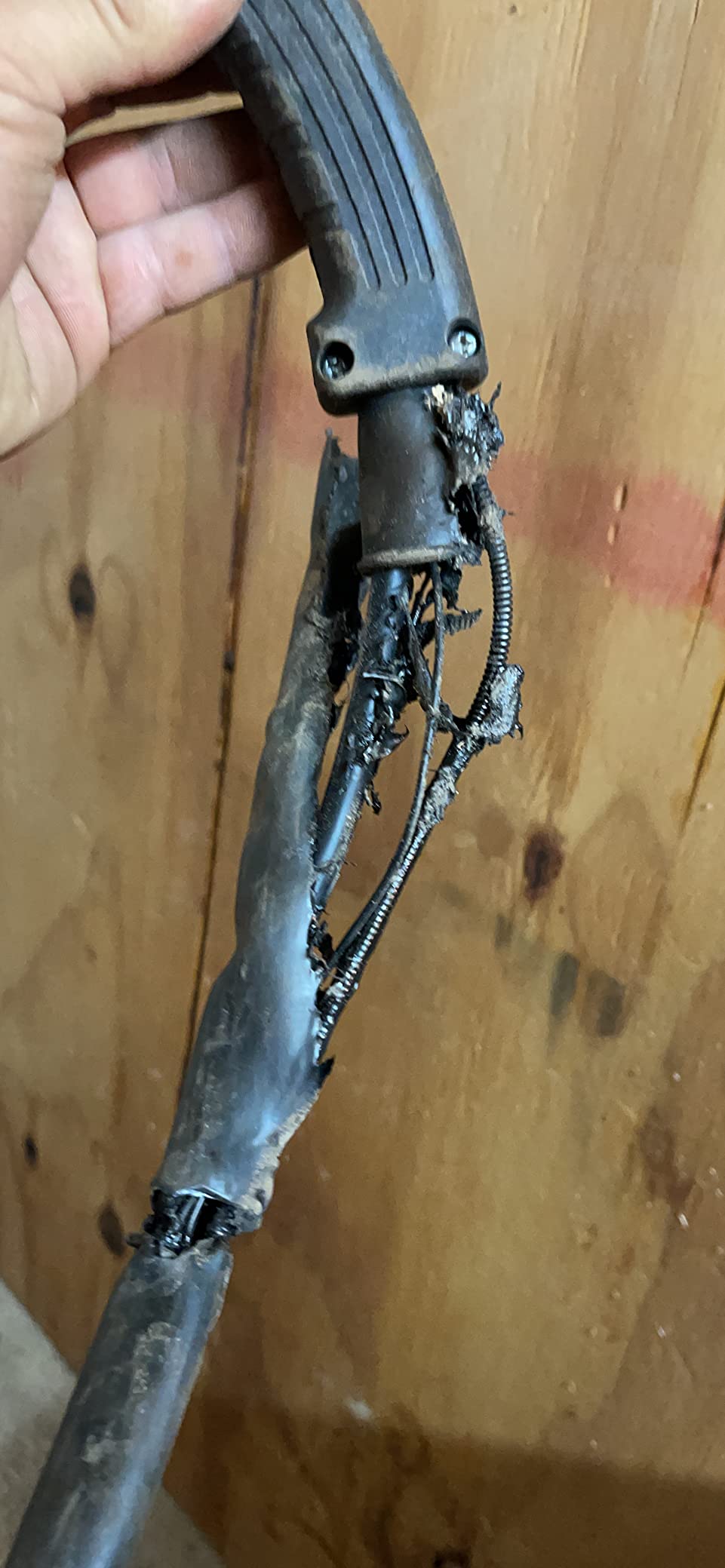
Stick mode is the weak sibling. It handles smaller rods, lacks hot start, and is not something to rely on for a frozen-ground fence post. Lift TIG is present in name but is not a process anyone praises.
The spool holder accepts only 2 lb rolls, and the ground clamp warped with repeated use according to owners. The instruction booklet is hard to follow and support is minimal, so budget time to work out the settings yourself.
8. S SIMDER 140A – The Lightest Dual-Voltage Option for Farm Work
SSimder 140A MIG Welder 3 in 1, Dual Voltage Flux Core Lift TIG Stick
140A 3-in-1 machine
110V and 220V dual voltage
7.7 lb body
Contact ignition Lift TIG
+ Pros
- Weighs just 7.7 lb for a truck bed or garage shelf
- Dual voltage covers 110V outlets and heavier 220V work
- Contact ignition avoids WiFi and Bluetooth interference
- Stated for tractor brackets fence wire and trailer hitches
- Two-year manufacturer warranty
- Cons
- No aluminum capability
- WP17V TIG torch sold separately
- Leads are short at about four to six feet
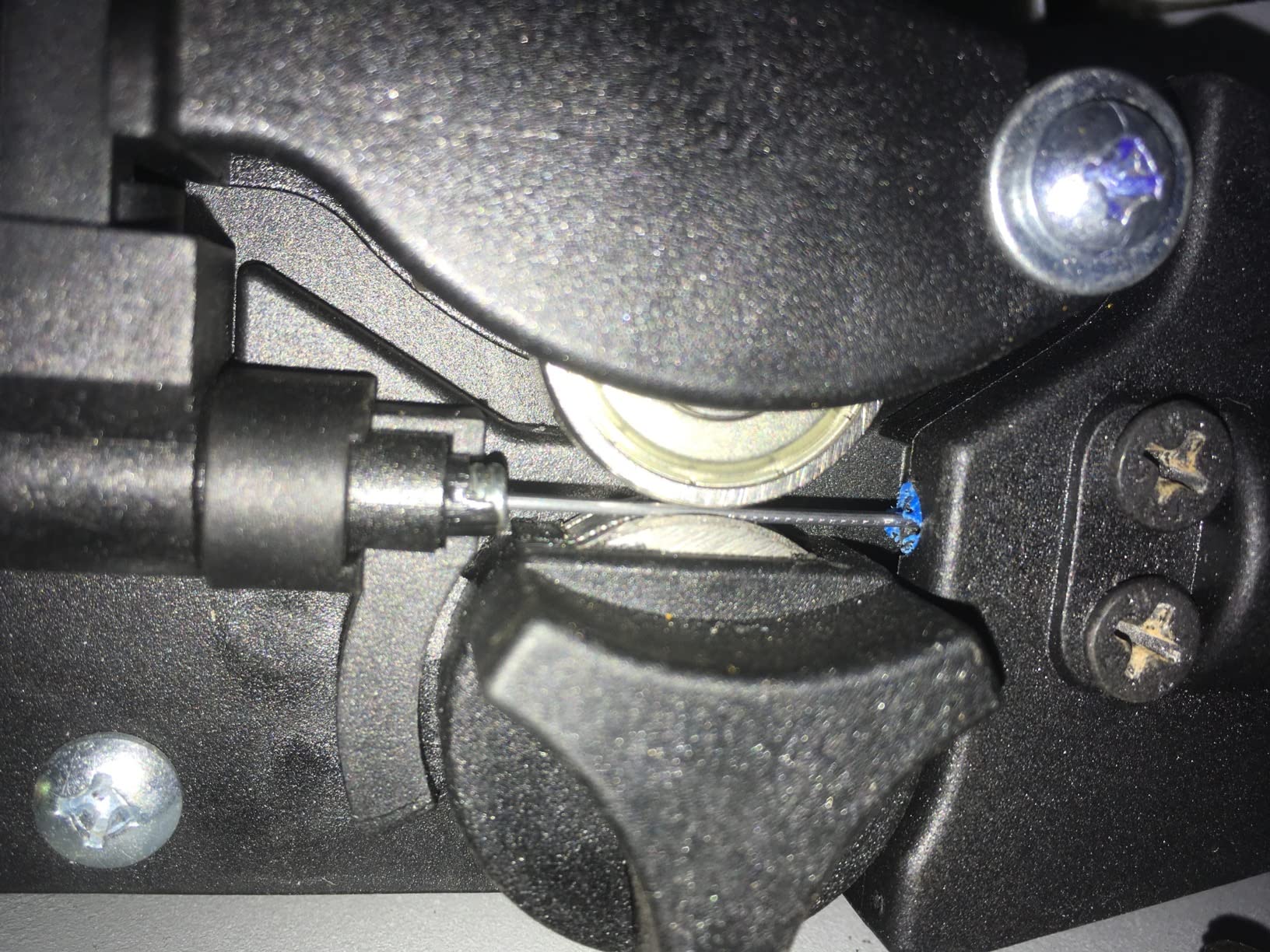
- Changing from wire to stick means purging several feet of wire
At 7.7 pounds this is the lightest machine here, and the manufacturer describes it explicitly for farm repair: tractor brackets, fence wire, trailer hitches, and ATV parts. The dual voltage means one box covers a household outlet and a shop circuit.
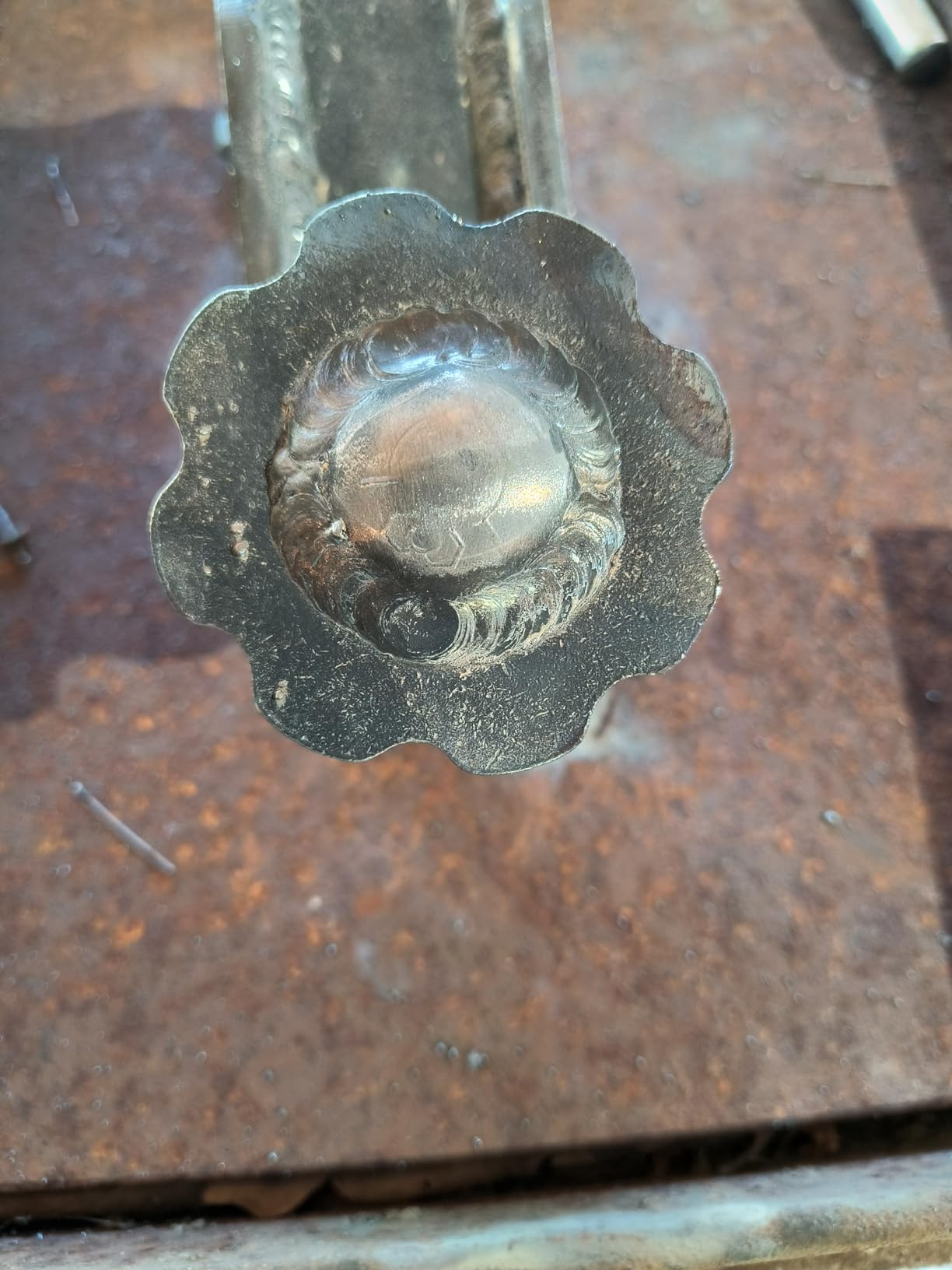
The material list is broader than most gasless machines. Owners report welding carbon steel, low-alloy steel, stainless, titanium, copper, and cast iron in flux core, and there is a two-year manufacturer warranty that the company has honored on a replacement claim.
Cast Iron and Copper: Rare Claims Worth Testing
Cast iron and copper are not common farm repair materials, but they do show up on an old cast iron implement or a copper grounding strap. If you work on cast iron at all, this is the only unit in the group that lists it, and the TIG process is the better path for crack-prone castings.
Treat the claims as starting points and test on scrap of the same alloy before trusting them with a part you cannot replace.
Contact Ignition Instead of High Frequency
High-frequency TIG start can interfere with WiFi networks and Bluetooth devices, which matters in a modern shop and in a home office nearby. This machine uses contact ignition for Lift TIG, which avoids that interference entirely.
The cost is a slightly less comfortable strike, and the WP17V TIG torch is a separate purchase. Many owners never bother, since flux core is the process they actually use.
Short Leads and the Manual Mismatch
The power cord and leads run about four to six feet, which is short for a machine meant to reach around a trailer frame. The manual covers a different model and has no settings charts, so plan on working out the wire and voltage pairing yourself.
Switching from flux core to stick requires purging several feet of wire, a few wasted minutes every time you change processes. Plan your process changes around it rather than mid-job.
9. Lincoln Electric 90i FC Weld-PAK – The Best-Rated Machine in the Group
Lincoln Electric 90i FC Flux Core Wire Feed Weld-PAK Welder, 120V Welding Machine, Portable w/Shoulder Strap, Protective Metal Case, Best for Small Jobs, K5255-1
90i FC 120V flux core
Welds up to 1/4 in steel
15 lb inverter
Metal case and strap
+ Pros
- Best rated in the group at 4.7 with 84 percent five-star
- Switching-type inverter design weighs only 15 lb
- Owners report weld quality equal to or better than a transformer Lincoln 140
- Two controls are easy for a first-time welder
- Consumables for this model are easy to source
- Cons
- Flux core wire spatters noticeably
- Ground braid on the earth clamp is short
- Flux core wire is not included
- Single process only
Lincoln has been making farm welders longer than most of these brands have existed, and that shows up in parts availability rather than in any headline spec. This is a 15-pound inverter that welds up to a quarter inch on 120V, and it carries the highest rating in our group at 4.7.
Owners with shop experience report weld quality equal to or better than an older transformer Lincoln 140, which is a meaningful comparison because the transformer model is a farm benchmark. Verified work includes a tractor grader blade repair, 14 to 18 gauge stainless tables, and sheet metal restoration.

Why 15 Pounds Changes the Job
A switching-type inverter design sheds weight compared with a conventional transformer of the same class. At 15 pounds with a shoulder strap, this is the machine you can carry from the shop to a gate, or to the far corner of a barn without asking for help.
It also comes with a protective metal case. For a machine stored in a dusty, unheated farm shop, that matters more than the feature list suggests.
The Parts and Consumables Advantage
Contact tips, nozzles, drive rolls, and gun liners for this model are easy to source through any welding supply shop or online distributor. When a consumable wears out at 6pm on a Sunday, that is worth real money.
It is also a single-process machine. There is no stick and no TIG, so plan a second box only if your repair mix demands it.
Where Owners Disagree With Each Other
The most consistent complaint is spatter, which is inherent to self-shielded flux core and not a defect. More legitimate is the ground clamp: owners report the braid is too short and detached after a few welds, so replace it early with a proper spring clamp.
Flux core wire is not included in the package, and the build quality is a step below Lincoln’s higher-end products. You are buying the name, the rating, and the parts network.

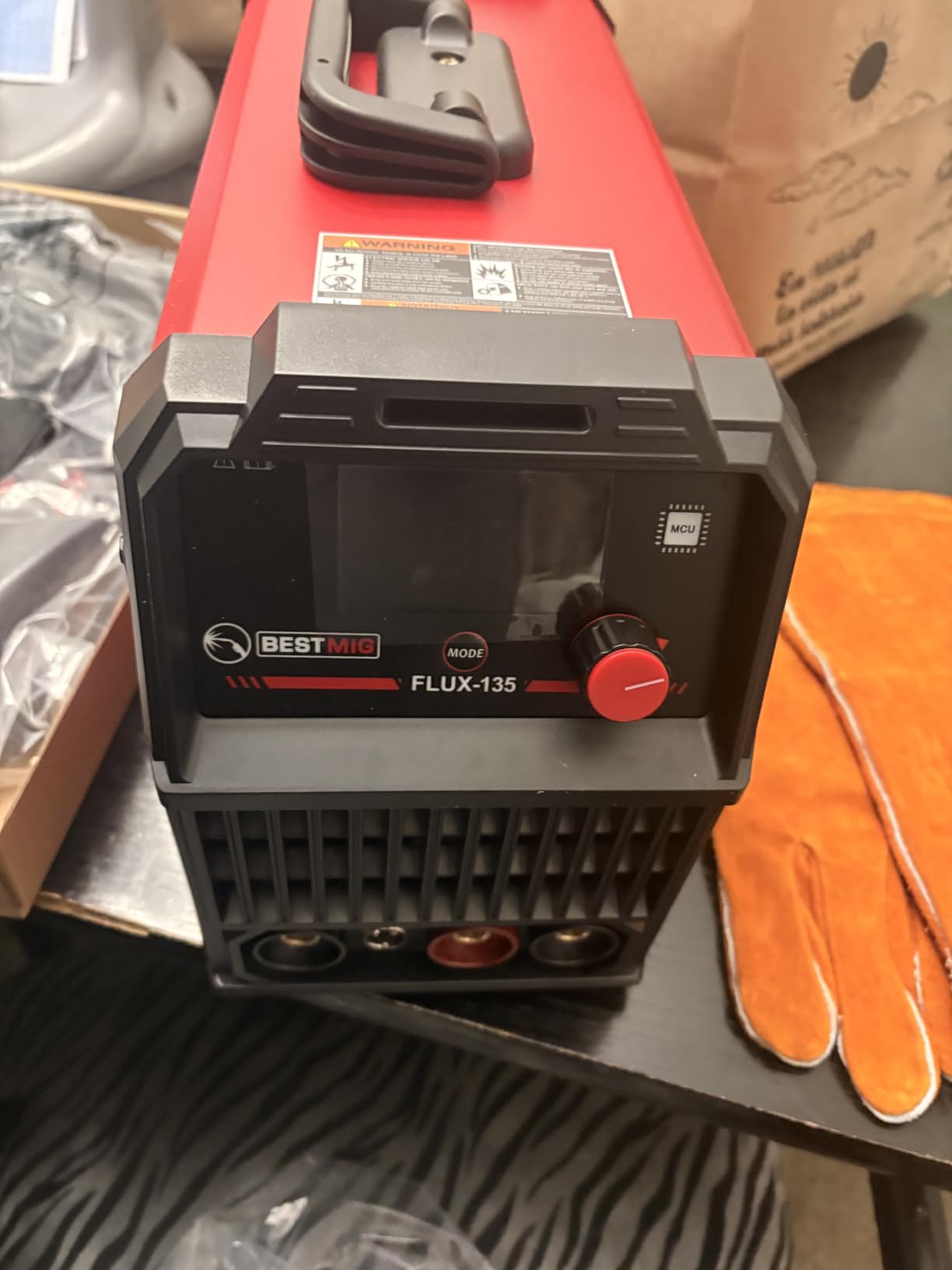
10. BESTMIG 135A – The Only Box Here With a Helmet in the Kit
BESTMIG 135A MIG Welder – 3-in-1 Flux Core Welder, MIG/Lift TIG/Stick Welding Machine – Portable IGBT Inverter – 110V with Welding Helmets and Gloves (Red Black, MIG 135A Welder)
135A 3-in-1 machine
Welds up to 1/8 in
0.030 to 0.040 in wire
10.71 lb body
+ Pros
- Only machine in the group that includes a welding helmet and gloves
- Full-color LED display with live parameter monitoring
- 10.71 lb body moves easily between a shop and a job
- Works with .030 .035 and .040 in flux wire
- Auto-adjusting wire feed reduces spatter
- Cons
- TIG torch not included
- Soldered-down accessories missing on a few orders
- Torch cable connector size reported mismatched on one
- Limited to 1/8 inch material thickness
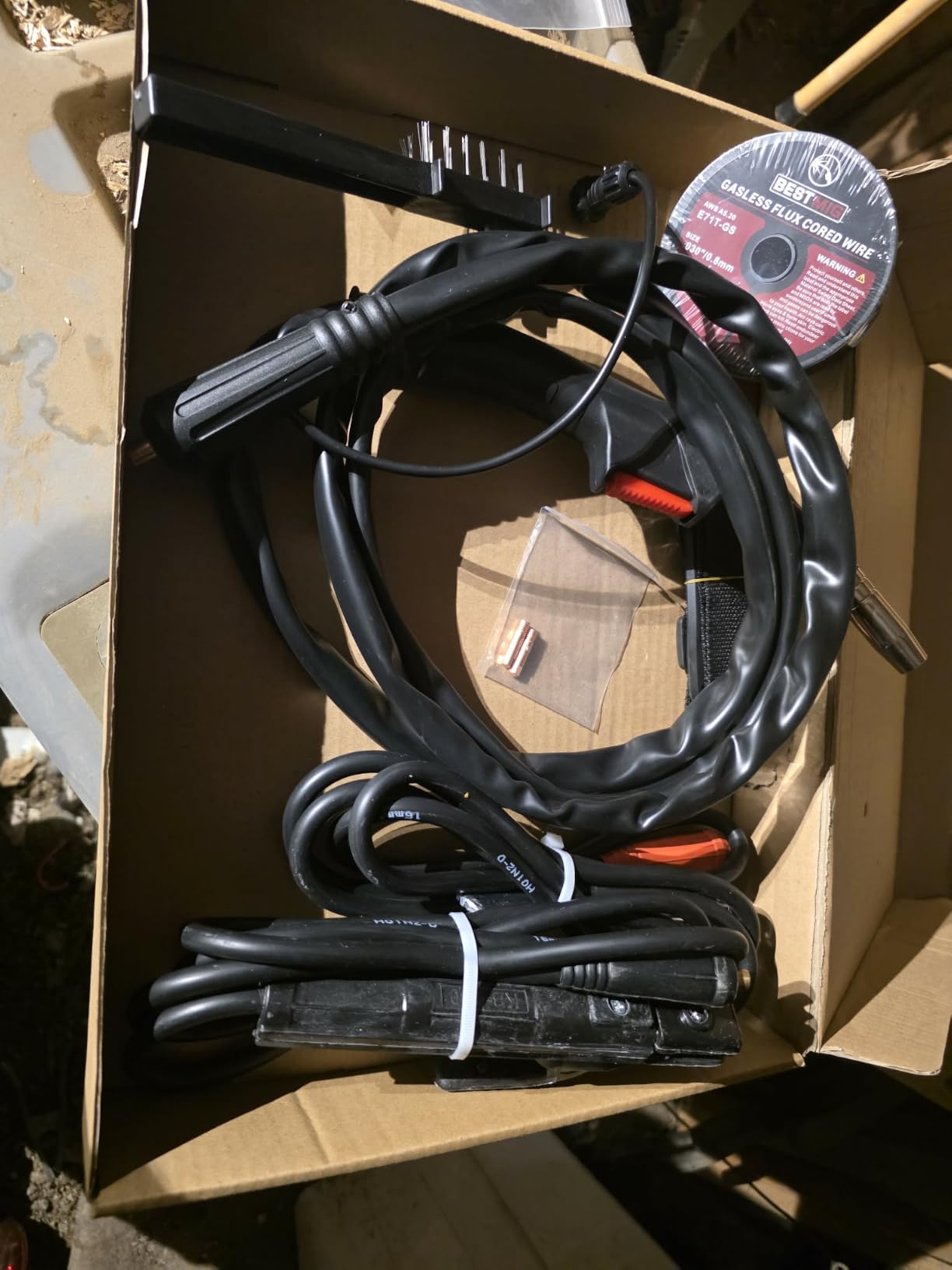
You cannot weld without a helmet, and most machines in this class do not include one. This is the exception: the kit contains an auto-darkening welding helmet convertible to goggles, plus leather gloves, a wire brush, flux core wire, and all three leads.
That makes it the fastest path from an unopened box to a finished gate repair for someone starting from zero equipment, which is a real advantage for a farm that has never owned a welder.
Full-Color Display and Auto Wire Adjustment
The display shows live welding parameters in full color, which is clearer in a dusty barn or direct sun than the monochrome panels on some budget machines. The integrated wire feed system auto-adjusts voltage and feed speed to reduce spatter.
Wire compatibility spans .030, .035, and .040 in gasless flux core on stainless and carbon steel, which is a wider range than most machines at this output class.
The 1/8 Inch Ceiling Is the Catch
This welds material up to 1/8 inch thick. That covers mower decks, brackets, and light gate hardware, but it rules out the quarter-inch implement plate that dominates farm repair work.
Buy it as a complete starter package or as a second small machine, not as the only welder on the place. A handful of owners also report missing advertised accessories or a torch cable with the wrong connector size, so check the box contents before your first job.
How to Choose a Flux Core Welder for Farm Repairs
110V or 220V: Which Input Actually Fits Your Shop
Choose 110V if your repairs happen in barns, sheds, and field gates far from a shop circuit. A 135A to 145A machine on 110V is genuinely limited by the outlet, and several machines here measure below their displayed output under that load.
Choose dual voltage when you have a 220V circuit available but also need to run from a generator or a remote outlet. Three units here do both, and the bestarc detects its input automatically. A dedicated 30A circuit is what you want for full 110V output, and a 20A household circuit is a compromise rather than a target.
Duty Cycle Versus Peak Amps for Quarter-Inch Implement Steel
Duty cycle is the percentage of a ten-minute cycle the machine can weld at a stated output. A 140A machine at a 30 percent duty cycle gives you three minutes of welding and seven of cooling, which is fine for fillets and frustrating for a long seam on a trailer frame.
For quarter-inch implement plate, budget real amperage rather than a headline number. Single-pass fillets on a Quick Hitch tab or bucket adapter want 140A class machines. Sustained work on quarter-inch and heavier plate wants a 200A class unit, ideally on 220V, with a duty cycle you can live with across a full afternoon.
Wire Diameter: .030 vs .035 vs .045 and Why Drive Gears Matter
For most farm repair work, .030 in self-shielded E71T-GS wire is the safe default. It feeds easily, fits the spools on nearly every machine here, and handles thin material to about a quarter inch with the 140A class units.
Step up to .035 in when you are working 3/8 inch plate or doing multi-pass work on thicker joints. Do not start with .045 in unless your machine is rated for it, because a lighter machine simply cannot feed that wire and the result is a stalled, burning gun.
Check two things before you buy. The drive rolls should be knurled, because v-groove rolls flatten self-shielded wire and cause feeding problems. And unwind the gun hose fully so the liner does not kink and restrict wire travel. Also, buy your own wire. Bundled spools are frequently the weakest consumable in the box, and forum owners disagree sharply on whether any brand is good, so pick a known E71T-GS spool from a welding supplier rather than trusting what is in the box.
What a Farm Welder Should Not Be Asked to Weld
Galvanized steel and aluminum are the two metals a flux core machine cannot handle. Galvanized coating fumes are toxic and the zinc contaminates the bead, and aluminum requires a spool gun and alternating current that only a gas-capable multi-process machine provides.
Cast iron is a third category. It can be welded with nickel iron rod in stick mode, and one unit here lists it for flux core, but most farm welders are the wrong tool for it. Very thin sheet metal also punishes flux core, which runs hot and spatters; gas MIG or TIG is far kinder to a panel. For a body panel on an old tractor, borrow or rent rather than fight it.
Safety Gear and Field Power Setup
An auto-darkening helmet in the shade 9 to 13 range, leather gauntlet gloves, a flame-resistant jacket, and a fire extinguisher within reach are the minimum for open-air welding. Many farms weld in an open barn stall because of fire risk, which is exactly where wind becomes your welding partner.
Wind is the one condition that beats flux core. Self-shielded wire tolerates breeze that would destroy a gas-shielded bead, but a strong gust will still blow slag and spatter. A simple windscreen of two sheets of plywood or a piece of sheet metal solves it. For power, a generator needs to be sized well above the machine’s input draw, and a heavy extension cord matters more than any setting on the panel.
Frequently Asked Questions
What type of welder is best for farm work?
A 110V gasless flux core welder rated at 135A to 140A is the best fit for most farms, because self-shielded wire needs no gas cylinder and works in wind and dust. It handles gates, fence posts, implement brackets, and mild steel up to a quarter inch. Add stick mode for frozen ground posts, and step up to a 200A unit on 220V if you regularly weld plate thicker than a quarter inch.
Is .030 or .035 flux core wire better for farm repairs?
Use .030 in E71T-GS wire for most farm jobs. It feeds smoothly through the small spools on budget machines and covers thin gauge through quarter-inch mild steel, which is where most repair work sits. Step up to .035 in for 3/8 inch plate and multi-pass joints. Avoid .045 in unless the machine is rated for it, and make sure your drive rolls are knurled so the wire is not flattened.
Can a 135 amp flux core welder handle 1/4 inch implement steel?
Yes for single-pass fillets, with caveats. A 135A to 140A machine welds quarter-inch mild steel in flux core comfortably on tabs, brackets, and hitches, but sustained work on quarter-inch plate or anything heavier will push the duty cycle. For trailer frames and dump beds, a 200A class machine on 220V is the better tool. Also expect measured output to run below the display on some budget models.
What are the downsides of flux-cored welding?
The main drawbacks are spatter, which needs a chipping hammer after nearly every job, and heat. Flux core runs hotter and less controllably than gas MIG, so thin sheet metal is easy to burn through. It cannot weld aluminum or galvanized steel, it is harder to control voltage independently in some models, and the process is limited to solid wire feed. It also produces more fume and more cleanup than gas-shielded welding.
Can you weld aluminum or galvanized steel with a flux core welder?
No to both. Aluminum needs alternating current and a spool gun, which only a multi-process machine with shielding gas capability can provide, and self-shielded flux core wire cannot weld it. Galvanized steel should not be flux core welded at all, because the zinc coating contaminates the bead and produces toxic zinc oxide fume. Weld galvanized steel with stick mode outdoors, or bolt it instead. Very thin panels are better done with gas MIG or TIG.
Why are my flux core welds so bad?
Check five things in order. First, ground clamp placement, because a poor connection causes poor penetration and spatter. Second, wire feed speed and voltage, which on a manual machine must be matched to the wire diameter. Third, travel speed, since pushing too fast produces a thin, cold bead. Fourth, surface preparation, because flux core handles rust but not thick paint or scale. Fifth, tip condition, since a worn or oversized contact tip sprays the wire and ruins the arc.
Do flux core welders work outdoors in the wind?
Far better than gas-shielded MIG, because self-shielded wire carries its own shielding agent. A light breeze is not a problem. A strong direct wind will still blow the shielding effect away and blow slag off the bead, so put up a simple windscreen of plywood or sheet metal when the wind picks up. Also fire risk is the reason many farms weld in open-air barn stalls, so keep an extinguisher within reach and clear dry grass before striking an arc.
Final Verdict: Which Flux Core Welder Belongs in Your Truck Bed
If you want one machine that handles the widest range of farm repair work and you will plug it into a standard outlet, the Forney Easy Weld 140 is the pick. It has the most owner history in this group, an all-metal case, and quarter-inch capability.
If you can find a 220V circuit and want to occasionally do stainless or aluminum, the bestarc 145A covers the widest job list with one box. If you want the best rating and easy parts, the Lincoln 90i FC is hard to argue with. If you are starting from nothing at all, the BESTMIG kit gets you a helmet and gloves in the box.
Whatever you choose, buy your own knurled drive rolls, a proper ground clamp, and a known spool of E71T-GS wire. That small kit costs less than returning a machine. The right best flux core welder for farm repairs is the one that starts every time, spits less than you expect, and lives somewhere dry when the job is done.