
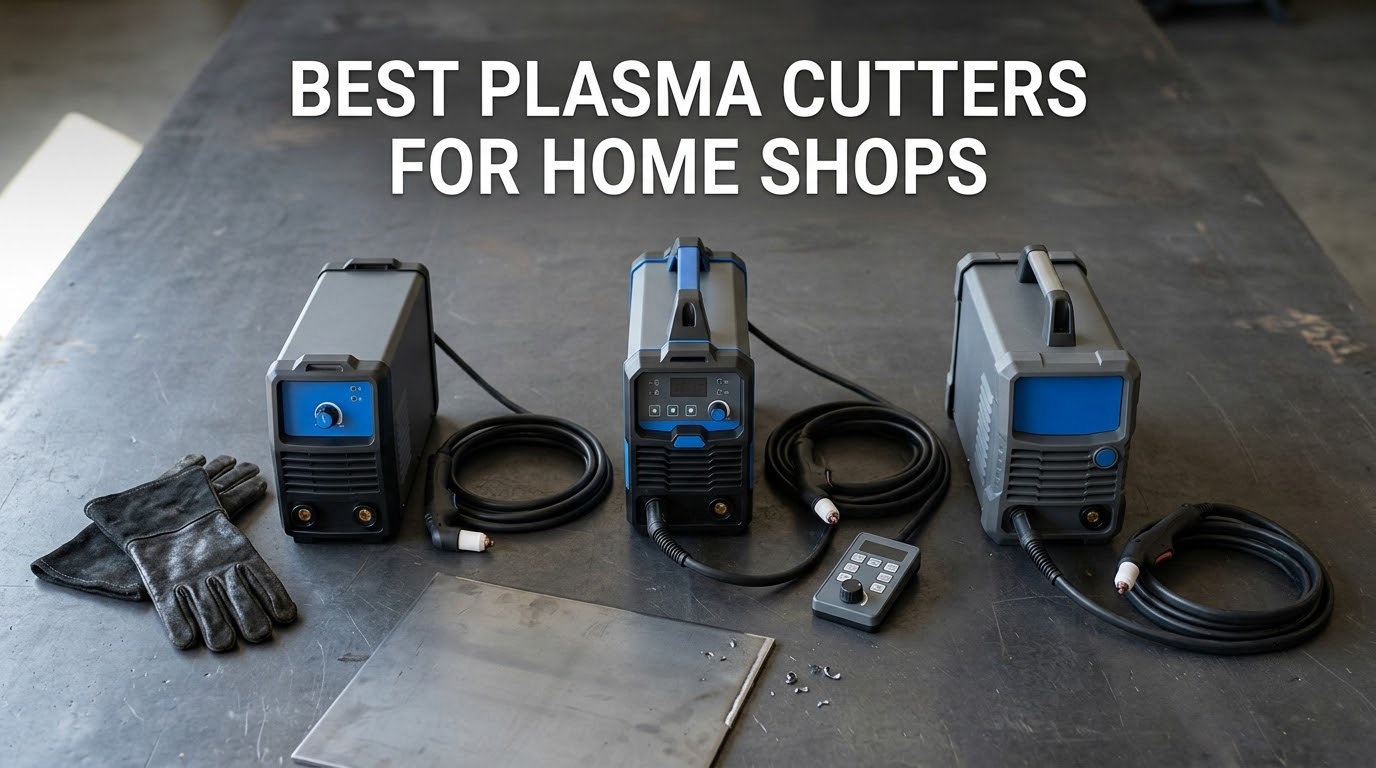
The best plasma cutters for home shops are the machines that hold a steady arc on dirty, painted or rusty steel without dragging a grinder through the garage dust. My short answer: a 55 amp inverter with a non-touch pilot arc and 110V/220V dual voltage covers almost everything a home shop throws at it, and the LOTOS LTP5505D is the one I put on the bench first. Last updated for October 2026, after comparing ten machines side by side on amperage, ignition type, air demand and cut capacity.
Plasma cutting replaces the abrasive cutoff wheel. A torch ionizes compressed air into an arc roughly four times hotter than an oxy-fuel torch, melting a narrow kerf and blowing the molten metal out as dross. No dust, no grinding wheel bind-up on thin sheet, and the cut edge usually needs far less cleanup than a wheel-cut edge on the same material.
How many amps is a good plasma cutter? For a garage that mostly cuts sheet metal, 1/8 inch plate and occasional 1/4 inch steel, 40 to 50 amps is the sweet spot. Push to 55 or 60 amps if you regularly cut 3/8 inch plate or thicker structural steel, and stay at 40 amps or below if you mostly slice 16 gauge and 20 gauge sheet.
I have watched owners on home shop machining forums for years, and the same three complaints repeat constantly: wet air from an old compressor tank killing consumables, a thin extension cord strangling inverter output, and a torch dragged on the work like a stick electrode. None of those are cutter faults, and all three are avoidable before you spend money.
What follows is a straight comparison of ten machines that sit in the range most home shops actually shop in, plus a buying guide that translates amperage and duty cycle into minutes of actual cutting. I have kept honest weaknesses in each review, because a list with nothing but praise tells you nothing.
Top 3 Tested Plasma Cutters for Home Shops in 2026

LOTOS LTP5505D 55A
- 55A inverter with rust removal mode
- Non-touch pilot arc torch
- 5/8 inch rated clean cut
- Automatic 110V/220V

PrimeWeld CUT50D 50A
- 1/2 inch clean cut
- Automatic 110V/220V AC
- Pre-installed air filter and regulator
- Responsive US support
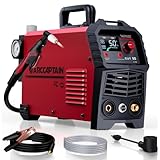
ARCCAPTAIN CUT50 50A
- 50A IGBT inverter
- 2/3 inch max cut
- LED display with error codes
- 13 lb portable body
The LOTOS LTP5505D earned the top spot because it does the one thing a home shop actually needs: it starts on oxidized metal without a strike, carries a built-in air regulator, and weighs 16 pounds. The PrimeWeld CUT50D has the highest average rating in the group at 4.7 and the tightest complaint spread, and the ARCCAPTAIN CUT50 is the shortest path from an empty garage to clean cuts on 1/2 inch stock.
Comparing Every Plasma Cutter in This Roundup
| Product | Details | |
|---|---|---|
| LOTOS LTP5505D 55A Plasma Cutter |
|
Check Latest Price |
| ARCCAPTAIN 50A Dual Voltage Plasma Cutter |
|
Check Latest Price |
 TOOLIOM 50A Non-Touch Pilot Arc Cutter TOOLIOM 50A Non-Touch Pilot Arc Cutter |
|
Check Latest Price |
 YESWELDER 60A Non-HF Plasma Cutter YESWELDER 60A Non-HF Plasma Cutter |
|
Check Latest Price |
| PrimeWeld 50A Air Inverter Plasma Cutter |
|
Check Latest Price |
 ARCCAPTAIN iControl CUT55 Pro ARCCAPTAIN iControl CUT55 Pro |
|
Check Latest Price |
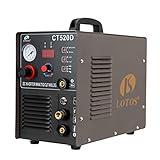 LOTOS CT520D 3-in-1 Combo LOTOS CT520D 3-in-1 Combo |
|
Check Latest Price |
 PrimeWeld CUT50DP Dual Frequency PrimeWeld CUT50DP Dual Frequency |
|
Check Latest Price |
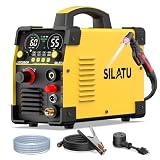 SILATU STC550P 55A SILATU STC550P 55A |
|
Check Latest Price |
 GZ GUOZHI CUT-50 50A GZ GUOZHI CUT-50 50A |
|
Check Latest Price |
One note on the numbers in that table. Brands advertise maximum severance thickness, which is the point at which the machine chews a hole in the metal, not the thickness it cuts cleanly for production work. Judge every machine on clean cut capacity and treat the severance figure as a rough ceiling.
1. LOTOS LTP5505D 55A – Rust Removal Mode and Pilot Arc in 16 Pounds
LOTOS LTP5505D 55A Pilot Arc Plasma Cutter with Rust Removal Mode
55A inverter, rust removal mode, 5/8 inch rated clean cut, 110V/220V
+ Pros
- Non-touch pilot arc starts without touching the work
- Built-in air regulator and water cup filter
- Rust removal mode handles oxidized and coated steel
- Light 16 pound body with a 10 inch cube footprint
- Cons
- Documentation is thin for beginners
- Ground clamp lead is shorter than the torch lead
- Air fittings can arrive loose
This is the machine I keep recommending first to home shop owners, and the reason is boring: it removes the two most common reasons a first plasma cutter frustrates someone. A non-touch pilot arc means you do not have to touch the tip to the metal to start, and the front-mounted air regulator with a pre-fitted quarter inch NPT Type-D plug means you are not hunting for fittings on day one.
Owners rate it 4.4 across 2400 reviews, with a rating distribution running about 72 percent five star and 6 percent one star. The cutting is genuinely good on 1/8 to 1/2 inch mild steel, alloy steel, stainless and aluminum, and the pilot arc visibly extends consumable life compared with contact-start machines.
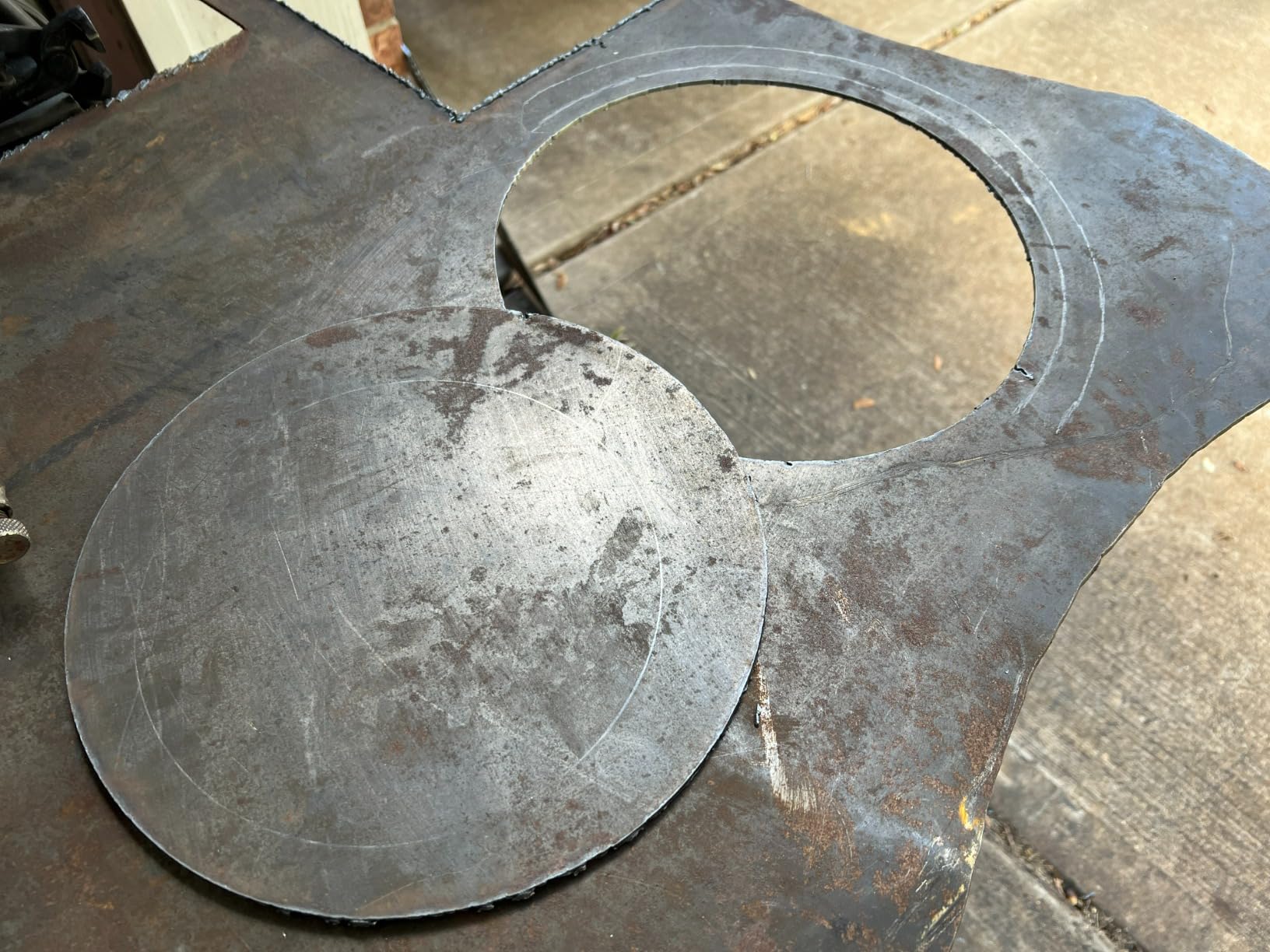
Rust Removal Mode Is the Feature That Separates It
The rust removal surface mode is not a gimmick. When you set the torch down on oxidized, painted or mesh-covered steel, the machine raises pilot arc duration and holds the arc across the gap instead of stuttering. Home shops cutting a donor car panel or a salvaged gate section feel the difference immediately, because conventional contact-start machines cannot strike through that surface reliably.
Forum feedback also shows the mode helping on expanded metal and grating, where the arc wants to escape into the voids. Most buyers note that amperage and air pressure still need dialing in before the cut looks good, so treat the mode as a starting point rather than a shortcut.
Non-Touch Pilot Arc and Consumable Life
Starting the arc without touching the workpiece protects the electrode tip and the swirl ring, which is where most cheap plasma cutters burn out early. Owners on this machine report fewer consumable changes than their previous contact-start setup, though forum consensus across all brands is that wet air destroys consumables faster than any machine fault.
That is why the included air plumbing matters. A regulator and water cup filter ship on the unit, and forum advice is to add a separate moisture separator upstream if your compressor tank is an older one. Dry air is the single cheapest improvement to cut quality you can make.
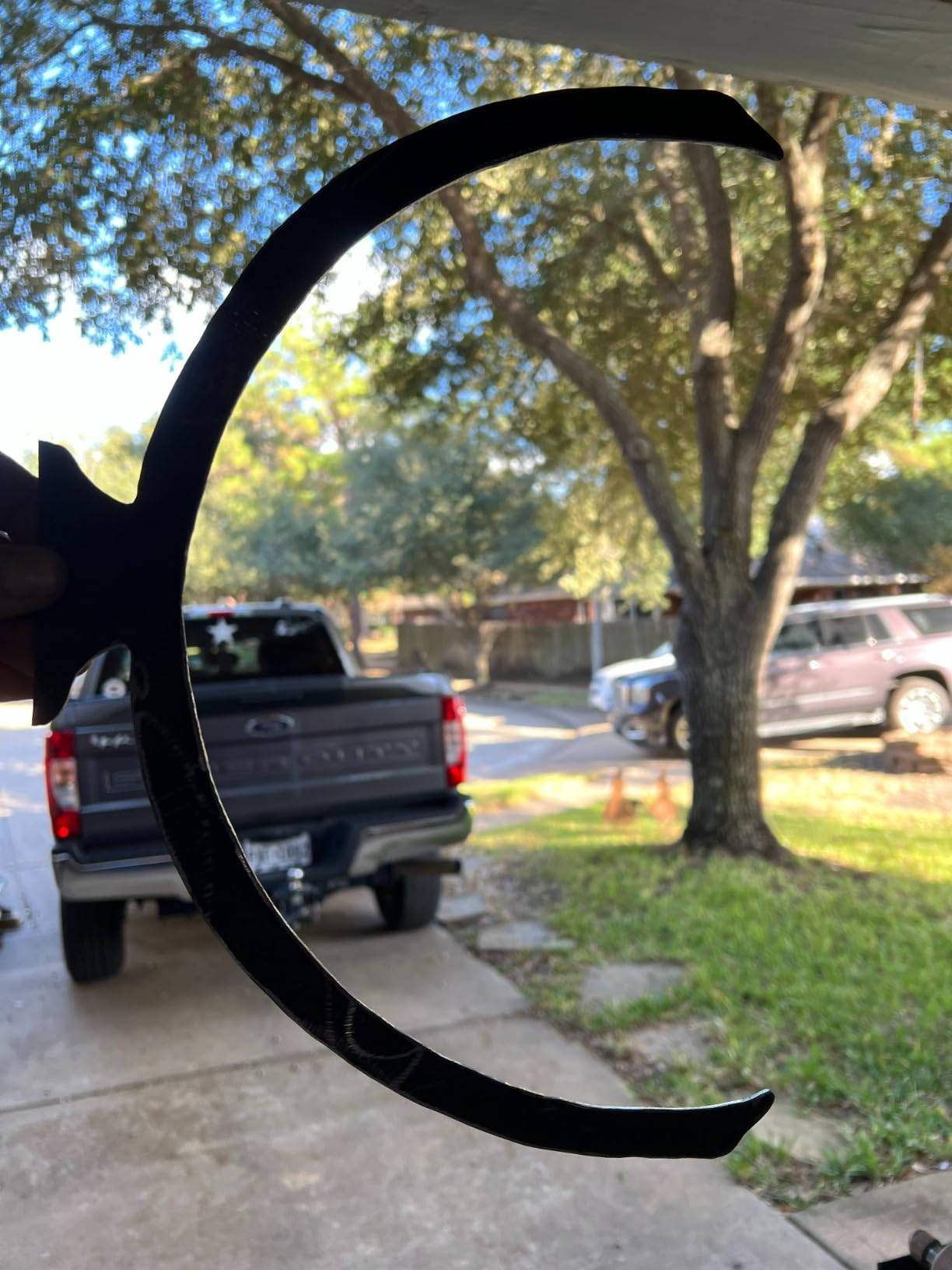
Dual Voltage on a Standard Garage Outlet
The unit senses 110V or 220V automatically, so the same box works in the garage on a regular outlet and improves when you move it to a 220V circuit. At 220V the inverter has far more headroom for 5/8 inch material, and at 110V the machine is still comfortable on sheet and light plate.
The 16 pound weight and 10 by 10 by 10 inch body make this one of the easiest machines here to carry to a job site or move off the bench when the plasma dust settles. The front-mounted controls are reachable whether you are standing or crouching at a table.
Where It Falls Short
The instruction material is the weak point, and several owners say plainly that they learned air pressure and amperage settings from forum posts rather than the manual. The ground clamp lead is also noticeably shorter than the torch lead and does not lock positively into the machine, which is annoying when you are reaching around a vehicle frame.
Air fittings can arrive loose and need extra thread seal tape on assembly, and replacement consumables such as height guides and extra tips tend to come in multi-packs. A few units had ignition faults that the manufacturer resolved by replacement.
2. ARCCAPTAIN CUT50 50A – The Best Value Per Amp for a Garage
ARCCAPTAIN 50A Plasma Cutter Machine, 110V/220V Dual Voltage, 2/3″ Max Cut
50A IGBT inverter, 2/3 inch max cut, LED screen, 13 lb
+ Pros
- Cuts 1/2 inch and heavy bar stock fast on 240V
- Only 13 lb with a shoulder strap
- LED screen shows live voltage and current plus error codes
- Metal-cased air filter with quick-connect fitting ships pre-installed
- Cons
- Needs practice to dial in amperage and PSI
- Thin material can finish rougher than premium machines
- Some buyers report inconsistent arc start
This is the fastest route from an empty garage to useful work. Buyers describe it as an ideal first plasma cutter for garage and automotive jobs, replacing angle grinders on trailer repairs and smoker builds, and the 4.5 rating across 1307 reviews is the strongest satisfaction profile in this group.
What stands out on the bench is the metal-cased air filter with a quick-connect quarter inch NPT fitting already installed. You connect a hose, set the gauge, and cut. That single design choice removes the most common first-day frustration for beginners.
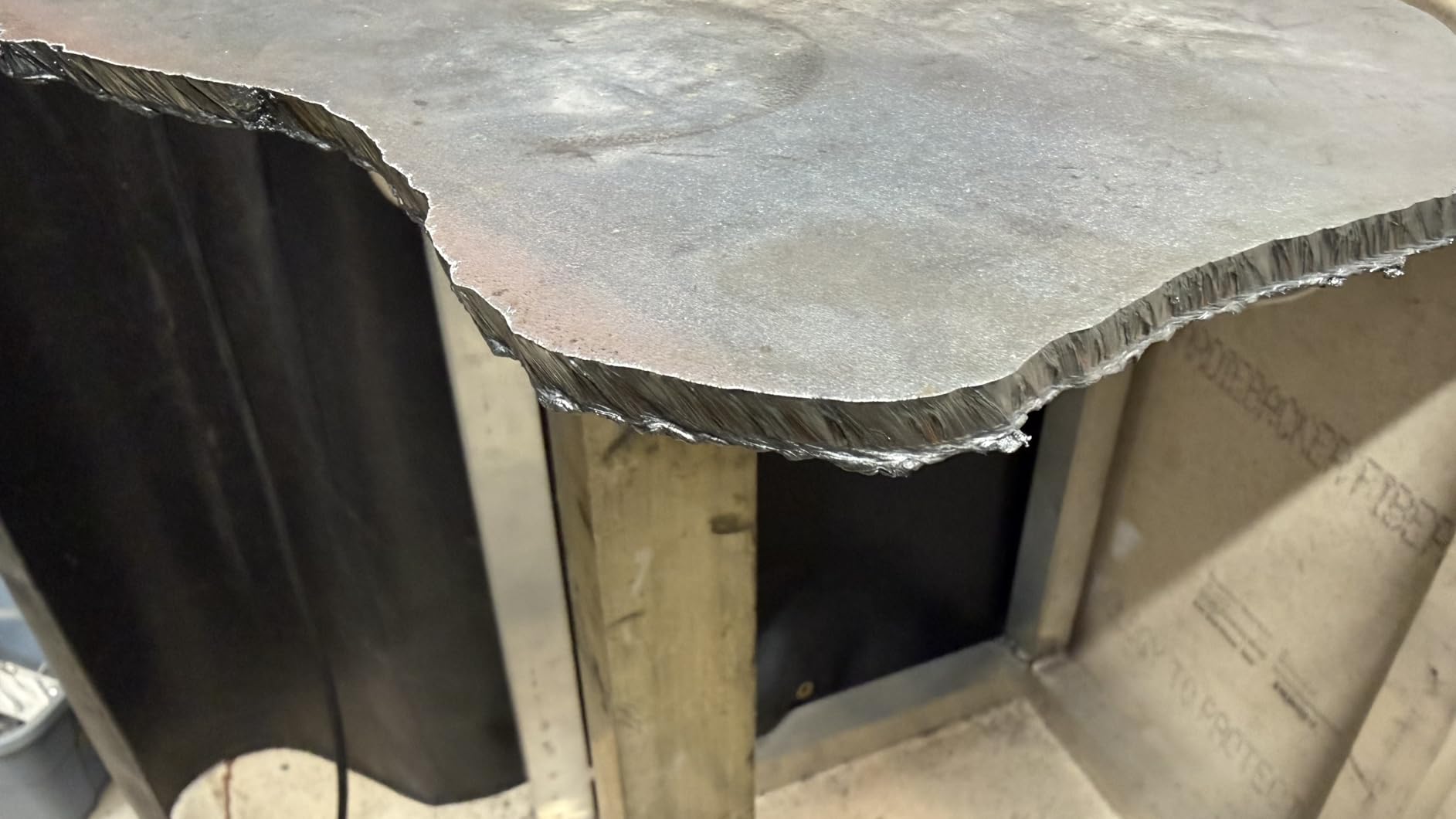
What Changes Between 110V and 220V
The spec sheet is honest about the split: 12 mm at 35 amps on 110V and 55 PSI, and 18 mm at 50 amps on 220V and 75 PSI. In practice that means 1/2 inch and heavier bar stock belongs on the 220V circuit, while sheet and light plate cut well on either.
Buyers report slicing 1/2 inch and heavy bar stock quickly on 240V, with air flow capacity of 150 liters per minute. The 3 foot hose is short, which is a good thing in a crowded shop but means your compressor has to sit close.
LED Display, Error Codes and Trigger Modes
The LED screen shows voltage and current in real time and displays error codes, which turns a vague problem into a diagnosable one. Post-flow cooling is adjustable from 5 to 15 seconds and 2T/4T modes let you lock the arc on for long cuts instead of holding the trigger, both of which reduce consumable wear.
At 60 decibels with a smart fan and cooling design, it is also one of the quieter machines in the group, which matters if you cut for a few hours in an enclosed garage.
Portability at 13 Pounds
At 13 pounds with a shoulder strap, this is the easiest unit here to move between the bench and a truck bed. The 13 by 6 by 8 inch body fits on a shelf next to a chop saw without taking the whole bench.
Forum owners repeatedly note that the light weight and simple controls are the reason they keep picking it up, while the recurring complaint is that new users need practice to find the right settings rather than any defect in the machine.
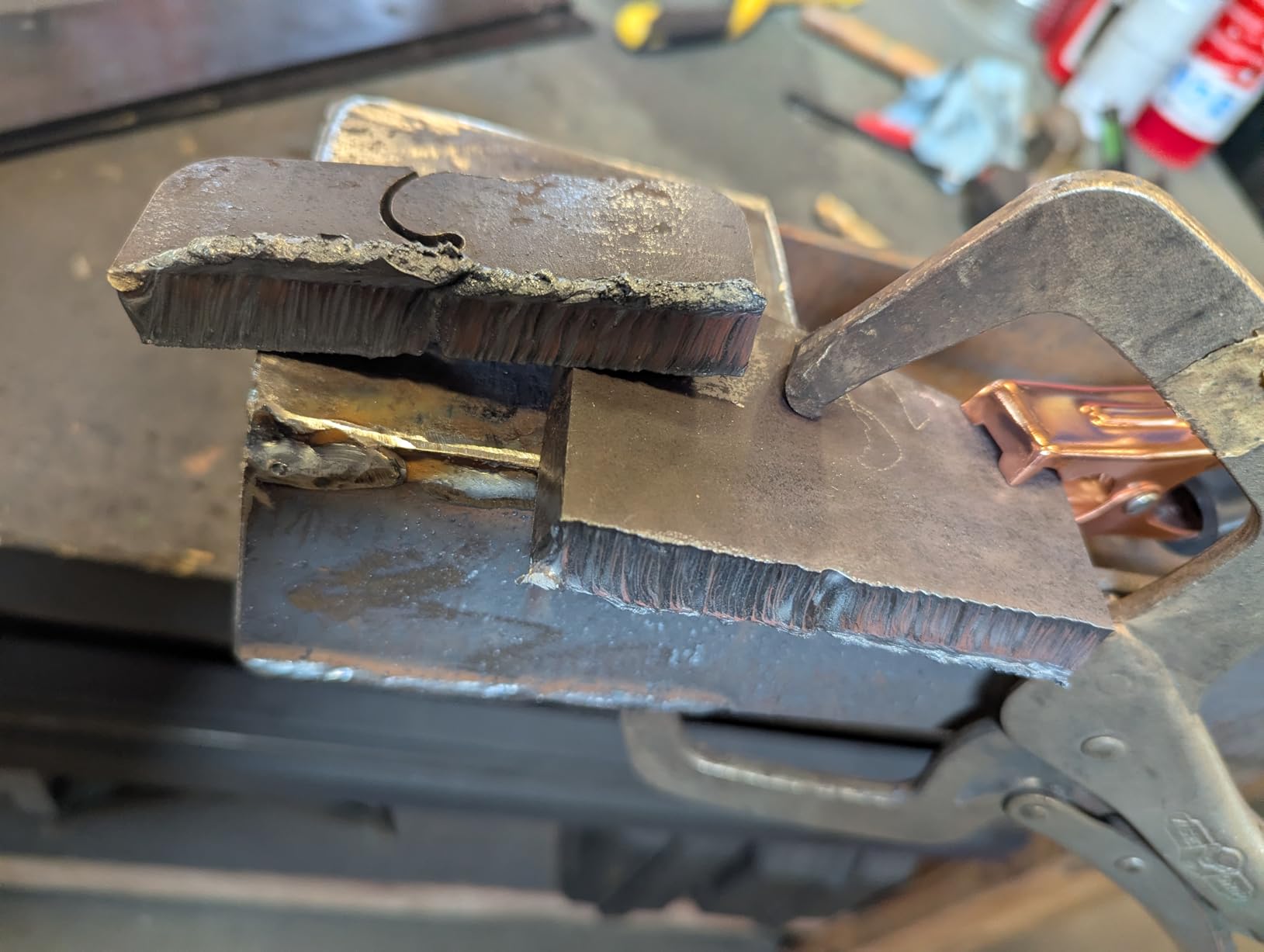
Honest Limitations
Dialing in amperage and PSI takes practice and several attempts, and there is no laminated amperage and pressure reference card in the box. Fine cuts on thin material can finish rougher than premium machines produce, and a segment of buyers report the arc starting and stopping inconsistently.
It carries a 2 year warranty, which is shorter than the three year terms offered by two machines in this roundup. Consumables, though, held up through heavy project use with only one change for most owners.
3. TOOLIOM CUT-50 PRO 50A – Digital Readouts and a Non-Touch AG60 Torch
TOOLIOM 50A Non-Touch Pilot Arc Plasma Cutter, Dual Voltage 110/220V
20-50A output, AG60 pilot arc torch, 1/4 inch clean cut at 110V
+ Pros
- AG60 non-touch torch cuts stainless and aluminum
- Large digital display for pressure voltage and current
- Tool-free 110V/220V connection
- Post-flow cooling adjustable 5 to 20 seconds
- Cons
- Lowest average rating in this group at 4.1
- High frequency start only
- Heavier than comparable 50A machines
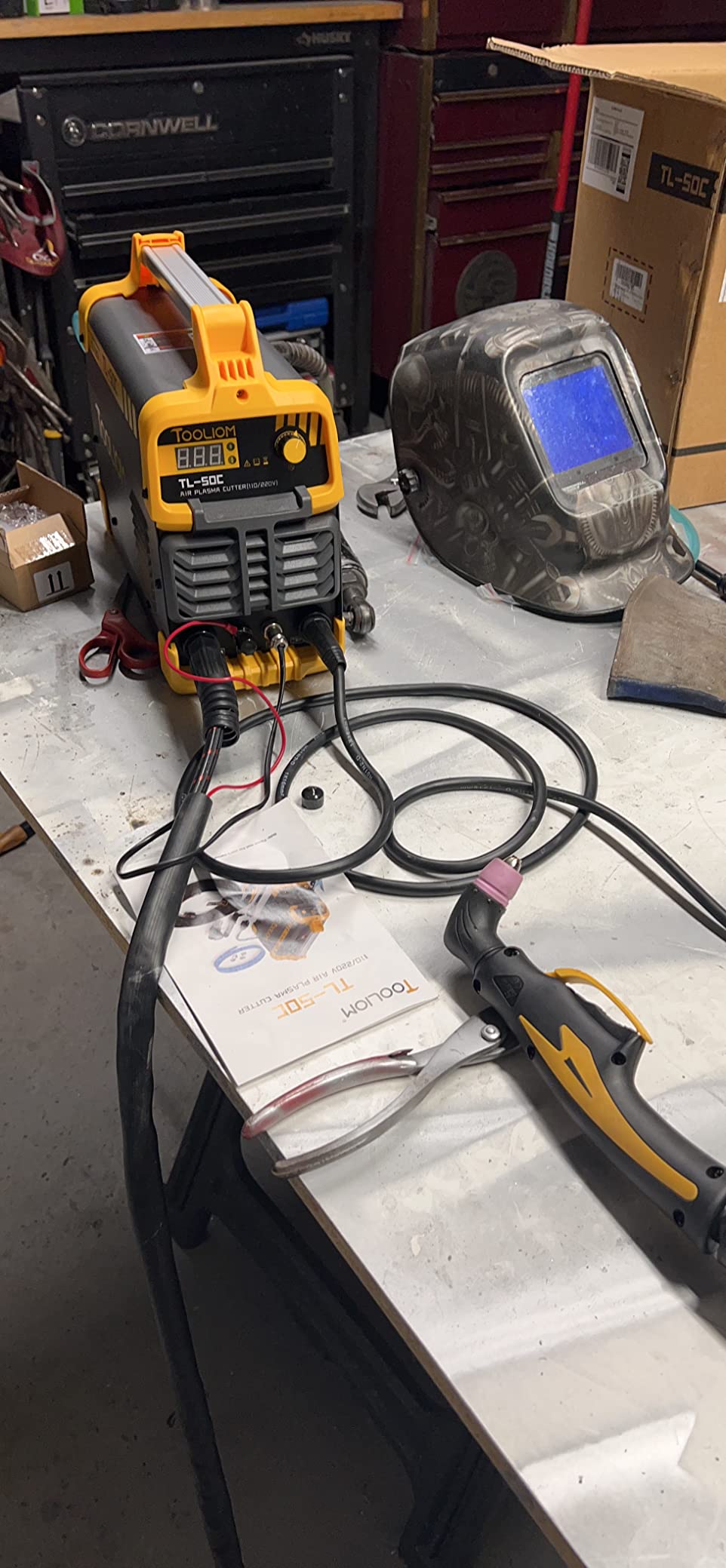
If your work leans toward stainless, aluminum or copper rather than plain structural steel, this machine earns its place. It is rated for 20 to 50 amps output, and the AG60 non-touch pilot arc torch handles non-ferrous work without demanding a strike on the workpiece.
Cutting capacity is honest about voltage: an ideal clean cut of 1/4 inch at 110V and 5/8 inch at 220V, with a maximum of 1/2 inch at 110V and 3/4 inch at 220V. That spread is exactly what you expect from a dual-voltage inverter, and it is worth planning your circuits around.
Two Different Air Pressure Ceilings
The spec sheet lists a maximum air pressure of 50 PSI at 110V and 65 PSI at 220V, which catches new owners out. Set your gauge for the circuit you are on, and the digital display will show you what the machine is actually seeing.
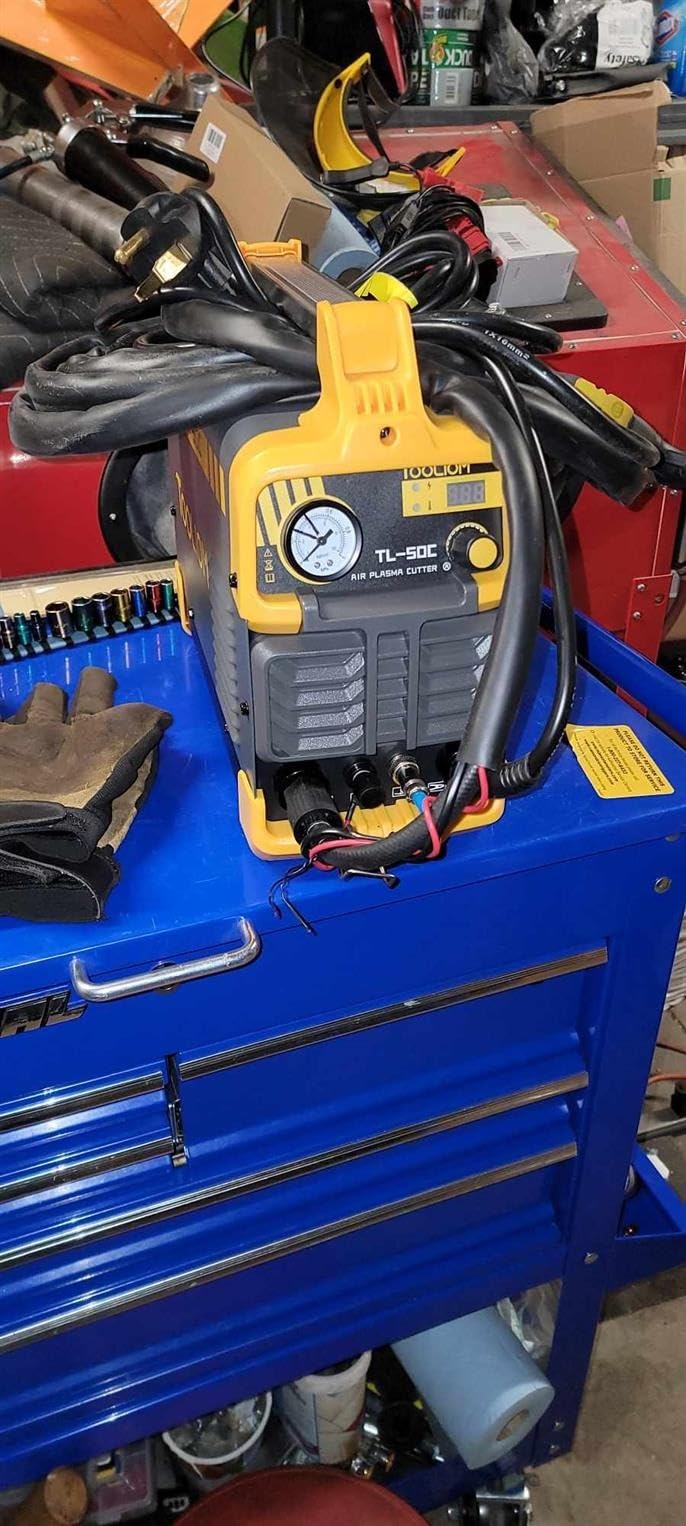
That display covers air pressure, voltage and current, and it is the reason many owners recommend this machine for non-ferrous work, where arc consistency matters more than raw amperage. Reviewers who dial in pressure and use a straight-edge guide report the cleanest results.
The Rating Spread Is Wide Here
At 4.1 across 868 reviews, this machine carries the lowest average rating of the ten, with 62 percent five star against a 12 percent one-star share. That gap tells you some units deliver clean, consistent cuts while others struggle with arc consistency, and it is worth buying from a seller who will replace a problem unit.
The product listing itself is also inconsistent about weight, with 21.6 pounds in the specifications and a lighter figure in the feature description. Plan the lift accordingly rather than trusting the number.
High Frequency Start and Shop Electronics
This unit uses a high-frequency start only. Forum discussion on this style of ignition notes that high-frequency starts can radiate enough to upset laptops, CNC controllers and cheap LED lighting in a shared shop. If your workshop is a mixed electronics space, weigh that against the machine’s other strengths.
Post-Flow Cooling and Consumable Life
Post-flow air cooling adjustable from 5 to 20 seconds is generous compared with many machines in this range, and the AG60 non-touch torch is credited with reducing electrode burn and extending service life. Tool-free 110V/220V connection also makes moving between circuits simple.
If you are weighing this against a non-high-frequency alternative, the deciding factor is honestly the shop environment. Clean new steel in a dedicated garage suits this machine well. A crowded shop with a laptop and a CNC nearby does not.
4. YESWELDER CUT-65DS 60A – Non-HF Start for Shops Full of Electronics
YESWELDER 60A Non-HF Plasma Cutter, Non-Torch Pilot Arc, 110/220V
60A output, non-HF blow-back start, 5/8 inch clean cut at 220V, ETL
+ Pros
- Non-HF blow-back start is interference-free
- IPT40 non-touch torch handles painted and rusty steel
- 60 amps delivers a 5/8 inch clean cut at 220V
- PT/2T/4T functions cut finger fatigue
- Cons
- Only a 1 year warranty
- Thinner review volume than the established picks
- 8 percent one-star share suggests early failures
Most home shops eventually add a laptop, a controller or an LED work light, and high-frequency ignition is the reason some plasma cutters cause problems in that setting. This machine uses a non-high-frequency blow-back start instead, and buyers describe it as safer around bystanders and other equipment.
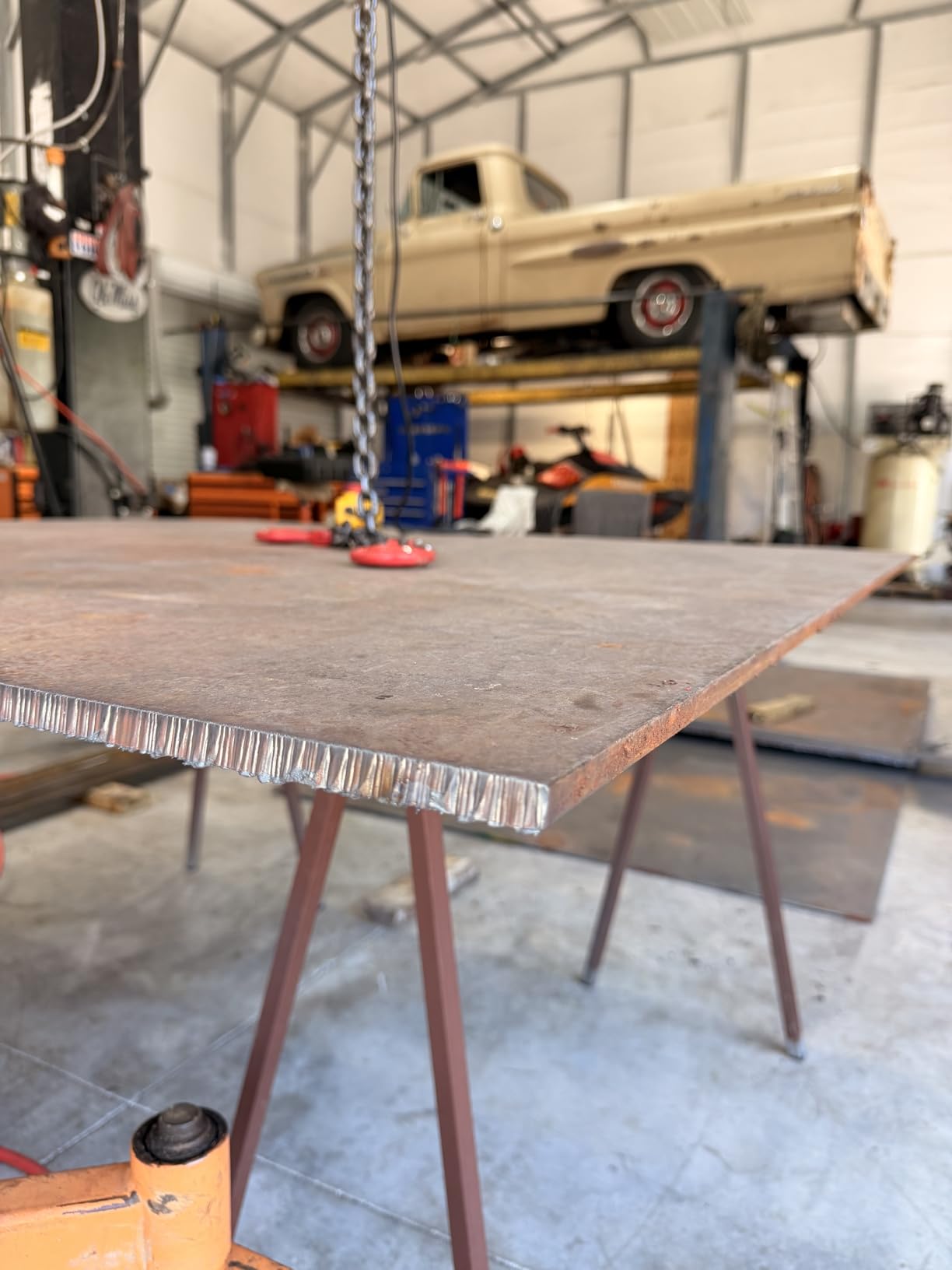
It is also a genuinely capable 60 amp machine. Ideal clean cut is 5/16 inch at 110V and 5/8 inch at 220V, with a maximum of 1/2 inch at 110V and 63/64 inch at 220V. That is more headroom than most home shops need on 220V.
Why Non-HF Start Matters in a Shared Shop
Blow-back start avoids the continuous high-frequency signal that some owners report interfering with computers, monitors and inexpensive lighting. If your plasma cutter shares a bench with a laptop running machine control software, that difference can be the whole decision.
The trade-off is that non-high-frequency designs historically struggled on very dirty or low-surface metal. The IPT40 non-touch pilot arc torch on this unit is what keeps the strike reliable through paint, rust and rough surfaces, so you are not giving up dirty-metal capability to get the quieter start.
PT/2T/4T Trigger Modes and Protection
PT, 2T and 4T functions with post-time adjustable from 5 to 20 seconds let you lock the arc for long seams and reduce consumable wear. The MCU digital control shows air pressure, voltage and current plus error codes, and an IP21 water rating covers splash protection alongside overload and overheat protection.
It is also ETL certified, which is a listing worth checking on any machine you buy. Peak output power is rated at 9840 watts, and inverter capacity is listed at 625.
Honest Weaknesses
The warranty is one year, the shortest meaningful term among the machines here, and the 8 percent one-star share suggests occasional early failures or friction with support. Review volume at 700 is also thinner and less detailed than the established picks, so buyer feedback on long-term durability is limited.
Weight is not listed in the product data, so check the physical dimensions of 15.75 by 5.91 by 11.81 inches against your bench space before you commit.
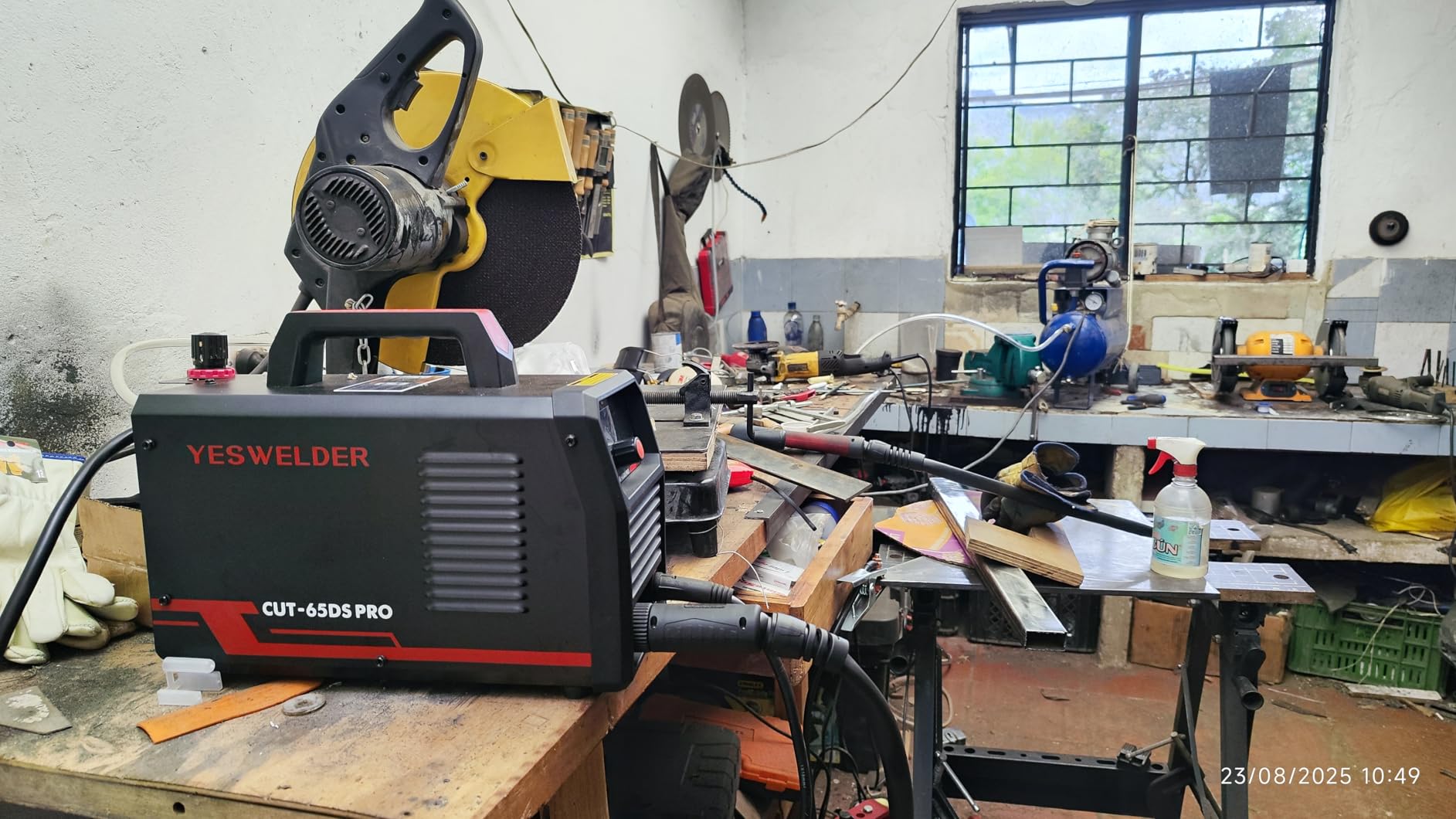
The honest summary is that this machine trades warranty length and review history for a cleaner start and deeper cutting capacity. For a shop that is already crowded with electronics, that is the right side of the trade.
5. PrimeWeld CUT50D 50A – The Highest Rated Machine in the Group
PrimeWeld 50A Air Inverter Plasma Cutter, Portable Plasma Cutting Machine, Premium and Rugged Plasma Cutter Kit, Automatic Dual Voltage 110V/220V AC with Plasma Torch, 1/2″ Clean Cut, CUT50D
50A air inverter, 1/2 inch clean cut, automatic 110V/220V, pre-plumbed air
+ Pros
- Highest average rating at 4.7 with only 1 percent one-star
- Responsive US support that repairs and returns units
- Pre-plumbed air fittings and both 220V cord and 110V pigtail
- AG60 torch with a trigger guard and a solid trigger feel
- Cons
- Instruction manual is widely criticized
- Included power cord is short
- Some units arrived with leaking air fittings
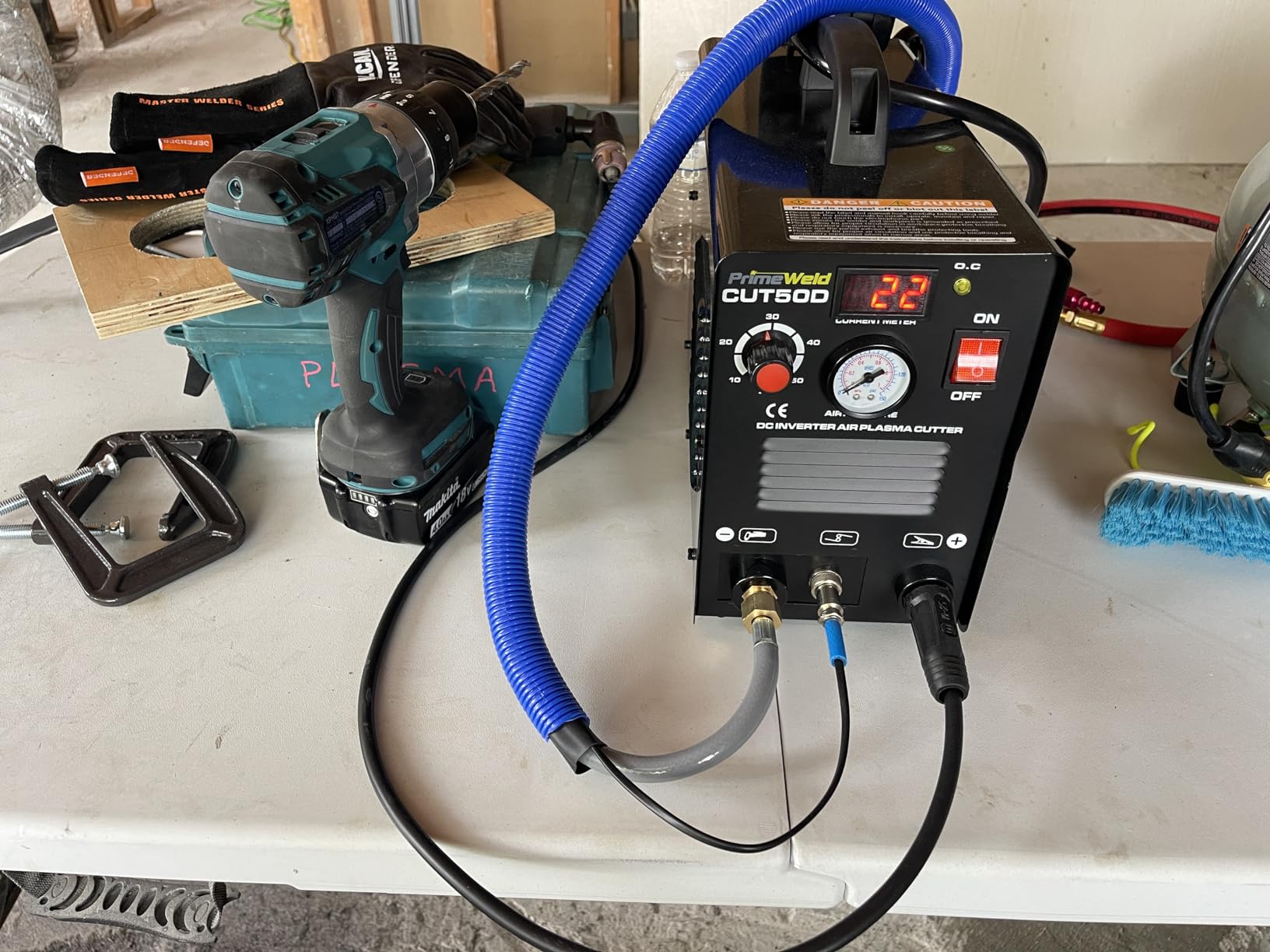
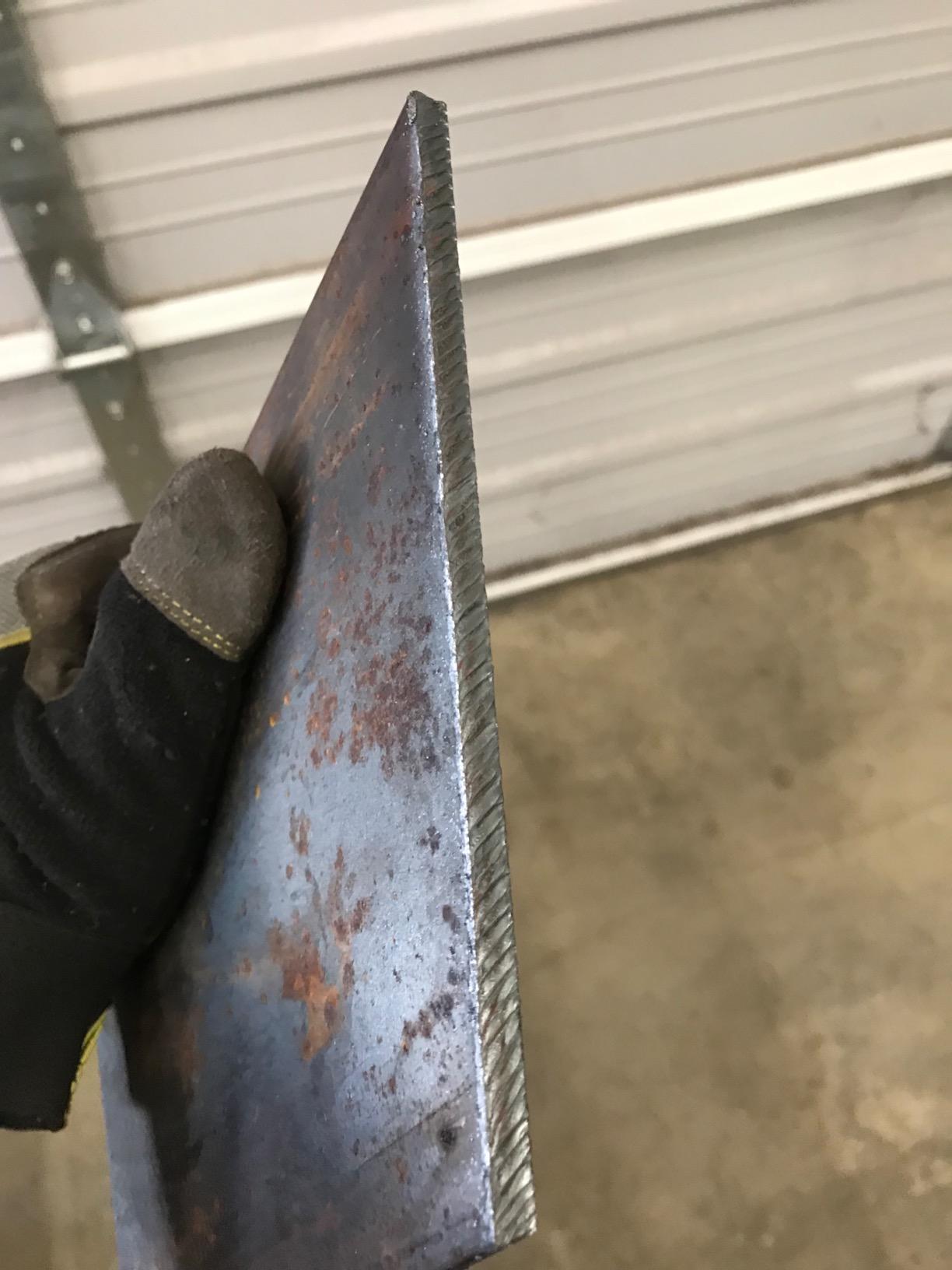
The 4.7 average rating here is the highest in the roundup, and the 1 percent one-star share is the tightest. Owners repeatedly compare its cutting output favorably to far more expensive commercial units, which is a strong signal for anyone cross-shopping against industrial brands.
This is a 50 amp air inverter with a 1/2 inch clean cut capacity and automatic 110V/220V AC input. Owners report cutting 1/2 inch cold roll steel in roughly five seconds, and they do so on 120V for thinner work as well.
Pre-Plumbed Air and Both Power Cords
The updated revision ships with pre-plumbed air fittings, a brass quick connect, a 220V cord and a 110V adapter, so nothing has to be assembled before the first cut. That is the practical difference between a machine that gets used on day one and one that sits in a box for a month while you hunt for parts.
The AG60 style torch includes a trigger guard on updated units, and owners comment on the trigger feel compared with zip-tied torches on cheaper machines. A few buyers did have to replace the torch after a year or two of use.
Customer Service Is a Real Feature Here
The most consistent theme in the reviews is not cut quality but support. Owners describe the seller as responsive, sending prepaid labels and returning units repaired with a new gun, leads and consumables. Forum readers treat a three-year warranty as the practical benchmark, and this seller is the one in this group that behaves like it.
For a home shop, that matters more than the marketing number on the box. A machine that gets repaired instead of replaced turns a bad weekend into a minor inconvenience.
The Manual Is the Weak Spot
Documentation is the most repeated negative, with several reviewers offering to write a proper manual themselves. Expect to learn your amperage and air pressure settings from experience or from shop forums rather than from the printed guide.
Some units also arrived with leaking internal and external air fittings that needed resealing, and the included power cord is short enough that many owners use an adapter to a NEMA 14-50 outlet.
Who Should Buy This One
Buy this machine if reliability and support matter more to you than headline features. It has no app, no exotic start method and no digital gimmick beyond the basics, and that restraint is why the ratings are so tight.
It is a good second machine for a shop that already has a plasma cutter and now needs one that just works, and a strong first machine for anyone who plans to keep it for years.
6. ARCCAPTAIN iControl CUT55 Pro – App Control and a 3-Year Warranty
ARCCAPTAIN iControl CUT55 Pro Plasma Cutter Machine, 55Amp, 120V/240V
55A MCU control, 1/2 inch quality cut, app control, 3-year warranty
+ Pros
- App control for parameters and monitoring from up to 10 meters
- Intelligent post-blow scales cooling to cutting current
- Pre-installed regulator and filter for one-minute setup
- 3-year warranty plus ANSI certification
- Cons
- Smaller review base than the established picks
- App features add a learning curve
- Heavier at 19.46 lb than most portable units
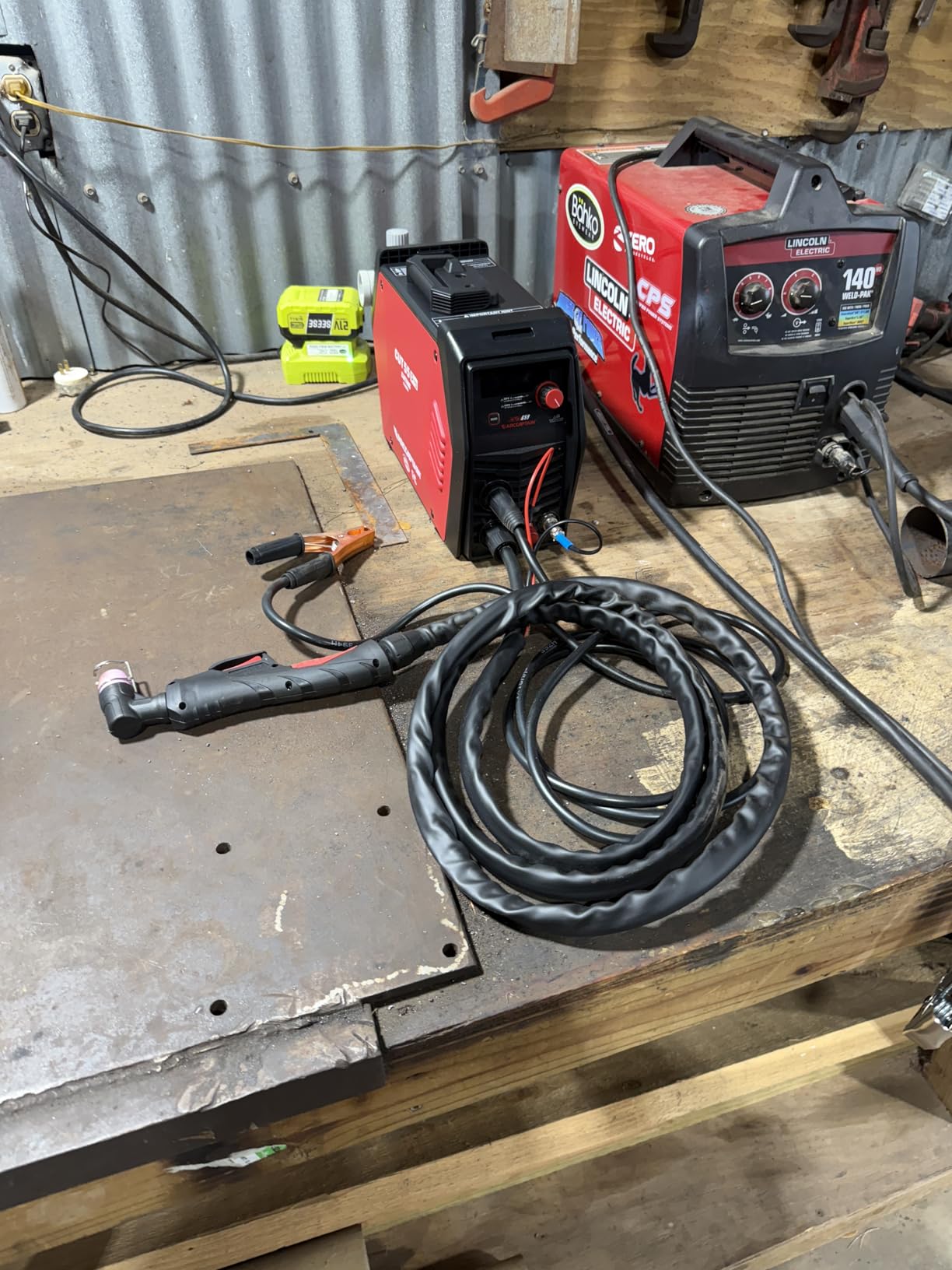
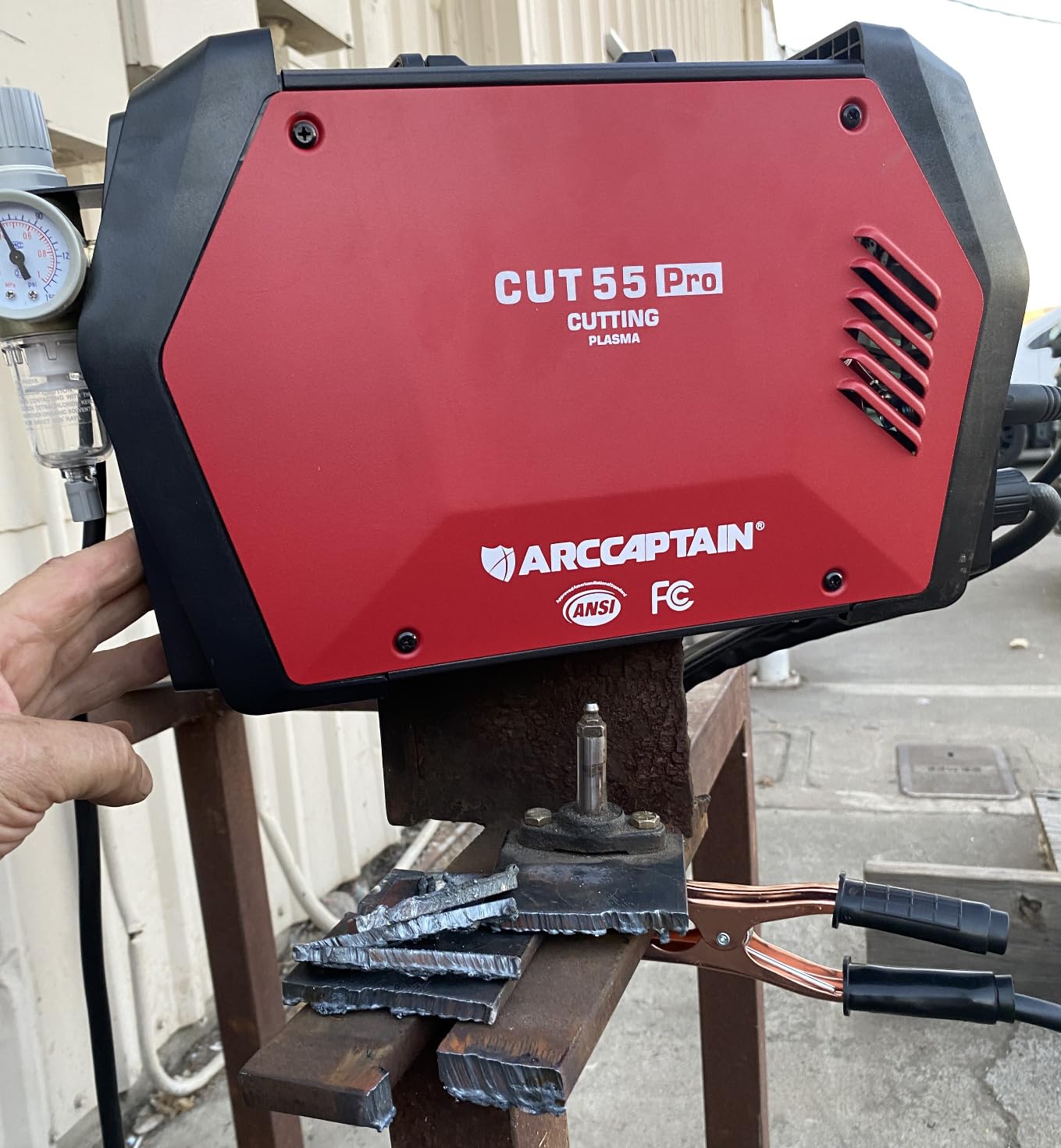
This is the most feature-forward machine in the group, and the 3-year warranty is the longest here. The headline is app control, which lets you adjust parameters and monitor cutting from up to 10 meters away, and the intelligent post-blow that scales cooling time to cutting current without any manual tuning.
Cutting specification is 12 mm quality cut with a 20 mm maximum, and the MCU technology upgrade brings full digital control of current and voltage. Smart fan cooling is claimed to cut noise by half while extending machine life by half.
What App Control Actually Changes
Remote parameter adjustment is genuinely useful if your machine sits across the shop from where you are standing, which happens constantly with a CNC table or a large fabrication bench. Saved settings also mean a repeat job does not require re-dialing amperage and pressure from memory.
The honest counterpoint is that app-dependent features add a learning curve for anyone who prefers simple controls. If you will dial in a setting once and never touch it again, you are paying for a feature you will not use.
Intelligent Post-Blow and the Error Code System
Automatic post-blow at 5, 8 or 10 seconds depending on current range removes one of the most common causes of premature consumable wear, which is cutting a hot tip with the air still on. Owners consistently rate this as the feature that separates this machine from cheaper boxes with a fixed post-flow.
That pairs with a pre-installed air regulator and filter, so setup takes about a minute. The 2T/4T mode is standard, and ANSI certification covers overcurrent, overvoltage, overload and overheat protection.
Warranty, Weight and Review History
The 3-year warranty is the longest among these picks, and the machine carries waterproof, dustproof and corrosion-resistant construction. At 19.46 pounds it is heavier than most 50 to 55 amp portable machines, so the shoulder-strap workflow of the lighter machines is not available here.
The listing is newer, with 528 reviews, so long-term durability data is thinner than for the established picks. Ratings sit at 4.4 with 76 percent five star and 6 percent one-star, which is solid rather than exceptional.
If you like data-driven setups and warranty backing, this is the machine to shortlist. If you want the simplest possible experience, a machine without an app will serve you better.
7. LOTOS CT520D – One Box That Cuts, TIGs and Sticks
LOTOS CT520D 50 AMP Air Plasma Cutter, 200 AMP Tig and Stick/MMA/ARC Welder 3 in 1 Combo Welding Machine, 5/8 Inch Clean Cut, Brown
50A plasma plus 200A TIG and 200A stick in one 3-in-1 unit
+ Pros
- Three processes from one power source
- 2024 PC board adds about 25 percent cutting power
- 5/8 inch clean cut and 3/4 inch severance
- Pre-installed plug and air filter regulator for fast setup
- Cons
- Foot pedal and argon regulator not included
- Heaviest machine here at 33.1 lb
- Some variants ship without pilot arc
Plasma cutting is the headline, but this is a 3-in-1: 50 amp plasma, 15 to 200 amp DC TIG with HF arc start hand torch control, and 15 to 200 amp DC stick. For a shop that has not bought a welder yet, consolidating those into one power source is the argument.
Cutting performance is generally reported as comparable to dedicated 50 amp plasma units. The plasma side delivers a 1/2 inch max ideal cut and a 3/4 inch max severance cut, and the 2024 upgraded PC board is claimed to add roughly 25 percent more cutting power than a standard 50 amp plasma cutter.
Where the Three Processes Pay Off
The TIG and stick stages cover the jobs a plasma cutter cannot: thin aluminum, thin stainless exhaust work and anything where you need to join metal rather than sever it. Buyers pick this machine primarily for that consolidation, reporting cutting performance in line with a dedicated unit at a lower combined cost.
The plasma side handles stainless steel, alloy steel, mild steel, copper and aluminum using non-hazardous compressed air. Package contents include the power supply, plasma torch, TIG torch, electrode holder, ground clamp, consumables and manual.
What Is Not in the Box
The foot pedal and argon regulator are not included, and both are needed for quality TIG work. That is the most common caveat in the reviews and it is worth budgeting for before you commit to this as a welder rather than a cutter.
Some variants ship without pilot arc, which reduces ease of use on dirty metal, so check the listing carefully. If your work is mostly salvaged or coated steel, a dedicated pilot arc machine is a better buy.
Portability and Setup
At 33.1 pounds and 17 by 8 by 11 inches, this is the heaviest machine in the roundup by a wide margin. It is a floor or shelf machine, not something you carry to a job site.
One-Minute Setup
The pre-installed NPT quarter inch Type D plug and air filter regulator get you cutting quickly, which is convenient. The low sales rank relative to the dedicated plasma cutters simply reflects that most buyers in this category want one job done well rather than three jobs adequately.
My take: if TIG and stick are real parts of your shop, the consolidation is worth the weight. If you only cut metal, spend that weight budget on a lighter dedicated plasma cutter instead.
8. PrimeWeld CUT50DP 50A – Dual Frequency and US-Based Support
PrimeWeld 50A Air Inverter Plasma Cutter with Non-Touch Pilot Arc, Automatic Dual-Voltage (110V/220V) and Dual-Frequency (50Hz/60Hz) Portable Plasma Cutter, 1/2″ Clean Cut, CUT50DP
50A with 1/2 inch clean cut, dual voltage and dual frequency, 3-year warranty
+ Pros
- Dual voltage and dual frequency across 50Hz and 60Hz circuits
- Non-touch pilot arc handles rough painted and rusty metal
- 3-year warranty with US-based parts and 7-day support
- Compact body with a built-in handle
- Cons
- Highest outlay among the 50A machines here
- Requires 75 PSI at 5 CFM of air
- Smaller review base at 259
This is the premium-priced option in the group, and reviewers treat it as such. At 4.6 across 259 reviews with 78 percent five star and 1 percent one-star, satisfaction is very consistent, and buyers frame the purchase as a choice about build quality and support rather than price.
The technical case is dual voltage and dual frequency. It runs on 220V and 110V at both 50 and 60 Hz, which is genuine flexibility if you move between a shop circuit, a generator or a household supply with an unusual frequency.
Matrix Pilot Arc on Rough Surfaces
The integrated Matrix pilot arc is credited with cutting rough, painted and rusty metal with less slag than contact-start machines. That is the single most useful feature for a home shop doing restoration work, because it is where cheap machines frustrate people.
Cutting capacity is 1/2 inch clean and 3/4 inch severance, which lines up with what owners report for a 50 amp class machine on structural plate.
The Air Demand Is Real
Operating air pressure is specified at 75 PSI and 5 CFM, so a capable compressor is essential rather than optional. A small pancake compressor that struggles to hold pressure mid-cut produces erratic arcs, and that is the most common cause of consumables wearing out fast on a machine like this one.
Check your compressor output before you buy, not after. If you are still shopping for one, size the tank and pump for the CFM figure rather than for the price.
Warranty and Support as the Differentiator
The 3-year warranty with US-based parts and service available seven days a week is repeatedly cited by reviewers as the reason to pay more. Forum readers consistently treat three years as the practical benchmark for a home shop machine, and this one meets it with support behind it.
The PAPST advanced German cooling system and MOSFET transistor are also credited with supporting both thin and thick metal cutting, and the compact body with a built-in handle moves easily around a workshop.
The smaller 259-review base is the real caveat. You are buying a well-specified machine with strong support, but with less long-term owner evidence than the picks that have thousands of reviews behind them.
9. SILATU STC550P 55A – The Budget Pick With Adjustable Pilot Arc
SILATU 55A Plasma Cutter, Non-Touch Pilot Arc, 110V/220V, 2/3″ Max Cut
55A IGBT, 1/2 inch at 40A on 110V, 2/3 inch at 55A on 220V, 12.57 lb
+ Pros
- Lowest outlay here with full 55A dual-voltage capability
- Very light at 12.57 lb
- Adjustable pilot arc duration for mesh or consumable savings
- Air pressure sensor shown live on the digital screen
- Cons
- Only a 1-year warranty
- 60 percent duty cycle needs cool-down pauses
- Newer brand with a smaller review history
- No air compressor included
Reviewers frame this as the budget entry point: a full-featured 55 amp dual-voltage machine with a digital display and adjustable pilot arc for the lowest outlay in the group. At 4.4 across 263 reviews with 72 percent five star, satisfaction is solid.
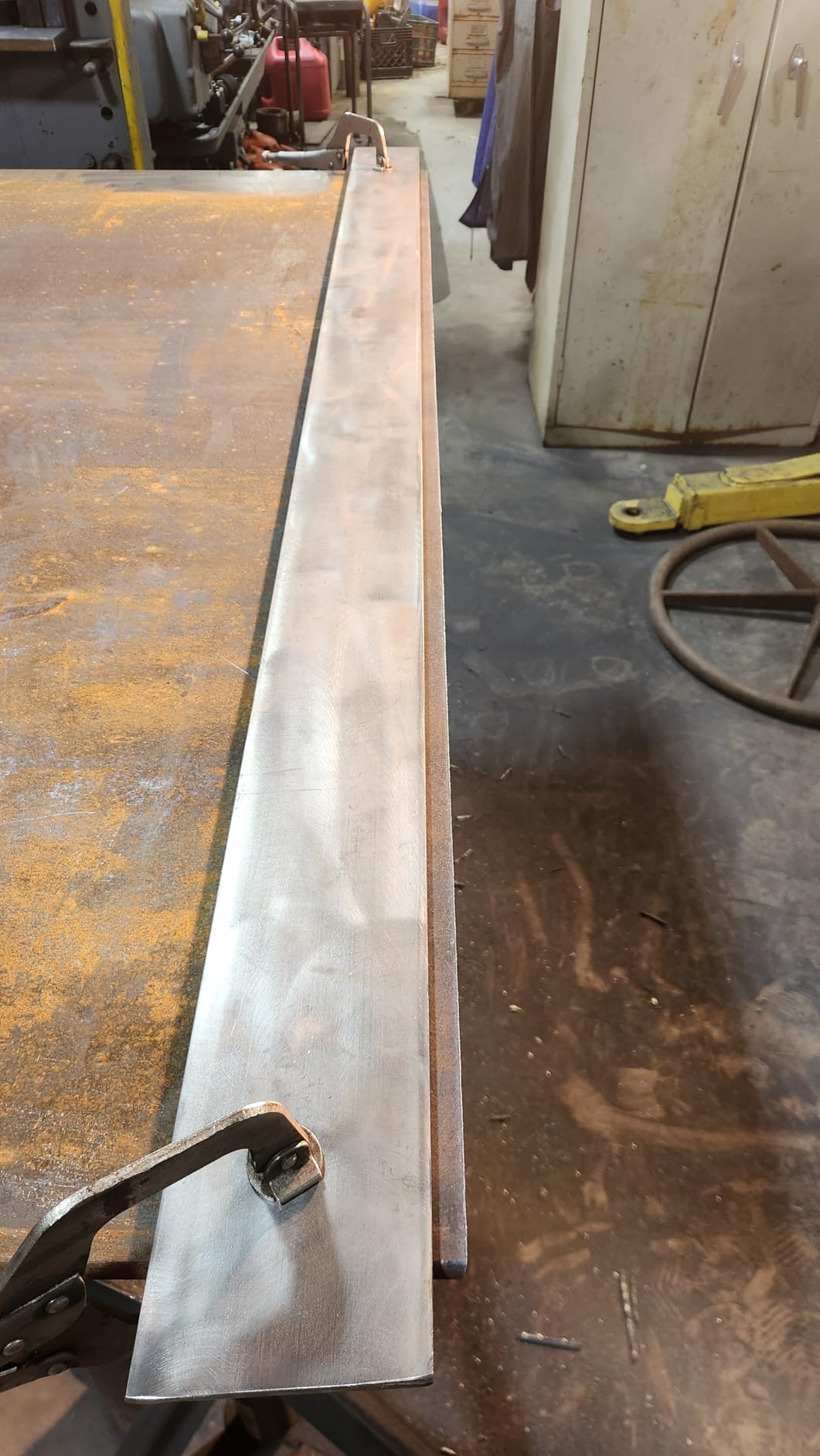
Output is 15 to 40 amps on 110V for home garage work and 15 to 55 amps on 220V for thicker metal. Recommended maximum cut is 1/2 inch at 40 amps and 60 PSI on 110V, and 2/3 inch at 55 amps and 70 PSI on 220V.
Adjustable Pilot Arc Duration Is the Real Feature
Most machines give you a pilot arc or they do not. This one lets you tune the duration: longer for expanded metal and mesh where the arc needs to bridge gaps, shorter to reduce electrode wear on ordinary plate. That is a genuine capability usually found on costlier units.
PT, 2T and 4T functions plus PA adjustment with post-time from 3 to 15 seconds round out a trigger package that is well beyond what most entry-level machines offer. Buyers who came from cheaper machines specifically noticed the air pressure sensor, which displays real-time pressure on the digital screen.
The 60 Percent Duty Cycle in Practice
The 60 percent duty cycle means sustained heavy cutting needs cool-down pauses. For hobbyist sessions cutting brackets, signs and short plate, that is a non-issue. For long production seams back to back, plan breaks into the work rather than fighting a thermal cutout.
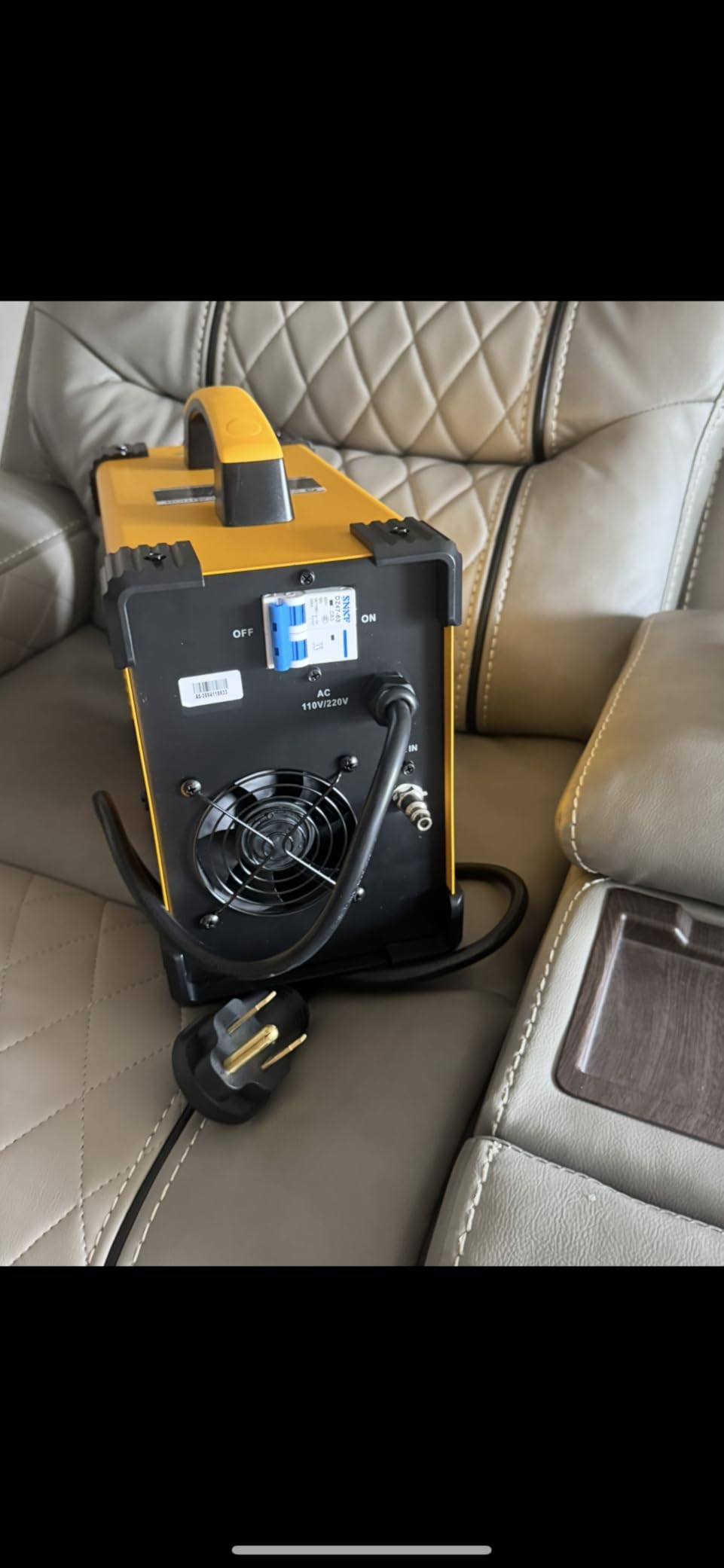
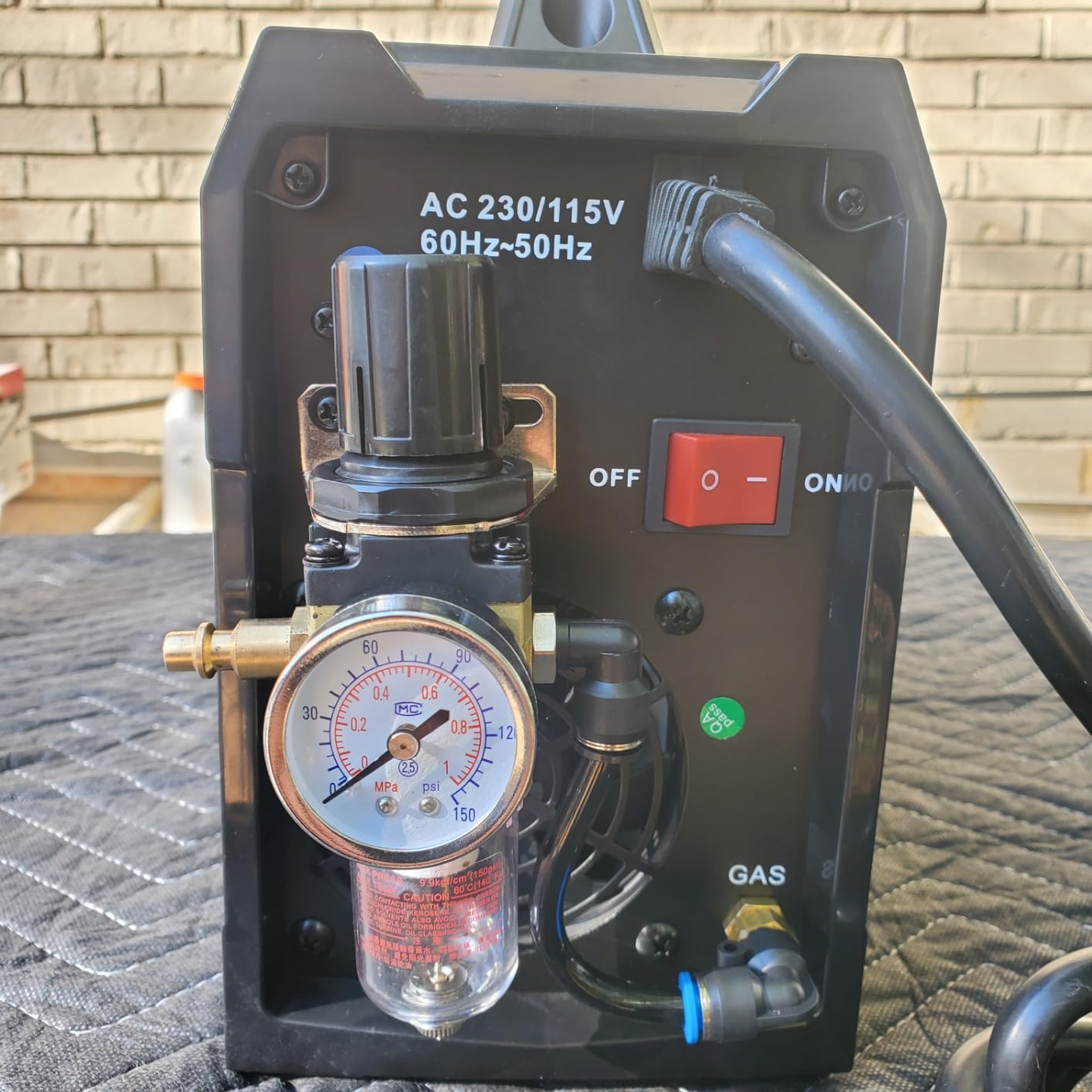
Recommended air is 70 PSI at 250 liters per minute, and no compressor is included. The rear-mounted air filter with a quick-connect quarter inch NPT connector means it works out of the box once your compressor is connected.
Lightness, Brand Newness and the Warranty
At 12.57 pounds and 13.98 by 6.1 by 8.86 inches, this is the second-lightest machine here and easy to move between bench and job site. The included kit covers a 10 foot AG60P torch, 10 foot earth clamp, a 110V/220V adapter, 3.3 foot air hose and a 220V power plug.
The one-year warranty is the shortest in the group, and as a newer brand the review history is thinner than LOTOS, ARCCAPTAIN or PrimeWeld. That is the trade you make for the outlay.
If your goal is a capable dual-voltage plasma cutter without spending heavily, this is the machine I would look at first. Add a moisture separator before the first cut and you will avoid the failure mode that ruins cheap consumables.
10. GZ GUOZHI CUT-50 – Built for a Cold Garage and a 220V Circuit
GZ GUOZHI Plasma Cutter, 50 Amp Air Inverter Plasma Cut, 110V/220V Dual Voltage Digital Display IGBT Inverter Plasma Cutting Machine with 2T/4T/TEST Function
50A IGBT, 3/4 inch max at 220V, 2T/4T/TEST modes, to minus 20 degrees
+ Pros
- Rated to operate down to minus 20 degrees
- Pilot arc starts through rough painted and rusty steel
- 1/4 inch D-type plug gives one-minute setup
- Overheat and over-current protection built in
- Cons
- Highest one-star share in the group at 12 percent
- Listed weight conflicts with the described weight
- Needs up to 40A breaker capacity at 110V
- No air compressor or dryer included
The distinguishing spec here is temperature. This machine is rated to operate normally at minus 20 degrees, which matters for anyone cutting in an unheated garage through winter or in a shop that is not climate controlled.
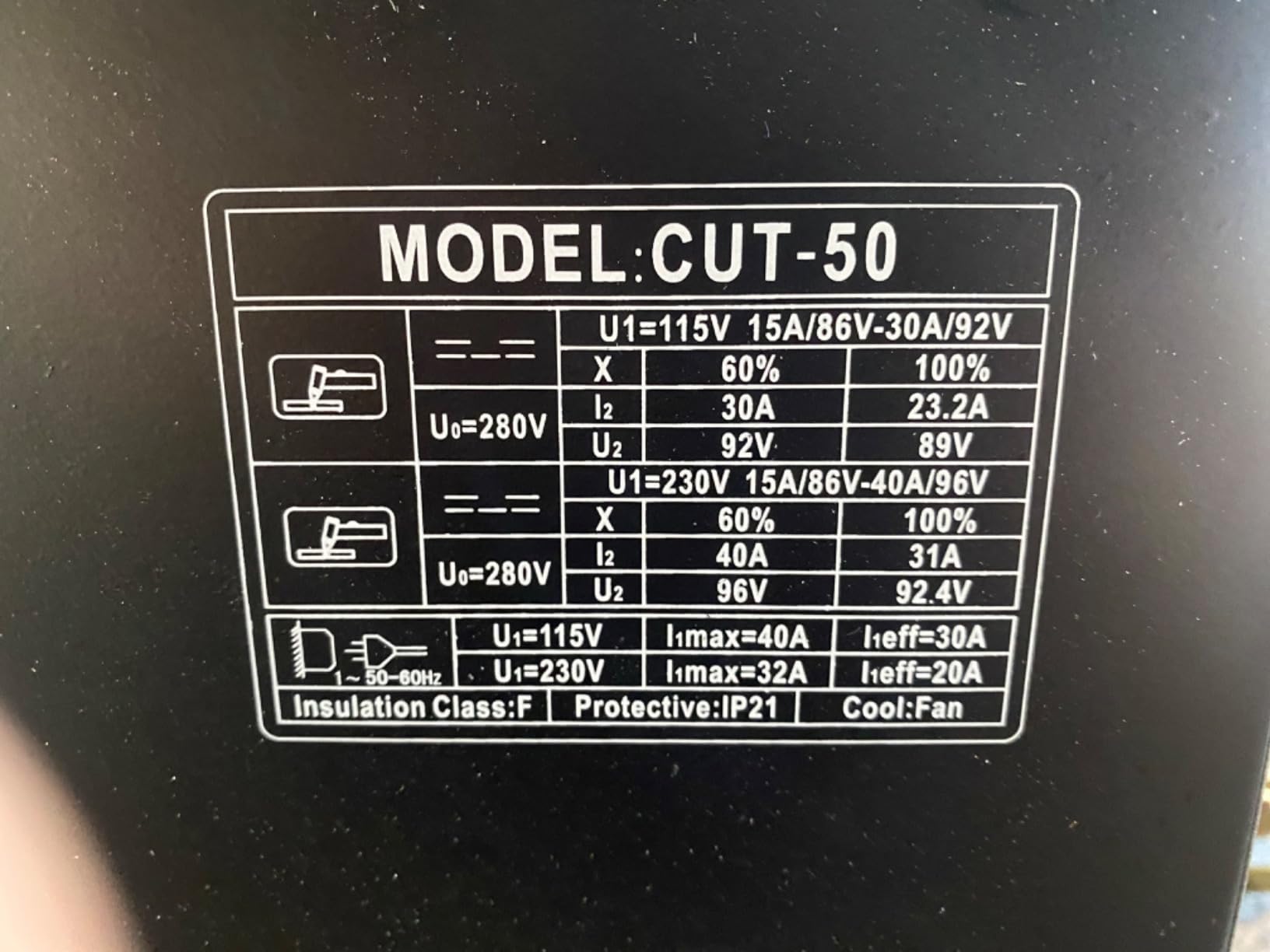
Underneath, it is a 50 amp IGBT inverter with a pilot arc function, 60 percent duty cycle and 50/60Hz high-frequency output. Recommended max cut is 1/4 inch at 35 amps on 110V and 50 PSI, rising to 3/4 inch at 50 amps on 220V and 65 PSI.
Circuit Demand Is the Planning Item
The breaker requirement is up to 40 amps at 110V and 35 amps, and up to 30 amps at 220V and 50 amps. That is a meaningful load for a standard household circuit, and forum advice is universal: use a dedicated circuit and a properly rated cord, never a thin extension cord.
An undersized extension cord silently limits inverter output, which looks exactly like a weak machine. If you plan to run this off a 120V outlet, check the circuit before you buy the machine.
2T, 4T and TEST Functions
The operating functions include 2T, 4T and a TEST mode, which is helpful for checking settings without striking an arc. Overheating and over-current protection is standard, and the pilot arc function is reported to start reliably through rough, painted and rusty surfaces with minimal slag.
The one-minute setup claim comes from the quarter inch industrial D-type plug, which allows connection without installing a separate regulator. Dry compressed air is still required, and the compressor is not included.
The Weight Discrepancy and Reliability Tail
The listing states 19.31 pounds in the specifications and 13 pounds in the feature description, and that confusion comes up repeatedly. Measure your lifting situation accordingly rather than trusting either figure.
At 4.2 across 251 reviews, this machine carries a 12 percent one-star share, the highest in the group, with 68 percent five star. Some owners report early problems. Buy from a seller who handles failures directly, and give the machine a fair shake on settings before judging it.
For an unheated workshop this machine has a genuine claim no other pick in the roundup makes. Everywhere else, the reliability spread is the deciding factor against it.
How to Choose a Plasma Cutter for a Home Shop
Almost every wrong purchase in this category traces back to buying on the severance number on the box. Judge machines on clean cut capacity at the voltage you will actually run, and treat maximum severance as a hard ceiling you will rarely reach in real work.
How Many Amps Do You Actually Need?
Match amperage to the thickest material you cut regularly, not the thickest material you might someday cut. 40 to 50 amps handles 1/8 inch plate, 16 and 20 gauge sheet and 1/4 inch steel, which is the majority of home shop work. 55 to 60 amps earns its place when 3/8 inch plate or structural steel shows up weekly.
Going beyond 60 amps in a home shop usually means buying capability you will not use and accepting a larger compressor demand. The extra cutting speed is real, but so is the extra electricity, extra consumable wear and less air margin.
How Many Amps Match Your Metal Thickness
Use clean cut capacity as your guide rather than amperage alone, because a poorly tuned machine at high amps still makes dross. Sheet metal up to 1/8 inch wants 30 to 40 amps and a drag shield. 1/4 inch mild steel sits comfortably at 40 to 50 amps. 3/8 inch wants 50 to 60 amps. 1/2 inch and above needs 55 to 60 amps plus a properly rated compressor.
Stainless and aluminum are harder on the electrode than mild steel because they carry heat differently, so spend the top end of your current range on them rather than running maximum output and hoping.
Pilot Arc, Non-Touch Start and Contact Start
Contact start and blowback machines need the torch touched to the workpiece to strike an arc. That is fine for clean new structural steel and fails on painted, rusty or mesh surfaces. A non-touch pilot arc lifts the arc off the work, which extends consumable life and is close to mandatory for auto body work and salvaged metal.
Separately, high-frequency start versus non-high-frequency blow-back start is about interference. High frequency can upset laptops, CNC controllers and inexpensive LED lighting. If your shop shares space with electronics, pay attention to this, and note that four machines here use a non-HF start while one explicitly uses high frequency only.
Duty Cycle Translated Into Actual Cutting Time
Duty cycle is a percentage of a ten-minute window during which the machine can run at the rated current. A 60 percent duty cycle means roughly six minutes of cutting followed by four minutes of recovery. For hobbyist sessions cutting brackets and signs, you will never notice. For long production seams, plan your breaks into the work.
Rated at maximum amperage is the usual caveat. Duty cycle falls as current rises, so a machine rated 60 percent at 40 amps may be rated lower at 55 amps. That is the number to read if you plan sustained heavy cutting.
Air Supply Is Where Home Shops Get Burned
Consumables wear out too fast, and the cause is almost always wet or dirty air from an older compressor tank. Install a moisture trap, an inline filter and, ideally, a desiccant dryer between the compressor and the machine. Dry air is the cheapest cut-quality improvement available to you.
Air pressure sits in the 50 to 80 PSI range across these machines, and several specify different ceilings at 110V and 220V. Flow matters as much as pressure: an undersized compressor drops pressure mid-cut and produces erratic arcs. Check CFM, not just tank size.
Voltage, Extension Cords and Circuit Capacity
A standard 120V outlet silently caps output amperage, which is why machines underperform their label. A dedicated 220V branch circuit is a real upgrade for anyone cutting 3/8 inch or thicker, and the dual-voltage machines in this roundup will run on either without a switch.
Never use a thin extension cord. Forum consensus across home shop machining communities is that undersized extension cords quietly kill inverter output, and the symptom looks like a weak machine rather than a wiring problem. Use a properly rated cord and a dedicated circuit.
What Extra Amps and Extra Features Actually Buy
More amps buy faster travel through thicker metal and a wider kerf, which means more cleanup. They do not automatically mean a cleaner cut. Owners frequently report skipping heavy grinding on 1/4 inch and below when amperage is dialed in rather than run at maximum.
Extra features like app control, adjustable pilot arc timing and automatic post-blow are worth paying for only if your workflow will use them. Post-blow and pilot arc features protect consumables, which is real money saved over years. App control is convenience, not capability.
Safety Gear Before Your First Cut
A cutting helmet rated for plasma work, leather gloves, a leather or canvas jacket, and ventilation are not optional. Plasma cutting produces metal fume and intense UV, and a welding helmet shade that is too light will let you burn your eyes on the first pass.
Move the fume outside or use an extraction fan. An enclosed garage fills with metal particulate faster than most people expect, and forum writers flag this as a safety gap in most home setups.
Where Consumable Cost Actually Goes
The running cost of a plasma cutter is the torch consumables: electrode, swirl ring, shield cup and nozzles. Replace them on condition, not on a schedule, and keep a spare set of each in the drawer because a worn electrode is the fastest route to a bad cut and rapid wear of everything around it.
Electrode burn rate is the diagnostic tool. Fast wear points at wet air, too little standoff distance, or an arc that is too long for the job. Fix those three things before you blame the machine.
Common Mistakes That Ruin Cut Quality
The most common error is dragging the torch tip on the metal like a stick electrode. Plasma wants a standoff distance of roughly an eighth inch, and contact spatters molten steel into the nozzle. Slow down, lift the torch, and let the arc do the work.
Second is running the amperage at maximum because the label says you can. Third is skipping the moisture trap. Fourth is cutting rusty or painted metal with a contact-start machine. Each has a simple fix, and each is worth more than a step up in machine class.
Frequently Asked Questions
What is the best plasma cutter for a home shop?
For most home shops the best choice is a 50 to 55 amp inverter with a non-touch pilot arc and automatic 110V/220V dual voltage. That combination covers sheet metal, 1/8 inch plate and regular 1/4 inch steel while running on a standard garage outlet, and it starts reliably on painted or rusty metal. In this comparison the LOTOS LTP5505D 55A is the top pick.
What are the best brands of plasma cutters?
Brands with the strongest long-term reputation in this category include Hypertherm and Miller, which hold much of the underlying plasma arc patents, and Hobart for heavy-duty shop work. In the budget and mid tiers, Lotos, PrimeWeld, ARCCAPTAIN, YESWELDER and TOOLIOM cover most home shop needs, with warranty length and consumable availability being the practical differentiators.
How many amps is a good plasma cutter?
A 40 to 50 amp plasma cutter is the right fit for most home shops, handling 16 and 20 gauge sheet plus 1/8 inch and 1/4 inch steel. Move to 55 or 60 amps if you regularly cut 3/8 inch plate or thicker structural steel. Stay at 40 amps or below for mostly thin sheet work.
Are Harbor Freight plasma cutters any good?
Harbor Freight Titanium plasma cutters come up frequently on home shop forums as strong value options, and the hesitation is usually about brand trust rather than cut quality. No Harbor Freight machine is included in this comparison, so we have not tested one here. Judge any machine the same way: clean cut capacity at your voltage, pilot arc ignition, warranty length and how easily you can buy consumables.
Do I need a 240V outlet to run a plasma cutter?
No. Every machine in this comparison runs on automatic 110V/220V dual voltage, so a standard 120V garage outlet is enough for sheet metal and 1/4 inch work. A dedicated 220V circuit roughly doubles the output ceiling and is worth adding if you cut 3/8 inch or thicker regularly. Always use a properly rated cord rather than a thin extension cord.
Can a plasma cutter cut aluminum?
Yes, but aluminum needs more care than steel because it carries heat differently and wears the electrode faster. Run the machine in the upper part of its amperage range, keep a consistent standoff distance, and expect faster consumable wear. Thin aluminum sheet is the most common home shop job, and a non-touch pilot arc torch starts on it far more reliably than a contact start torch.
What size air compressor does a plasma cutter need?
Most machines in this range want 50 to 80 PSI with flow between 2 and 5 CFM, and one premium model here specifies 75 PSI at 5 CFM. Match the CFM figure to the machine rather than choosing on tank size alone. Add a moisture trap, inline filter and desiccant dryer between compressor and cutter, because wet air is the number one cause of short-lived consumables.
How long do plasma cutter consumables last?
There is no fixed interval, and that is the point. Electrode and swirl ring life depends far more on air quality and technique than on hours of use. A dry air supply, a steady standoff distance of about an eighth inch, and amperage dialed to the job rather than run at maximum will extend life several times over. Replace consumables on visible condition, and keep a spare set on hand.
Which Plasma Cutter Belongs in Your Home Shop
If you want one machine that handles almost anything a garage throws at it, the LOTOS LTP5505D 55A is my pick. It carries the largest review base here, weighs 16 pounds, ships with the air plumbing already fitted, and its rust removal mode handles salvaged and coated steel that stops contact-start machines cold.
If cut quality consistency and support matter more to you than features, choose the PrimeWeld CUT50D 50A. It carries the highest average rating in the group and a responsive US service operation that repairs and returns units.
If your shop shares space with a laptop, a CNC controller or cheap LED lighting, the YESWELDER CUT-65DS 60A is the one that will not cause trouble, thanks to its non-high-frequency blow-back start. If you want the shortest path to clean cuts on 1/2 inch stock with minimal dial-in time, the ARCCAPTAIN CUT50 50A is hard to argue with.
For anyone who also needs to weld, the LOTOS CT520D consolidates plasma, TIG and stick into one box. If you are buying strictly on outlay, the SILATU STC550P 55A delivers 55 amps and adjustable pilot arc timing at the lowest entry point in the group, though its one-year warranty is the shortest.
Whichever machine you choose, spend your next money on a moisture trap, a proper inline dryer and a dedicated circuit. Dry air and clean power will do more for your cut quality than any step up in machine class, and both are things a home shop can add this weekend.
Those are the best plasma cutters for home shops in 2026, ranked on the specs that actually predict a clean cut rather than the number printed on the box.