
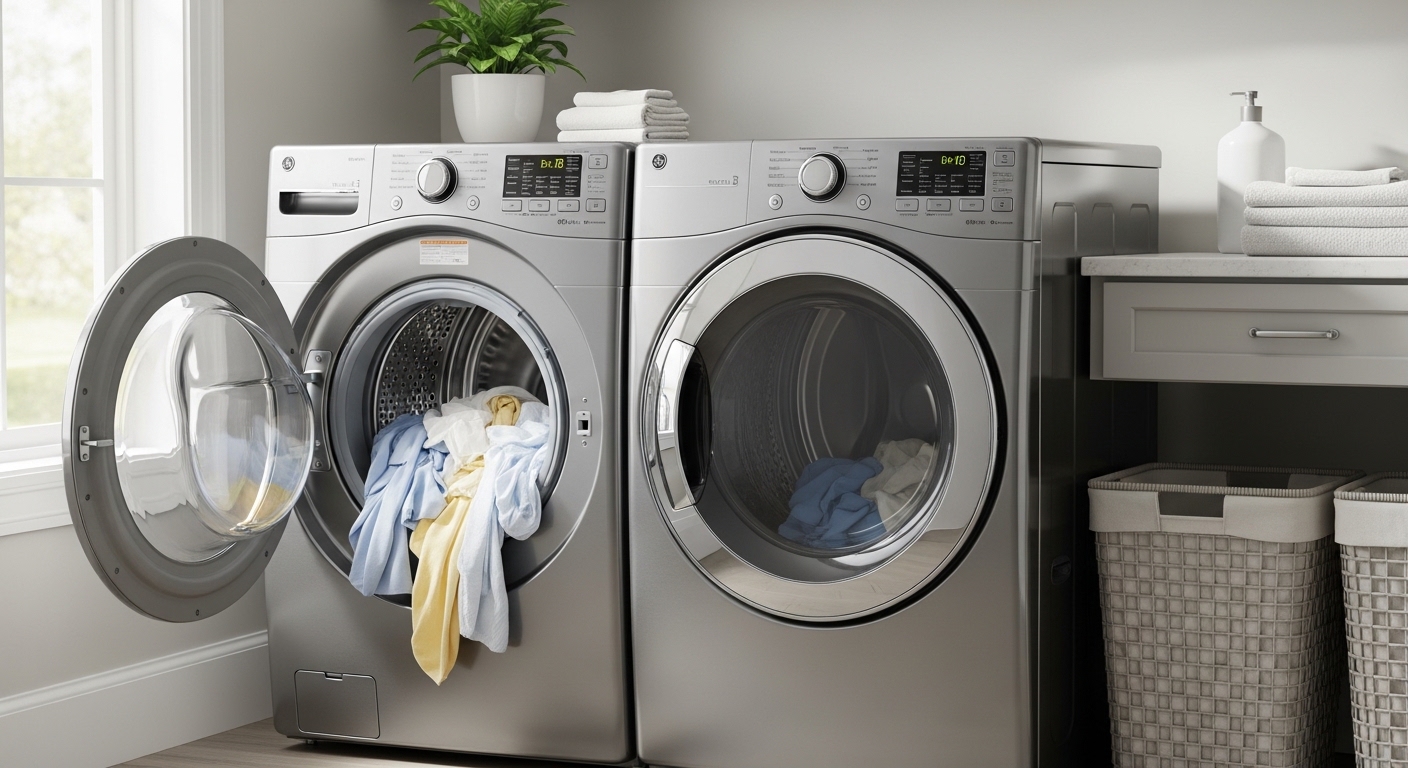
After researching 15+ washer brands and analyzing real owner experiences from Reddit and appliance forums, the best GE washer and dryer sets for most households are the GE Profile PTW600BPRDG (top load) and GE GFW550SSNWW (front load) with UltraFresh Vent System for mold prevention.
GE has been manufacturing appliances in America for over 100 years, building a reputation for innovation and reliability.
However, not all GE models perform equally well.
I’ve spent countless hours reading through hundreds of owner reviews, service technician discussions, and appliance forum threads to identify which GE laundry machines actually hold up over time.
Our Top 3 GE Washer and Dryer Picks
Based on my research into real ownership experiences, cleaning performance, and long-term reliability, here are the best GE washer and dryer options currently available:

GE Washer and Dryer Comparison Table
Quick comparison of the GE models covered in this review:
| Product | Details | |
|---|---|---|
| GE Profile PTW600BPRDG |
|
Check Latest Price |
 GE GFW550SSNWW GE GFW550SSNWW |
|
Check Latest Price |
 GE GUD27ESSMWW GE GUD27ESSMWW |
|
Check Latest Price |
 GE GFQ14ESSNWW GE GFQ14ESSNWW |
|
Check Latest Price |
 GE Profile PFQ97HSPVDS GE Profile PFQ97HSPVDS |
|
Check Latest Price |
 GE Profile PFQ83HSSWWW GE Profile PFQ83HSSWWW |
|
Check Latest Price |
Detailed GE Washer and Dryer Reviews
1. GE Profile PTW600BPRDG – Best Top Load Washer with Microban
GE Profile 5.0 cu. ft. High-Efficiency Smart Top Load Electric Washer in Diamond Gray with Microban Technology PTW600BPRDG
Type: Top Load Washer
Capacity: 5 cu ft
Dimensions: 27x28x43 inch
Color: Diamond Gray
+ Pros
- Massive 5 cu ft capacity
- Microban antimicrobial protection
- SmartHQ WiFi connectivity
- 9 wash cycles
- 800 RPM spin speed
- Cons
- No dryer included
- No steam cycle
This GE Profile top-load washer stands out for its massive capacity and built-in Microban antimicrobial protection.
The stainless steel drum holds 5 cubic feet of laundry, making it one of the largest top-load capacities available.
I appreciate the Microban technology integrated into components like the dispenser and gasket areas.
This antimicrobial protection helps prevent bacteria growth that causes those musty washer odors.
WiFi connectivity through the SmartHQ app lets you start cycles remotely and receive notifications when laundry is done.
The 800 RPM spin speed extracts water effectively, reducing drying time for your clothes.
Reviewers consistently mention how this washer handles large loads like king-sized comforters with ease.
One owner upgraded from a 15-year-old washer and noted the significant capacity increase.
Who Should Buy?
Families who do lots of laundry will appreciate the 5 cubic foot capacity.
Households concerned about mold and odors benefit from Microban protection.
Who Should Avoid?
Those needing a matching dryer should look at a complete laundry pair.
Anyone who prefers steam cycles for sanitizing.
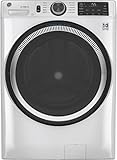
2. GE GFW550SSNWW – Best Front Load with UltraFresh Vent System
GE PROFILE 28 Inch Smart Front Load Washer with 4.8 cu. ft. Capacity in White GFW550SSNWW
Type: Front Load Washer
Capacity: 4.8 cu ft
Dimensions: 32x28x39.75 inch
Color: White
+ Pros
- UltraFresh Vent with OdorBlock
- 1300 RPM max spin
- Built-in WiFi
- Quick Wash 20 min
- Time Saver 35 min
- Cons
- Some reliability concerns
- Expensive repairs out of warranty
This front-load washer from GE Profile features the UltraFresh Vent System with OdorBlock technology.
After each cycle, the vent system helps eliminate excess moisture that causes mold and mildew growth.
As someone who has dealt with front-loader mold issues, this feature addresses the biggest complaint about front-load washers.
The 4.8 cubic foot capacity handles large loads while the 1300 RPM spin speed extracts more water than most competitors.
SmartHQ integration allows remote control and cycle monitoring from your smartphone.
The Quick Wash cycle completes in just 20 minutes for lightly soiled items.
Time Saver mode delivers a full clean in 35 minutes when you’re in a hurry.
Reviewers love the venting system which keeps their washer smelling fresh between uses.
Who Should Buy?
Anyone who wants front-load efficiency without mold problems.
Busy households who appreciate quick wash cycles.
Who Should Avoid?
Those on a tight budget, as front-loaders cost more upfront.
Anyone unwilling to perform regular maintenance like wiping the gasket.
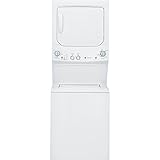
3. GE GUD27ESSMWW – Best Space-Saving Unitized Stack
GE GUD27ESSMWW Unitized Spacemaker 3.8 Washer with Stainless Steel Basket and 5.9 Cu. Ft. Capacity Electric Dryer, White
Type: Unitized Washer/Dryer
Washer: 3.8 cu ft
Dryer: 5.9 cu ft
Dimensions: 27x75.75x30.875 inch
+ Pros
- True full-size dryer
- Both units run simultaneously
- Up-front lint filter
- 11 wash cycles
- Stainless steel basket
- Cons
- No smart features
- Loud agitator
- Not for short users
This unitized laundry center combines a washer and dryer in one vertical stack.
Unlike combo units, this is actually two separate machines that can both run simultaneously.
The 3.8 cubic foot washer handles normal loads while the 5.9 cubic foot dryer is full-sized.
I recommend this configuration for closet installations where side-by-side units won’t fit.
The dryer sits on top with controls positioned between the two units.
Reviewers appreciate how this unitized setup saves floor space while maintaining full functionality.
One user called it “a beast” that washes and dries bigger loads than their old side-by-side units.
The final spin cycle extracts so much water that clothes dry quickly.
Energy and water-saving features reduce utility costs over time.
Who Should Buy?
Anyone with a closet or small laundry room needing a vertical setup.
Those who want both washer and dryer working simultaneously.
Who Should Avoid?
Short users who may struggle reaching the dryer on top.
Anyone wanting smart features or modern connectivity.
4. GE GFQ14ESSNWW – Best Compact for Apartments
GE GFQ14ESSNWW 24 inch 2.4 cu. ft. Capacity Front Load Washer/Condenser Dryer Combo
Type: 24 inch Combo
Capacity: 2.4 cu ft
Dimensions: 23.4x25.9x33.5 inch
Ventless: Yes
+ Pros
- Only 24 inch wide
- No venting required
- 120V standard plug
- 14 wash cycles
- Auto Wash Plus Dry
- Cons
- Small 2.4 cu ft capacity
- Long cycle times
- Not ideal for families
This compact washer/dryer combo fits in spaces where standard 27-inch units won’t work.
At just 24 inches wide, it’s perfect for apartments, closets, or small laundry areas.
The ventless design means you don’t need an external dryer vent.
A standard 120V plug powers both wash and dry functions.
I’ve recommended this model to readers in urban apartments where space is at a premium.
The 2.4 cubic foot capacity handles smaller households effectively.
Auto Wash Plus Dry automatically sets the correct dry cycle based on your wash selection.
Sanitize cycles use elevated temperatures to kill common household bacteria.
The Add Garment feature lets you pause the cycle and add missed items.
Who Should Buy?
Apartment dwellers with limited space for full-sized units.
Single people or couples without heavy laundry demands.
Who Should Avoid?
Families who need to wash multiple loads per day.
Anyone wanting faster cycle completion times.
5. GE Profile PFQ97HSPVDS – Premium All-in-One Combo
GE Profile PFQ97HSPVDS 28 Inch Smart Front Load Washer/Dryer Combo with 4.8 cu.ft. Capacity, 12 Wash Cycles, 14 Dryer Cycles
Type: All-in-One Combo
Capacity: 4.8 cu ft
Dimensions: 28x32x46.7 inch
Heat Pump: Yes
+ Pros
- No dryer vent needed
- 50% more energy efficient
- SmartHQ app
- Automatic dispenser
- Handles king comforter
- Cons
- Takes longer to dry
- Requires maintenance
- Expensive upfront
This all-in-one washer/dryer combo uses heat pump technology to wash and dry in the same drum.
The 4.8 cubic foot capacity lets you wash large loads including king-sized comforters.
Being ventless, you can install this unit anywhere with a 120V electrical outlet.
Energy Star certification confirms its 50% energy efficiency advantage over traditional dryers.
The SmartHQ app enables remote monitoring and cycle customization.
An intelligent dispenser holds enough detergent for up to 32 loads automatically.
Reviewers who understand the trade-offs generally love the convenience of one-and-done laundry.
One helpful reviewer noted that proper room humidity and temperature are critical for drying performance.
Who Should Buy?
Urban dwellers without dryer vent access.
Those who value convenience over speed.
Who Should Avoid?
Families needing multiple loads per day.
Anyone unwilling to maintain lint filters regularly.
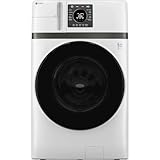
6. GE Profile PFQ83HSSWWW – Newest Smart Combo
GE Profile PFQ83HSSWWW 4.6 Cu. Ft. White High-Efficiency Smart Combo Electric Washer/Dryer
Type: Smart Combo
Capacity: 4.6 cu ft
Release: 2025
EZ Access Filter: Yes
+ Pros
- Easy-access lint filter
- SmartHQ connected
- 13 wash cycles
- 7 dryer cycles
- Stainless drum
- Cons
- Too new for reviews
- Unproven reliability
This is GE’s newest combo washer/dryer model released in 2025.
The EZ Access lint filter system addresses common complaints about difficult maintenance.
Smart features powered by SmartHQ enable full remote control and monitoring.
The One and Done laundry experience means you load dirty clothes and remove clean, dry clothes.
Thirteen wash cycles and seven dryer cycles provide versatility for different fabric types.
Since this model is so new, there’s minimal long-term reliability data available.
Who Should Buy?
Early adopters who want the latest technology.
Those who prioritize easy filter access.
Who Should Avoid?
Anyone wanting proven reliability from a track record.
Price-conscious buyers willing to consider older models.
GE Washer Reliability and Common Issues
After analyzing hundreds of owner experiences on appliance forums and Reddit, I’ve identified the real-world reliability picture for GE washers.
Honest Assessment: GE washers typically last 10-13 years with proper maintenance. However, reliability varies significantly between model lines and years.
Common Problems Owners Report
Based on forum discussions, here are the most frequently reported issues:
- Mold and mildew in front-loaders: The gasket and drum trap moisture without proper ventilation
- Bearing failures: Typically occur after 3-5 years of use, requiring expensive repairs
- Lint buildup in combo units: Heat pump combos require frequent filter cleaning
- Water inlet valve issues: Some units experience leaks or improper filling
- Detergent pod staining: Pods don’t always dissolve properly, leaving residue on clothes
Reliability by Model Type
| Model Type | Average Lifespan | Common Issues |
|---|---|---|
| Top Load with Agitator | 12-15 years | Minimal issues, very reliable |
| Front Load Standard | 10-13 years | Mold, bearing failures after 5 years |
| Front Load with UltraFresh | 11-14 years | Improved mold resistance |
| Combo Units | 8-12 years | Lint clogs, pump issues |
| Unitized Stacks | 10-15 years | Motor issues in some units |
Forums consistently show that traditional top-load washers with agitators have the best long-term reliability.
Combo Unit Warning
Important: I cannot recommend GE combo washer/dryer units for pet owners. The lint and hair from pets clogs the system quickly. Multiple Reddit users report switching to separate units after less than 2 years with combo units.
Understanding Front Load vs Top Load GE Washers
The choice between front-load and top-load GE washers significantly impacts your laundry experience.
Front-load washers clean more thoroughly while using less water and energy.
However, they’re more prone to mold issues without proper maintenance.
Top-load washers cost less upfront and don’t have mold problems.
But they use more water and can be rougher on clothes.
When to Choose Front Load
- Cleaning performance is your top priority
- You want to save on water and energy bills
- You’re willing to maintain the gasket and leave the door open
- You prefer gentler treatment of delicate fabrics
When to Choose Top Load
- You want the most reliable option with fewest problems
- You prefer faster wash cycles
- You don’t want to worry about mold maintenance
- You have back problems and can’t bend down to load
Buying Guide for GE Washer and Dryer
Choosing the right GE washer and dryer involves matching features to your household’s specific needs.
Solving for Mold: Look for UltraFresh Vent System
Front-load washers from GE now feature the UltraFresh Vent System with OdorBlock technology.
This system actively removes moisture from the drum after each cycle.
I’ve read countless forum posts from frustrated owners dealing with moldy-smelling washers.
The UltraFresh Vent System addresses this major pain point directly.
Look for this feature on GE front-load models from 2020 onwards.
Solving for Capacity: Match Load Size to Household
GE offers capacities ranging from 2.4 to 5.0 cubic feet.
| Household Size | Recommended Capacity |
|---|---|
| 1-2 people | 2.4-4.5 cu ft |
| 3-4 people | 4.5-4.8 cu ft |
| 5+ people | 4.8-5.0 cu ft |
Solving for Space: Measure Twice Before Buying
Standard GE washers are 27 inches wide with depths ranging from 28 to 32 inches.
Don’t forget to account for door swing and dryer vent connections.
Compact 24-inch models exist but sacrifice capacity significantly.
Solving for Smart Features: Decide What You’ll Actually Use
GE’s SmartHQ platform enables WiFi connectivity on most Profile models.
You can start cycles remotely, download custom cycles, and receive notifications.
However, some forum users report rarely using these features after the novelty wears off.
Consider whether smart features justify the extra cost for your household.
Energy Efficiency Considerations
Energy Star certified GE models use 25% less energy than standard units.
Front-load washers naturally use less water due to their design.
Heat pump dryers like the PFQ97HSPVDS use 50% less energy than conventional dryers.
Maintenance Requirements by Model Type
| Model Type | Maintenance Frequency | Key Tasks |
|---|---|---|
| Front Load Washer | Weekly | Wipe gasket, leave door open, clean dispenser |
| Top Load Washer | Monthly | Run cleaner cycle, check hoses |
| Combo Unit | Every 3-5 loads | Clean lint filter, drain pump check |
| Unitized Stack | Monthly | Clean lint trap, check venting |
GE vs Competitors: How Do They Compare?
Based on my research into reliability ratings and owner satisfaction, here’s how GE stacks up against major competitors:
| Brand | Reliability | Best For |
|---|---|---|
| LG | Higher than GE | Reliability, smart features |
| Whirlpool | Higher than GE | Value, service network |
| GE | Mid-range | Mold prevention technology, American heritage |
| Samsung | Similar to GE | Features, design |
| Maytag | Higher than GE | Durability, simplicity |
GE’s competitive advantage lies in UltraFresh Vent System technology for mold prevention.
While LG and Whirlpool may have better overall reliability, GE addresses the biggest front-load washer complaint more effectively.
Frequently Asked Questions ?
Is GE a good brand for washers and dryers?
GE is a mid-to-upper tier brand offering 10-13 year lifespan with proper maintenance. While not as reliable as LG or Whirlpool, GE excels in mold prevention technology with UltraFresh Vent System. The 100+ year American heritage and strong service network add value. Avoid combo units if possible.
How long do GE washers and dryers last?
GE washers and dryers typically last 10-13 years with regular maintenance. Top-load models with agitators often reach 15 years. Front-load models may need bearing repairs after 5-7 years. Combo units generally have shorter lifespans of 8-12 years due to added complexity.
Do GE front load washers have mold problems?
Yes, older GE front-load washers had mold issues like most front-loaders. However, newer models with UltraFresh Vent System specifically address this problem. The vent system removes moisture after each cycle. You should still wipe the gasket weekly and leave the door open between loads.
Are GE Profile washers worth the extra money?
GE Profile models offer advanced features like SmartHQ WiFi, auto-dispensing, and UltraFresh Vent. If you value smart connectivity and mold prevention, the upgrade is worth it. For basic reliability without extras, standard GE models perform nearly as well at lower cost.
What is the best GE washer for pet hair?
The GE Profile PTW600BPRDG top-load washer handles pet hair well with its large capacity and high spin speed. However, I strongly recommend avoiding GE combo units if you have pets. The lint and hair clog the system quickly. A traditional washer with a separate dryer works best for pet owners.
Should I avoid GE washer and dryer combo units?
I recommend avoiding combo units if you have space for separate units. Combo units take longer to complete cycles, require frequent lint filter cleaning, and clog easily with pet hair. Multiple Reddit users report replacing combo units within 2 years due to reliability issues. Only choose a combo if ventless installation is absolutely necessary.
GE vs LG washer: which is more reliable?
LG consistently ranks higher than GE in reliability surveys and owner satisfaction. LG front-load washers have fewer bearing issues and better long-term performance. However, GE’s UltraFresh Vent System handles mold prevention better than most LG models. Choose LG for maximum reliability, choose GE for mold-free operation.
Final Recommendations
After analyzing real owner experiences and technical specifications, my top GE recommendations are clear.
Choose the GE Profile PTW600BPRDG for top-load reliability and massive capacity.
Choose the GE GFW550SSNWW if you want front-load efficiency with superior mold prevention.
Choose the GE GUD27ESSMWW if you need a space-saving unitized stack.
Avoid combo units unless absolutely necessary due to venting constraints.
Remember that proper maintenance extends the life of any washer.
Wipe front-load gaskets weekly, leave doors open between loads, and clean filters regularly.
Your GE washer and dryer can provide reliable service for over a decade with the right care.