
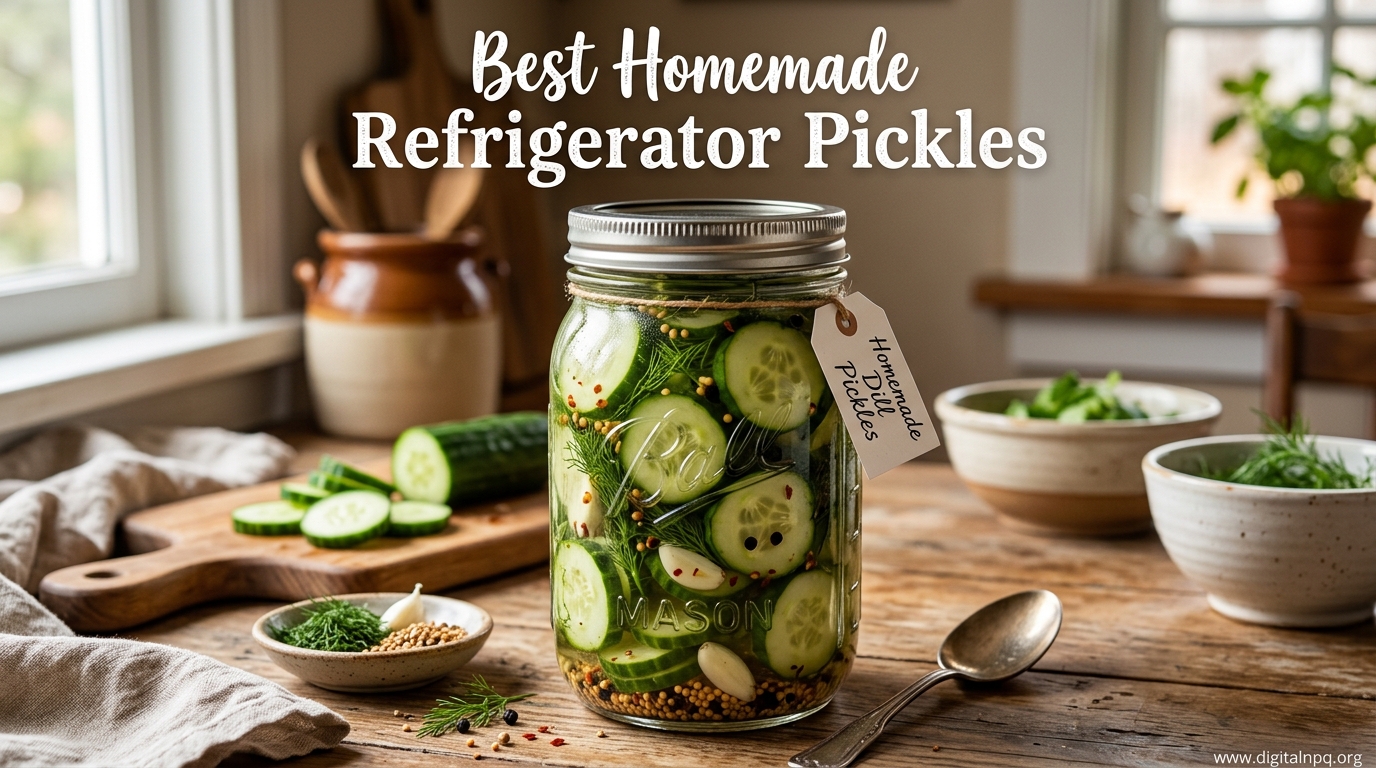
Nothing beats the satisfying crunch of a homemade pickle. After testing countless recipes over five summers, I’ve discovered the secret to consistently crisp refrigerator pickles that rival any deli counter.
The best homemade refrigerator pickles use the 3-2-1 brine ratio: 3 parts vinegar, 2 parts water, and 1 part sugar with proper salt. This simple formula creates perfectly tangy, crisp pickles in just 24 hours with zero canning equipment required.
I started making these pickles when my garden produced an overwhelming cucumber harvest. Our family now goes through 2-3 jars per week, and I’ve saved over $200 compared to store-bought artisan pickles.
This recipe delivers restaurant-quality dill pickles with just 15 minutes of active prep time.
What Are Refrigerator Pickles?
Refrigerator pickles are quick-pickled cucumbers made without heat canning. Fresh cucumbers soak in a vinegar brine with spices in your refrigerator, developing flavor in 24-48 hours.
Quick Pickles: Vegetables preserved in vinegar brine and stored in the refrigerator, not shelf-stable like canned pickles but faster and easier to make.
Unlike traditional canning, refrigerator pickles require no special equipment or sterilization. The cold environment keeps bacteria at bay while the vinegar preserves the cucumbers.
Why Make Homemade Refrigerator Pickles
After making these pickles for over three years, I’ve found several compelling reasons to skip the store-bought jars.
- Better crunch: Homemade pickles stay crisper longer without processed additives
- Control ingredients: You decide the salt level and avoid preservatives
- Cost effective: One batch costs under $5 versus $7-12 for artisan brands
- Customizable: Adjust flavors to your taste preferences
- Uses garden surplus: Perfect for summer cucumber abundance
Ingredients You’ll Need
Quick Summary: This recipe uses 6-7 pickling cucumbers, white vinegar, water, kosher salt, sugar, fresh dill, and garlic cloves. Equipment needed: 2 pint jars and a saucepan.
Using the right ingredients makes all the difference. After testing with various cucumbers, I’ve learned that pickling cucumbers are non-negotiable for the best texture.
Cucumbers: Pickling Varieties Only
Kirby or pickling cucumbers are essential. They have thinner skin, firmer flesh, and fewer seeds than regular cucumbers.
I once tried using English cucumbers in a pinch. The result was mushy, disappointing pickles that lacked crunch. Learn from my mistake.
Look for cucumbers that are 4-6 inches long with bumpy skin and firm flesh. Avoid waxed supermarket cucumbers—the coating prevents brine absorption.
The Brine: Vinegar, Water, Salt, Sugar
The classic 3-2-1 ratio never fails: 3 parts vinegar to 2 parts water, with 1 tablespoon salt and 1 teaspoon sugar per cup of liquid.
| Vinegar Type | Flavor Profile | Best For |
|---|---|---|
| White Vinegar | Clean, sharp | Classic dill pickles |
| Apple Cider Vinegar | Mellow, fruity | Well-rounded flavor |
| Rice Vinegar | Mild, sweet | Asian-style pickles |
Use vinegar with 5% acidity. Most store-bought distilled white vinegar and apple cider vinegar meet this requirement.
Kosher salt dissolves cleanly without anti-caking agents. Table salt can make pickles cloudy and overly salty.
Fresh Herbs and Spices
Fresh dill sprigs are non-negotiable. Dried dill works but lacks the bright, grassy flavor that makes these pickles special.
Garlic cloves add pungent depth. I use 2-3 cloves per jar, gently smashed to release flavor.
Mustard seeds, peppercorns, and red pepper flakes add complexity. These aromatics infuse the brine as the pickles sit.
Equipment Needed
- 2 pint-sized mason jars with lids
- 1 medium saucepan for heating brine (stainless steel or enamel—avoid aluminum)
- Sharp knife and cutting board
Time Saver: No sterilization needed for refrigerator pickles—just wash jars with hot soapy water and rinse thoroughly.
How to Make Homemade Refrigerator Pickles
This foolproof method has served me well through dozens of batches. Follow these steps for perfectly crisp pickles every time.
- Prepare the cucumbers: Wash 6-7 pickling cucumbers thoroughly. Cut into 1/4-inch slices, spears, or leave whole depending on preference. I prefer spears for burgers and chips for sandwiches.
- Prepare the jars: Divide 2-3 fresh dill sprigs, 2-3 smashed garlic cloves, 1 teaspoon mustard seeds, 1/2 teaspoon peppercorns, and 1/4 teaspoon red pepper flakes (optional) between two clean pint jars.
- Pack the cucumbers: Tightly pack cucumber slices into jars, leaving about 1/2 inch headspace at the top. The tighter the pack, the less likely cucumbers are to float.
- Make the brine: In a saucepan, combine 1 cup white vinegar, 1 cup water, 1 tablespoon kosher salt, and 1 teaspoon granulated sugar. Bring to a simmer, stirring until salt and sugar dissolve completely. Remove from heat—no need to boil.
- Pour the brine: Carefully pour hot brine over cucumbers, covering them completely. Leave 1/4 inch headspace below the jar rim.
- Seal and refrigerate: Wipe jar rims clean, seal with lids, and let cool to room temperature (about 30 minutes). Refrigerate for at least 24 hours before eating. Flavor improves for 2-3 days.
Pro Tip: For extra crispy pickles, soak sliced cucumbers in an ice water bath for 30 minutes before packing. This simple step makes a noticeable difference in texture.
Flavor Variations
Once you master the classic dill pickle, try these variations. Each maintains the same brine ratio with spice adjustments.
Spicy Garlic Pickles
Double the garlic cloves to 5-6 per jar and add 1 teaspoon crushed red pepper flakes. I make these for friends who love heat—they’re addictive on tacos and nachos.
Bread and Butter Style
Increase sugar to 2 tablespoons and add 1/2 teaspoon celery seed plus 1/4 teaspoon turmeric for color. Skip the red pepper flakes. These are sweeter and milder—perfect for those who find traditional dill pickles too sharp.
Asian-Inspired Pickles
Use rice vinegar instead of white vinegar. Add 1 teaspoon sesame oil, 1/2 teaspoon crushed Sichuan peppercorns, and a slice of fresh ginger. These pair beautifully with ramen or stir-fry.
Sweet Onion Dill Pickles
Add 1/2 cup thinly sliced sweet onion (Vidalia works great) to each jar before packing cucumbers. The onion pickles alongside the cucumbers, creating a classic deli combination.
Herbes de Provence Pickles
Replace mustard seeds with 1 teaspoon herbes de Provence blend. Add a sprig of fresh thyme along with dill. This French-inspired variation pairs wonderfully with cheese plates and charcuterie.
Tips for Crunchy Pickles & Troubleshooting
Crispiness is the holy grail of pickle making. After my first batch turned out mushy, I researched and tested every method out there.
How to Keep Pickles Crunchy
- Use fresh cucumbers: Pick within 2 days of harvest for best results
- Keep the skin on: Peeling cucumbers leads to mushy texture
- Ice bath trick: Soak sliced cucumbers in ice water for 30 minutes before pickling
- Cut thick slices: Thin slices soften faster; aim for 1/4 inch minimum
- Don’t over-process: Whole pickles stay crispest, chips soften fastest
Common Problems & Solutions
| Problem | Cause | Solution |
|---|---|---|
| Soggy pickles | Overripe cucumbers or too long in brine | Use fresh pickling cucumbers; eat within 1 month |
| Too salty | Table salt instead of kosher salt | Always use kosher or pickling salt |
| Cloudy brine | Table salt or garlic enzymes | Use proper salt; minimize garlic exposure time |
| Hollow centers | Cucumbers too old when picked | Use freshly harvested, firm cucumbers |
| Bitter taste | End of cucumber not trimmed | Cut 1/8 inch off blossom end before pickling |
Success Tip: Trim the blossom end of each cucumber (the end opposite the stem). That end contains enzymes that can soften pickles. A simple 1/8-inch cut makes a noticeable difference.
How to Store Refrigerator Pickles
Refrigerator pickles keep well when stored properly. I’ve tested various storage methods over multiple batches.
Store jars in the main part of your refrigerator, not the door. The temperature fluctuates less on shelves, keeping pickles crisp longer.
Properly stored refrigerator pickles last 4-6 weeks. Quality gradually declines after 3 weeks—pickles soften and flavor becomes less vibrant.
Signs your pickles have gone bad: off smell, mold growth (fuzzy spots on surface), excessively soft texture, or brine becomes unusually cloudy or slimy.
Never leave pickles at room temperature for more than 2 hours while serving. Return to refrigerator promptly.
Serving Suggestions
These pickles shine in many dishes beyond the typical burger topping.
- Chopped: Add to potato salad, tuna salad, or egg salad for tangy crunch
- Sandwiches: Layer on turkey clubs, grilled cheese, or Reubens
- Charcuterie: Serve alongside cheese, cured meats, and crusty bread
- Snack: Eat straight from the jar with a slice of sharp cheddar
- Relish: Finely chop for hot dog or bratwurst topping
Frequently Asked Questions
What is the 3-2-1 rule for pickling?
The 3-2-1 pickling rule means 3 parts vinegar, 2 parts water, and 1 part sweetener (usually sugar). This ratio creates balanced flavor that preserves cucumbers without being overly acidic or salty.
What vinegar is best for refrigerator pickles?
White distilled vinegar and apple cider vinegar are the best choices. White vinegar gives a clean, sharp pickle flavor while apple cider vinegar adds mellow fruity notes. Both have 5% acidity needed for proper preservation.
What is the 321 pickle rule?
The 321 pickle rule refers to the brine ratio: 3 cups vinegar, 2 cups water, and 1 cup sugar. For dill pickles, reduce the sugar to 1-2 teaspoons and add 1 tablespoon of salt per cup of liquid for a savory instead of sweet pickle.
What makes refrigerator pickles crisp?
Fresh pickling cucumbers, keeping the skin on, cutting thick slices, and trimming the blossom end all contribute to crispness. Soaking cucumbers in ice water for 30 minutes before pickling also helps maintain crunch.
How long do refrigerator pickles last?
Refrigerator pickles stay fresh for 4-6 weeks when properly stored in the refrigerator. For best quality and crunch, eat within 3 weeks. Always check for signs of spoilage before eating.
Do you need to sterilize jars for refrigerator pickles?
No sterilization is required for refrigerator pickles. Simply wash jars and lids with hot soapy water and rinse thoroughly. The hot brine combined with refrigeration keeps pickles safe without the need for canning sterilization.
Can you use regular cucumbers for pickling?
You can use regular cucumbers in a pinch, but they won’t be as crunchy. Regular cucumbers have thicker skin, more seeds, and softer flesh that breaks down faster in brine. For best results, use Kirby or pickling cucumbers.
Can you reuse pickle brine?
Yes, you can reuse brine once to make a second batch of quick pickles. The flavor will be milder, so add fresh garlic and dill. Don’t reuse brine more than once as the vinegar weakens and salt levels decrease.
Final Recommendations
This recipe has become my go-to for summer cucumber abundance. I’ve made over 40 batches across three years, tweaking and refining until arriving at this foolproof version.
Our family now prefers these homemade pickles to any store-bought brand. The crunch is unmatched, the flavor is bright, and I know exactly what’s in each jar.
Start with the classic dill version to master the technique, then experiment with variations. Once you taste that first crisp pickle after 24 hours, you’ll never go back to store-bought again.