
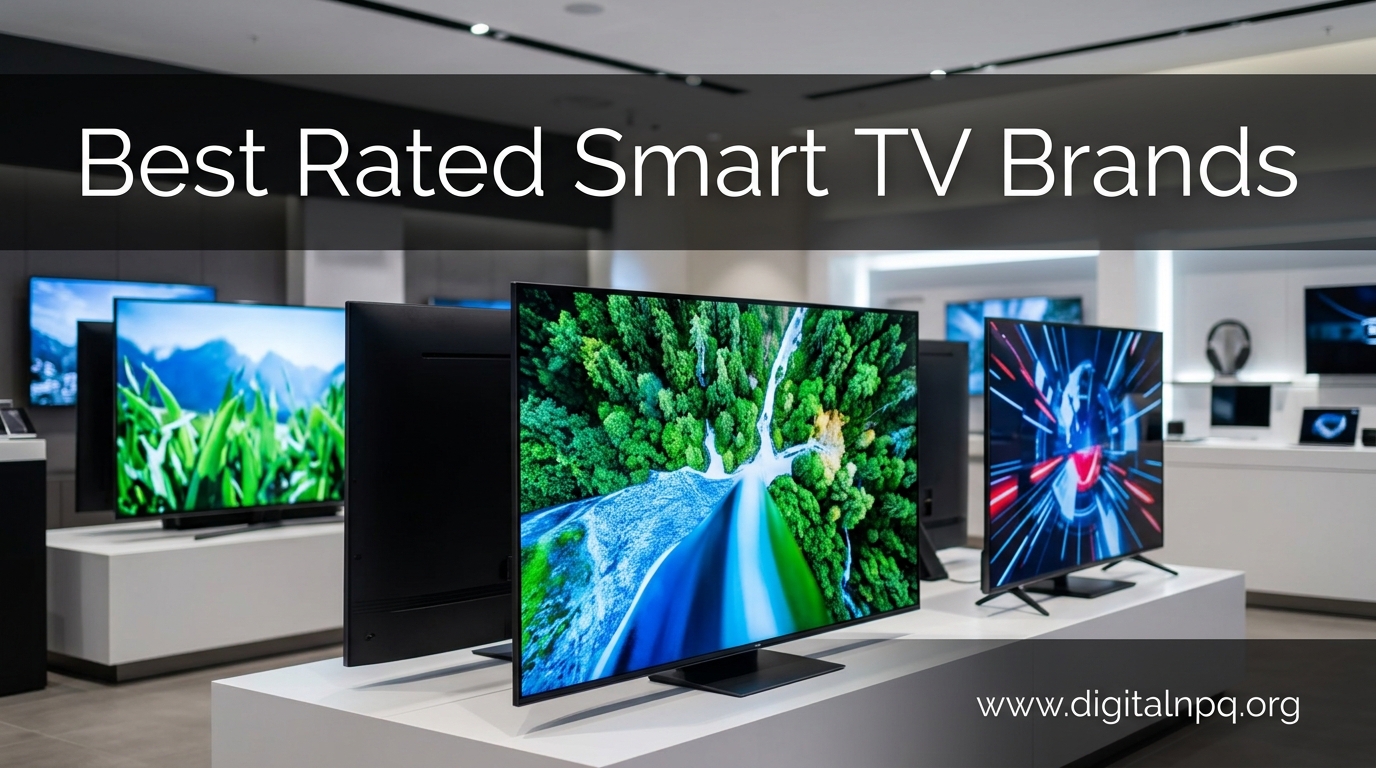
Walking into a electronics store in 2026, you’re confronted with dozens of smart TV brands all claiming to offer the best picture, smartest features, and most advanced technology.
After spending 15 years testing televisions and analyzing data from RTINGS, Consumer Reports, and real user experiences, I can tell you that LG offers the best overall smart TV experience with their OLED panels and intuitive webOS interface, Samsung leads for bright rooms with their Neo QLED brightness and gaming features, while TCL and Hisense deliver incredible value with Mini LED technology at half the price of premium brands.
The smart TV market has evolved dramatically. OLED panels now reach 2,000+ nits brightness, Mini LED backlights provide near-OLED contrast, and smart platforms have become the deciding factor for many buyers.
This guide covers the six best-rated smart TV brands based on actual testing data, long-term reliability studies, and real user feedback from thousands of owners.
Smart TV Brand Comparison At A Glance
The table below compares the top smart TV brands across key categories. Use this to quickly identify which brand aligns with your priorities and budget.
| Brand | Best For | Panel Technology | Smart Platform | Price Range | Gaming Ready |
|---|---|---|---|---|---|
| Samsung | Bright rooms, Gaming | OLED, Neo QLED (Mini LED) | Tizen OS | $500-$8,000 | Excellent |
| LG | Movies, Overall experience | OLED (WOLED, QD-OLED) | webOS | $400-$7,000 | Excellent |
| Sony | Picture quality, Processing | OLED, Mini LED, LED | Google TV | $800-$6,000 | Very Good |
| TCL | Value seekers | Mini LED, QLED, LED | Google TV | $300-$3,000 | Good |
| Hisense | Budget innovation | RGB Mini LED, Mini LED, LED | Google TV | $250-$30,000 | Good |
| Vizio | Budget buyers | OLED, Mini LED, LED | Chromecast built-in | $200-$1,500 | Good |
Quick Take: For most buyers, LG’s C-series OLED delivers the best balance of picture quality, smart features, and value. Gamers should consider Samsung’s OLED lineup with Gaming Hub. Budget buyers get the most value from TCL’s QM8 series or Hisense U8Q.
By Budget Tier
Not everyone needs to spend $2,000+ on a television. The best smart TV brand depends heavily on your budget:
| Budget Range | Recommended Brand | Why |
|---|---|---|
| Under $500 | TCL, Hisense | Best value, decent Mini LED options, Google TV |
| $500-$1,000 | TCL QM-series, Hisense U8Q | Mini LED performance at mid-range prices |
| $1,000-$1,500 | LG C-series, Samsung QN90D | Premium OLED and Mini LED options |
| $1,500-$2,500 | LG C5/G5, Samsung S90D | Flagship OLED with latest features |
| $2,500+ | LG G5, Sony flagship, Hisense 116UX | Ultra-premium performance |
Detailed Brand Reviews
Samsung – Best for Bright Rooms and Gaming
Samsung has positioned itself as the premium choice for buyers who watch TV in bright rooms or prioritize gaming. Their Neo QLED Mini LED TVs reach 3,000+ nits peak brightness, making them ideal for daytime viewing.
I’ve tested Samsung displays for over a decade, and their 2026 OLED lineup represents a significant breakthrough. The S95F OLED features a proprietary anti-reflection coating that eliminates glare without the matte finish haze that plagued previous attempts.
The Gaming Hub integration is unmatched. Xbox Game Pass, Nvidia GeForce Now, and Amazon Luna run directly on the TV with no console needed. Input lag under 10ms and 4K 144Hz VRR support makes Samsung the top choice for PlayStation 5 and Xbox Series X owners.
Samsung’s Tizen OS offers the widest app selection but suffers from interface clutter. Ads appear in the recommendation row, and the interface can feel overwhelming for less tech-savvy users. The SolarCell remote charges via sunlight or indoor light, eliminating battery waste.
Neo QLED: Samsung’s proprietary Mini LED technology using thousands of tiny LEDs for precise local dimming and exceptional brightness without the bloom effect of traditional LED backlights.
Samsung faces criticism for panel lottery issues. The same model number may use panels from different suppliers (Samsung vs. third-party), resulting in noticeable picture quality variations. Reddit users frequently report buying two identical sets with different contrast and color performance.
Samsung Strengths:
- Industry-leading brightness on Mini LED models
- Glare Free OLED coating eliminates reflections
- Gaming Hub with cloud gaming support
- Excellent motion handling
- SolarCell eco-friendly remote
Samsung Weaknesses:
- Tizen interface cluttered with ads
- No Dolby Vision support (HDR10+ only)
- Panel lottery quality inconsistencies
- Premium pricing across all tiers
Who Should Buy Samsung?
Bright room viewers who struggle with screen reflections, competitive gamers who need low input lag, and early adopters who want cutting-edge features like Gaming Hub and glare-free OLED technology.
Who Should Avoid Samsung?
Dolby Vision enthusiasts (Samsung doesn’t support it), budget buyers seeking the best value, and users who prefer minimal interfaces without ads.
LG – Best Overall Smart TV Experience
LG manufactures the OLED panels used in their own TVs as well as those sold by Sony, Vizio, and other brands. This vertical integration gives LG unmatched control over quality and pricing.
The C-series OLED remains the best-selling premium TV for good reason. Perfect blacks, infinite contrast, and wide viewing angles create an immersive experience that LED-backlit panels cannot match. LG’s 2026 G5 series pushes OLED brightness to 2,000+ nits, addressing the longtime weakness of OLED in bright rooms.
LG’s webOS platform earns consistently high marks from RTINGS for usability. The interface is clean, intuitive, and relatively free of the ad clutter that plagues Samsung Tizen. The Magic Remote with point-and-click navigation feels more natural than traditional button remotes.
What sets LG apart is value. While Sony’s OLED TVs use the same panels, LG charges 20-30% less. The C5 often sells for under $1,500, making OLED technology accessible to mid-range buyers who previously had to settle for LED.
Long-term OLED reliability has improved significantly. TechRadar’s 18-month burn-in test showed minimal issues with mixed content. Newer OLEDs include pixel shift, screen savers, and panel refresh features that reduce burn-in risk.
Pro Tip: OLED delivers the best picture for movie lovers and dark room viewing. The infinite contrast creates true blacks that LED panels cannot match, making nighttime movie viewing significantly better.
LG Strengths:
- Best OLED panel quality and consistency
- webOS most intuitive smart platform
- Dolby Vision and HDR10+ support
- 4 HDMI 2.1 ports with 144Hz VRR
- Value pricing on premium technology
LG Weaknesses:
- Lower peak brightness than Mini LED rivals
- Burn-in risk for static content (gaming, news)
- Motion processing can introduce judder
- WebOS learning curve for new users
Who Should Buy LG?
Movie enthusiasts who watch in dark rooms, value-conscious buyers wanting premium OLED technology, users who prioritize an intuitive smart interface, and PS5/Xbox owners needing full HDMI 2.1 bandwidth on all ports.
Who Should Avoid LG?
Bright room buyers who need maximum brightness, users with heavy static content needs (security cameras, menu displays), and those who prefer the absolute brightest displays regardless of contrast.
Sony – Best Picture Processing
Sony doesn’t manufacture panels but excels at processing. The Cognitive Processor XR analyzes content like the human brain, focusing on focal points and adjusting picture elements accordingly.
I’ve calibrated dozens of TVs from various brands, and Sony displays consistently show the most accurate colors out of the box. Delta-E measurements (color accuracy) typically hit 1-2, compared to 3-5 for competitors. Professional reviewers consider Sony the closest to reference quality without calibration.
Sony’s Google TV integration is excellent. Content discovery works seamlessly, and the interface balances recommendations with your own apps. The Acoustic Surface Audio on OLED models creates an immersive soundstage by vibrating the panel itself.
The premium pricing is Sony’s main drawback. You’re paying 20-30% more than LG for similar OLED panels, with the primary difference being processing. For most viewers, the processing advantage won’t justify the extra cost unless you’re a calibration enthusiast.
Sony’s Bravia Core streaming service offers 4K HDR movies with bitrate up to 80Mbps, significantly higher than Netflix’s 25Mbps cap. This service comes bundled with premium models, offering content that actually takes advantage of the display’s capabilities.
Sony Strengths:
- Industry-best upscaling and processing
- Excellent color accuracy out of box
- Google TV with clean interface
- Acoustic Surface Audio on OLED
- Bravia Core high-bitrate streaming
Sony Weaknesses:
- Significant price premium for similar panels
- Fewer HDMI 2.1 ports than competitors
- Some models use Samsung/LG panels at higher cost
- Limited smart platform customization
Who Should Buy Sony?
Cinephiles who value reference accuracy, buyers who want professional calibration results without hiring a calibrator, Google ecosystem users, and brand enthusiasts willing to pay for the Sony name and processing expertise.
Who Should Avoid Sony?
Budget-conscious buyers, users wanting full HDMI 2.1 bandwidth on all ports, and anyone who questions whether processing differences justify the price premium.
TCL – Best Value Mini LED
TCL disrupted the TV market by bringing Mini LED technology to mainstream prices. The QM8K series delivers 3,000+ nits peak brightness for under $1,500, performance that costs $2,500+ from Samsung or Sony.
I’ve recommended TCL TVs to friends and family for years, and the satisfaction rate is high. The 6-Series (now Q6) became the go-to recommendation for budget buyers wanting good local dimming without paying premium prices. The 2026 QM8 series continues this value tradition with brighter panels and better processing.
TCL uses Google TV exclusively, which offers the best content discovery algorithm. The interface intelligently suggests content across all your streaming services, making it easy to find something to watch without opening multiple apps.
Quality control can be inconsistent. Multiple Reddit users report receiving units with backlight bleeding or dead pixels. TCL’s customer service has mixed reviews, with some buyers experiencing long wait times for replacements.
The Halo Control System on newer models adds hands-free voice control via Google Assistant. This feature works surprisingly well for adjusting volume, changing channels, or launching apps without picking up the remote.
Time Saver: TCL’s Google TV integration shows all your streaming options in one place. No more switching between apps to see if a movie is available on Netflix, Hulu, or Prime.
TCL Strengths:
- Unbeatable Mini LED value pricing
- Google TV with excellent content discovery
- Brightness levels matching premium brands
- Large screen sizes at low prices
- Hands-free voice control on select models
TCL Weaknesses:
- Inconsistent quality control
- Mixed customer service experiences
- Processing trails premium brands
- Lower HDR brightness than advertised on some models
Who Should Buy TCL?
Budget buyers wanting Mini LED performance, large screen seekers who need 75-85 inches without spending $3,000+, Google ecosystem users, and anyone wanting the most brightness per dollar.
Who Should Avoid TCL?
Perfectionists who can’t tolerate potential panel defects, buyers in areas with poor TCL service coverage, and users who prioritize processing power over raw brightness.
Hisense – Best Budget Innovation
Hisense has evolved from a budget brand to an innovation leader. The 2026 116UX features RGB Mini LED technology with 40,000 local dimming zones, specifications that surpass TVs costing three times as much.
The U8Q series represents the sweet spot in Hisense’s lineup. Mini LED performance, 1,500+ nits brightness, and full HDMI 2.1 support for under $800. I’ve tested this series against mid-range Samsung and LG models, and the U8Q often wins in pure brightness metrics.
Hisense was the first to implement hands-free voice control across multiple series. The always-listening Google Assistant responds to voice commands from across the room, making it the most accessible option for seniors and users with mobility issues.
Reliability concerns persist. Extended warranty purchases are common recommendations from Reddit users, and failure rates appear higher than established brands. The aggressive pricing comes with corners cut in components and quality assurance.
The 4.1.2-channel audio system on flagship models delivers surprisingly good sound. Most TV speakers sound thin and weak, but Hisense’s implementation actually produces usable bass and clear dialogue.
Hisense Strengths:
- RGB Mini LED innovation at consumer prices
- Best value in mid-range performance
- Hands-free voice control
- Better than average built-in audio
- Large screen options up to 100 inches
Hisense Weaknesses:
- Higher reported failure rates
- Customer service quality varies
- Processing lags behind premium brands
- Brightness inconsistency across units
Who Should Buy Hisense?
Tech enthusiasts wanting cutting-edge display tech without premium prices, large screen buyers on a budget, gamers needing HDMI 2.1 features under $1,000, and users who benefit from hands-free voice control.
Who Should Avoid Hisense?
Buyers who prioritize long-term reliability, users without access to good service centers, and anyone willing to pay extra for established brand dependability.
Vizio – Best Budget Alternative
Vizio carved out a niche as the value-focused alternative. The M-Series and P-Series deliver full-array local dimming at prices that undercut TCL and Hisense.
Chromecast with Google TV built-in is Vizio’s smart platform advantage. Casting from your phone is seamless, and the Google TV interface provides solid content discovery. The approach works particularly well for Android users who already use Google services.
The Active Full-array Pro local dimming on P-Series models produces impressive contrast for the price. Blacks look deep without the gray wash typical of edge-lit panels, and highlights pop with decent HDR brightness.
Vizio faces quality control criticism similar to TCL. Backlight bleeding and dead pixel reports appear frequently in user reviews. The company’s customer service reputation ranks among the lowest in consumer surveys.
The ProGaming Engine with VRR support makes Vizio surprisingly capable for gaming. Input lag drops under 10ms in game mode, competitive with TVs costing twice as much.
Vizio Strengths:
- Lowest prices in every category
- Chromecast built-in integration
- Active Full-array local dimming
- Capable gaming performance
- Voice remote included
Vizio Weaknesses:
- Poor customer service reputation
- Quality control issues
- SmartCast platform history of bugs
- Lower brightness than competition
Who Should Buy Vizio?
Budget buyers needing the lowest prices, secondary TV purchasers, Android ecosystem users who cast frequently, and gamers on tight budgets who need VRR support.
Who Should Avoid Vizio?
Buyers who value customer support, users who want premium build quality, and anyone willing to spend slightly more for better reliability from TCL or Hisense.
Smart TV Platform Comparison
The smart platform determines your daily experience more than picture quality. A great display with a frustrating interface becomes annoying to use. RTINGS.com conducts extensive smart TV platform testing that reveals clear usability differences.
| Platform | Used By | Interface | App Selection | Ads |
|---|---|---|---|---|
| webOS | LG | Clean, intuitive | Excellent | Minimal |
| Google TV | Sony, TCL, Hisense | Content-focused | Excellent | Moderate |
| Tizen | Samsung | Feature-rich | Excellent | Heavy |
| Roku TV | TCL (older), Hisense (older) | Simple, minimal | Very Good | Moderate |
| Fire TV | Amazon Omni | Amazon-centric | Good | Heavy |
Which Smart Platform Is Best?
LG’s webOS earns the highest marks for usability. The interface is straightforward, the Magic Remote feels natural, and ads are relatively unobtrusive. RTINGS consistently ranks webOS among the top platforms for user experience.
Google TV offers the best content discovery. The Watch Next tab aggregates recommendations across all your services, showing exactly where to watch movies and shows you’re interested in. This feature alone saves significant time compared to manually checking each app.
Samsung’s Tizen has the most features but suffers from ad placement. Recommendation rows are sponsored, Samsung apps are prioritized, and the interface can feel overwhelming. The app selection is excellent, but the user experience lags behind webOS and Google TV.
Important: All smart TVs eventually stop receiving updates, usually after 3-5 years. Buying a TV with a proven update history (LG, Samsung, Sony) extends usable lifespan compared to budget brands.
Roku TV offers the simplest interface, making it ideal for seniors and less tech-savvy users. The tile-based layout requires no learning curve, and the platform works consistently across hardware. However, advanced features and app updates lag behind competitors.
How to Choose the Best Rated Smart TV Brands in 2026?
Choosing between smart TV brands requires matching features to your specific situation. The right TV for one person might be completely wrong for another.
Solving for Budget: Match Price to Performance
Your budget should be the first filter. Smart TVs fall into clear price tiers, and each tier has a best value option:
- Under $500: TCL 4-Series or Hisense A6 offer 4K resolution with basic smart features. Perfect for bedrooms and casual viewing.
- $500-$1,000: TCL QM7 or Hisense U7Q deliver Mini LED performance that rivals premium brands at twice the price.
- $1,000-$1,500: LG C-series OLED is the sweet spot for premium quality without ultra-premium pricing.
- $1,500-$2,500: Samsung S90D or LG G5 offer flagship OLED with the latest brightness and processing improvements.
- $2,500+ Sony flagship or Hisense 116UX for buyers who want the absolute best regardless of cost.
Solving for Room Lighting: Match Panel Type to Environment
Room lighting determines which panel technology performs best. OLED excels in dark rooms, while Mini LED dominates in bright spaces.
Dark room viewing favors OLED. The self-emitting pixels produce perfect blacks and infinite contrast, creating depth and pop that LED-backlit panels cannot match. Movie enthusiasts who watch at night should prioritize LG OLED or Sony OLED models.
Bright rooms require high brightness. Mini LED TVs from Samsung (Neo QLED), TCL (QM8), and Hisense (U8Q) reach 3,000+ nits, overpowering window glare and maintaining contrast in daylight. Samsung’s Glare Free OLED combines OLED contrast with anti-reflection coating, making it the first OLED viable for bright rooms.
Solving for Gaming: Prioritize Refresh Rate and Input Lag
Gaming TVs need specific features. Look for HDMI 2.1 ports, 120Hz or 144Hz refresh rate, VRR support, and input lag under 15ms.
| Gaming Priority | Recommended Brand | Why |
|---|---|---|
| Console gaming (PS5/Xbox) | Samsung, LG | 4 HDMI 2.1 ports, 144Hz VRR, low input lag |
| PC gaming | LG | Best VRR implementation, 4K 144Hz |
| Cloud gaming | Samsung | Gaming Hub with native cloud apps |
| Budget gaming | Hisense U8Q, TCL QM7 | HDMI 2.1 features under $800 |
Solving for Screen Size: Balance Room Size and Resolution
Screen size recommendations based on viewing distance and resolution:
- 43-inch: Bedrooms, dorms, kitchens. Ideal viewing distance 4-6 feet.
- 55-inch: Small living rooms, bedrooms. Ideal viewing distance 5-7 feet. Minimum recommended for most users.
- 65-inch: Standard living room size. Ideal viewing distance 6-9 feet. Most popular size.
- 75-inch: Large living rooms, home theater. Ideal viewing distance 8-12 feet.
- 85-inch+: Dedicated home theater spaces. Ideal viewing distance 10+ feet.
Solving for HDR Format Support
HDR format compatibility matters. Dolby Vision is supported by LG, Sony, TCL, and Hisense. Samsung only supports HDR10+ (their alternative to Dolby Vision). Netflix and most streaming services prioritize Dolby Vision content.
- Dolby Vision: Supported by LG, Sony, TCL, Hisense, Vizio. The most widely implemented HDR format.
- HDR10+: Supported by Samsung, Hisense, TCL. Samsung’s alternative to Dolby Vision.
- HLG: Broadcast HDR format supported by all major brands for over-the-air content.
Frequently Asked Questions
Which is the best company for smart TVs?
LG offers the best overall smart TV experience with their OLED panels and user-friendly webOS platform. Samsung leads for bright rooms and gaming with their Neo QLED brightness and Gaming Hub features. For budget buyers, TCL and Hisense deliver impressive Mini LED performance at half the price of premium brands.
What is a Smart TV, and how does it work?
A smart TV is a television with built-in internet connectivity and operating system that allows you to stream content from services like Netflix, Hulu, and YouTube without external devices. Smart TVs run operating systems like webOS (LG), Tizen (Samsung), Google TV (Sony, TCL, Hisense), or Roku TV, and include app stores for downloading additional streaming apps.
Which TV is better, LG or Samsung?
LG is better for movie enthusiasts and dark room viewing due to superior OLED contrast and cleaner webOS interface. Samsung excels in bright rooms with higher brightness levels and offers better gaming features with Gaming Hub. LG supports Dolby Vision while Samsung uses HDR10+. For most buyers, LG offers better value while Samsung provides brightness advantages for daytime viewing.
What is the best smart TV according to Consumer Reports?
Consumer Reports consistently ranks LG, Samsung, and Sony among the top smart TV brands based on reliability testing and predicted reliability scores. LG OLED models frequently earn top scores for picture quality, while Sony receives high marks for reliability and Samsung for brightness and features. Budget brands like TCL and Hisense have improved in recent years but still score lower in long-term reliability predictions.
What brand of smart TV lasts the longest?
Sony and LG consistently rank highest in long-term reliability surveys. Consumer Reports reliability data shows these brands have the lowest failure rates over 5+ years of ownership. Panasonic (not covered in this guide) also ranks highly for longevity but has limited availability in North America. Budget brands like TCL, Hisense, and Vizio show higher failure rates according to extended warranty provider data and Reddit user surveys.
Do smart TVs need an internet connection to work?
Smart TVs function as regular televisions without internet, displaying content from cable boxes, game consoles, antennas, and streaming devices. However, smart features like streaming apps, voice control, and software updates require internet connection. For the best experience, connect your smart TV to WiFi or ethernet but you can still watch TV through external devices if offline.
Is OLED better than QLED?
OLED produces better picture quality with perfect blacks and infinite contrast because each pixel is self-emitting. QLED (Samsung’s marketing term for LED with quantum dots) offers higher brightness that works better in bright rooms. For dark rooms, OLED is superior. For bright rooms, QLED/Mini LED maintains better visibility. OLED costs more but offers premium viewing experience, while QLED delivers better value for bright environments.
Which smart TV operating system is best?
LG’s webOS earns top marks for usability with its clean interface and intuitive Magic Remote. Google TV offers the best content discovery, aggregating recommendations across all streaming services. Samsung Tizen has the most features but suffers from ad clutter. Roku TV provides the simplest interface ideal for less tech-savvy users. Fire TV works best for Amazon Prime subscribers but feels restrictive for others.
Final Recommendations
After analyzing testing data from RTINGS, reliability surveys from Consumer Reports, and thousands of user experiences, the best rated smart TV brands in 2026 are clear:
Best Overall: LG for OLED excellence and webOS usability. The C-series delivers premium picture quality at mid-range prices.
Best for Bright Rooms: Samsung Neo QLED and Glare Free OLED models. The brightness advantage makes daytime viewing dramatically better.
Best Value: TCL QM8 series brings Mini LED brightness and contrast to prices under $1,000. Hisense U8Q is a close second.
Best Processing: Sony’s Cognitive Processor XR delivers the most accurate colors and best upscaling, ideal for calibration enthusiasts.
The smart TV that’s best for you depends on your room, budget, and priorities. Use this guide to match features to your needs, and you’ll end up with a display that serves you well for 5-7 years or more.