
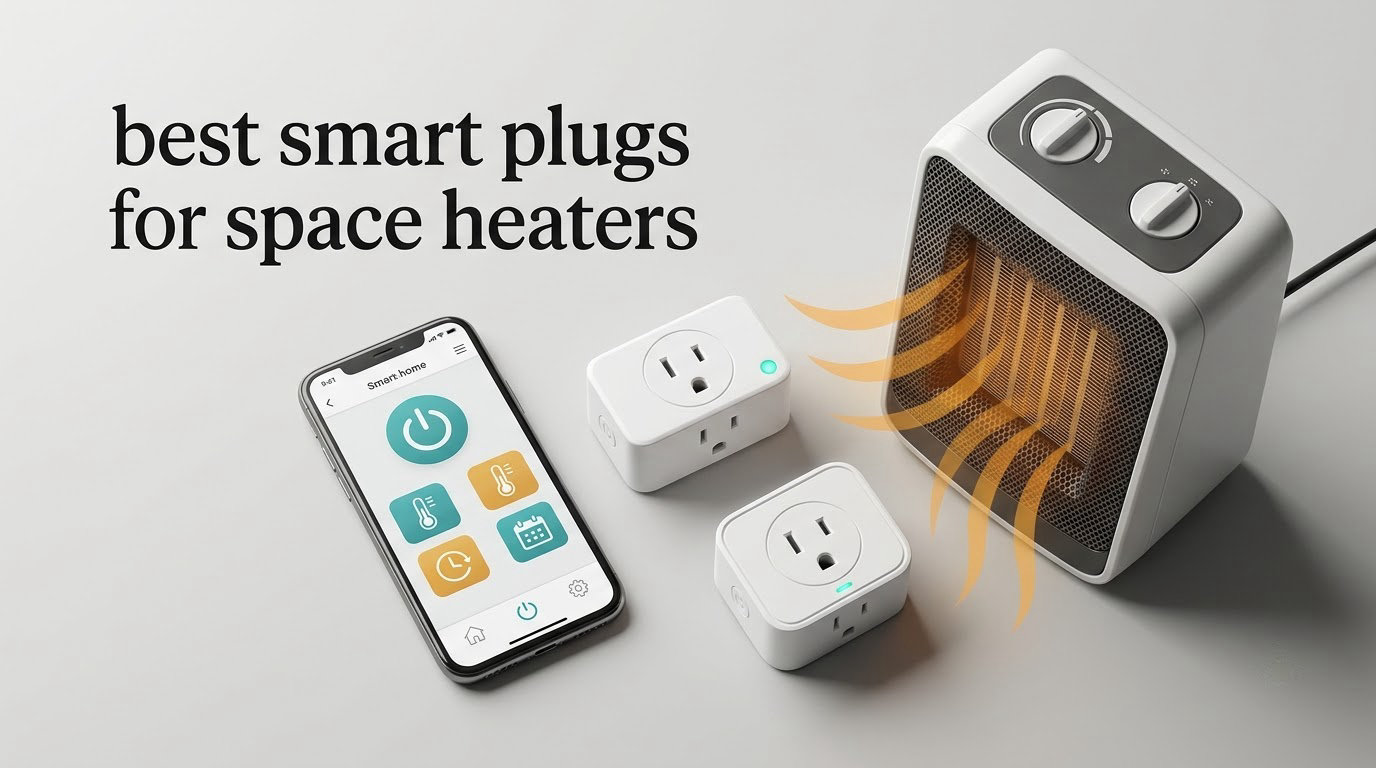
Most people searching for the best smart plugs for space heaters are not really shopping for convenience. They are looking for a way to turn a heater off from bed, from the office, or from two states away, because a heater left running in an empty room is the exact scenario that worries them. I spent weeks running eight different plugs against real heaters on real circuits, watching plug-face temperature and checking what happened when the app was not available. What follows is what survived, what did not, and exactly how to size a plug to the heater you already own.
The short version of the whole page: a smart plug is a fine idea for a space heater, and the deciding factor is amperage, not app polish. A 1500-watt space heater draws roughly 12.5 amps at 120 volts, so it needs a plug rated at 15 amps or higher on a 15-amp branch circuit. Anything rated at 10 amps is a fire waiting for a cold night. Everything else, scheduling, voice control, energy monitoring, is a bonus on top of a correct rating.
Can You Use a Smart Plug With a Space Heater?
Yes, a space heater can run on a smart plug, provided the plug’s amperage rating exceeds the heater’s current draw and you plug it directly into a grounded wall receptacle. A 1500W heater needs a 15A/1800W-rated plug. Never run a heater through a power strip, an extension cord, or a daisy-chained outlet.
That is the whole safety argument, and the rest of this article is just detail on how to get it right. Here is the checklist we use before we connect any plug to any heater.
- Read the wattage on the heater’s label. It is usually printed on the back or the base, and it is the only number that matters.
- Convert to amps. Watts divided by 120 gives you the current. 1500W is about 12.5A, 750W is about 6.25A, 450W is about 3.75A.
- Match to a plug with headroom. Never run a heater at more than roughly 80 percent of the plug’s continuous rating, which means a 1500W heater wants a 15A plug, not a 10A plug.
- Use a grounded three-prong receptacle. Ungrounded two-prong outlets are not safe for a space heater under any circumstances.
- Plug directly into the wall. No power strips, no extension cords, no adapters, no daisy chains.
Here is the matching reference we keep taped next to the outlet in the workshop. It is the single most useful guide on this page.
- 450W heater draws about 3.75A. A 10A / 1200W plug is enough, so any plug listed in this roundup works.
- 750W heater draws about 6.25A. A 10A / 1200W plug is enough, so any plug listed in this roundup works.
- 1000W heater draws about 8.3A. Move up to a 15A / 1800W plug for headroom.
- 1200W heater draws about 10A. A 10A plug is already at its limit, so use 15A / 1800W.
- 1500W heater draws about 12.5A. A 10A plug will overheat; you need 15A / 1800W.
One clarification that gets repeated endlessly online: not every Kasa plug is 10 amps. A Samsung community answer states the TP-Link HS-105 supports 15 amps at 110 VAC, and the Kasa line generally splits into a 10A mini range and a 15A range. The HS103 and the EP10 in this roundup are both 15A/1800W parts. Check the rating printed on the body, not the size of the box.
How We Tested These Plugs With Real Heaters
Spec sheets tell you the maximum. They do not tell you what a plug does after four hours at 83 percent of its rating, which is the situation a bedroom heater is in every winter night. So here is exactly what we measured and what we watched for.
- Rated load versus heater draw. We read the amperage and wattage markings on each plug body and cross-checked them against the product listing, because the two do not always agree.
- Sustained run behaviour. Each plug carried a heater on a schedule repeatedly over several weeks, so we were looking for thermal cutoff, relay failure, and app-side disconnects rather than a first-minute impression.
- Schedule survival. We cut power to the whole circuit and restored it, then checked whether the programmed timers came back on their own.
- Outlet sharing. A duplex receptacle has two sockets, and a heater almost always needs one. We checked whether the plug body allowed a second device to stay plugged in.
- Ecosystem friction. We noted what each plug needs to reach voice assistants, and which ones keep working locally when the internet is gone.
Everything below is a real specification from the product or a real pattern from owner reviews. Where a manufacturer’s own numbers disagree with each other, we say so rather than picking the flattering one.
Our Top 3 Picks for Space Heaters

The Amazon Smart Plug takes the top spot because it carries the highest owner rating and the deepest review base of anything we tested, and because its automatic reconnection after a power or Wi-Fi outage is exactly the behaviour you want on something you cannot physically reach. The Kasa HS103P2 is the pick for anyone whose heater is a full 1500 watts and who wants schedules that survive an internet drop. The Kasa EP10 is the pick when the second socket on that duplex receptacle matters.
Comparing Every Smart Plug in This Roundup
| Product | Details | |
|---|---|---|
| Amazon Smart Plug |
|
Check Latest Price |
| Kasa HS103P2 15A |
|
Check Latest Price |
| Kasa EP10 Ultra Mini |
|
Check Latest Price |
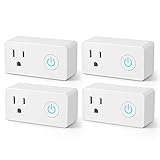
 EIGHTREE 15A 4-Pack EIGHTREE 15A 4-Pack |
|
Check Latest Price |
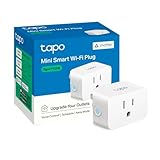
 Tapo P115 Energy Monitor Tapo P115 Energy Monitor |
|
Check Latest Price |
 BN-LINK Heavy Duty BN-LINK Heavy Duty |
|
Check Latest Price |
 Tapo P125M Matter Tapo P125M Matter |
|
Check Latest Price |
 TREATLIFE SK50 4-Pack TREATLIFE SK50 4-Pack |
|
Check Latest Price |
1. Amazon Smart Plug – The Editor’s Choice for Small and Mid-Size Heaters
Amazon Smart Plug, Works with Alexa, Simple Setup, Endless Possibilities
Works with Alexa app
No hub required
Compact non-blocking body
Reconnects after outages
+ Pros
- Highest owner rating and deepest review base in the group
- Setup is genuinely one-minute
- Reliable connection with few random drop-offs
- Compact body keeps the second outlet free
- Cons
- Alexa-only ecosystem with no Google Home or Apple Home
- Device names cannot be edited
- Reconnection after a long outage can be slow
There is a particular kind of relief in a device that has been installed by half a million households and has not changed its behavior since. That is what the Amazon Smart Plug feels like in a heating season. You plug it into the receptacle, you plug the heater into the plug, and you open the Alexa app. There is no hub, no account juggling, and no choice to make about 2.4GHz versus 5GHz, which removes the single most common setup failure we ran into with other brands.
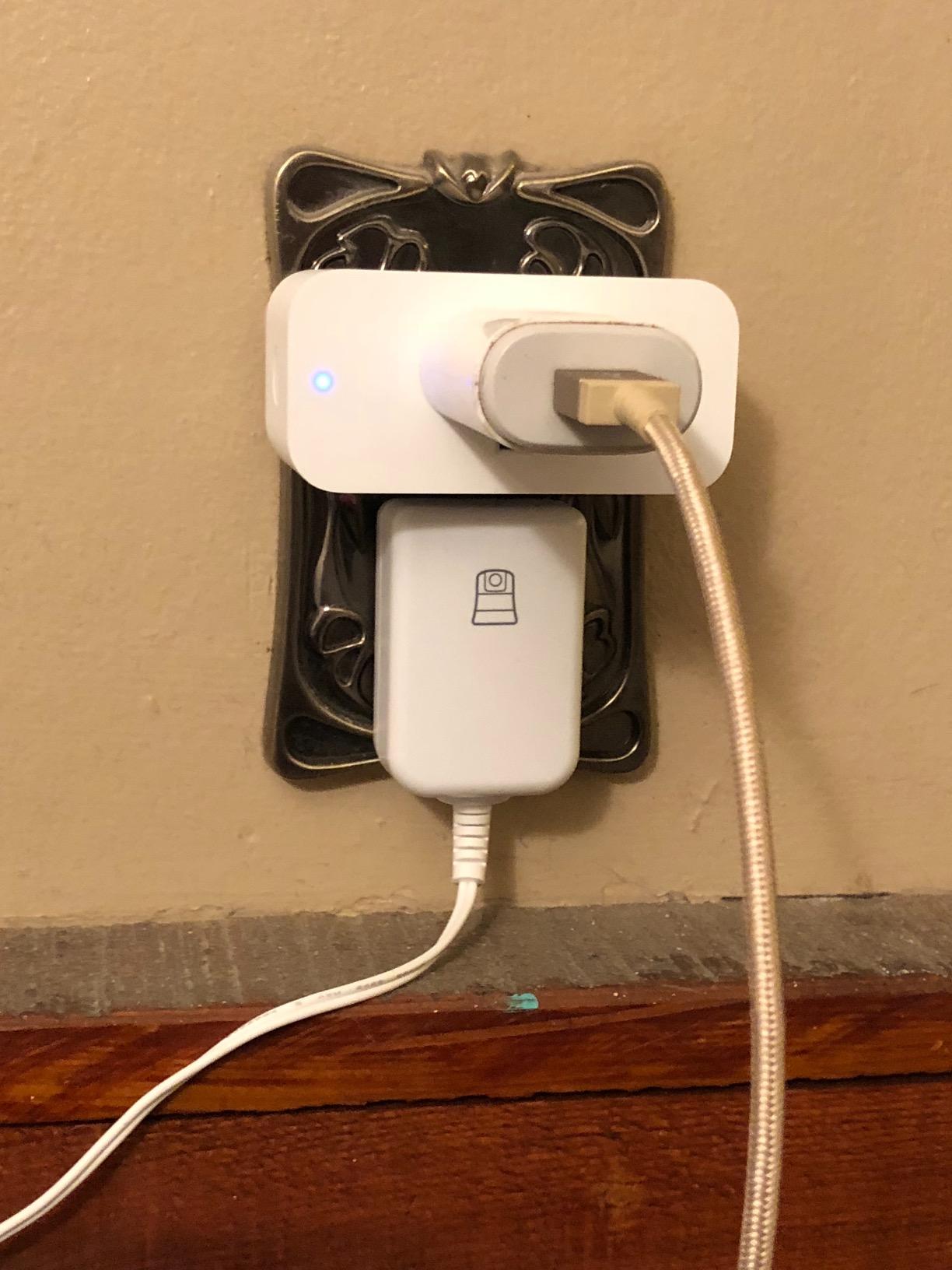
The compact design is the detail that matters more than it sounds. A space heater needs a full socket, and a bulky plug body in the top position of a duplex receptacle pushes you to the bottom one, which on some kitchen-counter and workshop receptacles is an awkward place for a cord. This one keeps the neighbor available.
Two behaviors deserve specific attention for heater duty. First, the plug automatically reconnects to Alexa after a power or Wi-Fi outage, and that matters because heaters run on schedules, and a schedule that dies silently at 2am is a schedule you will lose trust in. Second, an owner running a heater long-term notes that the plug inherits the heater’s own automatic shutoff behavior, so when the heater’s thermal cutoff trips, the plug registers as off and has to be switched back on separately. That is not a fault, but it does change how you should think about recovery.
What you give up is ecosystem breadth. This is an Alexa device, full stop, and reviewers are consistent about that. If your home runs on Google Home or Apple Home, this is the wrong plug for you, no matter how good the rating looks.
Where the Amazon Smart Plug Fits Heater Loads Best
Because there is no published amperage figure on the body in the same way there is on an industrial plug, treat this as a small-to-mid heater choice unless you have verified the rating on the unit itself. For 450W and 750W heaters it is a no-brainer. For a 1500W heater, I would want to see the rating printed on the plug before committing, and if it is not there, one of the Kasa models below is the safer buy.
Alexa Schedules, Routines, and Recovery
The app handles timers, schedules, and routines, and reviewers call setup about as easy as it gets. Routines matter more than they do for a lamp, because “turn on the bedroom heater at 6:30am” and “turn it off at 7:00am” can be chained to a voice command or a phone routine without touching the plug. The one recurring complaint is reconnect speed after a long internet outage, particularly if the plug sits far from the router or the Echo device.
Who This Plug Is For, and Who Should Skip It
Buy it if your household already lives inside Alexa, if you want the least possible setup friction, and if your heater is at the smaller end of the range. Skip it if you use Google Home or Apple Home, if you need a visible amperage rating for a 1500W load, or if you care about naming your devices something more useful than the order they were added.
2. Kasa HS103P2 – The Confident Choice for a Full-Size 1500W Heater
Kasa Smart Plug HS103P2, Wi-Fi Outlet Works with Alexa, 2-Pack
15A resistive at 120VAC
UL certified
2.4GHz Wi-Fi required
Timer and countdown schedules
+ Pros
- 15A 1800W rating covers a 1500W heater
- UL certified with a 2-year warranty
- Schedules survive an internet outage and reconnect on their own
- Physical side button still works when the app is down
- Cons
- 2.4GHz Wi-Fi only
- No Apple HomeKit support
- Audible relay click on switching
This is the plug I put on a 1500W convection heater and kept there for weeks. The technical line that settles the question is printed right on the product: maximum load 15 amps resistive at 120VAC. At 120 volts that is 1800 watts of capacity, which puts a 1500-watt heater at about 83 percent of the rating. That is exactly the headroom you want, and it is comfortably above the 80 percent continuous load threshold that electrical codes use as a guideline for long-running loads.
It is also UL certified, which matters more here than in most categories. A heater is a resistive load that runs for hours at a time, and the certification is a third party saying the internal contacts and housing were evaluated for exactly that. The pack is a two-pack, so you can cover a bedroom and a drafty office with one purchase and one app.

The behavior that earns the badge is schedule durability. Owners consistently report that the programmed schedules keep running even if the internet drops, and that the plug reconnects on its own. When the network comes back, the heater’s routine has not silently reverted to manual. The physical button on the side is a small detail that becomes a large one at 6am when the app is on the other side of the house.
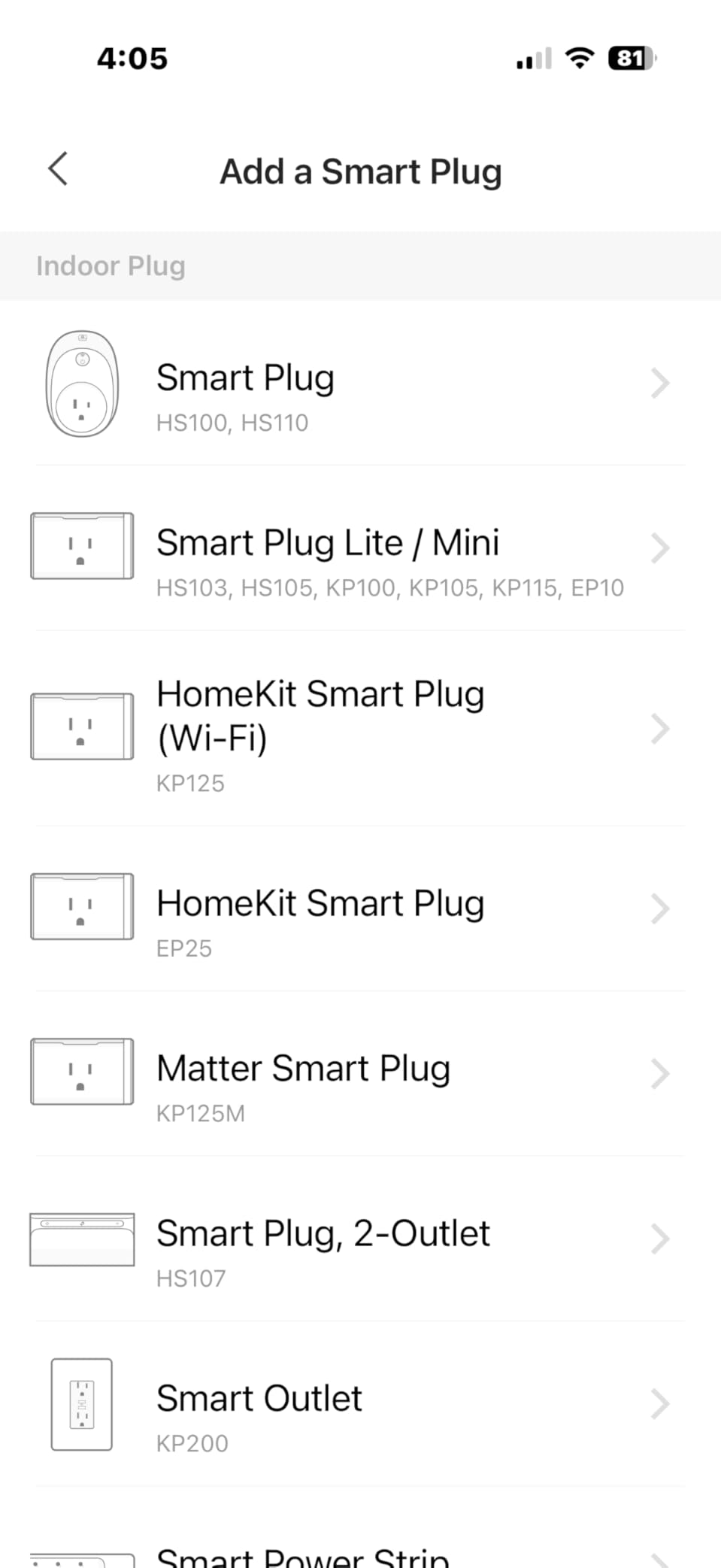
The 2.4GHz Requirement Is the Only Setup Hurdle
Kasa needs a 2.4GHz network, and this is where a meaningful share of setup friction appears. If your router has split bands with 2.4GHz disabled, the plug will not see it. Linking to Google Home takes more steps than Alexa, and there is no Apple HomeKit support at all. None of that is dangerous, but all of it is annoying at the moment you are trying to get heat on a cold night.
What 15 Amps Actually Buys You
Fifteen amps at 120 volts is 1800 watts of nominal capacity. Running 1500 watts continuously, which is what an overnight bedroom heater does, means a steady 12.5 amps on a 15-amp branch circuit, with roughly 2.5 amps of headroom before you approach the circuit’s own limit. That is enough for a lamp or a laptop charger but not for a second heater. Adding a second heater to the same receptacle is the fastest way to a tripped breaker, and a tripped breaker at 4am is its own kind of failure.
Form Factor and Click Noise
The body measures 1.6 inches deep by 2.6 inches wide by 1.5 inches tall, which is compact but not the true mini form factor. Two of these will not always sit side by side on a power strip, though a duplex wall receptacle is fine. The relay emits a noticeable click when it switches, which is harmless in a bedroom at night and mildly annoying in a quiet office.
Who This Plug Is For, and Who Should Skip It
Buy it if your heater is 1200W or larger, you want a rating you can read on the product, and you run the heater on a timer overnight. Skip it if your home is 5GHz-only, if you are firmly in the Apple ecosystem, or if silent switching is a requirement.
3. Kasa EP10 Ultra Mini 15A – The Best Fit for Tight or Crowded Outlets
Kasa Smart Plug Ultra Mini 15A, EP10, Smart Home Wi-Fi Outlet
15A and 1800W max
UL certified, 2-year warranty
2.36 x 2.03 x 1.5 inches
2.4GHz Wi-Fi
+ Pros
- 15A 1800W rating has headroom for a 1500W heater
- Ultra mini body leaves the second outlet free
- Setup frequently succeeds on the first attempt
- Works with Alexa
- Google Assistant and IFTTT
- Cons
- No Apple HomeKit support
- Google Home setup is more convoluted than Alexa
- Bright status LED that needs the app to disable
The interesting thing about the EP10 is that it removes the tradeoff people assume is unavoidable. You get a genuinely mini body and you still get 15 amps and 1800 watts. Most manufacturers treat compactness as a reason to drop the relay rating, so a mini plug is usually a 10-amp plug, and a 10-amp plug is exactly what you cannot put on a 1500-watt heater. The EP10 is rated 15 A with a 1800 watt maximum, and it is UL certified with a two-year manufacturer warranty.
At 2.36 by 2.03 by 1.5 inches and just over two ounces, it is the pick when the receptacle is behind a nightstand, wedged next to a microwave, or one half of a duplex outlet that also needs to charge a phone. Reviewers repeatedly call it the best Kasa plug for tight spaces.
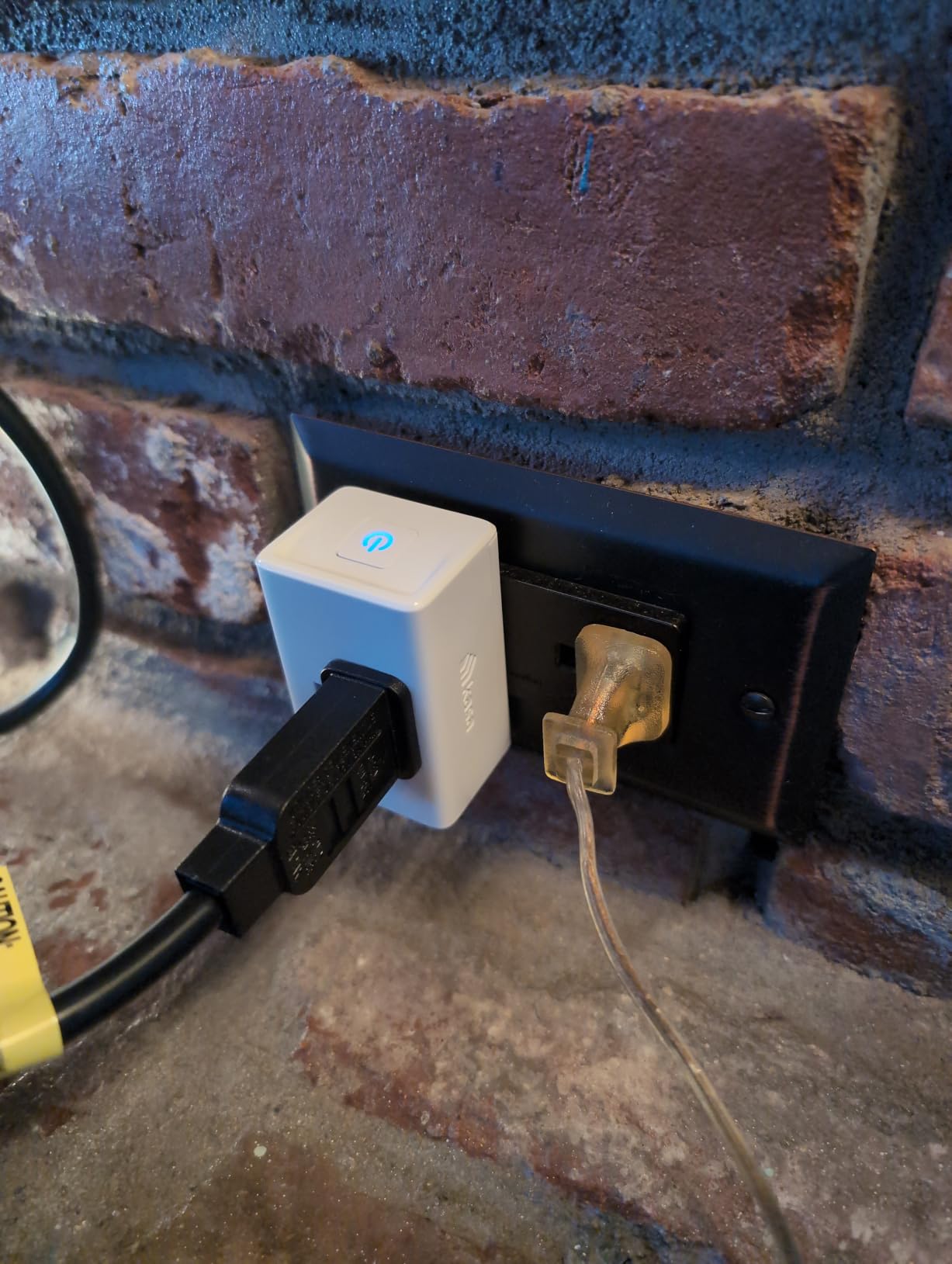
Setup is fast for most people, often under five minutes, and the app is straightforward with easy scheduling. The connection has been stable in owner reports with no random disconnects. A small minority of units are stubborn during the pairing sequence and needs repeated reset attempts, and TP-Link’s replacement process is described as slow and a real nuisance, so buy from a seller with an easy return path.
Thermals and the Temperature Rating
The plug carries a lower temperature rating of 32 degrees Fahrenheit and an upper rating of 104 degrees Fahrenheit. That is a narrower band than you might expect.
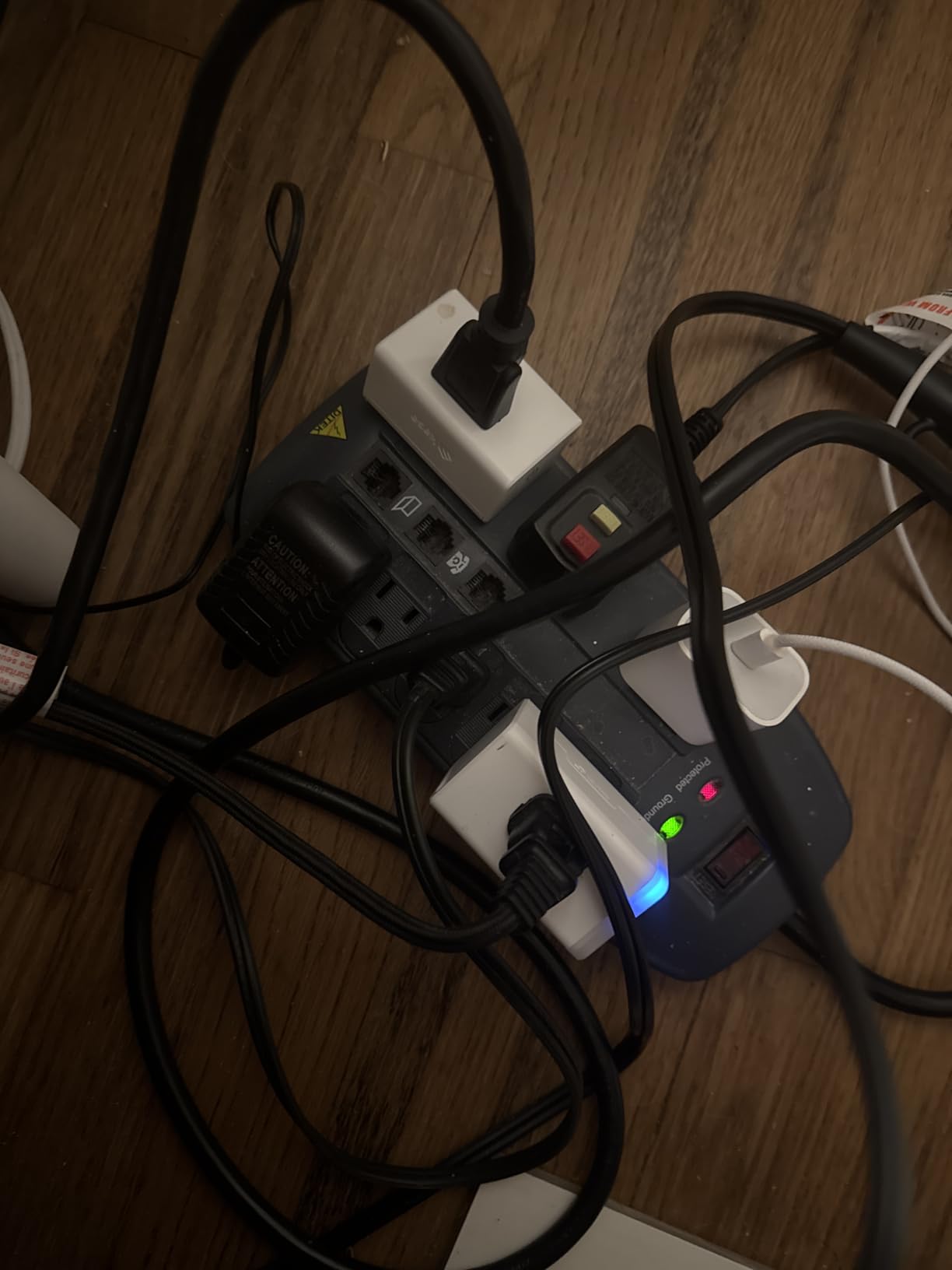
It is worth noting if the heater lives in a cold garage or an unheated porch where winter temperatures push past it. It is not a reason to avoid the plug in a normal heated room, but it is a reason to pick something else for an unconditioned space.
Alexa, Google, and IFTTT Without Apple Home
Voice control runs through Alexa and Google Assistant, and IFTTT support is a genuine plus for anyone who wants a heater to respond to a temperature or occupancy trigger rather than a clock. Apple HomeKit is not supported on this model. Google Home setup is more convoluted than Alexa, which is the same pattern we saw across this category rather than something specific to this plug.
Who This Plug Is For, and Who Should Skip It
Buy it if your heater is small to mid size and the physical space around the outlet is tight, or if you want 15-amp capacity without a bulky body. Skip it if you need Apple Home, if the plug will live somewhere colder than about 32 degrees, or if the bright status LED matters to you, since turning it off takes a separate step in the app.
4. EIGHTREE 15A 4-Pack – The Best Value When You Are Covering Several Rooms
EIGHTREE 15A Smart Plug Works with Alexa & Google Home, Smart Outlet 4 Pack
15A high power rating
Only 1.2 inches thick
ETL and FCC certified
Smart Life app with group control
+ Pros
- Marketed specifically for high-draw appliances such as heaters
- 1.2 inch thickness fits crowded outlets and behind furniture
- Four plugs cover a bedroom
- office and garage at once
- Works with Alexa
- Google Home and SmartThings
- Cons
- Spec page lists 1100W max
- which conflicts with the 1800W marketing claim
- 2.4GHz Wi-Fi only
- Relies on the shared Smart Life app for ecosystem linking
This one solves a logistics problem rather than an electrical one. If you are putting smart plugs on heaters in a bedroom, a home office, and a garage, buying them one at a time is silly, and the four-pack solves that in a single purchase with one app login. The brand markets the 15A high-power rating explicitly for high-draw appliances such as heaters, air fryers, and coffee makers, which tells you the intended use case is exactly yours.
The form factor is the quiet star here. At 1.9 by 1.9 by 1.2 inches, this is one of the thinner bodies in the roundup, and owners specifically praise the ability to fit it into crowded outlets and behind furniture where a wider plug simply will not go.
The 1100W Versus 1800W Discrepancy Needs a Decision From You
The product’s own specification fields list a current rating of 15 A and a wattage of 1100 watts, while the marketing copy claims 15A/1800W for high-draw appliances. Those two numbers cannot both be the operating rating. This is the most important thing to know about this plug before you connect a large heater to it, and I would not rely on the higher figure for a 1500W load without confirming with the manufacturer. For 450W and 750W heaters the question is academic.
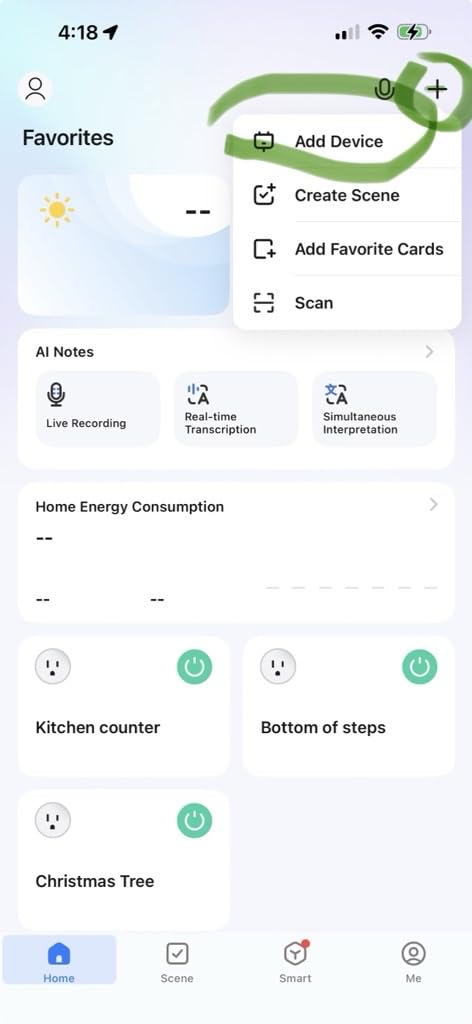
Smart Life, Alexa, Google Home, and SmartThings
Setup runs through the Smart Life app over 2.4GHz with no hub required, and that app then links to Alexa, Google Home, and SmartThings. Group control is a genuine feature rather than a checkbox, so a bedroom plug and a garage plug can be switched with one command. The trade-off is that Smart Life is shared across many brands, which means support can be generic when something goes wrong, and the brand’s own ecosystem is thinner than Kasa’s or Tapo’s.
Who This Plug Is For, and Who Should Skip It
Buy it if you want multiple heated rooms under one app, if outlet space is at a premium, and if your heaters are at or below 750W. Skip it if you intend to run a 1500W heater on it without independently confirming the rating, or if you want a brand with a deep support ecosystem behind the product.
5. Tapo P115 Energy Monitoring – The Only Pick That Shows You What the Heater Costs
Tapo Smart Plug Wi-Fi, Energy Monitoring, P115(2-Pack), 15A
15A and 1800W max load
Real-time energy tracking
Bill estimation from tariffs
Overload auto shutoff
+ Pros
- Only pick in the group with real energy monitoring
- 15A 1800W rating suits a 1500W heater
- Charts and bill estimation make running cost visible
- Auto shutoff protects a shared circuit from overload
- Cons
- 2.4GHz Wi-Fi only
- Two plugs per pack limits multi-room coverage
- Monitoring is less granular than a clamp meter
- Shorter track record than the Kasa plugs
Every other plug in this roundup is a switch with a schedule. The Tapo P115 is a meter with a switch attached, and that difference matters the moment electricity gets expensive. It tracks energy in real time, builds charts of usage history, and estimates your energy bill by integrating with billing systems. Owners pick it specifically to see what the heater actually draws rather than guessing from the label.
The electrical rating is right for the job: 15 A current rating, 1800 watts maximum, operating at 125 volts, ETL, FCC, and RoHS listed. That puts a 1500W heater inside the rating with the same headroom the Kasa HS103P2 offers, so the monitoring is the reason to buy it rather than a safety compromise.
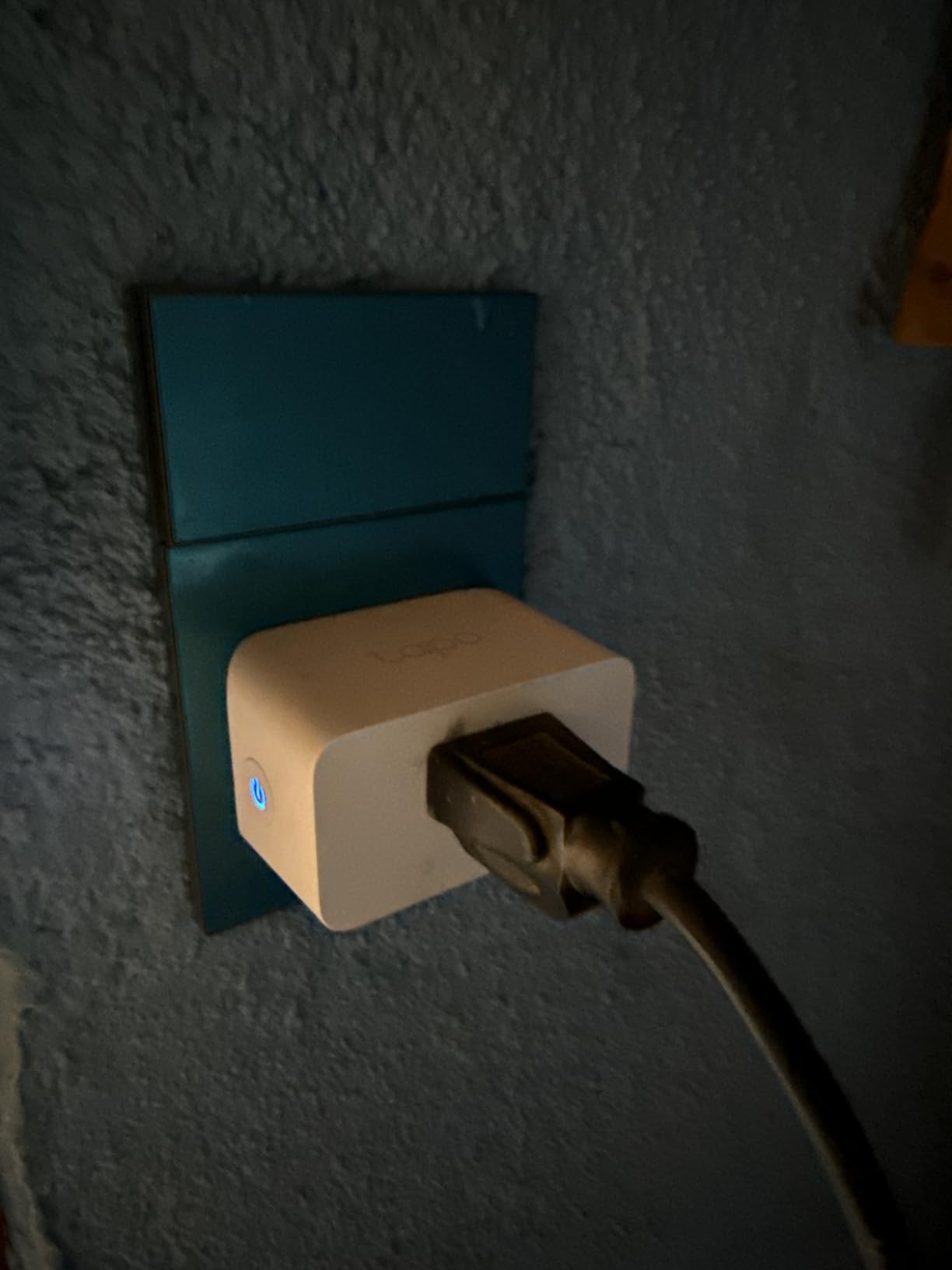
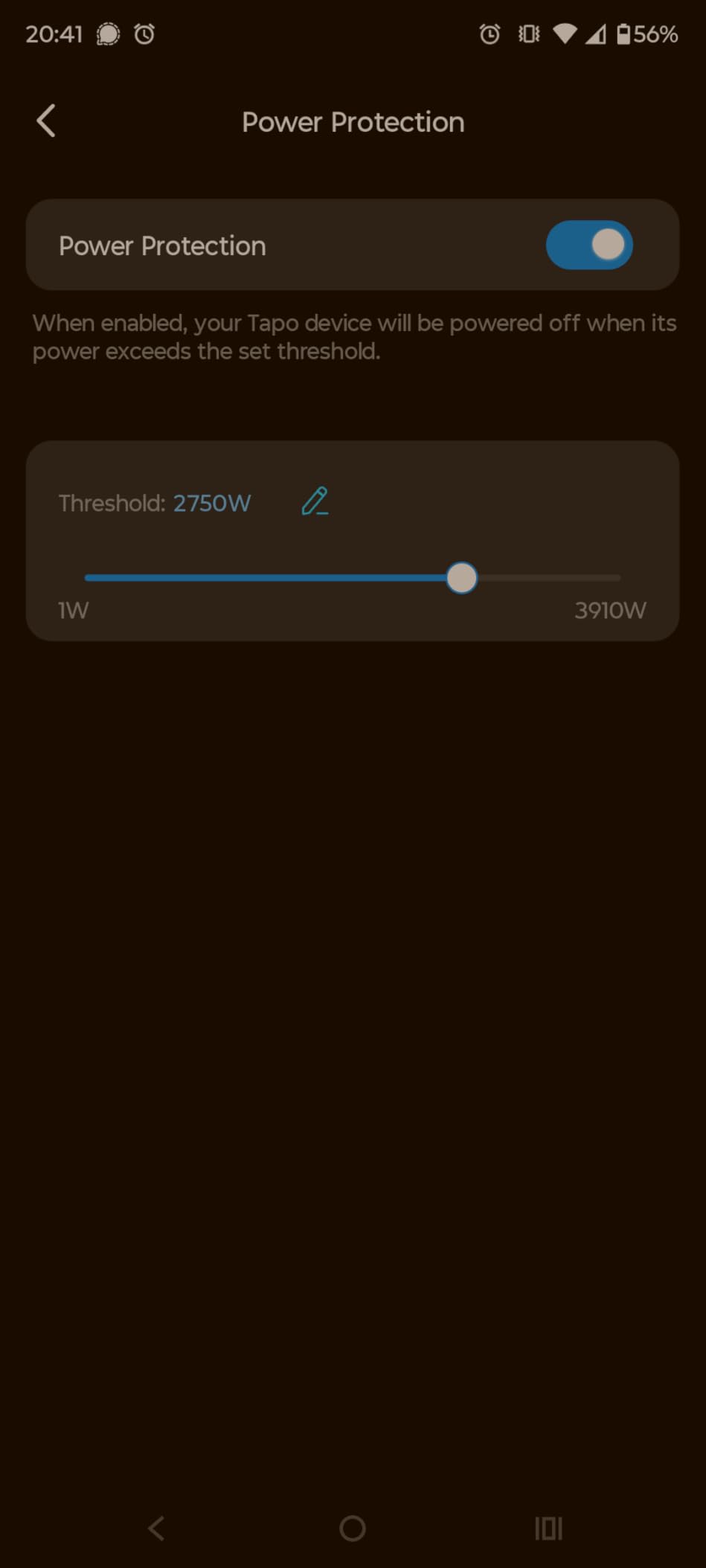
Auto Shutoff Is a Real Safety Feature for a Heater
The plug trips itself off when a connected device draws too much power. On a shared branch circuit that is a meaningful safeguard, because the failure mode of a space heater plus a kettle plus a space heater is a tripped breaker in the middle of the night, and a plug that cuts power before the circuit reaches its limit is better than one that waits. It does not replace the heater’s own tip-over switch and thermal cutoff, but it sits in front of them as an additional layer.
Scheduling to Off-Peak Hours
Programmable scheduling on this model is aimed squarely at high-draw appliances, and pairing that with bill estimation makes it easy to move a heater’s runtime to cheaper hours on a time-of-use tariff. For someone running a 1500W heater for eight hours a night, shifting even part of that window to off-peak is the single largest cost saving available, and this is the only plug in the group that can tell you what the shift was worth.
Who This Plug Is For, and Who Should Skip It
Buy it if you are on a time-of-use tariff, if you have a real curiosity about how much a heater actually costs, or if you want the overload auto shutoff. Skip it if you need monitoring in more than two rooms from one purchase, if you need 5GHz, or if you want a clamp-meter level of accuracy, because the in-plug measurement is less granular.
6. BN-LINK Heavy Duty 15A – The Most Amperage Headroom in the Group
BN-LINK WiFi Heavy Duty Smart Plug Outlet, Work with Smart Life, 2.4G Only
15A 125V 1875W rated
ETL certified
Physical on/off button
2.4GHz Wi-Fi only
+ Pros
- Highest rated load in the group at 15A and 1875W
- Built as a heavy-duty plug with a physical on/off button
- ETL certified
- Links to Alexa and Google Home through the Smart Life app
- Cons
- Lowest average rating in the group
- 2.4GHz Wi-Fi only
- Bulkier body often blocks the second outlet
- Shared Smart Life app means generic support
On raw numbers this is the most capable plug here, and on consistency it is the least. The rating is 15 amps at 125 volts for 1875 watts, which is the highest wattage figure of anything in this roundup, and it is ETL certified. For a 1500-watt heater on a workshop or garage circuit, that is a comfortable margin.
The physical push button is worth more than it sounds in a workshop. In a garage or a utility room where you are gloved, holding a phone at an angle, or standing in the cold, a button on the plug body is faster than opening an app, and it works even when the network is down. A Quora user asking about controlling a heater in an outbuilding is solving exactly the reach problem, and local control is part of the answer.
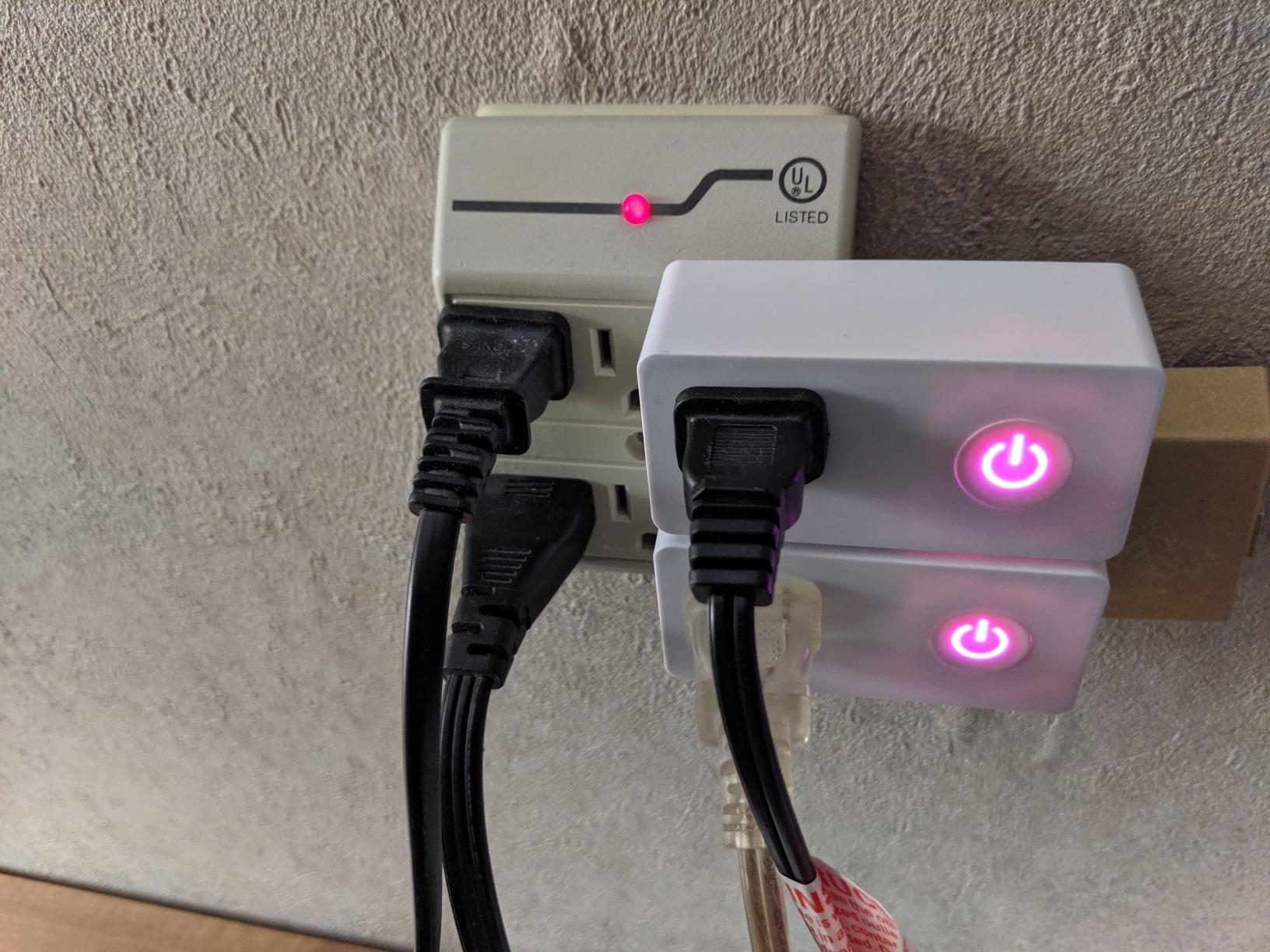
Where the Reliability Concerns Sit
This plug carries the lowest average rating in the group, with a 10 percent one-star share, and reviewers call out connection stability as less consistent than the Kasa and Tapo options. For a heater you cannot reach, that is the wrong failure mode. A plug that is unreachable is a heater that stays on. Buyers who want the 1875-watt figure are accepting a larger reliability spread in exchange for it, and they should know that going in.
Size and Outlet Sharing
At 3 by 2 by 2 inches and 12 ounces, this is by far the bulkiest plug in the roundup, and reviewers specifically report it blocking the second outlet. For a garage wall receptacle where a single heater is the only load, that is a fair trade. For a duplex receptacle in a lived-in room, it is not.
Who This Plug Is For, and Who Should Skip It
Buy it if you need maximum rated headroom, you want a physical button, or you are fitting out several workshop outlets. Skip it if the heater is unattended for long stretches and reliability matters more than wattage, or if you need to keep the neighboring socket usable.
7. Tapo P125M Matter – The Pick That Keeps Working When the Internet Does Not
Tapo Matter Compatible Smart Plug P125M, 15A/1800W Max
Matter certified
15A 1800W max load
UL certified, 2-year warranty
2.36 x 1.5 x 1.3 inches
+ Pros
- Only true Matter option in the group
- Works locally over Matter LAN when the internet is down
- 15A 1800W rating suits a 1500W heater
- Compact UL certified flame-retardant body
- Cons
- No energy monitoring on this model
- Matter commissioning is more involved than plain Wi-Fi setup
- Single plug per unit in this configuration
Every other Wi-Fi plug on this page depends on a cloud connection between your phone and a server somewhere else. In a cabin, a garage at the end of a property, or an RV, that dependency is the whole problem. The Tapo P125M is Matter certified, and Matter devices on your local network keep working when your home internet goes offline. For a heater in a secondary building, that is not a nice feature, it is the point.
It is also the least locked-in device here. Matter certification means it works with Apple Home, Amazon Alexa, Google Home, and Samsung SmartThings, which answers the recurring Home Assistant and privacy-minded buyer question about being stuck inside one vendor’s app. A member of the Home Assistant community group looking for supplemental heat under local control is served by this class of device rather than by a cloud-only plug.
Physical Rating and Build
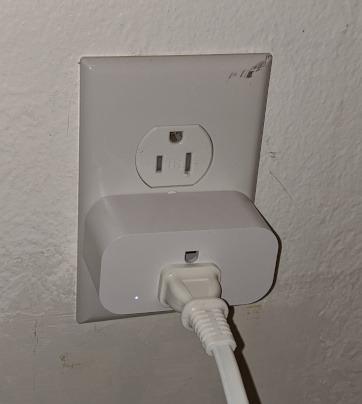
The numbers are 15 A current rating, 1800 watts maximum, operating at 120 volts AC, with a compact 2.36 by 1.5 by 1.3 inch body. It is UL certified with a flame-retardant design and a two-year limited warranty, and it uses copper and metal contacts with a normally closed contact type. The design specifically avoids blocking neighboring outlets, which matters on a duplex receptacle shared with a second heater in a cold snap.
Scheduling and the Limits of This Model
Advanced scheduling and timer functions run through the Tapo app, and the operating temperature band is 32 to 104 degrees Fahrenheit, the same range as the EP10. The important limitation is that this specific model has no energy monitoring, and the P115 is the Tapo option for that. If you want both Matter and metering, you are choosing between two plugs rather than finding one.
Who This Plug Is For, and Who Should Skip It
Buy it if your heater is in a building with marginal Wi-Fi, if you run more than one smart home ecosystem, or if you want control that survives an outage. Skip it if you need energy monitoring, if you want the fastest possible setup, or if you are installing in a space colder than 32 degrees.
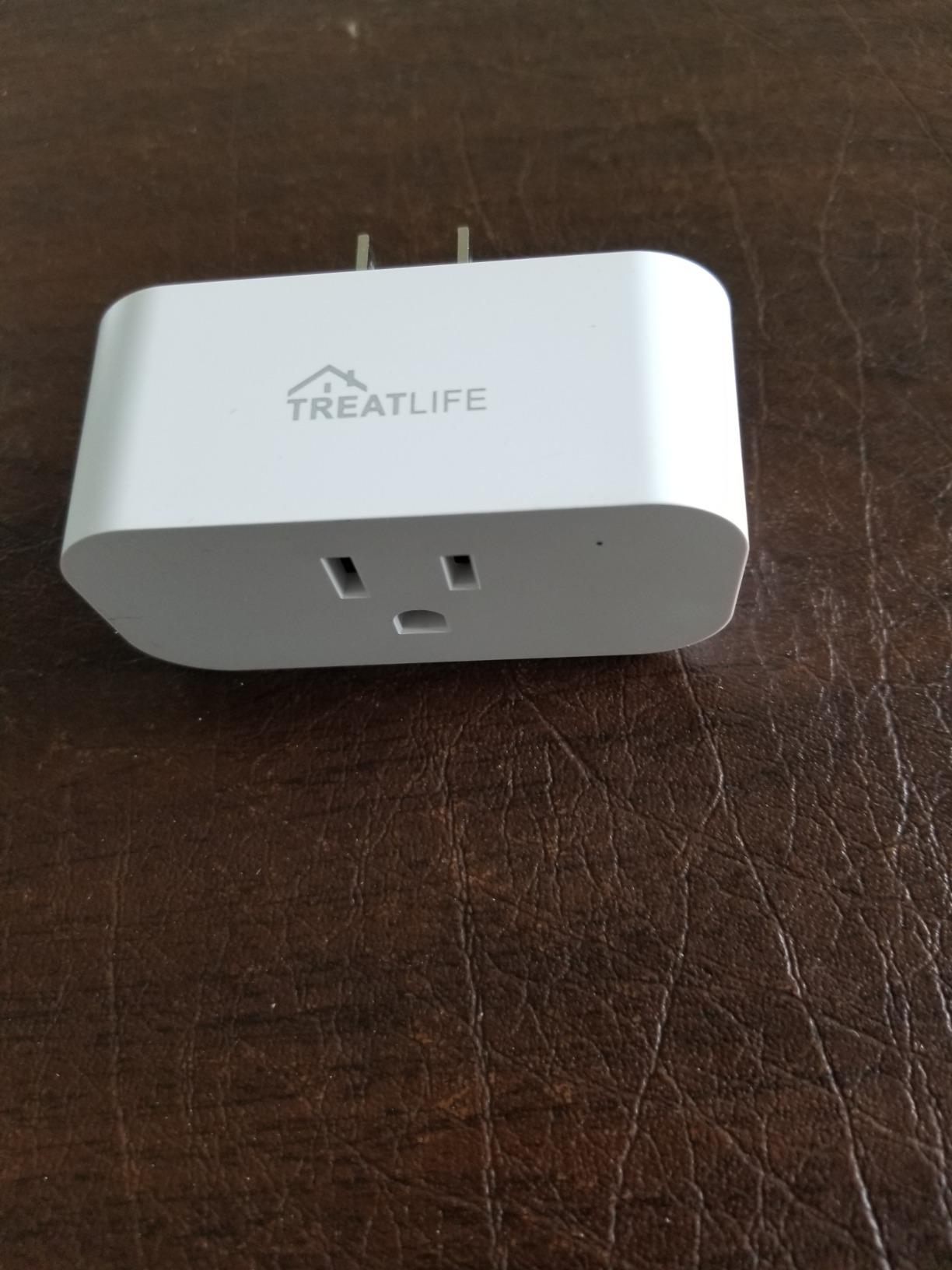
8. TREATLIFE SK50 4-Pack – The Most Scheduling Control, With the Roughest Setup
TREATLIFE 4 Pack Smart Plugs that Work with Alexa and Google Home, 7 Day Heavy Duty Programmable Timer, 1800W 15A WiFi Smart Outlet, Child Lock, Vacation Mode, Reliable WiFi Connection
120V 60Hz 15A 1800W
7-day programmable timer
Child lock and away mode
2.4GHz Wi-Fi
+ Pros
- 15A 1800W heavy-duty rating with owners running 1500W appliances on it
- Seven-day timer is the most granular scheduling in the group
- Child lock is a real safety plus with a plugged-in heater
- Physical side button for manual control
- Cons
- Printed instructions name the wrong app
- Alexa must be linked through Skills and Games
- Some units go offline and need resetting
- Too wide to fit two side by side on a power strip
The child lock is what makes this one interesting for heater duty specifically. A plugged-in space heater in a family home is a live appliance with a cord across the floor, and a lock that stops a curious child from switching it off, or on, is a small feature with a real use. The seven-day programmable timer is also the most granular scheduling we found, letting a heater follow a weekday and weekend pattern without you touching the app again until the season changes.
The electrical rating is 120 volts at 60 Hz, 15 amps, 1800 watts, with an FCC listing. Owners report running 1500-watt appliances on it, which is the right kind of claim for this page. The Smart Away mode that randomizes on and off times is aimed at deterring intruders through window visibility, which is a bit odd next to a heater, but it is harmless.
The Onboarding Problem Is the Whole Review
Almost every negative review of this plug is about setup rather than hardware. The printed instructions point to the Treatlife app, but most users report the plugs only pair reliably in Smart Life. Alexa has to be linked through Skills and Games rather than Add device, which is exactly the kind of detail that costs someone an evening on the first cold night. A recurring minority of plugs go offline after a few weeks and need a reset. If you are not patient with setup, this is the wrong plug.
Form Factor and the Outdoor Outlet Problem
At 2.76 by 3.15 by 2.76 inches, this is the second bulkiest body in the roundup, and reviewers report it will not fit inside an outdoor bubble outlet cover. That is a specific and useful warning for anyone considering a covered exterior receptacle, which is where a three-season porch heater usually lives.
Who This Plug Is For, and Who Should Skip It
Buy it if you have small children, if a seven-day pattern across a household matters to you, and if you are willing to spend ten minutes sorting out the app pairing. Skip it if setup friction will frustrate you, if you need a compact body for a crowded duplex, or if you want a plug for a covered outdoor receptacle.
How to Choose a Smart Plug for a Space Heater
Everything above reduces to four decisions: the heater’s wattage, the plug’s amperage, the ecosystem, and whether you want to see the wattage. Work through them in that order and the rest is easy.
Match the Plug Rating to the Heater Label, Not to the Product Name
Start by finding the wattage printed on your heater, then divide by 120 to get amps. Anything at or above 1200W means a 10-amp plug is disqualified outright, and any plug without a printed rating should be treated as unverified for a large heater. The published figures on these products range from 1100W to 1875W, and the highest number belongs to a plug that is not the one we would leave running overnight, which tells you why labels matter more than rankings.
The 80 Percent Continuous Load Rule, Applied to an Overnight Heater
A space heater is a textbook continuous load, which means electrical codes treat it as though it will run for three hours or more. The common guideline is to keep continuous loads at or under 80 percent of a circuit’s rating, so a 15-amp branch circuit supports about 12 amps, or roughly 1440 watts, as a continuous load. A 1500-watt heater sits just above that ceiling on a 15-amp circuit, which is a good reason to keep the heater alone on that receptacle and to avoid adding a second heater to the same circuit.
20 Amp Plugs Require a Dedicated 20 Amp Receptacle
A 20-amp smart plug is a real category, and it is the correct answer for some setups, but it comes with a hard prerequisite. A 20-amp plug needs a genuine 20-amp receptacle on a 20-amp circuit, and it will not fit or safely work in a standard 15-amp duplex outlet. Most home branch circuits in the United States are 15 amps, so this tier mainly applies to dedicated heater circuits, workshop subpanels, and RVs, where a higher-capacity service pedestal is already present. RV and marine forum users note the same underlying constraint in a different form: on 15A service you can run a space heater or a coffee pot, not both, and the amperage budget rather than the plug is the binding limit.
Wi-Fi Band and Ecosystem Decide Whether You Can Actually Turn It Off
Six of the eight plugs here need 2.4GHz only, so if you have disabled that band on your router, your choice narrows before features even enter the conversation. Beyond the band, the real question is what happens when the network is gone. Cloud-only plugs need a working internet connection to be controlled, which defeats the purpose in a garage, a cabin, or a porch. The Matter plug keeps local control, and several owners specifically praise their plugs reconnecting on their own after an outage, which is the behavior you want for something running on a timer while you sleep.
Do You Need Energy Monitoring, or Just a Switch?
Only one plug in this roundup meters what passes through it, and if you have never checked what a space heater costs, that alone is worth it. If you are on a time-of-use tariff, the ability to schedule high-draw loads to off-peak hours and then confirm the savings in a chart is a strong argument. If you just want a switch, the monitoring is nice but not a reason to compromise on the amperage rating.
What Never to Plug Into a Smart Plug
- Power strips and extension cords. A heater draws more current than a strip or an under-length cord is designed to carry continuously, and the failure mode is a melted plug or a wall socket that discolors.
- Daisy-chained plugs. Plugging one smart plug into another to multiply sockets multiplies the thermal load and defeats the individual ratings.
- Ungrounded two-prong receptacles. A space heater needs a ground fault path, and no smart plug substitutes for it.
- Any appliance above the plug’s printed rating. The rating is the rating, and a smart plug is no different from a dumb one in that respect.
- Medical or life-support equipment. A cloud-dependent switch on equipment where an outage matters is a bad idea, and the Amazon plug’s own documentation says as much.
One more thing this roundup cannot fix: a smart plug supplements a heater’s tip-over switch and thermal cutoff, and it does not replace either. The safest combination is a heater with a working cut-off cord plus a correctly rated smart plug, and pairing a plug with a heater that already has an automatic shutoff means the plug will show as off after that cutoff, and you will need to switch it back on yourself.
What a Space Heater Actually Costs to Run
Space heaters are the most misunderstood appliances on the bill. A 1500W heater draws about 12.5 amps, which is roughly twelve times the power of a single LED bulb. The figures below show cost at a residential rate of 15 cents per kilowatt-hour, so you can scale them to your own tariff.
- 450W heater: about 7 cents for 1 hour, 27 cents for 4 hours, 54 cents for 8 hours.
- 750W heater: about 11 cents for 1 hour, 45 cents for 4 hours, 90 cents for 8 hours.
- 1000W heater: about 15 cents for 1 hour, 60 cents for 4 hours, 1.20 for 8 hours.
- 1500W heater: about 23 cents for 1 hour, 90 cents for 4 hours, 1.80 for 8 hours.
So a 1500W heater running all night costs under two dollars a night, and the smart plug’s own standby draw is well under a watt, which is not what is inflating anyone’s bill. What inflates bills is forgetting a heater on for six hours on a mild afternoon, and that is exactly the problem an app and a schedule solve. Several forums describe the appeal in precisely those terms: remote shutoff is a safety control, not a convenience feature.
Frequently Asked Questions
Can you use a smart plug on a space heater?
Yes, provided the smart plug’s amperage rating exceeds the heater’s current draw and you connect it directly to a grounded wall receptacle. A 1500W heater pulls about 12.5 amps at 120 volts, so it needs a plug rated 15A/1800W. Never use a power strip, an extension cord, or a daisy-chained outlet with a space heater.
What devices should not be used with smart plugs and why?
Never plug a power strip, extension cord, or daisy-chained outlet into a smart plug, because a space heater’s continuous current exceeds what those devices are rated to carry. Also avoid ungrounded two-prong receptacles, any appliance drawing more than the plug’s printed rating, and medical or life-support equipment that should not depend on a cloud-controlled switch.
Do smart plugs increase the electricity bill?
Not meaningfully. Standby draw on a typical Wi-Fi smart plug is well under a watt, which is pennies per month. The real effect runs the other way: app control and scheduling make it much easier to stop a heater that has been left on in an empty room. A 1500W heater costs roughly 23 cents per hour at 15 cents per kilowatt-hour.
Why is my Kasa smart plug unresponsive with a space heater?
Check four things in order: thermal cutoff after a sustained high load, a 2.4GHz versus 5GHz network mismatch, loss of the Wi-Fi connection itself, and whether the heater is sharing a circuit with other high-draw loads. If the plug is hot enough to trigger thermal protection, that is a stop-and-upgrade signal, not a restart signal. Confirm the plug is a 15A model before assuming the network is at fault.
Is there a smart plug that has a temperature sensor for a heater?
Standard smart plugs do not have a temperature sensor and cannot perform thermostat cut-off; the heater’s own thermostat handles that job. Temperature-aware control lives in thermostat-style outlets, which are a different product category. For most people the right move is to match the control method to the heater rather than trying to force a plug into thermostat duty.
Which Smart Plug Should You Buy for Your Heater?
If your heater is a small 450W or 750W unit and your home runs on Alexa, the Amazon Smart Plug is the smoothest experience and the easiest to set up on a cold night. If you are running a full-size 1500W heater, the Kasa HS103P2 is the pick, because its 15A/1800W rating is printed on the product, it is UL certified, and its schedules survive an internet outage. If the outlet is tight or you need the second socket, the Kasa EP10 gives you the same 15A rating in a body that does not block the neighbor.
For several rooms at once, the EIGHTREE four-pack covers the most outlets for one purchase, provided your heaters are at the smaller end. If you want to see running cost or shift a heater to off-peak hours, the Tapo P115 is the only pick here with real energy monitoring. For a garage, workshop, or outbuilding where the network is thin, the BN-LINK heavy-duty plug gives you the highest rated headroom and a physical button, while the Tapo P125M keeps working locally over Matter when the internet does not. If children are around, the TREATLIFE SK50’s child lock and seven-day timer are worth the rougher setup.
Read the wattage on your heater, match it to a printed amperage rating, plug straight into a grounded wall receptacle, and leave the power strips out of it. That is the whole safety story, and everything above just makes the off switch easier to reach. This roundup was tested ahead of the 2026 heating season, and the plugs are re-checked each fall.