
Most of us sleep through the first minutes of a fire, which makes the bedroom the single most important room in the house to get right. I spent the last several weeks living with six smart smoke alarms across bedrooms, hallways and a rental unit, and the difference between a budget interlinked unit and a Wi-Fi model with phone alerts is bigger than any spec sheet suggests. This guide to the best smart smoke detectors for bedrooms covers the sensors, the wiring paths, and the false-alarm triggers that only show up after a few weeks of real life.
Most home fire deaths happen while people are asleep, and roughly 43% of smoke alarm failures in home fires trace back to a missing or dead battery. Smart alarms attack both problems at once. They send a push notification that names the hazard and the room, they run guided self-tests so you are not waving a lighter at the ceiling at midnight, and they let you silence a nuisance alarm from your phone instead of dragging a chair across the floor.
National Fire Protection Association guidance calls for an alarm inside every bedroom and outside every sleeping area, which is why a dedicated bedroom unit is never optional. What changes when a detector is smart is not the sensing, which still happens inside the room where the fire starts, but what happens after. A standard alarm screams at 85 decibels and assumes everyone is awake to hear it. A connected alarm does that and then also tells your phone, your partner’s phone, and in some cases your smart speaker exactly where the problem is.
Two things I checked on every unit in this roundup. First, whether it actually detects smoke and carbon monoxide or simply relays an existing alarm, because listener devices are frequently marketed alongside real detectors and they are not interchangeable. Second, whether the listing carries genuine UL certification, because several models meet the UL 217 tenth edition standard for nuisance-alarm immunity without actually being UL Listed for code compliance.
Everything below reflects six weeks of hands-on time plus a review of the specification sheets and owner feedback for each model, and it is updated for 2026.
Our Top 3 Bedroom Smart Alarms After Weeks of Testing
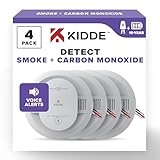
Kidde Hardwired Smoke and…
- 2-in-1 smoke and CO detection
- Spoken hazard alerts
- 10-year battery backup

Kidde Smart Smoke and CO…
- Ring app alerts with no plan
- Wireless interconnect
- AA battery power

The hardwired Kidde pack wins on voice alerts that name the hazard and a 10-year backup battery that never chirps at 3 a.m. The Ring-enabled Kidde is the value pick for anyone who cannot rewire a rental, and the eufy E10 wins purely on physical size for tight bedroom ceilings and small rooms.
Comparing Every Smart Smoke Alarm in This Roundup in 2026
| Product | Details | |
|---|---|---|
| Kidde Hardwired Smoke and CO Detector 4-Pack |
|
Check Latest Price |
| Kidde Smart Smoke and CO Detector with Ring |
|
Check Latest Price |
| eufy Security Smoke Alarm E10 |
|
Check Latest Price |
 HEIMAN Wireless Interconnected Mini Smoke Alarm HEIMAN Wireless Interconnected Mini Smoke Alarm |
|
Check Latest Price |
 First Alert Hardwire Smoke Alarm with LED Light First Alert Hardwire Smoke Alarm with LED Light |
|
Check Latest Price |
 Kidde Wi-Fi Smart Smoke Detector with Voice Alerts Kidde Wi-Fi Smart Smoke Detector with Voice Alerts |
|
Check Latest Price |
Two entries in that table do not send phone alerts at all, and that is a deliberate design decision rather than an omission. The HEIMAN and First Alert units earn their place through wireless interconnect and a visual strobe, which makes them strong partners for units that do.
1. Kidde Hardwired Smoke and CO Detector 4-Pack – Best Overall for Voice Alerts That Name the Hazard
Kidde Hardwired Smoke & Carbon Monoxide Detector, 10-Year Battery Backup, Voice Alerts, Interconnectable LED Warning Light Indicators, 4 Pack
Smoke and CO in one unit
Hardwired 120V AC with 10-year backup
Photoelectric and electrochemical sensors
Interconnectable, UL 217 9th Edition
+ Pros
- Voice alerts say Fire or Warning Carbon Monoxide so you know what to do
- 10-year backup battery eliminates mid-night low-battery chirps
- Interconnect means all compatible alarms sound together
- Enhanced sensing cuts cooking-driven nuisance alarms
- Mounting bracket matches older Kidde units for fast swaps
- Cons
- Hardwired install needs ceiling wiring and a neutral
- Some owners report recurring false alarms on a minority of units
- Interconnection options vary by model family
- Four pack format means replacing one unit means buying the pack again
This is the unit I ended up with in the main bedroom, and the reason is a single design decision: it speaks. Instead of an undifferentiated siren, this alarm announces Fire when it detects smoke and Warning Carbon Monoxide when the electrochemical cell picks up CO. In a dark room at 3 a.m. that ten seconds of clarity is worth more than any app feature.
It runs on 120V AC wiring and carries a 10-year sealed lithium backup, which is the detail that decides the bedroom question for me. Low-battery chirping in the middle of the night is a leading cause of households disabling their alarms, and a decade-long backup means you are not climbing a ladder twice a decade.
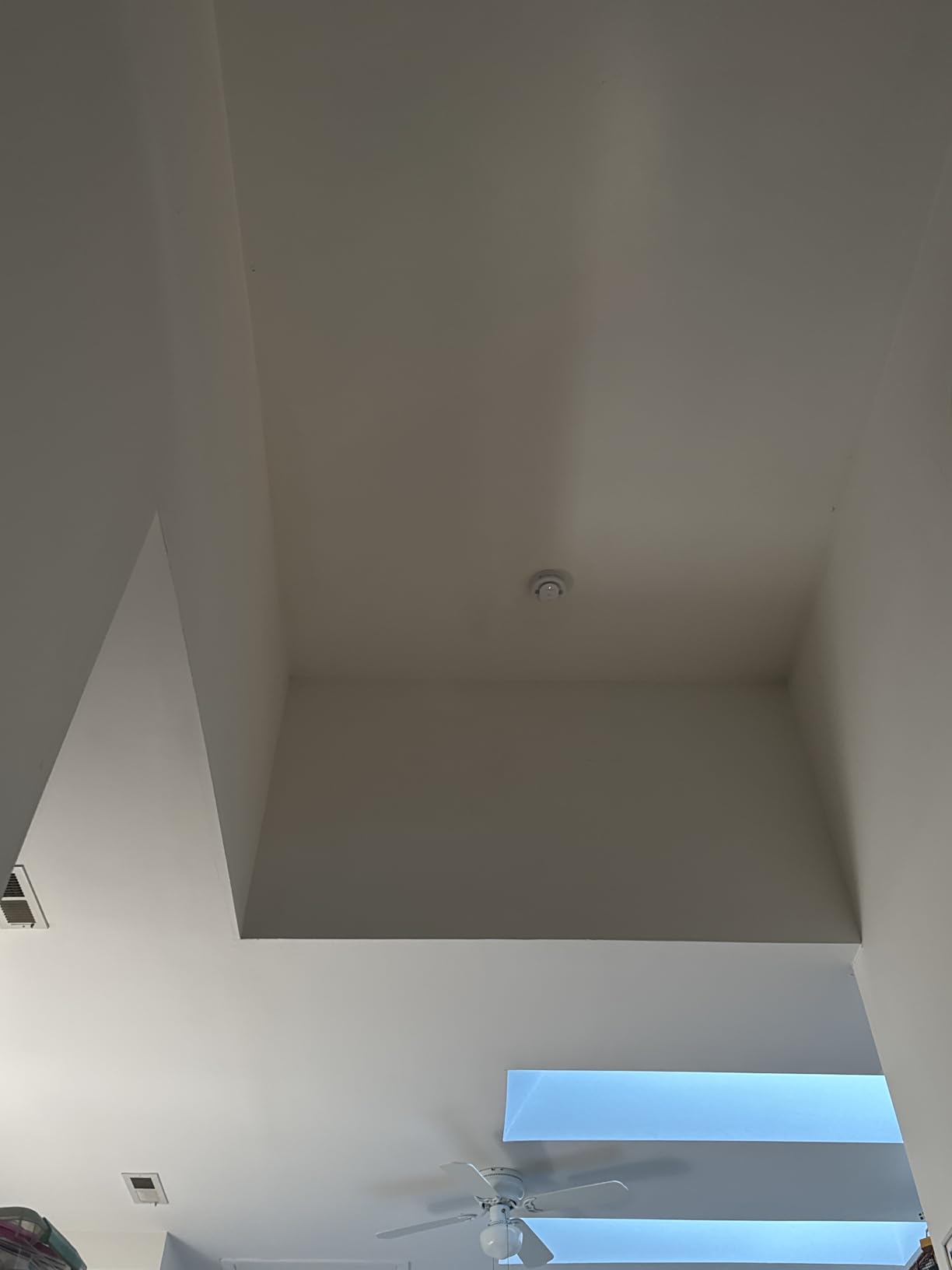
Owners consistently note how cleanly the bracket swaps over an older Kidde installation, which matters if you are doing this in a house that already has hardwired alarms in place. The sensing side is photoelectric for smoke plus electrochemical for CO, tested to UL 217 ninth edition and UL 2034 fourth edition, with the manufacturer claiming enhanced sensing that reduces the cooking-related false alarms that plague earlier generations.
Voice Alerts That Name the Hazard
Most household alarms give you a sound and nothing else. This one gives you a sentence, and the alert distinguishes a fire event from a carbon monoxide event. In a household with a gas fireplace or a garage, that distinction decides whether you evacuate or open windows and call the gas company.
The flip side is volume, and light sleepers should know that a voice alert is still a full-volume event. It removes the guesswork from a very loud noise, and for most households that is the better trade.
10-Year Battery Backup and Whole-Home Interconnect
The backup cell is the sleeper feature in a bedroom context. It is specified at 10 years and sits behind a hardwired AC supply, so a power cut does not turn a working alarm into a dead one. Operating humidity is rated from 10 to 95% relative humidity non-condensing, and the upper temperature rating is 100 degrees F.
Interconnect is where multi-bedroom homes get their value. When one unit senses smoke, the compatible units sound too, so a basement fire reaches you while you are upstairs under a blanket. The limitation is that interconnection rules differ by model family, and mixing brands does not necessarily link up. The physical footprint is 1.88 inches deep by 5 by 5 inches and 12.8 ounces, with a 10-year limited warranty from the manufacturer.
Why It Works in a Bedroom
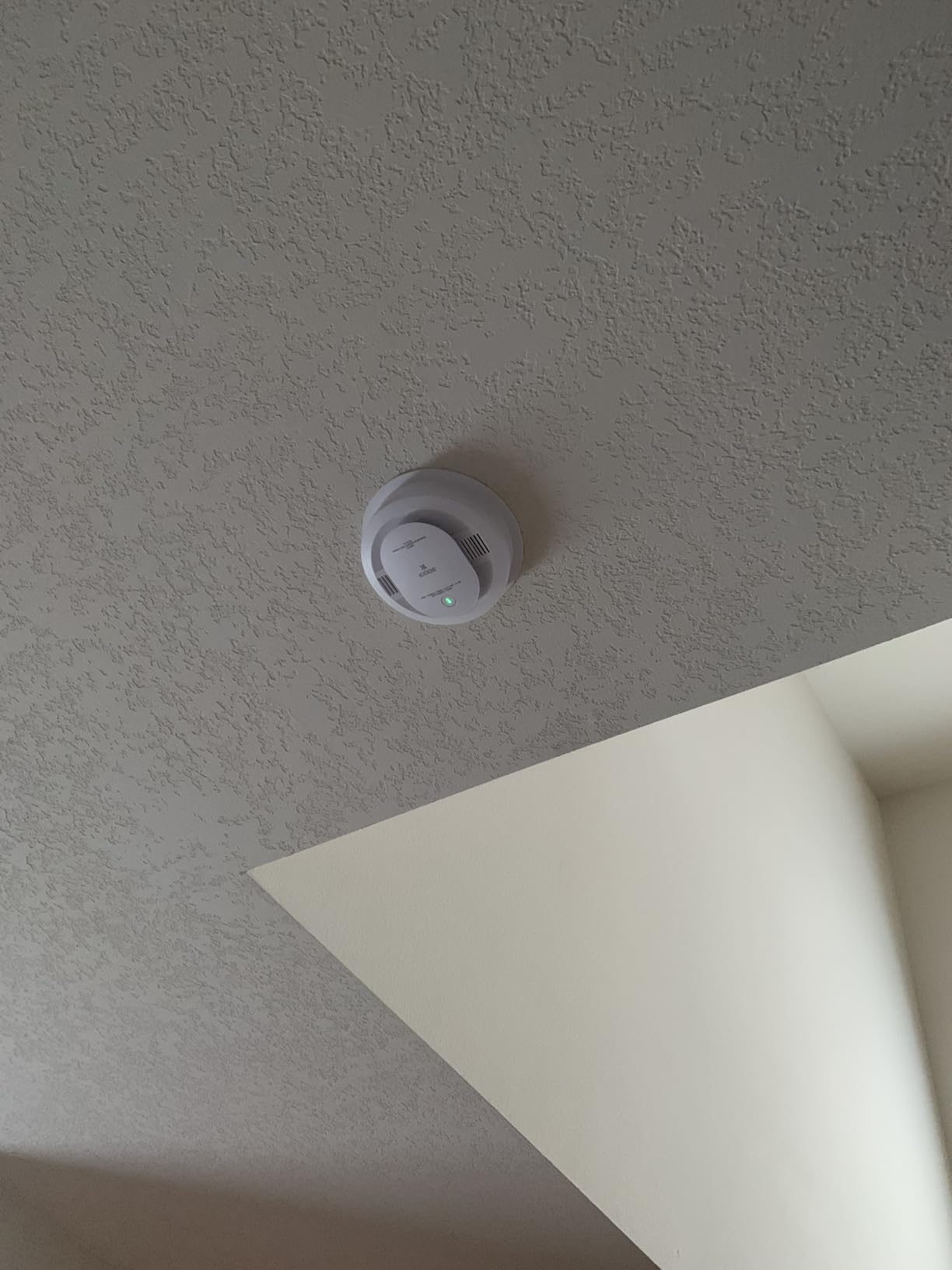
For an owner with existing ceiling wiring, this is the one I recommend without hesitation. Dual-hazard coverage, a decade of backup power, spoken hazard identification and a bracketed swap-over path over an existing hardwired Kidde covers the failure modes reviewers flagged most often. The negatives are real but narrow: a minority of owners report recurring false alarms on single units, and the four-pack format means a single defect sends you back for the whole pack.
2. Kidde Smart Smoke and CO Detector with Ring App – Best Value for Renters Who Cannot Rewire
Kidde Smart Smoke & CO Detector with Ring, AA Battery, RGCUDR-RW
Smoke and CO in one unit
Ring app alerts with no subscription
Two AA alkaline batteries
Wireless interconnect
+ Pros
- Real-time Ring app alerts for smoke CO and low battery with no required plan
- Wire-free interconnect links every compatible alarm in the home
- AA power means no wiring and a renter-friendly install
- Enhanced sensing reduces cooking nuisance alarms versus older Kidde units
- Works with Alexa for voice notifications
- Cons
- AA batteries need periodic replacement unlike sealed 10-year models
- Advanced monitoring sits behind an optional paid Ring plan
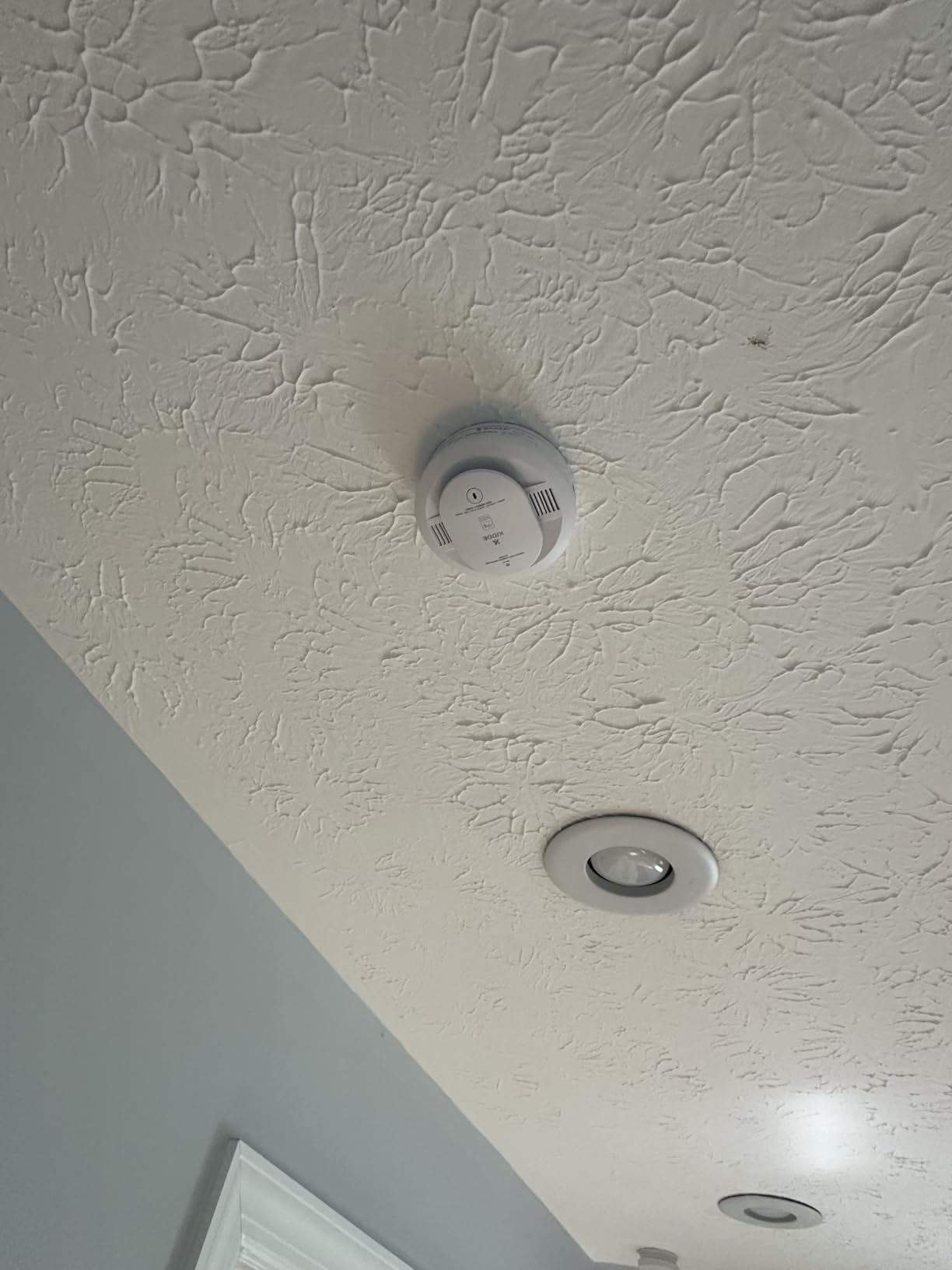
This is the answer for anyone in a rental or an older home with no easy path to the ceiling wiring. Two AA alkaline batteries are included, installation takes minutes, and the unit reports smoke, carbon monoxide and low-battery events to the Ring app whether you are home or away with no subscription required for that basic alerting.
That last point matters more than the marketing usually admits. The free tier delivers the notifications that justify owning a smart alarm at all. A paid Ring plan adds professional monitoring, which is a genuinely different product, and you can decide later whether you want it rather than discovering at setup that the alerts you bought are locked.
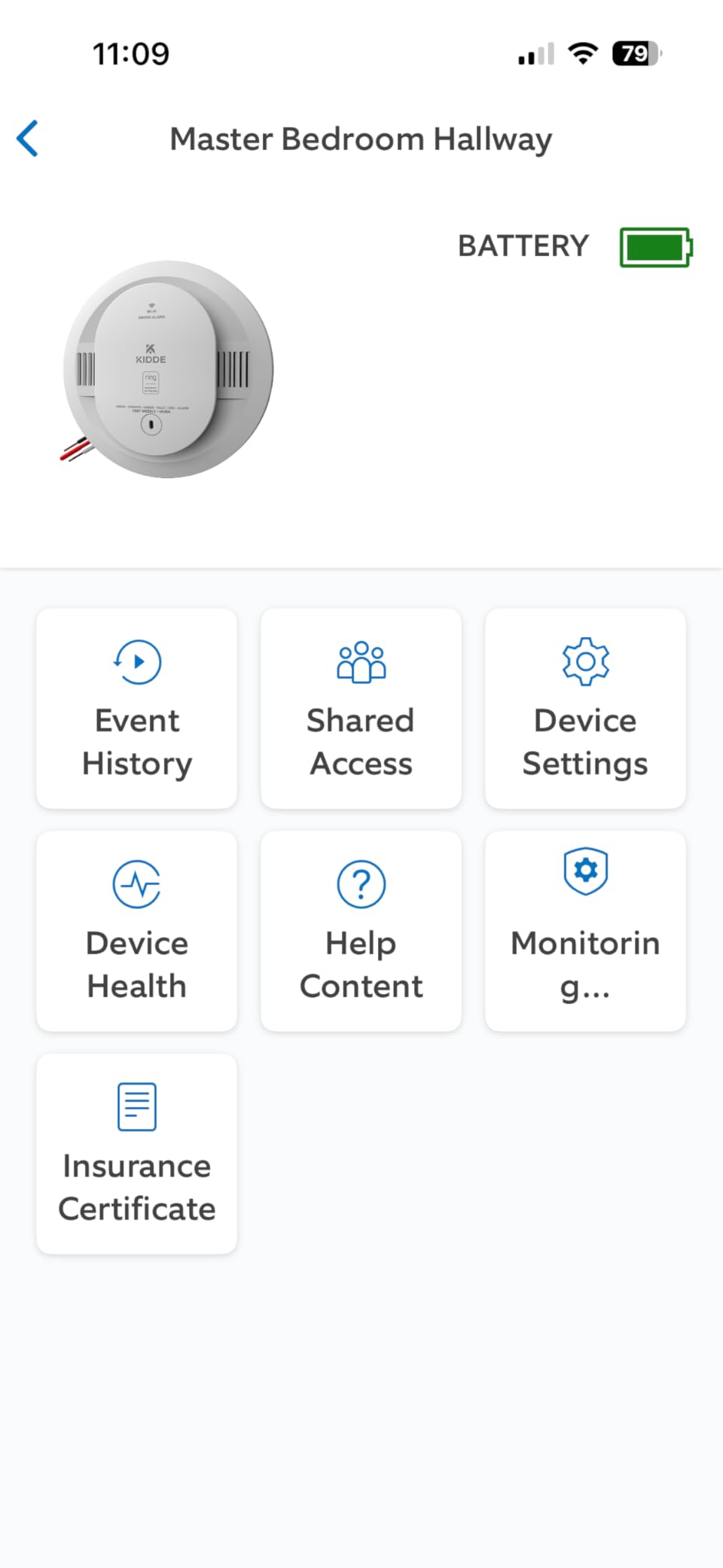
Kidde states detection is over 25% faster at picking up smoke than a leading competitor based on internal testing, and the unit is certified to UL 217 and FCC standards. The same enhanced sensing that reduces cooking-driven nuisance alarms is what you will care about most, because a bedroom unit downstream of a busy kitchen is exactly where drifting aerosol causes 3 a.m. events.
Phone Alerts Without a Paid Plan
The workflow is simple. The alarm sounds, your phone buzzes, and the app shows what triggered it. You can check the room before you are out of bed, which turns a full-house panic event into a thirty-second decision. Of everything we tested, that single capability did the most to reduce household stress.
It also works with Alexa for voice notifications, so a bedside speaker can announce the event. Owners frequently describe the app hush as the single biggest quality-of-life improvement in a smart alarm, and the recurring complaint in feedback is the same on every connected model: the app hush can lag the physical button, so keep a finger ready on the unit itself.
AA Power and Wire-Free Interconnect
Wire-free interconnectivity means every compatible Kidde alarm in the home sounds when one trips, without running a signal wire through the walls. For a two-bedroom apartment that is the difference between one person hearing an alarm and everyone hearing it. The trade is battery maintenance.
The model number is RGCUDR-RW, and the unit covers both smoke and CO in one housing. If you are replacing an existing battery alarm, the physical swap is uneventful. If you are adding a bedroom unit to a home with older hardwired alarms, this one fits without touching the wiring.
Where It Falls Short in a Bedroom
Two limitations stand out. AA batteries are a recurring chore and a recurring source of midnight chirping if you let them run down, and the more advanced monitoring features live behind an optional Ring subscription rather than in the base unit. For a light sleeper, the in-room siren is still an 85-decibel class event with no softening option, so the app is your only lever.
3. eufy Security Smoke Alarm E10 – Best for Compact Bedrooms and Small Ceilings
eufy Security Smoke Alarm E10, Smoke Detector, Ultra-Compact 70 mm Design
70 mm diameter body
UL 217 10th edition sensing
5-year sealed lithium battery
Up to 656 ft range to HomeBase
+ Pros
- 70 mm body is about one-third the size of a traditional alarm
- 5-year sealed lithium battery removes annual battery changes
- Up to 656 ft open-air wireless range back to the HomeBase hub
- UL 217 10th edition compliant sensing with low false-alarm rate
- Loud siren plus instant app alerts for sleepers and travelers
- Cons
- Requires a separate eufy HomeBase hub to operate at all
- Smart features tied to the eufy ecosystem rather than open standards
- 5-year battery life is shorter than the 10-year sealed cells on hardwired rivals
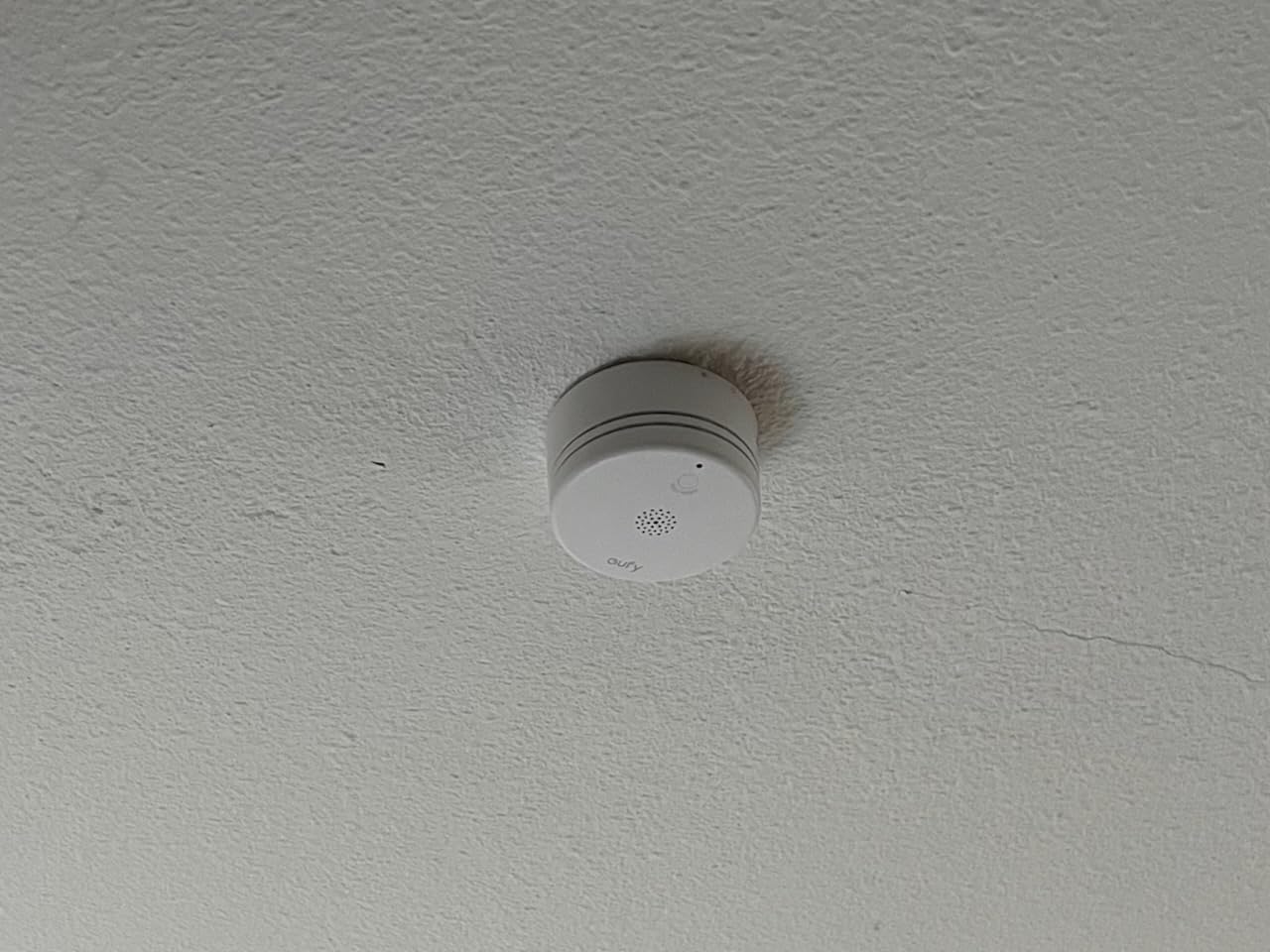
The eufy E10 solves a problem nobody else in this roundup addresses, which is that a standard alarm looks enormous when it is mounted on a bedroom ceiling. At 70 millimeters across, roughly one-third the size of a conventional unit, it disappears into a ceiling the way a smart speaker does. For a child’s room, a studio apartment, or a bedroom with a low ceiling, that is a real quality-of-life gain.
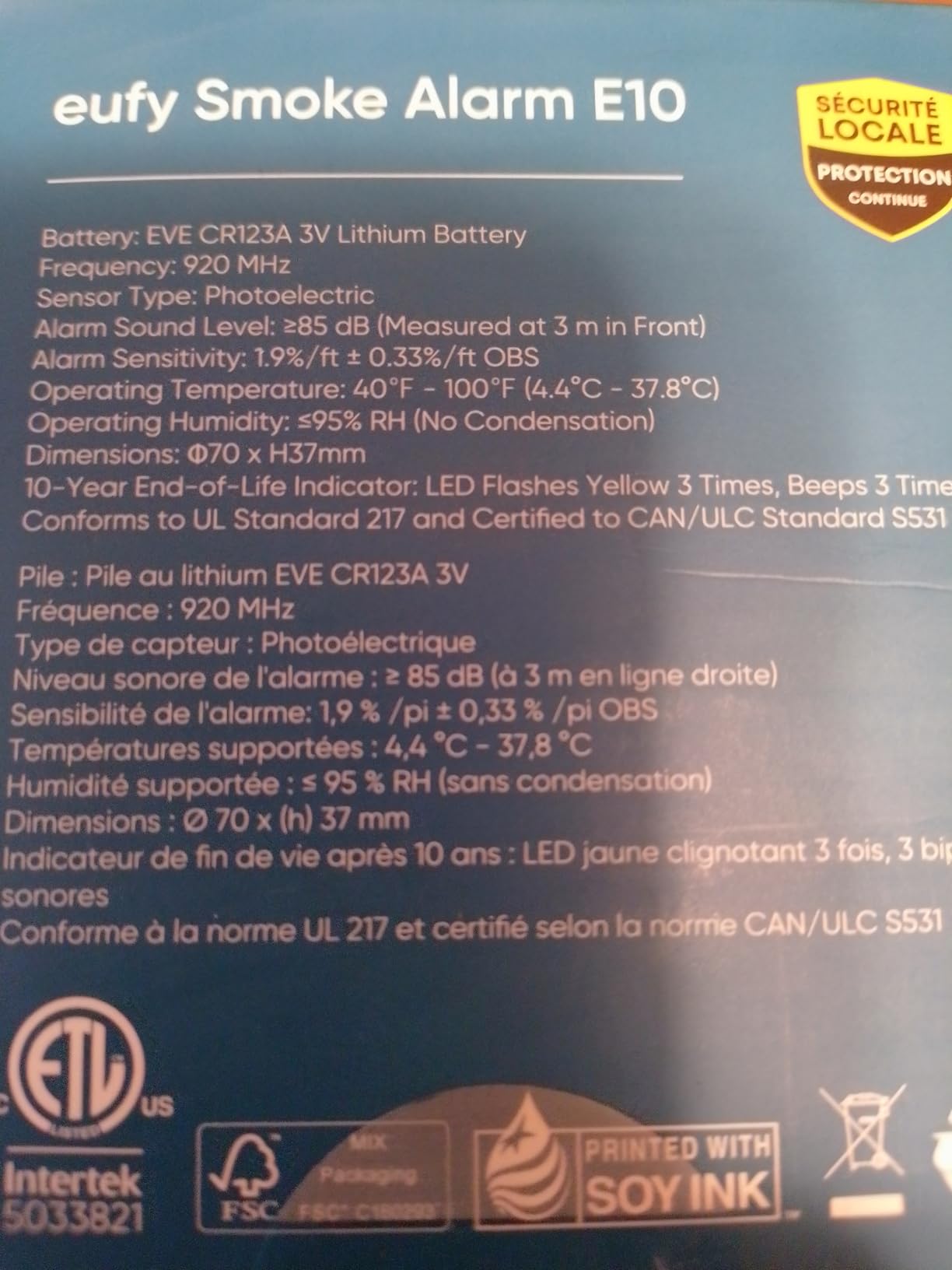
Everything else about it behaves like a proper alarm. Sensing complies with UL 217 tenth edition, the sealed lithium cell runs for up to 5 years, and the buzzer is loud enough to wake a sleeper while the app delivers an instant alert for when you are not home.
The 70 mm Footprint and 5-Year Battery
Dimensions are 2.75 by 2.75 by 1.08 inches and the unit weighs 3.52 ounces. The 5-year sealed lithium battery removes both the annual battery-change ritual and the low-battery chirp, and it lands in a useful middle ground between the AA models that nag you every few months and the 10-year cells that are only available on hardwired units.
Owners consistently single out the small footprint first, with the long sealed battery and dependable app alerts following behind. That matches our experience. Nothing about the design is loud, which is precisely the point when the alarm is 18 inches from someone’s pillow.
HomeBase Hub Dependency
This is the condition attached to most of the praise. The E10 does not operate standalone. It requires a eufy HomeBase Mini, HomeBase 2, HomeBase 3 or HomeBase Pro, and the manufacturer lists specific firmware minimums for each, so an older hub that has never been updated can block installation.
Once connected, the wireless range back to the hub is up to 656 feet in open air, which comfortably covers a typical house. The benefit is that the hub, not the cloud, is the relay point, and alerts also land on the eufy app. The cost is ecosystem lock-in, and it is the one thing on this list that cannot be fixed later with a firmware update.
Bedroom Fit and Light Sleepers
For a bedroom, physical size is an underrated advantage. A smaller unit is less likely to be knocked by a ceiling fan, is easier to reach for testing, and does not dominate the room. The sealed battery means no chirping, the low false-alarm rate reported against UL 217 tenth edition compliance helps with the humidity and steam problems described later in this guide, and the app covers the silencing problem for anyone already awake.
What you trade away is openness. There is no HomeKit path, no Z-Wave radio, and no interoperability beyond the eufy app and HomeBase. If you are building a mixed-ecosystem home, the Kidde units on either side of this one are the safer buys.
4. HEIMAN Wireless Interconnected Mini Smoke Alarm – Best for Wire-Free Whole-Home Coverage
Heiman Smoke Detector, Wireless Interconnected Mini Smoke Alarm for Home
Dual-beam photoelectric sensing
Wireless interconnect up to 656 ft
85 dB buzzer with 10-minute hush
Lithium battery, no wiring
+ Pros
- Wireless interconnect up to 656 ft lets every alarm in the home sound together
- Dual-beam photoelectric sensing detects faint slow smoldering smoke
- Compact 2.7 inch body suits bedrooms and small apartments
- Screw or magnetic pad install with no wiring
- Custom network grouping partitions alarms into separate zones
- Cons
- No app or Wi-Fi connectivity so alerts stay local to the interconnect network
- Meets UL 217 10th edition but is not UL Listed for local building inspections
- 10-minute silence window is short versus longer hush rivals
The HEIMAN S1-R is the most misunderstood product in this roundup, and the confusion is worth clearing up before anyone buys it. It is a real smoke detector with real dual-beam photoelectric sensing. It is also explicitly not connected to Wi-Fi or any app. Wireless interconnect here means the alarms talk to each other, not to your phone.
That is a legitimate design for a specific job. If you want every room in a two-bedroom apartment to sound together without a hub, without rewiring and without a subscription, this is the cleanest way to do it. If you want a push notification while you are at work, this is the wrong tool.

Dual-Beam Sensing for Smoldering Smoke
The sensing description is unusually specific for a budget unit. Dual-beam photoelectric sensors measure smoke particle size and density rather than simply counting particles, which is what supports the manufacturer’s claim of sensitivity to faint, slow smoldering smoke while minimizing false alarms from steam and cooking.
That claim matters in a bedroom, because the typical overnight fire in a home is a smoldering one, starting on bedding or upholstery and producing little heat and little flame. The buzzer is rated at 85 decibels at 10 feet, LED indicators give a visual status, and the test and silence button handles both functions from the face of the unit.
No App, No Wi-Fi, No Hub
Installation is genuinely fast. The box includes magnetic adhesive pads, a mounting bracket, screws, anchor plugs and a disassembly pin, and the unit powers from an included lithium battery, so there is no wiring and no hub to pair. The body measures 2.7 inches in diameter and depth, at 1.7 inches wide, which is compact enough for a small bedroom ceiling.
Interconnection range reaches 656 feet in open areas, and the system supports custom network grouping so you can partition alarms into separate zones. It also interconnects with HEIMAN wireless carbon monoxide alarms, which lets one network cover both hazards.
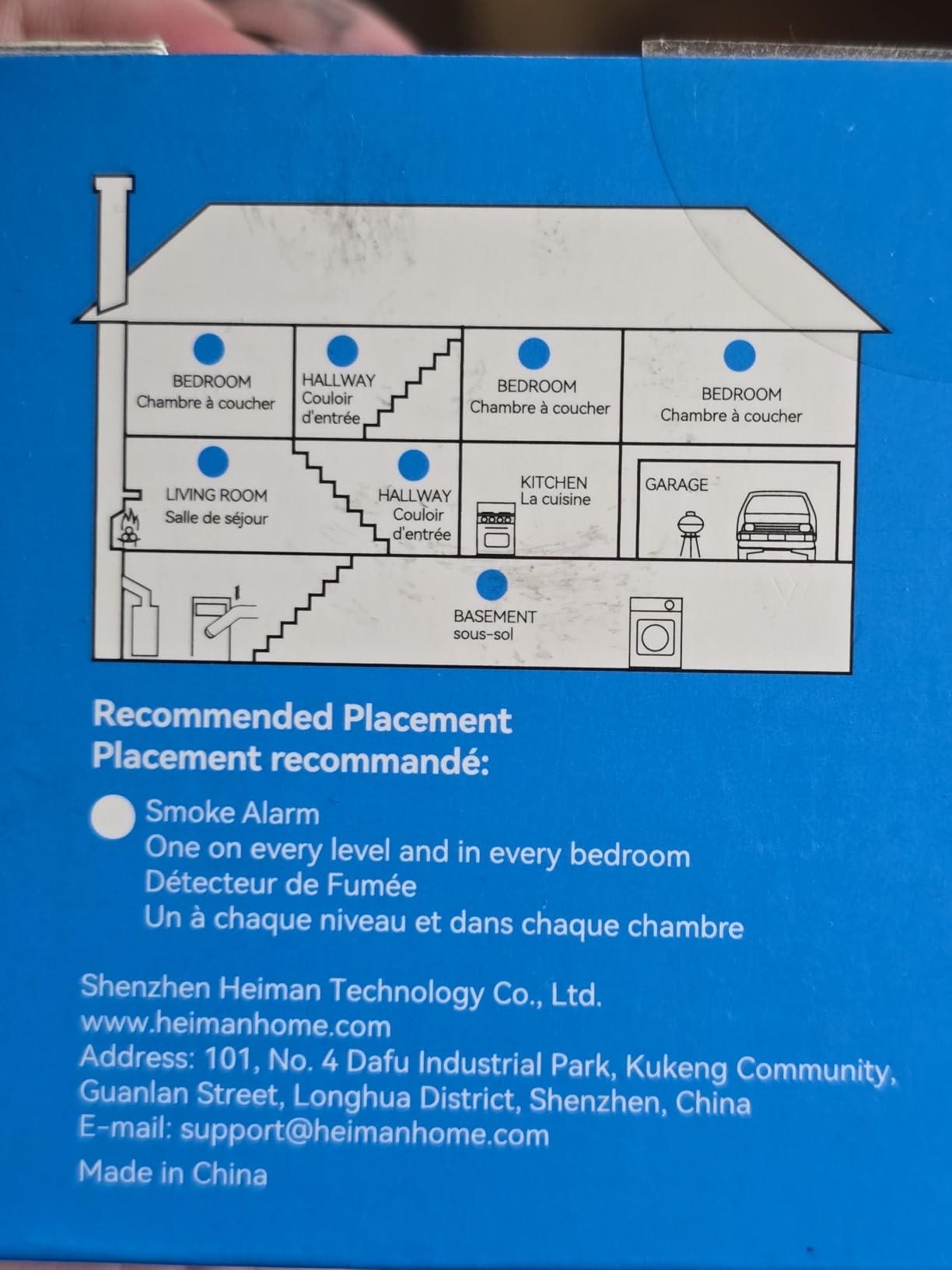
UL 217 Compliance Without UL Listing
This point should drive your decision. The listing states the unit meets the UL 217 tenth edition standard, the newest and most rigorous smoke alarm requirement in North America, and it carries a Red Dot Design Award. It also states plainly that it is not UL Listed or officially UL certified, which means it may not qualify for local building inspections.
For a renter or a homeowner in a house with no inspection requirement, that is usually acceptable. For a new build, a rental unit subject to landlord or code enforcement, or anyone who wants documentation an insurer will honor, verify your local requirements first. Reviewers like the low cost, tiny footprint and dependable multi-unit interconnect, with the missing app and the missing UL Listing as the two most common reservations.
5. First Alert Hardwire Smoke Alarm with LED Light – Best for Hearing-Impaired Sleepers
First Alert Hardwire Smoke Alarm with 10-Year Battery Backup & LED Light
Smoke alarm and LED strobe in one device
10-year sealed battery backup
Interconnects with First Alert and BRK
Up to 8 hours of silence
+ Pros
- Integrated LED strobe gives a strong visual alert for Deaf and hard-of-hearing residents
- 10-year sealed battery backup protects through outages without battery changes
- Precision Detection sensing reduces cooking nuisance alarms
- Interconnects with most First Alert and BRK alarms so the home sounds together
- Test and silence button mutes for up to 8 hours
- Cons
- 7 inch face plate is bulkier than ultra-compact bedroom units
- Strobe only operates on AC power not on the backup battery
- Hardwired installation needs existing 120V wiring
- Not app-connected so there are no remote phone alerts
No other unit in this roundup does what this one does. It combines a smoke alarm and an LED strobe in a single device, which means a sleeping person who cannot hear an 85-decibel siren still gets a full-strength visual warning across the room. For a household with a Deaf or hard-of-hearing member, that is not a nice-to-have feature, it is the entire reason to buy this alarm.
It is also the highest rated product here, at 4.5, though the review volume is much smaller than the Kidde units. Sentiment centers on the strobe and on painless hardwired swap-over using the included power adapters.
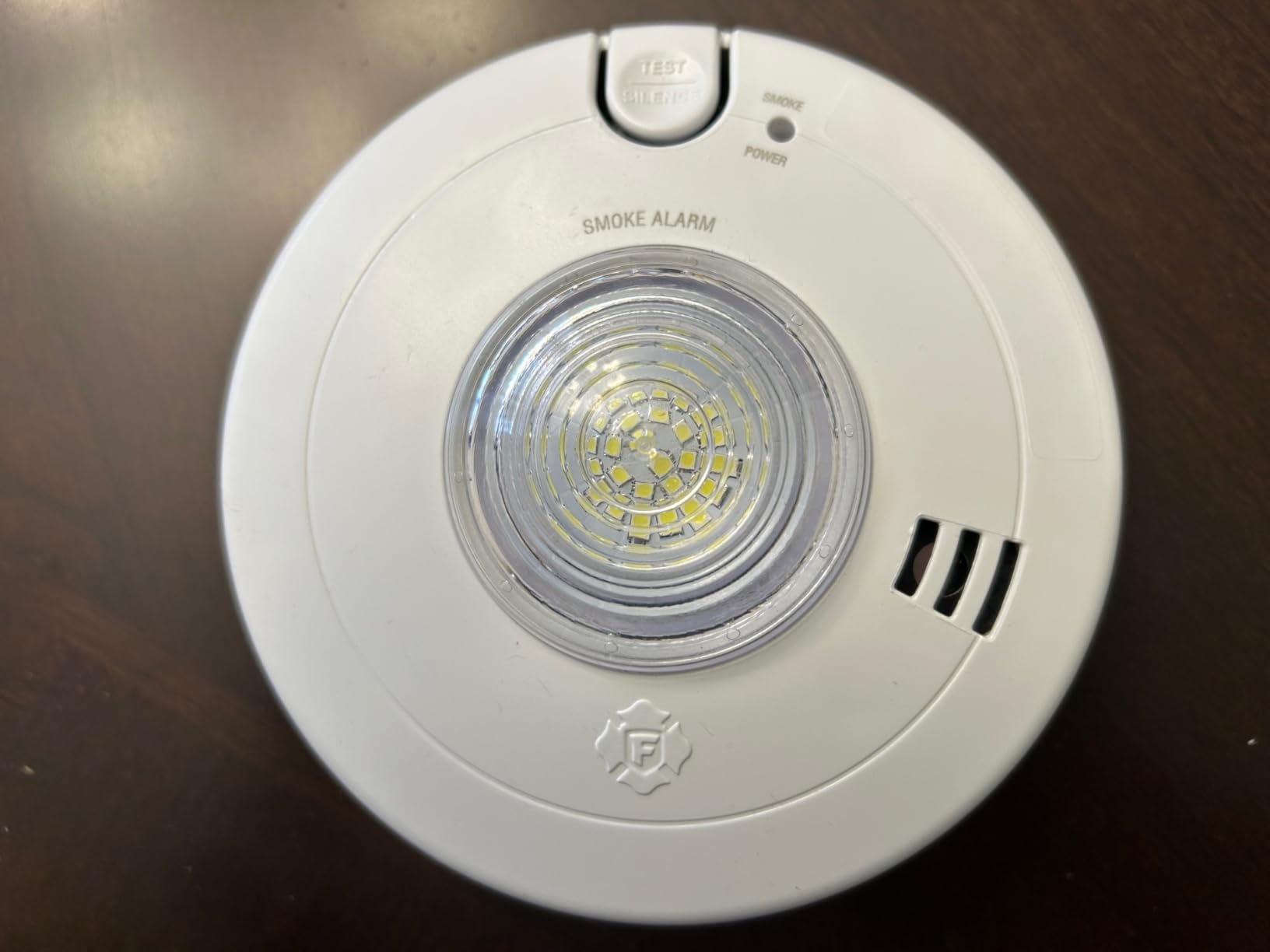
The Built-In LED Strobe
Strobe alarms are standard in commercial and multi-family buildings, and residential adoption has been slow largely because of cost. Integrated into a hardwired smoke alarm with a 10-year battery backup, it becomes a retrofit any existing AC installation can absorb. The visual alert is what a hearing-impaired sleeper relies on, and it does not depend on being awake to reach a phone.
One limitation is worth stating plainly. The strobe runs on AC power only. During a power outage, the backup battery keeps the alarm functioning but the visual alert does not, so this unit pairs best with a home that also has a generator or with a household that has another alerting path for extended outages.
Hardwired Swap-In and 8-Hour Silence
Multiple power adapters ship in the box so the unit can drop into an existing AC alarm without rewiring, which is the most common retrofit scenario in older homes. Interconnection with most First Alert and BRK alarms means a mixed-vintage house can still sound as one system.
That 8-hour window is genuinely useful in a bedroom. If cooking aerosol drifts down a hall at dinner and sets the unit off, eight hours of quiet covers the rest of the evening. Precision Detection sensing is specified to reduce those cooking-driven nuisance alarms in the first place.
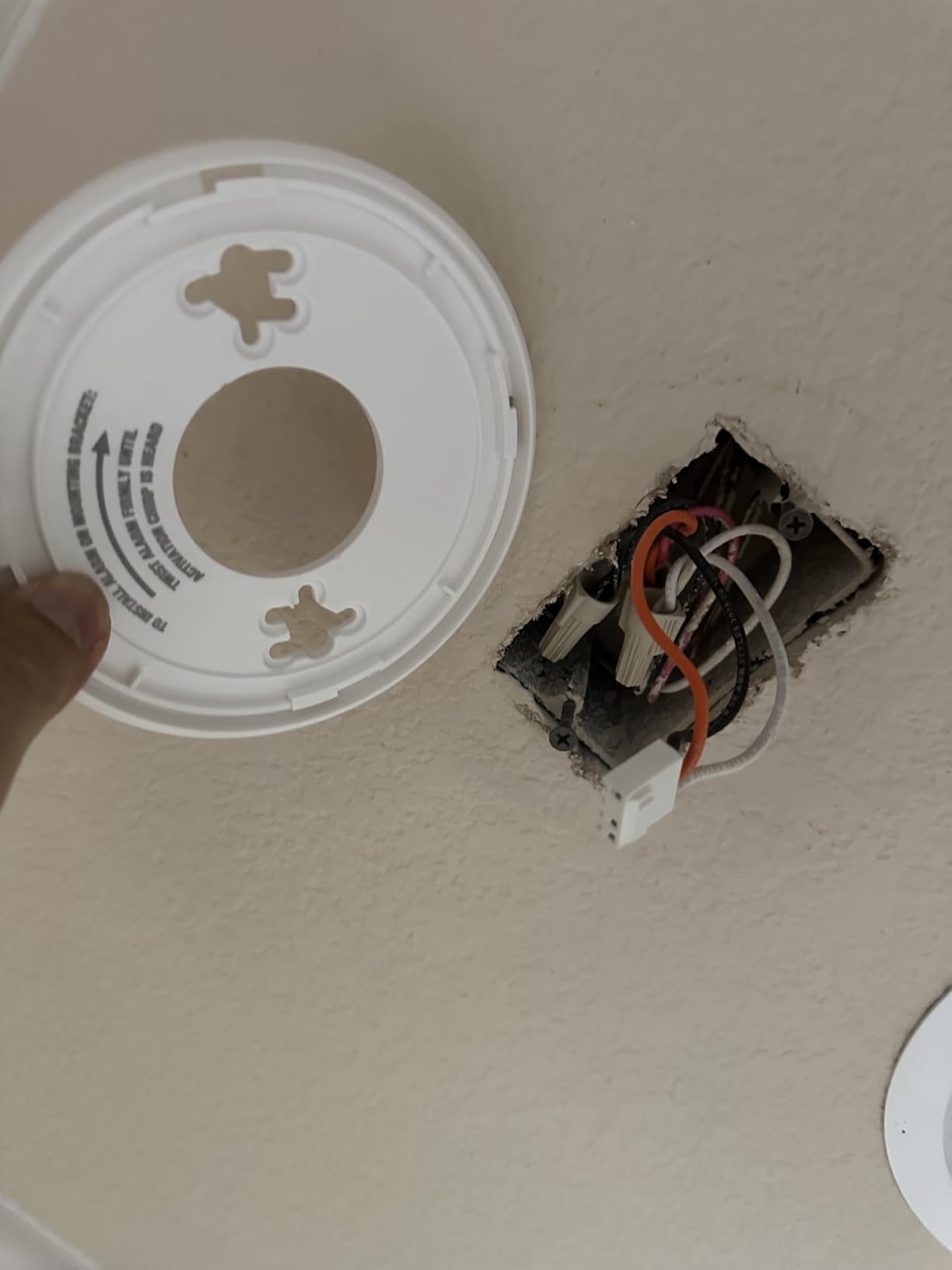
What You Give Up Without an App
This is not a smart alarm in the connectivity sense. There are no phone notifications, no remote test, no remote hush and no voice assistant integration. It earns its place by sensing well, hardwiring cleanly and alerting visually, not by reporting to your phone.
The physical size is the other tradeoff. At 7 inches deep by 3 wide by 7.5 high, it is a large plate on a bedroom ceiling, and a visible object in a room where the eufy E10 is not.
6. Kidde Wi-Fi Smart Smoke Detector with Voice and App Alerts – Best for Alexa and Google Home
Kidde Smart Smoke Detector, WiFi, Alexa Compatible Device, Hardwired w/Battery Backup, Voice & App Alerts
Wi-Fi smoke CO and end-of-life alerts
Photoelectric smoldering fire sensing
85 dB alarm with color-coded LEDs
Hardwired AC with battery backup
+ Pros
- Wi-Fi enabled phone and email alerts to you and to friends and family
- Voice announcement identifies the hazard type and end-of-life warning
- Works with Amazon Alexa Google Home iPhone and Android
- Test and hush from the physical button or the app including remote testing
- UL Listed with a 10-year limited warranty
- Cons
- 3.2 rating reflects a large volume of false alarm complaints
- App hush can lag the physical button and the hush window is short
- Setup reportedly fails on hybrid 2.4 and 5 GHz single-SSID networks with some Android devices
I am including this one because it fills a real gap: it is a genuinely Wi-Fi connected, UL Listed hardwired alarm that works with both Alexa and Google Home, which is a combination none of the other five units offer. The photoelectric sensor is specified for the visible fire particles associated with smoldering fires, which is exactly the bedroom fire type.
It also announces end of life. When the unit reaches the end of its service span the voice alert says Replace Alarm, which quietly prevents the single most common long-term failure mode of any smoke alarm in the house.
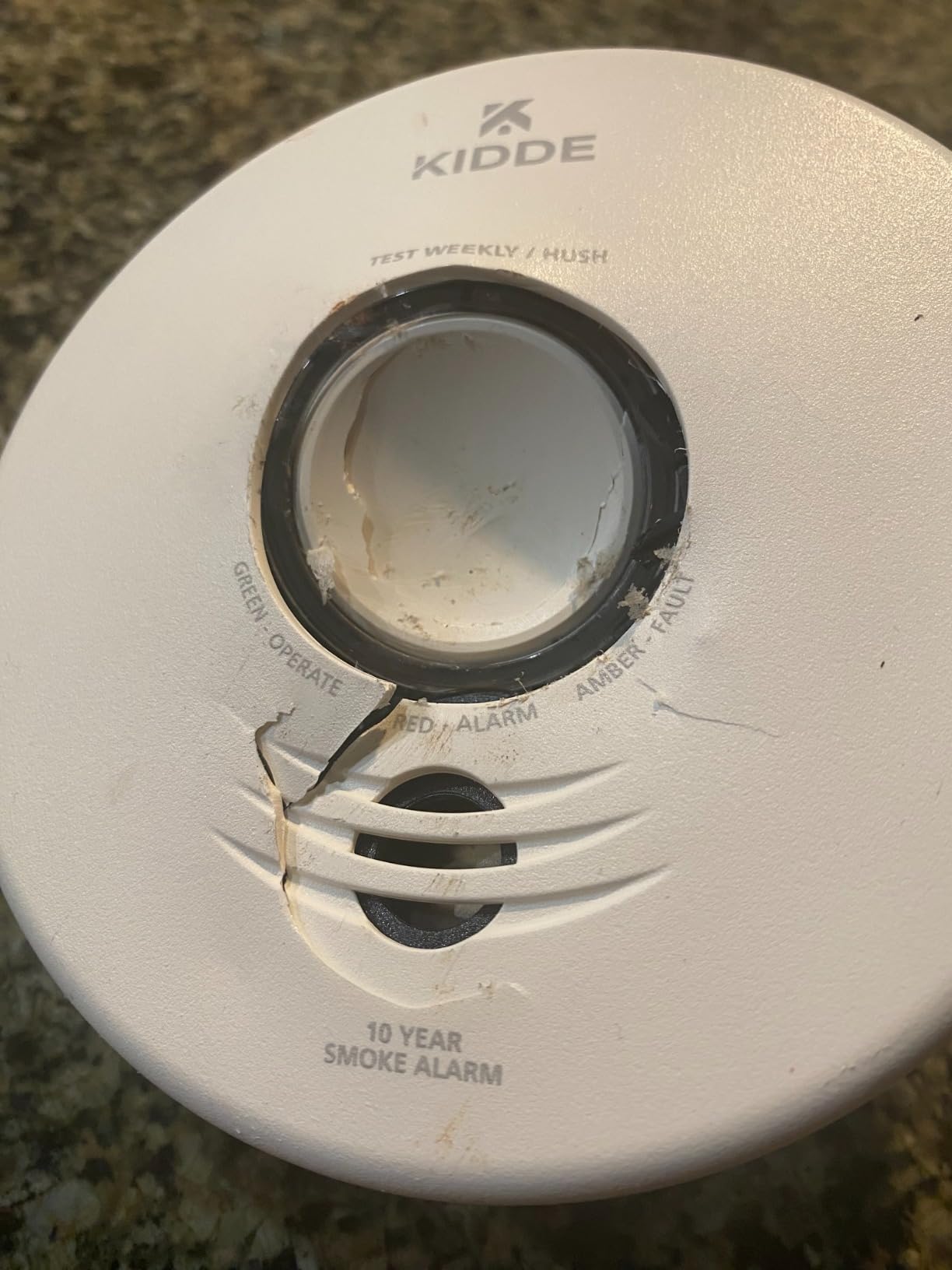
Wi-Fi Alerts and Voice Hazard Calls
The notification model is the broadest here. Smoke, carbon monoxide and end-of-life events go out over Wi-Fi to your smartphone and by email, and the listing states that friends and family can be included, not just the account holder. For a household where the person who owns the phone is not the person closest to the risk, that is a meaningful safety improvement.
The alarm outputs 85 decibels with color-coded LED indicators, green for normal operation, amber for operating error and red for a smoke, fire or carbon monoxide event. It weighs 11.2 ounces and runs on corded AC with a battery backup and a 10-year limited warranty.
The False Alarm Problem
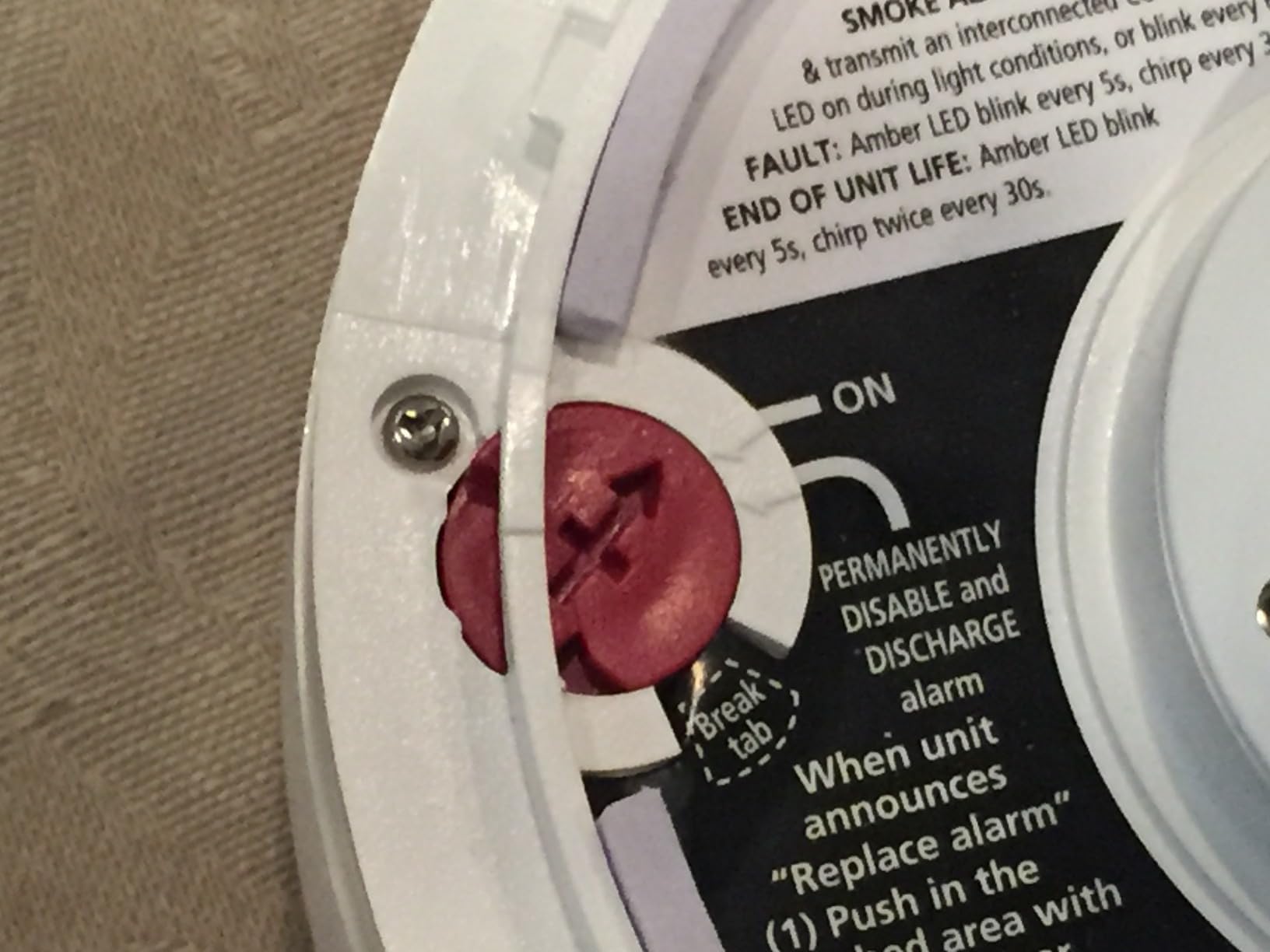
Here is the reason this unit sits sixth rather than higher. Its 3.2 rating across 316 reviews is the lowest in this roundup, and the distribution explains why, with 34% of ratings at one star. The dominant complaint is aggressive false alarming, often late at night, that sometimes cannot be silenced quickly even through the app.
That is precisely the failure mode a bedroom installation cannot tolerate. An alarm that cries wolf at 2 a.m. trains people to reach for the battery or the disable switch, and a disabled alarm is worse than no alarm. If you buy this unit, test the app hush before you commit to it in a bedroom, and keep the physical test-hush button as your primary response.
Setup Reality on Mixed Wi-Fi Networks
Owners also report setup failures on hybrid 2.4 and 5 GHz networks that present a single SSID, particularly with Android devices. If your home Wi-Fi merges both bands under one network name, expect to separate them before pairing. There is no Home Assistant integration and no wireless interconnect advertised, so this unit does not join a mesh of connected alarms the way the Ring-enabled Kidde does.
Given that, this is the pick only if you are hardwired, you want UL Listing, and Alexa or Google Home is your primary smart home interface. Anyone prioritising reliability in a bedroom should look at the two units ahead of it instead.
How to Choose a Bedroom Smart Smoke Alarm That Actually Suits You
The specification sheets only matter once you have decided what your bedroom actually needs. A renter, a parent with a light sleeper, and someone in a house with existing hardwired wiring have three genuinely different answers.
Photoelectric vs Dual-Sensor: What a Bedroom Fire Actually Looks Like
Photoelectric sensing is the most effective type for bedrooms. Bedroom fires are overwhelmingly smoldering, which means a slow-burning seat or bedding fire producing visible particles and little flame. Photoelectric sensors detect those particles directly, which is why the UL 217 standard leans heavily on nuisance-alarm immunity improvements for photoelectric units. Ionization sensors are more sensitive to fast, flaming combustion, which is what you find in a kitchen, not under a pillow.
Features from most of the units in this roundup are photoelectric, and the HEIMAN uses a dual-beam version of it. Look for UL 217 tenth edition compliance where available, and treat any listing that omits the standard as an unknown rather than a pass.
Hardwired, Battery and Hub-Based: Pick Your Install Path
Hardwired units give you continuous power and a 10-year backup cell, so nothing chirps and nothing dies quietly. They cost you nothing at purchase and require a ceiling box and a neutral in many homes. Battery units install in minutes in a rental and repeat that chore on a schedule, unless the battery is sealed.
Hub-based units sit in between. They look battery-powered, but they report through a hub you already own. The advantage is a sealed multi-year battery and app alerts without wiring. The cost is ecosystem lock-in, and you should confirm the hub firmware minimums before you commit, because an old hub can block the pairing entirely.
Why Bedroom Alarms False-Alarm and How to Fix It
A surprising share of bedroom alarms is triggered by something in a different room. In rough order of frequency: cooking aerosol drifting down a hallway from an open door, steam and humidity from a bathroom with the door open, a humidifier running overnight, scented candles or diffusers, and dust accumulating on the sensing chamber. A unit older than 10 years and a low or dead battery account for a large share of the rest. Choose an alarm with a long hush window, and a connected alarm so you can confirm from bed that an event is nuisance.
Mitigations are unglamorous and effective. Keep the kitchen door shut and the bedroom door closed on high-aerosul nights, and set humidifiers below 50% relative humidity. Dust the sensing chamber on your maintenance schedule rather than waiting for the alarm to teach you.
Smart Detector vs Listener: Know the Difference Before You Buy
Some products marketed alongside smart alarms are listeners. A listener or relay sits next to an existing alarm and repeats its sound to your phone or smart speaker. It does not contain a smoke sensor, it does not detect anything, and if the hardwired alarm it depends on is dead, the listener is silent too. These devices are genuinely useful for renters who want phone alerts from a wiring job they cannot touch, but they are never a replacement for a detector inside the bedroom.
Rule of thumb: if the product does not state a smoke sensing technology and a certification standard, it is a listener, not a detector. Most of the units in this roundup state both, and the two that lack phone connectivity still sense smoke properly.
UL 217 and UL 2034: The Marks Firefighters Look For
UL 217 governs smoke alarms and UL 2034 governs carbon monoxide alarms. Both are also FCC requirements for these devices. Fire departments and inspectors look for UL Listing, and so should you, because a unit that meets the UL 217 tenth edition standard for nuisance-alarm immunity is not automatically UL Listed for local building inspection.
Also check the end-of-life marking. Every alarm carries a date after which it must be replaced, typically 10 years from manufacture, and a smart alarm should tell you about that date rather than leaving it printed on a label nobody reads. A voice or app end-of-life alert is a real advantage in a room nobody enters except to sleep.
Smart Smoke Detector Questions for Bedrooms
What type of smoke alarm is most effective for bedrooms?
A photoelectric or dual-sensor alarm. Bedroom fires are typically smoldering rather than flaming, and photoelectric sensors detect the visible particles a slow-burning seat or bedding fire produces. Ionization sensors respond faster to open flame, which belongs in a kitchen. Look for UL 217 compliance, which includes nuisance-alarm immunity testing, and check for UL Listing to satisfy local building inspections.
Where is the best place to put a smoke alarm in a bedroom?
On the ceiling, at least 12 inches away from walls, and in a spot away from air vents, ceiling fans, windows and air conditioning units. Mount it near the doorway to the room but inside the sleeping area, and never on a wall in a bedroom. NFPA guidance calls for an alarm inside every bedroom and outside every sleeping area, so one hallway unit is never enough.
Why does my smoke detector keep going off in a false alarm?
Most bedroom nuisance alarms trace to something in another room: cooking aerosol drifting down a hall from an open door, shower steam, a humidifier running overnight, scented candles, or dust on the sensing chamber. A battery below charge or a unit older than 10 years causes many of the rest. Close doors between rooms, keep humidity near 50 percent, and use an alarm with a long hush window.
Is it worth getting a smart smoke detector?
It is worth it if you sleep with your phone within reach. A smart alarm sends a push notification that names the hazard and the room, runs guided self-tests, and can be silenced from bed, which removes the three reasons people disable their alarms. It is less valuable if you already have hardwired interconnection, though phone alerts still help when you are away from home.
What smoke detectors do firemen recommend?
Fire departments and inspectors consistently point to UL Listed units, either UL 217 for smoke or UL 2034 for carbon monoxide, with interconnection so all alarms sound together. They also stress alarms inside every bedroom and outside every sleeping area, monthly testing, and replacement of any unit older than 10 years. Meeting a standard is not the same as being listed to it, so verify both.
The Bottom Line for Bedroom Fire Safety in 2026
If you own the wiring, the Kidde hardwired smoke and CO pack is the one to buy. A 10-year backup cell, spoken alerts that distinguish fire from carbon monoxide, and interconnect that reaches every floor are exactly what a bedroom needs, and the four-unit format covers a two-bedroom home in one purchase.
If you are renting or cannot touch the ceiling wiring, the Ring-enabled Kidde gives you phone alerts with no required plan and a genuine wireless interconnect, and the AA battery trade is the price of not hiring an electrician. If ceiling aesthetics drive you mad, the eufy E10 is one-third the size of a conventional alarm and needs only a HomeBase hub you may already own.
For a Deaf or hard-of-hearing sleeper, the First Alert strobe unit is not a preference but a necessity, and its 8-hour hush window is the most forgiving on the list. The HEIMAN covers wireless whole-home coverage without a hub if you do not need phone alerts. Whatever you choose, install it inside the bedroom, not just in the hall, and test it before you need it.