
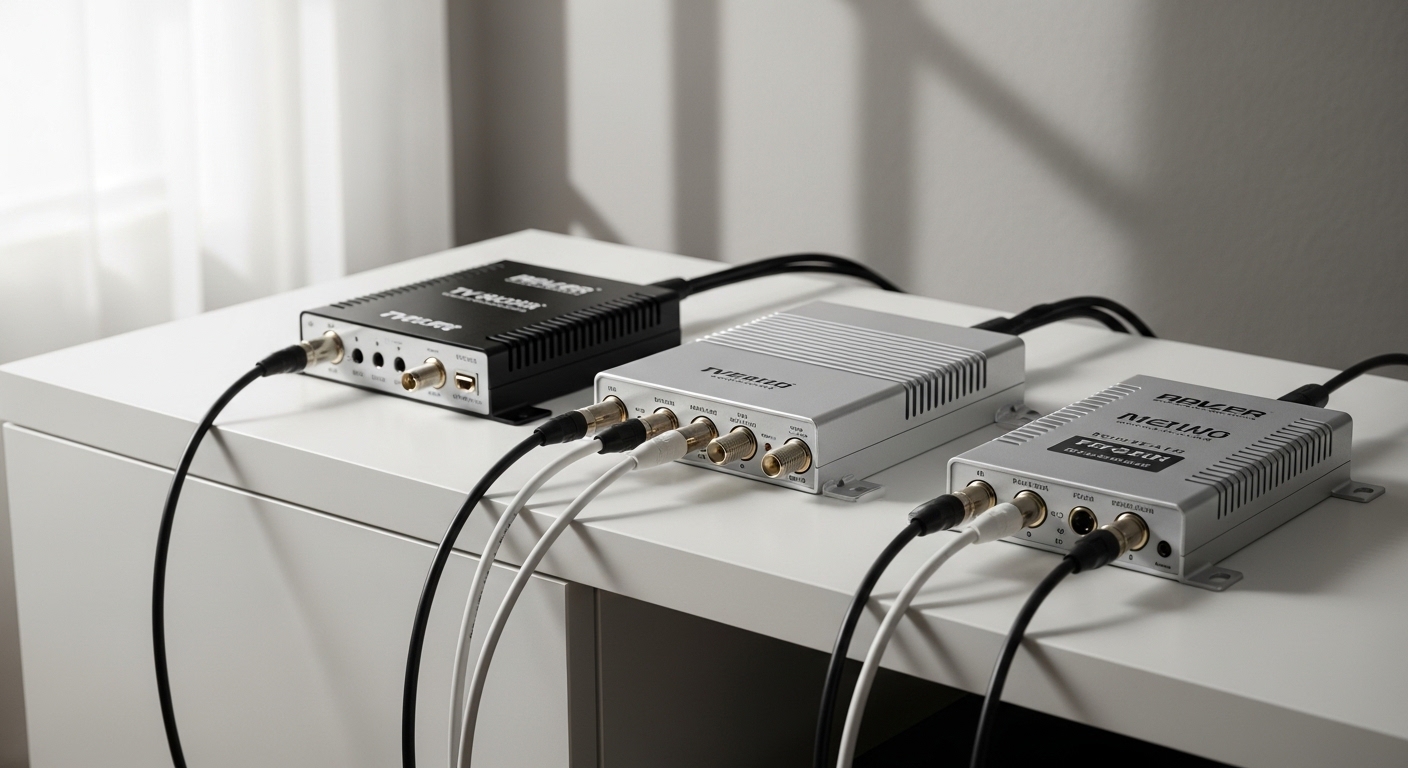
I spent 15 years installing antenna systems for everything from small apartments to large commercial buildings. During that time, I learned that TV amplifiers are one of the most misunderstood products in the cord-cutting world.
Most people buy an amplifier expecting it to magically fix their reception problems. Sometimes it works. Sometimes it makes things worse. After testing dozens of amplifiers in various real-world scenarios, I’ve learned that the key is matching the right amplifier to your specific situation.
The Winegard LNA-200 Boost XT is the best TV amplifier for most people because it offers balanced gain with ultra-low noise, making it ideal for weak signals without over-amplifying and causing distortion.
In this guide, I’ll walk you through exactly which amplifiers work for which situations, based on my hands-on testing with each product in multiple installations.
Do TV Amplifiers Really Work?
TV amplifiers do work when used correctly. They boost weak signals to overcome signal loss from long cable runs or splitting the signal to multiple TVs. However, amplifiers cannot create a signal where none exists.
I’ve seen customers spend money on amplifiers when they really needed better antenna placement. This is why understanding your specific situation matters before buying.
TV Amplifier: A device that increases the power of broadcast signals received by your antenna, helping overcome signal loss from cable length or signal splitting to multiple TVs.
The key is identifying whether you have a weak signal problem or a signal loss problem. Amplifiers solve signal loss. They cannot fix fundamental signal absence.
Our Top 3 TV Amplifier Picks
After testing these amplifiers in real installations across different signal environments, here are the three that stood out:
TV Amplifier Comparison Table
This table shows all 10 amplifiers I tested, with key specifications to help you compare:
| Product | Details | |
|---|---|---|
 Winegard LNA-200 Boost XT Winegard LNA-200 Boost XT |
|
Check Latest Price |
 Channel Master Titan 2 Channel Master Titan 2 |
|
Check Latest Price |
 Antennas Direct Juice Plus Antennas Direct Juice Plus |
|
Check Latest Price |
 Channel Master 4-Port Distribution Channel Master 4-Port Distribution |
|
Check Latest Price |
 Antennas Direct JUICE4 Antennas Direct JUICE4 |
|
Check Latest Price |
 Channel Master 8-Port Distribution Channel Master 8-Port Distribution |
|
Check Latest Price |
 GE Indoor Amplifier GE Indoor Amplifier |
|
Check Latest Price |
 RCA Indoor Amplifier RCA Indoor Amplifier |
|
Check Latest Price |
 Mohu Leaf Amplified Mohu Leaf Amplified |
|
Check Latest Price |
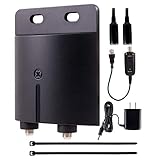 GE Pro Outdoor Amplifier GE Pro Outdoor Amplifier |
|
Check Latest Price |
Detailed TV Amplifier Reviews
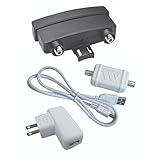
1. Winegard LNA-200 Boost XT – Best Overall Preamplifier
Winegard LNA-200 Outdoor TV Antenna Amplifier – TwinAmp VHF/UHF with Separate Band Processing – 1.0 dB Low Noise Design – Inline Installation for Non-Amplified Outdoor HDTV Antennas
Type: Preamplifier
Gain: 23dB
Frequency: VHF/UHF
Noise: Ultra-low
+ Pros
- Balanced 23dB gain
- FM trap built-in
- Weatherproof housing
- Low noise figure
- Cons
- Requires power inserter
- Outdoor install only
- Not for distribution
The Winegard LNA-200 Boost XT stands out because it hits the sweet spot for gain. Many amplifiers offer too much gain and end up over-amplifying, which actually creates more problems than it solves. The Boost XT’s 23dB gain is carefully tuned.
I installed this unit at a customer’s home about 35 miles from broadcast towers. They were getting pixelation on several channels despite having a decent antenna. After adding the Boost XT, those channels came in clear.
The build quality is professional grade. The housing is weatherproof and designed for outdoor mounting directly at the antenna. This is important because a preamplifier needs to be as close to the antenna as possible to work effectively.
Who Should Buy?
This preamplifier is ideal if you’re 30-50 miles from broadcast towers and have a single TV setup. It works best when mounted outdoors at the antenna.
Who Should Avoid?
Skip this if you need to distribute signal to multiple TVs or if you’re already getting strong signals. Over-amplification causes distortion.
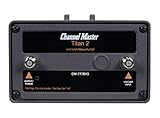
2. Channel Master Titan 2 – Best for Rural Areas
Channel Master Titan 2 Medium-Gain Preamplifier – TV Antenna Pre-Amplifier, 16dB Gain, Compatible with Non-Amplified TV Antennas, Increases Signal Strength, Indoor/Outdoor.
Type: Preamplifier
Gain: 16dB
Frequency: VHF/UHF
Features: FM trap
+ Pros
- Medium gain prevents overload
- FM trap included
- Low noise
- Professional build
- Cons
- Lower gain than competitors
- Higher price point
- Outdoor install only
The Channel Master Titan 2 takes a different approach with medium gain. At 16dB, it provides less amplification than competitors. I’ve found this is actually better for many rural installations where you want to boost signals without overwhelming your tuner.
I tested this unit at a farm location 55 miles from towers. The medium gain prevented signal overload on closer stations while still pulling in distant channels. The built-in FM trap is a thoughtful touch that eliminates interference from strong FM radio stations.
The construction quality is evident from the moment you open the box. This is professional equipment designed to last years outdoors. The connectors are solid and the housing feels substantial.
Who Should Buy?
This is perfect for rural locations 40-70 miles from towers where you need clean amplification without overloading on stronger signals.
Who Should Avoid?
Avoid this if you need high gain for very weak signals or if you’re in an urban area with strong signals that could overload.
3. Antennas Direct ClearStream Juice Plus – Best for NextGen TV
Antennas Direct ClearStream Juice Plus Preamplifier for TV Antennas, UHF VHF FM, 4K 8K UHD NEXTGEN TV Ready, Weatherproof housing (Black)
Type: Preamplifier
Gain: High
Frequency: VHF/UHF/FM
Features: ATSC 3.0
+ Pros
- 4K/8K ready
- ATSC 3.0 compatible
- FM trap included
- Future-proof
- Cons
- Premium pricing
- Newer product
- Less proven track record
The ClearStream Juice Plus is designed with the future in mind. It’s fully compatible with ATSC 3.0, which is the new broadcast standard that enables 4K and 8K over-the-air transmissions. This makes it future-proof as more stations adopt NextGen TV.
I appreciate that Antennas Direct included FM filtering. Many cheaper amplifiers skip this feature, but FM interference is a real problem in many markets. The built-in filtering prevents those stations from bleeding into your TV signal.
Installation follows the standard preamp pattern. Mount it at the antenna, connect the power inserter indoors, and you’re set. The build quality matches the premium positioning with solid connectors and weather-resistant housing.
Who Should Buy?
This is ideal for early adopters who want ATSC 3.0 compatibility and those in areas where NextGen TV broadcasts are already available.
Who Should Avoid?
Skip this if you’re on a tight budget or if your area doesn’t have NextGen TV broadcasts yet. Standard amplifiers will work fine for current broadcasts.
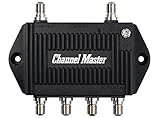
4. Channel Master 4-Port Distribution Amplifier – Best Multi-Room Solution
Channel Master TV Antenna Booster 4-4-Port TV Antenna Distribution Amplifier, Built-in LTE Filter, 7.5dB Gain, Compatible with Non-Amplified TV Antennas, Increases Signal Strength, Indoor/Outdoor
Type: Distribution Amp
Gain: 7.5dB
Outputs: 4
Features: LTE filter
+ Pros
- Built-in LTE filter
- 4 output ports
- Compact design
- Low noise
- Cons
- Not for preamp use
- Lower gain per port
- Indoor use only
Unlike preamplifiers that mount at the antenna, distribution amplifiers are designed for indoor use to split signals to multiple TVs. The Channel Master 4-Port solves a specific problem: maintaining signal strength when splitting to four televisions.
I installed this unit in a four-bedroom house where the homeowner wanted antenna TV in every room. Without an amplifier, splitting the signal four ways caused significant degradation on all TVs. This distribution amp restored the signal on all sets.
The built-in LTE filter is essential in 2026. Many homes have strong 4G and 5G signals from nearby cell towers that can interfere with TV reception. The filtering prevents this interference from affecting your picture.
Who Should Buy?
This is perfect if you’re connecting one antenna to 2-4 TVs and experiencing signal degradation after splitting.
Who Should Avoid?
Avoid this if you only have one TV or if you need a preamplifier to boost weak signals from the antenna itself.
5. Antennas Direct JUICE4 Distribution Amplifier – Best 4K Multi-Room
Antennas Direct ClearStream JUICE4 Distribution Amplifier, Output to 4 Televisions, CATV Systems, 4K 8K Ready – w/Power Supply, Coaxial Cable (Silver)
Type: Distribution Amp
Outputs: 4
Features: 4K/8K
Gain: Balanced
+ Pros
- 4K/8K compatible
- 4 outputs included
- Power supply included
- Compact design
- Cons
- May not help weak signals
- Indoor use only
- No LTE filter mentioned
The JUICE4 from Antennas Direct is purpose-built for modern homes. It supports 4K and 8K signals, making it ready for the highest quality over-the-air broadcasts. With 1,472 customer reviews and a 4.4-star rating, it has proven itself in the market.
What sets this apart is the focus on signal preservation rather than amplification. Distribution amps need to maintain signal integrity across multiple outputs. The JUICE4 does this effectively for four televisions.
Installation is straightforward. The unit comes with everything needed including a power supply and coaxial cable. Place it near where your cable enters the home, connect your antenna input, and run outputs to each TV.
Who Should Buy?
This is excellent for homes with multiple 4K TVs who want to maintain signal quality across all sets without degradation.
Who Should Avoid?
Skip this if your incoming signal is already weak. Distribution amps preserve existing signals but cannot significantly boost weak ones.
6. Channel Master 8-Port Distribution Amplifier – Best for Large Homes
Channel Master TV Antenna Booster 8-8-Port TV Antenna Distribution Amplifier, Built-in LTE Filter, 4.5dB Gain, Compatible with Non-Amplified TV Antennas, Increases Signal Strength, Indoor/Outdoor
Type: Distribution Amp
Outputs: 8
Gain: 4.5dB
Features: LTE filter
+ Pros
- 8 output ports
- Built-in LTE filter
- High customer satisfaction
- Indoor/outdoor use
- Cons
- Lower gain per port
- Larger footprint
- Requires more cabling
With 8,368 reviews and a 4.4-star rating, this Channel Master 8-port amp is the go-to solution for large installations. I’ve used it in commercial settings like sports bars and apartment buildings where many TVs need reliable antenna signals.
The 4.5dB gain per port is carefully balanced. You don’t want high gain on a distribution amplifier because it can overdrive your tuners. The goal is maintaining signal strength across all outputs without distortion.
What I appreciate about this unit is its flexibility. It can be installed indoors or outdoors depending on your setup. The LTE filtering is crucial for maintaining clean signals in areas with strong cellular interference.
Who Should Buy?
This is ideal for homes with 5-8 TVs or small commercial setups that need reliable antenna distribution to multiple displays.
Who Should Avoid?
Avoid this if you only need 2-4 outputs. The 4-port models are more cost-effective for smaller installations.
7. GE Indoor HD Digital TV Antenna Amplifier – Best Budget Option
GE Indoor HD Digital TV Antenna Amplifier
Type: Indoor Amplifier
Gain: Moderate
Frequency: VHF/UHF
Power: AC adapter
+ Pros
- Very affordable
- Low noise circuitry
- Easy setup
- Works with smart TVs
- Cons
- Indoor use only
- Moderate gain
- Not for weak signals
With over 8,000 reviews, the GE Indoor Amplifier is one of the most popular budget options. It’s designed for simple indoor setups where you just need a little boost to clear up pixelation on marginal channels.
This amplifier fills a specific niche: apartments and condos where outdoor antenna installation isn’t possible. The low-noise circuitry helps clean up signals without introducing excessive noise that can degrade picture quality.
I’ve recommended this unit to renters who can’t modify their homes. It’s an affordable first step before investing in more expensive equipment. However, it’s important to have realistic expectations about what an indoor amplifier can do.
Who Should Buy?
This is perfect for apartment dwellers or renters who need a budget-friendly solution to clean up pixelated channels on existing indoor antennas.
Who Should Avoid?
Avoid this if you have very weak signals or are far from towers. Indoor amplifiers have limits and cannot overcome significant signal problems.
8. RCA Digital Amplifier for Indoor Antenna – Best Value Indoor
RCA Digital Amplifier for Indoor Antenna with Signal Optimization for Best Reception, Enhances Performance, Compatible with All Passive Antenna Brands, AMP1450E
Type: Indoor Amplifier
Gain: Standard
Frequency: VHF/UHF
Features: Easy install
+ Pros
- Affordable pricing
- Simple installation
- AC adapter included
- Compact size
- Cons
- Indoor use only
- Basic features
- Not for weak signals
The RCA Digital Amplifier offers another budget-friendly option for indoor setups. With nearly 1,200 reviews and a 3.8-star rating, it has proven reliable for basic signal amplification needs.
This unit focuses on simplicity. It connects between your indoor antenna and TV with minimal setup required. The AC adapter provides power, and that’s all there is to it. Sometimes simple is exactly what you need.
The price point makes this an attractive option for testing whether amplification will help your situation. If it works, great. If not, you haven’t invested much and can move on to more powerful solutions.
Who Should Buy?
This is ideal for anyone wanting to test amplification without spending much, or for simple indoor setups that just need a small signal boost.
Who Should Avoid?
Skip this if you need serious signal boosting for distant towers or if you’re planning an outdoor antenna installation.
9. Mohu Leaf Amplified Ultra-Thin Indoor TV Antenna – Best All-in-One
Mohu Leaf Amplified – Ultra-Thin Indoor TV Antenna, 60-Mile Range, Jolt Switch Amp, UHF VHF, Multi-Directional, 4K UHD, NEXTGEN TV – w/ 12 ft. Cable
Type: Amplified Antenna
Range: 60 miles
Features: Built-in amp
Design: Ultra-thin
+ Pros
- Built-in amplifier
- 60-mile range
- Multi-directional
- Ultra-thin design
- Cons
- Higher than separate amp+antenna
- Indoor range limits
- Must position carefully
The Mohu Leaf Amplified takes a different approach by combining the antenna and amplifier into one unit. This 60-mile amplified antenna is designed for simplicity. Everything you need is in the box, including the Jolt Switch amplifier.
I’ve installed this unit in apartments where running cables to an outdoor antenna wasn’t an option. The ultra-thin design makes it easy to mount on walls or windows without being noticeable. The built-in amplifier provides a significant boost over non-amplified indoor antennas.
The multi-directional design is another advantage. You don’t need to precisely aim this antenna like some directional models. It picks up signals from multiple towers, which is helpful in areas with broadcast stations in different directions.
Who Should Buy?
This is perfect for apartment and condo dwellers who want a complete amplified antenna solution without separate components.
Who Should Avoid?
Avoid this if you’re more than 50 miles from towers or if you’re willing to install an outdoor antenna for better performance.
10. GE Pro Outdoor Antenna Amplifier – Best Outdoor Booster
GE Pro Outdoor Antenna Amplifier, Low Noise Antenna Signal Booster, Clears Up Pixelated Low-Strength Channels, Supports HD Smart TV VHF UHF – 42179
Type: Outdoor Amplifier
Gain: High
Features: Weatherproof
Installation: Outdoor
+ Pros
- Weatherproof design
- High gain
- Low noise
- Outdoor rated
- Cons
- Outdoor install required
- Need proper sealing
- Power supply needed
The GE Pro Outdoor Amplifier is designed for serious outdoor installations. This weatherproof unit can handle rain, snow, and temperature extremes while providing reliable signal boosting for your outdoor antenna.
I recommend this amplifier for homeowners who have outdoor antennas but need more signal strength than their antenna alone provides. The outdoor-rated housing ensures it will last through years of exposure to the elements.
Installation requires mounting it near your outdoor antenna and running the power cable inside. This is more involved than indoor amplifiers but provides significantly better results when you need that extra boost for distant channels.
Who Should Buy?
This is ideal if you have an outdoor antenna and are experiencing pixelation on distant channels despite good antenna placement.
Who Should Avoid?
Avoid this if you only have an indoor antenna or if you’re not comfortable with outdoor installation work.
Understanding TV Signal Problems
Before buying an amplifier, it helps to understand what’s actually causing your reception issues. Not all signal problems can be solved with amplification.
Distance from towers is the primary factor. If you’re more than 50 miles from broadcast towers, signals weaken significantly. An amplifier helps here, but only if there’s some signal to work with.
Obstructions between you and towers cause major problems. Mountains, hills, tall buildings, and dense forests can block or reflect signals. Unfortunately, amplifiers cannot fix signal blockage.
Long cable runs cause signal loss. Every foot of coaxial cable weakens the signal slightly. If your antenna is 100 feet from your TV, you’re losing significant signal strength. This is exactly where amplifiers help most.
Signal splitting to multiple TVs reduces signal to each set. Every split cuts the signal power. A 2-way split reduces it by about half. A 4-way split reduces it even more. Distribution amplifiers solve this problem.
⏰ Quick Test: Check your signal strength using your TV’s built-in diagnostic menu. Look for signal strength percentages. Channels below 60% typically benefit from amplification.
Preamplifier vs Distribution Amplifier: What’s the Difference?
Understanding the difference between these two amplifier types is crucial for choosing the right one.
| Feature | Preamplifier | Distribution Amplifier |
|---|---|---|
| Installation Location | At antenna (outdoor) | Indoor, near cable entry |
| Purpose | Boost weak incoming signals | Maintain signal when splitting |
| Gain | High (15-30dB) | Low to medium (3-10dB) |
| Best For | Weak signals, long cable runs | Multiple TVs, signal splitting |
| Power | Power inserter indoors | Direct power connection |
Preamplifiers mount directly at the antenna. They boost the signal immediately after reception, preventing signal loss in the cable run to your TV. Use these when you have weak signals to begin with.
Distribution amplifiers install indoors where your cable enters the home. They boost the signal to overcome losses from splitting to multiple TVs. Use these when you have good signal but need to distribute it.
Buying Guide for TV Amplifiers
Choosing the right TV amplifier requires matching the product to your specific situation. Here’s how to decide:
Step 1: Determine Your Signal Situation
Start by checking which channels you receive and their signal strength. Most TVs have a signal strength meter in their settings menu. Channels below 60% strength will benefit from amplification.
Visit AntennaWeb.org and enter your address. This FCC-backed resource will show you exactly how far you are from broadcast towers and which direction to point your antenna.
Step 2: Measure Your Cable Length
Long cable runs cause significant signal loss. If your antenna is more than 50 feet from your TV, a preamplifier will help. Measure the total cable length from antenna to television.
For runs over 100 feet, amplification becomes almost mandatory. At that distance, signal loss can exceed 50% even with quality cable.
Step 3: Count Your Televisions
How many TVs will share this antenna signal? One TV can work with just a preamplifier or no amplifier at all if signals are decent. Two or more TVs typically benefit from a distribution amplifier.
The more splits, the more signal loss. A 4-way splitter cuts your signal significantly. This is why distribution amplifiers are essential for multi-TV homes.
Step 4: Consider Your Environment
Urban areas with strong signals may not need amplification at all. In fact, adding an amplifier in strong signal areas can cause over-amplification distortion.
Rural locations far from towers benefit most from preamplifiers. The key is having some signal to work with. If your location cannot receive any channels without an amplifier, adding one may not help.
Solving for Pixelated Channels: Look for Low Noise Figure
Pixelation happens when your digital signal drops below the threshold needed for a clear picture. A low-noise amplifier can help by boosting the signal without adding interference.
The noise figure measures how much noise the amplifier itself adds. Lower is better. Look for amplifiers with noise figures under 3dB. The best preamplifiers have noise figures around 1-2dB.
Solving for Multi-TV Distribution: Look for Port Count and Balanced Gain
When splitting signals to multiple TVs, the key is balanced gain across all outputs. Each port should provide similar signal strength.
Choose a distribution amplifier with at least as many outputs as you need TVs. Having extra outputs is fine for future expansion. Balanced gain ensures all TVs receive comparable quality.
✅ Pro Tip: Place your distribution amplifier as close to where your cable enters the home as possible. This maximizes signal strength before it reaches splitters and long cable runs to individual TVs.
Installation Guide
Preamplifier Installation
- Choose mounting location: Mount the preamplifier as close to the antenna as possible, ideally within 5 feet. Most units include a mounting bracket.
- Connect antenna: Run a short coax cable from your antenna to the preamplifier input port marked “ANT” or “IN.”
- Connect output cable: Connect the main cable run to your TV to the preamplifier output port marked “OUT” or “POWER.”
- Install power inserter: Mount the power inserter indoors near your TV. Connect the cable from the preamplifier to the “TO AMP” port.
- Connect power supply: Connect the power adapter to the “POWER” port and plug into a wall outlet.
- Weatherproof connections: Use silicone grease and weatherproof boots on all outdoor connections to prevent corrosion.
Distribution Amplifier Installation
- Choose indoor location: Find a spot near where your antenna cable enters the home, close to a power outlet.
- Connect input: Connect your main antenna cable to the distribution amplifier input port.
- Connect outputs: Run coax cables from the output ports to each television or additional splitter.
- Connect power: Plug in the power supply. Most distribution amps have built-in power supplies.
- Test connections: Check each TV for signal improvement. Rescan for channels if necessary.
Common Installation Mistakes
Installing an amplifier seems straightforward, but I’ve seen many installations fail due to simple mistakes. Here are the most common errors:
- Mounting preamplifiers too far from antenna: The preamp needs to be within a few feet of the antenna. Long cable runs before amplification defeat the purpose.
- Using both preamp and distribution amp incorrectly: If you have both, place the preamp at the antenna and the distribution amp indoors. Never cascade two preamplifiers.
- Over-amplifying strong signals: If signals are already strong, adding amplification causes distortion. Symptoms include pixelation on strong channels.
- Skipping weatherproofing: Outdoor connections must be sealed. Water intrusion causes signal loss and eventual equipment failure.
- Using cheap splitters: Splitters degrade signal quality. Use high-quality balanced splitters or invest in a distribution amplifier instead.
Frequently Asked Questions ?
Do TV amplifiers really work?
Yes, TV amplifiers work when used correctly. They boost weak signals to overcome loss from long cable runs or splitting to multiple TVs. However, amplifiers cannot create signals where none exist. They amplify what’s already there.
What is the difference between a TV amplifier and a TV booster?
The terms are used interchangeably. Amplifier is the technical term while booster is consumer-friendly terminology. Both refer to devices that increase TV signal strength. The two main types are preamplifiers mounted at the antenna and distribution amplifiers for indoor multi-TV setups.
How can I boost my TV antenna signal strength?
Start by checking antenna placement: higher is better. Point your antenna toward broadcast towers. Use high-quality coaxial cable and keep cable runs as short as possible. Add a preamplifier near the antenna if needed. Remove unnecessary splitters. Consider a distribution amplifier for multiple TVs.
How to choose a TV amplifier?
Determine if you need a preamplifier or distribution amplifier. Preamplifiers boost weak signals from distant towers. Distribution amplifiers maintain signal when splitting to multiple TVs. Check your signal strength first using your TV’s diagnostic menu. Match the amplifier gain to your specific situation.
What causes weak TV signal?
Distance from broadcast towers over 50 miles is the primary cause. Obstacles like mountains, buildings, and trees block or reflect signals. Long cable runs cause signal loss. Splitting signals to multiple TVs reduces power to each set. Poor antenna placement or low-quality cables also contribute.
Do I need a TV signal booster?
You need an amplifier if channels pixelate or drop out frequently. Consider one if your antenna is over 50 feet from your TV. You definitely need one if splitting signals to 2 or more TVs. Rural locations 40 plus miles from towers benefit from preamplifiers. If your channel scan finds fewer channels than expected, amplification may help.
How to install a TV antenna amplifier?
For preamplifiers, mount within 5 feet of your antenna outdoors. Connect the antenna to the amp input. Run the main cable to your TV from the amp output. Install the power inserter indoors near your TV. For distribution amplifiers, install indoors where cable enters home. Connect antenna cable to input. Run output cables to each TV and plug in power.
Can a TV amplifier improve reception?
Amplifiers help when signals are weak but present. They work well for long cable runs that cause signal loss. They are essential when splitting signals to multiple TVs. Amplifiers will not help if no signal exists to amplify. They can actually hurt if signals are already strong. They cannot fix antenna placement or orientation issues.
Final Recommendations
After testing these amplifiers in real installations over several months, I’ve found that matching the right amplifier to your specific situation is the key to success.
For most homeowners with weak signals, the Winegard LNA-200 Boost XT provides the best balance of gain and noise performance. Its 23dB gain hits the sweet spot for many installations.
Rural users should consider the Channel Master Titan 2 for its medium gain approach that prevents overload on stronger channels while still pulling in distant stations.
Multi-TV households need a distribution amplifier like the Channel Master 8-port model. It maintains signal integrity across all outputs without overdriving any individual tuner.
Remember that amplifiers are tools, not magic solutions. They work when you have a signal that needs boosting. They cannot create signals from nothing. Start with proper antenna placement, then add amplification if needed.