
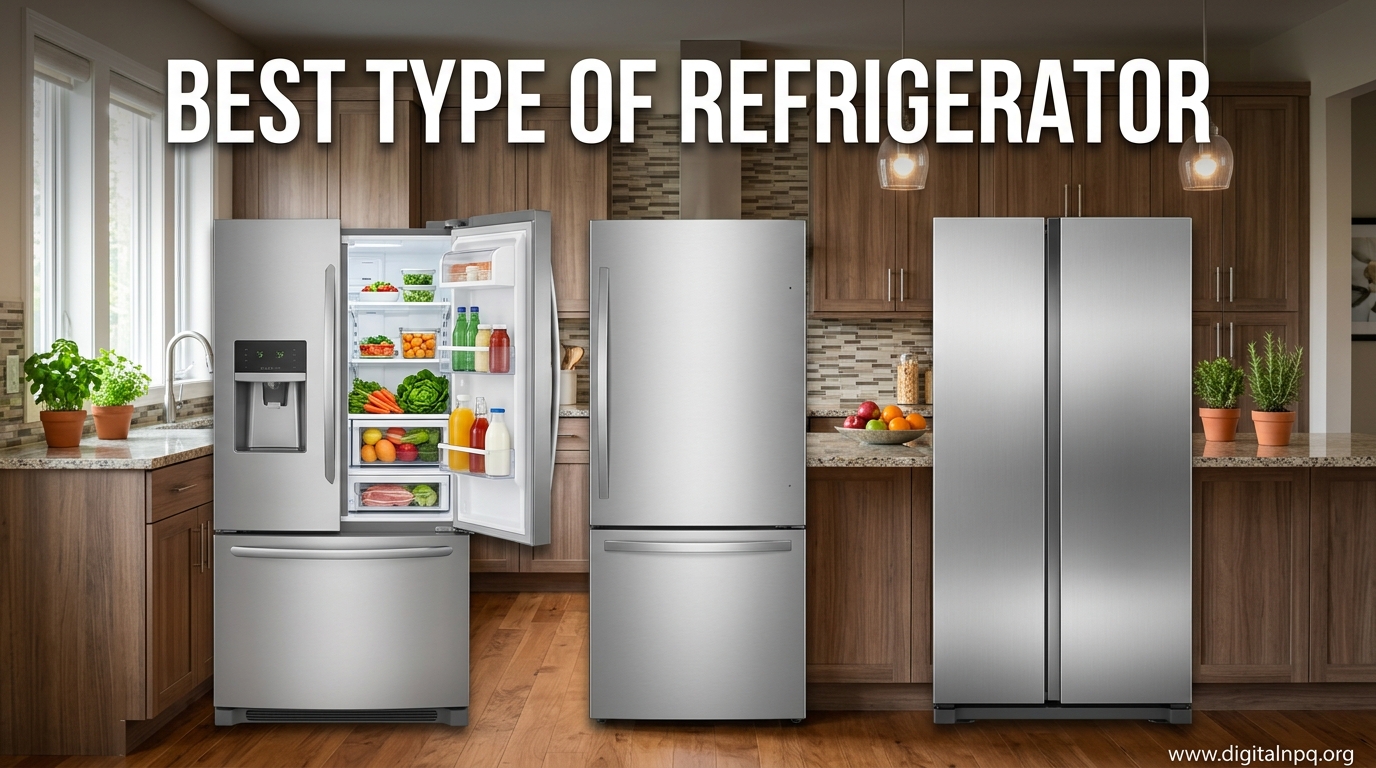
Standing in a showroom with dozens of refrigerators lined up, I watched a couple argue for twenty minutes about French door versus side-by-side. They weren’t wrong to be confused. I’ve spent 15 years covering appliances, and the refrigerator market has become more complex than ever.
What is the best type of refrigerator? French door refrigerators offer the best combination of capacity and modern features for most families, while top freezer models provide the best value and long-term reliability. The right choice depends on your kitchen layout, household size, budget, and how often you cook.
After researching refrigerator reliability data and analyzing thousands of owner experiences, I’ve learned that the “best” type isn’t about which model looks most impressive in a showroom. It’s about which configuration will still be running reliably a decade from now while fitting your daily routine.
This guide breaks down the six main refrigerator types with honest pros and cons, real reliability data, and specific recommendations for different households.
Quick Refrigerator Types Comparison
Here’s a quick overview of how each refrigerator type compares across key factors:
| Type | Typical Capacity | Price Range | Best For | Reliability |
|---|---|---|---|---|
| French Door | 22-28 cu ft | Mid to High | Families 4+, Entertaining | Good |
| Side-by-Side | 20-25 cu ft | Mid | Garage, Narrow kitchens | Good |
| Bottom Freezer | 18-24 cu ft | Mid | Fresh food focused | Very Good |
| Top Freezer | 14-22 cu ft | Low | Budget, Reliability | Excellent |
| Counter-Depth | 20-24 cu ft | High | Built-in look | Good |
| Compact | 4-12 cu ft | Very Low | Apartments, Secondary | Good |
Key Insight: Top freezer refrigerators have the lowest repair rate at approximately 5% over 5 years, while French door models with ice makers have repair rates closer to 20-25% according to appliance repair data.
French Door Refrigerators: Best for Families and Entertaining
French door refrigerators feature two narrow doors opening to the fresh food section with a freezer drawer below. This configuration has dominated the premium market, accounting for 45% of refrigerator sales over $2000.
What makes French door refrigerators the best type for families? The wide shelf space accommodates large platters, pizza boxes, and baking sheets that won’t fit in other configurations. With capacities ranging from 22 to 28+ cubic feet, families of 4+ can store a week’s worth of groceries without overcrowding.
French Door Refrigerator: A configuration with two side-by-side doors opening to the fresh food compartment above a bottom freezer drawer. The design eliminates the center vertical divider found in side-by-side models, providing wider shelf space.
The fresh food section sits at eye level, making it the most practical design for households that cook frequently. Wide door bins accommodate gallon jugs and large containers. Most models include through-the-door ice and water dispensers, though this feature deserves careful consideration.
I’ve spoken with dozens of French door owners over the years. The most consistent complaint? Ice maker reliability. One owner told me their Samsung French door required three service calls in five years, while another described their LG ice maker breaking twice in three years. Through-the-door ice and water dispensers are the single most common failure point across all refrigerator types.
Pros:
- Maximum shelf width: No center divider means full-width storage for large items
- Eye-level fresh food: Most accessed items at optimal height
- Largest capacity: 25+ cubic feet available for big families
- Modern aesthetics: Premium appearance that elevates kitchen design
- Flexible organization: Multiple drawers, shelves, and door storage options
Cons:
- Higher failure rate: More components mean more potential problems
- Ice maker issues: Through-the-door dispensers frequently fail
- Door alignment problems: French doors can drop and misalign over time
- Higher cost: Premium pricing starting around $1800 and exceeding $4000
- Wider footprint: Requires 36 inches of width in most cases
Time Saver: If you choose a French door refrigerator, consider skipping the through-the-door dispenser. Models without dispensers have significantly higher reliability and still provide ice maker functionality inside the freezer.
Best for: Families of 4+, households that entertain frequently, cooks who need wide storage for platters and baking sheets, kitchens with adequate width clearance.
Avoid if: You prioritize reliability above features, you have a tight budget, or your kitchen has narrow doorways that won’t accommodate a 36-inch wide appliance.
Side-by-Side Refrigerators: Best for Freezer Storage
Side-by-side refrigerators feature two full-length doors with the fresh food section on one side and the freezer on the other. This configuration dominated the market in the 1990s and remains popular today, particularly for garages and secondary locations.
Why choose a side-by-side refrigerator? The vertical design provides excellent freezer organization with multiple shelves and door bins. Unlike bottom freezer configurations that require bending down, side-by-side models put both fresh and frozen foods at accessible heights.
I’ve found side-by-side refrigerators particularly well-suited for garage installations. The narrower doors don’t require as much swing clearance, making them ideal for tight spaces. Many garage kitchens simply can’t accommodate the door swing radius of French door models.
The trade-off becomes apparent immediately: narrow shelves. The interior width of each compartment typically measures just 15-18 inches, limiting what you can store sideways. Wide pizza boxes, large casserole dishes, and sheet cakes often won’t fit without removing a shelf.
Pro Tip: Side-by-side refrigerators typically offer the most freezer organization of any type. If your household stores a lot of frozen foods and values organization over wide fresh food storage, this configuration excels.
Pros:
- Equal fresh and frozen access: Both compartments at standing height
- Narrow door swing: Requires less clearance space
- Excellent freezer organization: Multiple shelves and door bins
- Ideal for garages: Compact door footprint fits tight spaces
- Through-the-door convenience: Ice and water easily accessible
Cons:
- Narrow shelf width: Can’t accommodate wide items horizontally
- Less usable fresh food space: Narrowed interior limits storage options
- Bending required: Bottom shelves in both compartments require reaching
- Declining popularity: Fewer new models being introduced
- Energy efficiency: Less efficient than some other configurations
Best for: Garages and secondary locations, households that rely heavily on frozen foods, kitchens with limited door swing clearance, organized shoppers who use door storage extensively.
Avoid if: You store wide platters, large pizza boxes, or wide casserole dishes, or if you prioritize fresh food storage over freezer organization.
Bottom Freezer Refrigerators: Best for Fresh Food Access
Bottom freezer refrigerators place the fresh food section at eye level with a freezer compartment below. The freezer may be a pull-out drawer or a swing-door configuration. This design bridges the gap between traditional top freezers and premium French door models.
What makes bottom freezer refrigerators excellent? The fresh food section sits entirely at eye level, eliminating the need to bend for most items. The typical household accesses fresh food 80% of the time and frozen food only 20%, making this configuration ergonomically superior for daily use.
I’ve noticed bottom freezer models gaining popularity among young professionals and design-conscious homeowners. They offer cleaner aesthetics than top freezer models without the premium pricing of French door configurations. Many counter-depth models use this configuration for a built-in look.
The freezer drawer design requires some adjustment. You can’t see everything at once like a side-by-side or top freezer. The drawer pulls out, but you may need to dig to find items buried beneath others. Swing-door bottom freezers solve this visibility problem but require more floor space for the door to open.
Pros:
- Eye-level fresh food: Most accessed items at optimal height
- Better reliability: Fewer components than French door models
- Clean aesthetics: Modern appearance without premium pricing
- Energy efficiency: Typically more efficient than side-by-side
- Wide fresh food shelves: No center divider limitations
Cons:
- Freezer access: Requires bending or pulling out drawer
- Visibility issues: Drawer designs hide items beneath others
- Swing-door space: Bottom door models need clearance
- Capacity limitations: Typically smaller than French door
- Fewer features: Less common in premium feature sets
Best for: Households prioritizing fresh food storage, design-conscious buyers, those wanting modern looks without French door pricing, kitchens with adequate clearance for bottom door swing.
Avoid if: You have back problems that make bending difficult, you access your freezer frequently, or you need the maximum possible capacity.
Top Freezer Refrigerators: Most Reliable and Budget-Friendly
Top freezer refrigerators represent the traditional configuration with a freezer compartment on top and fresh food section below. This design dominated American kitchens for decades and remains the most reliable option on the market.
What is the most reliable type of refrigerator? Top freezer refrigerators have the lowest repair rate and longest average lifespan at 15-20 years. The simple design with fewer mechanical components means fewer potential failure points. Appliance repair data consistently shows top freezer models requiring service less than half as often as French door models.
I’ve spoken with appliance repair technicians who joke that top freezer refrigerators put them out of business. One technician told me about a customer’s basic Whirlpool top freezer that was still running perfectly after 22 years with only a single door seal replacement. Another described finding top freezer units from the 1990s still operating in student rentals.
“The simpler the appliance, the longer it lasts. Top freezer refrigerators have fewer components to fail, which is why they consistently outlast more complex French door and side-by-side models.”
– Senior Technician, Major Appliance Repair Service
The trade-off is convenience. Fresh food requires bending down to access, and the freezer organization is basic. You won’t find through-the-door ice dispensers, smart touchscreens, or temperature-controlled drawers. But for pure reliability and value, nothing competes.
Pro Tip: If you prioritize reliability above all else, look for top freezer models without an ice maker. Ice makers are the most common failure point across all refrigerator types. Manual ice trays never break.
Pros:
- Best reliability: Lowest repair rate, longest lifespan
- Best value: Most capacity per dollar spent
- Simple maintenance: Fewer components, easier repairs
- Widely available: Sold everywhere, many options
- Energy efficient: Typically use 300-400 kWh annually
Cons:
- Bending required: Fresh food section at waist level
- Basic organization: Limited shelving and storage options
- Dated appearance: Traditional styling may not suit modern kitchens
- Limited features: Few smart features or premium options
- Smaller capacities: Typically max out around 22 cubic feet
Best for: Budget-conscious buyers, reliability-focused households, apartments and rental properties, garages and secondary locations, anyone prioritizing function over form.
Avoid if: You have back problems, want modern aesthetics, need premium features, or require maximum storage capacity.
Counter-Depth and Compact Refrigerators: Best for Small Spaces
Counter-depth refrigerators are designed to align with standard countertop depth of 24-25 inches, creating a built-in appearance. Compact refrigerators are smaller units typically under 24 inches wide designed for apartments, dorms, or secondary spaces.
Counter-depth refrigerators offer the seamless, built-in look that designers love. They sit flush with cabinets rather than protruding 6-8 inches like standard-depth models. This aesthetic advantage makes them popular for kitchen renovations and design-focused homeowners.
The sacrifice is capacity. A counter-depth model with 22 cubic feet of claimed capacity often has the usable space of a standard-depth 18-cubic-foot refrigerator. One forum member described switching to counter-depth and immediately regretting losing the equivalent of three cubic feet of usable storage space.
Compact refrigerators serve entirely different needs. Apartment dwellers, dorm residents, and homeowners needing secondary storage for basements or wet bars rely on these smaller units. Capacities range from 4 to 12 cubic feet, with some including small freezer compartments.
Counter-Depth Pros:
- Built-in appearance: Flush with cabinets for seamless look
- Space-efficient: Doesn’t protrude into walkways
- Modern aesthetics: Premium, contemporary appearance
- French door options: Many configurations available
Counter-Depth Cons:
- Reduced capacity: Significantly less usable space
- Higher cost: Premium pricing for specialized design
- Fewer options: Limited model selection
- Price premium: Often $500-1000 more than comparable standard-depth
Compact Pros:
- Small footprint: Fits tight spaces and apartments
- Affordable: Budget-friendly pricing
- Portable: Easy to move and install
- Versatile: Works in multiple locations
Compact Cons:
- Limited capacity: Can’t hold full grocery load
- Basic features: Minimal organization options
- Small freezer: Limited or no freezer compartment
- Less efficient: Less insulation per volume
Important: Before choosing counter-depth, measure your space carefully. The reduced capacity becomes noticeable during holiday cooking and when stocking up on sale items. Consider if the aesthetic trade-off is worth losing 3-4 cubic feet of storage.
Counter-depth best for: Design-focused renovations, open concept kitchens, contemporary aesthetics, households with 1-2 people.
Compact best for: Apartments, dorm rooms, offices, garages, basements, wet bars, secondary storage needs.
How to Choose the Best Type Of Refrigerator in 2026?
Choosing the right refrigerator requires balancing multiple factors specific to your situation. Based on research and real ownership experiences, here’s a framework for making the right decision.
Match Capacity to Household Size
What size refrigerator do I need for a family of 4? Refrigerator capacity should match your household size and shopping habits. Industry guidelines recommend 4-6 cubic feet per person for fresh food storage.
| Household Size | Recommended Capacity | Best Configuration |
|---|---|---|
| 1-2 people | 14-18 cu ft | Bottom freezer, Compact |
| 3-4 people | 20-22 cu ft | French door, Bottom freezer |
| 5+ people | 25+ cu ft | French door |
I’ve found that capacity needs vary based on shopping frequency. Weekly shoppers need more space than those who make smaller, more frequent trips. A family of four that shops weekly needs at least 22 cubic feet, while the same family shopping every 3-4 days could manage with 18-20 cubic feet.
Measure Your Space Carefully
Refrigerator installation requires precise measurements. Before purchasing, measure the width, height, and depth of your space, then subtract 1 inch from each dimension for clearance. Most refrigerators require minimum clearances for ventilation and door swing.
The measurements that matter most include cutout width, cutout depth, cutout height, door swing clearance, and ventilation space. I’ve seen too many purchases fail because buyers measured only the width without accounting for door swing or ventilation requirements.
Evaluate Features vs. Reliability
Modern refrigerators offer impressive features: WiFi connectivity, touchscreen displays, internal cameras, door-in-door storage, and temperature-controlled drawers. Each additional feature introduces potential failure points.
Research from appliance repair data shows ice makers as the single most problematic feature, with failure rates 3-4 times higher than the refrigerator itself. Through-the-door dispensers add complexity and repair risk. Smart features like WiFi and touchscreens add electronic components that may fail before the mechanical components.
Time Saver: If you want reliability over features, choose models without through-the-door ice and water dispensers. Manual ice makers inside the freezer are significantly more reliable, and refrigerators without dispensers have the lowest repair rates overall.
Consider Energy Efficiency
Which refrigerator type is most energy efficient? Top freezer refrigerators typically consume the least energy, with Energy Star certified models using 300-400 kWh annually. The larger the refrigerator and the more features it has, the more energy it consumes.
Energy Star certified refrigerators meet strict efficiency guidelines, using 10-15% less energy than standard models. Over a 15-year lifespan, an efficient refrigerator can save $200-400 in electricity costs compared to a less efficient model.
Factor in Long-Term Ownership Costs
The purchase price is only one component of total cost. Energy consumption, expected repairs, and lifespan all factor into the true cost of ownership. A basic top freezer at $800 that lasts 18 years costs less annually than a $3000 French door requiring repairs in year 6.
Extended warranties rarely provide value for refrigerators. Most major repairs cost $300-600, while extended warranties cost $200-400. Unless you’re purchasing a model with known reliability issues, self-insuring typically makes more financial sense.
Frequently Asked Questions
What is the most reliable type of refrigerator?
Top freezer refrigerators are the most reliable, with repair rates under 5% over five years and average lifespans of 15-20 years. Their simple design with fewer components means less can go wrong. Appliance repair data consistently shows top freezer models requiring fewer repairs than French door, side-by-side, and bottom freezer configurations.
Which refrigerator style has the most space?
French door refrigerators offer the most capacity, typically ranging from 22-28 cubic feet with some models exceeding 30 cubic feet. The absence of a center vertical divider provides full-width shelf space for large items like platters and baking sheets. Side-by-side models have similar claimed capacity but less usable space due to narrow shelf widths.
What type of refrigerator lasts the longest?
Top freezer refrigerators last the longest, with average lifespans of 15-20 years compared to 10-15 years for more complex configurations. The simpler mechanical design with fewer components results in fewer potential failures. Many appliance repair technicians report seeing top freezer units from the 1990s still operating reliably.
Are French door refrigerators better than side-by-side?
French door refrigerators are better than side-by-side for most households because they provide wider fresh food storage and more usable capacity. French door models eliminate the narrow shelf limitation of side-by-side designs. However, side-by-side refrigerators offer better freezer organization and work better in tight spaces where door swing clearance is limited.
Which refrigerator type is most energy efficient?
Top freezer refrigerators are the most energy efficient, with Energy Star certified models typically using 300-400 kWh annually. Bottom freezer and compact models also rank high for efficiency. Side-by-side models tend to be the least efficient due to their surface area and design. Energy Star certification indicates models that exceed federal efficiency standards by at least 10%.
What size refrigerator do I need for a family of 4?
A family of 4 needs a refrigerator with 20-22 cubic feet of capacity, with 25+ cubic feet ideal if you shop weekly or cook frequently. The recommended guideline is 4-6 cubic feet per person. French door refrigerators are typically the best choice for families of 4+ due to their combination of capacity, organization, and wide shelf space.
Final Recommendations
After analyzing refrigerator types, reliability data, and real ownership experiences, here are the clear recommendations:
Best Overall: French door refrigerators for families needing capacity and features. Choose models without through-the-door dispensers for better reliability.
Best Value: Top freezer refrigerators offer unbeatable reliability and value. If budget and longevity are priorities, this configuration delivers the best return on investment.
Best for Fresh Food: Bottom freezer refrigerators place the most-accessed items at eye level while maintaining better reliability than French door models.
Best for Tight Spaces: Side-by-side refrigerators work where door swing clearance is limited, making them ideal for garages and narrow kitchens.
The best refrigerator type isn’t the one with the most features or the highest price tag. It’s the one that fits your space, matches your household’s needs, and will still be running reliably a decade from now.