
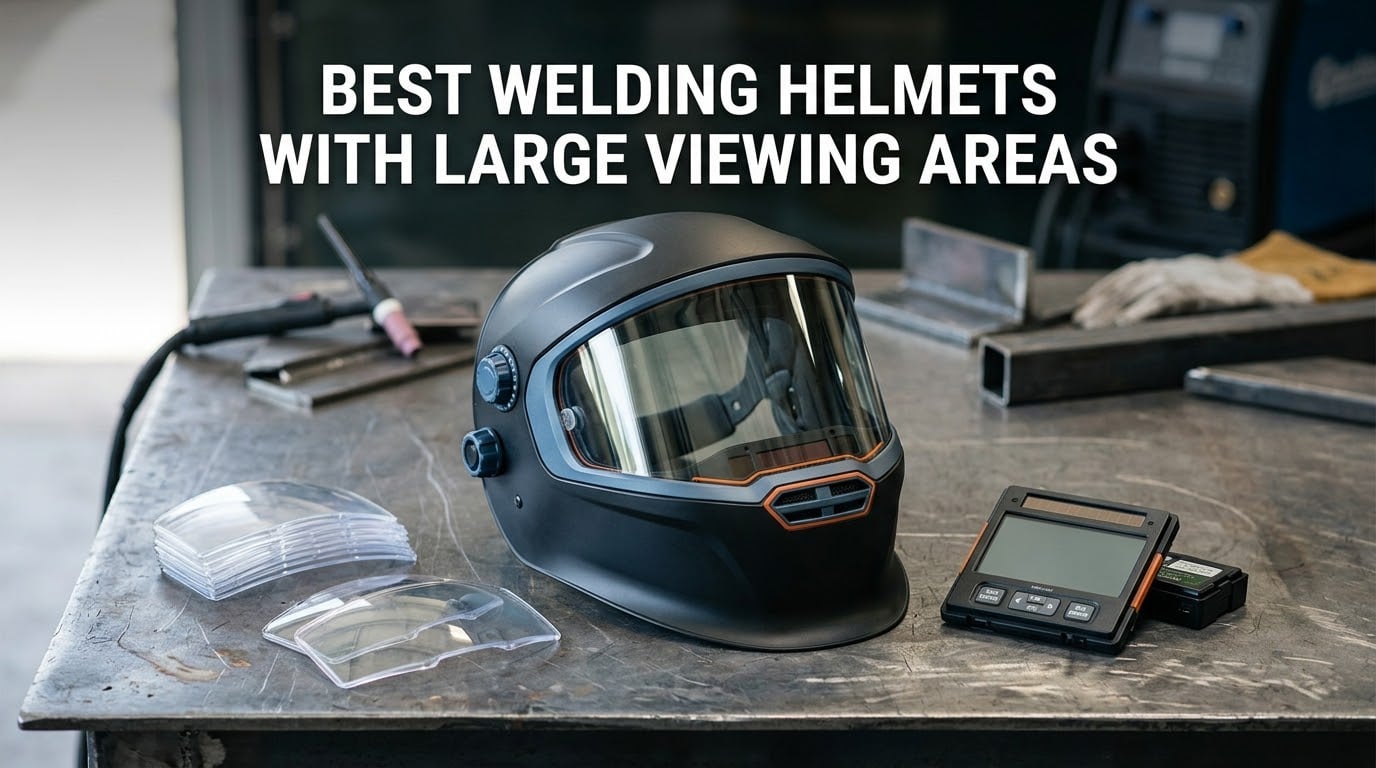
The largest usable filter window in this group belongs to the 180-degree panoramic design, which pairs a 4.25 x 3.23 inch main lens with two 2.87 x 2.32 inch side windows for roughly 27 square inches of total glass. Among single-lens helmets, the biggest windows here measure 4 x 3.65 inches, about 14.6 square inches, and several budget models land within a few tenths of a square inch of that.
That size difference is the whole reason people search for the best welding helmets with large viewing areas. A narrow filter forces you to tip your head, lean around the shell, or lift the hood to find the joint ends and the far side of a bead. A wide lens lets you hold still and actually see the puddle, the heat colours, and anyone standing behind you.
We built this roundup around one rule: every viewing area quoted below is a measured lens dimension, not a marketing label like “Extra-Large”. We also weighed optical class, arc sensor count and placement, switching speed, shade range, headgear adjustability, and weight, because a big window with poor optics is a worse tool than a modest window with clean 1/1/1/1 glass.
Every helmet listed here carries auto-darkening filter technology, so you can weld MIG, TIG, stick, flux-core, plasma cutting and grinding with one hood. Where a spec is not published by the manufacturer, we say so rather than guessing.
Our Top 3 Large-View Welding Helmets for the Shop Floor
These three cover the most common buying situations: a pro-grade daily driver, the strongest budget option, and the widest peripheral view available.

Lincoln Electric Viking 3350
- 12.5 sq inch extra large lens
- 1/1/1/1 optical clarity
- X6 headgear
- 5 year warranty

YESWELDER 180 Degree Helmet
- 8.89 x 3.23 inch total view with side windows
- 5 arc sensors
- digital internal controls
All 10 Large-View Welding Helmets Compared Side by Side
Sorted by the main lens first, so the single-lens leaders come before the panoramic designs. Square inches are calculated from the published lens dimensions.
| Product | Details | |
|---|---|---|
| Lincoln Electric Viking 3350 |
|
Check Latest Price |
 TGR Extra Large View True Color TGR Extra Large View True Color |
|
Check Latest Price |
| YESWELDER LYG-M800H |
|
Check Latest Price |
 ARCCAPTAIN XK-LY800H ARCCAPTAIN XK-LY800H |
|
Check Latest Price |
 ESAB Sentinel A60 ESAB Sentinel A60 |
|
Check Latest Price |
 TOOLIOM TL-M800D TOOLIOM TL-M800D |
|
Check Latest Price |
 Sunstac SS-A800D-A Sunstac SS-A800D-A |
|
Check Latest Price |
 VEVOR BY801E METIS VEVOR BY801E METIS |
|
Check Latest Price |
| YESWELDER 180 Degree Panoramic |
|
Check Latest Price |
 TGR Panoramic 180 Solar Powered TGR Panoramic 180 Solar Powered |
|
Check Latest Price |
Why a Larger Viewing Area Changes the Way You Weld
Viewing area and field of view are not the same thing, and confusing the two is how shoppers end up disappointed. The viewing area is the usable rectangle of filter glass in front of your eyes. The field of view is everything you can see through the shell, including any side windows. A wide shell with a small central window gives you a large field of view and a small viewing area, which is not what this article is about.
The practical gain from a wider window is positional. With roughly 14 square inches of glass instead of the 7 to 9 square inches typical of a small-lens hood, you can see the puddle, both ends of the joint, the work surface around the joint, and the fit-up on the far side without rotating your head. That means fewer head snaps, less neck strain late in a shift, and steadier electrode or filler placement.
How to tell a real measurement from a sales claim. Look for two numbers, width by height, in inches or millimetres. Anything reading “Extra-Large” or “Wide View” without dimensions tells you nothing, and some listings quote the outer shell window rather than the filter itself. Cross-check the measurement against the lens size printed on the replacement cover lens, which is the part you will be buying for years.
A word of caution that forum welders raise constantly: a bigger lens is not automatically a better helmet. Wide glass with a mediocre optical class and slow sensor pickup is worse in the hand than a smaller window that darkens instantly and stays true. Judge size and optics together, never size alone.
1. Lincoln Electric Viking 3350 – 12.5 Square Inches of 1/1/1/1 Glass
Lincoln Electric K3034-4 VIKING 3350 Auto Darkening Welding Helmet with 4C Lens Technology, Matte Black, extra large
12.5 sq inch extra large lens
4C lens tech, 1/1/1/1 clarity
X6 balanced headgear
5 year warranty
+ Pros
- Exceptionally clear true-color view of the puddle and base metal
- Large lens improves positioning and control
- Well-balanced X6 headgear with multiple adjustment points
- Fast enough switching that the arc does not look inflated
- Uses standard cover lenses
- Cons
- Internal shade switch must be set correctly before use
- Some users report slower response on arc strike
- Premium tier price
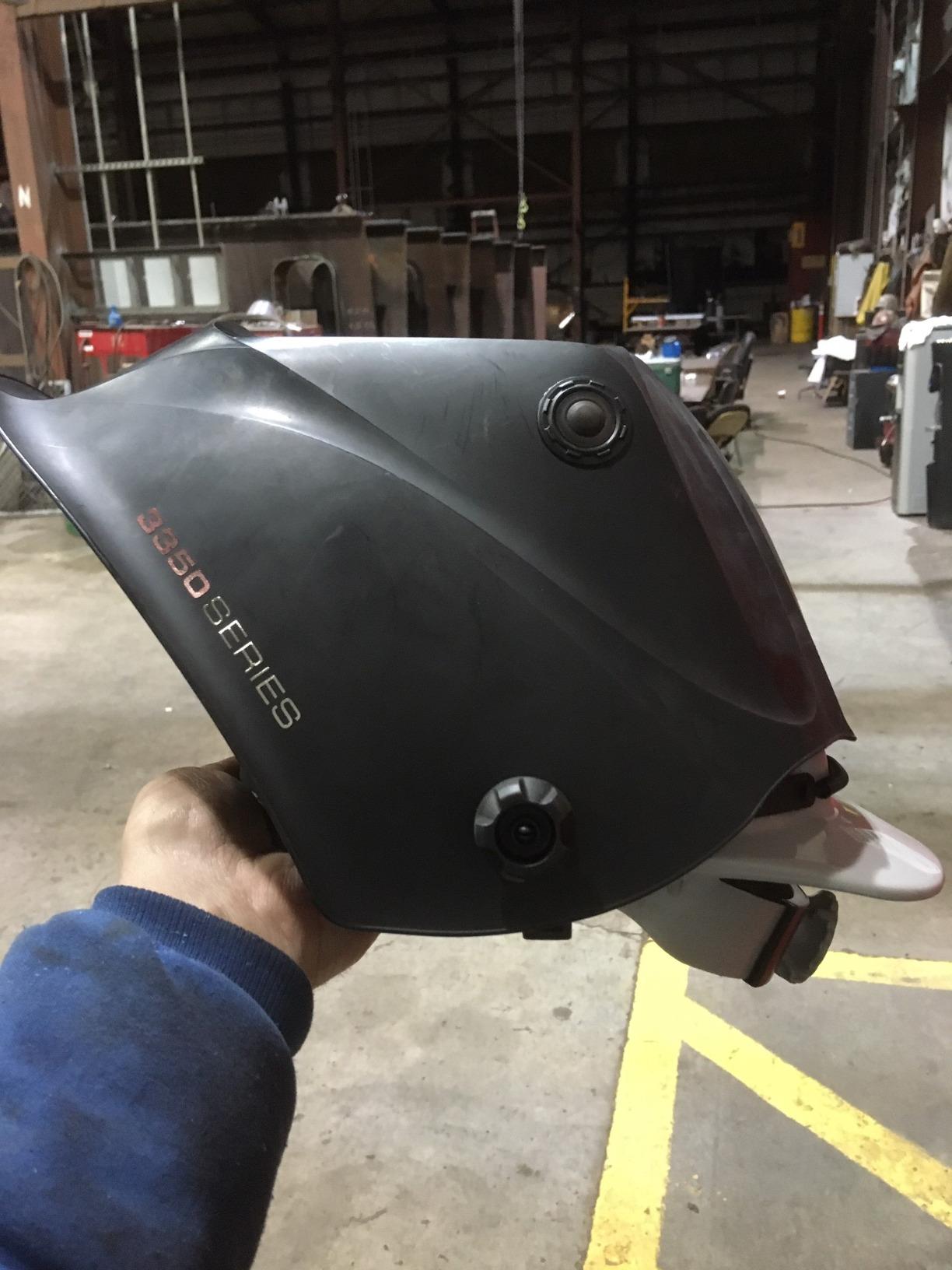
Out of everything we put side by side, the Viking 3350 is the one we kept reaching for. The 4C lens gives a 1/1/1/1 optical rating, which is the cleanest grade on this list, and the manufacturer states a 12.5 square inch extra large viewing area. The result is a puddle you can read without squinting and a joint you can find without leaning around the shell.
Owners consistently describe the upgrade from a green-tinted budget hood as a night-and-day change, and the speed of the darkening is fast enough that the arc appears at a believable size rather than a blooming white ball. That detail matters more than it sounds, because a reactive or slow filter makes you flinch and it makes bead placement guesswork.
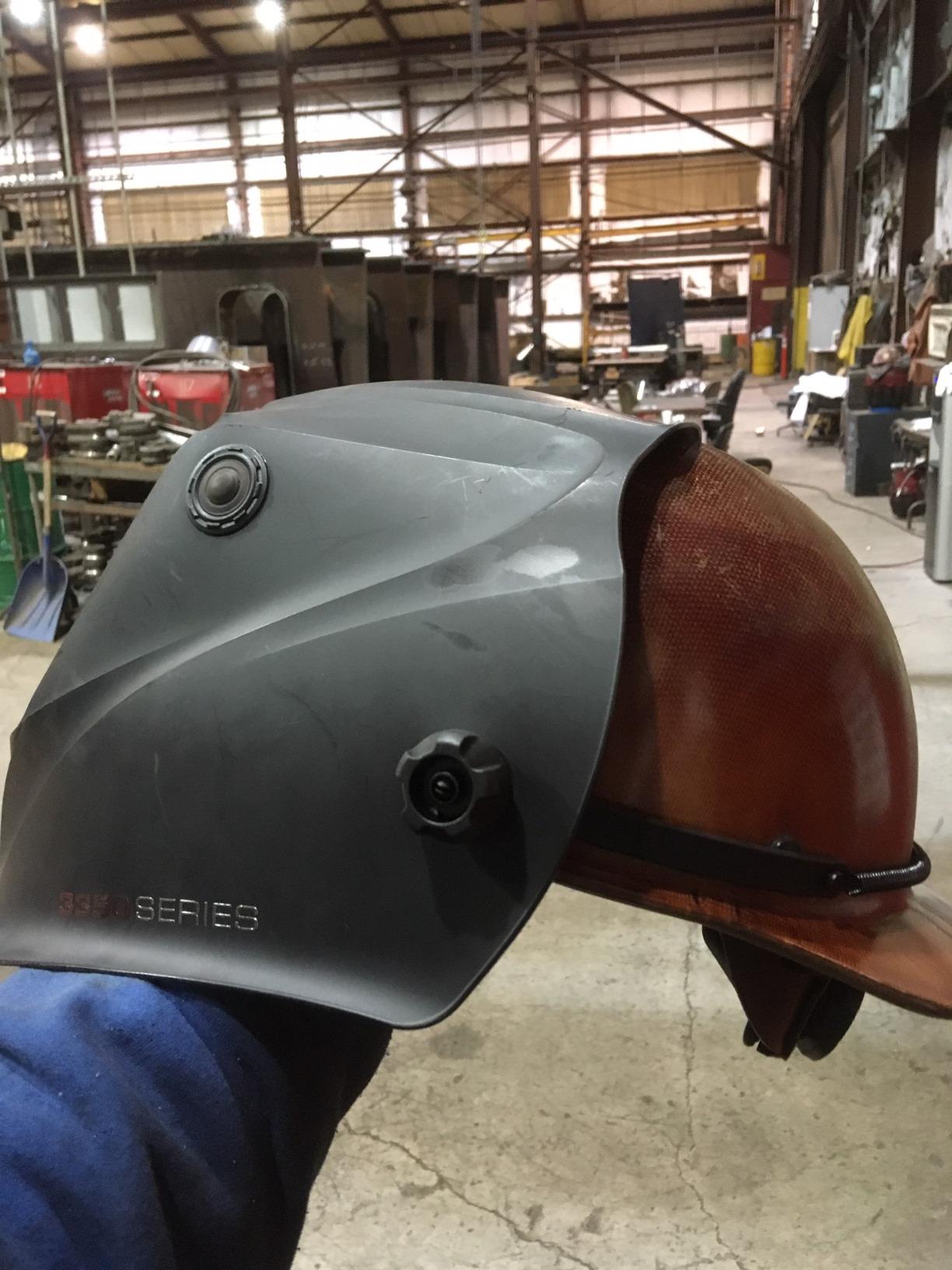
What surprised me was how much of the benefit comes from the headgear rather than the lens. The X6 suspension spreads the load across the skull, so the weight does not sit on the back of your neck. On an eight-hour production day that is the difference between a helmet you keep on and one you keep lifting to wipe your face.
1/1/1/1 Optical Clarity and What It Means at the Puddle
The four digits in a 1/1/1/1 rating grade colour, light scatter, angular deviation and optical uniformity. A perfect score on all four means the arc view stays even from the centre of the lens to the corners, with no haze, no ripples, and no colour banding. On a 12.5 square inch window that evenness is easy to appreciate, because there is more glass to judge it across.
This is the helmet to pick if your eyes are not what they were ten years ago. Long-career welders regularly complain that previous hoods stopped feeling clear, and the honest fix is a better optical grade rather than a stronger shade. Reviewers of this model call out a genuinely bright, neutral view of the base metal and the puddle.
Balanced Weight and Fit for Larger Heads
The listed weight is 1.4 pounds, which sits in the middle of this group, but balance is what decides comfort. The X6 headgear has several adjustment points and is designed to distribute weight across the head rather than concentrate it at the crown. It also fits hat sizes 6 1/2 through 8, one of the wider published ranges in the roundup, which is the practical answer to big-head frustration in the shop.
When a helmet does not fit, the failure is never comfort, it is safety. Gaps at the temple and neck let spatter and UV reach skin the shell was supposed to cover, so a fit range you can actually dial in matters more than any feature on the spec sheet.
Cover Lens Costs and the Five Year Warranty
A real advantage here is consumable cost. This helmet uses standard outside and inside cover lenses, and the box already includes five outside lenses and two inside lenses, so you are not hunting for proprietary parts. The five year manufacturer warranty is the longest in this group by a wide margin, which matters if you are buying one helmet for a shop rather than for yourself.
Owners who use the auto-darkening heavily every day report that the electronics and headgear hold up. The one recurring criticism is that the internal shade switch has to be dialled in correctly before the arc is struck, otherwise the lens can sit at a shade that is wrong for the process.
2. YESWELDER LYG-M800H – The 3.93 x 3.66 Inch Budget Benchmark
YESWELDER Auto Darkening Welding Helmet, Large View, LYG-M800H
3.93 x 3.66 inch true color view
1/1/1/1 optical clarity
4 sensors, 1/30,000 sec
CR2450 lithium power
+ Pros
- Wide view shows the puddle
- joint edges and surroundings
- 1/1/1/1 clarity beats green-tinted entry lenses
- Four sensors handle low-amp TIG and flux-core work
- Controls on the outside work with gloves on
- Lightweight enough for long sessions
- Cons
- Flip-up side tension knobs feel flimsy
- Thin plastic shell compared with pro hoods
- Lens and battery are awkward to remove
- Pivot headgear can be finicky to lock
This is the helmet we recommend to anyone moving up from a fixed-shade or self-darkening hood on a tight budget. The 3.93 x 3.66 inch lens works out to roughly 14.4 square inches, which is the same class of window as models costing several times more, and it carries a 1/1/1/1 true color rating.
With more than eight thousand reviews behind it, this is also one of the most thoroughly tested large-view helmets you can buy. Owners repeatedly point out the same thing: the gap between this lens and an entry-level green filter is immediate, and once you have worked with true color you struggle to go back.
Four Sensors and a 1/30,000 Second Response
Four arc sensors with a 1/30,000 second switching speed is the spec that keeps this model out of trouble on real work. Low-amperage TIG, thin-gauge stainless, and flux-core arcs are where two-sensor budget helmets fail, because the sensors do not see the arc reliably at odd angles or when out of position. Four sensors spread around the window cover far more of the arc-detection field.
One confusion worth clearing up: some owners think the auto-darkening is faulty when it does not trigger in direct sunlight. That is correct behaviour. The filter responds to arc light, not to ambient brightness, so outdoor welding still works as intended.
Shade Coverage for Welding, Cutting and Grinding
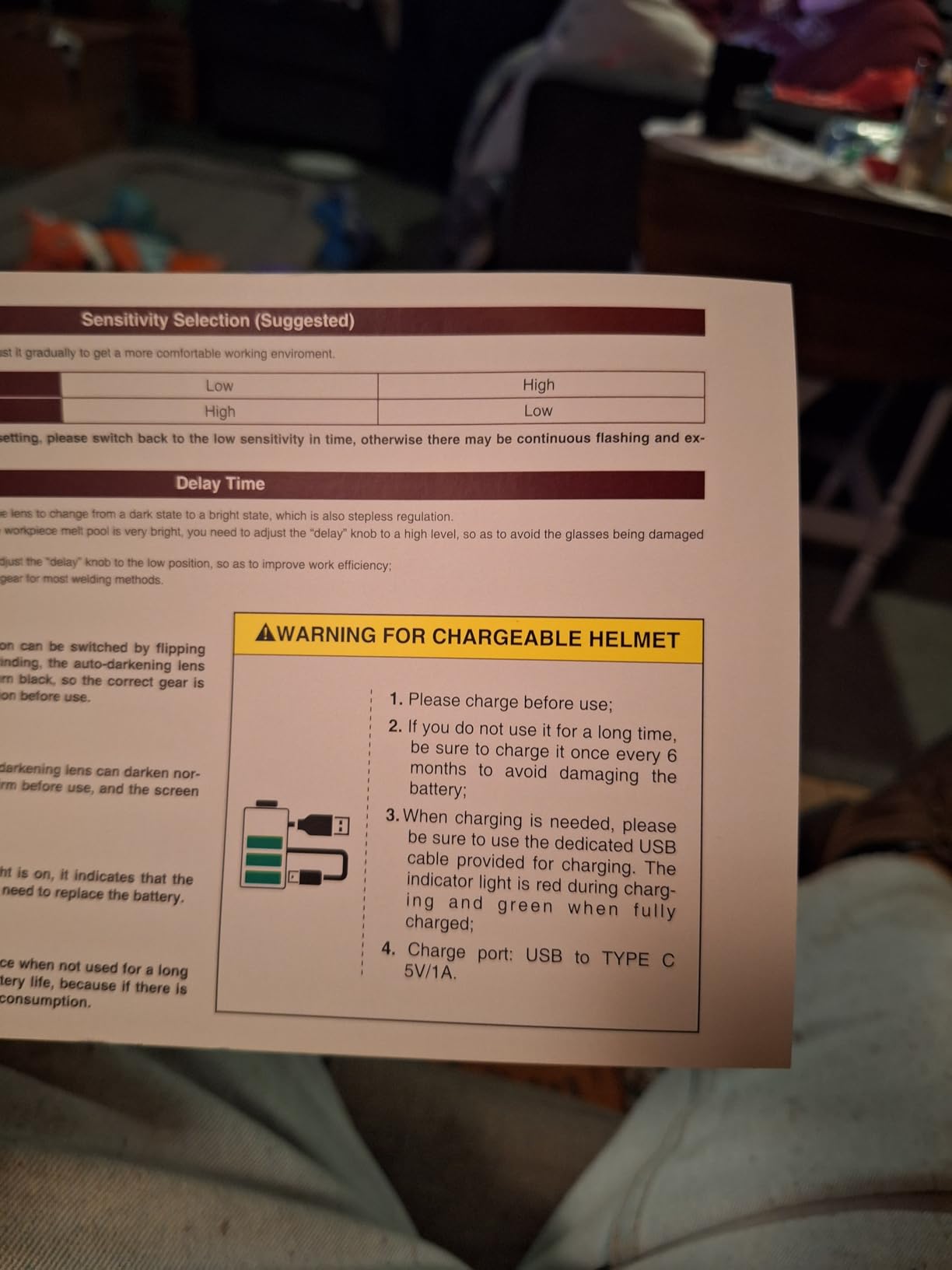
The shade setup covers 3 and 5-9 for welding, and 9-13 for cutting and grinding, so one hood handles MIG, stick, TIG, plasma and dressing work. A light state of shade 3 means you can still see the workpiece and check fit-up with the helmet down, which is genuinely useful for a shop doing a lot of set-up work.
Controls sit on the outside of the shell, so you can adjust shade and sensitivity with your gloves still on. That sounds minor until you are doing it on a cold morning with a full helmet and no desire to lift the visor and break your rhythm.
Where the Cheap Shell Shows
The trade-off is the shell and the hardware. It is thin plastic next to a nylon or composite pro hood, the flip-up tension knobs that hold the helmet raised feel flimsy and can slip, and the pivot-style headgear takes some fiddling to lock into position. The lens and the CR2450 battery are also awkward to remove and can need a fingernail to pry out.
None of that affects the lens, which is the part that determines whether you can weld well. Treat this as a helmet you buy for its optics and sensor package, and expect to replace the outer cover lens periodically as a normal consumable.
3. YESWELDER 180 Degree Panoramic – 27 Square Inches of Total Glass
YESWELDER Auto-Shade Welding Helmet, Internal Digital Control, 180° View
8.89 x 3.23 inch total panoramic view
4.25 x 3.23 in main plus two side views
5 arc sensors, internal digital display
+ Pros
- Genuine 180 degree peripheral awareness through side windows
- True color lens far easier on the eyes than green or brown filters
- Internal display for precise shade
- sensitivity and delay control
- Darkening stays consistent on low-amp work
- Cons
- Helmet shell is basic next to the lens quality
- Sizing band can arrive misshapen from shipping
- Manufacturer does not sell replacement inner lenses
This is the widest usable view in the roundup. The main lens measures 4.25 x 3.23 inches and each side window measures 2.87 x 2.32 inches, giving 8.89 x 3.23 inches of total glass and roughly 27 square inches of viewing area, more than double any single-lens hood here.
That extra glass is not about seeing the puddle better, it is about seeing around you. The people who notice the difference most are the ones welding under vehicles, inside a frame, or in a tight bay where a colleague, a hot plate, or a hanging grinder is outside your line of sight. Welders who switched to a panoramic mask describe the benefit as simple awareness: you can see where other people are before you are close to them.
Side Windows and Situational Awareness
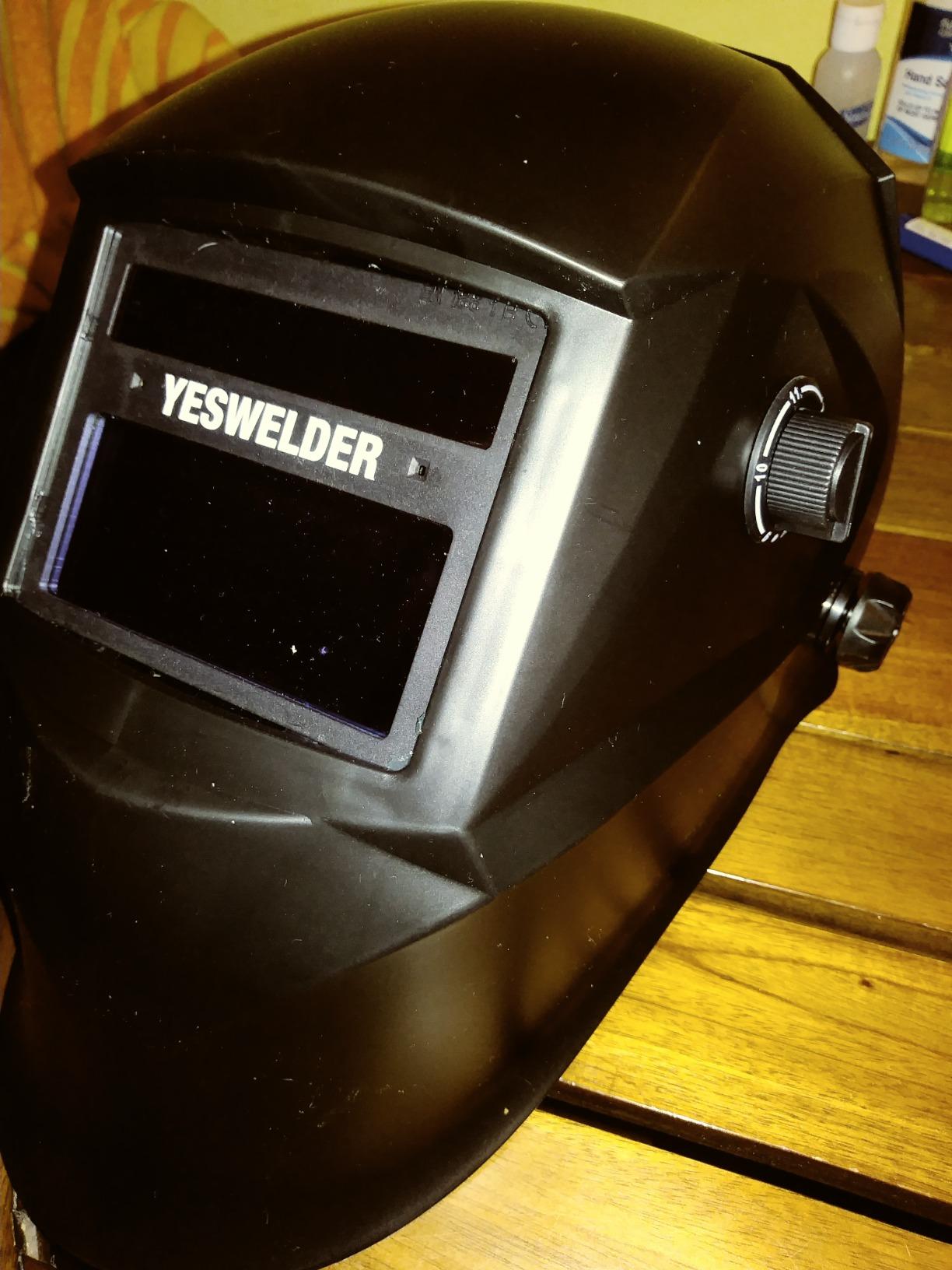
The side windows are separate filters flanking the main lens, and they are what turn a large viewing area into true peripheral vision. Unlike a wide flat window, they let you check your surroundings without moving your head at all, which is exactly what you want when a torch is running and you cannot afford to look away and then snap back.
The trade is that each side window is fixed. You are not adjusting shade on the sides independently, so the panoramic view is great for orientation and for finding the joint, and the main lens is where the actual weld is judged. That split is a sensible design for most work, and it is why panoramic designs suit out-of-position and confined-space welding more than flat lenses do.
Five Arc Sensors and Digital Internal Controls
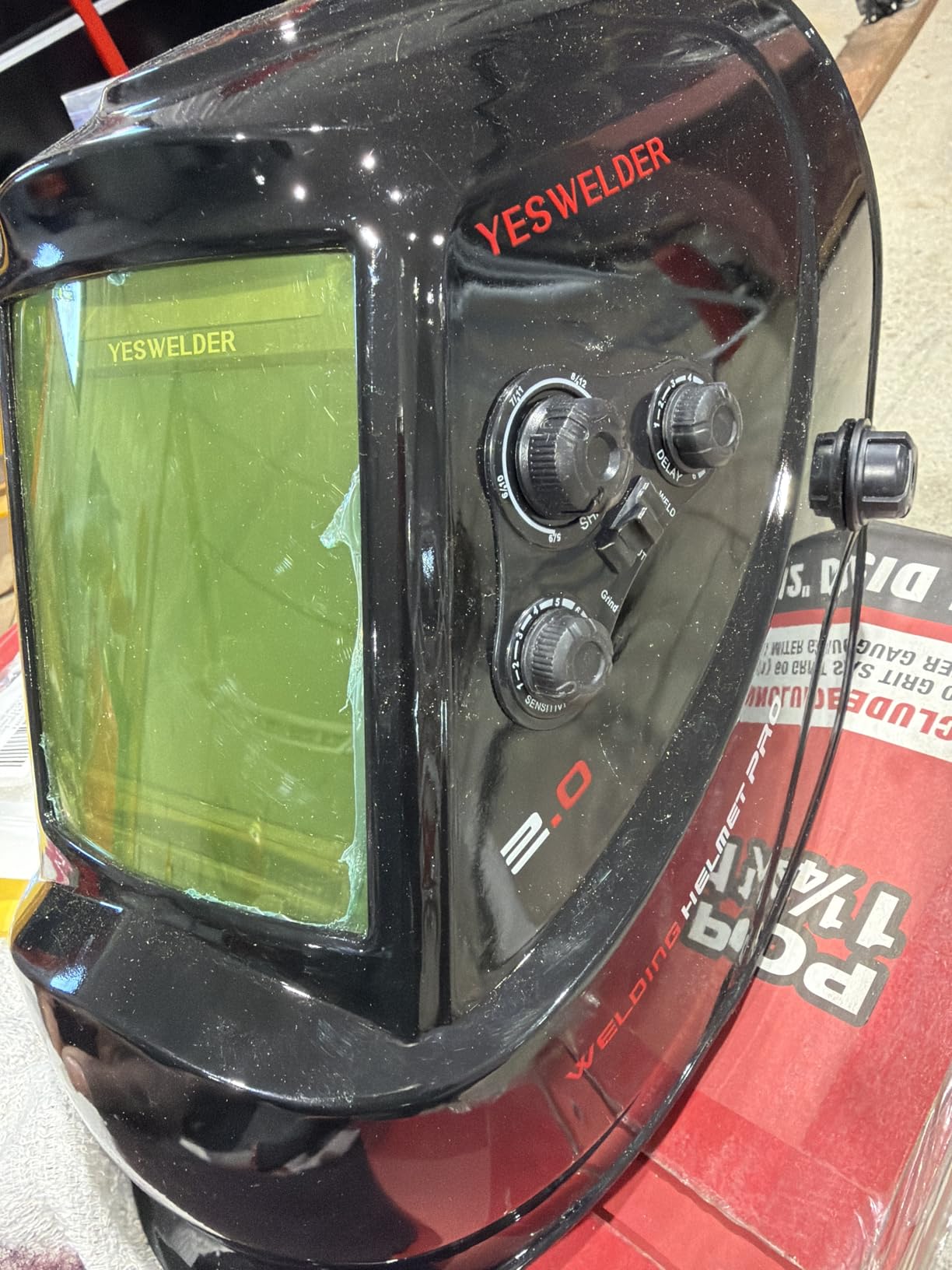
Five premium arc sensors darken in 1/30,000 of a second, and the settings are adjusted from an internal digital display rather than dials on the shell. Shade, sensitivity and delay are all set from inside, so you set the helmet once and leave it alone. Smart auto-adjustment also trims the lens response to arc brightness, with plus or minus nine levels of fine tuning.
The shade range spans 3 for a light state, 4-8 and 9-14 across MIG, TIG, stick, tack, grind and cut. A 9-14 top end covers heavy stick and plasma cutting work that would sit outside the range of most of the budget helmets in this group.
Two Real Weaknesses to Plan Around
The shell is basic relative to the lens. It is a polyamide construction, the adjustable sizing band can arrive misshapen, and the padding is adequate rather than generous. On a long shift, the lens quality is what you notice; on a long shift with a poorly set headband, the headband is what you notice.
More seriously, the manufacturer does not sell replacement inner cover lenses for this model. The inner lens is the sacrificial one that protects the expensive auto-darkening cartridge, and once it is scratched beyond your tolerance you may need a third-party replacement. Factor that in if you grind a lot of stainless.
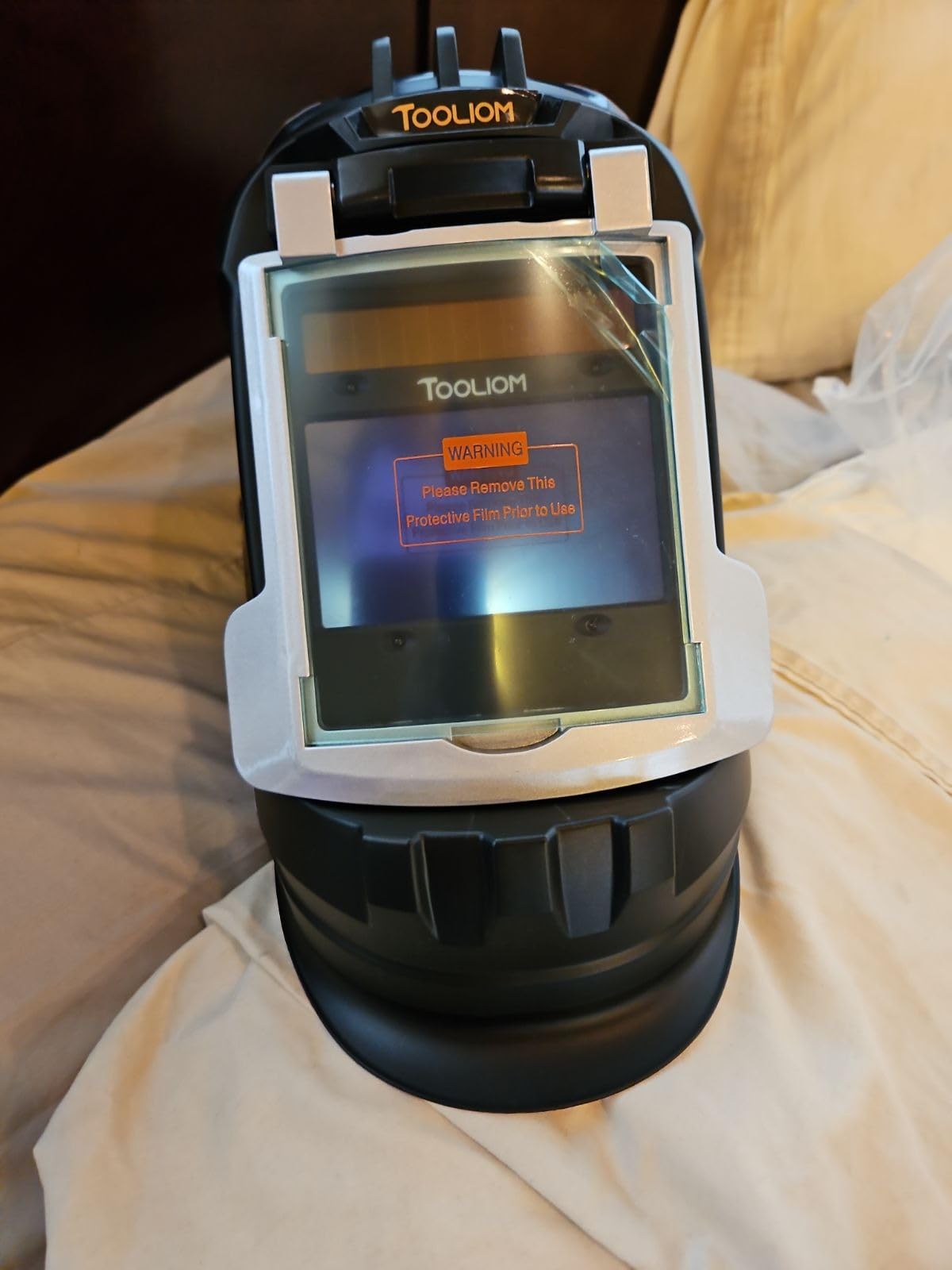
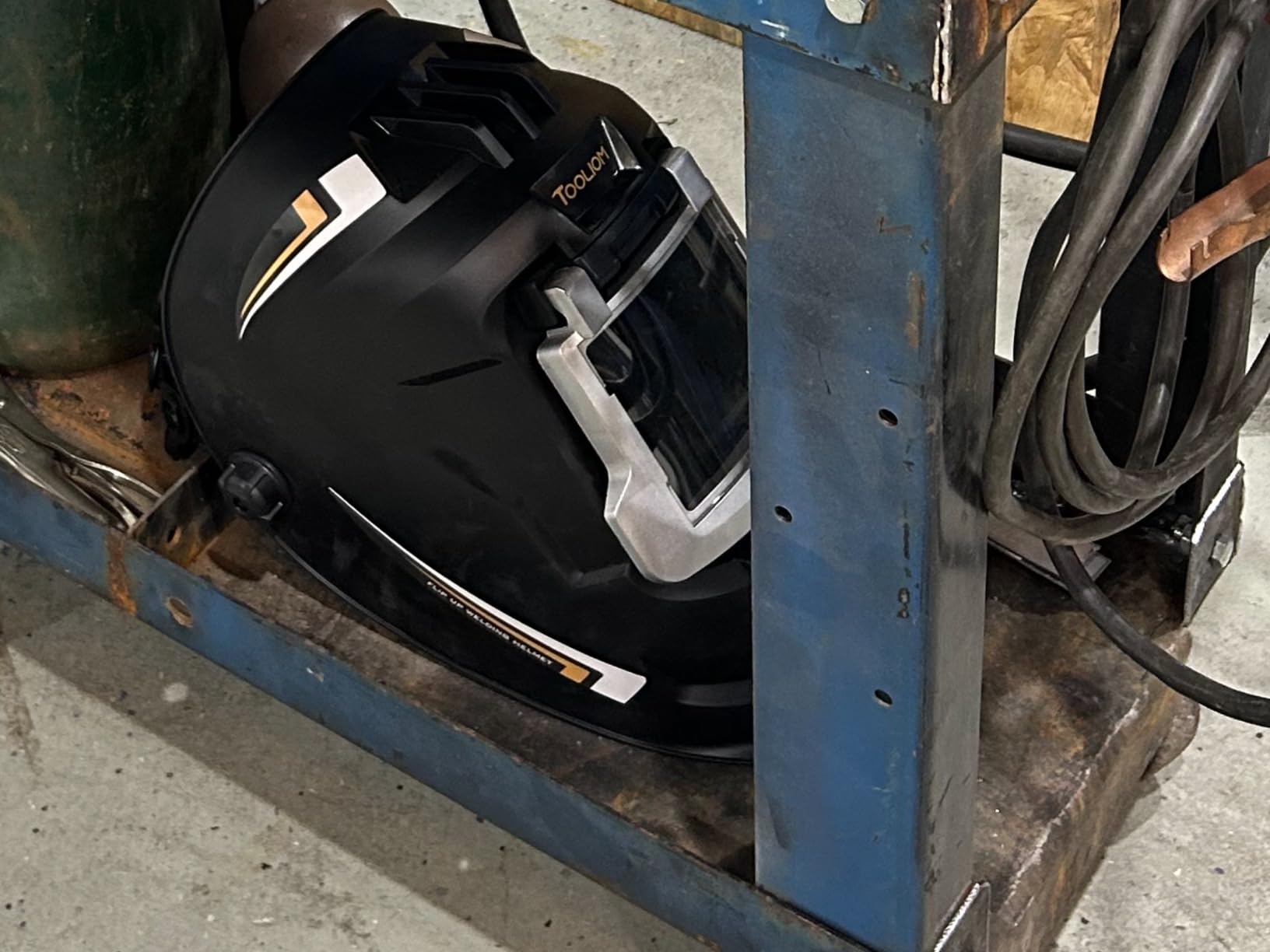
4. TOOLIOM TL-M800D – 12.9 Square Inches With Spares in the Box
TOOLIOM True Color Auto Darkening Welding Helmet with Large View
3.94 x 3.27 inch view, 12.9 sq inch
1/1/1/1 true color classification
4 arc sensors, weld cut and grind modes
+ Pros
- 12.9 square inch viewing area is large for the tier
- 1/1/1/1 true color supports puddle reading
- Four sensors give reliable darkening
- Includes spare inner and outer lenses plus a spare battery
- Cons
- Basic lightweight plastic shell
- Strap closure gives less adjustment than ratchet headgear
- Limited long-term durability data from reviewers
The TL-M800D is a straightforward large-view helmet with a 3.94 x 3.27 inch lens that the manufacturer rates at 12.9 square inches, and it carries a 1/1/1/1 optical classification with true color technology. On paper that pairs a respectable window with the best available optical grade at this price level.
The package is what sets it apart from the other budget models. You get a replaceable battery, two replacement outer lenses and a replacement inner lens in the box, which means the first year of consumables is covered without an extra order. For a hobbyist building a first kit or a student outfitting a training bench, that changes the true cost of ownership more than the shell material does.
Viewing Area Versus a Wider Lens
At 12.9 square inches this is a shade smaller than the 3.93 x 3.66 inch lenses on the YESWELDER and ARCCAPTAIN models in this roundup, and the extra height on those lenses is what lets you see the far side of a bead. In practice the difference is small, and the 3.94 inch width is what does the work, since the width of your view across the joint barely changes with a small height adjustment.
What you give up in height, you mostly get back in clarity. The 1/1/1/1 rating is stated in the specifications rather than implied, and reviewers credit it with accurate puddle reading, which is the metric that decides whether a weld is sound.
Sensor Count, Shade Modes and Adjustment
Four arc sensors handle detection reliably, and the mode spread is 9-13 for welding, 5-9 for cutting and shade 3.0 for grinding, with separate delay and sensitivity controls so you can tune the filter to a low-amp process rather than fighting it. Sensitivity adjustment is the control that decides whether the lens tracks a flickering TIG arc or strobes.
The spec is met to ANSI Z89.1, which is the older eye-protection standard for welding filters. If you are working to a specific current certification requirement, check the standard your own compliance regime expects before you commit.
Honest Limits of This Pick
The shell is basic plastic, and the strap closure offers noticeably less adjustment range than a ratchet or knob headgear. If your head size is at the wider end of the range, or if you wear glasses under the helmet, a strap closure is the first thing that will frustrate you.
Reviewers have used this model for a relatively short period, so there is limited long-term durability history. The sensor package and the optics are the well-evidenced parts of this package; the shell and headgear are where you accept a compromise.
5. ARCCAPTAIN XK-LY800H – Large View Plus a Built-In Work Light
ARCCAPTAIN Auto Darkening Welding Helmet with Light, 3.94″X3.66″ Large View
3.94 x 3.66 inch super large view
1/1/1/1 true color clarity
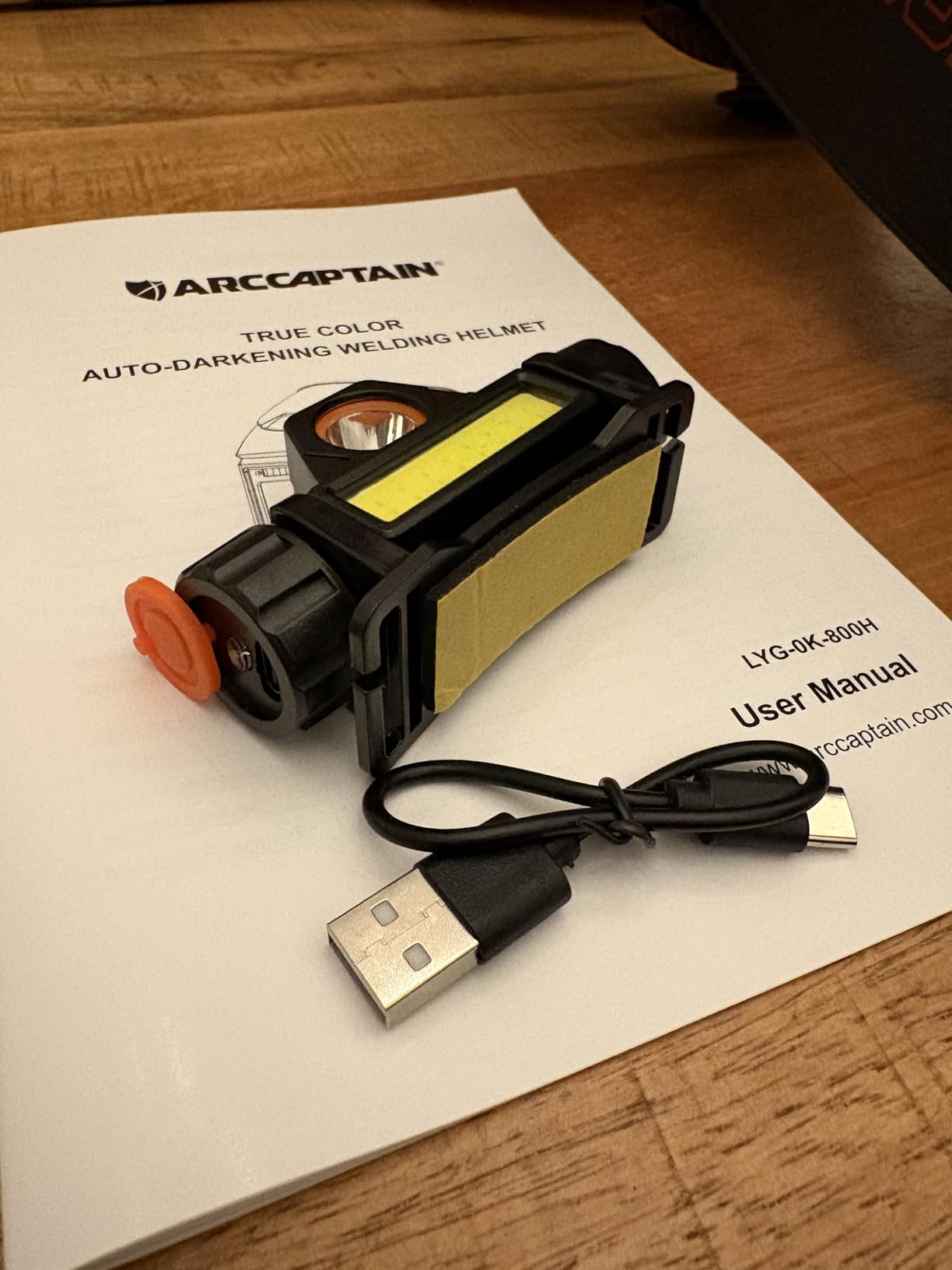
USB LED welding light, dual power
+ Pros
- 3.94 x 3.66 inch view with 1/1/1/1 clarity
- Integrated LED welding light with two brightness levels
- Light enough at about one pound for long sessions
- Dual solar and CR2450 power extends working time
- Four sensors switch in 1/25000 sec
- Cons
- Flexible PP shell is not as rigid as a professional hood
- Work light arrives uninstalled
- Shortest warranty in the group at 180 days
- Some reports of filter failure within about a year
The XK-LY800H is the pick for anyone welding in a dark bay, a crawl space, or an outdoor repair at night. The lens is a full 3.94 x 3.66 inches with 1/1/1/1 true color clarity, and the USP is a USB-powered LED welding light with two brightness levels built into the shell.
That lamp is more useful than it sounds. Instead of fighting a headlamp that falls off your forehead, you get a light aimed at the joint from the helmet itself, which follows your head and stays out of your eyes. The dark state levels run 4, 5-8 and 9-13, so the same lens covers welding, cutting and grinding.
Power: Solar Panels Plus a CR2450 Cell
Dual solar panels sit on the shell alongside a replaceable CR2450 lithium battery, so the panels extend working time rather than being the only source. A minimum current of 5 amps is enough to trip the filter reliably, and four premium arc sensors switch in 1/25,000 of a second. The 12-in-1 smart filter also claims automatic DIN 16 ultraviolet and infrared protection, which is the level you want for arc eye safety.
Certification listed for this model covers ANSI Z89.1, CSA Z94.3 and DIN EN 379, which is broader than most of the budget helmets here and worth having on paper if you work to a standard.
Weight and Long Session Comfort
At roughly 8.1 ounces to a pound, this is one of the lightest large-view helmets we measured, and light weight is genuinely the feature that changes your day. The shop consensus is that helmets under about 600 grams reduce the neck fatigue that ends a shift early, and this one sits comfortably under that line with a padded interior and breathable padding.
A light shell has a trade-off. The PP construction is flexible, which feels good on your head and feels less good the first time somebody brushes a hot slag against it in a confined space. It flexes rather than cracking, but the hardware around it is not built for a decade of abuse.
Warranty and Known Failure Modes
The 180 day warranty is the shortest in this group by a wide margin, and reviewers compare it unfavourably with the multi-year coverage on the pro models. There are also reports of the auto-darkening filter itself failing within about a year of use in some units, which would be the expensive outcome because the cartridge is the heart of the helmet.
Buyers still rate the combination highly because the lens, sensor package and work light are all good. Just know that you are buying optics here, and the shell, warranty and electronics are the softer parts of the deal.
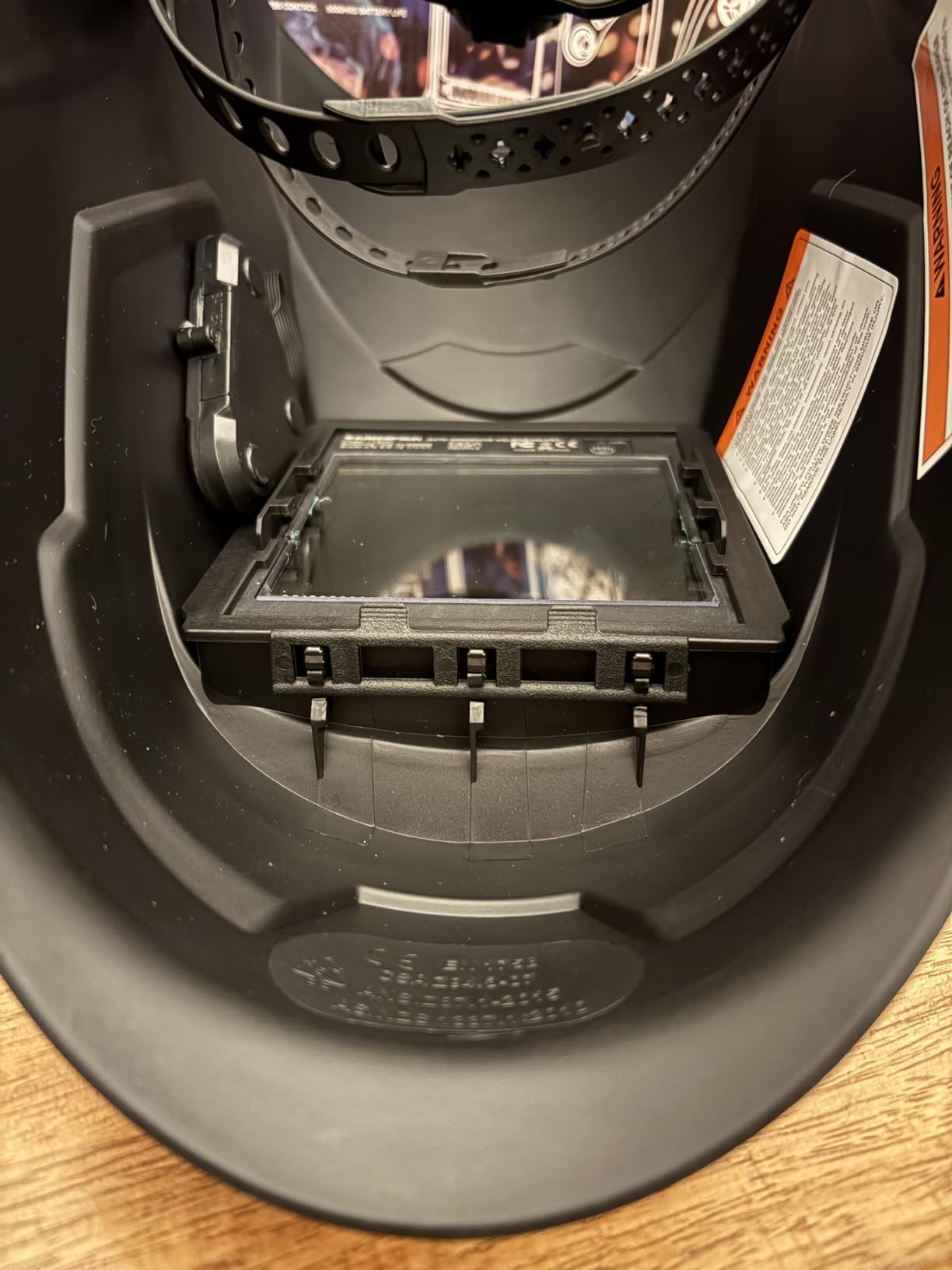
6. ESAB Sentinel A60 – Shallow Lens, 16 Ounce Pro Weight
ESAB® Sentinel™ A60 Welding Helmet, Black Low-Profile Design, High Impact Resistance Nylon, Large Viewing Area 4.65 in x 2.80 in
4.65 x 2.80 inch ADF viewing area
OpTCS true color lens
DIN 3/5-13 in 0.5 steps
9 setting memory
+ Pros
- Crisp view with noticeably better puddle visibility
- Lightweight low-profile design centres weight over the head
- Works well in and out of a respirator in tight spaces
- Stiff grind button is hard to trigger by accident
- Darkens with no visible flash
- Cons
- Ratchet headgear feels cheap even though it holds
- Cover lenses scratch easily
- Lock nuts do not reliably hold the flipped-up position
- Accessory lenses are pricey
The Sentinel A60 is the odd one out in this roundup on size and it is worth understanding before you dismiss it. The auto-darkening viewing area is 4.65 x 2.80 inches, which is about 13 square inches: the widest single lens here, but a shallow one, so it is not the biggest area in square inches.
What it wins on is everything else. The ESAB OpTCS true color lens is consistently praised for crispness and for making the puddle genuinely easier to read, and at 16 ounces with a low-profile shell the weight sits over the top of your head instead of hanging off your jaw. Reviewers frequently describe it as an upgrade from a 3M Speedglas or a classic Miller hood.
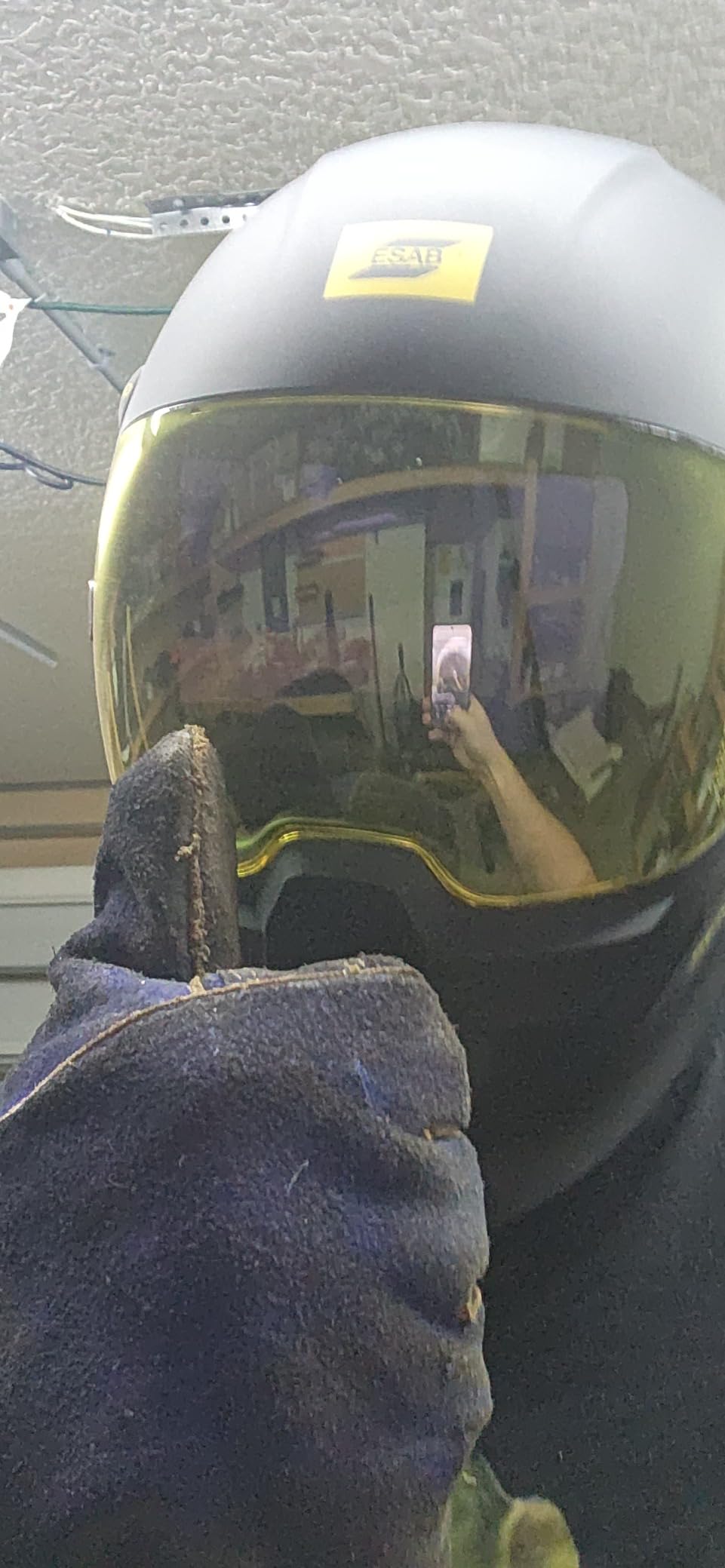
Why a Wide but Shallow Lens Can Work Better
A 4.65 inch width is 0.6 inches more than the 3.94 inch standard on most of the budget helmets here, and width is what determines how much of the joint, the work surface and your surroundings sit inside the view at once. Height, by contrast, matters mostly for seeing down into a fillet or past the edge of a plate.
So the trade is a view that is wide across the work and shallower front to back. For flat and horizontal work that is an excellent trade, and the low-profile shell means there is less shell in your peripheral vision to bump into a wall when you are welding in a confined space.
Control Detail That Experienced Welders Notice
Shade runs DIN 3 and 5-13 in 0.5 increments, with an internal ADF for sensitivity and delay and on-board memory for up to nine settings. Storing your stick setting, your MIG setting and your grinding setting means you stop re-tuning every time you switch processes. The grind button is stiff enough that it does not fire when you brush the shell, which is a small thing that prevents constant eye fatigue.
Four arc sensors with a 0.08 millisecond switching time, a replaceable CR2450 battery and status LEDs for low battery, grind mode and shade lock complete the package. Users note the lens darkens with no visible flash compared with cheaper hoods, which keeps your eyes relaxed across a shift.
Respirator Fit and Consumable Costs
The low profile and the in-and-out adjustment work well when you are wearing a respirator in a tight space, and that is not a niche use case in a shop with fume extraction challenges. The criticisms are consumable-related rather than optical: cover lenses scratch easily, particularly if the helmet is set face down, and the lock nuts do not reliably hold the helmet in the raised position.
The ratchet headgear also feels cheap to the hand even though it holds up in practice, and accessory lenses are expensive, which pushes owners toward third-party consumables. If the optics are the priority and you can live with a consumable cost, this remains the strongest professional pick here.
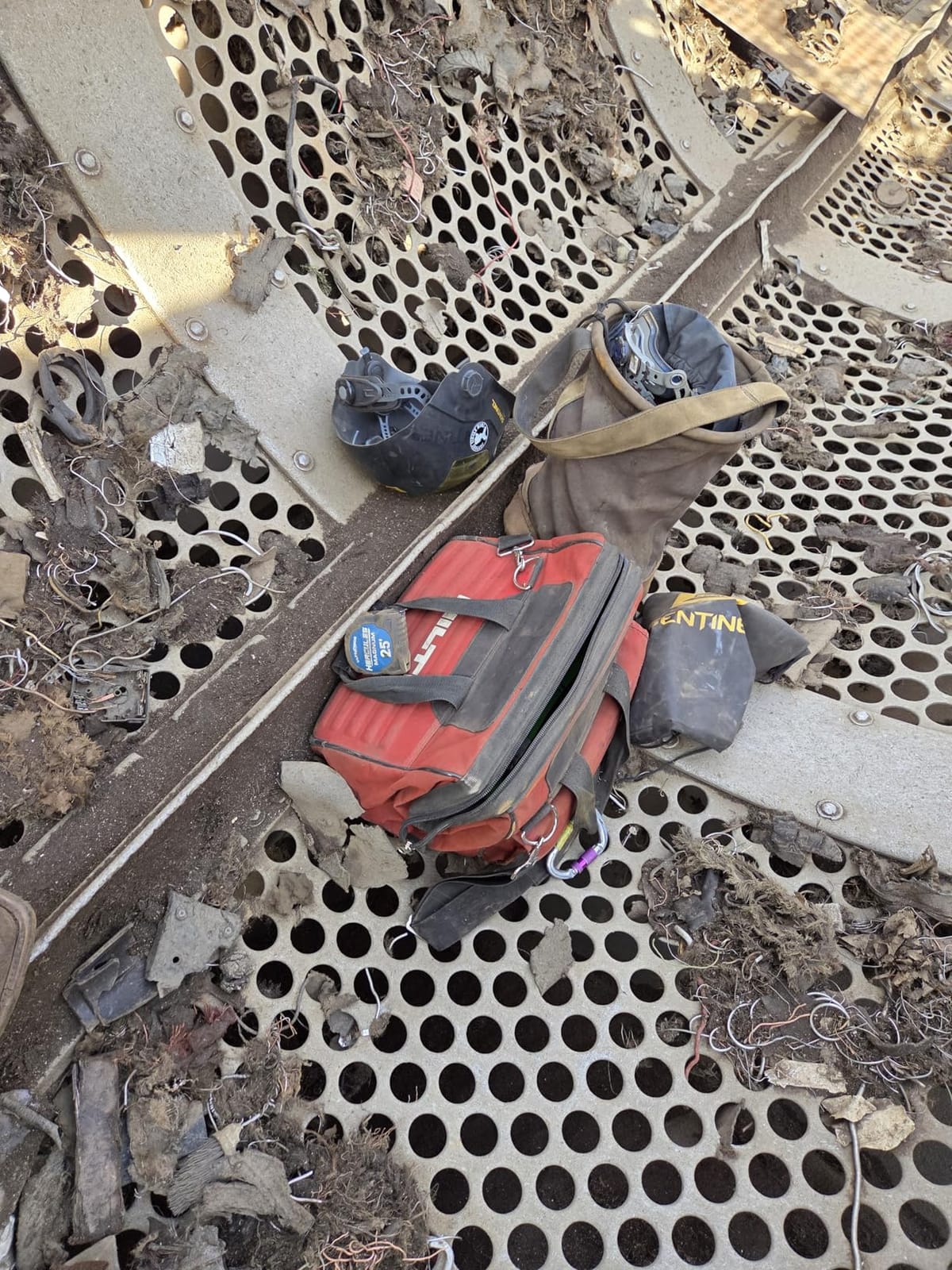
7. TGR Extra Large View True Color – 4 x 3.65 Inches on a Mid Budget
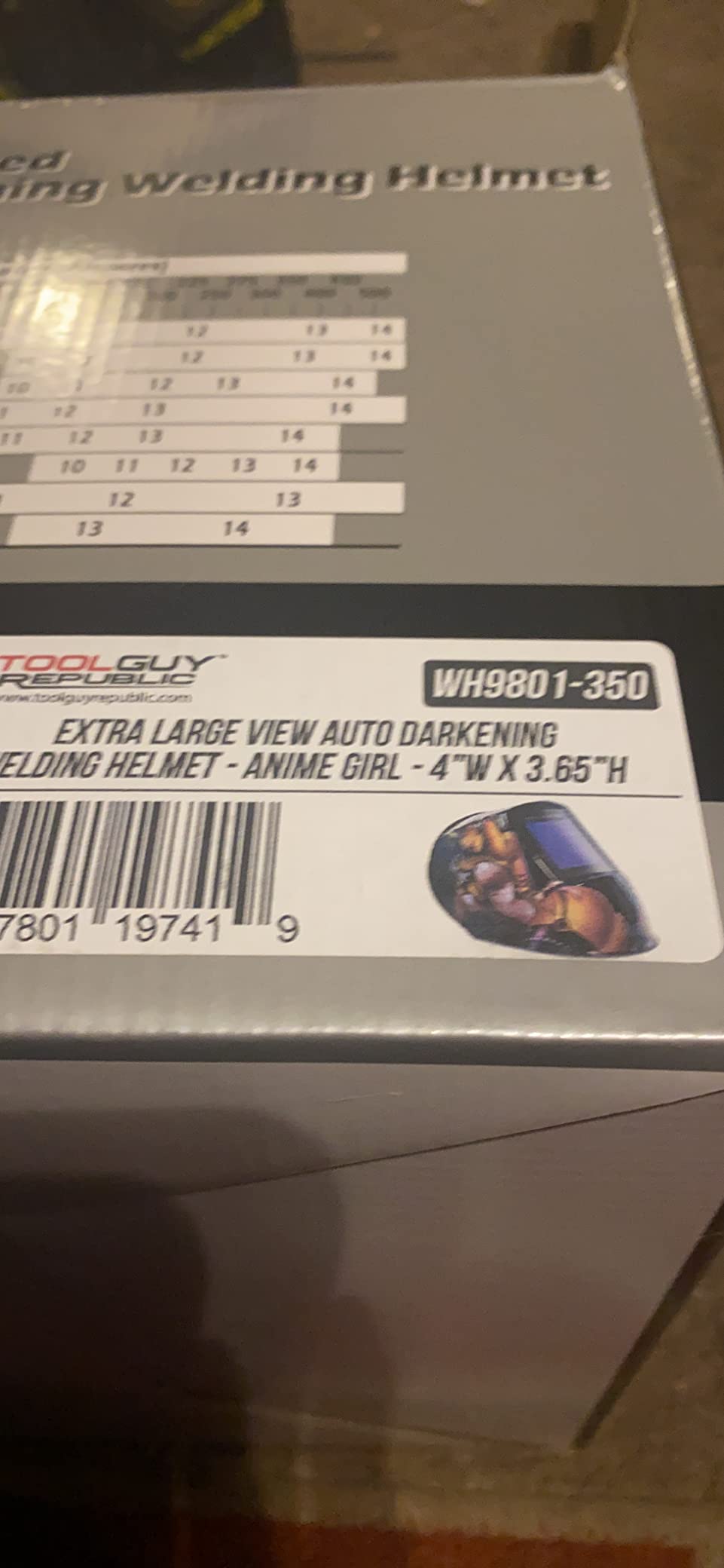
TGR Extra Large View True Color Auto Darkening Welding Helmet – 4″W x 3.65″H (Anime)
4 x 3.65 inch true color lens
4 arc sensors
Sensitivity controls
ARC, MIG and TIG capable
+ Pros
- Extra large 4 x 3.65 inch true color view
- Bead shape and puddle position easier to judge
- Good value against other large-view helmets
- Spare outer and inner lenses included in the box
- Cons
- Buckle strap is less refined than ratchet or knob headgear
- Nylon shell untested against heavy shop abuse
- Smaller review base limits long-term data
The TGR extra large view helmet is the widest standard single lens in this roundup, at 4 inches wide by 3.65 inches high, or roughly 14.6 square inches of true color filter glass. It sits in the middle of the price range and the middle of the pack optically, and for a hobbyist who wants a genuinely big window it is a straight pick.
Reviewers buy it for the size and stay satisfied because the true color lens makes bead shape and puddle position easy to judge. That is the specific benefit of a wide window: with more glass, you can watch the puddle develop and correct the travel while it is still forming rather than after you have solidified a pass you should have stopped.
A Wide Window Without a Wide Sensor Package
Four arc sensors with adjustable lens sensitivity handle ARC, MIG and TIG. No published switching figure was given for this model, which is worth noting against the models in this group that quote 1/25,000 to 1/30,000 of a second. If you weld a lot of thin-gauge stainless or do low-amp TIG, spend a little time on the sensitivity adjustment before you commit.
Optical class is not published for this helmet either, though the lens is described as true color. Where a 1/1/1/1 rating is stated elsewhere in this roundup you get a hard number; here you are relying on the honest description and the owner feedback rather than a printed grade.
Consumables in the Box and the Buckle Closure
Spare outside and inside lenses are included, which is unusual at this level and saves a first consumable order. The closure is a buckle strap, which is simpler and quicker to adjust than a ratchet but offers less fine tuning on the back of the head.
The nylon shell is the part to consider for heavy shop work. Hobbyists and weekend fabricators rate it well, and the smaller review base means most feedback reflects short-term experience rather than years of daily use, so plan on it as a light-duty shop helmet until you know otherwise.
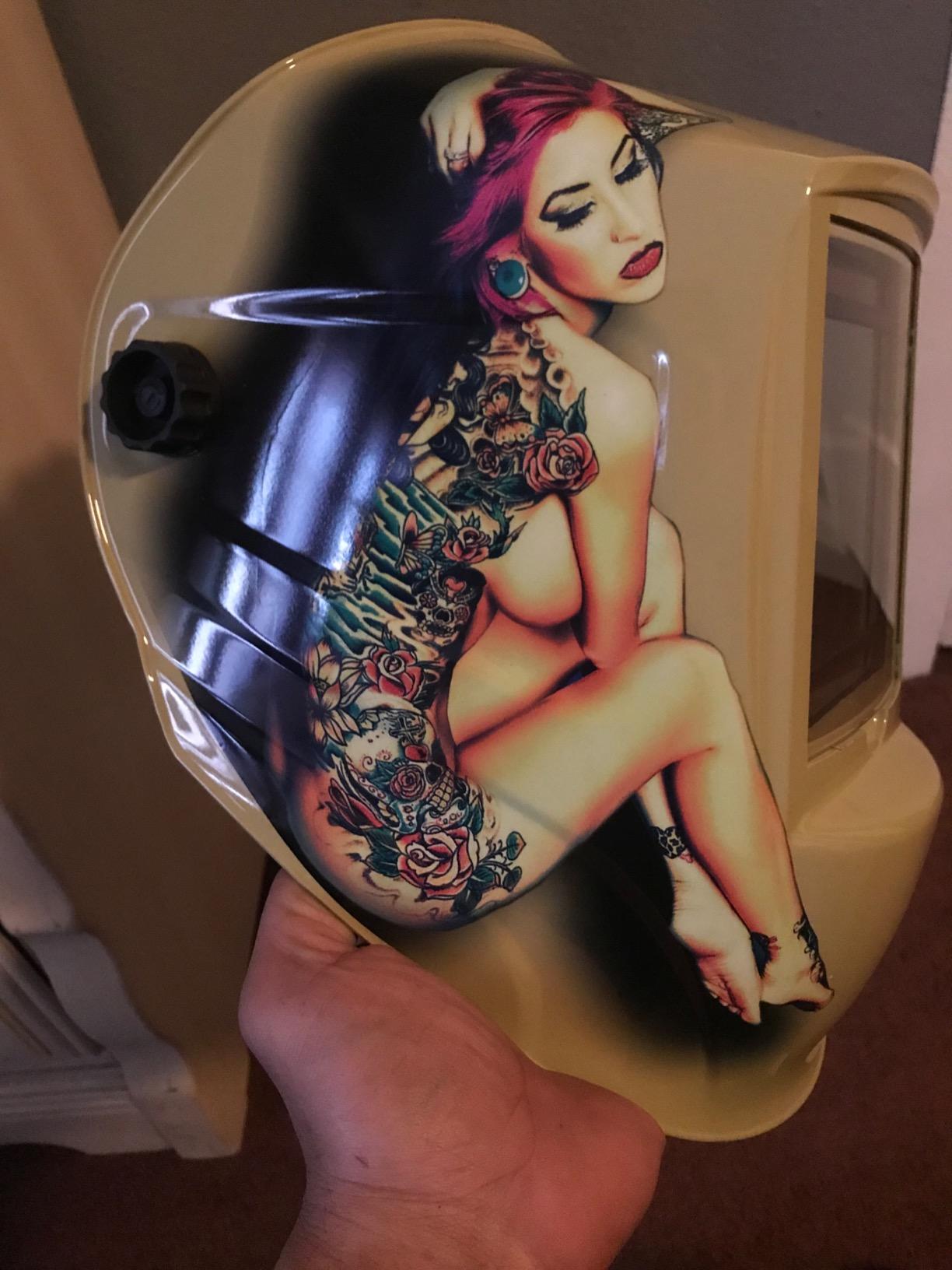
8. TGR Panoramic 180 Solar – Peripheral View Without Battery Swapping
TGR Panoramic 180 View Solar Powered Auto Darkening Welding Helmet – True Color (Carbon Fiber)
180 degree view with side windows
1/10,000 sec, optical class 1.1.1.2
Solar powered with rechargeable cell
CE, ANSI and AS/NZS certified
+ Pros
- Side windows give real peripheral awareness in tight spots
- Bright clear view in all DIN states
- Very fast light to dark transition
- Solar charging cuts battery juggling
- Visor design avoids lens contact when set down
- Cons
- Side filters dim to a fixed DIN 10 and are not adjustable
- Headgear is comfortable but not high build
- Inner lens can reflect overhead light
- Arc sensors sit recessed rather than flush
This panoramic design pairs a large main lens with two side windows and runs on solar power with rechargeable cell support, so the battery stops being something you think about. Four independent arc sensors with adjustable sensitivity and delay darken in 1/10,000 of a second at optical class 1.1.1.2, and it is certified to CE, ANSI and AS/NZS.
Owners who have run this helmet for years report that it holds up, and they single out the side windows as the feature that makes joint-finding, setup and under-vehicle work easier. That matches what the rest of the panoramic category in this roundup does: the side glass is the safety feature, and the main lens is the welding tool.
Fixed Side Filters: The Design Trade You Accept
The side windows dim to a fixed DIN 10 and cannot be adjusted. That is a deliberate simplification, and it means the side glass is tuned for a working welding state rather than a light state. You will not be looking at fit-up through the side panels, but you will be able to see hot metal, another welder, or a moving part through them while the arc is live.
The optical class of 1.1.1.2 gives a perfect score on colour and light scatter, with a 2 for angular deviation, which is a normal and acceptable grade for a filter of this size. The bright, clear view across all DIN states is a repeated positive, with one owner noting a slight blue tint that actually helps highlight bead peaks and valleys.
Solar Power and Lens Protection Design
Solar charging with rechargeable cell support extends runtime and removes the routine of swapping cells mid-job. A one year manufacture warranty applies, so this is not the durability story the multi-year pro models tell, but the electronics are not the complaint owners raise.
One nice practical touch: the visor is shaped so it does not contact surfaces when set visor-side down, which protects the lens from the scratches that shorten cover lens life everywhere else in this roundup. Grind mode protection to EN175B handles flying particles, and the headgear is adjustable and comfortable, if not high build.
Reflections and Recessed Sensors
Two smaller drawbacks are worth knowing. The extra inner lens can reflect overhead light and brighten the interior of the shell while you are welding, which is mildly annoying under shop fluorescents or LED strips. And the arc sensors sit recessed about an eighth of an inch rather than flush with the shell, which is a minor vulnerability if you work in a position where the shell can take knocks.
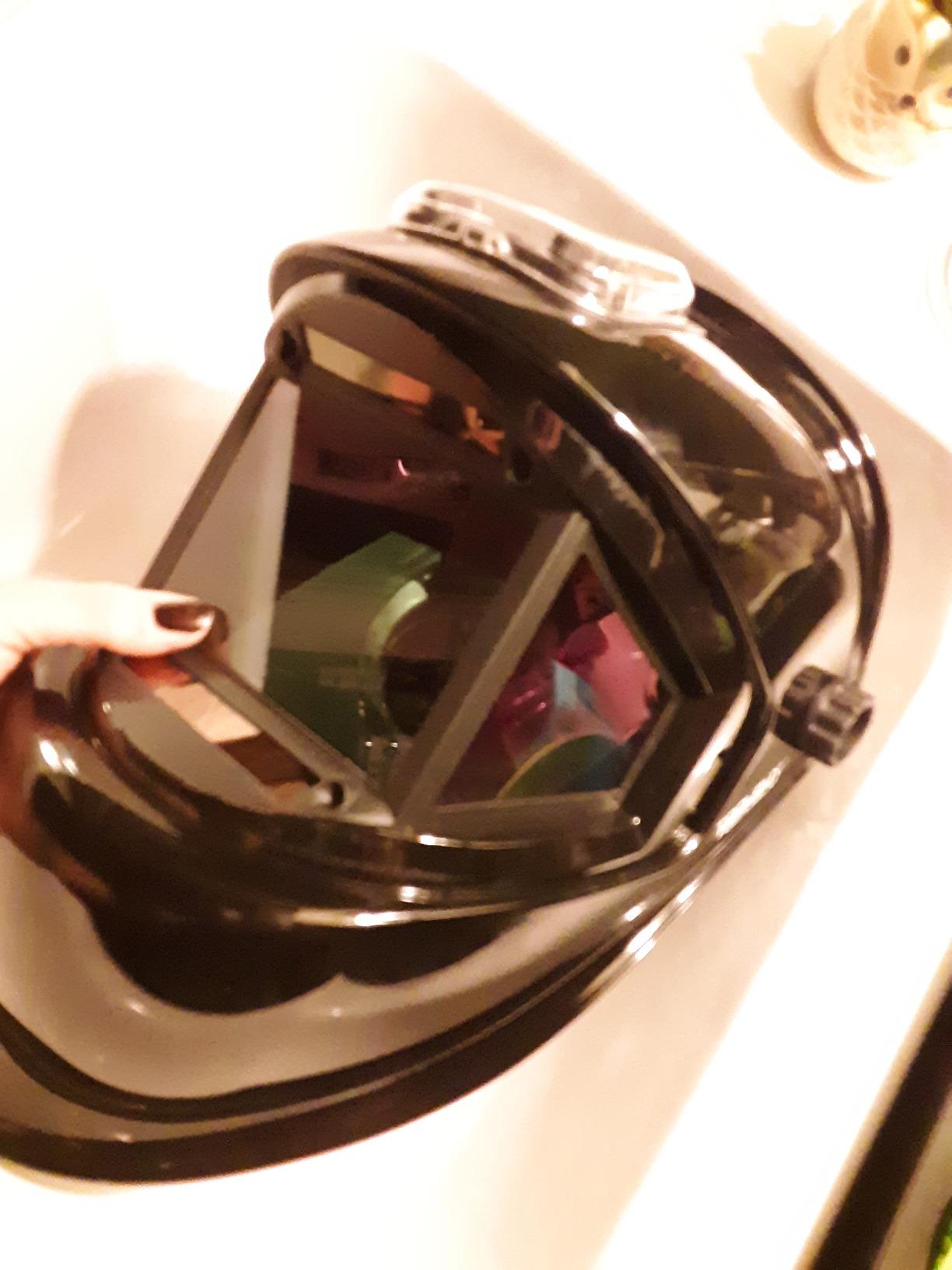
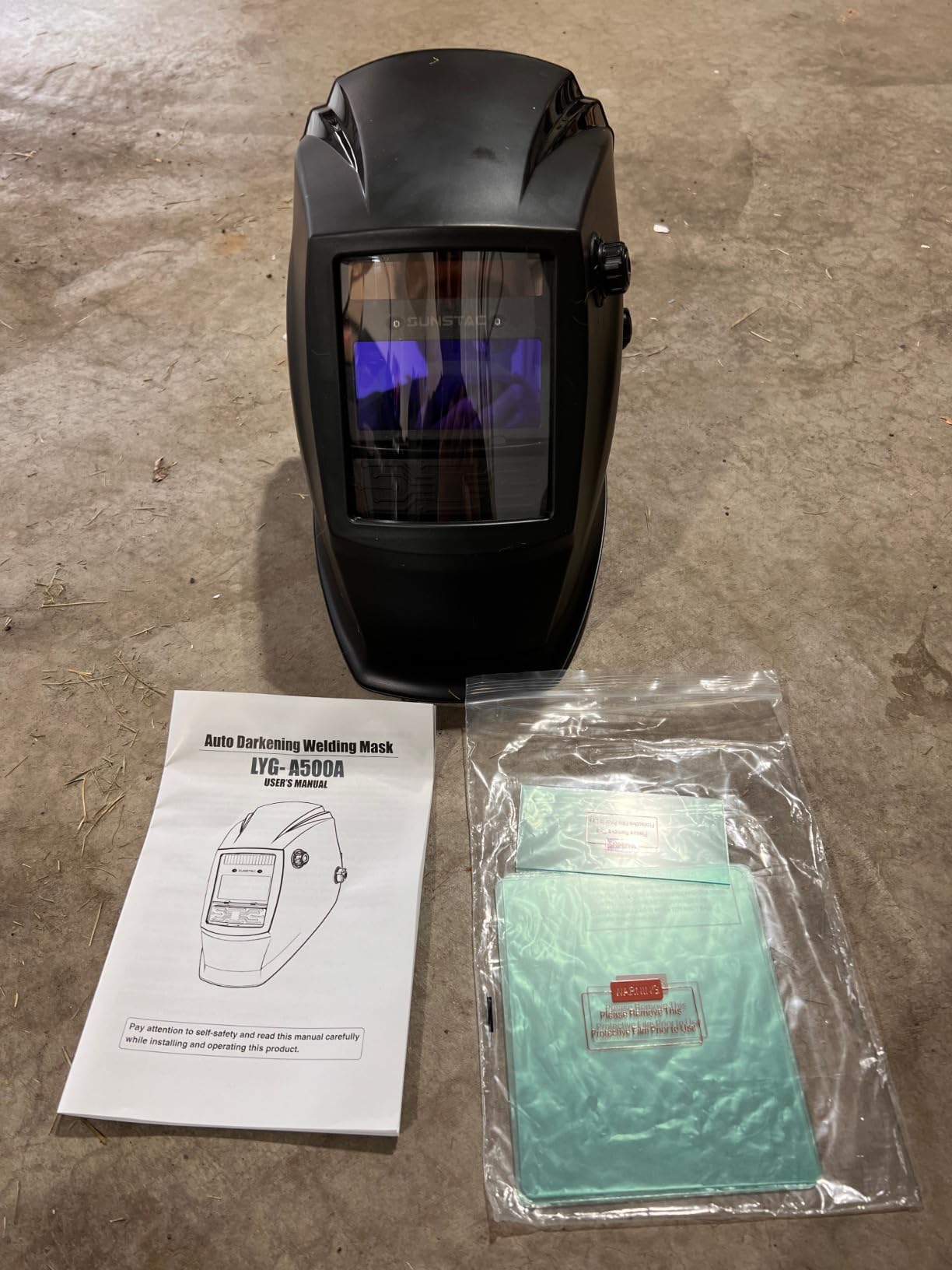
9. Sunstac SS-A800D-A – 3.94 x 3.27 Inches With a Swivel Work Light
Sunstac Auto-Darkening Welding Helmet 3.94 x 3.27″ View with Light
3.94 x 3.27 inch true color view
1/1/1/1, 1/30,000 sec
Shade 4/5-9/9-13 across all processes
Solar plus lithium power
+ Pros
- Large view with no darkening lag and no over-darkening
- Big improvement in puddle visibility over older hoods
- Well-padded adjustable headband that holds position
- Rechargeable work light with swivel angle
- Dual lithium and solar power
- Cons
- Battery compartment is awkward to access
- Solar panel supplements rather than recharges
- Head strap can press against glasses on smaller heads
- Side tension buttons feel delicate
The Sunstac covers the widest set of processes in the budget tier: stick, TIG, MIG, cutting, plasma cutting and grinding, all from a 3.94 x 3.27 inch true color lens rated 1/1/1/1 with a 1/30,000 second darkening and four arc sensors. That combination makes it a strong pick for fabrication shops that move between processes in a single shift.
Owners consistently describe the same two things about the auto-darkening: there is no lag, and it does not over-darken. A shade range of 4, 5-9 and 9-13 covers the processes, and the rechargeable high-brightness work light has two modes and an adjustable swivel angle, which is a nicer feature than it sounds when you are grinding in a dark corner.
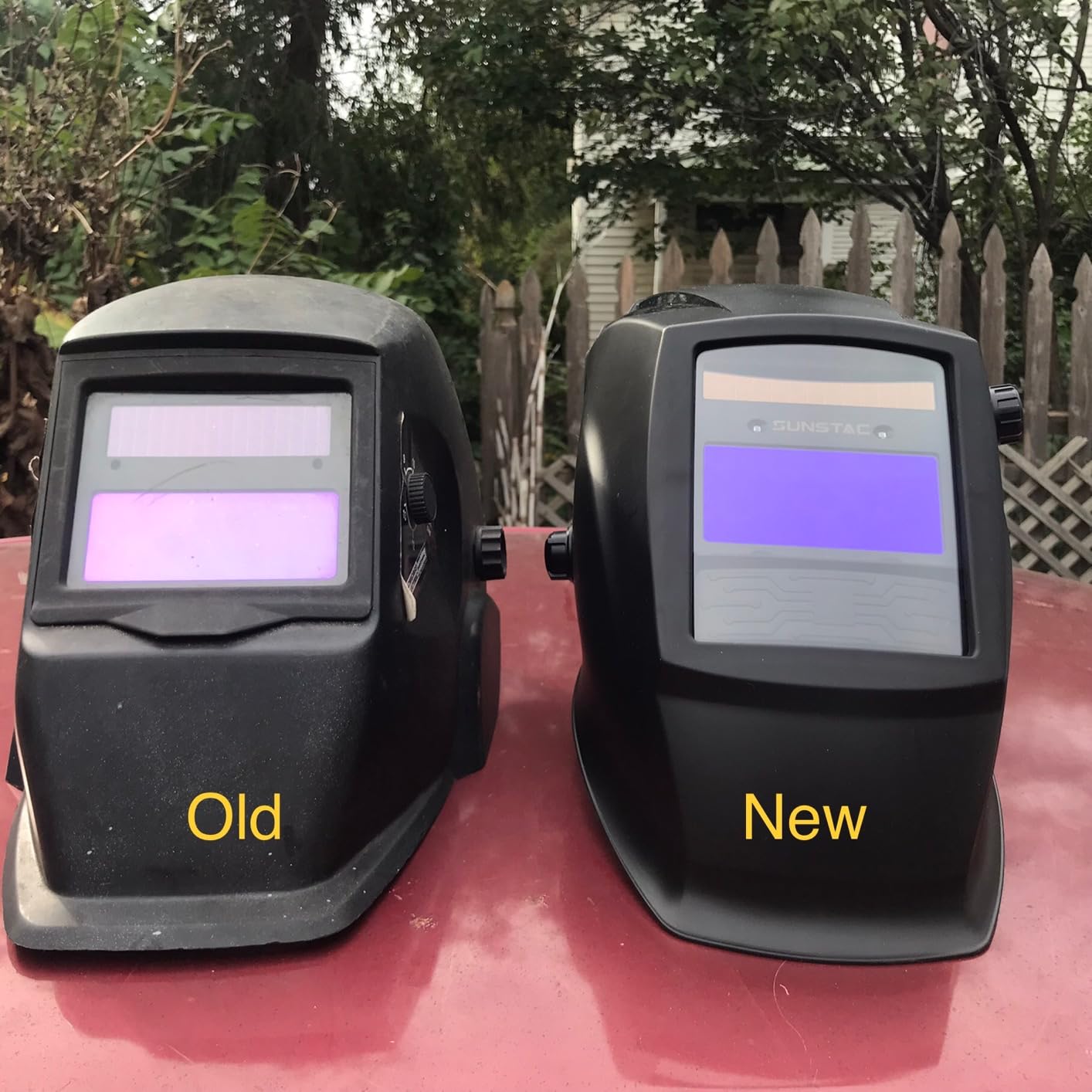
Plasma and Grinding Coverage
Plasma cutting throws more visible light than welding at the same perceived brightness, so a filter that struggles on a bright arc will look through and hurt your eyes. The 9-13 dark state on this model handles cutting and grinding, and the shade 4 mode keeps the lens usable for dressing and fit-up work.
The result in practice, according to owners, is a helmet that improves visibility so much over a previous self-darkening hood that the change feels immediate. The view is about 12.9 square inches, comfortably in large-view territory and slightly smaller than the taller 3.66 inch lenses in this group.
Power, Battery Access and Head Strap Fit
Dual power means a lithium battery with solar supplement. Owners are direct that the solar panel extends battery life rather than recharging it, so treat the cell as the primary source and the panel as the reason you seldom open the compartment.
Opening the compartment is the practical weak point here: the battery compartment is described as difficult to access, and the side tension buttons that hold the helmet position feel delicate enough that the hood can flop down. On smaller heads the strap can settle deep enough to press against glasses, which is a real issue if you wear eyewear under the helmet.
10. VEVOR BY801E METIS – Solar Power and Two Spare Batteries
VEVOR Welding Helmet Auto Darkening, 3.94″ x 3.15″ True Color Welding Hood, 1/1/1/1 Solar-Powered Welder Mask 4 Arc Sensors, Wide Shade 4/5-9/9-13 for TIG MIG ARC Weld Grinding Cutting – METIS Series
3.94 x 3.15 inch true color screen
1/1/1/1 optical clarity
4 sensors, 1/20,000 sec
Solar charging, 2 lithium batteries
+ Pros
- Large 100 x 80 mm true color view with 1/1/1/1 clarity
- 1/20000 second darkening with four smart sensors
- Solar charging plus two lithium batteries
- Width and angle adjustment knobs for a closer fit
- Heat and impact resistant shell blocks sparks
- Cons
- Widest rating spread in the group with inconsistent darkening reports
- Solar panel supplements rather than replaces the batteries
- Basic top-strap headgear instead of ratchet suspension
- Lowest review count limits reliability data
The VEVOR BY801E is the most recent entry-level large-view model here, and on paper it is a strong one. The viewing screen is 3.94 x 3.15 inches, which the manufacturer also gives as 100 x 80 mm, with 1/1/1/1 optical clarity and four smart arc sensors that darken in 1/20,000 of a second.
Where it stands out is the power package. Solar charging comes with two lithium batteries in the box, so you are not waiting on a single cell to die in the middle of a job. That is a meaningful reliability upgrade over a single-cell design at the same tier, particularly for field and mobile work where a shop charger is not available.
Two things hold it back from the top of the tier. The headgear is a top strap with width and angle adjustment knobs rather than a full ratchet suspension, which is workable but not the most refined fit. And the shade modes are simpler than the multi-mode designs elsewhere in this roundup: DIN 4 for grinding, 5-9 for cutting, 9-13 for welding.
The review profile is the honest concern. This model has the smallest review base in the group, and roughly 13 percent of its reviews sit at three stars, which points to some inconsistency in the auto-darkening behaviour between units. Where the filter does perform, owners appreciate the true color view, the shade range and having two batteries as standard.
How to Choose a Large-View Welding Helmet
Lens size is the headline, but it is one of about seven decisions that matter. Here is how to weigh them in the order that actually affects your work.
Measure the Filter, Not the Shell
Only two numbers count: the width and the height of the exposed filter. Ignore any listing that gives you a tier name. For context, roughly 12.5 to 15 square inches is a genuinely large single lens, and a panoramic design with two side windows adds another 12 to 14 square inches of usable glass that no flat lens can match.
Second, check optical class. A 1/1/1/1 or 1/1/1/2 rating should be the floor. Lower grades scatter light, distort the corners of the lens and add colour banding, and those effects get worse the larger the window, so a big lens with a poor grade is actively harder to work with than a small one with a good grade.
Sensor Count and Placement Matter More Than Count Alone
Two sensors sit at the top of the lens and work fine for flat, in-position MIG. Four sensors, spread around the window, and five-sensor layouts detect the arc from more angles, which is what stops a helmet failing when you are out of position, overhead, or doing low-amp TIG where the arc is faint and flickering.
Placement matters as much as quantity. A layout with sensors above and below the lens catches arcs that a top-only arrangement misses entirely. This is the single most common reason welders report a helmet that “will not trigger” on a particular job, and it is a hardware fact you cannot fix with sensitivity settings.
Switching Speed and Shade Range
Switching speed figures like 1/25,000 or 1/30,000 of a second are the difference between the arc appearing as a small bright spot and appearing as a white bloom that overwhelms your vision. Anything in that range is fast enough for shop work; the number matters most for TIG and for welders with slower reactions.
Shade range should cover 5 through 13 at minimum for general fabrication, with a 9 or 10 for stick, a 4 or 5 mode for grinding, and a light state around shade 3 or 4 so you can check fit-up with the helmet down. Wider ranges cost nothing extra on most of the models above, so there is no reason to accept a narrow one.
Weight, Head Fit and Fatigue
The working rule in the welding community is that anything over roughly 600 grams starts to produce neck fatigue by the end of a long shift, and that fatigue is not just discomfort: it is what makes you tip the helmet up, expose your face to the arc, and make mistakes. If you weld eight hours, weigh the helmet and prioritise the lighter option.
For head size, look for a published fit range. The Lincoln Electric in this roundup fits hat sizes 6 1/2 through 8, which is one of the widest ranges available, and a ratchet or knob headgear gives more adjustment than a buckle or strap closure. A helmet that will not adjust is a helmet with gaps at the temple and neck, and gaps are a safety problem, not a comfort one.
Power Source, Consumables and Certification
Solar assist extends runtime but does not replace a battery in most designs, so a replaceable lithium cell is worth having. Models that include spare inner and outer lenses save you an order after the first few months of use, and the inner lens in particular is the sacrificial layer that protects the expensive cartridge from spatter and scratches.
Finally, check the certification against what your own work requires. Standards such as ANSI Z89.1, EN 379, CSA Z94.3 and AS/NZS 1338.1 are not interchangeable across every jurisdiction, and a helmet that meets one is not automatically compliant with another. Confirming the mark on the label before you buy takes a minute and avoids a problem later.
Common questions about large viewing area welding helmets, answered directly.
Frequently Asked Questions
Which welding helmet has the largest viewing area?
Among the models we measured, the widest usable glass belongs to the 180 degree panoramic designs. The YESWELDER panoramic helmet pairs a 4.25 x 3.23 inch main lens with two 2.87 x 2.32 inch side windows, giving 8.89 x 3.23 inches of total glass, roughly 27 square inches. The largest single flat lens in this group is the TGR extra large view at 4 x 3.65 inches, about 14.6 square inches.
What welding helmets have a large viewing area?
A large viewing area means roughly 12.5 square inches of filter glass or more on a single lens, or a panoramic layout with side windows. In this roundup the large single-lens models measure 3.94 x 3.66, 3.94 x 3.27, 4 x 3.65 and 4.65 x 2.80 inches, while the panoramic designs add two side windows to a large main lens for a total well over 25 square inches.
Is a bigger viewing area welding helmet better?
Only when the optics keep up. A wider lens lets you see the puddle, the joint ends and your surroundings without moving your head, but if the optical class is poor or the arc sensors are slow and badly placed, the extra glass adds distortion and glare instead of visibility. Judge lens size and optical quality together, and prefer a large window with a 1/1/1/1 or 1/1/1/2 rating every time.
How many arc sensors does a good welding helmet need?
Four sensors is the practical minimum for real shop work, and placement matters as much as the count. Sensors spread around the window catch arcs at angles that a top-only pair misses, which is what prevents a helmet from failing to darken when you are out of position, overhead, or running low-amp TIG. Five sensors, as on the YESWELDER panoramic model, cover the most demanding work.
Which welding helmet is better, Arccaptain or Yeswelder?
Both brands offer large-lens auto-darkening helmets in the same tier, and the choice comes down to features rather than optics. The ARCCAPTAIN XK-LY800H has a 3.94 x 3.66 inch view with 1/1/1/1 clarity plus a built-in USB work light, dual solar and battery power, and a 180 day warranty. The YESWELDER LYG-M800H has the same 3.93 x 3.66 inch view and 1/1/1/1 clarity, four sensors with a quoted 1/30,000 second response, and a much larger base of owner feedback.
What is the best welding helmet for someone with a big head?
Look for a wide published fit range and a headgear you can fine tune. The Lincoln Electric Viking 3350 in this roundup fits hat sizes 6 1/2 through 8 with X6 suspension, which is one of the widest ranges available. Ratchet and knob headgear also adjust more precisely than strap or buckle closures, which matters more for a larger head because a loose fit leaves gaps at the temple and neck where spatter and UV can reach exposed skin.
What shade number is best for TIG welding?
Shade 9 to 13 is the working range for TIG, with shade 11 to 13 the usual choice for stainless and aluminium where you need to judge heat colour on the puddle. Lower amp TIG needs a filter that is sensitive enough to catch a faint arc, so look for adjustable sensitivity and four or more sensors. Our large-view picks all reach at least shade 13, and the YESWELDER panoramic model reaches shade 14 for heavy work.
Can a large viewing area welding helmet be used for grinding and plasma cutting?
Yes, provided it has grind and cut modes. A shade 3 or 4 grind mode handles flying particles, and a 9-13 cut mode covers plasma cutting, which throws more visible light than welding. In this roundup the ARCCAPTAIN XK-LY800H, TOOLIOM TL-M800D, Sunstac SS-A800D-A, YESWELDER panoramic and TGR Panoramic 180 all include dedicated grind and cut settings, and the TGR panoramic adds EN175B grinding protection.
Which Large-View Welding Helmet Should You Buy?
If you want one helmet to run every process in a fabrication shop and you judge quality by the glass, the Lincoln Electric Viking 3350 is the pick, with 1/1/1/1 optics, an extra large lens, a fit range that suits larger heads and the longest warranty in the group. If your priority is a big window without a big spend, the YESWELDER LYG-M800H gives you a 3.93 x 3.66 inch true color lens and four sensors for a fraction of the pro tier.
If you work under vehicles, in tight frames or around other people, choose the panoramic design and accept the fixed side filters, because the extra 13 square inches of side glass is worth more than adjustability. If you weld in the dark, the ARCCAPTAIN XK-LY800H puts a light where your hands are. If you grind stainless all day, prioritise a hood that sells replacement inner lenses, which rules out the YESWELDER panoramic model.
And check one number before you commit: the published lens dimensions. Anyone selling the best welding helmets with large viewing areas should state width and height in inches, and if they do not, ask. Use the product buttons above to check the current details for each model, and pick the one whose measured window you can actually see yourself working in.