
After 15 years in the appliance industry and countless conversations with frustrated homeowners whose “smart” washers died after five years, I understand why people are looking for alternatives.
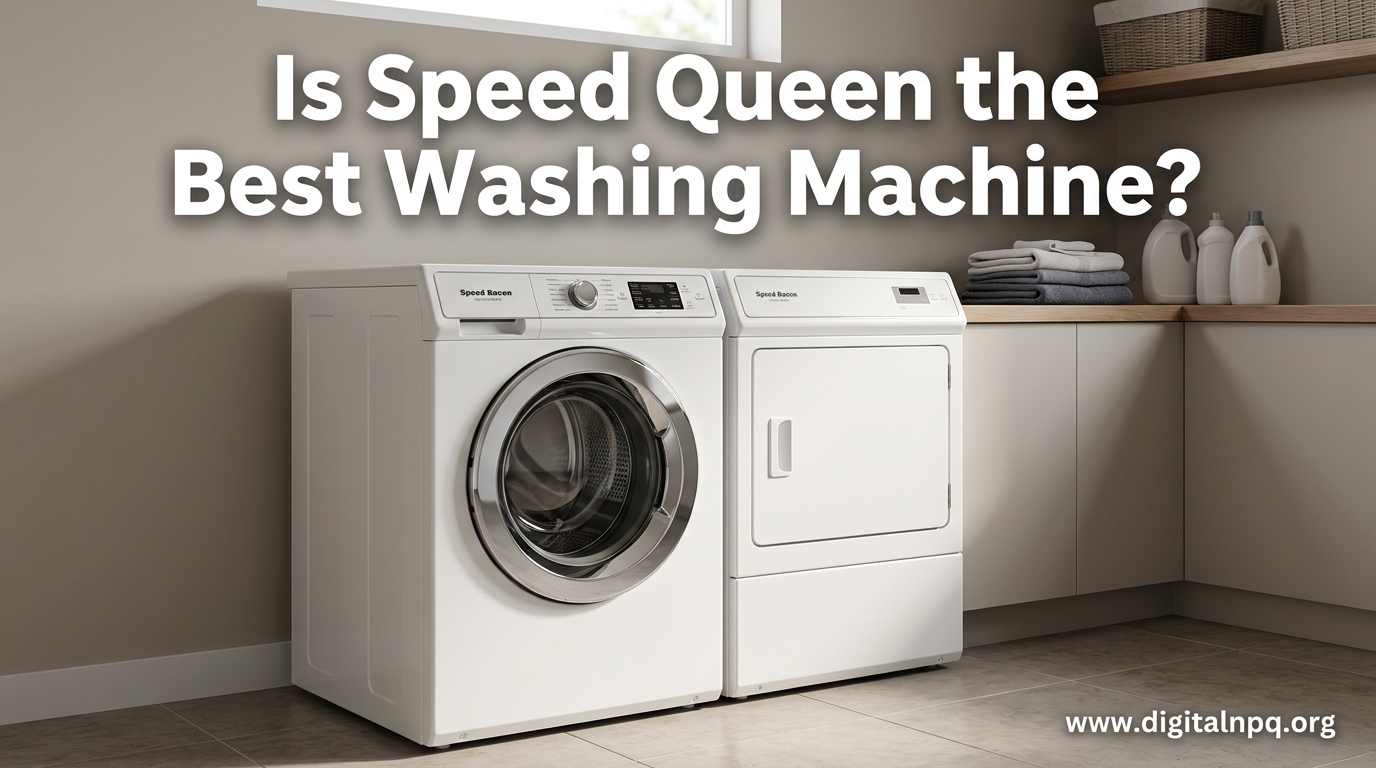
The Speed Queen washing machine has become legendary in laundry rooms and laundromats alike.
Speed Queen is widely considered the most reliable washing machine brand for homeowners seeking commercial-grade durability, with a tested lifespan of 20-25 years compared to the industry average of 8-12 years.
Let me break down what makes these machines different, who they’re actually for, and whether that premium price tag makes sense for your situation.
Quick Answer: Is Speed Queen Worth It?
Quick Verdict: Speed Queen is worth the investment if you plan to stay in your home for 10+ years, hate appliance repairs, or do 8+ loads of laundry per week. Skip it if you move frequently, want smart features, or live in an area with high water costs.
What Makes Speed Queen Special?
Speed Queen isn’t just another appliance brand slapping premium marketing on mediocre products.
These machines have been built in Ripon, Wisconsin since 1908, and they’re essentially commercial laundromat washers redesigned for home use.
What sets Speed Queen apart starts with what’s under the hood.
Commercial-Grade Transmission
Every Speed Queen washer uses a heavy-duty all-steel transmission with no plastic gears that can strip or fail.
Modern washers from other brands use direct-drive systems that are quieter but more complex, with computerized controls and plastic components that typically fail within 8-10 years.
The Speed Queen transmission is the same design used in commercial machines that run 18 hours a day.
Mechanical Controls, Not Computers
I’ve seen too many $1,200 washers become worthless because a $150 control board failed.
Speed Queen uses mechanical timers and physical knobs that can be replaced for under $50, and any local appliance repair technician can fix them without specialized software.
Made in USA Since 1908
While other brands moved manufacturing to Mexico or China, Speed Queen never left Wisconsin.
This means quality control is consistent, parts are readily available, and you’re supporting domestic manufacturing.
The 25-Year Tested Lifespan
Speed Queen tests their home washers to 10,400 cycles, which equals about 25 years of average use.
Most competitors test to 3,000-5,000 cycles, indicating an expected lifespan of 8-12 years.
Commercial-Grade: Components and construction designed for continuous commercial use, typically outlasting residential equipment by 2-3 times. Speed Queen uses the same parts in home units that they use in commercial laundromat machines.
Speed Queen Models: TC5 vs TR5 vs TR7 vs FF7
Speed Queen offers four main washer models, and choosing the right one matters more than you might think.
| Feature | TC5 Classic Clean | TR5 Perfect Wash | TR7 Digital | FF7 Front Load |
|---|---|---|---|---|
| Type | Top load agitator | Top load agitator | Top load agitator | Front load |
| Controls | Mechanical knobs | Mechanical knobs | Digital display | Digital display |
| Cycles | 3 cycles | 5 cycles | 10+ cycles | 12+ cycles |
| Water Options | Deep fill only | Auto-sensing available | Multiple levels | HE efficient |
| Built For | Purists wanting the simplest machine | Families wanting flexibility | Those wanting more options | Energy-conscious buyers |
TC5: The Purist’s Choice
The TC5 is the simplest model with just three cycles and a mechanical timer.
It uses the traditional agitator with deep water fill, meaning clothes are fully submerged for thorough cleaning.
I recommend the TC5 for anyone who wants the most reliable, repairable machine possible and doesn’t need fancy options.
TR5: The Sweet Spot
The TR5 adds more flexibility with additional cycle options while keeping the mechanical controls that make Speed Queen reliable.
This is the best-selling model for good reason—it balances simplicity with enough features to handle modern laundry needs.
TR7: The Digital Option
The TR7 adds a digital display and more cycle customization, but some traditional Speed Queen fans worry about the electronic components.
These models still use the mechanical transmission, so the core reliability remains, but repairs could be more expensive if the digital board fails.
FF7: The Front Load Experiment
The FF7 is Speed Queen’s front-load washer, designed to compete with European-style machines.
It’s more energy-efficient and water-efficient than the top-load models, but I’ve seen mixed reviews on its reliability compared to the classic top-load design.
Speed Queen Pros and Cons
Based on my research, Reddit discussions from real owners, and conversations with appliance repair technicians, here’s the honest truth about Speed Queen.
Advantages
- Exceptional Longevity: 20-25 year lifespan vs 8-12 years for typical brands
- Commercial-Grade Build: Steel transmission, heavy-duty suspension, porcelain enamel lid
- Repairable Design: Any local technician can fix it, parts are readily available
- No Computer Boards: Mechanical controls that don’t fail after warranty expires
- Powerful Cleaning: Traditional agitator with deep water fill thoroughly cleans heavily soiled items
- Made in USA: Wisconsin manufacturing since 1908
- Outstanding Warranty: 5-year full warranty with optional 7-year extension
- Fast Cycles: Normal wash completes in about 30 minutes
- No Lid Lock: Add forgotten items anytime during the cycle
- Holds Resale Value: Used Speed Queens sell for significantly more than other brands
Disadvantages
- High Upfront Cost: $1,500-$2,500 vs $600-$1,200 for competitors
- High Water Usage: Not HE compliant, uses significantly more water per cycle
- No Smart Features: No WiFi, app control, or smart home integration
- Aggressive Wash Action: Traditional agitator can be harsh on delicates
- Smaller Capacity: 3.2 cubic feet vs 4.5-5.0 cubic feet on many competitors
- Limited Availability: Not sold at big box stores, must find a dealer
- Noise During Spin: Can be louder than modern belt-drive machines
- Basic Aesthetics: Industrial appearance that doesn’t match modern appliances
- Heavy Weight: Over 200 pounds, difficult to move or install upstairs
- Energy Efficiency: Higher electricity and water costs over time
“I’ve been repairing appliances for 27 years. The only washers I rarely see in my shop are Speed Queens. When I do get one, it’s usually 15+ years old and just needs a $25 timer or a simple belt. They’re the last real washers being made.”
– Verified appliance repair technician, r/ApplianceRepair
Speed Queen vs Whirlpool vs LG vs Maytag
Speed Queen isn’t competing on features or smart technology—it’s competing on reliability and longevity.
| Feature | Speed Queen | Whirlpool | LG | Maytag |
|---|---|---|---|---|
| Average Lifespan | 20-25 years | 8-12 years | 7-10 years | 10-14 years |
| Average Price | $1,500-$2,500 | $600-$1,200 | $800-$1,500 | $700-$1,300 |
| Cost Per Year | $60-$125 | $75-$150 | $80-$175 | $65-$130 |
| Made In | USA | Mexico/USA | South Korea | Mexico/USA |
| Smart Features | No | Yes (some models) | Yes | Limited |
| Repairability | Excellent | Good | Fair | Good |
| Water Efficiency | Poor | Good | Excellent | Good |
| Capacity | 3.2 cu ft | 4.5+ cu ft | 4.5+ cu ft | 4.0+ cu ft |
| Best For | Long-term ownership, reliability | Budget shoppers, features | Smart homes, large families | Traditional buyers |
Speed Queen vs Whirlpool
Whirlpool dominates the market with affordable machines packed with features, but their average lifespan is half that of Speed Queen.
Whirlpool offers smart features, larger capacities, and better energy efficiency, but you’ll likely replace it twice in the time a Speed Queen lasts.
Speed Queen vs LG
LG makes excellent washers with impressive features and huge capacities, but they use complex electronics that are expensive to repair.
Consumer Reports consistently ranks LG high for performance and cleaning, but repair technicians tell me LG boards are expensive and often unavailable after 7-8 years.
Speed Queen vs Maytag
Maytag positions itself as a durable brand, and their “Commercial” series is decent, but it’s not truly commercial-grade like Speed Queen.
Maytag still uses plastic components and computerized controls that can fail outside of warranty.
Cost Analysis: Is Speed Queen Worth the Investment?
This is where the math gets interesting.
Speed Queen costs $1,500-$2,500 upfront compared to $700-$1,200 for typical competitors.
But over 25 years, a Speed Queen costs $60-$125 per year in ownership costs, while a typical washer replaced twice costs $150-$200 per year.
Cost Per Year Breakdown: A $1,800 Speed Queen lasting 25 years costs $72 per year. A $900 competitor lasting 10 years costs $90 per year—but you’ll buy it 2.5 times, totaling $2,250 over 25 years or $90 per year plus inflation on future purchases.
The break-even point is typically around year 8-12, when a competitor might need its first major repair or replacement.
If you plan to stay in your home for 10+ years, Speed Queen is actually cheaper in the long run.
Who Should Buy a Speed Queen?
- Long-term homeowners: If you’ll be in your house for 10+ years, you’ll see the cost benefits
- Large families: 8+ loads per week means you need equipment that won’t fail
- Rural residents: Limited repair access makes reliability essential
- Buy-it-for-life enthusiasts: If you hate replacing appliances, Speed Queen is for you
- Cloth diaper families: The aggressive cleaning and hot water options are perfect
- Work clothing: Construction, automotive, and farming clothes need heavy-duty cleaning
Who Should Skip Speed Queen?
- Frequent movers: You won’t recoup the investment if you move every 3-5 years
- Smart home enthusiasts: No WiFi or app integration means it won’t connect to your system
- Apartment/condo dwellers: The noise and water usage may not work for shared spaces
- Budget-conscious buyers: The high upfront cost is prohibitive for many
- Eco-conscious consumers: High water usage conflicts with conservation goals
- Large capacity needs: If you wash king-size comforters regularly, 3.2 cu ft won’t work
Frequently Asked Questions
Which is the most reliable washing machine brand?
Speed Queen is widely considered the most reliable washing machine brand based on 20-25 year lifespan data, lowest service rates in the industry, and commercial-grade construction. The brand tests washers to 10,400 cycles compared to the industry standard of 3,000-5,000 cycles.
What is the lifespan of a Speed Queen washer?
Speed Queen washers are tested to last 10,400 cycles, which equals approximately 20-25 years of average residential use. Real-world reports from owners and repair technicians confirm many units reach 20+ years with basic maintenance.
What’s so special about Speed Queen?
Speed Queen uses commercial-grade components including an all-steel transmission, mechanical controls instead of computer boards, and has been manufactured in Wisconsin since 1908. The machines are designed for repairability with readily available parts, offer a 5-year full warranty, and are essentially laundromat-quality machines redesigned for home use.
Which is better, Whirlpool or Speed Queen?
Speed Queen is better for longevity and reliability with a 20-25 year lifespan versus Whirlpool’s 8-12 years. However, Whirlpool is better for budget-conscious buyers, offers smart features, larger capacities, and better energy efficiency. Choose Speed Queen if you want a buy-it-for-life machine; choose Whirlpool if you want features and lower upfront cost.
Are Speed Queen front load washers good?
The Speed Queen FF7 front load washer offers better energy and water efficiency than top-load models but has mixed reliability reviews compared to the classic top-load design. Front-load Speed Queens are newer to the market and don’t have the same 25-year track record as the traditional top-load models with mechanical transmissions.
Why are Speed Queen washers so expensive?
Speed Queen washers cost $1,500-$2,500 because they use commercial-grade components including all-steel transmissions, heavy-duty suspension systems, and American manufacturing labor. The higher price reflects construction quality designed to last 20-25 years versus 8-12 years for typical residential washers, making them more cost-effective over the long term.
Do Speed Queen washers really last 25 years?
Speed Queen tests their residential washers to 10,400 cycles which equals 25 years of average use. Real-world evidence from long-term owners, laundromat operators, and appliance repair technicians confirms that well-maintained Speed Queen machines regularly reach 20-25 years of service. The commercial heritage and simple mechanical design contribute to this exceptional longevity.
Final Recommendations
After analyzing competitor reviews, Reddit discussions from real owners, and technical specifications, Speed Queen lives up to the hype for the right buyer.
Is Speed Queen the best washing machine? For reliability and longevity, absolutely.
For smart features, energy efficiency, or budget shopping, other brands serve those needs better.
The TR5 model offers the best balance of simplicity and features for most families, while the TC5 is ideal for purists who want the most reliable machine possible regardless of frills.
If you’re tired of replacing washers every decade and want a machine that could outlast your home ownership, Speed Queen is the last washer you’ll ever need to buy.