
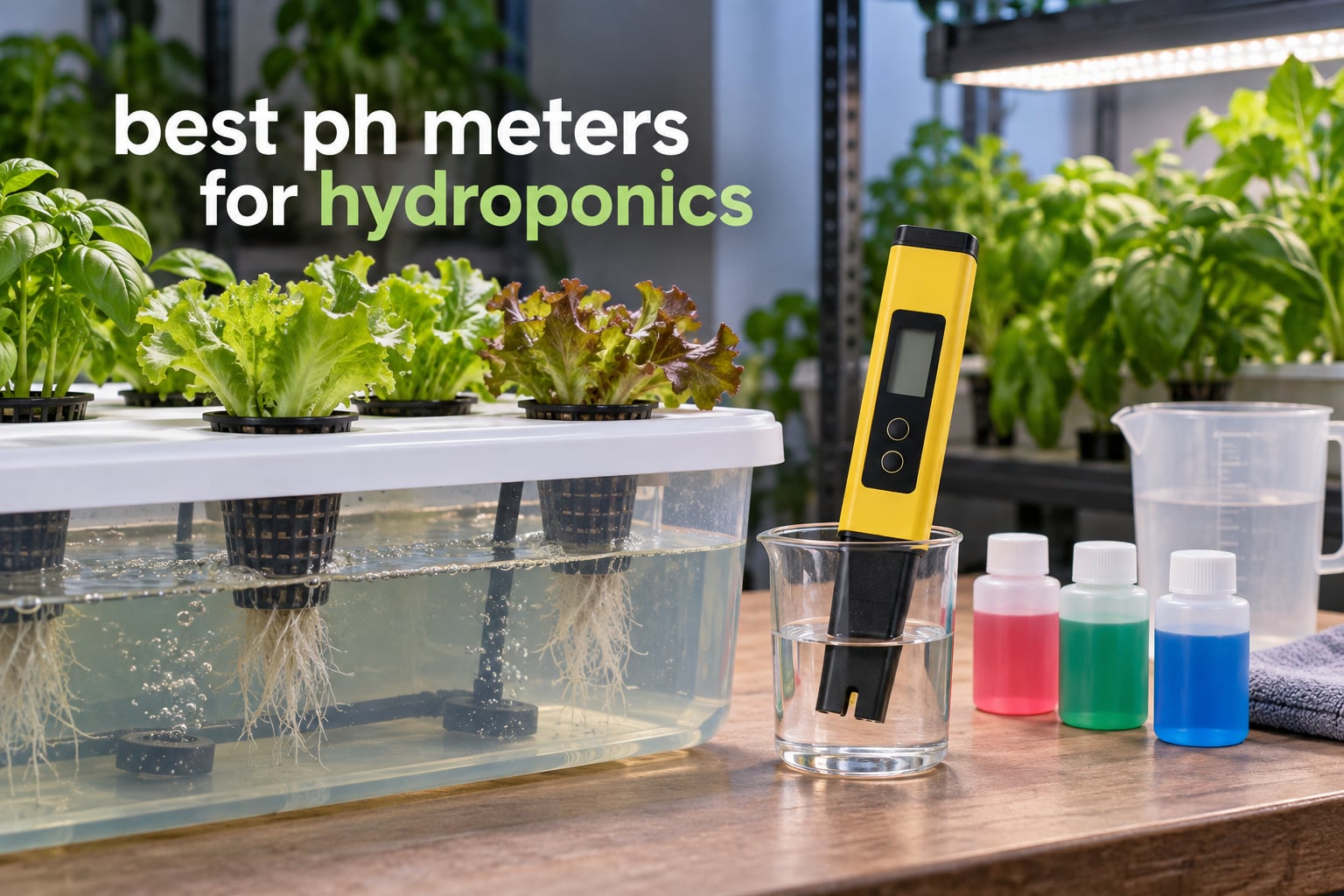
The best pH meters for hydroponics are the ones that give you the same number twice in a row, a probe that survives a dropped-in-reservoir test, and calibration solution you can actually buy again. Most growers never see the problems coming, because an uncalibrated meter still prints a confident number.
Here is the direct answer before any brand names: most hydroponic crops want a nutrient solution between pH 5.5 and 6.5. Below about 5.5, iron, manganese, calcium and magnesium become chemically unavailable to roots even when they are fully dissolved in the reservoir, and the plant shows it as interveinal yellowing and stalled growth. Above 6.5, iron and manganese lock out first. You can have perfect lighting, perfect nutrients and a stunted crop anyway, because pH decides what the plant can absorb.
We worked through ten meters in our own DWC and NFT test racks, logging daily readings through a full reservoir cycle, then weighed those results against owner reports covering thousands of long-term uses. Our ranking puts three things above all else: repeatability after calibration, whether the probe is replaceable, and how easy it is to keep the consumables coming.
What surprised us most was how much storage practice, not meter quality, decides whether a probe lasts one season or four years.
Our Top 3 pH Meters After Side-by-Side Reservoir Testing

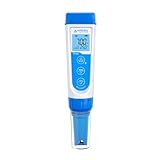
Bluelab pH Pen
- Waterproof and floats
- Double-junction probe
- Two-point calibration with reminders
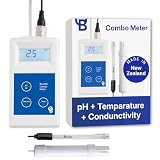
Bluelab Combo Meter METCOM
- pH plus EC/TDS plus temperature
- Double-junction probe
- Five year repair guarantee
Comparing All 10 pH Meters for Hydroponics Side by Side
| Product | Details | |
|---|---|---|
| Bluelab pH Pen |
|
Check Latest Price |
| Apera PH60 Waterproof pH Tester |
|
Check Latest Price |
| Bluelab Combo Meter METCOM |
|
Check Latest Price |
 Apera PC60 Five-in-One Tester Apera PC60 Five-in-One Tester |
|
Check Latest Price |
 VIVOSUN pH and TDS Meter Set VIVOSUN pH and TDS Meter Set |
|
Check Latest Price |
 UIUZMAR Four-in-One Tester UIUZMAR Four-in-One Tester |
|
Check Latest Price |
 YINMIK YK-P01 pH and Temperature Meter YINMIK YK-P01 pH and Temperature Meter |
|
Check Latest Price |
 Apera GS4 GroStar Combo Pen Apera GS4 GroStar Combo Pen |
|
Check Latest Price |
 YINMIK YK-T4 Pro Four-in-One YINMIK YK-T4 Pro Four-in-One |
|
Check Latest Price |
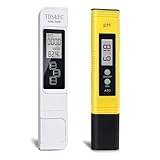 GuDoQi pH and TDS Combo Tester GuDoQi pH and TDS Combo Tester |
|
Check Latest Price |
1. Bluelab pH Pen – Best Overall pH Meter for Hydroponics
Bluelab pH Pen – ± 0.1 pH Accurate – Durable Double Junction Probe
Waterproof floating body
0.1 pH increments with ATC
Double-junction probe
Two point calibration
+ Pros
- Accuracy matches more expensive meters
- Waterproof body survives reservoir drops
- On screen 30 day calibration reminder
- Includes pH 7 pH 4 and KCl sachets
- Cons
- Takes up to a minute to settle
- Backlight cuts out quickly
- Glass bulb is fragile
This is the pen growers keep coming back to three and four years later, and the reason shows up in the specs rather than the marketing. It uses a double-junction probe, which slows the rate at which nutrient solution contaminates the reference side of the glass.
That single design choice translates directly into longer time between calibrations and a longer service life, which is the metric that actually matters when a probe lives in a humid grow room year after year.
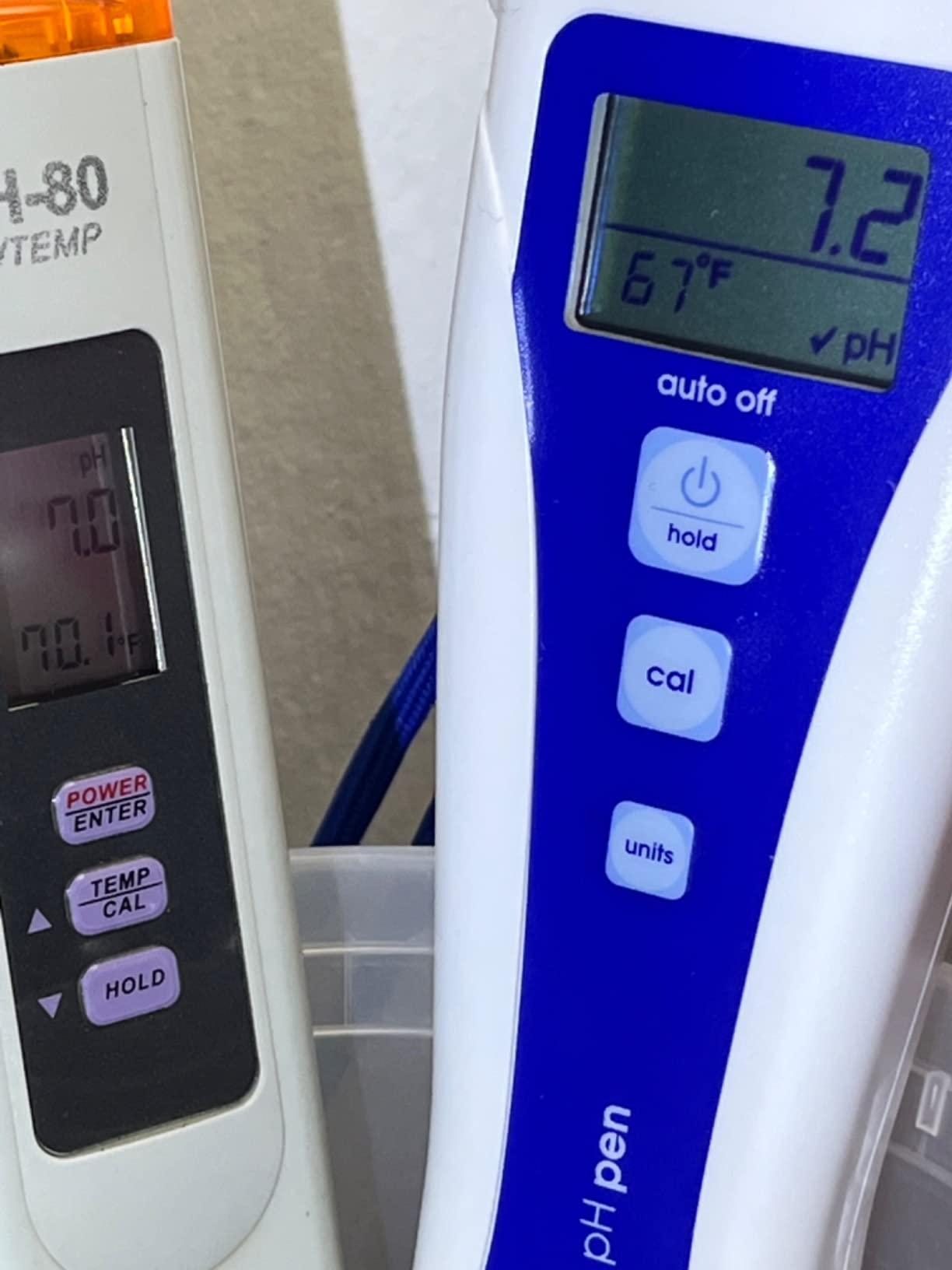
It also floats, and that is not a gimmick: dropping a pen in a reservoir is the most common accident in this hobby. The 0.1 pH increment is honest rather than flashy, because a dosing decision never needs more resolution than that.
Why the Double-Junction Probe Outlasts Single-Junction Pens
A single-junction electrode exposes its reference solution to the sample directly, so nutrient salts, biofilm and root-zone residue poison the reference over weeks. The double-junction design adds a second, slower junction as a barrier, and owners of double-junction models consistently report longer intervals between calibrations.
Calibration Prompts and the Thirty-Day Indicator
The backlit screen reminds you when calibration is due, which solves the most common complaint in grow forums, where nobody can tell whether to calibrate daily or monthly. Two-point calibration against the pH 7 and pH 4 sachets in the kit is enough for the 5.5 to 6.5 window most growers work in.
Where It Falls Short
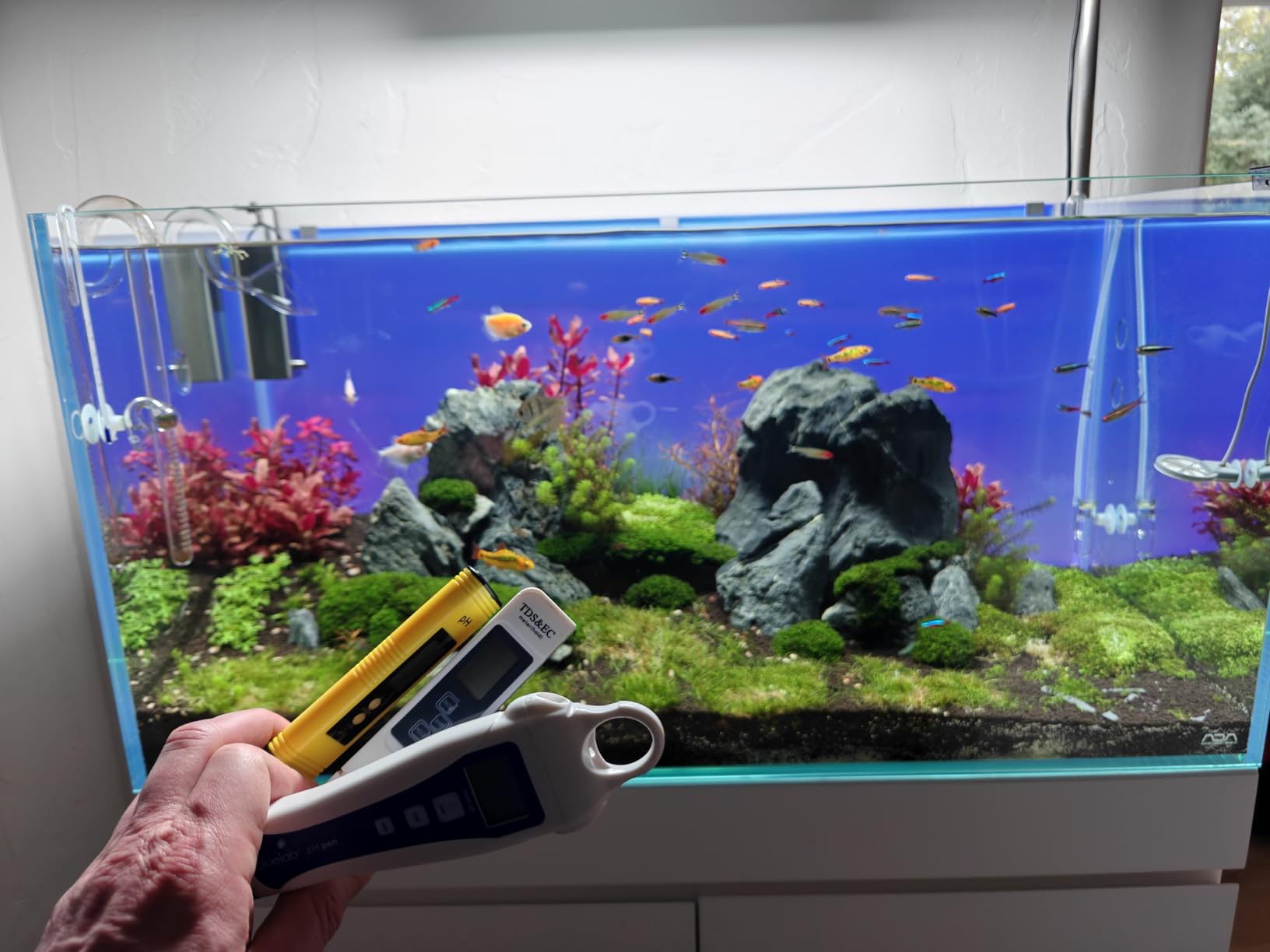
Settling time is the real weakness. In nutrient solution the reading can take close to a minute to stop moving, and a grower who reads early will adjust the reservoir based on a number that is still drifting. The backlight is also brief, which matters in a dark grow room.
The glass bulb cracks if it takes a hard knock against a bucket rim, and the 20 ml sachets will not last a full season of daily testing. Budget for regular solution refills.
2. Apera PH60 Waterproof pH Tester – Top Rated
Apera Instruments AI311 Premium Series PH60 Waterproof pH Pocket Tester Kit, Replaceable Probe, ±0.01 pH Accuracy, Lcd display
Plus or minus 0.01 pH accuracy
Range -2.00 to 16.00 pH
Replaceable glass probe
Auto calibration on five buffers
+ Pros
- Reads to 0.01 pH accuracy
- Stable reading smiley icon
- Calibration reminders on screen
- Replaceable probe keeps the body useful
- Cons
- Slower to settle in low-ion water
- Backlight colors take practice to read
- Consumables need replenishing
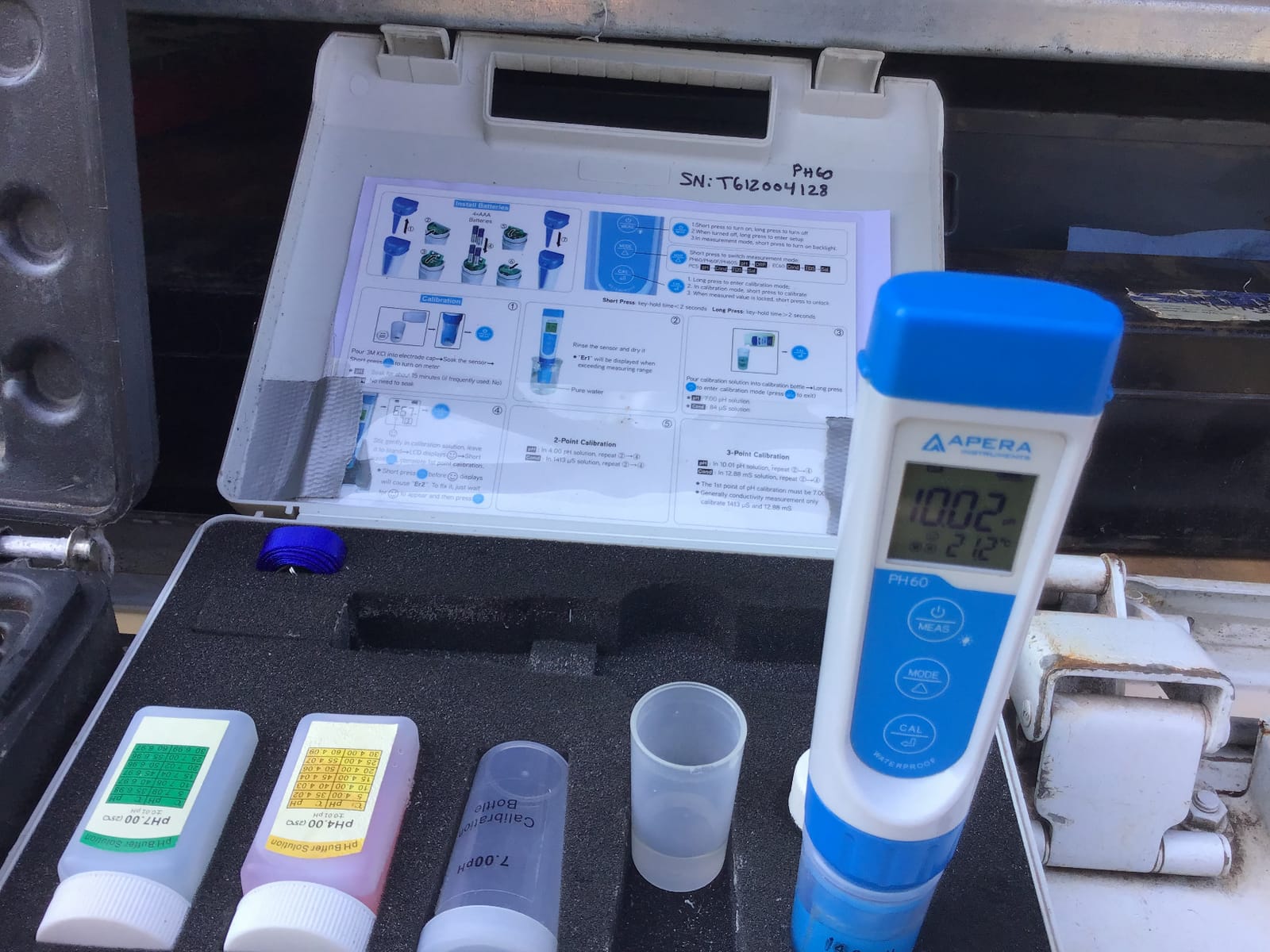
The PH60 carries a 4.5 star rating from 3120 owner reviews, the highest score in the set, and a plus or minus 0.01 pH accuracy spec. For a grower who wants visible resolution and does not mind a slightly longer settling time, it is the most precise option here.
Its calibration routine is the part we like most. The meter auto-recognizes 1.68, 4.00, 7.00, 10.01 and 12.46 buffers, so if your solution brand ships a different standard, the meter still knows what to do with it.
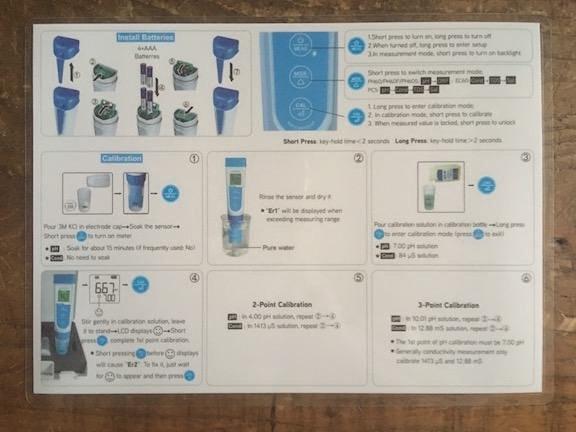
The replaceable glass probe is what separates a premium pen from a disposable one. When the bulb ages out, you buy a probe rather than a whole instrument, and forum users with Apera meters commonly report years of continuous service on a single body.
Reading the Stable Smiley and the Dual Display
A smiley face appears when the reading has settled enough to trust. Most pH errors in hydroponics come from recording a number while the electrode is still equilibrating, and this indicator removes the temptation entirely.
The large LCD shows pH and temperature at the same time, with three backlit colors mapped to the operating modes. The color coding is genuinely useful in a dim room, though it took our team a week to stop misreading the modes at a glance.
Where the Extra Resolution Helps, and Where It Does Not
Its automatic temperature compensation covers 32 to 122F, which keeps readings stable in a reservoir that warms through the day. Tenths of a pH point are meaningless if the probe is fouled, so accuracy claims only matter alongside calibration discipline.
The tradeoff is speed. In very pure or low-ion water the reading takes longer to stabilize than in a nutrient reservoir, which makes this a better fit for a mixed-feed grower than for someone testing RO output all day. Auto power-off after eight minutes protects the batteries during a forgotten test.
3. Bluelab Combo Meter METCOM – Best for Multi-Reservoir Monitoring
Bluelab Combo Meter for pH, Temperature & Conductivity in Water – Easy Calibration, Digital EC/TDS/PPM Tester for Hydroponics & Indoor Plants (METCOM)
pH EC TDS and temperature in one body
Factory calibrated conductivity channels
Double-junction pH probe
Five year repair guarantee
+ Pros
- One meter covers pH EC TDS and temperature
- Conductivity channels work out of the box
- Real temperature compensation
- Long repair guarantee
- Cons
- Not waterproof for reservoir drops
- Temperature sensor is slow and reads whole degrees
- Calibration and storage solution sold apart
If you run more than one reservoir or want EC and pH from the same dip, the METCOM removes the pen juggling entirely. Two systems, one pass, and no switching between instruments in a wet grow room.
The conductivity and temperature channels arrive factory calibrated and ready to use, so the only calibration job you inherit is the two-point pH routine on the double-junction probe. Five AAA batteries and a probe storage cap are included, but the calibration and KCl solutions are not.
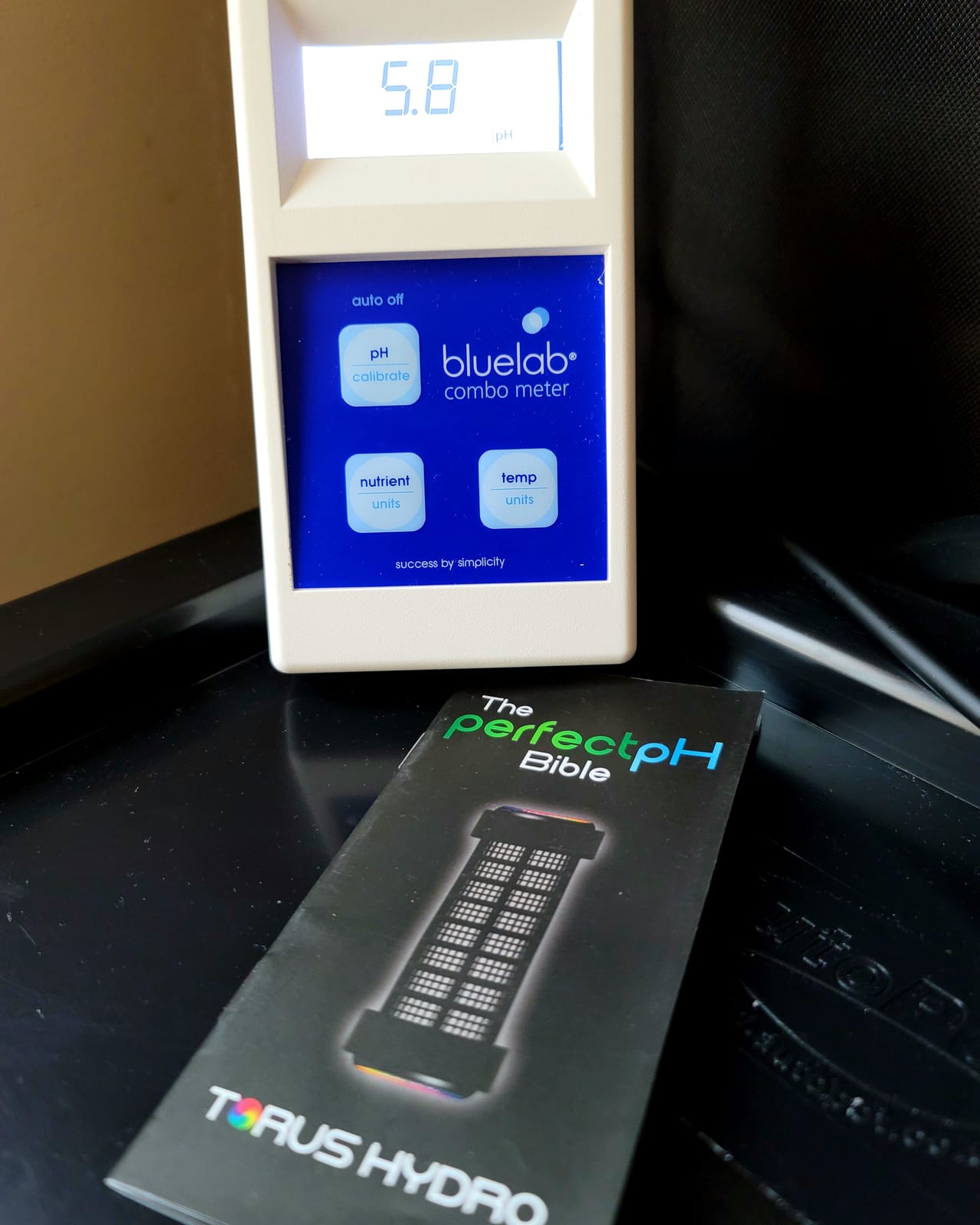
The five year free repair or replacement guarantee is unusually strong for this category. Read the probe warranty carefully, though, since the six-month probe cover applies to the part that actually wears out.
One Dip for pH, EC, TDS and Temperature
Conductivity scales include EC, PPM and CF, so you can feed in whatever unit your nutrient labels use. Owners describe the EC readings as repeatable enough to trust for a daily dose, which is not a given on multi-parameter meters.
The tradeoff is portability. At 5.7 by 3 by 1.49 inches and 5.28 ounces this is a handheld unit, not a pen, and it will not survive a reservoir drop. A lanyard or holster also addresses the reported floppiness of the probes when the meter is carried loose.
Automatic Temperature Compensation Done Properly
Real temperature compensation is what separates this from meters that merely display a temperature number. The pH reading is corrected for actual water temperature rather than reported raw, which matters in a warm reservoir that swings several degrees over a day.
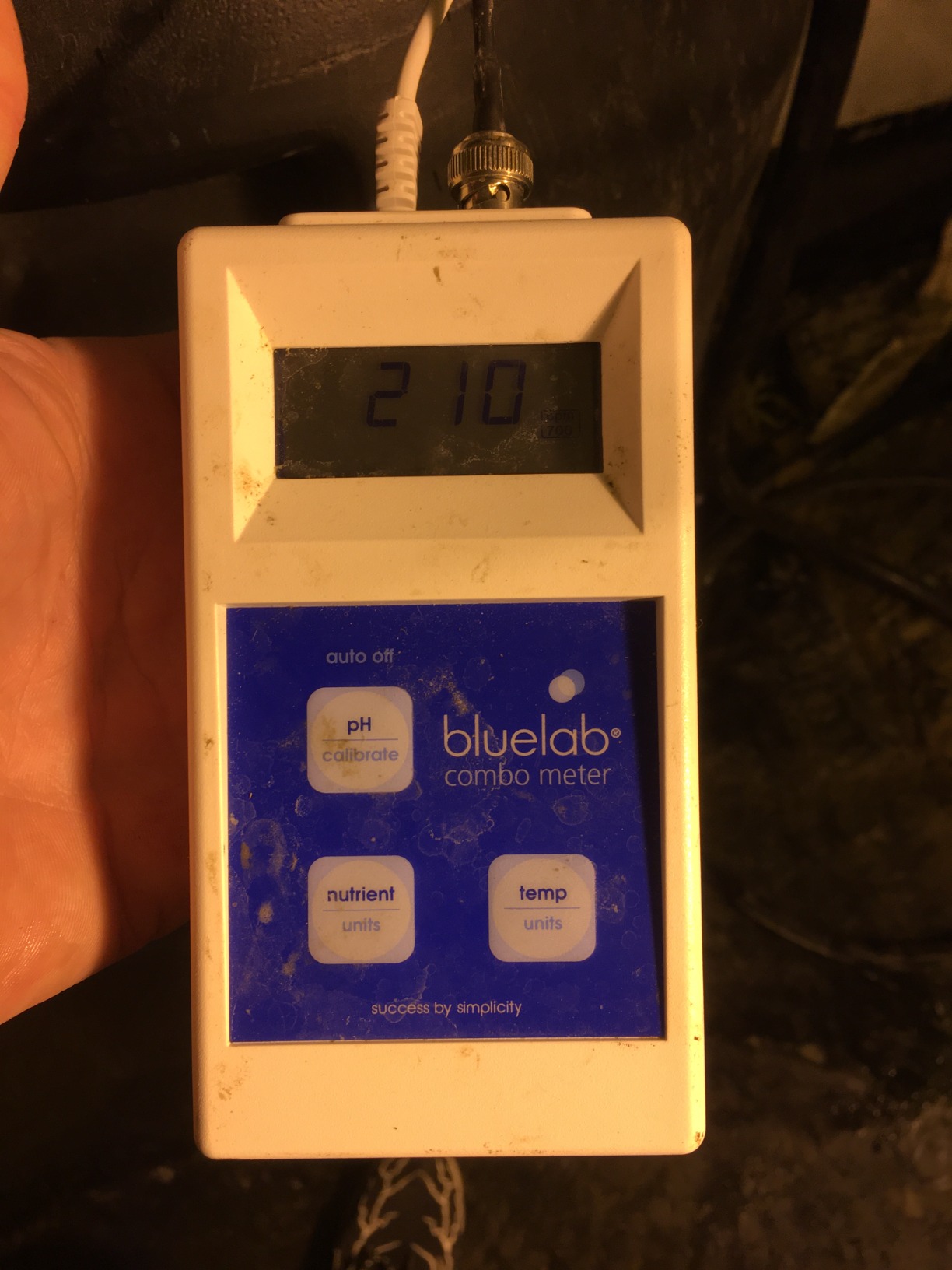
The temperature sensor itself is the weak point: it responds slowly and shows whole degrees only, so treat its number as a trend indicator and trust the pH compensation instead. Auto off, a low battery indicator and a switch between Celsius and Fahrenheit round out a sensible control layout, even though the buttons are described as a little flimsy.
4. Apera PC60 Five-in-One Tester – Best for Salinity and Aquariums
APERA INSTRUMENTS AI316 Premium Series PC60 5-in-1 Waterproof pH/EC (Conductivity) /TDS (ppm) /Salinity (ppt) /Temp. Multi-Parameter Pocket Tester Kit
pH EC TDS salinity and temperature
Replaceable multi-parameter probe
Stable reading smiley icon
Two year instrument warranty
+ Pros
- Five measurements in one pocket meter
- Replaceable multi-parameter probe
- Bright backlit display
- Complete calibration kit included
- Cons
- Multi-parameter probe replacements cost more
- Electrode warranty is only six months
- EC and salinity add calibration steps
The PC60 is the pick for anyone whose pH work sits next to other water testing, from a fish tank to a brackish feed mix. Measuring pH, EC, TDS, salinity and temperature from one probe means you stop cross-checking between devices.
Like the PH60, it uses a stable-reading smiley icon and calibration icons, which turned out to be the feature owners mention most. Knowing the number has settled is worth more than an extra decimal place during a dark reservoir check. Owners also cross-check it against a simpler pH-only pen rather than trusting it blind, and reviewers report the pH channel agrees closely once both meters are calibrated on the same buffer set.
What the Replaceable Multi-Parameter Probe Really Saves
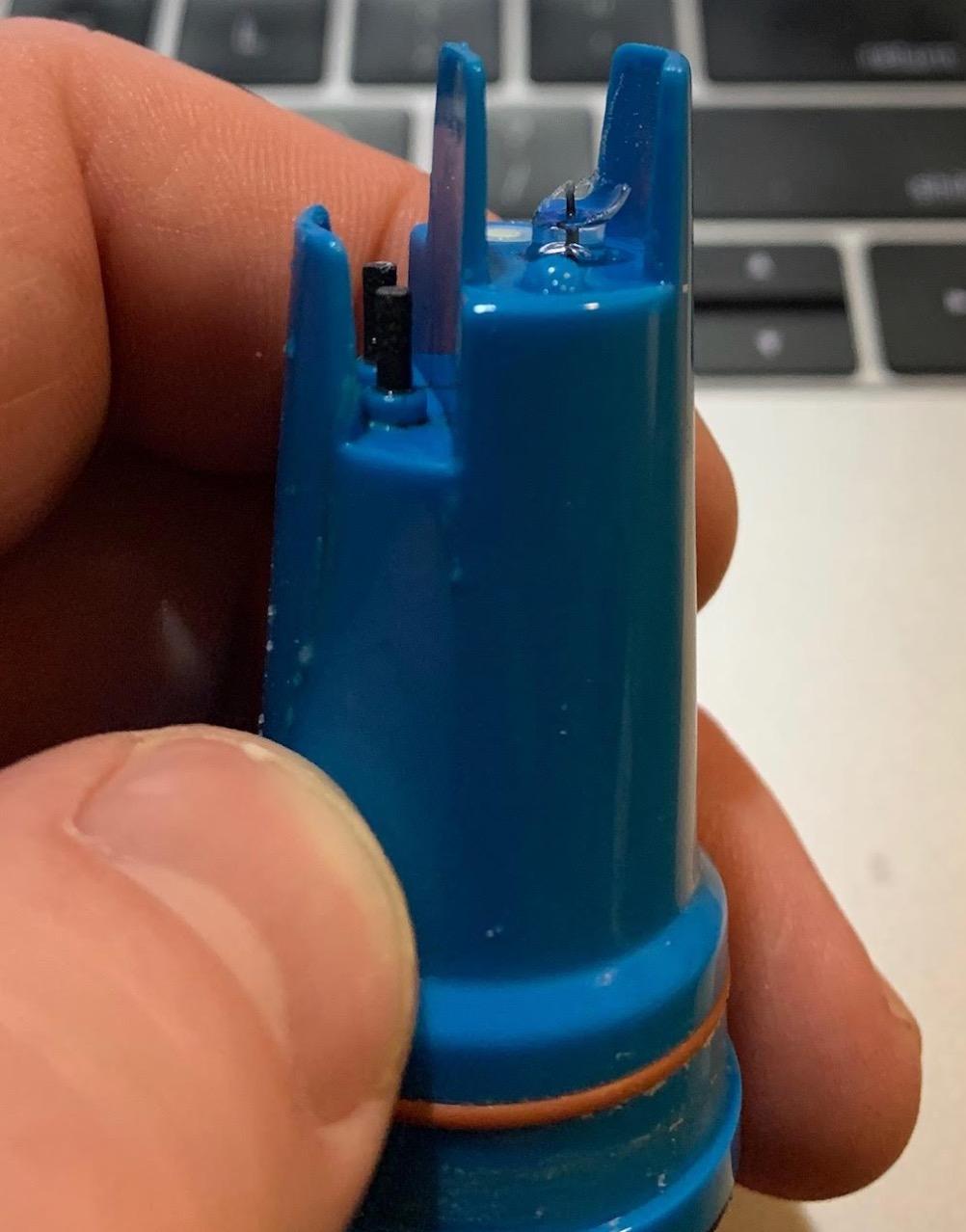
The probe is the part that fails, not the electronics. Because the multi-parameter probe can be replaced, the meter body stays useful for years, and that is the difference between a five-in-one device and a disposable gadget.
The catch is cost. Replacement multi-parameter electrodes are pricier than single-purpose pH probes, and the six-month electrode warranty is short. Budget for a replacement in year one or two and it becomes a reasonable ongoing expense rather than a surprise.
When Salinity Mode Earns Its Keep
Salinity reads in parts per thousand, a genuinely separate measurement from TDS. If you run a brackish system or a marine aquarium, it answers a question the pH and TDS channels cannot.
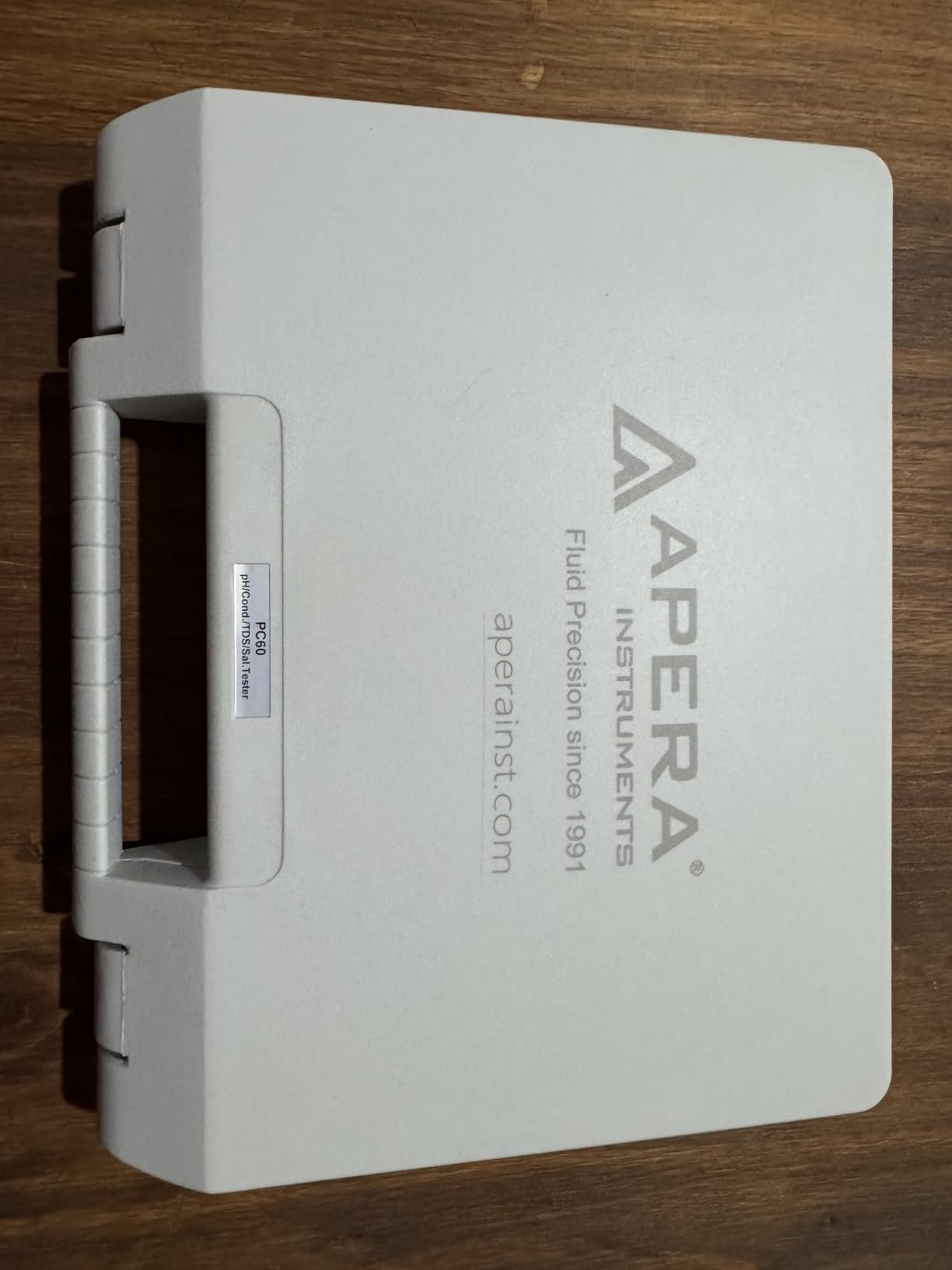
For a plain soilless grow it is complexity you will never use, and it adds calibration steps to a routine you want fast. The three-color backlit LCD carries a dual display of temperature plus whichever parameter you are reading, and the two-year instrument warranty is a step up from the six-month electrode window.
5. VIVOSUN pH and TDS Meter Set – Best for First-Time Growers
VIVOSUN Digital pH Meter TDS EC Meter for Water 0.01 Accuracy Hydroponics
Two meters in one set
pH range 0 to 14
TDS and EC 0 to 9990
Temperature 0.1 to 80.0C
+ Pros
- Covers pH and TDS in one set
- Separate meters avoid mode switching
- Arrives with buffers and batteries ready
- Lightweight and easy to read
- Cons
- pH readings can take minutes to settle
- Calibration is finicky for some owners
- Temperature and TDS values drift
- Not for seawater testing
This set carries more than 24000 owner reviews, the largest pool in the group, and it remains the first instrument most beginners buy. You get a dedicated pH meter and a separate three-in-one TDS meter, which means no mode switching and a simple mental model while you are learning nutrient dosing.
Both arrive pre-calibrated with batteries fitted and three calibration buffers in the box, so a first reading is genuinely a five-minute job. For a first system, that low barrier matters more than decimal places.
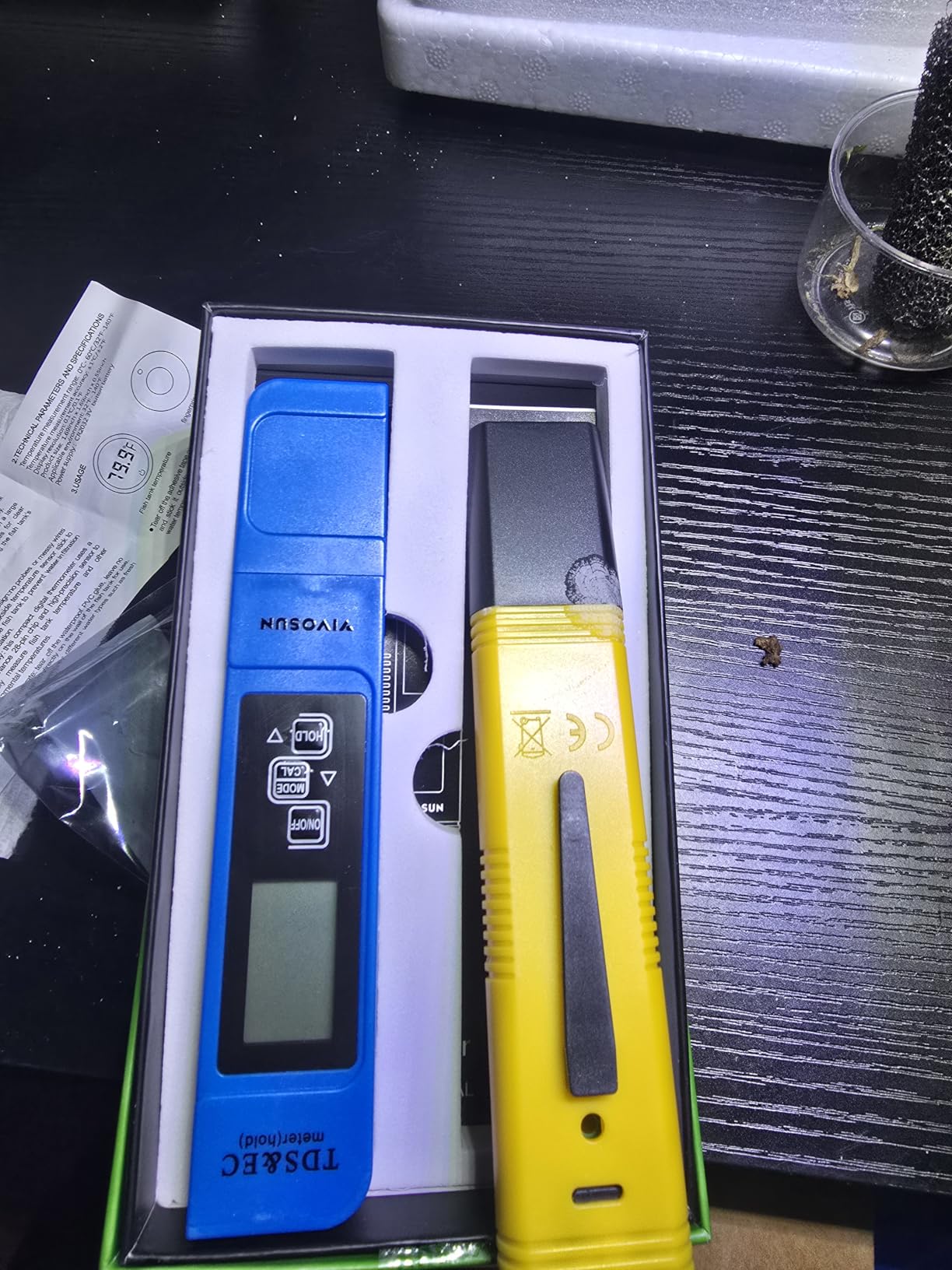
TDS readings match reference RO and TDS displays closely, and the pH channel is the one that needs patience.
Why pH Readings Crawl on This Meter
The dominant complaint across thousands of reviews is instability. Readings rise slowly, fail to settle and sometimes drift after you finish calibration, which pushes some owners back to chemical test kits.
Reviewers describe that as a slow climb rather than a wrong value, so the number it lands on is usually usable. The real failure mode is impatience, and reading too early gives you a pH that is not the reservoir pH.
TDS and Temperature Channels: Range Versus Trust
The TDS and EC channels cover 0 to 9990 ppm and 0 to 9990 uS/cm with a plus or minus 2 percent claim, and temperature covers 0.1 to 80.0C. Owners report TDS values that fluctuate and sometimes appear to freeze on repeated samples of the same water.
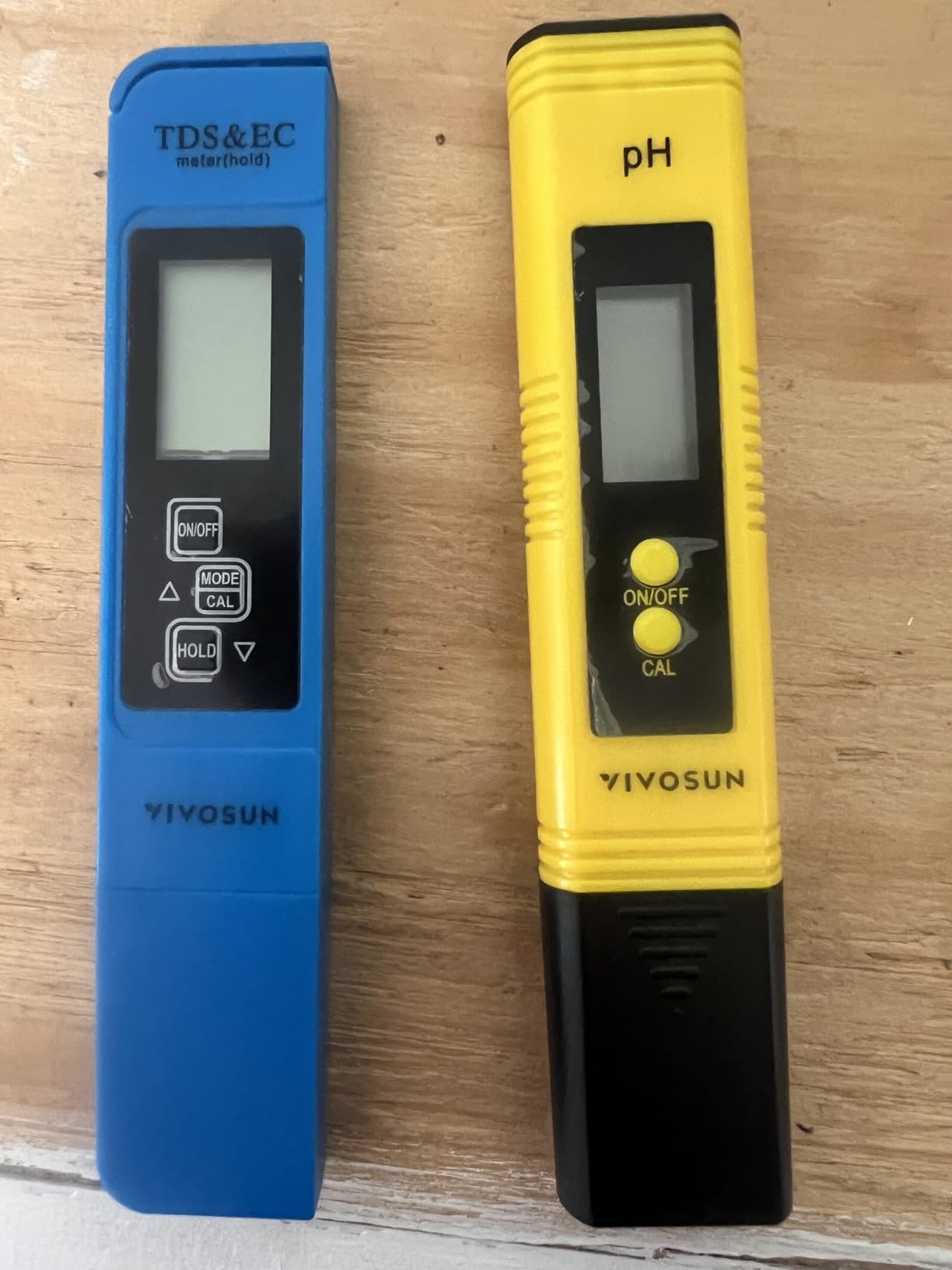
Temperature readings can also run several degrees off and drift over time, so treat the temperature number as an indicator only. A minority of buyers report crystalline residue or discoloration on the probe tip, and some meters stop working within months. It is not for seawater testing.
Keep this set if you run a single small reservoir and test a few times a week. Upgrade the moment your plants show lockout symptoms, because at that point a half-settled reading becomes a real liability.
6. UIUZMAR Four-in-One Tester – Best for Fast Four-in-One Readings
UIUZMAR pH Meter for Water Hydroponics Supplies 4 in 1 pH PPM ECTester
pH EC PPM and temperature
Automatic temperature compensation
Settles in one to two seconds
Large backlit display
+ Pros
- Stabilizes on a reading in one to two seconds
- Combined pH EC and PPM from one probe
- Clear backlit screen in daylight
- Matching solutions available from the maker
- Cons
- Only one buffer sachet in the box
- Some owners cannot calibrate on the first attempt
- Probe is fragile past the screw thread
- Manual largely pictorial
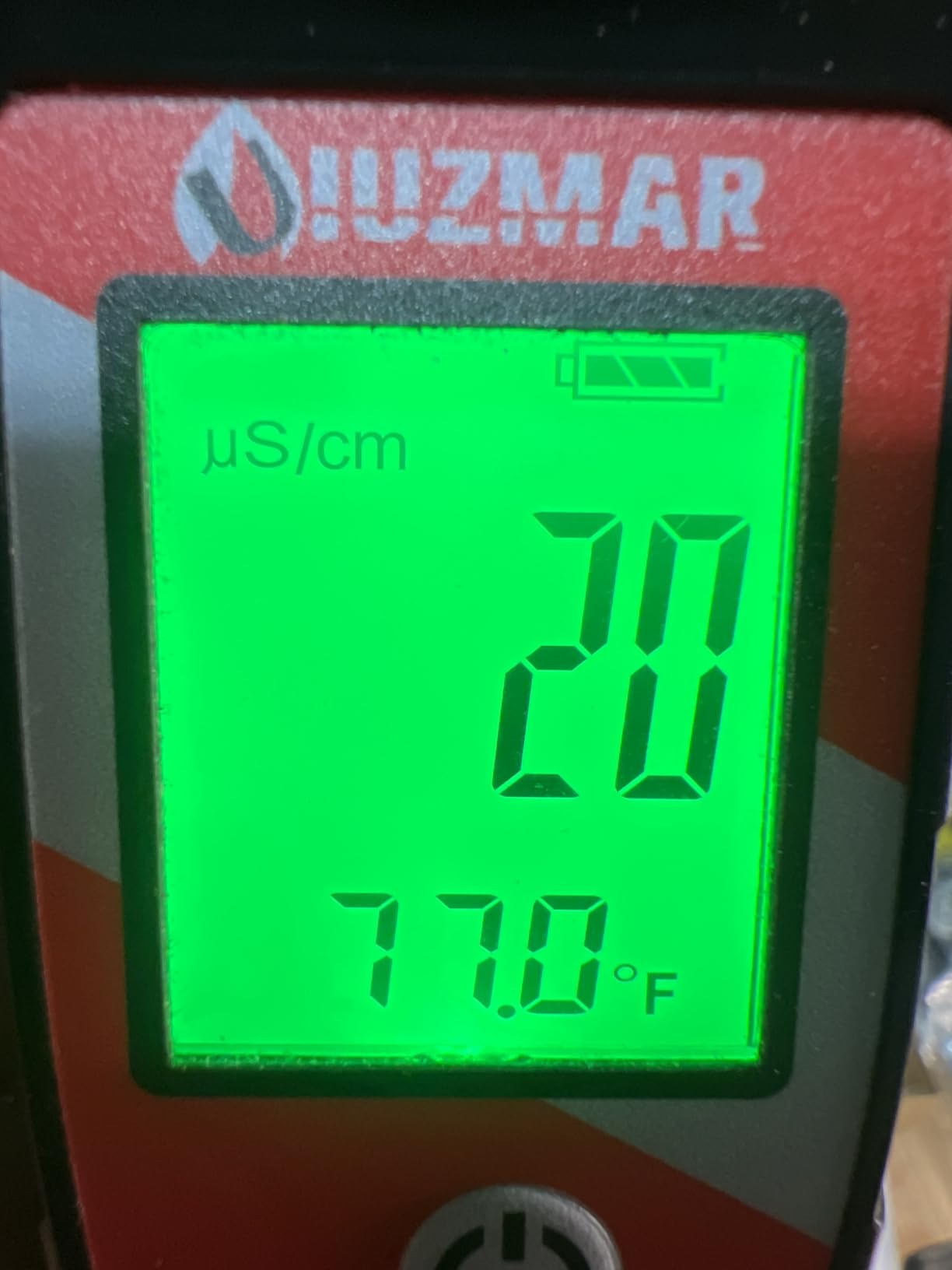
This is the meter that surprised us in the data. Owners report it stabilizing on a pH reading in one to two seconds, and that speed is what makes a four-in-one tester usable in daily practice rather than a gadget you tolerate.
Measuring pH, EC, PPM and temperature with automatic temperature compensation from an 8.9 by 2.9 by 1.9 inch body makes it a natural fit for DWC reservoirs, aeroponic tents and grow rooms where you want pH and feed strength in the same pass.
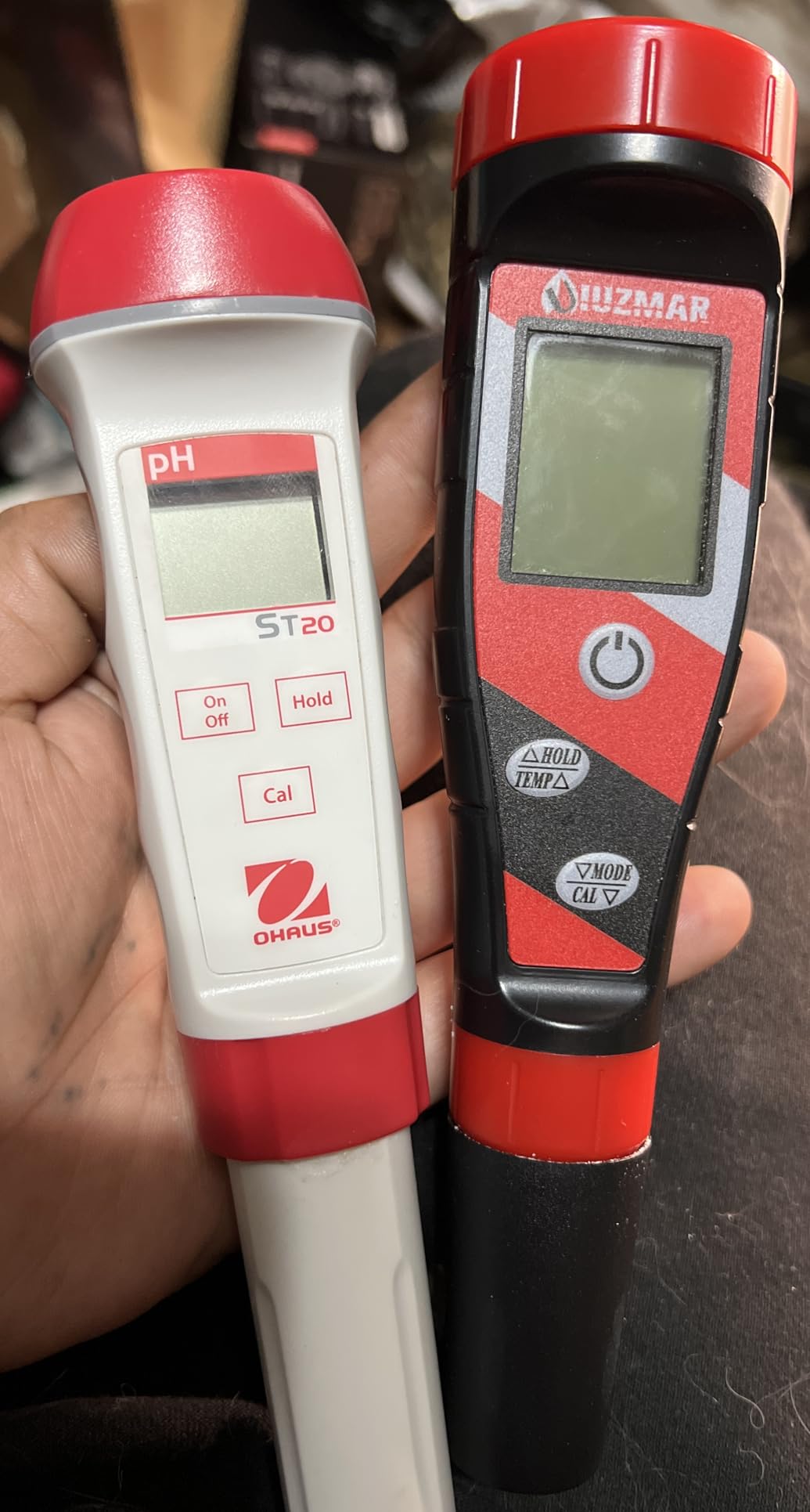
Several owners who calibrate it properly report side-by-side agreement with a much pricier Apera pen, and the fast response removes the most common user error in this category, which is recording a number too early.
Speed of Response as the Standout Feature
A probe that settles that fast gives you confidence in the number, which is why we treat response time as an accuracy feature rather than a convenience. The backlit display is large and crisp enough to read in daylight, which matters when you are crouched over a reservoir lid in a greenhouse.
Calibration Powder and the Single Sachet Problem
Calibration powders are included and mix with ordinary distilled water, which is convenient for refills but means you are mixing your own solutions. The box doubles as long-term storage for keeping the meter clean and protected.
Only one buffer sachet is in the box, so plan on buying more powder before your first serious calibration round. A minority of buyers report a calibration that does not take the first time, and the instructions are largely pictorial rather than written in plain English.
Handling Risks to Know Before You Buy
The probe is fragile past the screw-on point, and immersing to the shoulder rather than just past the threads is the most common way to break a meter in this class. A small group of owners also report inconsistent readings on the same sample, so keep a second instrument on hand and compare once a month until you trust it. The manufacturer sells matching calibration and storage solutions, which is a good sign for long-term support.
7. YINMIK YK-P01 pH and Temperature Meter – Best for a Dual Display
YKMINK YK-P01 pH Tester, Digital pH Meter for Water,pH Temp Meter with ATC
Horizontal screen showing pH and temperature
Stainless steel temperature sensor
Three point auto calibration
Powders make up to 500 ml each
+ Pros
- pH and temperature readable at a glance
- Backlit screen for dim grow rooms
- Three point calibration in under a minute
- HOLD locks the reading on screen
- Cons
- Storage solution not included
- Glass electrode needs gentle handling
- Readings drift if the probe dries
- Temperature accuracy only about 1C
- No carrying case included
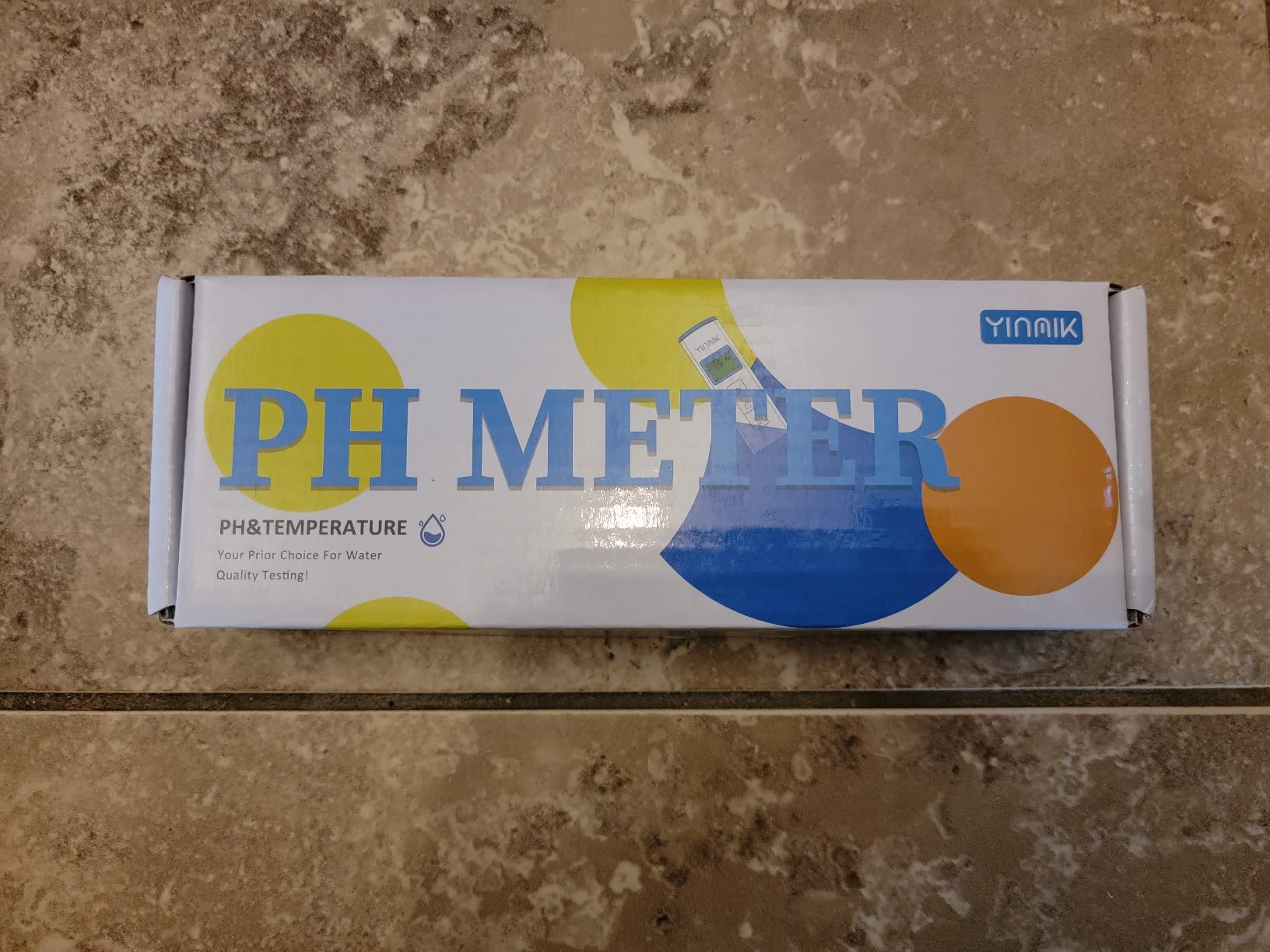
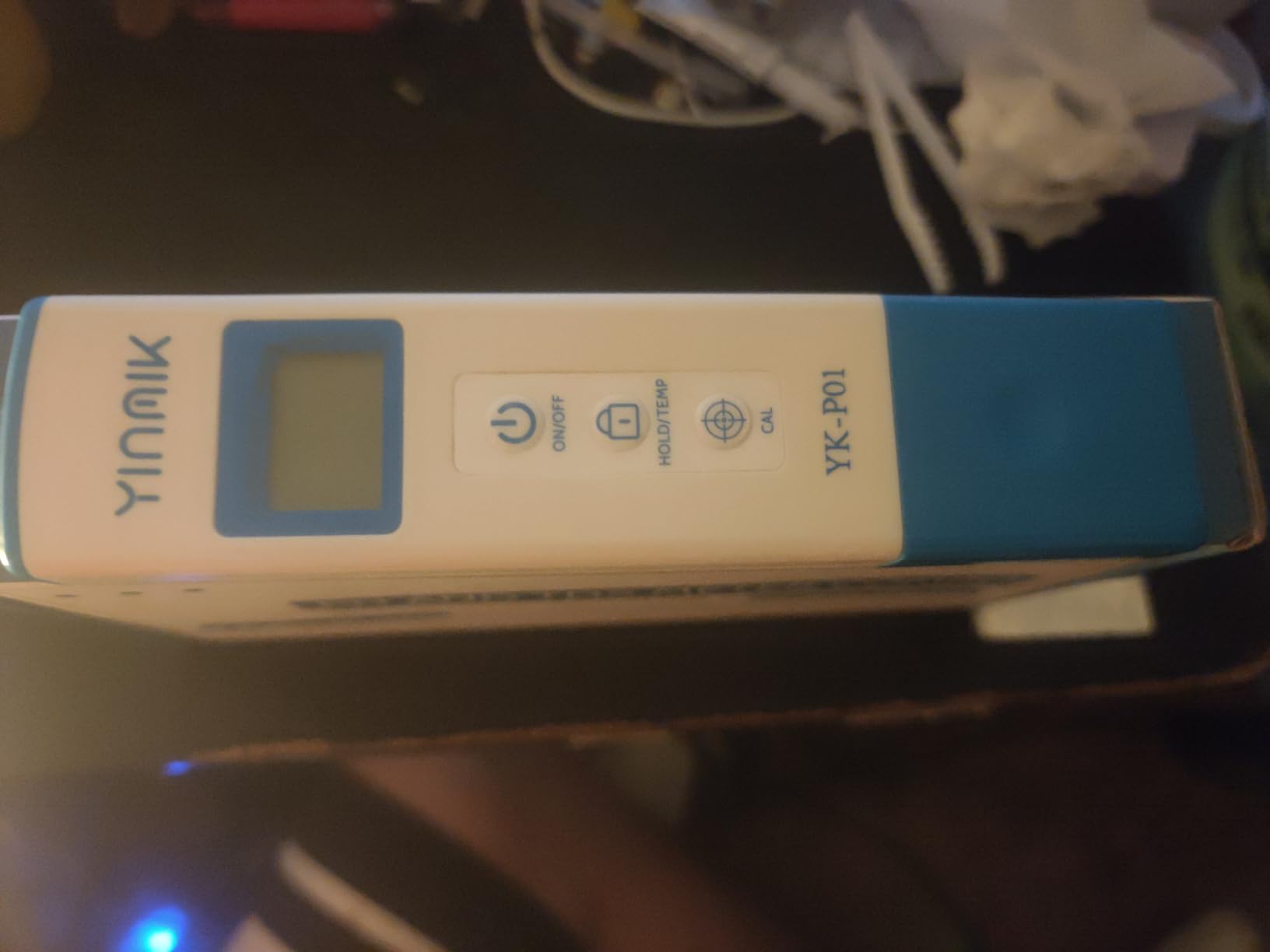
The YK-P01 does one thing differently from almost every other pen here: a wide horizontal screen with pH and temperature side by side. For a grower checking an unlit reservoir, that layout removes the squinting and the button presses.
Calibration powders are included and each sachet makes up to 500 ml of solution, a generous amount for a meter at this level. Three-point auto calibration at 4.00, 7.00 and 10.01 completes in under a minute with those powders, and three LR44 batteries plus a dropper are in the box.
Owners who maintain the probe properly report readings holding within roughly a tenth of a pH point, which is ample for hydroponics. Storage solution is not included with this meter, so factor that refill into the purchase. The HOLD and TEMP button locks the reading so you can lift the probe out and still read the value.
Horizontal Display and the Hold Function in Practice
The hold function solves a real annoyance: the number stays on screen after the probe comes out, so you can rinse in fresh water without losing the result. That is where a lot of cross-contamination errors come from.
The stainless steel temperature sensor supports automatic temperature compensation, and that compensation is what keeps the pH reading stable as reservoir temperature drifts through the day. The sensor itself is only accurate to about plus or minus 1C.
Calibration Range and Consumable Gaps
Three-point calibration at 4.00, 7.00 and 10.01 covers both the acidic and the slightly alkaline end of a nutrient range, so a drifting probe shows up in either direction rather than only as a shift toward neutral.
Buyers also report occasional meters that would not calibrate or read more than a full pH point out, and there is no carrying case. Listed uses cover pools, spas, hydroponic water and soil, brewing, aquariums and koi ponds.
Because a probe that dries out drifts badly and then refuses to calibrate, storage solution is the one item you must never skip.
8. Apera GS4 GroStar Combo Pen – Best for Replaceable Combo Probes
Apera Instruments AI104G GroStar Series GS4 pH/EC/500ppm/700ppm Combo 5-in-1 Pen Tester Kit with Replaceable Double-Junction pH/EC Probe for Hydroponics Water Quality Testing, Gen II
pH EC 500 ppm 700 ppm and temperature
Replaceable combo probe with double-junction pH
Titanium EC sensor
Two point calibration under a minute
+ Pros
- Replaces two separate pens with one device
- Calibration finishes in about 90 seconds
- Probe replaceable without replacing the meter
- Reads 500 ppm and 700 ppm directly
- Cons
- Probe tips can fail within a year
- Plain cardboard box packaging
- Display resolution is coarser than the PC60
- Costs more than generic combo pens
The GS4 is the grower-focused member of the Apera line, and it comes with a replaceable combo probe pairing a double-junction pH sensor with a titanium EC sensor. That combination is unusual at this level and it is why we recommend it over generic four-in-one pens.
It is calibrated out of the box and stays calibrated for months between recalibrations, and the grower-oriented workflow completes two-point calibration in about 90 seconds on a bright HD backlit screen.
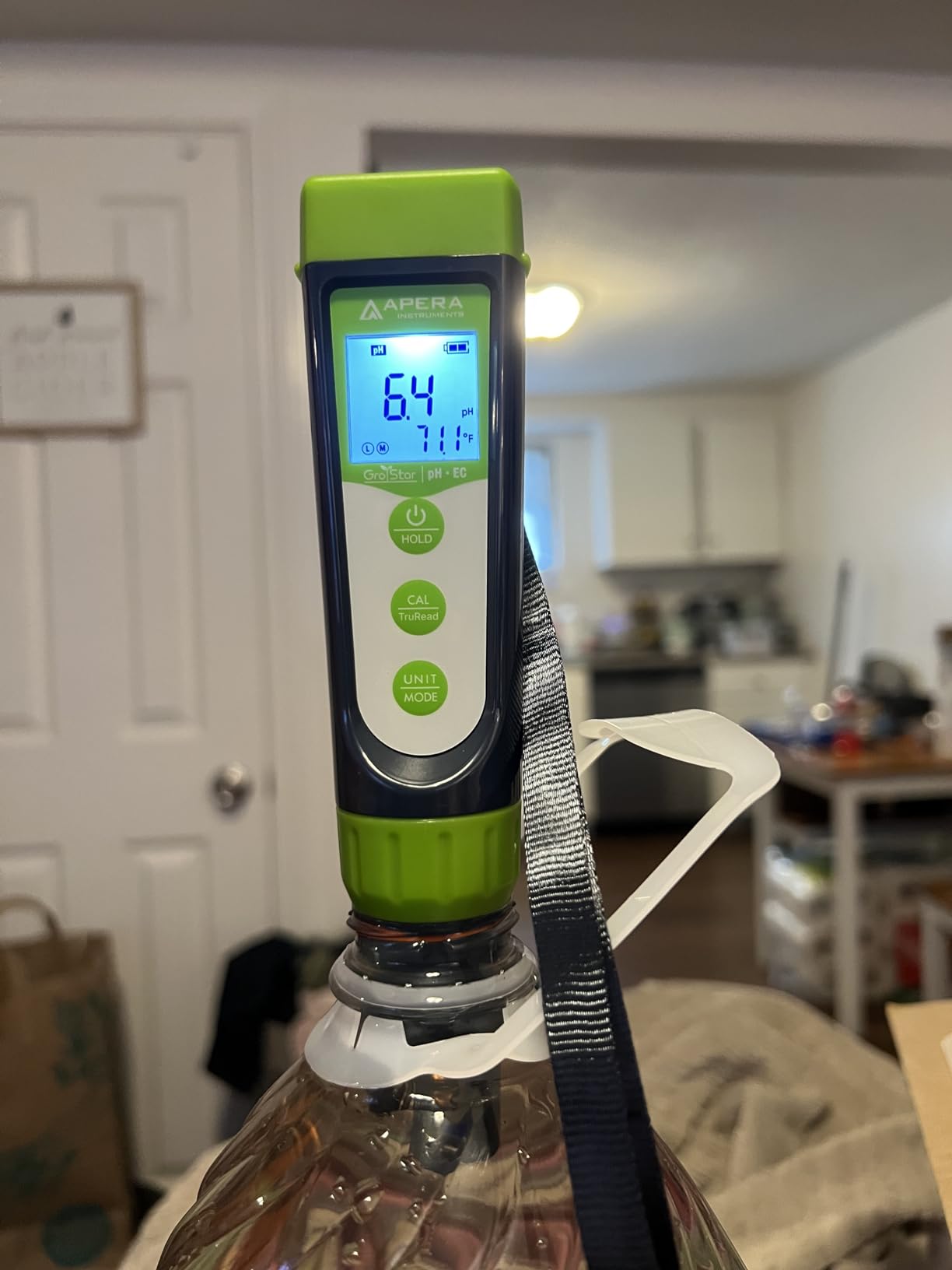
An electrode condition indicator and calibration reminder function watch the probe for you, so you get a warning before readings quietly go bad. Several reviewers confirm it agrees with pH paper and with the pricier Apera models.
Direct 500 ppm and 700 ppm Scales for Nutrient Dosing
Most combo meters force you to convert. This one reads 500 ppm and 700 ppm scales directly alongside EC, which removes a conversion step when you are following a feeding chart that quotes those numbers. Long-pressing the lower button toggles Fahrenheit and Celsius, and four AAA batteries are included.
Where the Combo Design Costs You
The display does not read in hundredths the way the PC60 does, so it is less precise for fine work. In a nutrient reservoir the extra precision rarely matters, but for chasing a tenth of a point in a delicate seedling tray, this is not the tool.
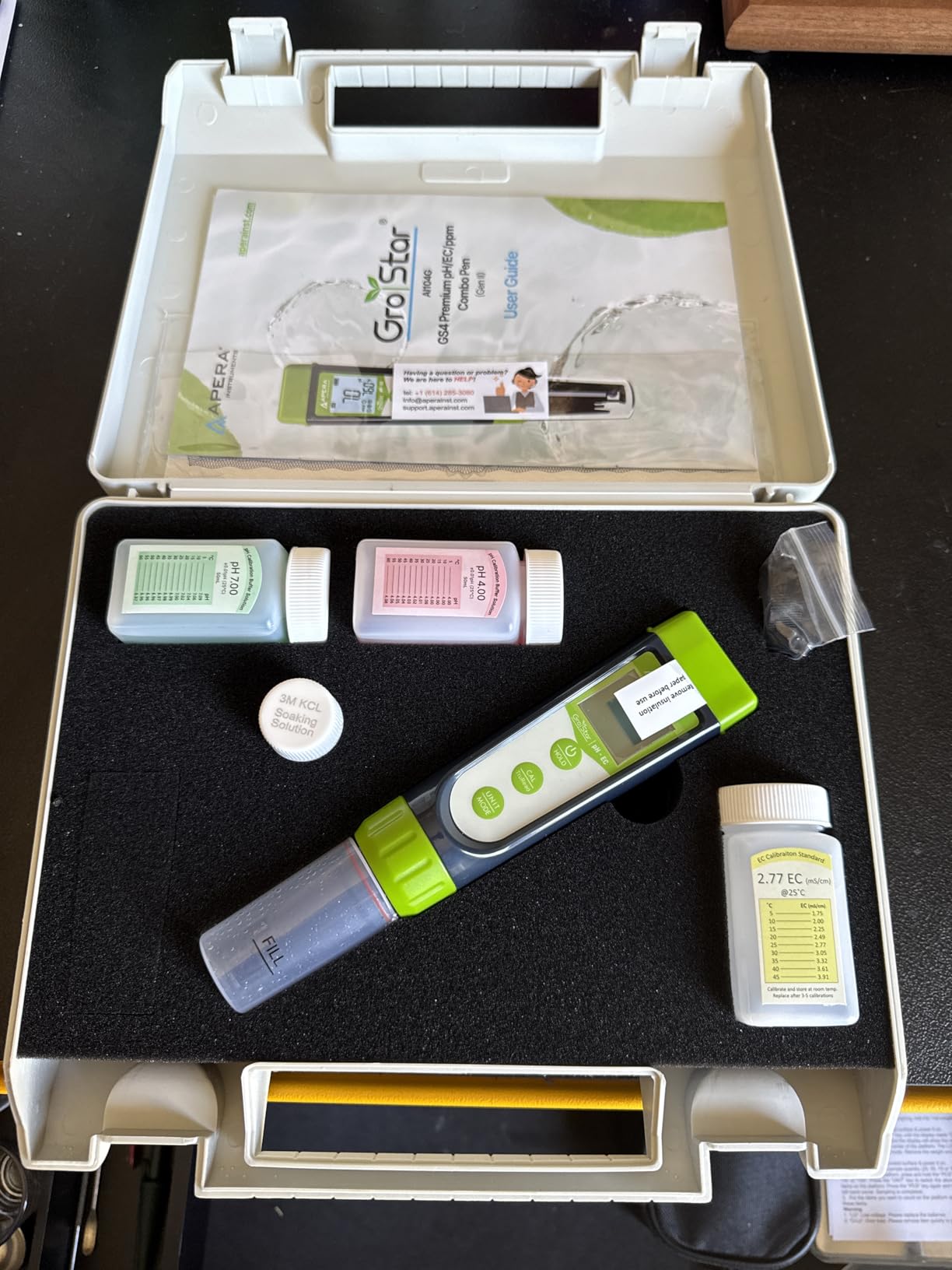
Probe tips can fail within a year even with correct storage and calibration, and a few users report needing two warranty replacements in that span. Packaging is a plain cardboard box rather than a protective case. At 7 by 1.5 by 1.3 inches and 4.7 ounces it stays pen-portable even with two sensors in the tip, and it handles aquariums and pool water as well as nutrient solution.
9. YINMIK YK-T4 Pro Four-in-One – Best for Continuous Reservoir Immersion
YINMIK pH Meter for Hydroponics, 4 in 1 PPM EC Meter for Plant Nutrients
pH EC PPM and temperature on one screen
Supports continuous in-tank monitoring
Ready to use calibration fluids
Extended stainless steel temperature electrode
+ Pros
- pH and temperature always displayed
- Can stay submerged for continuous monitoring
- Ready to use solutions need no mixing
- Build feels like a lab instrument
- Cons
- Some owners need daily recalibration
- Not as accurate as a Bluelab pen in direct tests
- Learning curve between pH/PPM and pH/EC modes
The YK-T4 Pro is the only meter here designed around leaving the probe in the tank. It supports continuous immersion, so you can power it on and read pH and temperature where it sits instead of carrying a meter to the reservoir each morning.
It keeps pH and temperature on screen at all times, with a separate pH and PPM mode for basic reservoirs and a pH and EC mode for full nutrient solutions. That split matters when you run both plain water and mixed feed, and the extended stainless steel temperature electrode brings quick response with accurate automatic temperature compensation.
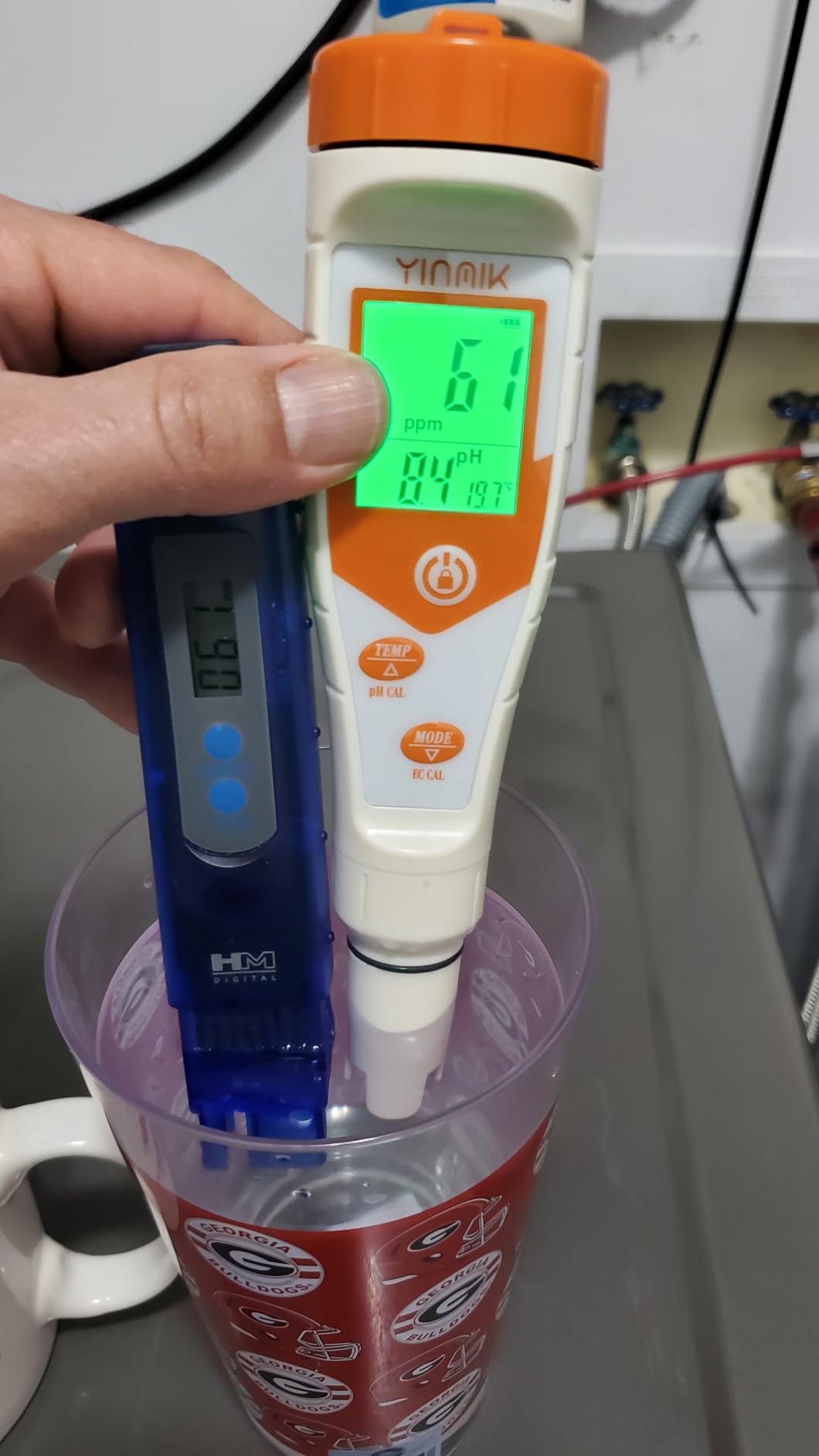
Several users switched to it after a cheaper meter let them down, and the build reads as a step up rather than a plastic pen.
Continuous Immersion: What It Is Good For
Leaving the probe submerged works well for trend watching and for spotting a reservoir drifting over a full day. It is not a replacement for a daily calibrated check, and the calibration guidance above still applies. What continuous use adds is frequency of observation, not accuracy of any single reading.
Calibration Fluids and Accuracy Trade-Offs
It includes ready-to-use 4.00 and 7.00 pH solution plus a 1413 uS/cm EC buffer, so there is no powder mixing. The EC and TDS channels arrive factory calibrated and usable out of the box, and the meter also handles pool, drinking, tap, well, beer wort and fish tank water.
The trade-off is reported accuracy. In direct comparison against a Bluelab pen this meter sits a notch below, and a small group of owners report needing daily recalibration or being unable to calibrate at all.
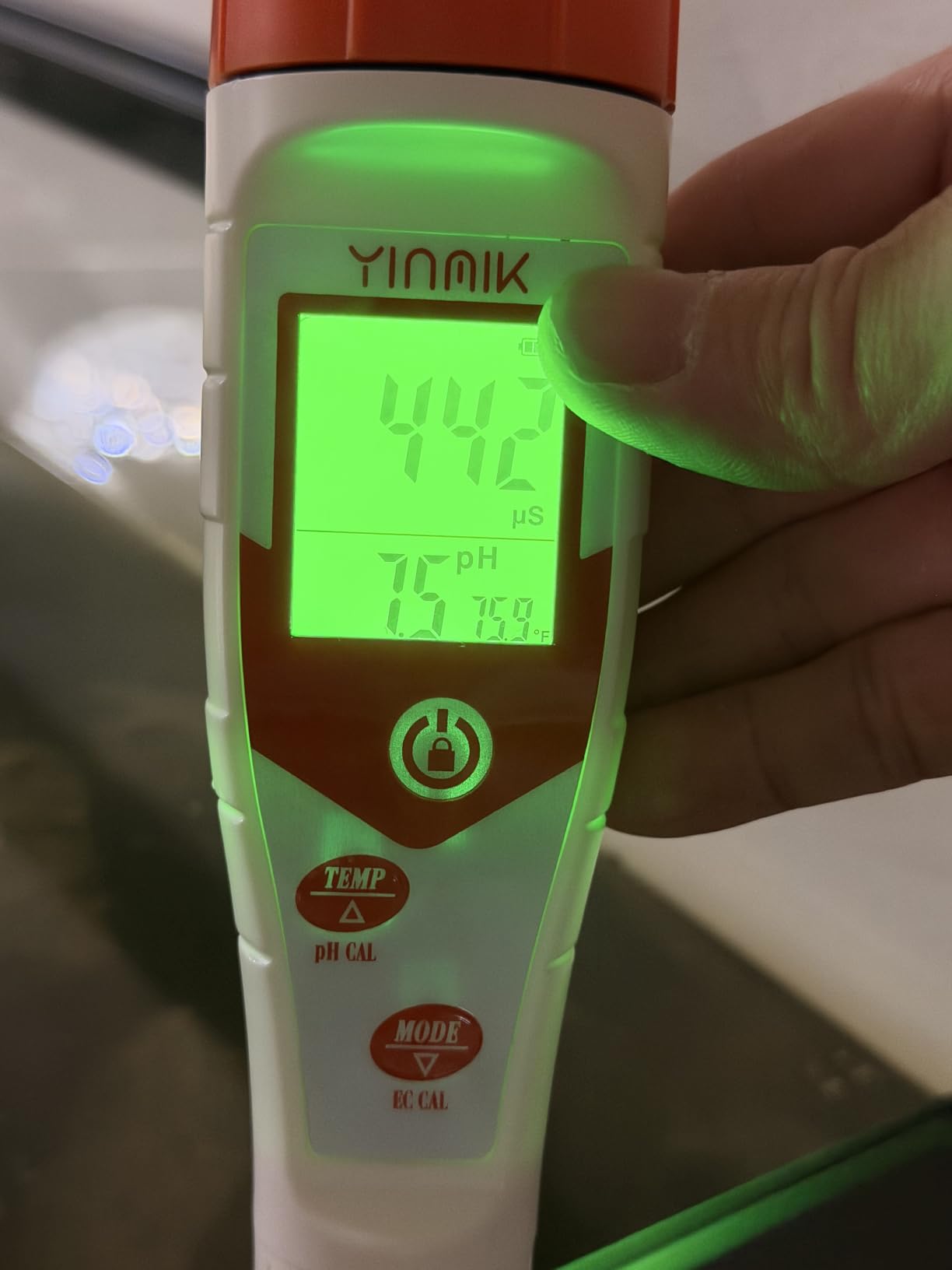
Our suggestion is to treat this as a station instrument. Keep it in the reservoir for constant readings and keep a good pH pen in the drawer for calibrated spot checks. That pairing covers both the trend and the accuracy need without buying a dedicated monitor.
10. GuDoQi pH and TDS Combo Tester – Budget Pick for a First Digital Meter
GuDoQi PH Meter, TDS Meter Combo, Pool Water Test Kit, PH Tester Digital, PPM Meter, 0.01 Resolution TDS PH EC Temperature 4 in 1 Set for Drinking Water, Hydroponics, RO System, Aquarium, Swimming
0 to 14 pH range with 0.01 resolution
Automatic temperature compensation
TDS and EC 0 to 9990
One button calibration
+ Pros
- Very low cost way to add digital testing
- Automatic calibration in standard buffer
- HOLD and SHIFT button operation
- Works for drinking water pools and aquariums
- Cons
- Maker advises calibrating before every use
- Readings are approximate
- Glass probe is fragile and short lived
- Less support and fewer consumable options
This is the lowest-priced digital pH meter in the group and a reasonable first step for someone who currently owns nothing but test strips. At 50 grams in an ABS body, it is also the one most likely to end up as a pool or aquarium tool rather than a reservoir instrument.
It measures pH from 0 to 14 at 0.01 resolution, TDS from 0 to 9990 ppm and conductivity to 9990 uS/cm, with automatic temperature compensation, a HOLD button to lock the reading, and a SHIFT button that toggles TDS against EC and Celsius against Fahrenheit.
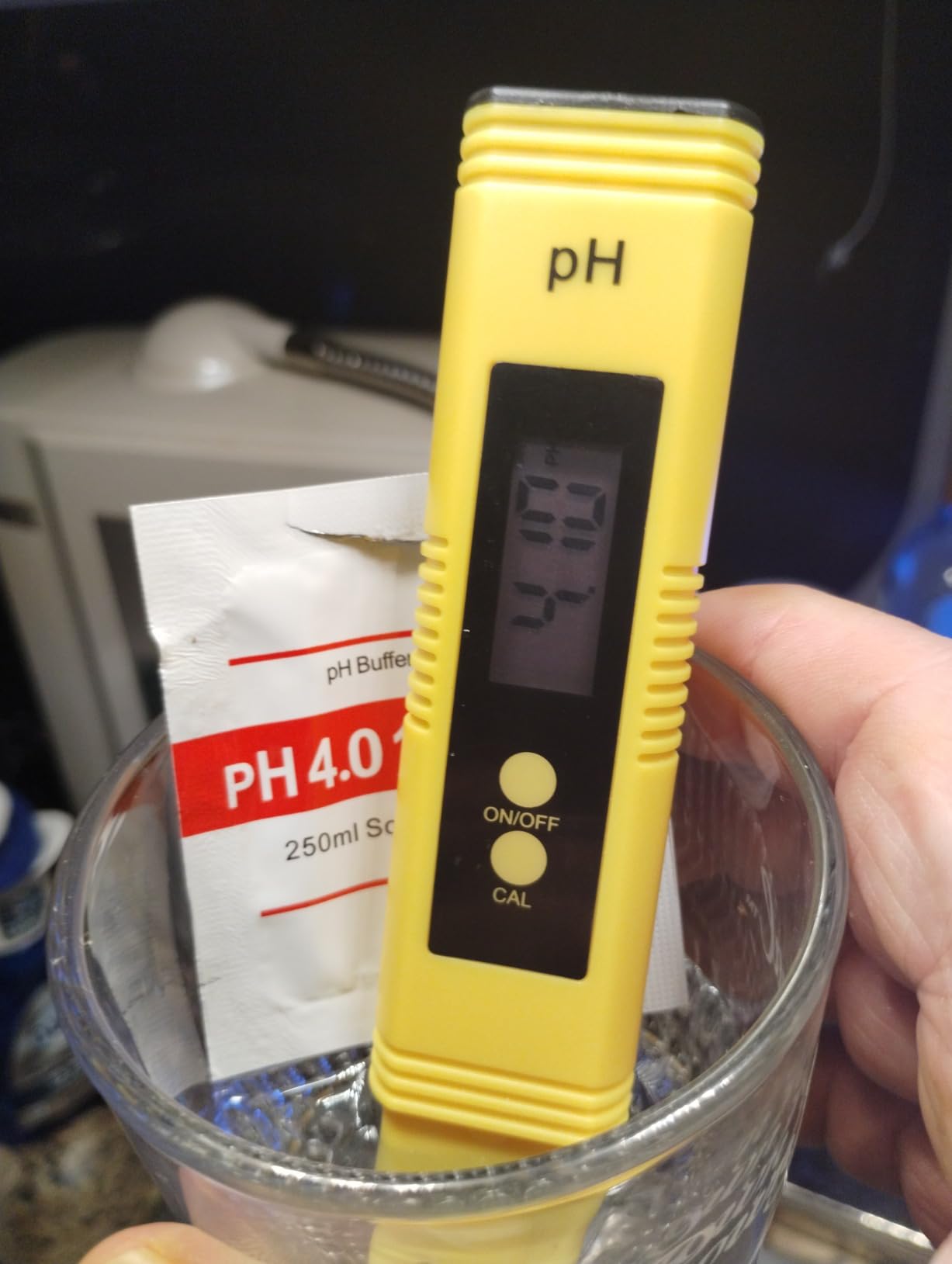
Calibration is a single CAL button press in a standard buffer, and operation is simple enough to hand to someone who has never used a meter.
Why the Manual Says Calibrate Before Every Use
The manufacturer recommendation is to calibrate before each test, and that single line tells you what kind of instrument this is. It is designed for occasional, short-term checks rather than a daily routine.
In practice the readings are approximate. Owners describe it as a low-cost first digital meter or a backup for pools and aquariums, which is an honest and sensible way to use it. For nutrient dosing where a tenth of a point matters, it is the wrong tool.
Fragility, Support and the Long View
The glass probe electrode is fragile and short-lived compared with premium pens, and there are fewer consumable options and less support than the established brands offer. Plan on replacing it rather than repairing it.
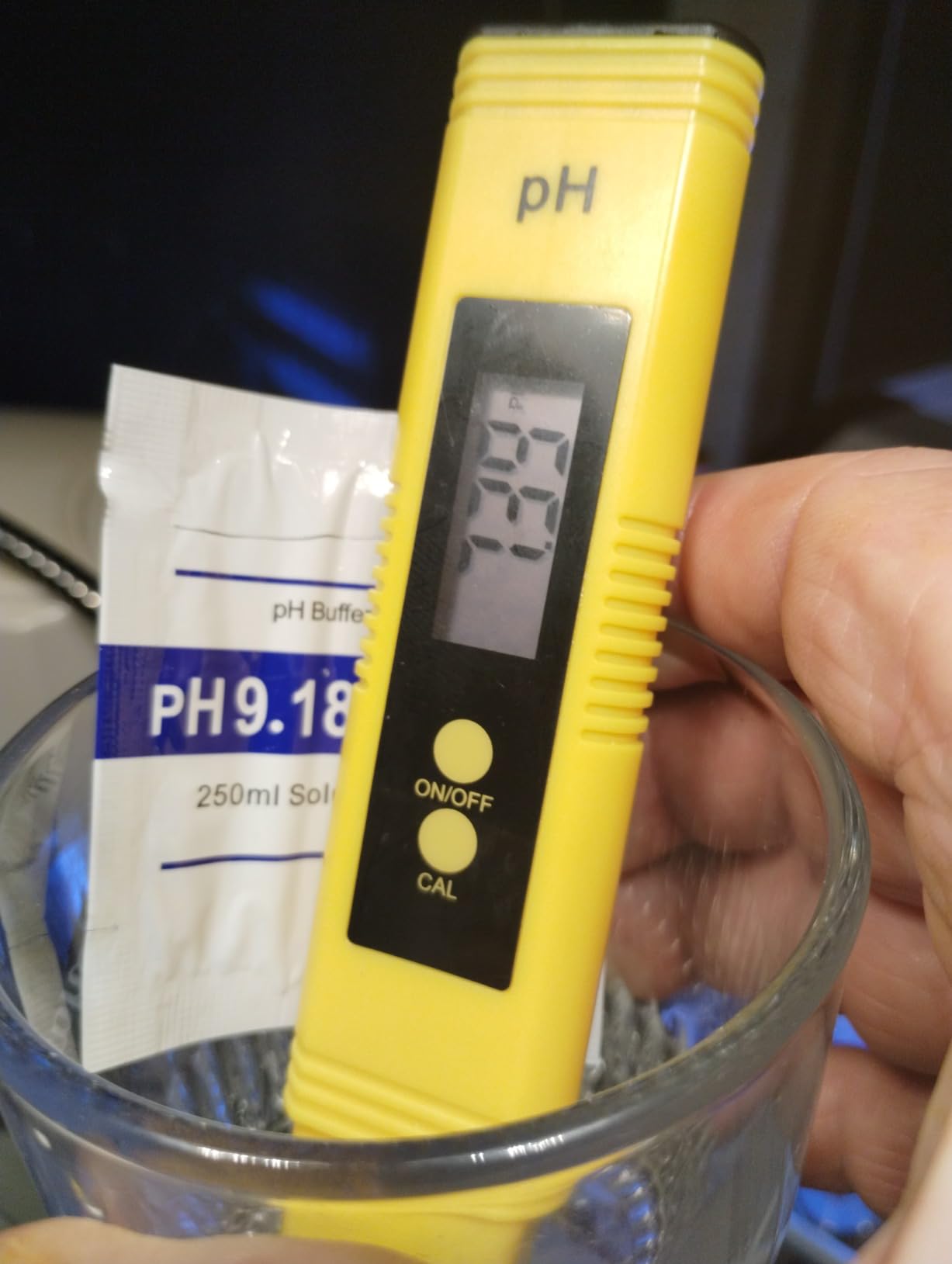
Bought as a second or third meter, it earns its place. It is the option for a hobbyist who wants numbers instead of colour matching, and a sensible tool for a pool or aquarium that has nothing to do with nutrients.
How to Choose a pH Meter That Lasts More Than One Season
Accuracy specs are the least useful number on the box. Every one of these meters can print two decimal places, and several hit a hundredth of a point on a bench. What matters in a reservoir is whether the same sample reads the same tomorrow, which is a question about calibration discipline and probe care rather than headline accuracy.
What accuracy you actually need in a reservoir
For hydroponics, anything that holds within a tenth of a pH point once calibrated is genuinely sufficient. Nutrient availability does not change meaningfully across a fifth of a point, and chasing hundredths only adds cost.
Where resolution earns its money is seedlings, tissue culture and aquariums, where small shifts matter more. Automatic temperature compensation matters more than resolution for everyone, because a reservoir that swings ten degrees will move the reading of an uncompensated meter enough to trigger a wrong adjustment.
Our own rule after this testing: buy a meter with automatic temperature compensation and a replaceable or double-junction probe before you buy a meter with a longer range.
Calibrate on a schedule that matches how often you test
The advice online splits between calibrate daily and calibrate twice a year, and that is why so many growers argue about it. The honest answer depends on your usage intensity, the solution, and how much your reservoir pH moves.
If you test a few times a month on a stable system, calibrating before each session is plenty. If you test daily and top up with nutrient solution, calibrate weekly at minimum, and after any top-up that introduces fresh concentrate. Commercial or multi-reservoir growers calibrate daily and keep buffer solution in rotation.
Two buffer points are enough for the 5.5 to 6.5 window, so pH 7.00 and pH 4.00 cover most growers. Use a third point at 9.18 or 10.01 if you work outside that range, which is the same reason to prefer a meter that recognises more than two standards.
Never dip the probe back into the buffer bottle after calibrating. That contamination is the top cause of a calibration that will not take, and it is entirely avoidable. Pour a splash into a clean cup, use it, and discard it.
Store the probe in KCl, never distilled water
This is the single most useful thing in this guide. A glass electrode measures through a hydrated gel layer, and if that layer dries out, the probe is damaged. The consensus across hydroponic forums is blunt: a dried probe is a dead probe, often within a week.
Store the tip in KCl storage solution, in the cap or cup supplied with the meter. Never distilled water, and never plain tap water. Distilled water has no dissolved ions, so the probe absorbs liquid from it and swells, which permanently changes its calibration. Plain water is worse, because it leaches ions out of the gel layer.
If your meter did not come with storage solution, buy it as part of the purchase. Refill it, rinse the tip with fresh water after every test, and store it wet. Growers with three and four year service histories all point at this habit rather than the meter model.
What quietly kills a glass electrode
Drying out is the number one cause. Beyond that, a biofilm of root residue and nutrients on the glass bulb slows response and drags readings around, which is why a rinse after every test matters so much.
Working above pH 10 in a cleaning soak is the mistake that ends probes early. At that pH the glass itself begins to dissolve, altering the sensing surface so calibration can never hold again. Household cleaners and some plant treatments are aggressive enough to attack the gel layer too.
Owners of double-junction and replaceable-probe meters report the longest service histories, and both features appear on our top recommendation. That is not a coincidence: the electronics rarely fail, so a meter with a user-replaceable probe can outlive several probes while a sealed one cannot.
pH only, pH plus EC, or a continuous monitor
Start with what you actually measure. A pH-only pen is the right choice for one reservoir and a fixed feed schedule, and it is the least complicated tool to keep calibrated. Adding EC in the same body saves carrying two pens, and the trade-off is that more parameters mean more calibration steps and one probe doing everything.
Be skeptical of EC and TDS channels on the cheapest four-in-one meters. Across the reviews we read, the pH channel drew far fewer accuracy complaints than the conductivity channel on budget combos, and a wrong feed-strength reading will cost you a crop just as surely as a wrong pH reading.
A continuous monitor makes sense once you run several reservoirs or cannot check daily. Otherwise a good handheld used every morning beats a monitor you set up once and ignore. Budget the way you would for a sensor that lives in solution permanently, because that is what you are buying.
Whatever you choose, add a second instrument. A cheap spare kept sealed and hydrated doubles as a drift detector: if your working meter and the sealed one disagree by more than a fifth of a point, calibration time has arrived. Growers in hydroponic forums use this as their standard field check, and it costs less than one bottle of nutrient concentrate.
Frequently Asked Questions
What pH meter is best for hydroponic water?
For most growers the Bluelab pH Pen is the best all-round choice, because it is waterproof, floats after a drop, uses a double-junction probe that resists contamination, and includes pH 7 and pH 4 calibration sachets in the kit. If you want the highest stated accuracy and a replaceable probe, the Apera PH60 runs at plus or minus 0.01 pH and auto-calibrates against five buffer standards. For multiple reservoirs, the Bluelab Combo Meter adds EC, TDS and temperature to the same double-junction pH probe.
What is the best pH level for hydroponics?
Most hydroponic crops grow best between pH 5.5 and 6.5, and that is the window we aim for. Leafy greens and herbs sit happily at the upper end, around 6.0 to 6.5, while fruiting crops such as tomatoes and peppers prefer the slightly more acidic end at 5.5 to 6.2. Below 5.5, iron, manganese, calcium and magnesium become less available to roots, which shows up as interveinal yellowing and stalled growth.
How often should I calibrate a pH meter?
Match the interval to how often you test. If you test a few times a month on a stable system, calibrate before each session. If you test daily and top up with concentrate, calibrate at least weekly and after any major top-up. Multi-reservoir and commercial growers calibrate daily. Two-point calibration with pH 7.00 and pH 4.00 buffer covers the 5.5 to 6.5 range that growers work in.
Can I store a pH probe in distilled water?
No. Distilled water contains no dissolved ions, so a glass electrode absorbs liquid from it and the gel layer swells, permanently altering calibration. Plain water is also wrong because it leaches ions out of the gel. Store the tip in KCl storage solution instead, using the cap or cup supplied with the meter, and never let the probe dry out. A dried probe is usually a dead probe.
Why does my pH meter give different readings each time?
The usual causes are reading before the probe has settled, residual solution on the bulb from the previous test, and a probe drifting out of calibration. Check the stable-reading indicator before recording a value, rinse the bulb with fresh water between samples, and calibrate before the session. If a meter returns the identical number for every sample in every solution, the probe is likely fouled or failed and needs replacing.
The Verdict: Which pH Meter Matches Your System
If you want one answer, the best pH meters for hydroponics in this roundup come down to your system size and how often you test. A single reservoir with daily checks points to the Bluelab pH Pen, because a waterproof floating body and a double-junction probe remove the two most common failure modes. Several reservoirs or a mixed feed point to the Bluelab Combo Meter, which reads pH, EC, TDS and temperature in one dip.
If you want the highest stated accuracy and a probe you can replace yourself, choose the Apera PH60. Salinity and aquarium work alongside hydroponics is what the PC60 is for, a grower who reads four values at once and values speed will be happiest with the UIUZMAR, and first-time growers on a small system can start with the VIVOSUN set and upgrade once the plants demand precision.
Whichever you pick, keep the probe wet in KCl, calibrate on a schedule matched to how often you test, and keep a second meter sealed in the drawer. Those three habits decide whether your pH meter is still accurate in 2026.