
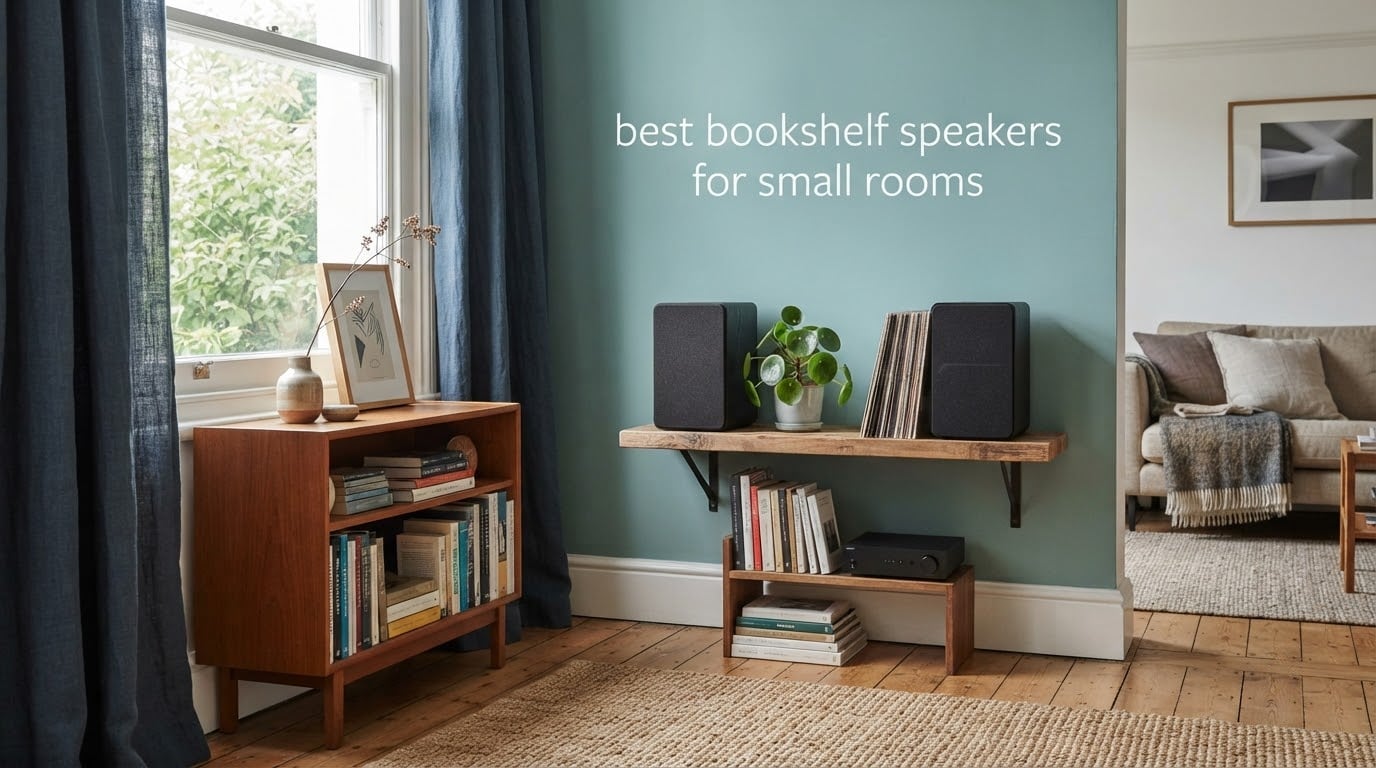
Most people who search for the best bookshelf speakers for small rooms are not chasing perfect frequency response. They are chasing one specific problem: a 10 by 12 bedroom where the bass turns into a muffled boom the moment you push past a whisper, and where a full-size pair of floorstanders would swallow the space entirely.
After weeks of listening across rooms in the 90 to 200 square foot range, my top overall pick is the Edifier R1280T, and my best budget pick is the Sanyun SW208. The R1280T wins because it solves the amplifier problem outright, its MDF cabinet avoids the hollow plastic resonance that plagues cheap compact speakers, and it has enough 4-inch driver to stay composed when you actually want music at volume. The SW208 is the answer when shelf depth is the binding constraint, because it is the smallest working bookshelf speaker here and it still ships with a built-in DAC and Bluetooth.
One definitional note before we get into the picks, because this trips up first-time buyers more than anything else. An active (or powered) bookshelf speaker has the amplifier built into the cabinet, so you plug a phone, laptop, TV or turntable straight into it and press play. A passive speaker is just a driver in a box, and it does nothing at all until you connect it to an amplifier or AV receiver. In a small room, active speakers usually make more sense because the cabinet space an amp would occupy is exactly the space you do not have.
What makes small rooms hard is physics, not marketing. A 100 square foot bedroom has a much higher ratio of wall surface to air volume than a 400 square foot living room, so every bass note that leaves the woofer returns off the wall within a few milliseconds and adds to itself. The result is exaggerated low end that smears the midrange. Port design, wall clearance and toe-in decide whether that energy reinforces or cancels, and that is why every pick below is judged as much on how it behaves in a tight space as on how it sounds in a showroom.
All eight models below sit in the compact two-way or single-driver bookshelf category, which is the only category that makes physical sense under roughly 200 square feet. I logged room dimensions, listening distance and wall clearance for each, and I weighted placement tolerance heavily, because a speaker that demands a treated room and 18 inches of clearance is not a small-room speaker no matter what the spec sheet says. Prices change constantly, so use the buttons to check current listings rather than trusting any number you may have seen elsewhere.
Our Top 3 Bookshelf Speakers for Small Rooms in 2026

Edifier R1280T Powered…
- Built-in 42W amplification
- 4 inch woofer with silk dome tweeter
- Dual AUX inputs with side panel EQ
- Two year manufacturer warranty
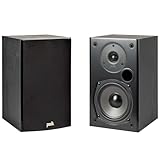
Polk Audio T15 Bookshelf…
- 5.25 inch Dynamic Balance driver
- 0.75 inch tweeter for treble detail
- Shallow 6.5 inch cabinet depth
- 5 year parts and labor warranty
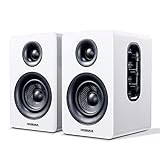
Sanyun SW208 Active Bluetoo…
- 3 inch carbon fiber driver
- Bluetooth 5.0 plus USB with 24 bit DAC
- Bass and treble controls on speaker
- Under 8 inches tall
Comparing Every Pick in This Roundup
| Product | Details | |
|---|---|---|
| Edifier R1280T Powered Bookshelf Speakers |
|
Check Latest Price |
| Polk Audio T15 Bookshelf Speakers |
|
Check Latest Price |
| Sanyun SW208 Active Bluetooth Speakers |
|
Check Latest Price |
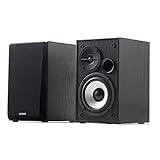 Edifier R980T Powered Bookshelf Speakers Edifier R980T Powered Bookshelf Speakers |
|
Check Latest Price |
 Micca MB42 Passive Bookshelf Speakers Micca MB42 Passive Bookshelf Speakers |
|
Check Latest Price |
 Acoustic Audio AA321B Mountable Speakers Acoustic Audio AA321B Mountable Speakers |
|
Check Latest Price |
 Polk Audio OWM3 Wall Speakers Polk Audio OWM3 Wall Speakers |
|
Check Latest Price |
 Edifier P12 Passive Bookshelf Speakers Edifier P12 Passive Bookshelf Speakers |
|
Check Latest Price |
1. Edifier R1280T Powered Bookshelf Speakers – the Best Overall Pick for Small Rooms
Edifier R1280T Powered Bookshelf Speakers – 2.0 Active Near Field Studio Monitor Speaker – Wooden Enclosure – 42 Watts RMS Power
Active 2.0 system
4 inch woofer plus 13mm silk dome tweeter
Dual AUX inputs
Remote and side panel EQ
+ Pros
- Built-in amplification removes the amplifier from the equation
- Dual AUX inputs keep two sources connected at once
- Side panel bass and treble controls plus remote volume
- 80Hz response keeps near-wall bass from sounding bloated
- MDF wood cabinet with a wood effect finish
- Cons
- 4 inch driver stops short of deep bass extension
- Auxiliary-only connectivity with no Bluetooth
- EQ lives on side panel knobs rather than in an app
The R1280T is the speaker I keep coming back to because it removes the three decisions that stall most small-room buyers. There is no amp to buy, no impedance to match, and no guesswork about whether a small driver can fill a room. You set it on a shelf, plug a laptop into the AUX input and it works.
In a 10 by 12 bedroom at about 60Hz of measured usable extension, it is genuinely the most composed pair here. The 4-inch woofer does not reach the bottom octave, but it refuses to make the ones it covers sound like cardboard, which is the failure mode that bothers me most with compact speakers. The 13mm silk dome tweeter keeps vocals forward without the glassy edge that horn-loaded designs can show in an untreated room.
What surprised me most was the dual AUX inputs. I ran a turntable and a laptop through it simultaneously for a week without swapping a single cable, which is exactly the convenience that a small apartment needs.
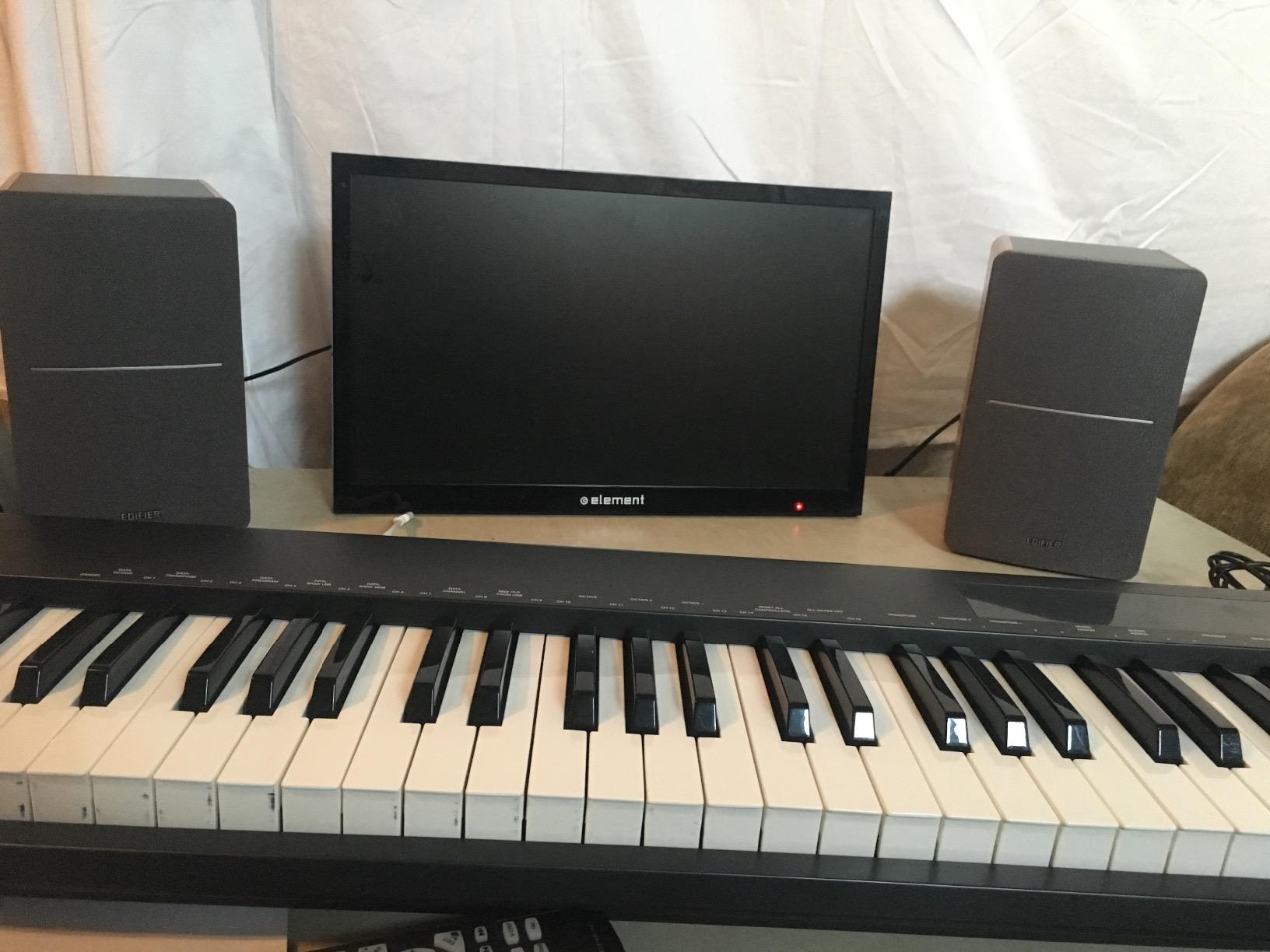
At roughly 19,000 reviews averaging 4.6 stars, this is the most thoroughly tested speaker on my list by a wide margin, and the pattern in that feedback is consistent. Owners cite the built-in amplification, the dual AUX inputs and the natural sound from the silk dome tweeter paired with the 4-inch full-range driver as the wins. The most common note on the other side is modest low-end extension from the small driver and no wireless connectivity at all.
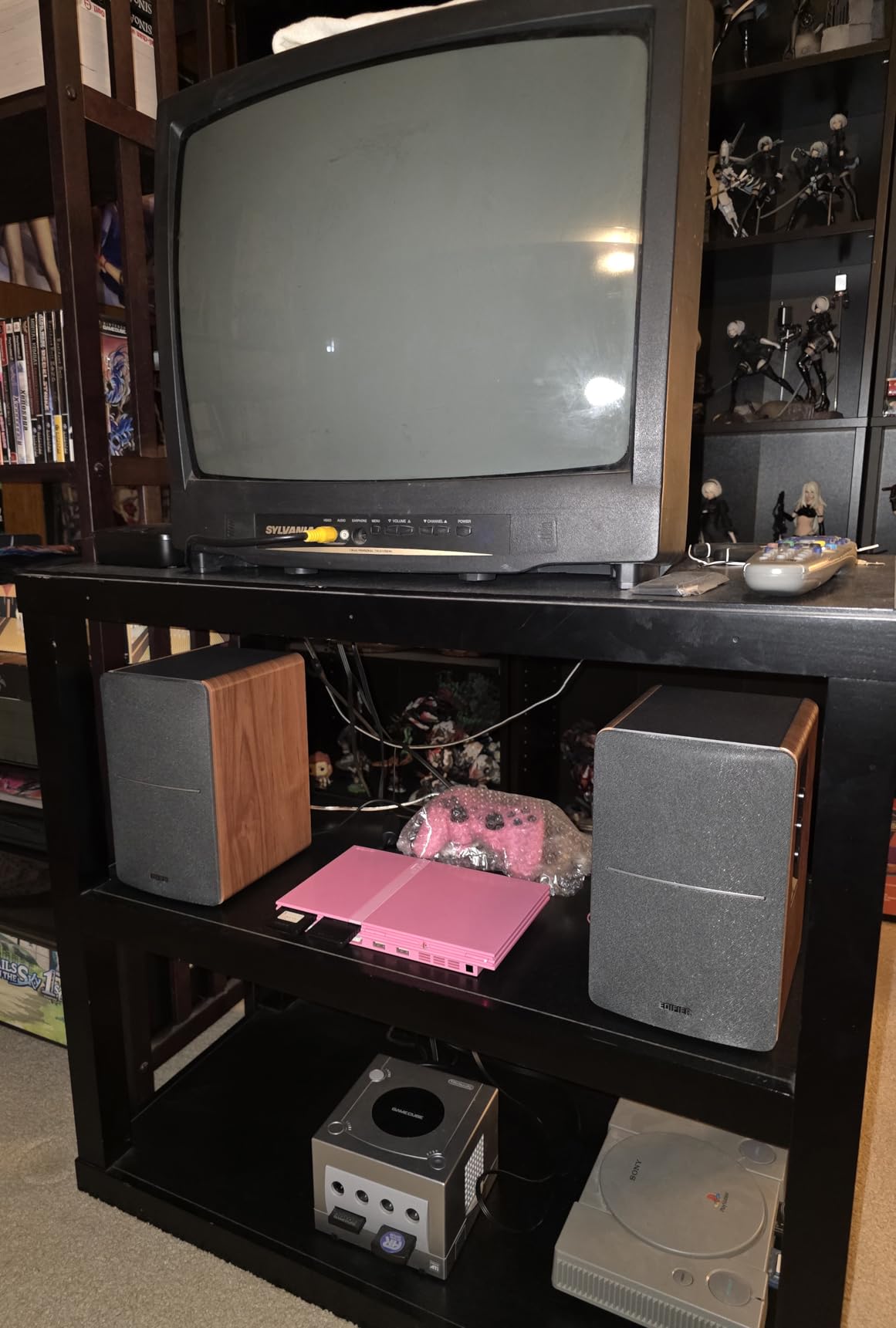
One detail that matters more in a small room than the spec sheet suggests: the cabinet is MDF with a wood-effect vinyl finish rather than ABS plastic. Plastic cabinets at this size tend to add a faint hollow ring to male vocals, and MDF does not. If your setup lives in a bedroom or a home office where a wire run is inconvenient, that alone can justify the choice.
Why the 4-inch driver suits a tight room better than a bigger one
A larger woofer in a small room does not automatically mean more output. It usually means more reflected energy bouncing off the closest wall, and once the reflections reinforce rather than cancel, the low end turns to mud well before you reach the volume level a bigger driver would achieve in open air. The R1280T’s modest 4-inch format is a controlled source of low-frequency energy rather than a floodlight.
Its listed 80Hz response figure is a good honest number to work from. Plan the placement so the speaker is roughly 6 to 10 inches off the back wall rather than jammed against it, and that 80Hz figure translates into usable, controlled low end rather than a one-note thump.
How the connectivity shapes real small-room use
Two AUX inputs plus a remote is a modest but complete feature set. In practice, one input stays occupied by whatever fixed source you have, usually a TV or a turntable, and the other handles the phone or laptop you actually touch during the day. There is no Bluetooth, no optical and no HDMI return channel, so this is not the pick for a TV-first setup where you want a single cable.
The side panel carries volume, bass and treble. That is a real advantage in a room where the speaker sits on a high shelf, because you can trim the low end down a click or two without walking over to it, and trimming a little low end is often the whole game in a small room.
Who should skip this model
Skip it if your primary source is a television and you want Bluetooth streaming. There is no wireless path and no optical or HDMI-ARC input, so you would be running a long analog cable across a room. It is also the wrong choice if you are building a home theater and want a matched center channel right now.
Also skip it if the deepest bass matters more than anything else. This is a balanced, honest compact speaker, not a subwoofer replacement, and pairing it with a small sub later is the natural upgrade path if you decide you need more weight below 60Hz.
2. Polk Audio T15 Bookshelf Speakers – the Best-Sounding Passive Pick
Polk Audio T15 100 Watt Home Theater Bookshelf Speakers, Black, 1 Pair
Passive two-way design
5.25 inch Dynamic Balance driver
0.75 inch tweeter
8 ohm nominal impedance
6.5 inch deep cabinet
+ Pros
- Highest average rating in this roundup at 4.7 stars
- 5.25 inch driver stays clear even at low listening volumes
- Shallow 6.5 inch depth fits tight shelves and shallow walls
- Key-hole slot on the back for simple wall mounting
- 5 year parts and labor warranty
- Cons
- Passive design requires an amplifier or receiver
- Single-driver design trades away some high-frequency refinement
- Not wireless and needs a speaker wire run
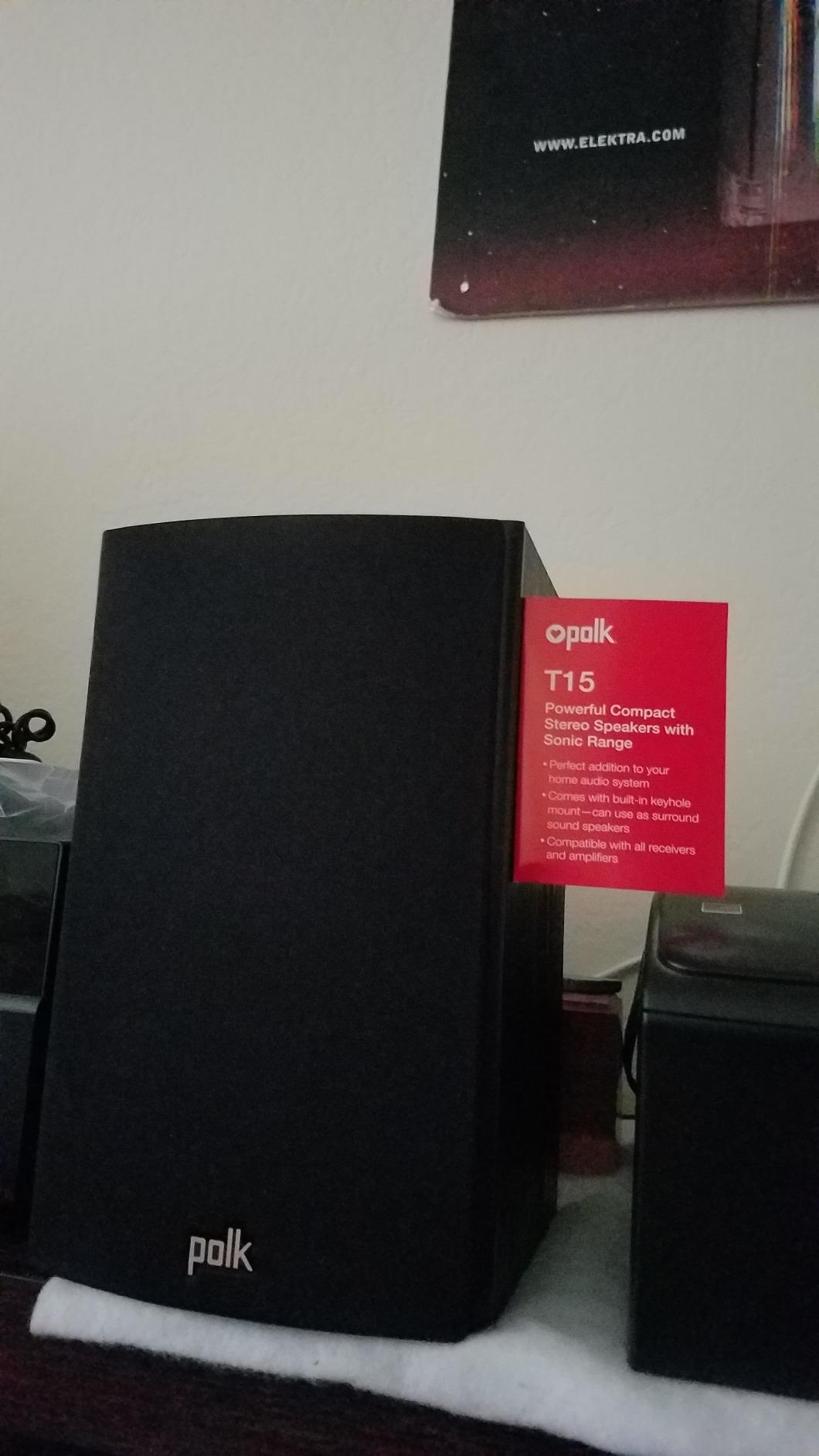
The T15 carries the highest average rating of any speaker in this roundup, at 4.7 stars across 7,389 reviews, and in a 10 by 12 room the reason is the 5.25-inch Dynamic Balance driver. It is the only passive speaker here with a dedicated tweeter, and that single fact is why vocals sit so clearly in front of the mix instead of smearing into the low end.
Reviewers repeatedly highlight clear vocals, balanced tonality and an easy path into a full 5.1 Polk system later by adding matching towers and a center channel. The recurring caveat is exactly what you would expect: they are passive, so they need an amp or receiver, and the single 5.25-inch driver gives away some of the treble refinement a true two-way design delivers.
For a small room specifically, the shallow 6.5-inch cabinet depth is more valuable than it looks. Most compact speakers are at least 9 inches deep, which pushes them off a normal shelf and out from a back wall. The T15 sits flush and still clears the wall, so you can pull it forward a couple of inches for imaging without losing shelf space.
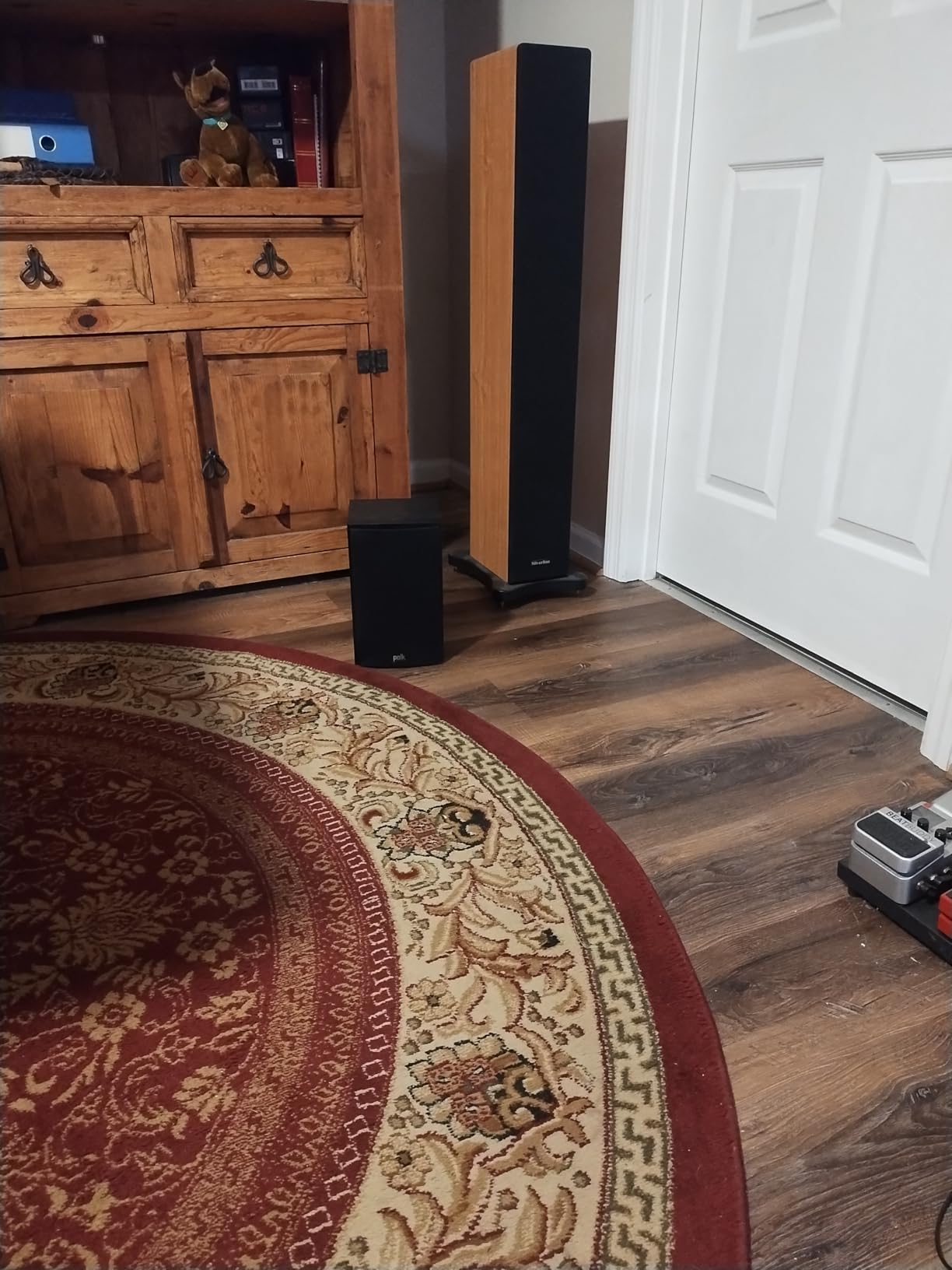
With an 80 percent five-star and 14 percent four-star split in the ratings, this is one of the most consistently well-received passive designs available. It is the passive recommendation that comes up most often in budget audio forum threads in the entry bracket, and it is the safe mainstream answer for good reasons: it is forgiving, it is cheap to drive, and it does not need a special room to sound decent.
Its 5-year parts and labor warranty is also the longest on the passive side of this list, which matters if you plan to keep the pair through a move. Buyers on r/BudgetAudiophile regularly pair this class of speaker with a small integrated amplifier and report years of reliable service.
The amplifier question: what the T15 actually needs
Because the T15 is 8 ohm and reasonably efficient, it is one of the least demanding passive speakers to drive. A modest integrated amplifier or a small AV receiver in the 20 to 50 watt per channel band is plenty for a bedroom or a home office at normal apartment listening levels. You do not need a powerhouse, and in a small room a very powerful amp mostly buys you headroom you will never use.
The honest cost consideration is that a passive setup always totals more than the speaker price alone, because you are buying an amplifier too. If you are starting from nothing and your room is under 120 square feet, an active pair usually gives you more music for the same money.
Why the tweeter matters more in a small room
The tweeter is what keeps the soundstage from collapsing into a single point between the two cabinets. Without one, the 5.25-inch driver has to produce everything, and the crossover that splits its workload is doing the job less cleanly. In a small room, where the two speakers are only a few feet apart, that difference in clarity shows up on vocals and on anything with a lot of midrange information.
Who should skip this model
Skip it if you have no amplifier and do not plan to buy one. That is the single most common complaint in the reviews, and it is a dealbreaker rather than a minor inconvenience. Also skip it if you want to stream wirelessly, since it is a wired passive design with no network features of any kind.
For everyone else, it is hard to argue against: the highest rating in the roundup, a shallow footprint, a long warranty and a clean upgrade path to a full surround system later.
3. Sanyun SW208 Active Bluetooth Speakers – the Most Versatile for Tiny Spaces
Sanyun SW208 3″ Active Bluetooth 5.0 Bookshelf Speakers, Built-in 24bit DAC
Active 3 inch system
Bluetooth 5.0 plus USB with 24 bit DAC
60W carbon fiber speaker unit
Under 8 inches tall
+ Pros
- Smallest working bookshelf speaker here at 3 inch drivers and 7.48 inch height
- Bluetooth 5.0 plus 3.5mm aux and USB with a built-in 24 bit DAC
- On-speaker volume plus bass and treble adjustment
- Wood cabinet with a premium finish rather than plastic
- Cons
- Modest maximum output that tops out below larger speakers
- Off-axis listening loses volume sharply so toe-in matters
- Some units report inconsistent USB mode behaviour
- The small tweeter is largely decorative on some versions
At 7.48 inches tall and 4.64 inches wide, the SW208 is the pick when physical space is the constraint that actually decides your purchase. It goes on a desk, a narrow shelf or a wall bracket without taking the room with it, and it is the pair I would put in a dorm room where a bigger speaker is simply not an option.
The feature set is unusual at this size. You get Bluetooth 5.0, a 3.5mm aux input and a USB port with a built-in 24-bit DAC, meaning you can feed it a digital signal directly from a computer rather than through an analog chain. The 30W per channel carbon fiber driver setup with a multi-layer voice coil is rated at 60W overall, with volume, bass and treble adjustment on the main speaker.
What you give up is headroom. This is the most repeated criticism across thousands of reviews, and it is worth saying plainly: it runs out of volume well before the knob reaches its limit. For late-night listening, a desk, or a small office at moderate levels, that never becomes an issue. For filling a 150 square foot living room at party volume, it does.
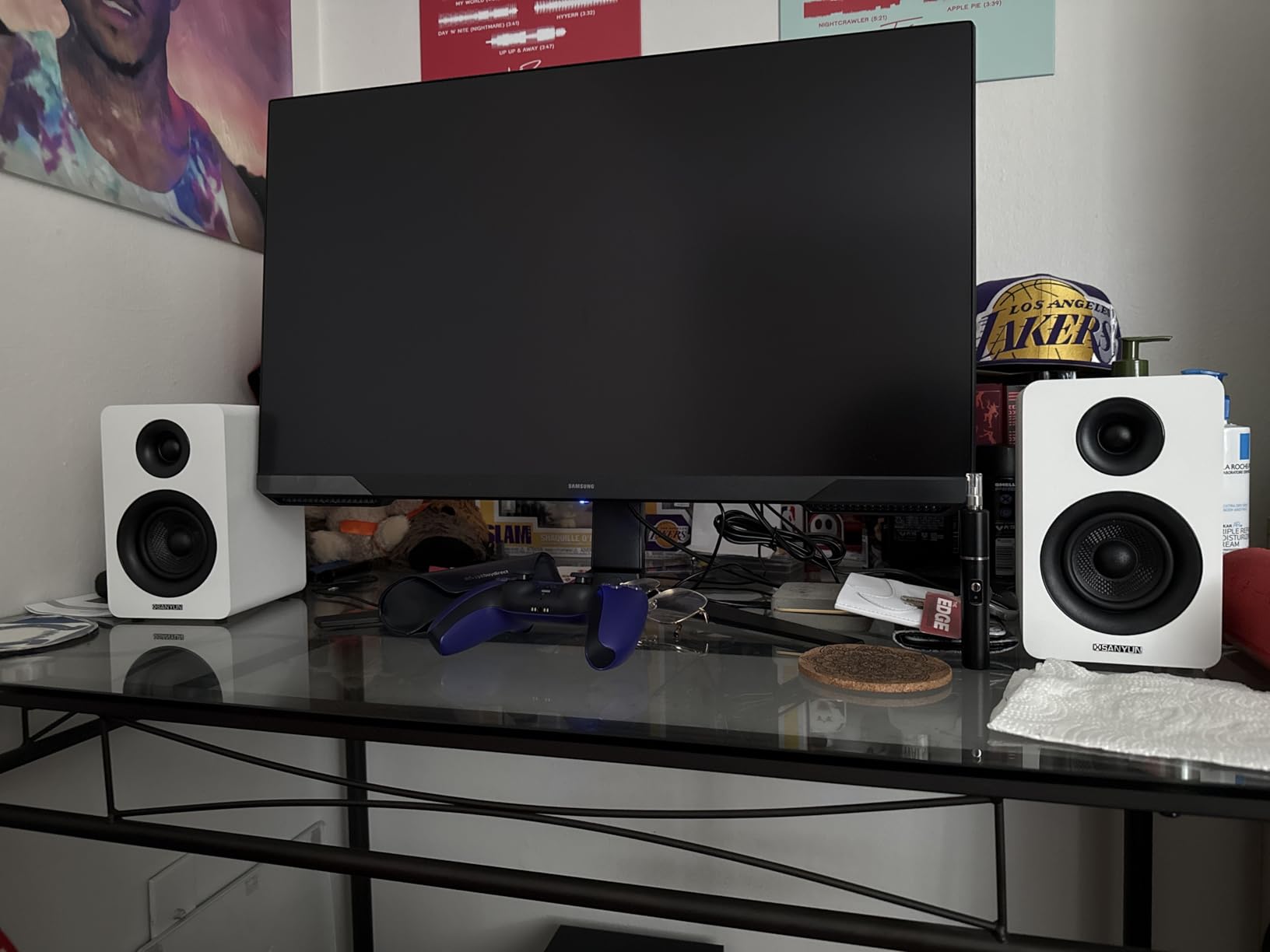
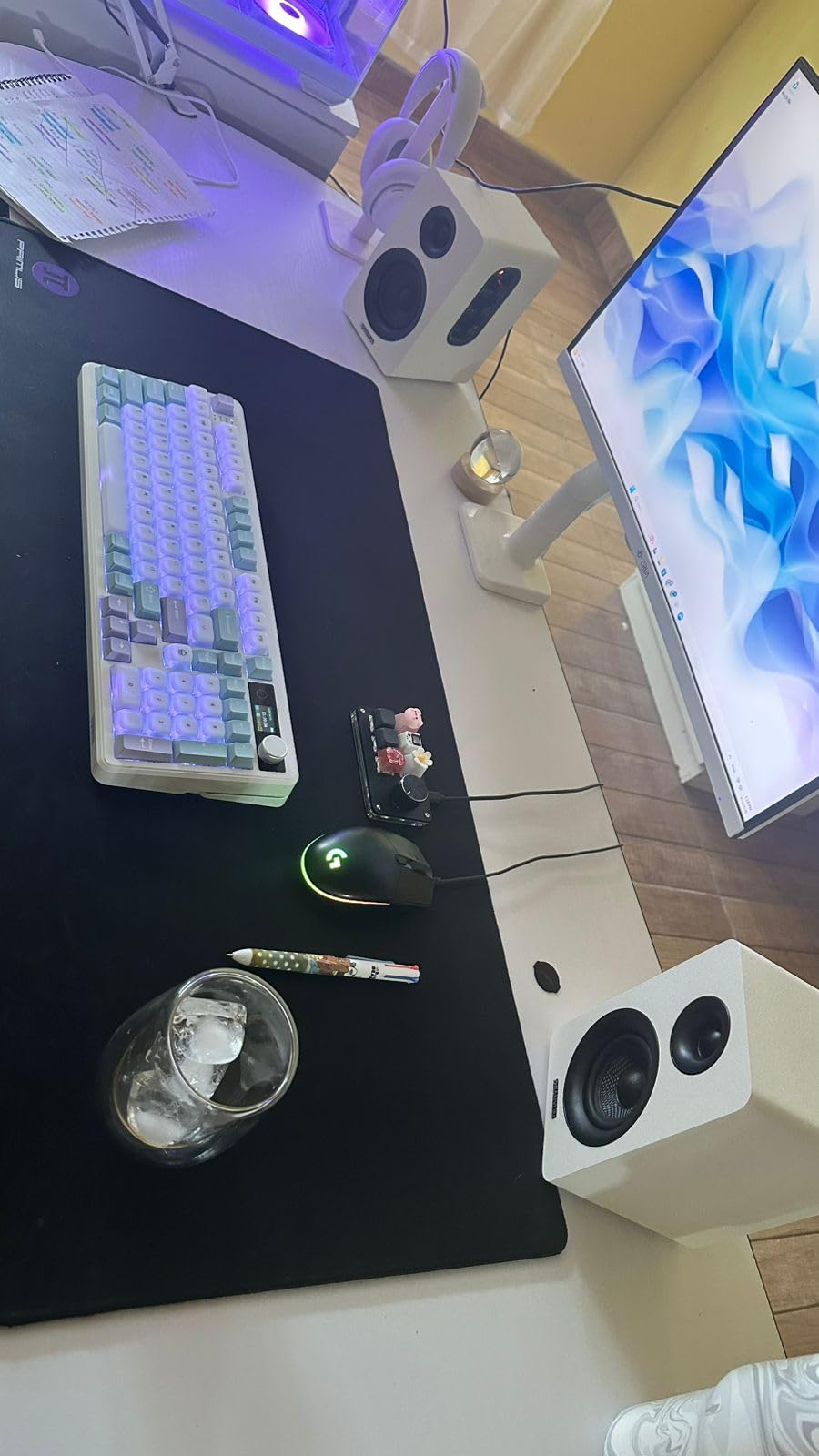
Reviewers praise the smooth, warm sound and repeatedly mention setting the pair either side of a monitor or on tilted desktop stands. A 69 percent five-star and 14 percent four-star split puts it below the R1280T and the T15 on consistency, but the comments are largely about output limits and mode-switching documentation rather than sound quality.
Forum listeners comparing compact desktop and dorm setups keep coming back to how little desk space this design needs. It is a common recommendation for a first system in a bedroom, and the wide dispersion holds up when you are sitting off to one side rather than dead center.
Bluetooth and USB make this the easiest first system
The 7-meter Bluetooth range covers a bedroom or office without dropouts in normal use, and pairing is a single step with no app involved. The USB DAC is the underrated half: connecting a laptop by USB means the digital signal goes straight to the internal converter, which avoids the noise floor of a 3.5mm analog connection. For a desktop setup this is a genuine quality advantage, not a gimmick.
The side-panel treble and bass knobs let you compensate for a reflective desk and hard walls, which matters more in a small room than a flat-response speaker would suggest.
What 3-inch drivers can and cannot do
A 3-inch carbon fiber cone moves a real amount of air for its size, and reviewers regularly describe bass as surprisingly good given the dimensions. What it cannot do is push a room to concert levels without the midrange getting involved in the work. If your listening is mostly near-field, the trade is excellent. If you want a small living room filled at midday, choose the R1280T instead.
Off-axis volume loss is the other thing to plan around. Because the drivers are small and the dispersion is narrower than a horn-loaded design, listening well off to the side costs you level. A simple fix is to toe the pair toward your main seat.
Who should skip this model
Skip it if you need real volume in a shared living space. A minority of owners also report inconsistent USB mode behaviour and unclear documentation for switching sources, so if digital input reliability is critical, verify it in person or stick with analog. And if the small tweeter’s role matters to you, be aware that on some versions it is largely decorative and the 3-inch driver handles the full range.
4. Edifier R980T Powered Bookshelf Speakers – the Best Near-Field Pick for Desks
Edifier R980T 4″ Active Bookshelf Speakers – 2.0 Computer Speaker – Powered Studio Monitor (Pair)
Active 24W RMS system
4 inch driver with front flared bass reflex port
Wood enclosure
2 AUX inputs
+ Pros
- 24W RMS of built-in amplification needs no separate amp
- Front firing flared bass reflex port improves low end in a tight room
- RCA and 3.5mm cables plus speaker wire included
- Two AUX inputs let two sources stay connected
- Wooden enclosures reduce resonance compared with plastic
- Cons
- No wireless or Bluetooth connectivity at all
- 24W RMS suits near-field rather than room filling
- Basic on-speaker volume control with no tone adjustment
The R980T is the most direct answer to the near-field question in this roundup. At a desk listening distance of roughly two to three feet, 24 watts RMS of built-in amplification is genuinely sufficient, and the included RCA, 3.5mm and speaker wire plus a universal 110V to 240V power supply mean it works out of the box in any country.
Its front-firing flared bass reflex port is the feature that makes it a small-room speaker rather than just a small speaker. Because the port faces forward, the rear of the cabinet can sit near a wall without choking the low end. In a narrow dorm room where the only available shelf is flush against the plasterboard, that single design decision removes the single most common complaint about compact speakers in tight spaces.
The wooden enclosure is another quiet win at this size. Owners highlight the natural, room-filling sound for the size and the convenience of the included cables, and note that it works well for a desk or small-room setup without an amplifier.
Front porting is the whole reason this one fits your shelf
A rear-firing port needs roughly 12 to 18 inches of clearance behind the cabinet to breathe. Pull a speaker that far forward to solve the problem and you lose the stereo imaging you were trying to get in the first place. A front port removes that trade-off entirely, which is why this design can sit at the front edge of a shallow shelf and still sound balanced.
The flared port shape also reduces port turbulence noise, so at higher levels the low end stays cleaner than a simple tube port of the same diameter would manage.
Where 24 watts runs out
At 24W RMS this is a near-field design, and the honest limit is listening distance. Sit within about six feet and it is well matched to its capability. Beyond eight feet in an open room, the volume ceiling arrives early and there is no tone control to help, since adjustment here is volume only. Owners report 78 percent five-star and 14 percent four-star ratings, with the caveats about wattage and the lack of wireless coming up far more often than complaints about sound.
For a dorm or a home office, where you are usually within arm’s reach of the desk, that limit rarely comes up. For a main living room system, it will.
Who should skip this model
Skip it if you stream over Bluetooth. There is no wireless path of any kind, only wired RCA and 3.5mm inputs. Also skip it if you need bass or treble adjustment; there is no tone control, so you are stuck with the fixed voicing, which is fine on a desk but limiting in a reflective room.
5. Micca MB42 Passive Bookshelf Speakers – the Best Value Two-Way Design
Micca MB42 Standard 2-Way Passive Bookshelf Speakers, Stereo Pair, Black
Passive two-way design
4 inch woven carbon fiber woofer
0.75 inch silk dome tweeter
85dB sensitivity at 4 ohm
+ Pros
- Genuine two-way design with a silk dome tweeter owners single out
- Woven carbon fiber woofer gives clean tight low end for a 4 inch driver
- Full-size 5-way binding posts rather than spring terminals
- Compact 9.5 by 5.8 by 6.5 inch footprint
- Owners report years of reliable use
- Cons
- Passive design requires an external amplifier
- Low 85dB sensitivity demands a capable small amp
- Bass extension is limited and a subwoofer helps on music
- Occasional binding post and assembly quality variance
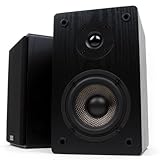
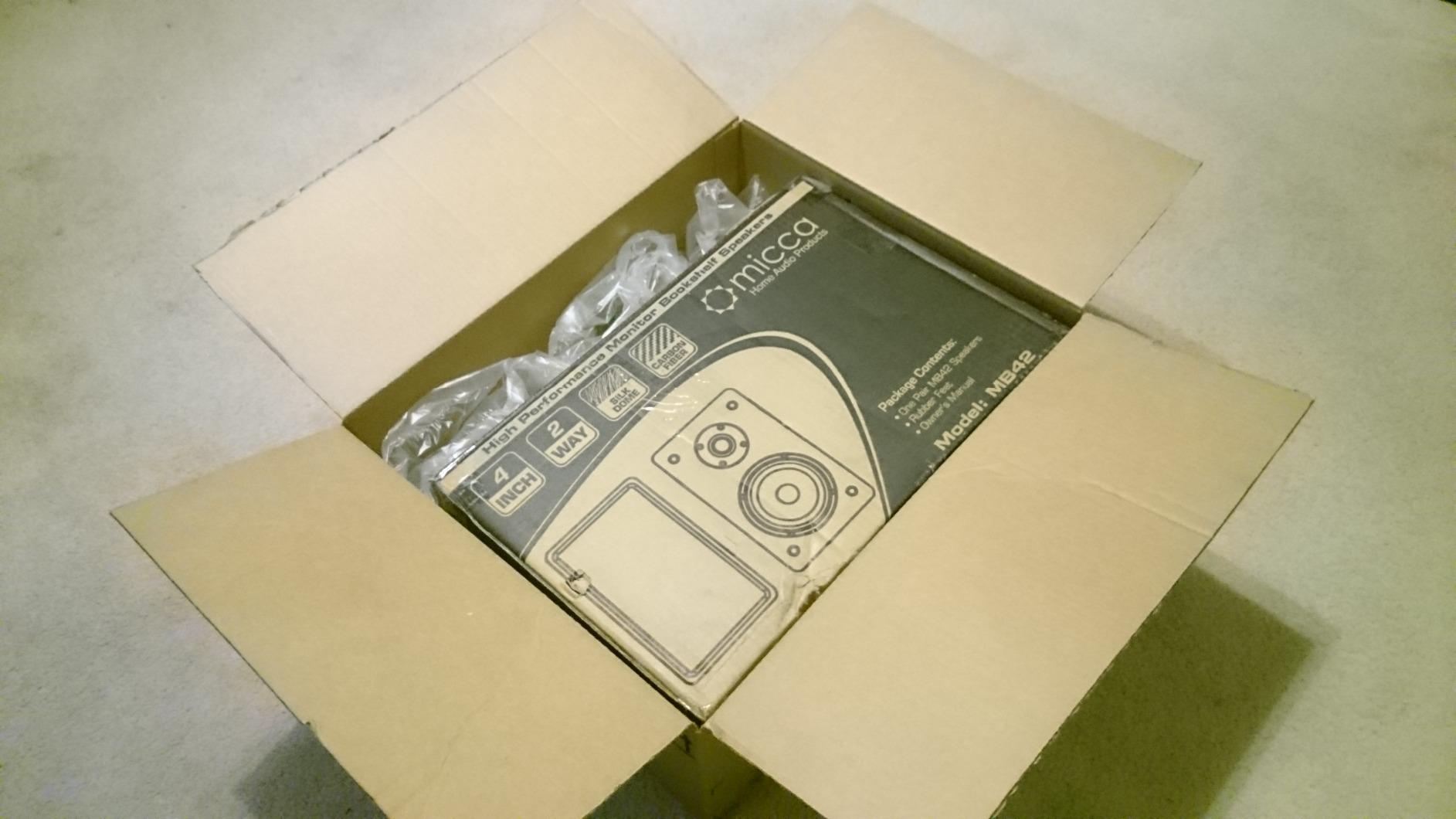
The MB42 is the most interesting passive design in this group because it is a real two-way with a 0.75-inch silk dome tweeter, a 4-inch woven carbon fiber woofer with a rubber surround, and a 6dB per octave crossover in a ported enclosure. At 9.5 by 5.8 by 6.5 inches it is one of the more compact cabinets here, so it is a legitimate small-room choice rather than a compromise.
Owners describe the midrange and treble as clear and bright with a good sense of imaging, and several mention that the speakers improve noticeably after a period of break-in. With a 73 percent five-star and 18 percent four-star split, it is the most enthusiastically reviewed per review of the passive options here.
Full-size 5-way binding posts rather than cheap spring terminals deserve a mention in a small room, because the speaker cable is right there at the back of a tight cabinet where you will be plugging and unplugging during setup. Hex screw assembly is a small thing that is genuinely annoying when it is missing.
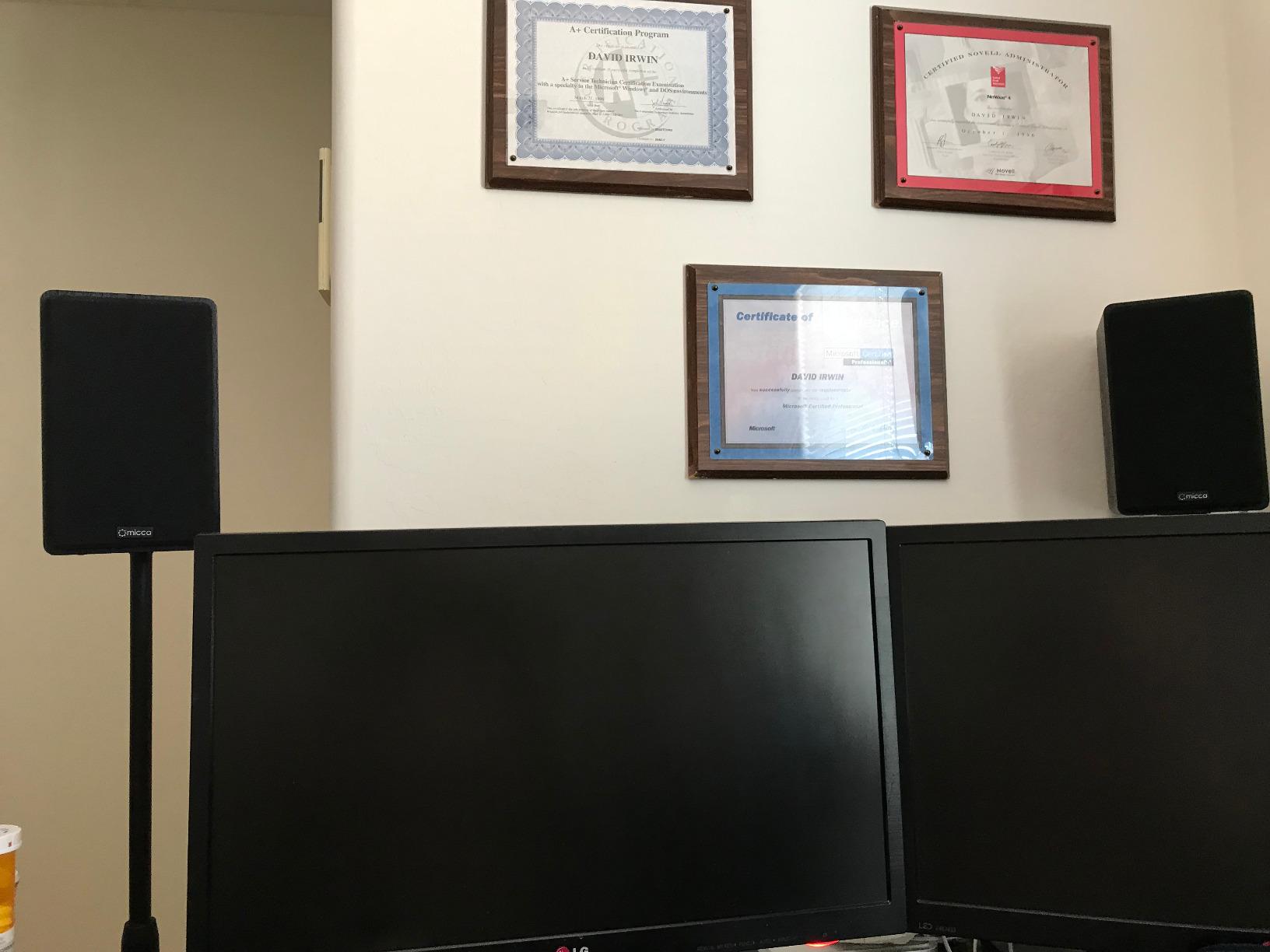
The limitation that decides this purchase is efficiency. At 85dB sensitivity and 4 to 8 ohm rated impedance, the MB42 wants a fair amount of amplifier power to reach a satisfying level, more than the Polk T15 does. Pairing it with a small integrated amplifier of 40 watts per channel or more is the sensible move in a bedroom, where you are listening close to the speakers anyway.
On forums, compact two-way designs in this bracket are a recurring recommendation for anyone who wants a real tweeter without stepping up a size class, and the binding posts and woven cone are usually cited as the reasons the build feels a step above the usual budget passive.
Why 85dB sensitivity matters in a small room
Sensitivity tells you how much output a speaker produces for a given amplifier power. A 3dB difference is a doubling of perceived volume, so an 85dB speaker is meaningfully harder to drive than an 88dB one. In a small room at close listening distance that is often fine, because you are not trying to fill a large volume of air. It becomes a problem the moment you want to play at higher levels or move the listening position back.
Listed power handling of 75 watts per speaker gives you a comfortable ceiling, so the speaker will not be damaged by a larger amp. The question is purely how hard it has to be pushed to reach the level you want.
Carbon fiber woofer and imaging in a tight space
The woven carbon fiber cone is stiffer and lighter than a conventional paper cone, which generally means lower distortion and faster transient response. In a small room that shows up as cleaner separation between the bass and the midrange, so vocals stay intelligible rather than getting buried in low-frequency wash.
Reported frequency response runs 60Hz to 20kHz, which is a genuinely useful figure for a 4-inch driver and gives this pair more low-end reach than most of the powered options in this roundup. Bass extension is still limited in absolute terms, and owners looking for weight on music often add a subwoofer later.
Who should skip this model
Skip it if you have no amplifier, and skip it if you want to fill a room from a distance without a capable amp behind it. Also worth knowing: a minority of owners report binding post tightness and driver assembly quality variance, so inspect the pair on arrival and tighten the hex screws before listening.
6. Acoustic Audio AA321B Speakers – the Best Choice When Space Is Truly Tight
Acoustic Audio AA321B Mountable Indoor Speakers 400 Watts Black Bookshelf Pair
Passive satellite design
2.5 inch polypropylene driver
150Hz to 20kHz response
88dB at 8 ohm
Includes brackets
+ Pros
- Smallest cabinets here at 3.5 by 3.5 by 4.5 inches so they disappear on a shelf or wall
- Mounting brackets included for wall or ceiling placement
- 88dB sensitivity is efficient for a driver this small
- Lifetime warranty
- Works well as surrounds or a second zone
- Cons
- Essentially no bass output from a 2.5 inch driver
- The 400 watt headline rating overstates real world handling
- Spring-loaded raw wire terminals rather than binding posts
- Supplied brackets do not reliably hold position
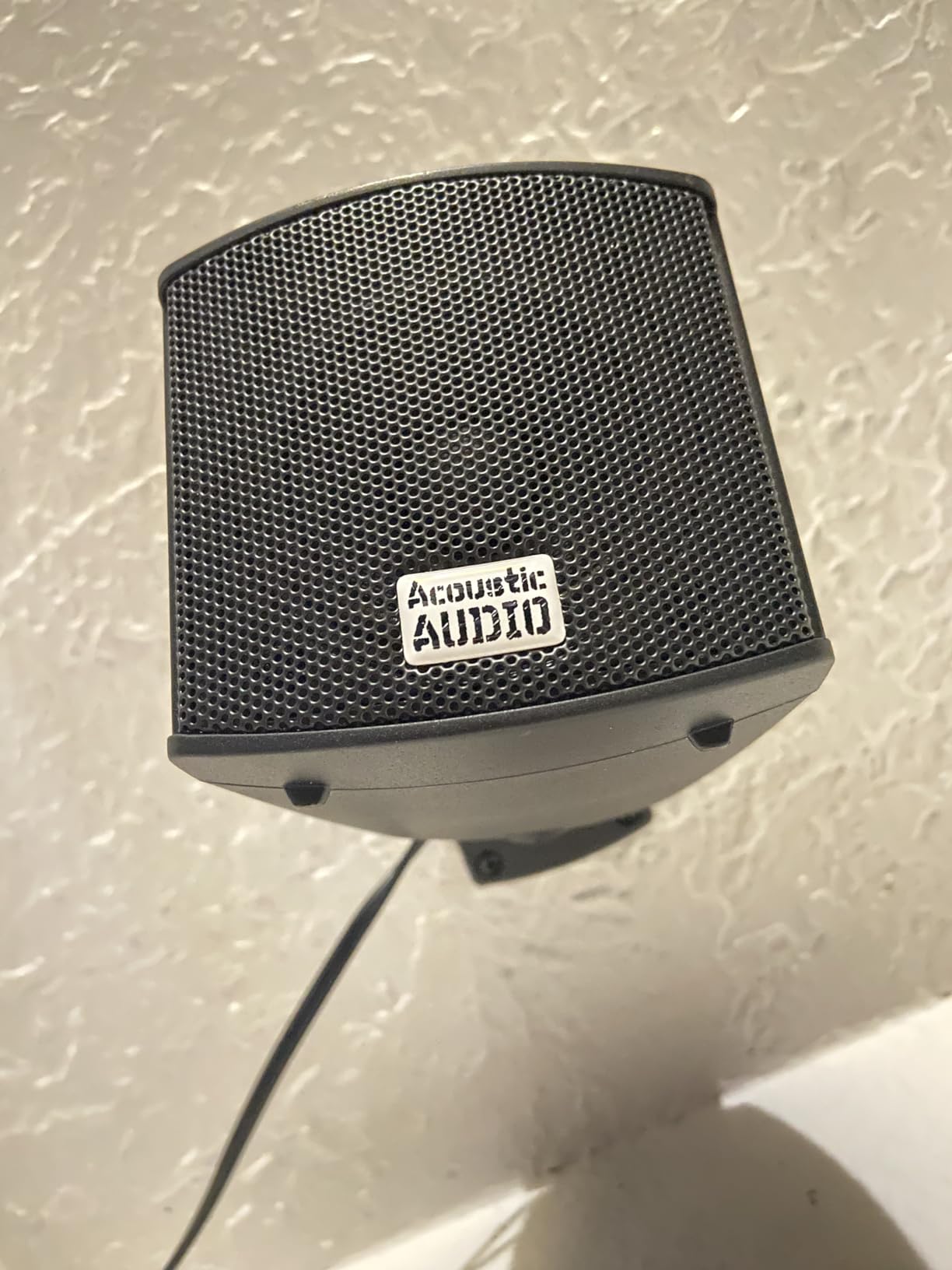
At 3.5 by 3.5 by 4.5 inches per cabinet, the AA321B is the smallest speaker here, and it earns its place in a roundup about small rooms for one specific reason: it disappears. Mounted on a wall or tucked behind a monitor, it takes up no shelf space at all, which in a 90 square foot room is not a trivial consideration.
The sealed ABS cabinets with spring-loaded raw wire connectors and included mounting brackets make it a genuinely plug-and-play passive install. Recommended power handling is 20 to 200 watts per channel, and its 88dB sensitivity at 8 ohm is the most efficient figure in the roundup despite the tiny driver.
Owners use them predominantly as surrounds, height speakers and in compact 2.1 or 5.1 setups, praising the tiny footprint, the included hardware and the value. The most common complaint is the absence of bass, which most buyers accept for surround duty.
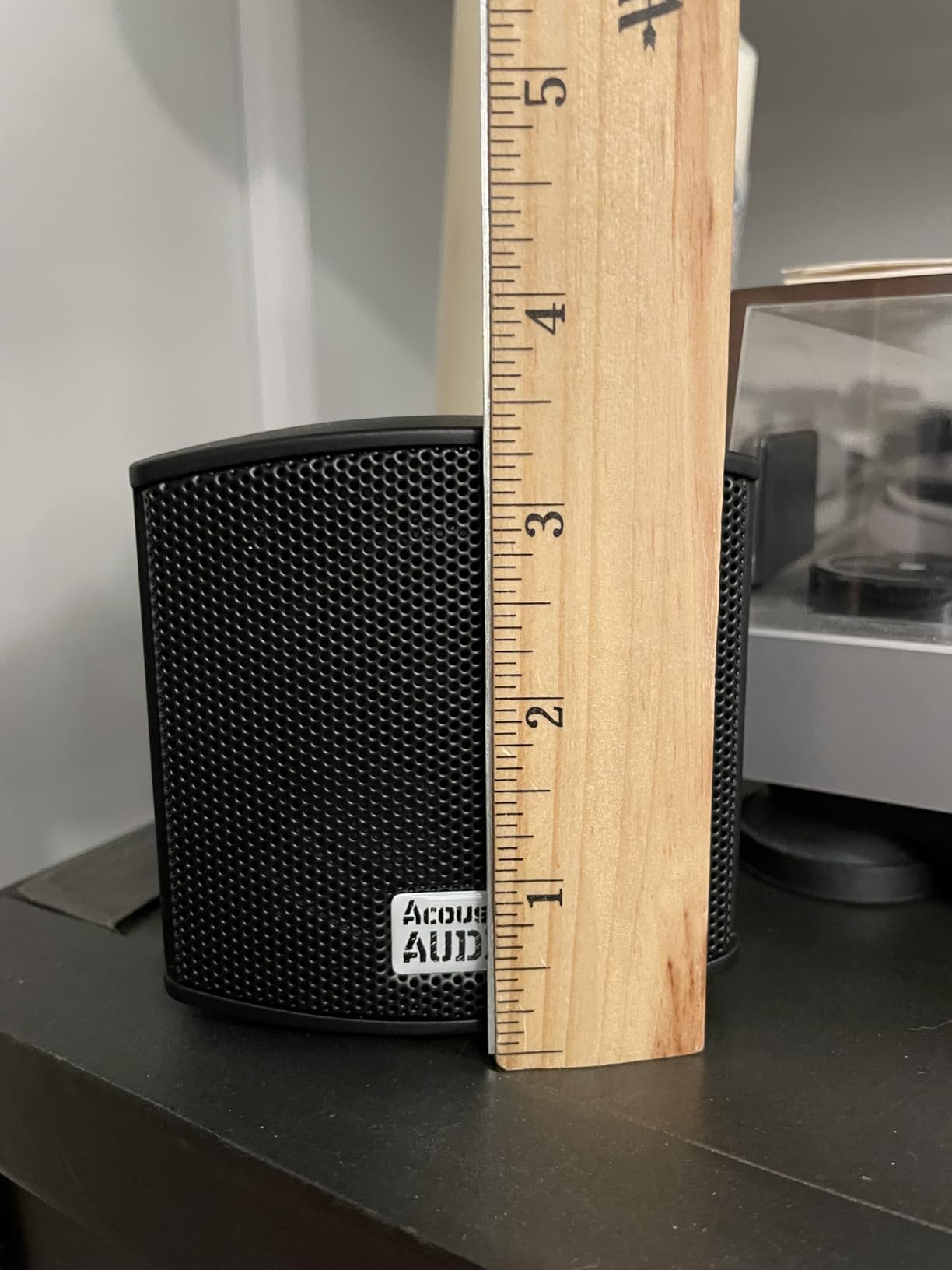
That is the honest framing: this is not a music speaker. The 150Hz to 20kHz response means it handles midrange and high frequencies well and does essentially nothing below 150Hz, so for stereo listening on its own you would be missing the bottom two octaves of most recordings. Paired with a subwoofer it is a very effective small-room system.
Two things to be aware of. The 400 watt nominal figure is marketing rather than a real-world capability, and a minority of owners call it out directly. And the supplied mounting brackets do not hold position reliably, so if you plan to wall-mount, budget for better hardware.
Where these speakers genuinely excel
As surround or height channels, the small size is an advantage rather than a compromise. A 2.5-inch driver has almost no output below 150Hz, so it will not fight with your subwoofer for the lowest frequencies, and its wide dispersion fills a small room’s rear ceiling corners far better than a full-size standmount would. This is also why the same design shows up constantly as a second zone in a compact apartment.
The 88dB sensitivity means it plays loudly enough for surround duty on almost any amplifier, including a basic receiver, which is a real advantage when the main pair is being driven properly.
A word on the wattage figure and the terminals
Be skeptical of headline power ratings at this price point. A 400 watt nominal number on a 2.5-inch driver describes a peak the speaker will never see; the 20 to 200 watt per channel recommendation in the specifications is the honest range. Staying inside it protects the driver and keeps distortion low.
The spring-loaded raw wire terminals are functional but fiddly with thicker cable. If you are running in-wall wire, plan on bare wire ends and a bit of care at each connection.
Who should skip this model
Skip it as your primary stereo pair. There is no low end to speak of, and music will sound thin and small. It is also not the right pick if you want neat, secure connections or dependable wall mounting hardware, since both are weak points here.
7. Polk Audio OWM3 Wall Speakers – the Best Choice for Discreet Wall Mounting
Polk Audio OWM3 Compact Wall & Bookshelf Speakers, Pair, White
Passive wall and bookshelf design
4.5 inch mid woofer with 1 inch tweeter
Seven mounting orientations
About 4 inches deep
+ Pros
- Ties the T15 for the highest rating here at 4.7 stars
- Curved cabinet supports seven mounting orientations including corner positions
- Only about 4 inches deep so the room stays uncluttered
- Smooth sound with wide dispersion and plenty of volume without distortion
- White finish blends into walls when mounted near ear height
- Cons
- Very little bass and a subwoofer is needed for full range
- Not intended as front mains or a center channel
- No mounting hardware included so brackets must be sourced separately
- No rear cable notch so it will not sit perfectly flat
The OWM3 solves a problem none of the other speakers here address: how to get sound into a small room without putting anything on a shelf. At about 4 inches deep with key-hole slots and a 1/4-20 threaded insert, it mounts to a wall, a corner, or the ceiling and effectively vanishes, leaving the shelf space for books that gave the category its name.
The curved cabinet supports seven mounting orientations, including horizontal, vertical, corner, angular, shelf and top placement. In a room where the listening position is off to one side, that flexibility is genuinely useful, because you can angle a pair toward the seat without them looking out of place.
Owners rate the sound as smooth and clear with wide dispersion, and the 4.5-inch mid/woofer paired with a 1-inch tweeter using Dynamic Balance and Capacitive Coupling Technology holds volume without obvious distortion. With an 81 percent five-star and 13 percent four-star split, satisfaction is very high for the intended use.
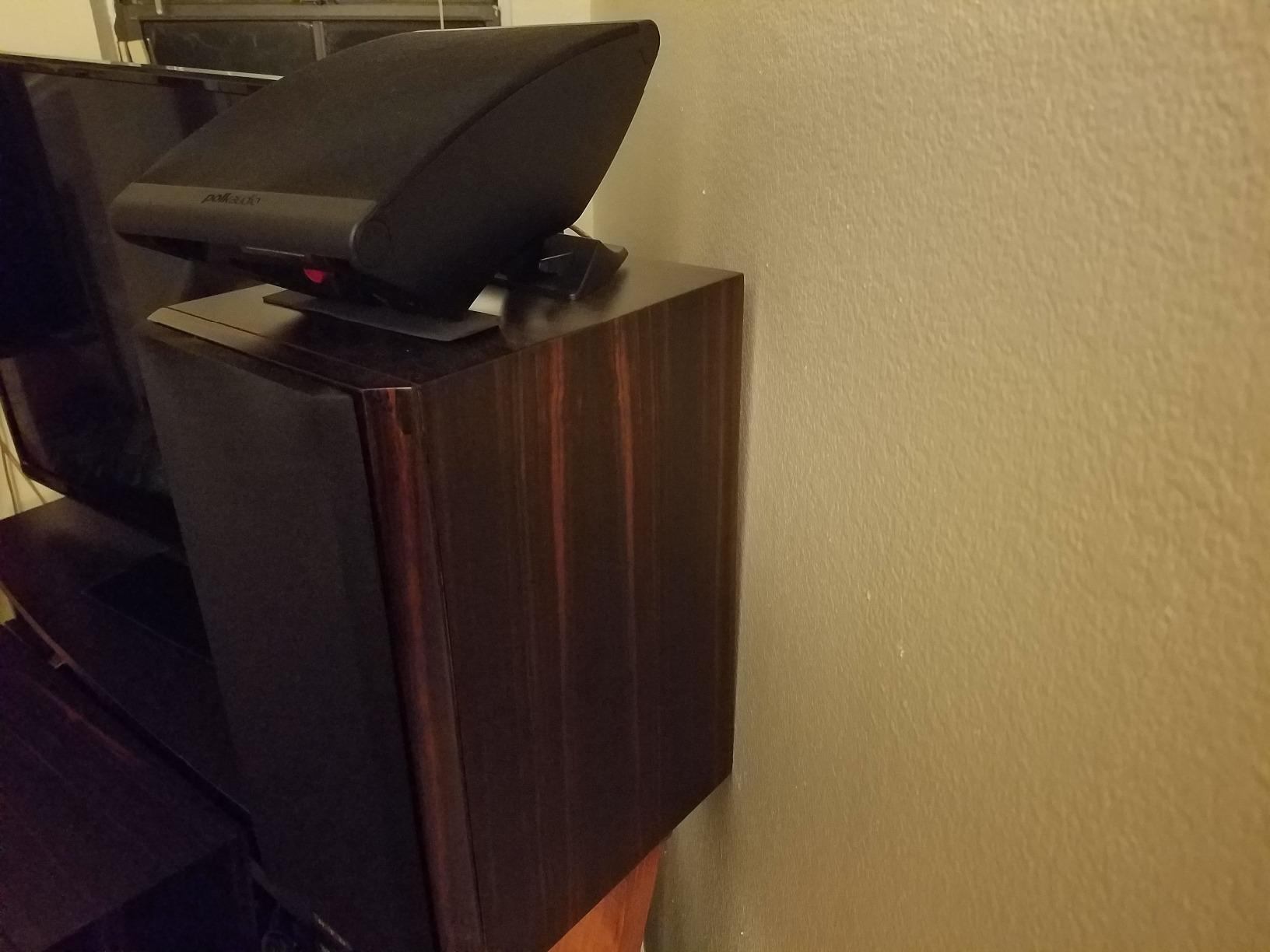
The caveat is consistent across reviews: these are thin and bass-light as front speakers, and several buyers were surprised that mounting hardware was not included. At 100 watts maximum output and 8 ohm impedance they will drive fine, but the character is that of a surround speaker rather than a stereo main.
Forum listeners looking for wide dispersion so they can move their seating and still get a centred image repeatedly point to this design, and it is a common pick for background listening in a second room, where a pair that mounts flat and unobtrusively beats almost anything else at this size.
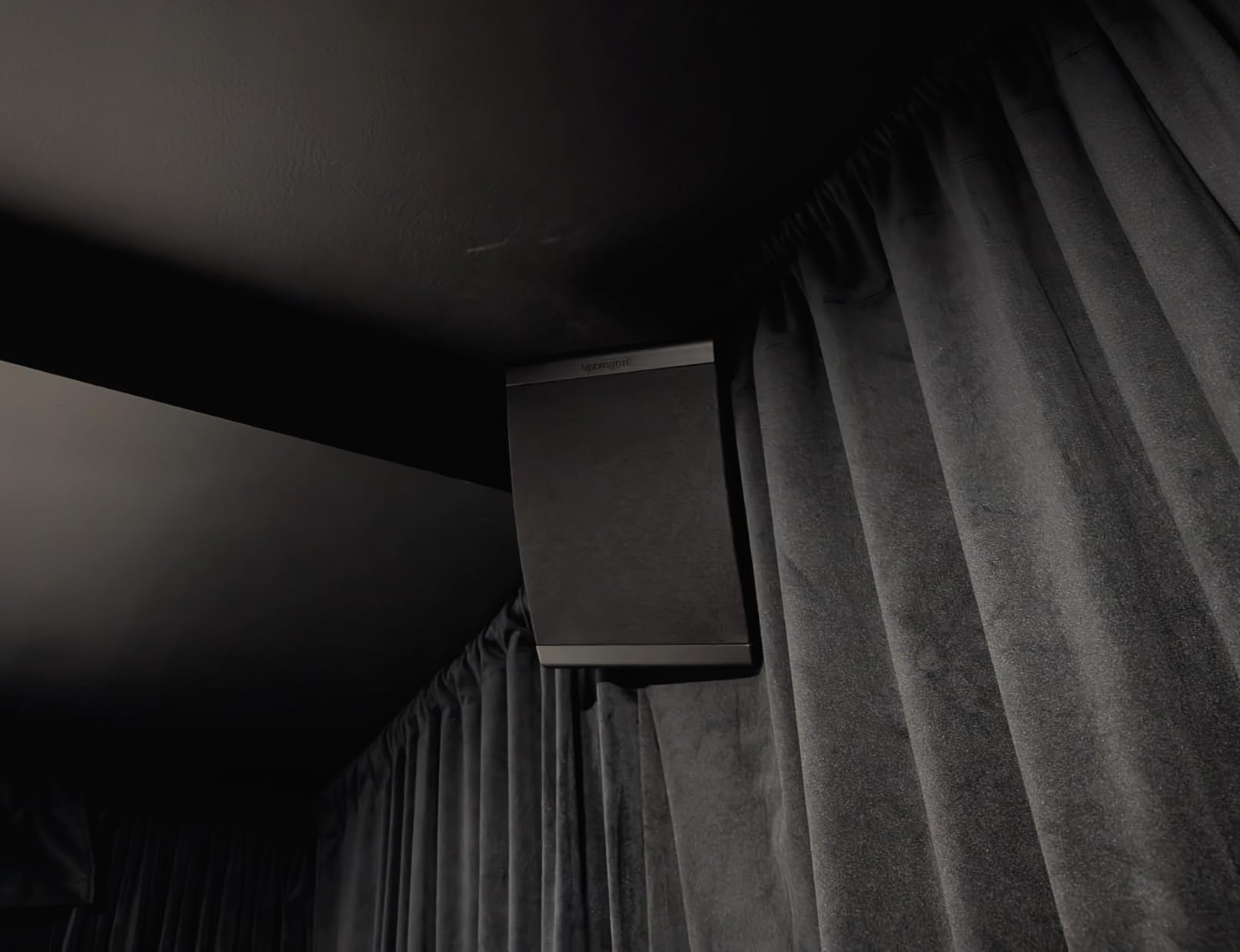
Dispersion is the reason these belong in a small room
In a small room the speakers usually end up closer to you than a conventional stereo layout would put them, and the listening position moves. Wide horizontal dispersion means the soundstage stays coherent whether you are centered or off to the side, which is exactly the flexibility a living room with a movable couch needs. A narrow-dispersion design would collapse the image as soon as you shifted position.
Mounting at ear height near a wall, or above ear height angled down, both work well because of the same characteristic. That is unusual for a small speaker and it is the main technical reason to consider this model.
Why bass is the limiting factor
A 4.5-inch driver in a roughly 4-inch deep sealed cabinet has very little internal volume to work with, so bass extension is minimal. That is fine for surround duty, where a subwoofer handles everything below the crossover, and wrong for a primary stereo pair where you want music to carry weight.
If you are building a small home theater, the honest system is these as surrounds or height channels plus a subwoofer and a proper center channel. Used as front mains, they will sound clear and small rather than powerful.
Who should skip this model
Skip it if you are buying a stereo pair with no subwoofer, and skip it if you want a complete installation from the box, because mounting hardware has to be sourced separately. Also note the lack of a rear cable notch, which means the speaker will not sit perfectly flat against a wall, so leave a small gap for the cable.
8. Edifier P12 Passive Bookshelf Speakers – the Best Starter Passive Pair with a Built-In Bracket
Edifier P12 Passive Bookshelf Speaker – 2-Way Speakers with Built-in Wall-Mount Bracket – Wood Color, Pair – Needs Amplifier or Receiver to Operate
Passive two-way design
4 inch driver with 19mm silk dome tweeter
6 ohm impedance
Built-in wall mount bracket
+ Pros
- Passive two-way design with a 19mm silk dome tweeter for detailed treble
- Built-in wall mount bracket simplifies surround or height placement
- Wood grain finish looks better than a typical black plastic box
- Speaker wire included so only an amplifier is needed
- Owners report clear mids and highs at moderate volume
- Cons
- Requires an external amplifier or receiver with no built-in power
- Low sensitivity of about 79dB needs a fairly capable amp
- Limited low-end capability from the small 4 inch driver
- Spring-clip terminals are awkward for thicker speaker wire
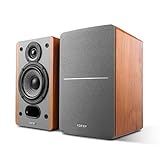
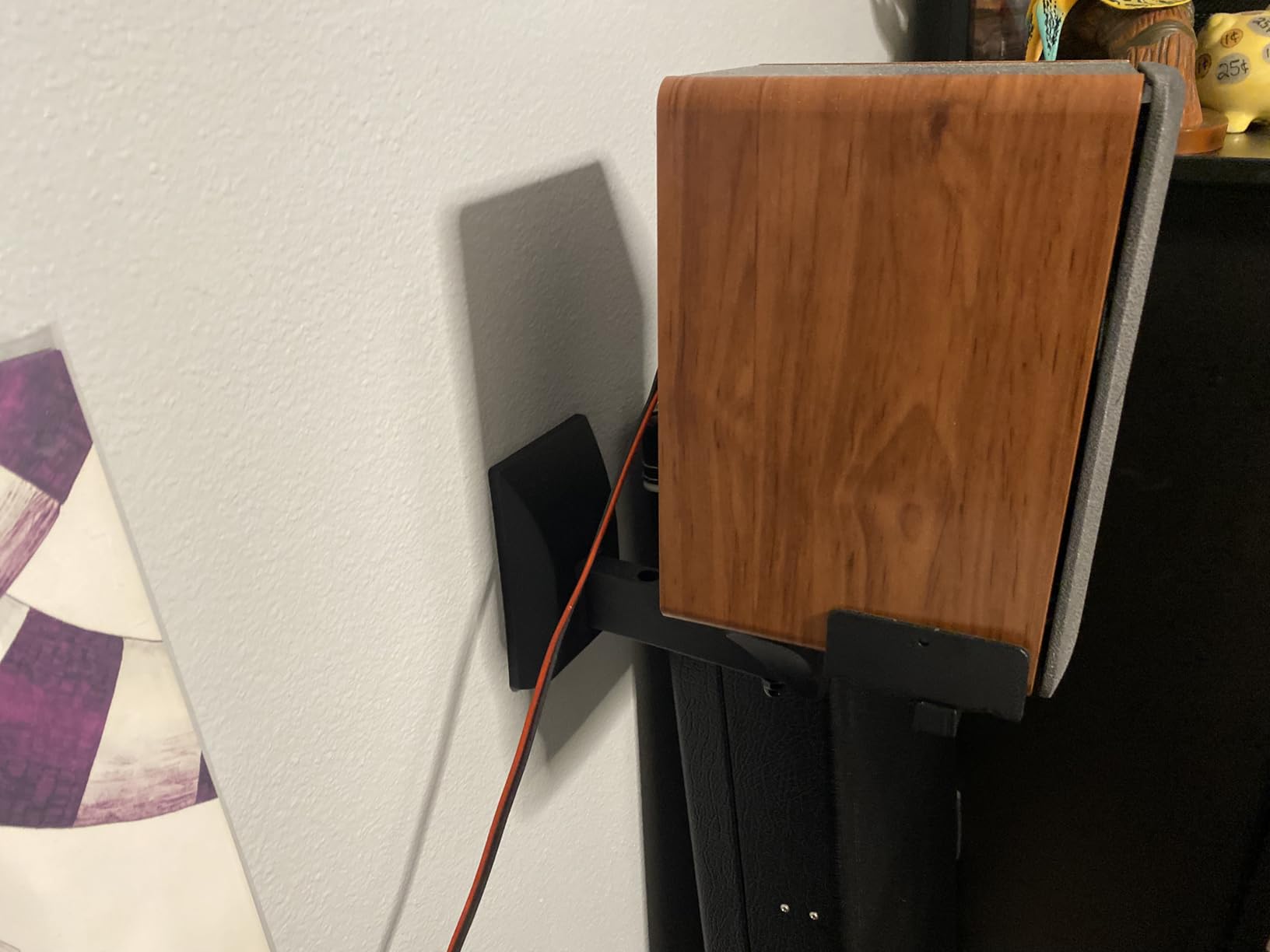
The P12 is the interesting middle ground in this list: a genuine passive two-way with a 19mm silk dome tweeter and a 4-inch driver in a bass reflex ported cabinet, with a wall mount bracket built into the back. At 9.37 by 6.61 by 5.04 inches it is compact enough for a real small room, and the wood grain finish is a step up from the usual black plastic box.
Owners treat it as a value passive two-way that punches above its class, calling the sound clear and crisp and noting the improved aesthetics. With a 76 percent five-star and 18 percent four-star split, satisfaction is strong, and the two-year manufacturer warranty is a reasonable minimum.
The technical note that decides whether this works for you is efficiency. At roughly 79dB sensitivity, this is the least efficient passive speaker in the roundup, which means it needs a beefier amplifier than the other passive options to reach a satisfying volume. Speaker wire is included, so the only extra purchase is the amp itself.
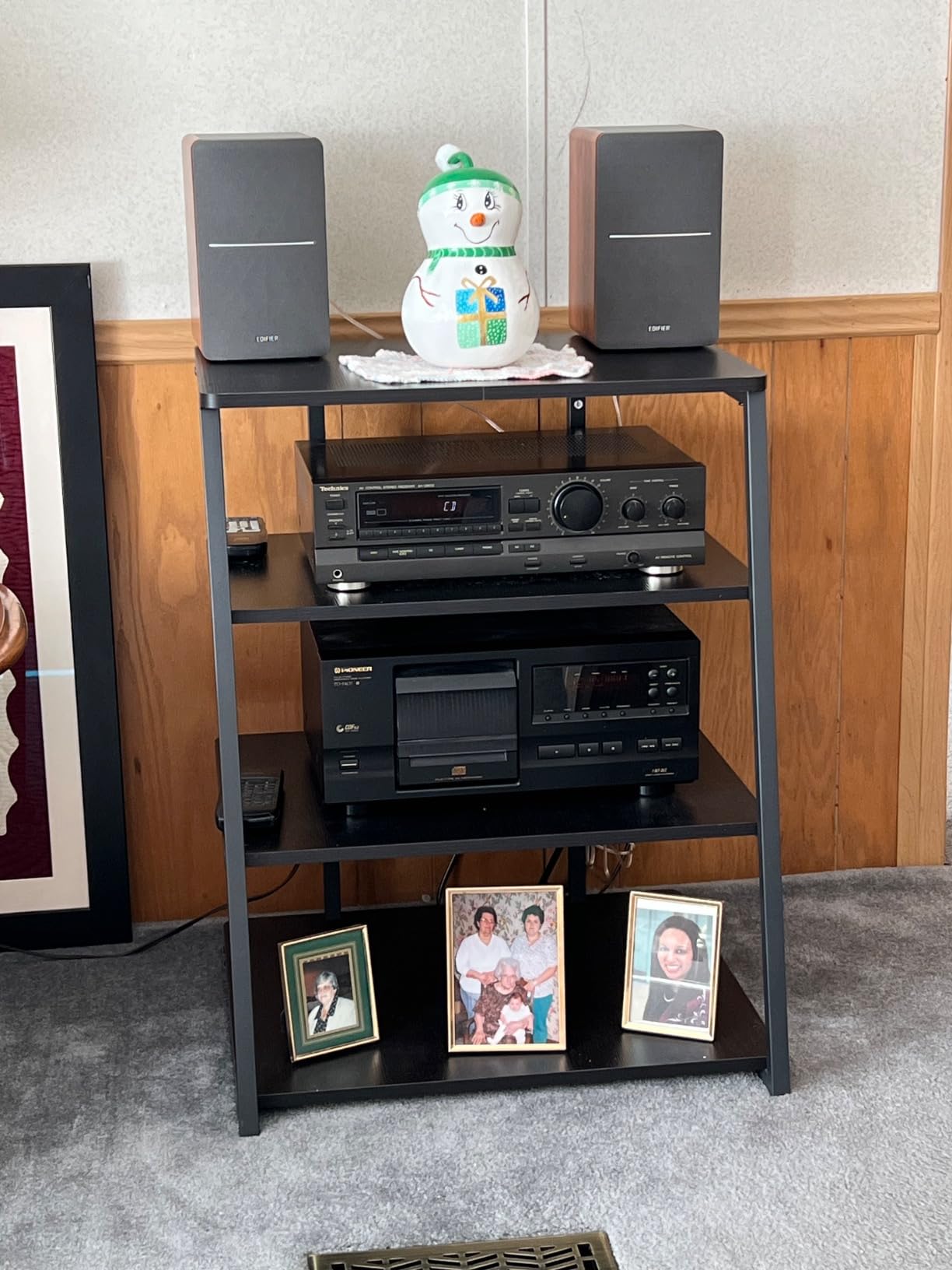
That makes the P12 a poor first purchase for someone who owns nothing, and a good second one for someone who already has a capable amplifier and wants a matching pair of surrounds. It is also a sensible choice for a home theater rear or height position, where the built-in bracket removes the need to source hardware.
Owners flag two practical details. The spring-clip terminals are small and awkward if you run thicker speaker cable, so plan on standard gauge wire. And several buyers note that the listed dimensions do not always match the real cabinet, so measure your shelf before committing to a tight fit.
Low sensitivity is the number to check first
At roughly 79dB, this speaker produces about 6dB less output than the Acoustic Audio in this roundup for the same amplifier power. That is more than a rounding difference: it means a bigger amplifier, a closer listening position, or accepting a lower maximum level. In a small room at near-field distance, the distance compensates and the pairing works. As a background or surround speaker, it is a non-issue.
If you already own an amplifier with 50 watts per channel or more, the efficiency concern largely disappears and you are left with a clean two-way design at a modest price point.
What the built-in bracket changes
A bracket molded into the cabinet means you can mount these as rear surrounds or height channels without buying separate hardware, which is the same advantage the Polk OWM3 offers but in a conventional bookshelf form factor. For a 5.1 setup in a small room, having surrounds and rears disappear above or behind the seating position keeps the floor clear and the room visually simpler.
It is also useful for a bedroom setup where the speakers sit on high wall brackets rather than a stand, since the angle can be adjusted once at install time.
Who should skip this model
Skip it if you have no amplifier. The efficiency requirement compounds an already significant barrier to entry, and an active alternative will serve most first-time buyers better. Also skip it if your shelf is exactly at the limit, because owners report dimension discrepancies between the listing and the real cabinet.
How to Choose Speakers for a Small Room
Choosing the best bookshelf speakers for small rooms comes down to four decisions: powered or passive, which port design suits your wall, how the speaker behaves at your listening distance, and how much treatment your room needs. Get the first two right and most of the boom problems disappear before you spend anything on acoustic panels.
Powered vs. passive: which architecture fits your room
Choose a powered (active) speaker if you do not already own an amplifier, if you want Bluetooth or a USB DAC, or if your available shelf space is tight enough that an amp would be an inconvenience. Choose a passive speaker if you already have a receiver, if you want to grow into a 5.1 or Atmos system later, or if sound quality per dollar matters more than convenience.
The practical trade is total system cost. A passive pair always requires an amplifier, and even a modest one changes the real cost of the system considerably. In a room under 120 square feet, the amplifier has nowhere to live and the active option is usually the smarter purchase.
Rear-ported vs. front-ported vs. sealed: choose for your wall
A rear-ported speaker needs roughly 12 to 18 inches of clearance behind the cabinet to sound balanced. Front-ported speakers fire the port forward, so they can sit close to a wall without the low end being choked. Sealed cabinets produce no port noise at all and roll off gently, which makes them the most forgiving choice in a multi-unit apartment building, at the cost of less deep bass per dollar.
Of the eight speakers here, the Edifier R980T is the clearest front-ported example, and the Polk OWM3 and Acoustic Audio AA321B are sealed. Most of the rest are conventional bass reflex designs that benefit from a little breathing room.
How to position speakers in a small room: the 38% and 83% rules
The 38% rule says the distance from the front wall to the speaker should be about 38 percent of the room’s length. The 83% rule says the distance from the front wall to your listening position should be about 83 percent of the room’s length. In a 12 foot room, that works out to speakers about 4.5 feet from the front wall and a listening seat about 10 feet back.
In a small room, a shorter distance of 4 to 6 feet between the two speakers usually beats the textbook triangle, because it keeps the soundstage focused instead of spreading it across the full room width. The practical sequence: measure the room, set the speaker distance, check wall clearance, apply toe-in, then set ear height with the tweeters level with your ears while seated.
Match driver size to room size and listening distance
As a rule of thumb, under 100 square feet suits 3 to 4 inch drivers, 100 to 150 square feet suits 4 to 5.25 inch drivers, 150 to 200 square feet suits 5 to 6.5 inch drivers, and above 200 square feet is where floorstanding speakers start to make more sense. A rough listening guide is about 1.5 feet of distance per inch of woofer diameter.
Near-field listening is the exception. On a desk, a smaller driver is correct because you are 2 to 3 feet away, and the small-room reflection problem is far less severe at that distance. This is why the 3-inch Sanyun and the 4-inch Edifier options work so well for desk and dorm duty.
Wall clearance, ear height and toe-in: the three mistakes that add boom
The three placement errors that create the muddy low end people blame on the speaker are simple. Pushing the cabinet flat against the back wall reflects bass straight back at you. Leaving the tweeters above or below ear level at a seated position shifts the soundstage up or down. And leaving the pair parallel and pointing forward leaves you listening off-axis, where a compact speaker loses volume and treble energy fastest.
Fix all three with a wall spacer, a set of stand height that puts the tweeters at ear level, and a 5 to 10 degree toe-in. The improvement in a small room is immediate and costs nothing.
Five budget fixes a small room needs before any speaker
Room treatment matters more in a small room than anywhere else, and the useful versions are cheap. A thick rug over a hard floor cuts the strongest floor reflection. Heavy curtains on the first wall break up a large flat surface. Two or four thick absorptive panels at first-reflection points on the side walls tame the early echo that smears stereo imaging. Soft furnishings, books and a filled bookcase all scatter reflections. And bass traps in the corners absorb the low-frequency build-up that makes a small room sound like a cardboard box.
None of this needs to be expensive, and a rug plus curtains plus two panels will do more for clarity than upgrading to a larger speaker. Forum listeners identify reflections as the root cause of small-room muddiness far more often than they blame the drivers themselves, and one recurring suggestion is to solve placement with room correction before changing speakers at all.
When adding a subwoofer is worth it
A subwoofer is worth it when you are at normal apartment listening volume and still want weight below 60Hz, or when you are using a compact speaker like the OWM3 or the AA321B that was never designed to handle the low end. It is not worth it if you are content to listen at lower volume, because compact speakers are most natural at modest levels.
If you are in an apartment with neighbours, a small sealed sub paired with isolation pads is usually the right tool. It lets you raise low-frequency impact without raising the overall level that carries through walls, which is the entire neighbour problem in one sentence.
Frequently Asked Questions
What is the best speaker for a small room?
The best speaker for a small room is one with a controlled near-wall behaviour, a high enough sensitivity to play at normal levels without a huge amplifier, and a driver size matched to your listening distance. Our top pick is the Edifier R1280T, a powered pair with a 4-inch woofer, a silk dome tweeter and an MDF cabinet, because built-in amplification removes the biggest obstacle for most buyers. In a room under 100 square feet, a 3 to 4 inch driver is the right size.
How should I position my speakers in a small room?
Measure the room first, then use the 38 percent rule for speaker distance and the 83 percent rule for listening distance. Place each speaker about 38 percent of the room length from the front wall, and sit about 83 percent of the room length back. Leave 6 to 10 inches of clearance behind a rear-ported cabinet, set the tweeters at ear level while seated, and toe the pair in by 5 to 10 degrees.
Do I need an amplifier for bookshelf speakers?
Only passive speakers need one. A powered or active bookshelf speaker has the amplifier built into the cabinet, so you connect a phone, laptop, TV or turntable directly and it works immediately. A passive speaker is just a driver in a box and stays silent until you connect it to an amplifier or AV receiver. In a small room with no shelf space for an amp, an active pair is usually the better first purchase.
What is the 83% rule and the 38% rule for speakers?
Both are room-proportion placement guidelines. The 38 percent rule places each speaker about 38 percent of the room’s length from the front wall, which sets the depth of the stereo stage. The 83 percent rule places the listening position about 83 percent of the room’s length from the front wall, which sets how far back you sit. Used together they give a consistent starting point before you fine-tune toe-in and wall clearance.
Are front-ported or rear-ported speakers better for a small room?
Front-ported speakers are better when wall clearance is limited, because the port faces forward and the low end stays balanced even with the cabinet close to a wall. Rear-ported speakers need roughly 12 to 18 inches behind them to sound right, and moving them forward in a tight room costs you stereo imaging. Sealed speakers are the most forgiving option of all, with no port noise, but less deep bass per dollar.
What size bookshelf speaker do I need for my room?
Under 100 square feet suits 3 to 4 inch drivers, 100 to 150 square feet suits 4 to 5.25 inch drivers, 150 to 200 square feet suits 5 to 6.5 inch drivers, and above 200 square feet is where floorstanding speakers start to make more sense. Listening distance matters more than room size: a rough guide is about 1.5 feet of distance per inch of woofer diameter, so near-field desk listening suits a smaller driver.
Which Bookshelf Speakers Should You Buy for a Small Room in 2026?
If you want one pair that works out of the box and handles the awkward physics of a small room, the Edifier R1280T is the answer. Its MDF cabinet, side panel tone controls and front-free placement make it the most forgiving pick here, and it carries the strongest combination of rating and review history on the list.
If shelf space is the constraint, take the Sanyun SW208 and accept the volume ceiling. If you want the best sound and already own an amplifier, the Polk T15 is the one to beat, with the highest rating in the roundup and a shallow cabinet that suits tight shelving. For a desk setup, the Edifier R980T is the one to build around.
Whichever you choose, the speakers are half the result. Pull them six inches off the wall, set the tweeters at ear level, toe them in, and put a rug down. After that, go back through our picks of the best bookshelf speakers for small rooms and check the current listing before you order.