
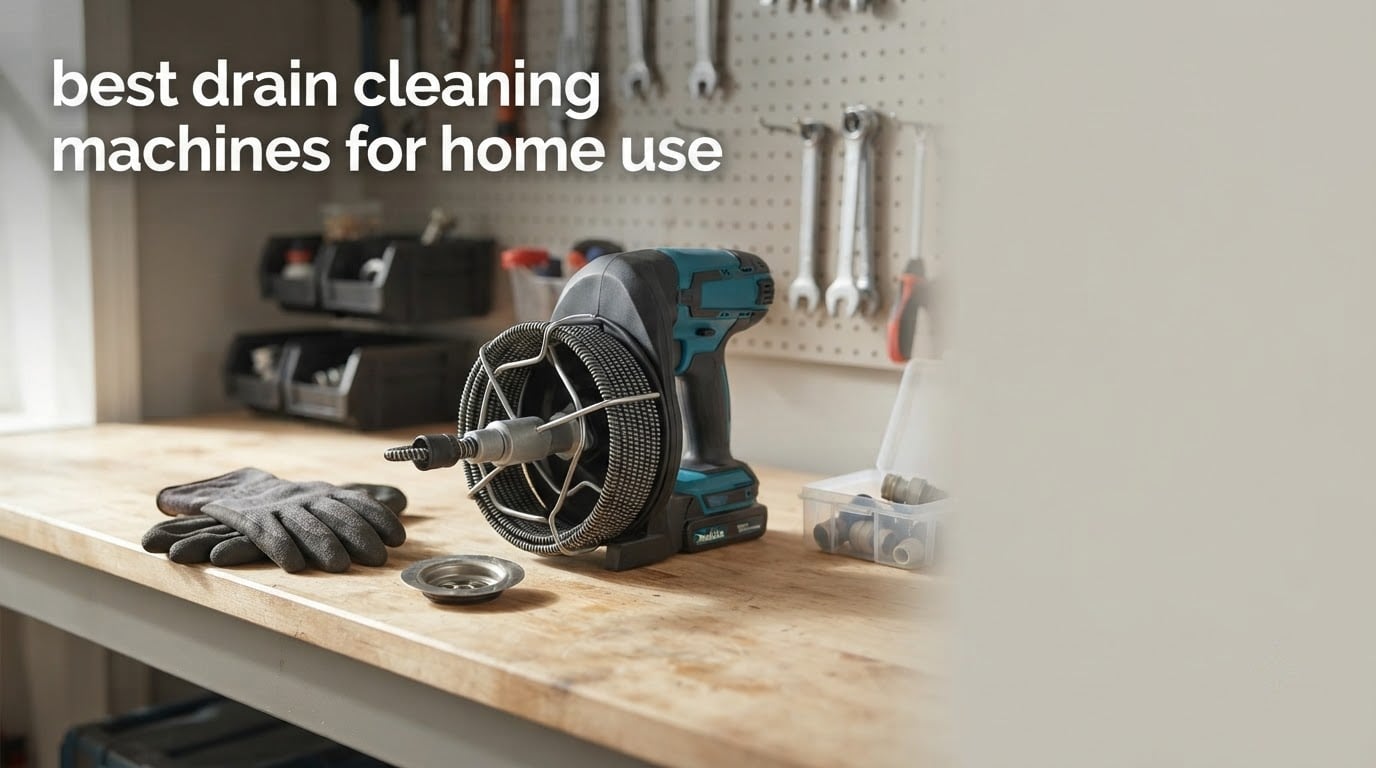
A slow shower drain rarely announces itself. It goes from draining in seconds to taking a minute, then one Sunday morning there is standing water over your tub floor and no plunger on earth is touching the problem. That is the moment most homeowners start searching for the best drain cleaning machines for home use, and it is exactly the moment a bottle of chemical drain opener stops being the right answer.
I have spent the last few months working through sink, tub, shower and branch line clogs with powered augers, comparing cable gauges, feed mechanisms and cutter heads rather than trusting spec sheets. The honest summary is that the machine market has split into two very different halves. Cordless handheld augers now handle the majority of household clogs for anyone who already owns a 20V battery platform, while drum machines remain the only way to reach deep into larger branch and main lines.
What follows is a roundup of ten machines I would actually own, broken down by the decision that matters first: how big is the pipe you need to clear, and how far is the blockage from the drain opening. I also cover the jobs no machine should touch, and the feeding technique that decides whether you clear a clog or destroy a cable.
Our Top 3 Drain Cleaning Machines After Working Through Sinks, Tubs and Main Lines
The POPULO 20V cordless auger is the best drain cleaning machine for home use overall. It carries the highest review count in this group at more than 6,000 owner ratings, holds a 4.4 star average, and covers the 3/4 inch to 2 inch range that accounts for nearly every in-house clog. If you would rather buy one machine and stop thinking about it, that is the one.
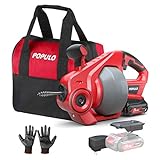
POPULO 20V Cordless Drain…
- 25 ft cable for 3/4 to 2 inch drains
- Up to 60 minutes runtime
- Forward and reverse auto-feed
- LED work light and replaceable cable
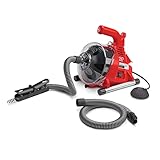
RIDGID PowerClear 55808
- 30 ft heavy-duty inner core cable
- AUTOFEED feed and retrieve
- Clear viewing drum cover
- Two-piece guide hose
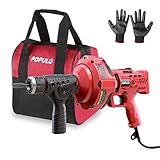
POPULO 120V Corded Drain Snake
- 23 ft rust-resistant cable
- Built-in GFCI plug
- Auto-feed switch
- Handles 3/4 to 2 inch lines
The RIDGID PowerClear also carries a 4.4 star mark and pairs that with a full lifetime warranty and a semi-enclosed drum that is far easier on clothes than an open cable. The POPULO 120V corded unit earns its place for people who would rather not manage a battery at all and want the GFCI plug that bathroom work demands.
Comparing the Best Drain Cleaning Machines for Home Use in 2026
All ten machines below are built for residential lines, and none of them belongs in a contractor truck. Read the cable length and pipe range columns first: those two numbers decide whether a machine suits your house, and everything else is a preference.
| Product | Details | |
|---|---|---|
| POPULO 20V Cordless Drain Auger |
|
Check Latest Price |
| POPULO 120V Corded Drain Snake |
|
Check Latest Price |
| RIDGID PowerClear 55808 |
|
Check Latest Price |
 RIDGID K-400 Drum Machine RIDGID K-400 Drum Machine |
|
Check Latest Price |
 WORKPRO 20V Cordless Drain Auger WORKPRO 20V Cordless Drain Auger |
|
Check Latest Price |
 POPULO 75 ft Sewer Auger Gen Two POPULO 75 ft Sewer Auger Gen Two |
|
Check Latest Price |
 RIDGID K-45 Sink Machine RIDGID K-45 Sink Machine |
|
Check Latest Price |
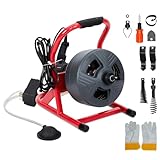 PIONEERWORKS 50 ft Drain Cleaner PIONEERWORKS 50 ft Drain Cleaner |
|
Check Latest Price |
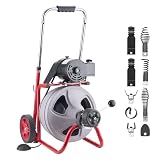 VEVOR 100 ft Auto-Feed Machine VEVOR 100 ft Auto-Feed Machine |
|
Check Latest Price |
 VEVOR 50 ft Manual-Feed Machine VEVOR 50 ft Manual-Feed Machine |
|
Check Latest Price |
One thing this table makes obvious: reach and pipe range move together. The three machines rated for the smallest lines all carry 23 to 30 feet of light cable, while every machine that handles 4 inch lines carries at least 50 feet of much heavier cable and adds 25 to 70 pounds of machine around it.
1. POPULO 20V Cordless Drain Auger – Best Overall for Everyday Household Clogs
POPULO 20V Cordless Electric Drain Auger-Efficient 25Ft Auto-Feed Drain Snake with Replaceable Cable,2.0Ah Battery,Charger,Storage Bag & Gloves for Kitchen,Bathroom,Shower Pipes (3/4″-2″)”
25 ft of 1/4 in cable
Clears 3/4 to 2 in lines
Up to 60 minutes runtime
2.0Ah lithium-ion battery
+ Pros
- Clears sink
- tub and shower clogs far faster than hand tools
- Replaceable 25 ft cable and long battery runtime
- LED work light and rubberized grip for dark drain cabinets
- QR code video tutorials make setup easy for beginners
- Cons
- Not built for roots
- rocks or other solid blockages
- Forward and reverse controls take real practice to master
- Some owners stop feeding and spin the drum to break a clog loose
This is the machine I reach for first, and it is the one that has done the most work across the houses I have worked on. The POPULO 20V cordless drain auger includes a 2.0Ah lithium-ion battery, a charger, a storage bag and gloves, and the whole unit weighs about 10.8 pounds. That weight matters more than the spec sheet suggests: it is light enough to carry up a flight of basement stairs one-handed while holding a flashlight in the other.
The cable is 25 feet of 1/4 inch flexible core, and the machine is rated for 3/4 inch to 2 inch lines. That covers bathroom sinks, tubs, showers, most branch lines and the small outside drains around a foundation. It does not cover a main line, and the manufacturer is direct about that: roots, rocks and other hard objects are outside its design.
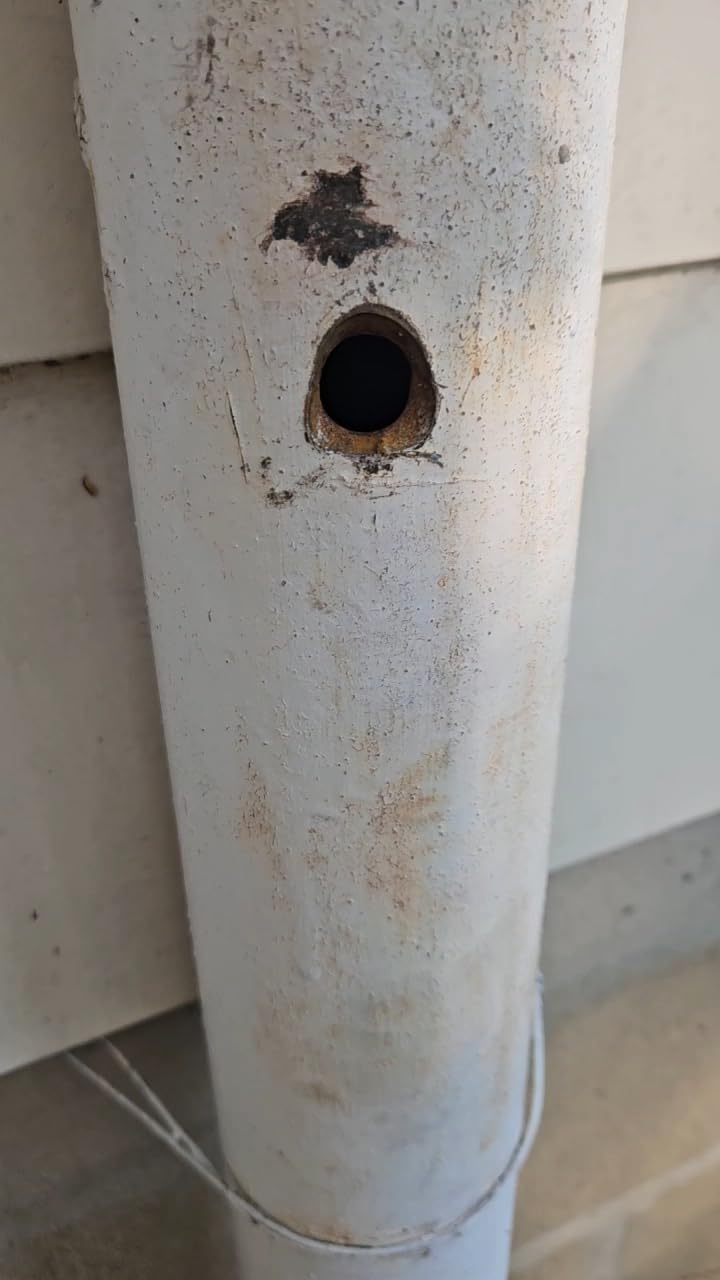
Battery runtime and what a charge actually buys you
Up to 60 minutes of runtime per charge is far more than most clogs ask for. A clear typically involves a few minutes of actual feed time rather than continuous running, and the motor only draws meaningful power while the cable is spinning. Owners clearing multiple fixtures report getting through a whole afternoon of work without a recharge.
Because the battery is a standard 20V lithium-ion pack, this fits the same charging ecosystem as a large family of 20V tools, which removes the single most annoying part of owning a cordless auger. The recharge that matters is overnight, and the bag keeps it in the same cabinet as everything else.
Feed control, the cable lock and why technique decides the result
The forward and reverse feed with a cable lock is the feature that separates this from a hand-cranked closet auger, and it is also the feature owners complain about most. The controls take practice, and results depend almost entirely on how you use them.
The pattern that works is slow and boring: feed a short distance, spin, then reverse back a little before feeding again. Reviewers report that the cable fully retracts in roughly two minutes once the clog breaks, which is a good sign that the drum and feed mechanism are properly balanced. The common failure is forcing the cable, which is also the common cause of kinks.
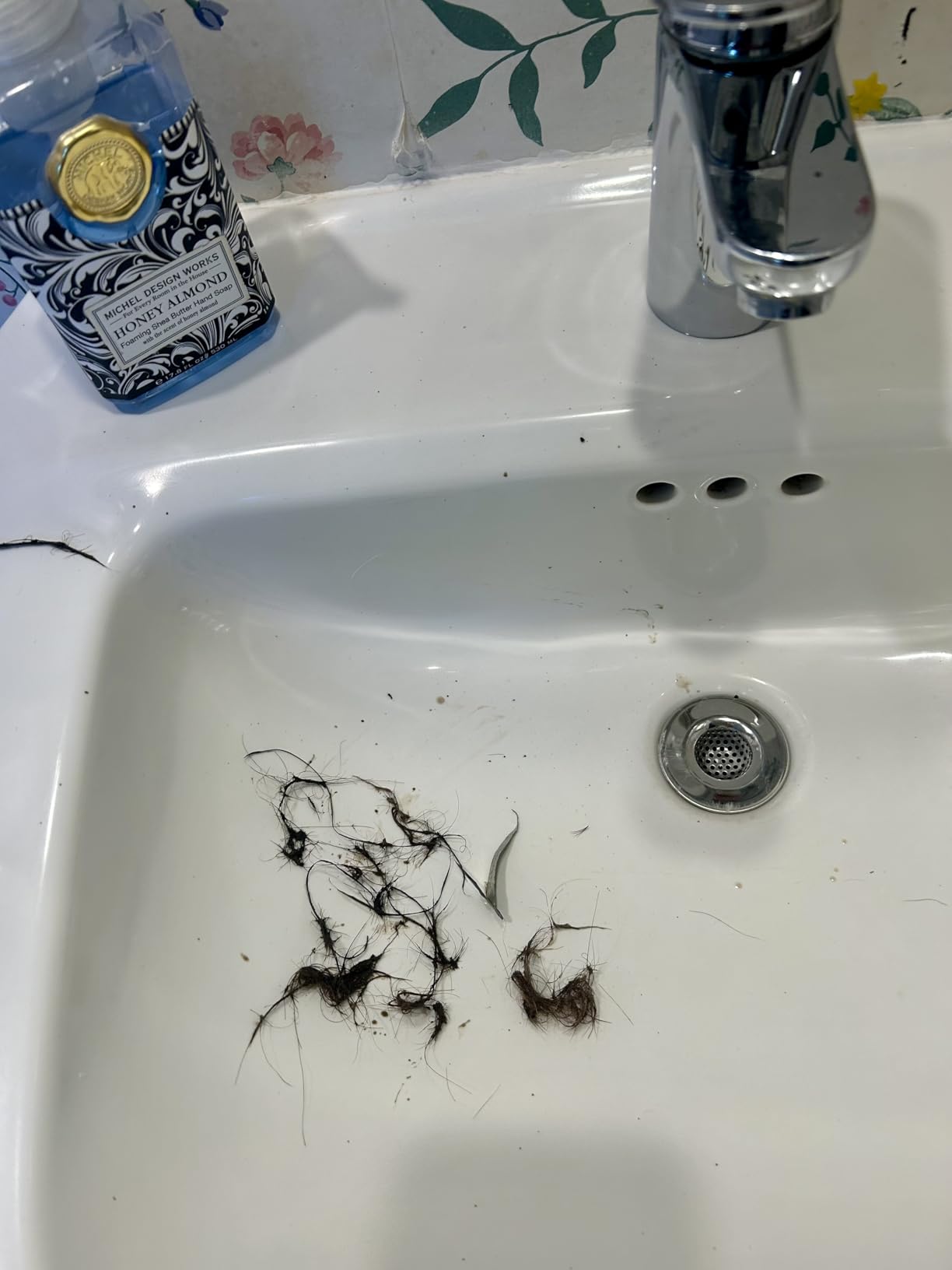
What it will not clear, and who should skip it
Skip this machine if your problem lives in a 3 inch or 4 inch line, or if you are dealing with recurring backups at the cleanout. Older cast-iron homes report excellent results on fixture and branch clogs within this range.
It is also the wrong tool for a toilet, where the obstruction sits well outside its pipe range. Using a powered machine in a toilet is how people break trap seals and crack porcelain.
For anyone whose clogs are confined to sinks, tubs and showers, this is the one I would buy first. It has more owner history behind it than anything else on this list, and that history is consistent: feed slowly, stay close to the drain opening, and cycle forward and reverse rather than pushing hard.
2. POPULO 120V Corded Drain Snake – Best Corded Value with GFCI Safety
POPULO 120V Corded Electric Drain Snake Auger, 23Ft Auto-Feed with GFCI
23 ft rust-resistant cable
Built-in GFCI plug
Auto-feed forward and retract
3/4 to 2 in line capacity
+ Pros
- Constant 120V power clears stubborn clogs without battery interruptions
- Built-in GFCI plug suits wet bathroom environments
- Auto-feed keeps hands clear while cable advances and retracts
- Gloves and storage bag included out of the box
- Cons
- Limited to 3/4 to 2 in soft clogs and not rated for toilets or main lines
- Pushing into hard objects such as roots can kink the cable
- Rigid cable is harder to feed around tight P-traps than flexible models
If you would rather plug something into the wall than think about battery platforms, this is the straightforward version of the same job. The POPULO 120V corded drain snake weighs about 9.7 pounds, runs on constant mains power, and comes with a built-in GFCI plug that makes it usable in a wet bathroom cabinet where a plain extension cord would not be.
The cable is 23 feet of rust-resistant inner core, and the machine covers 3/4 inch to 2 inch kitchen, bathtub and floor drains. The auto-feed switch drives the cable forward and retracts it, so you are not cranking by hand while standing over a wet floor.
Why constant power beats a battery in a stubborn clog
The argument for a corded machine is simple: no thermal cutoff, no half-charged battery, no runtime ceiling in the middle of a hard pull. On a soft household clog the difference is academic, but on a slow-forming grease blockage the uninterrupted torque is genuinely useful.
The GFCI plug is the detail that separates this from cheaper corded machines. Bathrooms and kitchen cabinets are wet locations, and a ground-fault protected plug is the single most sensible safety feature on a 120V drain machine. It is also the feature most often skipped by manufacturers who would rather save a few dollars on the plug.
Where the corded design costs you something
The honest drawback is cable feel. Owners describe this cable as stiffer than the flexible cordless cables in this group, and that stiffness shows up at the P-trap, which is precisely the first bend every sink and tub clog has to negotiate. A stiffer cable wants to stack rather than curl, and if you force it you set a kink.
It is also firmly scoped to small lines. The manufacturer states plainly that it is not rated for toilets or main sewer lines, and that pushing into hard objects such as tree roots can kink the cable. For a 1.5 inch branch line or a bathtub drain, it does its job well.
Who should buy this and who should not
Buy it if you already know you will be working around water and you would rather have a tool that never runs out of power mid-job. Buy it if you do not own a cordless tool battery and do not plan to.
Pass on it if your clogs are deep, if you need to reach beyond 2 inch lines, or if you work somewhere without a reliable outlet. The cordless option in this roundup covers the same pipe range with far less cable stiffness and no cord to trip over in a dark cabinet.
3. RIDGID PowerClear 55808 – Best Covered Kit for Tubs, Showers and Sinks
RIDGID 55808 PowerClear 120-Volt Drain Cleaning Machine Kit for Tubs, Showers, and Sinks, Drain Cleaner Machine Kit with AUTOFEED, Inner Core Cable, and Guide Hose
30 ft heavy-duty inner core cable
450 RPM output
AUTOFEED with clear cover
3/4 to 1-1/2 in line range
+ Pros
- AUTOFEED plus foot and knee control allows two-hands-free operation
- Compact enough for tight under-sink and tub cabinets
- 30 ft heavy-duty cable cleared tough clogs in older cast-iron homes
- Backed by RIDGID full lifetime warranty
- Cons
- Clear plastic drum cover gets in the way of rewinding the cable neatly
- Included vacuum-style guide tubing has little practical use
- Cable can kink if rewound while still snagged
- Guide hose guard connection pops off without a clamp
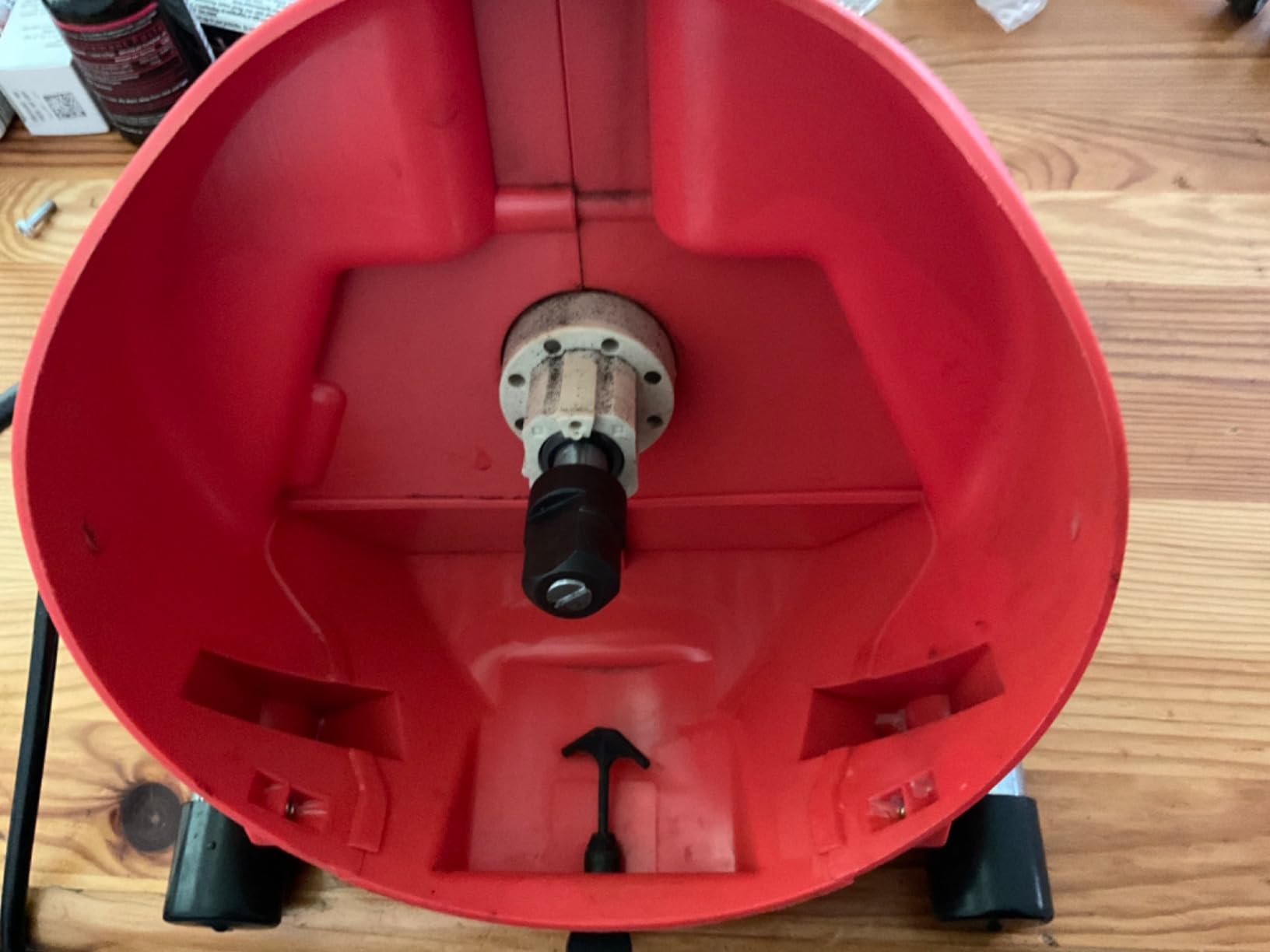
The RIDGID PowerClear 55808 is the machine I recommend to anyone who has a wet, cramped cabinet to work in. At 12 pounds and with a semi-enclosed drum, it is the first unit on this list where the cable never drapes across your shirt while you work, which sounds trivial until you have cleaned a shower drain kneeling on a wet floor.
It covers 3/4 inch to 1-1/2 inch lines, which is the tub, shower and sink range. The motor turns at 450 RPM and the drum holds 30 feet of heavy-duty inner core cable. That is more cable than the cordless augers in this roundup and less than every true drum machine, which is exactly right for branch work behind fixtures.
AUTOFEED and the two-piece guide hose in tight spaces
The AUTOFEED system advances and retrieves cable without you touching it, and combined with foot or knee control it means you can run the machine while both hands are on the guide tube. In a bathtub cabinet where you are balancing between a flashlight and a drain cover, that is the difference between a clean job and a wet one.
The two-piece guide hose is genuinely useful for reaching into the back of a vanity or under a tub, though owners are split on the included tubing itself. Several report that the vacuum-style guide attachment is of little practical use, and that the guard connection pops off without a hose clamp. A single clamp solves it.
Warranty, cable durability and the old cast-iron test
RIDGID backs this with a full lifetime warranty against material defects and workmanship, which is the strongest warranty position in this roundup and the main reason it is worth paying more than a generic machine of similar size.
Owners of 1950s and 1960s cast-iron homes report it clearing tough kitchen and branch clogs, and several describe the machine paying for itself on the first job. The consistent advice from long-term owners is to read the manual, go slowly, and never try to retract the cable while it is still snagged. That last one is what bends cable, and it is true of every machine in this list.
The drum cover tradeoff and who should skip it
The clear viewing cover is a good idea: you can see how much cable remains and how it is winding onto the drum. The cost is that the cover itself gets in the way of rewinding the cable neatly, which is an annoyance rather than a defect.
Skip this machine if you need to clear anything larger than 1-1/2 inch, and skip it if your clogs sit beyond 30 feet from the drain opening. This is a fixture machine by design, and it is very good at that job. For larger lines and longer runs, the drum machines further down this list are the right instruments.
4. RIDGID K-400 Drum Machine – Best Reach for Branch and Main Lines
RIDGID 52363 Model K-400 Drain Cleaning 120-Volt Drum Machine Kit with C-32IW 3/8″ x 75′ Cable
75 ft of 3/8 in solid core cable
165 RPM induction belt motor
Handles 1-1/2 to 4 in lines
Transport cart and tool set
+ Pros
- Enormous 75 ft of 3/8 in cable reaches deep into main and lateral runs
- Kink-resistant solid core cable still flexible enough for 1.5 in pipes
- Cable control system stops the drum when the head catches
- Cart with fold-over handle and large wheels handles stairs and thresholds
- Cons
- Welded-on blade connector tip makes mid-cable repair awkward
- At 65 pounds it is a cart tool rather than a one-person carry
- Drum can flip or loop cable if you keep feeding a taut line
- No autofeed
- cable is manually controlled
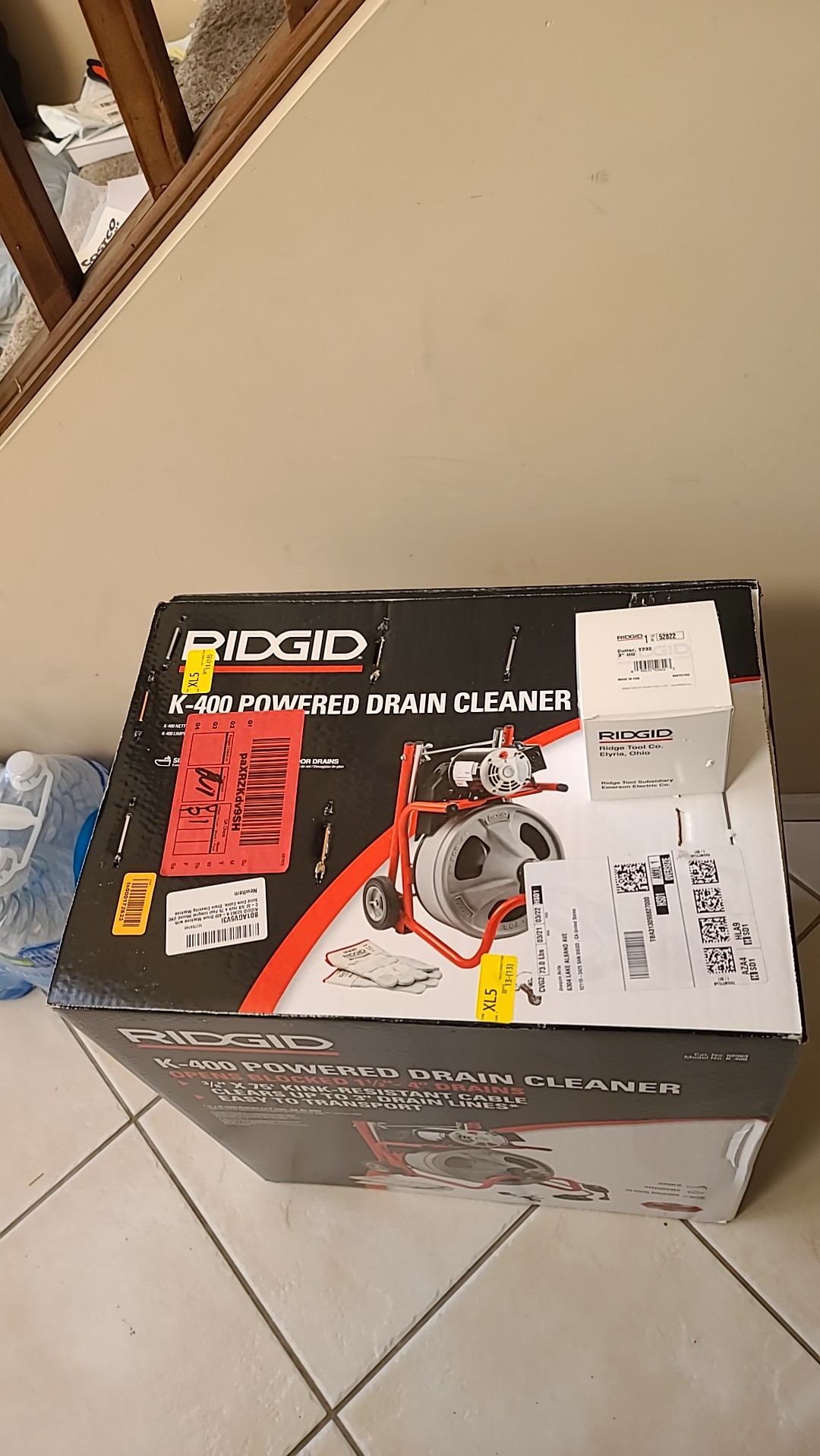
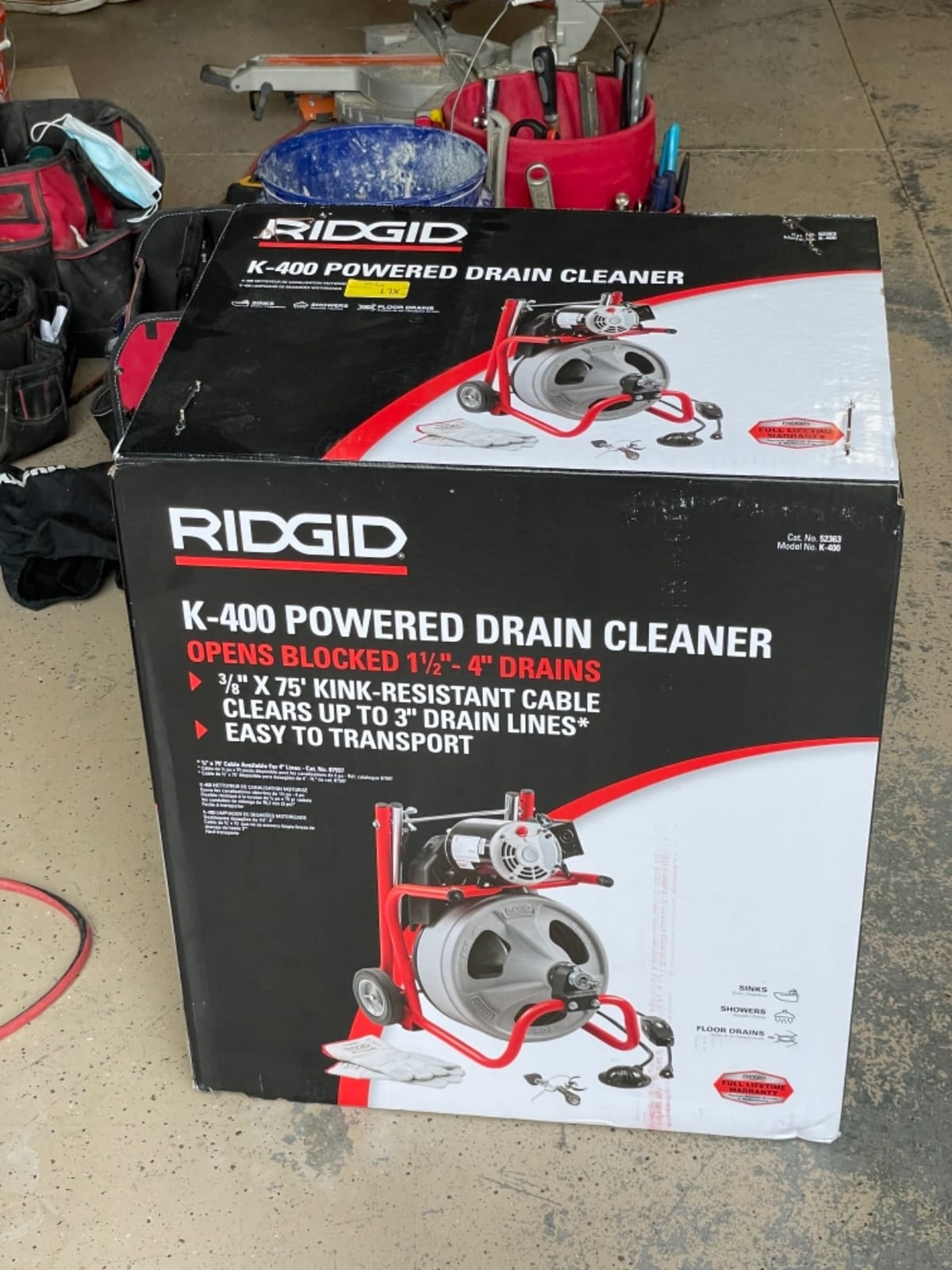
The K-400 is the point at which this roundup stops being about household fixtures and starts being about lines. It carries 75 feet of 3/8 inch C-32 integral wound solid core cable and is rated for 1-1/2 inch to 4 inch drain lines. That is the machine you need when a blockage sits well past the fixture trap, or when the whole house is backing up rather than one sink.
It also weighs 65 pounds, which is the single fact that decides whether it belongs in your house. It is not a carry tool. It is a cart tool, and the included transport cart with a fold-over handle and heavy-duty wheels is what makes it moveable over stairs and thresholds at all.
Cable gauge and why 3/8 inch resists kinking better than you expect
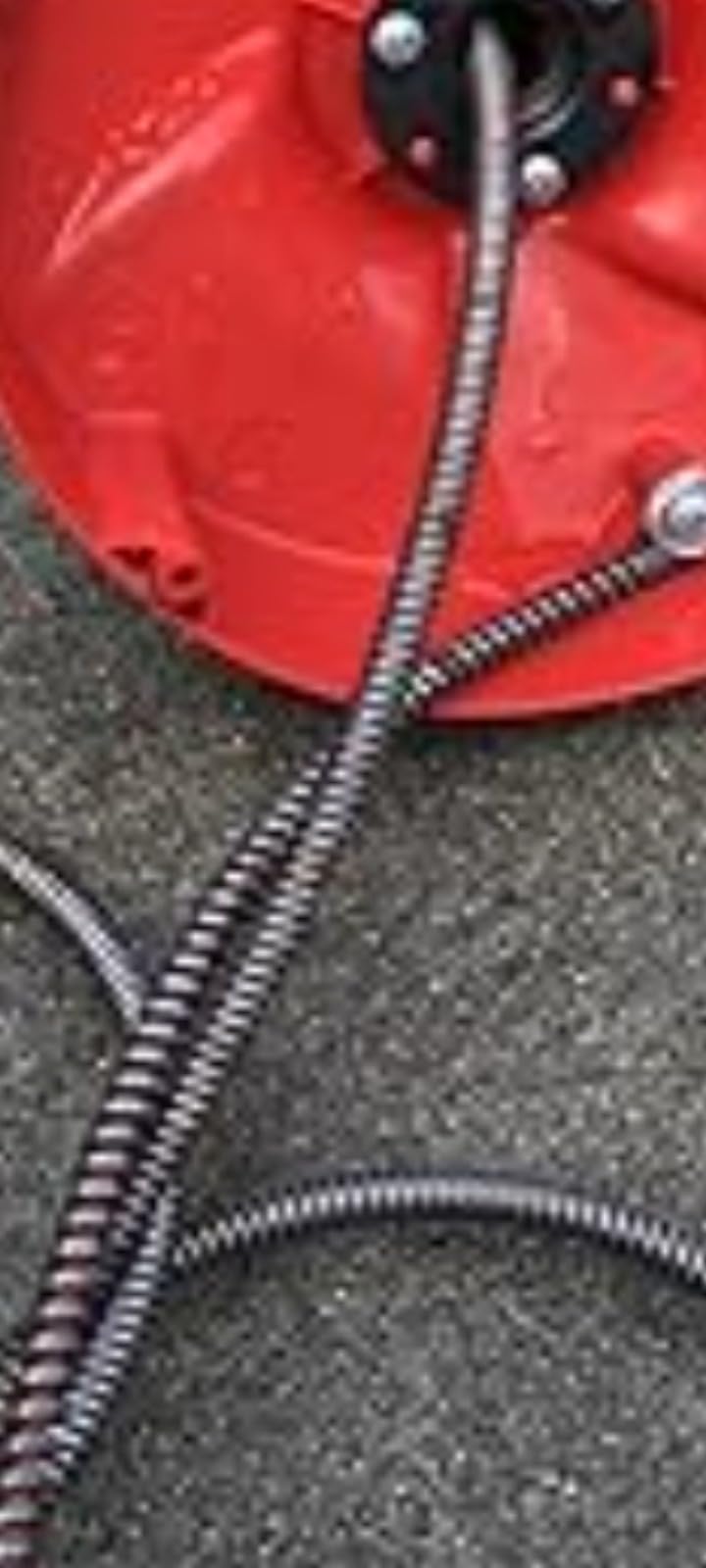
Heavy solid core cable is the reason a drum machine outperforms a handheld auger on tough work. The 3/8 inch C-32 cable resists kinking in a way that light flexible cable cannot, yet stays flexible enough to navigate a 1.5 inch pipe. That combination is the whole design brief of a machine like this.
Owners who bought it for a specific problem report it curing main drain issues that plumbers had quoted at thousands of dollars, and 78 percent of its reviewers give it five stars. Plumbers and serious owners call it a money saver that matches or beats rented equipment of the same class.
The cable control system and the feed discipline it demands
The patented cable control system stops the drum if the head lodges, which reduces the cable flip that wrecks machines of this type. It is a safety feature, but it is not a substitute for watching the line: the drum can still flip or loop cable if the operator keeps feeding while the cable is taut.
There is no autofeed. You control the cable by hand, which is slower and far more physical than the auto-feed machines, and it means the technique section later in this article matters a lot if you buy this machine. Feed in short bursts. Let the rotation do the work. Stop when you feel resistance rather than pushing through it.
The tip connection defect and who should skip the K-400
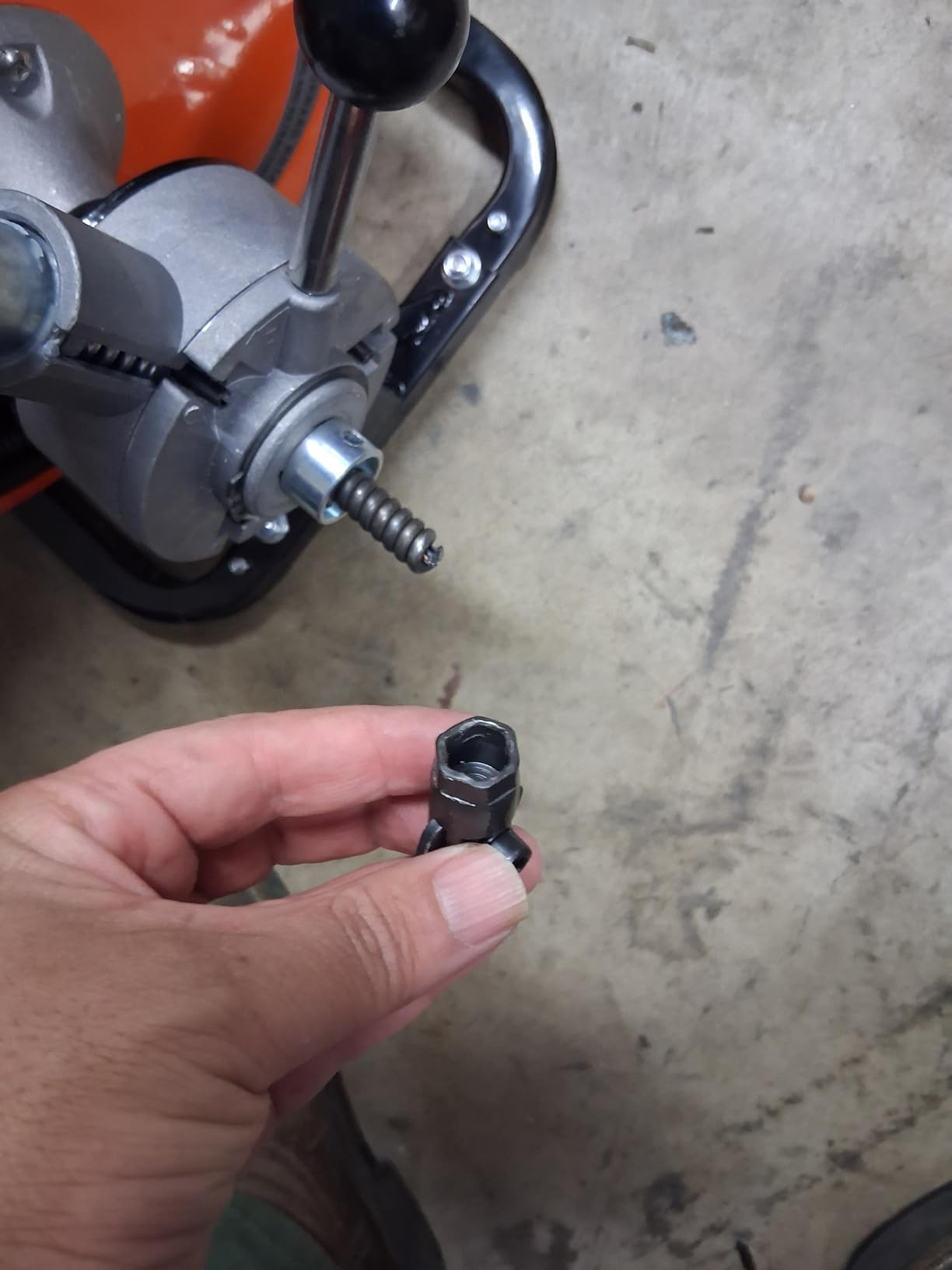
The one recurring defect complaint is the welded-on blade connector at the tip. A cable that breaks near the head is hard to repair because a coupling swells the tip diameter, and on a 3/8 inch cable that swollen coupling can exceed what a 2 inch P-trap will accept. Plan on treating the cable near the head as consumable rather than repairable.
Skip this machine if you only have fixture clogs. It is enormous, loud, and far more than most houses need. Buy it if you have older cast-iron lines, recurring backups, a garage floor drain that keeps failing, or a rental property where one machine serves several units.
5. WORKPRO 20V Cordless Drain Auger – Best Budget Cordless for Bend-Heavy Drains
WORKPRO 20V Cordless Electric Drain Auger, 25-Ft Drain Snake, 2.0Ah Battery
25 ft flexible cable
Up to 560 RPM cordless rotation
Olive-shaped head for tight bends
20V 2.0Ah battery, LED light
+ Pros
- Cleared 15 to 20 ft deep shower
- sink and toilet clogs in minutes for multiple owners
- Battery retains over 75% charge after clearing multiple drains
- Cordless portability works on gutters and downspouts
- Tool bag included and the drum is replaceable
- Cons
- Instruction manual is confusing and references a switch the unit does not have
- Feed lever and spin-direction button can flip into reverse unexpectedly
- Heavy and awkward for its size because of cable weight
- Some machines reported failing to deploy fully
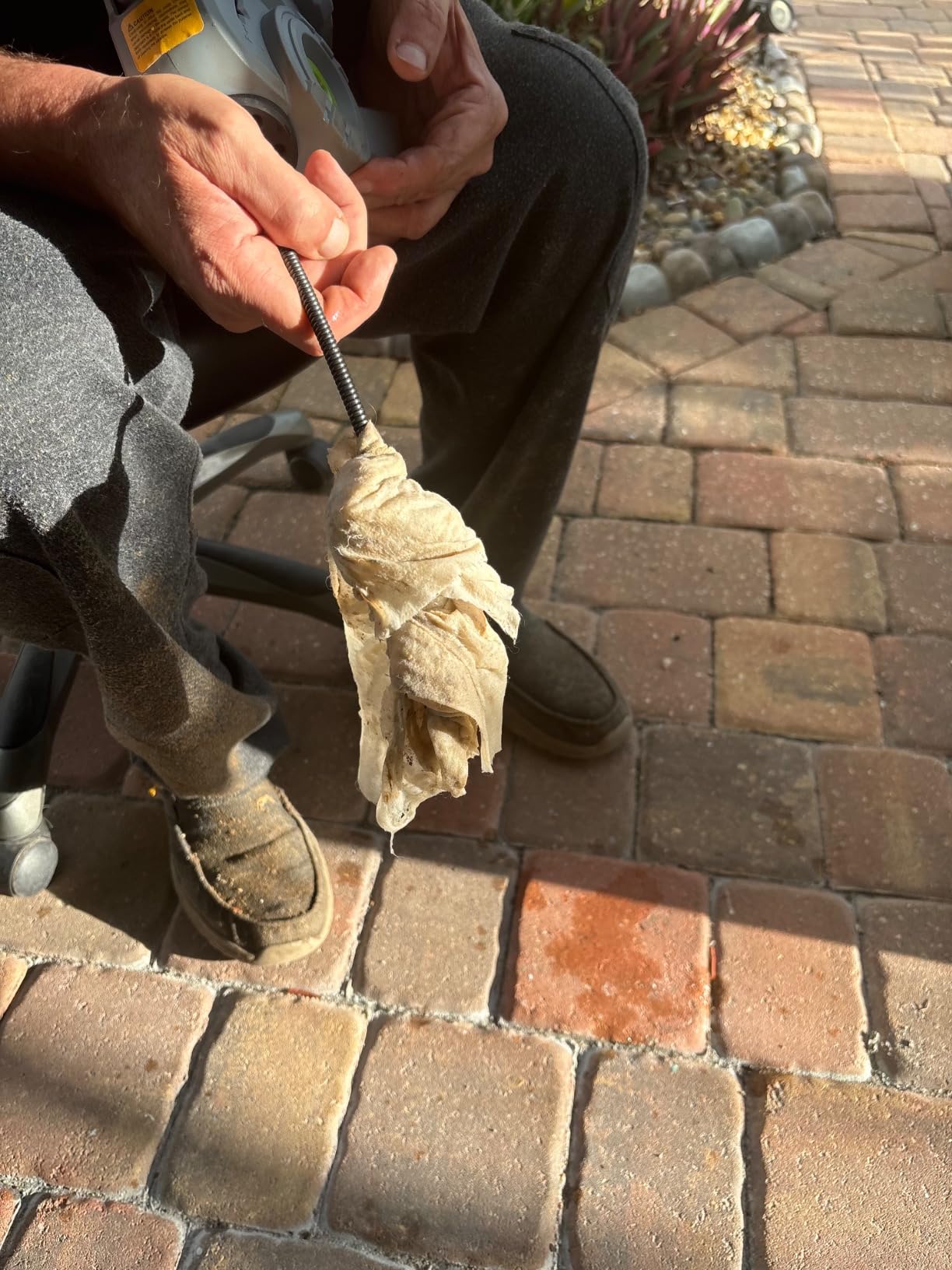
The WORKPRO 20V cordless drain auger turns at up to 560 RPM, faster than the other cordless auger here, and that speed is why it clears deep clogs quickly. Owners report clearing clogs 15 to 20 feet down shower lines with multiple bends, and several mention a badly blocked toilet as something it handled without drama.
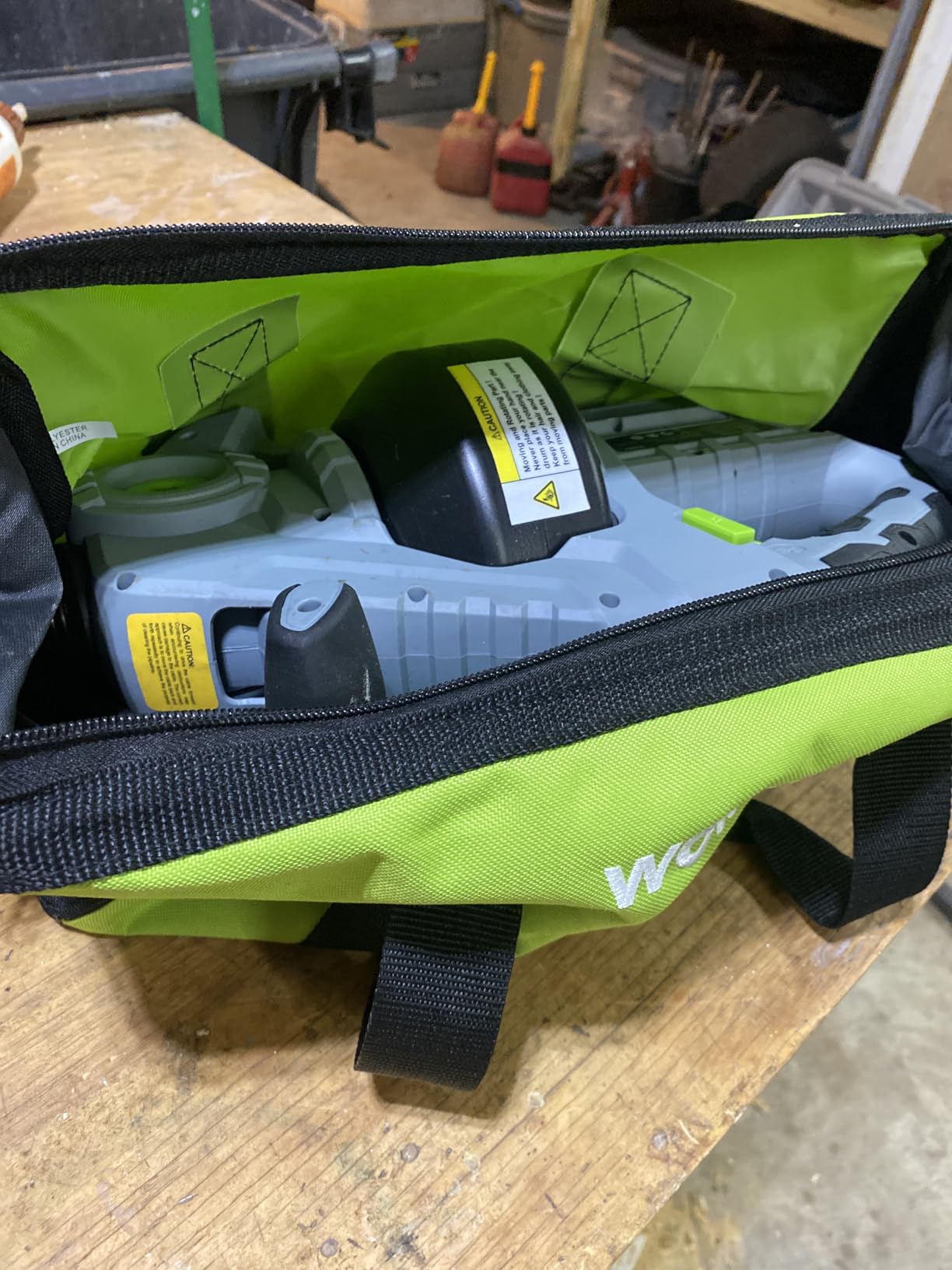
It covers the same 3/4 inch to 2 inch pipe range as the top cordless pick, carries 25 feet of cable, and includes a 20V 2.0Ah lithium-ion battery that quick charges in about an hour. At 11.67 pounds it is a touch heavier than the POPULO cordless unit, and that weight is mostly the cable.
The olive-shaped cutter head and bend handling
The olive head is the interesting engineering choice here. It is shaped to clear L, S and U bends, which is exactly the geometry of a P-trap and the offset joints found in older homes. Plumbers who discuss cable handling on forums consistently point out that bend radius, not raw power, decides whether a machine works on household lines, and a head designed for that geometry is worth more than extra power.
At 560 RPM the rotation is fast enough to stay ahead of a hair or grease clog, and the variable speed trigger plus a forward and reverse lever give you the control to back off when the cable meets a bend instead of driving into it.
Documentation and control layout are the real complaints
Reviewers of working machines are enthusiastic, but the feedback that comes back most often concerns paperwork and switches. The manual is confusing and references a switch the machine does not have, which tells you the documentation was written for a different revision. Read the QR code walkthrough instead of the paper manual if one is provided.
The second issue is the control combination. The feed lever and the spin-direction button sit close enough that you can flip into reverse unintentionally, and reverse at speed in a loaded cable is how you get a knot. Get your hand position set before you start feeding rather than finding the layout mid-clog.
Off-script use and who should skip it
Cordless portability is genuinely useful beyond the sink. Owners use these machines on gutters and downspouts, and one cordless owner on r/Tools described going off-script with a similar cordless machine to clear rain gutter downspouts on a weekend. That is a legitimate use and the tool handles it well.
Skip it if you need to clear anything above 2 inch, or if you want a machine with an unbroken review history. At 245 reviews this has a much thinner owner record than the top pick, and the one-star feedback clusters around deployment failures and the documentation issues above.
6. POPULO 75 ft Second-Generation Sewer Auger – Best for Root Masses in 2 to 4 Inch Lines
POPULO 75 ft x 1/2 inch Upgraded Electric Sewer Drain Snake Auger with 8 Cutters and 1 Root Killer, for 2-4 inch Pipes, Auto Feed Plumbing Drain Cleaner Machine, PEDC-75 Generation Two
75 ft of 1/2 in heavy-duty cable
Auto feed with foot switch
Hexagonal root killer head
Handles 2 to 4 in pipes
+ Pros
- Powered through root masses in driveway storm drains and 2 in lateral lines
- Auto feed greatly reduces cranking labor on long runs
- Clear instructions and painless bolt-on assembly
- Support team repeatedly praised for fast specific answers and part replacement
- Cons
- One owner reported an off-center drum and a belt running close to the drum edge
- Very heavy
- several owners recommend a shorter cable for typical homes
- Water-resistant power plug failed after brief standing water
- Cable can kink and pile up if retraction is started and stopped repeatedly
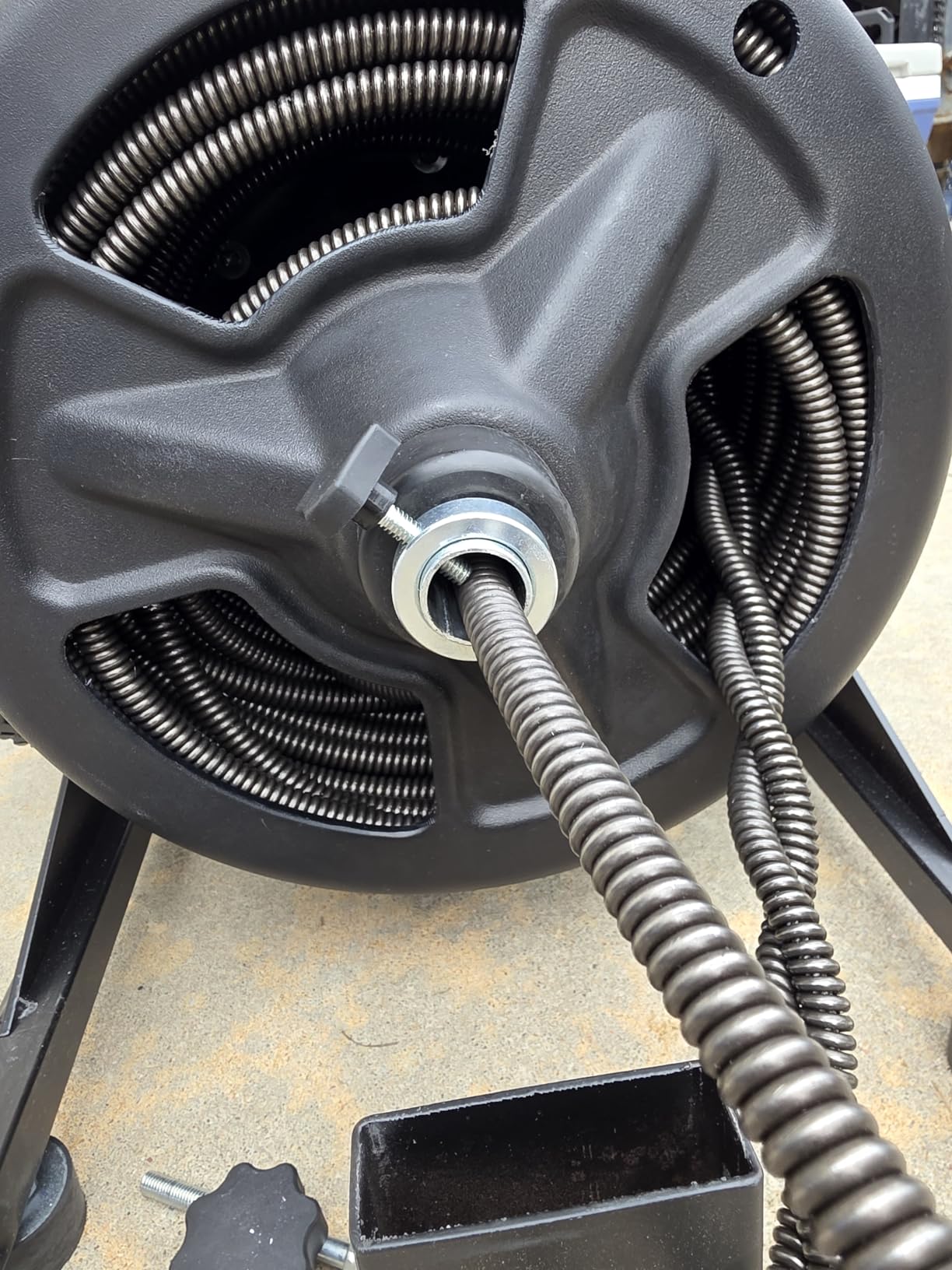
This is the most capable machine here for a specific problem: roots and scale in 2 inch to 4 inch lines. The 1/2 inch heavy-duty cable with a reinforced inner core is the thickest on this list, and the hexagonal blade root killer head is designed to chew through root masses rather than just snag them.
It comes with eight interchangeable cutters, a foot switch for auto feed, and an 8 inch transport wheel. The box includes the machine, the cutters, gloves and the root killer head, and the bolt-on assembly is described as painless. That last detail is not trivial when you are assembling a machine in a driveway.
Root cutting and when a machine beats a jetting service
Owners clearing roots in driveway storm drains and 2 inch lateral lines report that this machine outlasted jetting services that only held for a season. One r/HomeMaintenance user reported a hydro-jetting service call costing several hundred dollars, and that single number reframes the ownership question for anyone with recurring outdoor backups.
The foot switch auto feed is the feature that makes long runs practical. Without it, feeding 75 feet of 1/2 inch cable is a repetitive manual task that tires your arms long before you reach the blockage. With it, you control feed and rotation by foot and keep your attention on what the cable is doing.
Quality control details and the weight problem
The criticism on this machine is specific and worth repeating. One owner reported an off-center, unbalanced drum straight out of the box with a belt running close to the drum edge, and another had a water-resistant power plug fail after brief standing water in a garage flood. Inspect the drum alignment and the plug before you rely on it.
Weight is the bigger practical issue. Reviewers of the 100 foot version of this class estimate the 150 to 200 pound class, and several owners recommend a shorter cable for typical residential use. This is a machine for someone with a genuine root problem, not a general household purchase.
Support and the six-month replacement program
The POPULO CARE+ program offers free replacement within six months on products over a set threshold, and the support team is repeatedly praised for fast, specific answers and part replacement. For a machine with this many wear parts, having a responsive parts source matters as much as the warranty length.
Skip it if your clogs are all inside the house. Buy it if you have a driveway drain, a yard drain, or a 2 inch lateral that keeps backing up and has already defeated a cable machine or two. Just confirm the machine can physically reach the cleanout before you commit.
7. RIDGID K-45 Sink Machine – Best Variable-Speed Control in a Compact Body
Ridgid 35473 K-45 Sink Machine
25 ft of 5/16 in cable
Variable speed 0-600 RPM
Two-way autofeed to 20 ft per minute
Corrosion-resistant inner drum
+ Pros
- Solidly built
- comfortable to handle and easy to operate
- Starts gently then feeds and retrieves steadily at variable speed
- Well written and illustrated operator manual
- Durable drum liner that is easy to clean and full lifetime warranty
- Cons
- The included 25 ft of 5/16 in cable is short and thin for larger jobs
- Autofeed can pull the entire cable back into the drum unexpectedly
- No length markings on the cable so progress is hard to gauge
- Some cables slip in the drum liner and a torque arm is sometimes needed
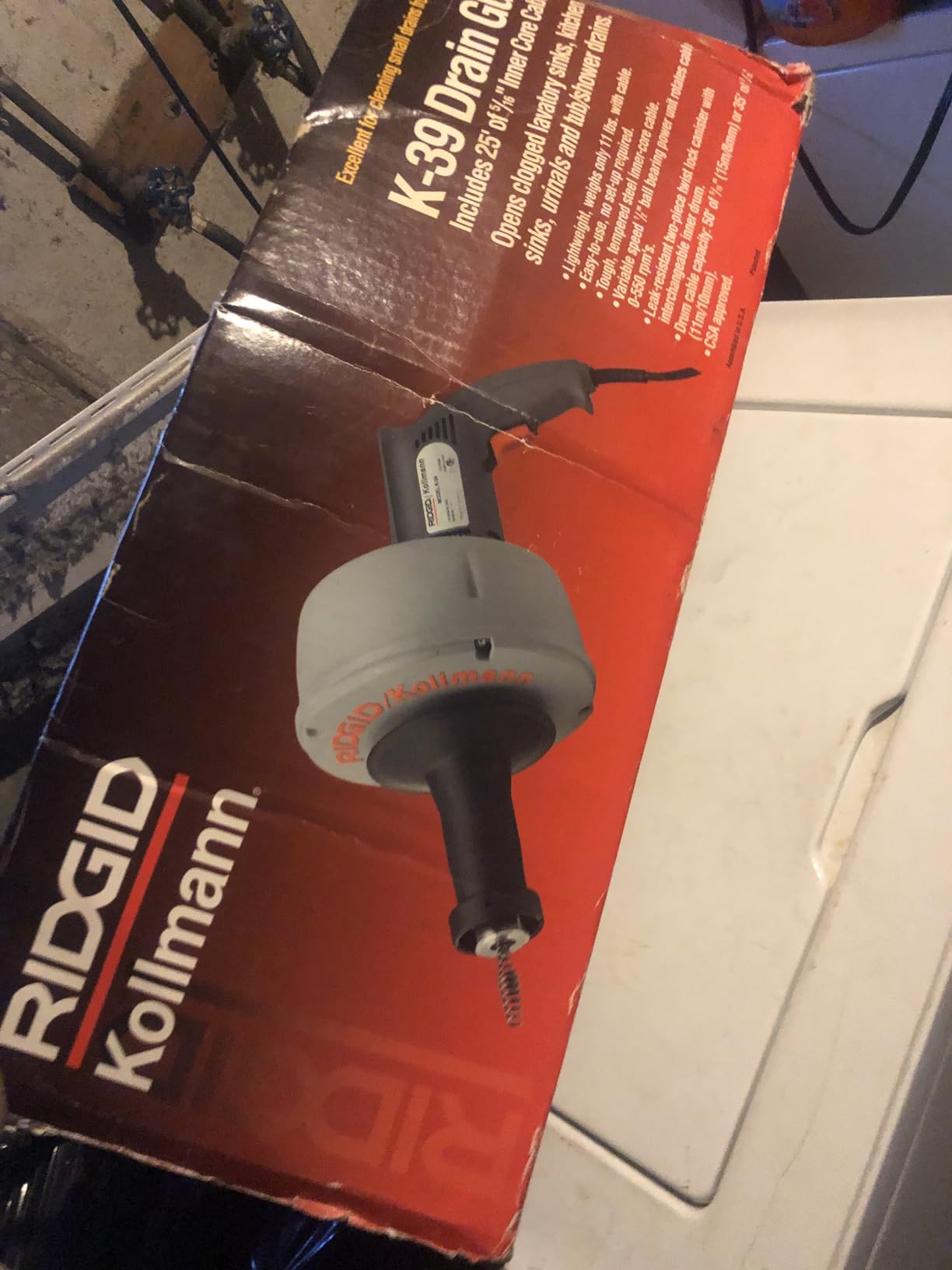
The K-45 is the oldest machine on this list, on sale since 2010, and that long production run is itself a form of evidence. At 11 pounds with 25 feet of 5/16 inch cable, it covers 3/4 inch to 1-1/2 inch lines, and the variable speed control from 0 to 600 RPM in forward or reverse is what sets it apart in this class.
Veteran plumbers on terrylove.com repeatedly recommend the RIDGID K50 and K400 class as all-around machines for small and medium residential drains, and the K-45 is the compact end of that same design family. The practical difference is size: this one fits under a sink or in a closet, which the larger machines do not.
Variable speed and the gentle start that protects the cable
Variable speed is the feature that separates this machine from the fixed-speed drum units further down the list. Being able to start gently, feel the load, and add speed only when the cable is running free is the difference between a cable that threads three bends and a cable that kinks in the second one.
The two-way autofeed advances and retrieves cable at up to 20 feet per minute, and long-term owners praise how steadily it feeds and retrieves once you are used to it. Owners also single out the operator manual as well written and illustrated compared with competitors, which matters more than it sounds when you are learning a tool alone.
The short cable and the drum liner issues
The most common complaint is the cable itself. 25 feet of 5/16 inch cable is short and thin for larger jobs, and many owners upgrade to 50 feet or 3/8 inch cable shortly after buying. If you know you will be pushing distance, budget for the cable rather than the machine.
Two secondary issues are worth knowing. The autofeed can pull the entire cable back into the drum unexpectedly, which surprises people the first time it happens. And the cable has no length markings, so judging how far you have fed is guesswork unless you mark it yourself with tape.
Ownership economics and who should buy it
Several long-term owners point out that the purchase cost works out to about three or four rentals, and the full lifetime warranty against material defects and workmanship is the strongest in this roundup. The corrosion-resistant drum with an inner drum is designed to reduce water leaks and cable flip-over, and owners report the liner is easy to clean.
Buy it if you want a compact, controllable fixture machine with a warranty that will outlast you. Skip it if you need reach or heavy cable, and be aware that a few owners find the cable slips in the drum liner badly enough to want a torque arm.
8. PIONEERWORKS 50 ft Drain Cleaner – Best Foot-Switch Value for Downspouts
PIONEERWORKS 50Ft x 5/16 Inch Drain Cleaner Machine, Electric Drain Auger Professional for 3/4 to 3 Inch Pipes, Foot Switch with 6 Cutters, Glove, Drain Auger Cleaner Sewer Snake – DA04
50 ft of 5/16 in heat-treated cable
Air-activated foot switch feed
Built-in GFCI protection
6 interchangeable cutter heads
+ Pros
- Punching through a stubborn downspout and sump line where another machine broke
- Foot pedal and manual retraction worked as advertised for most owners
- No rental needed and you keep the machine
- Navigates multiple 90 degree bends without tangling for most owners
- Six cutter heads and heavy duty gloves included
- Cons
- Several owners report the cable or machine breaking within the first few uses
- Cable kinks too easily on heavier clogs
- Some machines arrived already damaged or with missing parts
- 32 lb machine is more than needed for routine residential jobs
The PIONEERWORKS 50 ft machine is the value entry into the foot-switch drum category, and at 32 pounds it sits in the middle of this list on weight. It carries 50 feet of 5/16 inch heat-treated steel cable designed to resist breakage, tangling, kinking and corrosion, and handles 2 inch to 3 inch diameter drains.
It comes with six cutter heads, a drop head auger, boring bulb, C-cutter, side cutter, spade and saw tooth, plus heavy duty gloves and a screwdriver. The built-in GFCI and air-activated foot switch are both features you would struggle to add to a cheaper machine.
Air-activated foot switch and free cable management
The air foot switch lets you start and stop the machine while your hands are on the cable, and the rocker switch controls rotation direction with a left-hand control option. For a machine in the 32 pound class, keeping your hands off the feed is the difference between a controlled job and a tangled drum.
Owners report the machine clearing multiple 90 degree bends without tangling, and one owner used it to punch through a stubborn downspout and sump pump line where a different machine had broken. That is a real result on a genuinely annoying household problem.
The durability split in owner feedback
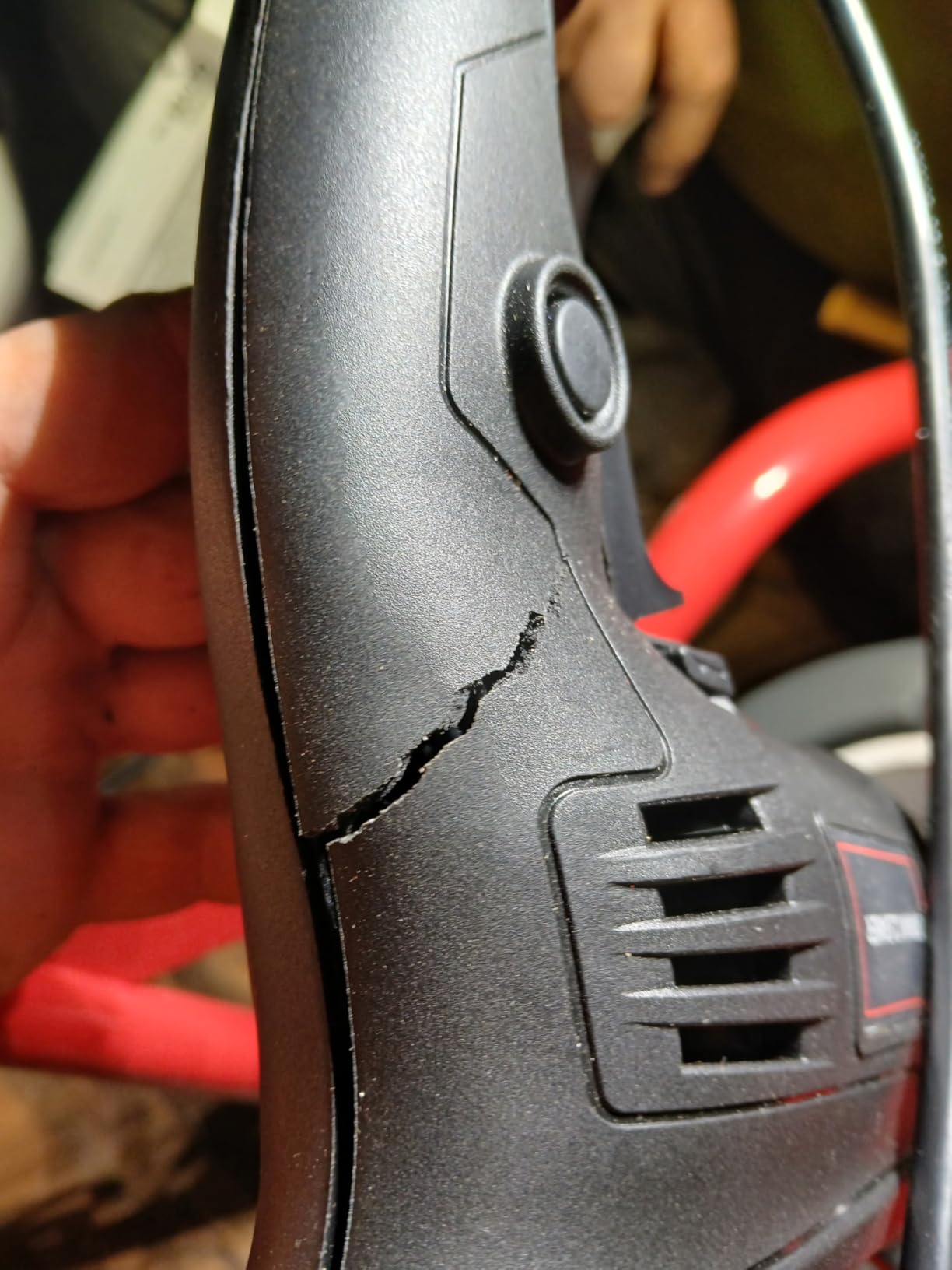
This is the lowest-rated machine in the roundup at 4.0 stars from 170 reviews, with 58 percent five-star but a notable 14 percent one-star share. The feedback splits sharply: owners of working machines call it good value for light residential work, while a recurring group reports cables snapping or parts breaking within days of first use.
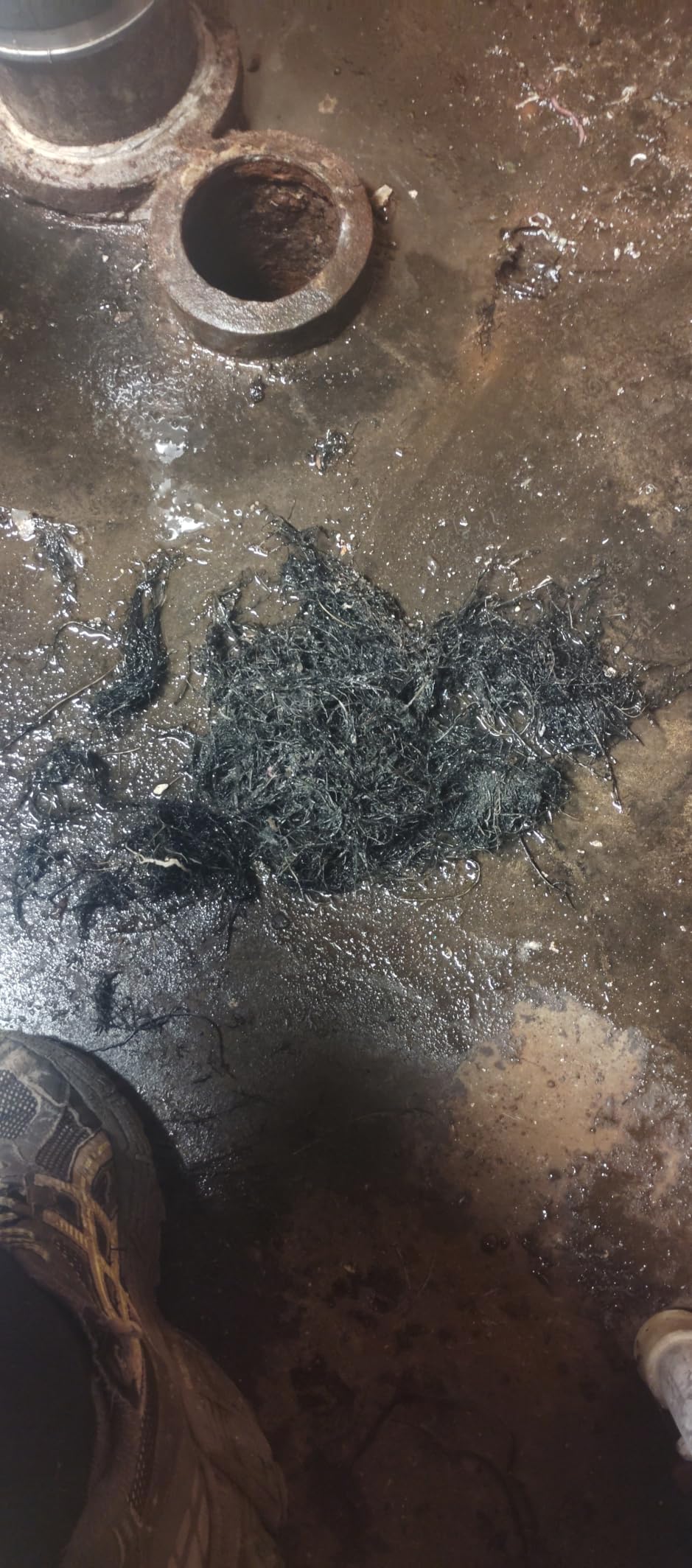
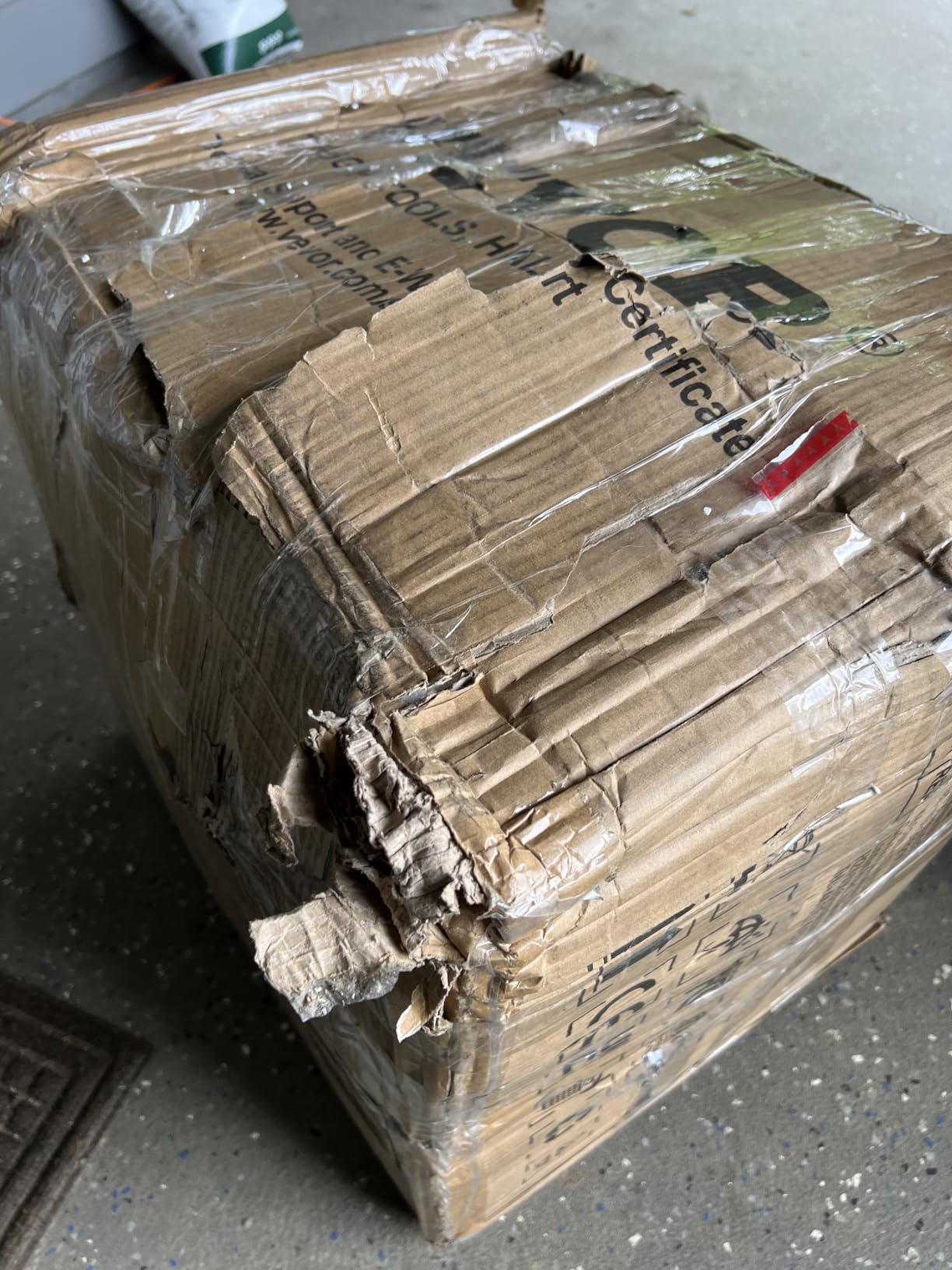
Some machines also arrived already damaged or with missing parts, which is a packing and inspection issue rather than a design flaw. Check the machine over before you commit to a job, and inspect the drum and cable end-to-end while it is still new.
Gloves, weight and who should buy it
One practical warning from owners: do not rely on ordinary rubber gloves. A snag can tear them, and cable whip is the real hazard with any machine. The included heavy duty gloves are the reason to buy this model at all, since gloves are cheap insurance against the most common injury in this category.
Skip it if your clogs are heavy or recurring, since the cable kinks too easily on heavier blockages. Buy it if you have a downspout, a sump line, or a 2 to 3 inch line that clogs occasionally and you want foot-switch convenience without moving up in weight class.
9. VEVOR 100 ft Auto-Feed Machine – Best Long-Reach Option Without Renting
VEVOR Drain Cleaner Machine 100 FT x 3/8 Inch, Auto Feed Sewer Snake Drain Auger on Wheels, Portable Drain Cleaning Machine with 8 Cutters & Air-Activated Foot Switch for 2″ to 4″ Pipes
100 ft of 3/8 in solid core cable
Auto feed with air foot switch
Handles 2 to 4 in pipes
7.5 in wheels and telescopic handle
+ Pros
- Motor has enough power to rip through root masses in 4 in lines
- Air switch avoids weather and drain water corrosion concerns
- Solid no-flat tires and telescopic handle make it easy to move
- Owners report it paid for itself on the first or second use versus plumber bills
- Cons
- Manual is confusing with assembly relying on grainy black and white photos
- Cannot rewind a fully extended cable so the operator pulls it back by hand
- One machine had a defective foot switch that worked only intermittently
- Power cord sits at the rear where the belt can damage it
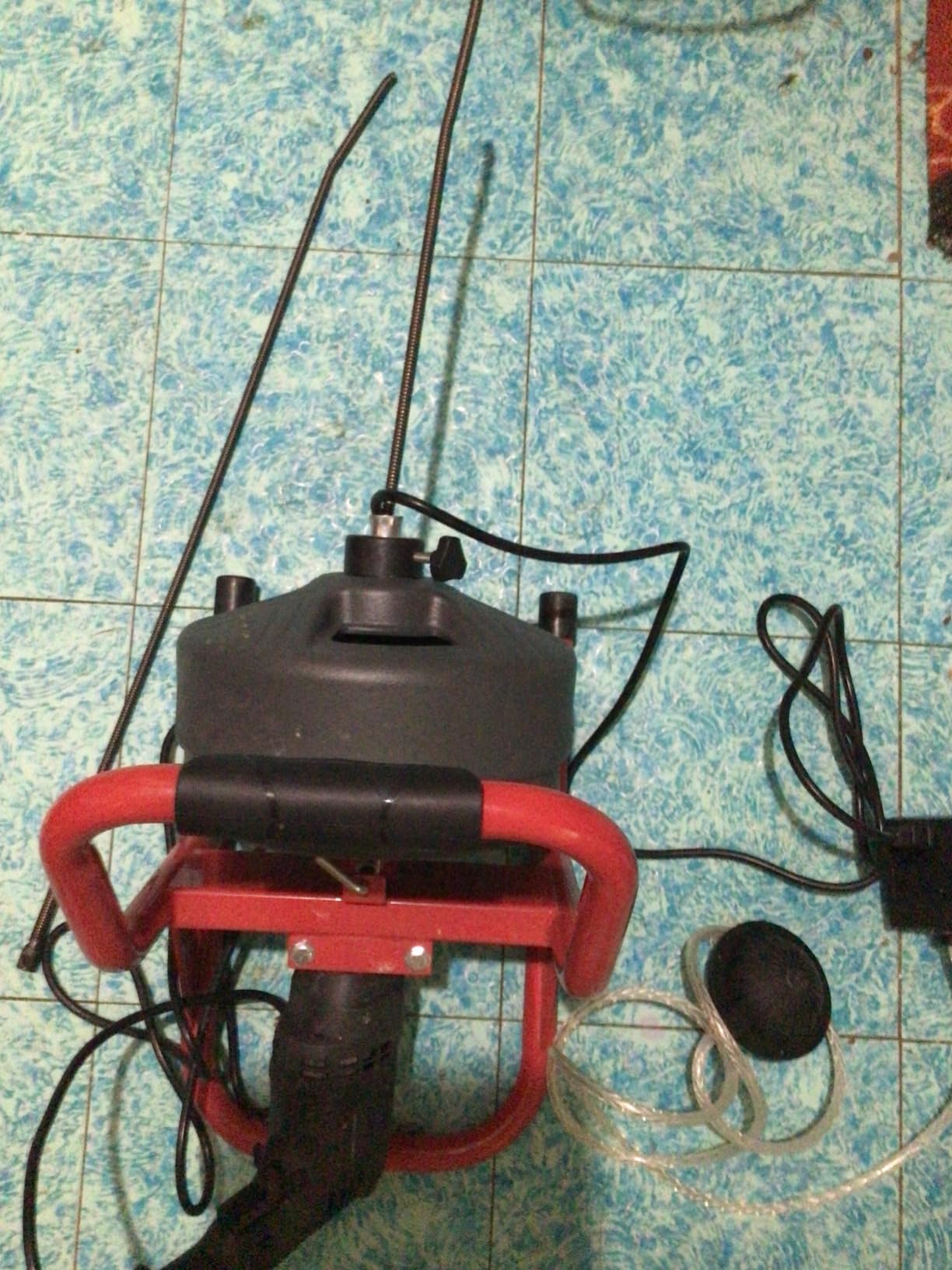
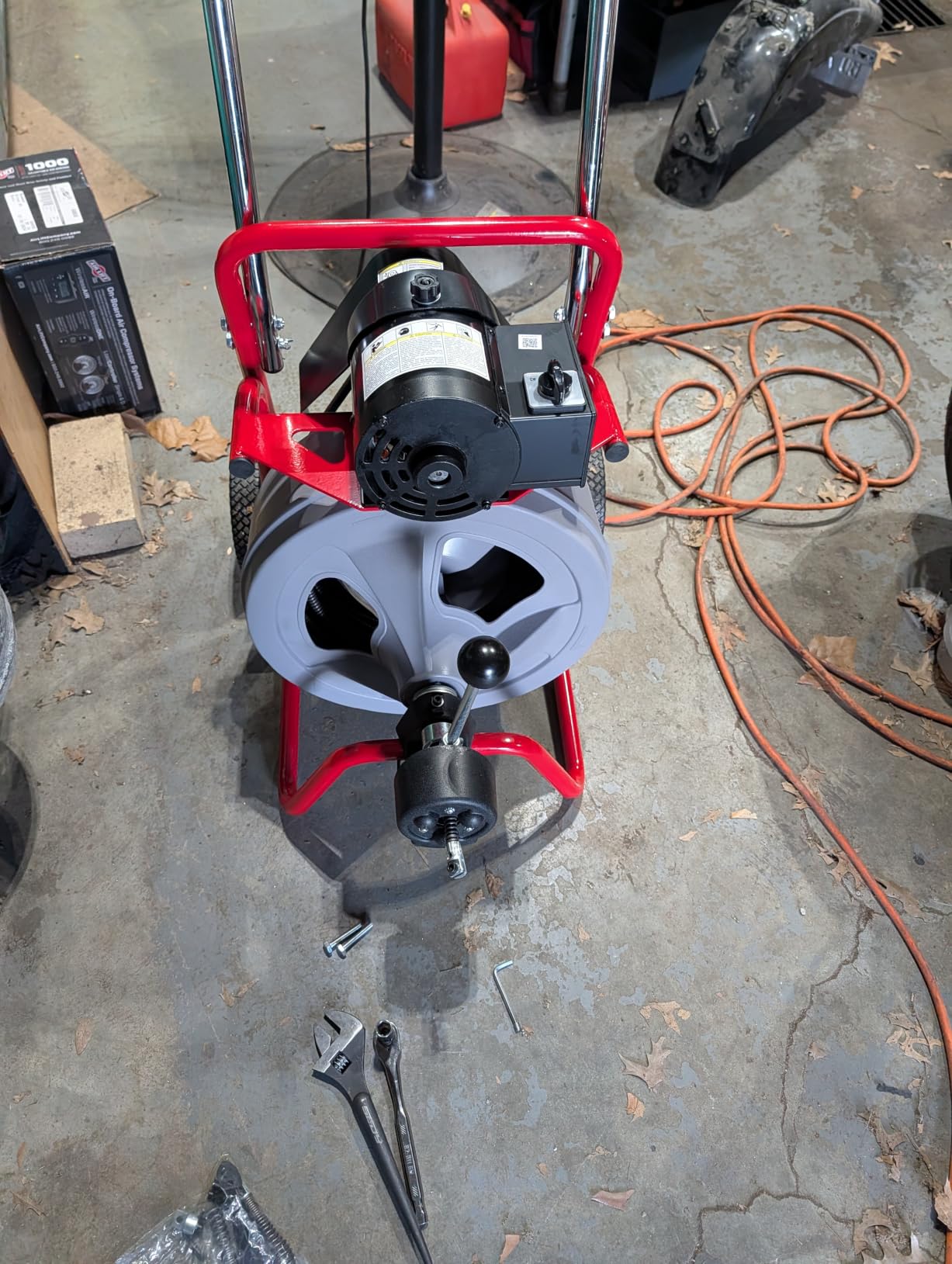
At 100 feet of 3/8 inch solid core cable, the VEVOR 100 ft is the longest reach in this roundup and the most compact way to get it. It handles 2 inch to 4 inch pipes, comes with eight interchangeable cutters, and rides on 7.5 inch wheels with a telescopic handle.
It is 71.21 pounds, which makes it a wheeled machine rather than a carry machine. The semi-enclosed plastic drum lets you observe the cable and doubles as storage, which is a genuine advantage over open-drum designs when the machine lives in a garage.
Auto feed, air switch and working on root masses
The auto feed system with forward and reverse control, triggered by an air-activated foot switch, keeps your hands free while the cable advances and retracts. The air switch also means there is no electrical control box sitting near the drum getting splashed by drain water, which owners call out as a real durability advantage.
On power, owners doing root work in 4 inch lines report the motor has enough power to rip through root masses, and several describe the machine paying for itself against a plumber visit. It holds a 4.2 star average across 155 reviews.
Documentation, foot switch reliability and the rewind limit
The most common complaint is the manual. Owners describe it as confusing and often nonsensical, with assembly relying on grainy black and white photos. Budget extra time for setup, and confirm the assembly sequence before you thread a hundred feet of cable through it.
Two functional caveats matter more. At full extension the machine cannot rewind all the cable, so the operator has to pull it back by hand, which is tedious at 100 feet. And one unit shipped with a foot switch that worked only intermittently, with the machine able to run only from that switch. Test the switch before you are standing over an open cleanout.
Who should buy it and who should not
Buy it if you have a long lateral, a 4 inch line, or a property where a single cleanout serves multiple problems, and you want more reach than a rental offers. Owners doing larger root work describe the machine as powerful, quiet and worth the money relative to a plumber visit.
Skip it if your problems are all inside the house. It is too heavy and too much machine for a bathroom sink, and the documentation quality means it rewards an owner who is willing to learn it rather than one who wants to pull it out and go.
10. VEVOR 50 ft Manual-Feed Machine – Best Lightweight Drum for Routine Work
VEVOR Drain Cleaner Machine 50 FT x 5/16 Inch, Sewer Snake Auger with 228RPM Electric Drill, Manual Feed Drain Cleaning Machine with 6 Cutters & Air-activated Foot Switch for 2″ to 4″ Pipes
50 ft of 5/16 in steel cable
228 RPM drill drive
Manual feed with CW and CCW control
6 cutter heads and GFCI
+ Pros
- Lightest and most portable drum machine here at 25.35 pounds
- 228 RPM drill drive gives steady rotation without auto-feed complexity
- Foot switch allows hands-free start and stop while managing cable
- Six interchangeable cutter heads and GFCI protection
- Cons
- Manual feed only
- the operator physically pushes and pulls the cable
- Steady 228 RPM is slow for heavy root or scale blockages
- Feed approach tires the arms over a long cable run
- Cable can tangle or jam in tight bends on 2 in lines
The 50 ft VEVOR is the machine I would suggest to someone who is intimidated by the heavier drum units. At 25.35 pounds it is the lightest drum machine in this roundup by a wide margin, and at 50 feet of 5/16 inch cable it still covers 2 inch to 4 inch pipes.
It trades automation for simplicity. There is no auto-feed, so the cable is pushed and pulled by hand, and the drive is a 228 RPM electric drill unit with clockwise and counterclockwise rotation control through an air-activated foot switch. The durable plastic drum, ergonomic handle and GFCI protection round out a tidy package.
Why manual feed is a feature at this weight
Manual feed means there is no feed mechanism to fail, and on a machine at this weight that is a real advantage. The simpler a machine is, the fewer things go wrong when it is stored in a damp garage for six months between uses.
It is also the machine you can actually carry. A 25 pound unit goes up basement stairs and across a yard in one trip, where a 65 or 71 pound machine requires a second person or a plan. The ergonomic handle and the foot switch together let you start and stop while both hands are on the cable.
What 228 RPM means in practice
228 RPM is slow compared with the 450 and 560 RPM units elsewhere in this roundup. On routine 2 inch to 4 inch clogs that is fine, and owners find the steady rotation easy to work with. On heavy root or scale blockages the low speed becomes a limitation, and this is not the machine to reach for when roots are involved.
The manual feed approach also tires the arms over a long run. Feeding 50 feet by hand is repetitive, and owners note the drum holds the cable well but the physical demand is on you. If the blockage sits near the far end, budget for breaks.
Scope discipline and the final verdict
It holds a 4.1 star average from 136 reviews, with 65 percent five-star and 12 percent one-star. Owners place it firmly at the budget end of the drum category and match it to routine 2 to 4 inch clogs rather than root jobs. The cable can tangle or jam in tight bends on 2 inch lines, which is the main mechanical weakness.
Buy it if you want drum-machine reach without drum-machine weight. Skip it if you have roots, long runs, or a physically demanding cleanout. Between it and the 100 ft VEVOR, the choice is simply whether you want the cable pushed by a foot switch or by your own arms.
What Size Drain Machine Do You Actually Need?
Match the machine to the pipe diameter first and the cable length second. Most disappointing drain machine purchases are not bad machines, they are a 1/4 inch cable being asked to clear a 3 inch line or a 25 foot reach being asked to solve a blockage 60 feet down a lateral. Here is the sizing logic, in plain numbers.
3/4 inch to 1-1/2 inch lines: fixture work
Bathroom sinks, tubs and showers sit in this range, and so do most branch lines inside the house. A 1/4 inch cable at 23 to 30 feet is the right instrument, which is exactly the range of the POPULO cordless, POPULO corded, WORKPRO, RIDGID PowerClear and RIDGID K-45. Anything heavier in this pipe range wastes reach and bends more than it needs to.
2 inch lines: the crossover point
At 2 inch, 5/16 inch cable becomes the sensible minimum, and that is where the drum machines in this roundup start to make sense. A 2 inch line will swallow a 1/4 inch cable but will not give it enough leverage to break a hard blockage. This is also the smallest pipe where a root cutter or a grease cutter starts earning its place.
3 inch to 4 inch lines: 3/8 inch cable and up
For 3 inch and 4 inch lines, 3/8 inch solid core cable is the working standard, which is what the RIDGID K-400 and the VEVOR 100 ft use. At 4 inch lines and above you also want a machine that can be wheeled to the cleanout rather than carried, and that means accepting 65 pounds or more.
Reach: the number most buyers misread
Cable length is reach, but only if the machine can actually be positioned at the drain opening. A 75 foot cable in a machine you cannot get through a doorway is worthless. Check door clearances and stair widths before you commit to a large drum machine, and remember that drum machines are loud and awkward to move through a house even when they technically fit.
Buying Guide: The Specs That Actually Decide Which Machine You Need
Once you know your pipe diameter, eight specs separate the machines worth owning from the ones you will regret. Here they are in the order I would weigh them.
1. Cable gauge is the one spec you cannot cheat on
Cable gauge is the fraction of an inch of the cable core, and it determines both strength and bend radius. The practical rule is simple: 1/4 inch cable for 1 to 2 inch pipes, 5/16 inch for 2 to 3 inch, 3/8 inch for 3 to 4 inch, and 1/2 inch when you are cutting roots in larger lines. Heavier cable resists kinking but turns more sharply in a tight trap, so over-speccing a small line is a real mistake, not a safety margin.
2. Cable length decides whether you clear it or just relocate it
A blockage you cannot reach is a blockage you have not fixed, and the tell is a drain that runs slow again within days. Fixture clogs usually sit within 25 to 30 feet. Branch line problems often sit 40 to 60 feet out. Main line and lateral problems can sit beyond 75 feet, and those are the jobs where drum machines earn their weight.
3. Auto-feed versus manual feed
Auto-feed advances and retrieves the cable from a switch or foot pedal, which keeps your hands clear and cuts the physical effort dramatically on long runs. Manual feed means you push and pull the cable by hand. On a 25 foot cordless run, auto-feed is a convenience. On 50 feet of heavy cable, it is the difference between a job you finish and a job you abandon halfway.
Rocker switches and forward and reverse controls also matter, because being able to back the cable off a bend instead of driving into it is what prevents kinks.
4. Power source and where the machine can go
Cordless means a battery platform decision. If you already own 20V tools, a cordless auger is nearly free in platform terms and needs no extension cord. Corded 120V means constant torque and no runtime ceiling, but a cord that must reach a GFCI-protected outlet in a wet room. Prefer corded when the work is always near an outlet and cordless when the work is scattered, outdoor, or in a basement with no outlet.
5. Cutter heads and what each type is for
Cutter heads are the business end of the cable. A drop head auger leads through bends and anchors for pulling. A boring bulb softens and disperses clogs. A C-cutter slices grease and soft obstructions sideways. Side cutters and spades work general material, and saw teeth handle roots and hard scale. A machine that ships with six or eight interchangeable heads gives you options; one with a single welded head gives you a problem when that head dulls.
6. Drum design, cable control and kink prevention
Kinking is the number one owner complaint across every brand on this list. It happens when the cable is forced, when it is rewound while still snagged, or when it is too thin for the pipe. Features that help include an inner drum liner that reduces cable flip, a cable control system that stops the drum when the head catches, and a lock that holds cable tension during the pull.
Clear drum covers also help because you can see how the cable is winding. Anything that protects the cable during retraction is worth paying for.
7. Weight, noise and getting it down the stairs
Half of residential drain work happens indoors, and drum machines are loud. The machines in this roundup span 9.7 pounds to 71.21 pounds, and that spread is the difference between a tool you take to the problem and a tool that requires planning. If you have a basement cleanout, measure the stair width and the ceiling height before buying anything over 50 pounds.
8. Warranty and where replacement parts come from
RIDGID’s full lifetime warranty on the PowerClear and the K-45 is the strongest position in this roundup, and the PIONEERWORKS carries a two-year warranty. Beyond warranty length, the question that actually matters is whether you can buy a replacement cable and cutter heads in the United States without a special order. A machine whose parts are unavailable is a machine with a finite life.
Cordless vs Corded vs Drum: Which Style Fits Your House?
The short version: cordless handheld covers fixtures, corded handheld covers fixtures with more torque, compact covered machines cover tubs and showers with less mess, and drum machines cover everything from a 2 inch branch line to a 4 inch main. Choosing wrong in either direction wastes money, so it helps to work from your pipe size outward rather than from features inward.
Cordless handheld is the modern default for most houses
For a home where clogs mean a slow bathroom sink, a tub, or a shower, a cordless drain auger is the right default. It clears 3/4 inch to 2 inch lines, needs no cord, carries to the job, and fits in a closet. The leading cordless option here carries more than 6,000 owner ratings, which means its failure modes are well documented and its fixes are well known.
The tradeoff is torque ceiling and a small battery. Neither matters for hair and grease clogs. Both start to matter the moment you meet a blockage that a hand snake would have moved.
Corded handheld is for people who distrust batteries in wet rooms
A corded machine with a built-in GFCI is arguably the safer choice in a wet bathroom cabinet, and it never runs out of power mid-pull. Its weakness is cable stiffness, which makes tight P-traps harder, and its range is the same small-pipe range the cordless machines cover.
Choose corded if you have no battery platform and no plan to build one. Otherwise the cordless option is more flexible for the same money.
Drum machines are for lines, not for fixtures
A drum machine earns its place when the pipe is 2 inch or larger or the blockage is more than about 30 feet away. The tradeoffs are weight, noise, and storage, and they are real: a 65 pound machine that lives in a garage is a commitment. What you get in exchange is cable gauge and reach that a handheld cannot approach.
For a homeowner, the reasonable test is whether you have ever had a clog that a plunger could not fix and a hand snake could not reach. If yes, a drum machine is justified. If your problems are all slow drains and hair, a handheld cordless auger is the honest answer and the better purchase.
When to Call a Plumber Instead of Buying a Machine
Call a plumber when the problem is in the main line, when roots are involved, or when the pipe itself is failing. A homeowner drain machine reaches from a drain opening or cleanout to the obstruction. It cannot fix a collapsed line, a cracked sewer lateral, a root intrusion deep in a municipal connection, or a stoppage that sits beyond the reach of any cable you can own.
The tells that a machine will not solve it are specific. Multiple fixtures backing up at once points to a shared line rather than a local clog. Recurring clogs in the same spot within weeks suggest an obstruction or a damaged section rather than a buildup. Standing sewage in a yard cleanout, or a drain that backs up within minutes of running, points to a line problem.
There is also the case for a camera. Once a line has been cleared, an inspection camera tells you what caused it, and a r/HomeMaintenance user reported a hydro-jetting service call costing several hundred dollars, which is the number that tells you whether owning a machine pays for itself. If you are already paying plumber visits annually, a machine may be a rational purchase. If you are paying them once, a machine will sit in the garage.
Renting is the third option and it is underrated. For a one-time main line problem, renting a machine for a day is usually cheaper than buying one and cheaper than the service call you are avoiding. Own only the machine you will use more than a few times.
How to Use a Drain Cleaning Machine Without Kinking the Cable
Kinked cable is the single most common complaint about every machine in this roundup, and it is almost always a technique problem rather than a product problem. The following sequence is what keeps a cable intact and gets a clog cleared in one attempt instead of three.
1. Work the trap before you power up
Remove the drain stopper and check the trap by hand. A large share of what looks like a deep blockage is a hair mat sitting in the trap or the first horizontal arm of the pipe. Hand-clearing it takes two minutes and can save you a cable.
2. Stay close to the drain opening
Feed slowly and keep the guide tube or drum close to the opening. The further the cable is from the drain, the more leverage you have on it, and the more a bend will put a kink into it. The owners who get clean results are consistently the ones who worked in a tight radius.
3. Feed, spin, then back off
The working rhythm is short feed, then rotation, then reverse a little before feeding again. Cycling forward and reverse rather than forcing the cable forward is what threads multiple bends. This is the single technique that separates owners who clear drains from owners who replace cables.
4. Stop at resistance, do not push through it
When you feel the cable stop, stop feeding. Force a stalled cable and you will either kink it or whip it back toward yourself when it releases. Experienced operators treat resistance as information, not as a challenge.
5. Never retract a snagged cable
This is the advice that repeats most often across owner reviews of every machine here, including the RIDGID machines whose manual gets singled out as well written. If the cable is caught, spin the drum to break the obstruction loose. Do not pull the cable back into the drum while it is still attached to something. That single habit is what destroys cables.
6. Wear gloves and eye protection, and treat the drain as dirty
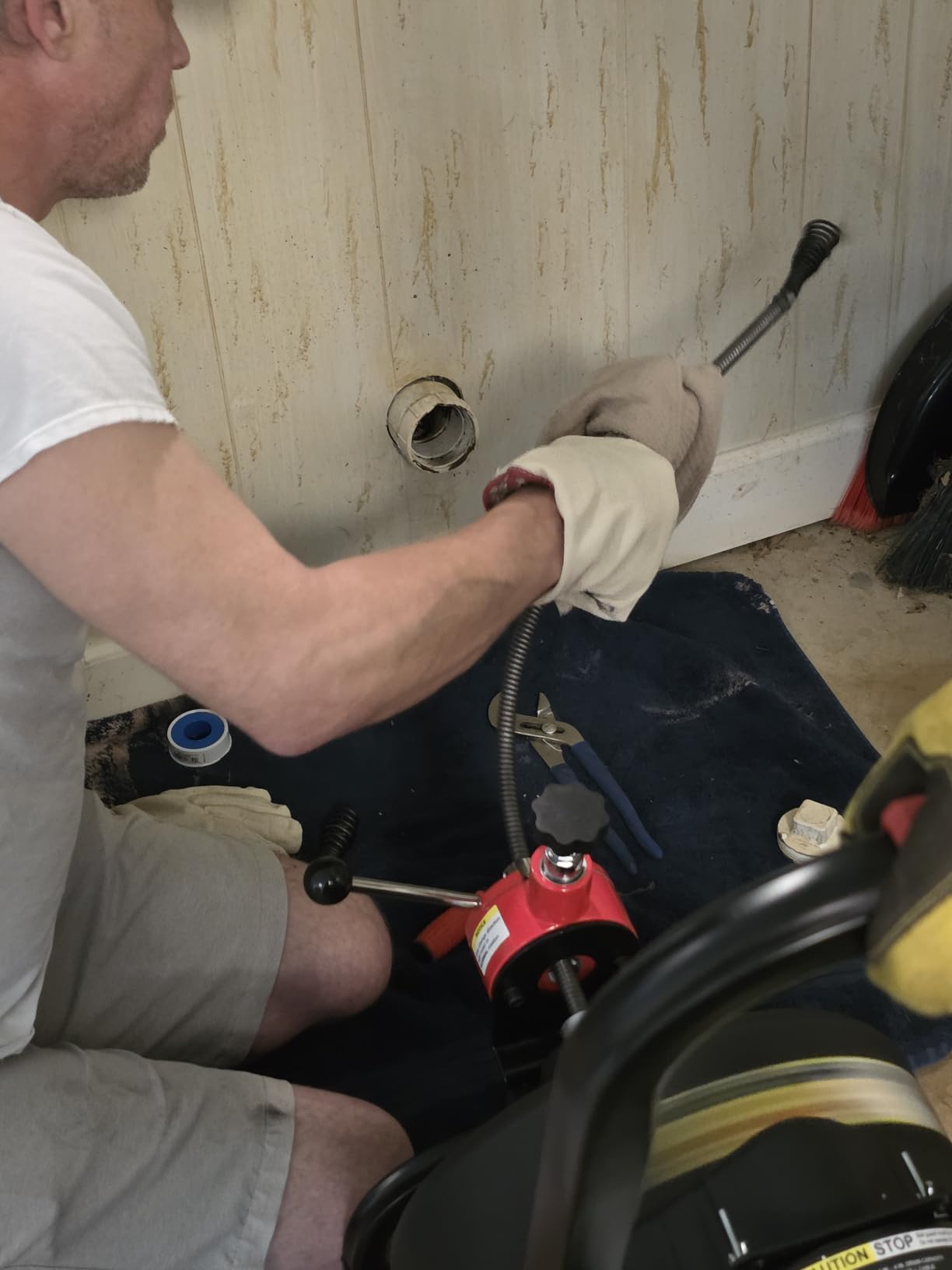
Experienced users insist on gloves and eye protection because of the cable whip hazard, which is what happens when a cable releases suddenly under tension. Drain water and the material coming back up a line are unsanitary, so work in gloves, keep your face out of the line of the cable, and lay down towels before you start. Half of residential work happens indoors, and the mess is part of the job.
7. Clean and oil the cable after every use
Pull off the debris, wipe the cable dry, and apply a rust-inhibiting oil before you rewind it. Let the drum dry before you store it. A machine that goes into a damp drum and sits there will produce a rusted cable and a seized drum, and both are avoidable for the cost of a can of oil.
Frequently Asked Questions
What is the best drain cleaning machine for home use?
The best drain cleaning machine for home use is a cordless handheld auger with 25 feet of 1/4 inch cable rated for 3/4 inch to 2 inch lines, because that range covers nearly every in-house clog without the weight or storage cost of a drum machine. The POPULO 20V is our top pick, with the highest owner rating volume in this group. Move up to a drum machine only when the pipe is 2 inch or larger or the blockage sits more than about 30 feet out.
What size drain snake do I need?
Match cable gauge to pipe diameter: 1/4 inch cable for 1 to 2 inch pipes, 5/16 inch for 2 to 3 inch, 3/8 inch for 3 to 4 inch, and 1/2 inch for cutting roots in larger lines. Match cable length to reach: 23 to 30 feet for fixture clogs, 50 feet for branch lines, and 75 feet or more for main and lateral lines. Using a cable that is too thin causes kinks, and one that is too short only relocates the clog.
What do professional plumbers use to unclog drains?
Plumbers typically use a motor-driven drum or sectional machine with 3/8 inch or heavier solid core cable for branch and main lines, and a compact sink machine for fixture work. Veteran plumbers on terrylove.com repeatedly recommend the RIDGID K50 and K400 class as an all-around unit for small and medium residential drains. For household clogs specifically, the deciding factor is bend radius rather than raw power, because household lines have many tight turns.
Is a cordless drain auger as good as a corded one?
For fixture clogs in 3/4 inch to 2 inch lines, a cordless auger is as effective as a corded one and far more portable. Corded machines win on uninterrupted torque for stubborn blockages, and a corded unit with a built-in GFCI plug is the safer choice in a wet bathroom cabinet. The deciding factor is whether you already own a matching battery platform, since that determines the real cost of the cordless option.
Can I use a drain machine on a toilet?
No. Toilets need a closet auger, not a powered drain machine. A toilet is a 3 inch offset bend with a porcelain fixture immediately behind it, and powering a cable through that geometry risks cracking the porcelain and breaking the trap seal. This question comes up constantly in plumbing forums, so remove the toilet entirely if a larger machine is genuinely required, and never force a drum machine into a toilet.
Which Drain Cleaning Machine Should You Buy?
If most of your clogs are in sinks, tubs and showers, start with a cordless handheld auger and choose the POPULO 20V for its owner record and replaceable cable. If you want a covered drum in a cramped wet cabinet and a lifetime warranty, the RIDGID PowerClear 55808 is the better tool, and the RIDGID K-45 is the more controllable one.
If you are clearing 2 inch and 3 inch lines on foot rather than from a cleanout, the PIONEERWORKS 50 ft is the foot-switch value option, and the VEVOR 50 ft is the one you can carry up the stairs yourself. When you need real reach into larger lines, the RIDGID K-400 is the strongest general-purpose machine here, the POPULO 75 ft is the root-cutting specialist, and the VEVOR 100 ft gives you the longest run in the group. If you have recurring main line backups, root intrusion, or backups in multiple fixtures at once, call a plumber rather than buying any of them.
Whichever one you choose, the technique matters more than the badge. Go slowly, stay close to the drain opening, cycle forward and reverse, and never retract a cable that is still snagged. That is how the best drain cleaning machines for home use stay working instead of turning into a pile of kinked cable in the corner of a garage. This roundup was updated for 2026, and the machine market moves fast enough that it is worth rechecking specs before you buy.