

Most people searching for the best water pressure regulators for houses are not looking for a part. They are looking for an answer to a symptom, usually banging pipes, a dripping faucet that will not stop, a washing machine hose that blew, or a shower that turned into a trickle. I have spent years in this category, and the first thing I tell anyone is this: before you buy anything, try turning the adjustment nut on the valve you already own. A large share of “the regulator is dead” calls turn out to be a regulator set to 40 psi on a house that needs 55.
That is only true if you actually have one. Plenty of houses in the United States run on municipal supply that delivers well over the 80 PSI that faucets, shower valves, water heaters and supply lines are rated for. Nobody puts a pressure reducing valve on those houses by default. So the second thing I say: buy a main-line pressure reducing valve, not the inline regulator that dominates the top of search results. The inline units sold for RV hookups and pump feeds are a different product with a different job, and they are not what a house needs.
This roundup covers eight main-line valves, all of them lead-free bronze, brass or stainless-bodied units rated for potable service. We weighed them on body material, adjustability, flow capacity, repairability and the size of the review base behind them, because in plumbing an unpopular failure mode matters more than a spec sheet. Everything here installs between the meter or main shutoff and the rest of the house. Last reviewed for 2026.
Our Top 3 Water Pressure Regulators for Whole-House Use in 2026
Our top three are the Watts LF25AUB-Z3 for most houses, the Zurn Wilkins 34-NR3XLDU when the install is tight or you want the widest service base, and the Zurn Wilkins 1-600XL when you want the all-bronze professional reference valve. Each one holds a stable set point, adjusts on site, and has enough reviews behind it that we trust the failure reports as much as the praise.

Watts LF25AUB-Z3
- 25-75 psi adjustable
- 50 psi set
- Lead-free copper silicon
- Replaceable seat module
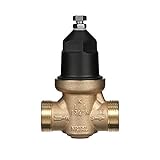
Zurn Wilkins 34-NR3XLDU
- Cartridge-loaded
- Compact lay length
- ASSE 1003 listed
- Stainless strainer
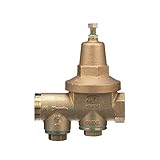
Zurn Wilkins 1-600XL
- Balanced bronze design
- 1 inch NPT
- Fiber union gasket
- Single-cap strainer
Comparing Every Pick in This Roundup
All eight regulators below are lead-free and sized for a residential main line. The key differences are body material, whether the internals are all-metal or composite, the adjustment range, and how much room the valve needs during service.
| Product | Details | |
|---|---|---|
| Watts LF25AUB-Z3 3/4 inch NPT Lead-Free PRV |
|
Check Latest Price |
| Zurn Wilkins 34-NR3XLDU 3/4 inch Double Union |
|
Check Latest Price |
| Zurn Wilkins 1-600XL 1 inch Pressure Reducing Valve |
|
Check Latest Price |
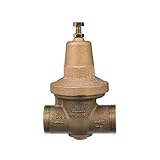 Zurn Wilkins 1-70XLDU 1 inch Double Union Zurn Wilkins 1-70XLDU 1 inch Double Union |
|
Check Latest Price |
 Watts LFN45B 1 inch NPT Union Inlet Watts LFN45B 1 inch NPT Union Inlet |
|
Check Latest Price |
 Watts LFN55B 3/4 inch All-Metal PRV Watts LFN55B 3/4 inch All-Metal PRV |
|
Check Latest Price |
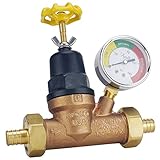 Apollo ApolloPEX 3/4 inch PEX Regulator with Gauge Apollo ApolloPEX 3/4 inch PEX Regulator with Gauge |
|
Check Latest Price |
 Cash Acme EB45 3/4 inch Single Union PRV Cash Acme EB45 3/4 inch Single Union PRV |
|
Check Latest Price |
One brand verdict before the individual reviews: for a residential main line, the names that show up most often in plumbers’ hands are Watts and Zurn Wilkins. Apollo covers the PEX-specific install, and Cash Acme covers the fixed low-cost case. If a listing does not name a certification standard, treat that as information in itself.
What a Water Pressure Regulator Actually Does
A water pressure regulator, also called a pressure reducing valve or PRV, is a spring-loaded valve that sits on the main line and caps outlet pressure at a set point no matter how high the incoming municipal pressure climbs. Inside it, a spring pushes a diaphragm closed against the seat while incoming pressure works against the other side of that diaphragm. When inlet pressure rises past the set point, the diaphragm lifts the seat and bleeds excess pressure back to the main until balance returns. That is the whole mechanism, and it is why a good valve holds a steady number at the shower while the pressure swings outside.
Why does it matter? Because most faucets, shower valves, water heaters and supply lines from Moen, Delta, Kohler and Grohe are rated for a working range of roughly 40 to 60 PSI, and none of them are happy above 80 PSI. Run a house at 120 PSI and you get water hammer, chronic dripping, washers that fail early, and appliance hoses that rupture. Regulate down to 55 PSI and the same house gets quieter, longer-lived fixtures and noticeably less water used by dripping faucets.
You need one if your municipal supply sits above about 80 PSI, which is common in plenty of regions where static pressure measures 150 to 170 PSI at the street. You also need one if you run a booster pump, since pumps with no downstream regulation can push pressure into dangerous territory, or if you have drip irrigation that needs a stable low-pressure zone. You do not need one if your supply is reliably under 60 PSI and your fixtures show no wear.
A note on failure modes, because this is where the horror stories come from. A regulator that fails open stops regulating, and pressure climbs back to street level, which is exactly the flooding scenario that makes people distrust the whole category. A regulator that fails closed chokes the house down to a trickle, and that is the complaint people usually bring to a forum as “my pressure died.” Both are real, and the fix in either case is the same valve on the wall of this roundup.
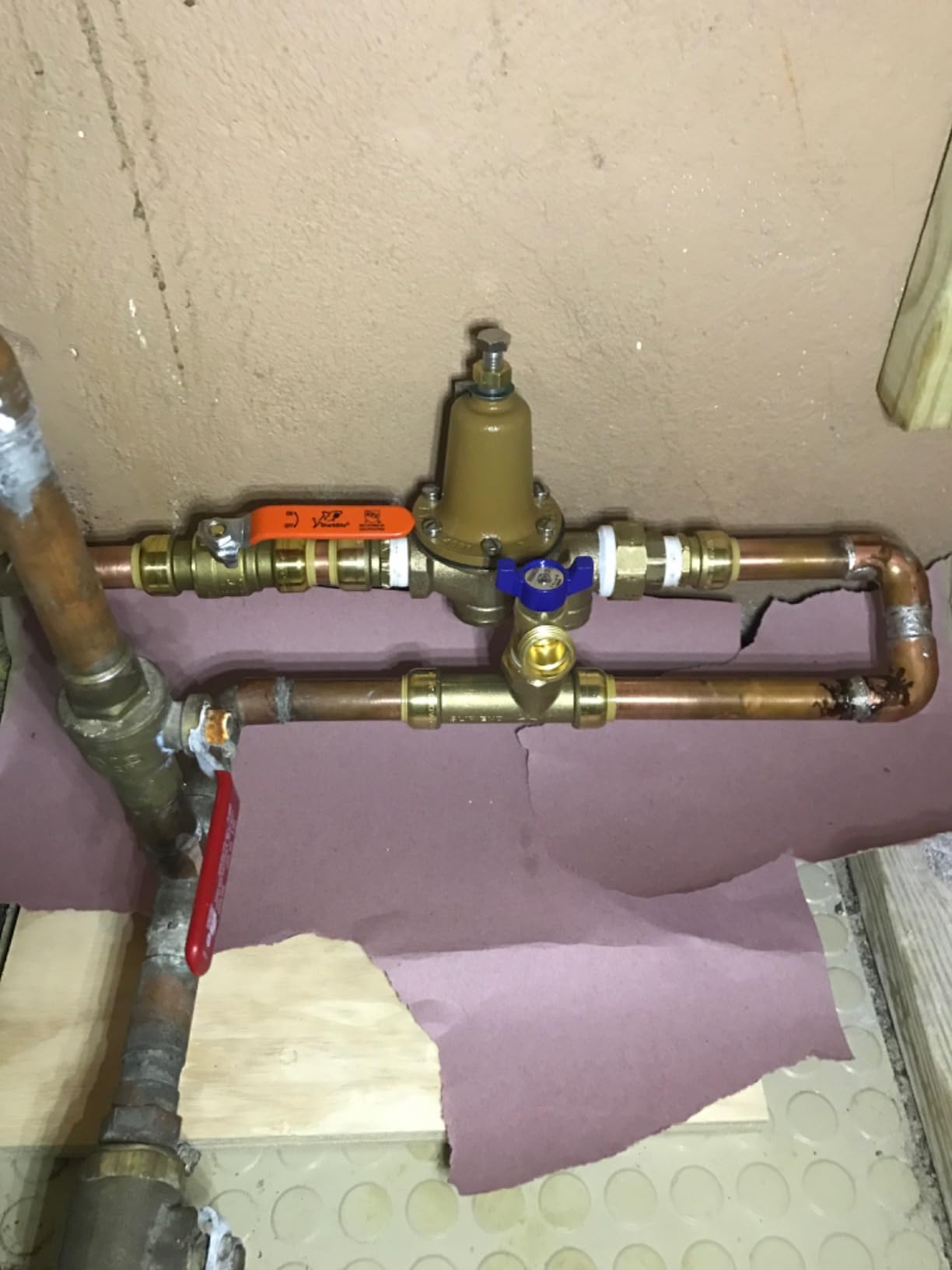
1. Watts LF25AUB-Z3 – The Best All-Round Pressure Reducing Valve for Most Houses
Watts LF25AUB-Z3 Lead-Free Water Pressure Reducing Valve 3/4″ NPT
25-75 psi adjustable
50 psi factory set
300 psi max rating
Lead-free copper silicon
+ Pros
- Widest trust signal in the roundup with 4.7 stars across 960 reviews
- Adjusts across a 25-75 psi range so you can match any municipal supply
- Lead-free copper silicon alloy body with a stainless steel strainer
- Replaceable seat module and high-temperature diaphragm extend service life
- Standard thermal expansion bypass protects downstream plumbing
- Cons
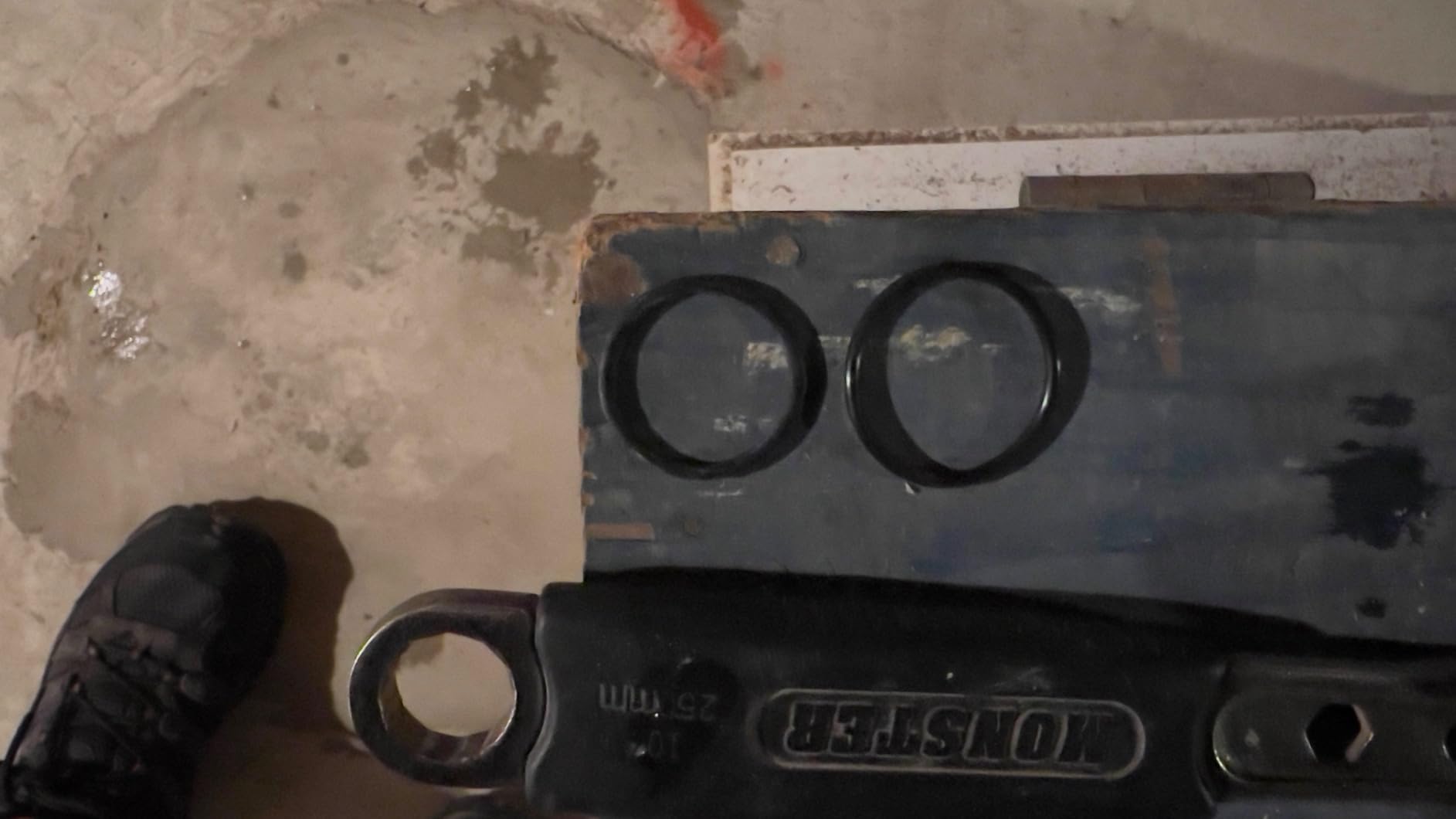
- Union ends need large wrenches so clearance around the valve must be planned
- A leak-free seal takes careful thread preparation or pipe dope
This is the valve I fit when a homeowner has told me their city pressure is high and has not had a regulator before. The LF25AUB-Z3 ships with a 50 PSI factory set and an adjustment range from 25 to 75 PSI, which covers essentially every residential supply in North America without hitting either end of the travel. It weighs 3.3 pounds and measures 6 by 3 by 6 inches, which is small enough for a meter box and sturdy enough for an unfinished basement wall.
What stands out on the spec sheet is the build. The body is lead-free copper silicon alloy with a stainless steel strainer and corrosion-resistant adjusting and cage screws, and the diaphragm is rated for high temperature. The seat module is replaceable, so when it eventually fails you are not replacing a 3.3 pound valve, you are swapping a cartridge. It is ASSE 1003 and CSA B356 compliant, and the thermal expansion bypass lets water flow back into the main when outlet pressure spikes past supply pressure, which is what stops a water heater from expanding itself into a leak.
Why the 25-75 PSI Range Matters More Than the Rating
Every household lands somewhere in that band, and the range is what lets one valve cover them. A city main at 70 PSI needs very little reduction and a 50 PSI set is close to correct. A main at 150 PSI needs a valve that will actually hold 55 PSI at the far bathroom, and that is a test of capacity as much as of set point. The 300 PSI maximum working pressure rating is headroom, not a promise that you should run the house at 300.
The practical point is adjustment access. The bonnet screws are positioned so you can set the valve with the house pressurized, and you only need a gauge to confirm the result. If your installer does not put a gauge on the downstream side, ask for one, because an unverified set point is the single most common reason a good valve gets blamed for bad pressure.
Replaceable Seat Module and Long-Term Serviceability
The serviceability story is what separates a pro valve from a disposable one, and this is where the LF25AUB-Z3 earns its place at the top. A replaceable seat module plus a stainless steel strainer you can pull out for cleaning means most problems are a ten-minute fix rather than a replacement. Buyers report steady pressure reduction and easy in-line adjustment as the two things they mention most, and the review base is large enough that the complaints are informative rather than anecdotal.
The recurring practical complaint is installation, not function. Union ends need real wrench leverage, which means you should confirm the clearance in a meter box before you buy, and getting a clean seal takes proper PTFE technique or pipe dope. Neither issue affects how the valve performs once it is in the line and torqued correctly.
Where It Fits in a Typical House
Install it immediately after the meter or main shutoff, before the softener, the whole-house filter, and the water heater branch. That order matters: anything upstream of the regulator sees full street pressure, and anything downstream sees your set point. For a house with two or three bathrooms, the 3/4 inch version is the standard choice, and the 1 inch version exists in the same family for larger lots or longer runs.
2. Zurn Wilkins 34-NR3XLDU – Best Value Cartridge Valve for Tight Installs
Zurn Wilkins 34-NR3XLDU 3/4″ NR3XL Pressure Reducing Valve with Double Union FNPT Connection
3/4 inch FNPT double union
Cartridge-loaded
75 psi listed max
ASSE 1003 listed
+ Pros
- Largest review base in the roundup at 1715 reviews with a 4.6 average
- Short lay length and compact body fit tight meter boxes and crawlspaces
- Cartridge-loaded design turns most repairs into a cartridge swap
- Integral stainless steel strainer screen resists clogging
- Tailpiece options in threaded
- PEX
- copper sweat and CPVC
- Cons
- Listed maximum pressure of 75 psi is lower than the 300 to 400 psi ratings on the brass models
- Double union ends need more space than a single union valve
- Cartridge and stainless parts are a separate purchase
This is the pick when space is the constraint, which is more often than people expect. The 34-NR3XLDU weighs 2.2 pounds and measures 5.5 by 2.8 by 5.5 inches, and that short lay length is the whole reason plumbers reach for it in a crowded meter box. It carries 1715 reviews at a 4.6 average, the largest base in this roundup, so the pattern of praise and complaint here is well established rather than anecdotal.
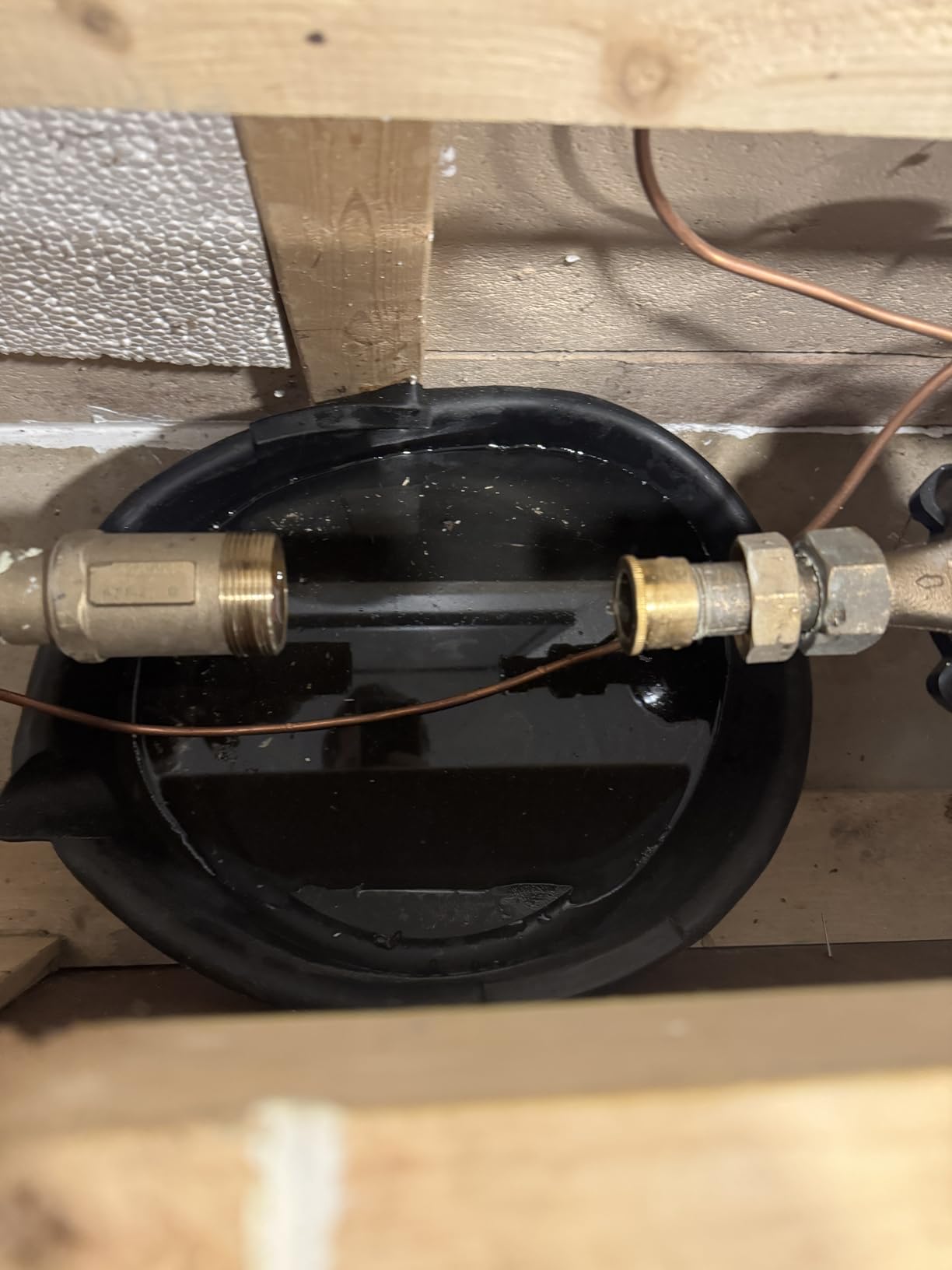
The design is a cartridge-loaded pressure reducing valve with a threaded bell that resists corrosion and opens up easy access to the internals. The integral stainless steel strainer screen is built into the body rather than added as an accessory, so it is there from day one. It is ASSE Listed 1003, IAPMO Listed, CSA Certified and meets NSF/ANSI 61, and tailpieces are available in threaded, PEX, copper sweat and CPVC so it can adapt to whatever is already in the wall.
Cartridge-Loaded Means Fewer Parts to Chase
A traditional regulator has a diaphragm, a cage, springs, screws and a seat, and each one is a potential leak path. A cartridge-loaded design consolidates the moving parts into a single replaceable unit. The practical effect for a homeowner is that when pressure starts drifting, you replace one item instead of dissecting a valve on a basement floor.
The bell is threaded rather than glued or brazed, which means internals come out without destroying anything. Buyers describe it as accurate and dependable, with output pressure that holds steady across the adjustment. It is a good pick when you want serviceability and a compact footprint and you do not need a very high inlet ceiling.
The 75 PSI Listing Is About the Valve, Not the Street
One spec reads as a limitation and is not one. The 75 PSI figure is the listed maximum working pressure for the valve body, which protects the cartridge and the spring cage from damage. It has nothing to do with how hard the municipal main is pushing, and it does not cap the pressure at your fixtures. Reviewers consistently note that people misread this number before buying and then find it works exactly as intended.
What you do give up versus the 300 and 400 PSI models is headroom for a genuinely extreme supply or an aggressive booster system. For a typical municipal line feeding a house, the cartridge holds its set point and stays quiet.
Best Use Case: Two to Four Fixture Homes
This is the valve for a mid-size house with two or three bathrooms, and for older homes where the meter box is a concrete vault and horizontal space is tight. The 3/4 inch size handles a normal household flow without choking, and the range of tailpiece options means you can transition from threaded to PEX without changing the valve.
Plan the install so the downstream side has room for a gauge. The compact body is a benefit in a cramped box, but the union still needs wrench clearance on both ends, and squeezing that in is what turns a clean install into a leak.
3. Zurn Wilkins 1-600XL – Premium All-Bronze Regulator for Steady Output
Zurn Wilkins 1-600XL 1″ 600XL Pressure Reducing Valve
1 inch NPT union
Balanced bronze design
300 psi max rating
Stainless strainer
+ Pros
- Balanced design holds output steady even when inlet pressure varies
- Fiber union gasket speeds installation versus standard gaskets
- Stainless steel strainer screen with single-cap removal makes service quick
- All-bronze construction carries low lifecycle cost
- Lead-law-compliant direct replacement for legacy 600 series regulators
- Cons
- Fittings are not included so extra parts are usually needed
- Threaded union end demands large wrenches and a lot of torque
- Some DIY installs need a pipe wrench plus an extension bar for proper torque
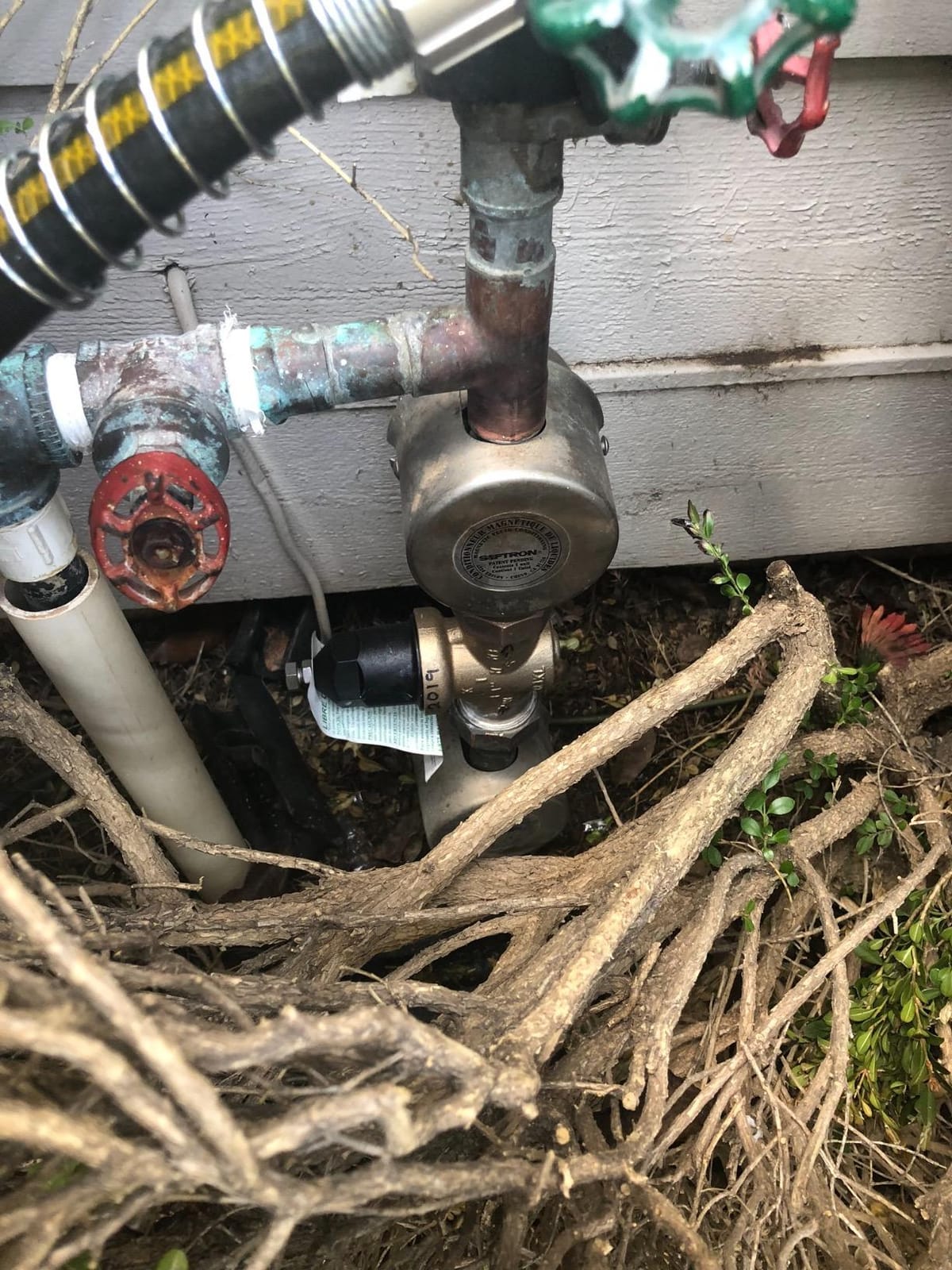
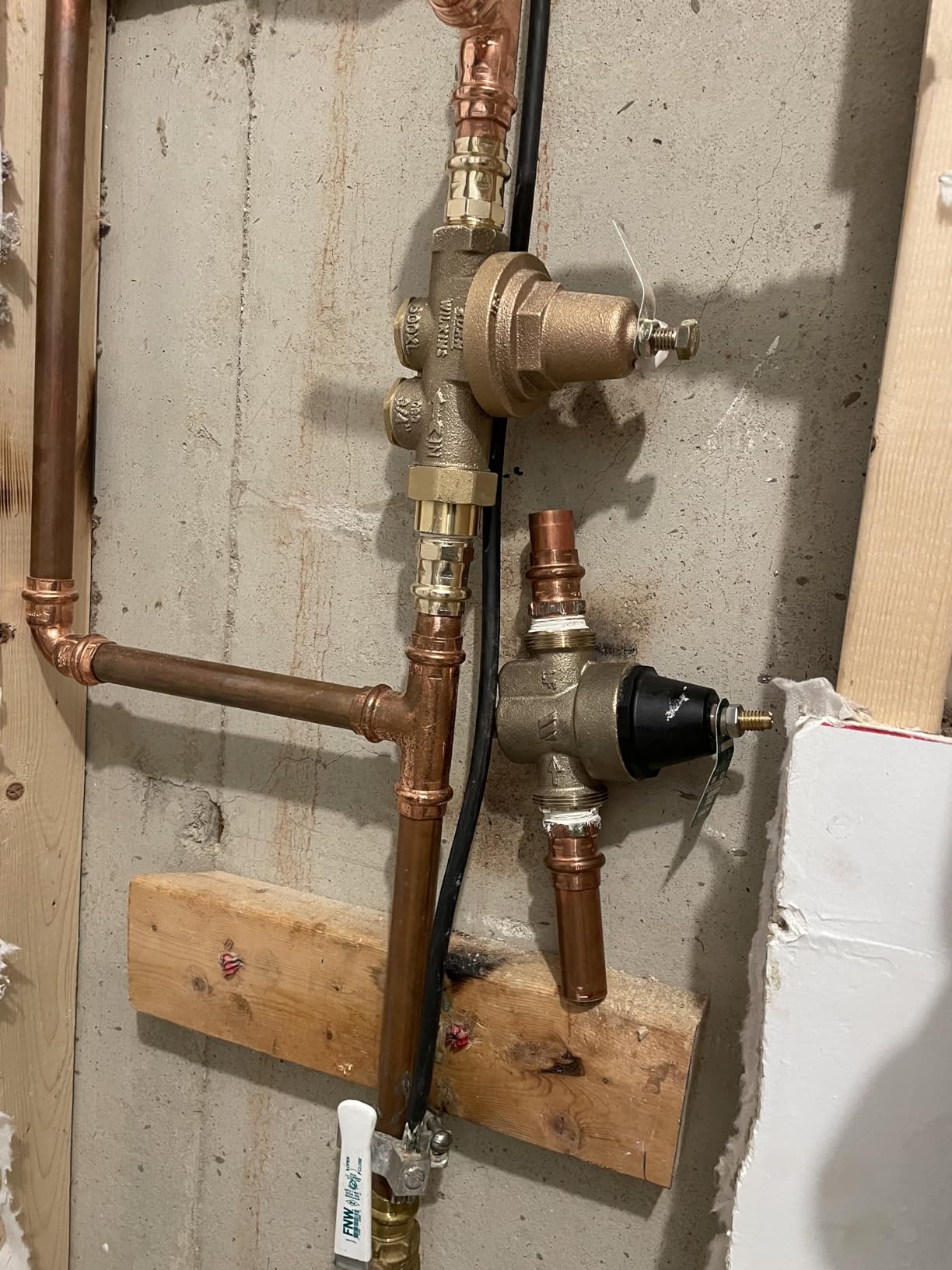
The 1-600XL is the valve I describe to people who ask what the pros actually use. It is a bronze-bodied, balanced-design pressure reducing valve rated to 300 PSI maximum working pressure, available in the same family from 3/4 inch through 2 inch, and it is the direct lead-law-compliant replacement for the legacy 600 series. It weighs in at 4.6 stars across 703 reviews, and the reports cluster around two things: quiet pipes and pressure that does not drift.
Two design details set it apart. The balanced design handles inlet pressure changes so the downstream system sees a stable number rather than reacting to every swing in the main. And the stainless steel strainer screen comes out with a single cap removal, so cleaning the screen does not mean dismantling the valve. The fiber union gasket also cuts installation time compared with a standard gasket, which matters when you are working to a shutdown window.
What Balanced Design Actually Solves
An unbalanced valve reacts to inlet pressure. When the street pressure rises, the output rises with it until the diaphragm corrects, and in a house with long runs and fast fixtures that reaction shows up as surging at the shower and hammering in the wall. A balanced design equalises the forces across the diaphragm so the valve holds closer to its set point through those swings.
Buyers describe the practical result as quieter pipes, no water hammer, and pressure spikes at fixtures disappearing. Owners report the same valve still working after five years, which is the durability signal you want from a component you do not want to touch again. The 1 inch port also gives you more flow headroom than a 3/4 inch valve, which is useful on a large lot with a long run from the meter.
Bronze Versus Stainless on Galvanised or Copper Runs
One real-world caution that no spec sheet prints: if you are pairing a regulator with galvanised or copper pipe in an aggressive water, talk to your plumber about a dielectric union at the connection. Forum DIYers report corrosion issues when dissimilar metals sit in direct contact with each other under pressure, and a dielectric union isolates them for very little money.
The bronze body itself is not the concern. It is the transition point. Install with a proper union and the whole assembly ages quietly, which is exactly what reviewers describe when they talk about eliminating pipe noise.
Who Should Pay More for This One
Pick the 1-600XL when the house has hard supply water, longer runs, or fixtures that have already been damaged by pressure spikes, and when you would rather install once. It is also the natural choice for anyone matching an existing 600 series valve, since the direct replacement means the pipework layout stays as it is.
You can spend less and still regulate well. What you are paying for is the balanced design, the all-bronze body, the single-cap service access and the review base that documents all of it working. Fittings are not included, so budget for a gauge, a check valve if your setup needs one, and whatever adapters your existing pipe demands.
4. Zurn Wilkins 1-70XLDU – Best for Contractors Who Mix and Match Connections
Zurn Wilkins 1-70XLDU 1″ 70XL Pressure Reducing Valve with Double Union FNPT Connection
1 inch double union FNPT
Cartridge design
Lead-free bronze and composite
CSA and LA approved
+ Pros
- Cartridge design cuts service labour and repair time
- Widest range of end connections makes it adaptable to existing pipework
- Lead-free bronze and composite construction resists corrosion
- Holds set downstream pressure to conserve water and energy
- ASSE 1003
- IAPMO
- CSA and City of Los Angeles approved
- Cons
- Double union FNPT layout needs more installation clearance than a single union valve
- Composite internal top is less robust than the all-bronze 600XL under repeated service
- Smaller review base at 235 than the other Wilkins models here
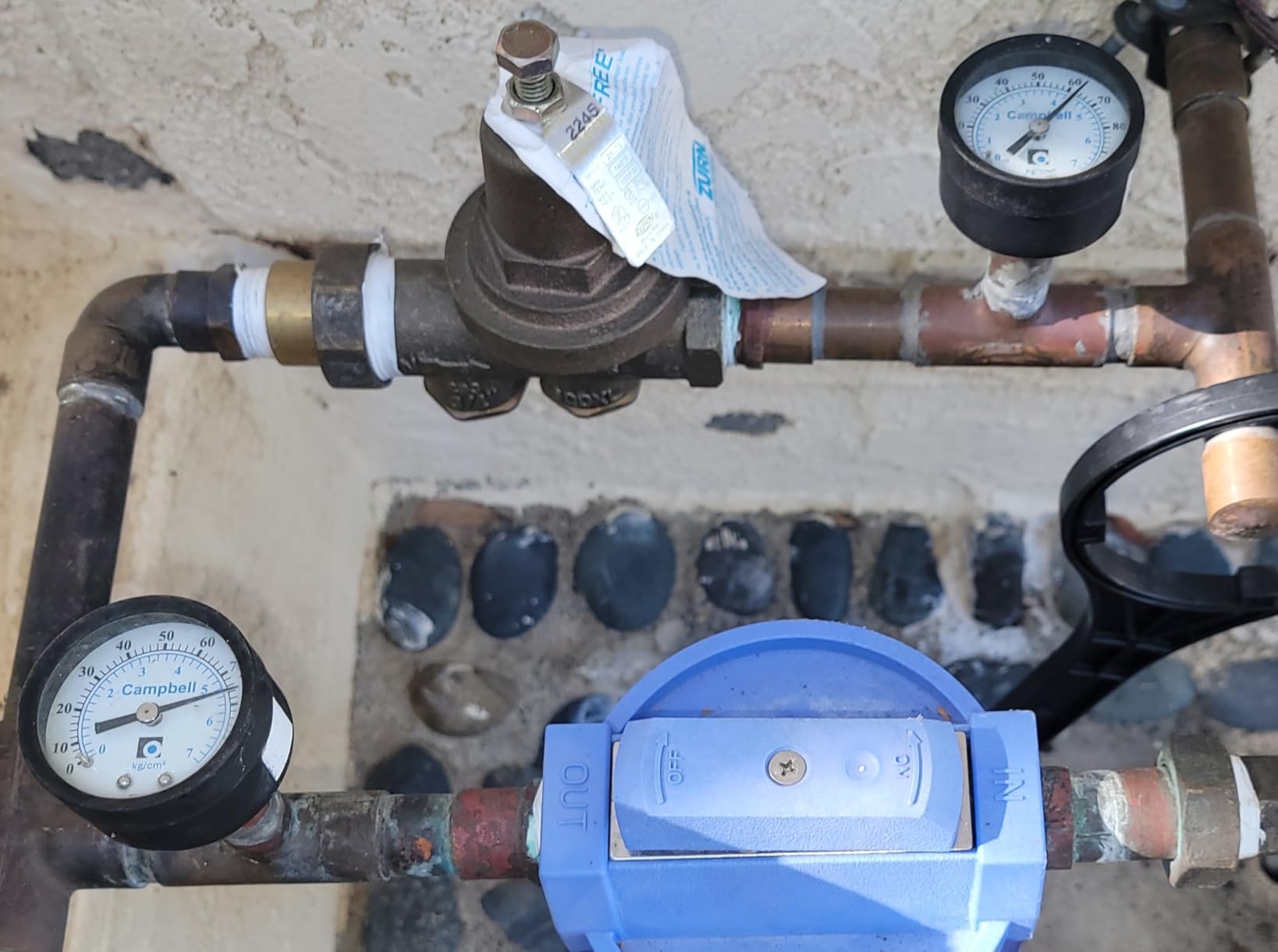
The 1-70XLDU earns its place for one reason above the others: it has the widest range of end connections in this roundup. When you are replacing a valve in a house where the incoming pipe is one material and the outgoing is another, this is the valve that saves the job from becoming a fitting expedition. It is 1 inch, double union, FNPT on both ends, and it measures 6 by 1.13 by 6 inches.
The rest of the package is contractor-grade in the usual Wilkins way. The cartridge design reduces service labour and time, and the lead-free bronze and composite construction gives you corrosion resistance with a bit of weight saved over solid bronze. It is ASSE Listed 1003, IAPMO Listed, CSA Certified, City of Los Angeles Approved, meets NSF/ANSI 61, and has been a contractor favourite for more than 40 years. The 4.6 average comes from 235 reviews, a smaller base than the other Wilkins valves here.
Connection Range Is the Real Feature
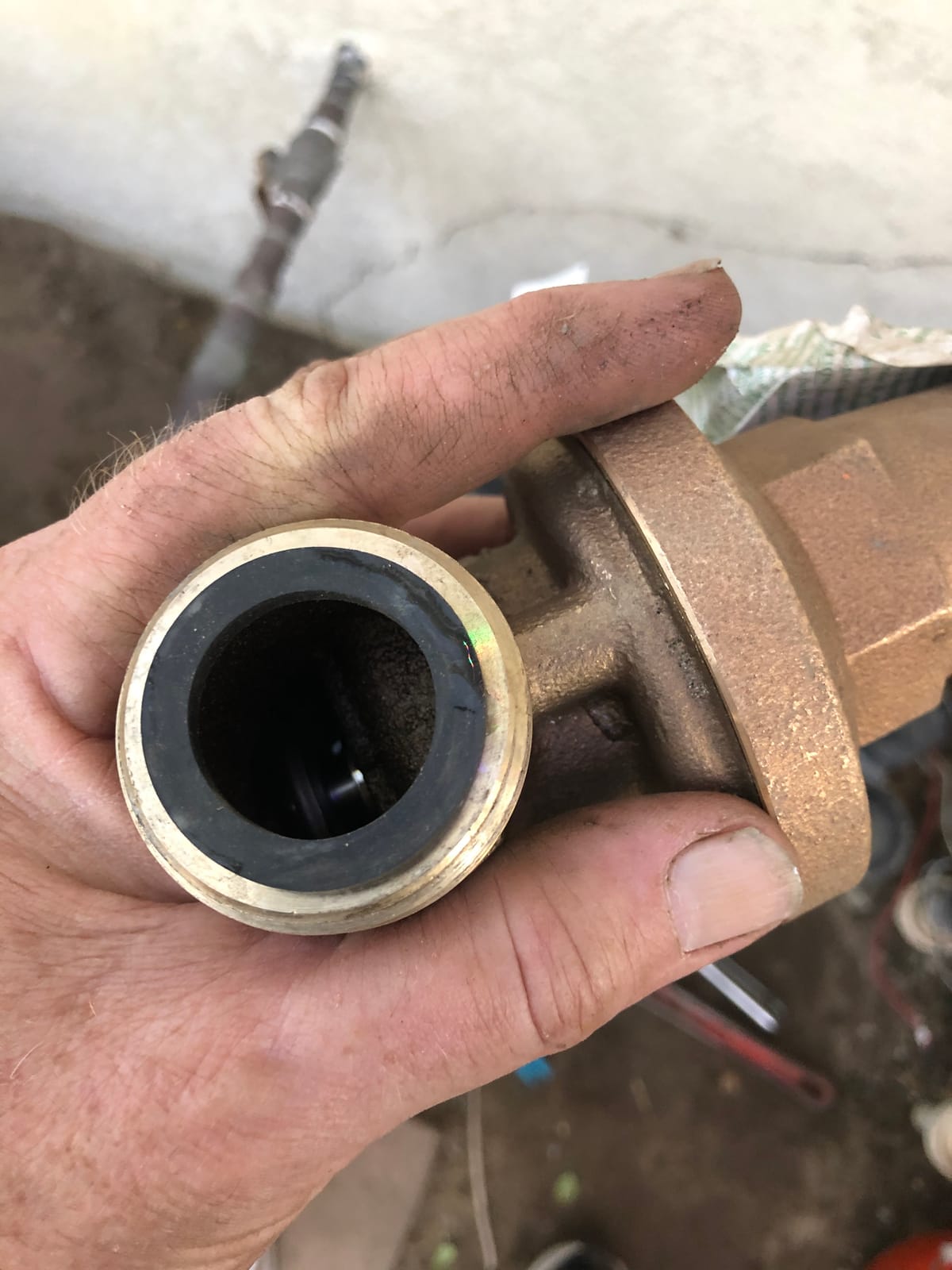
On a new install in a PEX or copper house, connection flexibility is a nice-to-have. On a repair, it is the difference between a valve swap and cutting into three different systems. Both ends are FNPT, and tailpiece options across the family cover threaded, PEX, copper sweat and CPVC, so the same valve body can land in a mixed-material line.
Buyers confirm reliable pressure holding in whole-house installs and like that the cartridge design shortens service time. For anyone doing their own work, the range also means a much lower chance of discovering mid-project that the connection you need does not exist for the valve you chose.
Composite Top: Where the Trade-Off Sits
The internal top on this model is composite rather than solid bronze, and that is the honest compromise in this valve. Reviews comparing it against the all-bronze 600XL describe the composite top as more fragile under repeated service, which is what you would expect: fewer service cycles, and you get to them faster when the cartridge does finally go.
Whether that matters depends on how much you plan to touch the valve. If it goes in and stays for a decade, the difference is academic. If you are the kind of homeowner who opens the house up every year to check things, the all-bronze model is worth the step up.
Clearance Planning for a Double Union
Double union ends need more room than a single union valve because you have to swing the pipe away to separate the halves. In a meter box or a tight wall cavity, measure first. A regulator that will not physically fit is the most common reason a good part gets returned, and the extra space is cheap to create in a basement but expensive to create inside a finished wall.
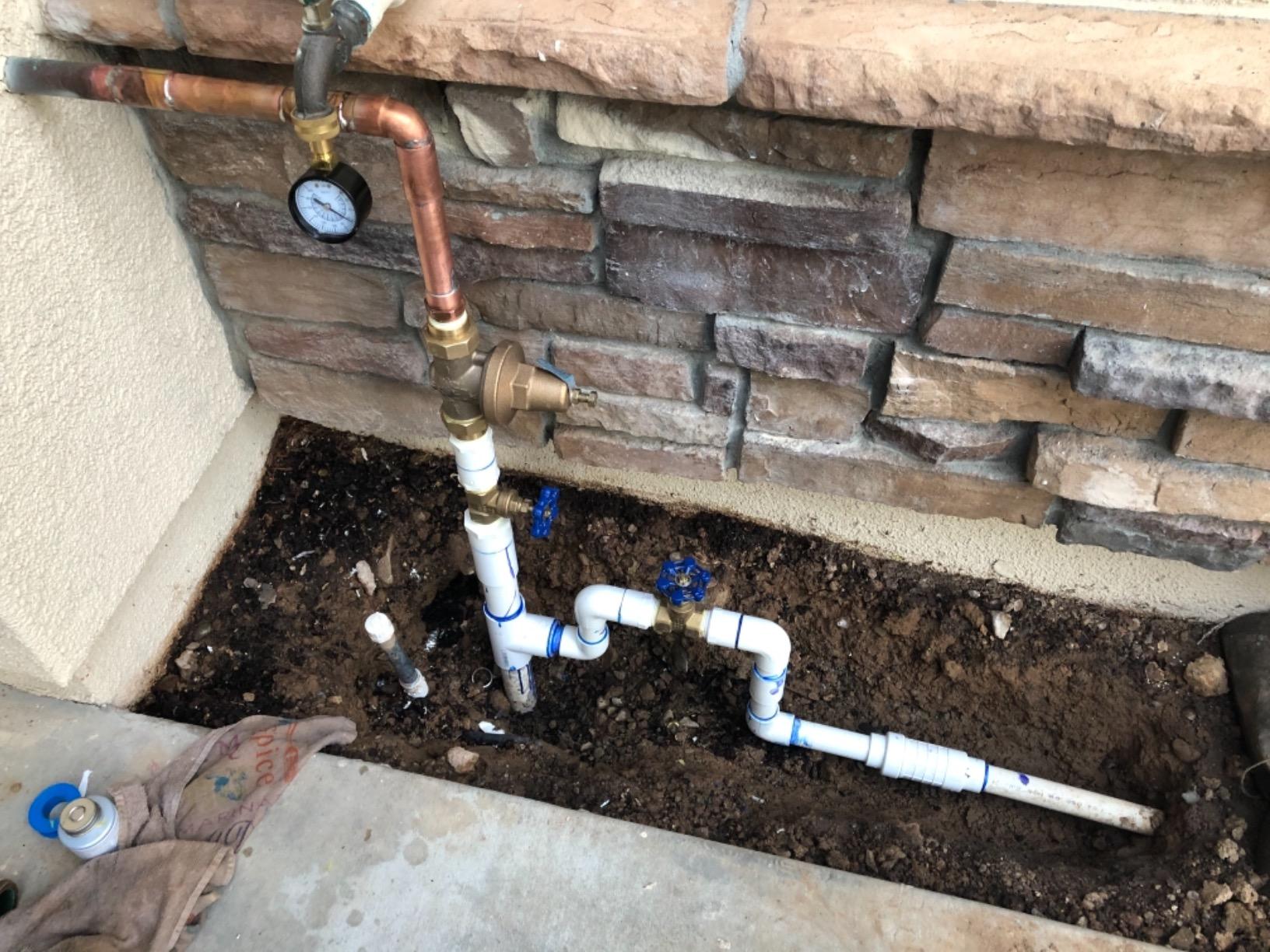
Both being 1 inch means you are also gaining flow capacity over the 3/4 inch units, which is useful if you have a long run, a large house, or irrigation teeing off the same line. Set it to your target and check it with a gauge on the downstream side before you close the wall.
5. Watts LFN45B – Best 1 Inch Drop-In for a Legacy Watts Install
Watts LFN45B Lead-Free Water Pressure Reducing Valve 1″ NPT Union Inlet
1 inch NPT union inlet
400 psi max working pressure
25-75 psi adjustable
50 psi set
+ Pros
- Rated to 400 psi maximum working pressure with a 25-75 psi adjustment range
- Direct replacement for legacy 30-year-old Watts N35B units at matching dimensions
- Removable integral stainless steel strainer and thermoplastic seat module
- In-line serviceability lets you replace internals without swapping the body
- Meets ASSE 1003
- ANSI A112.26.2
- CSA B356 and IAPMO
- Cons
- Some shipments arrive missing washers
- connectors or O-rings
- Union connection is hard to remove in a tight meter box without propping the pipe
- Composite top half is noisier than the all-metal LFN55B
- PTFE tape alone failed to seal on some installs
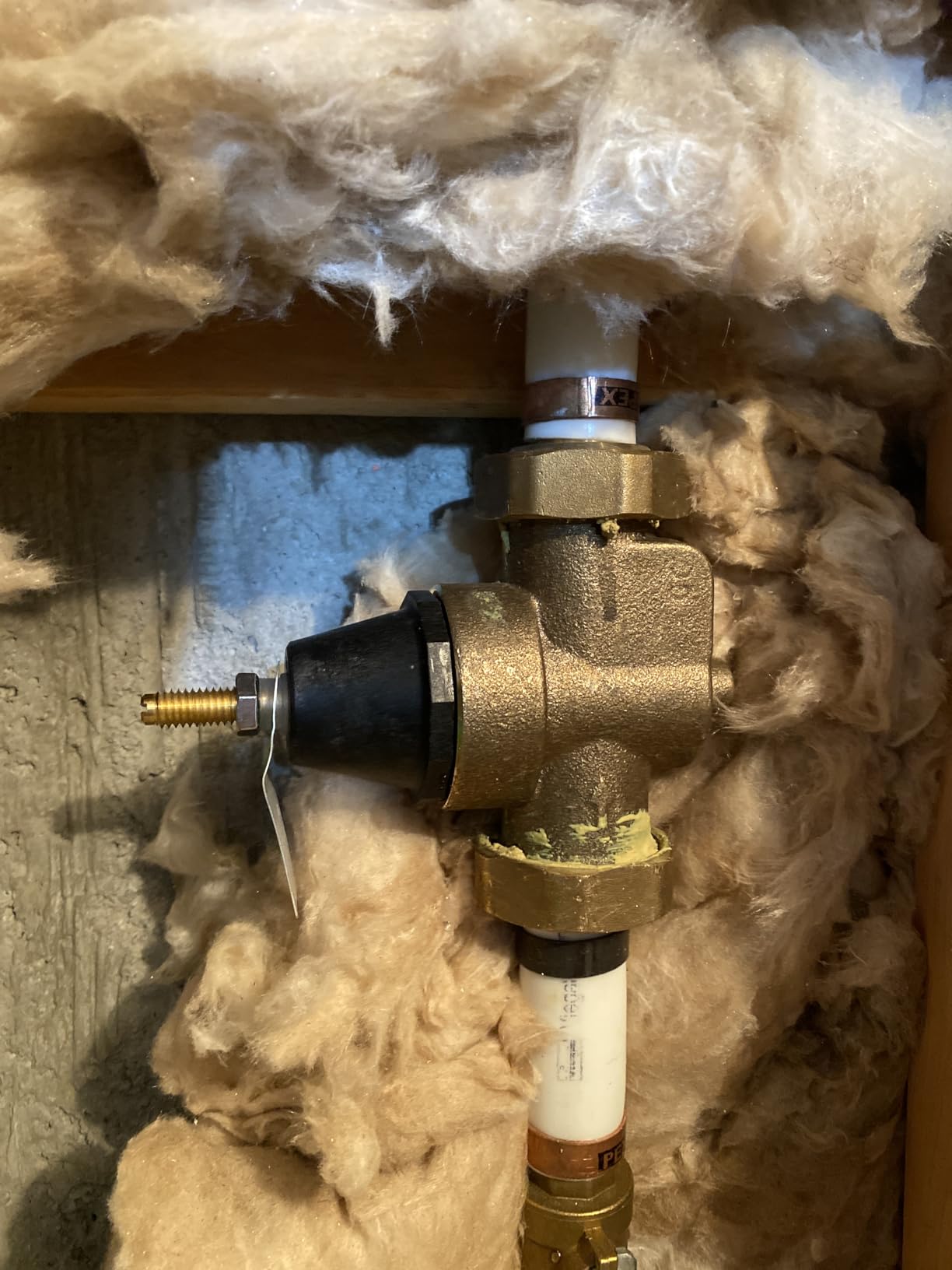
Here is the practical scenario for this valve: there is a thirty-year-old Watts regulator on the wall of your basement, it has stopped holding pressure, and you would rather not redo the pipework. The LFN45B is a direct replacement for the legacy N35B at matching dimensions, so the existing layout stays as it is. It is 1 inch, NPT union inlet by NPT female outlet, 2.2 pounds, and 7.38 by 5.62 by 2.44 inches.
On paper it is the most capable valve in this roundup. It is rated to 400 PSI maximum working pressure with an adjustable 25 to 75 PSI range and a 50 PSI factory set, and it meets ASSE 1003, ANSI A112.26.2, CSA Standard B356, the Southern Standard Plumbing Code and IAPMO. The removable integral stainless steel strainer and the thermoplastic seat module give you in-line serviceability, and the sealed spring cage with stainless steel cage screws suits pit or waterwork installations. The thermal expansion bypass handles the pressure spikes that come off a water heater.
Dimension Matching Is the Whole Point
On a replacement install, dimensions decide whether the job takes an afternoon or a weekend. The listing is explicitly a match for the legacy Watts N35B, and owners confirm it fits dimension for dimension. That means the existing union spacing and pipe run stay untouched, which is why this is a strong pick for older homes that already have a Watts valve in place.
Measure anyway. Print dimensions on retail listings are not always the installed footprint, and the 1 inch union is the kind of part that surprises you in a shallow meter box. If the box is tight, budget for the time it takes to prop the pipe so you can get a wrench on the nut.
Packing and Sealing Are the Real Complaints
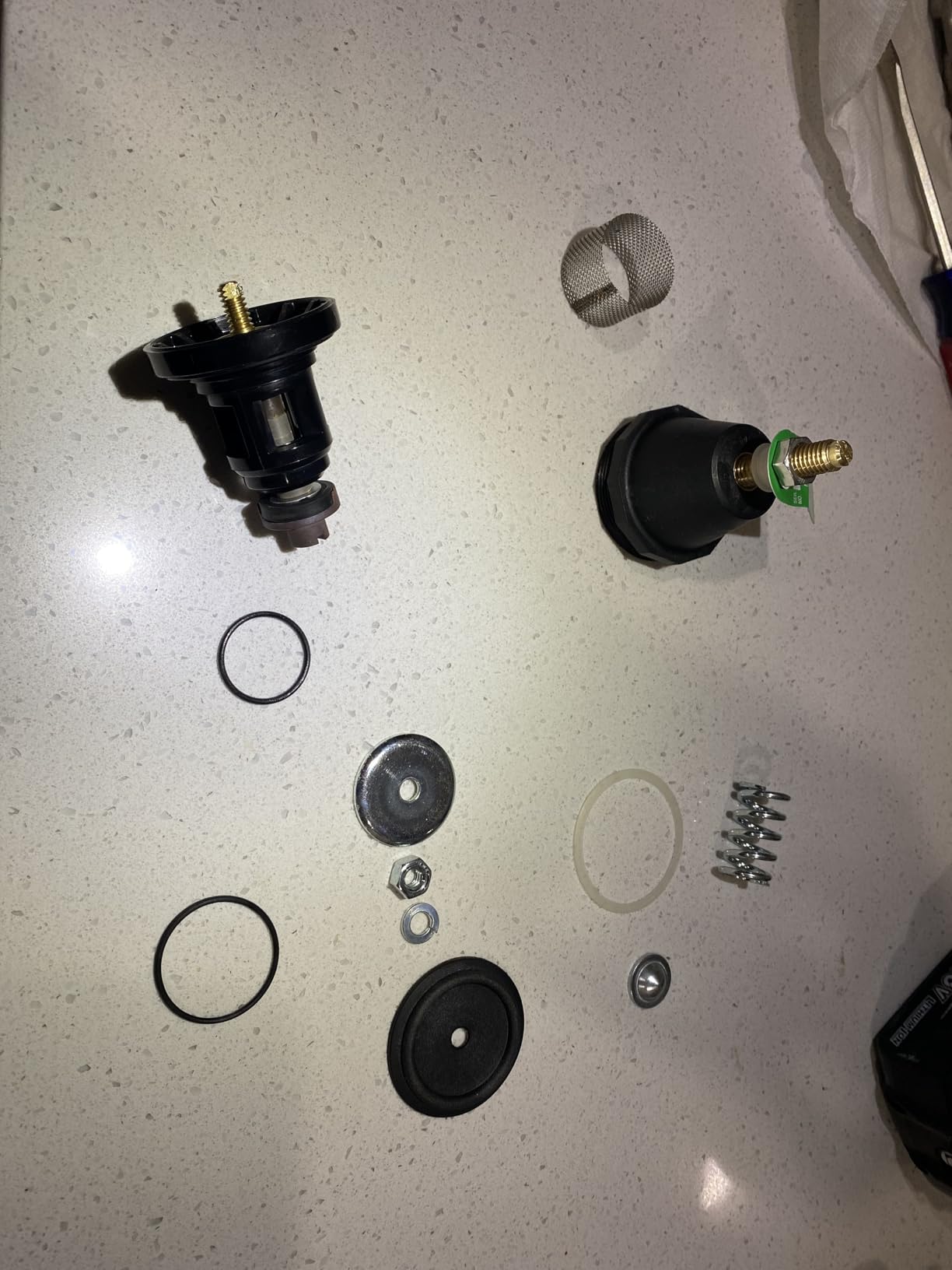
The 4.4 average is the second-lowest here, and the reviews are clear about why. A recurring report is shipments arriving without washers, connectors or O-rings, which leaves the valve unusable until you source the parts. That is a packaging problem rather than a design problem, but it is the one that costs people time, so check the box before you shut the water back on.
The second theme is sealing. PTFE tape alone failed to seal on some installs and pipe dope was needed instead, which is a thread preparation issue that is easy to solve once you know to expect it. Buyers also note the composite top half is noisier than the all-metal LFN55B in early morning use, which is a genuine difference if your bedroom wall shares a run with the main.
Where It Sits Against the LFN55B
The two Watts valves here are close relatives and the choice is straightforward. Take the LFN55B if noise is your complaint or you want an all-metal housing. Take the LFN45B if you need the 1 inch NPT union inlet specifically, or if you are matching a legacy N35B footprint. Both share the 400 PSI rating, the 25 to 75 PSI adjustment range and the 50 PSI factory set.
The 4.4 rating is not a reliability warning. It is a mix of shipping and sealing friction around an otherwise well-specified valve with a very high pressure ceiling and a decade of proven service in the field.
6. Watts LFN55B – Quietest All-Metal Housing in the 3/4 Inch Class
Watts Backflow Preventer 3/4 In Water Pressure Reducing Valve, Npt Thread Union X Npt Female, Max Work 400 psi, Adjust 25-75 psi
3/4 inch NPT union
400 psi max working pressure
25-75 psi adjustable
All-metal housing
+ Pros
- All-metal housing is noticeably quieter than composite-topped regulators in the same size class
- Direct drop-in replacement for the discontinued Watts N35B
- Factory 45 to 50 psi set measured accurate on installation with a gauge
- Removable integral stainless steel strainer and bronze-sealed spring cage
- Operating range from 33F to 180F suits most potable and hot service lines
- Cons
- O-ring sizes in the box may not match the existing installation
- Included brass extension and nut only suit certain connection configurations
- Listing dimensions are reported as inaccurate so measure ahead of ordering
- Match model numbers carefully rather than ordering by visual outline
If your complaint is noise, this is the one. Owners consistently report the all-metal housing of the LFN55B being noticeably quieter than composite-topped regulators in the same size class, and the bronze-sealed spring cage is a bigger contributor to that than the body material alone. It is 3/4 inch, NPT threaded union by NPT female outlet, 2 pounds, rated to 400 PSI maximum working pressure with a 25 to 75 PSI adjustment range and a 50 PSI standard setting.
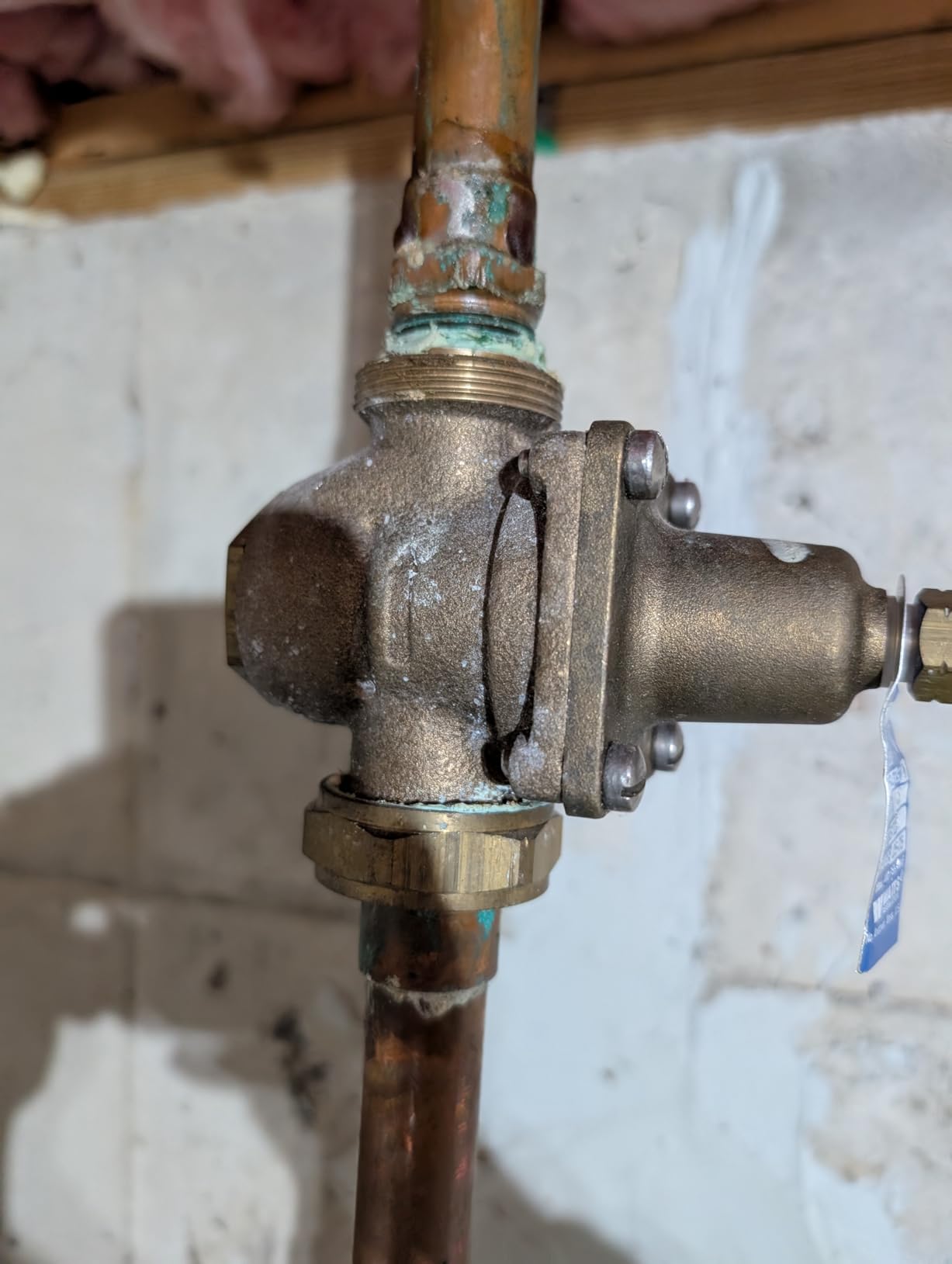
It is also a direct all-metal replacement for the discontinued Watts N35B, so like the LFN45B it is a like-for-like swap. The removable integral stainless steel strainer and thermoplastic seat are serviceable, the operating range runs from 33F to 180F, and it carries ASSE Standard 1003, ANSI A112.26.2, CSA Standard B356 and IAPMO. Buyers report the factory 45 to 50 PSI set measured accurate right after install with a gauge in place, and several describe the swap taking a couple of minutes on a straightforward setup.
All-Metal Versus Composite: The Longevity Question
This is the loudest argument in plumbing forums, and the short version is that all-metal internals tolerate time and heat better than composite. Composite tops are lighter and cheaper and they work well for many years, but under repeated service cycles and high-temperature conditions the metal components hold up better. If you plan to leave the valve in place for a decade or more, all-metal is the safer bet.
Noise is the other half of the story. Water hammer and pipe chatter come from pressure spikes and from resonance through the housing, and an all-metal body with a bronze-sealed cage transmits noticeably less of both. If your bedroom shares a wall with the main, that difference is not theoretical.
What Comes in the Box, and What Might Not Fit
The most useful thing buyers say about this valve is also the most common caution: match the model number, not the visual outline. The included O-ring sizes may not match the existing installation, and the included brass extension and nut only suit certain connection configurations and may need removing. Listing dimensions are also reported as inaccurate, so measure the space before you order.
None of this reflects on the valve. It reflects on a kit assembled for the most common configuration rather than every one. Take two minutes before the shutdown to confirm the model number on your existing valve matches, and the install becomes uneventful.
Best Fit: Small Homes, Quiet Bedrooms, Hot Basements
This is the pick for a one to two bathroom house where the main runs near living space, and for anyone replacing a discontinued N35B who would rather not accept a composite housing as a step up. The 3/4 inch size handles a normal household without choking, and the 25 to 75 PSI range covers a wide spread of municipal supplies.
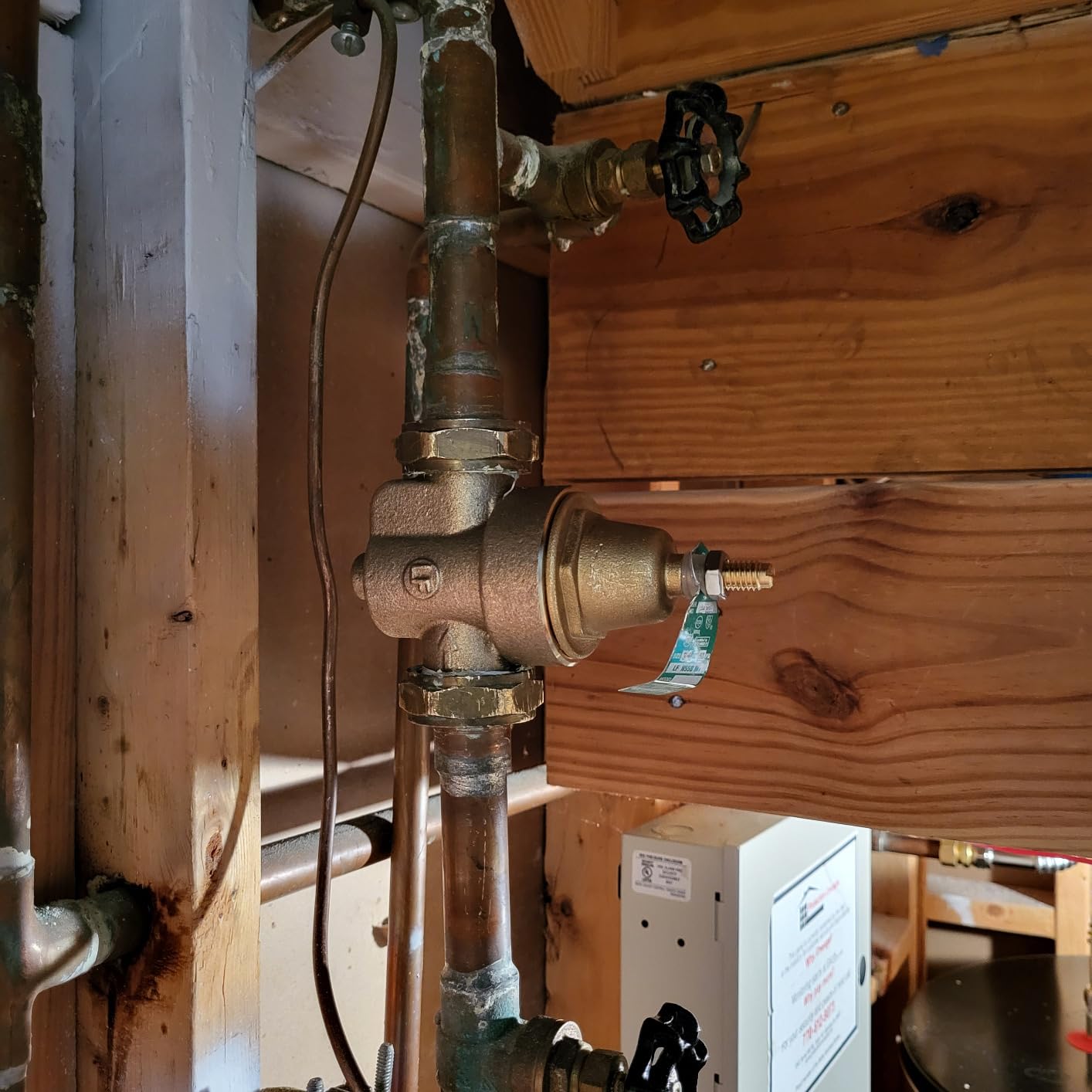
If you are starting from scratch and want the quietest possible plumbing, pair it with a gauge on the outlet side and confirm the set point. That is the whole install: valve, gauge, two unions, and a set point you have actually measured.
7. Apollo ApolloPEX APXPRV34WG – Best for New PEX-B Builds With a Built-In Gauge
Apollo Valves ApolloPEX 3/4″ Bronze Double Union PEX Water Pressure Regulator w/Gauge (APXPRV34WG)
3/4 inch PEX-B double union
15-75 psi adjustable
50 psi factory set
Gauge included
+ Pros
- Integrated color-coded gauge makes pressure readable and adjustable without tools
- Adjusts from 15 to 75 psi which covers drip and boiler feed applications
- Double union PEX-B design installs fast with no threading of hard-to-reach pipes
- Internal 3/4 inch NPT threads let you change pipe size on either end
- Multiple owners report more than five years of leak-free service
- Cons
- A review reports the housing failed violently after about six months
- PEX end fittings are threaded with a gasket seal which some see as a leak point
- Only fits PEX-B systems so it cannot be used on copper or CPVC runs
- Lowest rating here at 4.2 with 11 percent one-star reviews
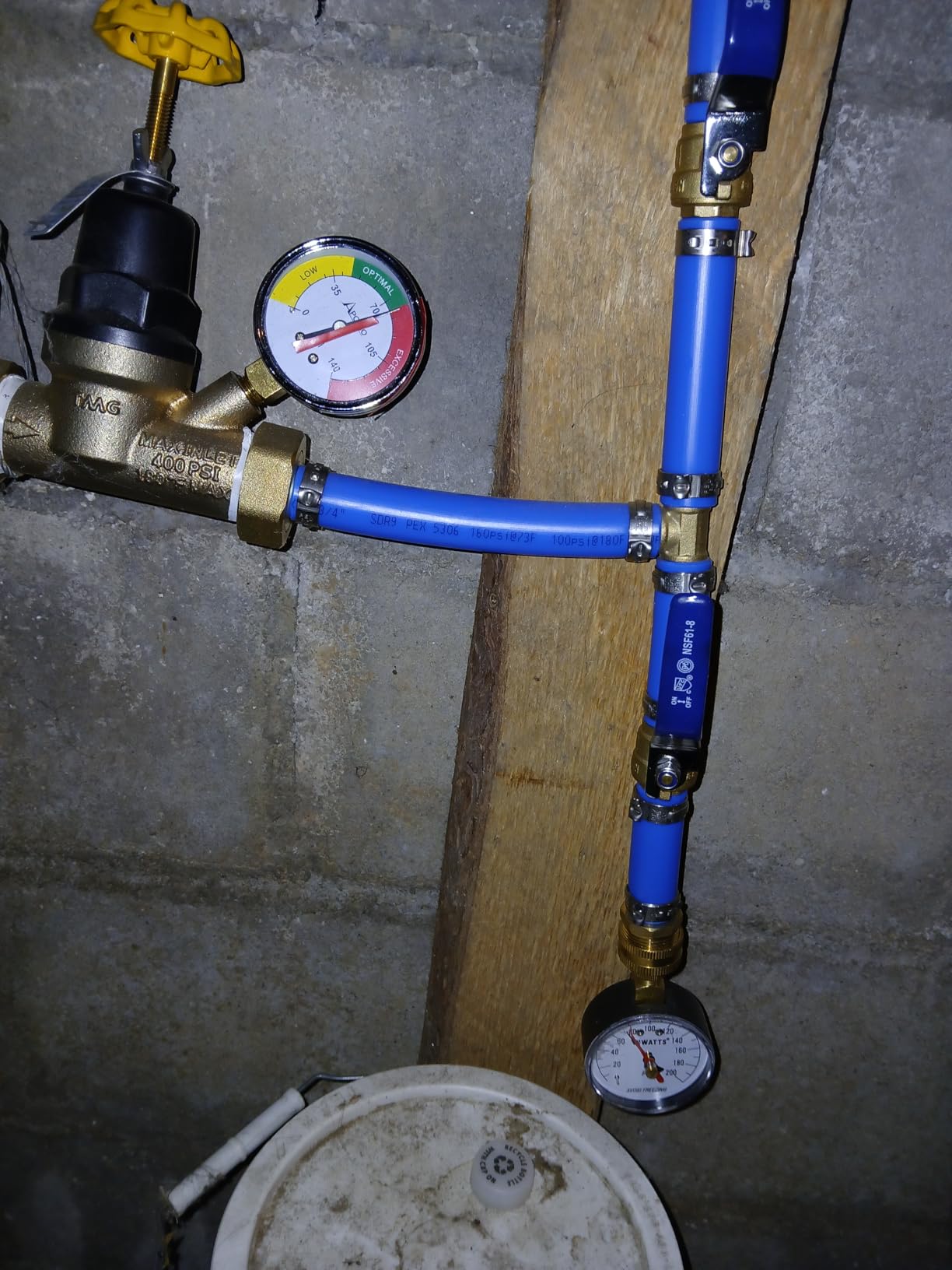
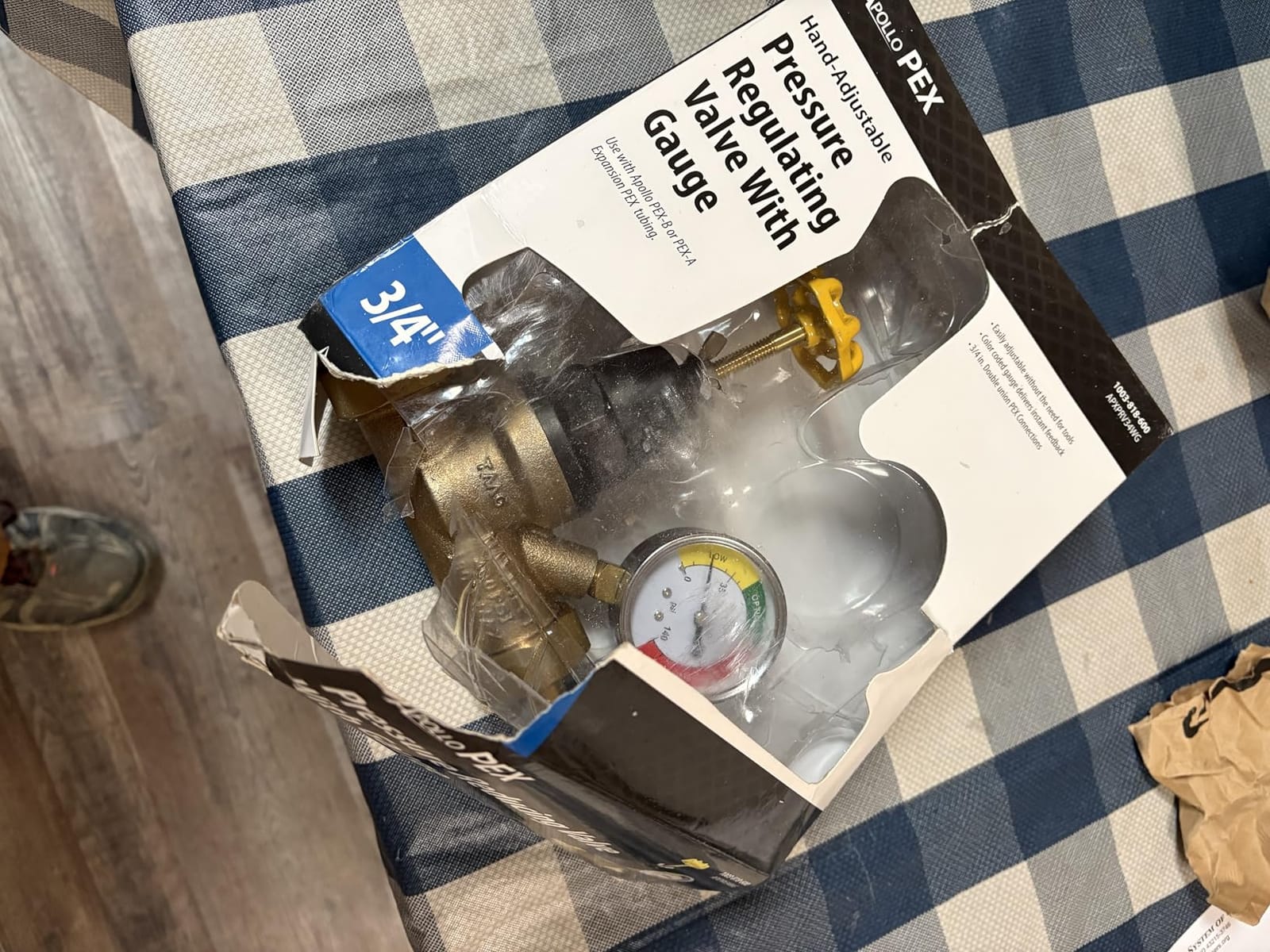
This is the odd one out in a good way. It is the only push-to-connect regulator in the roundup, and the only one that ships with a pressure gauge already attached. The gauge is colour-coded and lets you adjust the set point without tools, which removes the single most common install error of guessing at a pressure. It is a 3/4 inch double union PEX-B design rated to 400 PSI, with a factory set at 50 PSI and an adjustment range of 15 to 75 PSI.
That lower floor matters more than it looks. Most residential regulators start at 25 PSI, which is fine for a house and useless for a drip irrigation zone or a boiler feed that needs a stable 20 PSI. This one goes down to 15, so it can serve a secondary low-pressure function as well as the main line. The internal 3/4 inch NPT threads let you change pipe size on the inlet or the outlet, and the lead-free bronze body with an internal bypass is certified to ASSE 1003 and CSA B356 and listed by ASSE and IAPMO.
Why the Gauge Changes the Install
Almost every low-pressure complaint we see traces back to a set point nobody verified. A regulator with a colour-coded dial mounted on the outlet lets the installer read the number in real time and turn the set point to match, without a separate gauge, without a second trip to the hardware store, and without guessing.
Tool-free adjustment is the other half. On a threaded valve you need a wrench on the bonnet for every change, which means the adjustment is something you do once and forget. Here it is something you check. For a house on a municipal supply that varies seasonally, that is a real advantage.
PEX-B Only: Plan the Layout Before You Order
The double union PEX-B barb design installs fast in any PEX-B system, which is why it is the natural pick for a new build or a repipe in PEX. The limitation is equally clear: it cannot be used on copper or CPVC runs. If your existing main is copper, this is not a retrofit option, and there are no 1/2 inch or 1 inch PEX adapter sizes, so a mismatch can mean cutting PEX you do not need to cut.
Buyers also raise a legitimate concern about the connection style. The PEX end fittings are threaded with a gasket seal rather than crimped, and some owners see that as a potential leak point over a long service life. The double union design does at least mean you can separate the halves and reseal without cutting pipe.
The Honest Weak Spot
This valve carries the lowest rating in the roundup at 4.2 across 263 reviews, with 11 percent one-star reviews. A large share of that is compatibility and parts friction, but one review describes a violent housing failure after about six months that launched a steel handle and cracked the body. A single account is not a pattern, and multiple owners report more than five years of leak-free service, but a main-line valve is exactly the place where you do not want an outlier failure mode.
If you are building new PEX, this is a genuinely convenient part and the gauge alone justifies it for some installs. If you are replacing a valve on an existing copper or galvanised line, choose one of the threaded brass models in this roundup instead.
8. Cash Acme EB45 – Budget Pick for a Fixed 45 PSI Reduction
Cash Acme 3/4 Inch EB45 Single Union Pressure Regulating Valve (PRV), 45 PSI, 23883-0045
3/4 inch single union FNPT
Factory set 45 PSI
10-70 psi adjustment
Lead-free bronze
+ Pros
- Bronze half-cartridge design performs like a cartridge valve with fewer parts
- Factory 45 PSI set brings a 100 to 130 psi supply down to a safe 50 to 60 psi
- Compact single union body works in tight spaces
- Handles hot water service up to 180F
- Highest average rating here at 4.7 across 82 reviews
- Cons
- Single union means one side is fixed NPT so it is not a true union-to-union replacement
- Adjustment tops out at 70 psi so it suits moderate supply pressures
- No debris screen in this configuration
- Some buyers wish it included a union on both ends
The Cash Acme EB45 is the answer for a specific situation: a house on a moderately high municipal supply that needs a fixed, simple reduction and nothing more. It ships set to 45 PSI with an adjustment range of 10 to 70 PSI, and it is bronze, compact at 1.3 pounds and 2.25 by 5 by 5.5 inches, and single union FNPT on both ends. It is CSA listed and rated for cold or hot water service up to 180F.
Owners and trade reviewers report it doing the basic job well, bringing a 100 to 120 PSI supply down to a safe 50 to 60 PSI and stopping pipe banging while protecting a water heater. Several also use it as a micro-drip or boiler feed regulator, which is what the 10 PSI floor of the adjustment range is good for. The 4.7 average is the highest here, though it comes from 82 reviews, which is a much thinner base than the Watts and Wilkins valves.
What a Half-Cartridge Design Buys You
The EB45 keeps the separate spring chamber and adjusting screw of a traditional regulator, so it adjusts like one, but the moving parts are consolidated into a patented half-cartridge. That gives you cartridge-style performance and maintenance with a smaller parts count. For a DIY installer, fewer parts means fewer things to lose in a drain and fewer leak paths to chase.
Lead-free bronze construction is the body, and there is no plastic in the wetted path to worry about. That matters for service life in a part that is permanently plumbed in and rarely touched after installation.
Where the Single Union Costs You
A single union means one side is a fixed NPT connection and the other is the union. It is not a true union-to-union valve, so future service requires breaking into the pipe on one side rather than simply unhooking two nuts. A few buyers wish it came with unions on both ends, and that is the single most common request about this model.
The 70 PSI adjustment ceiling is the second limitation. It suits a supply in the 80 to 130 PSI band comfortably, but a house fed by a 150 to 170 PSI main or by a booster pump is pushing this valve to work outside its range. Check your actual inlet pressure with a gauge before choosing it.
Best Fit: One Job Done Well
Choose the EB45 when you want a bronze valve, a fixed known set point, a compact body for a tight space, and you do not plan to service it again. It handles hot and cold water, which is more than some budget valves can say, and its rating is the highest in the roundup even if its review base is the thinnest.
Do not choose it for a house with unusually high supply, for a pump system, or for anyone who wants to swap it out in five years without cutting pipe. In those cases, one of the double union brass or bronze models costs more once and stops being a question.
How to Choose the Right Size, Set Point and Body Material
Pick the body material and the adjustability first, then the size. Almost every expensive mistake in this category comes from buying a fixed-pressure or undersized valve, and almost every cheap mistake comes from buying a plastic-bodied unit that will be replaced within a few years. A pressure reducing valve is a lifetime component in a house that is maintained properly, so the right valve is cheap relative to the plumbing it protects.
Size by Flow, Not by Pipe Diameter Alone
A regulator is sized by flow capacity, and an undersized valve chokes under simultaneous fixture use. As a practical guide, a 3/4 inch valve covers a house with one or two bathrooms and a typical family load. A 1 inch valve covers three or more bathrooms, a long run from the meter, or a house with a large irrigated yard. If you add a booster pump later, plan on 1 inch now, because swapping a size later means moving pipe.
Two things make this easier. First, buy a valve you can adjust, so a set point that is slightly wrong on day one is a thirty-second fix rather than a replacement. Second, install a gauge on the downstream side. An unverified set point is the leading cause of both “my pressure died” and “this valve did nothing” complaints.
Set the House Between 40 and 60 PSI
Most faucets, shower valves and water heaters are rated for 40 to 60 PSI and are damaged above 80. Fifty-five PSI is the number I set most often: high enough that a shower feels like a shower, low enough that nothing downstream is working hard. If your supply is already in that band, regulate to the lower half of it rather than doing nothing.
Watch the cold and hot relationship. Pressure-balancing shower valves need both sides within a reasonable spread, so if you have a separate hot-side regulator, set it close to the cold side rather than lower. And if you run drip irrigation, a single set point will not serve both a shower and a delicate drip zone, which is where a second low-pressure regulator earns its place.
All-Metal or Composite: Know What You Are Buying
All-metal bodies and internals, in brass, bronze or stainless, are the strongest trust signal in this category and the one forum buyers check first. Composite or thermoplastic internals are lighter and cheaper and work fine in many installs, and two of the valves in this roundup use them. The honest framing is that composite is a reasonable cost saving on a valve that will sit undisturbed, and a poor saving on a valve you will service repeatedly or run hot.
Also consider the neighbours. If the main is galvanised or copper and you are considering a stainless body, talk to your plumber about a dielectric union to isolate dissimilar metals. It is a small part that prevents a slow corrosion problem nobody will diagnose from the symptom.
Connections, Unions and Where It Goes
Threaded NPT female on both ends is the most flexible choice for an existing house. Push-to-connect PEX installs fastest in a new PEX build but will not tie into copper or CPVC. Sweat connections exist but are uncommon in residential pressure regulating valves. Double union ends let you remove the valve without cutting pipe, at the cost of a little more clearance; single union saves space and makes future service harder.
On location, install the regulator immediately after the meter or main shutoff and before the softener, the whole-house filter and the water heater. Anything upstream sees full street pressure, anything downstream sees your set point. If you have an irrigation zone that needs much lower pressure, branch a second small regulator off the downstream side rather than trying to serve the whole house at drip pressure.
Adjust Before You Replace
Before you buy anything, read the pressure on the outlets of the valve you already have. Then turn the bonnet adjustment nut, with the house pressurized, a quarter turn at a time, and recheck with a gauge. Clockwise raises the set point, counterclockwise lowers it, and on most valves you do not need to remove the bonnet to make the adjustment. A surprising share of the “low pressure” complaints we see are resolved in five minutes this way.
If adjustment changes nothing, the diaphragm or the seat is done. That is the point at which a replaceable seat module or cartridge pays for itself, which is another reason body construction matters more than the sticker.
What a Plumber Needs to Know
Give your plumber three things: the measured static pressure at the meter with all fixtures closed, the pipe material and size on both sides of the install location, and the target set point you want. Ask them to leave a downstream gauge in place and to show you the reading before they close the wall. Ask whether a dielectric union is needed for your pipe pairing, and whether the install point has wrench clearance for the union ends.
On lifespan, expect something in the range of seven to fifteen years for a quality brass or bronze valve in ordinary service, shorter in very hard water or with repeated service cycles. Signs of the end are usually clear: pressure that slowly climbs back toward street level means the valve is no longer capping the outlet, and pressure that drops into a trickle means it is stuck closed. Both are replacement signals, and neither is fixed by adjustment.
Frequently Asked Questions
What is the best residential water pressure regulator?
The best residential water pressure regulator for most houses is a lead-free, all-metal-bodied main-line pressure reducing valve with an adjustable 25 to 75 PSI range, a 50 PSI factory set, and a replaceable seat or cartridge. The Watts LF25AUB-Z3 in this roundup fits that description and is our top pick. Avoid inline RV and pump regulators, which are a different product, and avoid fixed-pressure valves with no adjustment.
What is the best water pressure for a residential home?
Between 40 and 60 PSI, with about 55 PSI the most common target. Most faucets, shower valves, water heaters and supply lines from major brands are rated for a 40 to 60 PSI working range, and damage begins above 80 PSI. Setting the house to 55 PSI quiets water hammer, reduces dripping fixtures and extends the life of washers, cartridges and appliance hoses.
Will a whole house water filter reduce water pressure?
Yes, sometimes noticeably. Most whole-house filters are rated for a flow rate at a given pressure drop, and undersized filters act like a restriction across the whole line. If pressure dropped after a filter install, check the filter housing for a partly collapsed cartridge or sediment first, and size the filter for your household flow. A filter does not cap pressure, so it is not a substitute for a pressure reducing valve on a high supply.
How much does it cost for a plumber to install a water pressure regulator?
Most plumbers quote this as a small fixed-price job on an existing main line, typically a short appointment plus a few fittings, and the cost varies widely by region and by how tight the install point is. What changes the quote is not the valve but the access: a cramped meter box, a corroded union, or a house with no usable shutoff adds labour. Ask for the valve and fittings quoted separately so you can supply the valve yourself if you prefer.
What is the average lifespan of a water pressure regulator?
Roughly seven to fifteen years for a quality brass or bronze valve in ordinary service, with the shorter end typical of hard water, repeated service cycles or a composite-bodied unit. Signs it is time include pressure that slowly climbs back toward street pressure, which means the valve has failed open, or pressure that drops to a trickle, which means it has failed closed. Both are replacement signals rather than adjustment problems.
Why is my water pressure low after installing a new regulator?
Three causes account for most cases. The set point is simply too low, often still sitting at the factory 45 to 50 PSI when the house needs more. The valve is undersized for your household flow and chokes when several fixtures run. Or the strainer screen is catching debris, which is a serviceable part on most valves in this roundup. Start by reading the outlet pressure with a gauge, then adjust the bonnet in quarter turns before assuming the valve has failed.
Is a plastic-bodied water pressure regulator bad?
Not automatically, but all-metal construction is the strongest trust signal in this category. Plastic and thermoplastic internals are lighter and cheaper and can serve many years in an undisturbed install, while brass, bronze and stainless bodies tolerate heat and repeated service cycles better. The rule we use: all-metal if the valve will be serviced more than once or runs hot, composite if it is a fixed install in mild water and you are optimising cost.
Which Water Pressure Regulator to Buy in 2026
If you want one answer, take the Watts LF25AUB-Z3. It has the highest average rating in this roundup at 4.7 across 960 reviews, a 25 to 75 PSI adjustment range that covers essentially any residential supply, lead-free copper silicon construction with a replaceable seat module, and a thermal expansion bypass that protects what is downstream of it. It is the pick for a standard two or three bathroom house on a high municipal supply.
For a tight meter box or a crawlspace, take the Zurn Wilkins 34-NR3XLDU. Its short lay length and cartridge-loaded design make it the easiest of these to service, and its 1715 reviews give it the deepest documented history in the roundup. If you want the all-bronze professional reference valve and can plan for fittings separately, the Zurn Wilkins 1-600XL holds output steady through inlet swings and stays quiet.
Choose the Watts LFN55B if noise is your complaint and you want an all-metal housing, or the Watts LFN45B if you are replacing a legacy Watts N35B at matching dimensions and want the 400 PSI ceiling. For a new PEX-B build, the Apollo ApolloPEX is the only push-to-connect option here and the only one with a gauge on the outlet, so you can set and read the pressure without a second trip to the store. For a simple fixed 45 PSI reduction on a moderate supply, the Cash Acme EB45 is a bronze valve with nothing plastic in the wetted path.
Whichever you choose, measure your static pressure with all fixtures closed first, size the valve to your household flow rather than to the pipe you happen to have, and leave a gauge on the downstream side so the set point is a number you read instead of a setting you assume. That last habit solves more pressure complaints than any valve on this list.