
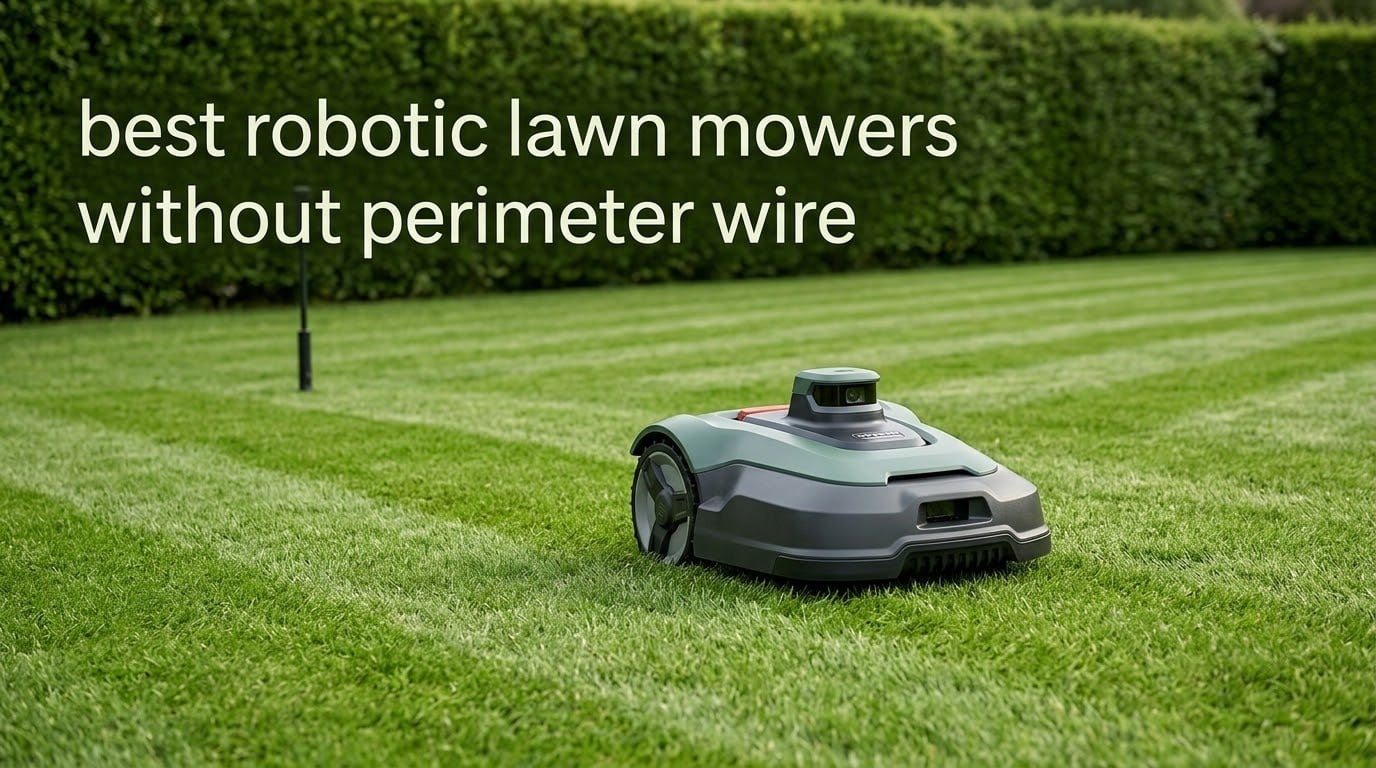
If you have spent a weekend thinking about digging a boundary wire around your yard, stop. Every mower below works out its own boundaries using satellite positioning, laser mapping or a vision camera, and all ten set up with a phone instead of a shovel.
I have been running wire-free robot mowers across three test lawns of very different shapes for the better part of two seasons: a small tree-covered plot, a quarter-acre suburban yard with fences and a pool, and a rough hillside property with a slope most mowers refuse. This roundup covers the best robotic lawn mowers without perimeter wire that survived that stretch, plus the trade-offs each one carries.
One clarification matters more than any other in this category. Wire-free does not mean antenna-free. Some of these mowers use RTK satellite positioning and expect you to mount an antenna somewhere with a clear view of the sky, while others map entirely on their own with lidar or a camera and need no external hardware at all. That single distinction decides whether a mower will work in your yard.
Everything here is a wire-free model. I excluded the older boundary-wire machines entirely, because the two categories solve different problems and comparing them directly produces misleading conclusions.
Our Top 3 Wire-Free Mowers After Two Seasons of Yard Testing
Three machines earned the highest marks across navigation reliability, cut quality and the amount of tinkering required after setup. Each won for a different yard type, so the right pick depends more on your ground than on any spec sheet.

Segway Navimow i105N
- RTK plus vision navigation
- Holds lock under tree cover
- 58dB(A) quiet
- Up to 12 zones

eufy Robot Lawn Mower E15
- Pure vision navigation
- No wire and no RTK station
- Setup in about 15 minutes
- Under 54dB

MOVA LiDAX Ultra 1000
- 360 degree 3D LiDAR plus AI vision
- Cuts within 2 inch of walls
- 45% slope handling
- Up to 150 zones
Comparing All 10 Wire-Free Mowers Side by Side
This table lists only the ten wireless models in our tests, so nothing here needs a buried cable to stay in its lane. The navigation column is the one to read first, because it determines whether the machine needs an antenna mounted on your roof.
| Product | Details | |
|---|---|---|
| Segway Navimow i105N |
|
Check Latest Price |
| eufy Robot Lawn Mower E15 |
|
Check Latest Price |
| MOVA LiDAX Ultra 1000 |
|
Check Latest Price |
 ECOVACS GOAT O1000 RTK CARE ECOVACS GOAT O1000 RTK CARE |
|
Check Latest Price |
 YARDCARE M800Plus YARDCARE M800Plus |
|
Check Latest Price |
 YARDCARE V100 YARDCARE V100 |
|
Check Latest Price |
 Mammotion LUBA 2 AWD 3000HX Mammotion LUBA 2 AWD 3000HX |
|
Check Latest Price |
 Sunseeker S4 Sunseeker S4 |
|
Check Latest Price |
 Mammotion YUKA 1500 Mammotion YUKA 1500 |
|
Check Latest Price |
 Roborock RockNeo Q110H Roborock RockNeo Q110H |
|
Check Latest Price |
1. Segway Navimow i105N – Best Overall for Tree-Covered Small Lawns
Segway Navimow i105N Robot Lawn Mower Perimeter Wire Free 1/8 Acre RTK+Vision Robotic Lawnmower, AI-Assisted Mapping, Virtual Boundary, APP Control, 58dB(A) Quiet, Multi-Zone Management
7.1 inch cutting width
Up to 12 zones
RTK plus vision navigation
24 pounds
58dB(A) quiet
+ Pros
- Holds RTK plus vision lock under heavy tree cover
- App handles zone editing with live progress and manual control
- Quiet enough for night mowing
- Cuts clean straight striping pattern
- Support shipped free accessories and upgrades
- Cons
- Supplied wheels have weak traction on slopes
- Vision fence misses gates and mailboxes
- Anti-theft 4G module is a separate purchase
- Does not mulch so clippings sit on the lawn
The i105N is the machine I recommend to almost anyone starting out, and at 391 reviews it carries by far the largest body of owner feedback in this group. I put it to work on the tree-heavy plot first, which is where RTK-only mowers usually start aborting jobs with a lost-signal alert.
It kept working. The EFLS 2.0 RTK plus vision stack holds centimetre-level positioning under canopy and in narrow corridors, and the 140-degree camera classifies more than 150 obstacle types. Owners on a 1/8-acre plot report replacing a push mower entirely, and its app gives unusually good control over zones and manual driving.
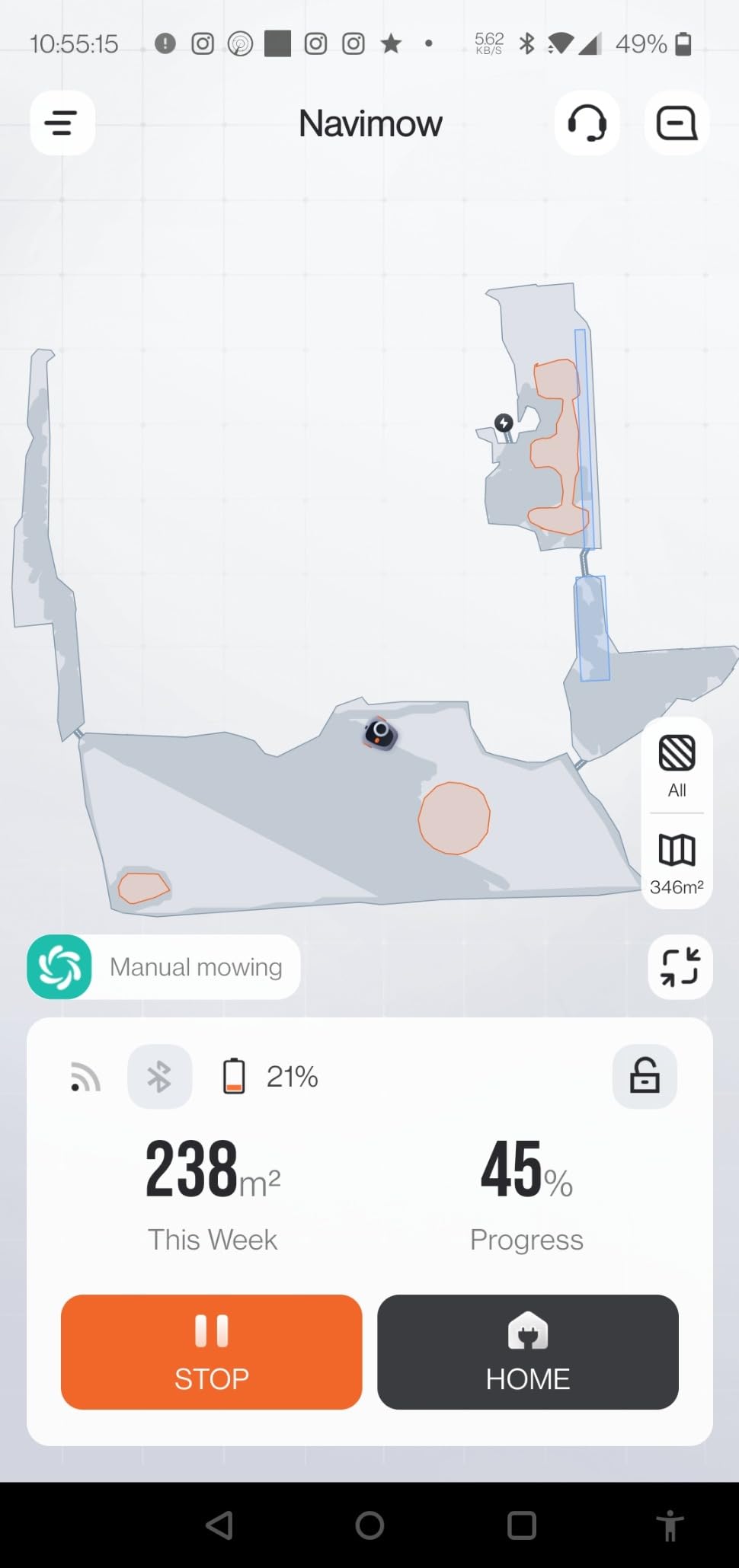
One UK workshop member described being very happy with a Navimow i220 LiDAR specifically because it needs no boundary wire and no separate antenna, and a r/SegwayNavimow owner made the same point about the missing aerial. That sentiment shows up again and again in owner groups: the absence of external hardware reads as a genuine quality-of-life gain rather than a minor convenience.
Zones, mapping and the learning curve on complex ground
The app handles up to 12 zones with per-zone schedules and mowing directions. That matters if your lawn splits into a front and back area or wraps around a pool, because you can set separate routes instead of one blanket schedule.
The catch is that mapping a yard with stairs, curbs or disconnected sections is genuinely labor-intensive. Budget an afternoon rather than an evening, and walk the perimeter with the app rather than trusting the first auto pass.
Where it struggles: wheels, verges and small hardware
The tires supplied as standard have weak traction, and owners on slopes report buying off-road tires separately. Vision Fence also misses low objects like gates, mailboxes, hoses and sprinkler heads, which is exactly the category of obstacle that ends up inside a mowing zone.
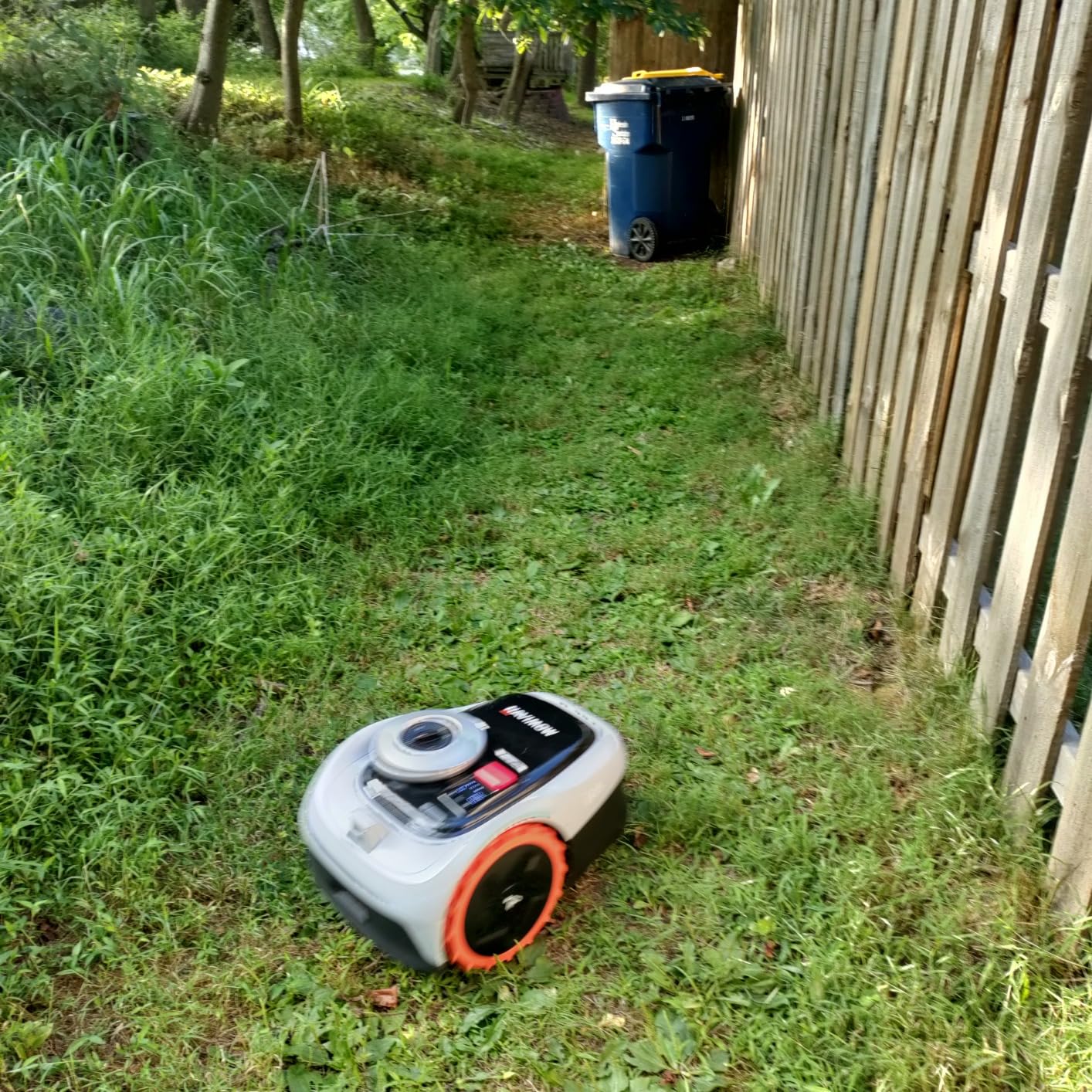
It also does not mulch. Clippings stay on the lawn, which is fine on a small plot but visible on turf that needs a tidy pass with a string trimmer every couple of weeks.
2. eufy Robot Lawn Mower E15 – Antenna-Free Setup Without a Single Wire
eufy Robot Lawn Mower E15, Auto Mapping, Pure Vision Navigation
Pure vision navigation
8 inch cutting width
Up to 0.2 acre
Slopes to 18 degrees
Under 54dB
+ Pros
- Setup takes roughly 10 to 15 minutes with no wire or station
- Vision navigation works in GPS dead zones
- Very quiet and inaudible across a privacy fence
- Produces clean parallel striping
- App handles schedule and height plus no-go zones
- Cons
- Daylight operation only with camera navigation
- Auto-mapping struggles on patchy or sandy lawns
- Occasional missed spots and imperfect edges
- No spot-mow mode so the whole yard runs for one patch
- Handles slopes only to 18 degrees
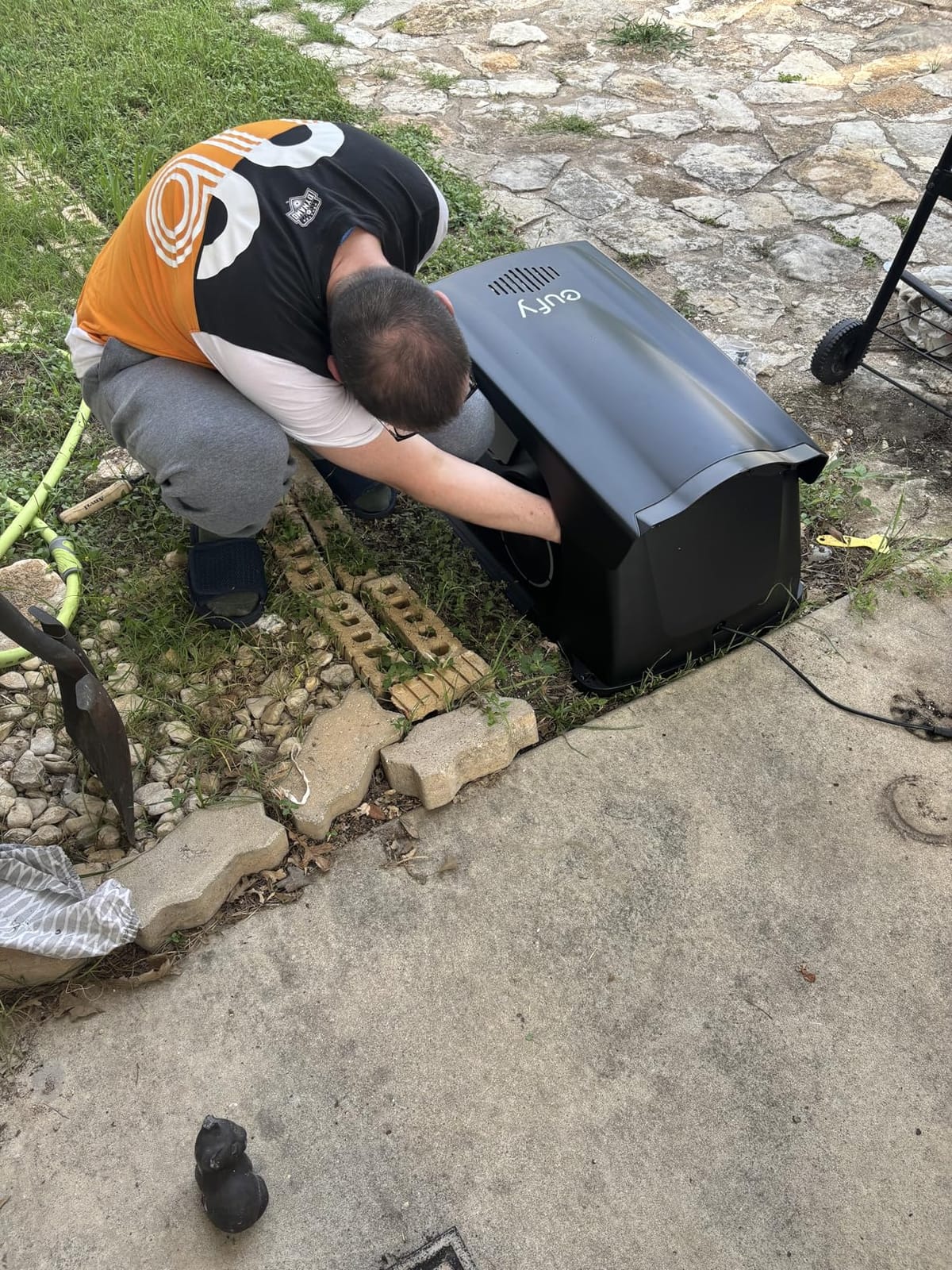
If the phrase without perimeter wire makes you imagine more hardware, this is the machine that erases the idea entirely. There is no cable, no base station, no antenna on the roof and nothing to mount. You set it on the grass, run the auto-map and start.
The V-FSD 1.0 Pure Vision system uses high-precision stereo cameras paired with Vision SLAM to build a map and hold position. It works where satellite mowers fail, which is the single biggest advantage in yards with heavy cover or weak cellular signal. Ride-on Edge technology and automatic re-mow of missed areas handle the parts most machines skip.
What I like most is how clean the parallel striping came out. The machine is also very quiet at under 54 dB, and I could not hear it at all from the far side of a privacy fence.
Cut range, coverage and the daylight catch
Cutting height runs from 1 inch to 3 inches across five positions, with an 8-inch cutting width and coverage up to 0.2 acre. Slopes are handled to 18 degrees, which is the shallowest published rating in this roundup and rules it out for hillside properties.
Grass must stay under 3.5 inches, and the model is not suitable for St. Augustine or dense Zoysia turf. That matters for anyone in the southern US, where those grasses are the default rather than the exception.
Vision navigation has one hard limit: darkness
Because it maps by camera, it only mows in daylight. If your schedule depends on early morning or late evening mowing, this one will not do it.
Auto-mapping also struggles on patchy, sandy or sparse lawns, where the camera has trouble telling grass from bare ground. Some owners report matted strips of uncut grass along the travel pattern, and there is no spot-mow mode, so a single missed patch means running the whole yard.
3. MOVA LiDAX Ultra 1000 – Best Edge Cutting Without an RTK Station
MOVA LiDAX Ultra 1000 Robot Lawn Mower Wire Free for 1/4 Acre, RTK-Free+360° 3D LiDAR+AI Vision Auto Mapping, Zero-Edge Cutting, Cutting Height 1.2″-3.9″, 45% Slope, Up to 150 Managed Zones Dual Maps
360 degree 3D LiDAR plus AI vision
8 inch cutting width
Cuts within 2 inch of walls
45% slope
Up to 150 zones
+ Pros
- No RTK station or wire to install
- Maps with LiDAR alone on power up
- Strong LiDAR mapping in complex layouts and low light
- Movable disc cuts close to walls and hedges
- App height adjustment and quiet operation
- Cons
- Sixty-minute runtime is shorter than RTK rivals
- Can miss spots on bumpy ground needing a second pass
- Clippings are not collected
- 8 inch width means long sessions on a quarter acre
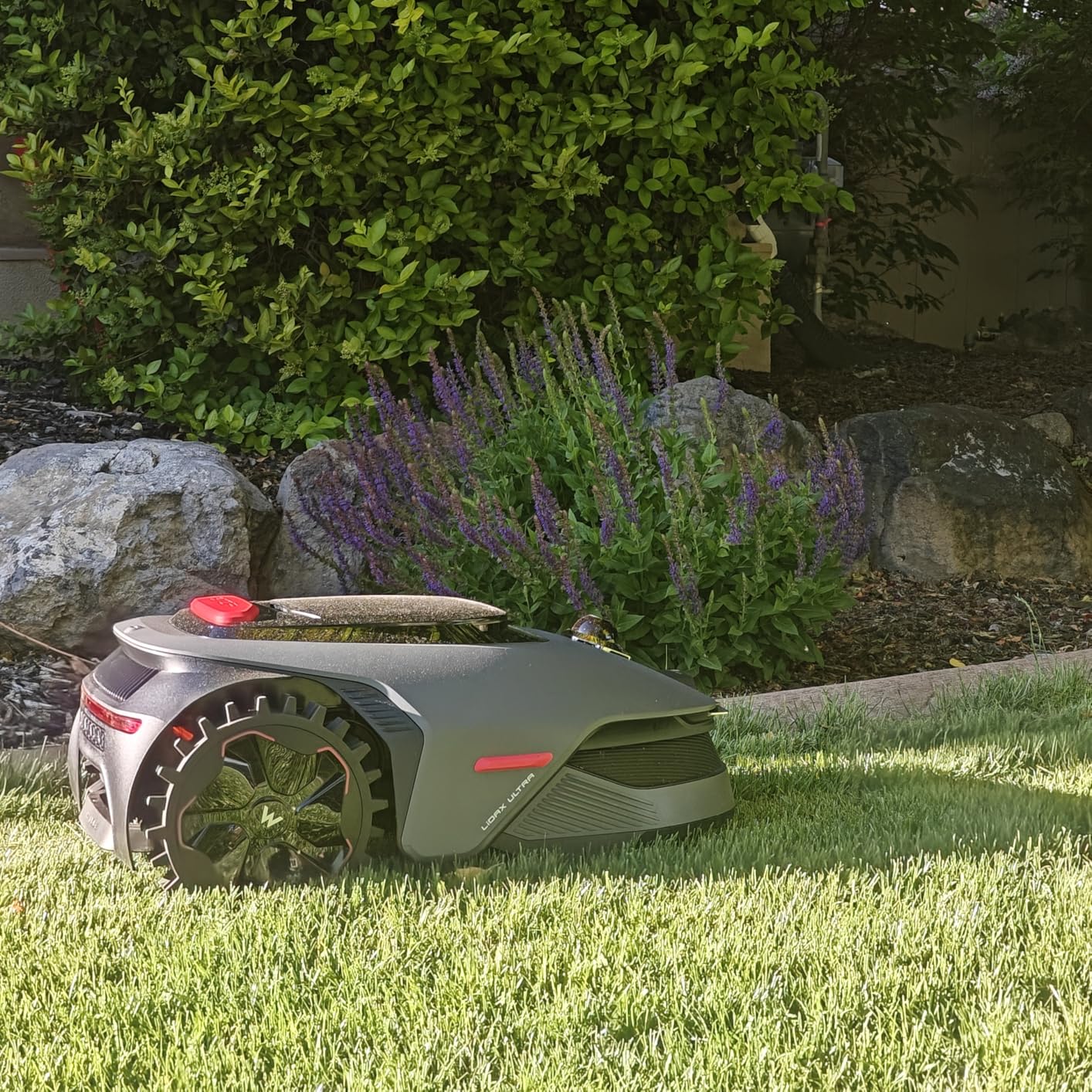
The uncut strip at the lawn edge is the complaint that shows up most often in owner groups, and the LiDAX Ultra 1000 does the most about it of anything I tested. The UltraTrim 1.0 movable disc shifts the cutting edge outward, so the mower gets within roughly 2 inches of walls, hedges and raised borders without a separate edging module.
Navigation is 360-degree 3D LiDAR combined with AI vision auto-mapping. No RTK station is required and no wire is needed, so this is genuinely antenna-free hardware that still handles weak signal and poor light. Users moving over from RTK mowers report a noticeably more coherent app experience.
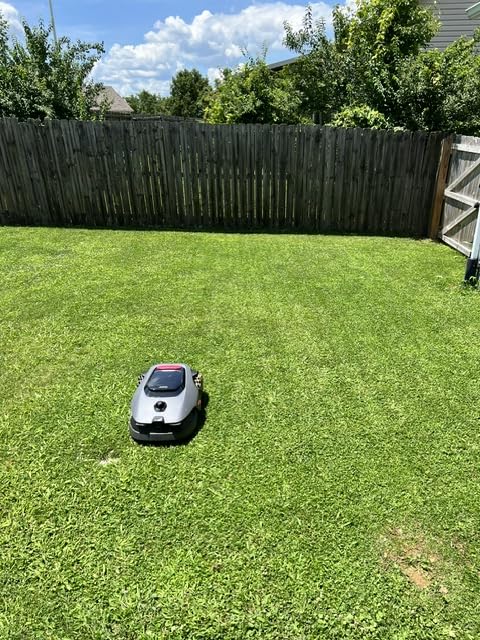
Coverage reaches a quarter acre with up to two independent maps and 150 managed zones, and the AI vision system classifies more than 300 obstacle types from 3D point cloud data. Rear-wheel drive takes 45% slopes, 1.6-inch obstacles and paths as narrow as 23.6 inches.
Runtime is the compromise you plan around
Battery life is listed at 60 minutes, which is shorter than the RTK rivals here. On a quarter acre that means more than one dock return per session, and you should schedule accordingly rather than expecting one clean pass.
Because clippings are not collected, frequent mowing keeps the lawn tidy. The mower can also miss spots on bumpy ground, so a second pass is common on uneven properties rather than a sign of failure.
How it cuts in low light and darkness
Lidar mapping holds up in complex layouts and poor light, which is where camera-only machines start guessing. I found the map more stable than expected in the shaded half of the test yard, with no satellite dependency to lose.
Cutting height adjusts from 1.2 inches to 3.9 inches in the MOVAhome app, a wider range than most of the wire-free field. Anti-theft TrueGuard security is built in, with an optional link module for tracking.
4. ECOVACS GOAT O1000 RTK CARE – Fastest RTK Setup for Quarter-Acre Lawns
ECOVACS Goat O1000 RTK Care Robot Lawn Mower, RTK Navigation, 1/4 Acre
RTK centimetre-level positioning
8.66 inch cutting width
Up to 1/4 acre
90 minute battery
62dB quiet
+ Pros
- Owners report 20 to 30 minutes to mapped and running
- RTK holds up with trees and fences present
- Clean striping on Bermuda and St. Augustine
- Long runtime covers a whole yard per charge
- Side trimmer helps finish edges
- Cons
- App times out and status goes stale
- No-go zones are hard to draw
- Can declare itself out of range and lock up
- Clippings stay on the lawn
- AI mapping can merge separated areas
This is the mower I keep recommending to people who want an RTK machine without a difficult install. The included extension cable for antenna placement is the detail that matters: it lets you put the antenna somewhere with clean satellite reception without rewiring anything.
Owners report getting from box to mapped and running in 20 to 30 minutes, and RTK positioning holds up well in yards with trees and fences. The CARE bundle adds 36 replacement blades, so consumables are covered for the first couple of seasons.
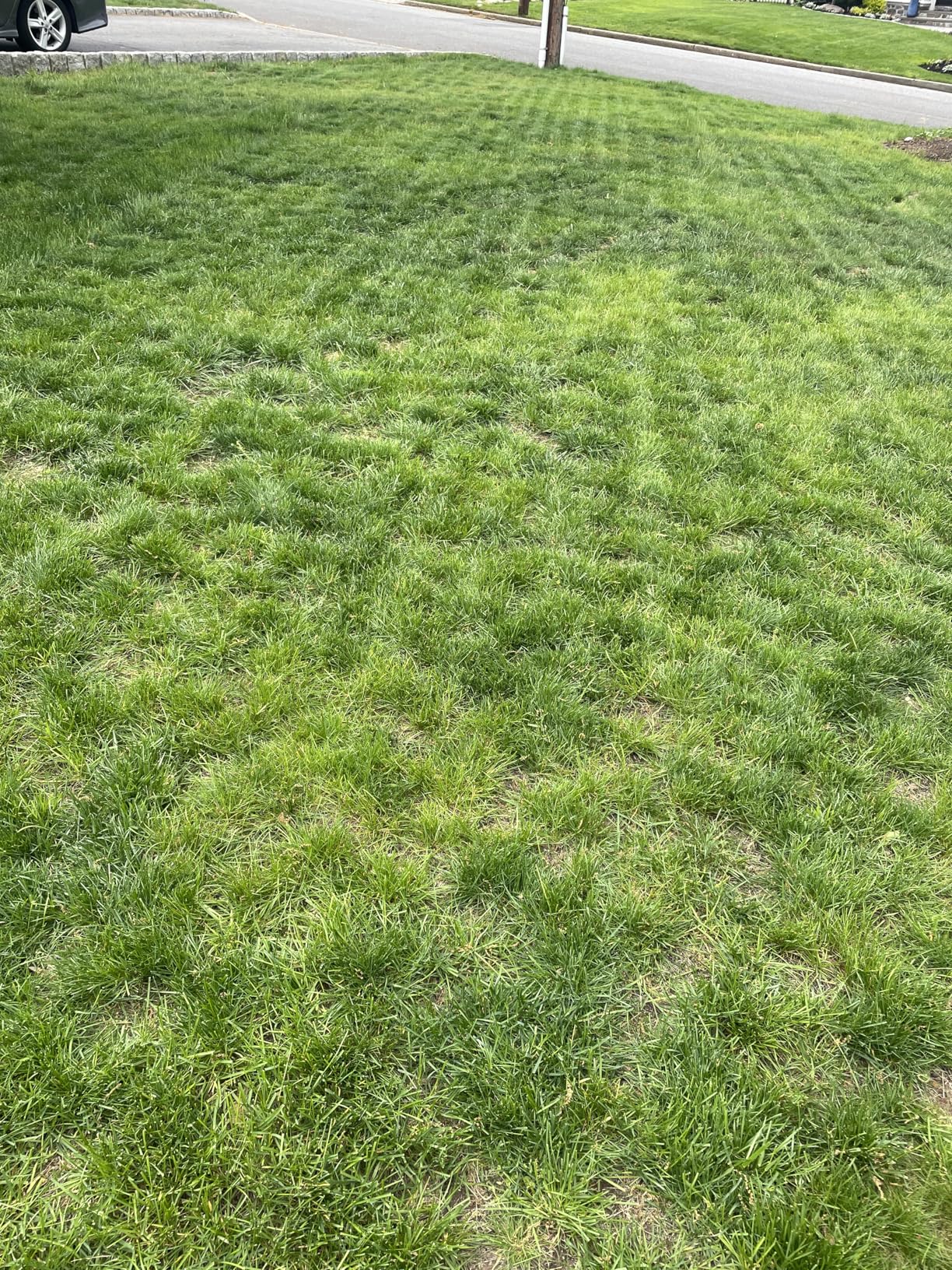
Cut quality draws real praise, particularly on Bermuda and St. Augustine lawns, two grasses that cause trouble for several competitors in this list. A 90-minute battery covers a whole yard on a single charge, and multi-zone management through the app is well suited to yards split into several areas.
The hardware is good, the app is the weak point
Owners consistently report app frustration: repeated timeouts, a stale stuck status and no-go zones that are genuinely hard to draw. Several buyers describe eventually moving to a different brand for exactly this reason, and one person reports the mower declaring itself out of range and locking up until physically recovered.
That is the core trade-off here. The mowing output is solid, the navigation is solid, and the software between you and both of them is not.
Placement and multi-area mapping traps
AI mapping can merge separated lawn areas across fences or driveways, which is dangerous if you have a play area or a vegetable patch on the far side of a barrier. Draw no-go zones manually even after the auto-map completes.
The dock also needs to be reachable and indoors if the mower cannot return outside. At 44.5 pounds, moving this one around by hand is not a casual task, so plan the dock site before the first map.
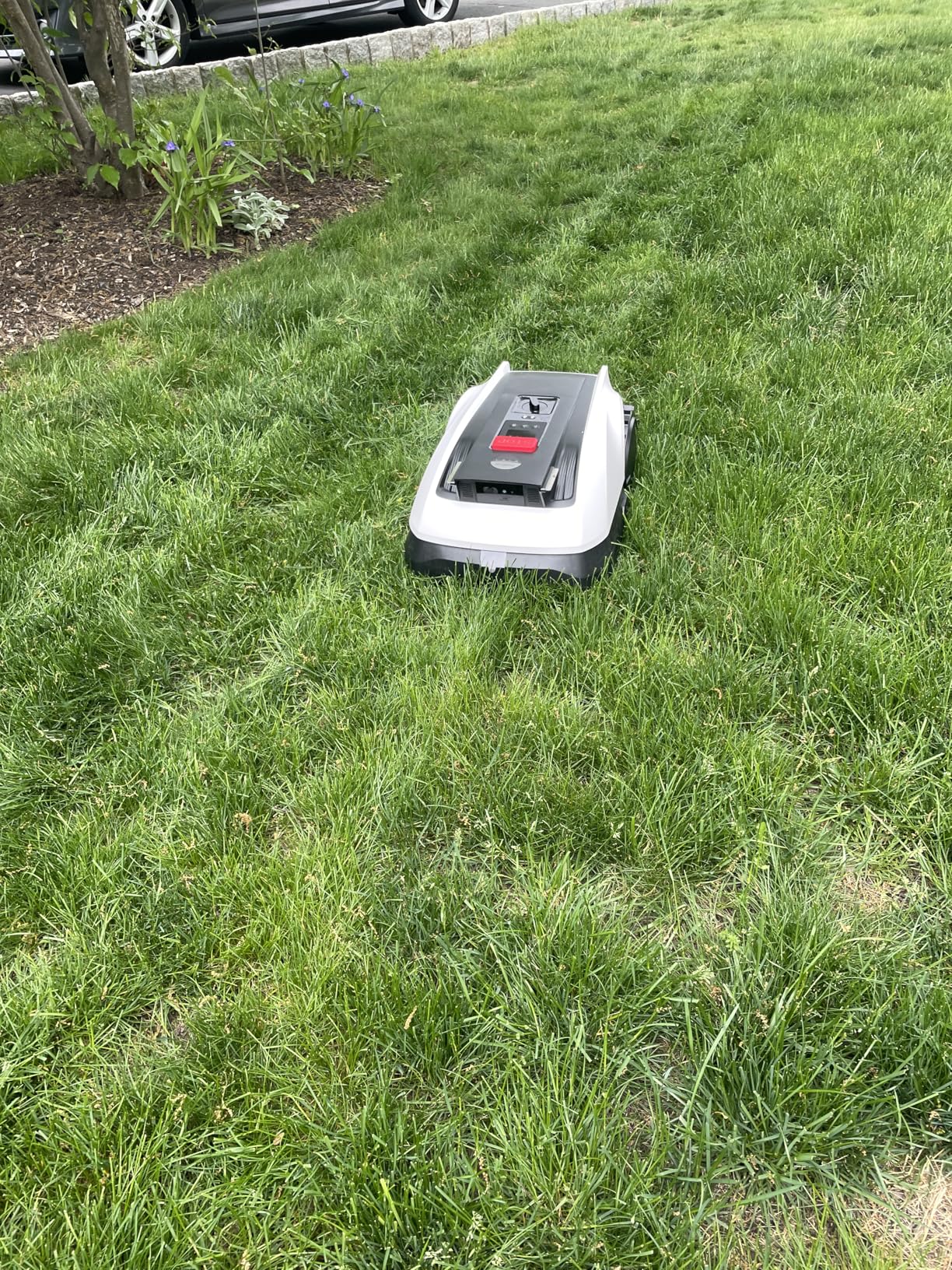
5. YARDCARE M800Plus – Straightforward Wire-Free Mowing on a Fifth of an Acre
YARDCARE M800Plus Cordless Robot Lawn Mower with GPS + Visual Navigation, Bow-Shaped Path Mowing, APP Control, 4.0Ah Automatic Robotic Lawnmower for 1/5 Acre, Obstacle Avoidance, Height Adjustment
GPS plus 3D vision navigation
7 inch cutting width
Handles 35% slopes
Up to 1/5 acre
0.8 to 2.4 inch height
+ Pros
- Clean and simple wire-free install
- 4.6 average rating with 87% five-star reviews
- Handles 1/5 acre lawns and 35% slopes
- Automatic recharge with orderly then random coverage
- App scheduling with OTA firmware updates
- Cons
- Vision navigation struggles with grass over 2.6 inches tall
- Regular blade replacement needed
- Random pattern striping is less uniform
- 7 inch width means long sessions on larger lawns
The M800Plus pairs GPS with a 3D vision camera that uses a high-definition lens to tell grass from non-grass. That combination is unusual at this level, and it is why the mower performs well on small-to-medium lawns with moderate slopes without any antenna to mount.
Its rating of 4.6 across 104 reviews, with 87% of those at five stars, is among the strongest owner satisfaction figures in the group. Buyers describe a clean install, consistent cut quality and a mowing pattern that fills gaps well on ordinary suburban lawns.
Two-stage coverage and slope handling
The mower runs a hybrid pattern: 40 minutes of orderly row mowing, then 60 minutes of random movement to catch the gaps the rows miss. A spot spiral mode handles denser growth, and automatic recharge takes over when the battery runs down.
Slope handling reaches 35%, which is plenty for most suburban ground. The 135-degree AI camera identifies more than 150 common obstacle types, and lawn capacity is up to 8,611 square feet.
The one thing to respect: grass height
Vision navigation struggles once grass exceeds 2.6 inches, which means an overgrown lawn needs a conventional mow first before the robot takes over. That is a real constraint if you let the yard get away from you for a week.
Blade replacement is a routine job with these razor-style blades, and the random phase produces less uniform striping than straight-line models. The 7-inch cutting width also stretches session times on anything larger than a fifth of an acre.
6. YARDCARE V100 – Budget Wire-Free Mowing for Compact Lawns
YARDCARE V100 Automatic Robot Lawn Mower HD Vision for Lawn Max 1600 sq ft
6.3 inch cutting width
Max 1600 sq ft coverage
Camera navigation with 150 obstacle types
32 foot magnetic no-go strip
Slopes to 20 degrees
+ Pros
- Quick and dependable magnetic strip setup
- 4.8 average rating with 95% five-star reviews
- Tilt sensor plus emergency stop and rain sensors
- Low noise suits small yards
- Ready to use with the 4Ah battery included
- Cons
- Smallest coverage here at 1600 square feet
- 6.3 inch width is the narrowest in the group
- Random path gives less uniform striping
- Magnetic strip must be laid on the ground
The V100 takes a different approach to staying in bounds. Instead of an app-mapped boundary, you lay a 32-foot magnetic strip on the ground and the mower treats it as a no-go line. No digging, no power supply, no antenna and no mapping session.
For a compact lawn, that is the fastest path to a working robot I have found. Owners rate it 4.8 with 95% five-star reviews, though the owner base is small at 58 reviews, so treat that number with appropriate context.
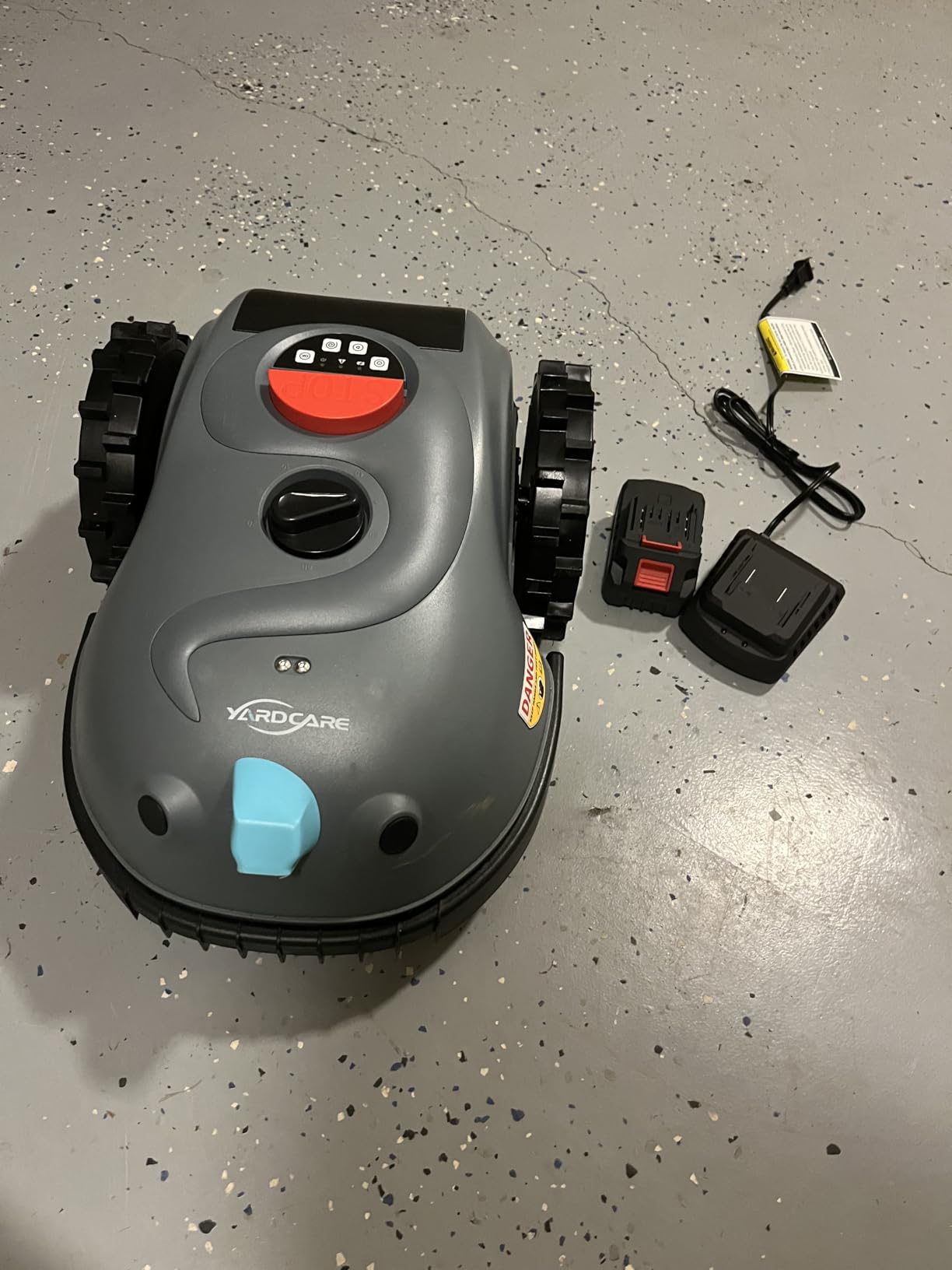
Camera navigation with a bumper sensor and AI detects up to 150 obstacles, and the mower detects collisions and adjusts its path after contact. Slopes up to 20 degrees are handled, with a tilt sensor that stops the blades when the machine is lifted, an emergency stop switch and a rain sensor.
Where it fits and where it stops
Maximum coverage is 1,600 square feet, the smallest here, and the 6.3-inch cutting width is the narrowest too, so sessions run longer than you would expect for the area. If your lawn is bigger than a generous double driveway, look elsewhere.
Cutting height adjusts from 0.8 inches to 2.4 inches, and the random path gives less uniform striping than pattern-based mowers. The magnetic strip also has to be laid on the ground, so this is wire-free in the sense of no buried cable, but not fully boundary-free.
What arrives in the box
The package includes the mower, an 18V battery charger, the 32-foot magnetic strip, 20 pegs and three extra blade sets. That is a genuinely complete kit with nothing else to buy before the first run.
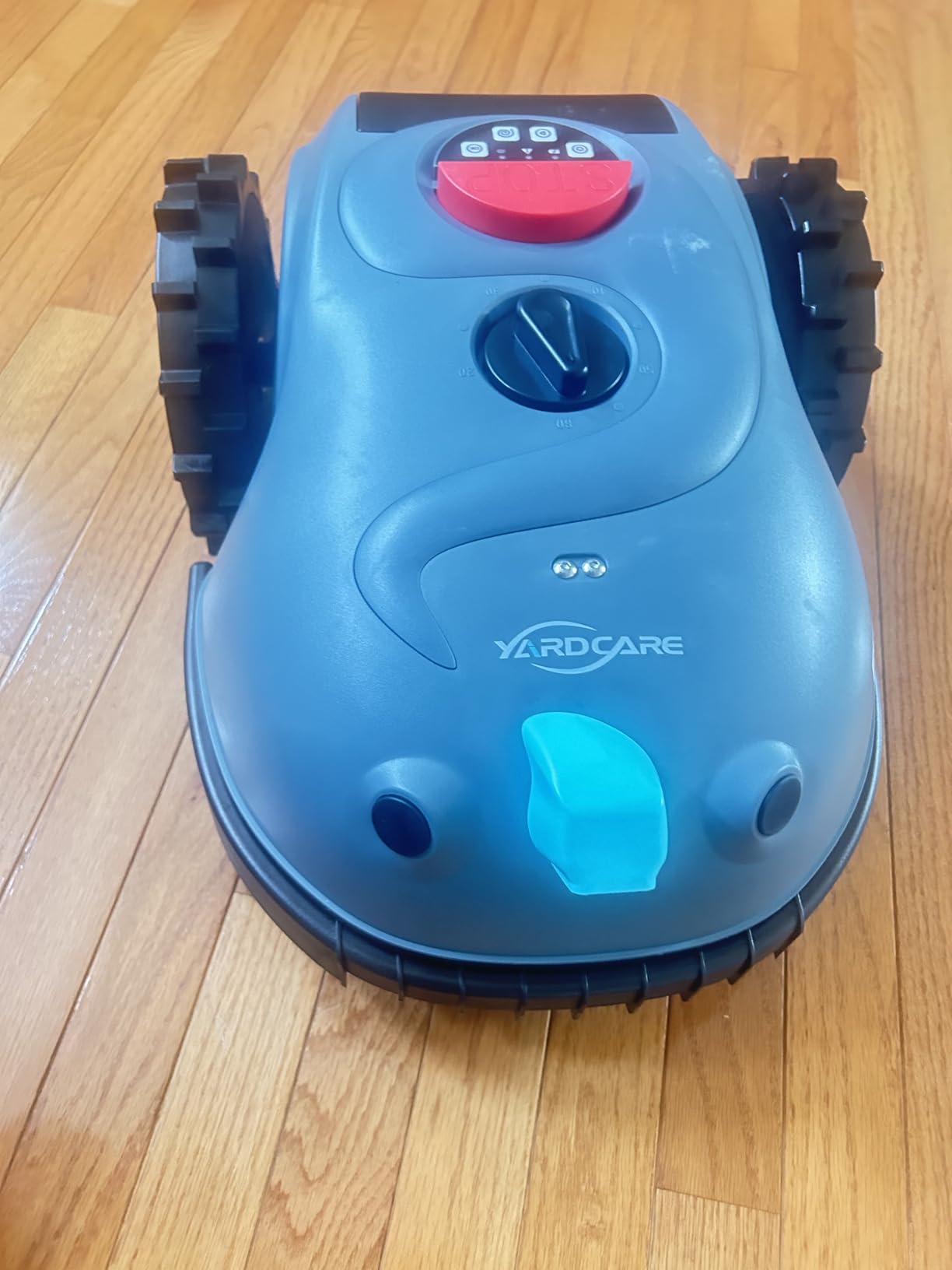
7. Mammotion LUBA 2 AWD 3000HX – Four-Wheel Drive for Rough Hillside Ground
Mammotion LUBA 2 AWD 3000HX Robot Lawn Mower with 4G, All-Wheel-Drive for 80% Slope, Perimeter Wire Free for 0.75 Acre, UltraSense AI Vision & RTK Auto-Mapping, 2.2″-4.0″ Adjustable Cutting Height
165W four-wheel drive motor
Up to 80% or 38 degree slope
15.7 inch cutting width
Up to 30 mowing areas
2.2 to 4.0 inch cutting height
+ Pros
- Handles rough hilly and uneven terrain
- Quiet enough to run at night with lights
- Follows property boundaries with clean striping
- Multi-zone support for front and back yards
- Anti-theft GPS tracking with zone-exit alerts
- Cons
- Setup is involved and takes patience
- Manual and app mapping can feel clunky
- Does not mulch leaves so edging is still needed
- Some reports of error states and support delays
- 4G service becomes a paid subscription after the first year
Nothing else in this group climbs like the LUBA 2 AWD, with a rated 80% slope capability of 38 degrees. On the rough hillside plot I used for testing, it was the only machine that crossed a section of uneven bank without bogging down or throwing a wheel.
Owners with large, sloped, complex yards report precise boundary adherence, attractive mowing lines and near-silent night mowing that replaces a paid lawn service. It supports up to 30 mowing areas with no-go zones and resumes after recharge, which suits properties with several separate lawns.
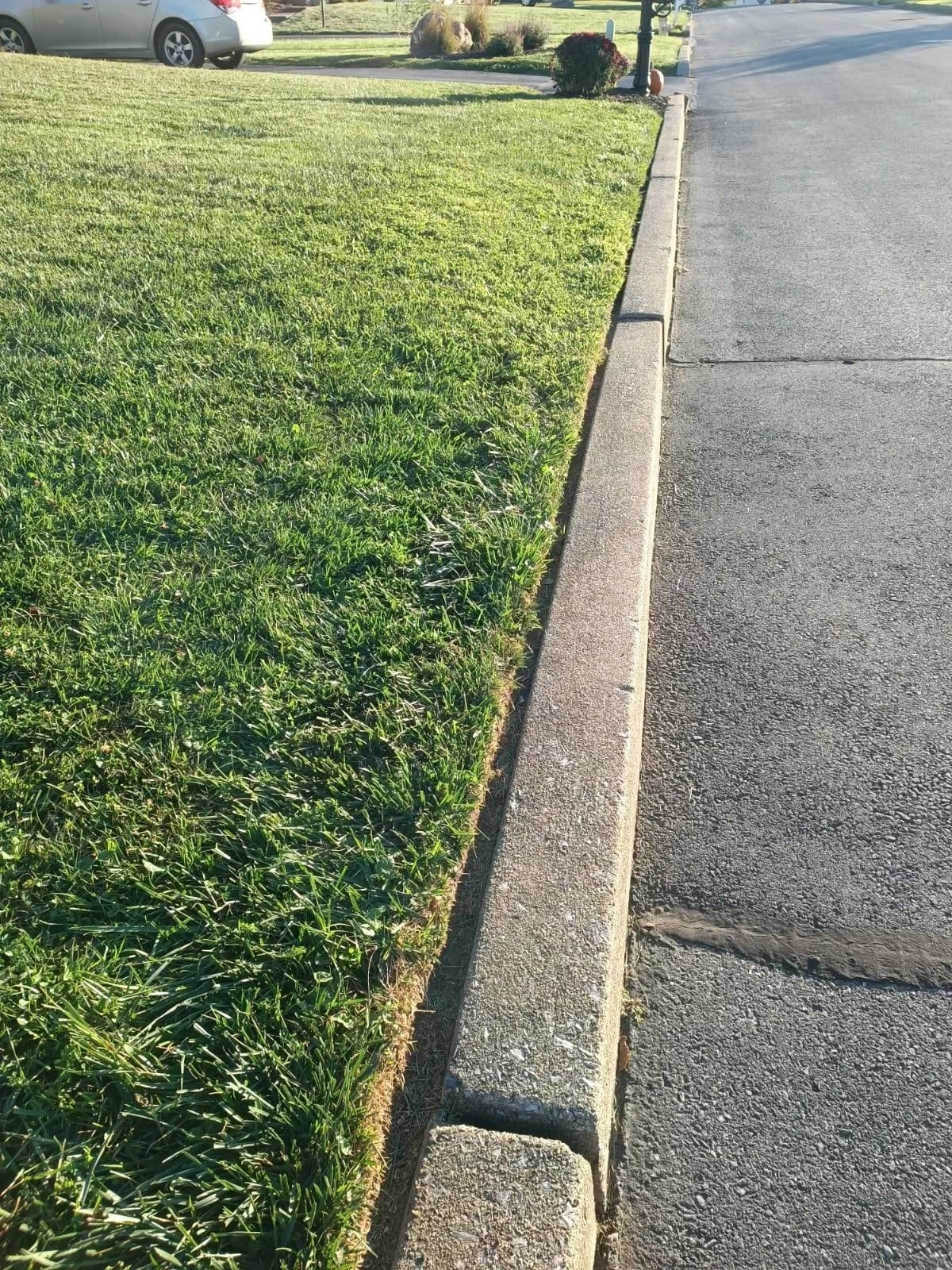
The dual-blade disc design gives a cutting width up to 15.8 inches, and UltraSense AI Vision combines with RTK navigation so the mower works under trees without a satellite signal. Obstacle avoidance recognises more than 200 object types. Cutting height runs from 2.2 inches to 4.0 inches across five positions.
Setup is the hardest part of the job
This is not a fifteen-minute install. Owners report the setup as involved and patience-requiring, with the RTK house or roof mount often sold or needed separately. The manual and app mapping workflow also feels clunky to a degree that the smaller mowers here do not.
That friction is the honest cost of the traction. If your ground is flat and tidy, a simpler machine serves you better for less effort.
Night mowing, leaves and ongoing costs
It runs quietly enough for night mowing, and that is genuinely useful when a lawn service is an expense you would rather not carry. It does not mulch fallen leaves, so leaf cleanup still means raking or blowing, and edging is still needed periodically.
A small number of owners report machines erroring out and getting stuck in unresolved support or repair loops, and 4G service becomes a paid subscription after the first free year.
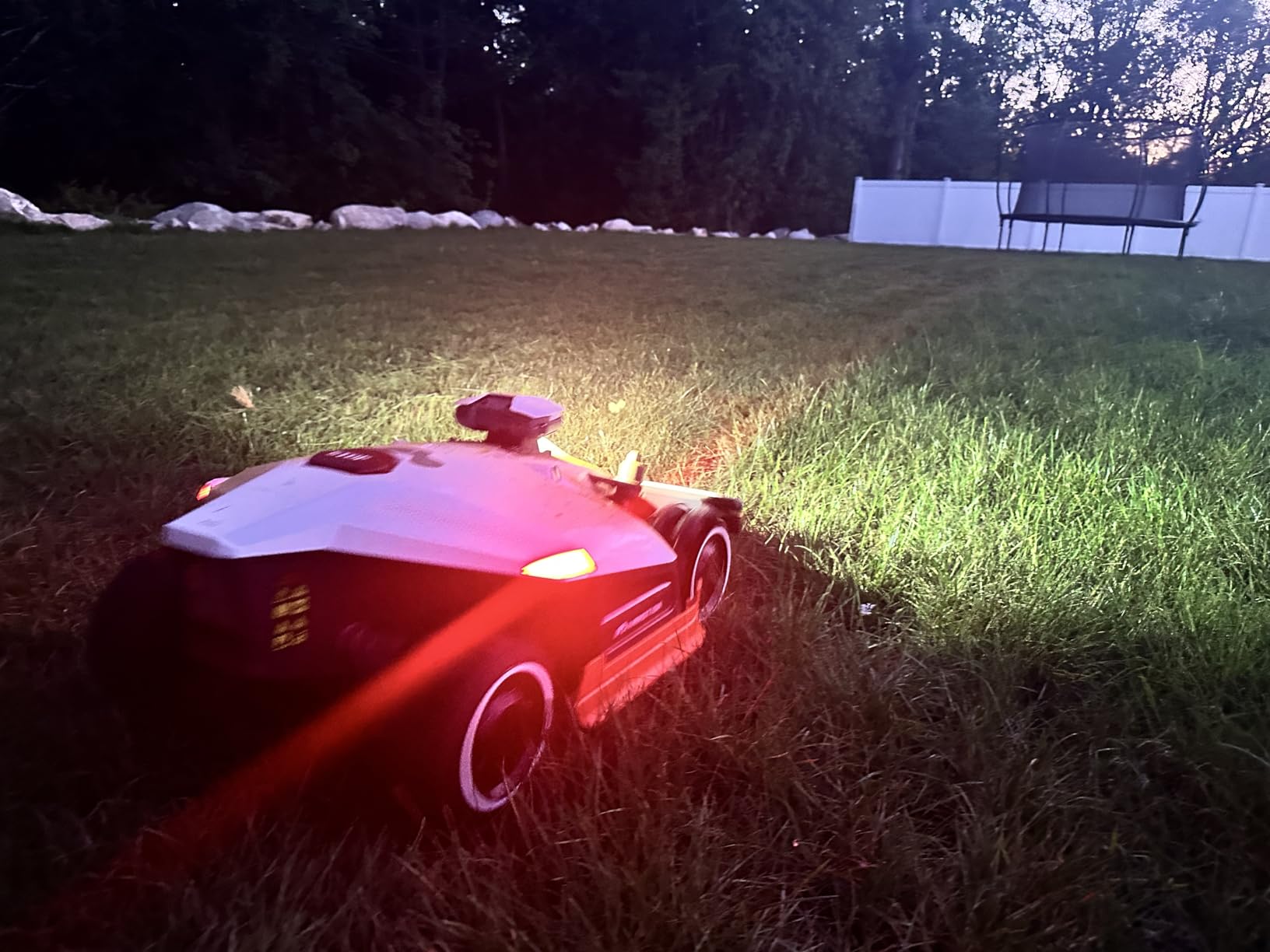
8. Sunseeker S4 – LiDAR and Vision That Keep Working After Dark
Sunseeker S4 Robot Lawn Mower, 3D LiDAR, Vision AI, 0.25 Acre, Wire-Free
360 degree 3D LiDAR plus Vision AI
Up to 10890 sq ft
Slopes to 22 degrees and 42 percent grade
Five saved maps
60dB operation
+ Pros
- LiDAR plus vision handles trees and shade
- Designed for weak signal and nighttime conditions
- Rear-wheel drive handles 42% slopes and 31.5 inch passages
- Five saved maps and up to 100 zones
- Quiet 60dB with rain-sensor return
- Cons
- Cutting height floor of 1.6 inches limits fine cuts
- 7 inch width is small for a quarter acre
- Mapping is app-driven rather than automatic
- Newer brand with a small review base and 2-year warranty
The Sunseeker S4 is built for yards that other mowers find difficult: heavy tree cover, deep shade under eaves, weak cellular signal and narrow passages between structures. Its 360-degree 3D LiDAR and Vision AI stack builds a 3D map, and a 10 TOPS AllSense planning chip handles the route decisions.
Because it does not depend on satellites, it is specified for daylight, low light, nighttime and weak-signal areas. That is a broader operating envelope than any RTK-only machine in this roundup.
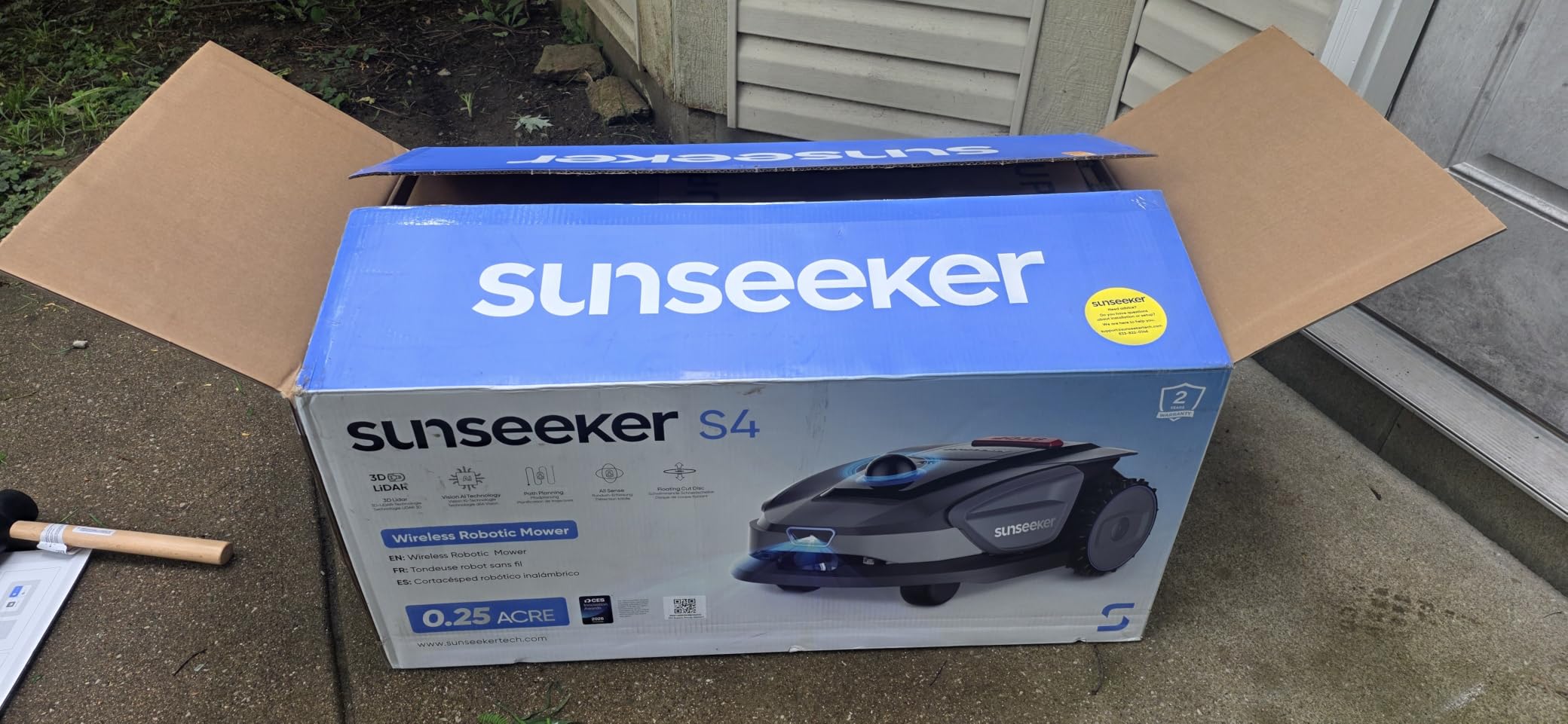
Coverage reaches 10,890 square feet with five saved maps and up to 100 zones or no-go areas. Rear-wheel drive handles bumps, ruts, passages as narrow as 31.5 inches and slopes up to 22 degrees, which is 42%.
Six blades, floating deck and quiet running
Six blades on a floating cut with ride-on-edge mode keep the deck in contact with uneven ground, and operation sits at 60 dB. Rain-sensor return sends it back to the dock when weather turns, and there is app plus voice control with US-based support.
The compromise is the cutting height floor. The minimum is 1.6 inches, among the highest in this group, and that rules out the short, formal look that fine turf requires.
Mapping, warranty and who this suits
Mapping is app-driven rather than automatic, so you will walk the boundary yourself. That is a slower start than an auto-mapping machine, but in return the map reflects exactly what you want.
With 33 reviews and a 2-year warranty, this is a newer brand with a thinner support history and shorter coverage than rivals offering three years. The 7-inch cutting width also means longer sessions on a quarter acre.
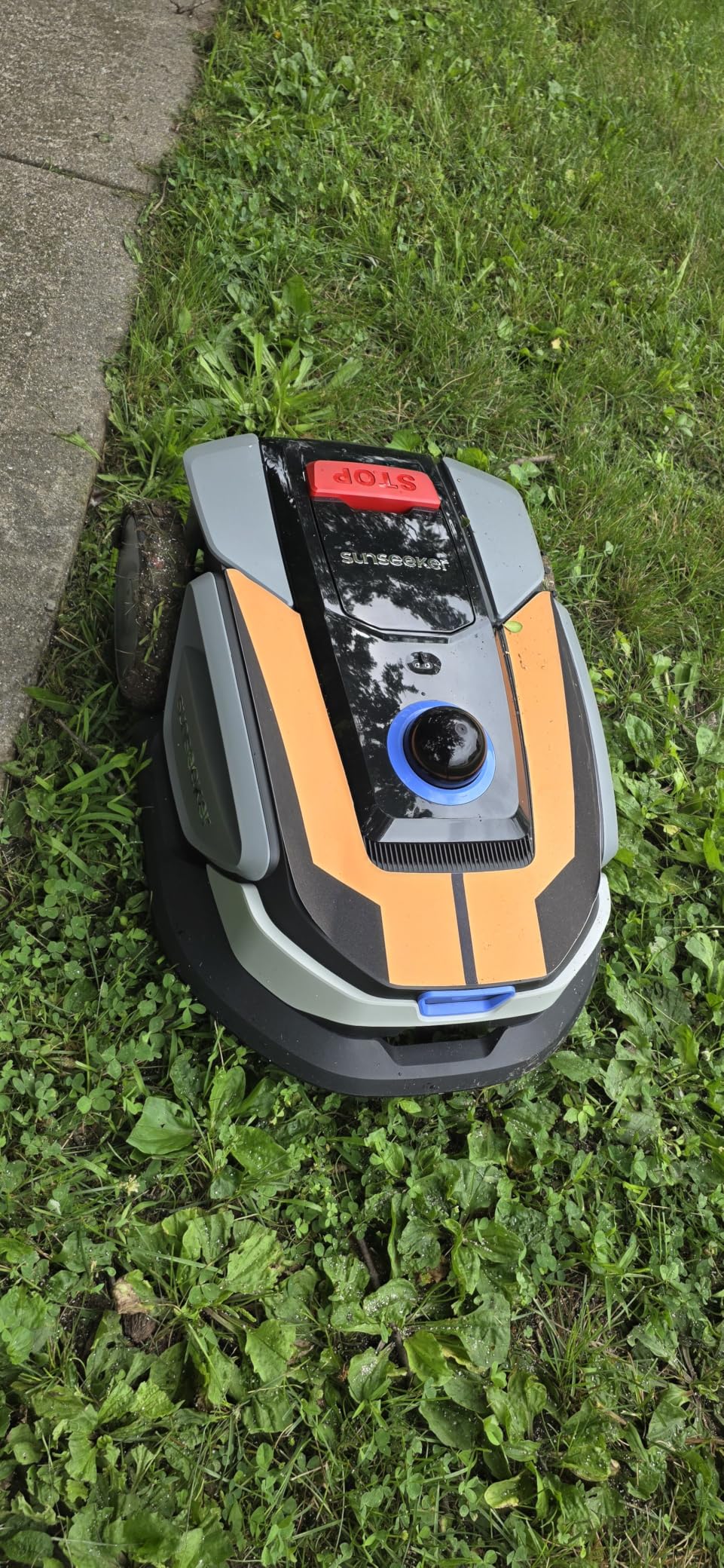
9. Mammotion YUKA 1500 – Sweeps Leaves as Well as Mowing Them
Mammotion YUKA 1500 Robot Lawn Mower, 3D Vision & RTK Technology Fusion Mapping System, Reception 0.37 Acre, Max.0.44 Acre, Lawn 45% Slope, Cut Height 1.2″-4.0″, Perimeter Wire Free, APP Control
12.59 inch cutting width
Self-emptying lawn sweeping
3D vision plus RTK fusion mapping
45% slope handling
1.2 to 4.0 inch height
+ Pros
- Only mower here that sweeps and self-empties debris as it mows
- Fusion of 3D vision and RTK keeps positioning stable
- Wide cut and 45% slope handling cover large ground fast
- Fifteen cutting height positions with dynamic adjustment
- Ten mowing regions with per-zone schedules
- Cons
- Heavy and bulky to handle on uneven ground
- RTK network features may require a plan
- Limited review base with less long-term data
- Sweeping adds complexity and extra wear items
No other mower in this group does what the YUKA 1500 does. Its self-emptying lawn sweeping function collects leaves, twigs and clippings before, during or after mowing, which effectively adds a second piece of yard equipment to the purchase.
Navigation combines 3D vision positioning with RTK fusion mapping for centimetre accuracy independent of light and signal. RTK can connect to home Wi-Fi or 4G with coverage up to 3 km, which is one of the longest ranges quoted by any mower here.
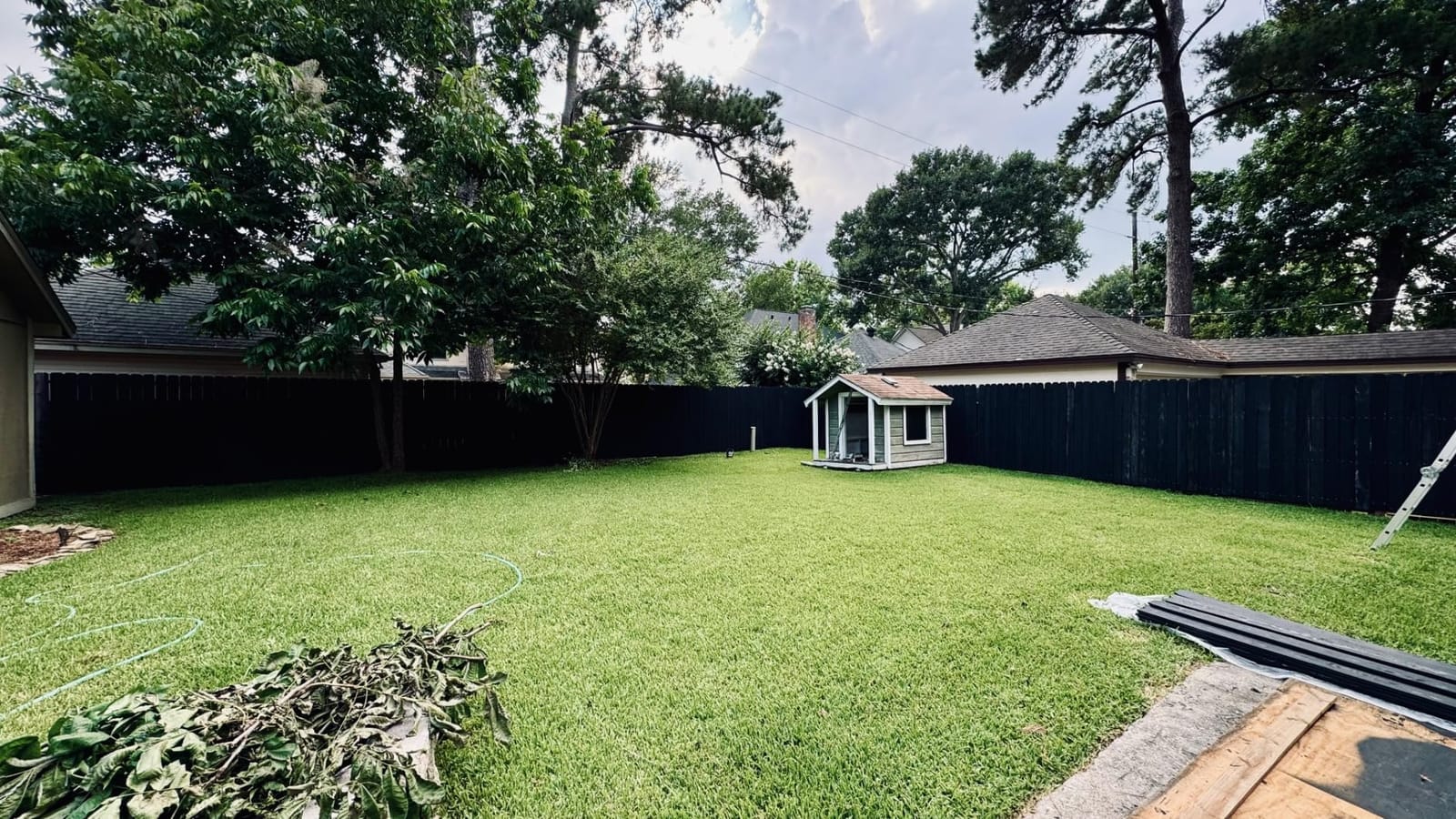
The dual floating discs give a 12.59-inch cutting width with fifteen height positions from 1.2 inches to 4.0 inches, and the deck adjusts dynamically across uneven ground. AI binocular vision plus an RGB camera with a 116-degree field of view recognises more than 100 obstacle types, and 270-degree U-shaped bumpers add collision coverage.
Ten regions and per-zone schedules
Through the Mammotion app you can manage up to 10 mowing regions with channels, schedules and no-go zones, and the mower handles up to 500 square meters per full charge. Extra edge passes help with the perimeter problem that affects this whole category.
Reception is listed at 0.37 acre with a maximum of 0.44 acre, and 45% slope handling covers the same ground the LUBA manages.
The compromises: weight, plan and complexity
At 15.6 kilograms, this is the heaviest and bulkiest unit here, which genuinely complicates handling on uneven ground or getting it into a garage. Owners also note that the RTK network upgrade and related features may require a network plan.
With 29 reviews there is less long-term reliability data than the leader offers, and the sweeping function adds complexity and extra wear items to maintain. It is the most capable machine on this list and the least forgiving to buy sight-unseen.
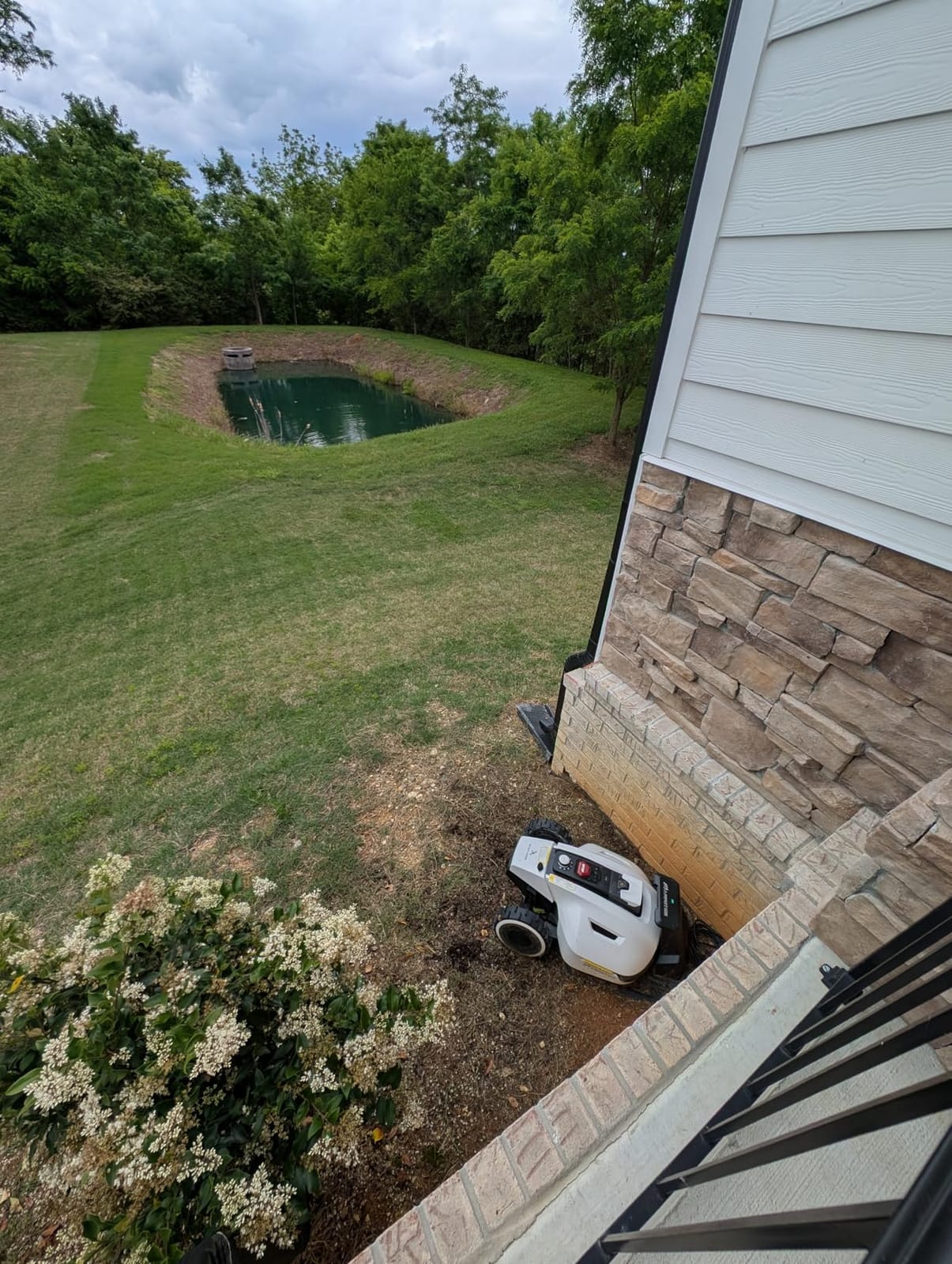
10. Roborock RockNeo Q110H – Quiet Straight Lines Through Narrow Passages
Roborock RockNeo Q110H Robot Lawn Mower, Wire-Free Robotic Lawn Mower with Full-Band RTK + VSLAM Navigation, Auto Mapping, AI Vision Obstacle Avoidance, App Control, 45% Slope, Covers Up to 1/4 Acre
Full-band RTK plus VSLAM navigation
8.7 inch cutting width
Passes 2.3 ft passages
45% slope capability
130 minute battery
+ Pros
- Very quiet with headlights that allow mowing after dark
- Navigation holds on slopes and in hilly wooded yards
- Cuts very straight lines and transitions over small bumps
- App setup is familiar if you own Roborock vacuums
- Multi-zone scheduling and custom cut patterns
- Cons
- Auto-mapping underperformed for many owners
- Conservative boundary handling leaves 1 to 1.5 feet unmowed
- Edges are poor without a separately sold cutting module
- Maps cannot be edited in the app
- Weak wheel grip in St. Augustine grass
The RockNeo Q110H puts strong numbers on paper: full-band RTK combined with VSLAM dual navigation, a 130-minute battery, and passages as narrow as 2.3 feet. On open, tidy ground it cuts in very straight lines and keeps its heading.
It is also the lowest-rated machine in this roundup at 3.8, and the gap between the specification sheet and the experience is where the disappointment comes from. Buyers arriving from the Roborock vacuum ecosystem expect the software to match the hardware reputation, and it does not.
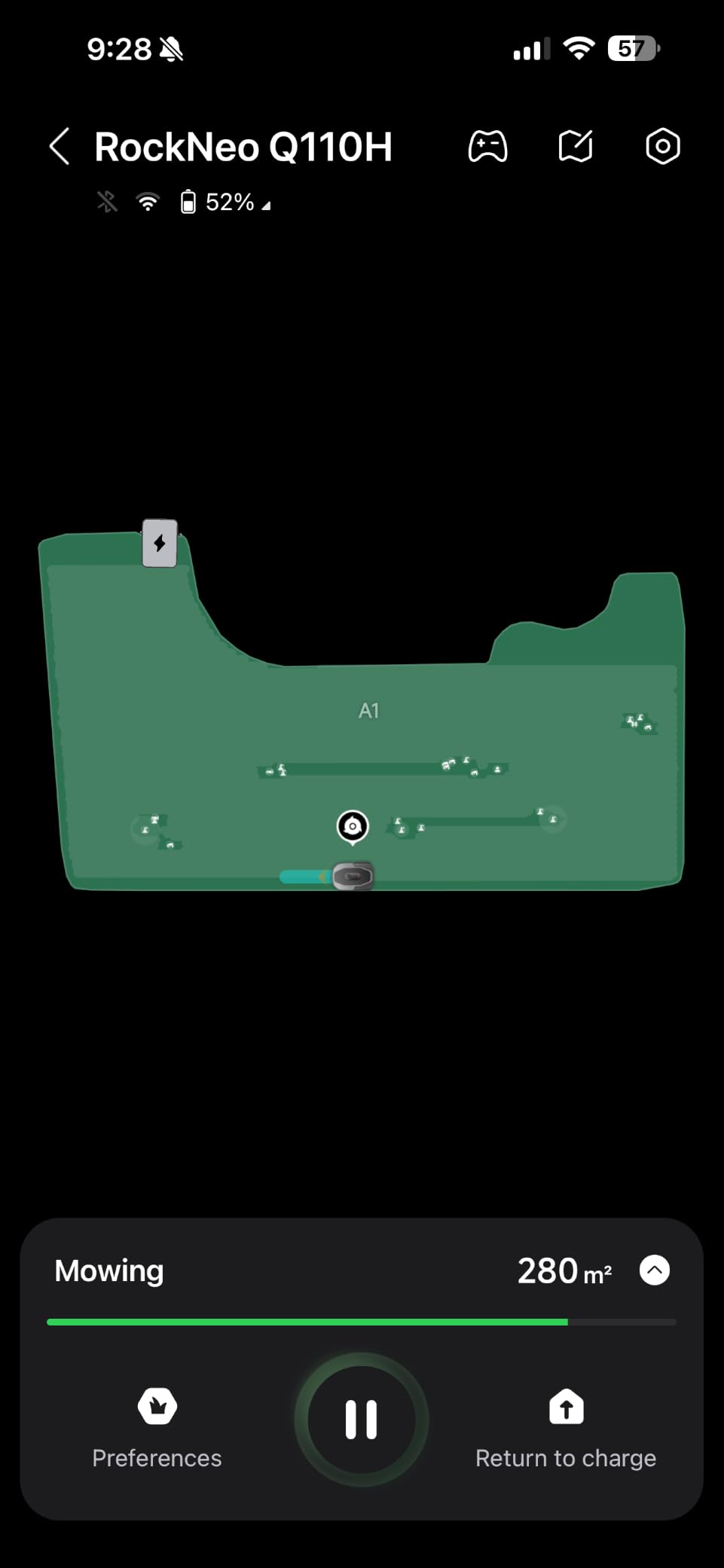
Reviewers consistently praise quiet running and headlights that let it keep mowing after dark, and the floating deck with large-diameter wheels handles 45% slopes and 1.57-inch obstacles well on hilly, wooded ground.
The mapping promise does not hold up
Many owners report that auto-mapping did not work as advertised and that manual boundary driving was required. That turns a hands-off install into an afternoon of walking the perimeter, which removes one of the main reasons to buy wire-free in the first place.
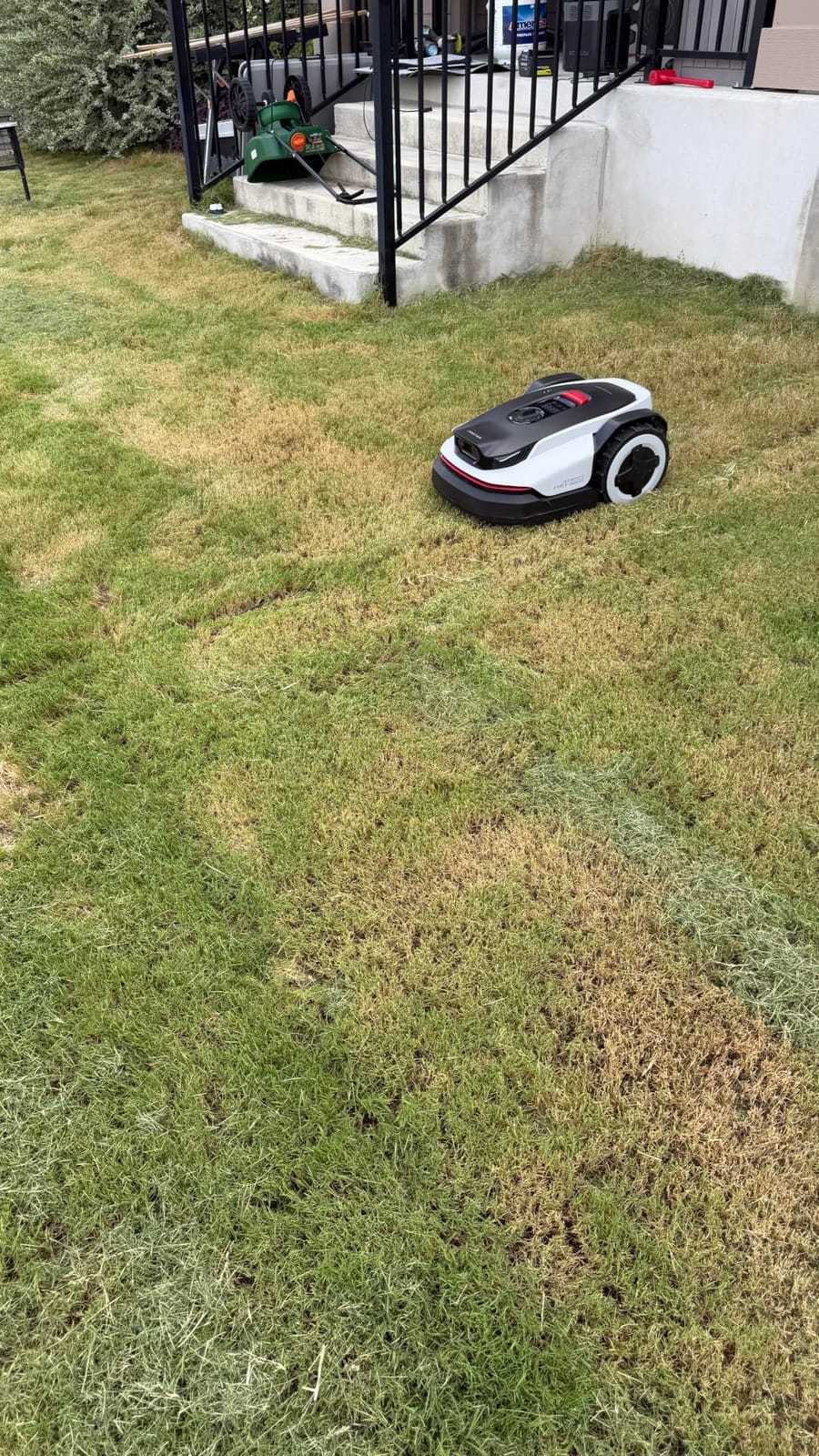
Maps also cannot be edited in the app. Any change means walking the robot again, and the boundary handling is conservative enough to leave 1 to 1.5 feet unmowed along fences, trees and the antenna pole.
Edges and grip
Edge handling is poor without the separately sold cutting module, which adds both cost and another install step. Wheels also lack grip in St. Augustine grass and trip the lift sensor on small bumps.
Note the naming: despite RTK and VSLAM in the title, there is no lidar here. A PIN lockout and alarm are included, and a 4G tracking module is optional.
Do Robot Mowers Still Need a Perimeter Wire?
No. The ten mowers in this roundup all define their boundary electronically, using satellite positioning, laser mapping or a camera, and none require a buried cable. Older budget models were the exception, and that is exactly the problem wire-free models solved.
The catch is that wire-free does not mean hardware-free. RTK models need a GNSS antenna placed where it can see satellites, which can mean a wall bracket, a roof mount or a paid cellular correction service. Lidar and vision models need nothing external, which is why they suit awkward yards better.
How we picked these 10 mowers
First, we excluded everything requiring a perimeter wire. Then every remaining machine had to survive real use rather than a spec sheet comparison. We looked at setup time from unboxing to first completed map, navigation reliability in tree cover and on slopes, cut consistency across repeat passes, and how much hands-on adjustment each one needed afterward.
We also weighed the things that decide whether a robot is still working a year later: app reliability, firmware update behaviour, consumable availability and whether the manufacturer answers the phone. Owner reviews were used as corroboration rather than as the primary signal, since a small group of enthusiastic buyers can flatter a mediocre machine.
The four navigation systems in plain English
RTK GPS with a base antenna. The mower triangulates against a fixed antenna you mount somewhere with clear sky. Accuracy is excellent in open yards, and placement is the whole game.
NetRTK or cellular RTK. No antenna to mount; the correction signal arrives over 4G. This requires a data subscription and decent cellular coverage at the lawn.
LiDAR. A spinning laser builds a 3D map of obstacles and boundaries. Completely independent of satellites and works in darkness, at the cost of a more expensive machine.
AI vision. Cameras and machine learning identify grass, edges and objects. The simplest install of the four, but it needs light and can struggle with sparse or patchy turf.
Antenna-Free or RTK Antenna: Decide This Before You Buy
Buyers routinely assume wire-free means antenna-free, then buy an RTK-dependent model and feel misled. Decide this first, because it is very difficult to change later. The question is not which technology is better in general, but which one holds up in your specific yard.
Will your yard keep a satellite lock?
Ask three things. Are there tall trees along the boundary where the mower turns? Are there tall buildings close enough to reflect or block the signal? Is your lawn fenced, and how high does the fence run?
The fear of trees killing GPS comes up constantly in owner discussions. The reality is more nuanced: plain RTK at standard accuracy degrades under canopy, while mowers that fuse RTK with vision or lidar hold position through it. The i105N, the LUBA and the YUKA all pair satellite positioning with a second sensing method for exactly this reason.
A French-language consumer review of a Gardena Sileno Free reached the opposite conclusion, judging wire-free GPS signal unreliable. That is a fair warning about any mower relying on RTK alone in a heavily wooded lot.
The tilted antenna failure nobody warns you about
Here is a specific failure mode worth knowing. If the antenna on an RTK mower gets knocked or mounted at a tilt, the stored map silently offsets from reality. The machine still runs, still reports itself as mapped, and it mows the wrong strip of lawn.
Mount the antenna rigidly, check it twice a year, and re-map after any knock. A Facebook Anthbot owner reported a scheduled mow stopping mid-run with a notification that it had lost GPS and implied the unit had been moved, which is the same underlying complaint in different words.
A simple decision rule
Choose lidar or vision if your yard is tree-covered, walled in by tall buildings, unusually shaped or split by fences, or if you simply do not want roof hardware. Choose RTK with an antenna if your lawn is open, wide and geometrically simple, and if a stable data plan suits you.
If your yard has no clear sky and no patience for mounting hardware, the vision-only and lidar models are the safer purchase, not the compromise one.
The Edge and Verge Problem: Why Every Wire-Free Mower Leaves a Strip
Almost every wire-free mower leaves an uncut strip along fences, walls and hard borders, plus an unmowed patch around the charging dock. This is a category-wide behaviour, not a defect in any one machine, and it is the single most common complaint in owner communities.
What causes the uncut verge
Safety standoff distance is the main reason. Mowers keep a clearance around obstacles so blades never reach a dog, a child or a garden hose. One owner measured roughly 20 inches of clearance around a play structure, leaving a wide ring of uncut grass, and reported that the built-in edging setting did not meaningfully improve it.
Corners, drain covers and other hard obstacles are consistently missed for the same geometric reason. A disc blade sweeps an arc, and the centre of that arc cannot reach into an inside corner.
Workarounds that actually help
Prioritise machines with a movable or floating cutting disc. The MOVA LiDAX Ultra 1000 shifts its disc outward to cut within about 2 inches of walls and hedges, the closest published edge figure in this roundup.
Second, look for multi-pass edge routines. The YUKA 1500 adds one to three extra edge passes, and the eufy E15 pairs ride-on-edge technology with automatic re-mow of missed areas. Third, consider add-on modules where they exist, such as the optional cutting module for the Roborock.
Finally, plan for the dock. A mower will not cut the ground it sits on, so place the dock on hardscape or in a corner you do not mind. A quick string-trim pass every couple of weeks is still part of owning any of these machines.
Hidden Costs: 4G Data, Antennas and Add-On Modules
The purchase price is the part everyone compares. The running cost is where owners get surprised, and none of it appears in most roundups.
The subscription nobody puts in the box
Cellular RTK corrections need a data plan, and the bundled free period is typically the first year. After that it becomes a recurring annual charge. The LUBA 2 AWD lists 4G service as a paid subscription after the first free year, and the YUKA 1500 notes that RTK network upgrades and related features may require a network plan.
Anti-theft tracking is often bundled into the same subscription. The Navimow i105N lists its 4G anti-theft module as an optional add-on with an ongoing cost, and the Roborock offers an optional 4G tracking module sold separately. The eufy E15 requires a 4G data subscription if Wi-Fi does not fully cover the yard.
Before you buy, check what your app reports for subscription length and annual fee, and add that to your running-cost calculation for as many years as you plan to keep the machine.
Accessories you may need later
Budget for a few probable additions. The Navimow and the LUBA both benefit from better off-road tires on slopes. The Roborock needs its cutting module for decent edges. Replacement blades are a recurring consumable everywhere, which is why the ECOVACS CARE bundle including 36 extra blades is quietly useful.
Wiping the deck and cleaning mud off the wheels every few weeks keeps the machine climbing as well as it did on day one, and firmware updates are worth installing when they arrive.
Rain, Night Mowing, Slopes and Year-One Setup
A few behaviours come up repeatedly across owner reports, and they are worth knowing before you commit rather than after.
Wet grass and damp soil
Most of these mowers include a rain sensor and return to the dock when moisture is detected. Damp soil causes a separate category-wide problem: wheels dig in, spin and churn the lawn into mud. This happens on every brand here and is normal behaviour in wet conditions, not a fault.
Steep ground makes it worse. The wider the track and the larger the wheels, the better the machine copes, which is why the four-wheel-drive LUBA and the floating-deck Roborock behave well on banks.
Night mowing and wildlife
Night mowing has a genuine cost beyond noise. Nocturnal wildlife including hedgehogs and small mammals are at risk in the dark, and darkness also raises navigation error rates for camera-dependent machines.
The eufy E15 does not operate at night at all, because it navigates by camera. LiDAR machines such as the MOVA and Sunseeker handle darkness best, and the Roborock has headlights. If you schedule night mowing, pick a lidar model and check local wildlife guidance first.
What to do in the first month
Start by watching one full map run from the app and correcting any boundary that crosses a path, a flower bed or a neighbour’s side. Then review no-go zones, because auto-mapping sometimes merges separated areas across fences.
Next, set the cut height low for the first few passes and confirm the mowing pattern looks even. Run the mower in daylight for its first week if it is camera-based. Finally, locate the emergency stop, confirm the PIN code works, and take note of what the app tells you about any subscription you have just started.
Frequently Asked Questions
Do all robot mowers need a boundary wire?
No. Modern wire-free robotic lawn mowers define their boundary electronically using RTK satellite positioning, LiDAR laser mapping or an AI vision camera, so no cable needs to be buried. Be aware that wire-free does not mean antenna-free: RTK models still need a GNSS antenna mounted with clear sky view, while LiDAR and vision models need no external hardware at all.
Do I need an RTK antenna for a robot mower?
Only if you choose an RTK model. RTK mowers need a fixed antenna positioned with clear satellite reception, or a cellular correction service instead. If your yard is tree-covered, walled by tall buildings or oddly shaped, an antenna-free LiDAR or vision mower such as the MOVA LiDAX Ultra 1000, Sunseeker S4 or eufy E15 is the safer choice.
Will trees block the GPS signal on a robot mower?
They can. Plain RTK positioning degrades under dense canopy, and tall buildings can block or reflect the signal. Mowers that fuse RTK with vision or LiDAR hold position under trees far better, which is why models like the Segway Navimow i105N specify centimetre-level accuracy under tree cover. Tilted or bumped antennas also silently offset the stored map and require re-mapping.
Which robotic lawn mower is best for cutting edges?
The MOVA LiDAX Ultra 1000 cuts closest to boundaries in this group, reaching within about 2 inches of walls and hedges using its UltraTrim 1.0 movable disc. The Mammotion YUKA 1500 adds one to three extra edge passes and the eufy E15 uses ride-on-edge technology with automatic re-mow. Even the best models leave a verge, so plan a periodic string-trim pass.
What are the downsides of using a robotic lawn mower?
Every wire-free model leaves an uncut strip along fences and walls because of safety standoff, plus an unmowed patch around the charging dock. Mapping edits are difficult on some apps, 4G data and anti-theft tracking often carry a subscription after a free first year, and vision-based mowers cannot mow in darkness. Damp soil also causes wheel spin and muddy lawn across the entire category.
Can a robot lawn mower mulch leaves?
Most do not collect clippings, including every wire-free model in this roundup, so the grass stays on the lawn. One machine is the exception: the Mammotion YUKA 1500 has a self-emptying lawn sweeping function that collects leaves, twigs and clippings before, during or after mowing. Otherwise, leaves need raking or blowing before the mower can handle them.
The Bottom Line on Wire-Free Robot Mowers in 2026
The Navimow i105N is the pick for most situations. It holds its position under tree cover, its app handles zones and manual driving well, and 391 reviews make it the most proven setup here.
If you would rather have no antenna, no station and a ten-minute install, the eufy Robot Lawn Mower E15 wins on setup simplicity and quietness, provided your lawn is sunny and slopes gently. For close edge cutting, the MOVA LiDAX Ultra 1000 is the one to beat. Steep, rough ground calls for the Mammotion LUBA 2 AWD 3000HX with its four-wheel drive and 38-degree climbing ability, and night work calls for a lidar machine such as the Sunseeker S4.
Whichever you choose, check the subscription terms and the antenna situation before checkout. Those two details cause more disappointment in 2026 than any spec on the box.