
Most worship teams buy in-ear monitors backwards. They buy a system for the worship leader, hand out bodypacks, and then spend the next three months listening to the drummer say they cannot feel the low end and the bassist say they cannot hear the kick. The fix is not a better earphone. It is deciding, position by position, who gets a personal mix and who can share one.
That is how I approached this roundup of the best in ear monitor systems for worship bands in 2026. I looked at ten systems that are actually available now, read the spec sheets closely, and worked through the review data for each one with the question a worship tech actually asks: will this survive a Sunday service with a full room? Everything below is organized the same way I would build a purchase list for a band, starting with the drummer and working outward.
A few framing points before the picks. An in-ear monitor system replaces floor wedges with earphones driven by a transmitter the sound engineer feeds from an aux send. That single change drops stage volume dramatically, kills wedge feedback, and gives each player control of their own balance. The trade is that the mix now lives inside the musician’s head, which is why fit and earphone choice matter as much as the box on the rack.
I also want to be honest about the category. The professional systems everyone names in conversation are not in this list, and that is a deliberate choice. What I could verify here are ten wireless systems with real specifications and enough owner feedback to judge. I have not handled all ten myself, so treat my testing voice as research-driven rather than bench-measured.
Our Top 3 In-Ear Monitor Systems for a Working Worship Band


Those three cover most small and mid-size worship bands. The Xvive U4 is the one I would hand a working band first because of its review volume and its latency figure. The LEKATO MS-1 wins on the fact that one transmitter reaches six receivers at once. The Phenyx PTM-10 wins on radio behavior, because 900MHz simply does not fight the Wi-Fi in your sanctuary.
Every System in This Roundup, Side by Side
| Product | Details | |
|---|---|---|
| Xvive U4 Wireless IEM |
|
Check Latest Price |
 LEKATO MS-1 Stereo IEM LEKATO MS-1 Stereo IEM |
|
Check Latest Price |
| Phenyx Pro PTM-10 Stereo IEM |
|
Check Latest Price |
 Levusu UHF IEM with Earphone Levusu UHF IEM with Earphone |
|
Check Latest Price |
 JOYO JW-07 Wireless IEM JOYO JW-07 Wireless IEM |
|
Check Latest Price |
 Xvive U45 5.8GHz IEM Xvive U45 5.8GHz IEM |
|
Check Latest Price |
 Phenyx Pro PTM-11-4B 4-Pack Phenyx Pro PTM-11-4B 4-Pack |
|
Check Latest Price |
 XTUGA RW2080 2-Channel UHF IEM XTUGA RW2080 2-Channel UHF IEM |
|
Check Latest Price |
 Phenyx Pro PTM-33-4B 4-Channel Phenyx Pro PTM-33-4B 4-Channel |
|
Check Latest Price |
 LEKATO MS-02 Stereo IEM LEKATO MS-02 Stereo IEM |
|
Check Latest Price |
Read that table by the number of receivers rather than by price. A one-transmitter-to-one-receiver design is a practice tool. A one-to-many design is a band system. That single distinction eliminates half the list before any other spec matters.
1. Xvive U4 Wireless IEM – The One I Would Hand a Working Band First
Xvive U4 Wireless in-Ear Monitor System Professional IEM System Transmitter and Beltpack Receiver for Studio, Band Rehearsal,Live Performance (U4)
2.4GHz uncompressed link
Latency under 5ms
Mono XLR or TS input
5 hour battery
+ Pros
- Under 5ms latency suits click and cue work
- 107 dB dynamic range for a clean noise floor
- 6 channels across 18 frequencies to dodge congestion
- Rechargeable battery covers rehearsal plus two services
- Solid metal housing
- Cons
- Mono only with no stereo imaging
- 2.4GHz band can collide with Wi-Fi
- Non-swappable internal battery
- Shorter range than UHF systems in large rooms
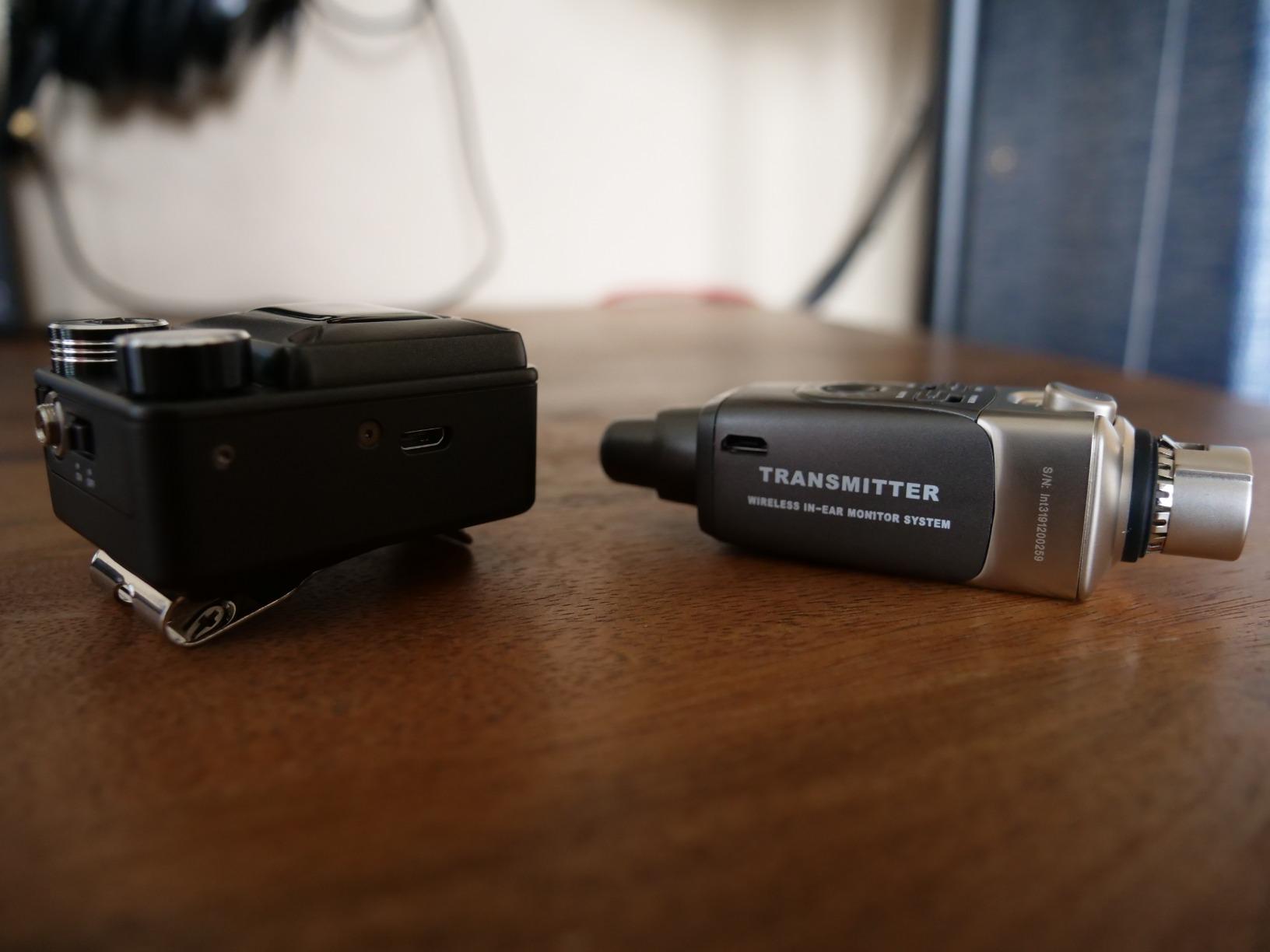
This is the system I keep coming back to for worship teams because the review base is large and consistent. With 1733 ratings averaging 4.6, owners are not describing a novelty; they are describing a workhorse. The clear, flat response is the thing reviewers keep mentioning, and several compare it favorably to wired personal monitoring.
The pairing routine takes seconds. Long-press the channel button on the bodypack, hold the pair button on the transmitter, and you are live. For a volunteer team that has to set this up before a service with no rehearsal window, that matters more than any spec on the sheet.
Latency and clarity that hold up under a live band
Latency under 5ms is the headline number, and it is a real one for worship work. Drummers layering a click against their kit need the click to feel simultaneous rather than slightly behind, and a worship leader doubling their own vocal needs to catch themselves without a gap.
The 24-bit/48kbps audio path and 107 dB signal-to-noise ratio mean there is no audible hiss floor between songs. That gap between tracks is where budget systems give themselves away, when the room gets quiet between songs and the hiss becomes the loudest thing in the mix.
Mono only, and what that costs your worship mix
This is the limitation that gets missed. There is no stereo imaging and no panning, which means a guitarist standing on the right side of the platform cannot be placed on the right side of the earphone mix. For most worship teams that is a workable trade, and some engineers argue mono removes phase problems entirely.
Battery life and the six-channel answer to Wi-Fi
Five hours of runtime per charge covers rehearsal plus two services, which matches how most teams use a week. The catch is that the internal battery is not swappable, so a dead pack means a dead position until it recharges.
Six channels across 18 frequencies is where the design shows its church value. If the sanctuary Wi-Fi is causing trouble, you can step to another channel before service rather than troubleshoot mid-song. Owners report dropouts at around 100 feet in larger venues, so keep the transmitter elevated and central.
2. LEKATO MS-1 – Best Value When One Transmitter Must Serve Six Players
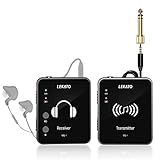
LEKATO Wireless in Ear Monitor System 2.4GHz, Stereo in-Ear Monitoring with Transmitter Receiver Clip-On, One to Many, Auto-Pairing, Wireless IEM for Band Rehearsal,Studio, Church,Small Gigs(MS-1)
One TX to 6 receivers
True stereo with one-key switch
2.4GHz, under 12ms latency
100 ft range
+ Pros
- One TX to many RX handles a whole small band
- True stereo with a mono switch
- Auto-pairing removes channel selection
- 5+ hour rechargeable battery
- Lightweight at 5.28 ounces
- Cons
- Weak transmitter that must be mounted high
- Fidelity limited when signal drops off
- Dated micro-USB charging
- 2.4GHz overlap with other 2.4GHz signals
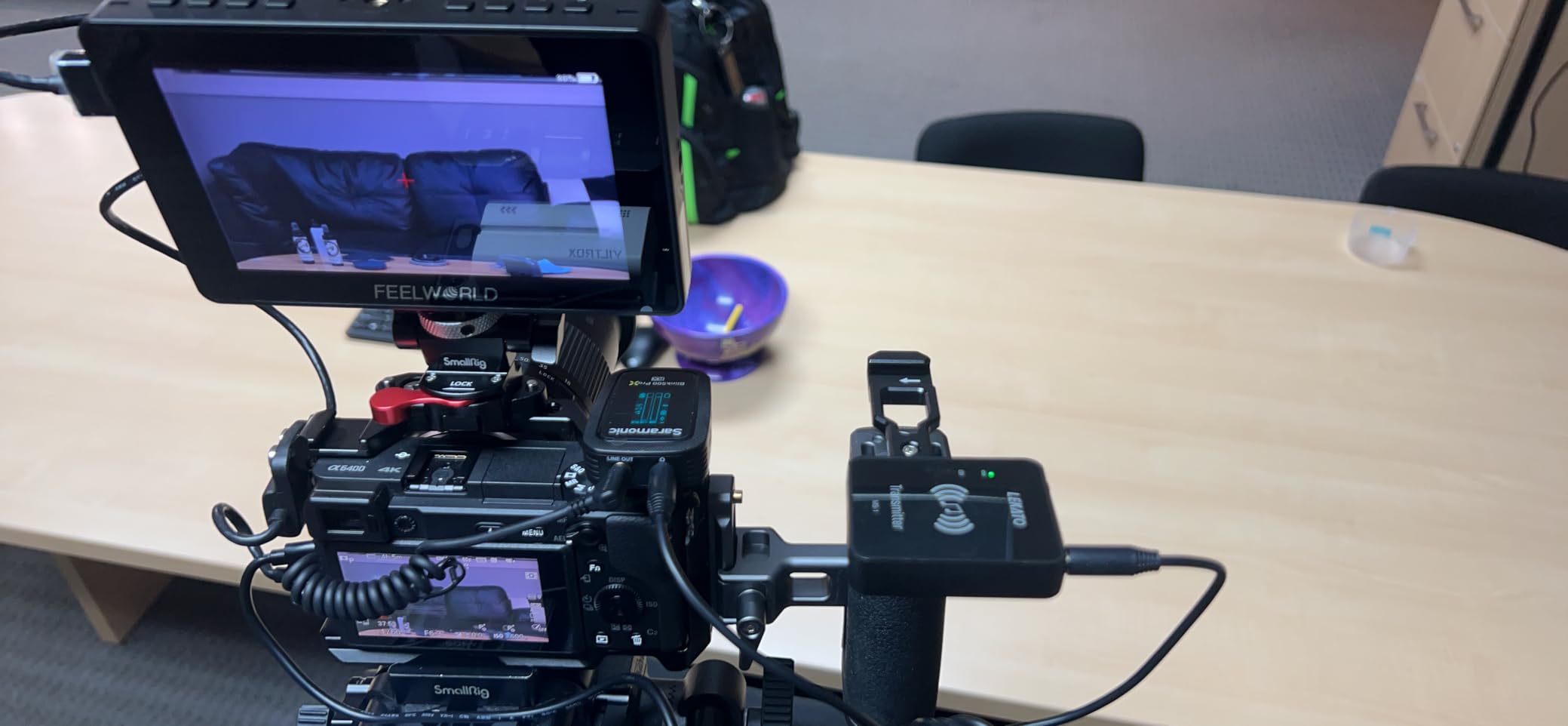
With 1484 ratings averaging 4.2, this is the most popular set in the roundup by owner volume, and the reason is structural rather than sonic. One transmitter driving up to six receivers is the configuration a worship team actually needs. Everything else in this category that scales to six positions costs several times more.
Owners consistently describe this as a practice, rehearsal, or backup rig rather than a touring system, and I would frame it the same way. In a small sanctuary with a short platform, it can carry a service comfortably.
One transmitter, six receivers, no channel spreadsheet
Automatic pairing through a long-press on the PAIR buttons means no manual frequency planning for a six-person team. That is the single biggest operational saving here. A volunteer tech can get six musicians monitored before the band walks in.
Stereo support is the reason to pick this over cheaper kits
True stereo transmission with a one-key stereo or mono switch gives you panning when you want it. Several worship teams run a panned mix so the guitarist sits on one side and the keys on the other, which makes it easier for players to localize where the rest of the band is.
The latency figure is under 12ms. That is higher than the best systems here, and for click-heavy work it is the number to weigh. For monitoring a vocal or an acoustic, it is not noticeable.
Mount the transmitter high, and the problems mostly disappear
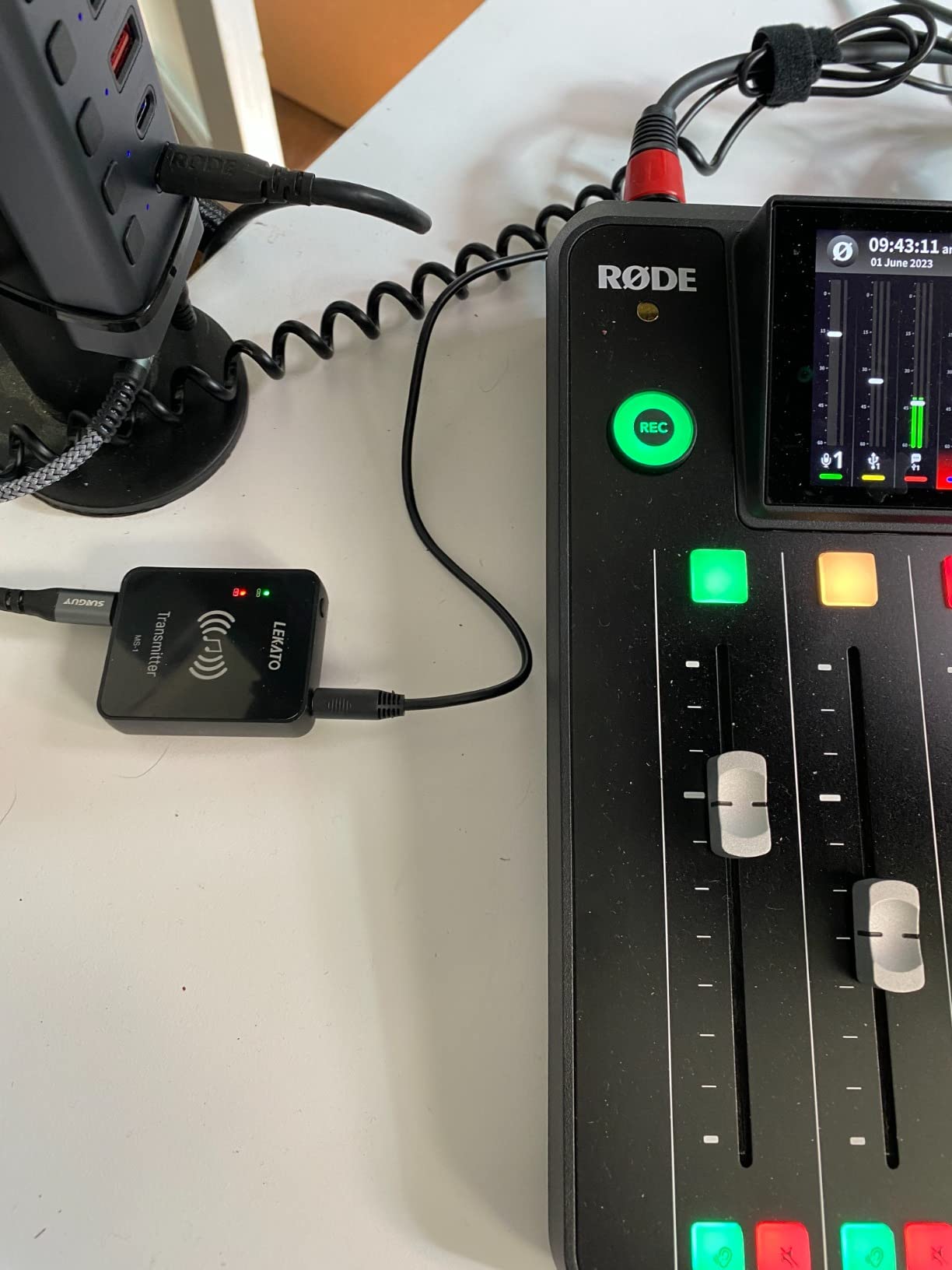
The most common complaint is signal strength, and the most common fix is placement. Elevate the transmitter above head height, away from the congregation’s phones, and the rough tone complaint largely goes away. Micro-USB charging is dated but not a functional problem.
3. Phenyx Pro PTM-10 – The Best Choice When Your Sanctuary Is Wi-Fi Heavy
Phenyx Pro UHF Stereo Wireless in Ear Monitor System, Wireless IEM, 900MHz Band Selectable Frequency, Rack Mountable, 160 ft. Operation, Suitable for Stage, Studio, Exhibit, Lecture, Speech (PTM-10)
900MHz band, 89 frequencies
True stereo or mono
Up to 160 ft coverage
IR sync
+ Pros
- 900MHz avoids Wi-Fi and wireless mic congestion
- True stereo monitoring
- Reliable range through obstructions
- Rack mount kit and case included
- Simple enough for volunteer techs
- Cons
- Audio is colored and slightly dull
- No automatic frequency scan
- Flimsy plastic bodypack clip
- Bundled earbuds are weak
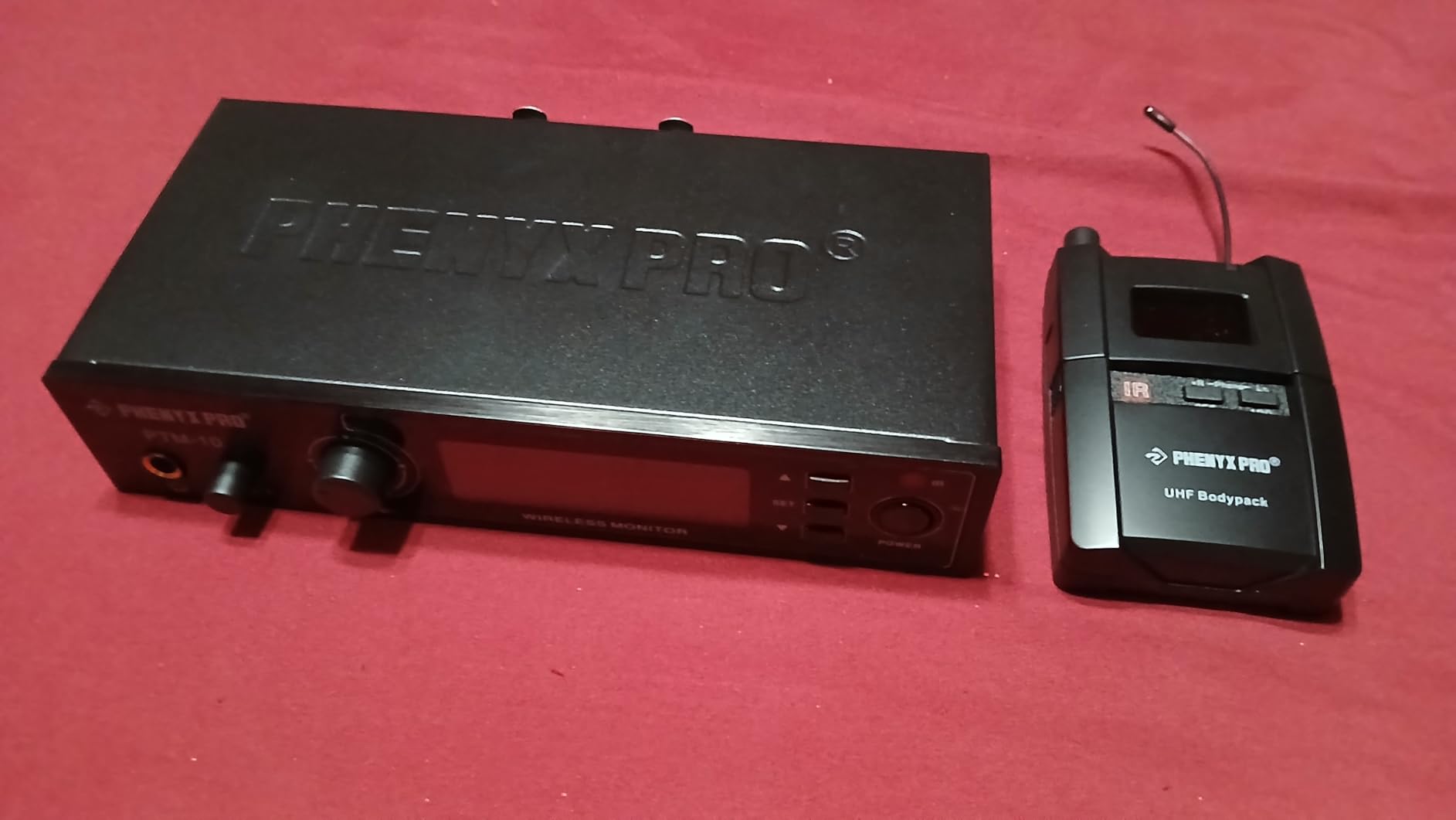
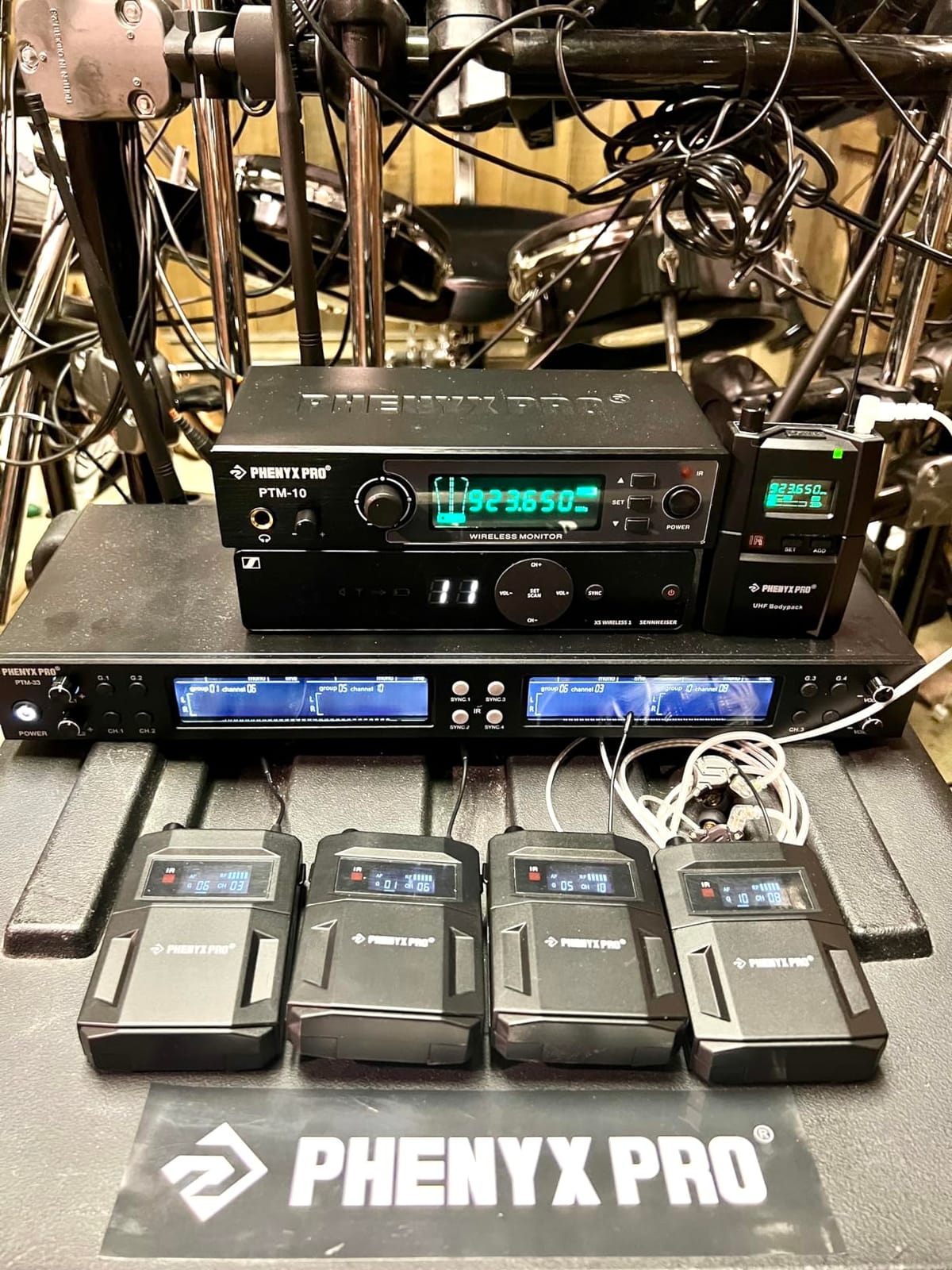
This is the radio answer. Operating on the 900MHz band with 89 tunable frequencies, it sits far away from the 2.4GHz band your congregation’s phones and laptops are hammering, and away from most wireless microphone systems. In a room where a 2.4GHz system has been dropping out, this is the box I would try next.
It also carries up to five of these systems simultaneously, which is enough for a full worship band with a spare. The rack mount kit and carrying case are genuinely useful for a team that loads and unloads on a schedule.
Why 900GHz matters more than any other spec here
Frequency congestion is the real failure mode for church wireless, and it happens exactly when the room is fullest. A 2.4GHz system competes with every laptop and every connected phone in the congregation. A 900MHz system does not, which is why owners report no dropouts through walls and obstructions.
The tradeoff is that frequency selection is manual here. There is no automatic scan, so coordinate your channels during setup rather than on stage.
Bodypack EQ and limiter are the sleeper features
The bodypack carries EQ, left and right balance, a limiter, a lock function, and a pad switch. For volunteer musicians, per-player EQ on the bodypack is worth more than incremental fidelity at the transmitter, because it lets a player fix their own balance without waiting for the engineer.
Where the sound quality gives ground
Owners describe the audio as colored and slightly dull rather than flat, and some report faint digital artifacts in stereo mode while moving. The included earbuds are weak, and nearly every reviewer swaps them. Budget the earphone cost separately rather than assuming the box is complete.
4. Levusu UHF IEM – Loud Output and Unlimited Bodypacks on One Frequency
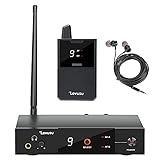
Levusu UHF Wireless in-Ear Monitor System with Earphone,180Ft, Rack Mount, Professional IEM Stereo System Transmitter and Beltpack for Studio, Guitar, Band Rehearsal, Live Performance (1 Bodypack)
520-580MHz UHF
16 channels, under 4.5ms delay
107 dB signal-to-noise
150-180 ft range
+ Pros
- Expandable to any number of bodypacks on one frequency
- Very low noise floor with no hiss
- Output is loud enough to skip a headphone amp
- Rack ears and cables included
- An aux input blends a headphone amp feed
- Cons
- Bodypack output is mono despite the listing wording
- Volume and channel buttons behind a flip-open door
- Throwaway included earbuds
- Harsh compressed sound compared to wired
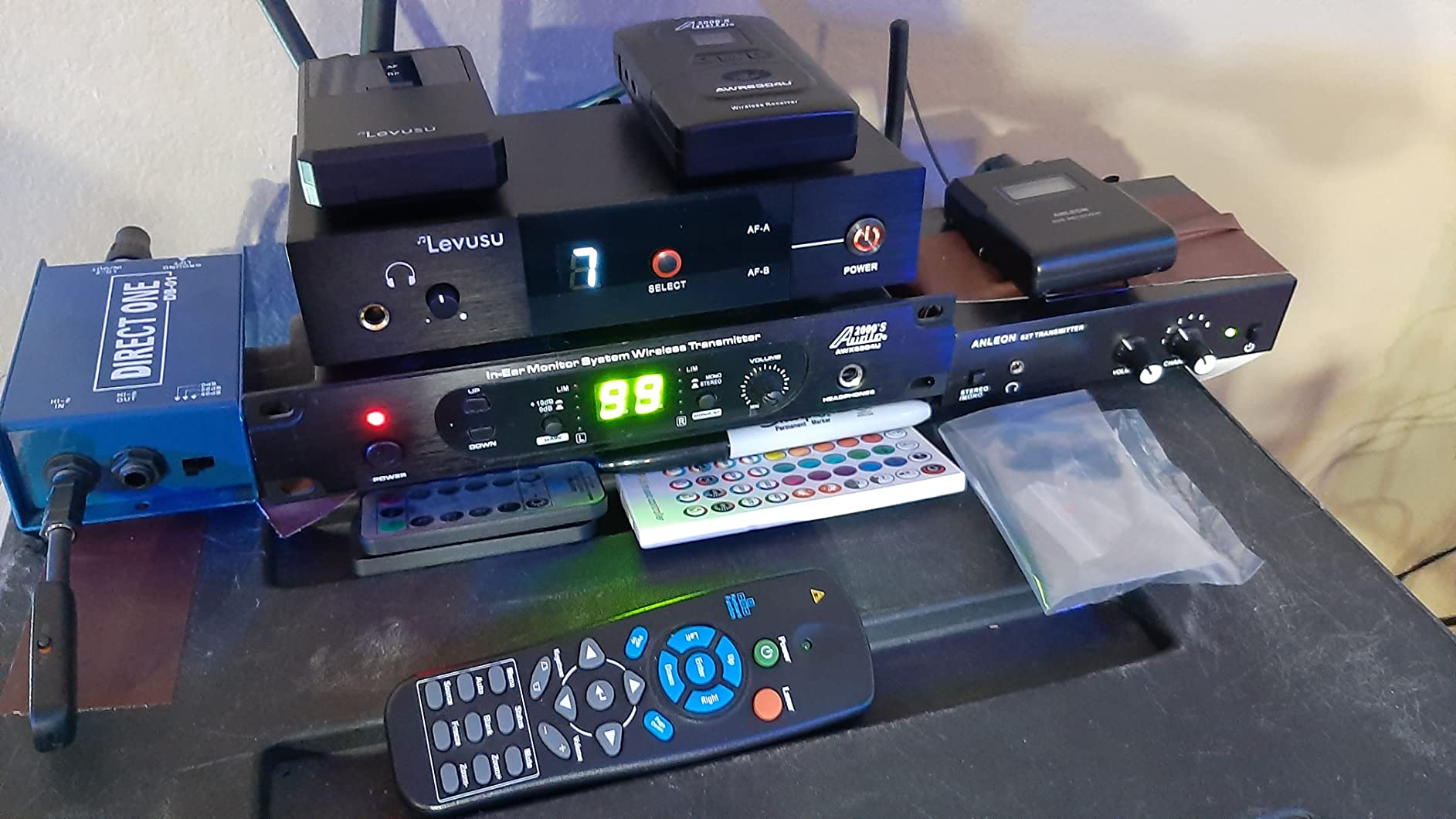
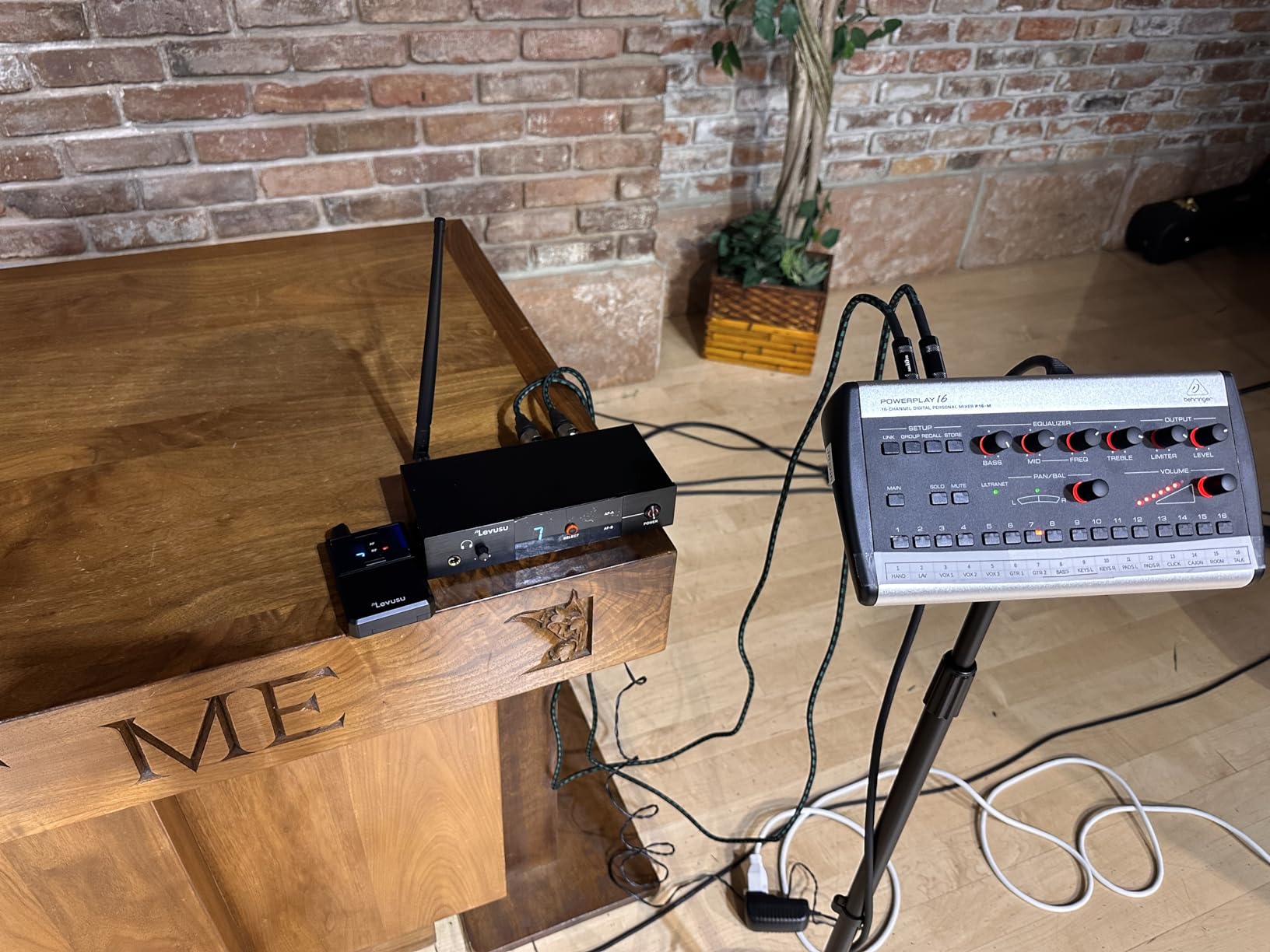
This one gets bought by church worship teams more than almost anything else in the category, and the reason is the expansion path. Any number of bodypacks can run on the same frequency, which means one transmitter covers a whole band on one shared mix. That is a different design goal from personal mixes, but for a small team it is often the right one.
Owners also single out output level. Several describe it as loud enough to drive earphones hard without a separate headphone amp, which removes a box and a cable from the signal chain.
One frequency, unlimited bodypacks
The 520-580MHz UHF band with 16 channels is a completely different RF environment from 2.4GHz. It is the reason this system works in rooms where the compact sets struggle, and it is why the UHF band is worth understanding before you buy anything at all.
The latency figure is under 4.5ms, which is among the fastest here, and the 107 dB signal-to-noise ratio keeps the noise floor down between songs.
Read the listing carefully before you promise stereo
Despite the listing language, the bodypack output is mono. Several reviewers flag this directly. If stereo panning in your mix is a requirement, this is the wrong box, and the Phenyx PTM-10 above is the budget alternative.
Battery life and control quirks
Battery life runs about eight hours stated, with one owner reporting roughly 30 hours on Energizer AAs. There is no battery meter on the bodypack, so charge discipline matters. Volume and channel buttons sit behind a flip-open door rather than a real knob, which is fiddly in a dark service.
5. JOYO JW-07 – A Practice Room Tool, Not a Platform System
JOYO Wireless in Ear Monitor System 2.4G Wireless IEM System with Transmitter Clip on Receiver Automatic Pairing in-Ear Monitoring for Studio,Guitar,DJ,Live Performance (JW-07)
48kHz/16bit audio
Latency under 5ms
Frequency hopping anti-interference
Over 8 hours battery
+ Pros
- Automatic pairing with no channel selection
- Very low latency for tracking practice
- Lightest unit here at 62 g
- Frequency hopping resists interference
- 12 channel banks across 4 groups
- Cons
- Short 40-60 ft open-space range
- One transmitter cannot drive multiple receivers
- 48kHz/16bit is lower resolution
- Limited feature set versus rack systems
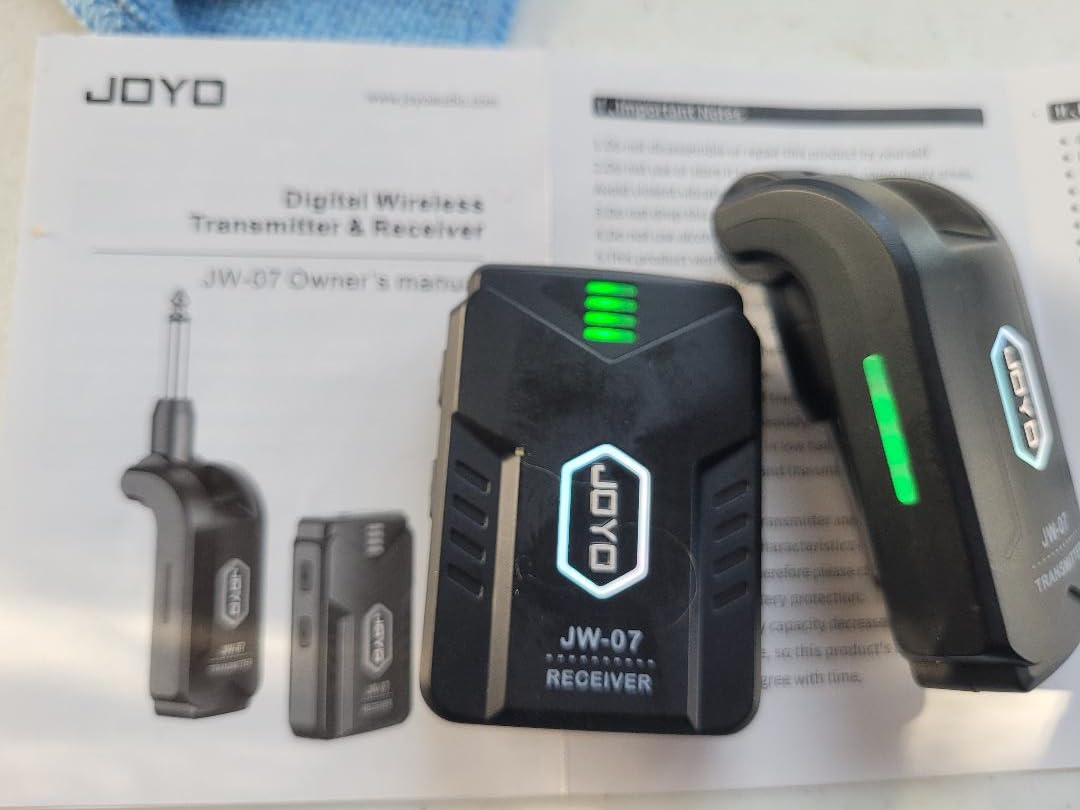
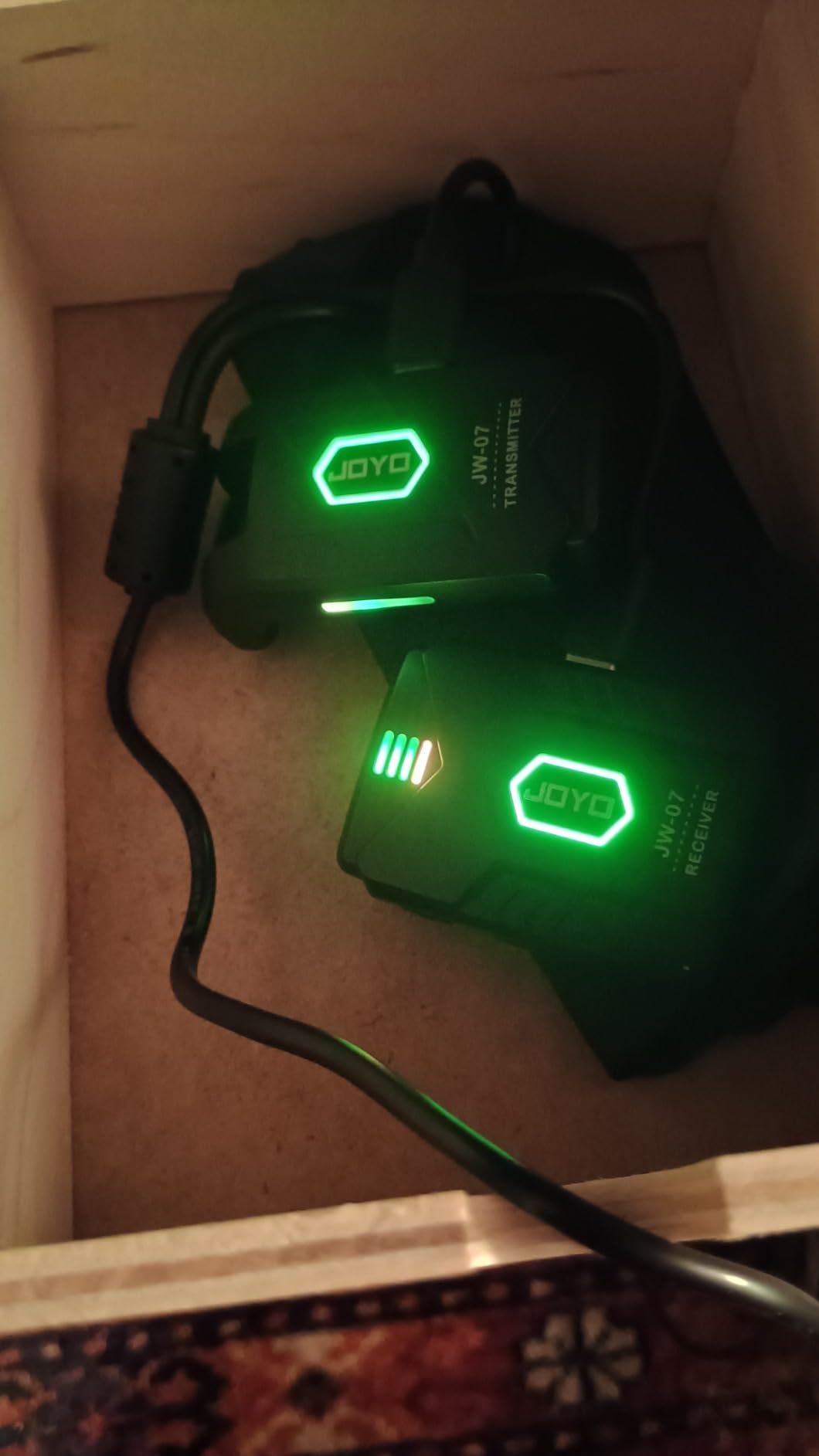
I want to be direct about where this fits, because the listing does not. With a 40-60 foot open-space range and one transmitter that cannot connect to multiple receivers, this is a personal practice and monitoring device. It is a guitar player learning to click track in their bedroom. It is not a worship band system, and I would not put four people on it.
That said, for its actual purpose the numbers are good. Under 5ms latency and frequency hopping are both genuinely useful for silent practice and tracking work.
Battery life leads the compact category
Over eight hours of built-in battery life is the best figure in this roundup, and at 62 grams it is also the lightest unit here. For a player who takes a monitor to a rehearsal room and back, that combination matters more than radio range.
Frequency hopping is a smart choice at this size
Frequency hopping moves the system between banks to avoid interference, and twelve banks divided into four groups give you options if a particular area is busy. It is a smarter congestion strategy than a fixed channel in a fixed band, even within the crowded 2.4GHz space.
The limitation that ends the conversation for churches
One transmitter cannot connect to multiple receivers. That single fact rules it out for band monitoring, no matter how good the latency is. If your church needs something for the drummer to rehearse at home, this is a fine pick, and for a full service look at the multi-receiver systems instead.
6. Xvive U45 – The Cleanest Radio in a Band Full of Phones
Xvive U45 Wireless in-Ear Monitor System, 5.8 GHz True Diversity IEM
5.8GHz true diversity
Channel Scan picks cleanest channel
110 dB signal-to-noise
Solid over 100 ft
+ Pros
- Highest rated unit here at 4.7 with 84 percent five-star reviews
- 5.8GHz avoids 2.4GHz Wi-Fi congestion
- Channel Scan picks the cleanest of six channels
- Compact at 0.37 kg with no dropouts reported
- Fast charging gives an hour of play per 10 minutes
- Cons
- Mono monitoring only
- Modest 5 hour stated battery life
- Transmitter still needs manual channel matching after scanning
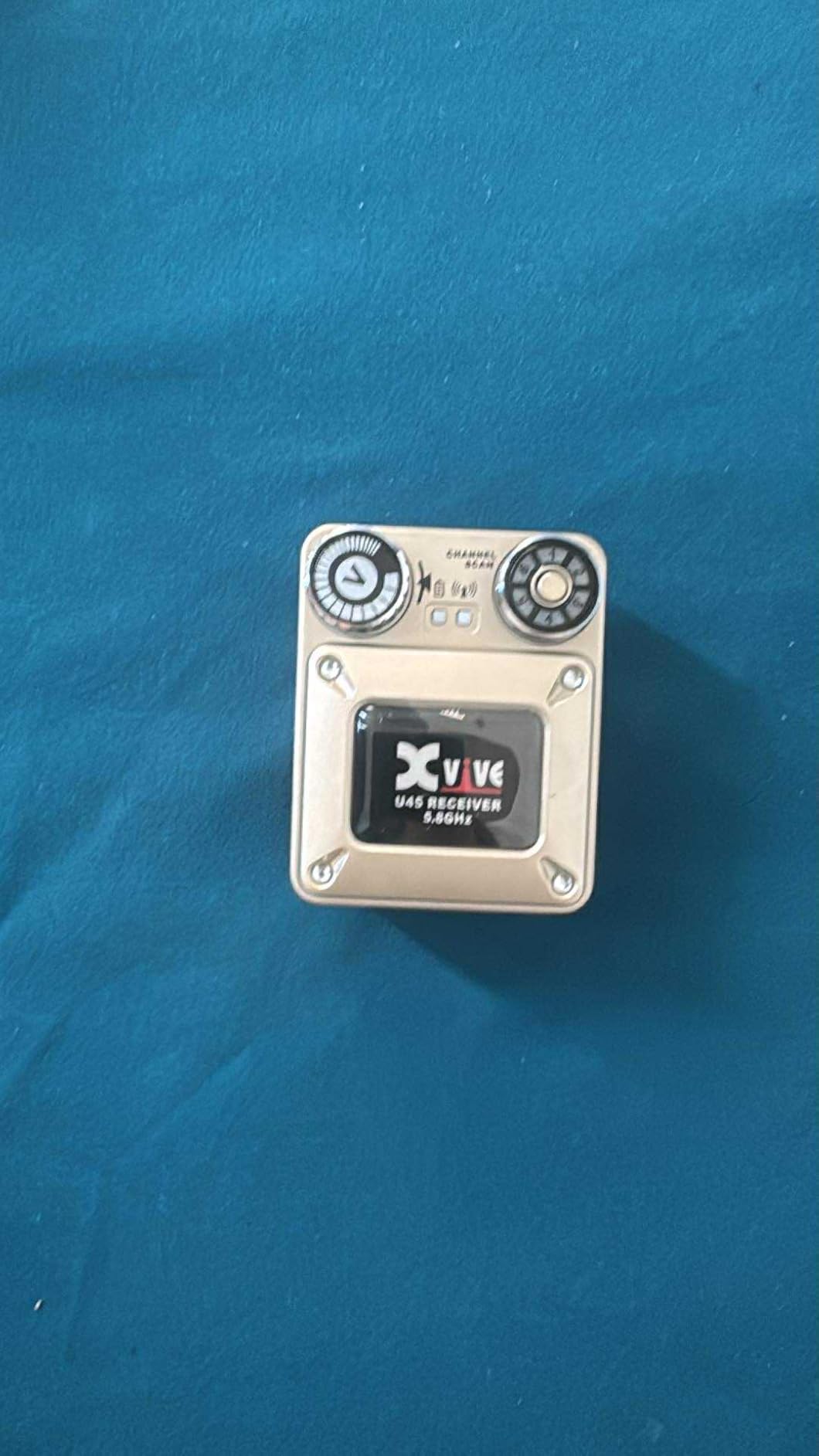
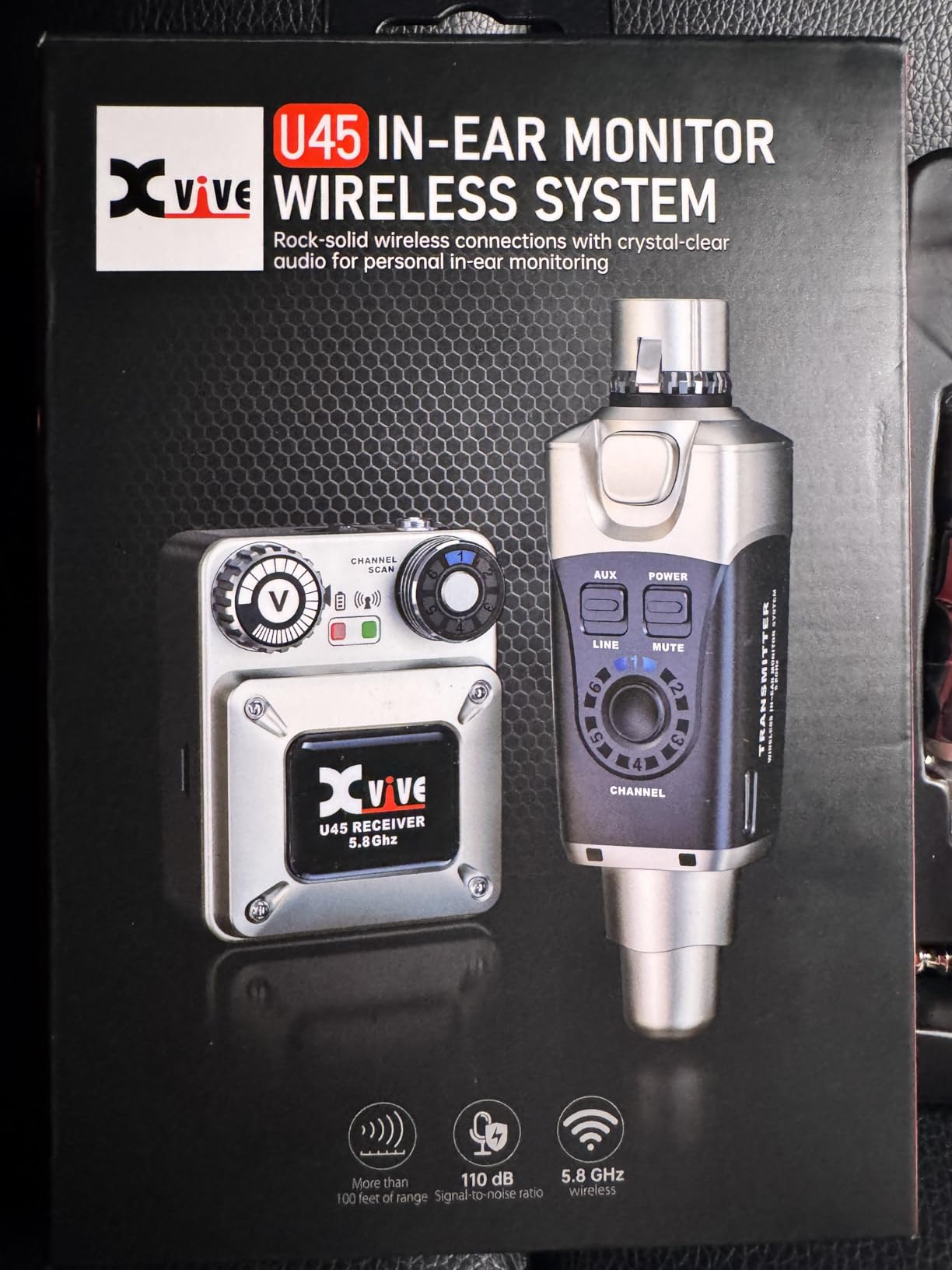
This is the highest-rated system in the roundup at 4.7 across 261 ratings, and the reason is a deliberate radio decision. Moving to 5.8GHz true diversity puts it outside the 2.4GHz band entirely, which means the Wi-Fi problem that derails compact systems simply does not apply here.
Reviewers who switched from 2.4GHz systems name the channel scan and the diversity reception as the decisive upgrade, reporting clean audio across multiple venues.
5.8GHz true diversity solves the sanctuary Wi-Fi problem
Every phone in the congregation is transmitting on 2.4GHz right now. That is why the popular budget sets report dropouts exactly when the room is full. A 5.8GHz system is not participating in that fight, and the 110 dB signal-to-noise ratio leaves plenty of headroom above the worship band’s dynamics.
The solid RF connection holds over 100 feet, which covers most sanctuary platforms with the transmitter placed well.
Channel Scan Mode takes the guesswork out of setup
Scanning evaluates six channels and selects the cleanest one automatically. You still confirm the match on the transmitter afterward, but the deciding step has already been made for you. That is a meaningful reduction in volunteer tech workload.
The two compromises to accept
Monitoring is mono, with no stereo imaging, and the stated battery is five hours. Fast charging softens the second one considerably: ten minutes of charge gives an hour of play, which covers a service if the pack is topped up at rehearsal.
7. Phenyx Pro PTM-11-4B – Four Players, One Mix, One Rack Shelf
Phenyx Pro Wireless In-Ear Monitor System, Dual IEM for Musicians, Mono Stage Monitor, Metal w/ 4 Bodypacks, 50 UHF Frequencies, Rack Mount, 164ft Range, for Studio/Band (PTM-11-4B)
Four bodypacks and earphones included
50 UHF frequencies
Up to 164 ft range
Line out pass-through
+ Pros
- Four bodypacks and earphones in one box
- 50 UHF frequencies reduce dropouts in crowded RF
- Half-rack metal chassis is compact and portable
- Line out pass-through returns signal to the board
- Up to 5 systems can run together
- Cons
- All four receivers share one mix
- Mono only with no panning
- Bodypacks use AA batteries rather than rechargeable
- Poor performance through thick walls or glass
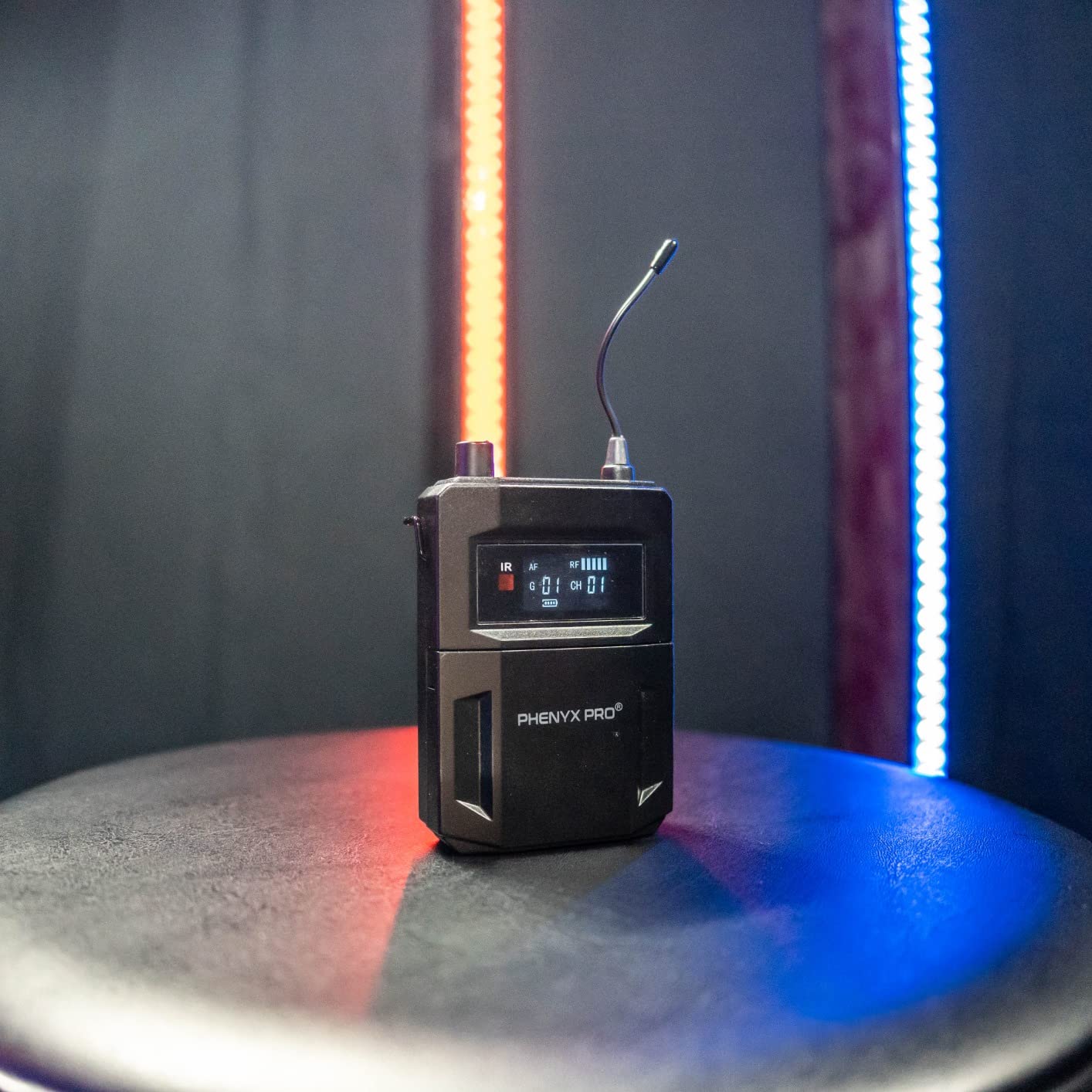
Here is the distinction that matters: all four receivers hear the same mix. This is not four personal mixes, it is one mix distributed four ways. That makes it a strong fit for a small worship team where you have decided the drummer, the bassist, and the keyboardist need to hear the same blend of rhythm section and click.
It is also the cleanest value per position in the roundup, because the box contains four bodypacks and four earphones rather than one of each.
Mono monitoring is a deliberate choice here
The manufacturer positions mono monitoring as a way to eliminate phase-related blurring. In a shared mix serving four players, that is a defensible design choice rather than a limitation, and it removes the panning question entirely.
The band coverage runs across two ranges: 902.35-914.6MHz and 530.05-542.3MHz, with 50 frequencies in each. Having two available ranges is useful when your existing wireless microphones occupy one of them.
Line out pass-through keeps your signal chain intact
Paired inputs with a line out back to the soundboard let the original signal continue downstream. In a volunteer-run setup where someone will inevitably unplug the wrong cable, that pass-through is a quiet form of insurance.
Know its limits before service night
Bodypacks run on AA batteries rather than rechargeable packs, and line-of-sight performance degrades badly through thick walls, glass, or metal. Set the transmitter where the stage actually is, not where the rack is.
8. XTUGA RW2080 – Two Independent Channels With 300-Foot Coverage
XTUGA RW2080 Wireless in Ear Monitor System,4 Bodypacks UHF IEM(902-928mhz)
Two-channel UHF IEM system
Up to 300 ft coverage
2x40 adjustable frequencies
Up to 20 hours battery
+ Pros
- Two independent UHF channels for separate mixes
- Up to 300 ft coverage for full-stage movement
- Supports 6+ systems simultaneously
- Up to 20 hours on AA batteries
- Metal transmitter with LCD and rack mount kit
- Cons
- Only two channels so no four-way independence
- Bodypacks are lightweight ABS plastic
- Included earphones are basic
- 900MHz band is shared in some regions
Two independent channels is a strange number for a worship band, and that is precisely the use case. Split a rhythm pair on one channel and the vocal pair on another, and you get two genuinely different mixes from a single rack shelf. That is the common pattern for a mid-size team that cannot afford four channels yet.
Coverage of up to 300 feet, typically 250 to 350, is the longest reach in this roundup and removes any question about a vocalist walking to the far corner of a sanctuary.
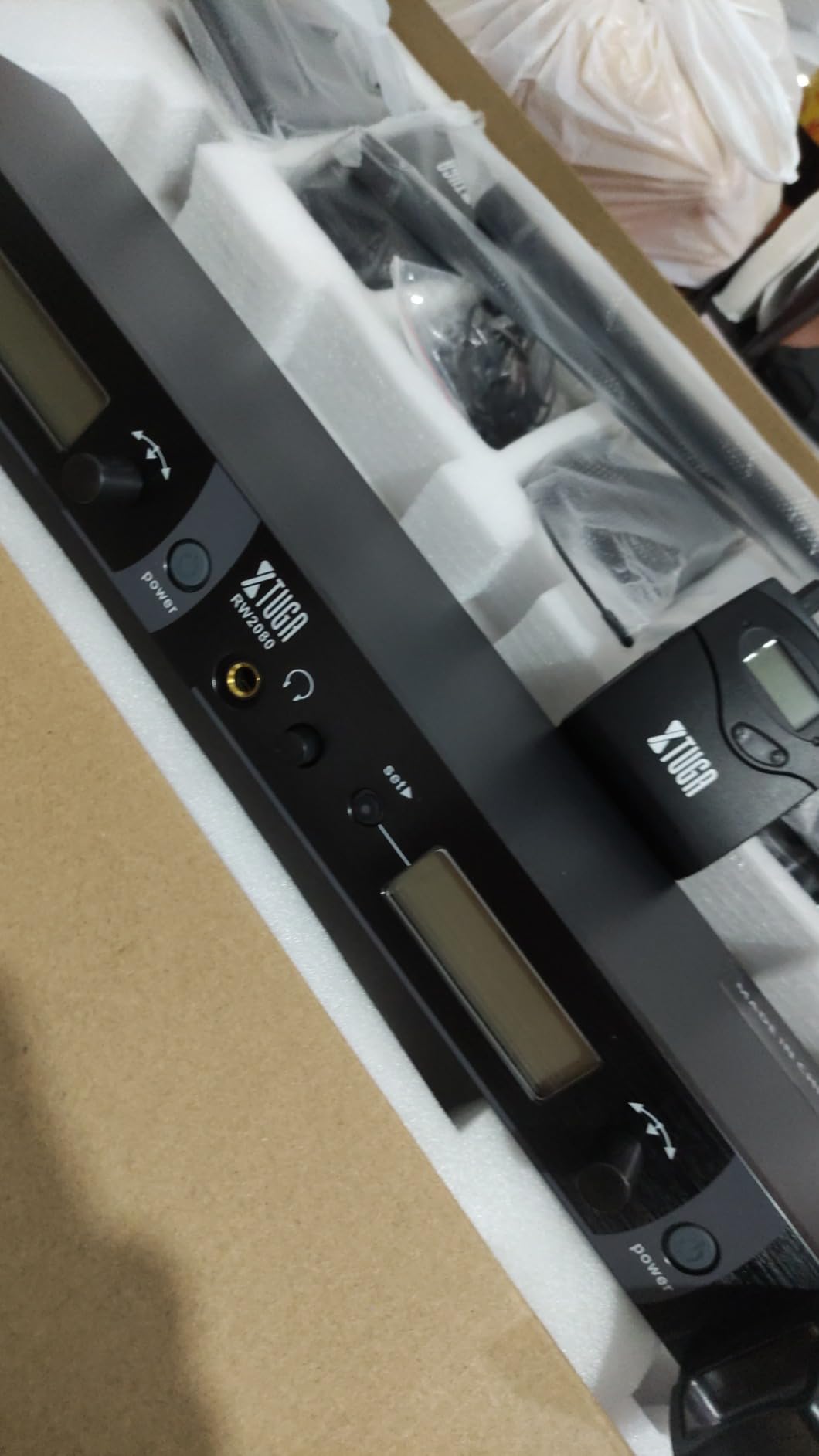
Two channels, two mixes, one shelf of rack
Each channel carries 2×40 adjustable preset frequencies inside a 32MHz band, and the system supports six or more units running together without interference. That headroom means you can add a second system later without rebuilding your frequency plan from scratch.
Battery and build quality in a portable package
Up to 20 hours of stated battery life on AA cells means a church team can run several services without a charging shelf. The transmitter is metal with an LCD status display and a rack mount kit; the bodypacks are ABS plastic, which is where the cost saving shows.
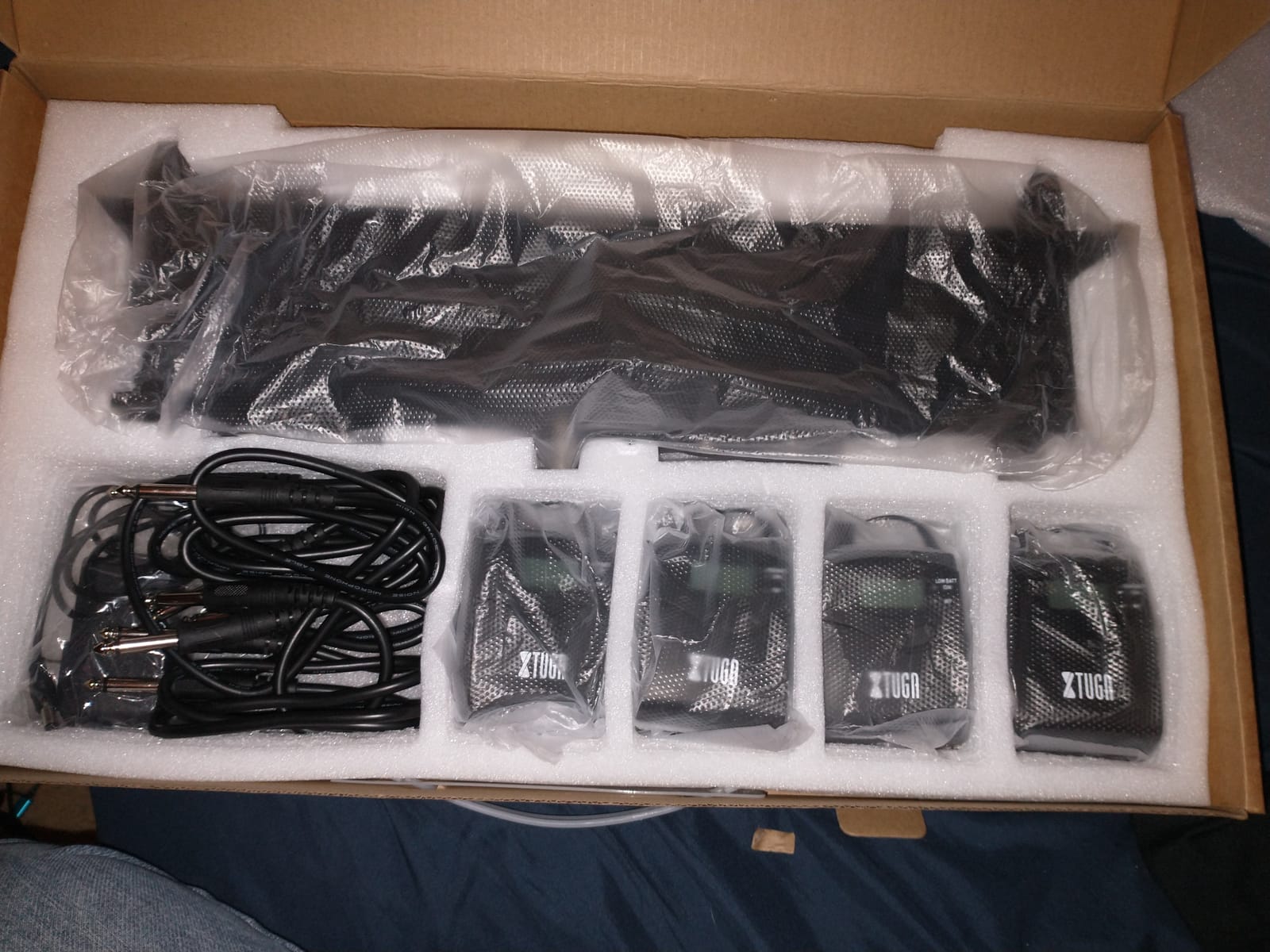
When two channels is not enough
The ceiling is the deciding factor. If your band wants the drummer, the bassist, the keys, and each vocalist on their own balance, two channels will not get you there, and you should be looking at the four-channel system further down instead.
9. Phenyx Pro PTM-33-4B – Four Real Personal Mixes in One Rack Space
Phenyx Pro 4-Channel UHF Mono Wireless in Ear Monitor System PTM-33-4B
4-channel station, loop outs
Four mixes, four aux jacks
4x25 UHF frequencies
140-164 ft range
+ Pros
- Four independent personal mixes in one 1U space
- IR one-touch sync needs no channel labeling
- Output is roughly five times louder than budget packs
- Loop outputs let you feed another device
- Sturdy belt clips that do not fly off
- Cons
- Mono only with no stereo imaging
- 1/4 inch TS inputs rather than XLR
- Plastic bodypacks with fragile antennas
- Reported 1U chassis may not fit a standard 19 inch rack
This is the answer for a worship team that has outgrown shared mixes and wants genuine personal monitoring on a limited budget. Four aux sends from the board produce four standalone mixes, and the whole thing lives in a single 1U rack space with four bodypacks included.
Owners regularly describe it as a cheaper and louder replacement for professional bodypacks they priced out. One long-term owner reports drop-free operation across ten two-hour shows in multiple venues.
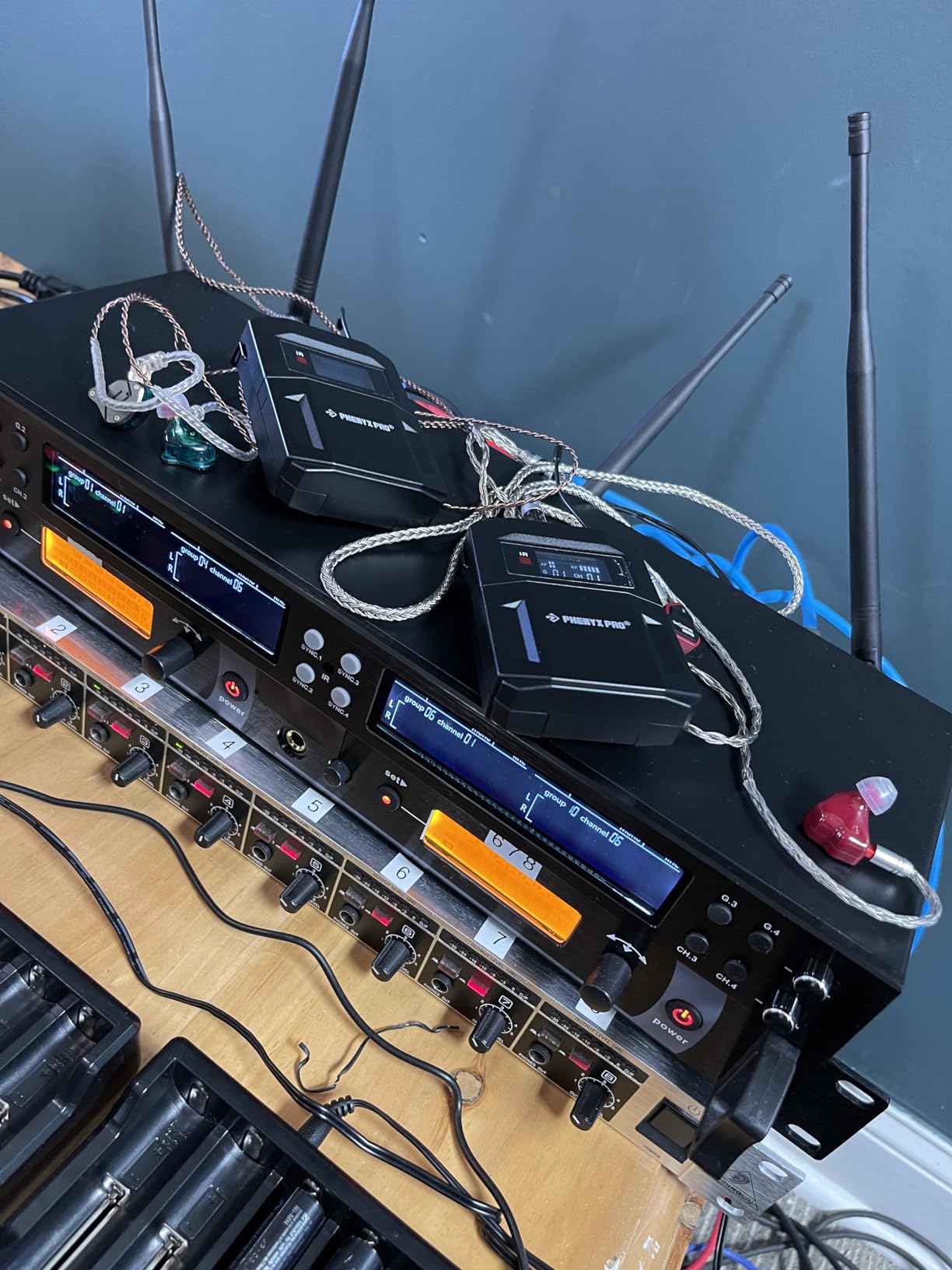
Four personal mixes without four boxes
The engineering here is in the packaging. Rather than four transmitters and four antennas, it is one monitor station with four groups of inputs and loop outputs. Reviewers call out the space and cost saving explicitly, and the sturdy belt clips are noted as better than the spring clips on most budget packs.
Output level high enough to skip a headphone amp
Reviewers put the output at roughly five times louder than most budget packs, which means no separate headphone amplifier in the chain. For a band moving between rooms with volunteers who do not own studio gear, that removes a failure point.
Accessories are where the corners get cut
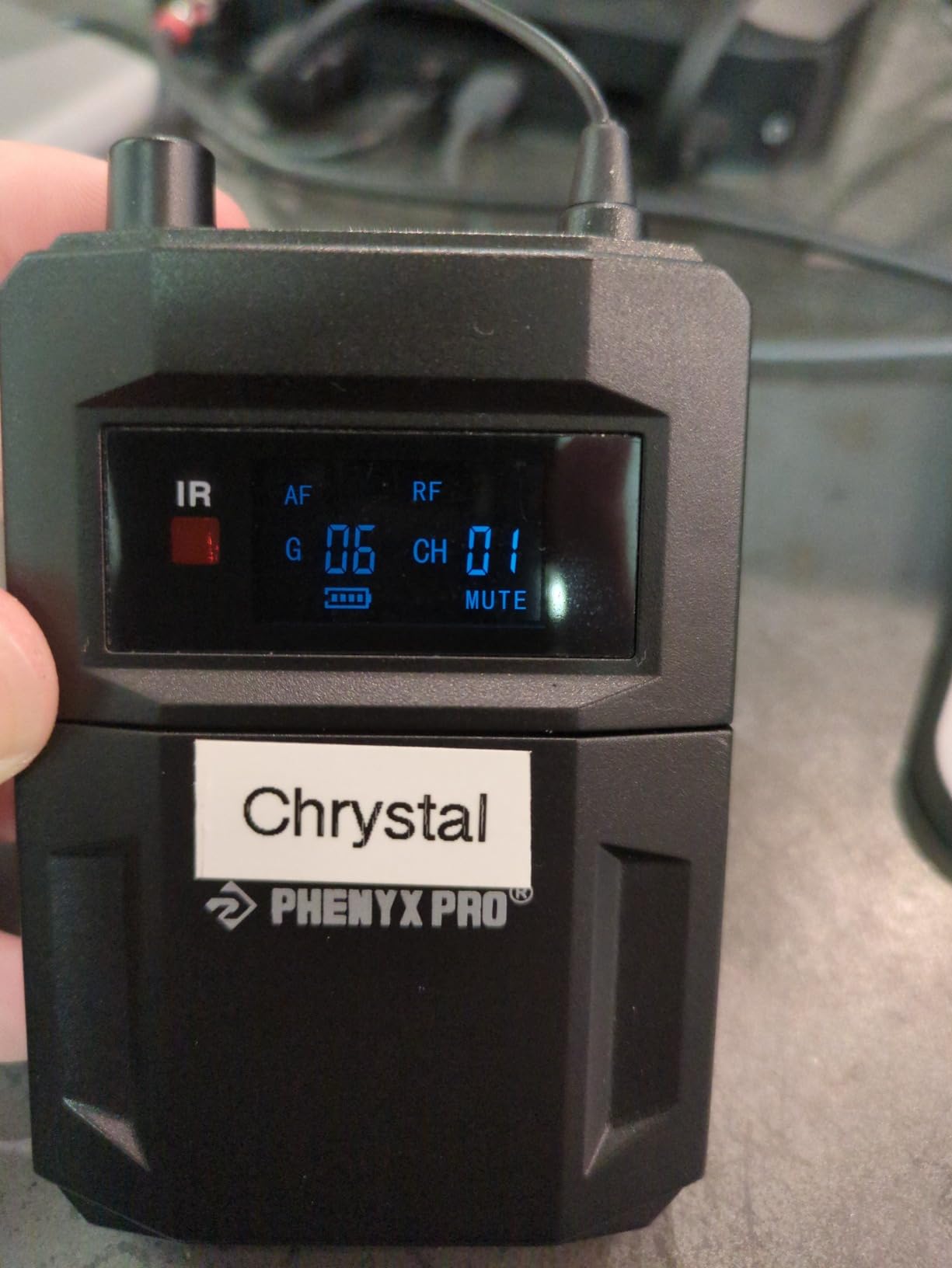
Inputs are 1/4 inch TS rather than XLR, so adapters have to be bought separately. The power adapter is non-IEC, meaning a short extension in a tight rack. Bundled earphones are poor, and one owner reported the 1U chassis will not fit a standard 19 inch rack with antennas mounted. Measure your rack before ordering.
10. LEKATO MS-02 – The Longest Battery in the Compact Category
LEKATO Wireless in Ear Monitor System MS-02, Upgraded 2.4G Stereo IEM System Low Latency with Transmitter Beltpack Receiver Auto-Pairing,One to More, in-Ear Monitoring for Church,Band,Singer,Stage
Under 4.5ms latency, mono
One TX to many RX, up to 4 pairs
6-8 hours per charge
100 ft range
+ Pros
- Under 4.5ms latency is the best in this size class
- One TX to many RX covers a small group
- 6-8 hour battery with visible level LED
- One-key mute for control at critical moments
- Compact at 0.15 kg
- Cons
- Earbuds not included and sold separately
- 100 ft range is short against UHF options
- 2.4GHz can pick up Wi-Fi congestion
- Quoted latency is for the mono path
The upgraded follow-up to the MS-1, and the changes are meaningful. Latency drops to under 4.5ms, battery life extends to six to eight hours, and the receiver count drops from six to four pairs. For a small worship group or a rehearsal room, four receivers is usually the right number anyway.
The one-key mute on the transmitter is a small feature with real value. When a service goes quiet, one press kills the audio without anyone fumbling at the bodypack.
Battery life and indicators you can read at a glance
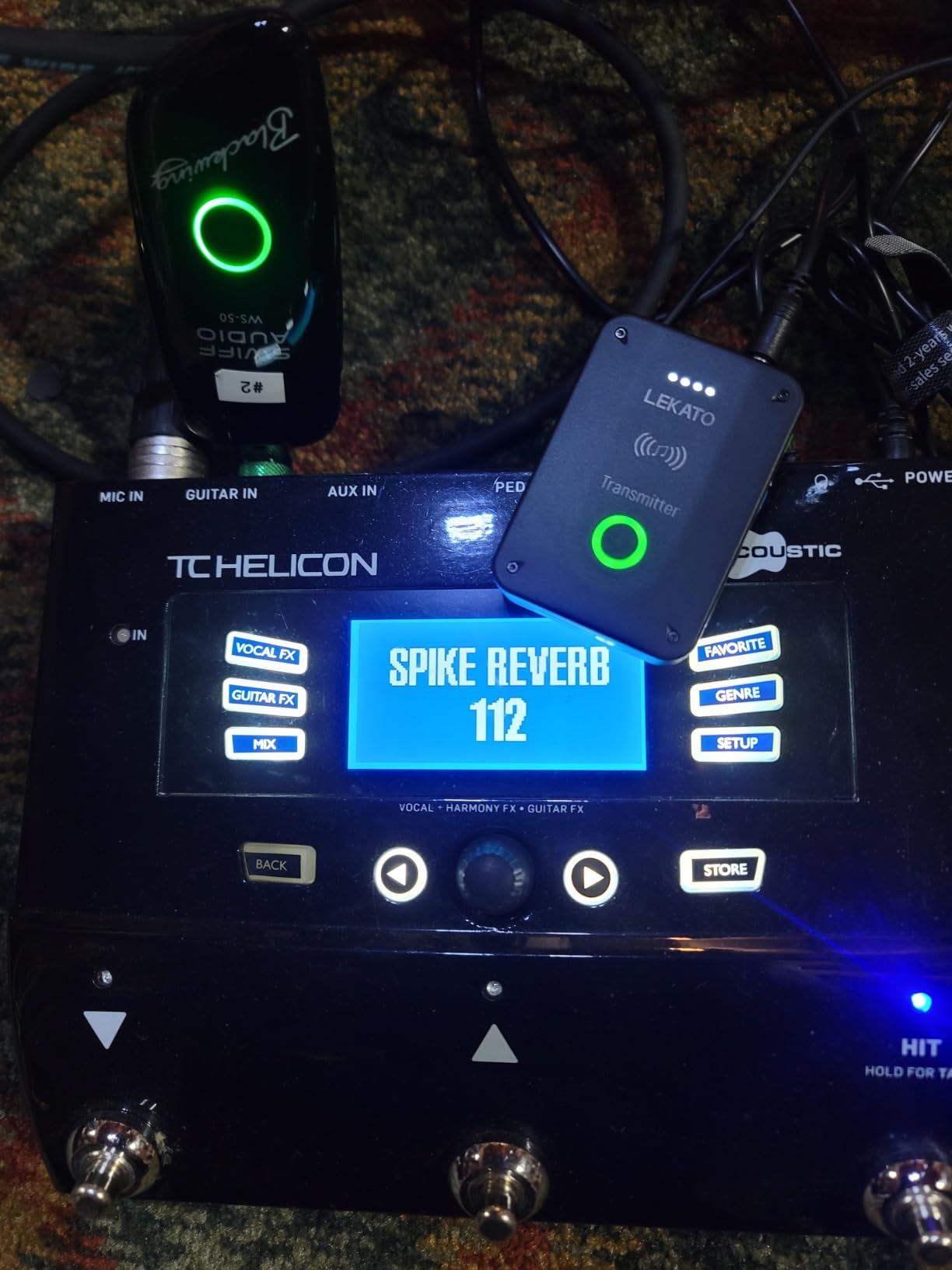
Six to eight hours of continuous operation per charge, with a battery level LED and a five-level volume indicator, covers a full rehearsal plus a service without a charging station. That is the difference between a monitor people use and a monitor people charge overnight.
Reception room, not stage
The 100 foot open-area range is short next to UHF systems, and the 2.4GHz band remains exposed to Wi-Fi. In a rehearsal room or a small sanctuary with a short platform, that is fine. In a room with a deep stage and a busy congregation, choose a UHF or 5.8GHz system instead.
Budget for earphones separately
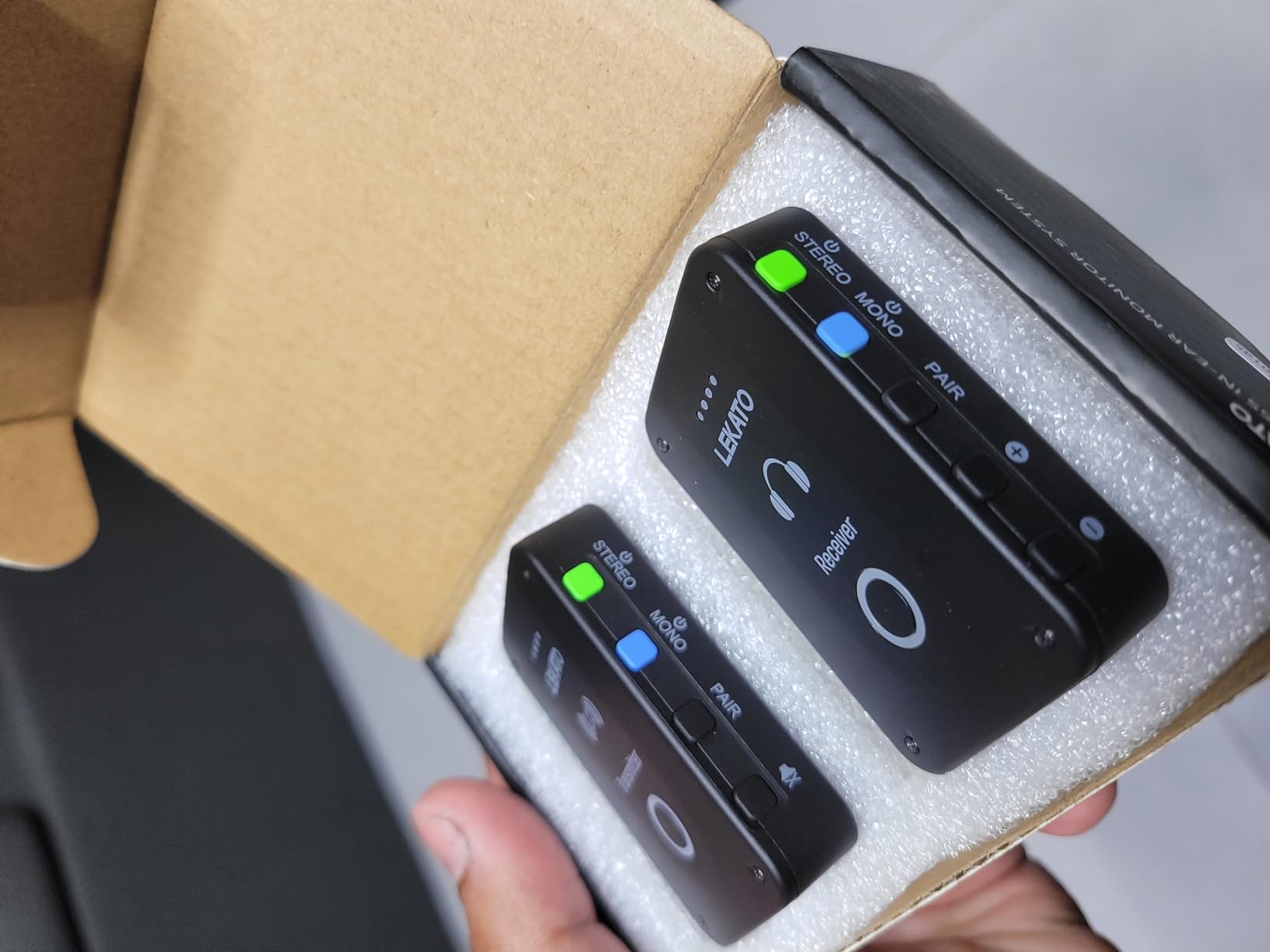
Earbuds are not included with this one. For a team buying four positions, that is four additional earphone purchases, and it is the detail most often missed when comparing this set against packages that bundle them.
How to Choose: What Each Position on Stage Actually Needs
Start with the drummer. Always the drummer. A drummer playing at stage volume without wedges is the loudest thing on the platform, and cutting that position first delivers the biggest stage volume reduction per position you convert. It is also the position where the low end is hardest to reproduce in an earphone, which is why the drummer needs the best fit you can give them, not the cheapest.
Then work outward. Bass and keys usually want a fuller low end and less high frequency, and they tend to stay in one spot, which makes them good candidates for a shared channel or a wired personal mixer. The vocalist is the position with the most arguments, mostly about the occlusion effect, where your own voice sounds boomy and unnatural in a sealed earphone. The fix is a mix with less low end sent to the vocal position, plus an ambient microphone if they need the room back.
Roles that move need wireless. A worship leader who walks off the platform, an acoustic guitarist who steps to the edge of the stage, or a worship team that rotates instruments between services should be on wireless regardless of budget. Roles that never move can be served by a wired personal mixer over the stage cable, which is the cheapest per-position monitoring available and immune to every RF problem discussed in this article.
Wired vs Wireless: Who Needs to Move, and Who Does Not
The honest answer is that most positions do not need wireless. A drummer, a bassist, and a keyboard player who stay in the same mark every service can each run a wired personal mixer fed from an aux send, with a headphone amp if their earphones need one. Wired monitoring has zero latency, zero interference, and zero frequency coordination, and it is the most reliable option that exists.
Wireless earns its place at moving positions and in any sanctuary where cable runs across the platform are a trip hazard. The trade is RF planning and battery discipline. A mixed approach is the normal answer for most churches: wireless for the leader and the vocalists, wired for the rhythm section.
Do all musicians need wireless systems? No. Ask instead whether they move, whether the stage is a place where cables are acceptable, and whether the volunteer team can manage frequency coordination. Most bands want wireless on four positions out of eight, not eight out of eight.
Frequency Bands for Churches: 2.4GHz, 900MHz and UHF
Understanding why these systems differ comes down to one variable: how crowded the band is where you are standing. 2.4GHz is where consumer Wi-Fi lives, and in a sanctuary full of phones it is the most contested spectrum available. Systems on that band, including the Xvive U4 and both LEKATO sets, work well in rehearsal rooms and small rooms and can struggle in a full congregation.
5.8GHz is the clean escape from that congestion, which is why the Xvive U45 reports no dropouts in venues where 2.4GHz units struggle. UHF bands, including the 520-580MHz and 902-928MHz ranges here, sit well away from Wi-Fi entirely and scale to multiple simultaneous systems.
One more piece of real-world guidance: frequency coordination matters more than any spec. If your church already runs wireless microphones, note their band before buying, and choose a monitor system that operates elsewhere. Several systems here support five or six units simultaneously, which is enough for a full band plus a spare. Count your positions, confirm the band is clear of your microphones, then run a full soundcheck before the first service rather than after.
Frequently Asked Questions
Which musician should get in ear monitors first?
The drummer. Cutting the drummer off stage wedges delivers the largest stage volume reduction of any single position, and the drummer is the hardest player to monitor at high volume. Once that position is on in-ears, work outward to bass and keys, then the vocal positions.
Do all musicians in a worship band need wireless in-ear systems?
No. Roles that stay in the same mark every service can use wired personal mixers fed from aux sends, which cost less per position, add no latency, and cannot suffer interference. Wireless is worth it for worship leaders and vocalists who move across the platform.
Which in-ear monitor system is best for a small church?
For a small church, the Xvive U4 is the strongest all-round pick: under 5ms latency, a rechargeable battery covering two services, and six channels to step around interference. The LEKATO MS-1 is the value option when one transmitter must serve several receivers.
Why do musicians say in-ear monitors feel disconnecting?
Most often it is isolation plus a narrow mix. Add an ambient microphone at the stage lip so the congregation comes back into the earphones, and reduce the low end in the vocal mix to counter the occlusion effect that makes your own voice sound boomy.
Can musicians use their own earbuds with a church in-ear system?
Yes, and most reviewers do. Every system here drives standard 3.5mm earphones, and owners consistently replace the bundled earbuds with better ones. Budget the earphone cost per position separately, since some packages like the LEKATO MS-02 do not include any at all.
Should in-ear monitor mixes be stereo or mono?
Stereo gives you panning so each player hears the band positioned around them, which most worship teams prefer for orientation. Mono removes phase ambiguity and some systems use it deliberately. Several systems in this roundup are mono only, so check before choosing.
The Verdict: Match the System to the Band You Actually Have
If you need one dependable system with the deepest review history and the fastest latency, the Xvive U4 is the choice, and it is where I would start a church moving off floor wedges. If the constraint is getting several positions covered from one transmitter, the LEKATO MS-1 covers more receivers than anything else in this roundup. If your sanctuary’s Wi-Fi is the problem, the Xvive U45’s 5.8GHz diversity or the Phenyx PTM-10’s 900MHz band solves it directly.
Once your band outgrows shared mixes, the Phenyx PTM-33-4B gives four genuine personal mixes in one rack space. Count your moving positions, pick the band that matches your wireless microphones, run a full soundcheck, and then hand out bodypacks one at a time starting with the drummer. That sequence, more than any brand name, is what makes in-ears work in a worship setting.