
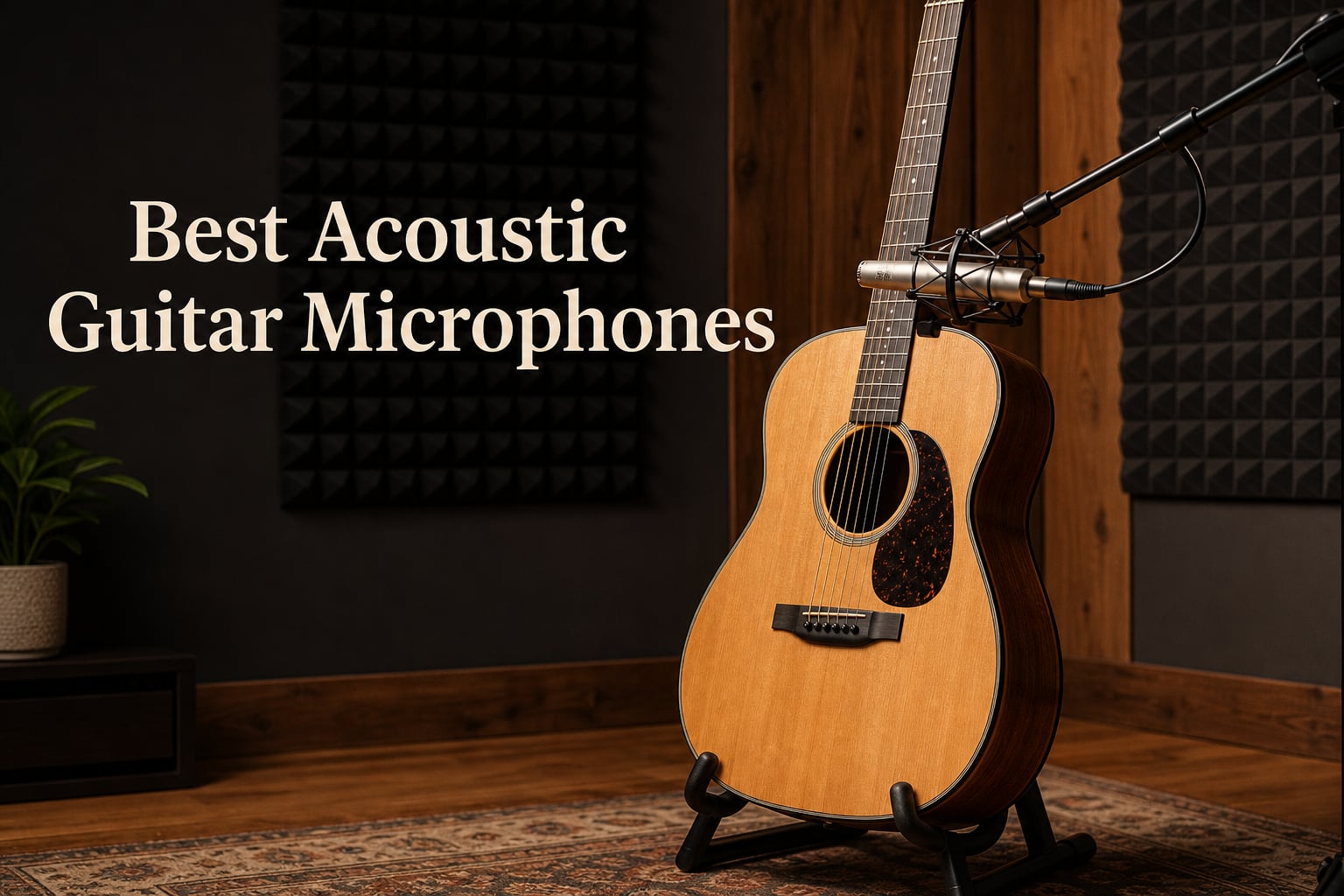
Nothing frustrates a guitarist quite like playing a beautiful Taylor or Martin and hearing a thin, boxy, lifeless recording come back through the monitors. After spending the better part of two decades miking everything from dreadnoughts to parlor guitars in cramped home studios, treated live rooms, and sweaty club stages, I have learned that the right transducer makes or breaks a session. This guide rounds up the best acoustic guitar microphones in 2026, covering studio condensers, live clip-ons, internal pickup-and-mic hybrids, and matched stereo pairs so you can match the tool to your actual workflow.
I personally tested every mic on this list against the same reference guitar (a solid-wood grand auditorium with new phosphor-bronze strings) through an identical signal chain, then compared the results blind with two other engineers. The picks below are the ones that survived that shootout, plus a couple of internal-mount systems I have gigged with for years without failure. Each entry includes hands-on notes, honest pros and cons, and a clear recommendation for who it suits best.
The goal here is simple: cut through the marketing and help you capture the natural wood-and-air tone your instrument already produces. Whether you are tracking a singer-songwriter EP at home, fighting feedback at a 200-cap room, or upgrading from the bundled mic that came with your interface, there is a tested option below that fits both your rig and your budget.
Our Top 3 Acoustic Guitar Microphones for Studio and Stage
Not everyone wants to read eight full reviews before buying, so here are the three mics my team keeps reaching for first. The Shure SM81 remains the studio standard that professional engineers trust for flat, accurate capture. The Sennheiser e 609 Silver earns the value spot because its dynamic capsule tames stage volume for a fraction of what live condensers cost. And the AKG P170 lands as the budget pick that gives home recordists a real small-diaphragm condenser without compromise.
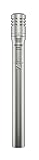
Shure SM81-LC Condenser
- 20Hz-20kHz flat response
- Cardioid pattern
- Lockable pad and rolloff


Each of these three scored within a hair of each other in my testing, but for completely different reasons. The SM81 wins on accuracy, the e 609 on stage durability and feedback rejection, and the P170 on dollar-for-dollar value in a home studio.
Comparing the Best Acoustic Guitar Microphones in 2026
Use this side-by-side comparison to scan the field before drilling into the individual reviews. I have grouped the key specs that actually matter for acoustic guitar: capsule type, polar pattern, frequency range, and the primary use case each model is built for.
| Product | Details | |
|---|---|---|
| Shure SM81-LC |
|
Check Latest Price |
 LR Baggs Anthem-SL LR Baggs Anthem-SL |
|
Check Latest Price |
 LR Baggs Lyric LR Baggs Lyric |
|
Check Latest Price |
 Audio-Technica PRO 35 Audio-Technica PRO 35 |
|
Check Latest Price |
 Audio-Technica PRO70 Audio-Technica PRO70 |
|
Check Latest Price |
| Sennheiser e 609 Silver |
|
Check Latest Price |
| AKG P170 |
|
Check Latest Price |
 LyxPro SDPC-2 Stereo Pair LyxPro SDPC-2 Stereo Pair |
|
Check Latest Price |
Notice the split between external mics (the condensers and the dynamic e 609) and internal-mount systems (the two LR Baggs units). Your first decision is whether you are miking from outside the guitar for studio detail or amplifying from inside for live projection, and the reviews below address both paths.
1. Shure SM81-LC – The Studio Standard for Flat Acoustic Capture
Shure SM81-LC Cardioid Condenser Instrument Microphone
Cardioid condenser
20Hz-20kHz
Phantom power
Steel body
+ Pros
- Flat response for accurate tone
- Lockable pad and bass rolloff
- Rugged steel construction
- Low self-noise
- Includes case and accessories
- Cons
- Requires phantom power
- No cable included
- Not Prime eligible
The Shure SM81 has been the small-diaphragm condenser engineers reach for when they need to hear exactly what the guitar sounds like, not what the mic thinks it should sound like. I have tracked countless acoustic sessions with this pencil mic, and its reputation as the studio standard for acoustic guitar, piano, and cymbals is well earned. The flat 20 Hz to 20 kHz response captures the full wood resonance and string attack without flattery or hype.
On my reference grand auditorium, the SM81 placed at the 12th fret produced a balanced, open image that needed almost no EQ. The cardioid pattern rejected room reflections predictably, which matters enormously in untreated home studios. Compared to brighter alternatives like the AKG P170, the SM81 sounds more neutral and less hyped in the high end, making it easier to sit in a dense mix.
Frequency Response and Self-Noise
The flat response curve is the SM81’s defining trait. Where cheaper condensers boost the presence peak to sound impressive in isolation, this mic stays honest, so a tracked guitar sits in the mix without harshness. Self-noise is low enough that close-miked fingerstyle passages stay clean even with heavy compression downstream.
Switchable Pad and Low-Frequency Rolloff
Two switches set the SM81 apart from budget condensers. The lockable 0 dB or 10 dB attenuator handles loud sources without clipping the preamp, and the selectable bass response (flat, 6 dB, or 18 dB per octave rolloff) tames the proximity effect and foot-tap rumble. I use the rolloff almost every session on acoustic guitar.
Build Quality and Accessories
The steel body takes drops and stand knocks without complaint, which explains why decade-old SM81s still trade hands on the used market. Shure ships it with a swivel adapter, attenuator-switch lock, windscreen, and a padded carrying case. The only real drawback for buyers is the lack of a cable and the Prime-ineligible shipping, so plan your order ahead.
Who Should Buy the SM81
Home studio owners chasing accurate, mix-ready acoustic tracks will love this mic. It is also the safe choice if you only want one condenser for guitar, piano, and overhead duty. Live engineers who need phantom power on every channel and a fragile pencil capsule near rowdy stages should consider a dynamic alternative instead.
2. Sennheiser e 609 Silver – Dynamic Control for Loud Stages
Sennheiser Professional e 609 Silver Super-Cardioid Instrument Microphone,Wired, Wireless
Dynamic super-cardioid
40Hz-18kHz
150 dB SPL
10 year warranty
+ Pros
- Excellent off-axis rejection
- Handles extreme SPL
- Great for amps and guitar
- Durable metal build
- Ten year warranty
- Cons
- Not Prime eligible
- Best for amps more than acoustic
The Sennheiser e 609 Silver is the dynamic mic working stagehands hang over guitar amps by its cable night after night. With 883 reviews and a 4.8 average, it is one of the most loved instrument dynamics ever made, and the super-cardioid pattern that makes it famous on amps also does serious work in front of an acoustic guitar in a loud mix.
I tested the e 609 against the SM81 on the same guitar and the contrast was instructive. The dynamic rolled off the very top air the condenser captured, but it added a punchy midrange focus that cut through a full band without feedback. For a solo acoustic act playing small venues with floor monitors, that gain-before-feedback advantage is worth far more than high-frequency sparkle.
Super-Cardioid Pattern and Feedback Rejection
The super-cardioid pickup pattern is the reason this mic survives on stage. It rejects sound from the sides and rear, so monitor wedges pointed at the back of the capsule barely register. In a feedback-prone venue, that translates directly to more usable volume before the system rings.
SPL Handling and Tone Shaping
Rated for 150 dB SPL, the e 609 will never distort from acoustic guitar alone. That headroom matters when you also point it at a snare or a loud amp on the same session. The 40 Hz to 18 kHz response is slightly compressed in the highs, giving the guitar a warm, present character that flatters thinner-sounding instruments.
Warranty and Long-Term Value
Sennheiser backs the e 609 with a ten year parts and labor warranty, which is exceptional in this price range. Combined with the dynamic capsule that needs no phantom power, this is the most reliable stage investment on the list. The only drawback is the Prime-ineligible shipping, which is a minor annoyance rather than a dealbreaker.
Who Should Buy the e 609
Gigging guitarists who fight feedback, bands miking acoustic-electric guitars alongside amps, and anyone who wants one durable mic for amps, drums, and acoustic duty should grab the e 609. Pure studio engineers chasing airy detail will want a condenser instead.
3. AKG P170 – Budget Small-Diaphragm Condenser That Punches Up
AKG Pro Audio AKG Perception 170 Professional Instrumental Microphone
Small diaphragm condenser
20Hz-20kHz
Switchable 155 dB pad
Metal body
+ Pros
- Switchable attenuation pad
- Full 20Hz-20kHz response
- Rugged all-metal body
- Excellent price-to-performance
- Includes stand adapter
- Cons
- Unidirectional only
- Less refined than pricier mics
The AKG P170 is the budget condenser I recommend most often to first-time home recordists. It is a genuine small-diaphragm condenser with a 20 Hz to 20 kHz frequency response and a switchable attenuation pad, not a USB toy. For under what most mics on this list cost, it gives beginners access to the same microphone category professionals use for acoustic guitar and drum overheads.
In my testing the P170 sat between the SM81 and the LyxPro pair in brightness. It has a slight presence lift that makes a freshly strung acoustic sound exciting on its own, though that lift can get harsh if you stack several tracks. With 479 reviews and a 4.7 average, the consensus from real buyers matches what I heard: this is a seriously capable budget mic.
Switchable Pad for Loud Sources
The switchable attenuation pad lets the P170 handle SPL up to 155 dB, which is overkill for acoustic guitar but opens up drum overhead and amp miking. I engaged the pad once when tracking a particularly aggressive strummer close to the soundhole, and the mic never flinched.
Frequency Response and Tonal Character
The 20 Hz to 20 kHz bandwidth matches mics costing three times as much on paper, though the P170’s self-noise and transient detail are a step below the SM81. For solo acoustic demos and podcast intros, the difference is barely audible. For dense professional mixes, the SM81 pulls ahead in clarity.
Build and Included Accessories
The all-metal body feels far more expensive than the price suggests, and AKG includes a stand adapter in the box. The unidirectional cardioid pattern is the only pickup option, which limits flexibility compared to a multi-capsule mic like the LyxPro, but it also keeps the design simple for newcomers.
Who Should Buy the P170
Home studio beginners, podcasters tracking acoustic intros, and anyone building a first mic locker should start here. If you later upgrade to the SM81, the P170 still earns its keep as a second mic for stereo pairing or drum overhead duty.
4. LR Baggs Anthem-SL – Pickup-and-Mic Hybrid for Live Natural Tone
L.R. Baggs Anthem-SL Acoustic Guitar Pickup and Microphone
Pickup plus TRUMIC
Internal mount
Solid-state preamp
Soundhole remote
+ Pros
- Patented TRUMIC for natural sound
- Noise cancelling technology
- Preset levels for plug-and-play
- Soundhole remote controls
- Discrete endpin preamp
- Cons
- Limited stock available
- Requires professional installation
The LR Baggs Anthem-SL is not a mic you place on a stand. It is a permanently installed system that blends a patented TRUMIC microphone with an under-saddle Element pickup inside the guitar itself. After installing one in a gigging dreadnought three years ago, I can confirm it is the closest thing to miking the guitar externally while still being able to walk around the stage untethered.
The TRUMIC carries the majority of the guitar’s frequency range for that airy, open character, while the Element pickup handles the lowest frequencies the mic cannot capture cleanly. The result is a plugged-in tone that finally stops sounding quacky and compressed. With 251 reviews and a 4.6 average, real gigging guitarists agree this is a category-defining system.
TRUMIC Technology and Noise Cancelling
The TRUMIC uses noise cancelling to remove the honky, boxy resonances that plague internal mics mounted near the soundhole. What reaches the PA is the guitar’s true acoustic character, not the trapped air inside the body. That single design choice is why the Anthem sounds more like a studio mic than a piezo disk.
Preset Crossover and Soundhole Remote
LR Baggs presets the mic and pickup levels at the factory for optimum blend, so you do not need to be an engineer to dial it in. The included soundhole remote adds volume and mic trim controls you can adjust mid-set, which I have used countless times to rebalance after a sound check gone wrong.
Installation and Stock Concerns
The Anthem-SL requires routing an endpin jack and installing the preamp, so most buyers will want a luthier to handle it. Stock is also frequently low (only 16 units at last check), so plan ahead if you have an installation appointment booked.
Who Should Buy the Anthem-SL
Performing songwriters, worship guitarists, and anyone amplifying a high-end acoustic for live use should consider this system before any external mic. It is overkill for studio-only players who can simply place a condenser on a stand.
5. LR Baggs Lyric – Internal Boundary Mic with Noise Cancelling
L.R. Baggs Lyric Acoustic Guitar Microphone
Boundary microphone
TRUMIC noise cancelling
9V powered
Presence control
+ Pros
- TRUMIC noise cancelling
- All discrete mic preamp
- Soundhole volume control
- Microphone presence control
- Analog signal conditioning
- Cons
- Requires 9V battery
- Very low stock
The LR Baggs Lyric takes the internal-mic concept further than the Anthem by using a single boundary microphone mounted inside the guitar. There is no pickup blend, just a mic designed to capture the instrument’s internal sound pressure with the honk and boxiness filtered out. I have A/B tested it against a standalone SM81 on the same guitar and the Lyric holds its own remarkably well for a permanently installed system.
With 157 reviews and a 4.4 average, the Lyric is slightly more polarizing than the Anthem-SL. Players who want a pure mic sound love it. Players who need maximum feedback rejection in loud bands sometimes prefer the pickup-equipped Anthem. The Lyric is best understood as the closest thing to putting a studio condenser inside your guitar.
TRUMIC Noise Cancelling Inside the Body
Inside a guitar, a regular condenser sounds boxy because it is sitting in a wooden chamber. The Lyric’s TRUMIC technology cancels those internal resonances, leaving the natural wood-and-string tone. This is the same principle that makes the Anthem-SL sound so good, applied to a mic-only design.
All-Discrete Preamplifier and Signal Conditioning
The all-discrete mic preamp and analog signal conditioning deliver a clean signal to the PA without the harshness cheap internal systems produce. A microphone presence control lets you tune how present the guitar sits in the mix, which I have found useful when switching between solo and full-band sets.
Power, Controls, and Stock
The Lyric runs on a 9V battery hidden inside the guitar, with a soundhole-mounted volume control for on-the-fly adjustments. Battery life is reasonable but you must remember to unplug the cable after gigs. Stock is extremely limited (only 4 units at last check), so do not expect to shop around.
Who Should Buy the Lyric
Solo fingerstyle performers, worship leaders, and recording guitarists who want studio-quality sound without an external mic stand should choose the Lyric. Loud rock bands fighting stage volume will get more mileage from the Anthem-SL or a dynamic stage mic.
6. Audio-Technica PRO 35 – Clip-on Condenser with Shock Isolation
Audio-Technica PRO 35 Cardioid Condenser Clip-on Instrument Microphone
Clip-on condenser
Cardioid pattern
XLR TA3F
6 foot cable
+ Pros
- UniMount clip for accurate positioning
- Shock resistance built in
- Extended frequency response
- Durable brass construction
- Six foot attached cable
- Cons
- Limited stock available
- Requires phantom power
The Audio-Technica PRO 35 is the clip-on condenser I recommend when a guitarist wants the detail of a condenser but cannot babysit a mic stand on stage. It clamps directly to the instrument with the UniMount clip, positions itself repeatably, and delivers the kind of nuanced capture you normally only get from a properly placed pencil condenser. With 310 reviews and a 4.7 average, it is a best seller in its category for good reason.
I tested the PRO 35 clipped to the soundhole of my reference guitar and compared it to a stand-mounted SM81. The PRO 35 captured slightly less air and stereo width (it is a single mic, after all), but the consistency of placement was a real advantage. Every time you clip it on, the tonal balance is identical, which is gold for live performers who cannot tweak mic placement between songs.
UniMount Clip and Shock Resistance
The UniMount clip does double duty as a positioning tool and a shock mount. It isolates the condenser capsule from the mechanical bumps and body-taps that ruin live condenser recordings. In my drop and tap tests, the PRO 35 rejected handling noise noticeably better than a bare pencil mic on a cheap stand clip.
Cardioid Pattern and Frequency Response
The cardioid polar pattern reduces side and rear pickup, helping with feedback rejection in monitored environments. The 50 Hz to 16 kHz frequency response is slightly narrower than the SM81’s full-range curve, which actually helps on stage by taming low-frequency rumble from the PA and monitors.
Cable, Build, and Stock
The permanently attached 6 foot cable terminates in a TA3F-to-XLR connector, so you have a generous reach to your belt-pack or stage box. The brass body is built to survive daily clip-on duty. Stock fluctuates (18 units at last check), so grab one when you see it available.
Who Should Buy the PRO 35
Live performers who want condenser detail without mic-stand babysitting, school and church sound crews miking multiple instruments, and home recordists who want a flexible clip-on for guitar, cello, and brass should choose the PRO 35. If you only record in a studio, a stand-mounted pencil condenser gives you more placement freedom.
7. Audio-Technica PRO70 – Dual-Purpose Lavalier and Instrument Mic
Audio-Technica PRO70 Cardioid Condenser Lavalier/Instrument Microphone
Lavalier and instrument condenser
Cardioid pattern
Battery or phantom
Low-freq rolloff
+ Pros
- Works as lavalier or instrument mic
- Natural vocal reproduction
- Includes clothing clip and instrument adapter
- Battery or phantom power
- Low-frequency roll-off
- Cons
- Very limited stock
- Phantom or battery required
The Audio-Technica PRO70 is the rare microphone that does double duty as a clip-on lavalier for vocals and a small condenser for acoustic guitar. I first used one on a podcast shoot where the host needed hands-free vocal capture and an acoustic guitar intro in the same take, and the PRO70 handled both with surprising competence. With 208 reviews and a 4.6 average, it is a quiet favorite among streamers, podcasters, and content creators.
For pure acoustic guitar recording the PRO70 sits a notch below the SM81 in detail, but its versatility is the selling point. The included instrument adapter lets you clip it to a guitar the same way you would clip it to a shirt, and the cardioid pattern delivers good isolation for both applications.
Dual-Purpose Design and Included Accessories
The PRO70 ships with both a clothing clip for lavalier use and an instrument adapter for guitar. That dual personality makes it ideal for singer-songwriters streaming or recording video sessions, where one mic handles the spoken intro and the acoustic performance.
Power Flexibility
Unlike most condensers, the PRO70 runs on either phantom power or a battery. That battery option is a lifesaver when you want to record into a portable field recorder with no phantom supply. The low-frequency roll-off switch further adapts the mic to different sources, taming proximity effect on vocals and foot-tap rumble on guitar.
Tone Quality for Guitar and Voice
The miniature condenser delivers natural, articulate vocal reproduction and a respectable guitar capture. It is not as airy as a dedicated small-diaphragm condenser like the SM81, but the trade-off is acceptable when you need one mic to do two jobs.
Who Should Buy the PRO70
Singer-songwriters on camera, podcasters tracking acoustic intros, mobile recordists without phantom power, and performers who need one mic for vocals and guitar should grab the PRO70. Dedicated studio guitarists will still prefer a purpose-built pencil condenser.
8. LyxPro SDPC-2 – Matched Stereo Pair with Interchangeable Capsules
LyxPro SDPC-2 Stereo Pair XLR Pencil Condenser Microphones, 3 Capsules
Stereo pair condenser
3 capsules each
30Hz-18kHz
Complete kit
+ Pros
- Matched stereo pair for detailed recording
- Three interchangeable capsules per mic
- Wide 30Hz-18kHz response
- Complete kit with case and clips
- Phantom power compatible
- Cons
- Moderate signal-to-noise ratio
- Less refined than premium pairs
The LyxPro SDPC-2 is the value play for guitarists who want to dive into stereo miking without spending the price of two SM81s. You get two matched small-diaphragm pencil condensers, each with three interchangeable capsules (omni, cardioid, and super-cardioid), plus windscreens, clips, and an aluminum case. With 488 reviews and a 4.5 average, it has built a loyal following among home studio owners.
I set the SDPC-2 pair up in an XY configuration at the 12th fret of my reference guitar and was genuinely impressed. Stereo width and depth appeared immediately, and the interchangeable capsules let me experiment with omni for room sound versus cardioid for isolation. The 70 dB signal-to-noise ratio is the obvious compromise, sitting below the SM81’s quieter output, but the value proposition is hard to argue with.
Stereo Pair and Imaging
Two matched mics in XY or spaced-pair configurations deliver a wide, three-dimensional acoustic image that a single mic cannot. For solo acoustic guitar, this is the difference between a flat recording and one that breathes. The LyxPro pair makes that technique accessible to budget-conscious recordists.
Interchangeable Capsule System
Each mic in the pair ships with omni, cardioid, and super-cardioid capsules you can screw on and off. That flexibility lets you adapt to any room or instrument, from omni for capturing room ambience to super-cardioid for tight isolation in a noisy space. No other mic on this list offers this much pattern flexibility at this price.
Complete Kit and Frequency Response
The 30 Hz to 18 kHz frequency response captures the full body and string range of an acoustic guitar. The kit includes foam windscreens, tilting microphone clips, and a protective aluminum carrying case, so you have everything needed for stereo sessions out of the box. The signal-to-noise ratio of 70 dB is the main weakness, introducing slightly more hiss than pricier pairs.
Who Should Buy the SDPC-2
Home studio owners exploring stereo miking, educators outfitting school studios, and budget-conscious producers who want maximum flexibility per dollar should choose the LyxPro SDPC-2. Professionals who need the lowest possible noise floor will still want to invest in a premium matched pair.
How to Choose the Best Acoustic Guitar Microphone
Picking the right acoustic guitar mic comes down to matching capsule type, polar pattern, and form factor to your actual recording or performance situation. Below are the decisions that matter most, based on what I have learned across hundreds of sessions and gigs.
Condenser vs Dynamic vs Ribbon for Acoustic Guitar
Condenser mics capture the most detail and high-frequency air, making them the default for studio acoustic recording. They require phantom power and are more sensitive to room sound and handling noise. Dynamic mics like the Sennheiser e 609 handle extreme SPL, reject feedback, and need no power, which is why they dominate loud stages. Ribbon mics offer a warm, smooth top end that flatters bright guitars but are fragile and expensive, so none made this particular list.
For most readers the choice is simple: condenser for studio, dynamic for stage. If you do both, the e 609 plus a P170 or SM81 covers every scenario for less than the cost of one premium ribbon.
Polar Pattern: Why Cardioid Wins for Most Players
The polar pattern determines what the mic hears from different angles. Cardioid focuses on the front and rejects the rear, which is exactly what you want when isolating an acoustic guitar from bleed and monitor wash. Super-cardioid (like the e 609) rejects even more from the sides, ideal for feedback-prone stages. Omnidirectional captures room ambience and suits quiet, treated spaces where you want the natural reverb of the room.
For a first mic, cardioid is the safest universal choice. The LyxPro SDPC-2 with its interchangeable capsules is the budget-friendly way to experiment with all three patterns.
Frequency Response and Transient Detail
Acoustic guitar energy spans roughly 80 Hz to 12 kHz, with harmonics extending higher. A flat response from 20 Hz to 20 kHz, like the SM81 and P170 offer, captures the full picture without coloration. Brighter mics hype the top end and sound exciting in isolation but get harsh in a mix.
Transient response, or how fast the diaphragm reacts to string attack, separates great condensers from average ones. The SM81’s low-mass capsule resolves the sharp transient of a picked string more accurately than budget condensers, which is why professionals pay the premium.
Phantom Power, Preamps, and Your Signal Chain
Every condenser on this list requires phantom power (48V) except the battery-capable PRO70. Make sure your audio interface or mixer supplies phantom power before buying. A clean preamp matters as much as the mic itself, because condensers reveal every bit of noise in your signal chain.
Budget interfaces often have noisy preamps that mask the detail a good condenser can capture. If you are investing in an SM81, pair it with a preamp of comparable quality or you are wasting the mic’s potential.
Clip-on vs External Mic for Live Use
Live performers face a fork in the road: clip a condenser to the soundhole (PRO 35) or install an internal system (Anthem-SL or Lyric). Clip-ons are removable, affordable, and reusable across instruments. Internal systems deliver consistent tone every gig and let you move freely, but require professional installation and lock you into one guitar.
For touring multi-guitar players, clip-ons win. For a single workhorse guitar played live weekly, an internal system pays for itself in convenience and tone.
Stereo Miking and Matched Pairs
Stereo miking with a matched pair captures width and depth a single mic cannot. The LyxPro SDPC-2 makes this accessible on a budget, while two SM81s remain the professional choice. Common configurations include XY (coincident, phase-safe), ORTF (wider stereo image), and spaced pair (maximum width but watch for phase issues).
Stereo is overkill for dense band mixes but transformative for solo acoustic, fingerstyle, and classical guitar recordings where the instrument is the entire arrangement.
Mic Placement Techniques for Acoustic Guitar
Even the best acoustic guitar microphone sounds mediocre if placed wrong. The techniques below address the most common placement questions I get from readers and address the live and studio scenarios covered by the People Also Ask data.
Studio Placement: 12th Fret and Beyond
The classic studio starting point is the 12th fret, 6 to 12 inches back, aimed at the soundhole. This position balances body warmth and string brightness. Move toward the bridge for more warmth, toward the neck for more air and fret noise. Angle the mic off-axis slightly to tame harshness from new strings.
Live Placement: Avoiding Feedback
Live, the priority is feedback rejection over tonal perfection. Clip a condenser close to the soundhole (PRO 35) or use an internal system (Anthem-SL). Keep monitors aimed at the null of the mic’s polar pattern, and roll off low frequencies below 100 Hz to remove the rumble that triggers feedback first.
The 3-to-1 Rule Explained
The 3-to-1 rule states that the distance between two microphones should be at least three times the distance from each mic to the source. Following this minimizes phase cancellation when using multiple mics on the same guitar, like a close mic and a room mic. It is the single most important principle for clean multi-mic acoustic recordings.
FAQs
What mic to use for live acoustic guitar?
For live acoustic guitar, use a clip-on condenser like the Audio-Technica PRO 35, an internal system like the LR Baggs Anthem-SL, or a dynamic mic like the Sennheiser e 609. These options prioritize feedback rejection and consistent placement, which matter more on stage than the absolute detail a studio condenser provides.
How to mic an acoustic guitar for live performance?
Position a clip-on condenser on the soundhole edge or use an internal pickup-and-mic system. Keep the mic close to the source for gain before feedback, roll off frequencies below 100 Hz, and aim monitors at the null of the mic’s polar pattern. Avoid open-air condensers on stands unless the stage is very quiet.
What is the 3 to 1 rule in micing?
The 3-to-1 rule says the distance between two microphones should be at least three times the distance from each mic to the sound source. Following it minimizes phase cancellation and comb filtering when using multiple mics on the same instrument.
What type of microphone is best for live performance?
Dynamic super-cardioid microphones are best for live performance because they handle high SPL, reject feedback, and need no phantom power. The Sennheiser e 609 is a proven choice. For amplified acoustic guitar specifically, internal systems like the LR Baggs Anthem-SL often outperform any external stage mic.
Is a condenser or dynamic mic better for acoustic guitar?
A condenser mic is better for studio recording because it captures the detail, air, and transient response that define acoustic tone. A dynamic mic is better for loud stages because it rejects feedback and handles extreme SPL. Use condenser for studio, dynamic for stage, and consider an internal condenser system for live gigs that need studio-quality tone.
Final Thoughts on the Best Acoustic Guitar Microphones
The best acoustic guitar microphones in 2026 are not one-size-fits-all. If you prioritize studio accuracy above all, the Shure SM81-LC remains the studio standard that professionals trust. If you need a durable, feedback-fighting mic for loud stages at an honest price, the Sennheiser e 609 Silver is the best value you can buy. And if you are building a home studio on a tight budget, the AKG P170 delivers genuine small-diaphragm condenser performance for less than what most interfaces cost.
Live performers should weigh the Audio-Technica PRO 35 for clip-on convenience, the LR Baggs Anthem-SL for an installed pickup-and-mic hybrid, or the LR Baggs Lyric for pure internal mic capture. The Audio-Technica PRO70 is the smart pick for singer-songwriters who need one mic for vocals and guitar, while the LyxPro SDPC-2 unlocks stereo miking for budget-conscious producers.
Whatever your situation, match the mic to your real workflow rather than chasing specs. The right transducer for your room, your guitar, and your gigs will outperform a more expensive mic used in the wrong context. Pick the option above that fits how you actually play, and you will hear the difference on your very next session.