
The best trivia games for family game night are not the ones with the biggest question banks. They are the ones built so a seven-year-old and a grandparent both have a fair shot at the same round. I have played through a full slate of family trivia games with kids ranging from six to sixteen, parents, and grandparents in the same room, and the pattern was consistent: games with a split question set, a forgiving scoring rule, or a player count that flexes keep a mixed-age table talking. Games with one difficulty level and a fixed four-player limit lose half the room inside twenty minutes.
The failure modes are predictable and they are the reason I wrote this. The first is the youngest player shutting down because the questions are about pre-war history they have never heard of, and then the adults spend the rest of the night waiting. The second is the opposite problem, where the twelve-year-old has aced every music and streaming question and the adults quietly put their phones down. Households also tell me the practical limit that decides the purchase: a game that only works at four to six players is useless at a Thanksgiving table of ten.
So the standard I applied across all twelve picks was simple. Does the question set adapt to different ages, does the scoring forgive a wrong answer, and does the player count stretch to fit a real family gathering? I also tracked setup time, because a forty-minute rules explanation on a weeknight is its own kind of failure. Every pick below names its own drawback, because the thing you learn after the fourth game is usually the limitation that decides whether it comes out of the cupboard again.
Last updated for 2026. We earn a commission from qualifying purchases at no extra cost to you.
Our Top 3 Picks for a Mixed-Age Family Table
These three cover the widest range of real households. The first is the most complete general-purpose family trivia board game on the market. The second is the fastest way to get a table of eight talking with zero setup. The third is the one that keeps a room of mixed generations howling when the general knowledge runs out.
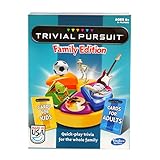
Trivial Pursuit Family Edition
- 1200 questions
- split adult and kid decks
- Quick-play wedge rule for shorter games
- Plays individually or in teams for 2+
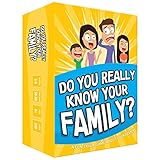
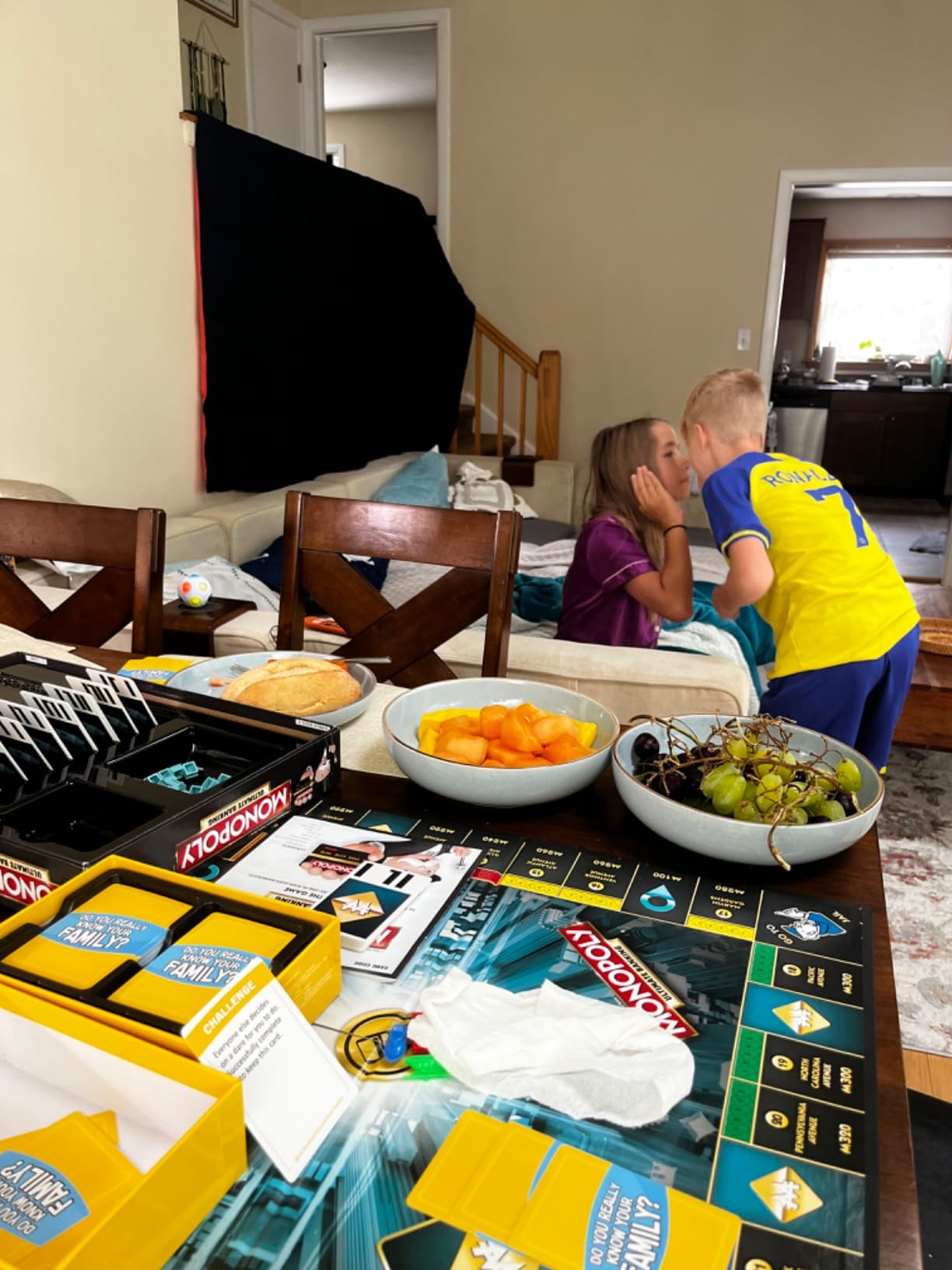
Do You Really Know Your Family
- Questions about your own family
- 3-8 players
- ages 8 to adult
- Almost no setup

Jumbo Hitster
- 300+ songs from the 1920s to the 2020s
- QR codes plus free app
- Competitive
- cooperative or solo modes
Comparing the Best Trivia Games for Family Game Night in 2026
All twelve picks appear below with the mechanic that decides who they suit. Scan the feature column first, then read the full write-up for the game you are considering.
| Product | Details | |
|---|---|---|
| Trivial Pursuit Family Edition |
|
Check Latest Price |
 I Should Have Known That I Should Have Known That |
|
Check Latest Price |
| Do You Really Know Your Family |
|
Check Latest Price |
 Smart Ass Smart Ass |
|
Check Latest Price |
 What Do You Meme All of Us What Do You Meme All of Us |
|
Check Latest Price |
 Mount Cleverest True or False Mount Cleverest True or False |
|
Check Latest Price |
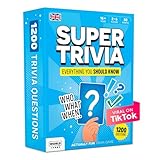 Super Trivia Super Trivia |
|
Check Latest Price |
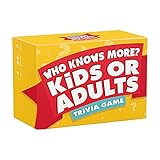 Who Knows More Kids or Adults Who Knows More Kids or Adults |
|
Check Latest Price |
 Randolph Trivia Party Game Randolph Trivia Party Game |
|
Check Latest Price |
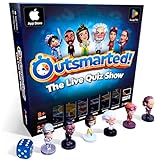 Outsmarted Outsmarted |
|
Check Latest Price |
 History Channel Trivia History Channel Trivia |
|
Check Latest Price |
| Jumbo Hitster |
|
Check Latest Price |
1. Trivial Pursuit Family Edition – Split Decks for Kids and Adults
Hasbro Gaming Trivial Pursuit Game: Family Edition Board Game, Family Trivia Games for Adults and Kids, 2+ Players, Ages 8+ (Amazon Exclusive)
1200 questions in 6 categories
100 adult cards plus 100 kid cards
Quick-play wedge rule
2+ players or teams
+ Pros
- Split adult and kid decks so both age groups can actually win
- Quick-play rule shortens a classic board game
- Plays individually or in teams for 2 or more players
- Long-established format with an enormous review base
- Cons
- Board setup is slower than a card game
- Uneven general knowledge can stall the wedge rounds
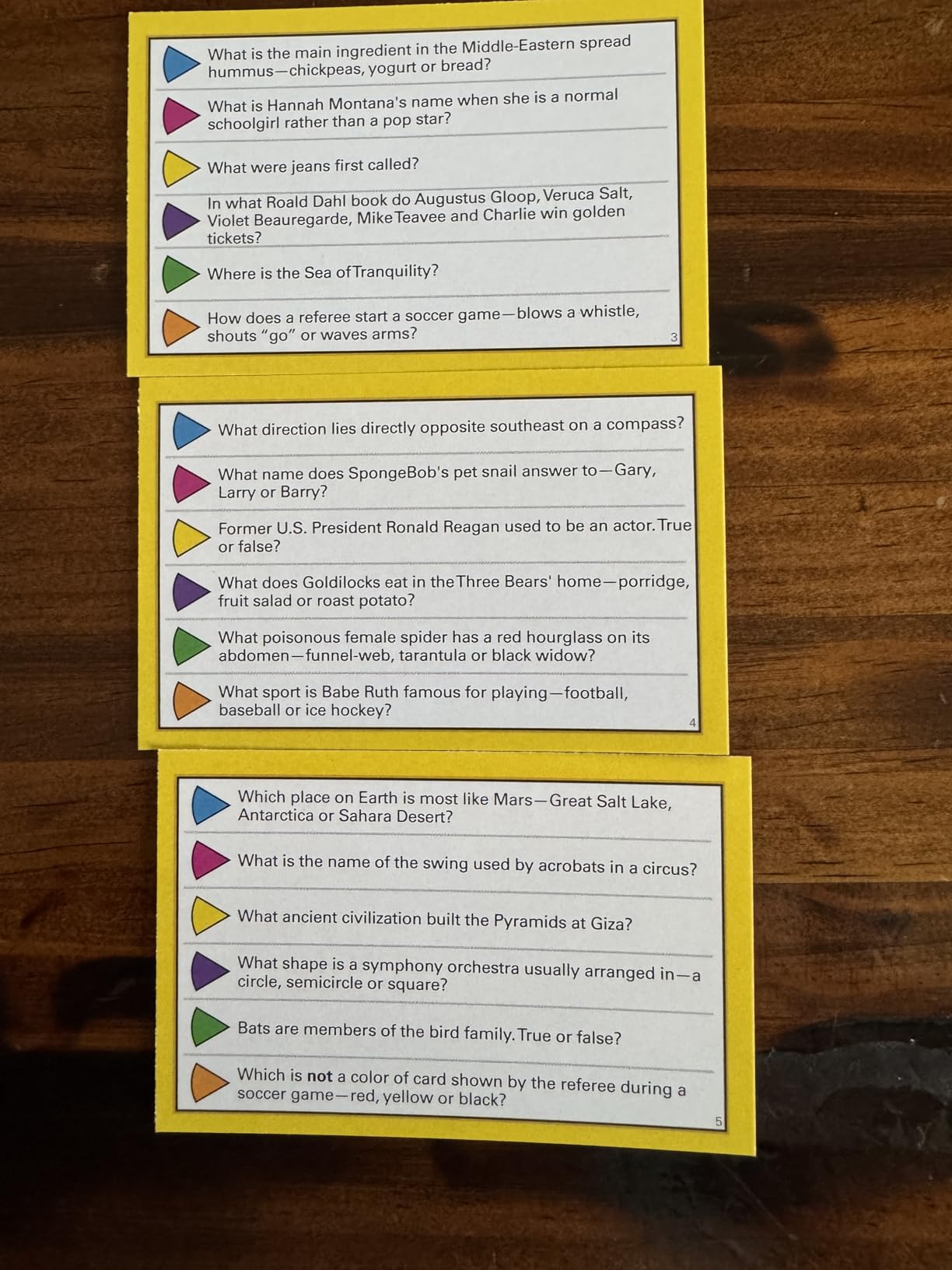
This is the version of the classic that fixes the reason families skip the classic. The box holds 100 blue cards for adults and 100 yellow cards for kids, drawn from the same 1200-question pool across six categories, so a nine-year-old is never handed a question about a prime minister they cannot place.
The quick-play rule matters more than most people expect. You can claim a wedge on any coloured space rather than filling one category at a time, which turns a two-hour sprawl into something closer to a single sitting. The box includes the gameboard, two cardholders, six scoring tokens, 36 wedges, a die, and instructions. Setup is still a board game setup, so it loses to a card game on a ten-minute window.
Reviewers consistently single out the two decks as the reason adults and kids both stay in, which matches what we saw at the table. The recurring complaint is not the questions but the pacing, since category wedges can drag when one player happens to know far more general knowledge than the rest.
Question Split and Who Actually Wins
The blue and yellow decks are the mechanic to watch. Because both draw on the same six categories, an adult who dominates sports still loses that wedge to a kid who knows anime, which keeps the score swinging rather than settling early. In our sessions, that swing is what kept the thirteen-year-old arguing about the final round instead of walking away.
It also solves the reading problem only partially. A confident reader of eight can handle the yellow cards alone, but a six-year-old needs an adult to read them aloud, so plan to pair them for the first two rounds.
Quick-Play Rules and Setup Time
The quick-play permission is what separates this edition from the wedge marathon that gives the format its bad reputation. Claim on any colour and the game compresses dramatically, which is why reviewers report finishing a session in a fraction of the time the original takes.
Component count is the drawback. Board, cardholders, tokens, wedges, die, and instructions mean more to clear away afterwards than any pick below. On a weeknight with a tired child, that friction is real.
For a Two-Player Showdown or a Team of Six
The manufacturer lists it for 2 or more players, so the same box covers a parent and child at the kitchen table or two teams at a gathering. At four players it is at its best, because the extra cardholders let you keep hands on cards without shuffling mid-turn.
At eight or more, the deck competes for attention. Choose a pass-and-play card game instead.
2. I Should Have Known That – Deduct-a-Point Scoring That Keeps Everyone Engaged
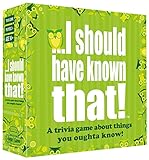
I should have known that! – A Trivia Game About Things You Oughta Know, Green
110 cards with 400+ questions
Points subtracted for wrong answers
Compact 5.7 inch box
More than 2 players
+ Pros
- Points are subtracted for wrong answers so nobody coasts
- 400+ questions on everyday things you ought to know
- Small box passes around a table easily
- Holds a very large number of verified reviews
- Cons
- Reverse scoring takes a minute to explain
- Question tone skews to teens and adults
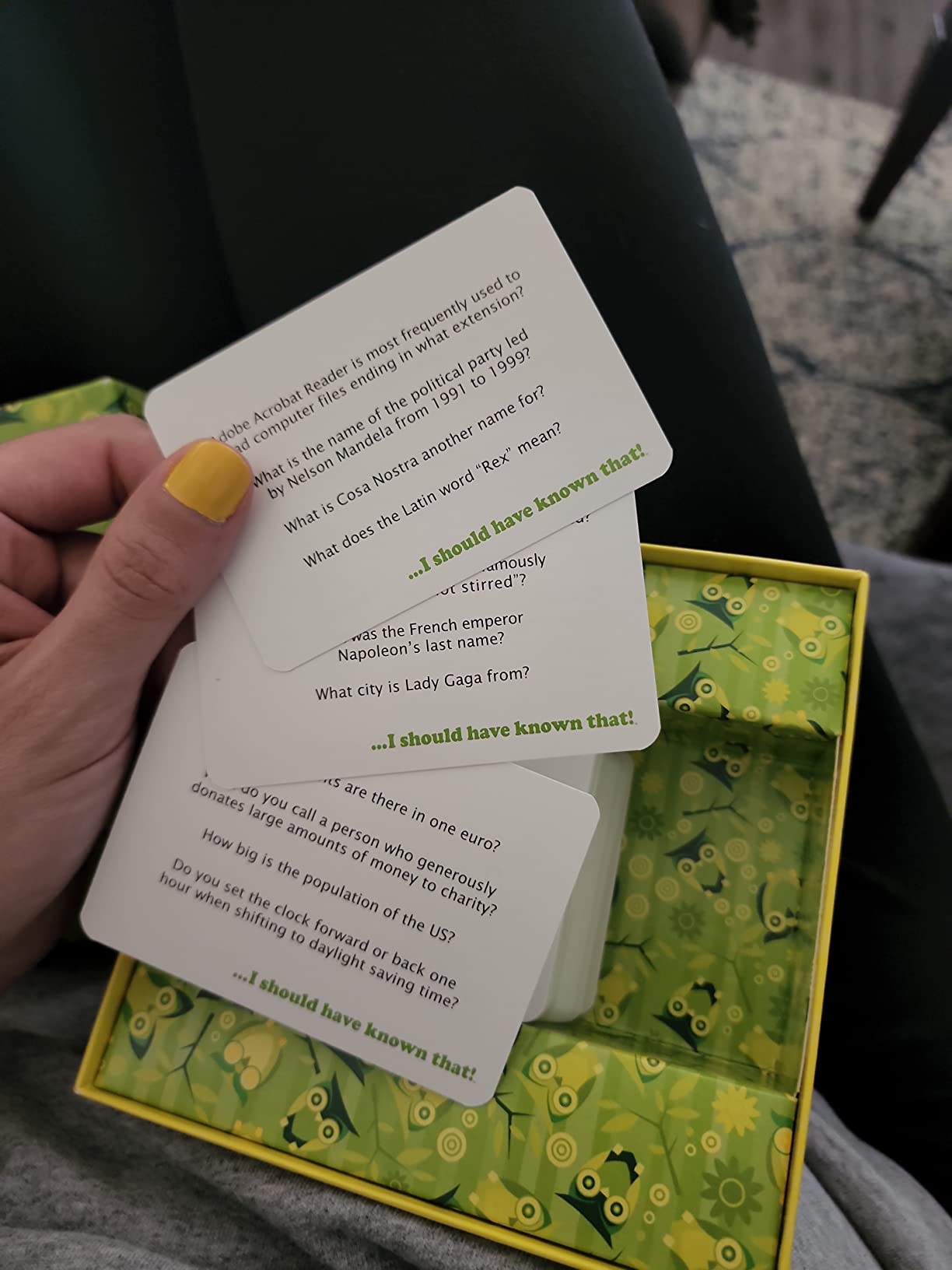
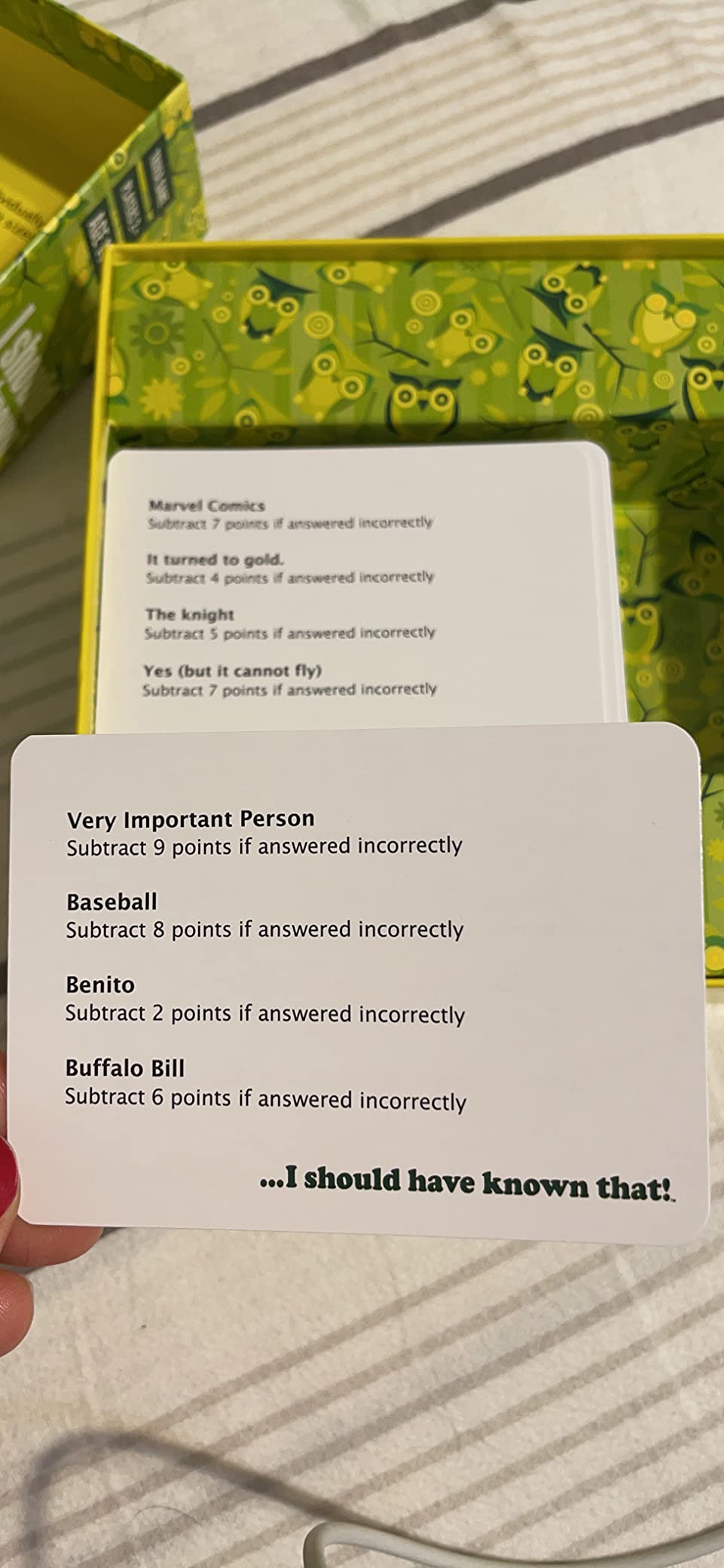
The scoring twist is the whole game. You do not earn points for a correct answer, you lose a point for every incorrect one, so a confident player who guesses recklessly can finish a round below zero while a careful player who knows little stays level.
That inversion is quietly excellent with mixed ages because it rewards restraint. The child who knows one answer and says nothing is protected, which removes the argument that usually starts round two. The 110 cards carry more than 400 questions on everyday subjects rather than obscure trivia, and the questions have a dry humour that suits older children and adults.
Reviewers point out the one friction point: the rules are counter-intuitive, and someone has to explain them before the first card. Budget two minutes for that.
Why Deduct-a-Point Scoring Changes a Mixed Table
Forgiving scoring is the feature families hunt for, and this is the purest version of it in the roundup. Wrong answers cost you, silence costs you nothing, and the player who understands the rules early often finishes the evening ahead of the person who knows more. It is a small, elegant fix for the youngest-player-shuts-down problem.
It also stops the one-player-knows-everything problem. A dominant trivia player is reckless by instinct, and reckless play is punished here in a way it never is in a right-answer-only format.
Card Size, Play Count and Refill Reality
The box measures 5.7 by 5.7 by 1.8 inches and weighs 8.8 ounces, which means it goes in a bag and travels without a suitcase. That makes it a natural road trip or holiday filler when the evening has gaps rather than a planned block of time.
It is listed for more than two players with no ceiling, so it stretches to a large table without splitting into teams. The limitation to plan for is tone. The questions skew adult, which makes it a strong second game for a family with teenagers and parents but a poor lead game for a six-year-old.
Where It Falls Short in a Young Family
If your youngest players cannot read fluently, this does nothing for them. There is no partial credit and no easier tier, so a child either needs an adult reading every card or sits out.
For that reason, run it as an adult-and-teen game after the little ones have gone to bed, or pair it with a card game built around your own family.
3. Do You Really Know Your Family – No Setup and a Table of Eight Talking
Do You Really Know Your Family? Fun Family Game for Kids, Teens and Adults
Questions about your own family
3-8 players
Ages 8 to adult
Tin of cardstock cards
+ Pros
- Playable within minutes with no setup
- Keeps the table talking instead of scoring
- Works from children aged 8 up to grandparents
- 3-8 players fits most family tables
- Cons
- Challenge cards can be too hard for younger players
- Not a knowledge quiz if you want real trivia
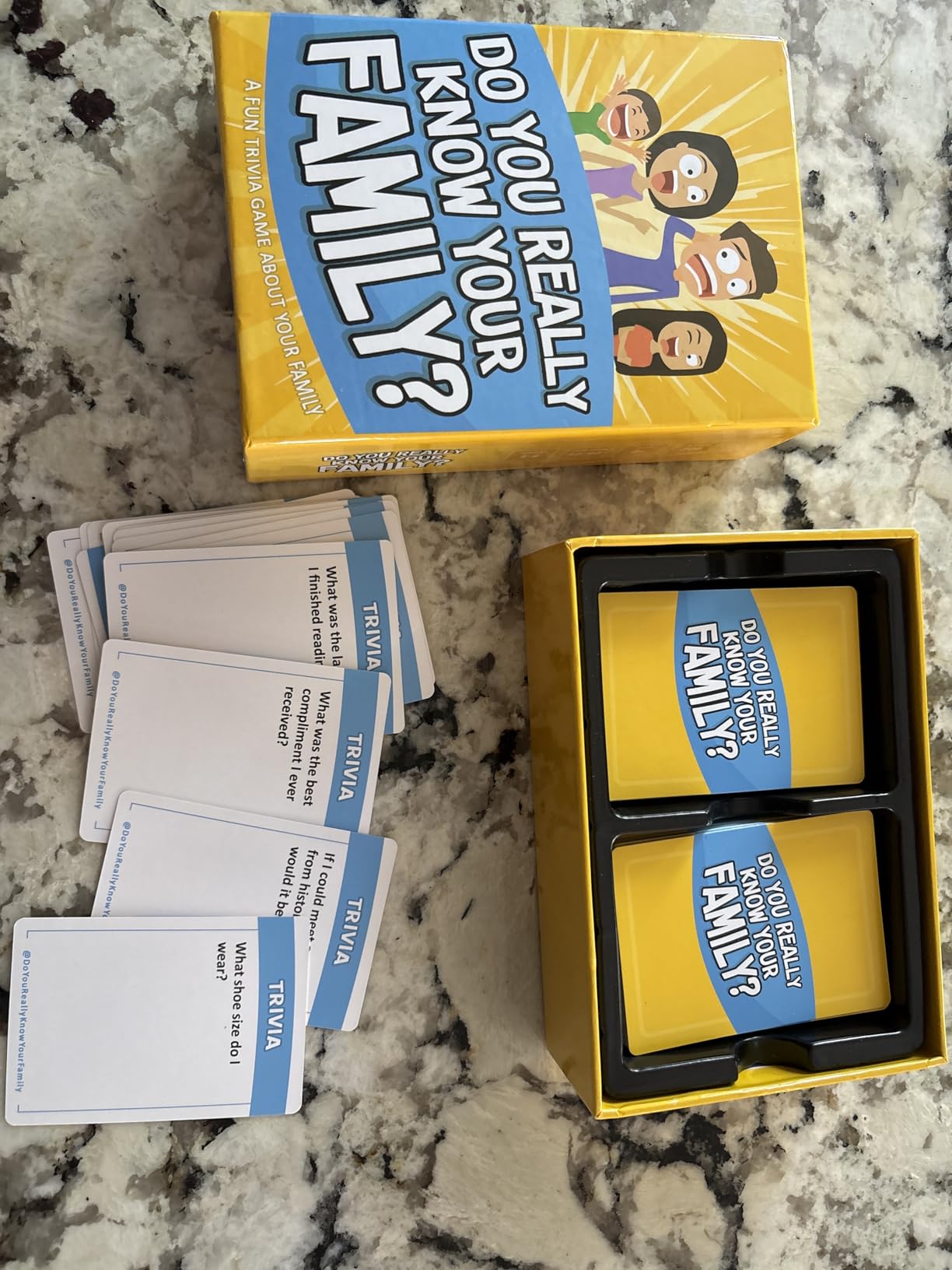
This is not a trivia game in the traditional sense and that is exactly why it works so often. The cards ask what your sibling did as a child, which uncle always orders dessert, or what your mother would never eat. Everyone at the table has an answer, including the eight-year-old.
Households keep naming it for holiday gatherings, and the reason is obvious once you play it. There is nothing to read aloud beyond a card, no board to set up, and no score that can embarrass anyone. Three to eight players covers most family tables, and the rounds move so fast that a shy child participates within a couple of turns.
Reviewers describe it as wholesome conversation disguised as a game, and they do warn that the challenge cards can run too hard for the youngest players in the room.
Conversation Value Instead of Knowledge
Buying this for a large mixed-age gathering means accepting that no one is being tested. The competitive layer is simply who knows whom best, so a child and a grandparent can both be right in the same round without the difficulty gap appearing at all.
It is also phone-free by design, which is why parents describe it as a way to get everyone looking up from the table. There are no batteries and no electronic components, so the only thing to clear away is a tin.
Player Count, Age Fit and Setup
The listed range is 3 to 8 players, which is a genuine constraint at a Thanksgiving table of ten. Work around it by running two tins side by side and treating the questions as openers rather than a scored contest, which keeps it conversational.
The age span is wide on paper, from kids 8 and up through teens and adults, but the challenge cards are the weak spot. If your youngest is six or seven, either skip those cards or play this one as a grown-up activity while the little ones do something adjacent.
When to Choose Something Else
Choose a knowledge quiz instead if your family enjoys competing on facts. Reviewers make the same point plainly: this is not a trivia game, so anyone hoping to test general knowledge will finish it wanting another box.
My advice is to treat it as the opening act. Fifteen minutes of this loosens a table that has just arrived, and a real quiz goes better afterwards.
4. Smart Ass – Shouting Answers for Loud Large Groups
Smart Ass Fast-Paced Trivia Board Game for Families, Ages 12+
411 question cards
Shouting allowed at any time
2 to 6 players, ages 12+
Board, two jumbo dice, six pieces
+ Pros
- Anyone can shout the answer even out of turn
- Works best with 4 or more players and plays well in teams
- Quick setup with a category die and a movement die
- 411 cards with new content in this edition
- Cons
- Questions run harder than the packaging suggests
- Fast scoring can lose younger players quickly
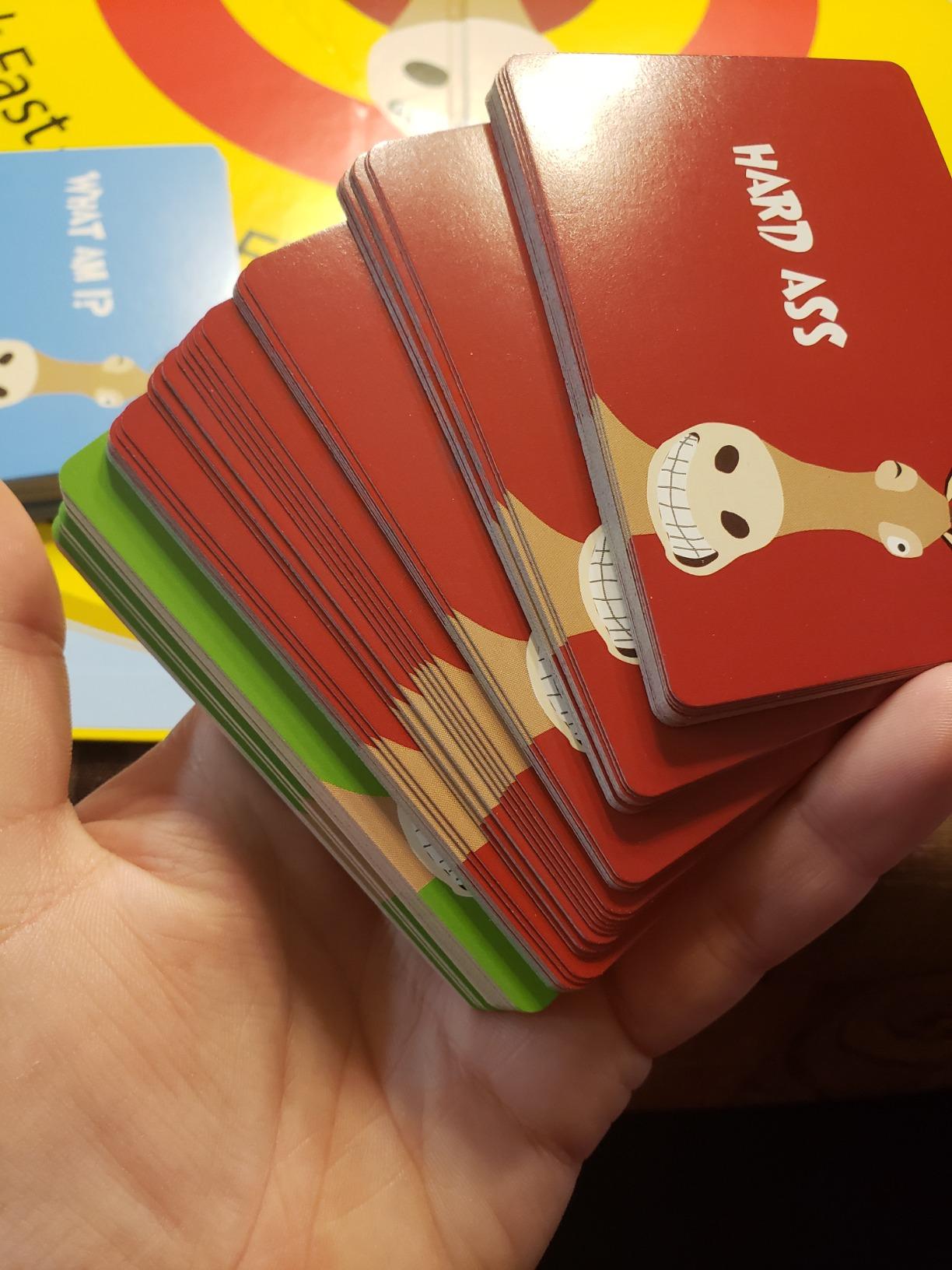
The rule that defines this game is permission: any player may call out an answer at any time, not just on their turn. On paper that sounds chaotic. In practice it produces the loudest, fastest family trivia session I have played, and it flatly removes the waiting that makes young children tune out.
You roll a jumbo category die to set the subject and a movement die to advance, then race to answer before the piece reaches the end. The box carries 411 question cards with new topics and clues in this edition, plus a board, six playing pieces and stands, and both dice. Setup takes a couple of minutes.
The honest catch is difficulty. Reviewers repeatedly note the questions are tougher than the family packaging implies, closer to full Trivial Pursuit territory, and that the quick pace can shed lighter players fast.
Shouting Format and Why It Works for Lively Tables
For a house full of competitive adults and teenagers, nothing else in this roundup sustains this much energy. Because answering out of turn is legal, there is no dead air between turns, which is exactly the gap where a younger player usually stops participating.
It also works in teams, which is the practical fix for an eight-person gathering. Split the table in two and every player has a job, rather than six of them watching.

Question Difficulty and Younger Players
The manufacturer lists ages 12 and up, and the questions mostly match that. A ten-year-old can hold up here, but a six-year-old will lose most of them, and the fast scoring leaves no recovery time.
If your table is under twelve, this belongs to a second slot in the evening with the older half of the family rather than the main event.
Player Count and Component Quality
The listed range is 2 to 6 players with a weight of 2.4 pounds, so the box has real heft for its size and holds up to being passed around. It is at its best with four or more; at two or three the shouting rule loses most of its value.
For anything larger than six, a game with a higher ceiling will hold the table together better.
5. What Do You Meme All of Us – Four Generations on Four Decks
WHAT DO YOU MEME? All of Us – The Family Trivia Game for All Generations – Family Card Games for Kids and Adults
Boomer, Gen X, Millennial and Gen Z decks
480 cards plus 8 wild cards
60-second timer
4+ players, ages 12+
+ Pros
- Every generation draws from its own question deck
- Teams pool knowledge from all four eras
- Small box that travels anywhere
- Wild cards swing close games
- Cons
- Two points for a full card is a thin reward
- Content leans heavily on U.S. music and pop culture
This is the cleanest solution to the problem every family describes: parents and grandparents know nothing about modern music or streaming, and children know nothing about history. The deck is split into Boomer, Gen X, Millennial, and Gen Z sets, and each generation has an honest chance to score.
Players team up and compete as generations rather than individuals, which is the detail that makes it work at a real gathering. A teenager and a grandparent on one side have complementary knowledge, and nobody has to carry a round alone. The box holds 480 trivia cards, 8 wild cards, a 60-second timer, a scoreboard, two tokens, and instructions.
It is designed for ages 12 and up with four or more players, so a six-year-old is outside the design. Reviewers also note that non-U.S. households find the content tilted toward American music and film.
How the Generation Split Actually Plays
In practice, each era’s deck is only fair in theory. The Boomer and Gen X cards lean toward music and television the younger players half ignore, and the Gen Z cards assume a fluency with internet culture that grandparents do not have. Teaming is what fixes it, so push teams rather than free-for-all.
The 60-second timer is the element families adjust. Reviewers report that it is generous for a confident teenager and tight for an older player searching for memory, so consider a house rule of counting to fifteen for anyone over a certain age.
Scoring, Wild Cards and What Two Points Buys
Scoring a full card is worth only two points, which several reviewers call a thin reward. Expect to tune it. A simple fix is to score each card individually, or to double points for a full card during the final round.
The 8 wild cards are the real strategic element because they let a team nominate a category and hand a point to a partner. Keep them in reserve for the last two rounds or they flatten the game early.
Best Fit and Where It Falls Short
This is built for a table of four or more with a genuine age spread, which in practice means teens and adults plus grandparents. A table of young children will not get it, and neither will a family that has never watched American television.
Its strongest use is a holiday evening where three generations share a room and nothing else will hold their attention for an hour.
6. Mount Cleverest True or False – A 50-50 Format for Your Youngest Player
Mount Cleverest® Original Edition | True or False Trivia Game | Fun Adults & Kids Family Card Game | Stocking Stuffer | Travel Games | Party Games for Birthday | Gift for Boys and Girls
True or false betting with 30 discs
2-12 players, recommended age 6+
Short answers included
Compact travel format
+ Pros
- A fifty-fifty format gives young children a genuine chance
- Scales from 2 to 12 players and much larger gatherings
- Answers come with short explanations
- Triangle cards and discs pack flat for travel
- Cons
- Limited card count for heavy repeat play
- Light challenge for strong trivia players
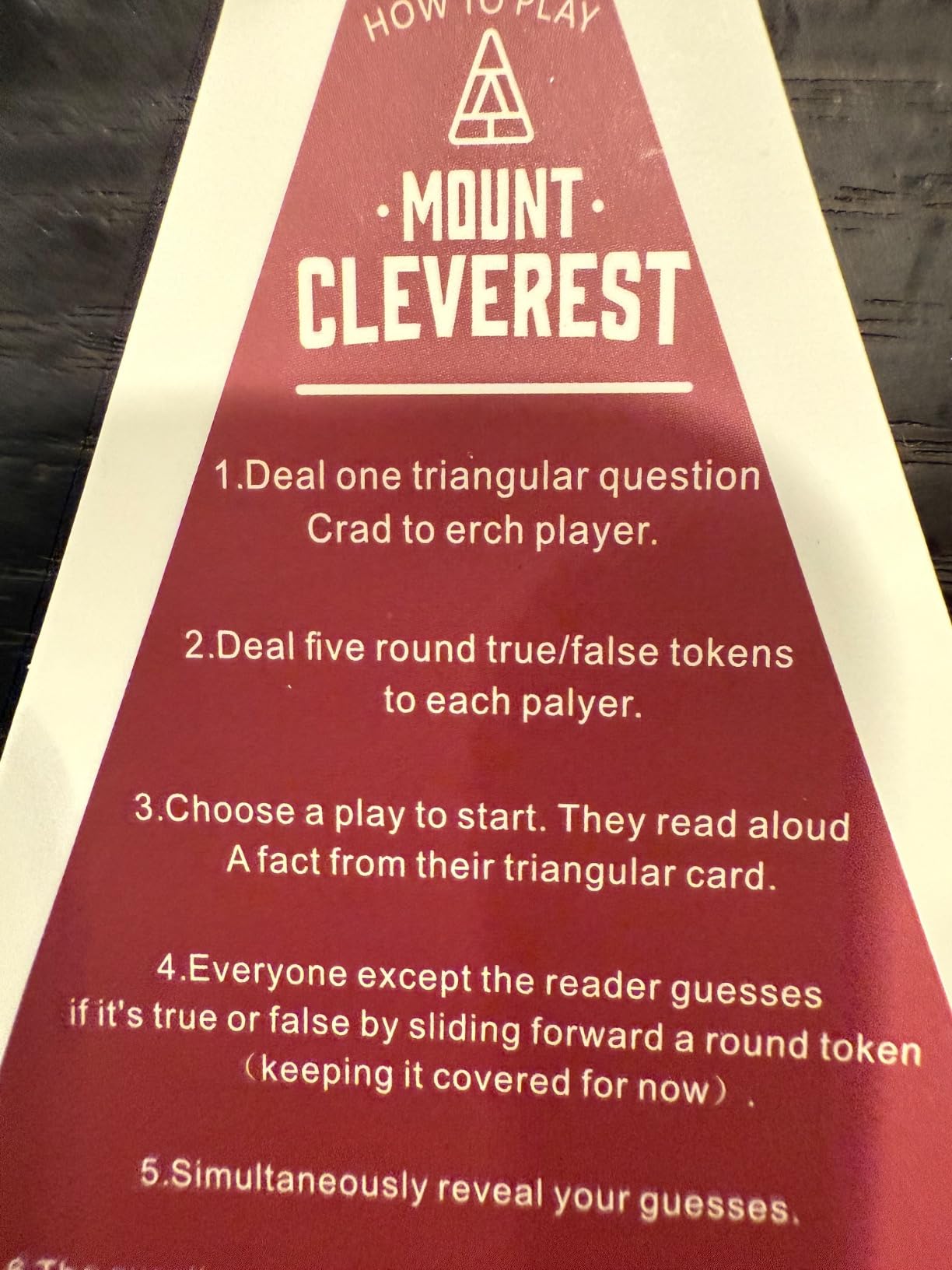
The format is the whole design. Each card poses a statement, players bet true or false with one of thirty discs, and a wrong bet costs a token. A six-year-old has a genuine fifty-fifty shot on every single question, which makes this the only pick here that works for a first-grader without an adult reading every card.
Manufacturer recommended age is six and up, and the listed player count starts at two. The design scales further, since the box states it suits groups of up to thirty, which makes it the safest choice for a large extended family gathering where you do not know the numbers in advance.
Answers come with brief explanations, so the game teaches quietly while it plays. Reviewers are positive on the inclusiveness and the pace, with the main complaint being the size of the deck.
Betting Discs and the Learning Hidden Inside
Losing a token on a wrong call turns a coin-flip into a real decision, and the explanations are short enough to read aloud without breaking the rhythm. We found children remembering the facts a week later, which no other pick in this roundup reliably produced.
The wager is also what stops a confident eight-year-old steamrolling. A child who will happily guess now has a reason to hesitate, which is a rarer form of balance than adding a second deck.
Card Count and Replay Value
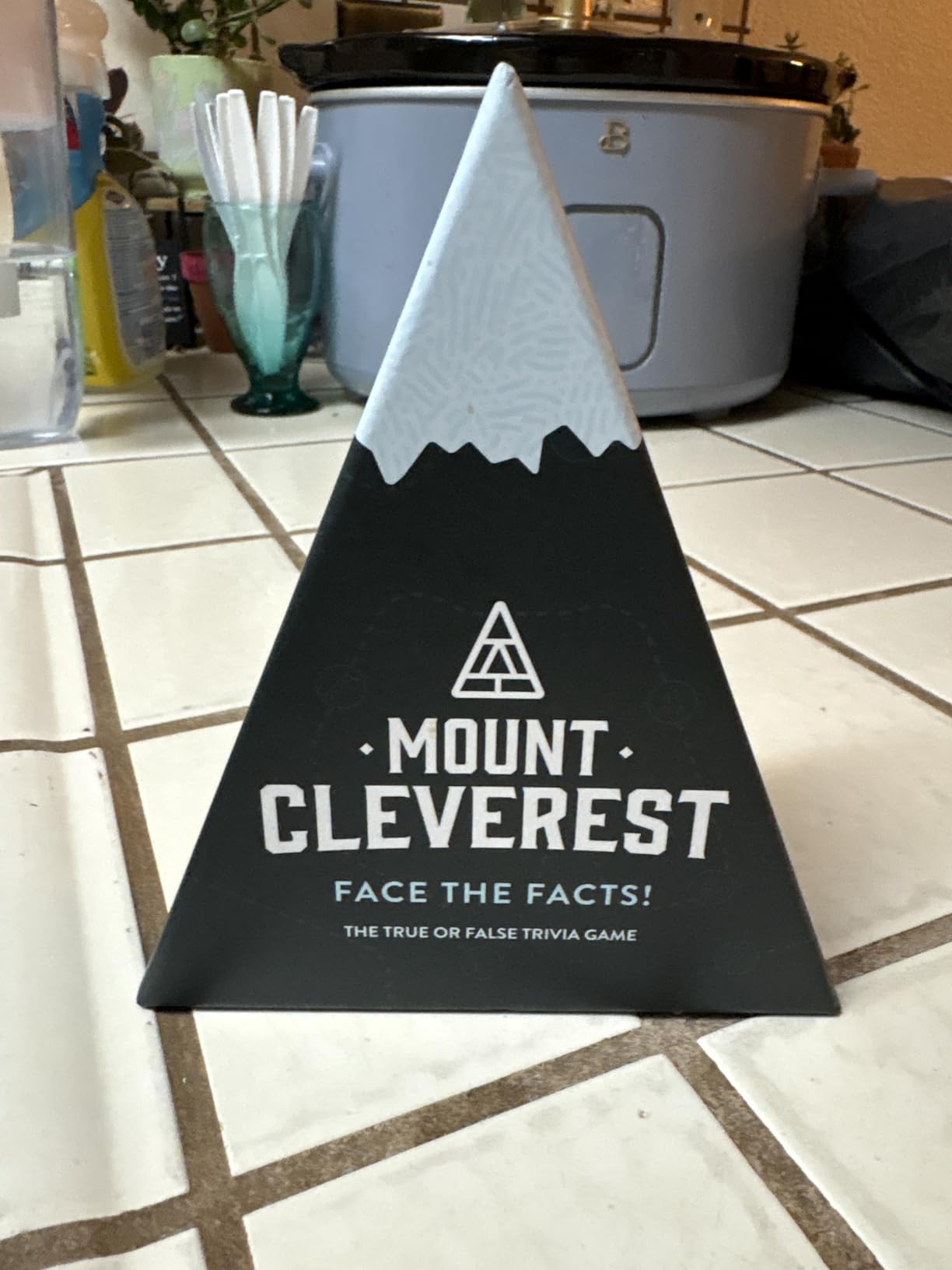
Reviewers flag the deck as the limitation. Once a group has worked through the cards, there is no replacement pack, so the game loses its surprise. For a family that plays it fortnightly that matters, and for a family that plays it twice a year it does not.
Weigh that against the box size. At 1.75 by 5.75 by 6.5 inches and 8 ounces, it is the most travel-friendly pick here, which is why it is a natural car game and a good thing to hand a guest child.
Who It Suits and Who It Does Not
Choose it for the youngest end of the range, for large unpredictable gatherings, and for a family that wants a filler between bigger activities. It runs short, so it works as fifteen minutes before dinner rather than as the evening itself.
Skip it for adults who actually want a quiz. Reviewers note it is a lighter challenge than a full question game, and a table of serious trivia players will exhaust it quickly.
7. Super Trivia – 1200 Questions Calibrated for Adults and Teens
Super Trivia Game for Adults with 1200 Questions – Fun Board Game for Adults – Family Road Trip Travel Game for the Pursuit of Trivial Knowledge
1200 questions across 6 types
200 picture estimation questions
202 cards plus dice
Ages 16+, 2-6 players
+ Pros
- Question difficulty is pitched to be neither easy nor hard
- Picture estimation questions add real variety
- Dice determine which question on each card is used
- Travel-friendly box built for road trips
- Cons
- Ages 16 and up leaves younger children needing help
- Specialized questions thin out in a small group
This is a well-calibrated general knowledge game rather than a family-inclusive one. The pitch of the 1200 questions is the selling point: they are deliberately chosen to sit between obvious and impossible, and reviewers consistently single out that balance as the reason a table of adults stays engaged rather than coasting.
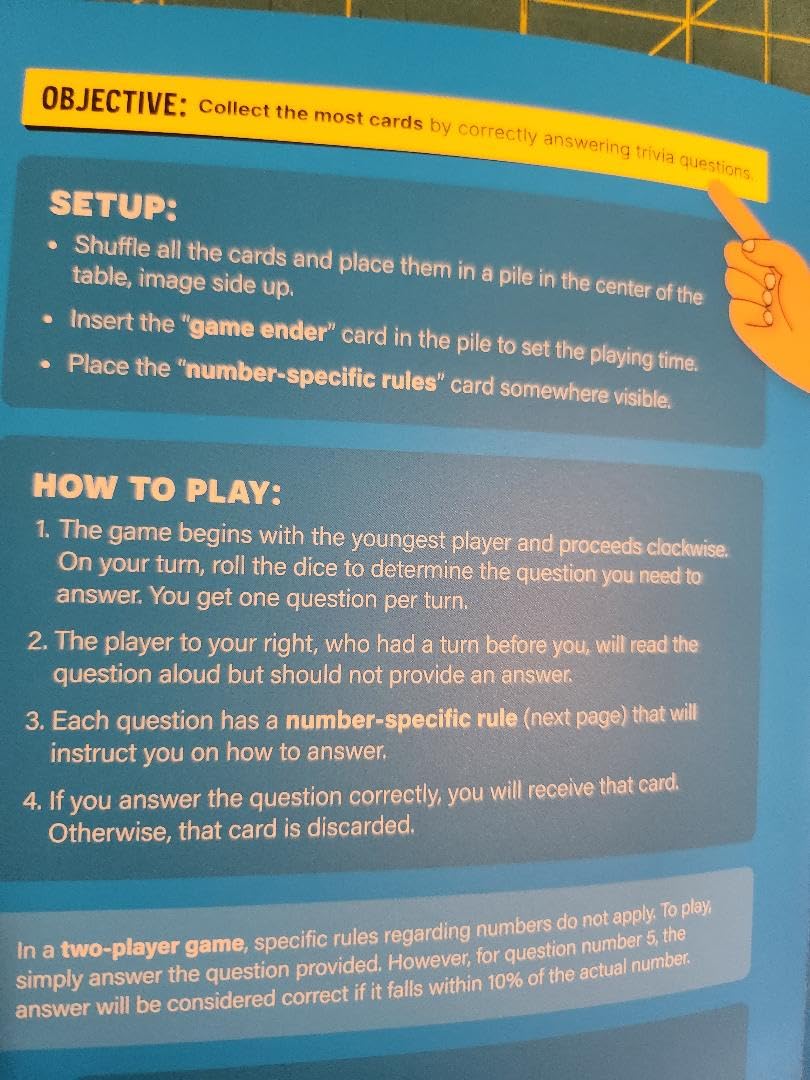
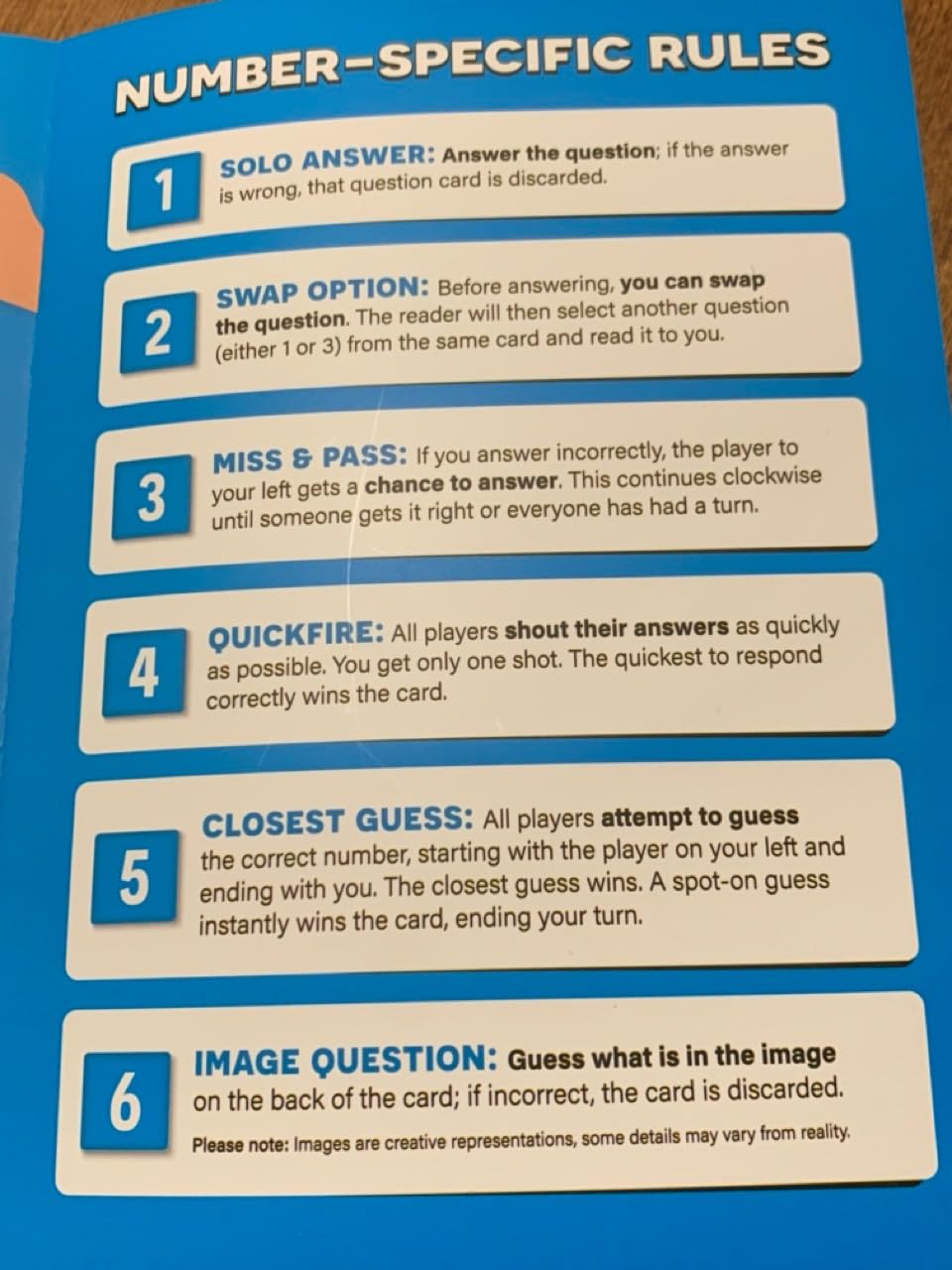
There are six question types, including 200 picture-based estimation questions such as how far the Moon is from Earth, which is a mechanic nothing else in this roundup offers. You roll a die to choose which of the questions on a card is used, so cards are never wasted. The box holds 202 trivia cards and dice in a travel-friendly size measuring 7.99 by 5.79 by 1.77 inches.
The catch is the recommended age of 16 and up, plus a warning that some questions lean specialised enough to dry up a run sooner in a small group.
Picture Estimation Questions as the Standout Feature
The 200 picture questions turn a guessing game into a reasoning game. Players argue about a distance or a quantity, commit to a number, and then find out how close they were. Nobody is wrong on paper, which quietly removes the sting of a missed answer.
It is also the feature that travels. No app and no screen is needed to run the estimation round, which makes this one of the few picks here that works in a car with no signal and no charger.
Who This Game Is Actually For
At two to six players and ages 16 and up, this is a parents-and-teenagers game or a travelling adult group game. If a family wants the difficulty without the exclusion, the History Channel edition below covers a similar range with a much wider age spread.
Reviewers also mention wanting an expansion pack, so treat the 1200 questions as a run rather than an endless resource.
Setup and Play Time
No board is involved, which keeps the setup under a minute. Cards and dice go straight onto the table, and the only mess to clear afterwards is a stack of cardstock.
Reviewers report that a full sweep of the deck suits a longer session rather than a short one. For a fifteen-minute filler, pick something with a smaller deck.
8. Who Knows More Kids or Adults – A Two-Team Battle to 20
Who Knows More? Kids or Adults, The Ultimate Trivia Game for Families
Kids versus adults team battle
First team to 20 points wins
2+ players, ages 8+
History, pop culture, science and random facts
+ Pros
- Head-to-head format creates instant team rivalry
- Scoring to 20 explains in seconds
- Categories span history
- pop culture and science
- Suited to children aged 8 and up through adults
- Cons
- Timed rounds are hard on younger readers
- Adult card wording can outpace children's reading
The structure is the cleanest team format in this roundup: split into a kids side and an adults side, take turns answering, first team to 20 points wins. There is no board to reason about and the entire ruleset explains in a sentence, which is why it becomes a nightly repeat in many households.
Categories run from history to pop culture, science, and random facts, and the manufacturer recommends ages 8 and up for 2 or more players. The rivalry does the work of a motivation system, because children are playing to beat the adults rather than to accumulate abstract points.
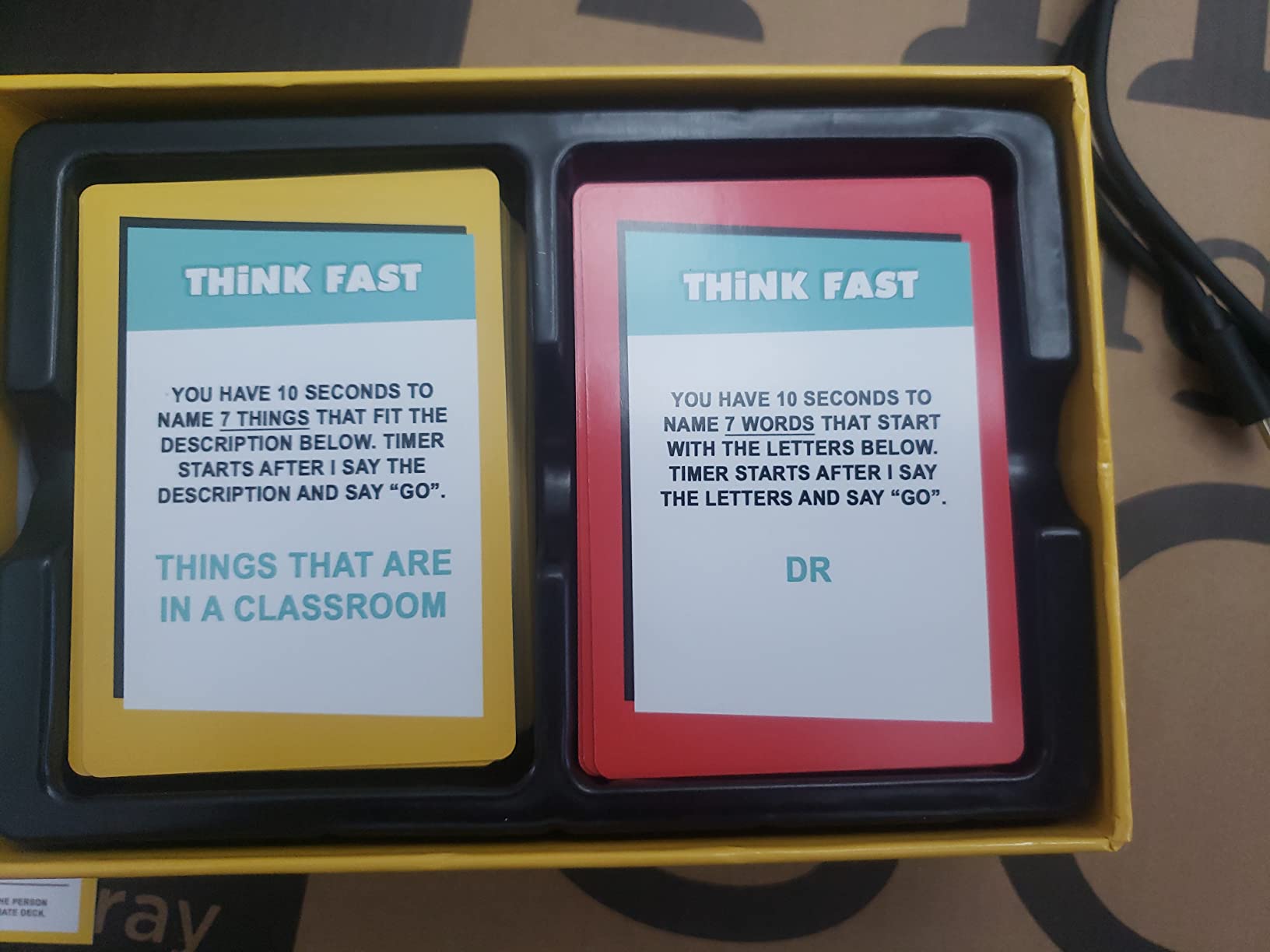
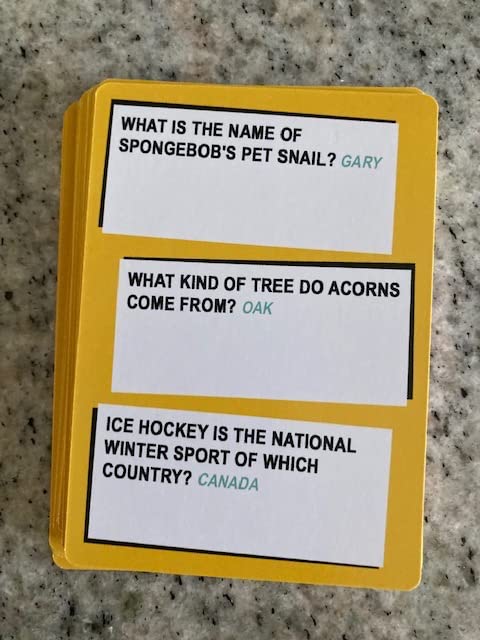
The recurring complaints are reading speed. Reviewers note the timed rounds demand reading roughly six words in ten seconds, which is fine for an adult and a stretch for a younger child, and that some adult card wording is too dense to read independently.
Why Two Teams Beats Free-for-All Here
Splitting by age rather than skill is unusual and it is the right call for a family. A twelve-year-old and a nine-year-old on the same side means the older child reads and the younger contributes, and neither has to carry the team alone.
For a large table, expand the two teams to four. The scoring stays simple and the incentive to root for a side survives, which is what a free-for-all loses at eight players.
Timed Rounds and the Reading Bottleneck
The timer is the single biggest thing to adjust at a young table. A fair house rule is to read the card aloud for anyone under ten, which slows the game but keeps the youngest participant in it. Without that adjustment, the fastest readers decide the night.
Adults frequently miss answers in their own deck, which is the point, but it also means the kids can win. Plan for that outcome in advance so nobody treats it as a rigged result.
Card Exhaustion and Refills
One practical limitation is worth knowing before you buy: there is no refill pack for this title. Once the cards are done the game is done, and a family that plays it weekly will get through them faster than expected.
For a game you expect to keep for years, pick one of the 2000-plus question picks later in this list instead.
9. Randolph Trivia Party Game – Self-Rated Difficulty from 1 to 10
Randolph CDSK | Fun Trivia Party Game for Teens and Adults | Great for Game Nights and Large Groups | Two Player or Team Challenge | 2500+ Trivia Questions | Ages 14+ | 2 to 16 Players | 45 Minutes
2500+ questions in 4 categories
Players rate difficulty 1 to 10
2-16 players in teams
Ages 14+, about 42 minutes
+ Pros
- Players self-rank difficulty so weaker players stay competitive
- Scales from a two-player duel to 16-player teams
- Box lid unfolds into the board for fast setup
- 2500+ questions resist repeating
- Cons
- Playing pieces are not included
- Category names are vague and content is U.S. weighted
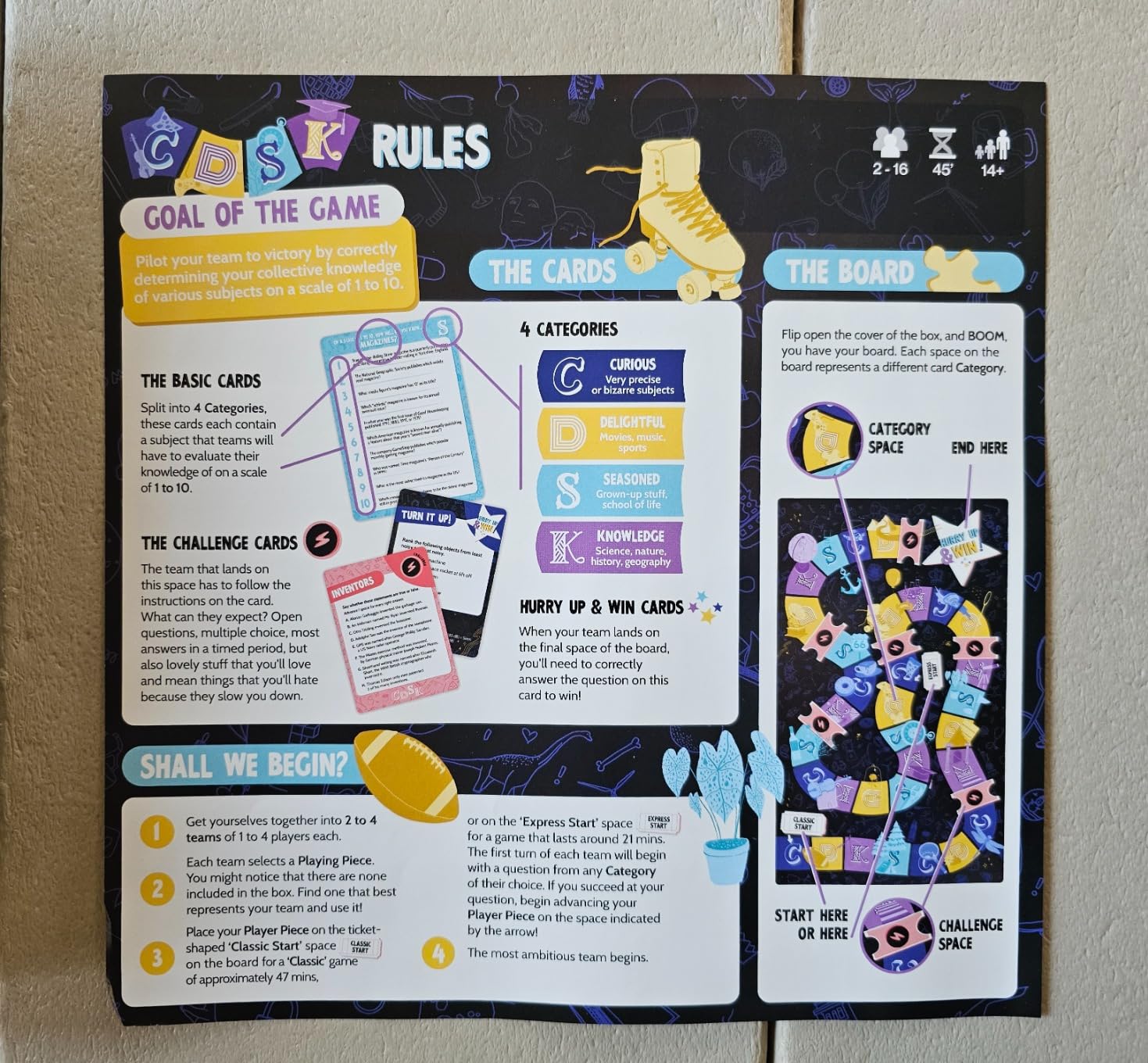
The distinctive mechanic is that each player announces how well they know the subject of the card they have drawn, on a scale from 1 to 10, and scores accordingly. A confident expert and a hesitant beginner can therefore compete fairly within the same round, which is the most elegant answer to the mixed-skill problem in this whole roundup.
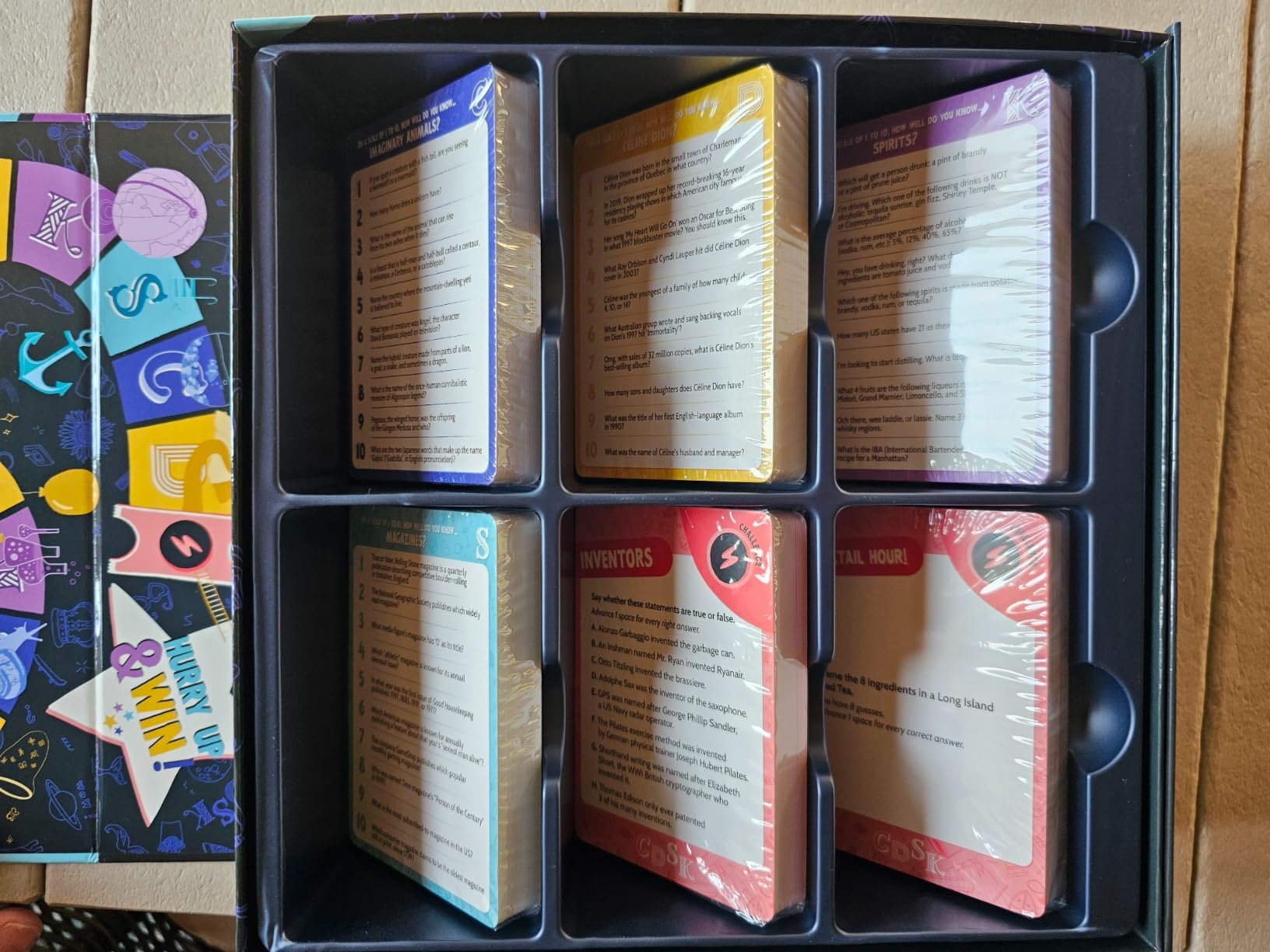
Content is 2500-plus questions across four categories, plus challenge spaces that trade a burst of rapid questions for a scoring advantage, and hurry-up cards. It scales from a two-player duel to team play with up to 16 players, and the listed playing time is around 42 minutes.
Reviewers rate it highly and repeat three gripes: no player pieces are included, the category names are vague enough that choosing one is confusing, and the questions lean on U.S. knowledge that overseas families find hard.
Self-Rated Difficulty and What It Fixes
Most trivia games hand out points for knowledge, which means the strongest player wins and everyone else watches. Here, choosing a card honestly and a topic you know well is itself a skill, so a family table with one encyclopaedic uncle stops running the evening.
It also means an eight-player game does not need eight quiz bowls. Pairing players into teams of two lets a stronger partner cover a weaker one without anyone losing face.
Setup, Scale and Missing Pieces
Setup is the clever part: the box lid unfolds into the game board, and the cards sit in a plastic insert. There is no separate board to lose, and the whole thing takes under a minute to lay out. Weight is 2.4 pounds with a 9.36-inch square footprint.
Bring your own tokens. Pieces are not included, and at sixteen players that means a handful of coins or a stack of small objects before anyone starts.
Age Fit and Content Limits
The recommended age is 14 and up, so treat this as a teens-and-adults game rather than a family-wide one. The vague category naming is worth solving in advance: read the four category names aloud and agree what each one covers before round one.
For families outside the United States, expect a portion of the deck to be unanswerable, which is the main reason this sits below the more universal picks in the list.
10. Outsmarted – An App That Hosts, Scores and Balances Ages
Outsmarted App-Connected Live Quiz Show Board Game – 2026 Edition, Ages 8+
App acts as host and scorekeeper
2-24 players, ages 8+
10000+ multimedia questions
About 60 minutes
+ Pros
- The app reads questions and keeps score so nobody referees
- Age balancing lets a child and a grandparent compete
- Ten categories with images
- clips and video
- Remote play joins relatives from another town
- Cons
- The host account holder must stay involved
- Additional question categories are paid add-ons
This is the only pick where software does the refereeing. A free app reads each question aloud, tracks the score, and adjusts difficulty based on the age each player enters at setup, so a nine-year-old and a grandparent are given questions pitched to each of them rather than to a single group average.
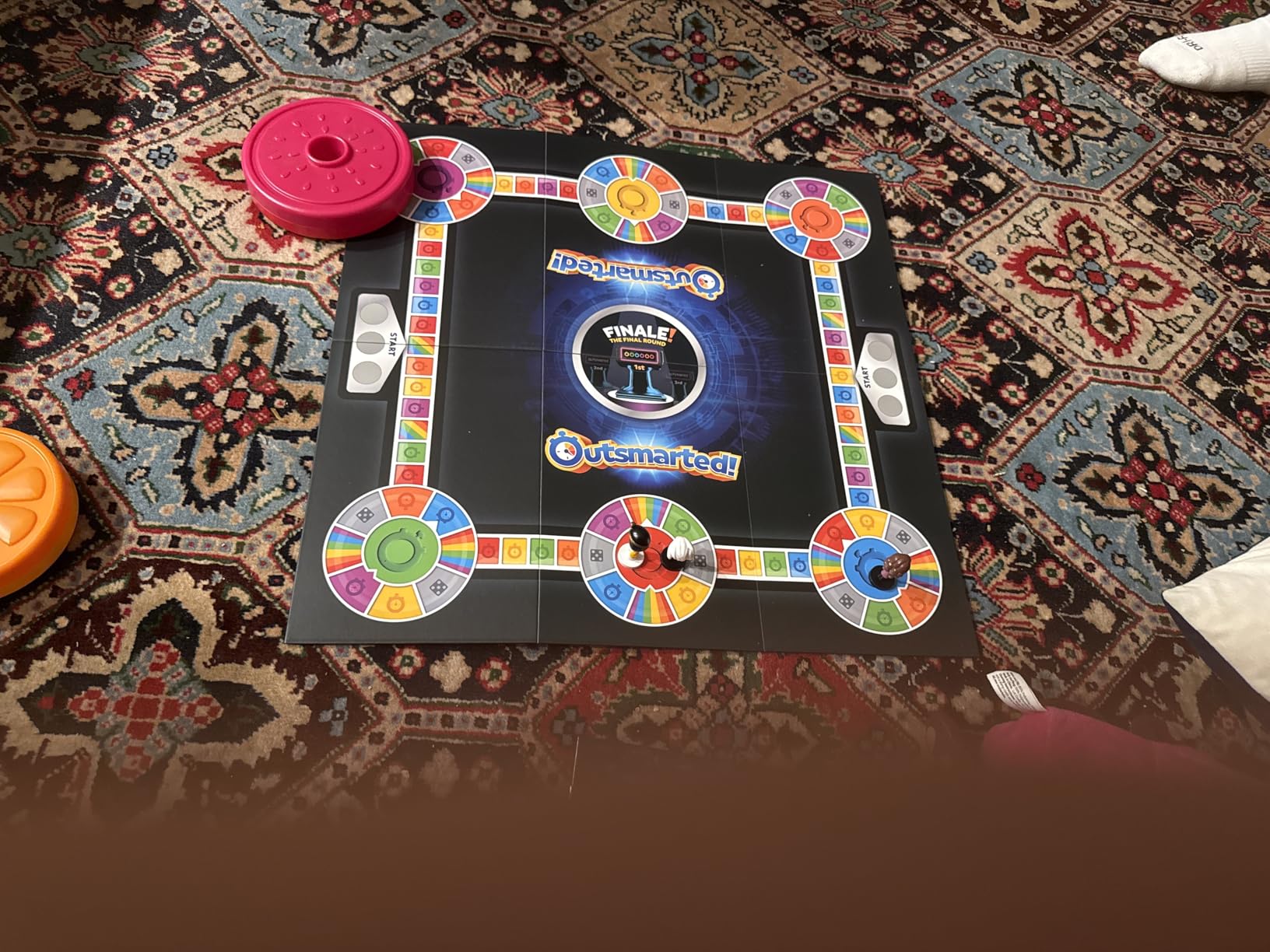
That scale is the headline number: 2 to 24 players, roughly 60 minutes of play, and more than 10,000 questions with images, song clips, and video across ten core categories. Setup takes under two minutes with the folding device stand in the box, and there is no thick rulebook. Remote play lets relatives join by voice chat from another town, which is why three-generation households rate it highly.
The cost of all that is dependence. The account holder who registered has to stay involved as host for the entire game, and further question categories are purchases inside the app.
Automatic Age Balancing, Tested Properly
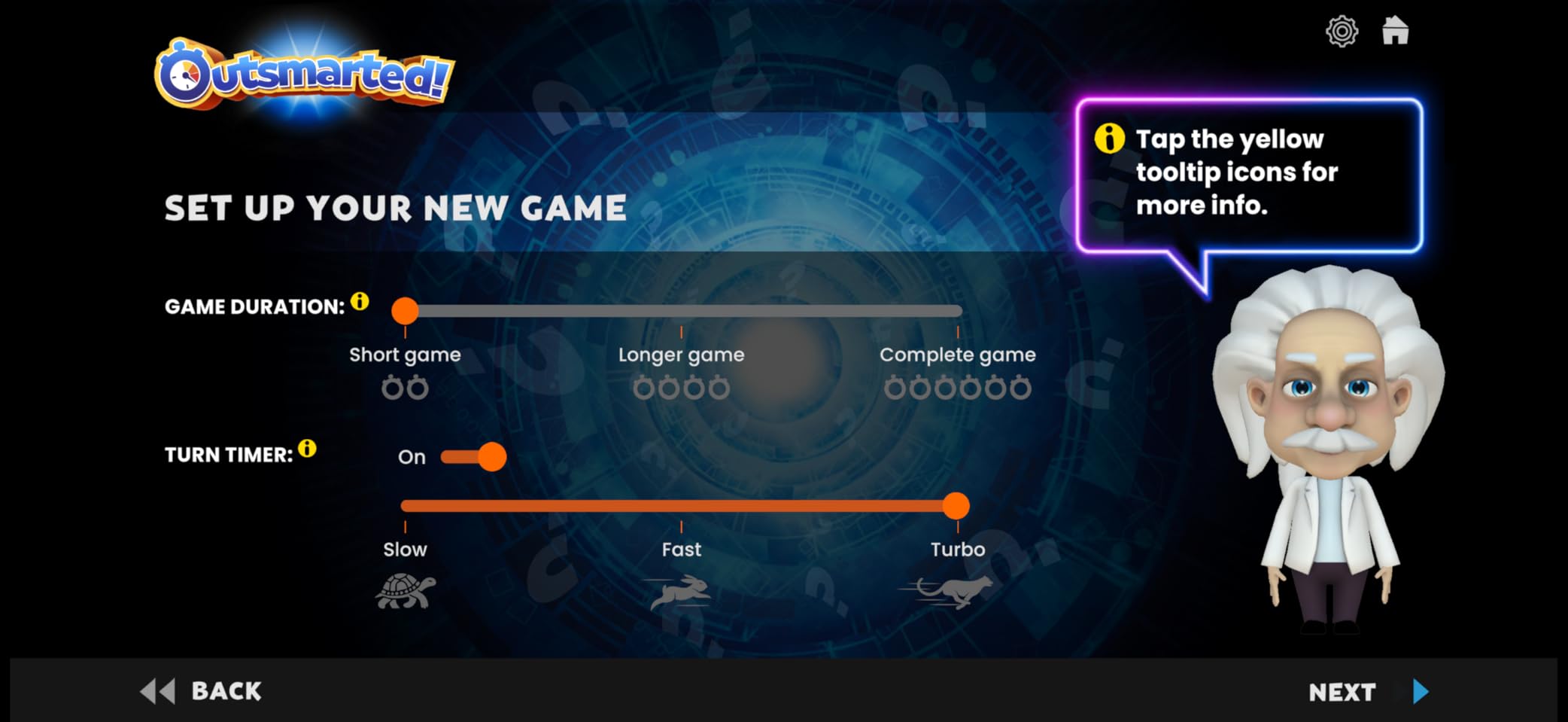
Automatic difficulty adjustment is the feature no physical game in this roundup can replicate. Enter each child’s age at setup and the questions shift, which removes the adult-versus-child fairness argument before it starts. Families with three generations rate this mechanic above everything else in the box.
Some reviewers did find that the app and the physical board did not always work seamlessly together, so run one session on the app alone before you plan a holiday around the board components.
Screen-Based Play, Advantages and Drawbacks
Because everyone shares one screen rather than their own phones, this is a screen-based game that still feels communal, which is the middle ground most families are looking for. Multimedia questions give the evening a quiz-show feel that a card deck cannot, and the run time near an hour suits a full sitting.
The trade-off is that extra categories cost extra, and the app is the whole referee. If the phone dies mid-round, you have a board and no game.
Host Requirement and Household Fit
Plan who hosts before you start. The registered account holder needs to run the entire session, and at a large gathering that is a real job rather than a formality.
For a table of twenty-four at Christmas or a family split across two countries, this has no equal in the list. For a family that wants a screen-free evening, it is the wrong box entirely.
11. History Channel Trivia – 2000-Plus Questions Without the Meeple Chase
HISTORY Channel Trivia Game – 2000+ General Knowledge Questions | Official HISTORY Channel Trivia Card Game & Party Game for Adults, Families & Board Game Night – Great Gift for Dad & History Buffs
2000+ questions in 5 categories
2+ players, ages 14+
One card turn sets the question
30 to 45 minute games
+ Pros
- 2000-plus questions across five wide categories
- Rules explain in a minute or two
- Turning one card over prevents wasted cards
- Difficulty runs easy to hard for mixed ages
- Cons
- Many questions stump younger players
- Content is weighted toward U.S. history
What separates this from a traditional board trivia game is the setup. You turn one card over at the start, and that single decision determines which question on every subsequent card you play, so nothing in the deck is ever wasted and no one is running pieces around a board.
There are more than 2000 questions across five categories: arts and culture, sports and recreation, science and technology, geography and landmarks, and people and events. Difficulty runs from easy to hard within each category, which is what keeps mixed ages engaged. Listed play time is 30 to 45 minutes for 2 or more players, and the recommended age is 14 and up.
Reviewers like the modern rule set and report it sparking genuine discussion rather than just scoring. The drawbacks are consistent: the questions are hard enough to stump adults, and the content is heavily U.S.-weighted.
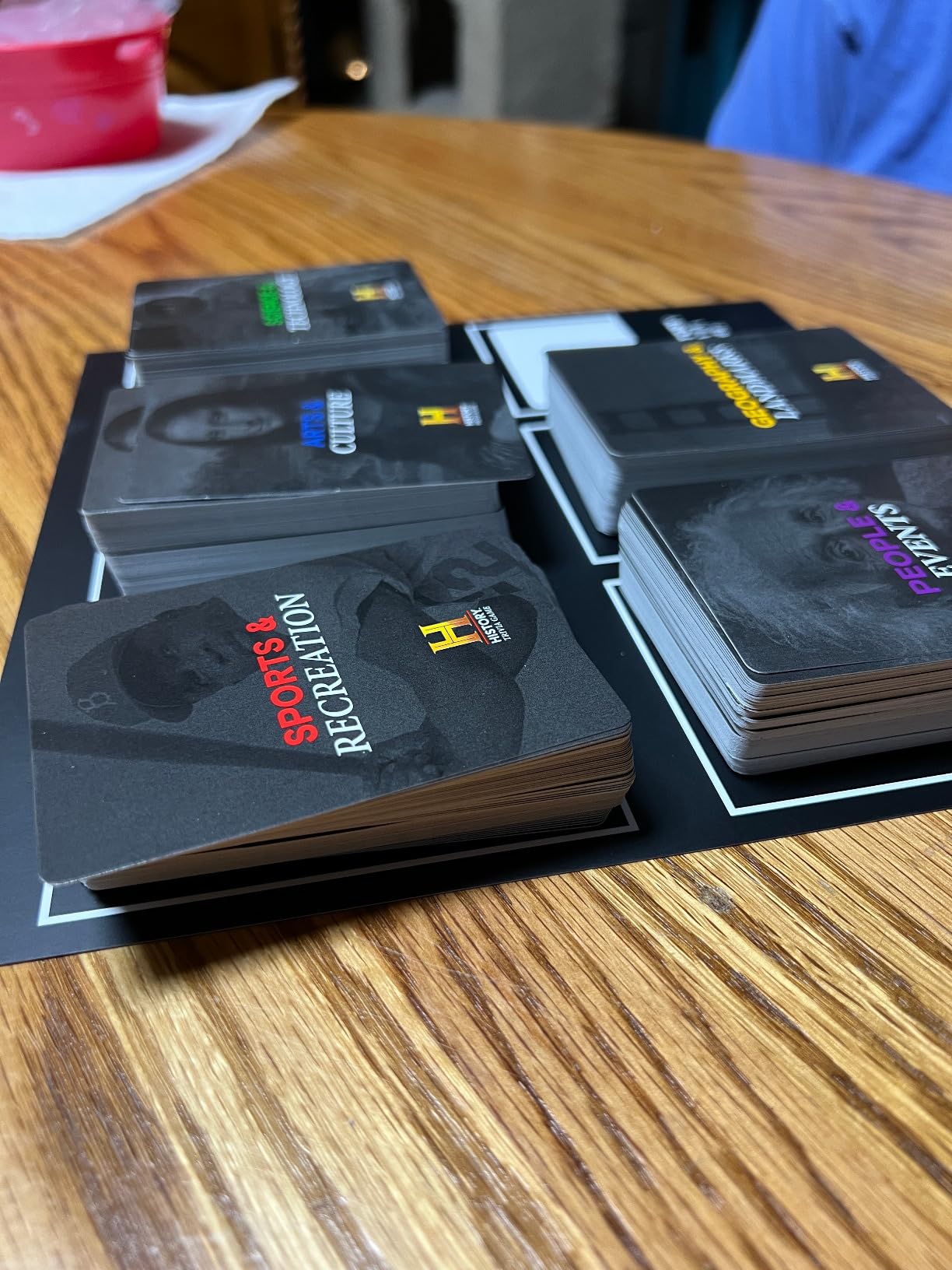
The One-Card-Turn System and Why It Matters
That single opening card choice removes the slowest part of every trivia board game, which is everyone watching whose turn it is. It also means you pick a path through the deck, so two groups playing the same box have genuinely different games.
There is also a substitute rule allowing three answers in one category to stand in for another, which quietly rescues an evening when a household’s one strong subject gets exhausted early.
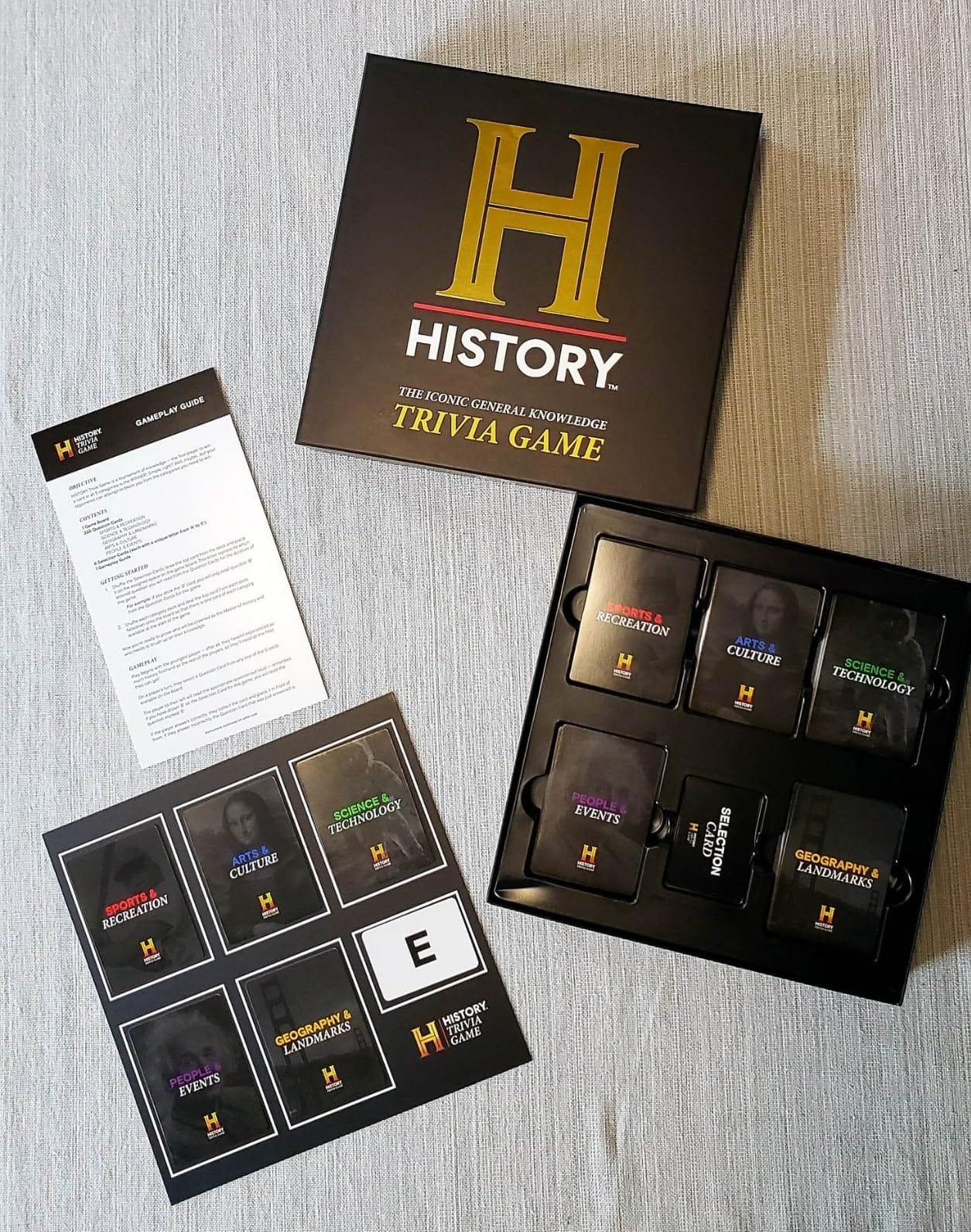
Category Spread and Replay Value
Five broad categories give more variety than most decks at this size, and 2000-plus questions mean it survives well past the first winter. Several reviewers note that their families still return to it a year later because the questions do not feel worn out.
Weight is 0.73 kg in a 10 by 10 by 2 inch box, so it is substantial on the table and easy to pass around a circle.
Age Fit and the U.S. Content Caveat
Despite the wide difficulty range, the recommended age is 14 and up, and reviewers consistently warn that many questions will stump a child under twelve. A family with pre-teens should read cards aloud or use the easier end of the range deliberately.
For families outside the United States, the history weighting is the deciding factor. Check a sample of cards against your own background knowledge before committing.
12. Jumbo Hitster – 300 Songs That Every Generation Recognises
Jumbo Hitster – The Music Fun Party Quiz Card Game, 2-10 Players – 300 Plus Iconic Music Hits – Great for Adult and Family Game Night
300+ songs from the 1920s to the 2020s
QR codes plus a free app
2-10 players, ages 16+
Competitive, cooperative or solo
+ Pros
- Songs span a century so each generation recognises some
- Rules explain in about three minutes
- App and QR codes make setup nearly instant
- Compact box travels to parties and holidays
- Cons
- Full-length playback needs a music subscription
- A few cards reference explicit songs
This is the highest-rated game we tested, and the reason is that it is not really a knowledge test. Pick a card, scan the QR code in the free app, and the song plays. More than 300 iconic hits run from the 1920s to the 2020s, so a grandparent recognises something in almost every decade even when the youngest players only know the newest.
That generational reach is what makes it a family favourite rather than a party game. Rules explain in about three minutes and new players understand them in one round. Multiple modes are supported, including competitive showdowns, cooperative teamwork, and solo challenges, which lets you change the temperature of the room without changing boxes.
There are two practical conditions. Full-length playback requires a music subscription, and a handful of cards reference explicit songs that you can remove before handing the box to a mixed-age group.
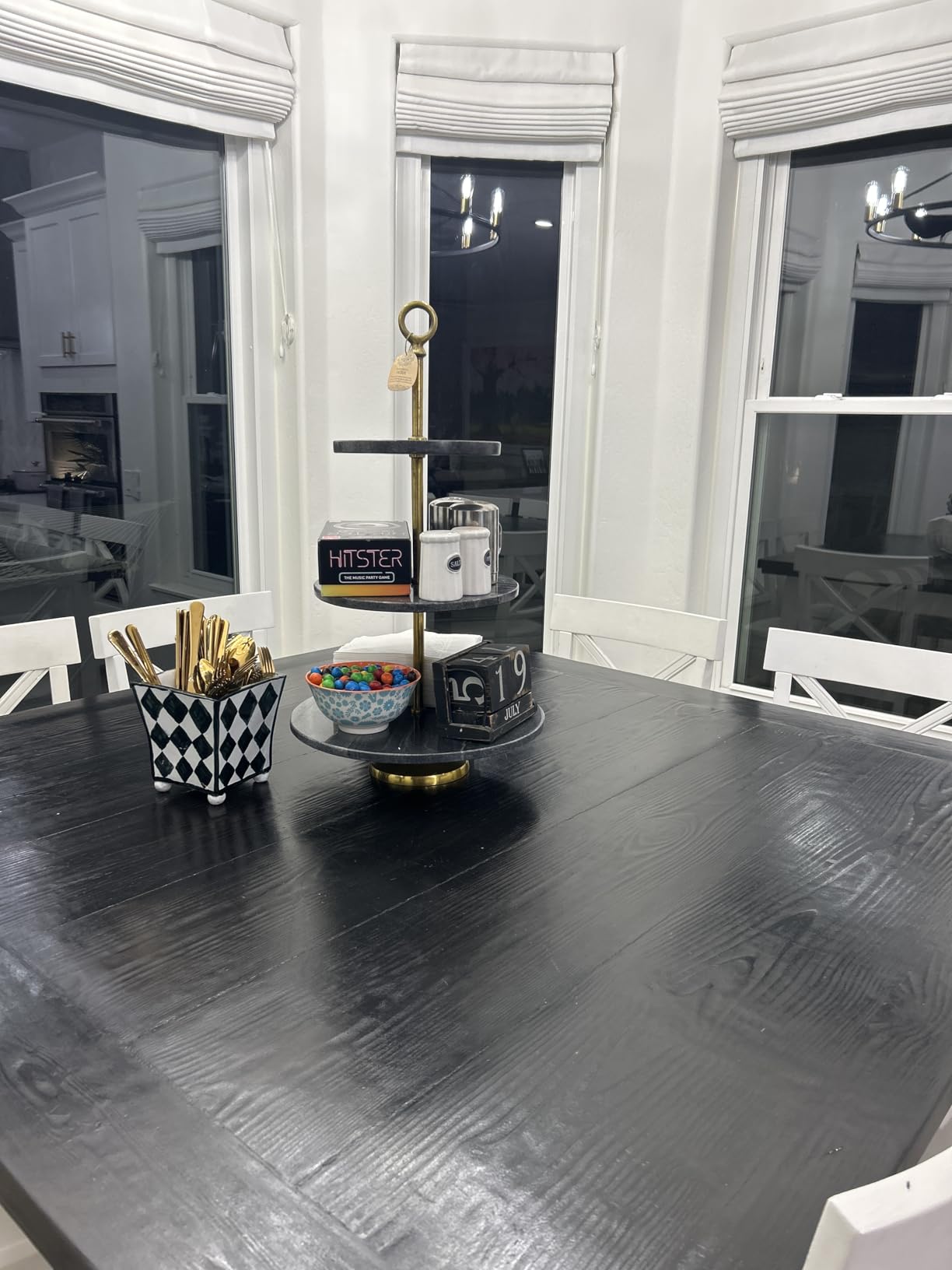
App Assisted Setup and Play Modes
QR codes make this the fastest setup in the roundup. There is no board, no die, and no scoring app interface to learn, so it works in a holiday house full of people arriving at different times. The compact 8.5 by 4.5 by 3 inch box travels to parties and vacations without ceremony.
Cooperative mode is the underrated feature for families. When the table plays as one team, the generational knowledge gap stops being a handicap and becomes the strategy, because a grandparent recognising a chorus is worth as much as a teenager knowing the artist.
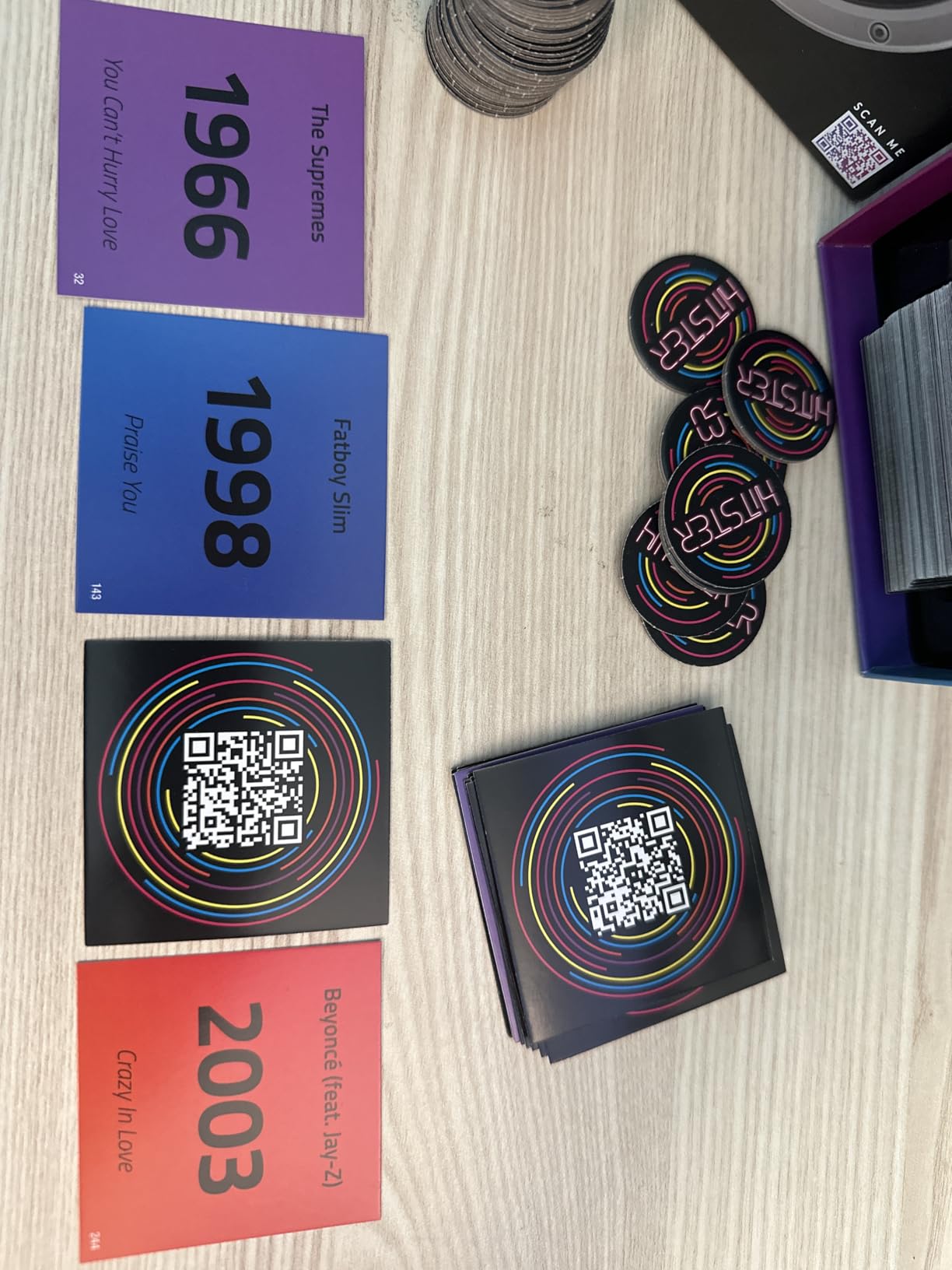
Song Range, Player Count and Age Fit
Two to ten players covers a family dinner table comfortably, and the recommended age is 16 and up because the titles skew to adult radio. Younger children can absolutely play, but they will recognise far less of the catalogue and will need to be paired with someone who does.
Reviewers also note the focus is on radio-style hits, so musical theatre and Disney songs are absent. Families whose children live on film soundtracks should expect gaps.
The Subscription Catch and How to Handle It
Without a music subscription the app plays only about ten seconds of each track, which is workable for a hard guess and frustrating for a slow one. Decide before game night whether to subscribe or to accept short clips.
Sort the explicit cards out beforehand. It takes a minute and prevents the one awkward moment that would otherwise end the evening early.
How to Choose a Trivia Game Your Whole Family Can Win
Five checks decide whether a trivia game survives a second and third evening. Run them before you buy, not after the first argument about whose turn it was.
1. Match the Question Set to the Youngest Player at the Table
Start from your youngest player, not the average age. A game that is too hard produces the worst outcome in a family, because a shut-down child cannot be persuaded back and the evening ends early. Split decks, as on the Trivial Pursuit Family Edition, or a fifty-fifty format, as on the Mount Cleverest, are the reliable answers.
Check the reading load separately from the difficulty. Several games here are age-appropriate but reading-inappropriate, which excludes anyone under about nine in a different way. A card game one player reads aloud solves this, and so does a true-or-false format.
2. Check the Player Count Against Your Real Table Size
The listed player range is more useful than the headline number, because the real question is what happens at the top end. A box for 2 to 6 players is not a solution for a table of ten, and this is the constraint households most often regret. Games rated from 4 to 10 or 2 to 12 cover a holiday gathering far better.
For tables above twelve, plan on two simultaneous games rather than one stretched game.
3. Choose the Scoring Rule Before You Buy
Scoring is what decides whether a mixed-age table stays warm. Forgiving options, where a wrong answer costs a point or silence is safe, protect the youngest players better than an easier question set does. Competitive formats that reward knowledge hard punish children twice, once on the question and again on the score.
Watch for the two-player-or-team split as well. Two teams keep everyone involved at eight; free-for-all does not.
4. Decide Your Screen Rule in Advance
Screen-free games keep the table talking, which is usually what families actually want. Screen-based games deliver audio, video, and age-balanced difficulty that paper cannot, but they need a device, a charged battery, and somebody willing to host.
Decide which side of that trade you are on before shopping, and you will skip half the catalogue rather than returning something.
5. Buy for Replay Value, Not for One Night
Two thousand questions will not run out in a year. A few hundred will, and some titles have no replacement deck available at all. For a box you expect to use through several holiday seasons, count the questions and check whether refills exist.
Also consider the components. A game that lives in the cupboard is a game someone will actually pull out, and a tin of cards is easier to reach for than a board with wedges and tokens.
How to Run a Family Trivia Night That Keeps Everyone Talking
Good rules do more for a trivia night than the box does. Five decisions cover almost every household.
1. Split Into Teams, Not Individuals
Two teams, or four small ones at a big table, keep a losing player engaged. A child who scores nothing alone disengages within two rounds; a child on a team with a parent usually keeps answering.
2. Set a Prize Before the First Question
Something small and silly works. The point is to give the winning side a reason to argue, and the losing side something to plan for next time. Skip it and a good evening can end flat.
3. Designate a Question Reader
One person reads every question aloud, including the ones on their own card. This removes reading advantage entirely and it is the single change that most improves a mixed-age evening.
4. Mix Two Formats in One Evening
Boredom after the third round is the most common complaint in family discussions about game night. Two different formats in a session, such as a family-questions opener followed by a knowledge quiz, keeps the energy changing without a complicated plan.
5. Plan a Tie-Breaker in Advance
Agree the tie-breaker before the final round. A sudden-death question, or the team that lost the fewest points, both work. Deciding afterwards is how game night ends in an argument instead of a handshake.
Frequently Asked Questions
What is a good trivia game for a family night?
A good family trivia game uses a split question set, a forgiving scoring rule, or a player count that flexes, so both children and adults can realistically win. Strong all-purpose choices are the Trivial Pursuit Family Edition for split adult and kid decks, Do You Really Know Your Family for zero-setup play with a table of eight, and Mount Cleverest True or False when a child of six is at the table.
What are the top 10 games for a family game night?
Our top ten picks in order are: Trivial Pursuit Family Edition, I Should Have Known That, Do You Really Know Your Family, Smart Ass, What Do You Meme All of Us, Mount Cleverest True or False, Super Trivia, Who Knows More Kids or Adults, Randolph Trivia Party Game, and Outsmarted. The History Channel Trivia game and Jumbo Hitster complete the list of twelve.
What are some good games to play at a trivia night?
For a louder, faster round, Smart Ass allows anyone to shout an answer at any time and Mount Cleverest True or False moves through questions in seconds. For a bigger table, Outsmarted runs with up to 24 players and scales difficulty to each player, and What Do You Meme All of Us suits four or more with a deck for every generation.
What are some fun trivia questions for the entire family?
A category mix that works across ages is food, films, nature, animals, sport, music history, and geography, plus a silly general-knowledge round nobody studies for. Keep each answer to one or two words so a six-year-old can attempt them. The best home-grown option is writing questions about your own family, which is what Do You Really Know Your Family is built on.
Are board games or apps better for family game night?
Board and card games keep the table talking and need nothing but a device-free room, which is what most families want from an evening together. App-connected and phone-assisted games add audio, video, and automatic difficulty adjustment by age, which no paper game can match. Outsmarted balances ages automatically for up to 24 players, while Hitster uses an app only to play song clips and still has everyone on one screen.
How many players can the best family trivia games handle?
Player counts vary widely. Mount Cleverest True or False suits 2 to 12 players and much larger gatherings, Outsmarted runs with 2 to 24, Randolph scales from 2 to 16 in teams, and Jumbo Hitster covers 2 to 10. Small games such as Super Trivia cap out at 2 to 6, so check the listed range against the size of your real table before buying.
Which Trivia Game Should You Buy First in 2026?
There is no single best trivia game for family game night, because the deciding variable is the age spread at your table. If your household has children from about eight upward plus parents, start with the Trivial Pursuit Family Edition, our Editor’s Choice. The split blue and yellow decks are the most reliable fix for the age gap, and the quick-play rule keeps the whole thing to one sitting.
If you need the table talking within five minutes of sitting down, or you are hosting a group of six to eight, pick Do You Really Know Your Family. If a child under eight is the youngest player, Mount Cleverest True or False gives them a genuine fifty-fifty shot on every question. If three generations are under one roof and nobody has anything in common, What Do You Meme All of Us or Jumbo Hitster solves it through generational decks or a century of songs.
For a large holiday table, Outsmarted scales to 24 players and adjusts difficulty to each age automatically. For a loud, fast, shouting-and-laughing evening with teens and adults, Smart Ass. For something screen-free that travels, I Should Have Known That earns its place with scoring that punishes reckless guessing instead of rewarding it.
Whichever one you choose, read cards aloud, split into teams, and agree the tie-breaker before the final question. Those three house rules matter more to a good night than the box itself.