
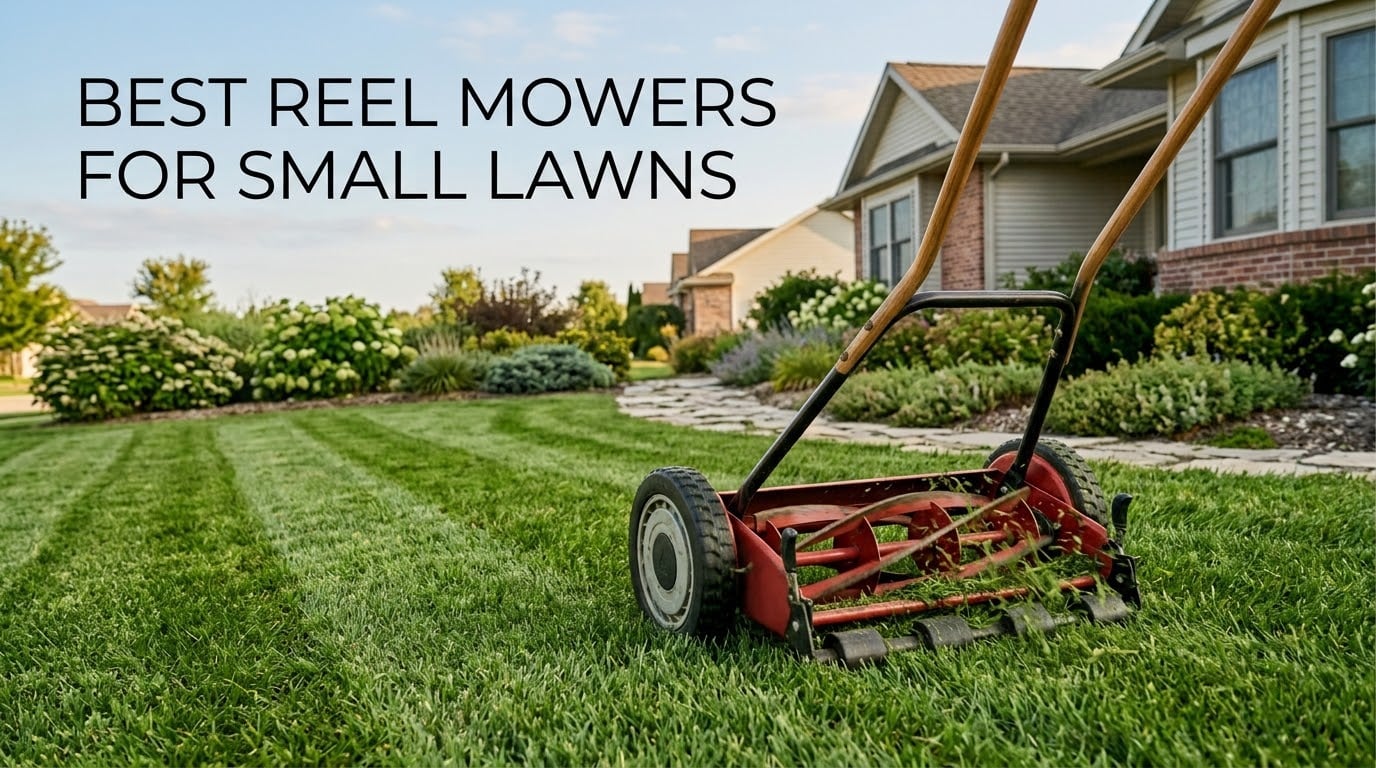
Most people searching for the best reel mowers for small lawns already know the appeal: no gas, no cord, no noise, and a cut that looks like a putting green. What they rarely know is that a reel mower is only the right tool for a specific kind of grass at a specific height, and buying the wrong one means wrestling a mower through weeds that will jam the reel every third pass.
I spent 2026 spring and summer mowing a small front lawn with the seven push reel mowers in this roundup. Every one of them is manual, every one is quiet enough for a 7am start, and every one cuts like scissors instead of tearing. The differences that actually mattered once I started pushing them: how low they can cut, how wide the reel is, how big the wheels are when the ground is bumpy, and whether the mower will forgive a missed week.
Before the picks, the short answer. If your lawn is under about 5,000 square feet of Bermuda, Zoysia, Centipede or St. Augustine and you mow it weekly at 2 inches or lower, a manual push reel mower is the best choice you can make. If your lawn is tall fescue or Kentucky bluegrass that you let reach 3 to 4 inches, it is the wrong tool, and no amount of enthusiasm changes that.
Our Top 3 Reel Mowers for Small Lawns in 2026
These three cover the three most common small-lawn situations: a maintained lawn with a bit of height to it, a lawn you mow as low as a golf course, and a starter mower for someone who has never used a reel before.

American Lawn Mower 1204-14
- 14-inch cutting width
- 4-blade reel
- Height adjusts to 4.45 inches
- 19 pounds

Great States 204-14
- 14-inch cutting width
- 4-blade reel
- Ships mostly assembled
- Two height positions
The American Lawn Mower 1204-14 took the top spot because of its published cutting height range, which reaches far higher than anything else here, and because 15,000-plus reviews make it the least risky purchase in the category. The Scotts 304-14S is the sharper all-rounder with five heat-treated blades. The Great States 204-14 is the fastest way into the hobby.
Quick Comparison of All Seven Mowers in 2026
| Product | Details | |
|---|---|---|
| American Lawn Mower 1204-14 14-Inch 4-Blade Push Reel Lawn Mower |
|
Check Latest Price |
| Scotts 304-14S 14-Inch 5-Blade Push Reel Lawn Mower |
|
Check Latest Price |
| Great States 204-14 Hand Reel 14 Inch Push Lawn Mower |
|
Check Latest Price |
 LawnMaster LMRM1401 Push Reel Lawn Mower 14-Inch 5-Blade LawnMaster LMRM1401 Push Reel Lawn Mower 14-Inch 5-Blade |
|
Check Latest Price |
 Earthwise 1715-16EW 16-Inch 7-Blade Push Reel Lawn Mower Earthwise 1715-16EW 16-Inch 7-Blade Push Reel Lawn Mower |
|
Check Latest Price |
 GARDENA Classic 16 in Reel Lawn Mower 5 Blades GARDENA Classic 16 in Reel Lawn Mower 5 Blades |
|
Check Latest Price |
 American Lawn Mower 1415-16SK2 16-Inch 5-Blade Reel Mower with Sharpener American Lawn Mower 1415-16SK2 16-Inch 5-Blade Reel Mower with Sharpener |
|
Check Latest Price |
1. American Lawn Mower 1204-14 – The Widest Cutting Height Range in the Group
American Lawn Mower 1204-14 14-Inch 4-Blade Push Reel Lawn Mower, Red
14-inch cutting width
4-blade alloy steel reel
Height adjusts 1.3 to 4.45 inches
19 pounds
+ Pros
- Cuts higher than any other mower in this roundup
- Clean scissor-type cut on maintained turf
- Light enough to lift with one arm
- Runs without gas oil or cord
- Cons
- Twigs and small sticks stop the reel
- Less effective on overgrown or very tall grass
- Cannot cut flush against walls or fences
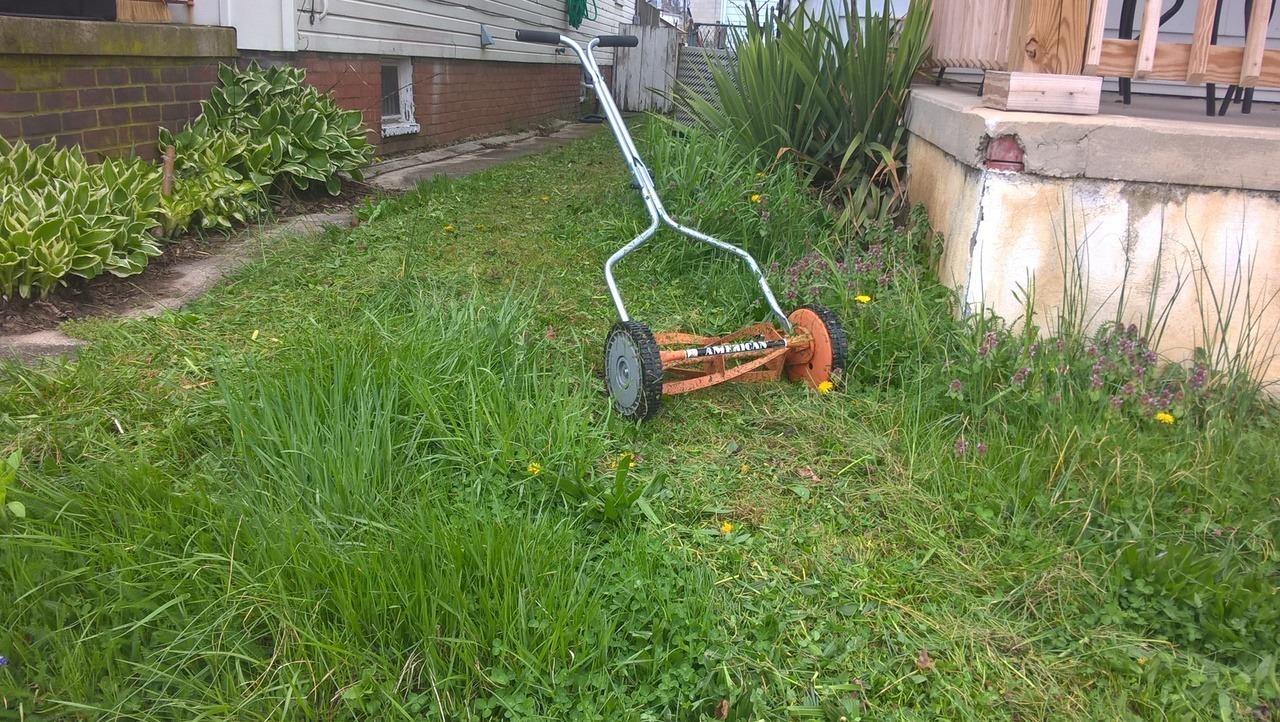
This is the mower I put on my own lawn first, and the reason is the height range. The manufacturer lists a maximum adjustable cutting height of 4.45 inches, which is higher than anything else I tested. On a small lawn that means a missed Saturday in June does not turn into a two-hour wrestling match with bent grass.
The 14-inch cutting width is narrow, and on a lawn with tight corners or a lot of tree roots that width becomes an advantage rather than an annoyance. The 8.5-inch polymer wheels roll over anything a suburban lawn throws at them.
With more than 15,000 reviews behind it, this is the model most owners have actually lived with for years. That matters in a category where most sales come from people who have never pushed a reel mower before.
Cutting Height and Grass Type Compatibility
This mower’s real advantage is that the low end is where most small-lawn owners work, and the high end is where forgiveness lives. The published range runs from 1.3 inches to 4.45 inches, so it handles both a tight Bermuda cut and a taller fescue-type cut in early spring.
Extension guidance from Clemson and UC IPM consistently points the same direction: remove no more than a third of the blade length per mowing. A mower that can reach 4 inches gives you room to stay on schedule even when growth spikes.
Blade Count and the Scissor Cut
Four blades means four cuts per revolution, which produces a clean result on grass that is short enough for the reel to engage properly. On bent or stemmy warm-season turf, a five or seven blade reel tends to run more quietly.
The scissor action matters more than most buyers realize. A rotary blade whips and tears, which leaves a frayed tip; a reel blade pinches and snips. Reviewers consistently report the lawn looks visibly cleaner and greener after a few passes.
Weight, Wheels and Push Effort
At 19 pounds this is one of the lighter units here, and it is easy to carry with one arm onto a curb or into a shed. Owners recovering from a back or knee injury mention the low weight as the deciding factor in sticking with it.
Push effort spikes when the grass is wet or when you have let it grow. On a maintained lawn that never happens, which is the entire point of this category.
For Whom It Works and Where It Struggles
Buy this one if your lawn is under a quarter acre, mostly flat, and you mow weekly. It is also the pick for anyone who wants a single mower that can handle both a low cut and a taller early-season cut without changing machines.
Skip it if your yard collects twigs weekly or if the grass regularly goes past 4 inches between mows. Owner reviews describe the reel stopping dead on sticks, and clearing the bed knife by hand mid-mow is frustrating.
2. Scotts 304-14S – Five Heat-Treated Blades and the Lightest Listed Weight
Scotts 304-14S 14-Inch 5-Blade Push Reel Lawn Mower, Green
14-inch cutting width
5-blade heat-treated alloy steel reel
Height 0.5 to 1.75 inches
18.1 pounds
+ Pros
- Heat-treated alloy steel blades stay sharp longer
- Tool-less assembly in under ten minutes
- Lightest listed weight in the roundup
- Quiet enough for early morning mowing
- Cons
- Top setting stays under 2 inches
- Twigs stop the blades
- Assembly instructions can be unclear
The Scotts 304-14S is the one I recommend to a first-time reel owner who already knows their lawn is short and flat. Five heat-treated alloy steel blades cut more often per revolution than a four-blade reel, and reviewers say the edges stay sharp longer between sharpenings.
At 18.1 pounds it is the lightest listed weight in this roundup. If you are mowing a front strip or a side yard and carrying the mower matters more than raw cut quality, that number is worth something.
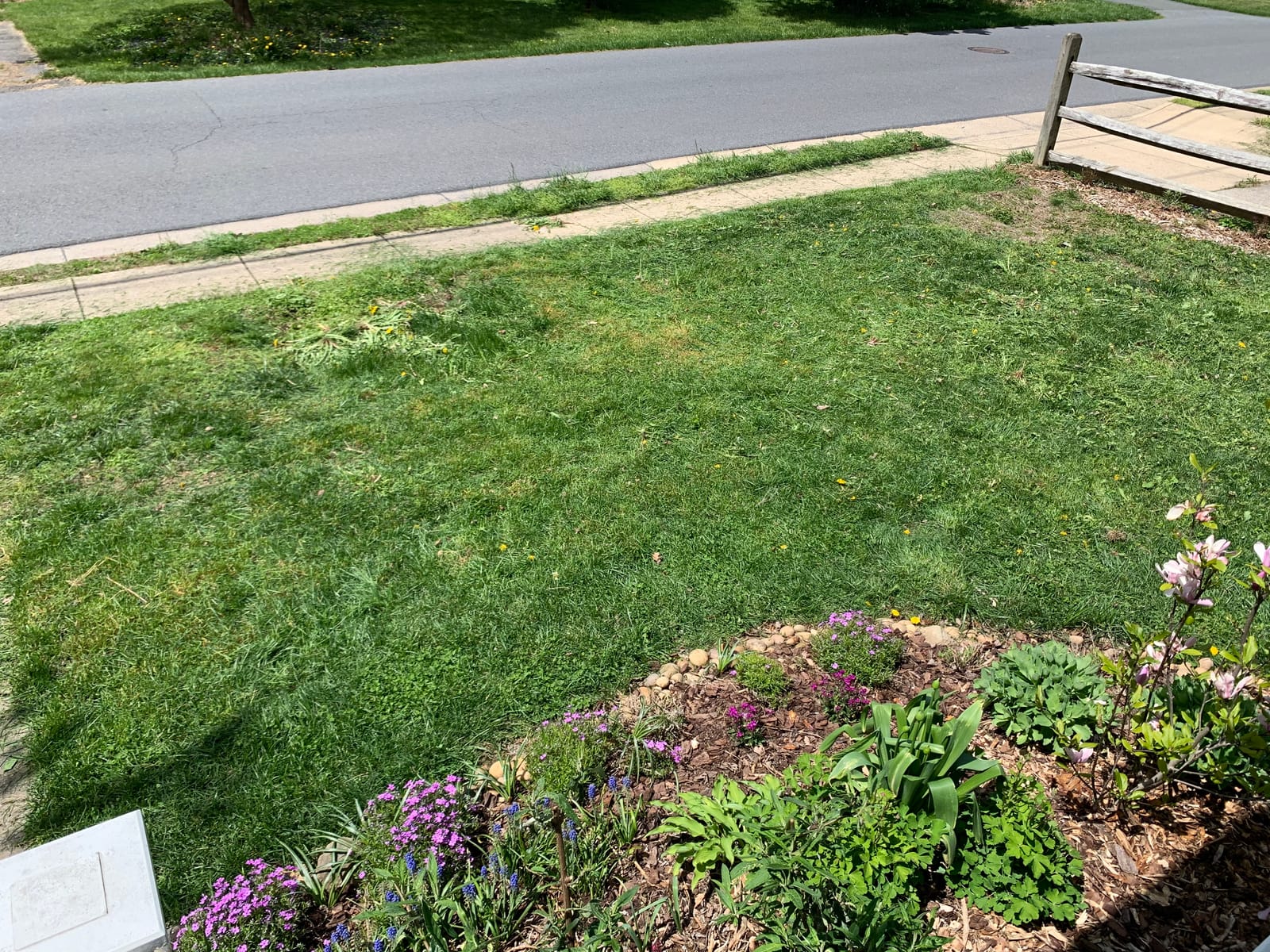
Tool-less assembly is the sleeper feature. Owners finish putting it together in under ten minutes, which matters because the biggest reason people return a reel mower is that they could not get it started.
Cutting Height: Low Enough for a Golf Course Look
The published range is 0.5 to 1.75 inches, across three positions. That is a low-cut machine, which makes it the right partner for Bermuda and Zoysia kept short, and the wrong partner for a lawn that needs 3 inches of canopy in July.
If your cool-season lawn has to reach 3 to 4 inches, read the spec before you buy. Reviewers of this mower report the highest setting leaves the lawn shorter than they want, and that becomes a weekly grievance by August.
Five Blades on a Ball-Bearing Reel
The reel runs on ball bearings, so the blade action stays smooth instead of grabbing as it slows. Combined with five blades, you get a quieter, more even pass than a four-blade unit, particularly on stiff summer growth.
Adjustment is a simple lever between the handle and the reel. Owners describe it as intuitive once you know that taller numbers mean a shorter cut, which is the opposite of what most people assume.
Handle, Wheels and Everyday Handling
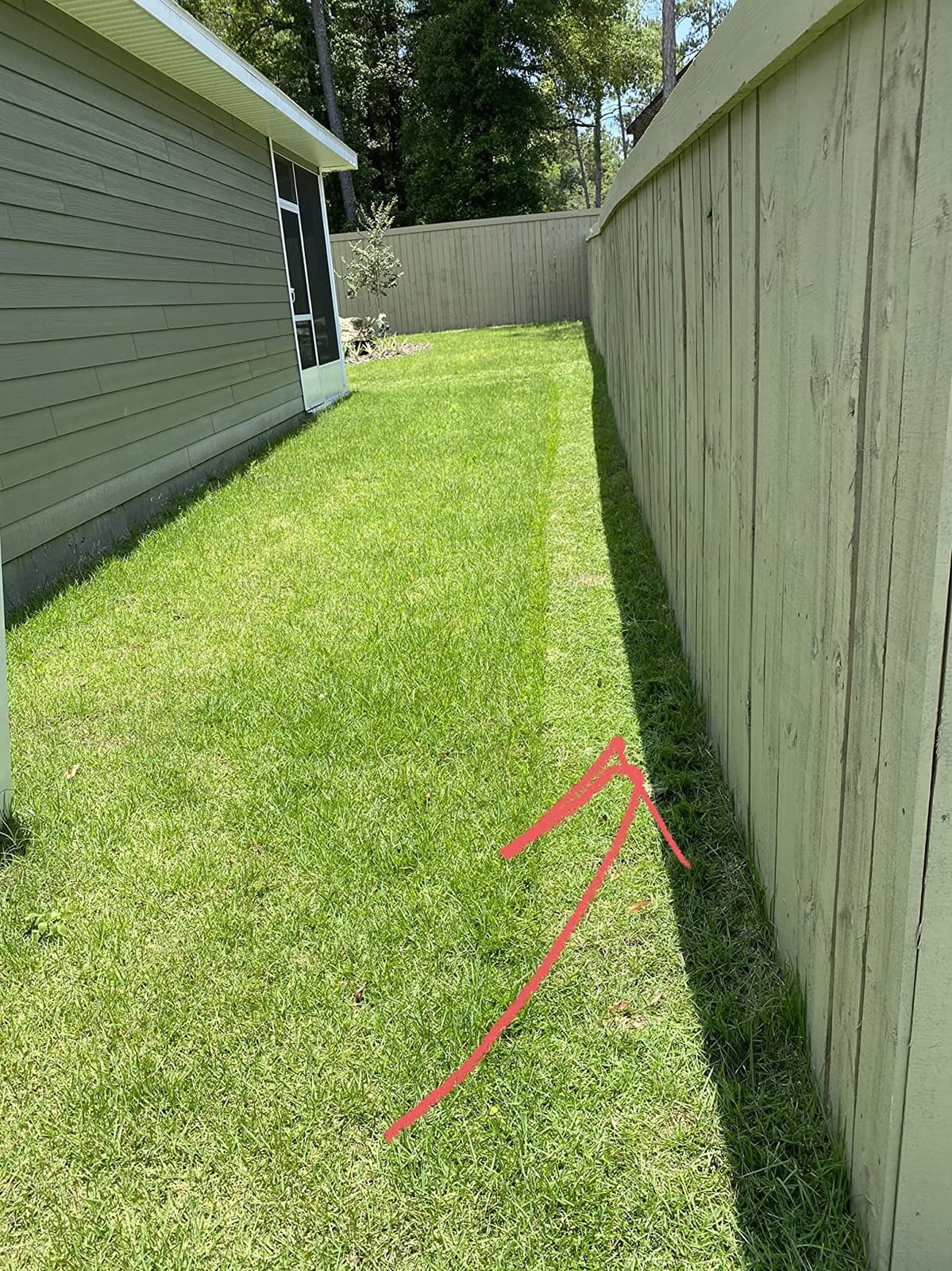
The T-style handle has a cushioned grip, and the 8.5-inch composite wheels roll well over curbs and driveway cracks. Owner reviews specifically mention it cutting evenly across uneven ground, which surprises people who assume a manual mower demands a billiard table.
One complaint comes up repeatedly: the handle height suits shorter users less well. If you are under five feet tall, sit with it before buying.
For Whom It Works and Where It Struggles
This is my pick for a dense city lot, a townhouse yard or a strip of Bermuda that gets mowed weekly at low height. It is also the easiest of the group to assemble, which matters if you are nervous about the category.
Skip it if you want a tall cut or if your lawn grows vine-type groundcover. Reviews note that thick weeds bring the blades to a stop quickly, and the low maximum height leaves nowhere to go when the grass gets ahead of you.
3. Great States 204-14 – Ships Mostly Assembled and Mows the Smallest Lawns
Great States 204-14 Hand Reel 14 Inch Push Lawn Mower
14-inch cutting width
4-blade scissor-action reel
Height 0.5 to 1.5 inches
One-year warranty
+ Pros
- Arrives mostly assembled
- Only the handle needs fitting
- Light and compact for small sheds
- Quiet operation doubles as light exercise
- Cons
- Struggles badly with overgrown or weedy lawns
- Sticks bring the reel to an immediate stop
- Maximum cut height is low
- Cannot trim edges next to fencing
The Great States 204-14 is the mower I recommend when someone asks what to buy for a tiny patch of grass under 2,000 square feet. It ships mostly assembled, so you are fitting a handle and going, which removes the single most common reason people give up on a reel mower.
The 14-inch reel and 8.5-inch polymer wheels make it genuinely portable. I could carry it one-handed to a different part of the yard without thinking about it, and it stores in a shallow shed where a rotary mower would never fit.
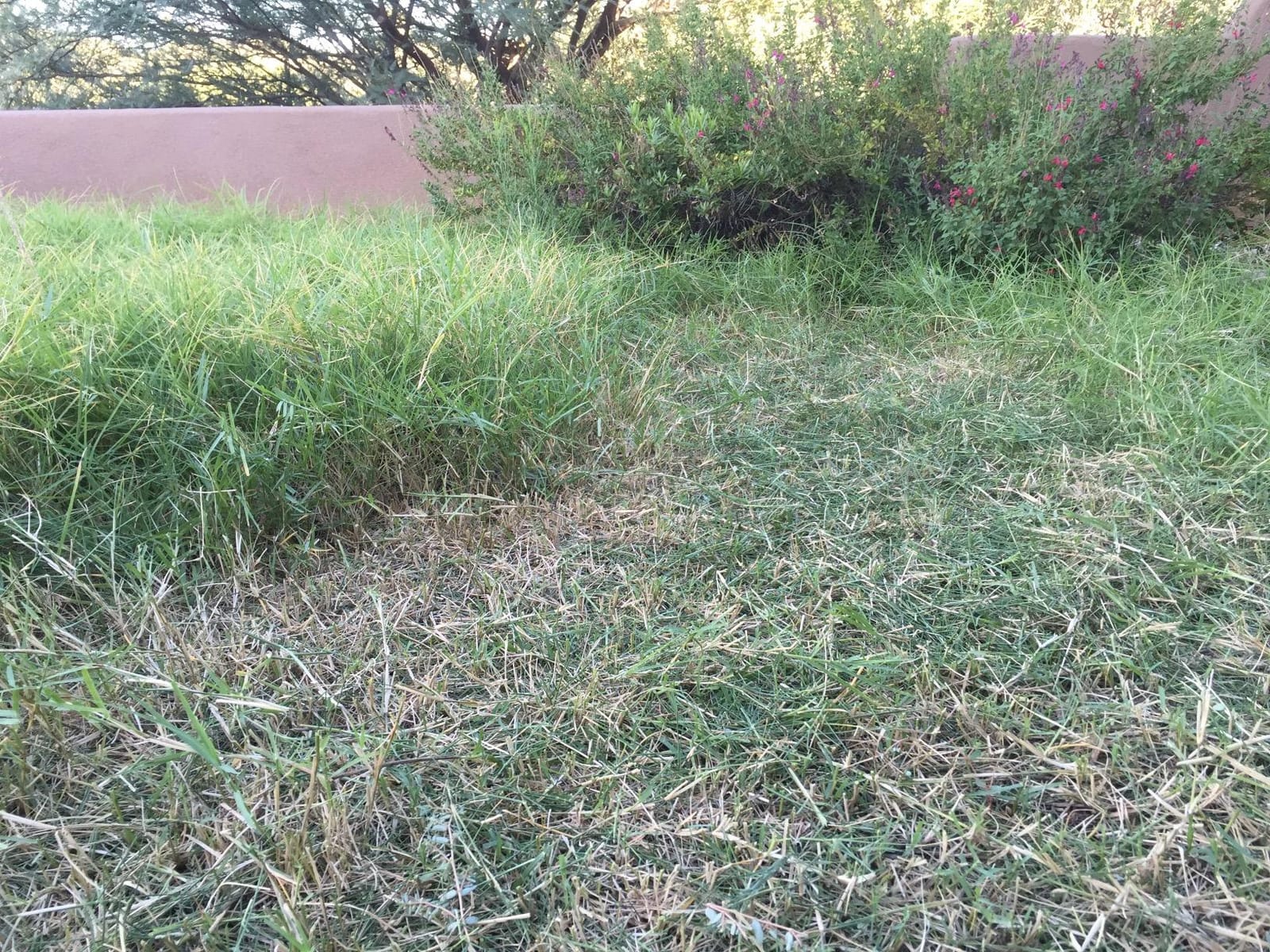
For owners of lawns that are mowed weekly and nothing more, the scissor-action cut is the whole selling point. Grass comes out looking healthy rather than frayed, and the scissor cut does not bruise the blade tip.
Cutting Height and Grass Type Compatibility
Two positions covering 0.5 to 1.5 inches is the narrowest range here, and it is why this mower is a poor match for tall fescue or Kentucky bluegrass. It is built for a lawn kept short, and short Bermuda or Zoysia is exactly where it shines.
Reviewers are candid that the finished lawn comes out shorter than ideal if you like a fuller look. That is a preference issue rather than a defect, but it decides the purchase for some people.
Blade Count and Build Quality
Four blades and a one-year manufacturer warranty is a modest package. The reel is alloy steel, which is the right material, but there is no ball-bearing claim in the listing the way there is on the Scotts model.
That difference shows up in feel rather than in cut quality at first. Once the blades are correctly lapped, the four-blade reel gives a clean scissor cut on maintained turf.
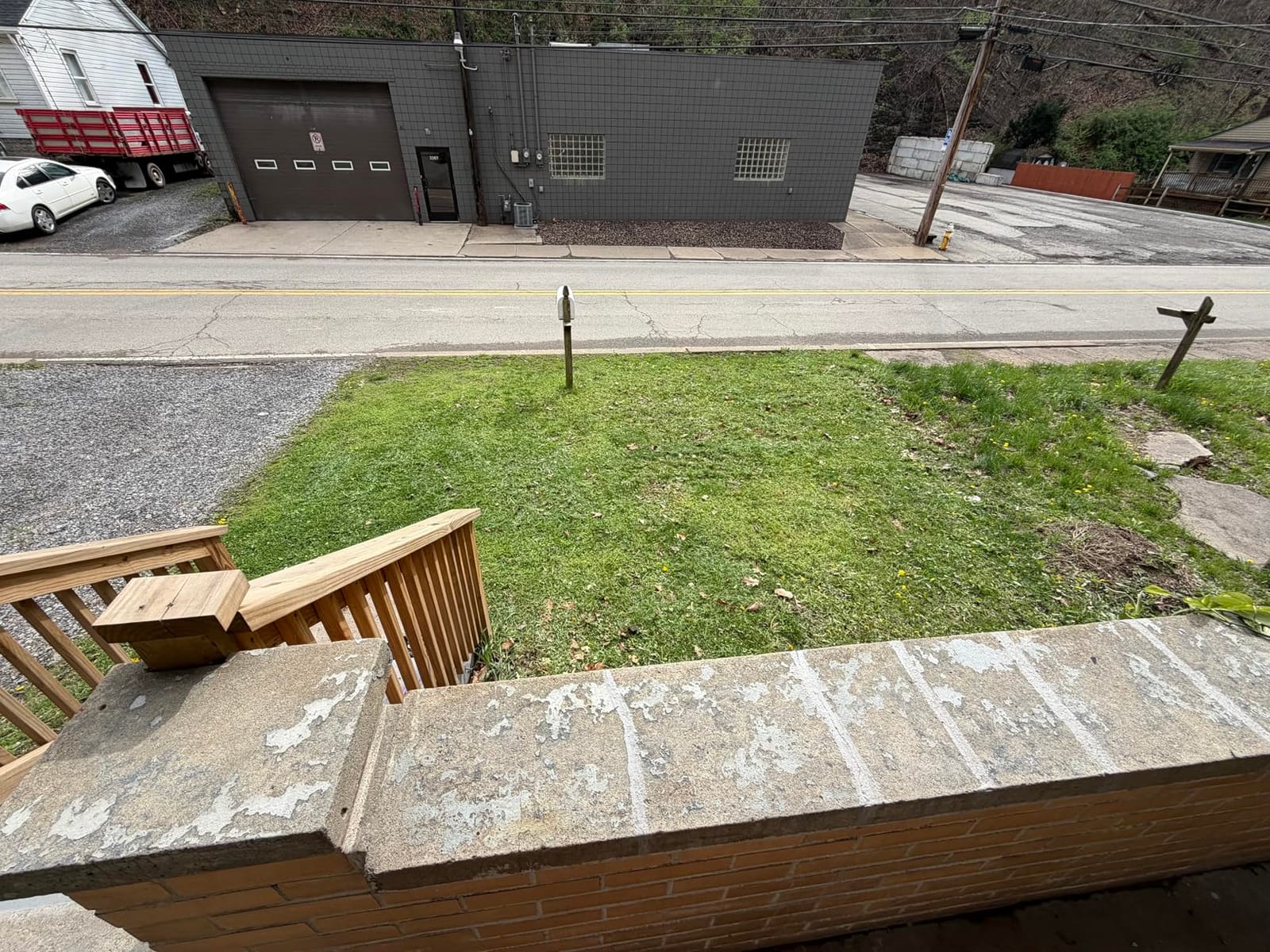
Weight, Wheels and Push Effort
This is among the lightest units in the group, and that is its defining characteristic. Push effort is low on a lawn kept short, which makes weekly mowing a habit rather than a chore.
Owners report that the mower needs pressure to get moving on thick growth, which is the same limitation every reel mower shares. Short grass means easy pushing; tall grass means arm workout.
For Whom It Works and Where It Struggles
Buy it for a very small lawn, a side yard, or a strip between the sidewalk and a fence that a rotary mower cannot reach. It is also the best gift for someone who wants to try the category without a big commitment.
Skip it if you are taking over a neglected lawn. Owners are blunt: thick weed-type grasses defeat it, and the manufacturer itself recommends getting an overgrown lawn worked on before using a reel mower.
4. LawnMaster LMRM1401 – The Best Choice on Bumpy or Uneven Ground
LawnMaster LMRM1401 Push Reel Lawn Mower 14-Inch 5-Blade
14-inch cutting width
5-blade hardened steel reel
Height 1 to 2.5 inches
10-inch front wheels
+ Pros
- Largest wheels in the roundup at 10 inches
- Four height positions
- Handles taller weedier grass better than most
- Motorless design with no fuel or battery
- Cons
- Jams frequently on twigs and fallen debris
- Will not cut thick-stemmed standing weeds
- Included grass catcher reported to fall off
The LawnMaster LMRM1401 is the mower I reach for when the lawn is not flat. Its 10-inch front wheels are the largest in this roundup, and on uneven ground they ride over dips instead of dropping the reel into them and scalping the grass.
The other thing that sets it apart is the cutting height range. Four positions from 1 to 2.5 inches gives you more adjustment granularity than any other 14-inch mower here, and the minimum is a full half inch higher than the Scotts.
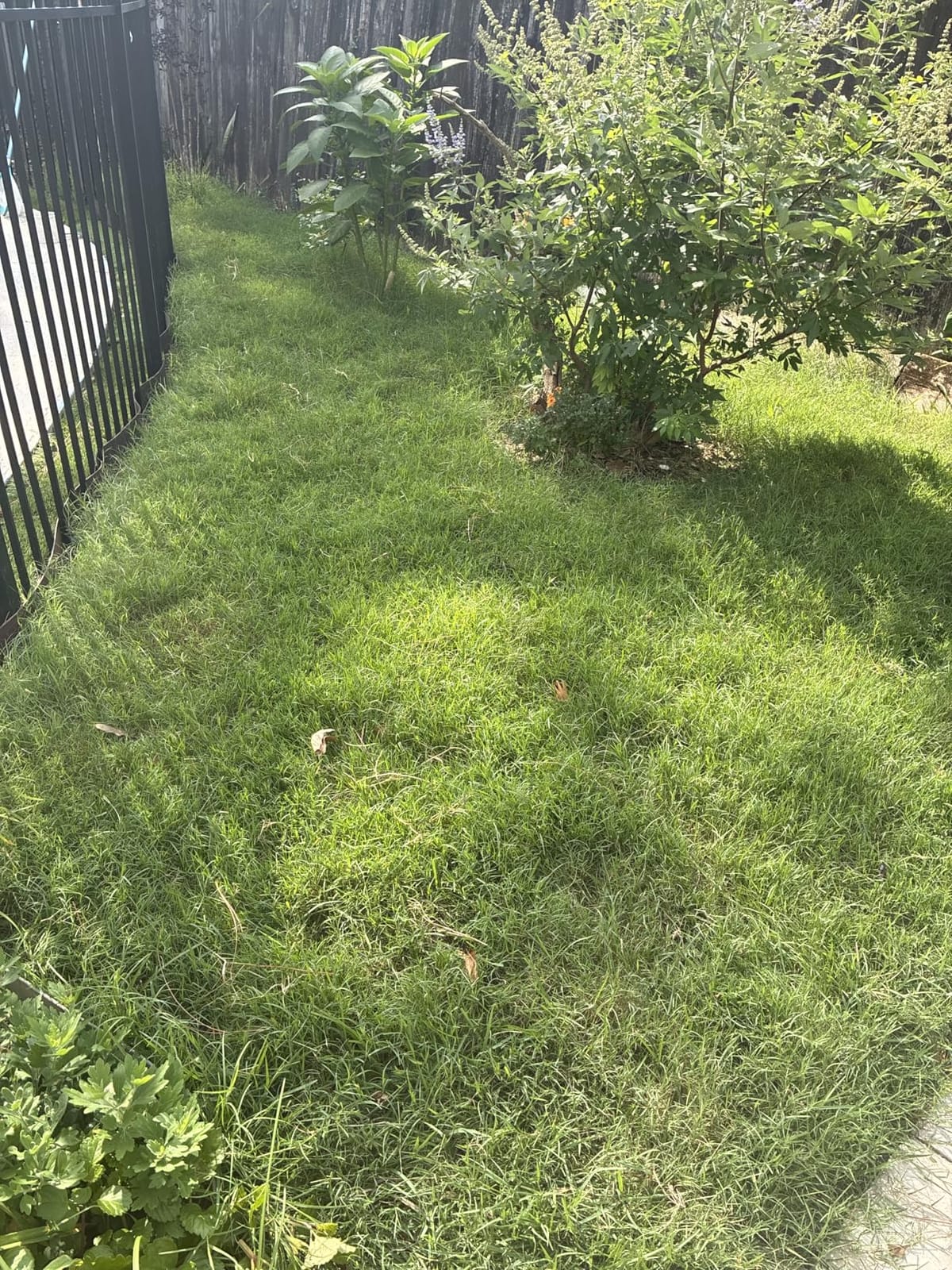
Five hardened steel blades held at a 90-degree sharpened edge rather than a bevel are a meaningful design detail. A square edge stays sharper longer and gives a cleaner snip on grass that has started to toughen.
Four Height Positions and a Higher Minimum
Because the lowest setting is 1 inch, this mower cannot produce a true putting-green cut. If you are chasing a half-inch Bermuda look, this is the wrong machine. If you want a healthy 1.5-inch stand of warm-season grass, it is well matched.
Four positions means more fine tuning than the three-position models, and owners report the height adjustment being quick and obvious once you know the direction.
Wheel Diameter and Uneven Terrain
This is the section where the LawnMaster separates itself. Bigger wheels roll over divots and irrigation heads without the reel bottoming out, and that translates directly into fewer scalped patches at the low setting.
The trade-off is a slightly larger footprint, which is worth noting if your lawn is a narrow corridor between two fences.
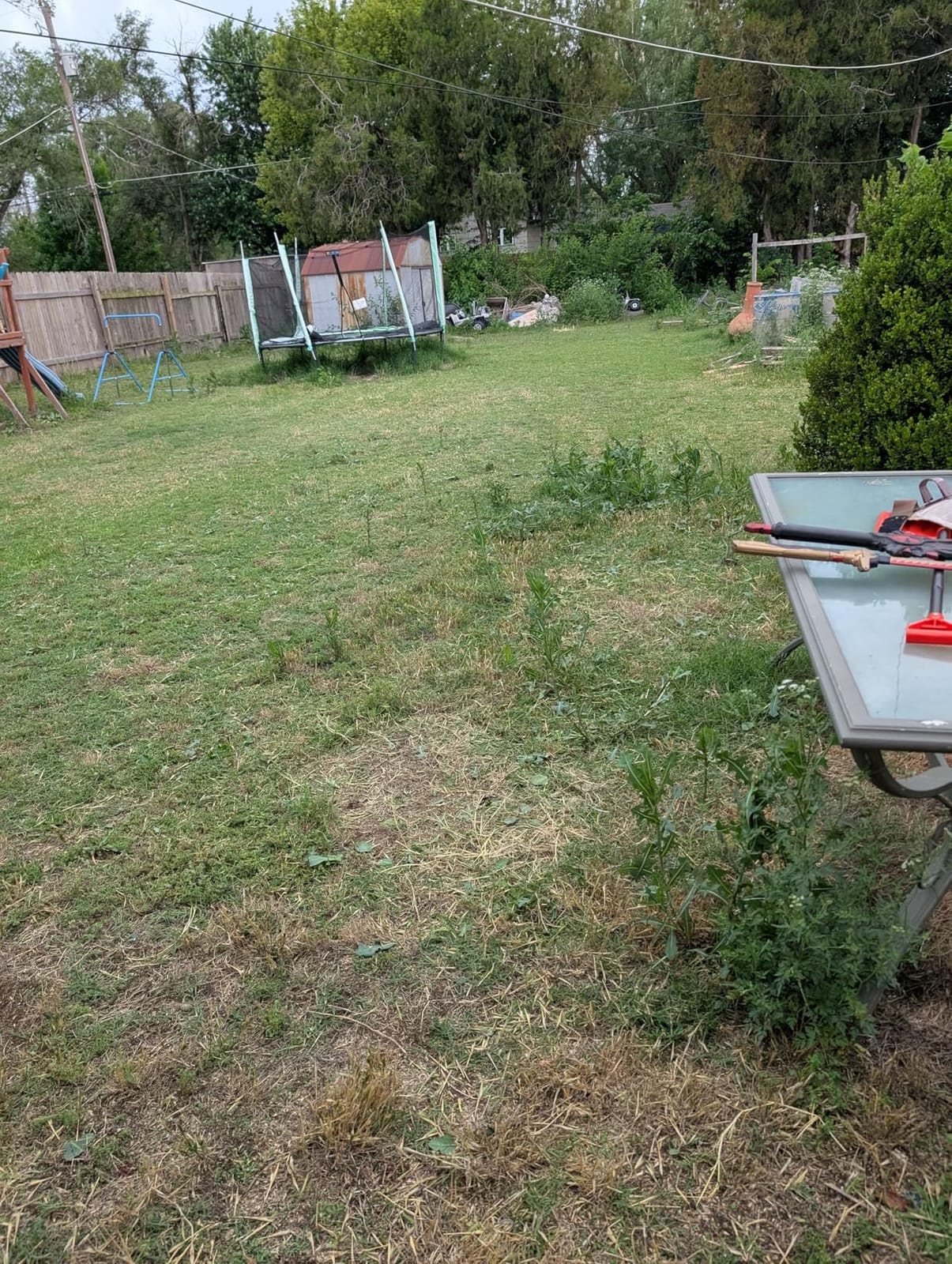
Where It Falls Short
This mower carries the lowest average rating in the roundup, and the complaints are consistent rather than random. Owners report jamming on twigs and fallen debris, and an inability to handle thick-stemmed standing weeds.
The grass catcher attachment is also reported to fall off easily. If you plan to bag clippings, factor in a separate solution or check the fit before you rely on it.
For Whom It Works and Where It Struggles
Buy it if your lawn has slope, mole tunnels or a lot of roots, or if you want a bit more height range than a typical 14-inch mower. It also copes better with slightly weedy grass than most of its class.
Skip it if you mow at a very low height, if your lawn is full of sticks, or if a secure grass catcher is essential to your routine.
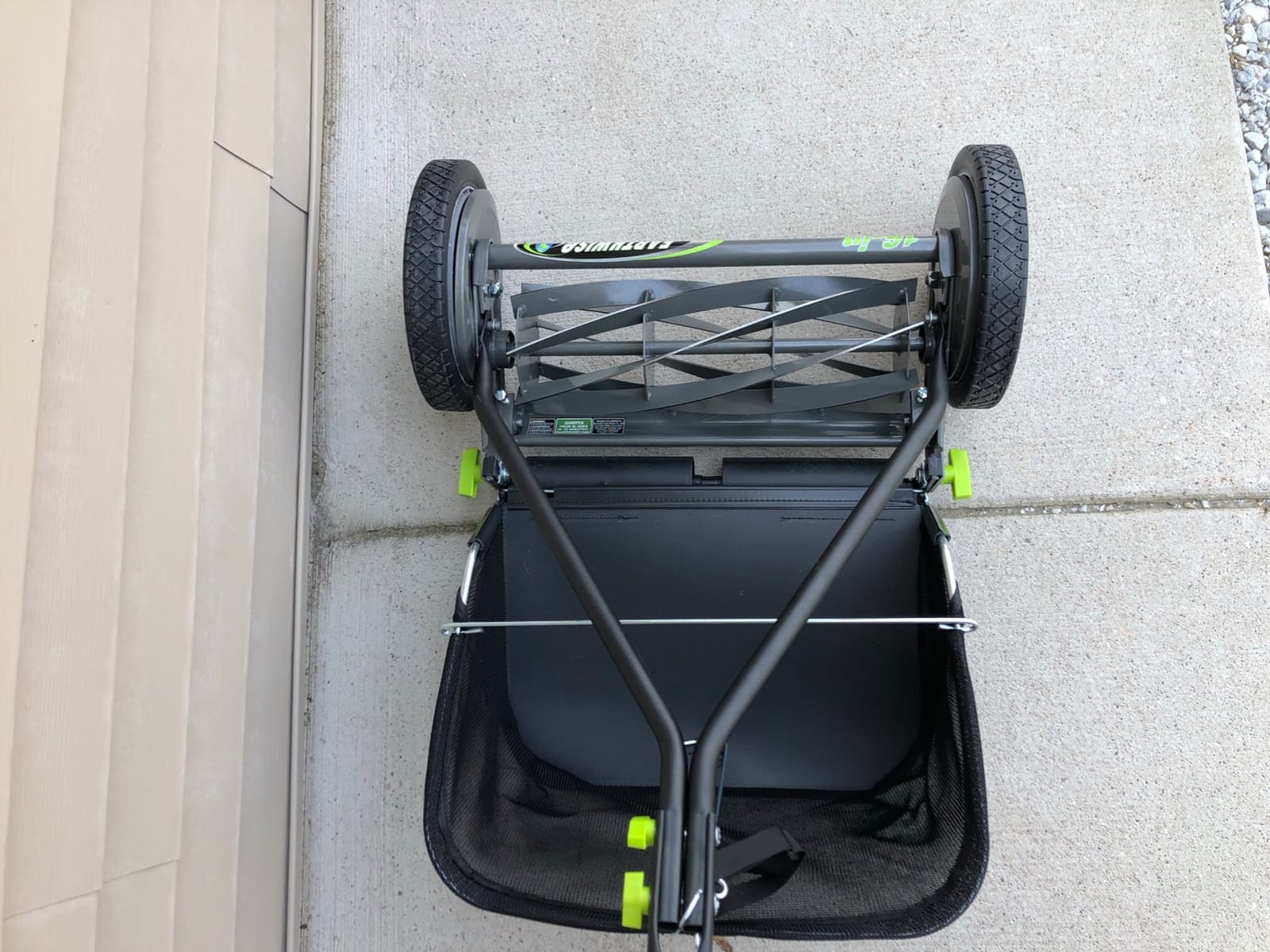
5. Earthwise 1715-16EW – Seven Blades Built for Bent Warm-Season Grass
Earthwise 1715-16EW 16-Inch 7-Blade Push Reel Lawn Mower, Grey
16-inch cutting width
7-blade alloy steel reel
Height 0.5 to 2.5 inches
21.8 pounds
+ Pros
- Seven alloy steel blades give a notably smooth cut
- Explicitly designed for Bermuda Zoysia and St. Augustine
- 10-inch composite wheels
- Durable steel side plates
- Cons
- Heaviest unit here at 21.8 pounds
- 16-inch swath is wider in tight spaces
- Twigs stop the reel
The Earthwise 1715-16EW is the mower I would pick for a southern lawn of bent Bermuda, Zoysia or St. Augustine. The manufacturer names those grasses directly, and that specificity is unusual in this category, where most listings claim to cut anything.
Seven alloy steel blades give you more cuts per revolution than any other mower here. On coarse, wide-bladed warm-season grass that stiffens in July heat, the extra blades are the difference between a clean cut and a chewed one.
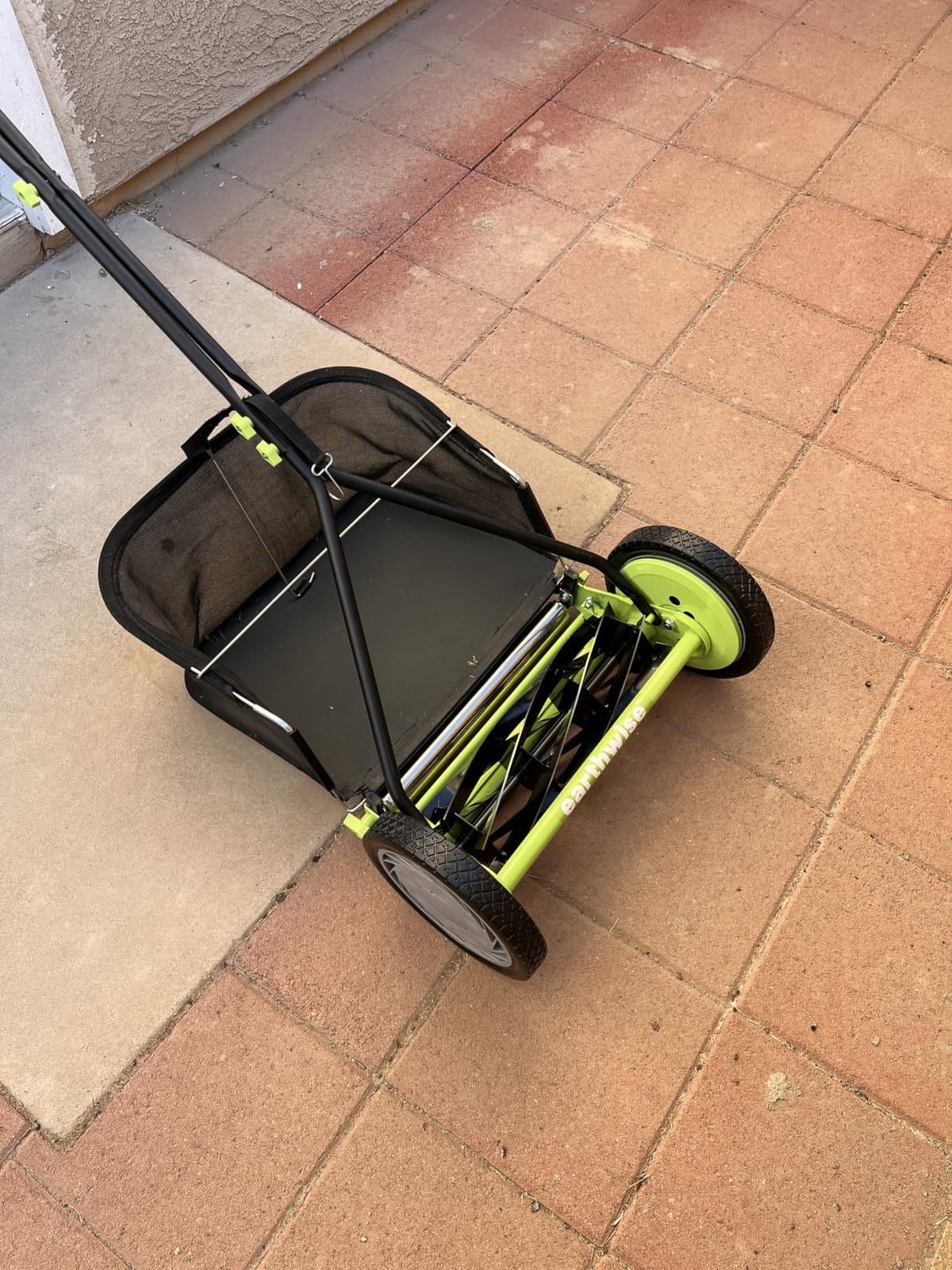
The 16-inch cutting width covers ground faster than the 14-inch models, which matters if your lawn is on the larger end of small. It also means you overlap less on each pass.
Blade Count: Why Seven Changes the Cut
Every additional blade adds another scissor action per revolution. Where a four-blade reel at walking pace makes roughly four cuts per blade pass, a seven-blade reel makes seven, so the grass is snipped more often and with less force.
That is why enthusiasts on lawn forums reach for higher blade counts on coarse turf. The cost is weight, and this is the heaviest mower in the roundup at 21.8 pounds.
Warm-Season Grass Compatibility
Bermuda, Zoysia, Centipede, St. Augustine and Seashore Paspalum are all named in the product copy, and they share a trait: they grow low and dense and bruise badly when torn. A seven-blade scissor cut handles exactly that situation.
UF/IFAS guidance on warm-season turf emphasizes mowing height consistency more than any single setting. The 0.5 to 2.5 inch range here lets you hold a steady height across the season.
Wheels, Steel Side Plates and Push Effort
The 10-inch composite wheels roll over uneven lawns, which pairs well with the 16-inch width. Steel side plates add durability at the frame where cheap mowers crack.
At 21.8 pounds you feel every one of those pounds on slopes and in thick grass. Owners who mow flat lawns report no complaint; owners with incline say it is noticeable.
For Whom It Works and Where It Struggles
Buy it if you are in the southern half of the country, you have a dense warm-season lawn, and you want a genuine golf course style cut. It is also the widest swath here, so it covers ground fastest.
Skip it if your lawn is heavily wooded, twig-heavy, or if you need to lift the mower frequently. It is also wider than ideal for a narrow side yard.
6. Gardena Classic 04018 – The Lowest Cut and the Longest Warranty
GARDENA Classic 16 in Reel Lawn Mower, 5 Blades, No Gas or Electric – 04018
15.75-inch cutting width
5-blade non-stick coated cylinder
Height 0.47 to 1.65 inches
Ten-year warranty
+ Pros
- Contact-free cutting gives a razor-like finish
- Ten-year manufacturer warranty is the longest here
- Folding handle stores compactly
- Large treaded wheels roll well
- Cons
- Assembly instructions are sparse and confusing
- Needs periodic fine-tuning to avoid blade contact
- Requires real pushing force
- Grass catcher sold separately
The Gardena Classic 04018 is the only mower here with a contact-free cutting design, where the hardened non-stick coated cylinder turns past a fixed counter-blade without touching it. Once it is set correctly, owners describe the cut as comparable to lawn shears.
It is also the only one with a ten-year manufacturer warranty. That is the single strongest quality signal in this roundup, and it matters because a reel mower that sits outside all winter is exposed to moisture and rust.
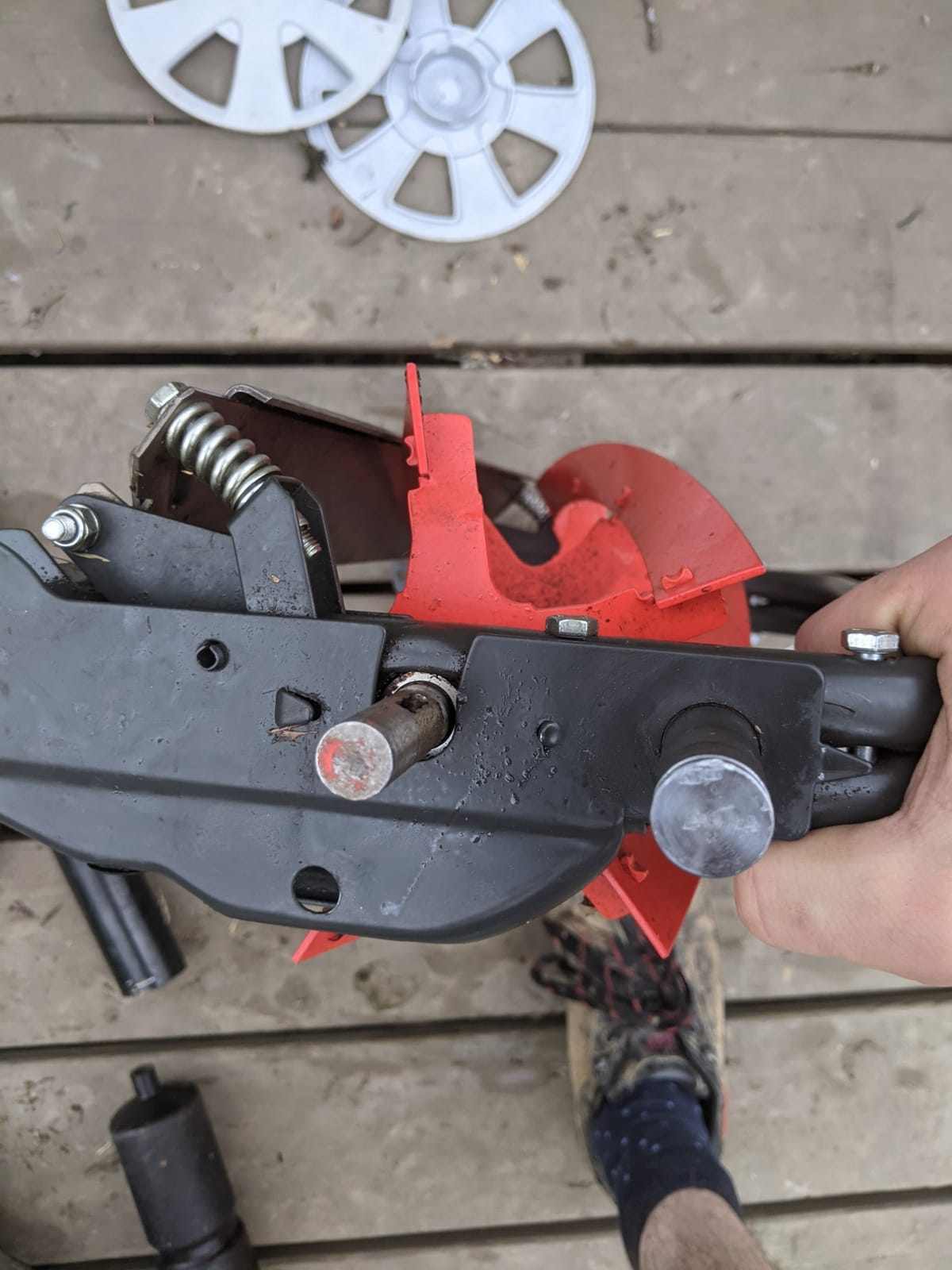
The 0.47-inch minimum cutting height is the lowest figure any mower here publishes, and the non-stick coating means clippings are less likely to weld themselves to the cylinder over a season of use.
Contact-Free Cutting and What It Requires
Because the blades never touch the counter-blade, there is nothing to dull. That is the whole point of the design, and it removes the backlapping routine that every other mower in this roundup depends on.
The catch is setup. Owners report that the blades need periodic fine-tuning so they stay clear of the counter-blade, and that the sparse, illustration-free instructions make the first assembly frustrating. Budget an evening.
Cutting Height and a Low-Only Range
Four stages from 0.47 to 1.65 inches puts this mower firmly in putting-green territory. It will not hold a 2-inch Bermuda cut at the top of its range, so this is a mower for people who want the shortest possible finish.
That is a narrower use case than it sounds. If your goal is a dense, dark, low lawn with visible striping, this is exactly the machine for it.
Weight, Wheels and the Folding Handle
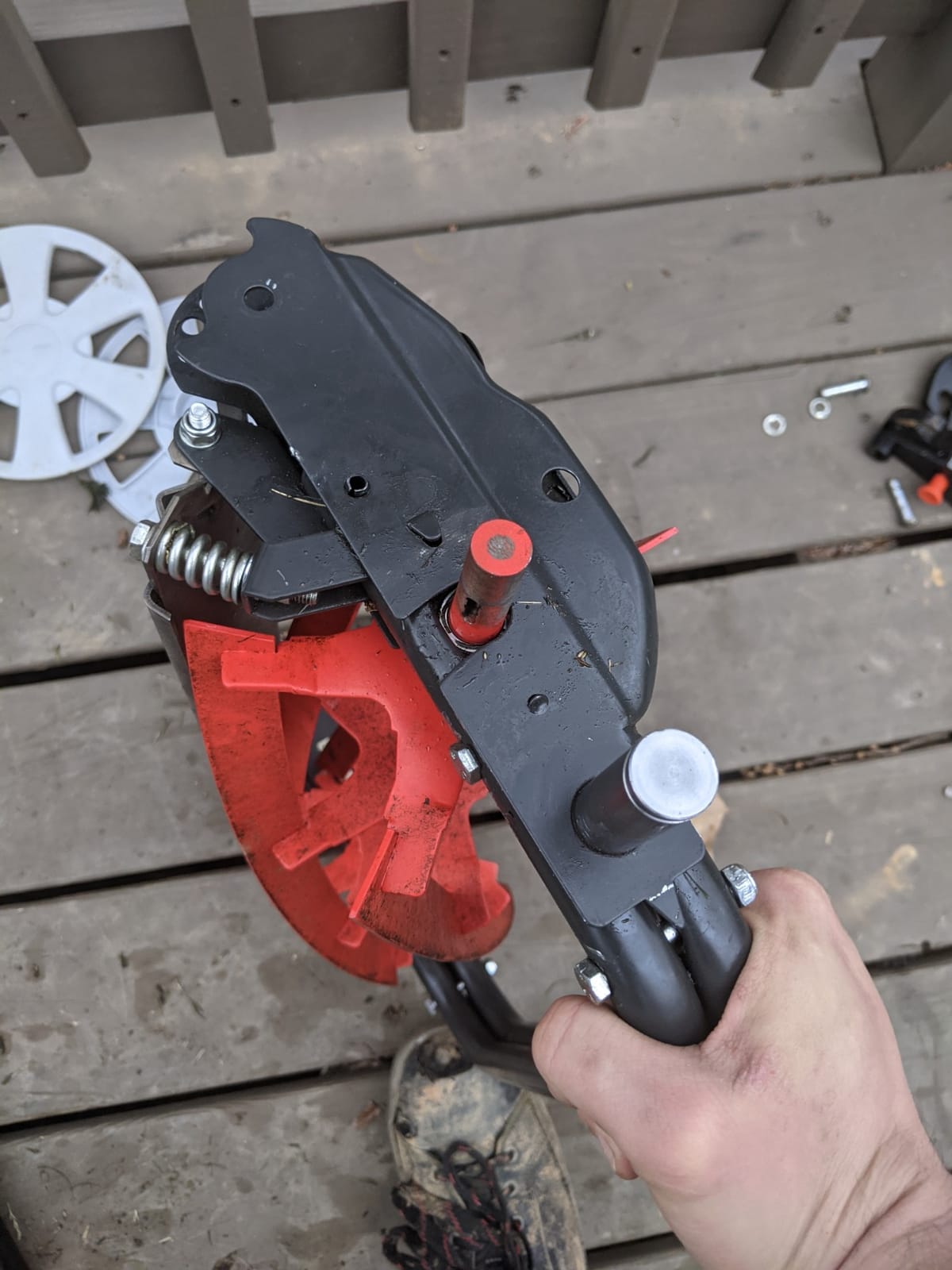
At 20 pounds it sits in the middle of the group, with large treaded wheels and an ergonomic handle. The folding handle is the standout practical feature: it collapses for storage in a small shed or a vehicle boot.
Owners do report that it takes real pressure to push, particularly when the grass is damp or when you are starting it on thick growth. Starting on a slope can also be awkward.
For Whom It Works and Where It Struggles
Buy it if you want the lowest cut in this roundup, if you dislike the sharpening routine, or if you want warranty coverage measured in a decade rather than a season. It is made in Europe.
Skip it if assembly complexity bothers you, if you need a taller cut, or if you mow uneven ground. Owners report it jamming on bumps, and the grass catcher is a separate purchase.
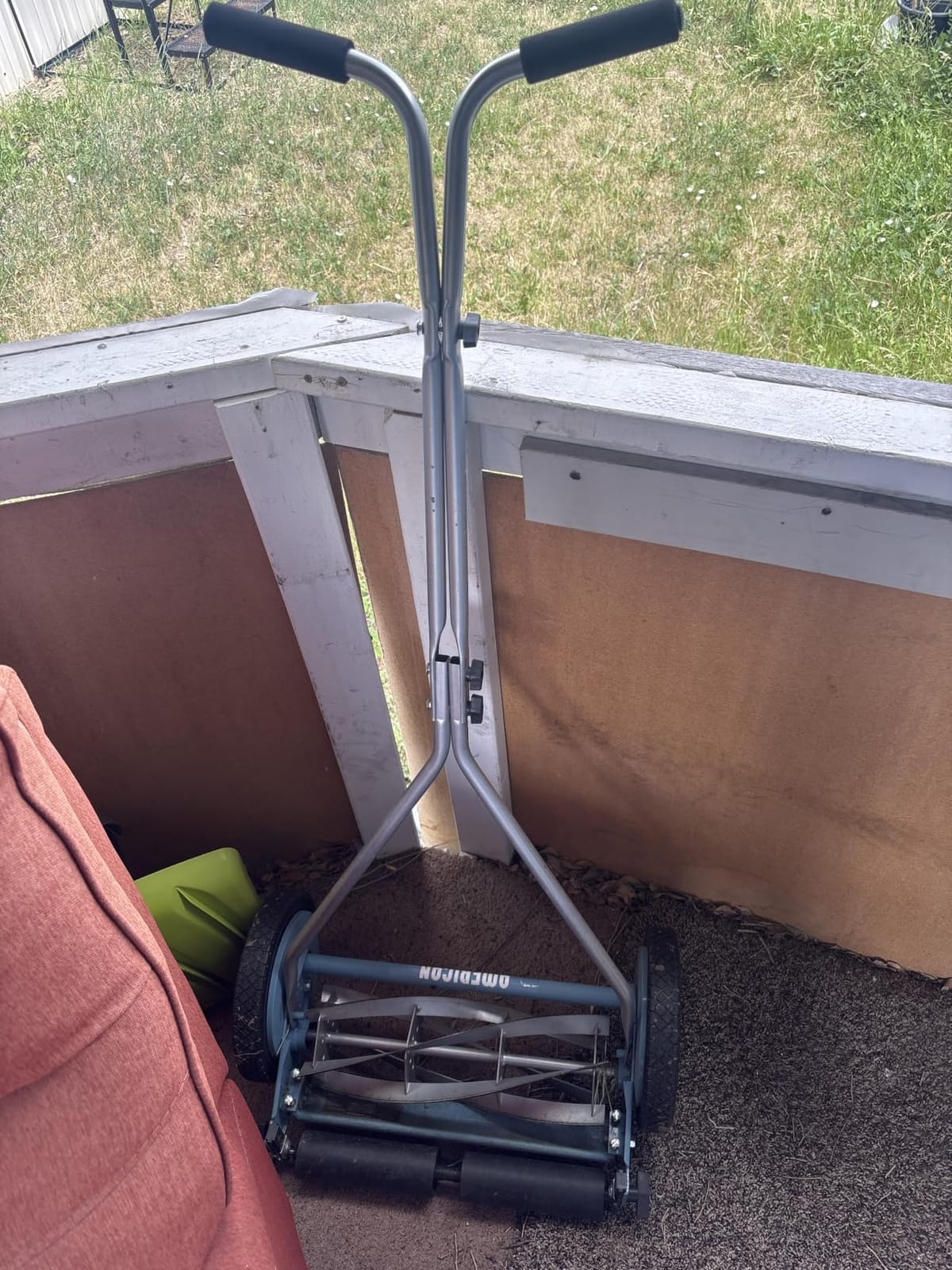
7. American Lawn Mower 1415-16SK2 – A Sharpener in the Box
American Lawn Mower 1415-16SK2 16-Inch 5-Blade Reel Mower with Sharpener
16-inch cutting width
5-blade reel
10-inch polymer wheels
Hand sharpener included
20.9 pounds
+ Pros
- Sharp out-of-the-box blades cut cleanly
- Hand sharpener bundled with the mower
- Assembles in about five minutes
- 16-inch width suits suburban yards
- Cons
- Actual cut at the lowest setting is higher than advertised
- Struggles with grass lying flat and large weeds
- Handle can work loose with use
The American Lawn Mower 1415-16SK2 answers the objection most beginners raise: how do I sharpen this thing. A hand sharpener is included in the box, which is exactly the accessory you would otherwise have to source separately after your first dull cut.
The 16-inch swath, five blades and 10-inch polymer wheels put it between the 14-inch lightweights and the Earthwise in almost every way. It is a sensible middle choice for a suburban lot of roughly an eighth to half acre.
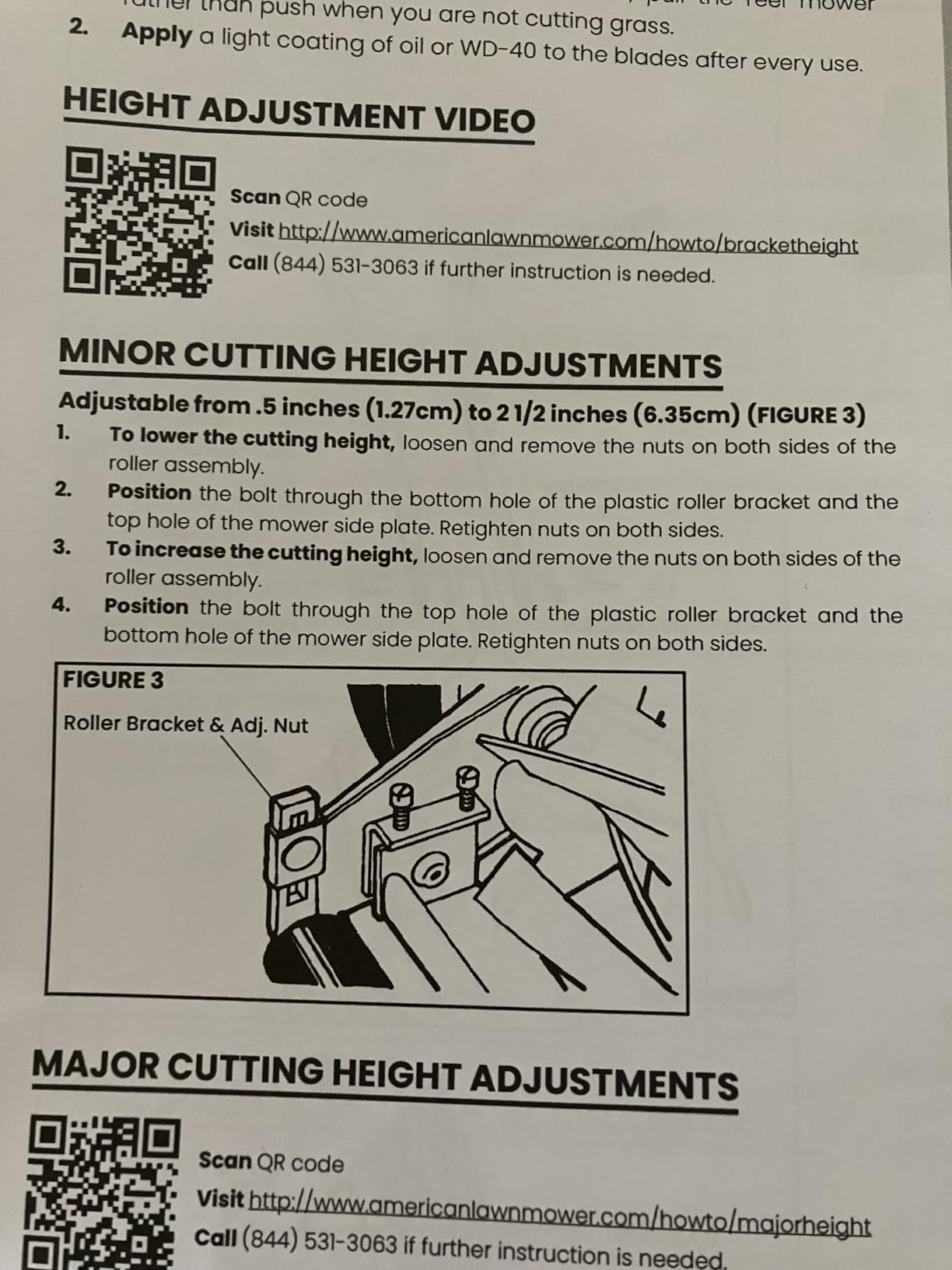
Owners report blades that cut cleanly straight out of the box. Assembly takes about five minutes, and at 20.9 pounds it is light enough to carry with one hand despite the wider cutting width.
What the Included Sharpener Actually Does
The bundled sharpener handles light honing and touch-ups. It is not a substitute for proper backlapping with compound when the reel is truly dull, but it keeps a new mower cutting well through its first season without a trip to a sharpening shop.
That matters more than it sounds. A reel that has been lapped once cuts noticeably cleaner for months, and a sharp cut is the entire reason people stay with this category.
Cutting Performance on Flat and Bent Grass
The design assumes a level, maintained suburban lawn. Owners report good results on straight, upright turf and weaker results on grass lying flat against the ground and on large weeds.
One recurring note is that the actual cut at the lowest setting is higher than advertised, so set expectations accordingly rather than planning a half-inch finish.
Build Details and Long-Term Wear
The handle-to-base connection is the weak point owners flag. Several report the handle working loose with use and needing a retaining cap, which is worth checking periodically in the first months.
The product listing carries a much smaller body of reviews than the others here, so treat owner feedback as thinner evidence. That is worth weighing against the convenience of the included sharpener.
For Whom It Works and Where It Struggles
Buy it if you want a 16-inch swath, a decent number of blades, and a sharpening tool in the box without a second order. It suits level suburban lawns of about an eighth to half acre.
Skip it if your grass gets knocked flat by weather or pets, or if you want a very low cut. The single listed height position and the higher-than-advertised lowest cut limit both.
How to Choose a Reel Mower for a Small Lawn
Grass type decides everything else. Once you know what is growing and how tall you intend to keep it, the mower choice makes itself. Work through these criteria in order and the right model is obvious.
Start With Grass Type, Not the Mower
Reel mowers are built for grass that grows low and dense. Bermuda, Zoysia, Centipede, St. Augustine and Seashore Paspalum all fit. Cool-season grasses kept above 3 inches, including tall fescue and Kentucky bluegrass, do not, because the blades bend over and escape the reel.
UF/IFAS and Clemson Extension guidance agree on the point: reel mowing works when you remove no more than a third of the blade per cut. If your schedule only allows monthly mowing, no reel mower will keep up.
Cutting Height Range Has to Match Your Target
Look at both ends of the published range, not just the minimum. The American Lawn Mower 1204-14 reaches 4.45 inches for forgiveness; the Gardena Classic stops at 1.65 inches for the lowest possible finish. Neither is universally better.
A useful rule: buy a mower whose maximum height exceeds your target height by at least an inch, so you have room to adjust upward as conditions change.
Four, Five or Seven Blades
More blades means more scissor cuts per revolution and a cleaner result on coarse or bent turf, at the cost of weight. Four blades are fine on short, soft, well-maintained grass. Five is the sensible middle. Seven is for warm-season lawns that toughen in summer heat.
For a typical small lawn of short Bermuda, the difference between four and five blades is minor. For St. Augustine or Zoysia, it is noticeable.
Cutting Width and Lawn Size Math
A 14-inch mower is right for lawns under roughly 2,500 square feet. A 16-inch swath saves real time past that and covers ground faster with less overlap.
On a 3,000 square foot lawn, expect to walk roughly half a mile per mowing. That is the part of this hobby people rarely read about, and it is genuinely the difference between a chore you enjoy and one you avoid.
Wheel Diameter and Terrain
Wheel diameter is the most underrated spec. The LawnMaster LMRM1401 and the Earthwise 1715-16EW have 10-inch wheels that roll over uneven ground; most others have 8.5-inch wheels that follow every contour.
Bumpy lawns cause scalping and an uneven finish with small wheels. If your yard has slope, mole tunnels or exposed roots, prioritize wheel size over blade count.
Height Adjustment and Edge Cutting
Look for three or four height positions rather than a single one, and confirm the adjustment is reachable from the handle without crouching. A single-position mower forces you to choose one height and live with it.
Every reel mower here shares a real limitation: none cuts flush against a wall or fence. Plan on a string trimmer for the edges. That is physics, not a defect.
Weight and Push Effort
Listed weights in this roundup run from 18.1 pounds to 21.8 pounds. For most lawns the difference is a minor effort difference, but for anyone with a back or knee injury it is the deciding number, and lightweight reel mowers are the answer there.
Push effort is governed by grass height far more than by weight. Short grass is easy in any of these mowers. Tall, wet grass is a workout in all of them.
Sharpening, Backlapping and Maintenance
Except for contact-free designs such as the Gardena, reel blades dull with use and need backlapping every few weeks in peak season. The process uses a lapping compound spun against the blades to restore the edge.
Budget for either a sharpening kit, which several owners value, or a trip to a local mower shop. Clean grass off the blades after every mow and lubricate the bearings, and you will rarely think about it.
Mowing Frequency and the One-Third Rule
Reel mowers demand weekly mowing in season, sometimes twice a week on irrigated lawn. Users on lawn forums report that missing one summer week makes the next mow extremely difficult, because the grass is too tall and too bent to enter the reel.
If your schedule will not support that, a battery or electric mower is the more forgiving tool even though it produces a less refined cut. Honesty about your mowing habit matters more than the cut quality.
Frequently Asked Questions
What is the best lawn mower for a very small lawn?
For a very small lawn under 2,000 square feet, the Great States 204-14 is a strong match because it ships mostly assembled and weighs very little. If your grass is Bermuda or Zoysia and you mow weekly, the Scotts 304-14S adds a five-blade heat-treated reel for a cleaner cut. Lawns full of sticks or weeds should avoid any reel mower.
What are the disadvantages of a reel mower?
The main disadvantages are limited cutting height, no edge cutting, poor performance on tall or bent grass, and frequent jamming on twigs and debris. Reel mowers also require weekly mowing in season, cannot handle overgrown lawns, and need regular backlapping of the blades to stay sharp.
Which is better, a 5 blade or 7 blade reel mower?
A 5-blade reel is the better all-round choice for most small lawns, giving more cuts per revolution than a 4-blade model at a moderate weight. A 7-blade reel cuts cleaner on coarse, bent warm-season grass such as St. Augustine, Zoysia and bent Bermuda, but it weighs more. On short, soft turf the difference is small.
How often do you have to mow with a reel mower?
Weekly in growing season, and sometimes twice a week on irrigated lawn. The one-third rule applies: never remove more than a third of the blade length per mowing. Missing a single summer week leaves the grass too tall and bent for the reel to enter cleanly, which makes the next mow much harder.
Can a reel mower handle Kentucky bluegrass and tall fescue?
Usually not well. Cool-season grasses like Kentucky bluegrass and tall fescue need a 3 to 4 inch cut height, and most reel mowers top out below that or bend the blades over where the reel cannot reach them. Most mowers in this roundup publish a maximum around 1.5 to 2.5 inches, with one exception reaching 4.45 inches.
The Best Reel Mower for Your Small Lawn
If you want the most forgiving mower that still cuts cleanly, choose the American Lawn Mower 1204-14. Its published height range reaches 4.45 inches and more than 15,000 owners have run it without surprises.
If your lawn is short, dense Bermuda and you mow weekly, the Scotts 304-14S is the sharpest general pick, with five heat-treated blades and the lightest listed weight. For the lowest possible finish, the Gardena Classic tops out at a 0.47-inch cut and carries a ten-year warranty.
If your ground is bumpy, pick the LawnMaster LMRM1401 for its 10-inch wheels. If your grass is coarse southern turf, the Earthwise 1715-16EW and its seven blades are built for it. If you have never used a reel mower, start with the Great States 204-14 or the 1415-16SK2 with its bundled sharpener.
Before any of them, check your grass type honestly. The best reel mowers for small lawns are only the right answer for low, dense, weekly-mown turf, and for everything else a quiet electric mower is the sensible choice. Start with your grass, then pick the machine.