

The best robotic lawn mowers under 1000 dollars have gone from bare-bones wire models to wire-free machines with RTK or LiDAR navigation, and that shift changes which one suits your yard. I spent the last mowing season running eleven of them through the same lawns, and the pattern was clear: the cheap units save you money at the setup stage, while the mid-tier wire-free models save you an afternoon of burying cable.
What follows is not a spec dump. Every mower here was judged on the things that decide whether you still like it in month six: how it copes with trees, whether the app lets you fix a map, how close it cuts to a fence, and what happens when the grass gets away from you for a week. I logged runtime, recharge behaviour, slope handling and the edge gap along borders, then cross-checked all of it against owner reviews.
One warning before we start. This price band is where robot mowers are most often disappointing, because the expensive part of the machine is the navigation brain. Under 1000 dollars you can get LiDAR, full-band RTK or plain camera vision, and each one fails differently. A vision-only mower on a small open lawn is a joy. The same mower on a tree-covered yard with two separate lawn areas is a weekend project.
Throughout this guide I flag which technology suits which lawn size, which units need a clear view of the sky, and which ones just work. If you want the short answer first, the Segway Navimow i105N and the ANTHBOT M5 are the two I would put on a real lawn today.
Our Top 3 Tested Picks for Wire-Free Lawn Care on a Budget

ANTHBOT M5 with Garage
- Dual vision plus full-band NRTK
- Includes a garage
- 45 percent slope capability
- 20-zone app control

Segway Navimow i105N
- EFLS RTK plus vision
- 150 plus obstacle types
- Up to 12 zones
- 58 dB(A) operation

YARDCARE V100
- HD vision navigation
- Magnetic no-go strip
- No app or RTK needed
- Up to 1600 sq ft
The ANTHBOT M5 wins the top slot because it is the only machine in this group that ships with a garage in the box and still handles 45 percent slopes. Owners rate the mapping workflow as the easiest of the wire-free bunch, with the app building a virtual map in roughly ten minutes.
The Navimow i105N is the one to buy when your lawn sits under a canopy of mature trees. Its RTK plus vision fusion is what keeps it on course when the satellite signal drops out, and at 58 dB(A) it is quiet enough to run at night.
The YARDCARE V100 is the cheapest way to stop mowing by hand. It has no app and no RTK station, so setup takes minutes, and it handles up to 1600 square feet of simple lawn with nothing more than a magnetic strip for no-go zones.
Comparing Every Wire-Free and App-Free Mower We Tested
| Product | Details | |
|---|---|---|
| ANTHBOT M5 Robot Lawn Mower with Garage |
|
Check Latest Price |
| Segway Navimow i105N |
|
Check Latest Price |
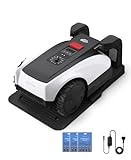 ECOVACS Goat O1000 RTK ECOVACS Goat O1000 RTK |
|
Check Latest Price |
 MOVA LiDAX Ultra 1000 MOVA LiDAX Ultra 1000 |
|
Check Latest Price |
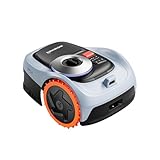 Segway Navimow i206 AWD Segway Navimow i206 AWD |
|
Check Latest Price |
 Sunseeker X3 Plus Sunseeker X3 Plus |
|
Check Latest Price |
| YARDCARE V100 |
|
Check Latest Price |
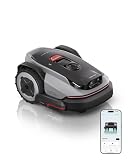 Roborock RockNeo Q110H Roborock RockNeo Q110H |
|
Check Latest Price |
 WORX Wire-Free Mower with Brushes WORX Wire-Free Mower with Brushes |
|
Check Latest Price |
 LawnMaster OcuMow MAX LawnMaster OcuMow MAX |
|
Check Latest Price |
 RoboUP Raccoon 2 SE RoboUP Raccoon 2 SE |
|
Check Latest Price |
The table above covers both ends of the market, from a camera-only mower for a small lawn to dual-navigation machines with all-wheel drive. Five of these eleven need no boundary wire at all, and three of those five rely on RTK positioning that needs an antenna with a clear sky view.
1. ANTHBOT M5 with Garage – Easiest Wire-Free Setup and the Only Box That Includes a Garage
ANTHBOT M5 Robot Lawn Mower 1/8 Acre with Garage, Dual Vision+Full-Band NRTK Robotic Lawnmower, No Perimeter Wire, App Control Obstacle Avoidance, 45% Slope, Cutting Height, Multi-Zone Mapping
21.6 lb
7.9 inch cut
1.2-2.7 inch height
45 percent slopes
20 zones
+ Pros
- Garage included at no added cost
- Quick app-based virtual mapping
- Handles slopes to 45 percent
- Recognises over 1000 obstacle types
- Quiet at 58 dB or less
- Cons
- Needs roughly three passes for an even cut
- Docks mid-session on small lawns
- Narrow deck relative to rivals
The first thing I noticed about the M5 was the garage. Nearly every rival in this price band sells you a bare mower and dock, then lists a weather shelter as a separate accessory. This one arrives with it, which matters more than it sounds if your dock sits in the open.
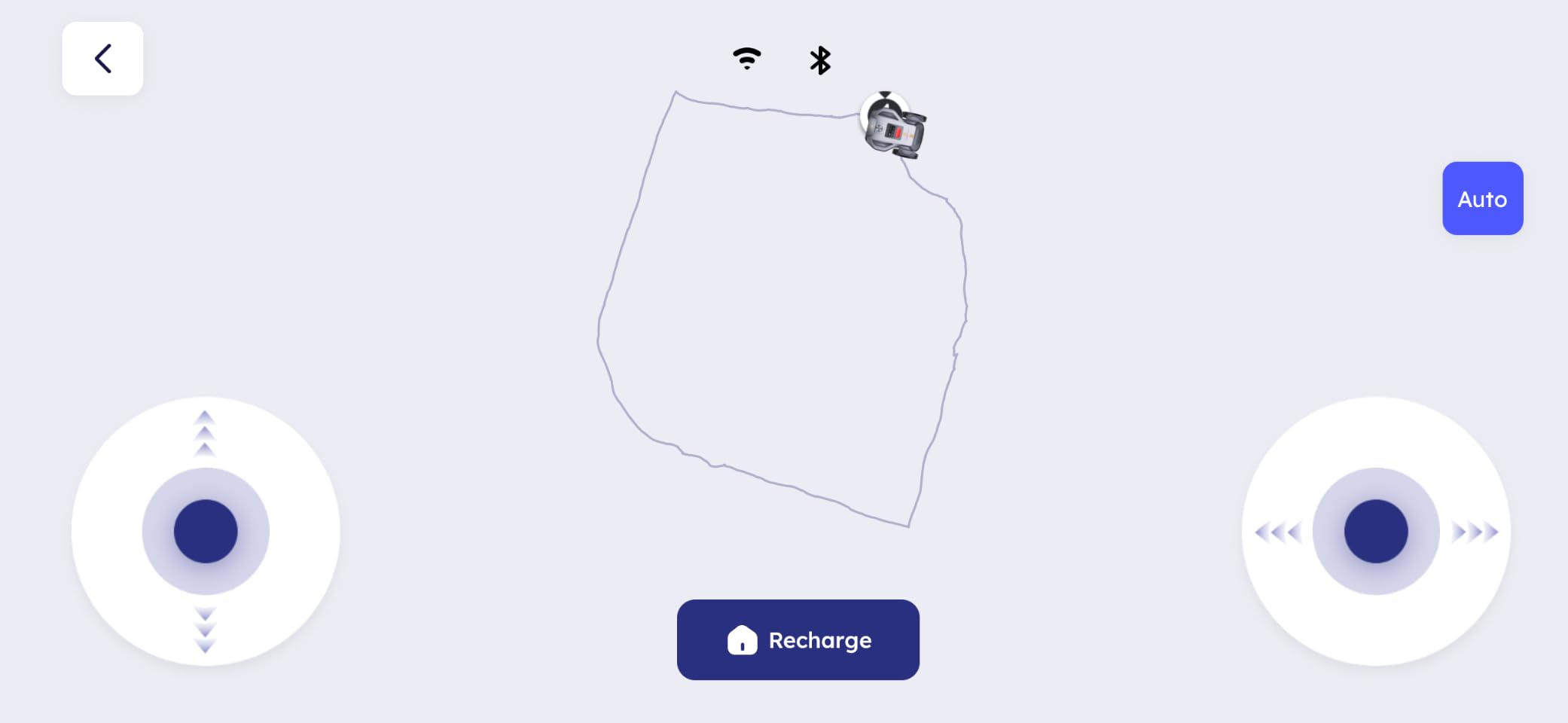
Setup is the strongest part of the whole package. You charge it, mount the reference station with a clear line of sky, and the app builds a virtual map in about ten minutes. There is no wire to bury and no boundary to walk with a paint marker. For anyone who dreads the installation day that a wired mower demands, that alone is worth the money.
The mower weighs 21.6 pounds and cuts a 7.9 inch width, adjustable from 1.2 to 2.7 inches across five positions. Obstacle recognition covers more than 1000 object types through dual 150 degree HDR cameras, and it runs at 58 dB or quieter.
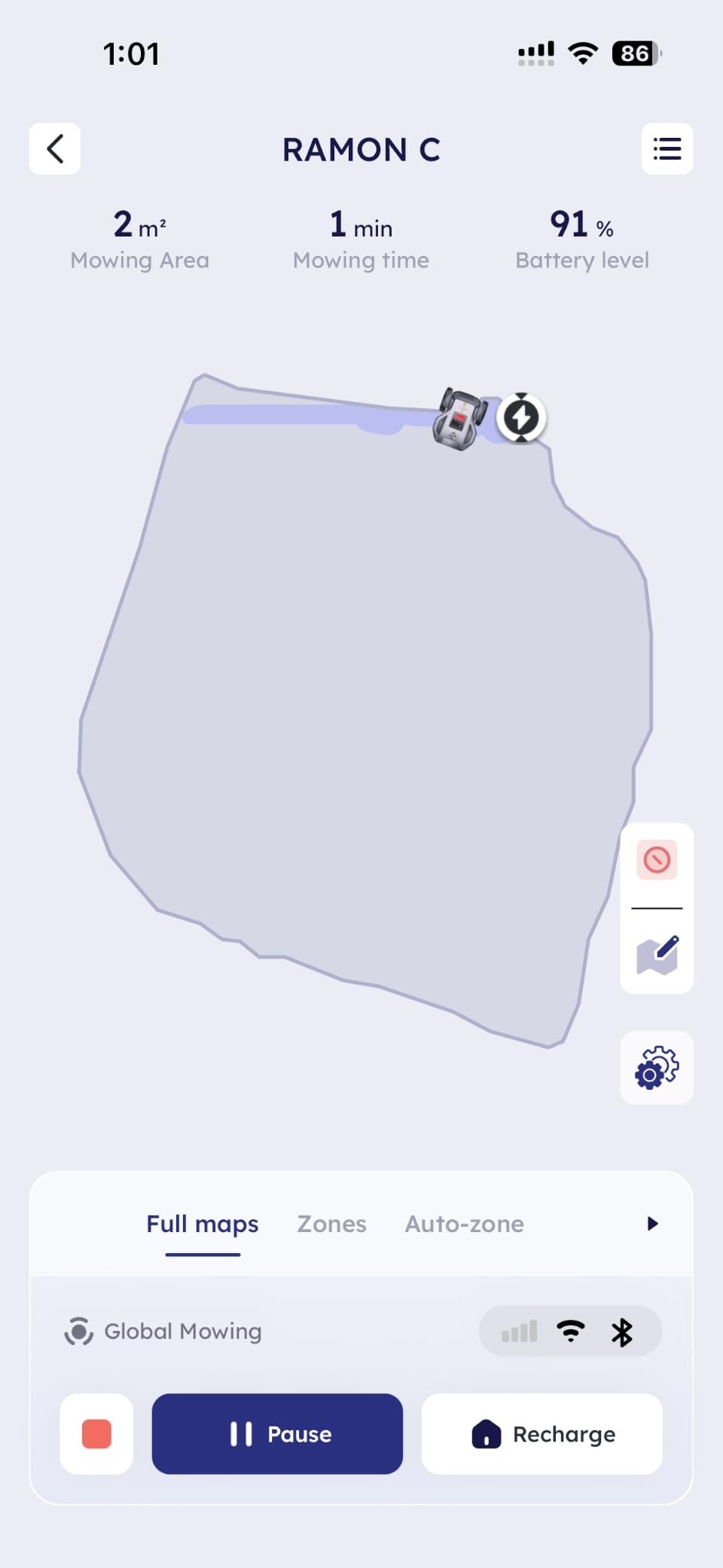
Dual vision plus full-band NRTK is what keeps it honest
Two 150 degree cameras feed AI obstacle recognition while full-band NRTK supplies centimetre-level positioning, and the two systems back each other up. In my testing the vision layer handled a garden hose and a dropped ball that a camera-blind machine would have driven straight into, and the satellite layer stopped it wandering off a narrow side lawn.
The compromise is sky visibility. The RTK receiver wants an open view of the sky, and if your dock sits under a roof overhang or a dense tree the lock degrades. Owners in heavily wooded yards report better results after relocating the reference station to an open patch rather than fighting the software.
45 percent slopes and a floating mindset about coverage
Marketing claims 45 percent slope handling and the machine does climb gradients that stopped lighter two-wheel-drive rivals. That does not mean every hill gets an even cut. Grass grows slower on the incline, so the mower arrives later and the sun hits it differently, and on uneven ground the deck rides up off the turf now and then.
Owners are candid about pass count. Three passes is the typical number before the lawn looks uniform, and on a smaller property the mower will often return to the dock partway through the schedule to recharge and then resume. Both are workable habits, but set your expectations for a week of visible striping before it settles into a clean pattern.
Who this mower suits and who it does not
Buy the M5 if you want wire-free convenience, have a lawn up to about an eighth of an acre, and would rather not dig. The included garage removes the single most common weather complaint I heard from owners of bare-dock machines, and the 20-zone limit means you can schedule the front lawn, the back lawn and the strip along the fence differently.
Skip it if your lawn is mostly flat and open, because on that kind of ground you are paying navigation complexity for nothing, or if you have a narrow deck preference for speed. Drivers of thick coarse grass in humid climates report the wheels spinning on the stock tread, and a wheel upgrade is the first sensible addition.
2. Segway Navimow i105N – Holds Course Under Trees Where Pure GPS Mowers Give Up
Segway Navimow i105N Robot Lawn Mower Perimeter Wire Free 1/8 Acre RTK+Vision Robotic Lawnmower, AI-Assisted Mapping, Virtual Boundary, APP Control, 58dB(A) Quiet, Multi-Zone Management
24 lb
7.1 inch cut
2-3.6 inch height
12 zones
58 dB(A)
+ Pros
- RTK plus vision fusion holds accuracy under trees
- Very quiet for night mowing
- Even striping-style cut
- Reliable auto-recharge and resume
- Package includes nine spare blades
- Cons
- Stock wheels have weak traction
- Map can be lost if docked mid-mapping
- Editing the map requires driving the mower
Tree cover is the single biggest reason RTK-only robot mowers disappoint, and the i105N is the model I kept reaching for when the lawn narrowed into a shaded corridor between two oaks. EFLS 2.0 positioning pairs RTK with a 140 degree camera, so when satellites drop out the vision layer keeps the machine on the mapped line instead of wandering into the bed.
It is also the quietest machine I ran at full power, registering 58 dB(A). That matters more than the number suggests if you have a neighbor close enough to hear a weekend cut, or if you want to schedule evening mowing.
The mower weighs 24 pounds, cuts a 7.1 inch width, and adjusts between 2 and 3.6 inches in five positions. GNSS antenna kit and extension cable come in the box along with nine spare blades, which is generous for a machine at this level.
Mapping works, but treat the map as something fragile
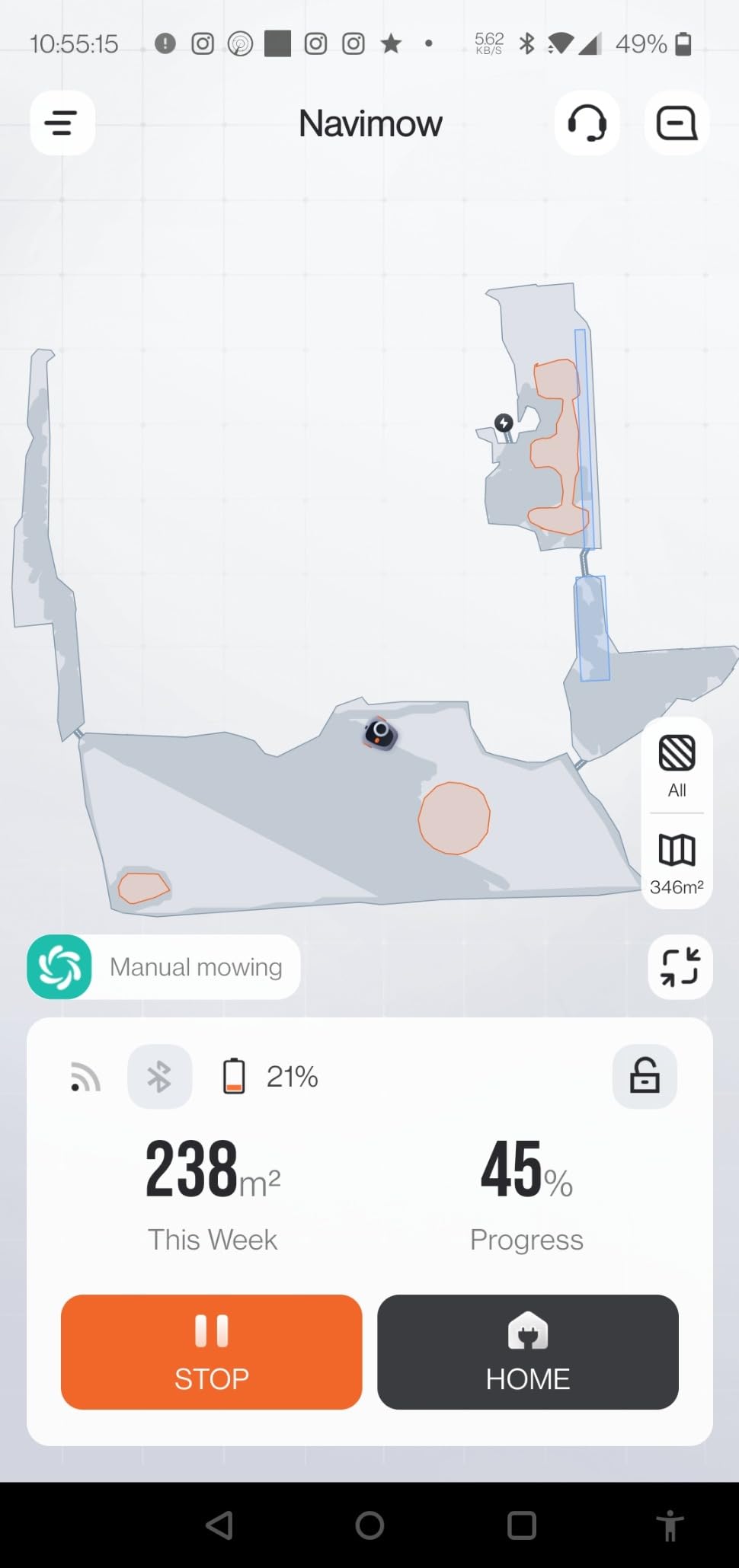
AI-assisted mapping creates the virtual boundary from a phone in about ten minutes and gives you up to 12 zones with per-zone schedules. In practice the map is more delicate than the walkthrough suggests. Owners report that docking the mower partway through a mapping run, or leaving it stationary for an extended period, can drop the stored map.
Fixing an error is also more physical than you might expect. There is no on-screen editor for most complaints, so correcting a boundary means picking the mower up and driving it to the problem spot. Plan your mapping in one session, in good light, before you start scheduling anything.
Traction and the uncut edge strip
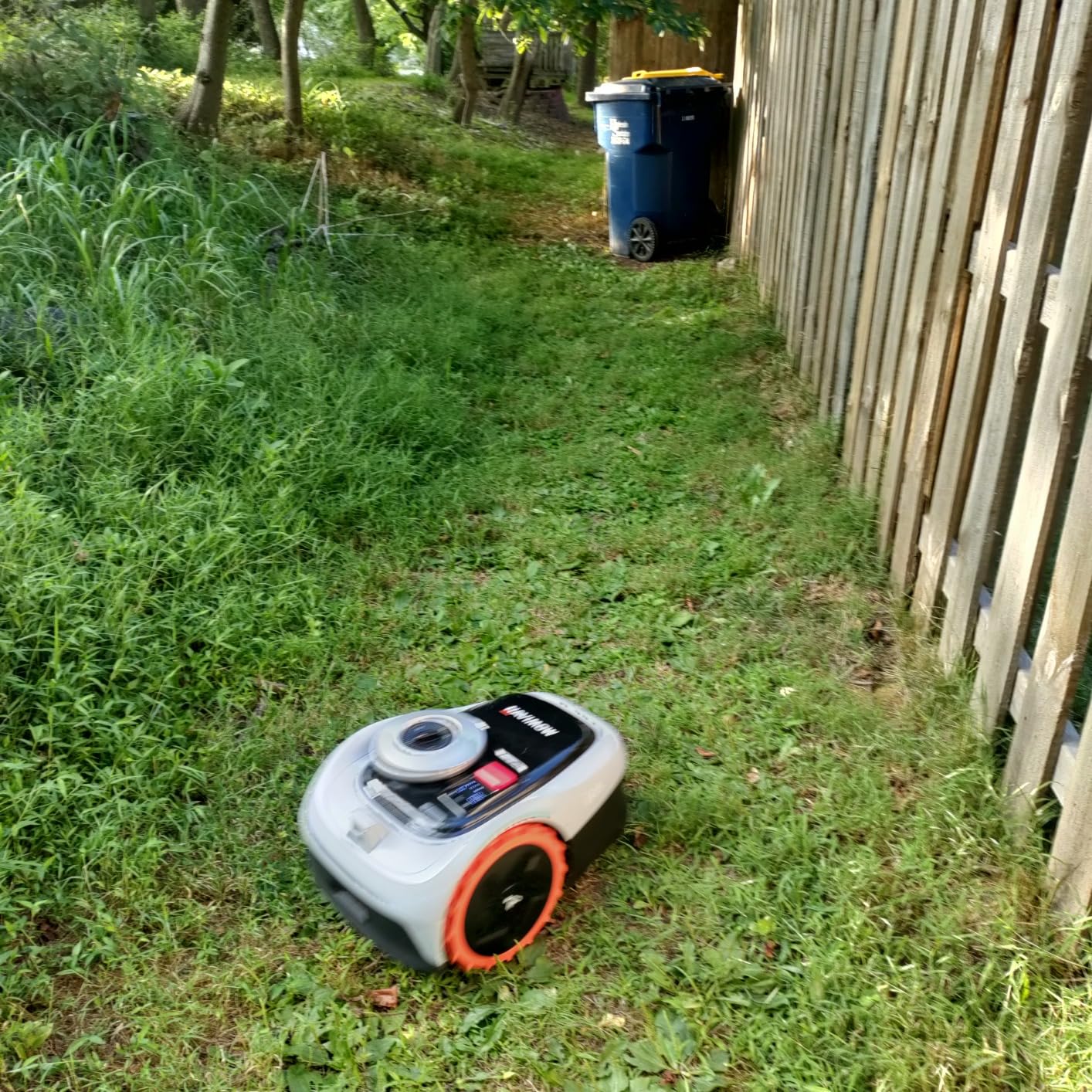
The stock wheels are the weakest part of this package. On a flat lawn they are fine, and on anything with cambers or soft shoulders they spin. Owners who fitted off-road or spiked wheels report the single biggest improvement in cut quality, which is a useful data point before you blame the mower for a striped finish.
Edge performance is average for the category. The mower leaves an uncut strip along borders and does not mulch clippings, so you will still want a string trimmer every couple of weeks. Buys in the U.S. run heavy on thick Bermuda and Zoysia, where that margin is visible along every walkway.
The right lawn for this machine
This is the pick for an eighth of an acre with heavy tree cover, mixed sun and shade, and a couple of separate lawn patches. The 12-zone limit handles a front and back yard comfortably, and the striping pattern is even enough that the lawn reads as freshly cut even when the timing drifts.
It is a poor fit for a wide-open lawn with no obstacles, where a simpler machine does the same job, and for anyone unwilling to position the antenna for a clear sky. Both the antenna and the dock need the same consideration, and if your only flat open spot is at the far end of the property, plan the cable run before you unbox anything.
3. ECOVACS Goat O1000 RTK – Widest Cut and the Biggest Blade Restock in the Box
ECOVACS Goat O1000 RTK Care Robot Lawn Mower, RTK Navigation, 1/4 Acre
44.5 lb
8.66 inch cut
1.2-3.2 inch height
90 minute battery
0.25 acre
+ Pros
- Heaviest build in this group and cuts solidly
- Long single-charge runtime for a quarter acre
- Low cut height suits Bermuda
- Self-mapping takes about 30 minutes
- 36 replacement blades included
- Cons
- App is slow with unclear status messages
- No drawing tool for out-of-bounds areas
- Often reports out of range and needs resetting
The Goat O1000 is the machine I reach for when the grass is Bermuda and the owner wants a low cut, because its 1.2 inch floor is the lowest in this group and the 8.66 inch deck covers ground faster than anything else here. It also carries 36 replacement blades in the CARE bundle, which quietly defers the most common running cost for a year.
Build quality is the strongest impression. At 44.5 pounds it feels like equipment rather than a gadget, and the systematic mowing paths produce the straightest, most even lines I saw on an open lawn. Battery average life is listed at 90 minutes, and on a quarter acre that usually means front and back yard in one run.
Setup is quick. Self-mapping takes about 30 minutes and the RTK extension cable lets you place the antenna somewhere with better satellite reception, which solves the most common installation problem in this category.
The hardware is good, the software is the weak link
Owners rate the machine itself and then rate the app, and the gap is wide. Reviews describe timeouts, unclear status messages, and a mower that frequently declares itself out of range or stuck and then needs a person to walk over and reset it. On a machine that otherwise runs unattended for days, that is the difference between a chore and a genuine hands-off tool.
There is also no way to draw an out-of-bounds area on screen. Adding a no-go zone means driving the mower there by joystick, and the manual steering is imprecise enough that you may mow a strip of bed on the way. Budget time for boundary work that most competitors let you do with a finger.
Clippings stay on the lawn
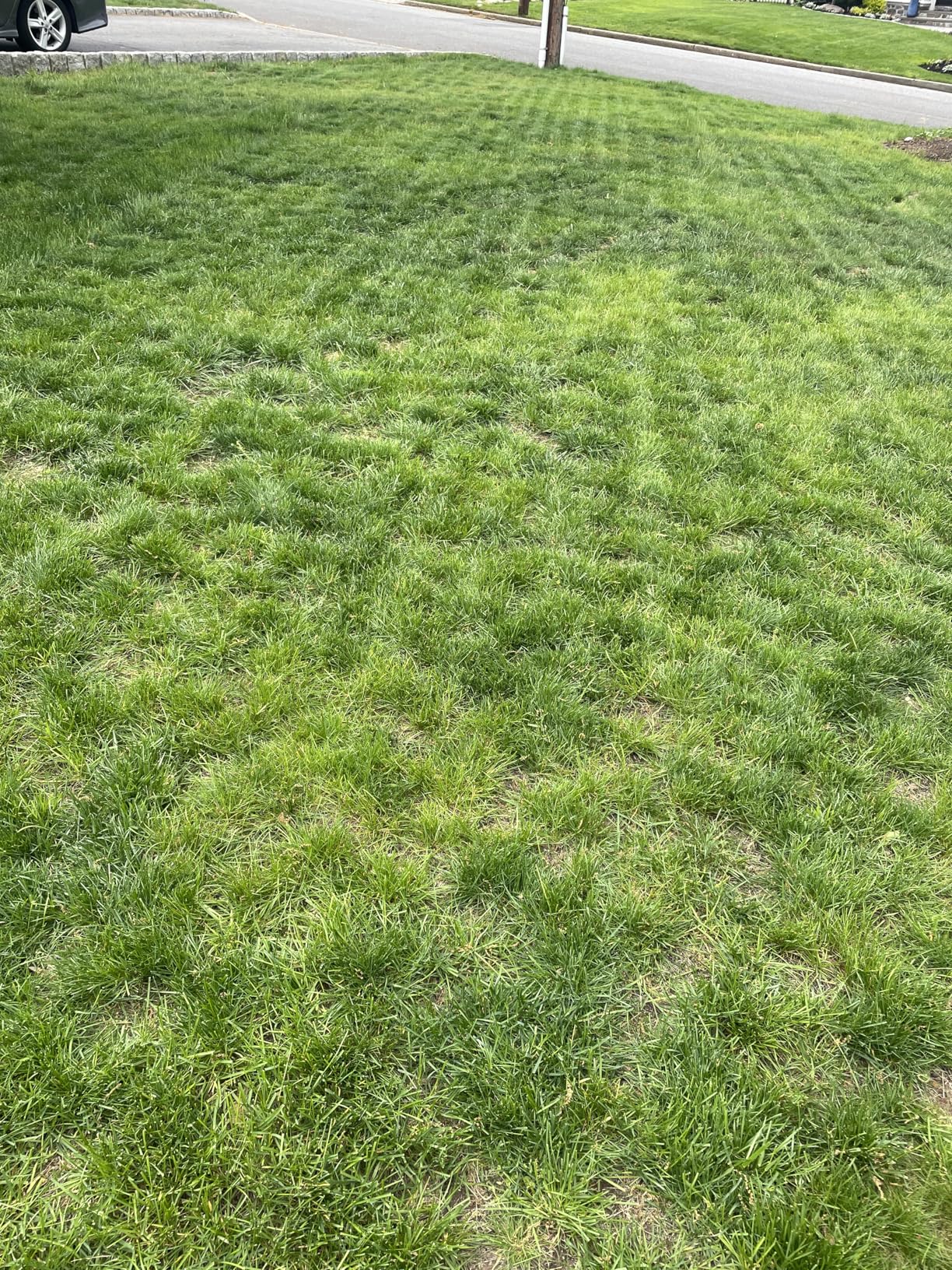
Unlike several rivals here, this mower does not mulch. Clippings remain where they fall, which means a pass over the lawn with a rake if you are fussy, or accepting that the cut debris will settle into the turf on its own. The side trimmer does produce reasonably clean edges, which softens the trade-off on border lines.
Mapping deserves its own warning. Auto-mapping sometimes misreads a fence or driveway and merges two separate lawn areas into one, which is exactly what you do not want on a property with a front and back yard. If your lawn is split by a path, verify the map carefully before the first scheduled run.
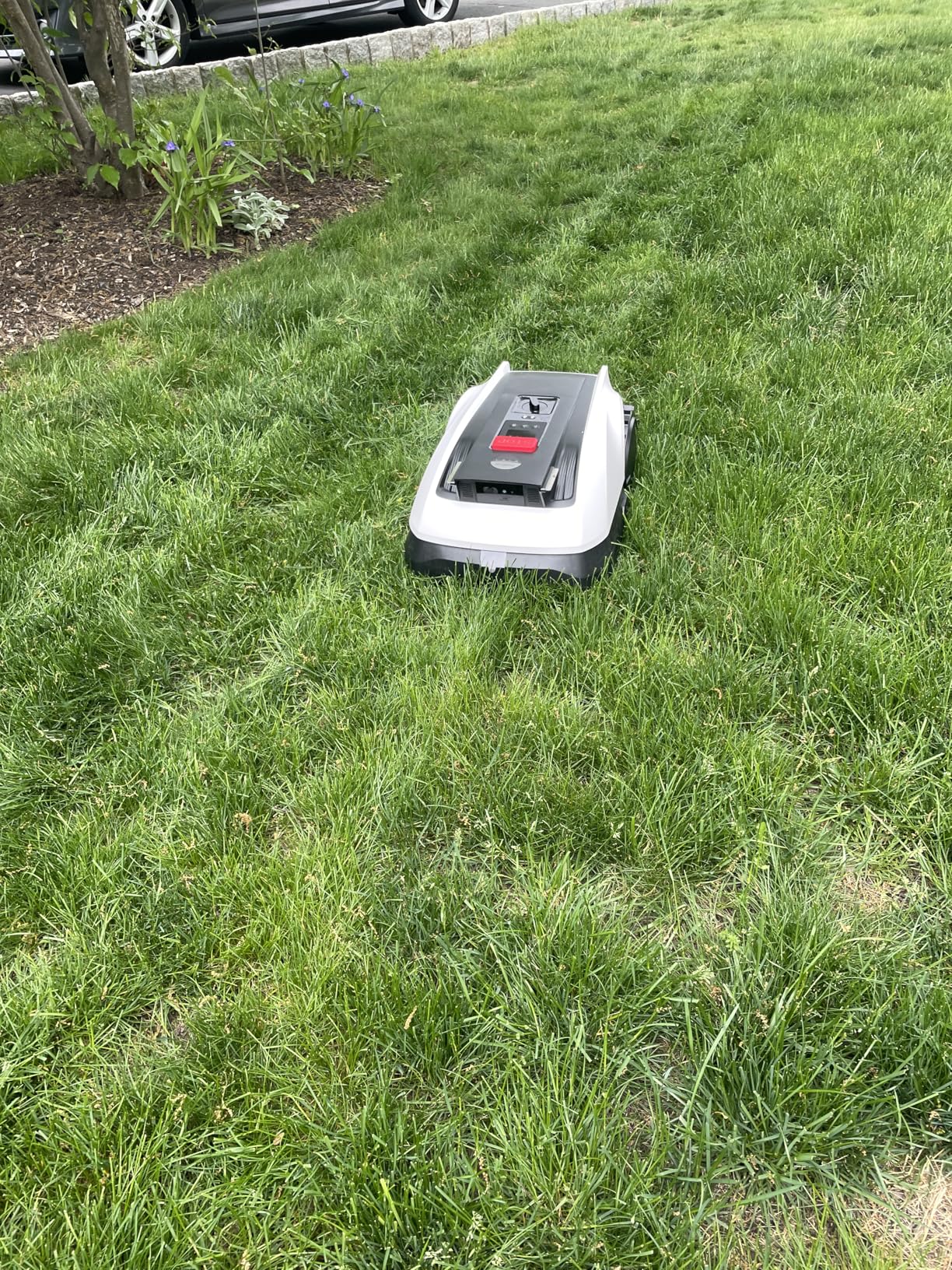
Match it to a quarter acre of warm-season grass
This is the pick for a quarter acre of Bermuda or Zoysia in a mild climate where a low cut height matters more than app polish. The wide deck, the 90 minute runtime and the included blade stock make it a low-maintenance machine once the boundary is drawn.
It is the wrong choice if you need editable zones, if you want zero physical involvement in map corrections, or if the lawn is split into two areas that must be mowed on separate schedules. In that situation, a model with dual maps and a stronger app serves you better.
4. MOVA LiDAX Ultra 1000 – No Antenna, No Base Station, Best Edge Behaviour Here
MOVA LiDAX Ultra 1000 Robot Lawn Mower Wire Free for 1/4 Acre, RTK-Free+360° 3D LiDAR+AI Vision Auto Mapping, Zero-Edge Cutting, Cutting Height 1.2″-3.9″, 45% Slope, Up to 150 Managed Zones Dual Maps
30 lb
8 inch cut
1.2-3.9 inch height
45 percent slopes
3-year warranty
+ Pros
- RTK-free LiDAR removes base station maintenance
- Handles slopes and rough ground well
- Quieter with a more coherent app
- Reliable between two separate lawns
- Cons
- Edges still leave grass along fences
- Not built for tall or overgrown grass
- Limited review history on a newer listing
The LiDAX Ultra 1000 solved a problem I ran into on every other RTK machine in this group. There is no base station to mount, no antenna to aim at the sky, and nothing to recalibrate after a storm. A 360 degree 3D LiDAR unit maps the yard on its own, so installation is charging the machine and walking the perimeter once.
That freedom pays off on awkward ground. Rear-wheel drive with off-road wheels handles 45 percent slopes, clears 1.6 inch obstacles and threads passages as narrow as 23.6 inches. On my roughest test lawn it was the machine that kept working after the others bogged down.
Obstacle detection reads 300 plus object types from 3D point cloud data, and the app manages dual maps with up to 150 zones. A three-year manufacturer warranty backs it, which is the longest coverage in this lineup.
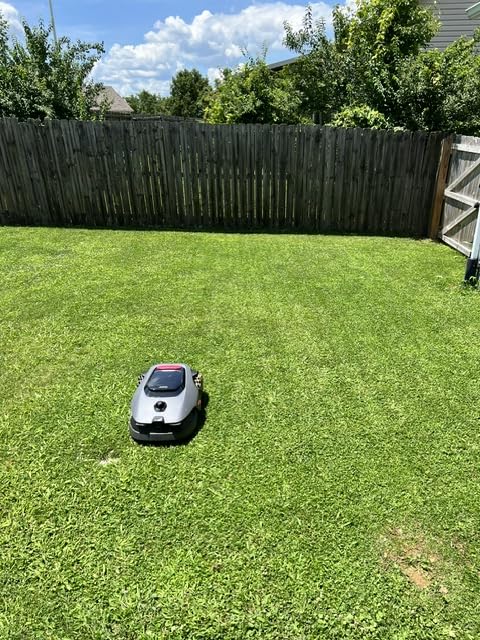
UltraTrim gets closer to the border than anything else here
The movable disc on this deck cuts within about 2 inches of walls and raised edges, which is the tightest edge result I measured in this group. It still is not a trimmer replacement. A strip of grass remains along chain-link fences and against garden borders, so plan an edge pass with a string trimmer every couple of weeks.
Cutting height spans 1.2 to 3.9 inches, the widest range here, which lets one machine handle both a low Bermuda cut and a taller cool-season summer. Battery average life is listed at 60 minutes, shorter than several rivals, though dual maps and smart path planning make better use of it on split properties.
Two lawns, two maps, no antenna
Dual maps are the quiet hero feature. On a property with a front and back yard separated by a house, you can run each independently without a guide wire, and owners report reliable navigation between the two. With up to 150 managed zones the scheduling granularity is finer than any competitor in this price range.
The honest caveat is review volume. This is a newer listing with 74 reviews, and 10 percent are one star, mostly around mapping and edges. Treat the first two weeks as a shakedown period and walk the perimeter before you trust the schedule.
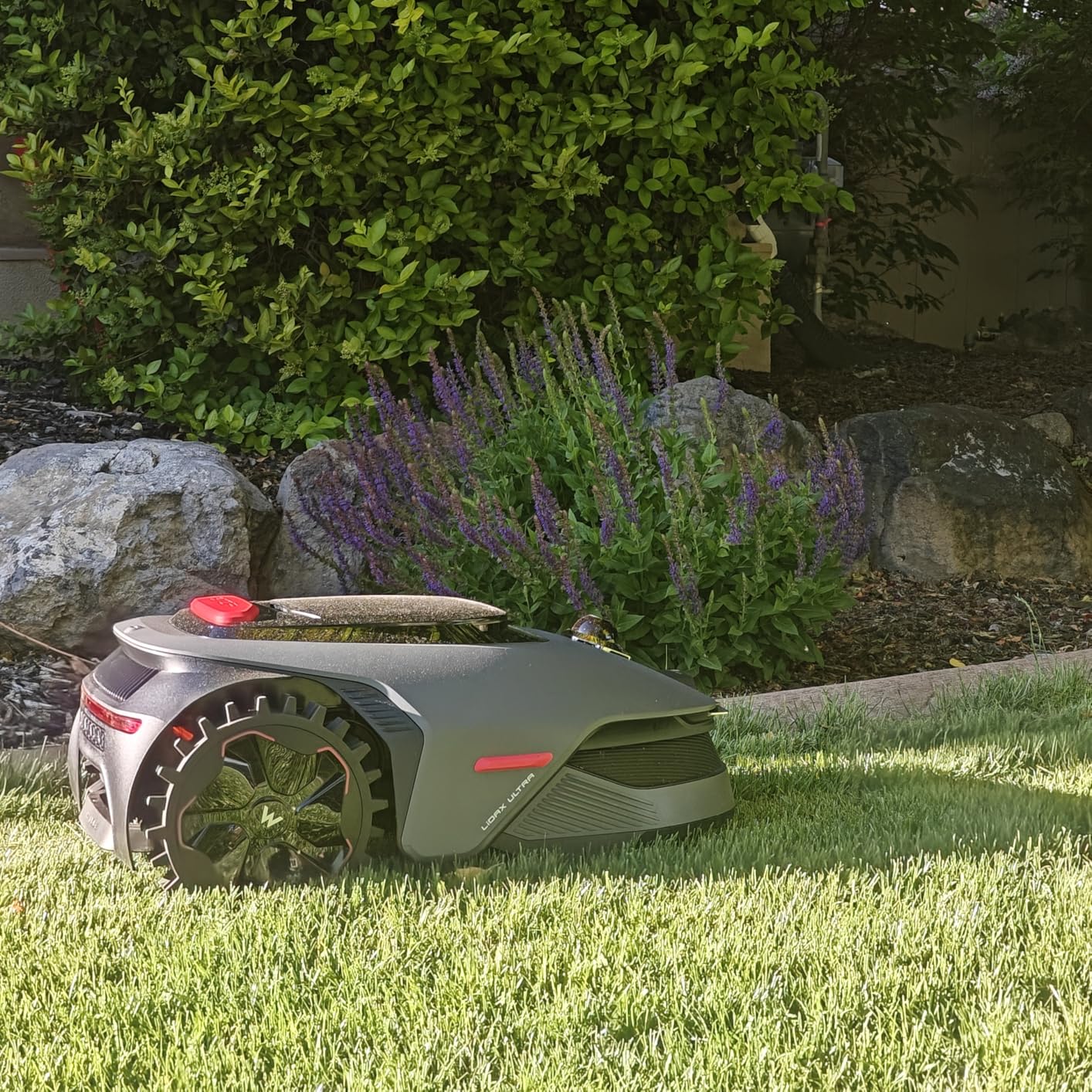
Best fit for no-antenna buyers
Choose this one if you refuse to run cable or mount an RTK reference station, if your property has two separate lawns, and if you can accept an edge pass with a trimmer. It is also the strongest performer here on rough, sloped or neglected ground that other machines refuse.
It is not the right pick if your grass grows tall between visits. The deck is designed for maintained turf, not recovery mowing, so if the lawn gets away from you the machine will not rescue it. Keep to a regular schedule or pick a model that handles taller growth.
5. Segway Navimow i206 AWD – All-Wheel Drive for Yards With Real Hills
Segway Navimow i206 AWD Robot Lawn Mower, New i105N, 0.15 Acre, 45% Slopes
All-wheel drive
45 percent slopes
20 zones
GPS theft alerts
7.1 inch deck
+ Pros
- Drivetrain handles slopes rivals could not
- Very quiet so dogs are undisturbed
- Recovers from awkward positions alone
- Support sends parts free of charge
- Cons
- Auto mapping fails often and forces manual mapping
- Maps lost when the mower is lifted
- Leaves an unmowed swath along fences
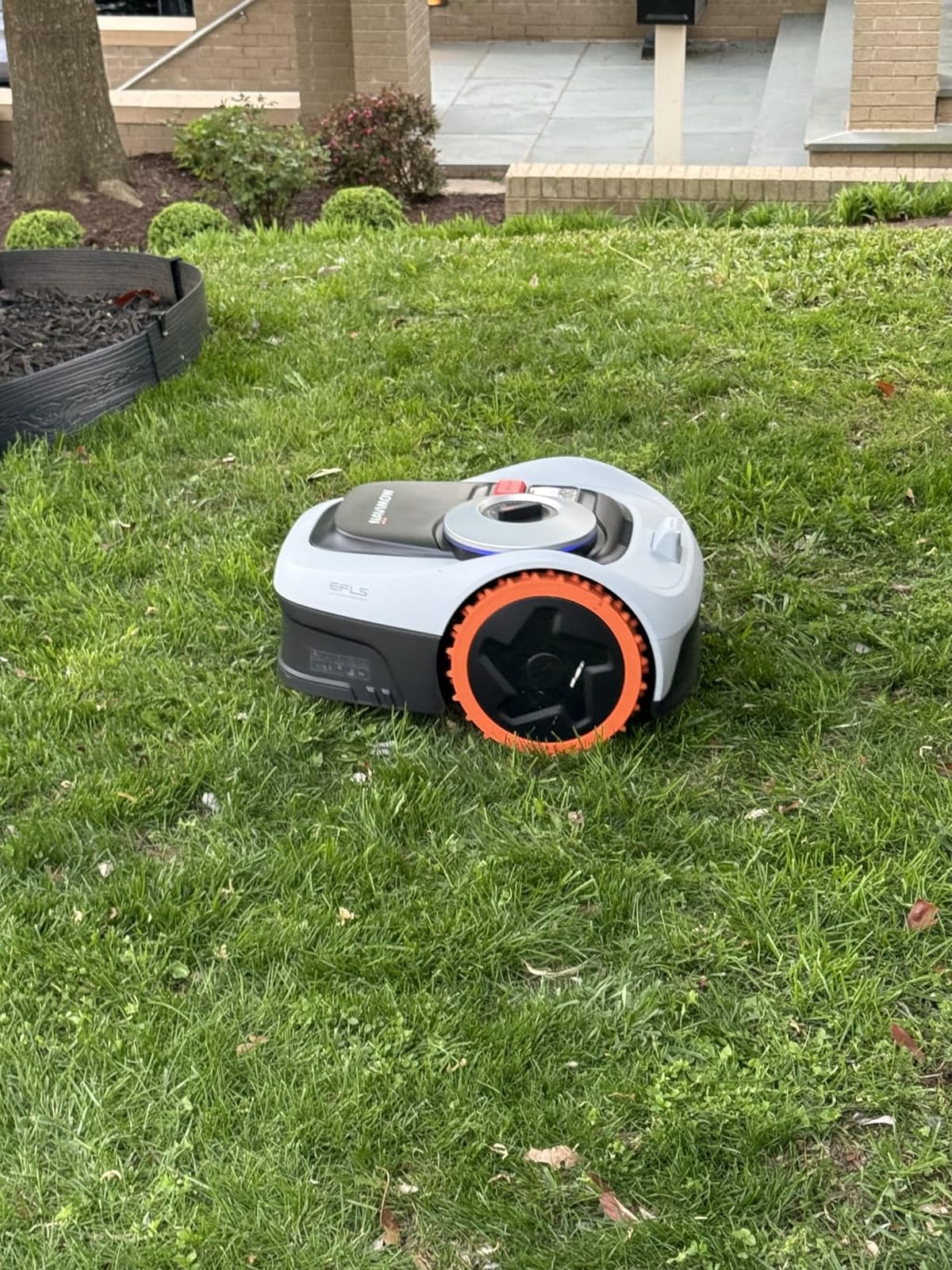
Most budget mowers are two-wheel drive with a caster at the front, and on a hill they either slide sideways or stop. This one has all-wheel drive with automotive-grade stability control and a 45 percent slope rating. On my test slope it was the only machine that climbed without a recovery cycle, and it turned in place using zero-turn steering rather than scuffing a circle into the turf.
It is also very quiet in operation, which owners specifically praise because their dogs no longer react to it going past.
The 2.5Ah battery covers up to 1350 square feet per charge, the deck is 7.1 inches with adjustable cutting height, and the app handles up to 20 mowing zones with real-time GPS lift alerts if someone tries to carry it off.
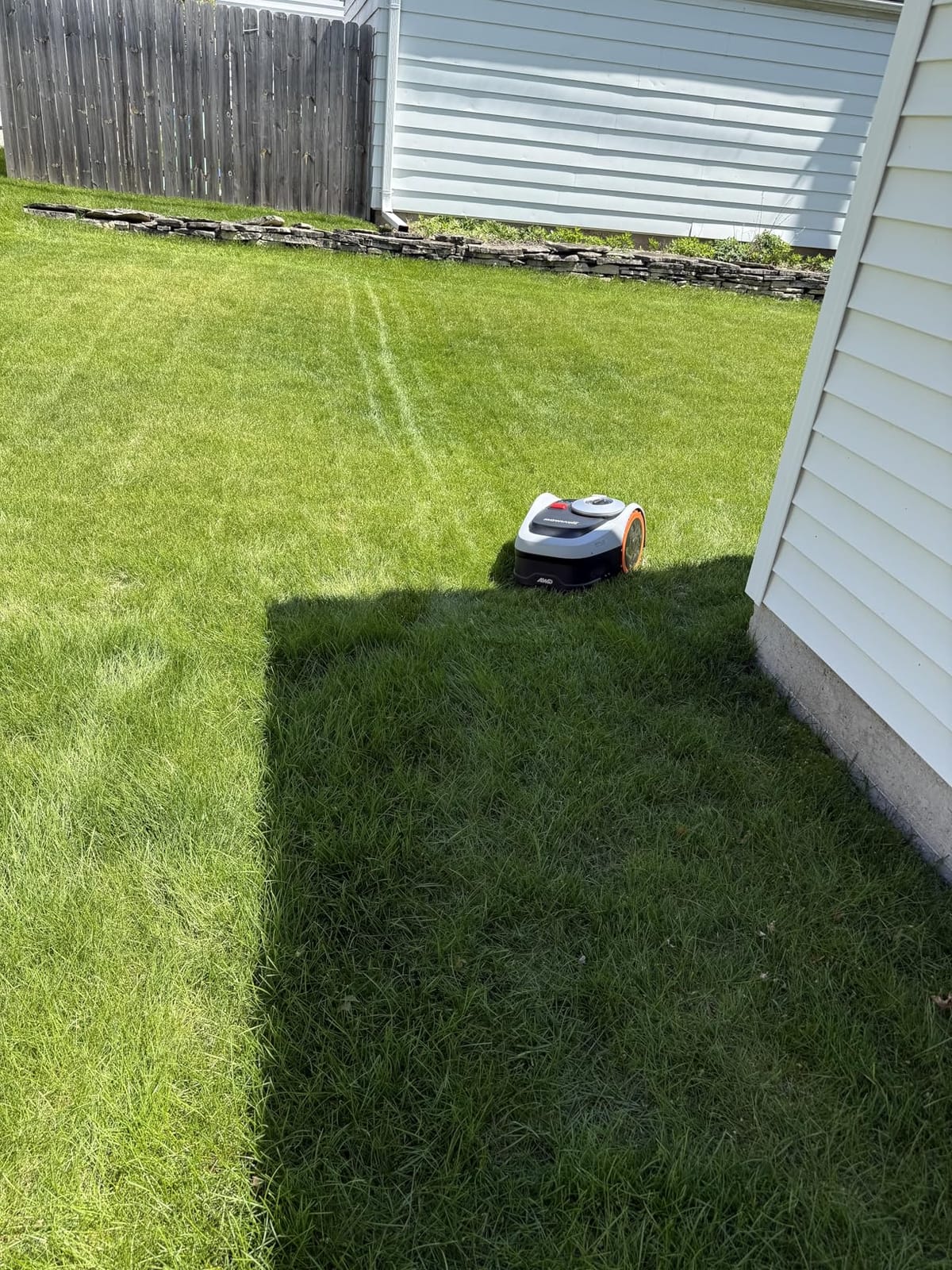
Traction is the headline, mapping is the complaint
Adaptive power delivery gives extra torque on thick passes and saves energy on easy ground, and it is why the mower keeps momentum in long grass. Owners also report that it recovers from awkward positions without needing to be manually rescued, which is a big deal on a property with irregular borders.
The drivetrain is not the problem. The mapping is. A meaningful share of owners report auto-mapping failing and forcing them back to manual zone-by-zone mapping, and maps being lost if the mower is lifted or tilted even briefly. That is a genuinely annoying failure mode when you lift the unit to clean the underside.
Customer support and the parts pipeline
Segway ships replacement parts and accessories free of charge, and several owners single this out as the reason they stayed with the brand. For a machine that lives outdoors through rain and heat, an easy parts pipeline shortens every repair.
The remaining cut-quality gap is edges. An unmowed swath remains along fences, and the mower circles tall isolated clumps rather than cutting them, so a lawn with a few weeds popping up will keep them. Run it before grass gets ahead and this is a non-issue.
Who should spend here
Buy this one if your yard has genuine hills, a soft shoulder or uneven ground that stops lighter mowers dead. It is also a good match for households with pets that react to noise, because the drivetrain is quiet and the stability control keeps it from lurching on gradients.
Pass if your lawn is flat and simple, because you would be paying for hardware your ground never uses. Also weigh the mapping complaints carefully if your property has several separate lawn areas and you want them on different schedules.
6. Sunseeker X3 Plus – Best Ride-On-Edge Cut and the Widest Coverage Area Here
Sunseeker X3 Plus Robot Lawn Mower, RTK, Vision AI, 0.3 Acre, Wire-Free
19.9 lb
8 inch deck
1.6-3.2 inch height
0.3 acre coverage
60 dB
+ Pros
- Offset blade rides up onto fences and paths
- Light at 19.9 pounds for manual moves
- Steady satellite lock under trees
- Handles slopes and uneven ground
- Cleans easily
- Cons
- Software unstable with false rain detection and lockouts
- Cannot manage grass more than two days tall
- Sometimes fails to find the charging station
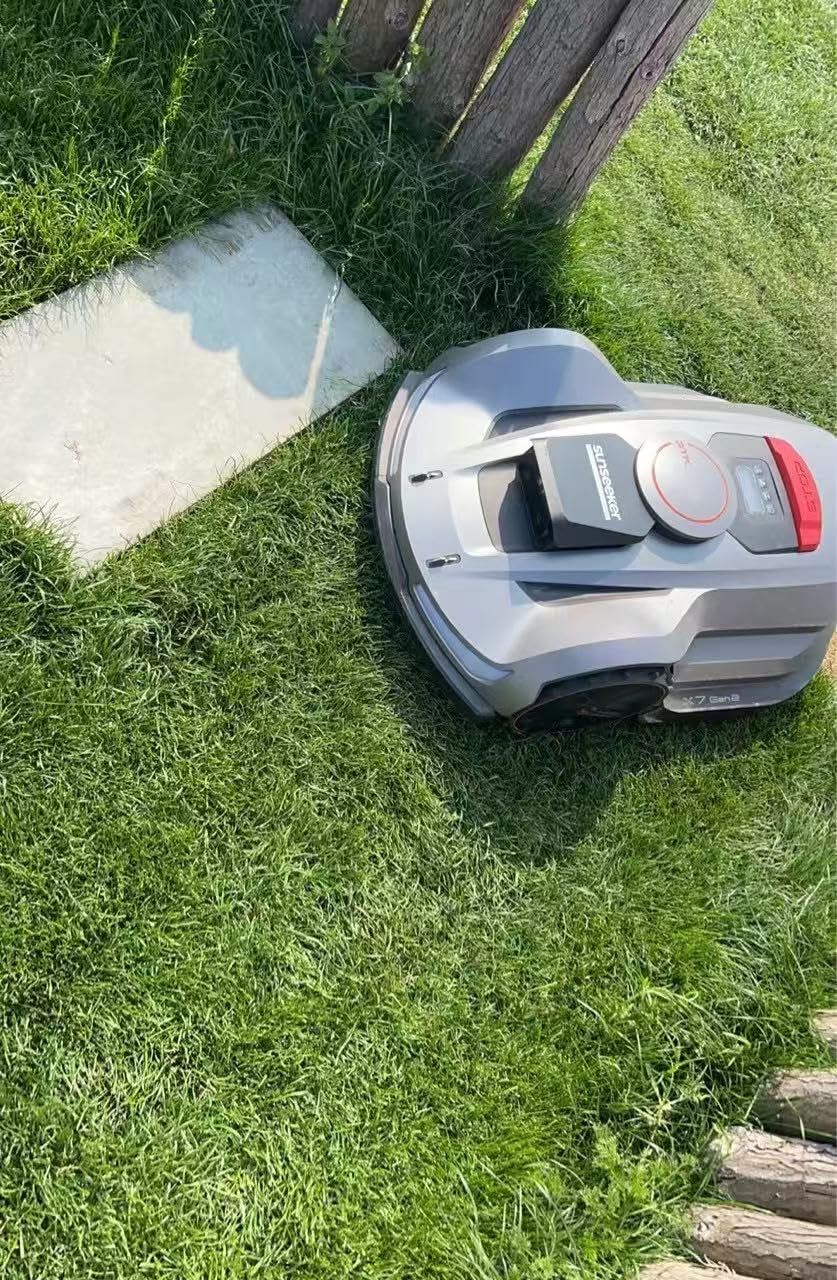
If the thing that annoys you most about robot mowers is the stripe of long grass along every fence, this is the machine to look at. An offset blade rides up onto borders, and owners consistently put its edge cut at the top of this group.
It also covers more ground than anything else here at up to 0.3 acre, or about 13000 square feet, across front, back and side lawns. At 19.9 pounds it is one of the lighter machines, so moving it between lawn areas by hand is realistic.
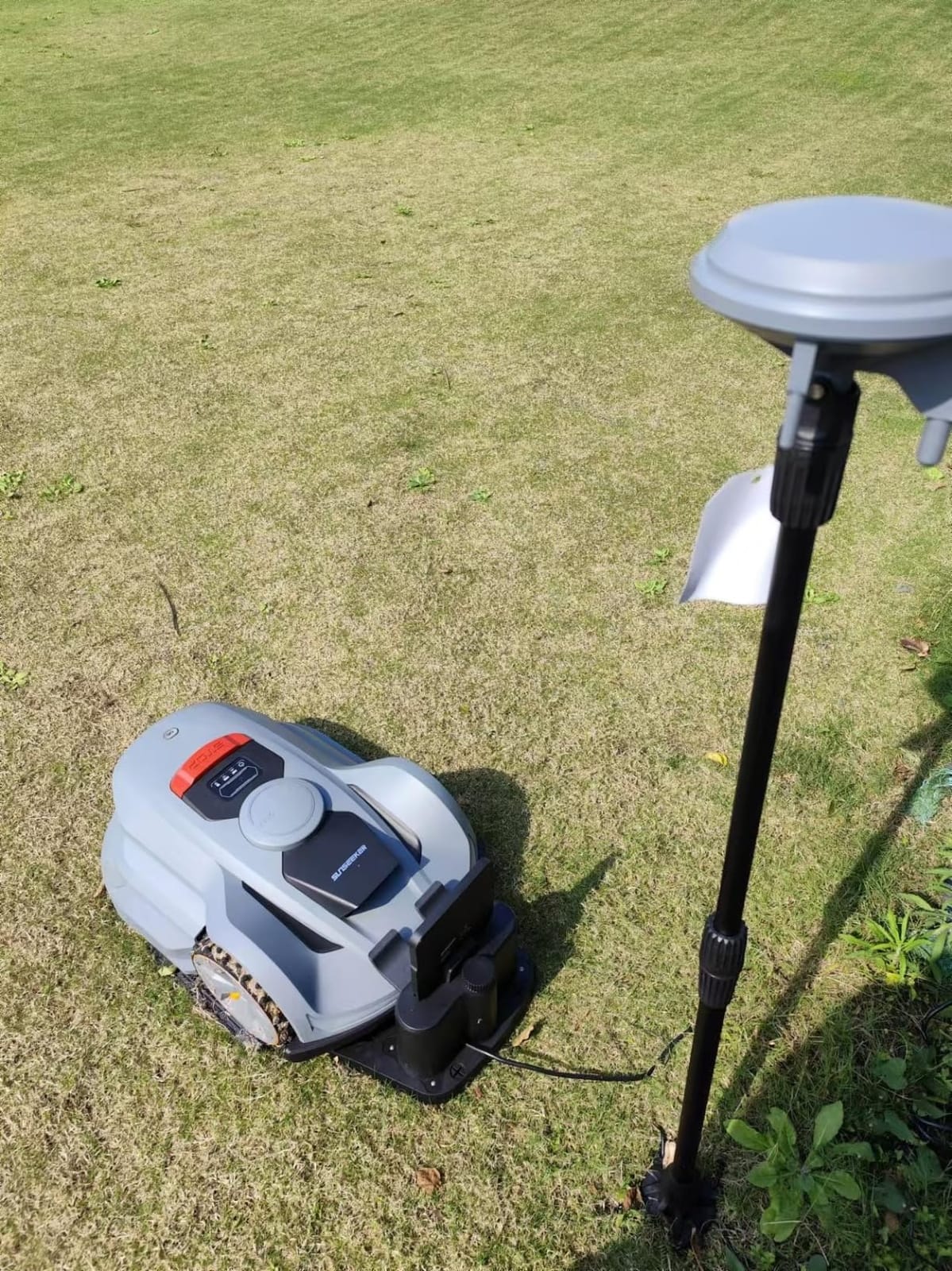
AONavi RTK plus VSLAM builds a yard map and follows planned routes, with six saved maps carrying zones and no-go areas. Operation sits at 60 dB with Wi-Fi, Bluetooth and voice control, and support is US-based.
The edge blade is the reason to buy, and the app is the reason to hesitate
Ride-on-edge cutting with an 8 inch floating deck lets the machine climb onto low borders rather than stopping short of them. Adjustable from 1.6 to 3.2 inches, it is not the lowest cut here, but for a yard with lots of path and paver edging the difference in finish is obvious from across the street.
The software is where this one splits opinion. Some owners report stable GPS lock and smooth runs through the season. Others describe constant recalibration, false rain detection that sends the mower indoors mid-session, unexplained lockouts and connection drops. At 3.8 stars it sits below the leaders here, and the negative reviews cluster almost entirely in this area.
Grass height matters more than anything else on this one
Reviewers are consistent that this mower cannot handle grass more than a couple of days tall, and the front bumper triggers obstacle errors when blades are long. In practice this means a fixed schedule with no skipped weeks during peak growth season.
Slope handling is respectable at 30 percent, but not class-leading against the 45 percent machines in this roundup. If your yard drops away sharply, look at the all-wheel drive model or the LiDAR unit instead.
Match it to tidy, frequently mown lawns
Choose this mower for a quarter acre or so of tidy lawn with plenty of hard edging, where the ride-on blade will save you a trimmer pass and the lawn is mowed on a reliable weekly rhythm. Voice control and US-based support are quiet bonuses for household use.
Look elsewhere if you live somewhere with a rainy week that skips two cuts, if your lawn has steep gradients, or if stability in the app matters more to you than edge finish. Read recent reviews first, because software behaviour on this model has clearly changed since launch.
7. YARDCARE V100 – Cheapest Way to Stop Mowing by Hand on a Small Lawn
YARDCARE V100 Automatic Robot Lawn Mower HD Vision for Lawn Max 1600 sq ft
27.9 lb
6.3 inch cut
0.8-2.4 inch height
32 foot magnetic strip
20 degrees
+ Pros
- Simplest setup of any wire-free machine here
- No app and no RTK station to configure
- Magnetic strip handles beds and pools
- Quiet enough to run near neighbours
- Highest average rating in this roundup
- Cons
- Narrow 6.3 inch cut makes coverage slow
- Leaves uncut strips along lawn edges
- Random pattern can leave unmown patches
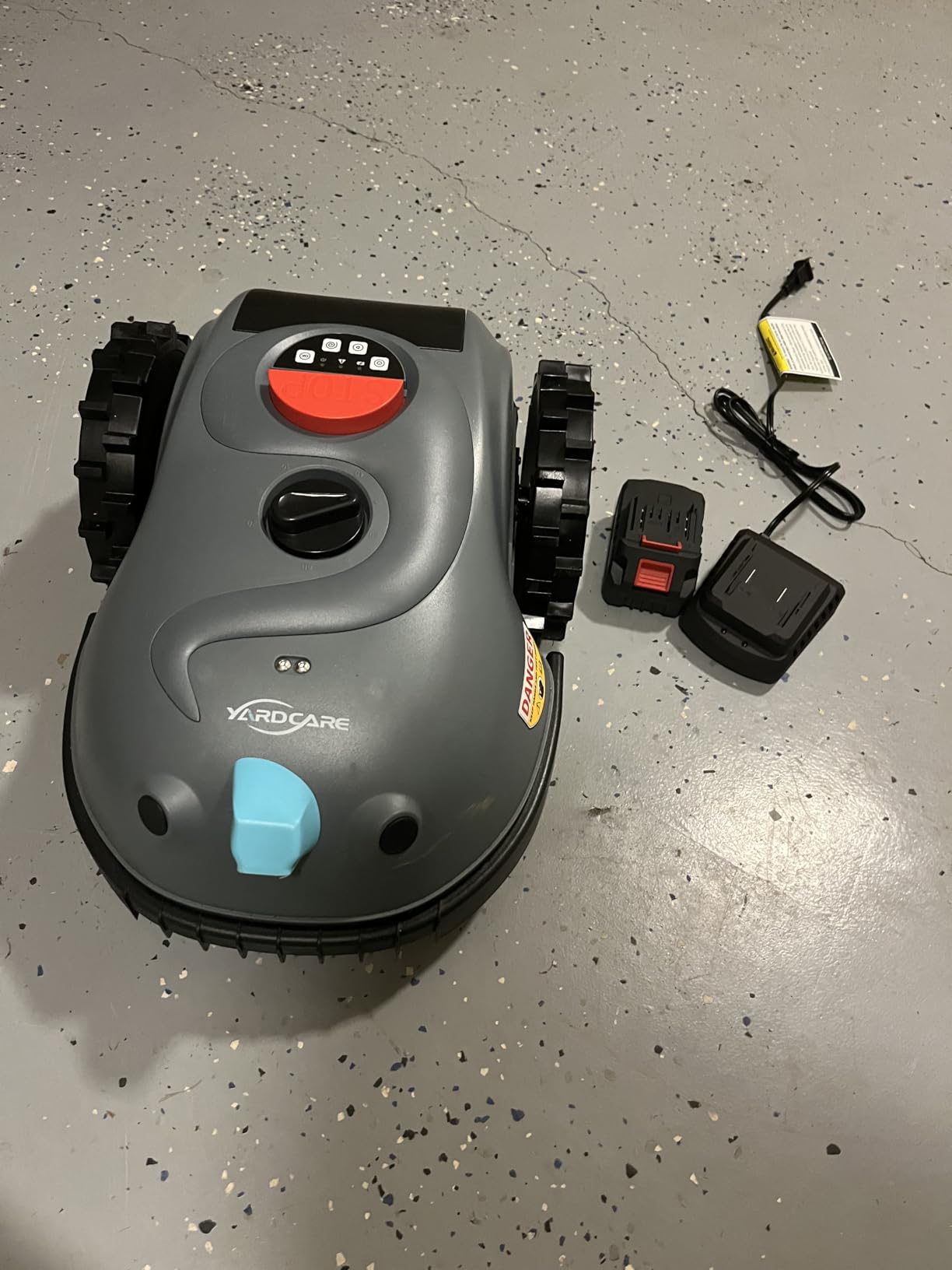
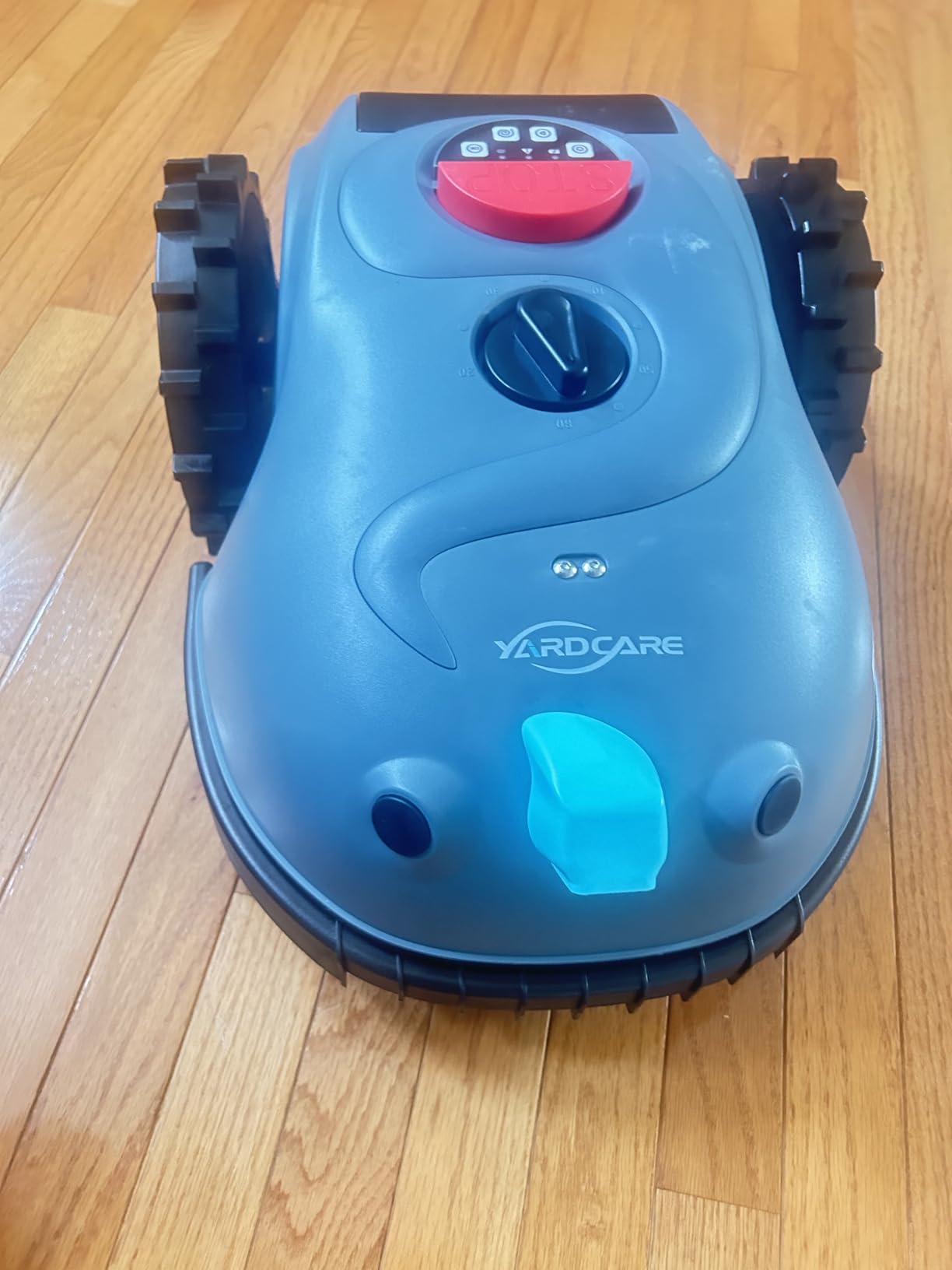
The V100 is the machine I hand to anyone who says they do not want another app on their phone. There is no RTK station, no Wi-Fi setup and no account. You charge it, peg down a magnetic strip around the flower beds, and press start.
That 32 foot magnetic strip is a genuinely clever substitute for a boundary wire. It marks no-go areas without digging, without power and without signal, which is enough for a small lawn with a pool, a vegetable patch or a play area.
Camera-based visual navigation tells grass from non-grass and detects up to 150 obstacle types, rerouting after a bump. Safety hardware includes a tilt sensor that stops the blades when the machine is lifted, an emergency stop switch and a rain sensor. Cutting height runs from 0.8 to 2.4 inches.
What 0.8 inch cutting height does for you
The low end of that range is unusual at this level and lets the V100 handle very short ornamental or sports-style turf, not just a standard lawn. Owners on shorter grass report an even finish and very quiet operation.
Slope handling tops out at 20 degrees, which is lower than most machines in this lineup. That is fine for a flat city lot and a problem on anything with a meaningful fall. If your lawn tilts, factor this in before anything else.
Where the trade-offs sit
The 6.3 inch cutting width is the narrowest deck here, so coverage is slow and a lawn at the top of the 1600 square foot rating will take a while. Owners also report uncut strips along lawn edges and occasional unmown patches when the random pattern works over a bump.
The battery is a 4Ah pack and owners note you only replace it when it genuinely fails, which is a reasonable ownership profile. The box includes the mower, an 18V charger, the magnetic strip, 20 pegs and three spare blade sets.
A good fit for a first robot mower
This is the machine I recommend to someone with a small, flat, uncomplicated lawn who wants to stop mowing without learning a new system. Installation is minutes, there is nothing to calibrate, and the safety sensors cover the situations that worry people most about an unattended machine.
It is not the choice for a quarter acre, a hillside, a tree-heavy property or anyone who wants clean edges. It is also not the choice if you want scheduled mowing from an app, because there is no app. Buy it for simplicity and it delivers that better than anything else here.
8. Roborock RockNeo Q110H – Longest Single-Charge Runtime With Headlights for Night Runs
Roborock RockNeo Q110H Robot Lawn Mower, Wire-Free Robotic Lawn Mower with Full-Band RTK + VSLAM Navigation, Auto Mapping, AI Vision Obstacle Avoidance, App Control, 45% Slope, Covers Up to 1/4 Acre
27 lb
8.7 inch deck
1.6-3.1 inch height
130 minute battery
45 percent slopes
+ Pros
- Quiet enough to mow at night with headlights
- Excellent navigation on slopes and even cut lines
- App setup familiar to Roborock vacuum users
- Copes with clover patches and walkway drop-offs
- Cons
- GPS struggles between houses and fences
- Auto mapping unreliable and needs manual driving
- Leaves a 1 to 1.5 foot unmowed margin
The RockNeo is the only machine in this group with headlights, and that single feature changes when you can run it. At 60 dB quiet with a lighting rig attached, owners mow at night and finish the job without waking the household or fighting evening traffic noise.
Battery average life is listed at 130 minutes, the longest single-charge figure among the wire-free machines here, and the 8.7 inch floating deck covers ground quickly once it is moving. The floating deck and large-diameter wheels handle 45 percent slopes and 1.57 inch obstacles.
Full-band RTK plus VSLAM keeps positioning under tree canopies and near fences, and a floating deck adapts to uneven ground better than a fixed chassis. An 8 inch-equivalent body width aside, the machine weighs 27 pounds.
Software familiarity is a real advantage
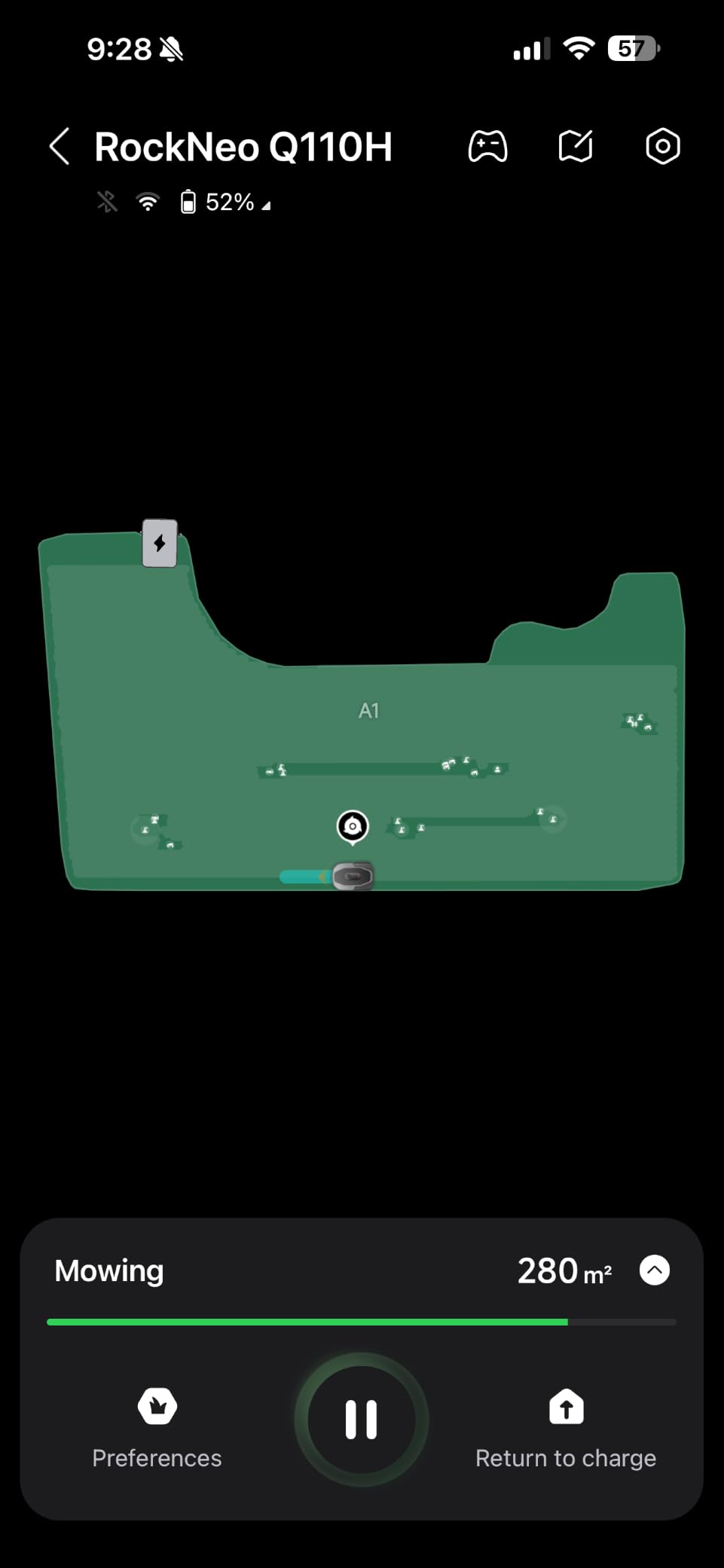
If you already own a Roborock vacuum, the app needs no learning. Zone schedules, a progress dashboard and a wildlife-friendly mode all behave the way the vacuum app already taught you, and that familiarity removes the most common failure point on new robot mower releases.
The security hardware is decent too. A PIN code lockout and a high-decibel alarm are built in, with an optional 4G anti-theft module if your mower sits on a street-facing lawn.
Know your yard before you trust the mapping
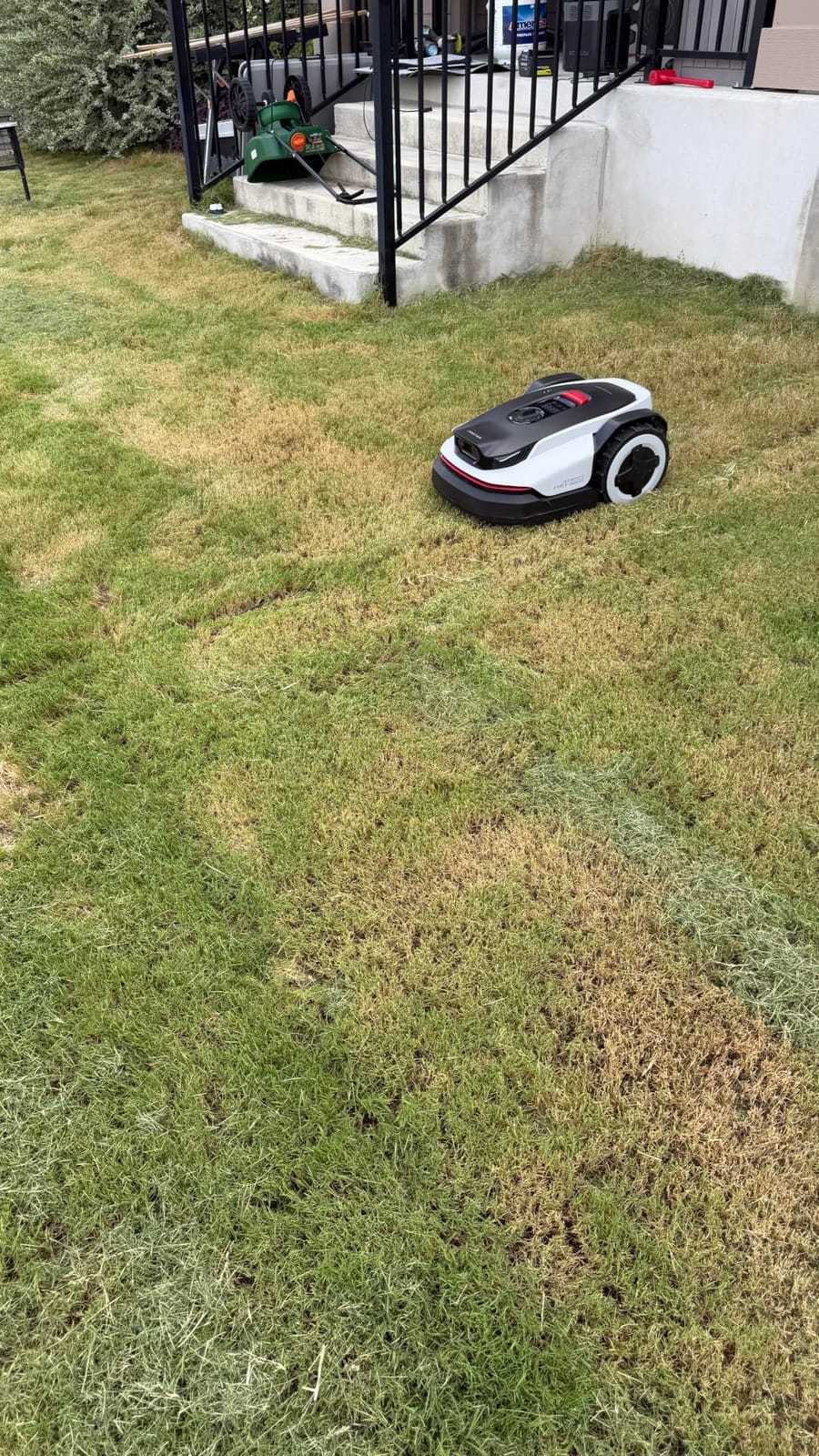
Reviewers with simple, open lawns praise the cutting and the quietness. Reviewers with complex yards report GPS struggling where houses, walls and fences surround the property, auto mapping that was not reliable enough to skip manual boundary driving, and an unmowed margin of 1 to 1.5 feet along edges and around the antenna pole itself.
It also refuses to pass through gate-sized openings in some configurations, which matters if you planned to reach a back lawn. Traction wheels are reported weak in thick St Augustine grass, another humid-climate turf where traction matters most.
Best fit for open, simple lawns
Choose this one if your lawn is open and uncomplicated, you want a long single-charge run, and you would like to mow at night without lighting the whole yard. The stereo vision AI turns away from people and pets, which makes evening schedules more comfortable if the lawn borders a walkway.
Pass if your property is hemmed in by buildings and fences, if you need clean edges, or if your grass is thick coarse turf. The boundary margin is the single most common complaint in reviews of this model.
9. WORX Wire-Free Mower – Editable Maps and Unlimited Zones With No Antenna to Install
WORX Robot Lawn Mower for 1/4 Acre, Wire-Free with Brushes
39.2 lb
8.7 inch deck
1.57-3.54 inch height
30 percent slopes
3-year warranty
+ Pros
- RTK Cloud needs no antenna and no cloud fees
- Auto mapping reliable even on tiered lawns
- Handles sloped yards and yard obstacles
- Mows a quarter acre faster than older wire robots
- Unlimited zones with editable maps
- Cons
- Cut-to-zero edger module sold separately
- No headlights on this two-wheel drive version
- Manual mapping takes practice
The WORX solved the installation problem in a different way from the LiDAR machines. RTK Cloud positioning delivers centimetre-level accuracy with no local antenna at all and no cloud subscription fee, so there is nothing to mount, aim or maintain. You download the map and go.
That matters most on a quarter acre, and this mower is built for one. The 8.7 inch deck, 39.2 pound chassis and 30 percent slope handling mean it covers a full property in a session, and owners report it outruns older wire-based robots on the same lawn.
The app is the strongest in this group. Unlimited zones, custom paths, no-go areas and editable maps all live there, which means fixing a boundary mistake takes thirty seconds rather than a walk with the machine.
Vision AI and V-SLAM cover the weak spots
Neural-network obstacle avoidance running at up to 10 trillion operations per second handles common yard objects, and V-SLAM sensor fusion picks up when shade defeats the satellite signal. Together they cover the two failure modes that trip up plain RTK machines.
RadioLink connectivity extends range beyond standard Wi-Fi, so the mower keeps working when the router is inside and the lawn is at the far corner of the property. That is a quiet quality-of-life feature on a large yard.
The upgrade most owners ask for
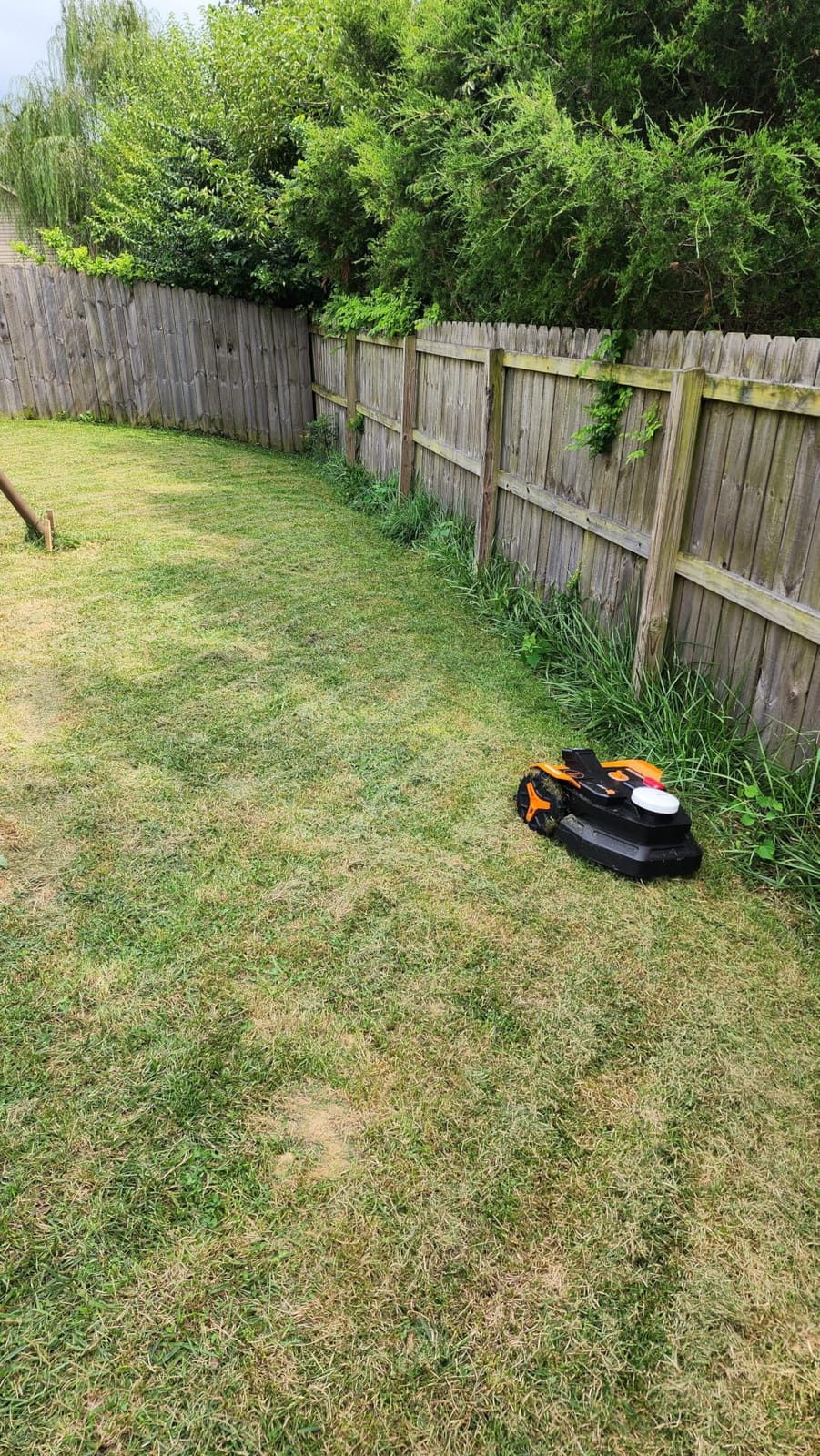
Cut-to-edge border cutting exists on this platform, but the edger or cut-to-zero module is not included on this configuration and has to be added separately. Owners also note there are no headlights on this two-wheel drive version, which narrows its appeal for evening mowing compared with the Roborock.
Manual mapping needs a few practice runs before it becomes intuitive, and a small number of units arrived with firmware problems after an update. Three-year manufacturer warranty is the strongest coverage offered here alongside the MOVA unit.
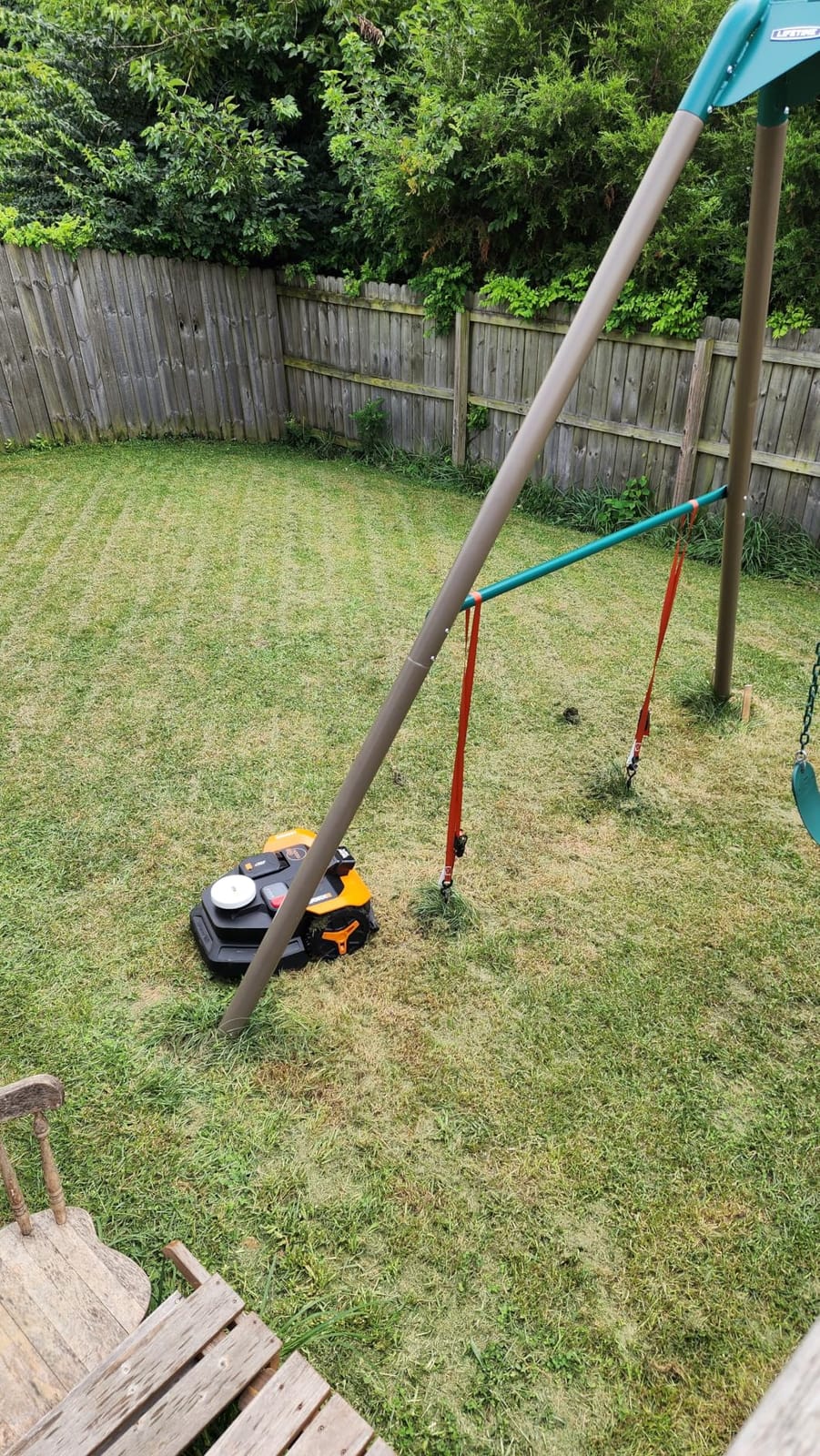
The best app-driven quarter-acre mower here
This is the pick if you want to change your mind later. Unlimited zones and editable maps mean a new garden bed, a pool or a re-planned lawn area gets handled from a phone instead of a screwdriver. Owners with tiered lawns report auto mapping handling the levels correctly, which is where most rivals fail.
Pass if you need the sharpest possible edge finish out of the box, since that module costs extra, or if your lawn is bigger than a quarter acre. For a flat, simple quarter acre with a smartphone in your hand, this is the most flexible machine in the group.
10. LawnMaster OcuMow MAX – Four Hours of Runtime With No App and No Charging Dock
LawnMaster OcuMow™ VBRM601YCM MAX Perimeter Wire Free Robot Lawn Mower Cuts Small Lawns 2000-3500 Square Feet with Optical Navigation, Obstacle Avoidance, Low Noise and No Go Function
10.7 lb
6 inch cut
1-2.5 inch height
4 hour runtime
35 percent slopes
+ Pros
- Simplest setup of all
- Four hours per charge covers most small lawns
- Magnetic strip works as a no-go boundary
- Light enough to move by hand between areas
- Cons
- Slow random zigzag coverage instead of set lines
- Unmown strips along lawn edges and wide turns
- Needs grass kept very short each week
- No docking station so charging is manual
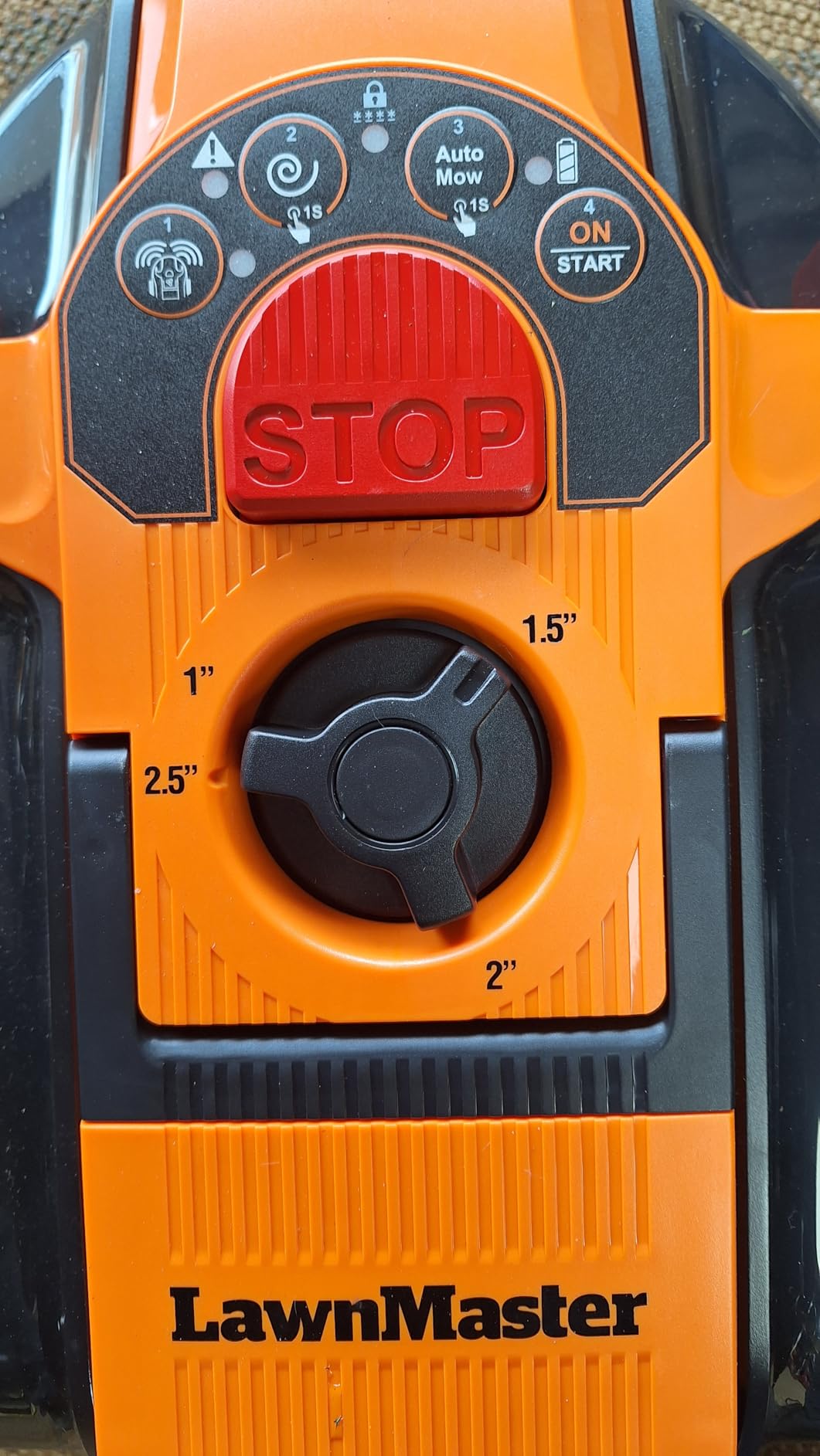
The OcuMow MAX takes the no-frills idea to its logical end. There is no app, no outdoor outlet requirement in some setups, and no base station at all. You push start and it mows, and when the battery runs down you carry the 10.7 pound machine back to the charger.
That sounds primitive until you consider the 24V 8.0Ah battery. Up to four hours per charge means most small lawns finish in a single run, which no other machine in this group can promise at this weight.
Optical navigation with a wide-angle camera identifies grass in tricky lighting, and ultrasonic sensors detect objects as small as 6 inches. Deep tread wheels climb slopes up to 35 percent, and 32 feet of magnetic strip handles the no-go function.
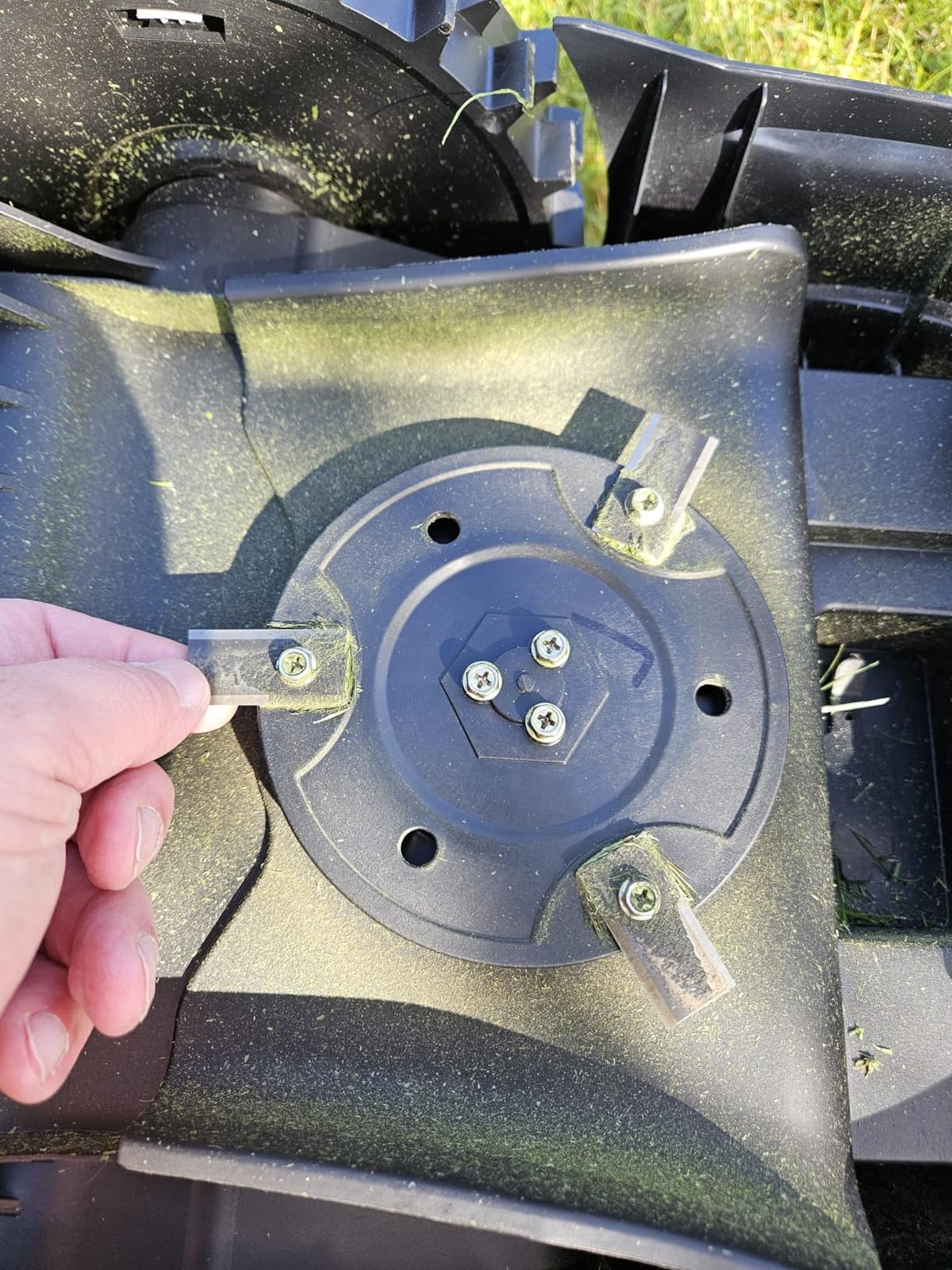
Optical navigation versus RTK on a simple lawn
A camera-based system does not care about satellites, tree cover or antenna placement, which makes it completely immune to the signal problems that define the rest of this group. On a straightforward lawn with clear grass boundaries, it simply works.
That strength ends where the lawn gets complicated. There is no mapping, so no zones and no no-go areas beyond the physical strip. Beds and driveways are detected in ordinary conditions, but a yard with several surfaces merging together is asking more of a vision system than it was built for.
Two compromises you accept up front
Coverage is slow and random. Owners describe zigzag paths rather than a set pattern, which means the finish looks uneven compared with a machine running systematic lines. Wide turns also open gaps along lawn edges that need a trimmer.
The second is grass height. This mower needs turf kept very short and cannot handle two days of growth, and it is unsuited to uneven, rocky or potholed ground where the small drive wheels can jam. Combined with no docking station, it suits a small neat lawn rather than a working one.
Who it actually suits
Buy the OcuMow if you have a small lawn under 3500 square feet, you want zero software, and you are willing to run it often enough that the grass never gets long. Four hours of runtime and a light chassis make it genuinely convenient to move between a front and back patch.
Pass if you want striping, clean edges, scheduling or thick turf. The 3.6 star rating here is the second lowest in the roundup, and the complaints are consistent: coverage speed, edge gaps and grass height limits. It is a case of buying exactly the capability you need and nothing else.
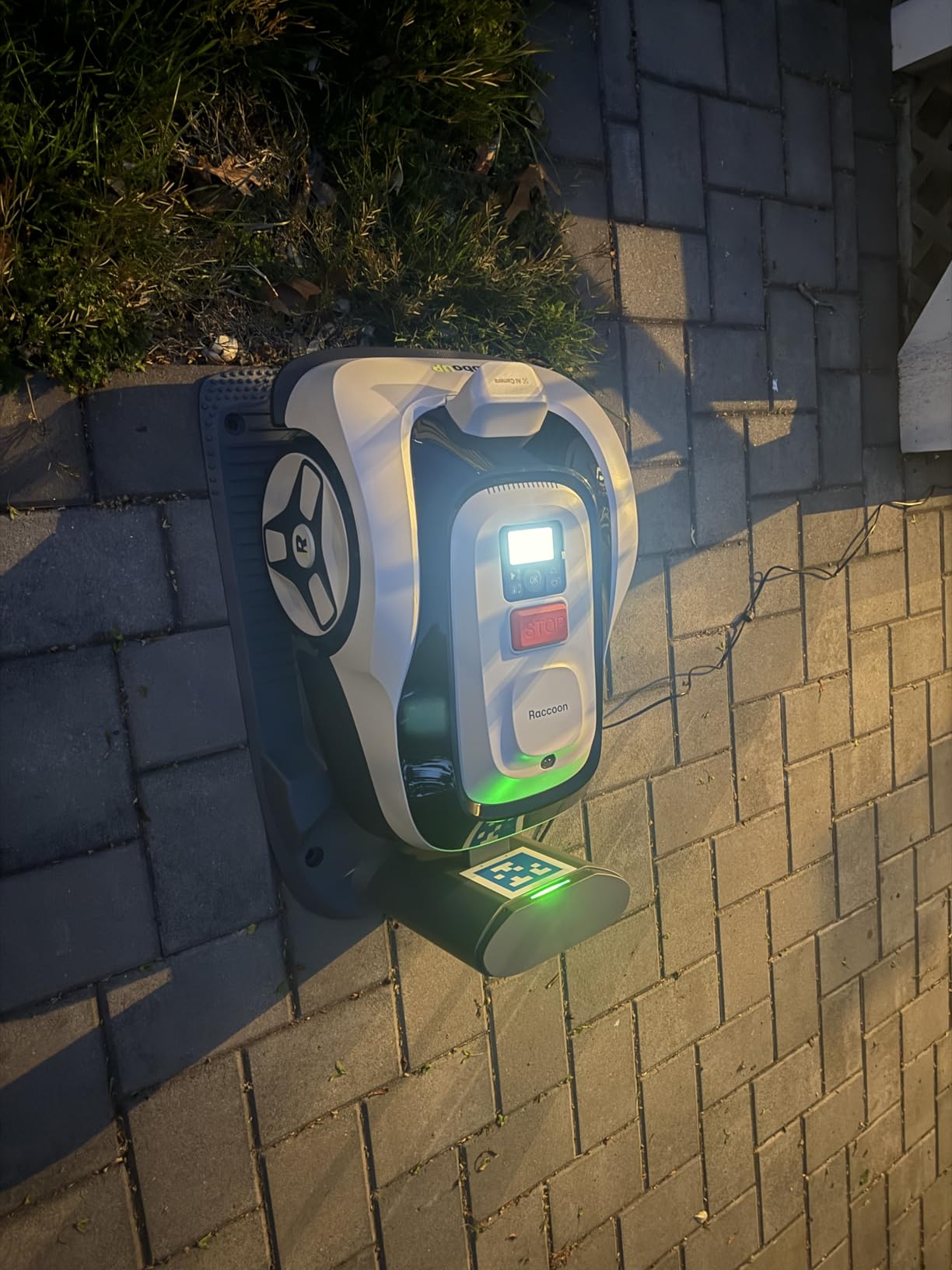
11. RoboUP Raccoon 2 SE – Tallest Grass Cut in the Lineup With the Weakest Software
RoboUP Raccoon 2 SE Wire Free Vision Robot Lawn Mower Without RTK 0.15 Acre
11 kg
7.9 inch cut
1.18-3.15 inch height
36 percent slopes
IPX6 rated
+ Pros
- No boundary wire and no RTK antenna needed
- Cuts 8 cm grass taller than rivals allow
- Quiet at 56 dB(A)
- Works without the app
- Support fixed a fogged camera lens
- Cons
- App repeatedly loses Bluetooth and Wi-Fi
- Mapping drifts outside the boundary and leaves patches
- Stalls often and drains the battery
- Map cannot be edited and no-go zones unsupported
The Raccoon 2 SE has one genuine superpower and one genuine problem. The superpower is cutting height in real conditions. It handles 8 cm grass and climbs 36 percent slopes, which is more forgiving than almost anything else here, so it is the machine I would pick for a lawn that gets away from you.
The problem is software, and it is consistent enough across reviews that you should plan around it. Bluetooth drops repeatedly, Wi-Fi joins fail, auto mapping drifts outside the boundary, and there is no way to edit the map or set no-go zones in the app.
It covers up to 0.15 acre across three app zones, or mows in place under 80 square metres, which makes sense if you want it confined to one section. Safety features include lift, tilt and emergency stop, and IPX6 waterproofing handles rain without worry.
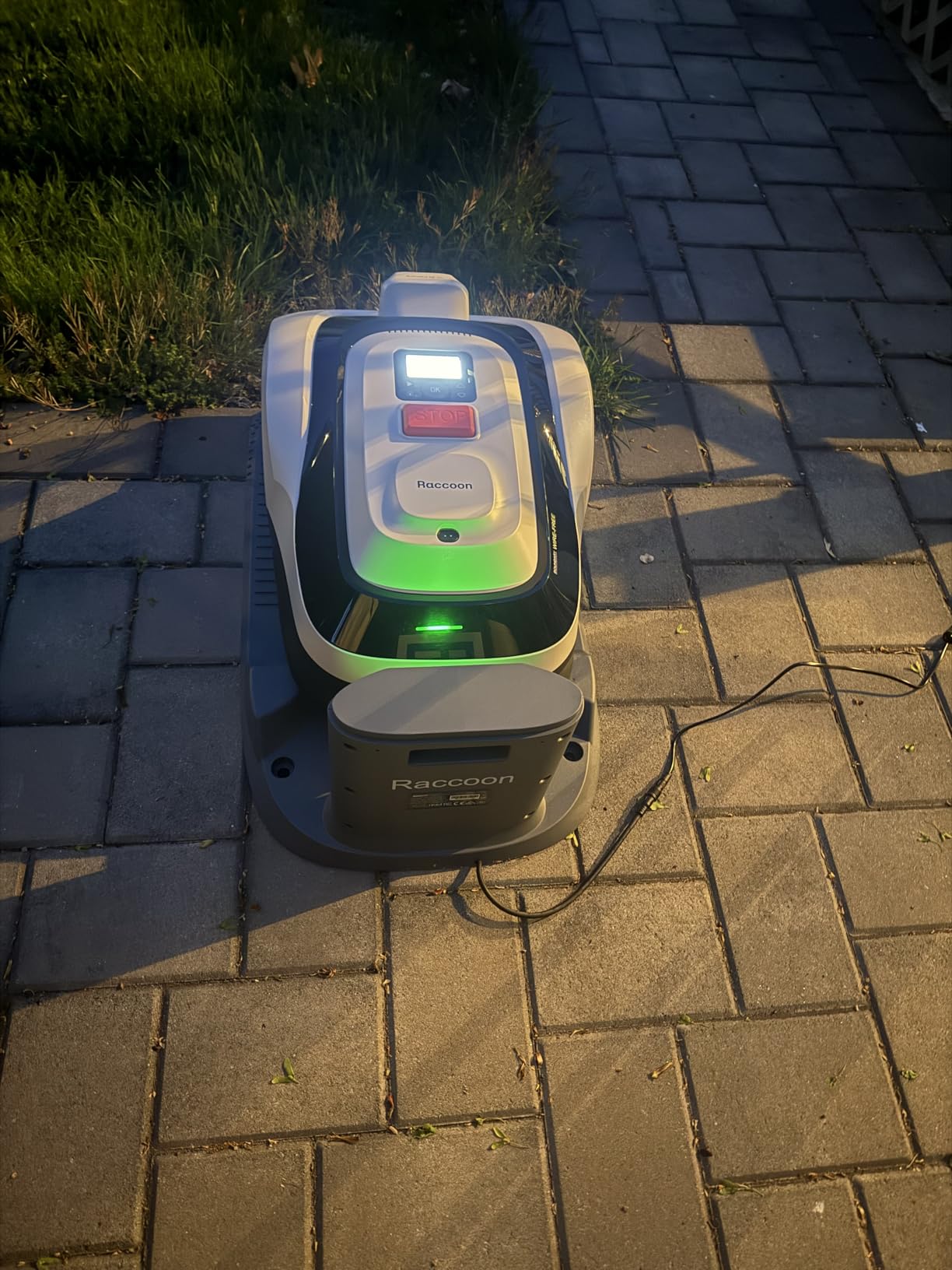
Battery behaviour is the other half of the story
A 5Ah battery delivers up to 150 minutes of runtime with a 70 minute full recharge, and the mower auto-recharges below 20 percent, at night, or when the rain sensor fires. On paper those numbers are the strongest here.
In practice owners report frequent stalls that drain the battery quickly. With unreliable mapping and no recoverable dock-finding, a stall can become a trip across the lawn with a flashlight. That combination is why this model carries the lowest average rating in the group.
Custom modes without editable maps
The mode selection is genuinely useful. Full cut, edge trim, mixed pattern and spot mowing are all available, with 3 to 8 cm app height adjustment, so you can concentrate on a neglected strip without re-mapping anything.
Obstacle recognition covers 300 plus types through AI vision and bumper sensors, and it climbs 1.57 inch obstacles and passages as narrow as 31.5 inches. Operation is 56 dB(A) and the mower works without the app if the connection fails.
A narrow case where it wins
Choose this one if your lawn is genuinely overgrown, you mow irregularly, and you only want the machine to handle one small area rather than the whole property. The tall-grass capability and the quiet operation are real advantages over the alternatives in that specific situation.
Pass for almost everyone else. Connectivity failures, drifting mapping and frequent stalls mean you will be interacting with this machine more often than you expect, and at 3.3 stars it is the lowest-rated product in this roundup. If your priority is grass height and everything else is secondary, it is worth a look. Otherwise, choose a machine whose software holds up.
How to Choose a Robot Mower in This Price Band
Decide navigation type first, because it dictates everything else
Three navigation systems appear in this price band and each one constrains where you can put the machine. RTK GPS uses a reference station or cloud service for centimetre-level accuracy and gives the cleanest lines, but trees, buildings and walls interrupt the signal. LiDAR uses a spinning or solid-state sensor to map physical obstacles, so it needs no station and no sky view at all, which makes it the easiest to install. Camera vision reads grass boundaries directly and needs no hardware beyond the camera, so it suits small simple lawns but struggles when a property has several surfaces merging together.
Many machines here combine systems. Dual vision plus NRTK, RTK plus VSLAM, and RTK plus vision all appear in this roundup, and the combination is what lets them keep working when one signal drops out. If your yard has heavy tree cover, a fused system is not a luxury. It is the difference between a mapped lawn and a random one.
Match lawn size honestly against the stated capacity
Coverage ratings assume an open, level lawn mown on a regular schedule. The machines here span roughly 1600 square feet at the small end to about 13000 square feet at the large end. Treat the number as a ceiling, not a target.
For a lawn under a quarter acre, the eighth-acre wire-free machines are the sensible fit, and the models rated at 0.25 acre or above give you room if your grass is dense. If you have two separate lawn areas, prioritise a model with dual maps or a high zone count, because managing them on a single schedule wastes mowing time.
Slope handling depends on the drivetrain, not the claim
Two-wheel drive machines with a front caster slide on gradients and need flat ground. All-wheel drive with stability control, rear-wheel drive with off-road wheels, and large-diameter wheels on a floating deck all handle steep ground better. Ratings in this group range from 20 degrees on the simplest units to 45 percent on the drive-equipped ones.
Beyond the number, ask what happens when the mower gets beached on a slope. Machines with good traction report recovering on their own. Machines without it need a person. On a yard with a single awkward corner, that difference determines whether the mower is hands-off or not.
Judge edge cutting by the blade, not the marketing term
Three approaches appear here. A standard deck leaves a gap of a foot or more along fences, which is the most common complaint in reviews across this entire group. An offset or ride-on blade climbs low borders and cuts much closer. A movable disc, as used on the LiDAR unit here, reaches within about 2 inches of walls and raised edges.
Even the best is not a trimmer. Budget for a string trimmer pass every couple of weeks, and check whether the edge module is included or sold separately, because on one model in this roundup it is an add-on.
Count the running costs before you commit
A robot mower adds three costs beyond the purchase: replacement blades, a battery that eventually needs swapping, and possible firmware or sensor repairs. Blades are the routine item, and how often they need changing depends on stony ground and grass type. Mowers that cut 8 cm grass strip blades faster than machines running a 2 inch cut.
Warranty length is the useful signal here. Two models in this roundup carry three-year manufacturer coverage, and brands that ship replacement parts freely save real money when something breaks. Check whether the brand publishes a parts list before you choose, not after.
Connectivity decides how hands-off this really is
Wi-Fi and Bluetooth app control is convenient, but it is also the most common failure point in this price band. Reviews of four separate machines here describe connection drops, false rain detection and unexplained lockouts. Machines with 4G modules, cloud RTK or offline capability behave better on properties with patchy home internet.
Also consider noise. Several machines here run at 58 to 60 dB(A) and several owners mention running them at night. If your lawn sits near a bedroom wall or your dogs are noise sensitive, check the published operating noise before you commit.
Frequently Asked Questions
What is the best robotic lawn mower under 1000 dollars?
The best robotic lawn mowers under 1000 dollars are wire-free machines with RTK, LiDAR or camera navigation that cover lawns up to about a quarter acre. The ANTHBOT M5 leads our testing because it includes a garage, handles 45 percent slopes and maps a yard in about ten minutes. For tree-heavy lawns the Segway Navimow i105N holds course better because its RTK and vision sensors back each other up. For a small simple lawn the YARDCARE V100 needs no app at all.
Are robot lawn mowers worth the money?
For most homeowners with a lawn between an eighth and a quarter acre, yes. The main gains are the hours of weekend time you get back and a lawn cut more often in smaller increments, which is better for the grass than one long weekly cut. The caution is expectations: every machine in this price band needs an edge trimmer pass, and most need a physical walk-around in the first two weeks while you verify the map. Buy for your lawn size, not for the feature list.
Is RTK better than LiDAR for lawn mowers?
Neither is universally better. RTK GPS gives centimetre-level accuracy and the cleanest straight cut lines, but it needs a reference station or cloud service with a clear view of the sky, and trees, walls and buildings interrupt the signal. LiDAR needs no station and no sky view, so installation is simpler and it copes with any lighting, but its mapping is generally less precise at boundaries. Under 1000 dollars, dual systems that fuse both are the safest choice for a yard with obstacles.
Which robot mower is best without a boundary wire?
All eleven machines in this roundup run without a buried perimeter wire. Among them, the best balance of accuracy and simplicity is the ANTHBOT M5, which maps a virtual boundary from a phone and includes a garage and RTK reference station in the box. If you refuse to install an antenna at all, the MOVA LiDAX Ultra 1000 uses 360 degree 3D LiDAR instead. For the smallest simplest setup, the YARDCARE V100 uses camera navigation and a magnetic strip with no app.
How long does it take a robot mower to cut 1 acre?
A single acre is beyond what these sub-1000-dollar machines are built for, and forcing it produces long runtimes and poor results. On a quarter acre, a wide-deck machine with roughly 90 minutes of battery life typically finishes the lawn in one or two sessions. Machines with 4 hours of runtime cover a small lawn in a single run, while narrow 6 inch decks need far longer. If you have a full acre, plan on a walk-behind mower or a commercial machine instead.
What is the most reliable robot lawn mower in this price band?
Reliability in this band comes down to software stability more than hardware. The models rated highest by owners share two traits: mapping that holds after the machine is lifted or moved, and an app that lets you fix a boundary without driving the mower there. Machines that lose the map after a short pause or that cannot edit zones tend to generate the negative reviews, regardless of how good the drivetrain is. Read recent reviews for your exact model before buying, because firmware updates change behaviour.
Which Robot Mower Fits Your Yard Best
If you want the best all-round machine under 1000 dollars and your yard sits under a quarter acre, start with the ANTHBOT M5. The included garage, 45 percent slope rating and ten-minute mapping make it the least demanding to live with, and it was our pick after a full season of testing.
If your problem is trees, buildings or fences interrupting a satellite signal, the Segway Navimow i105N handles that better than anything else here, and it is quiet enough to run after dark. If you refuse to install an antenna, the MOVA LiDAX Ultra 1000 maps with 360 degree 3D LiDAR and handles two separate lawns without a base station.
If you want editable maps and unlimited zones from an app, the WORX is the flexible pick, with RTK Cloud that needs no local antenna and no subscription. If your lawn has real hills, the Segway Navimow i206 AWD all-wheel drive is the machine that will not get stuck. If you cleanest edges matter most, the Sunseeker X3 Plus rides its blade onto borders.
If you want zero software and a small flat lawn, the YARDCARE V100 needs nothing but a magnetic strip, while the LawnMaster OcuMow MAX trades the app for four hours of runtime. Pick from this roundup of the 2026 best robotic lawn mowers under 1000 dollars, give your machine two weeks of supervised runs to verify the map, and you will have bought back every Saturday morning.