
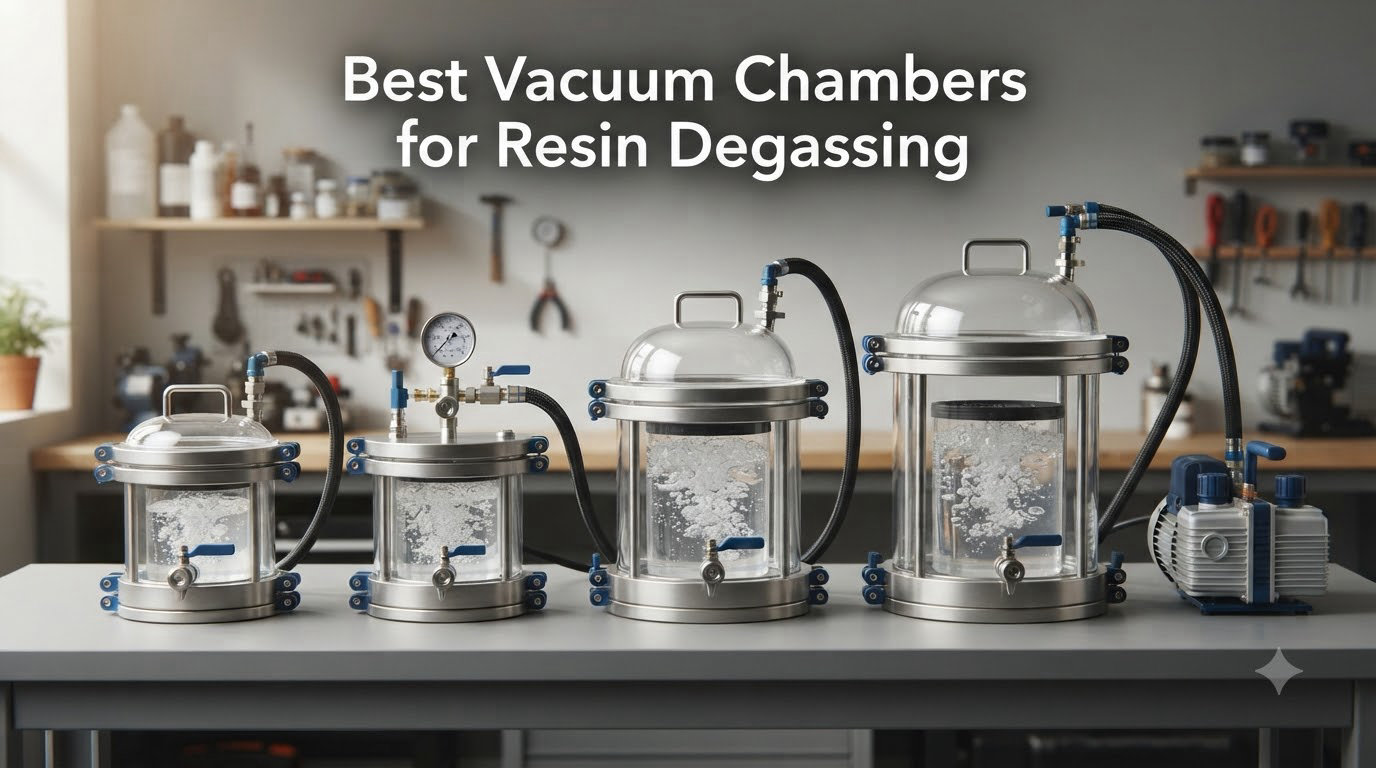
Bubbles ruin more resin castings than almost anything else, and if you are here, you have probably watched a supposedly perfect pour cure with trapped air scattered through it. That is exactly why we spent weeks comparing the best vacuum chambers for resin degassing, running epoxy, silicone, and urethane batches through eight different setups. Some are all-in-one electric bubble removers, others are stainless steel chambers paired with a pump, and the differences matter more than the listings suggest.
Do you even need a vacuum chamber for resin casting? If you work with thick silicone rubber, deep-pour epoxy, or clear castings where every bubble shows, the answer is yes. As one Reddit user in r/ResinCasting put it, the majority of low-viscosity resins do not strictly need degassing, but the constant bubbling you see under vacuum is volatiles and trapped air boiling out, and removing them gives a smoother, stronger, bubble-free result.
One thing nobody tells beginners: degassing resin makes it smell significantly worse. Plan for ventilation before you buy. Our picks below cover hobbyists, jewelry makers, wood stabilizers, and small production shops, and every rating and review count comes straight from real buyer data.
Our Top 3 Vacuum Chambers for Bubble-Free Resin Work


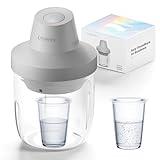
If you want the short version: the Resiners Airless Pro3 is the fastest, quietest path to bubble-free resin art. The VTG VOGTEN 5 gallon kit is the value pick for silicone, epoxy, and wood stabilizing with a real pump. And the Resiners AirLess Lite gets beginners degassing for under the cost of a single ruined deep-pour project.
Comparing the Market’s Best Resin Degassing Chambers in 2026
| Product | Details | |
|---|---|---|
| Resiners Airless Pro3 |
|
Check Latest Price |
| Resiners AirLess Lite |
|
Check Latest Price |
 OMT 1.5 Gal Chamber and Pump Kit OMT 1.5 Gal Chamber and Pump Kit |
|
Check Latest Price |
 VEVOR 5 Gallon Vacuum Chamber VEVOR 5 Gallon Vacuum Chamber |
|
Check Latest Price |
 VEVOR 3 Gallon Chamber and Pump VEVOR 3 Gallon Chamber and Pump |
|
Check Latest Price |
 BACOENG 1 Gallon Acrylic Chamber BACOENG 1 Gallon Acrylic Chamber |
|
Check Latest Price |
 YixangDD Digital Bubble Remover YixangDD Digital Bubble Remover |
|
Check Latest Price |
| VTG VOGTEN 5 Gal Chamber and Pump |
|
Check Latest Price |
1. Resiners Airless Pro3 – Fastest Bubble Removal for Resin Artists
Resiners Airless Pro3 Resin Bubble Remover, 3mins Remove 99.99% Bubbles
99kPa Vacuum
3.2L Chamber
3-Minute Cycles
Touch Presets
Under 62dB
4 lbs
+ Pros
- Removes 99.99% of bubbles
- Fast 3-minute cycles
- Quiet under 62dB
- Removable washable silicone pad
- Works with epoxy
- UV resin and silicone
- Cons
- Higher price point
- Overflow risk if cups are overfilled
- Limited to 3.2L capacity
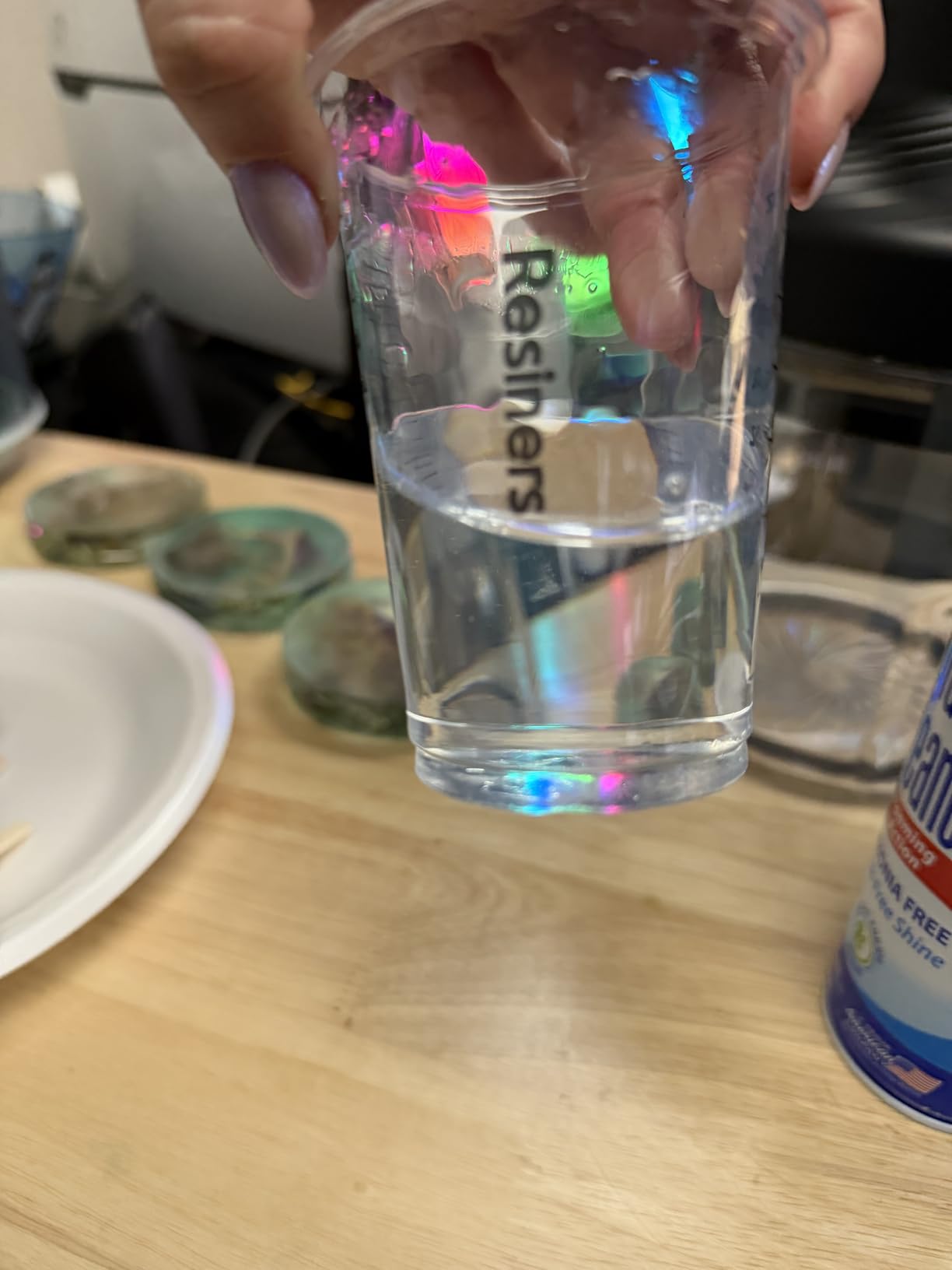
The first time I ran a batch of mixed epoxy through the Pro3, I kept checking the clock because three minutes felt too fast to be real. It is real. The -99kPa vacuum environment pulled foam up and collapsed it while I was still cleaning my mixing stick, and the castings came out glass-clear.
This is a purpose-built resin degassing machine, not a repurposed industrial chamber. That focus shows in the details: 5, 10, and 15-minute presets on the touchscreen for different viscosities, a silicone pad that catches overflow so cleanup is a rinse instead of a scrub, and a lid that inverts for storage.
Vacuum Strength and Bubble Removal Efficiency
The stable -99kPa environment is what earns the 99.99% bubble removal claim, and in practice it handles standard epoxy, UV resin, silicone, and even plaster. Deep-pour and medium-viscosity resins benefit most; if a mix is already gelling, no chamber on this list will save it.
Buyers in the review pool consistently echo the same thing: it is expensive for a bubble remover, but the results and the responsive customer service make it feel worth it. With 378 reviews at a 4.5 average, the track record is solid for a 2026-generation device.
Capacity and Daily Workflow
The 3.2L chamber holds up to 27 ounces of resin per cycle, which fits multiple cups at once for jewelry and small-art production. If you cast river tables or large molds, this is not your machine, look at the 5-gallon steel chambers below instead.
One tip from user feedback: fill cups barely past half. Overfilled cups overflow under vacuum as bubbles expand, and the silicone pad can only catch so much.

Noise and Studio Livability
At under 62dB, it is quieter than a normal conversation, a huge contrast with oil-pump rigs. There is a slight vibration during the cycle, so keep it on a flat, solid surface rather than the edge of a wobbly craft table.
2. Resiners AirLess Lite – Best Budget Bubble Remover for Beginners
Resiners AirLess Lite Resin Bubble Remover, 95kPa Vacuum Degassing Chamber
95kPa Vacuum
2.23L Chamber
One-Click Auto
10-Min Cycles
Under 56dB
3.4 lbs
+ Pros
- Affordable entry point
- One-click automatic operation
- Very quiet under 56dB
- Transparent chamber for viewing
- Compact and lightweight
- Cons
- Struggles with fast-cure resins
- Some units failed after limited use
- Can leave micro-bubbles
- 10-minute cycle feels slow
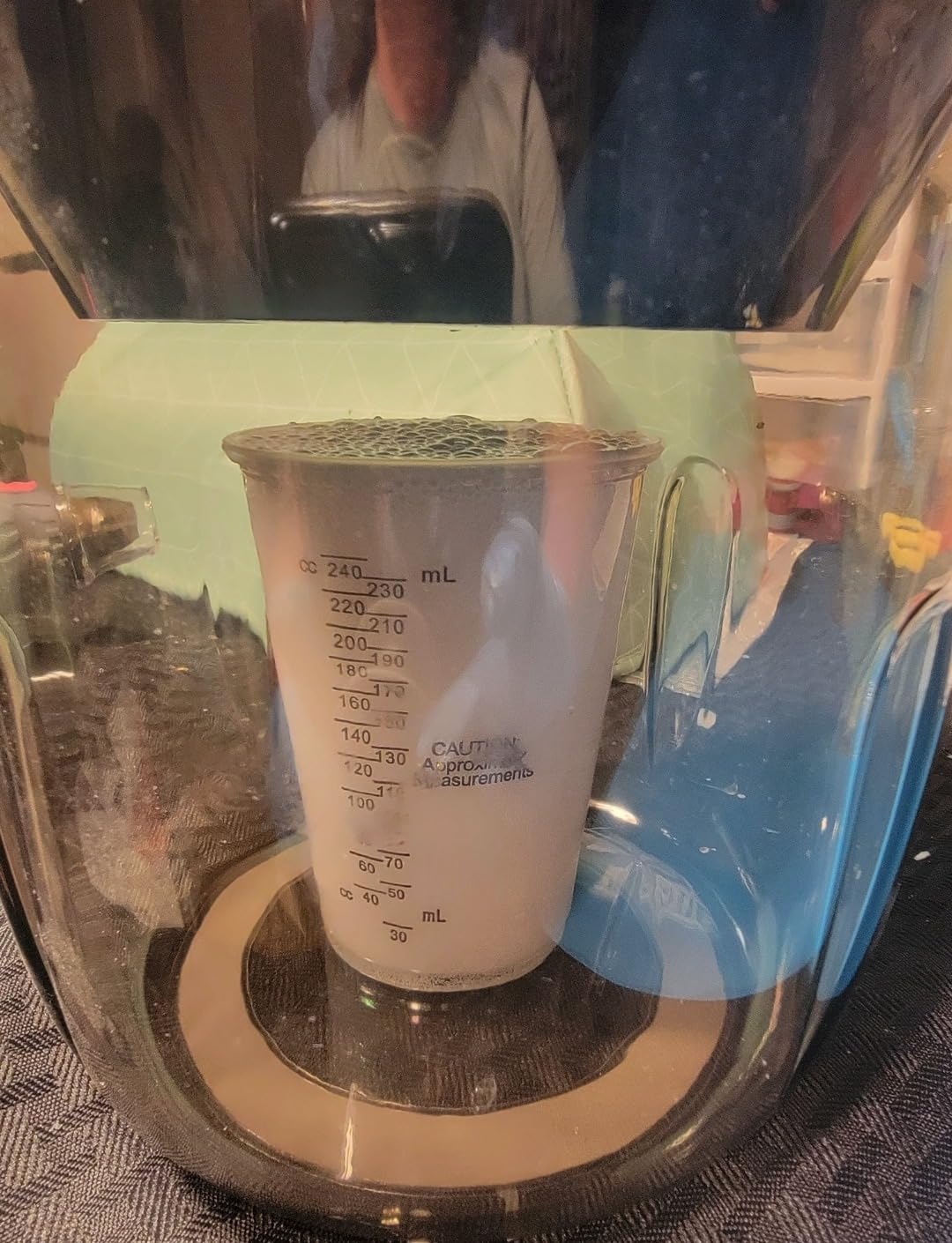
The AirLess Lite is the machine I hand to anyone who asks how to degas epoxy resin without expensive equipment. One button, ten minutes, done. It runs on Resiners’ UltraVacu technology inside a 2.23L chamber made from ultra-high-strength polycarbonate, and the whole unit weighs 3.4 pounds.
With 1,355 reviews at a 4.1 average, it is the most-proven product on this list by volume. The consensus matches our experience: it works well with 1:1 epoxies and deep-pour resin, and it is noticeably quieter than a pump rig at under 56dB.
One-Click Operation and Cycle Timing
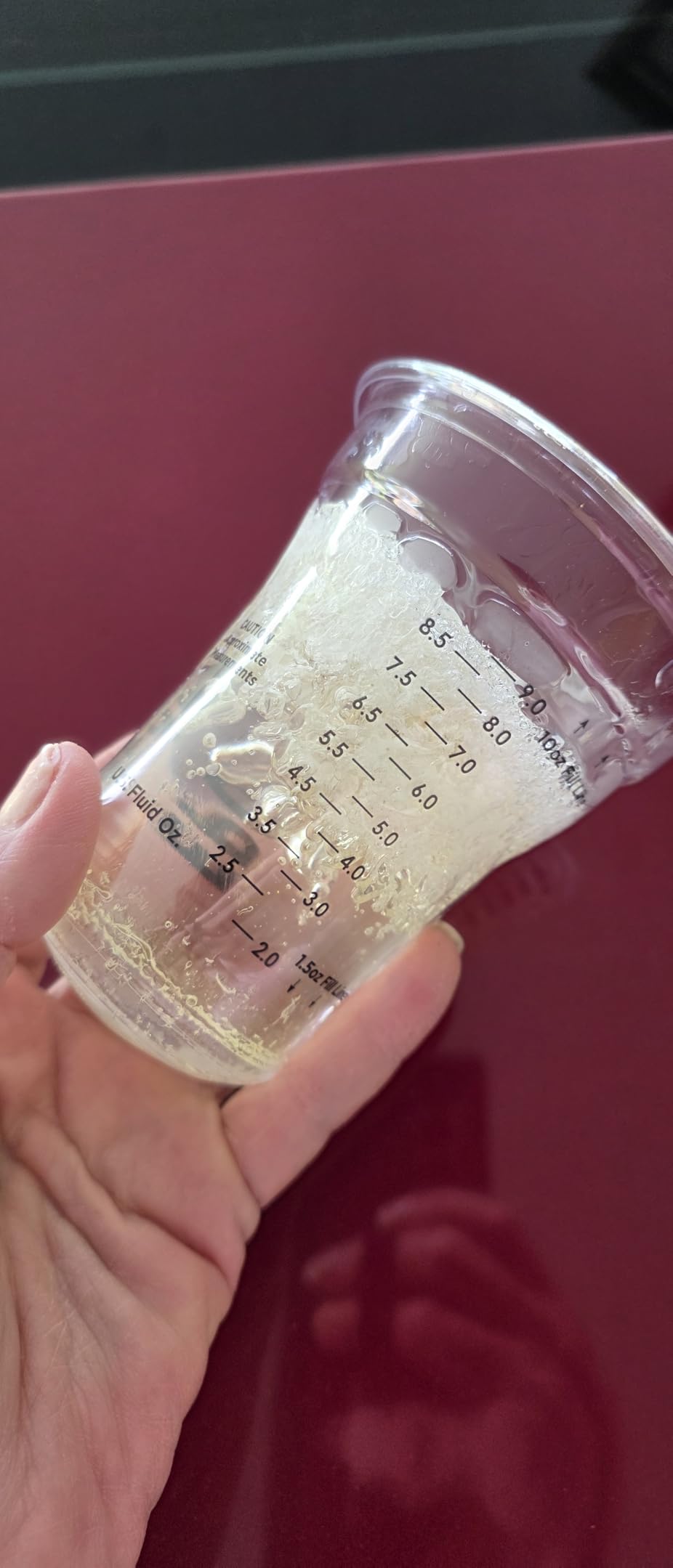
Press start and the automatic bubble-clearing cycle runs about 10 minutes. That is more than triple the Pro3’s time, and for fast-cure resins it can be a race against the pot clock. Standard 30-minute to hour-long epoxies are the sweet spot.
Some users report the occasional batch finishes with micro-bubbles rather than perfectly clear resin. A second cycle usually gets the rest, but budget the time.
Durability Track Record
The honest weakness: some units stopped working after limited use. Resiners’ customer service is responsive about replacements, but the failure reports are real and worth knowing before you buy.
Treat it as an occasional-use hobby machine rather than a daily production tool and the odds stay in your favor. For the price of one ruined deep pour or two, most beginners come out ahead.
Who It Fits Best
Jewelry makers, small-mold casters, and anyone degassing in an apartment where noise and space are at a premium. If you eventually outgrow it, the Pro3 or a steel chamber kit is the natural upgrade path.
3. OMT 1.5 Gallon Vacuum Chamber Kit – Best Pump-and-Chamber Starter Rig
OMT 1.5 Gal Vacuum Chamber & 3.5 CFM Pump Kit for Resin Degas, Blue
3.5 CFM Pump
1.5 Gal Steel Chamber
37.5 Micron Vacuum
Tempered Glass Lid
Thermal Protection
1-Year Warranty
+ Pros
- Deep 37.5 micron vacuum
- Complete kit with oil
- hose and fittings
- Durable stainless chamber
- Thermal protection at 266F
- Highest rated kit at 4.6 stars
- Cons
- Pump rattles at deep vacuum
- Requires oil changes
- Learning curve for beginners
- Limited 1.5 gallon capacity
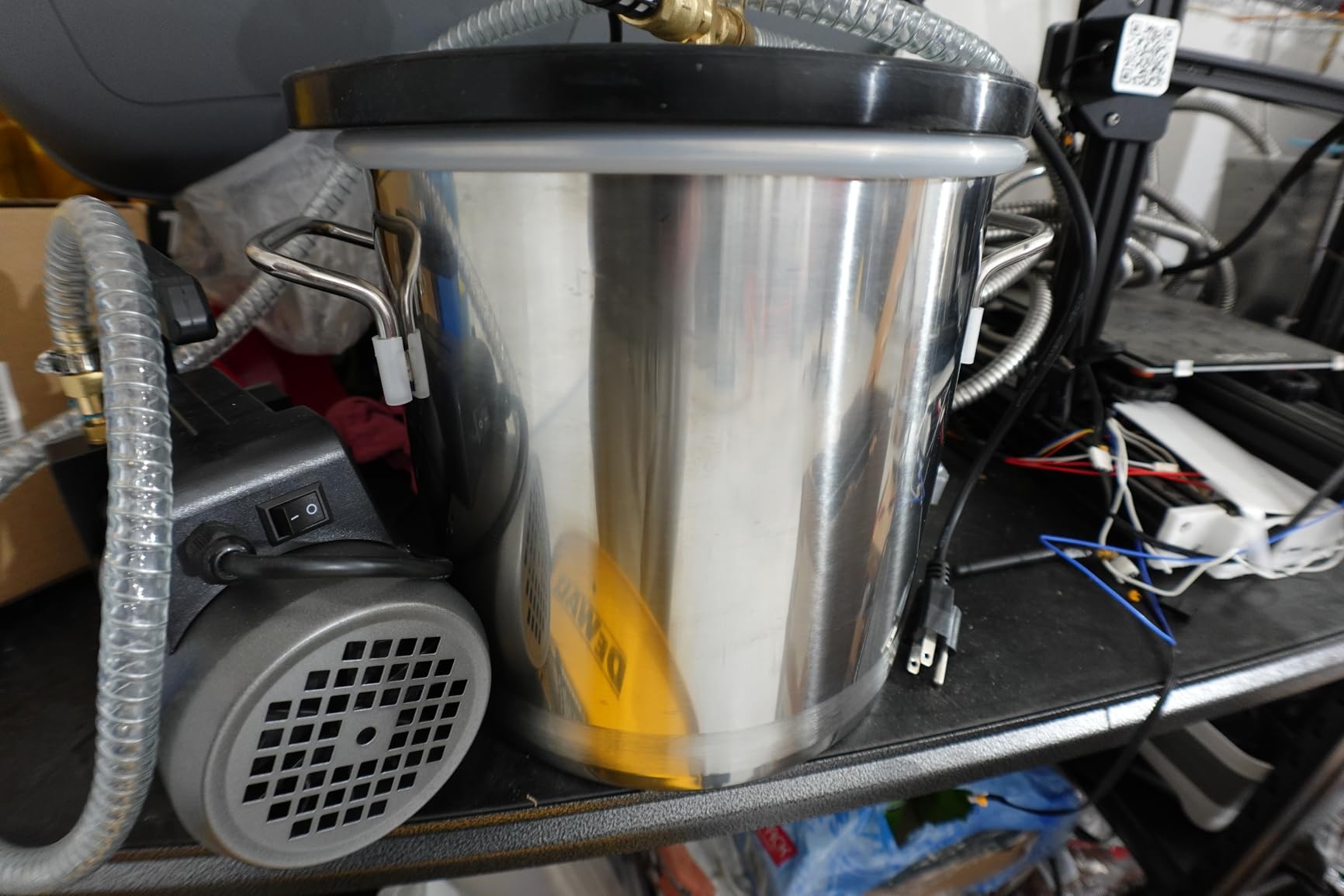
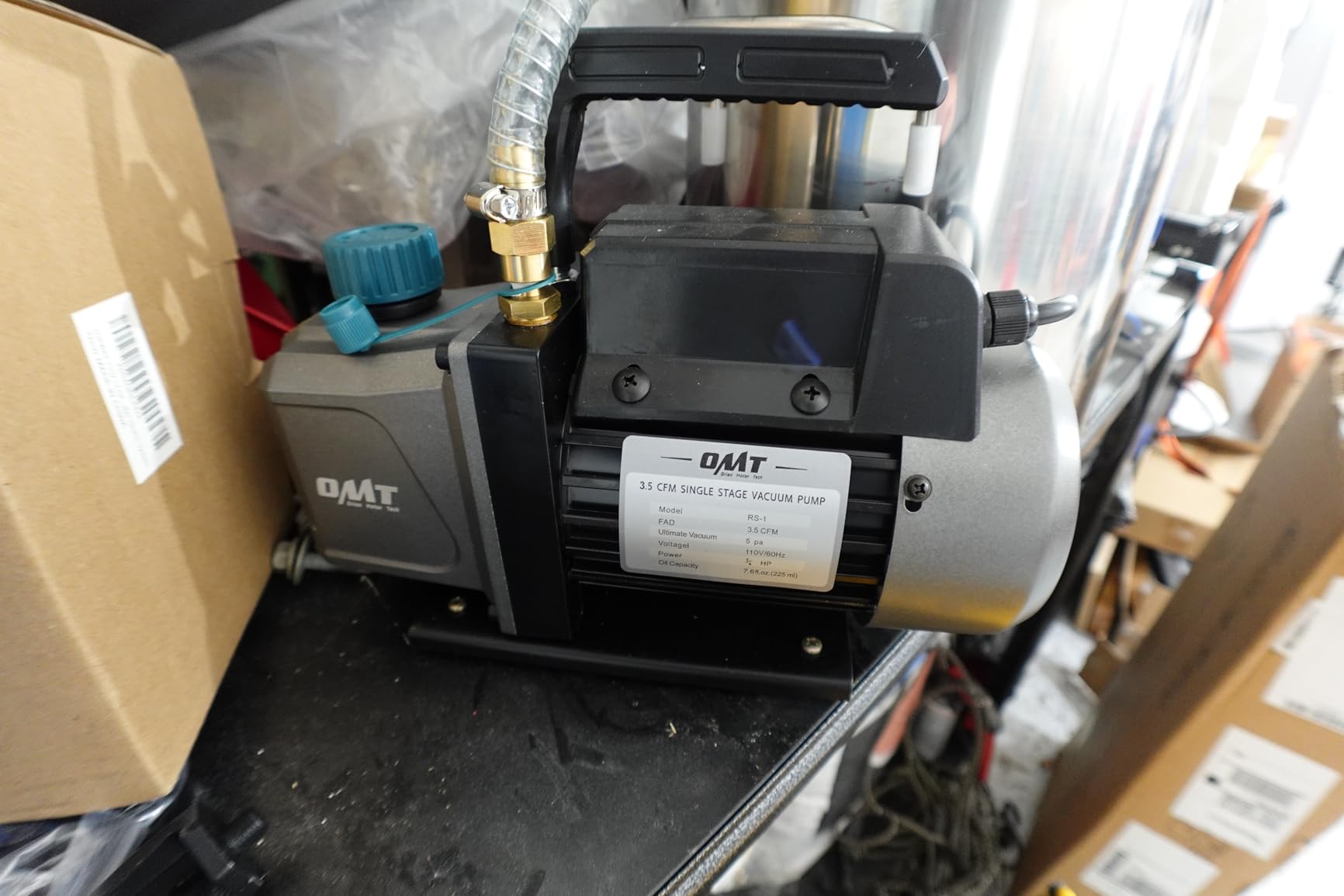
This is the kit that changed how I think about budget vacuum setups. Orion Motor Tech pairs a 1/4 hp, 3.5 CFM single-stage pump with a 1.5 gallon stainless steel chamber, and it arrives ready to run with oil, hose, fittings, and a liquid-filled gauge included.
The pump pulls down to 37.5 microns, which is far deeper vacuum than resin degassing actually requires. What that means in practice is fast pull-down and plenty of headroom, the chamber reaches working vacuum while your resin is still fully workable.
Vacuum Performance and Pull-Down Speed
Resin degassing only needs roughly 29 inches of mercury, and this rig gets there quickly thanks to the 3.5 CFM rating. Users report reliable performance across wood stabilization and resin batches alike, which is exactly the versatility a hobby shop wants.
The built-in thermal protection shuts the pump off at 266°F, a genuine safety net for long sessions. The chamber itself shrugs off corrosion and heat up to 250°F.
What Living With an Oil Pump Is Like
Two honest warnings from owners: the pump can make a rattling noise at deep vacuum, and it needs oil changes like any oil-sealed rotary pump. It also exhausts in a workshop-friendly but not living-room-friendly way.
There is a learning curve the first week, purging air, reading the gauge, timing your cycles. After that it becomes routine, and the 1-year warranty plus responsive support backs you up.
Capacity Considerations
1.5 gallons comfortably fits mixing cups and small molds for resin work, but wood stabilizers working with larger blanks should size up to a 5 gallon chamber. For resin-only shops, the smaller footprint is actually a plus.
4. VEVOR 5 Gallon Vacuum Chamber – Best Large Capacity Chamber Only
VEVOR 5 Gallon Vacuum Chamber, Upgraded Tempered Glass Lid Vacuum Degassing Chamber, 304 Stainless Steel Chamber, for Stabilizing Wood, Resin Degassing, Silicone Degassing and Plaster Degassing
5 Gal Capacity
304 Stainless Steel
0.75 inch Glass Lid
-29inHg Vacuum
24-Hour Seal
59-inch Hose
+ Pros
- Large 5-gallon interior
- Holds vacuum for days
- 304 stainless construction
- Thick tempered glass lid
- Great for wood stabilizing
- Cons
- Some units shipped with defective gauges
- Handle quality is inconsistent
- Customer support can be slow
- Heavy at 15.5 pounds
When your projects outgrow every countertop bubble remover, the VEVOR 5 gallon chamber is the classic next step. It is a chamber only, so you supply your own pump, but in return you get a spacious 304 stainless steel tank that hits -29inHg and holds it.
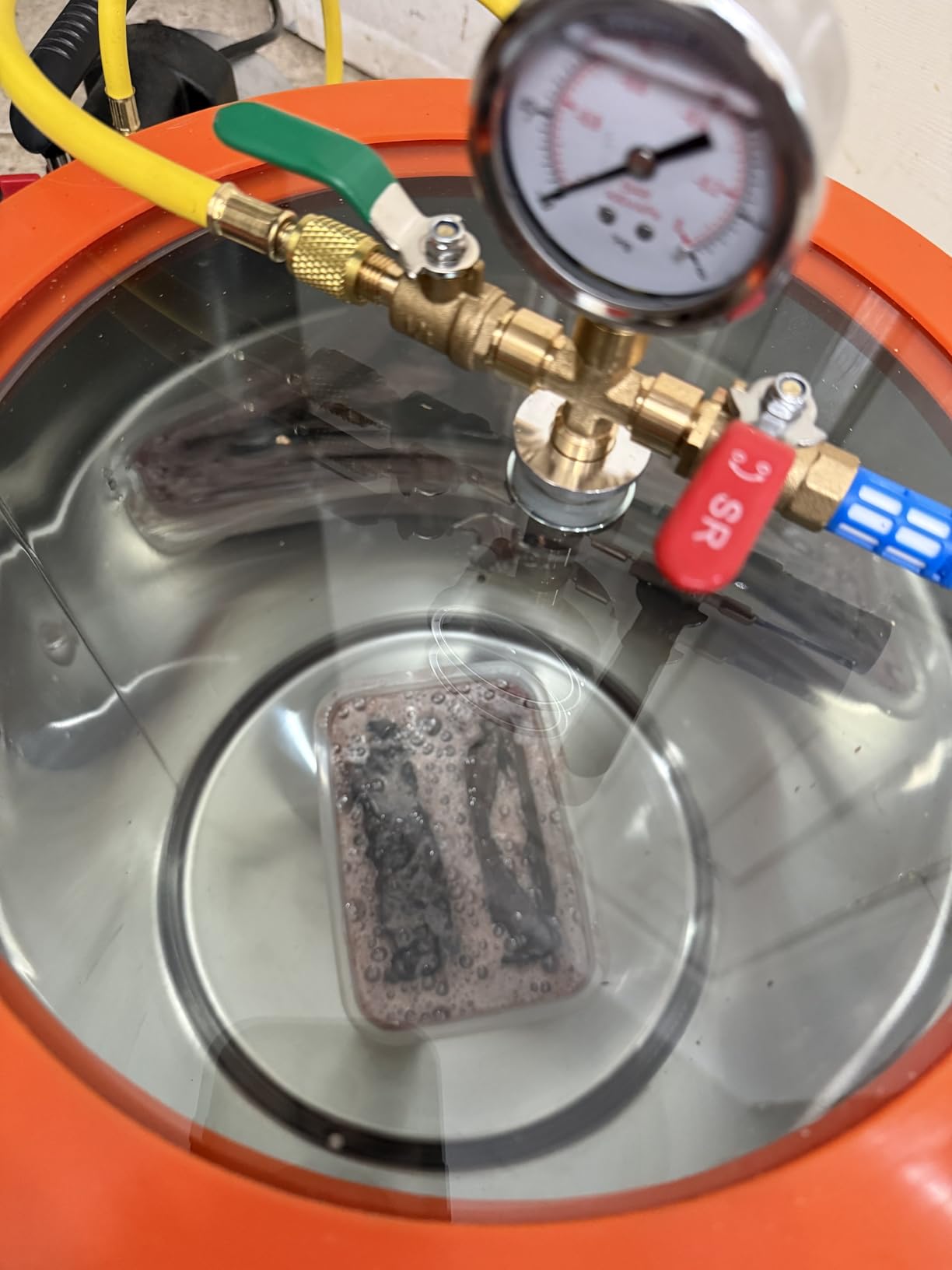
The upgraded sealing gasket and threaded valve connections are rated for a 24-hour airtight seal with a leak rate around 5% over 12 hours. Owners confirm chambers that hold vacuum for days, which matters if you degass silicone slowly or stabilize wood in resin.
Seal Quality and Vacuum Hold
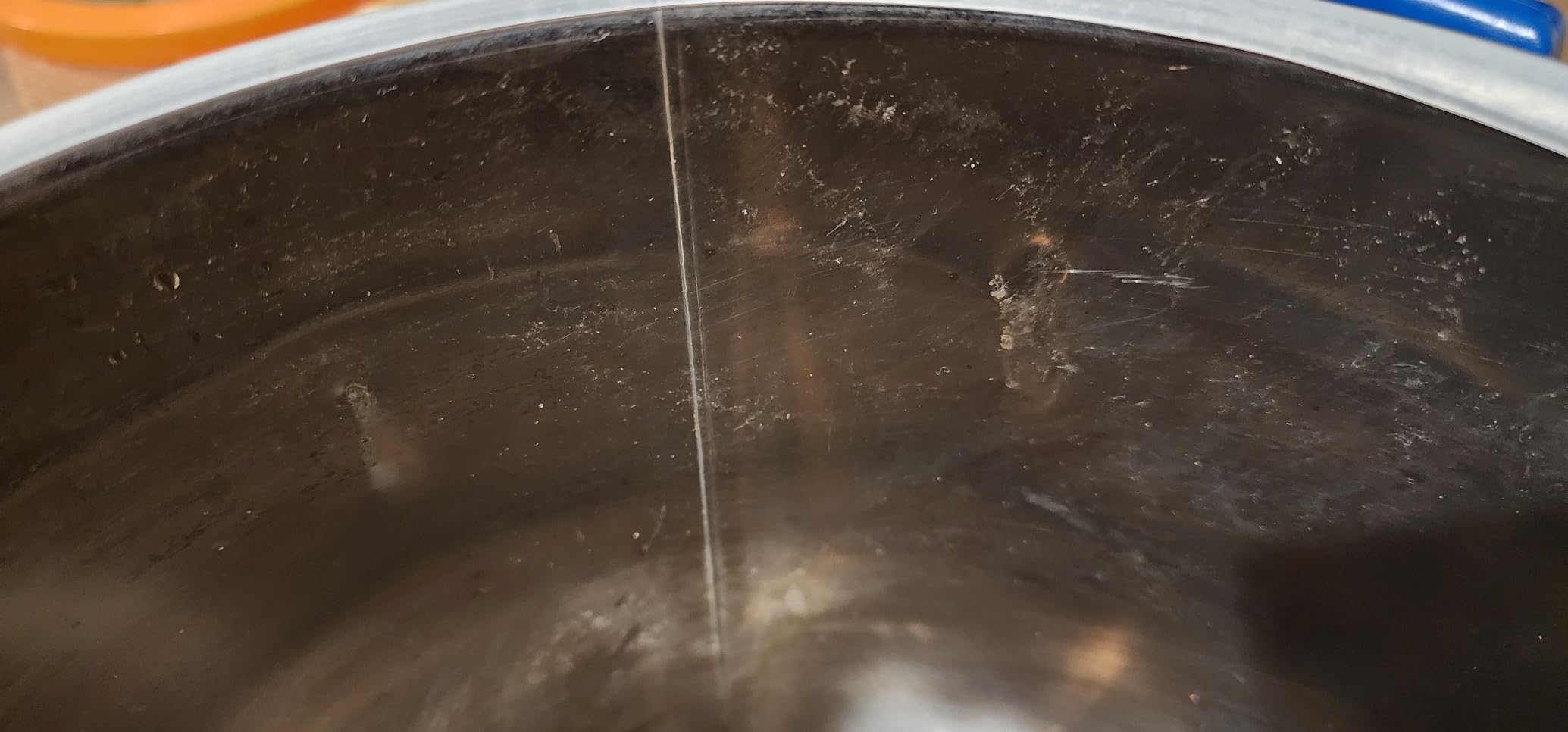
The gasket and valve upgrades are the story here. A chamber that leaks forces your pump to run constantly, and heat and noise follow. Users report this one closing tight and staying closed, with some adding a bit of sealant at the gauge fitting as cheap insurance.
Quality control is the known weak point. Some buyers received units with defective gauges or loose handles, so test the vacuum hold the day it arrives.
Glass Lid Visibility
The 0.75-inch tempered glass lid lets you watch resin foam up and collapse in real time, which is genuinely useful for judging when to throttle the vacuum on fast-foaming silicone. Tempered glass also handles solvents that would craze an acrylic lid.
Who Should Buy It
Wood stabilizers, silicone mold makers, and casters with large molds who already own or plan to buy a pump. If you are starting from zero, a kit like the VTG VOGTEN below bundles the pump for less than buying separately.
5. VEVOR 3 Gallon Vacuum Chamber and Pump Kit – Best Mid-Size Complete Setup
VEVOR 3 Gallon Vacuum Chamber with Pump, 3.5 CFM, Stainless Steel Degassing Chamber Kit, Single Stage Vacuum Pump, Tempered Glass Lid, 4.92 ft Hose, Oil, for Stabilizing Wood Degassing Silicone Resin
3.5 CFM Pump
3 Gal Steel Chamber
5 Pa Ultimate Vacuum
Tempered Glass Lid
Cooling Fan
Kit with Oil and Hose
+ Pros
- Everything included in one box
- Holds vacuum for 24-plus hours
- Powerful 3.5 CFM pump
- Built-in pump cooling fan
- Ergonomic coated handle
- Cons
- No manual included
- Exhausts oil mist with no filter
- Hose uses clamps not quick-release
- Requires oil maintenance
This is the middle child of the VEVOR line: a 3 gallon stainless chamber matched with a 3.5 CFM single-stage pump, arriving with hose, clamps, silicone pad, and a bottle of pump oil. For someone who wants one box, one order, one working degassing station, it delivers.
The single-stage pump uses a 4-pole high-torque motor and a built-in cooling fan, which keeps long wood-stabilizing sessions from cooking the pump. The 5 Pa ultimate vacuum figure is deeper than resin work will ever demand.
Everyday Performance
Owners report the system holds vacuum for 24-plus hours, which is the number that separates a good chamber from a frustrating one. Operation is described as relatively quiet for an oil pump, and the rubber-coated handle makes moving the 21.6 pound rig manageable.
The complaints are small but consistent: no manual in the box, an unlabeled oil bottle, and clamp-style hose connections instead of quick-release fittings. None are dealbreakers, all are annoyances a first-timer should expect.
Ventilation and Oil Mist
Like every oil-sealed pump on this list, it exhales a fine oil mist because there is no exhaust filter. Run it in a garage or well-ventilated room, away from your resin pouring area, and both your lungs and your finish will thank you.
It is not Prime eligible at the time of writing, so shipping may run slower than the other picks. Plan around it rather than letting it stall a project weekend.
6. BACOENG 1 Gallon Acrylic Vacuum Chamber – Best Transparent Chamber for Small Batches
BACOENG 1 Gallon Acrylic Vacuum Chamber, Degassing Chamber Kit for Resin, Silicone and Epoxies
1 Gal Acrylic Chamber
92% Light Transmittance
Silicone Gasket
0-30inHg Gauge
5 ft Reinforced Hose
+ Pros
- Fully transparent for watching defoaming
- Gasket rated for 10
- 000-plus uses
- Professional reinforced vacuum hose
- Swivel hose ends
- Low cost for a real chamber
- Cons
- Acrylic lid cracks with solvents like acetone and alcohol
- Not usable for stabilization resins
- Medium limited to 212F
The BACOENG 1 gallon chamber is the cheapest way into a true pump-driven degassing setup, and its party trick is visibility. With 92% light transmittance through the acrylic body and lid, you can watch every stage of the foam-and-collapse cycle from every angle, not just through a top window.
The silicone gasket is rated for over 10,000 uses, and BACOENG upgraded the hose to a reinforced 5-foot type that withstands -29.92inHg without collapsing, with swivel ends so you are not fighting the fitting every session.
Visibility Advantage for Resin Work
Watching the resin is not a gimmick. When a batch foams toward the top, you feather the valve to knock it down instead of cleaning an overflow, and full transparency makes that judgment easy. Reviewers consistently rate it 4.5 stars for exactly this reason.
Its 75% five-star share in the rating distribution shows most buyers get exactly what they expected for the price.
The Solvent Warning You Must Read
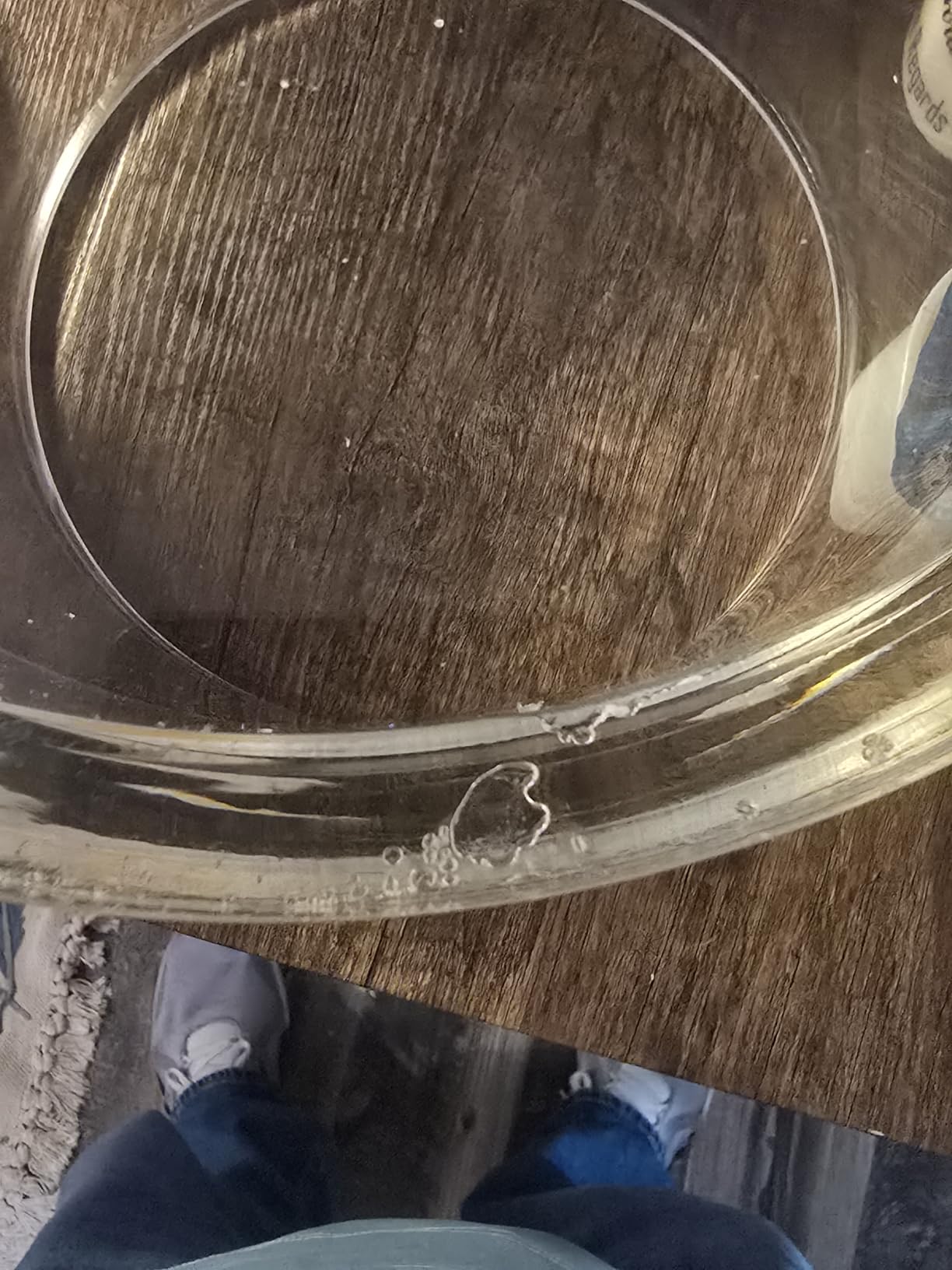
Acrylic and solvents do not mix. BACOENG is explicit that this chamber is not compatible with stabilization resins like Cactus Juice or Gator Venom, alcohol, ethanol, acetone, or acrylic-based monomers, all of them chemically attack the lid until it cracks. Keep the medium under 212°F as well.
If your workflow involves solvents or wood stabilizing, buy their tempered glass lid model instead. For straight epoxy and silicone degassing, this chamber is a bargain.
7. YixangDD Digital Bubble Remover – Best Quietest Option for Home Studios
YixangDD Resin Bubble Remover Digital Display Design Vacuum Chamber
96kPa Vacuum
2.7L Capacity
LED Touch Display
5 and 10 Min Modes
14 Cups Included
3.77 lbs
+ Pros
- Removes 99% of bubbles in 5-10 minutes
- Real-time pressure and time display
- Near-silent operation
- No pump or oil needed
- Holds two cups at once
- Automatic deflation
- Cons
- Not for thick high-viscosity resins
- Lid tricky to remove after cycles
- May need multiple cycles
- Seal needs manual lid pressure
The YixangDD is the machine for people who will not tolerate a compressor or oil pump in their living space. Reviewers call it almost silent, and with no pump and no oil, there is nothing to ventilate and nothing to maintain.
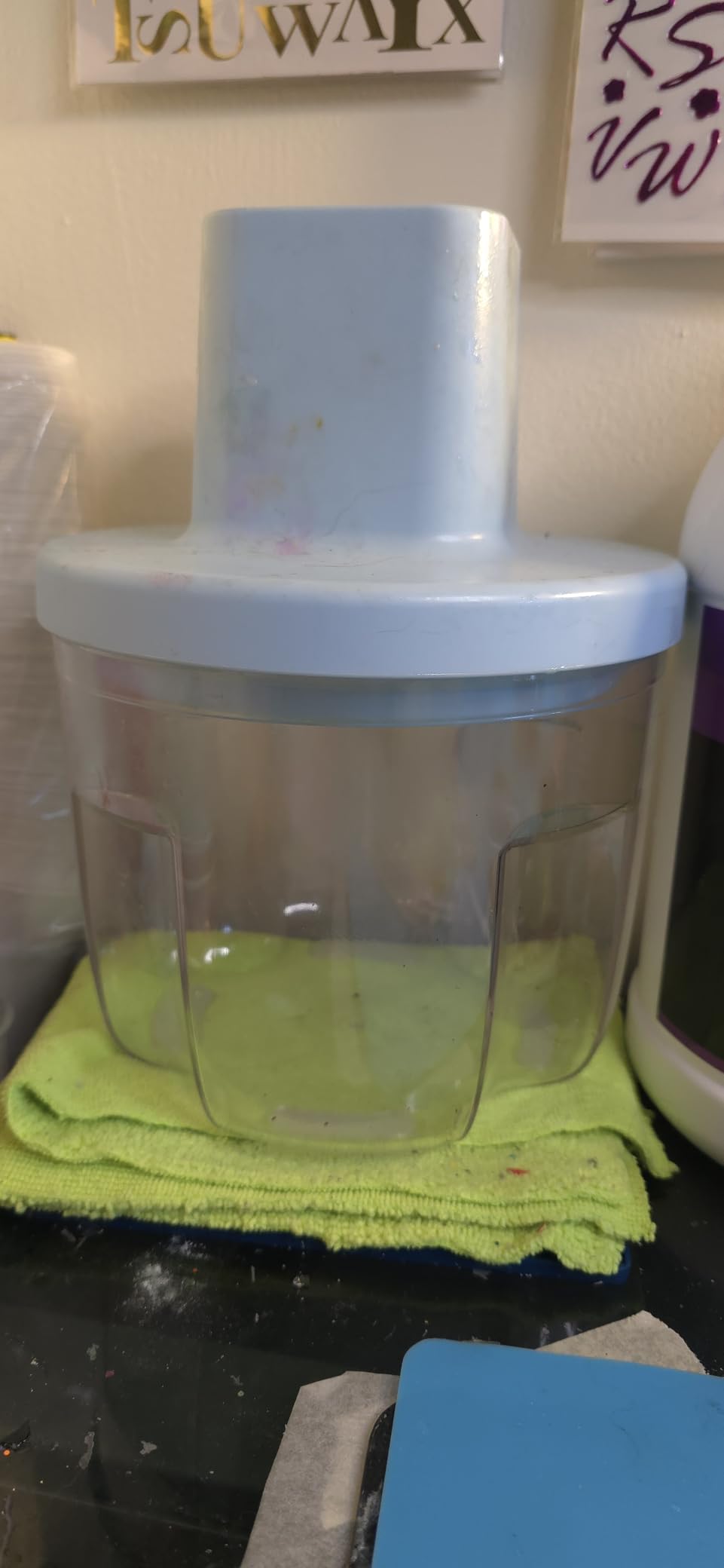
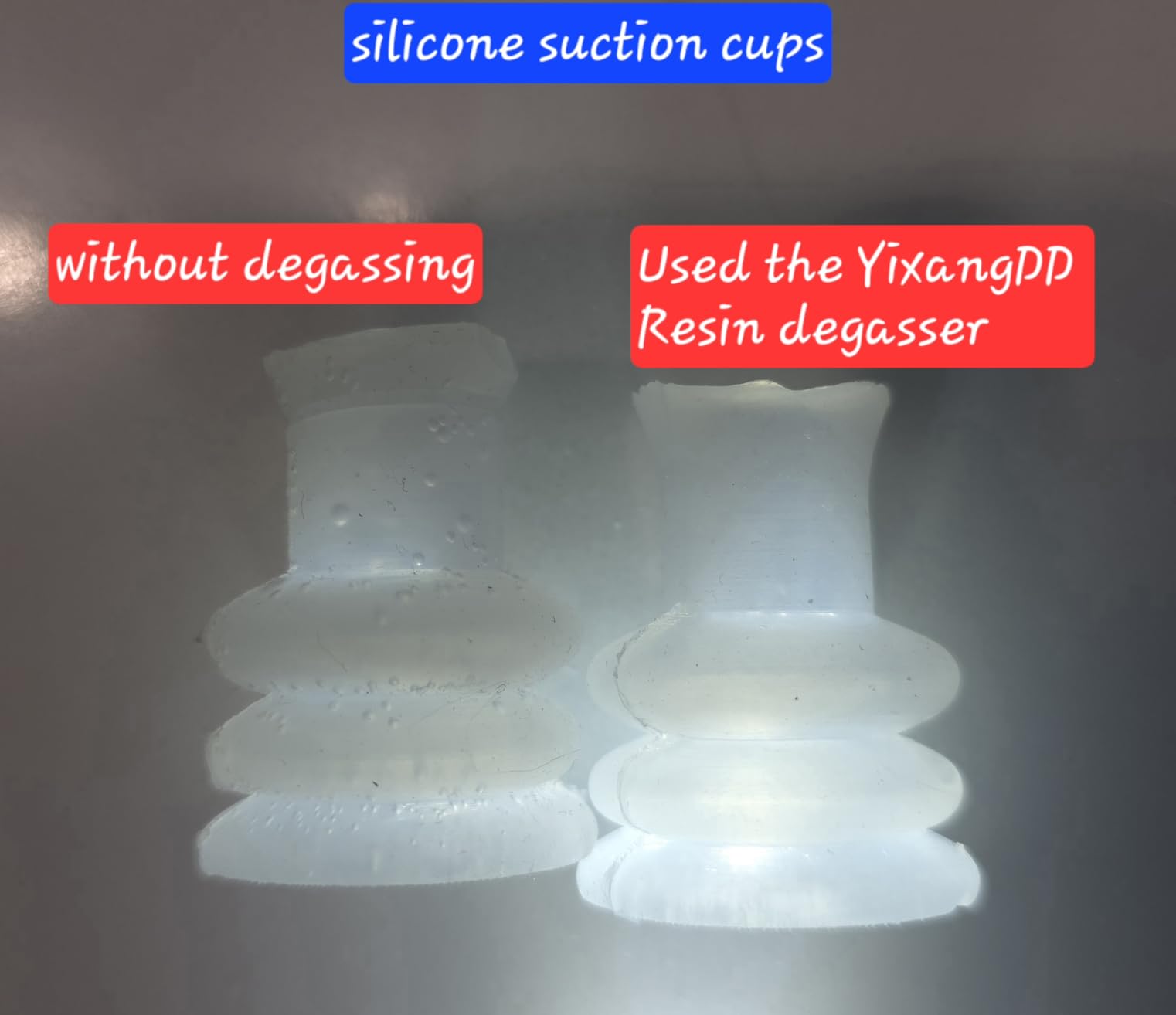
It removes 99% of air bubbles in 5 to 10 minutes inside a 2.7L high-strength polycarbonate container that withstands -96kPa. The touch digital display shows real-time pressure and time, so you always know where the cycle stands, and it even ships with 14 disposable measuring cups.
Digital Display and Smart Features
Choose the 5 or 10 minute mode depending on viscosity, then watch the LED readout count down while the pressure value updates live. Switching the power off automatically deflates the chamber, a small touch that prevents the classic beginner mistake of fighting a stuck vacuum.
Note the deflation quirk: it does not vent until you press off, so do not walk away mid-cycle assuming it releases itself.
Resin Type Limitations
This machine is rated for medium and low viscosity resins only. Thick resins and high-viscosity silicones need the deeper physics of a pump-driven steel chamber, and pushing this unit past its design just leaves surface bubbles behind.
Several owners found it works better with silicone than resin, and results can take a second cycle. Spraying alcohol and hitting the surface with a heat gun cleans up the last few stragglers.
Best Use Case
Resin artists doing jewelry, coasters, and small artwork in shared or quiet spaces. At 3.77 pounds and 7.5 inches square, it stores in a drawer between sessions, something no steel chamber can claim.
8. VTG VOGTEN 5 Gallon Chamber and Pump Kit – Best Value Complete 5-Gallon System
VTG VOGTEN 5 Gallon Vacuum Chamber with Pump
5 Gal 304 Steel Chamber
4.5 CFM Pump
Copper Motor
Glycerin Gauge
5 ft Hose
Silencer Kit
+ Pros
- Complete 5-gallon system under premium prices
- Copper motor pump rated 4.5 CFM
- Reaches 26 inHg in under 2 minutes
- Holds vacuum overnight
- Glycerin-filled gauge stays stable
- Cons
- Heavy at 26.7 pounds
- Realistic max vacuum is about 26 inHg
- Exhausts oil mist
- Some units arrived with shipping damage
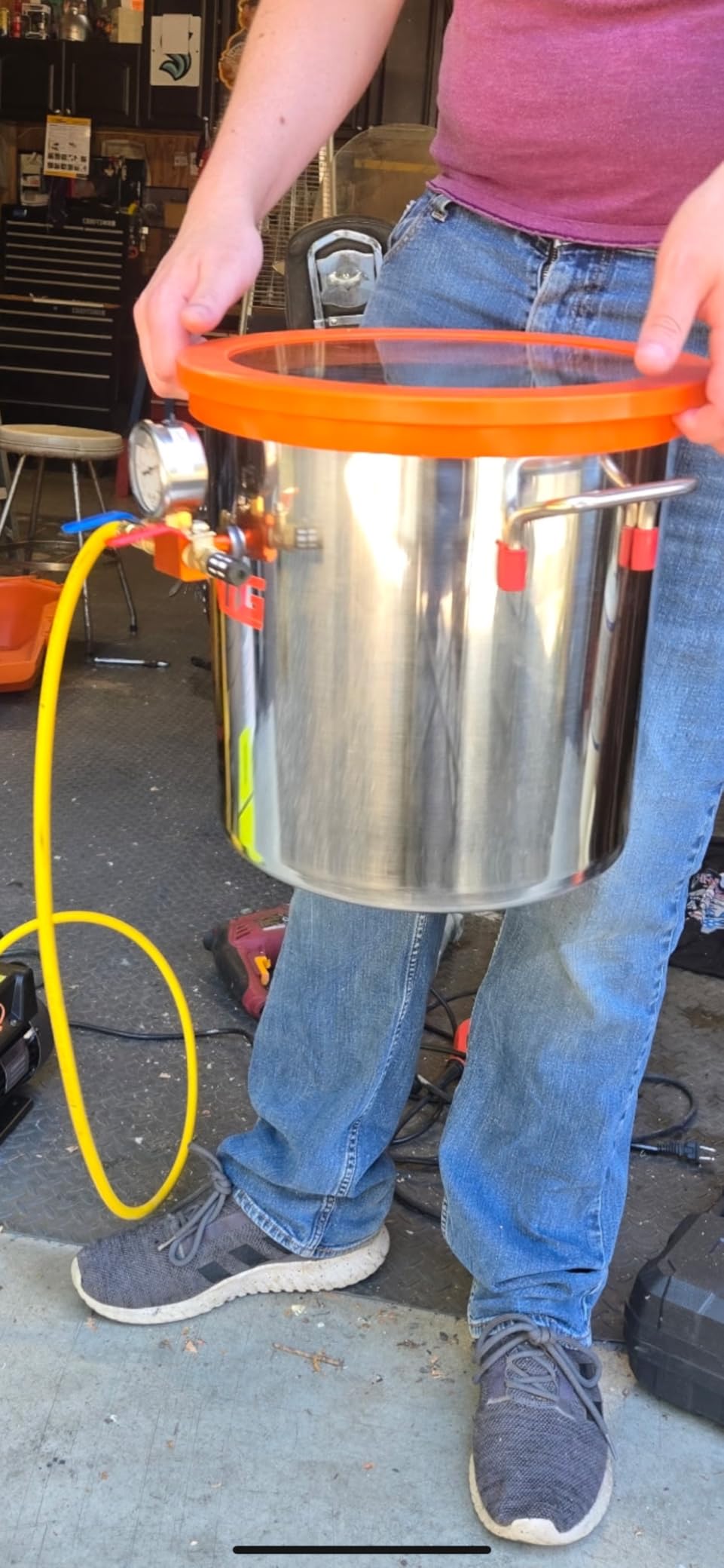
Bundling a 5 gallon 304 stainless steel chamber with a 4.5 CFM, 1/3 hp single-stage pump, silencers, silicone pad, hose, gloves, and installation tools, this VTG VOGTEN kit is the most complete large-format package on our list. For wood stabilizing plus serious resin and silicone work, it is a lot of hardware for the money.
The copper motor and aluminum alloy casing are the standout internals, copper windings simply outlast the cheap motors in some budget pumps, and the alloy casing sheds heat while resisting chemical corrosion from your workspace air.
Real-World Vacuum Performance
Owners report the system hits 26 inHg in under two minutes and holds vacuum overnight, which is genuinely strong for a kit in this price class. The glycerin-filled gauge stays readable and stable where dry needles jitter.
Temper expectations: real-world maximum is around 26 inHg at sea level despite the 30 inHg scale, and the included instructions sometimes do not match the exact model. Community threads and a little thread-seal tape solve both.
Kit Completeness and Extras
The two included silencers matter more than you would think, they knock down the pump exhaust noise that annoys everyone in earshot. Adjustable valves give you fine airflow control when fast-foaming silicone starts climbing the walls.
Assembly is required, the package weighs 26.7 pounds, and a few units arrived dented by shipping. Inspect it on arrival day and test the vacuum hold before your first pour.
Who It Fits Best
The hobbyist or side-business caster who wants one purchase covering resin degassing, silicone mold making, urethane, essential oil extraction, and wood stabilization. If your projects are all small, save money and space with the Resiners machines instead.
How to Choose a Vacuum Chamber for Resin Degassing
Picking the right vacuum degassing chamber comes down to five decisions, and getting them wrong is how people end up with gear that never quite fits their work. Here is what actually matters, based on our testing and the recurring advice in resin casting communities.
Vacuum Pump Compatibility and CFM Ratings
What type of vacuum pump works for degassing? A single-stage rotary vane pump in the 3.5 to 4.5 CFM range is the sweet spot for resin work, pulling past the 29 inches of mercury that degassing requires. Higher CFM means faster pull-down, which matters because you want full vacuum while your resin is still liquid.
Match the pump to chamber size: a 3.5 CFM pump is happy on 1.5 to 3 gallon chambers, while 5 gallon chambers pair best with 4.5 CFM or more. Undersized pumps still get there, just slowly enough to eat into your working time.
The all-in-one machines like the Resiners units skip pump math entirely, their built-in diaphragm systems reach 95 to 99kPa, which covers resin even though it is shallower than a rotary vane pump’s ultimate vacuum.
Chamber Capacity and Sizing
Size for your largest typical container plus headroom, because resin roughly doubles in volume as it foams under vacuum. Jewelry and small-art makers are fine in the 2.2 to 3.2L range of the countertop machines. Silicone mold makers and wood stabilizers need 1.5 gallons minimum, and 5 gallons is the standard for larger molds and blanks.
When in doubt, size up one step. An oversized chamber works fine; an undersized one overflows every time you fill the cup past half.
Acrylic vs Tempered Glass vs Stainless Steel
Material choice is partly about visibility and partly about chemical survival. Acrylic chambers give the best all-around view of the defoaming process, but solvents, alcohol, acetone, and stabilization resins chemically attack acrylic until it cracks, the exact failure BACOENG warns about on their own 1 gallon unit.
Tempered glass lids handle solvents and heat while still letting you watch the batch, which is why every steel chamber on this list uses one. 304 stainless steel bodies resist corrosion and heat up to 250°F and take years of shop abuse.
The practical rule: straight epoxy and silicone art, any material works. Anything solvent-adjacent, get glass and steel.
Seal Quality and Gasket Longevity
The seal is the component that decides whether your chamber is a tool or a paperweight. Look for silicone gaskets, the kind BACOENG rates for 10,000 uses, and threaded valve connections over push-fit ones. A chamber that leaks 5% over 12 hours is excellent; one that will not hold at all is returned.
Test any new chamber the day it arrives: pull vacuum, close the valve, and watch the gauge for 30 minutes. A slow drift is normal, a fast fall means a fitting needs sealant or a return label.
Ventilation, Noise, and Safety
Forum threads are full of a surprise no listing mentions: degassing resin makes it smell dramatically worse, because vacuum pulls volatiles out of the mix. Degas in a ventilated space, and never degas solvent-heavy materials in a chamber not rated for them.
Oil pumps add oil mist to the equation, so position the exhaust away from your face and pouring surface, and consider a cheap exhaust filter muffler. On noise, the countertop machines run 56 to 62dB while oil pumps are louder, which is why apartment studios keep gravitating to the all-in-ones.
Finally, do not over-vacuum. Pulling deep vacuum on volatile low-boiling components can boil off parts of your mix, community casters note that constant bubbling after the initial foam collapse is volatiles boiling out, not trapped air. When the foam dies down, you are done.
Frequently Asked Questions
What is the best vacuum chamber for resin degassing?
The Resiners Airless Pro3 is the best overall choice for most resin artists, removing 99.99% of bubbles in 3-minute cycles at up to 99kPa. For silicone, urethane, and wood stabilizing at volume, a 5-gallon stainless steel kit like the VTG VOGTEN chamber with 4.5 CFM pump is the stronger pick.
How long should resin be degassed in a vacuum chamber?
Most resin batches need 3 to 10 minutes under vacuum. Stop when the foam rises and collapses back down; continuing past that point boils volatiles out of the resin rather than removing more bubbles.
Do you need a vacuum chamber for resin casting?
Not always. Low-viscosity casting epoxies often degas on their own or respond to heat gun passes, but thick silicone rubber, deep-pour epoxy, clear castings, and pressure-sensitive applications benefit significantly from vacuum degassing for bubble-free results.
What type of vacuum pump is best for degassing?
A single-stage rotary vane pump in the 3.5 to 4.5 CFM range is ideal, pulling at least 29 inches of mercury. Match the CFM to chamber size: 3.5 CFM suits 1.5 to 3 gallon chambers, while 5 gallon chambers pair best with 4.5 CFM or larger.
Can you degas resin without a vacuum chamber?
Partially. Warming the resin gently, mixing slowly, letting it rest, and passing a heat gun or torch over the surface removes many bubbles. For clear castings and thick silicones, however, only vacuum degassing reliably removes trapped air.
Vacuum chamber or pressure pot for resin casting?
A vacuum chamber removes bubbles before pouring and is best for silicone molds and thick resins. A pressure pot compresses remaining bubbles invisibly after pouring and works better for thin casting epoxies. Many serious casters eventually own both.
Final Verdict: Which Degassing Chamber Deserves Your Money
If you prioritize speed, quiet, and clean results for resin art, the Resiners Airless Pro3 is the clear winner. If you need a full workshop system for silicone, epoxy, urethane, and wood stabilizing without a premium price, the VTG VOGTEN 5 gallon kit delivers the most hardware per dollar. And if you just want bubble-free jewelry castings on a starter budget, the Resiners AirLess Lite or the BACOENG acrylic chamber with your own pump will get you there.
Whatever you choose, vent your space, test the seal on day one, and watch the foam, when it rises and falls, the best vacuum chambers for resin degassing have done their job. Pick the size that matches your molds and start pouring crystal-clear work this week.