
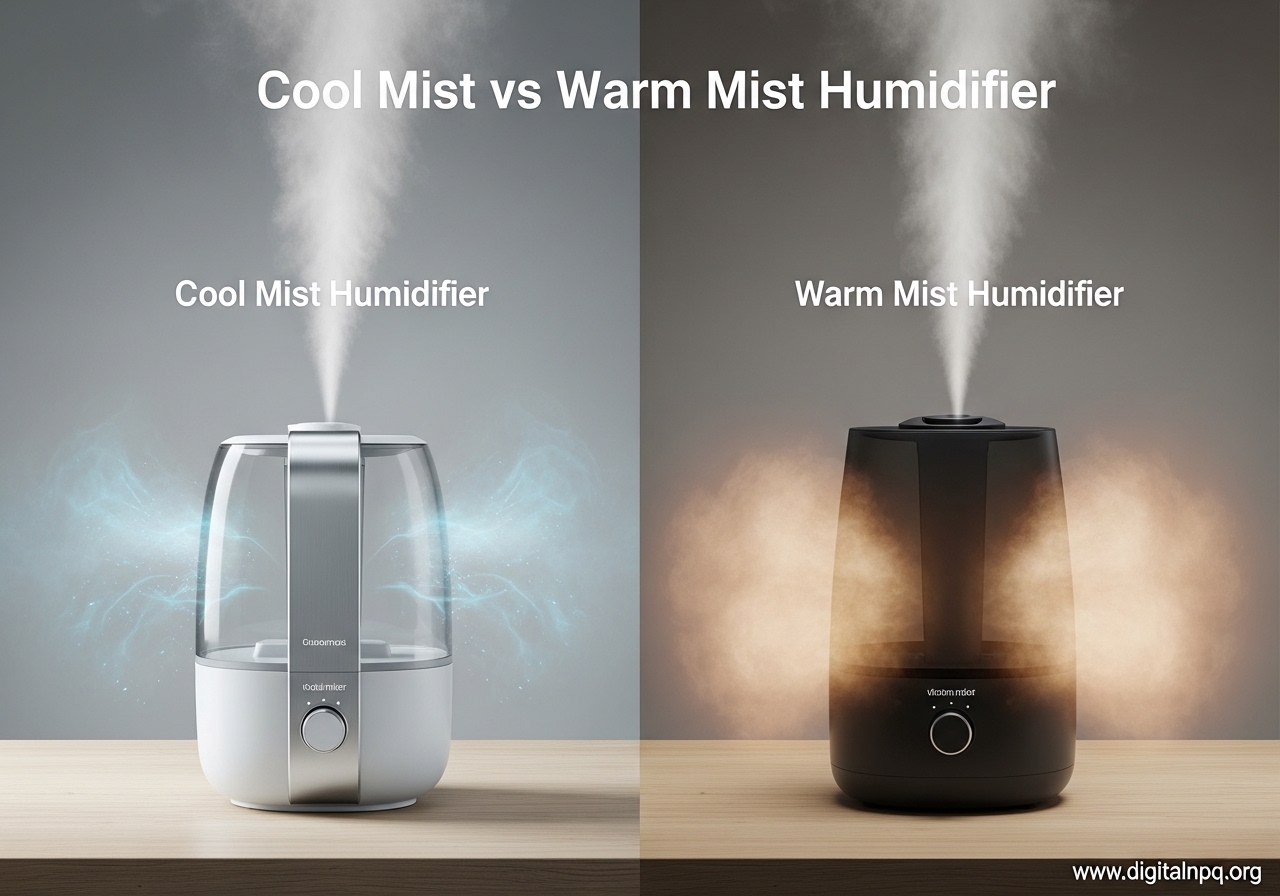
When you are deciding between a cool mist vs warm mist humidifier, the right choice depends on who lives in your home, what health concerns you have, and how large the space is. Both types add moisture to dry indoor air, but they do it in completely different ways, and those differences matter more than most people realize.
I have spent months researching humidifier technology, reading through hundreds of user experiences on forums, and comparing the latest models. What I found is that most people pick the wrong type for their specific situation, and it usually comes down to not understanding how each one actually works.
The EPA recommends keeping indoor humidity between 30% and 50% for comfort and health. Running the right humidifier helps you hit that range, whether you are dealing with congestion from sinus problems, dry winter air, or a child’s stuffy nose. This guide breaks down every difference so you can pick the one that actually fits your life.
What Is a Cool Mist Humidifier?
A cool mist humidifier releases room-temperature moisture into the air without heating the water. It is the most commonly recommended type by pediatricians and doctors, and for good reason. There are two main types of cool mist humidifiers, and they work in very different ways.
Evaporative Cool Mist Humidifiers
Evaporative humidifiers use a fan to blow air through a wet wick filter. As the air passes through the saturated filter, it picks up moisture and releases it into the room. This process is naturally self-regulating: when the air already has enough humidity, less water evaporates from the wick, so it automatically slows down without any sensors or controls.
The wick filter also traps minerals and impurities from the water, which means evaporative units do not produce white dust. On the downside, the fan creates a noticeable hum that some people find distracting at night. You also need to replace the wick filter every 30 to 60 days, which adds to the ongoing cost.
Ultrasonic Cool Mist Humidifiers
Ultrasonic humidifiers use high-frequency vibrations to break water into tiny droplets, creating a fine mist that disperses into the room. They are extremely quiet because they have no fan, making them popular for bedrooms and nurseries.
The trade-off is that ultrasonic models do not filter the water at all. If you use tap water, the minerals in it get turned into that fine white dust that settles on furniture, electronics, and floors. Reddit users consistently warn about this issue, and many report that the dust actually damaged nearby electronics. Using distilled water solves the problem, but that adds cost and effort.
What Is a Warm Mist Humidifier?
A warm mist humidifier, also called a steam vaporizer, boils water to create steam. The steam cools slightly before it leaves the machine, but the mist is still warm to the touch. Some models mix the steam with cooler room air to bring the temperature down further before release.
Because the boiling process kills most bacteria and mold spores in the water, warm mist units tend to produce cleaner moisture. The heat also breaks down minerals, so you get less white dust compared to ultrasonic cool mist models. Many people find the warm mist more soothing when they have a cold or congestion, and the gentle warmth can make a cold room feel more comfortable during winter months.
The biggest drawback is safety. The boiling water inside the tank reaches temperatures that can cause serious burns. The American Academy of Pediatrics strongly recommends against using warm mist humidifiers in homes with young children or pets because of the scald risk. Warm mist units also use more electricity since they have to heat the water continuously.
Cool Mist vs Warm Mist Humidifier: Key Differences Compared
Understanding the differences between these two types goes beyond just warm versus cool output. The way each machine produces moisture affects everything from your electric bill to the air quality in your room.
How They Produce Moisture
Cool mist humidifiers rely on either a fan-driven wick system (evaporative) or high-frequency vibrations (ultrasonic) to disperse moisture at room temperature. Neither method involves heat. Warm mist humidifiers boil water inside a chamber and release the resulting steam into your room. The boiling process naturally kills bacteria and mold in the water, which gives warm mist units a built-in sanitation advantage.
This fundamental difference in technology drives almost every other distinction between the two types, from energy use to safety to maintenance requirements.
Noise Levels
Noise is one of the most common complaints I see in forum discussions, and it can make or break your experience depending on where you plan to use the humidifier. Ultrasonic cool mist models are the quietest option available, often producing barely a whisper. Evaporative models have a fan that generates a steady hum, which some users describe as white noise and others find annoying. Warm mist humidifiers fall somewhere in the middle. The boiling process is generally quiet, though you may hear occasional gurgling or bubbling sounds as water heats and moves through the system.
If silence is a priority for sleeping, ultrasonic cool mist wins. If you want some background white noise, an evaporative model works fine. Warm mist is a good middle ground.
Energy Efficiency
This is where warm mist humidifiers take a clear disadvantage. Boiling water requires a significant amount of electricity, typically 150 to 300 watts during operation. Cool mist models use far less power. Evaporative units consume around 15 to 40 watts for the fan, and ultrasonic models use roughly 20 to 40 watts for the vibrating diaphragm.
Over a full winter season of daily use, that difference adds up on your electric bill. If you run a warm mist humidifier for 8 hours every night from October through March, you are looking at a noticeable increase in energy costs compared to running a cool mist unit for the same period.
Coverage Area and Room Size
Cool mist humidifiers generally cover larger areas because the mist disperses more easily at room temperature. Many cool mist models handle rooms up to 500 square feet or larger. Evaporative units in particular are well-suited for open floor plans and large living spaces because the fan helps distribute moisture evenly.
Warm mist humidifiers are typically rated for smaller rooms, usually up to 300 or 400 square feet. The warm steam tends to rise and settle in a more concentrated area rather than spreading throughout the space. For a bedroom or small office, that is perfectly fine. For a large living room or open-plan area, cool mist is usually the better choice.
White Dust and Mineral Issues
White dust is one of the most frustrating problems humidifier owners face, and it is almost exclusively an ultrasonic cool mist issue. The high-frequency vibrations break apart not just the water but also the minerals dissolved in it. Those minerals become a fine powder that settles on every surface near the unit.
I have read dozens of Reddit threads where users describe finding white dust on their TV screens, keyboards, bookshelves, and even inside electronics. One user on r/Humidifiers reported that their ultrasonic unit destroyed a nearby speaker over several months of use. The solution is simple but costly: use only distilled water in ultrasonic models.
Evaporative models avoid this problem entirely because the wick filter traps minerals before the moisture enters the air. Warm mist units reduce white dust because the boiling process leaves mineral scale behind in the tank instead of dispersing it into the room. Both are better choices if you have hard water and do not want to buy distilled water constantly.
Water Quality Requirements
Your local water quality should play a major role in which type you choose. If you have hard water with high mineral content, ultrasonic cool mist humidifiers will create white dust unless you use distilled water. That means buying distilled water regularly or installing a water softener. Evaporative models handle hard water better because the wick filter catches minerals, but you will need to replace the filter more frequently.
Warm mist humidifiers also deal with hard water reasonably well. The minerals stay behind as scale inside the boiling chamber instead of being released into the air. You will need to clean the scale buildup with vinegar every few weeks, but at least it is not coating your furniture.
If your home has soft water or you already use filtered drinking water, any type will work. The water quality issue mainly affects people with hard tap water who choose ultrasonic models.
Which Type Is Best for Your Situation?
There is no single winner in the cool mist vs warm mist humidifier debate. The best choice depends entirely on your specific needs. Here is how I would break it down by common situations.
Best for Babies and Young Children
Cool mist is the clear winner here, and it is not even close. The American Academy of Pediatrics recommends cool mist humidifiers for children’s rooms specifically because they eliminate the burn risk. A warm mist humidifier contains boiling water, and if a toddler pulls it over or touches the wrong part, the results can be serious.
Pediatricians and the Mayo Clinic both emphasize this safety point. Cool mist models also work well in nurseries because ultrasonic versions operate almost silently, which helps keep babies asleep. If you are setting up a nursery or have small children in the house, go with a cool mist ultrasonic humidifier and use distilled water to avoid white dust near the crib.
Best for Congestion and Colds
Both types can help with congestion, but warm mist has a slight edge for active cold symptoms. The warm steam feels more soothing on irritated nasal passages and a sore throat. Many people report falling asleep faster with a warm mist unit running when they are sick because the warm moisture helps open up congested airways.
That said, cool mist works too. The moisture itself is what thins mucus and relieves congestion, regardless of temperature. If you have children, the safety trade-off of cool mist outweighs the comfort benefit of warm mist. For adults-only households during cold season, warm mist is worth considering for the added soothing effect.
Best for Allergies and Asthma
Evaporative cool mist humidifiers are the best choice for allergy and asthma sufferers. The wick filter in evaporative models traps allergens and minerals before moisture enters the air, which means you are not circulating dust, pollen, or mineral particles along with the humidity. Ultrasonic models do not filter anything, so they can actually make allergy symptoms worse if the water contains impurities.
Warm mist models are a reasonable second choice because the boiling process kills bacteria and mold in the water. However, they do not trap existing allergens the way an evaporative wick filter does. If allergies or asthma are your primary concern, look for an evaporative cool mist humidifier with an antimicrobial filter.
Best for Dry Winter Air
Both types handle dry winter air effectively, but they offer different advantages. Warm mist humidifiers add a small amount of warmth to the room, which can feel pleasant during cold months. The steam also tends to be more visible, which gives users confidence that the machine is working.
Cool mist models are better if you are already heating your home with a furnace or space heater. Adding more heat to an already warm room can be uncomfortable. Cool mist also tends to cover larger areas, which is helpful in winter when dry air affects your entire home. For most winter situations, I recommend cool mist unless you specifically want the soothing warmth for cold symptoms.
Best for Large Rooms
Cool mist humidifiers handle larger spaces better, especially evaporative models. The fan in an evaporative unit actively pushes moisture outward, distributing it across a wider area. Large living rooms, open-concept spaces, and finished basements all benefit from this wider coverage pattern.
Warm mist humidifiers tend to concentrate moisture in a smaller radius around the unit because the steam rises and settles nearby. For a bedroom, that is fine. For a 500-square-foot living room, you might need to run two warm mist units to achieve the same coverage as one large evaporative model.
Best for Sleeping
For sleep specifically, ultrasonic cool mist humidifiers are hard to beat. They run almost silently, which means no fan noise to disturb light sleepers. The cool moisture also will not raise the room temperature, keeping your sleep environment comfortable throughout the night.
Some people actually prefer the white noise from evaporative models because it masks other household sounds. If that describes you, an evaporative unit works well for sleep too. Warm mist models are generally quiet, but occasional boiling and gurgling sounds can startle light sleepers. The warmth can also make a bedroom too warm for comfortable sleep.
Safety Considerations for Cool and Warm Mist Humidifiers
Safety is the factor that separates these two types most dramatically, especially if you have children or pets. The Mayo Clinic and the American Academy of Pediatrics both strongly recommend cool mist humidifiers for households with young children because warm mist units pose a real burn hazard.
A warm mist humidifier heats water to boiling temperature inside the tank. If the unit tips over, that hot water spills out. If a child touches the steam vent or the top of the machine, they can get burned. The risk is serious enough that pediatricians have been recommending cool mist alternatives for decades.
Pets face similar risks. Cats are known for knocking things off tables, and a toppled warm mist humidifier could cause severe burns. Dogs may investigate the warm steam with their noses. Cool mist units eliminate these concerns entirely because the water never heats up.
Regardless of which type you choose, look for models with auto shut-off features. This safety mechanism turns the humidifier off when the water tank runs empty, preventing the unit from running dry and potentially overheating. Most modern humidifiers from reputable brands include this feature, but it is worth confirming before you buy.
Maintenance and Cleaning Tips
Proper maintenance makes the difference between a humidifier that improves your air quality and one that makes it worse. A dirty humidifier can actually disperse bacteria and mold into the air you breathe, which defeats the entire purpose of using one.
The EPA recommends cleaning your humidifier every three days during regular use. For both types, this means emptying the tank, rinsing it thoroughly, and wiping down all surfaces. Once a week, do a deeper clean with a mild vinegar solution to remove mineral scale and kill any bacteria starting to grow.
For evaporative cool mist models, check the wick filter regularly. Reddit users report that most wick filters need replacement every 30 to 60 days depending on water hardness and how often you run the unit. A clogged or discolored filter will not absorb water properly, which means your humidifier stops working effectively even though it is still running.
Ultrasonic models require careful attention to the nebulizer, the small metallic disc that creates the vibrations. Mineral buildup on this disc reduces its effectiveness over time. Soak it in vinegar for 20 minutes weekly to keep it clean. If your tap water is hard, switch to distilled water to extend the life of the nebulizer and prevent white dust.
Warm mist humidifiers develop mineral scale inside the boiling chamber. This scale looks like a white or brown crust and builds up faster with hard water. Remove it by filling the chamber with a vinegar and water solution and letting it sit for 30 minutes before scrubbing. Rinse thoroughly before refilling with fresh water.
Always empty the tank and dry all surfaces when you are not using the humidifier for more than a day. Standing water inside a humidifier tank becomes a breeding ground for bacteria and mold within 24 to 48 hours. This is the single most important maintenance habit you can develop.
Long-Term Cost Comparison
One area that almost no competitor covers is the true long-term cost of owning each type. The purchase price is only part of the equation. Ongoing expenses vary significantly between cool mist and warm mist models.
Evaporative cool mist humidifiers have the highest ongoing maintenance costs because of filter replacements. At roughly 10 to 20 dollars per wick filter, replacing it every 30 to 60 days means spending 40 to 120 dollars per year just on filters. Over five years, that can exceed the original purchase price of the unit.
Ultrasonic cool mist models have no filter to replace, but if you need to use distilled water to avoid white dust, that adds roughly 1 to 2 dollars per day in water costs depending on how much the unit runs. Over a winter season, that adds up to 180 to 360 dollars in water alone.
Warm mist humidifiers have lower supply costs since they need no filters and handle hard water reasonably well. However, their energy consumption is significantly higher. Running a 250-watt warm mist unit for 8 hours nightly costs roughly 7 to 10 dollars per month on your electric bill, compared to 1 to 2 dollars for a 30-watt cool mist model.
Over a full year of ownership, all three options end up costing roughly similar amounts when you factor in supplies and energy. The real difference is what you are paying for: evaporative costs go toward filters, ultrasonic costs go toward distilled water, and warm mist costs go toward electricity.
How to Choose the Right Humidifier for Your Home
Picking the right humidifier comes down to answering a few straightforward questions about your situation. I have broken the decision into the factors that matter most based on my research and the real-world experiences shared by hundreds of users.
First, consider who lives in your home. If you have children under 10 or pets that might knock the unit over, go with a cool mist model. The safety advantage is significant and well-documented by pediatricians.
Second, think about your room size. For bedrooms and offices up to 300 square feet, any type works. For larger spaces, cool mist models provide better coverage. Pairing the right humidifier with other air quality tools can help. For example, if you are also dealing with excess moisture in other areas like your vehicle, you might want to check out our guide on dehumidifiers for cars to round out your humidity management.
Third, evaluate your water quality. If you have hard water and do not want to buy distilled water, avoid ultrasonic models. Choose evaporative or warm mist instead. If you have soft water, all types work without extra hassle.
Fourth, think about noise. For bedrooms, ultrasonic cool mist is the quietest option. For living rooms or spaces where some white noise is acceptable, evaporative works fine. Warm mist has minimal noise but occasional gurgling.
Finally, factor in your budget for ongoing costs. Filters for evaporative models, distilled water for ultrasonic models, and electricity for warm mist models all add up over time. Pick the cost structure that fits your lifestyle best.
FAQ
Which is better, cool mist or warm mist humidifier?
Neither type is universally better. Cool mist humidifiers are safer for homes with children and pets, cover larger areas, and use less energy. Warm mist humidifiers kill bacteria through boiling, feel more soothing during colds, and produce less white dust. Choose cool mist for safety and energy efficiency, or warm mist for comfort during illness.
Is a cool mist or warm mist humidifier better for sinuses?
Both types help sinuses by adding moisture to dry air, which thins mucus and reduces congestion. Warm mist may feel more soothing on inflamed nasal passages because the warmth helps open swollen airways. However, cool mist works equally well for humidification and is safer around children. For adults with sinus issues, warm mist offers slightly more comfort during active symptoms.
Why do doctors recommend cool mist humidifiers?
Doctors recommend cool mist humidifiers primarily for safety reasons. The American Academy of Pediatrics and the Mayo Clinic both advise against warm mist humidifiers in homes with young children because they contain boiling water that can cause serious burns if the unit tips over. Cool mist models also work well for relieving cold symptoms, congestion, and dry air without any scald risk.
What is the best humidifier for RSV?
For RSV and other respiratory illnesses in children, doctors recommend a cool mist humidifier. The American Academy of Pediatrics specifically advises cool mist over warm mist for pediatric respiratory conditions because of the burn risk with warm mist units. The added moisture helps thin mucus, making it easier for the child to breathe. Use distilled water and clean the unit daily to prevent bacteria growth.
Final Thoughts
The cool mist vs warm mist humidifier decision really comes down to your household. Cool mist models win on safety, energy efficiency, and room coverage, making them the best all-around choice for families. Warm mist models shine when you want soothing relief during a cold or prefer the cleaner moisture that comes from boiling.
Keep your indoor humidity between 30% and 50% as the EPA recommends. Clean your humidifier regularly. Match the type to your water quality and room size. Do those three things, and whichever type you choose will serve you well through dry seasons and sick days alike.