
If you have ever woken up with a scratchy throat, dry skin that feels like sandpaper, or a static shock every time you touch a doorknob, you are probably living with low indoor humidity. I dealt with this for years in a drafty apartment where the humidity regularly dropped below 20% during winter. Learning how to increase humidity transformed my comfort level at home and even helped me sleep better.
In this guide, I will walk you through every practical method to raise your indoor moisture, from simple free tricks that take five minutes to long-term solutions. Whether you want to know how to increase humidity without a humidifier or you are ready to invest in one, I have tested these approaches and can tell you what actually works.
The EPA recommends keeping indoor humidity between 30% and 50%. Most homes in cold climates drop well below that during heating season. Let me show you how to fix that.
Why Indoor Humidity Drops (and Why It Matters)
Before we get into solutions, it helps to understand the problem. Relative humidity (RH) is the percentage of water vapor currently in the air compared to the maximum amount that air can hold at a given temperature. Warmer air holds more moisture than cold air.
When you heat cold outdoor air inside your home, the temperature rises but the actual water content stays the same. The result? The relative humidity plummets. That is why a comfortable 45% RH in summer can drop to 15-20% once you crank the furnace in January. The air literally cannot hold enough moisture at those lower starting temperatures to stay comfortable once heated.
This is not just a comfort issue. Dry air directly affects your health. Your mucous membranes, the moist linings of your nose, throat, and lungs, need adequate humidity to trap pathogens and keep functioning as your body’s first line of defense. Studies have shown that viruses survive longer and spread more easily in dry air below 40% RH. At home, dry air causes wood furniture and flooring to crack, wallpaper to peel at the edges, and paint to chip.
Forum users on r/HomeImprovement frequently report humidity readings as low as 16-25% during winter, with symptoms ranging from nosebleeds to cracked hands. One user mentioned their acoustic guitar started warping at 22% humidity. These are real problems that go beyond mild discomfort.
What Is the Ideal Humidity Level?
The EPA and most HVAC professionals recommend maintaining indoor relative humidity between 30% and 50%. This range strikes a balance between comfort and safety.
Here are the sweet spots for different situations:
- General living spaces: 30-50% RH
- Bedrooms (for sleep comfort): 40-50% RH
- Sinus and respiratory relief: 40-50% RH
- Houseplants (tropical varieties): 50-60% RH
- Wood furniture and instruments: 35-45% RH
Going above 60% RH invites trouble. Mold thrives above that threshold, and dust mites multiply rapidly. You do not want to solve a dry air problem by creating a mold problem. A cheap digital hygrometer, which you can find for under $15, is essential for tracking where your levels actually sit.
In summer, you may not need to increase humidity at all. In fact, you might need to lower it. But from late fall through early spring, especially in colder climates, the air inside most homes runs too dry. That is when you need to take action.
How to Increase Humidity in a Room Without a Humidifier
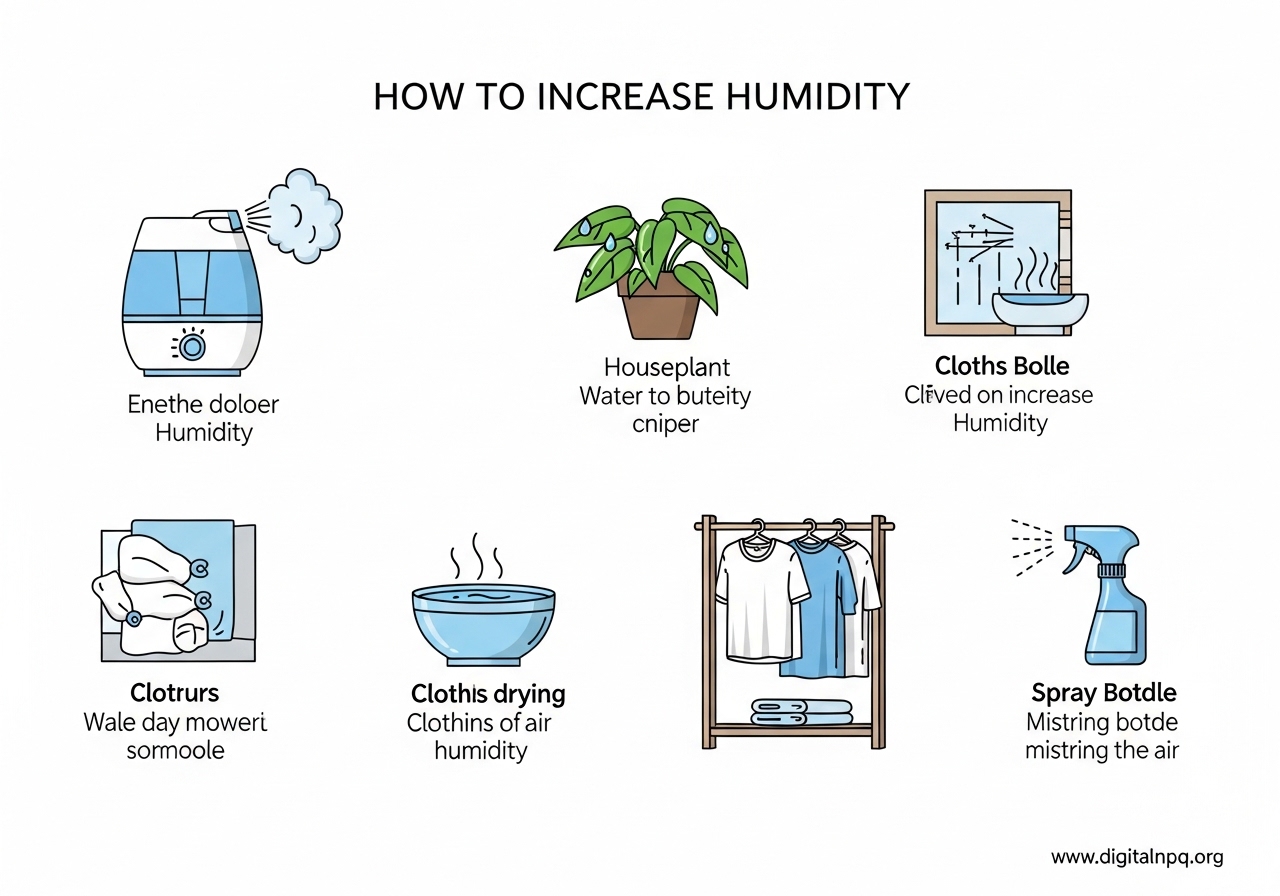
You do not need to buy anything to start improving your indoor moisture today. Here are seven methods I have personally tested, ranked roughly from fastest to most sustained effect.
1. Boil Water on the Stovetop
This is the fastest way I know to increase humidity in a room without a humidifier. A rolling pot of water on the stove sends concentrated steam into your kitchen and surrounding areas within minutes. On especially dry days, I keep a large pot simmering for 30-45 minutes and watch my hygrometer climb 5-10%.
For a pleasant bonus, toss in a cinnamon stick, citrus peels, or cloves. One Reddit user on r/Frugal shared this exact trick, noting it makes the house smell incredible while doing double duty as a moisture booster. Just do not leave the stove unattended.
2. Leave the Bathroom Door Open During Showers
A hot shower produces a significant amount of steam. Instead of trapping it in the bathroom with the exhaust fan running, leave the door open and let that moisture travel into adjacent rooms. After my morning shower, I keep the bathroom door wide open for at least an hour.
This works best in smaller homes and apartments where the steam can reach living areas. If you have a large house, the effect stays localized to rooms near the bathroom. Still, it is free moisture that would otherwise get vented outside.
3. Place Bowls of Water Near Heat Sources
Water evaporates faster when it is warm. Placing shallow bowls or saucers of water on or near radiators, heating vents, or sunny windowsills creates a slow, steady release of moisture throughout the day. The key is surface area. A wide, shallow bowl evaporates much faster than a tall, narrow glass of water.
Molekule’s guide on this topic explains the physics well: more surface area means more water molecules can escape into the air at once. I use ceramic bowls on my radiators and refill them every morning. Some people buy ceramic humidifier bells designed to hang on radiators, which look nicer and save space.
4. Add Houseplants That Release Moisture
Plants naturally release water vapor through a process called transpiration. The more plants you have, the more moisture they collectively add to the air. Tropical plants like peace lilies, Boston ferns, spider plants, and areca palms are among the best for boosting humidity because they transpire heavily and prefer moist environments.
A single plant will not dramatically change your RH, but a collection of 8-10 medium-to-large plants in one room makes a measurable difference. I keep four ferns and two peace lilies in my bedroom, and my hygrometer consistently reads 3-5% higher than the rest of the house. Grouping plants close together amplifies the effect because they create a shared microclimate of higher humidity.
5. Air-Dry Your Laundry Indoors
Hanging wet laundry on a drying rack inside your home is a two-for-one benefit. Your clothes dry, and the evaporating water goes straight into your indoor air. A single load of wet laundry can release over a liter of water into the air as it dries.
For the best effect, place the drying rack in the room where you need the most humidity, ideally near a heat vent or radiator. One forum user on r/houseplants mentioned they specifically hang wet laundry near their plant collection to keep the local humidity around the plants higher. This is a particularly good trick for apartment dwellers who may not have outdoor drying space.
6. Leave the Dishwasher Door Open After a Cycle
When your dishwasher finishes its cycle and the dishes are still hot and wet, crack the door open and let that steam escape into your kitchen. The heat and moisture from the rinse cycle provide a noticeable bump in humidity, especially in open-plan kitchens connected to living areas.
This takes zero extra effort since you are already running the dishwasher. Just make the habit of opening it at the end instead of letting it dry on its own. You save energy by skipping the heated dry cycle, too.
7. Hang a Wet Towel Near a Vent or Radiator
Drape a damp (not dripping) towel over a chair near a heating vent or radiator. As warm air passes through the fabric, the water evaporates steadily over several hours. This is a technique people on r/Home swear by for overnight humidity boosts in the bedroom.
For best results, use a large bath towel, soak it thoroughly, wring it out so it is damp but not dripping, and position it where airflow hits it. One towel can last most of the night before it dries out completely.
How to Increase Humidity With a Humidifier
If natural methods are not getting your humidity high enough, a humidifier is the most reliable and controllable solution. Here is what you should know about the main types.
Ultrasonic humidifiers use high-frequency vibrations to create a fine mist. They are quiet, energy-efficient, and work well for single rooms. Some produce a cool mist, others warm. The main drawback is that they can leave a white dust residue if you use hard water instead of distilled water.
Evaporative humidifiers pull air through a wet wick filter using a fan. They are self-regulating to some degree because as humidity rises, evaporation slows down. They tend to be more affordable and do not produce white dust, but the fans can be noticeable in a quiet bedroom.
Warm mist humidifiers boil water before releasing steam. They feel more comfortable in cold weather and the boiling process kills bacteria. However, they use more electricity and the hot steam can be a burn hazard around children or pets.
Whole-house humidifiers connect directly to your HVAC system and distribute moisture through your existing ductwork. They are the most effective option for large homes but require professional installation and a higher upfront cost.
Regardless of which type you choose, placement matters. Put your humidifier in the room where you spend the most time or where symptoms are worst. Keep it at least a few feet from walls and furniture to prevent moisture buildup on surfaces. And clean it regularly according to the manufacturer’s instructions to prevent bacterial growth.
Room-by-Room Strategies to Increase Humidity
Different rooms have different needs. Here is how I approach humidity in specific spaces around my home.
Bedroom: This is where low humidity hits hardest because you spend 7-8 hours there breathing dry air. The wet towel method works well overnight. A small humidifier on your nightstand targeted at 40-50% RH is the most reliable approach. Adding a few plants to the room provides a gentle, constant moisture source. I keep my humidifier running at a low setting all night and check the hygrometer first thing in the morning.
Living room: This is usually the largest space, so single-room methods have less impact here. Decorative bowls of water on a sunny windowsill add a slow, steady supply of moisture. If you have a fireplace or wood stove, placing a cast-iron kettle of water on top turns it into a natural humidifier. A console humidifier rated for large spaces is usually the most practical solution for open living areas.
Apartment-specific tips: If you rent and cannot modify your HVAC system, focus on the natural methods above combined with a portable humidifier in your bedroom. Many apartment dwellers on forums report struggling to get humidity above 25% because forced-air heating systems are aggressive at drying out small spaces. Running a humidifier in one room with the door closed is more effective than trying to humidify the entire unit at once.
How to Monitor and Maintain Proper Humidity
You cannot manage what you do not measure. A digital hygrometer is the single most important tool for anyone trying to increase humidity. Without one, you are guessing.
Place your hygrometer at about desk height in the room you spend the most time in. Avoid putting it right next to a humidifier, window, or vent, since those spots give misleading readings. Check it morning and evening for a few days to understand your baseline.
Here are the signs that your humidity is too low:
- Static electricity shocks when touching surfaces
- Dry, itchy skin or chapped lips
- Waking up with a sore throat or dry cough
- Wood furniture showing cracks or gaps at joints
- Plants with crispy brown leaf edges
And here are the warning signs that humidity is too high:
- Condensation on windows or walls
- Musty or damp smell in any room
- Visible mold on surfaces or grout lines
- Allergy symptoms worsening indoors
Adjust your methods daily based on what the hygrometer tells you. In winter, you will likely need to run humidifiers more frequently. In spring and fall, natural methods might be enough on their own. The key is consistency and monitoring.
FAQ
How can I make my humidity higher?
The fastest ways to increase humidity are boiling water on the stove, running a humidifier, or leaving the bathroom door open during and after a hot shower. For a sustained effect, place bowls of water near heat sources, add houseplants, and air-dry laundry indoors. A hygrometer will help you track your progress.
How can I raise the humidity without a humidifier?
You can raise humidity without a humidifier by boiling water on the stovetop, placing shallow bowls of water near radiators or vents, leaving the bathroom door open during showers, air-drying laundry indoors, hanging damp towels near heat sources, adding houseplants, and leaving the dishwasher open after a cycle. These methods combined can raise indoor RH by 5-15%.
What to do if the humidity is low?
If your humidity is below 30%, start by using the quickest methods: boil water on the stove and run hot water in the bathroom with the door open. Then set up longer-term solutions like water bowls near heat sources and a humidifier in your main living space. Check your humidity with a hygrometer and aim for the 30-50% range.
What is the best humidity level for sinus problems?
The best humidity level for sinus problems is between 40% and 50% RH. This range keeps your nasal passages moist enough to function as a defense against irritants and pathogens without creating conditions where mold and dust mites thrive. Anything below 30% dries out mucous membranes, while above 60% increases the risk of mold-related sinus issues.
Does hanging a wet towel increase humidity?
Yes, hanging a damp towel near a heat source like a radiator or vent does increase humidity. The warm airflow speeds up evaporation from the fabric, releasing moisture into the air over several hours. For the best effect, use a large bath towel, soak it thoroughly, wring it out until damp, and place it where warm air passes through it. This is a popular overnight trick for bedrooms.
How do I increase humidity overnight in my bedroom?
To increase humidity overnight, run a humidifier in your bedroom set to maintain 40-50% RH, hang a damp towel near a vent or radiator, place a bowl of water near a heat source, and keep a few humidity-releasing plants in the room. Close the bedroom door to trap the moisture in one space. Check your hygrometer in the morning to see if adjustments are needed.
Final Thoughts
Getting your indoor humidity into the 30-50% range does not have to be complicated or expensive. Start with the free methods that take almost no effort: open the bathroom door after showers, leave the dishwasher cracked open, set out bowls of water near your heat sources. If those are not enough, add a humidifier in the rooms where you spend the most time.
The most important step is getting a hygrometer so you can actually see where your levels are. Before I bought one, I had no idea my apartment was sitting at 18% humidity in January. Once I could measure it, I could manage it.
Whether you are trying to protect your health, save your wood furniture, stop the static shocks, or just breathe easier at night, knowing how to increase humidity gives you control over one of the most underrated aspects of home comfort. Use a combination of natural methods and a good humidifier, check your readings regularly, and adjust with the seasons. Your sinuses, your skin, and your houseplants will all thank you.