
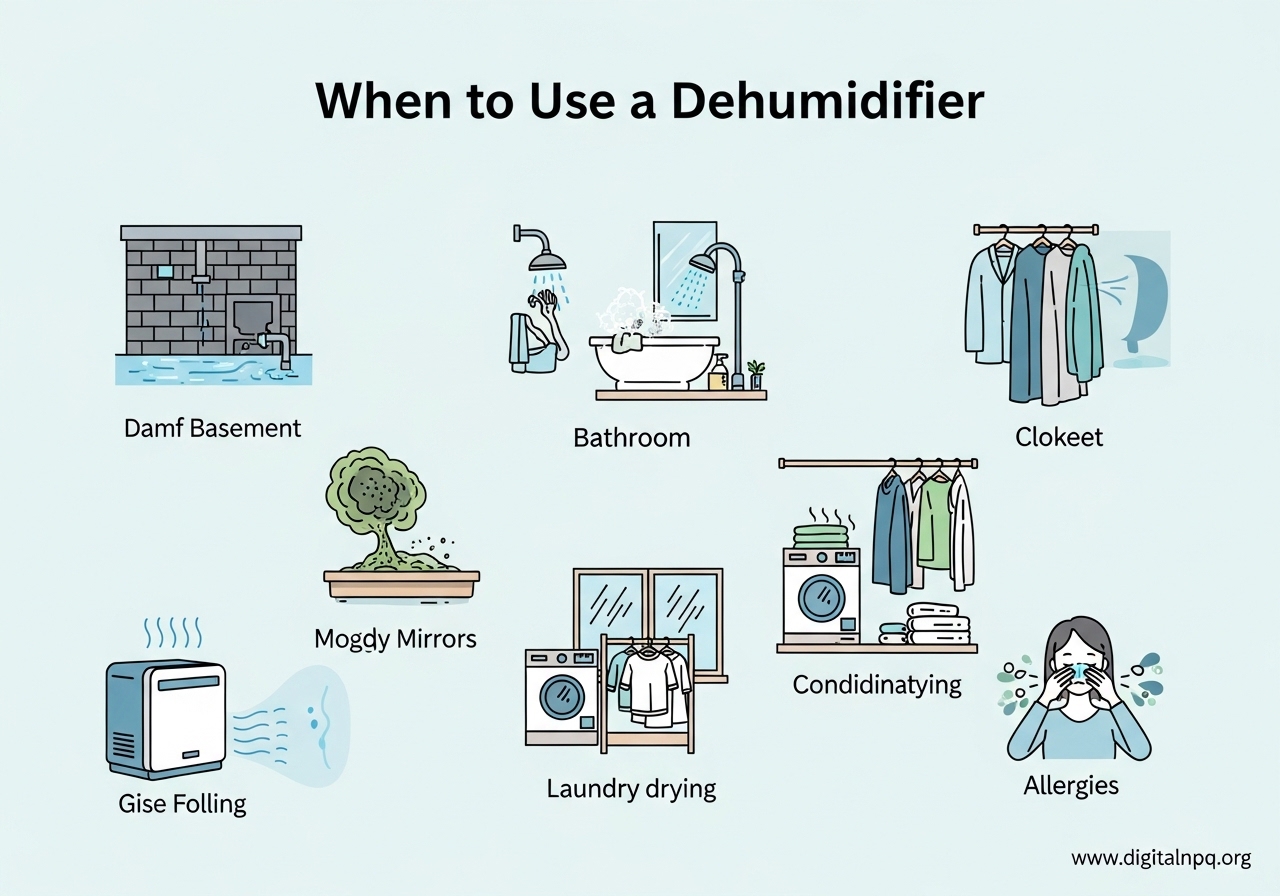
Indoor humidity might not be something you think about every day, but it silently affects your comfort, your health, and even the structure of your home. If you have ever walked into a room and felt that heavy, sticky sensation in the air, or noticed water beading on your windows for no obvious reason, excess moisture is likely the culprit. Knowing when to use a dehumidifier can make the difference between a comfortable living space and one plagued by mold, musty smells, and warped wood.
In this guide, I will walk you through everything you need to know about indoor humidity, the unmistakable signs that you need a dehumidifier, seasonal guidelines for running one, and a room-by-room breakdown that most guides skip entirely. I have spent hours digging through forum discussions, EPA recommendations, and real homeowner experiences to put this together, so you can trust that the advice comes from actual data, not just manufacturer marketing.
Whether you are dealing with a damp basement, summer humidity that makes your living room feel like a sauna, or winter condensation fogging up every window, this article will help you figure out exactly when a dehumidifier is the right tool for the job.
Understanding Indoor Humidity Levels
Before you can decide when to use a dehumidifier, you need to understand what indoor humidity actually is and what the right levels look like. Relative humidity, or RH, measures how much water vapor is present in the air compared to the maximum amount the air can hold at a given temperature. When the air is warm, it can hold more moisture. When it cools down, that moisture condenses on surfaces, which is exactly what causes wet windows, damp walls, and that sticky feeling.
The Environmental Protection Agency recommends keeping indoor relative humidity between 30% and 50%. This is the sweet spot where the air feels comfortable, mold struggles to grow, dust mite populations stay low, and your home stays protected from moisture damage. Some experts narrow this further to 30-40% during winter months to prevent window condensation in colder climates.
When humidity creeps above 50%, problems start to build quickly. Mold and mildew thrive in environments above 60% RH. Dust mites multiply rapidly at 50% and above. Wood absorbs excess moisture and begins to warp, peel, or rot. Paint blisters, wallpaper peels, and metal fixtures can start corroding. On the flip side, humidity below 30% brings its own issues: dry skin, irritated sinuses, static electricity, and cracked wooden furniture.
The only reliable way to know your indoor humidity level is to use a hygrometer. These small, inexpensive devices (often available for under $15) give you a real-time digital reading of your room’s RH percentage. Place one in the room where you suspect excess moisture, let it run for 24 hours, and check the readings at different times of day. If you consistently see numbers above 50%, it is time to think about a dehumidifier.
Signs You Need a Dehumidifier
Your home will tell you when it has a moisture problem, you just need to know what to look for. Here are the most common signs that indicate it is time to start running a dehumidifier:
- Condensation on windows, mirrors, or pipes: If you regularly see water droplets forming on the inside of your windows, especially in the morning, your indoor humidity is too high. This is one of the earliest and most visible warning signs.
- Musty or damp odors: That distinctive “basement smell” is caused by mold and mildew growth. If you notice it in any room, not just the basement, moisture is present and actively feeding microbial growth.
- Visible mold or mildew spots: Black, green, or white patches on walls, ceilings, grout lines, or around windows mean mold has already established itself. A dehumidifier helps stop it from spreading further.
- Allergy flare-ups and respiratory discomfort: High humidity increases dust mite populations and mold spore counts. If your allergies or asthma symptoms worsen indoors, excess moisture may be the trigger.
- Warped wood or peeling paint: Wood flooring, furniture, and trim absorb moisture from the air. If your floorboards are cupping, your doors are sticking, or paint is bubbling off the walls, humidity is the likely cause.
- A damp or clammy feeling indoors: Sometimes the simplest sign is how the air feels. If your home feels sticky and uncomfortable even when the thermostat reads a reasonable temperature, humidity is the invisible culprit.
- Water stains on walls or ceilings: Brownish or yellowish stains indicate moisture buildup behind the surface. While you should investigate the source (a leak, poor ventilation), a dehumidifier helps manage the ambient moisture while you address the root cause.
If you notice two or more of these signs in the same room or area of your home, you should seriously consider running a dehumidifier. One sign alone might be a ventilation issue. Multiple signs together almost always point to a humidity problem that needs attention.
When to Use a Dehumidifier
This is the section you came here for. The short answer is: use a dehumidifier any time your indoor humidity consistently exceeds 50% RH. But the real answer depends on the season, your climate, and specific situations happening in your home. Let me break it down.
During Summer Months
Summer is the most common time people need a dehumidifier. Warm air holds more moisture, and in many regions, summer brings high outdoor humidity that seeps into your home through doors, windows, and even through your foundation. If you live in a humid climate zone, like the southeastern United States, summer humidity can push indoor RH well above 60% even with air conditioning running.
Your air conditioner does remove some humidity as a byproduct of cooling, but it is not designed to be a dehumidifier. On mild summer days when temperatures are comfortable but the air feels thick, your AC may not run long enough to pull out excess moisture. That is exactly when a dedicated dehumidifier makes the biggest difference. Run it in the rooms where you spend the most time, and target that 45-50% RH range.
Forum users from humid regions consistently report running their dehumidifiers from May through September. Many set their humidistat to 50% and let the unit cycle on and off automatically. Users also note that opening windows for just 10 minutes on dry, breezy mornings can help reduce indoor moisture before sealing up for the day.
During Winter Months
Winter dehumidifier use surprises a lot of people, because cold air is naturally drier. But here is the catch: when you heat cold outdoor air inside your home, the warm air can hold more moisture, and that moisture comes from everyday activities like cooking, showering, and even breathing. In well-insulated or tightly sealed homes, that moisture has nowhere to go.
Winter condensation is a major problem in many homes. You might see it as frost or water on the inside of windows, water running down window frames, or damp patches on exterior walls. This happens because warm, moist indoor air hits cold surfaces and the water vapor condenses out. If your windows are constantly wet during winter, a dehumidifier can help reduce that indoor moisture load.
However, there is an important caveat. In very cold climates where indoor humidity naturally drops to 30% or below in winter, running a dehumidifier can make the air too dry. Always check your hygrometer readings first. If you are already at 30-35% RH, skip the dehumidifier and focus on ventilation instead. If you are at 50% or above despite cold outdoor temperatures, run the unit.
After Water Damage or Flooding
If your home has experienced any kind of water intrusion, whether from a burst pipe, a roof leak, groundwater seepage, or a full flooding event, a dehumidifier is not optional, it is essential. Mold can begin growing on damp surfaces within 24 to 48 hours. The faster you bring humidity down below 50%, the better your chances of preventing widespread mold growth.
After water damage, run your dehumidifier continuously at its maximum setting until the hygrometer reads below 50% RH consistently for at least 48 hours. Open closet doors, remove wet materials, and use fans to circulate air across damp surfaces. This is one situation where you want to be aggressive with dehumidification, not conservative.
Year-Round in Basements and Crawl Spaces
Basements and crawl spaces are naturally prone to high humidity because they sit below ground level where soil moisture constantly migrates through concrete and masonry. Even a basement that looks and feels dry can have humidity levels above 60% RH. I have seen forum posts from homeowners who were shocked to discover their “dry” basement was sitting at 68% humidity when they finally bought a hygrometer.
For these below-grade spaces, many homeowners run a dehumidifier year-round, setting the humidistat to 45-50% and using a continuous drain hose so they never have to empty a water bucket. If you only have the budget or space for one dehumidifier, the basement is usually where it will do the most good for your entire home.
Room-by-Room Guide: Where Dehumidifiers Help Most
Not every room in your home needs a dehumidifier, and understanding which rooms benefit most helps you place your unit where it has the greatest impact.
Basement
The basement is the number one location for a dehumidifier in most homes. Concrete foundations absorb moisture from the surrounding soil, and because basements have limited ventilation and cooler temperatures, condensation forms easily. If your basement smells musty, feels damp, or shows any signs of mold, run a dehumidifier here first. Choose a unit rated for your basement’s square footage, and opt for a model with a built-in pump or gravity drain to avoid manual emptying.
Bathroom
Bathrooms generate massive amounts of moisture from showers and baths. A single hot shower can release over a pound of water vapor into the air. If your bathroom has an exhaust fan, always run it during and for at least 30 minutes after showering. If the bathroom lacks ventilation, or if you still see condensation on mirrors and walls long after showering, a small portable dehumidifier can help manage the excess moisture. Look for a compact unit that fits on a counter or shelf.
Bedroom
Your bedroom might not seem like a high-humidity space, but nighttime tells a different story. Each person exhales about a pint of water vapor per night through breathing and perspiration. If you sleep with the door closed in a room without great airflow, humidity can climb. If you wake up with a stuffy nose, itchy eyes, or condensation on bedroom windows, check the humidity. A quiet portable dehumidifier set to 45% can improve sleep quality significantly, especially for allergy sufferers.
Kitchen
Cooking, boiling water, running the dishwasher, and washing dishes all release moisture into the air. Range hoods help, but many people do not use them consistently. If you notice condensation on kitchen windows or a persistent film of moisture on surfaces, a dehumidifier can help. A smaller unit placed away from the cooking area works well.
Crawl Spaces and Attics
Crawl spaces are notorious for high humidity, and the problem can affect the entire house above. Moisture in crawl spaces leads to wood rot, pest problems, and mold that can make its way into your living areas through floor gaps and ductwork. Attics can also develop humidity problems if bathroom exhaust fans vent into the attic space instead of outside. Both areas benefit from dehumidification, but make sure you choose a unit rated for the temperature range of these spaces.
When NOT to Use a Dehumidifier
Just as important as knowing when to run a dehumidifier is understanding when not to use one. Running a dehumidifier in the wrong conditions wastes energy and can actually create new problems.
When humidity is already below 30%: If your hygrometer reads below 30% RH, your air is already too dry. Running a dehumidifier will pull it lower, causing dry skin, cracked lips, static shocks, and irritated respiratory passages. In this scenario, you might actually need a humidifier instead.
In very cold spaces below 41 degrees Fahrenheit: Most refrigerant-based dehumidifiers cannot operate efficiently in temperatures below 41 degrees F. The internal coils can freeze, which prevents moisture removal and can damage the unit. If you need dehumidification in an unheated garage, shed, or crawl space during winter, look for a desiccant dehumidifier instead, which uses absorbent materials rather than cooling coils.
When your HVAC system handles humidity well: Some modern HVAC systems have built-in dehumidification modes that effectively manage indoor humidity without a separate unit. If your whole-house system keeps RH in the 30-50% range on its own, adding a standalone dehumidifier is redundant and wastes electricity.
In arid or desert climates: Homes in dry climates like the southwestern United States rarely have excess humidity problems. In fact, these regions often struggle with air that is too dry. Check your hygrometer before investing in any moisture management equipment.
Portable vs Whole-House Dehumidifiers
Choosing between a portable unit and a whole-house system depends on your home, your budget, and the severity of your humidity problem. Here is how to think about the decision.
Portable dehumidifiers are freestanding units you can move from room to room. They work well for single spaces like a basement, bedroom, or bathroom. Most collect water in a bucket that you empty manually, though many also support a hose for continuous drainage. Portable units are affordable, easy to set up, and give you flexibility. The downside is that they only treat the air in one room at a time, and you need to maintain each unit individually.
Whole-house dehumidifiers integrate directly into your HVAC system and treat all the air circulating through your home. They connect to your existing ductwork and use a dedicated drain line, so there is no bucket to empty. Once installed and set to your target humidity, they operate automatically with minimal maintenance. The trade-off is higher upfront cost and professional installation, but for homes with widespread humidity issues, whole-house units are more effective and energy-efficient per square foot than running multiple portable units.
If your humidity problem is isolated to one room, start with a portable unit. If multiple rooms or your entire home feels too humid, a whole-house system is the better long-term investment.
Tips for Getting the Most from Your Dehumidifier
Based on real homeowner experiences shared across forums and my own research, here are practical tips that make a real difference in how well your dehumidifier performs.
Set your humidistat to 45-50%: This is the ideal range for most homes. Setting it lower wastes energy and can over-dry the air. Setting it higher defeats the purpose. Many experienced users recommend 50% as the default and adjusting down to 45% during peak humidity periods.
Use a continuous drain: Emptying a water bucket gets old fast, and if you forget, the unit shuts off and humidity climbs back up. Connect a drain hose and let gravity (or a built-in pump) handle the water disposal. This is especially important for basements and crawl spaces where you want set-and-forget operation.
Keep doors and windows closed: A dehumidifier can only control the air in a sealed space. If windows are open or doors lead to humid areas, the unit will run constantly trying to dry air that keeps getting replaced. Close the space, let the unit work, and you will reach your target humidity much faster.
Clean the filter regularly: A clogged air filter forces the unit to work harder, reduces moisture removal efficiency, and can shorten the life of the compressor. Check and clean the filter every two to four weeks, depending on how dusty the environment is.
Choose the right size for your space: Dehumidifier capacity is rated in pints per day. A small room might only need a 20-pint unit, while a large basement could require 50 or even 70 pints per day. Undersized units run constantly without reaching the target humidity, which wastes energy and frustrates you. When in doubt, size up.
Position the unit for good airflow: Do not shove the dehumidifier into a corner or against a wall. Leave at least 6 to 12 inches of clearance on all sides so air can circulate freely. Some units pull air from the back and exhaust from the top, so make sure neither vent is blocked.
FAQ
What are the signs I need a dehumidifier?
Common signs include condensation on windows or pipes, musty odors, visible mold or mildew spots, warped wood or peeling paint, worsening allergy symptoms indoors, and a persistent damp or clammy feeling in the air. If you notice two or more of these signs, check your humidity with a hygrometer. A reading consistently above 50% RH confirms you need a dehumidifier.
Is it better to use a dehumidifier in the summer or winter?
Most homeowners need a dehumidifier more in summer when outdoor humidity is high and warm air holds more moisture. However, winter use is important in homes with poor ventilation, condensation on windows, or tight insulation that traps moisture from cooking and showering. Check your hygrometer: if RH is above 50% in either season, run the dehumidifier.
What months should you use a dehumidifier?
In humid climates, most people run dehumidifiers from May through September. In temperate regions, the typical season runs from June through August. However, basements and crawl spaces often need dehumidification year-round regardless of climate. After any water damage event, run a dehumidifier continuously until humidity stays below 50% for at least 48 hours.
Should you use a dehumidifier if you have COPD?
Yes, but with care. High humidity worsens COPD symptoms by increasing mold, dust mites, and airborne allergens. Maintaining indoor humidity between 30-50% can help breathing. However, air that is too dry (below 30%) can also irritate airways. Use a hygrometer to monitor levels, and consult your doctor about the ideal humidity range for your specific condition.
When not to use a dehumidifier?
Avoid using a dehumidifier when indoor humidity is already below 30% RH, in spaces colder than 41 degrees Fahrenheit (where coils can freeze), when your HVAC system already maintains proper humidity, or in arid climates where the air is naturally dry. Running a dehumidifier in these situations wastes energy and can make the air uncomfortably dry.
How do I know when to use a dehumidifier?
Use a hygrometer to measure your indoor relative humidity. If the reading consistently shows 50% RH or higher, you should use a dehumidifier. Physical signs like window condensation, musty smells, mold spots, and allergy flare-ups also indicate it is time to start running one.
Should you run a dehumidifier all the time?
No, you should not run a dehumidifier continuously unless you are dealing with active water damage. Instead, set the humidistat to your target humidity (45-50%) and let the unit cycle on and off automatically. Running it nonstop wastes energy and can over-dry the air. The exception is basements with persistent moisture issues, where continuous operation at a moderate setting may be necessary.
Conclusion
Figuring out when to use a dehumidifier comes down to one simple rule: if your indoor relative humidity consistently reads above 50% on a hygrometer, it is time to run one. Summer brings the most widespread need, but winter condensation, water damage events, and chronically damp basements all create situations where a dehumidifier is essential year-round.
Pay attention to what your home tells you. Condensation on windows, musty odors, and allergy flare-ups are not just annoyances. They are warning signs that excess moisture is affecting your living space and potentially your health. Buy a hygrometer, check your readings, and act when the numbers cross that 50% threshold.
With the right unit in the right room, set to the right humidity level, a dehumidifier is one of the most effective tools for protecting both your home and your comfort. Take the time to size it properly for your space, use a continuous drain if possible, and maintain the filter regularly. Your home, your health, and your energy bill will all benefit from getting this right.